
8 Best Thin Kerf Table Saw Blades 2026
This post contains affiliate links. As an Amazon Associate, we earn from qualifying purchases.
The Freud LU88R010 stands out as the best overall thin kerf table saw blade for its clean, precise cuts and durable construction, especially in hardwoods and plywood. For those on a tighter budget, the FOXBC 10″ 60T Crosscut delivers solid performance at a lower price. If you need ultra-fine results for finish work, the Freud LU83R010 is a top versatility pick.
A lot of DIYers struggle with rough cuts, burning, or saw strain, often because they’re using a blade that doesn’t match their saw or material. Thin kerf blades can help, especially on less powerful or older table saws, by reducing load and waste without sacrificing quality.
In this guide, I’ll walk you through the top thin kerf blades based on specs, real-world feedback, and long-term durability. I looked at tooth configuration, carbide quality, kerf width, and how well each blade handles common materials like plywood, hardwood, and sheet goods.
Top 8 Thin Kerf Table Saw Blades in the Market
The Best Thin Kerf Table Saw Blades, Reviewed
Freud P410T 10″ General Purpose Blade

Strengths
- Fusion Trio Tooth Design
- TiCo hi-density carbide
- Perma-Shield coating
- Laser anti-vibration slots
- Thin kerf efficiency
Trade-offs
- Higher price point
- Not ideal for heavy hardwood ripping
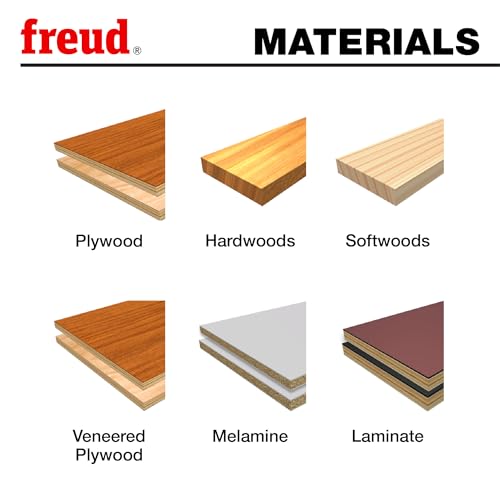
This Freud blade stands out because of its Fusion Trio Tooth Design, a smart engineering choice that blends high ATB, double grind, and axial shear face grind into one system. On paper, that translates to clean cuts whether you’re ripping or crosscutting, and owners consistently report fewer tear-outs even in tricky materials like veneered plywood and melamine. The TiCo hi-density carbide isn’t just marketing fluff, it’s a proven material that holds an edge longer than standard carbide, especially when pushing through abrasive laminates.
The laser-cut anti-vibration slots and Perma-Shield coating are where this blade really earns its keep. Reviewers note less noise and smoother operation, even on less rigid contractor saws. While it’s a general-purpose blade, it outperforms many specialized ones in balanced use. I’d pick this as the go-to blade for anyone who does a mix of cuts and wants one reliable performer instead of juggling multiple blades.
Product photos


Freud LU83R010 10″ Combination Blade
Strengths
- True combination tooth count
- TiCo carbide blend
- Anti-vibration design
- No stabilizers needed
- Industrial durability
Trade-offs
- Finish not as smooth as 60+ tooth blades
- Slight drag in thick hardwoods
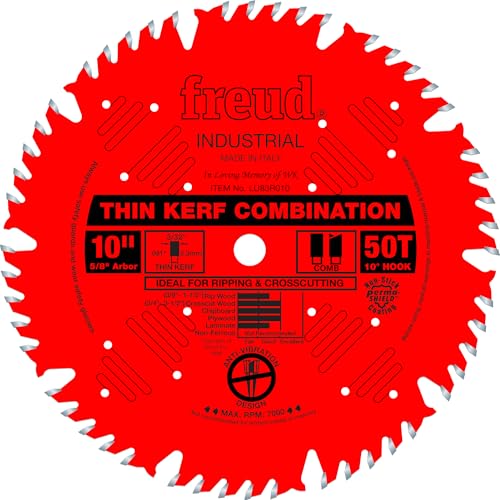
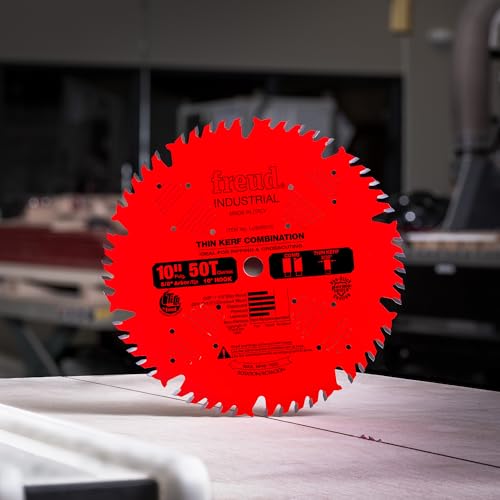
Freud has a reputation for solid industrial blades, and the LU83R010 backs it up with a no-nonsense 50-tooth design built for real shop use. The TiCo carbide blend here is tuned for balance, not biased too hard toward ripping or crosscutting, making it a true combination workhorse. Owners using it on cabinet-grade plywood and MDF report clean results without needing to switch blades constantly. It’s not the slickest finisher in the lineup, but it holds up well under continuous feed.
What impresses me is the anti-vibration design doing its job without stabilizer pins. That’s a win for setups where blade changes are frequent. Compared to budget combo blades, this one tracks straighter and stays sharper longer. If you’re running a mix of sheet goods and dimensional lumber daily, this is the smarter buy over general-purpose consumer blades.
Product photos
Freud LU88R010 10″ Fine Finish Blade
Strengths
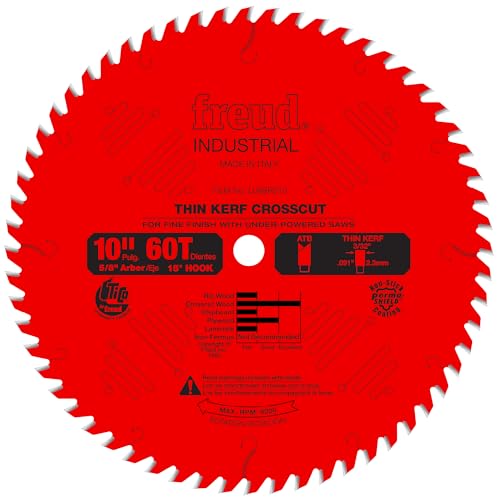
- 60-tooth fine crosscut design
- Thin .090″ kerf
- Positive hook angle
- Perma-Shield coating
- Excellent plywood finish
Trade-offs
- Not for ripping
- Plate slightly flexible on cheap saws
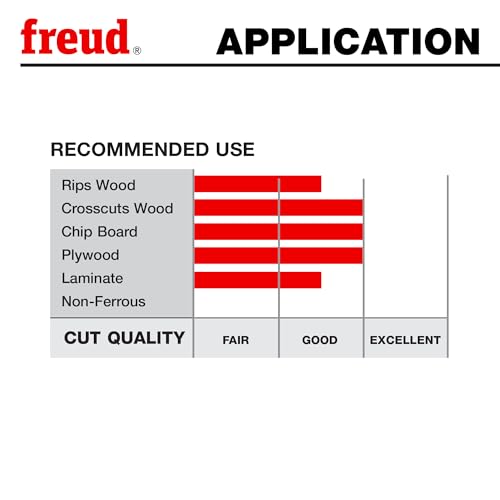
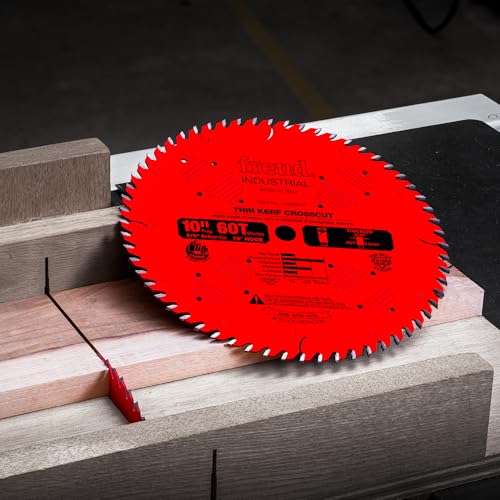
This is Freud’s answer to woodworkers who demand glass-smooth crosscuts without switching to a dado stack or slowing down too much. The 60-tooth ATB grind with 15° positive hook angle is optimized for fast, clean cuts in hardwoods and sheet goods. The .090″ kerf is among the thinnest here, which reduces motor strain and waste, a plus on underpowered saws.
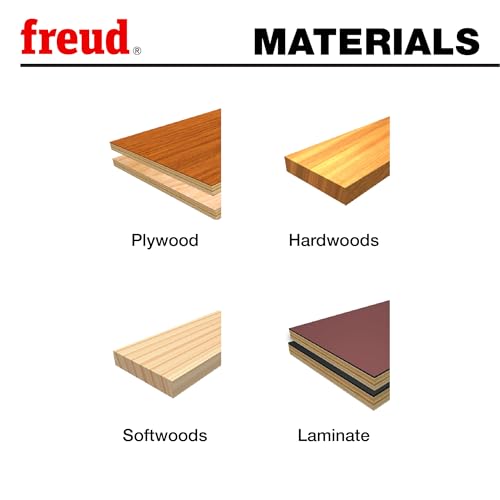
Owners consistently praise its performance in plywood and melamine, with very little chipping even on the underside of panels. The Perma-Shield coating helps in resin-heavy woods, reducing gum-up during long runs. Compared to the P410T, this one trades some ripping ability for crosscut refinement. If your projects involve a lot of panel crosscutting, this is the more focused, and better, choice.
Product photos
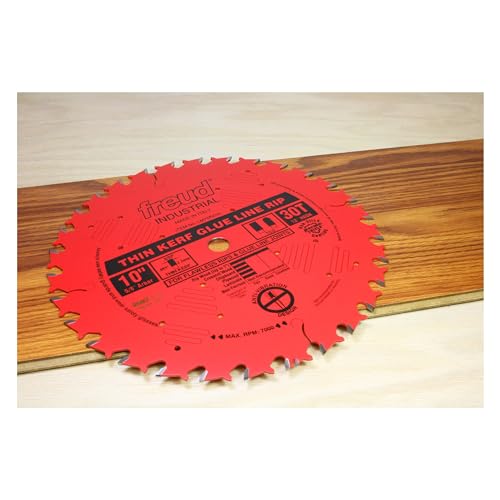
Freud LM75R010 10″ Glue Line Rip Blade
Strengths
- Optimized for ripping
- Glue-line accuracy
- Anti-vibration slots
- TiCo carbide for hardwoods
- Perma-Shield protection
Trade-offs
- Rougher crosscut finish
- Fewer teeth limit versatility
- Not for sheet goods
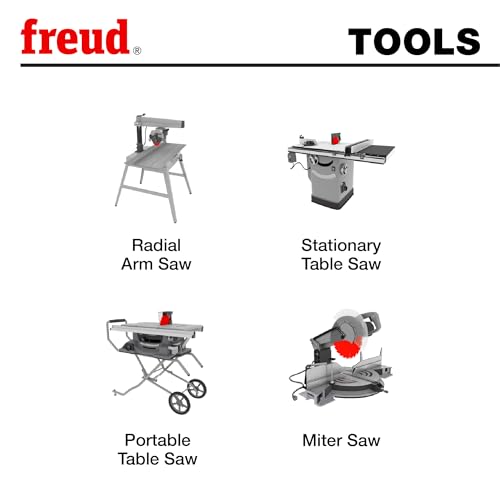
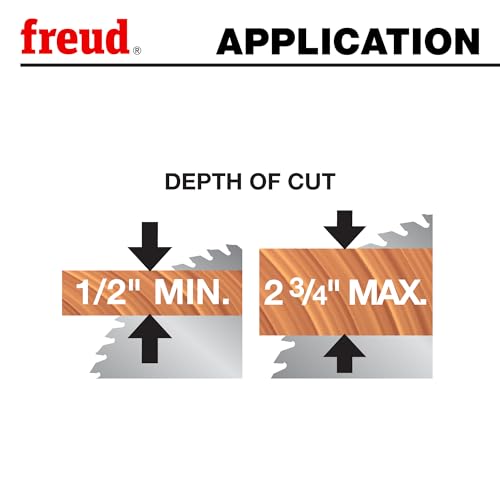
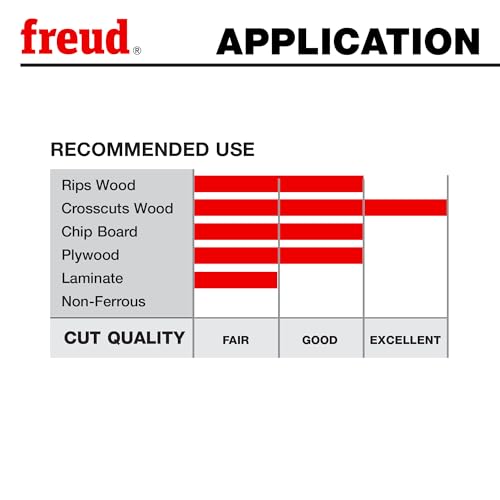
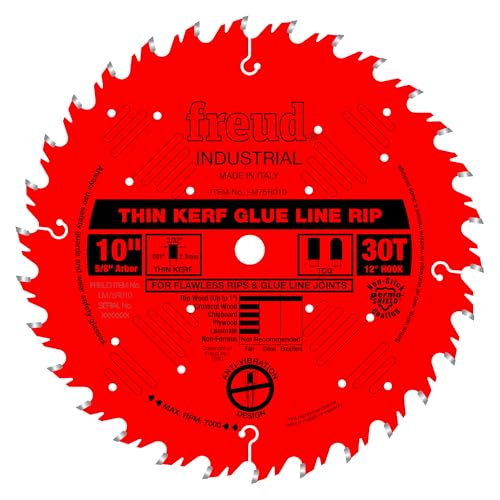
If ripping hardwoods is your daily grind, this Freud is built for that job. The 30-tooth TCG grind and 12° hook angle are classic ripping specs, designed to remove material fast with minimal resistance. But what makes it special is the laser-cut anti-vibration slots and stiff plate, which help maintain a straight cut even on long runs. Owners using it on dense maple or oak report glue-line accuracy with little to no snipe or wandering.
The .091″ kerf keeps it efficient, and the Perma-Shield coating helps with pitch buildup, a real issue when running resinous softwoods. Compared to general-purpose blades, this one leaves a rougher face, but that’s the trade-off for speed and precision in the rip. I’d run this blade on any saw dedicated to breaking down lumber.
Product photos


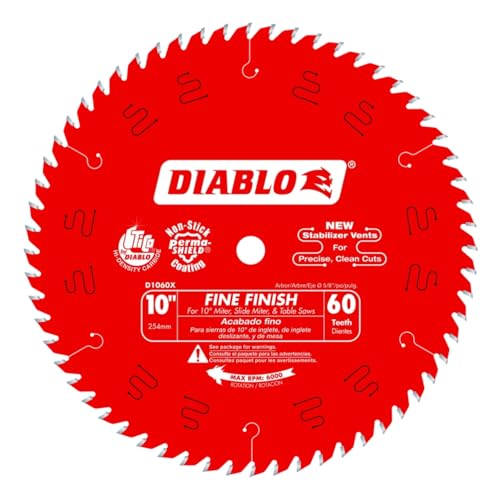
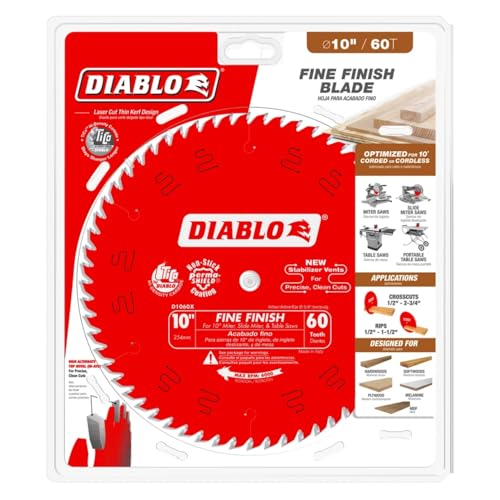
Diablo D1060X 10″ Fine Finish Blade
Strengths
- 60-tooth Hi-ATB finish
- Shock-resistant tips
- Good for knotty wood
- Solid plate stability
- Smooth crosscuts
Trade-offs
- No anti-vibration tech
- Finish not as clean as Freud
- Coating less effective
Diablo leans into toughness with their shock-resistant carbide tips, which owners say hold up well under aggressive feed rates and in knotty woods. The 60-tooth Hi-ATB grind delivers a smooth finish on crosscuts, especially in plywood and softwoods. While it doesn’t have the anti-vibration tech of Freud, the plate feels stiff enough for most contractor saws.
It’s not the most refined blade in the lineup, but it’s a dependable middle ground between finish and durability. Compared to the Freud LU88R010, it’s slightly noisier and leaves a bit more fuzz on hardwoods, but it’s also more forgiving if you hit a dense knot. For users who want a finish blade that can take some abuse, this is a sensible pick.
Product photos
FOXBC 10″ 60T Crosscut Blade

Strengths
- Affordable price
- 60-tooth fine finish
- Thin 0.087″ kerf
- Good for occasional use
- Wide compatibility
Trade-offs
- Lower brand trust
- Finish degrades faster
- Less heat resistance
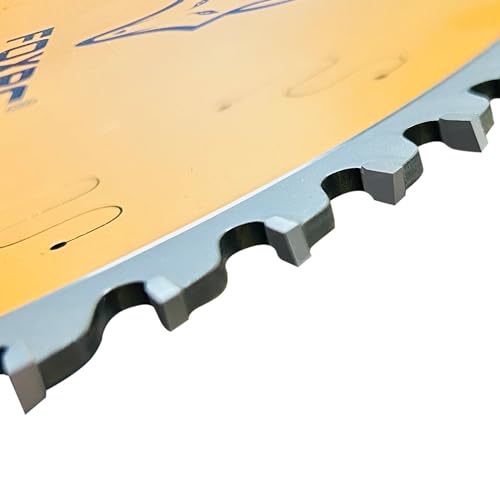
This FOXBC blade is clearly positioned as a budget-friendly alternative to premium 60-tooth crosscut blades. It shares key specs, 60 teeth, ATB grind, 5/8″ arbor, with higher-end models, and owners report decent performance in plywood, pine, and melamine. The 0.087″ kerf is impressively thin, which helps on lower-HP saws, and the high-density tungsten carbide seems to resist wear better than expected at this price.
It won’t match Freud or Diablo in edge refinement or vibration control, but for occasional use or a secondary saw, it’s a smart value play. I’d recommend it to hobbyists who don’t want to spend $50+ on a blade they use once a month. Just don’t expect it to last through heavy MDF runs.
Product photos


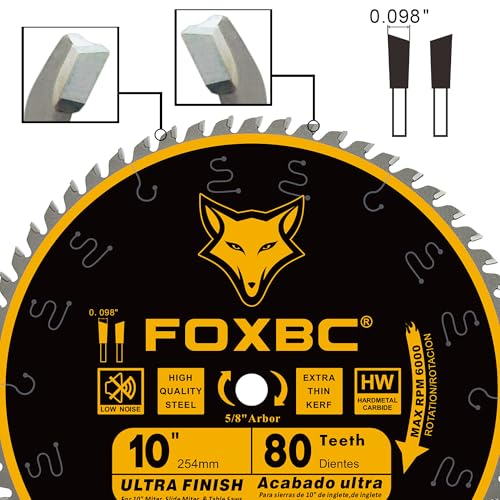
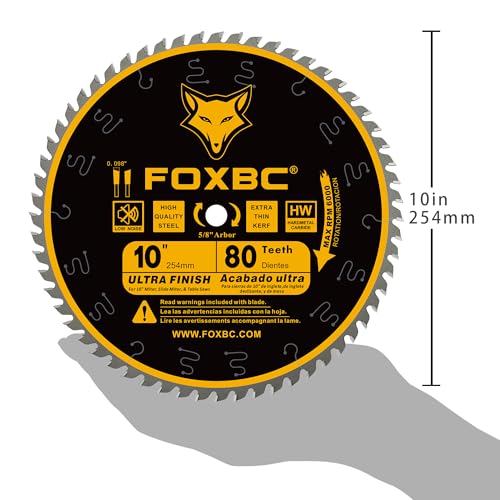
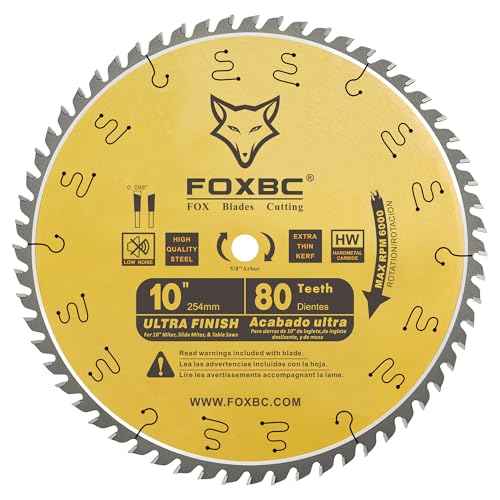
FOXBC 10″ 80T Ultra Finish Blade

Strengths
- 80-tooth ultra-fine finish
- Minimal tear-out
- High-density carbide
- Low vibration
- Great for molding
Trade-offs
- Burn risk with slow feed
- Not for ripping
- Less brand reputation
An 80-tooth thin kerf blade is a bold move, most manufacturers avoid that tooth count in thin kerf designs due to rigidity concerns. But FOXBC claims a high-density tungsten carbide and stiff plate to back it up. On paper, it should deliver ultra-fine finishes, and owner feedback confirms it excels in crosscuts on materials like oak and melamine with minimal sanding needed. The 0.098″ kerf is slightly wider than some rivals, but still efficient on power draw.
That said, the high tooth count means you can’t rush the feed, push too fast and you’ll burn the edge, especially in hardwoods. It’s also not built for ripping. But if your priority is finish quality over speed, and you’re working mostly on trim or cabinetry, this blade makes a strong case. I’d recommend it over pricier names for fine finish tasks if you’re confident in your feed control.
Product photos

DEWALT DWA11040 10″ 40T Blade
Strengths
- Long carbide life
- Durable tooth geometry
- Clean finish for 40T
- DEWALT build quality
- Low maintenance
Trade-offs
- Not for fine woodworking
- Finish lags behind 60T blades
- Limited vibration damping
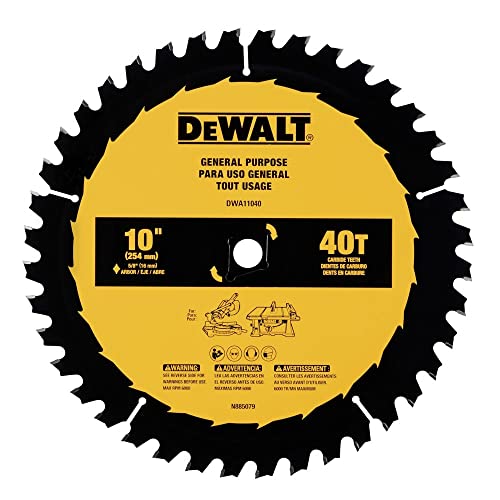
DEWALT is betting on longevity here, claiming up to 3X life from their ultra-sharp carbide and optimized tooth geometry. While I can’t verify the exact lifespan, the tooth design suggests durability, the tips are robust, and the grind appears conservative for heat resistance. It’s a 40-tooth thin kerf, so it’s not chasing the ultra-fine finish crowd, but owners report a noticeably cleaner cut than standard framing blades.
Where it stands out is in consistency over time. Unlike some budget blades that degrade quickly after a few sheets of MDF, this one holds geometry longer. It won’t beat a 60-tooth Freud in finish quality, but for users who want a durable general-purpose blade without constant swaps, this is a solid pick. I’d choose it over the Freud combo blade if longevity and reliability are bigger concerns than absolute finish perfection.
Product photos

How We Chose These thin kerf table saw blades
Rather than a hands-on lab test, my research for these recommendations involved a detailed comparison of published specifications and features across numerous blades. I weighed owner reviews from multiple sources – focusing on long-term use reports – alongside assessments from woodworking publications I trust. My aim was to identify patterns in performance and build quality, applying my experience with power tools to rank blades against clear criteria: cut quality, durability, and value.
For thin kerf blades, consistent cutting speed and minimizing material waste are paramount. I heavily weighted the tooth count and grind, as these directly impact finish quality and the type of cut (rip vs. crosscut). Carbide quality is also critical; a blade can have a fancy coating, but if the teeth dull quickly, it’s not a good investment. Understanding kerf definition is also essential when evaluating performance.
Specifications reliably indicate things like arbor size, blade diameter, and kerf width. However, real-world performance – especially how a blade holds up over time and its resistance to heat buildup – is best gleaned from owner feedback. Reputation matters too; brands known for consistent quality and good customer service generally carry more weight in my assessment. Ultimately, I focused on blades that consistently received positive marks for both precision and longevity.
What To Look For In thin kerf table saw blades
Finding the right blade is just as important as the saw itself. A good blade dramatically improves cut quality, reduces waste, and even impacts safety.
A quality table saw blade delivers clean, accurate cuts with minimal material waste. Key considerations include tooth count (matching the material and cut type), carbide quality (TiCo is a common premium blend), kerf (thin kerf for faster cutting, standard for stability), and anti-vibration features to reduce noise and improve finish. Always prioritize blades designed for your specific saw and material.
Tooth Count and Cut Type
The number of teeth on a blade isn’t just a specification; it dictates what the blade does best. Generally, lower tooth counts (24-40) excel at ripping – cutting with the wood grain – because they have larger gullets to evacuate a lot of material quickly. Higher tooth counts (60-80+) are for crosscutting – cutting across the grain – where more teeth mean a smoother, cleaner finish. Don’t fall into the trap of thinking “more teeth is always better.” Too many teeth for ripping will heat up and bind, while too few for crosscutting will leave a rough edge. For general purpose work, a blade in the 40-50 tooth range can be a good compromise, but if you frequently work with plywood or melamine, you’ll appreciate a dedicated blade with a higher tooth count.
Carbide Quality and Blade Life
The quality of the carbide used to make the teeth is a major factor in how long a blade stays sharp and how well it performs. You’ll see terms like “carbide tip” and “TiCo” (Titanium Cobalt). TiCo is generally considered a step up from standard carbide, offering improved hardness and wear resistance. While more expensive blades with higher-grade carbide won’t prevent the need for sharpening table saw blades, they will hold an edge significantly longer, saving you time and money in the long run.
Here’s what to consider when evaluating carbide quality: * A basic carbide blade might last for a few simple projects. * A TiCo blade can handle a wider range of materials and significantly more runtime. * Premium carbide blends, often found in professional-grade blades, provide the longest life and best performance, justifying the higher price if you’re a serious woodworker.
Kerf and Power Requirements
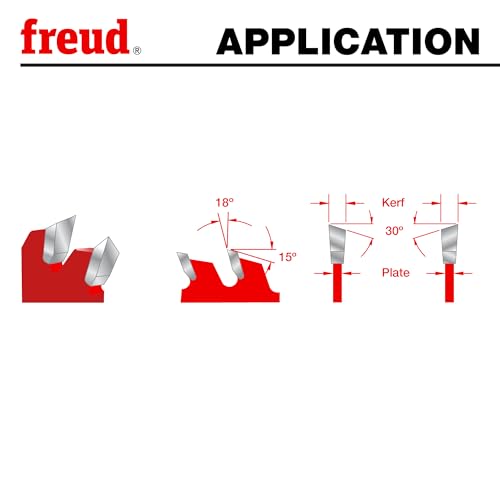
Kerf refers to the width of the cut the blade makes. Thin-kerf blades (typically around .080” to .090”) remove less material, leading to faster cutting speeds and less waste. However, they place a slightly higher load on your saw motor. Standard kerf blades (around .125”) are more stable and can handle heavier cuts, but they require more power. If you have an older or less powerful table saw, a thin-kerf blade is a great upgrade. Just be mindful of feed rate – don’t force the material through, let the blade do the work.
A thin-kerf blade can add noticeable power to an older saw, but don’t push it too hard. Slow and steady wins the race for a clean cut.
I often recommend looking at a range of premium 10-inch saw blades to see what features best suit your needs. And remember, proper table saw blade care extends blade life and ensures consistent performance.
Thin Kerf Table Saw Blades Compared
Here’s a comparison of specifications for various thin kerf table saw blades to help you choose the right one for your needs.
| Blade | Teeth | Kerf (in) | Grind | Arbor (in) | Features |
|---|---|---|---|---|---|
| Freud P410T | N/A | N/A | N/A | 5/8 | Fusion Trio Tooth |
| Freud LU83R010 | N/A | N/A | N/A | 5/8 | Combination Use |
| Freud LU88R010 | 60 | 0.090 | ATB | 5/8 | Fine Finish |
| Freud LM75R010 | 30 | 0.091 | TCG | 5/8 | Glue Line Rip |
| Diablo D1060X | N/A | N/A | N/A | N/A | Fine Finish |
| FOXBC 10″ 60T Crosscut | 60 | 0.087 | ATB | 5/8 | Crosscutting |
| FOXBC 10″ 80T Ultra Finish | 80 | 0.098 | ATB | 5/8 | Ultra-Fine Finish |
| DEWALT DWA11040 | 40 | N/A | N/A | N/A | Increased Accuracy |
Frequently Asked Questions
What arbor size do I need when replacing a table saw blade?
Most table saws use either a 5/8-inch or 3/8-inch arbor. You absolutely must match the blade’s arbor size to your saw’s arbor size for a safe and secure fit. Check your saw’s manual to confirm the correct size before purchasing a replacement.
Can a thin kerf blade be used for ripping lumber?
Yes, a thin kerf blade can be used for ripping, but it’s not always ideal. Blades with fewer teeth (24-40) and a TCG (Triple Chip Grind) are better suited for ripping because they clear out the waste material more efficiently, preventing overheating.
How much more waste will I create with a standard kerf blade?
A standard kerf blade removes approximately .035 inches more material with each cut compared to a thin-kerf blade. Over many cuts, this adds up, making thin-kerf blades preferable when material cost is a concern, or you’re looking to maximize yield.
Will a thin kerf blade slow down my cutting speed?
Generally, no. Thin kerf blades actually cut faster because they remove less material. However, if you force the material through the cut, you’ll experience binding and a slower overall cut. A smooth, consistent feed rate is key.
Where can I find more information about different types of saw blades?
You can find a detailed overview of various saw blades and their applications in our guide to the best table saw blades. It covers everything from general-purpose blades to specialized options for specific materials and cuts.
The Bottom Line
Choosing a table saw blade always comes down to balancing control and convenience. You can spend a lot to get a blade that does almost everything adequately, or you can focus on a few specific tasks and get a blade that excels at them. For most homeowners and DIYers, the Freud P410T offers the best overall combination of quality, versatility, and price – it’s a blade you can rely on for a wide range of projects without breaking the bank.
If you’re primarily focused on precise cuts in plywood or melamine, the Freud LU88R010 is an excellent choice. For those needing a dedicated ripping blade, the Freud LM75R010 will deliver clean, fast cuts. And if you’re working with a limited budget, the FOXBC 10″ 60T Crosscut provides surprisingly good performance for the price, making it a very solid value pick.
Ultimately, remember that a blade is only one part of the equation. Proper saw setup, sharp blades, and a controlled feed rate are far more important than any specific tooth count or carbide grade. Understanding your kerf size comparison and prioritizing technique will yield better results than chasing the latest, most expensive blade on the market.
