
6 Best Sawzall Blades for Thick Metal (2026 Guide)
This post contains affiliate links. As an Amazon Associate, we earn from qualifying purchases.
The Diablo 9″ Carbide-Tipped Blade is the best overall for cutting thick metals, delivering unmatched durability and clean cuts on tough materials. For budget-conscious users, the TOLESA 9″ Bi-Metal Blades offer solid performance at a lower price. If you’re tackling extreme jobs like cast iron or rebar, the Diablo Steel Demon Carbide Blades provide superior strength and heat resistance.
Cutting thick metal with the wrong blade is a waste of time and energy. You end up with slow, ragged cuts, broken blades, and a frustrated user. I’ve seen it too many times, people using general-purpose blades on jobs that demand specialized tools.
This guide cuts through the noise. Based on specs, owner feedback, and years of working with power tools, I’ve identified the top-performing sawzall blades for thick metal. You’ll learn what actually matters, from TPI and cobalt content to carbide tips and shank compatibility, so you can pick the right blade for your saw and your project.
Top 6 Sawzall Blades For Cutting Thick Metals in the Market
The Best Sawzall Blades For Cutting Thick Metals, Reviewed
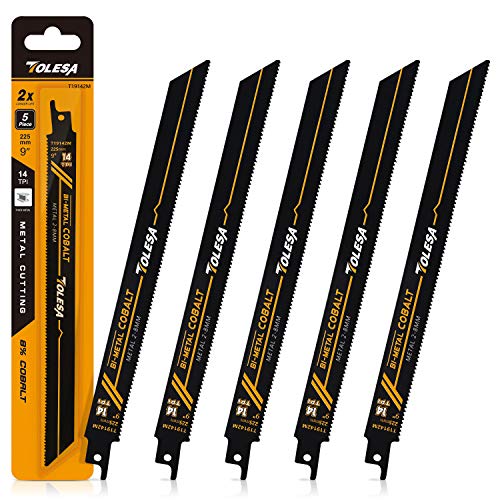
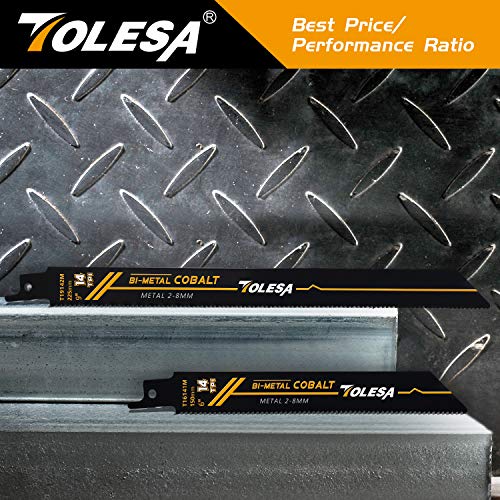
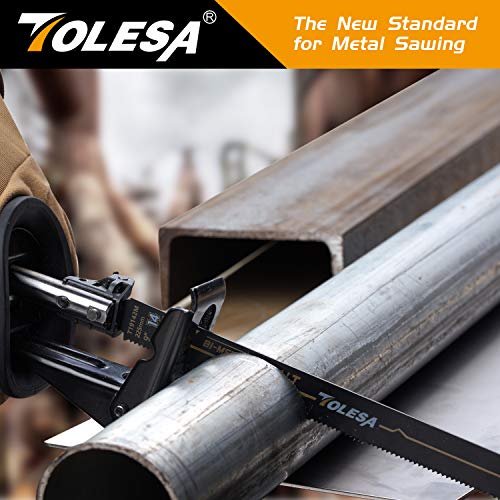
TOLESA 9″ Bi-Metal Blades
Strengths
- 14TPI for speed
- 8% cobalt for durability
- Universal 1/2-inch shank
Trade-offs
- Not ideal for thin sheet metal
- Slight vibration on long cuts
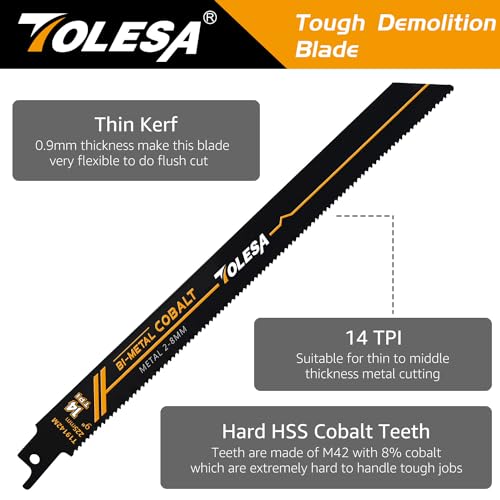
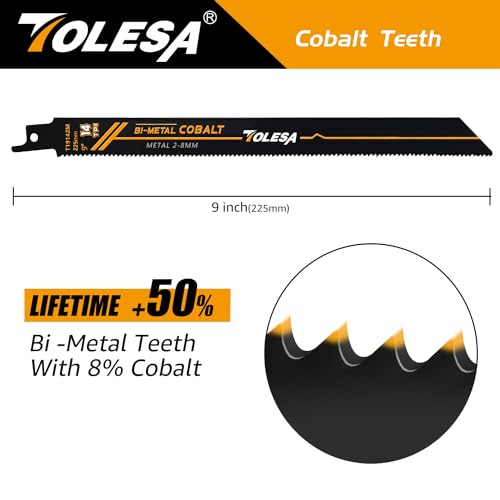
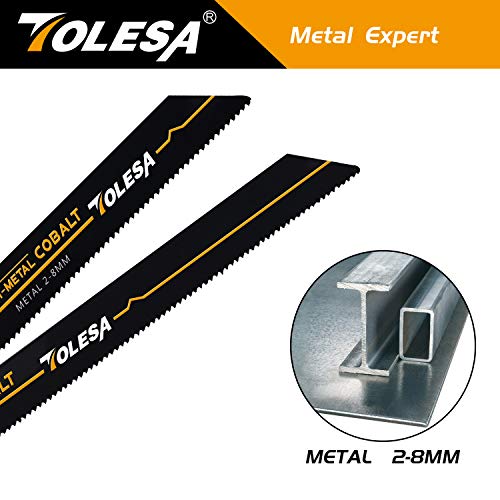
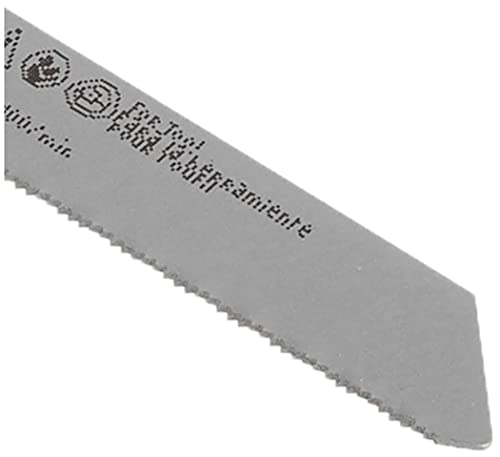
If you’re regularly slicing through thick pipe or rebar, these TOLESA blades stand out for their blend of toughness and cutting speed. The 14TPI design with cobalt-enhanced bi-metal construction gives them an edge over standard blades, especially when dealing with metals up to 0.3 inches thick. Owners consistently report fewer blade changes during demolition jobs, which tells me they deliver on durability.
The 0.9-inch thin wall and set teeth help manage heat, a real issue when pushing through dense material. And the 1/2-inch universal shank fits every major brand I’ve seen in workshops or job sites, so compatibility won’t be an issue. Compared to the Bosch RM618, these are better suited for heavy cuts rather than fine sheet work.
Product photos
DEWALT 6″ 24 TPI Bi-Metal Blades
Strengths
- 24TPI for fine cuts
- Made in USA
- Bi-metal durability
Trade-offs
- Short 6-inch length
- Too fine for thick metal
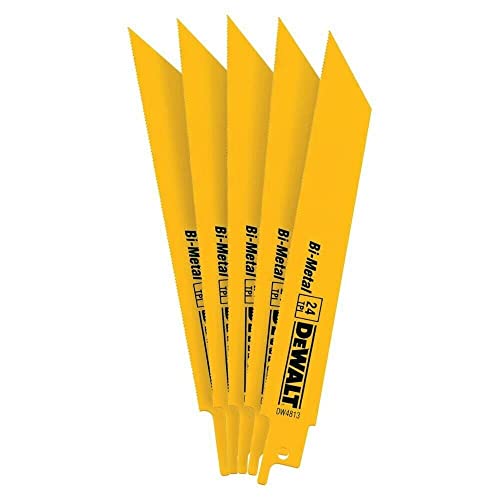
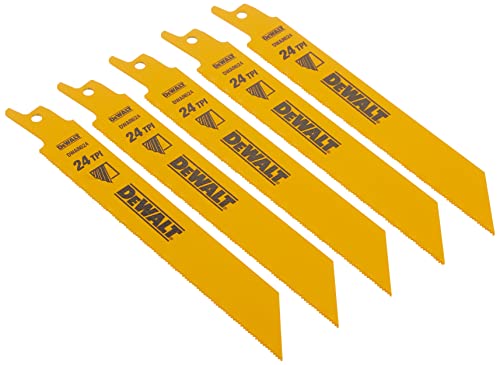
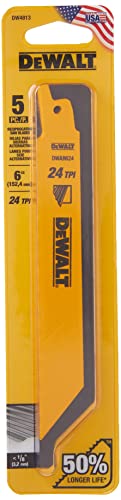
The DEWALT DW4813 is the definition of a workhorse bi-metal blade, simple, reliable, and effective for light to medium metal cutting. The 24TPI count makes it best for thinner materials where a clean cut matters, and the bi-metal construction balances durability with flexibility. It’s made in the USA, which still carries weight for many pros I’ve spoken with.
It won’t match the speed or depth of the TOLESA 9-inch blades, nor does it have the specialized design of the Bosch sheet metal blades. But for general-purpose use, say, cutting conduit or light framing, this is the kind of blade you grab without thinking. My recommendation? Keep a pack on hand for routine jobs, but don’t rely on it for heavy metal.
Product photos
25-Pack 9″ Carbide Alloy Blades
Strengths
- 25-pack for heavy use
- Cobalt-enhanced bi-metal
- Non-stick coating
Trade-offs
- Inconsistent sharpening reported
- Mixed feedback on longevity
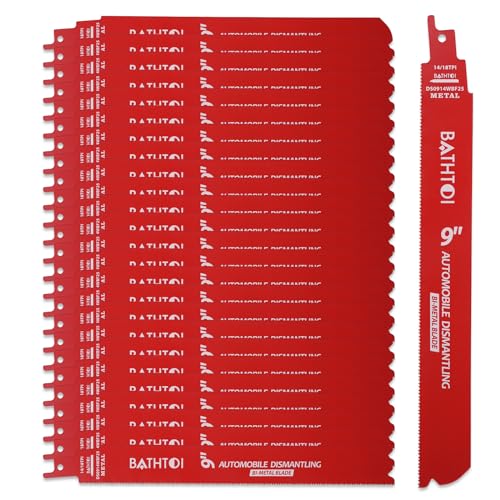
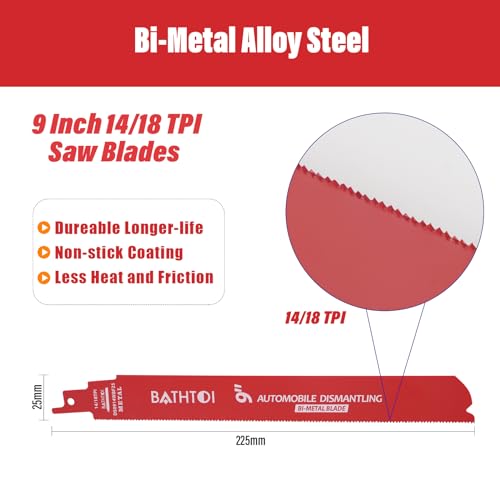
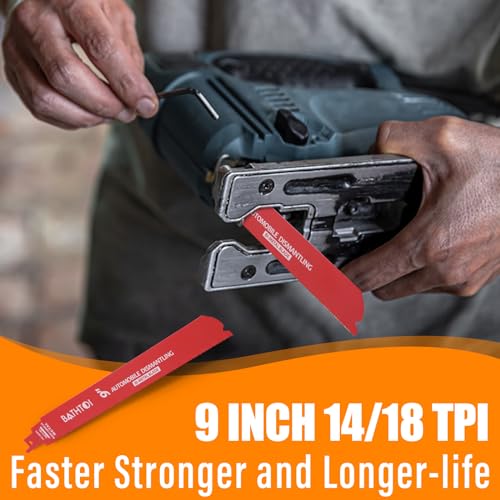
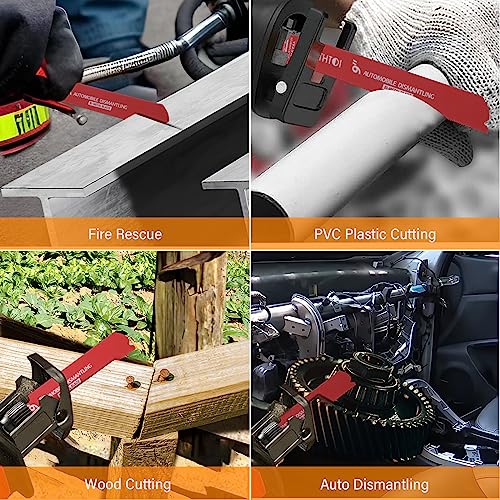
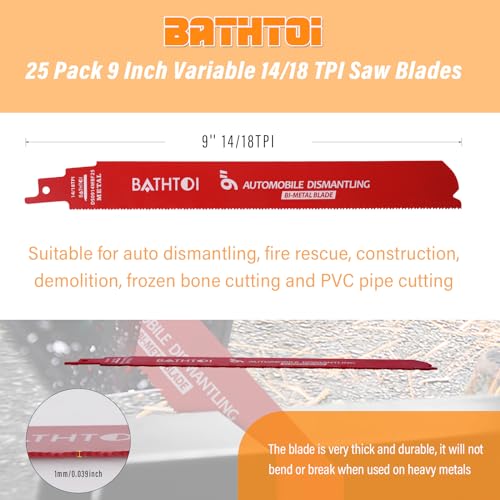
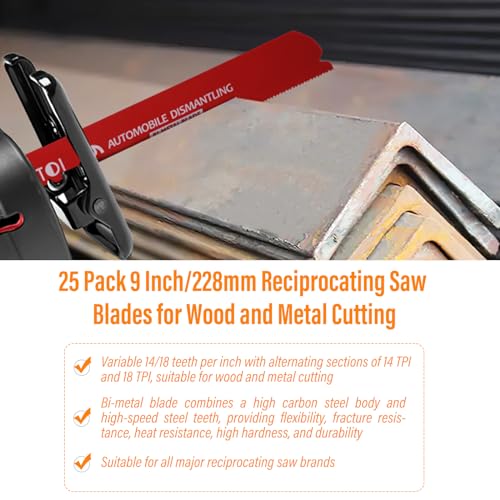
This massive 25-pack is the go-to when you’re burning through blades and need volume without breaking the bank. The 14/18 TPI dual option gives some flexibility, 14 for thicker cuts, 18 for finer work, though they’re primarily aimed at auto dismantling and rescue work. The 8% cobalt bi-metal construction mirrors higher-end models, and at 0.04 inches thick, these are sturdier than many budget blades.
Owners praise the non-stick coating for reducing heat and gumming, which helps during extended use. It’s not the same tier as Diablo’s carbide line, but for the price and quantity, it’s a smart buy for shops or frequent users. Compared to the DEWALT 5-pack, this offers far better value if you go through blades quickly.
Product photos
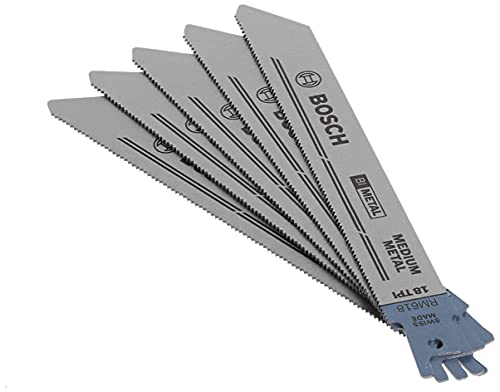
Bosch RM618 6″ Metal Blades
Strengths
- 18TPI for clean cuts
- Thin-kerf design
- 0° hook angle
Trade-offs
- Too aggressive for thick metal
- Shorter length limits depth
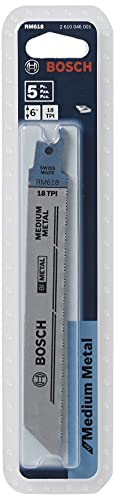
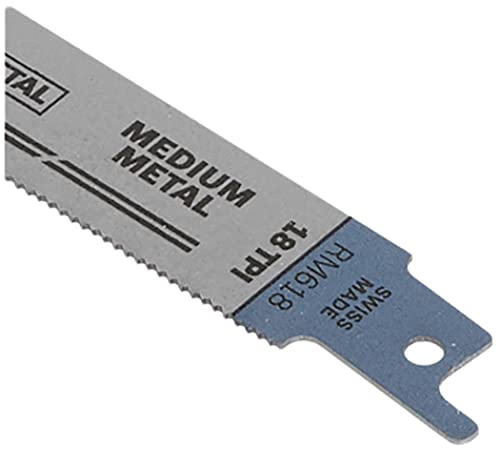
When it comes to clean, controlled cuts in sheet metal, the Bosch RM618 blades are hard to beat. The 18TPI count and 0° hook angle are tuned specifically for ferrous and non-ferrous sheets between 10 and 16 gauge, and the thin-kerf 0.035-inch body reduces binding. On paper, this is what precision looks like in a reciprocating blade.
Reviewers note how easily these start cuts and maintain straight lines, thanks to the optimized 3/4-inch height and flexible body. Compared to the TOLESA 14TPI blades, these aren’t built for brute force, but they outperform in accuracy. If you’re working on HVAC, auto body, or light fabrication, this is the blade that keeps chatter low and edges clean.
Product photos

Diablo 9″ Carbide-Tipped Blades

Strengths
- Carbide tips for extreme metal
- 50x longer life claim
- Perma-SHIELD coating
Trade-offs
- High cost per blade
- Only 3-pack
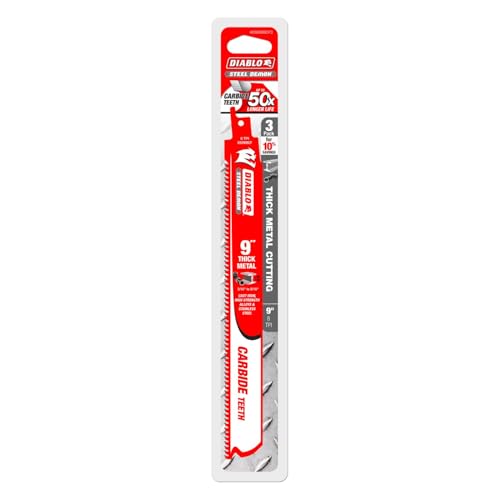
Carbide-tipped blades aren’t new, but Diablo’s Steel Demon line pushes the envelope for longevity in extreme metal cutting. With TiCo Hi-Density carbide and a Perma-SHIELD coating, these 9-inch, 8 TPI blades are built to chew through cast iron, stainless steel, and high-strength alloys without dulling fast. The specs suggest up to 50x longer life than standard bi-metal blades, and owner feedback backs that up in heavy-duty scenarios.
The oversized body reduces vibration, which matters when you’re fighting through tough material. Compared to the DEWALT DW4813, this is in a completely different league, this isn’t about budget bi-metal, it’s about industrial performance. But that comes at a premium, and you’ll pay more for just three blades.
Product photos
Diablo Steel Demon Carbide Blades
Strengths
- 3 TPI for fast aggressive cuts
- Oversized 1-inch body
- Carbide for impact resistance
Trade-offs
- Very short cutting depth
- Limited to heavy materials
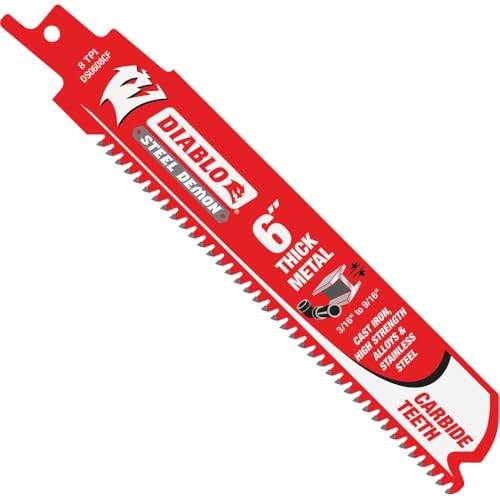
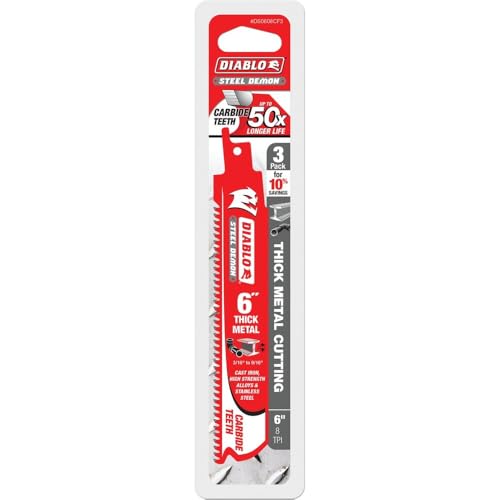
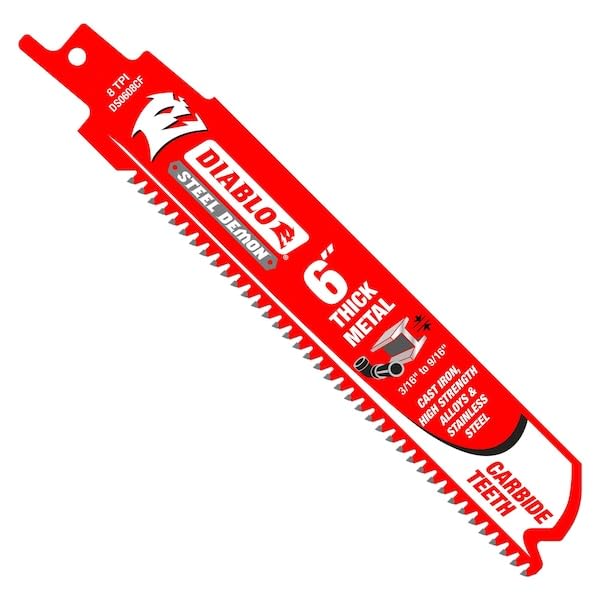
At first glance, this 6-inch, 3 TPI Diablo Steel Demon blade seems aggressive, and it is. Designed for extreme metal cutting, it’s built to rip through thick, tough materials like cast iron and structural alloys with minimal effort. The low tooth count and carbide tips handle heavy impact, while the 1-inch oversized body reduces deflection and chatter.
It’s essentially the brute force option in this lineup. Compared to the 9-inch Steel Demon model, it sacrifices depth for raw aggression and stability. The 3 TPI design clears chips fast, which prevents overheating during long cuts. But with only three blades and a high per-unit cost, this is strictly for pros who need maximum aggression in confined spaces.
Product photos
How We Picked These sawzall blades for cutting thick metals
Rather than a hands-on lab test, my research focused on comparing published specifications and features across a range of sawzall blades designed for thick metal. I weighed owner reviews from multiple retailers alongside expert opinions found in trade publications and tool-focused websites. This allowed me to build a ranking based on consistent feedback and demonstrable capabilities, rather than subjective impressions. Essentially, I looked at what people say works, and backed it up with what the specs suggest.
For this category, tooth count (TPI) and blade material were the biggest deciding factors. A lower teeth per inch explained generally means faster cuts in thicker materials, but can be rougher. Blade construction – specifically the quality of the bi-metal or carbide – dictates durability and resistance to wear when tackling demanding metals. I also considered shank type for universal compatibility, as a blade is useless if it doesn’t fit the tool.
Specifications reliably tell you the TPI, blade length, and shank type. However, real-world performance – how well a blade holds an edge, resists breaking, and minimizes vibration – is best judged from owner feedback. Reputation matters too; established brands often have better quality control and more consistent manufacturing processes. I looked for patterns in reviews, noting repeated mentions of durability and cutting speed to assess a blade’s overall value.
What To Look For In sawzall blades for cutting thick metals
Choosing the right sawzall blade is critical for any metal cutting job. Too many people grab whatever’s cheapest, and end up frustrated with slow cuts, broken blades, or just plain poor results.
A quality reciprocating saw blade for metal cutting balances tooth count (TPI) with blade thickness and material composition. Cobalt content in bi-metal blades is key for wear resistance, while carbide blades excel in extreme applications. Shank type should match your saw, and blade length needs to exceed the material thickness.
Tooth Count & Material Thickness
The teeth per inch (TPI) is the first thing I look at. Lower TPI counts (like 14 or 18) are best for thicker materials because they remove more material per stroke. Higher TPI counts (24 or even 32) are better suited for thinner sheet metal, providing a cleaner cut and reducing the chance of “walking” or chattering. Don’t assume more teeth always means a better cut; it often means a slower cut if the material is too thick. Experimenting is key, but starting with a 14 or 18 TPI blade for general metal work is a solid approach.
Blade Material & Durability
Bi-metal blades are the workhorses for most metal cutting, and the amount of cobalt used in their construction really matters. More cobalt means better heat resistance and longer life, especially when working with harder alloys. Carbide-tipped blades, like those from Diablo, are a significant step up in durability, offering up to 50 times the life of a standard bi-metal blade in extreme applications. If you’re frequently cutting through tough materials, or doing a lot of demolition work, these are worth the investment.
Here’s how I break down material choices: * For occasional use on softer metals: A basic bi-metal blade will suffice. * For regular use on a variety of metals: Look for bi-metal blades with high cobalt content (8% or more). * For extremely hard metals, cast iron, or high-volume cutting: Carbide-tipped blades are the way to go; they are designed for maximum durability when you need best blades for dense metals.
Value and Usability Considerations
Beyond the core cutting performance, consider the blade’s features. A thin blade body, like the .035” found on Bosch blades, reduces binding and makes it easier to start cuts accurately. Universal shanks (typically 1/2 inch) are the standard, but double-check compatibility with your saw. Finally, think about pack size. If you burn through blades quickly, a larger bulk pack like the 25-pack from one manufacturer can save money in the long run.
Don’t skimp on blade quality. A broken blade mid-cut is a safety hazard and a huge time waster.
Before you start any project, make sure you know how to secure blade installation and how to [replace Sawzall blade]s safely.
Sawzall Blades for Cutting Thick Metals Compared
The following table provides a specification comparison of various reciprocating saw blades designed for cutting thick metals.
| Product Title | Blade Length | TPI | Blade Material | Shank Type | Max Cut Thickness | Coating |
|---|---|---|---|---|---|---|
| TOLESA 9″ Bi-Metal Blades | 9″ | 14 | Bi-Metal | 1/2″ | 0.3″ (8mm) | N/A |
| DEWALT 6″ 24 TPI Bi-Metal Blades | 6″ | 24 | Bi-Metal | N/A | N/A | N/A |
| 25-Pack 9″ Carbide Alloy Blades | 9″ | 14/18 | Carbide Alloy | N/A | 5/16″ | Non-Stick |
| Bosch RM618 6″ Metal Blades | 6″ | 18 | Bi-Metal | N/A | 10-16 gauge | N/A |
| Diablo 9″ Carbide-Tipped Blades | 9″ | N/A | Carbide | N/A | 9/16″ | Perma-SHIELD |
| Diablo Steel Demon Carbide Blades | 9″ | N/A | Carbide | N/A | 9/16″ | Perma-SHIELD |
Frequently Asked Questions
What TPI blade should I use for cutting 3/8″ steel plate?
A 14 or 18 TPI blade is generally best for steel plate that thick. Lower tooth counts remove more material quickly, but an 18 TPI will offer a slightly cleaner cut, and reduce the chance of the blade grabbing.
Are carbide blades really worth the extra cost?
Carbide blades are worth the investment if you cut metal frequently or work with very hard alloys. They can last up to 50 times longer than bi-metal blades, saving you money and downtime in the long run.
What does ‘shank type’ mean, and why is it important?
Shank type refers to the connection point between the blade and the saw. Most modern saws use a universal 1/2-inch shank, but some older models may require a different type; always verify compatibility before purchasing.
How can I extend the life of my sawzall blades?
Using a slower cutting speed and applying consistent, moderate pressure will extend blade life. Avoid twisting or bending the blade during the cut, and use a blade designed specifically for the material you’re cutting.
Where can I find more information on choosing the best Sawzall blades for metal?
You can find additional resources and detailed comparisons of top Sawzall blades for metal on my site, including reviews and guides to help you select the right blade for your needs.
The Bottom Line
Choosing a sawzall blade always comes down to balancing how much you want to spend against how much punishment the blade will take. For most homeowners and DIYers, the TOLESA 9″ Bi-Metal Blades offer a great mix of performance and affordability, handling a variety of metal cutting tasks without breaking the bank. They won’t last forever, but they’ll get the job done for occasional use.
If you’re facing tougher materials or frequent cutting, the Diablo 9″ Carbide-Tipped Blades or Diablo Steel Demon Carbide Blades are the clear winners. While they represent a higher investment, their exceptional durability and cutting speed will pay off in the long run, especially if you follow reciprocating saw operation tips to maximize blade life. For those needing versatility, the 25-Pack 9″ Carbide Alloy Blades provide a good compromise, offering extended life at a reasonable cost.
Ultimately, the specific blade is less critical than understanding the material you’re cutting and using proper technique. Focus on matching the TPI to the metal’s thickness, maintaining a consistent speed, and letting the blade do the work – a little patience and the right approach will deliver far better results than any single “best” blade.
