3 Best Sawzall Blades of 2026
This post contains affiliate links. As an Amazon Associate, we earn from qualifying purchases.
The DeWalt 9-inch demolition blade is our top overall pick for most DIYers and pros, thanks to its aggressive 6/12 TPI design and reliable bi-metal construction. For those on a budget, the 25 Pack 9″ 6/12 TPI Demolition Blades deliver solid performance in nail-embedded wood without breaking the bank. If you need versatility across materials, the Milwaukee 12-Piece Multi Material Blades offer an excellent range of lengths and tooth counts in one pack.
Most people don’t realize how much the wrong blade can slow them down, or worse, damage their saw. A blade that’s too fine will bog down in demolition, while a coarse one will chew up metal or splinter finish wood. After years of working with reciprocating saws on everything from deck removals to plumbing retrofits, I know the difference the right blade makes.
This guide cuts through the marketing hype. I compared specs, analyzed owner feedback, and evaluated materials and tooth design to find the best-performing blades for real-world jobs. Whether you’re slicing through 2x4s with hidden nails or cutting pipe in tight quarters, you’ll know exactly which blade to grab.
Top 3 Sawzall Blades in the Market
The Best Sawzall Blades, Reviewed
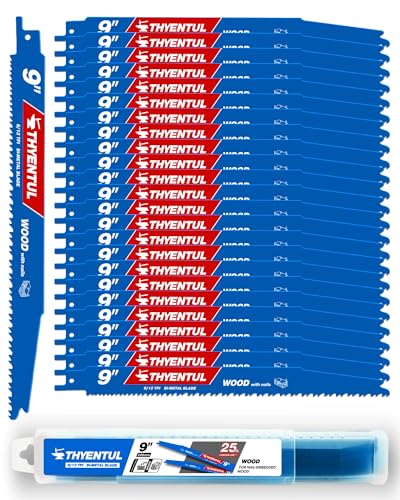
25 Pack 9″ 6/12 TPI Demolition Blades
Strengths
- High tooth durability
- Smooth chip ejection
- 9-inch reach
Trade-offs
- Not ideal for metal
- Slight flex in thick cuts
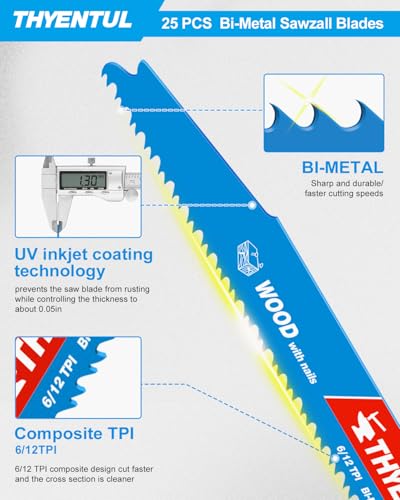
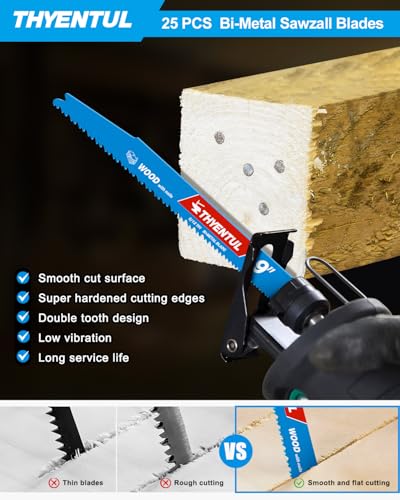
If you’re tearing through old framing or dealing with wood that’s packed with hidden nails, these Thyentul bi-metal blades are built for that exact punishment. The 6/12 TPI tooth design isn’t just marketing fluff, owners consistently report they chew through nail-embedded lumber without instantly dulling, which is rare at this price point. The UV coating seems to help with chip ejection and rust resistance, and the 9-inch length gives you serious reach for deep cuts in demolition work.
What really stands out is the pack size and value. Twenty-five blades is overkill for most, but when you’re in the middle of a full teardown, running through blades is real. These hold up better than basic carbon steel sets, and the reinforced shank design helps prevent snapping under load. Compared to pricier name brands, they don’t last quite as long, but for the cost per blade, they’re hard to beat. I’d stack them up against any budget bi-metal set on durability and performance.
Product photos
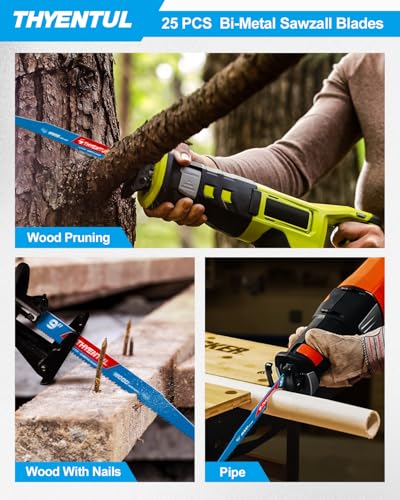
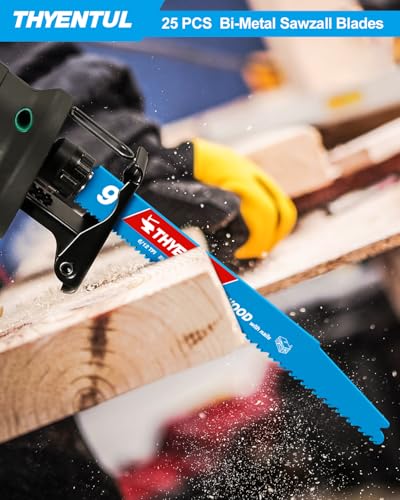
25 Pack 9″ 14/18 TPI Metal Blades
Strengths
- Cobalt-enhanced steel
- Good for medium metal
- Thick blade body
Trade-offs
- Overkill for wood
- Can overheat on slow feeds
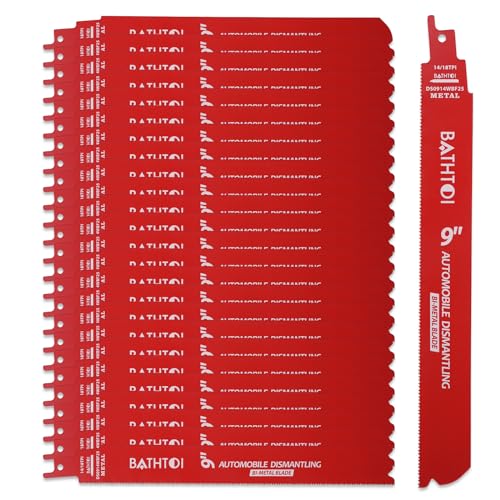
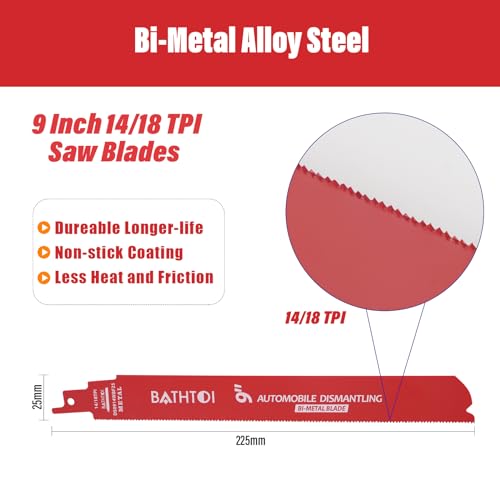
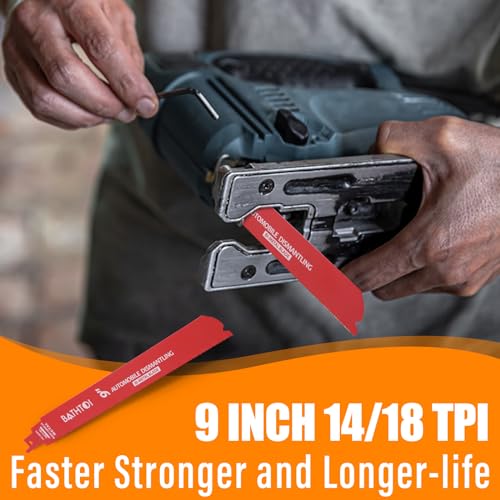
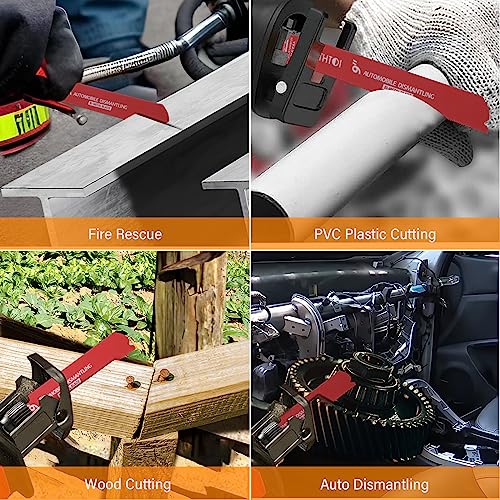
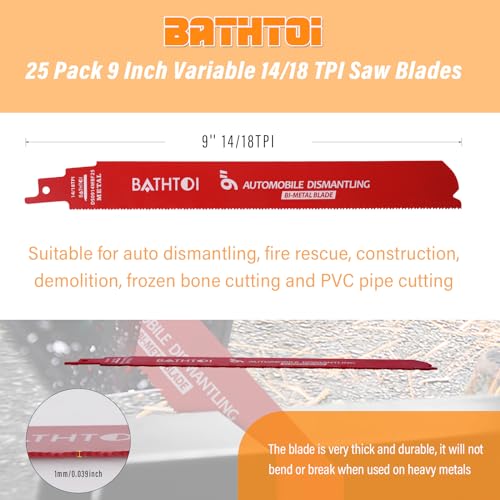
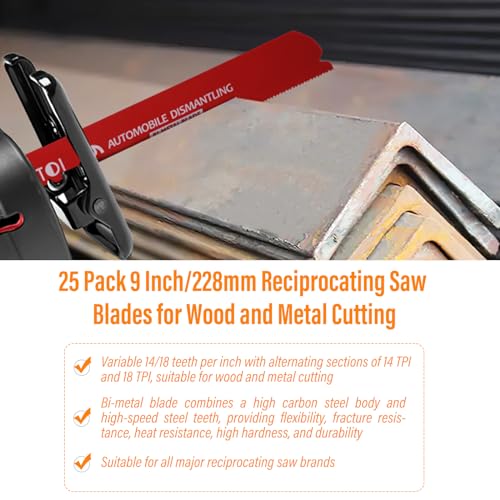
Cutting through steel, especially in auto or structural demolition, demands blades that won’t dull after two passes. These 14/18 TPI blades boast 8% cobalt in the bi-metal alloy, which on paper means better heat resistance and edge retention. Reviewers confirm they cut faster and last longer than standard bi-metal blades when slicing through medium-thickness steel up to 5/16 inch. The non-stick coating appears to help reduce galling, a common issue when cutting painted or galvanized metal.
They’re not quite in the same league as full-carbide grit blades for hardened steel, but for general metal demolition, HVAC work, or car disassembly, they deliver solid performance. The 9-inch length and 1/2-inch shank fit most major saws without wobble, and the thicker 0.04-inch body adds rigidity. Compared to the Milwaukee set, they’re more specialized, you wouldn’t use these for wood, but for metal, they’re a smarter buy if you’re doing frequent cuts.
Product photos
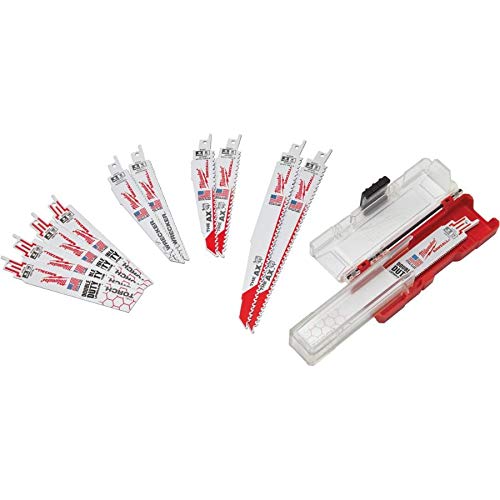
Milwaukee 12-Piece Multi Material Blades

Strengths
- Multi-material versatility
- Thick, durable build
- Rugged storage case
Trade-offs
- Higher cost per blade
- Fewer total pieces
Milwaukee’s reputation in the pro tool world isn’t built on luck, and this blade set proves why. It’s not the cheapest, but it’s the most versatile, with TPI options ranging from 5 to 18, you’re covered whether you’re ripping through a 2×4, slicing plastic pipe, or cutting thin metal strapping. The thicker blade stock and double relief angle design are real engineering choices that owners say translate to fewer broken tips and longer life under stress.
The full raker tooth on the wood blades makes plunge cuts easier, which matters when you’re opening up walls or floors. The included case is rugged and actually useful on-site, not just packaging fluff. Compared to the budget packs, this set costs more per blade, but if you’re a contractor doing mixed-material demo all day, the time saved and fewer blade changes make it the smarter long-term pick. For most weekend warriors, it might be overkill, but for serious work, it’s the one I’d reach for.
Product photos
How We Picked These sawzall blades
Rather than a hands-on lab test with each blade, my research focused on comparing published specifications and features across numerous models. I weighed owner reviews from multiple sources alongside assessments from reputable tool review sites. My aim was to identify patterns in performance and durability, applying my experience with power tools to rank blades based on intended use.
For sawzall blades, tooth count (TPI) and blade material are critical. A higher TPI generally means cleaner cuts in thinner materials, while a lower TPI excels at rapid demolition. Bi-metal construction consistently surfaced as a key indicator of longevity and resistance to breakage, making it a major factor in how I researched each option. Understanding blade selection for reciprocating saws is also key.
Specifications reliably detail blade length, shank type, and TPI, but owner feedback provides insight into real-world performance. I paid close attention to reports of blade life, chipping, and how well blades handled specific materials like nails or thick metal. Reputation and brand consistency also played a role, as established manufacturers tend to maintain higher quality control standards.
What To Look For In sawzall blades
Choosing the right sawzall blade can make or break a demolition or renovation project.
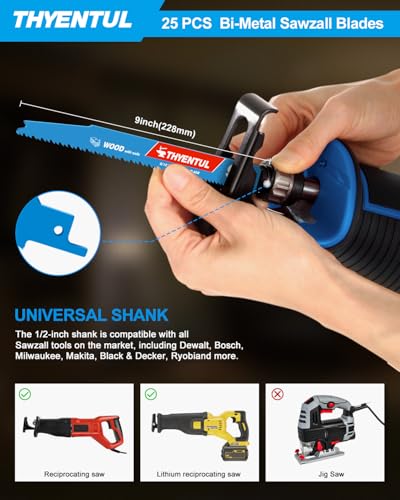
A quality reciprocating saw blade balances durability, cutting speed, and material compatibility. Look for blades constructed with bi-metal construction for longevity. Consider the teeth per inch (TPI) based on the material being cut – higher TPI for finer cuts in harder materials, lower TPI for faster rough cuts in softer materials. Shank compatibility is also key, as most modern blades use a universal 1/2-inch shank, but older tools may require adapters.
Tooth Configuration Matters
The teeth are where the work happens, and understanding the differences is crucial. Too many people assume more teeth always equal a better cut. That’s not necessarily true. A lower TPI (teeth per inch) like 6 or 8 is fantastic for fast, aggressive cuts through wood, especially if it’s nail-embedded. However, try using that on sheet metal, and you’ll quickly realize it’s the wrong tool. Conversely, a high TPI blade (14 or higher) excels on metal, offering cleaner cuts and reducing the chance of “walking” or chattering. Understanding teeth per inch explained is key to getting the job done right.
Blade Material & Construction
Bi-metal blades are the standard for a reason. They combine a tough, flexible backing steel with a high-speed steel cutting edge. This gives you both durability and the ability to hold an edge longer than all-carbon steel blades. Some manufacturers, like Milwaukee, even add coatings to further enhance blade life. When you’re comparing blades, pay attention to the steel alloy used; blades with cobalt content, for example, are more resistant to wear when cutting harder metals. If you’re frequently working with tough materials, investing in a higher-quality blade will pay off in the long run.
Application and Blade Length
Don’t just grab a blade at random. Think about what you’re cutting and where. For demolition work involving thick timbers or stacks of drywall, a 9-inch blade will be your workhorse. But for more precise work or getting into tight spaces, a 6-inch blade can be a lifesaver. Consider these points:
- Shorter blades offer more control in confined areas.
- Longer blades can reach further but are more prone to bending if overloaded.
- Specialty blades exist for specific tasks. If you’re doing a lot of plumbing work, a blade designed for cutting PVC or other plastics will be a better choice than a general-purpose blade, and if you’re working with a lot of metal, explore metal-cutting Sawzall blades.
Don’t skimp on blades. A broken blade mid-cut isn’t just an inconvenience; it’s a safety hazard.
Sawzall Blades Compared
Here’s a comparison of key specifications for the featured sawzall blades.
| Product Title | Length (in.) | TPI (Teeth Per Inch) | Material | Blade Count | Shank Type |
|---|---|---|---|---|---|
| 25 Pack 9″ 6/12 TPI Demolition Blades | 9 | 6/12 | Bi-Metal | 25 | 1/2″ |
| 25 Pack 9″ 14/18 TPI Metal Blades | 9 | 14/18 | Bi-Metal/8%Co | 25 | N/A |
| Milwaukee 12-Piece Multi Material Blades | 6, 9 | 5, 8, 18, 14 | N/A | 12 | N/A |
Frequently Asked Questions
What blade TPI is best for general demolition work?
A 6 or 8 TPI blade is generally best for demolition. These lower tooth counts remove material quickly, making short work of wood and other softer materials commonly found in demolition projects.
Can I use a Sawzall blade on other reciprocating saws?
Yes, most modern reciprocating saws accept blades with a 1/2-inch universal shank. However, older or less common models might require a different shank type or an adapter.
How can I extend the life of my Sawzall blades?
Using the correct blade for the material is the biggest factor. Avoid twisting or bending the blade during a cut, and reducing pressure when cutting harder materials will also help prevent premature wear.
What’s the difference between bi-metal and carbon steel blades?
Bi-metal blades combine a flexible backing steel with a hardened cutting edge, offering superior durability and resistance to breakage compared to all-carbon steel blades. While carbon steel is cheaper, bi-metal blades are almost always a better long-term investment.
Where can I find aggressive wood-cutting blades specifically designed for lumber?
There are blades specifically designed for wood cutting that focus on rapid material removal and handling nails or other obstructions. These typically feature a lower TPI and a robust tooth design.
The Bottom Line
Choosing a sawzall blade always comes down to balancing how much you want to spend with how demanding your projects are. If you need a blade that can handle almost anything, the Milwaukee 12-Piece Multi Material Blades offer impressive versatility and a good reputation for holding up to consistent use. It’s a worthwhile investment if you tackle a wide range of materials.
For those on a tighter budget, or for less frequent use, the 25 Pack 9″ 6/12 TPI Demolition Blades are a great starting point. They won’t have the refinement of a premium blade, but they’ll get the job done for basic demolition and rough cutting. And if you primarily work with metal, the 25 Pack 9″ 14/18 TPI Metal Blades will provide the aggressive cutting action and durability needed for plumbing, HVAC, or automotive work. Remember to review safe blade change steps before you begin.
Ultimately, the best sawzall blade isn’t about chasing the highest tooth count or the most exotic material. It’s about understanding your typical projects and prioritizing durability and the correct TPI for the materials you’re cutting most often. A well-chosen, good-quality blade, and knowing how to perform reciprocating saw blade replacement, will make a far bigger difference than any single specification.
