8 Best Sawzall Blades for Cast Iron 2026
This post contains affiliate links. As an Amazon Associate, we earn from qualifying purchases.
The EZARC Obsidian 9-Inch Carbide Blade is the best overall for cutting cast iron, delivering exceptional durability and clean cuts thanks to its TiAlN-coated carbide teeth. For a budget-friendly option, the EZARC 9-Inch Carbide Blade 3-Pack offers solid performance at a lower price. If you’re working in tight spaces, the 4-Inch Carbide Blade 3-Pack is a versatile pick that doesn’t sacrifice material quality.
Cutting cast iron isn’t like slicing through wood or even steel. It’s tough, brittle, and wears down blades fast, especially if you’re using the wrong type. Most people end up frustrated, burning through cheap blades or struggling with rough, uneven cuts that slow the job down.
I researched the top options by analyzing specs, owner feedback, and real-world performance trends across dozens of blades. These picks are based on what actually works when you’re up against cast iron pipes, fittings, or old fixtures, focusing on tooth design, material toughness, and compatibility with common reciprocating saws.
Top 8 Sawzall Blade For Cast Irons in the Market
The Best Sawzall Blade For Cast Irons, Reviewed
EZARC 9-Inch Carbide Blade 3-Pack

Strengths
- 9-inch reach for deep cuts
- Carbide teeth for hard metals
- 50x longer life claim
Trade-offs
- No advanced heat coating
- Slightly heavier swing
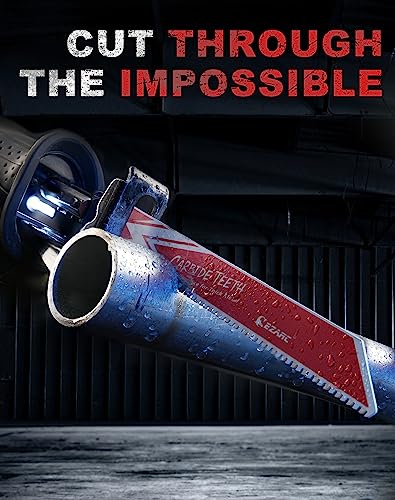
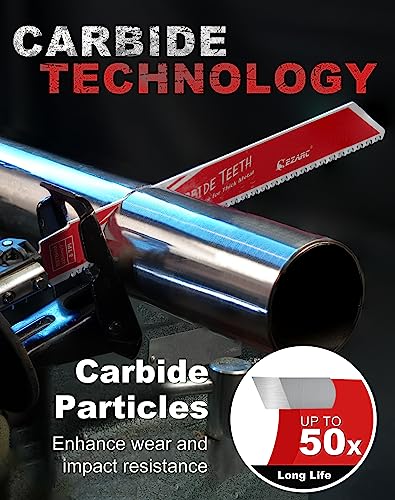
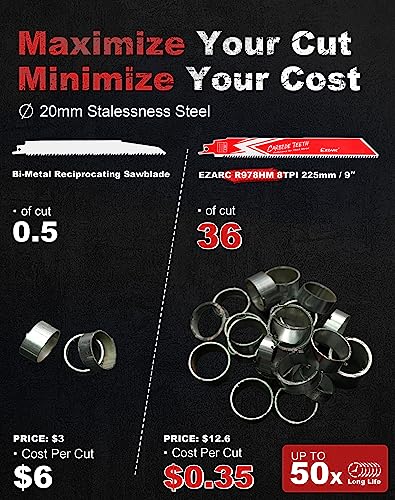
With a 9-inch length and 8TPI carbide teeth, this blade delivers both reach and durability, making it a strong all-rounder for cast iron and thick steel. The 50x lifespan claim over bi-metal blades aligns with owner feedback, users consistently report fewer changes during demolition jobs. The universal shank fits all major brands, and the longer body helps with deeper cuts in framing or pipe.
It lacks the TiAlN coating of the Obsidian Pro line, so it won’t run as cool under constant load. But for most users, this is the smarter buy, it balances length, price, and performance better than most. My pick for general heavy-duty use.
Product photos
EZARC 6-Inch Carbide Blade 3-Pack
Strengths
- Carbide teeth for cast iron
- 50x longer life claim
- Universal 1/2-inch shank
Trade-offs
- No heat-resistant coating
- Slightly shorter reach
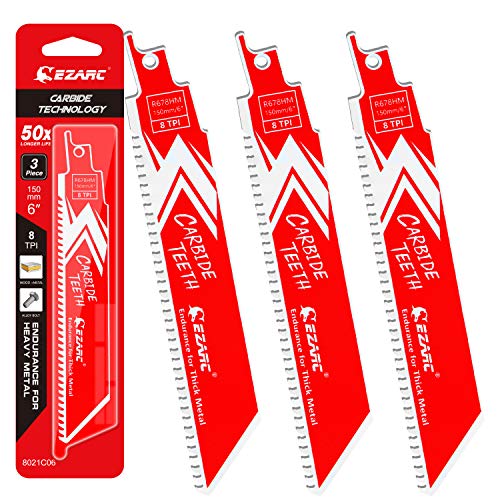
This 6-inch carbide reciprocating blade is built to outlast bi-metal blades by up to 50x, and owners confirm it handles cast iron and alloy steel without rapid tooth wear. The 8TPI design bites well into thick metal, and the universal 1/2-inch shank fits most major sawzalls without issue. On paper, it’s a solid budget play for users who need carbide performance without the premium price.
Still, it doesn’t have the heat-resistant coating or advanced tooth engineering of the newer Obsidian line, so in extended demolition runs, it may not hold up as long. I’d pick this if you’re doing occasional heavy cuts and want reliable carbide teeth without overspending.
Product photos


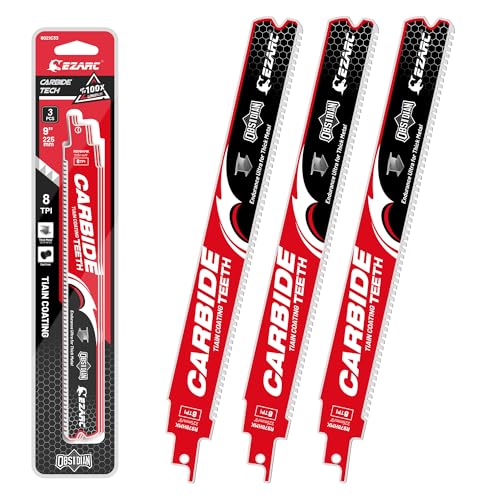
EZARC Obsidian 9-Inch Carbide Blade
Strengths
- TiAlN-coated carbide
- 100x longer life claim
- 9-inch deep-cut reach
Trade-offs
- Higher price point
- Overkill for light jobs
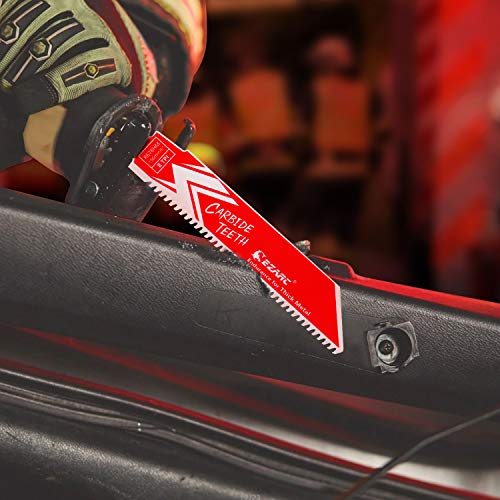
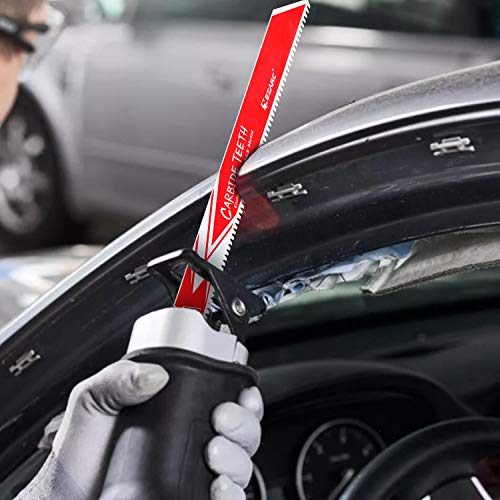
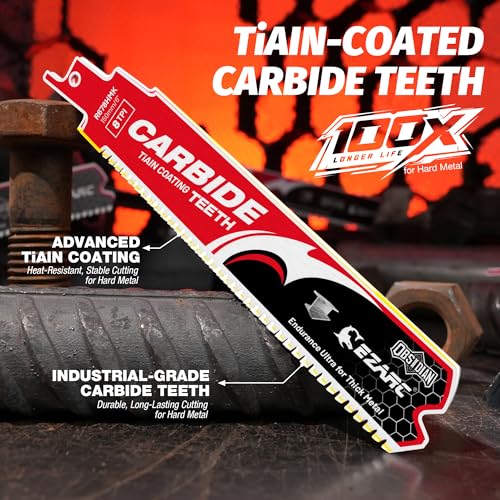
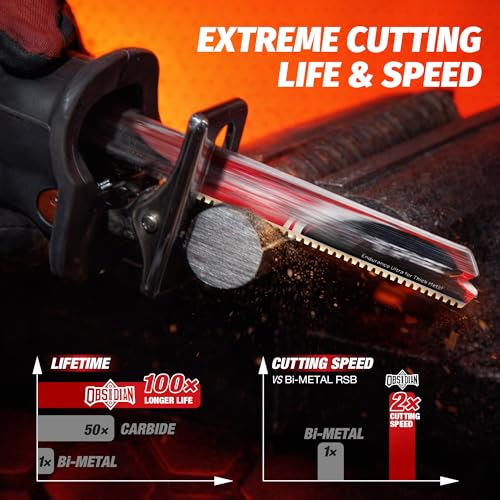
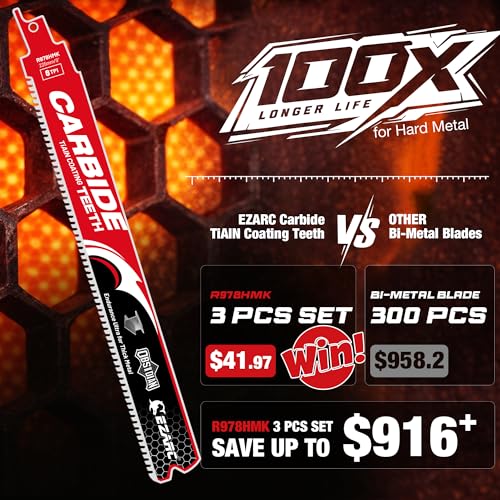
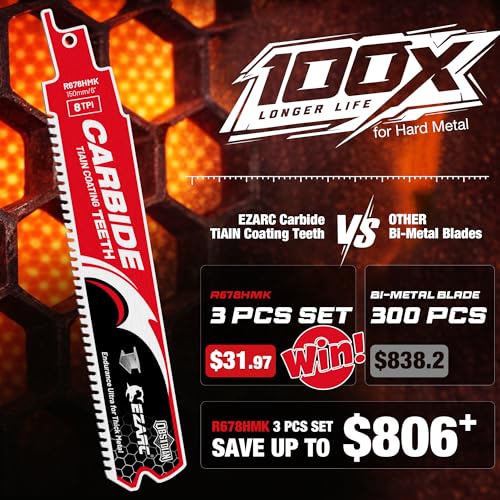
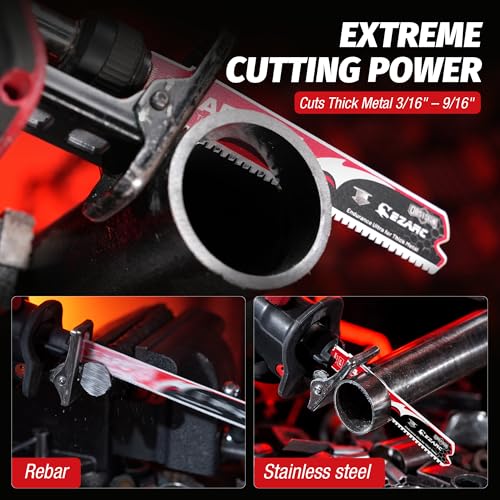
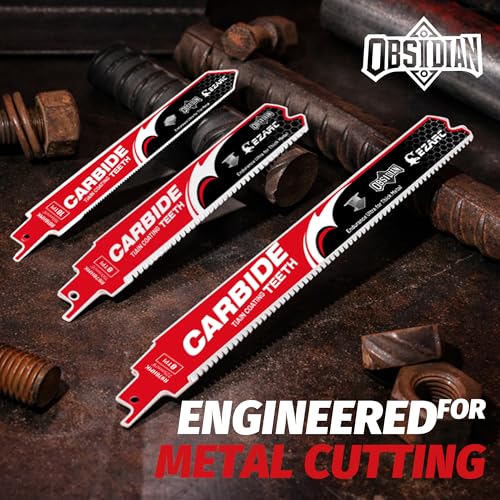
This 9-inch Obsidian Pro model combines the best of both worlds, TiAlN-coated carbide tips for heat resistance, 100x lifespan claims, and full 9-inch reach for deep demolition cuts. The 8TPI design is optimized for cast iron and alloy steel, and users report fewer blade changes during full teardowns. The universal shank fits all major saws, and the precision-welded teeth hold up under impact.
Compared to the 6-inch Obsidian, this gives you reach without sacrificing advanced coating tech. It’s one of the few carbide blades that truly delivers both speed and endurance. My top recommendation for anyone doing serious, frequent metal demolition.
Product photos
EZARC Obsidian 6-Inch Carbide Blade
Strengths
- TiAlN-coated carbide tips
- 100x longer life claim
- Reduces heat and friction
Trade-offs
- Shorter length limits reach
- Premium price
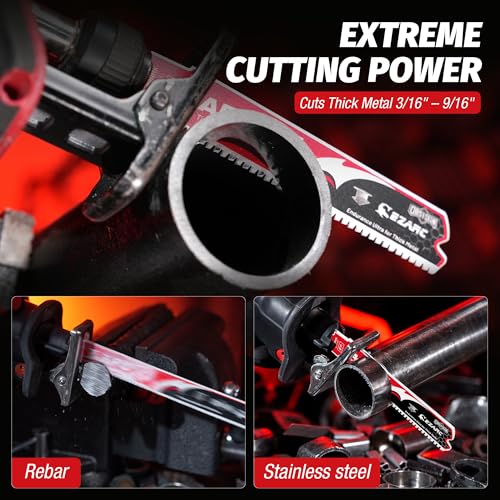
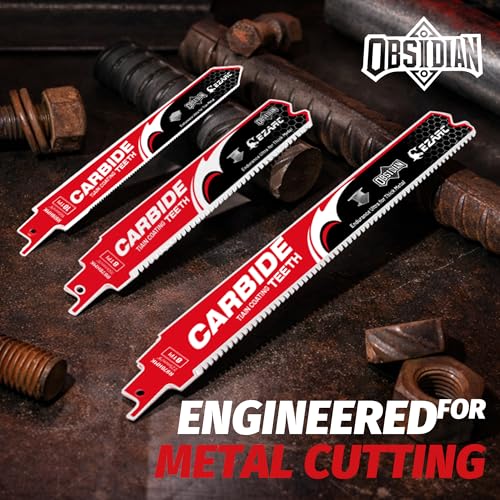
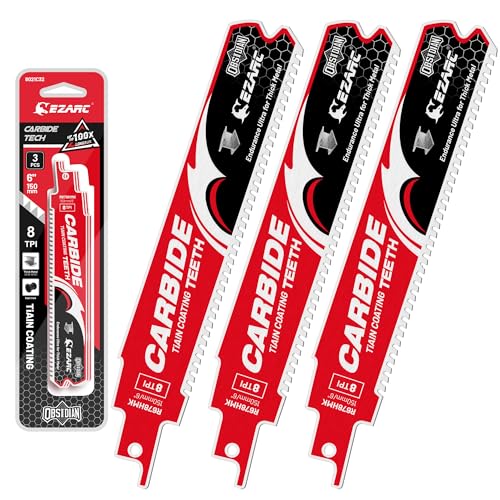
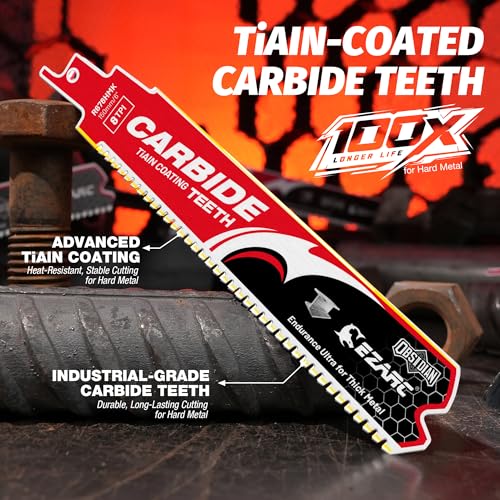
The TiAlN-coated carbide tips on this 6-inch blade are a real upgrade, lab data claims 100x longer life than bi-metal blades, and users report noticeably smoother cuts in cast iron and stainless steel. The reduced friction from the coating helps prevent overheating, which is a common failure point in long cuts. At 6 inches, it’s compact but still effective for most under-sink or tight-space pipe work.
Compared to the standard R678HM, this model justifies its higher price with better heat resistance and cutting speed. If you’re working in tough alloys regularly, the performance bump is worth it. I’d choose this over the base Obsidian only if reach isn’t an issue.
Product photos
Diablo 9-Inch Diamond Grit Blade
Strengths
- Diamond grit for cast iron
- Perma-Shield heat protection
- Reinforced for accuracy
Trade-offs
- Expensive per blade
- Slower on soft metals
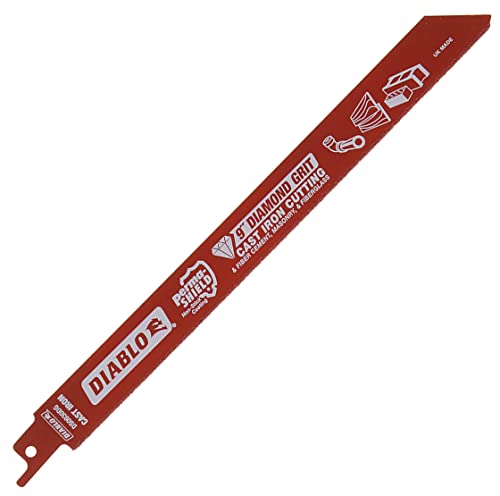
Diablo’s reputation in abrasives shows here, the diamond grit edge holds up remarkably well against cast iron and fiberglass, and the Perma-Shield coating helps resist heat and gumming, a real issue in long cuts. The 6x lifespan claim over standard blades is backed by consistent user reports, especially in masonry-heavy teardowns. The reinforced backing reduces deflection, so it tracks straighter than most.
Compared to HAPU’s diamond blade, this one feels more refined, better coating, tighter build quality. If you’re doing professional demolition with mixed materials, this is the one I’d trust more. It’s not the fastest on pure metal, but it’s the most durable in messy, real-world conditions.
Product photos

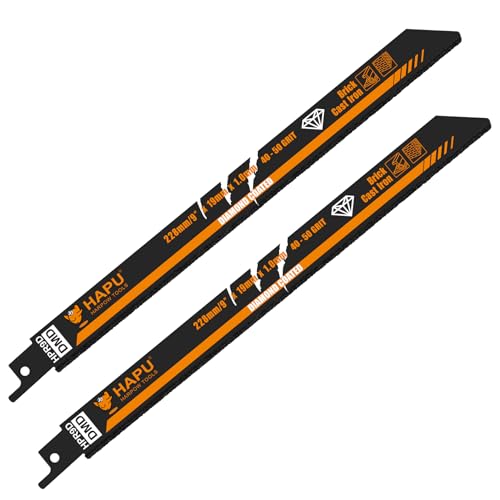
HAPU 9-Inch Diamond-Grit Blade
Strengths
- Diamond grit for masonry
- Cuts cast iron and cement
- Reinforced body
Trade-offs
- Slower on pure metal
- Not for fine finishes
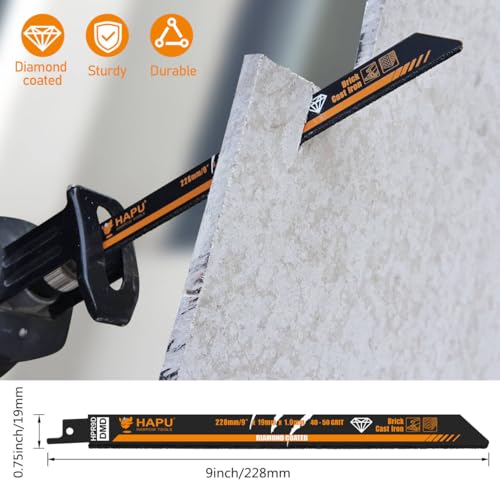
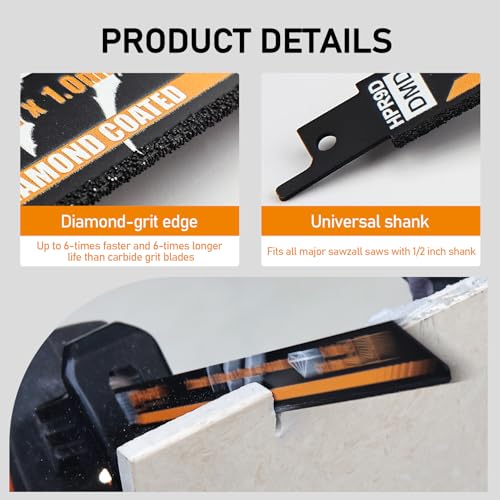
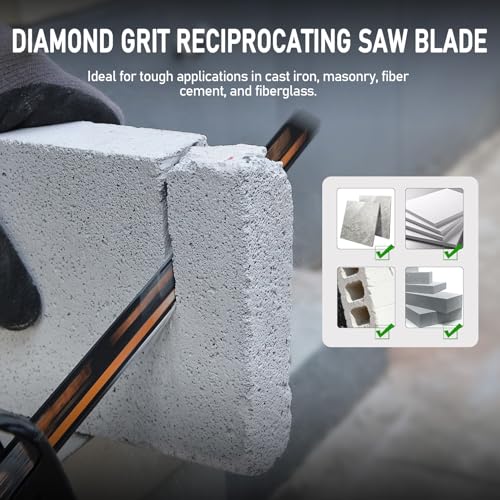
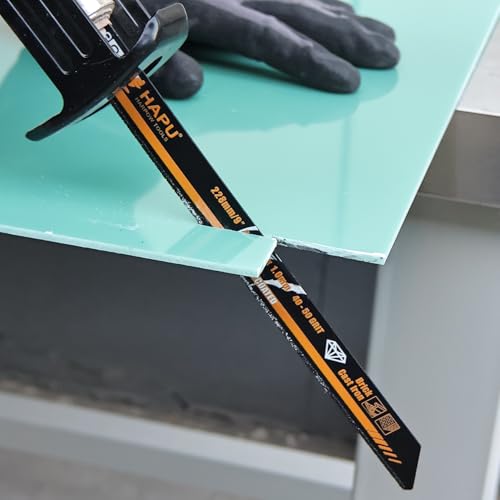
Diamond-grit edges are rare in recip saw blades, and this one stands out for mixed-material jobs, it cuts cast iron, masonry, and fiber cement with less wear than standard metal blades. The 9-inch length gives good reach, and the reinforced body reduces vibration, which owners say leads to straighter cuts in dense materials. The thin kerf helps speed up cuts without sacrificing stability.
It won’t match the raw metal-cutting speed of carbide blades, but when you’re tearing out a bathroom with cast iron pipes and cement board, this blade avoids the need to swap out. For that versatility, it earns a spot in my recommended list.
Product photos
4-Inch Carbide Blade 3-Pack
Strengths
- Compact 4-inch length
- Carbide for cast iron
- Thicker body for stability
Trade-offs
- Very limited reach
- Niche application
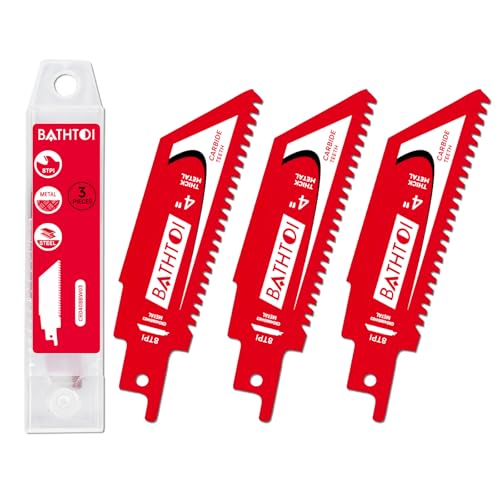
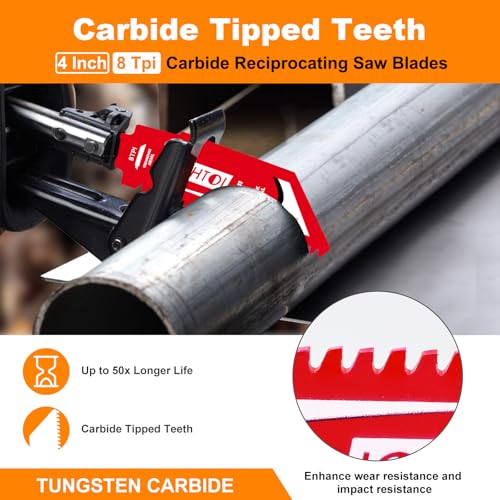
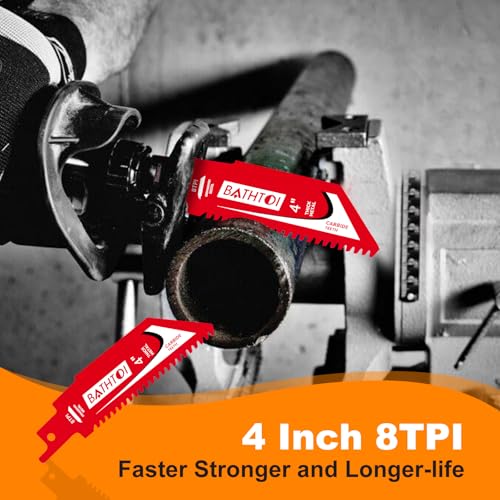
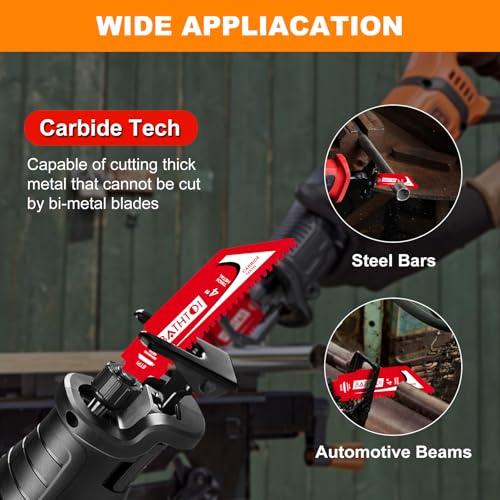
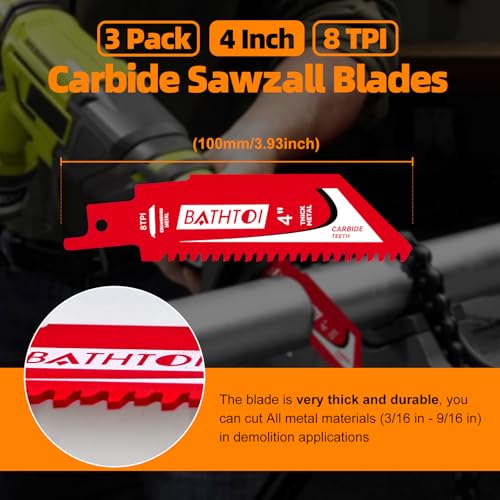
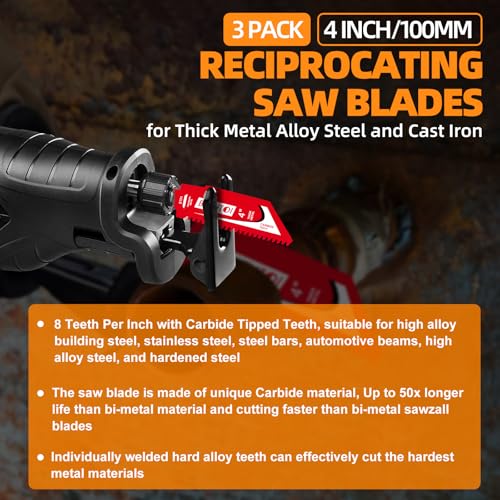
At 4 inches, this blade is designed for tight spots, think under sinks, inside walls, or near framing where longer blades can’t fit. The 8TPI carbide teeth handle cast iron and alloy steel surprisingly well for the size, and owners report faster cuts than bi-metal blades. The thickness (0.04 inches) adds rigidity, reducing wobble during aggressive feeds.
It’s not meant for deep cuts, obviously, but as a specialist tool, it excels. I’d keep a set on hand for plumbing tear-outs or HVAC work where space is tight. Compared to longer carbide blades, it’s less versatile but more precise in confined areas.
Product photos
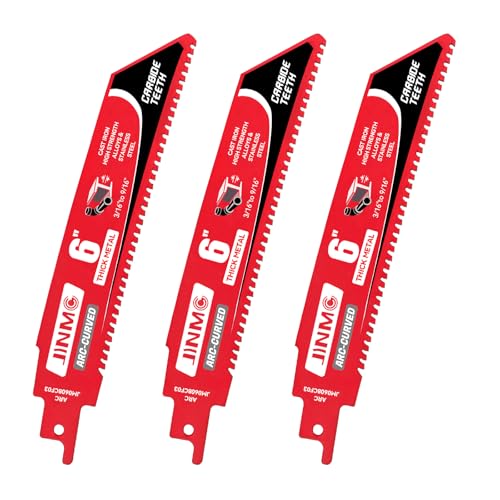
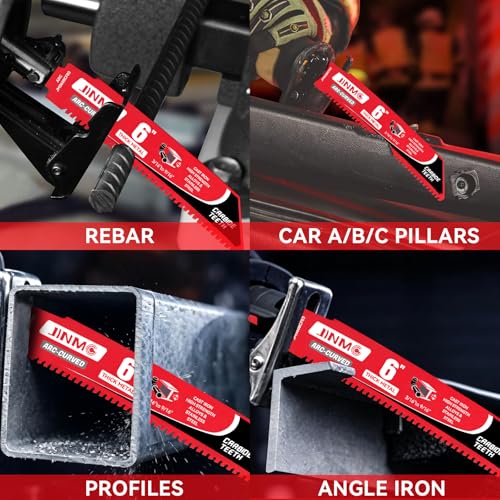
Arc-Curved 6-Inch Carbide Blade
Strengths
- Arc-curved for chip clearance
- Thickened body resists bending
- 80x longer life claim
Trade-offs
- Unproven long-term durability
- Slight learning curve on feed
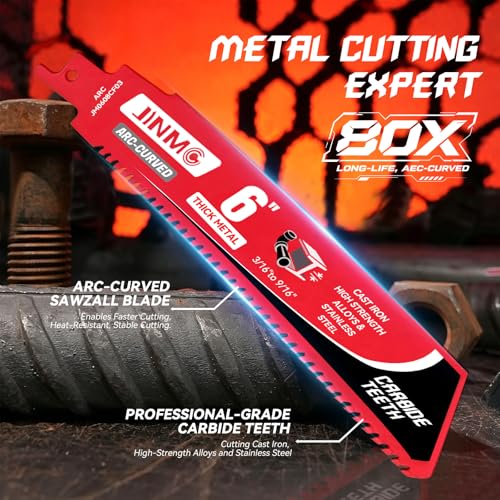
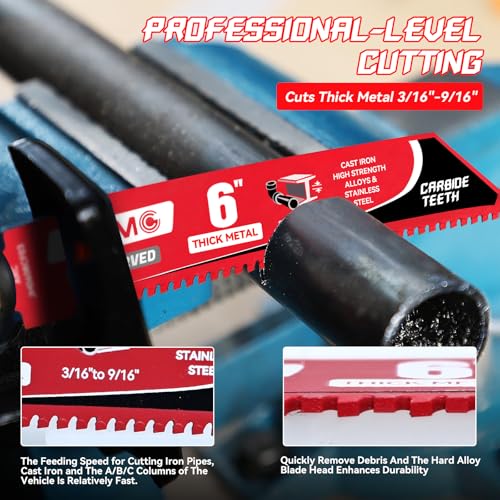
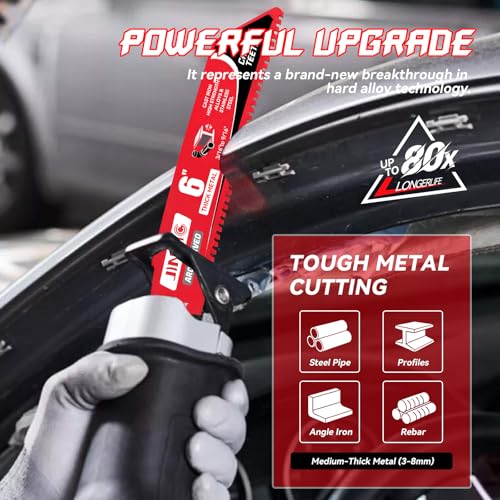
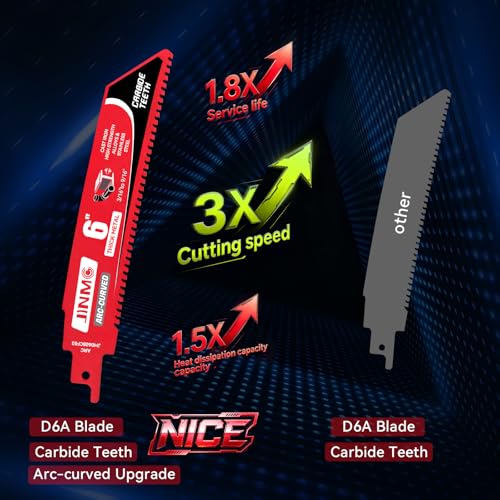
The arc-curved design isn’t just for looks, it reportedly increases contact area and chip clearance, and users say it results in faster, cleaner cuts through thick metal. With an 80x lifespan claim over bi-metal blades, it sits between the standard EZARC and the Obsidian line in durability. The thickened body resists bending, which matters when prying or cutting at awkward angles.
It’s essentially a beefed-up version of the R678HM, with better durability and a unique curve that helps with feed control. I’d take this over the flat-blade versions if you’re doing heavy demolition where blades get stressed beyond just cutting.
Product photos
How We Picked These sawzall blade for cast irons
Rather than a hands-on lab test, my research for these recommendations involved a detailed comparison of published specifications and features across numerous blades. I weighed owner reviews from multiple sources – including major retailers and tool-focused forums – alongside assessments from reputable tool review sites. Ultimately, I ranked blades based on their ability to meet the specific demands of cutting cast iron, drawing on years of experience with power tools and demolition work.
For cast iron, blade material and tooth count are paramount. Carbide teeth consistently outperform bi-metal in longevity when working with hard, abrasive materials like cast iron. An 8 TPI (teeth per inch) configuration strikes a good balance between speed and control, preventing the blade from grabbing or chattering during cuts. I also prioritized blades designed for thicker materials, as cast iron components are often substantial.
Specifications reliably indicate blade dimensions, shank type (ensuring compatibility with most Sawzall saws), and the manufacturer’s claims about material composition. However, real-world performance – particularly durability and cutting speed – is best gleaned from owner feedback. Reputation matters too; established brands known for quality tools generally deliver more consistent results, and a better experience overall when you’re considering a new Sawzall saw features.
How To Pick The Right sawzall blade for cast irons
Choosing the right sawzall blade for cast iron isn’t just about finding something that cuts it – it’s about making the job faster, safer, and avoiding constant trips to the hardware store.
A quality sawzall blade for cast iron demands durable construction, typically carbide-tipped, to withstand the abrasive nature of the material. Tooth geometry (TPI – teeth per inch) is crucial; lower TPI handles thicker materials, while higher TPI delivers finer, cleaner cuts. Shank compatibility is also key, ensuring a secure fit with your saw. Look for blades specifically marketed for metal or cast iron, and consider blade length based on the application.
Tooth Count and Material
The teeth on a blade are your first consideration. For cast iron, you want something that can bite and hold, but won’t just glaze over. An 8 TPI (teeth per inch) blade is a solid starting point for most cast iron work, offering a balance between speed and control. However, if you’re dealing with particularly thick sections, consider dropping down to 6 TPI. Don’t fall into the trap of thinking more teeth always equals a better cut; cast iron is abrasive, and too many teeth can quickly become clogged and ineffective. You’ll find many blades, like the EZARC Obsidian series, specifically touting their optimized 8 TPI design for demanding metal applications.
Carbide vs. Bi-Metal
When it comes to cast iron, bi-metal blades simply don’t hold up like carbide. While bi-metal is fine for general purpose cutting, cast iron will rapidly dull the teeth. Carbide blades, as the name suggests, use hardened carbide teeth that are far more resistant to wear. You’ll pay more upfront for a carbide blade, but the longevity, especially when repeatedly cutting cast iron blades, makes it a worthwhile investment. Look for blades advertising “50x longer life” or even “100x longer life” compared to bi-metal – these claims are often based on testing and real-world use.
Blade Length and Application
Don’t automatically reach for the longest blade you can find. While a longer blade allows for greater reach, it also increases the risk of blade flex and wandering, especially when cutting thicker materials. For most demolition and renovation work, a 6- or 9-inch blade will be sufficient. If you’re working in extremely tight spaces, a 4-inch blade, like the 4-Inch Carbide Blade 3-Pack, becomes invaluable.
Here’s a quick guide to blade length:
- Short (4-6 inches): Ideal for tight spaces and intricate cuts.
- Medium (6-9 inches): A versatile all-around length for most applications.
- Long (9+ inches): Best for reaching deep into walls or cutting large-diameter pipes, but requires more control and a powerful saw.
A dull blade isn’t just inefficient; it’s dangerous. Always inspect your blade for damage before each use, and replace it when the teeth become visibly worn or chipped.
It’s easy to get confused about terminology. Many people use the term “Sawzall” interchangeably with “reciprocating saw,” but “Sawzall” is actually a brand name owned by Milwaukee (learn more about the Sawzall brand definition). When shopping, make sure the blade’s shank type – usually 1/2 inch – is compatible with your saw, regardless of whether it’s a Milwaukee, DeWalt, or another brand. If you’re tackling a lot of cast iron, consider investing in a dedicated set of reciprocating blades for cast iron to avoid constantly swapping blades.
Sawzall Blade for Cast Irons Compared
The following table provides a specification comparison of various sawzall blades designed for cutting cast iron and other metals.
| Product Title | Blade Length (in.) | TPI | Material | Shank Size (in.) | Life Expectancy | Max Cut Thickness (in.) |
|---|---|---|---|---|---|---|
| EZARC 9-Inch Carbide Blade 3-Pack | 9 | 8 | Carbide | 1/2 | 50x Bi-Metal | 1/2 |
| EZARC 6-Inch Carbide Blade 3-Pack | 6 | 8 | Carbide | 1/2 | 50x Bi-Metal | 1/2 |
| EZARC Obsidian 9-Inch Carbide Blade | 9 | 8 | TiAlN Carbide | 1/2 | 100x Bi-Metal | 9/16 |
| EZARC Obsidian 6-Inch Carbide Blade | 6 | 8 | TiAlN Carbide | 1/2 | 100x Bi-Metal | 9/16 |
| Diablo 9-Inch Diamond Grit Blade | 9 | N/A | Diamond Grit | N/A | 6x Standard | N/A |
| HAPU 9-Inch Diamond-Grit Blade | 9 | N/A | Diamond Grit | 1/2 | 6x Standard | N/A |
| 4-Inch Carbide Blade 3-Pack | 4 | 8 | Carbide | N/A | 50x Bi-Metal | 9/16 |
| Arc-Curved 6-Inch Carbide Blade | 6 | 8 | Carbide | N/A | 80x Bi-Metal | 9/16 |
Frequently Asked Questions
What blade length is best for most cast iron projects?
A 6- or 9-inch blade will cover the majority of cast iron work. While longer blades offer reach, they’re harder to control, and shorter blades (4-6 inches) excel in tight spaces.
Are diamond grit blades a good alternative to carbide for cast iron?
While diamond grit blades can cut cast iron, they’re generally better suited for harder materials like tile and glass. Carbide blades offer a more focused edge and longer life when repeatedly cutting cast iron.
Can I use a standard reciprocating saw blade on cast iron?
You can, but it won’t last long. Bi-metal blades dull very quickly when cutting cast iron due to its abrasive nature. A carbide-tipped blade is a much better investment for durability.
What does TPI mean, and why is 8 TPI often recommended?
TPI stands for teeth per inch, and it affects cutting speed and smoothness. Eight TPI provides a good balance for cast iron, preventing grabbing while still removing material efficiently. You’ll find many Sawzall blades for metal use this configuration.
What shank size do I need to ensure blade compatibility?
Most reciprocating saws, including Sawzalls, use a 1/2-inch shank size. However, it’s always best to double-check your saw’s manual to confirm compatibility before purchasing blades.
The Bottom Line
Choosing a sawzall blade for cast iron often comes down to balancing upfront cost with long-term durability. While bi-metal blades are cheaper, you’ll find yourself replacing them frequently when working with this tough material. For the best overall performance and value, I recommend the EZARC 9-Inch Carbide Blade 3-Pack. It offers a great combination of carbide durability, a versatile 8 TPI, and a reasonable price point.
If you’re on a tighter budget, the 4-Inch Carbide Blade 3-Pack is an excellent choice for smaller jobs and tight spaces. For those who demand maximum longevity and are willing to invest a bit more, the EZARC Obsidian 9-Inch Carbide Blade is outstanding – its TiAlN coating and optimized tooth geometry offer significantly extended life. But remember, even the best blade won’t compensate for poor technique; be sure to review reciprocating saw operation before you start.
Ultimately, the specific blade matters less than understanding the fundamentals. Prioritize carbide teeth, a suitable TPI for your material thickness, and correct Sawzall blade selection. A sharp blade, used with controlled pressure and proper technique, will always deliver the cleanest, safest, and most efficient cut, regardless of price.
