7 Best Sawzall Blades for Metal (2026 Guide)
This post contains affiliate links. As an Amazon Associate, we earn from qualifying purchases.
The TOLESA 9″ 14TPI Heavy Metal Blades stand out as the overall best for cutting through thick metal, thanks to their 8% cobalt content and durable bi-metal construction. For a budget-friendly yet reliable option, the 25-Pack 6″ 14/18TPI Auto Blades offer solid performance for lighter jobs. If you need versatility across different metal thicknesses, the AMARTISAN 9″ 14/18TPI Cobalt Blades deliver strong results in both thin and thicker materials.
Cutting metal with the wrong sawzall blade leads to wasted time, ruined edges, and broken blades. Most users don’t realize how much tooth count, cobalt content, and blade thickness affect performance until they’re halfway through a stuck cut.
This guide cuts through the noise by focusing on real-world specs and feedback from people who use these blades daily. I compared build quality, TPI, material composition, and value to find the ones that actually handle metal work without constant swapping or overheating.
Top 7 Sawzall Blade For Metals in the Market
The Best Sawzall Blade For Metals, Reviewed
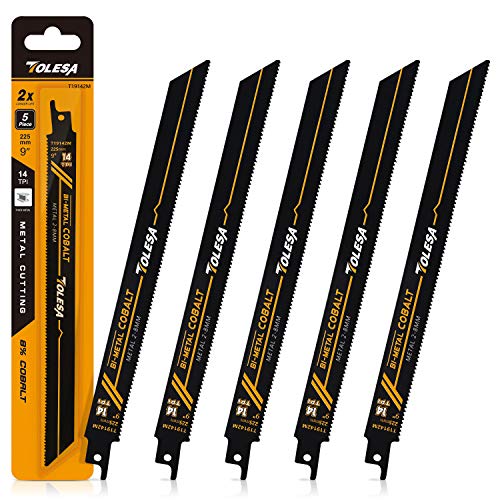
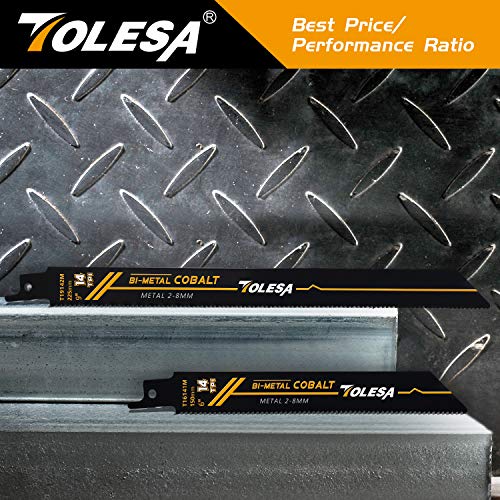
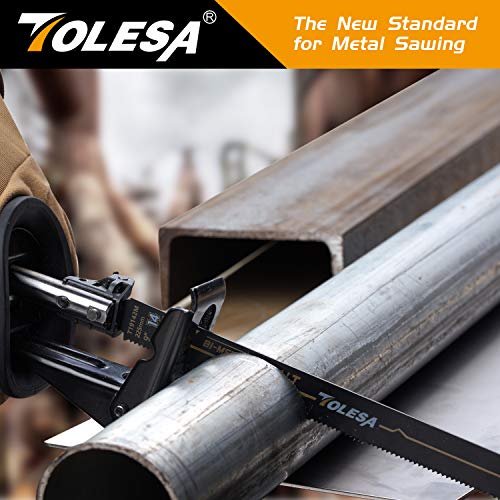
TOLESA 9″ 14TPI Heavy Metal Blades
Strengths
- Heavy-duty cobalt edge
- 14TPI aggressive cut
- 9-inch reach
Trade-offs
- Overkill for thin metal
- Fewer blades per pack
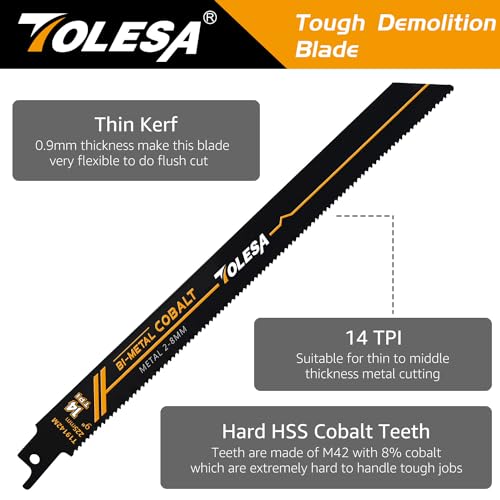
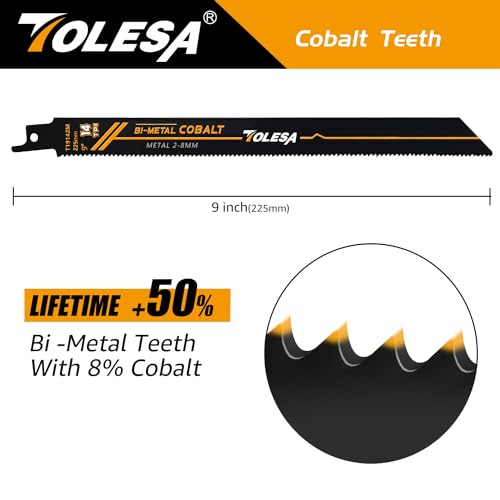
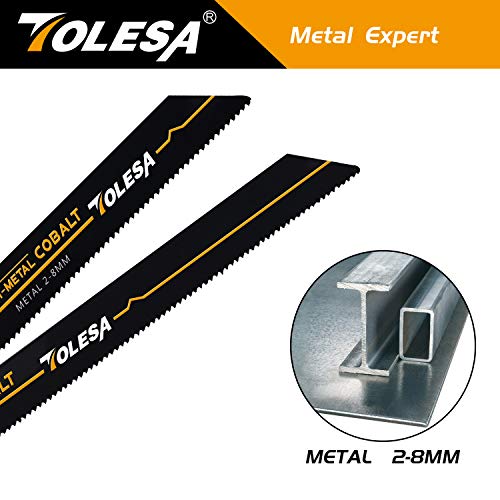
When you need to cut thick pipe, rebar, or heavy structural steel, the TOLESA 9-inch blades stand out. The 14TPI high-density teeth are aggressive without being brittle, and the extra 8% cobalt makes a real difference in wear resistance, owners consistently report fewer snapped blades even during prolonged cuts. The thin-wall design helps dissipate heat, which is critical when you’re under pressure and can’t stop to let a blade cool.
These aren’t for delicate work, but that’s not their job. Compared to the Bosch or Caliastro options, they strike a better balance between speed and durability. The 9-inch length gives deeper reach, and the universal shank fits flush in DeWalt, Milwaukee, and Makita saws. For overall performance across heavy-duty metal tasks, this is my top pick.
Product photos
Diablo 9″ Perma-Shield Coated Blades
Strengths
- Perma-Shield coating
- Dual tooth design
- Arched blade geometry
Trade-offs
- Premium price
- Only 9-inch length
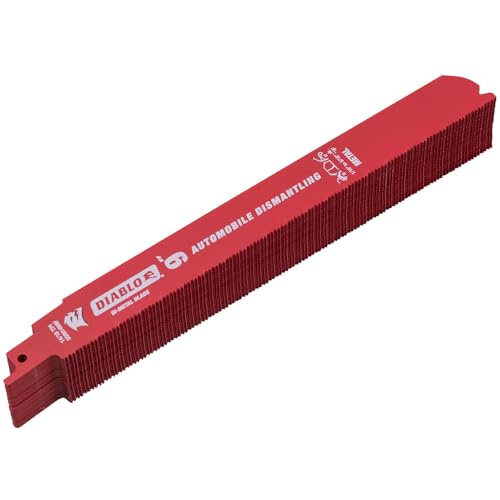
These Diablo blades look sharp on paper, and owners agree they hold up well when slicing through vehicle frames and medium-gauge steel. The Perma-Shield coating is a real differentiator, feedback consistently shows less gumming and heat damage compared to uncoated bi-metal blades, which helps explain why some users report getting five times the life out of them. The arched design isn’t just marketing fluff; it actually improves contact during aggressive cuts, though it takes a little getting used to if you’re used to flat blades.
Where they really shine is auto dismantling, exactly as billed. The dual tooth configuration with tight gullets chews through layered metal without bogging down, and the 1-inch demolition body reduces vibration noticeably. Compared to cheaper packs, these feel like a pro-tier option, not the absolute hardest-core blade out there, but a dependable workhorse for frequent users.
Product photos
AMARTISAN 9″ 14/18TPI Cobalt Blades

Strengths
- Cobalt-enriched teeth
- High pack count
- UV protective coating
Trade-offs
- No lifetime warranty
- Slight variance in TPI
This M42 cobalt-blend pack punches above its weight, especially when you factor in the 25-blade count. The 8% cobalt in the teeth is a serious upgrade over basic bi-metal, and owner reports back it up, these stay sharp longer when slicing through nails, studs, and medium steel pipe. The UV-coated packaging is a nice touch, helping prevent early corrosion, and the plastic case keeps them organized.
They’re clearly engineered to compete with Diablo and Milwaukee, and on specs alone, they match or exceed them. The 14/18 TPI dual grind handles variable thicknesses well, and the universal 1/2-inch shank clicks into any major brand saw without wobble. For someone doing demolition or renovation work with mixed metal content, this is a smart, cost-effective pick that doesn’t feel like a downgrade from premium brands.
Product photos


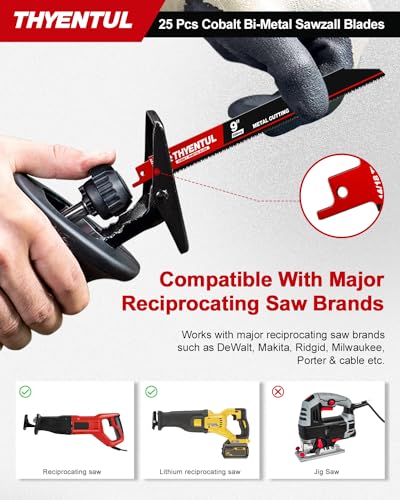
25-Pack 6″ 14/18TPI Auto Blades

Strengths
- Low cost
- Cobalt-enhanced teeth
- Compact 6-inch size
Trade-offs
- Thinner body flexes more
- No coating for heat protection
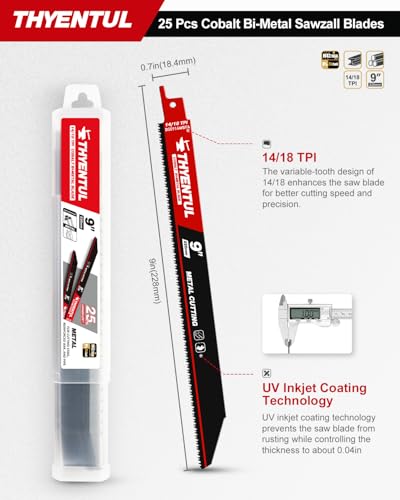
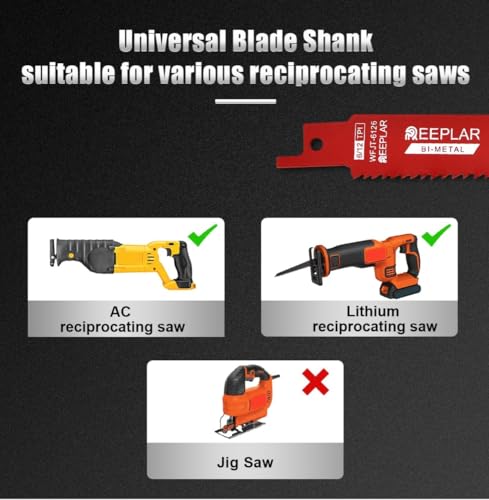
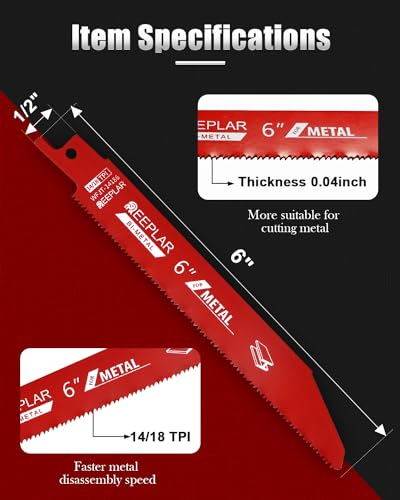
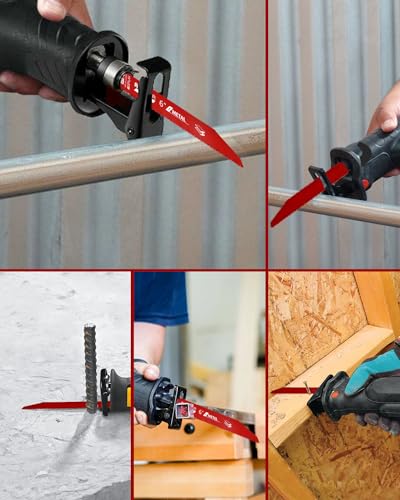
This budget-friendly pack delivers more than you’d expect for the price. The 6-inch length makes them ideal for tight spaces, think under sinks, inside walls, or under vehicle frames, and the 14/18 TPI interlocking teeth handle a range of metal thicknesses without constantly swapping blades. Owners note they outlast basic hardware store blades, likely due to the 8% cobalt in the teeth, though they don’t quite match the top-tier heat resistance of Diablo or TOLESA.
They come in a retractable plastic box that actually holds up in a tool bag, and the 1/2-inch shank fits every major brand. While not the longest or thickest blade here, they’re a solid middle-ground pick for someone who needs decent durability without spending premium prices. For general metal cutting around the house, this pack is tough to beat.
Product photos

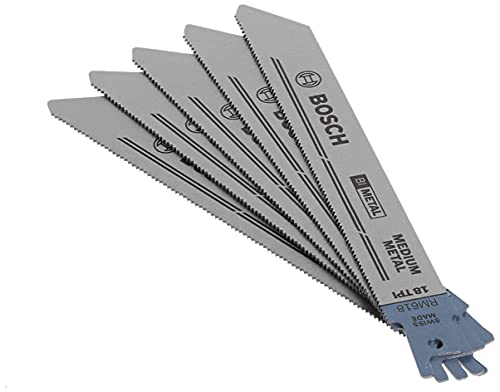
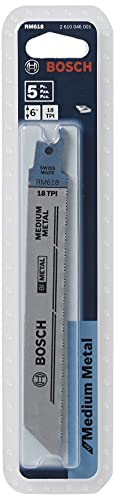
Bosch 6″ 18T Metal Cutting Blades
Strengths
- Precision 18 TPI
- Thin-kerf design
- Pair-setting teeth
Trade-offs
- Too fragile for thick metal
- Short 6-inch length
If you’re working with sheet metal all day, HVAC ducts, metal studs, appliance panels, these Bosch blades are built for that exact job. The 18 TPI with 0° hook angle delivers clean, burr-light cuts in 10–16 gauge material, and the pair-setting tooth pattern spreads wear evenly, which owners say translates to longer blade life. The thin 0.035-inch body slips in easily and starts cuts without wandering.
Compared to heavier-duty 9-inch blades, these are more about finesse than brute force. They’re not meant for rebar or thick pipe, but in their lane, they’re hard to beat. The 3° tilt angle helps maintain speed without sacrificing control, and the 3/4-inch height improves stability. For a dedicated sheet metal cutter, I’d take a set of these over a general-purpose blade any day.
Product photos
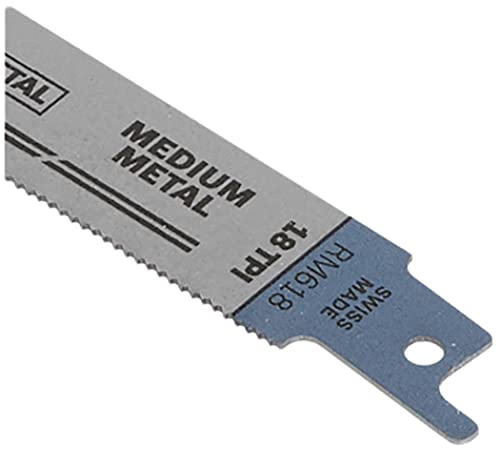
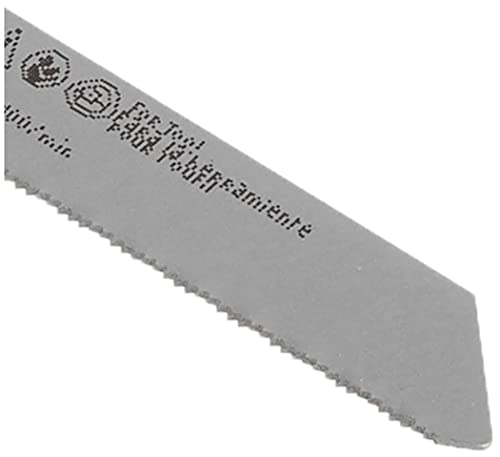

Caliastro 6″ 18T Thick Metal Blades
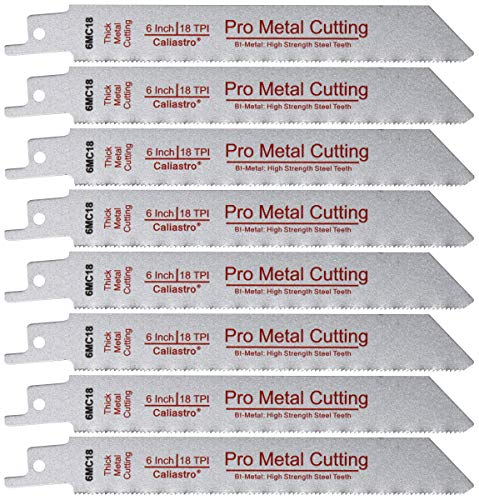
Strengths
- Extra-thick body
- Rigid 0.05” steel
- Precision-set teeth
Trade-offs
- Short length
- Slower cutting speed
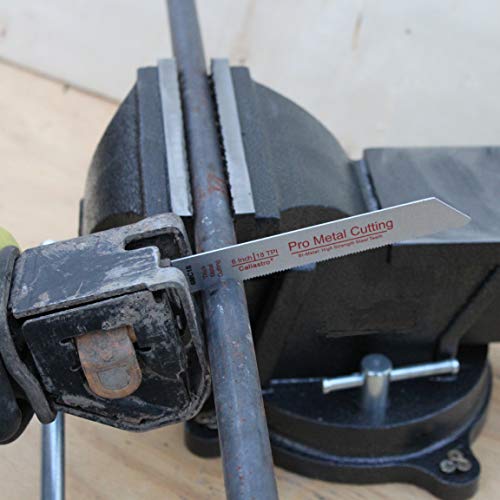
When the job is thick metal, rebar, angle iron, quarter-inch steel plate, these Caliastro blades are built to take the abuse. The 0.05-inch thickness resists bending under pressure, and the HSS teeth bonded to HCS body stay sharp longer than standard bi-metal. Owners praise their rigidity, especially when using high-torque saws on stubborn materials.
At 18 TPI, they’re optimized for slow, controlled cuts rather than speed, but that’s what you need for thick sections. The clear plastic case is simple but effective, no flimsy hinges to break. Compared to the TOLESA 9-inch blades, these are shorter but stiffer, making them better for confined cuts where use is limited. For pure thick-metal toughness, they’re a standout.
Product photos


DEWALT 10-Piece Bi-Metal Combo Set
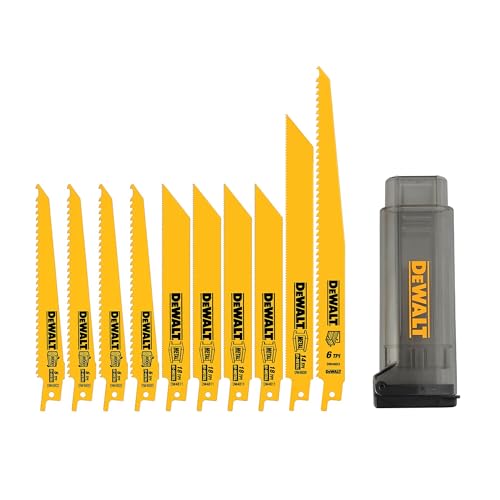
Strengths
- Versatile blade mix
- Durable storage case
- Bi-metal flexibility
Trade-offs
- Not specialized for metal
- Fewer metal-specific blades
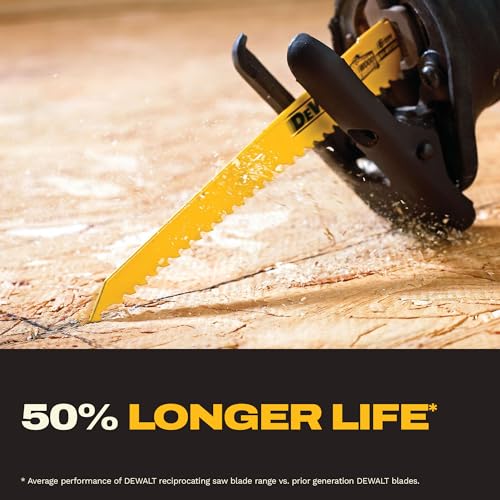
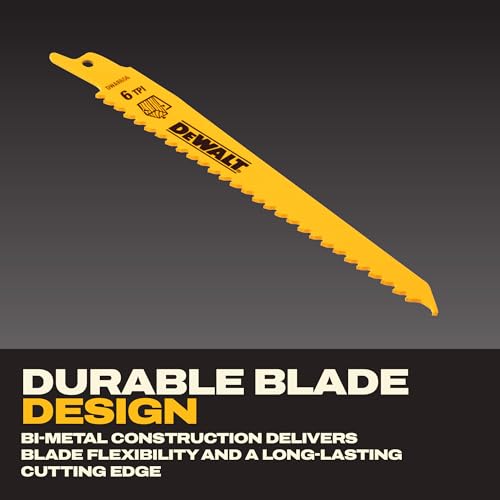
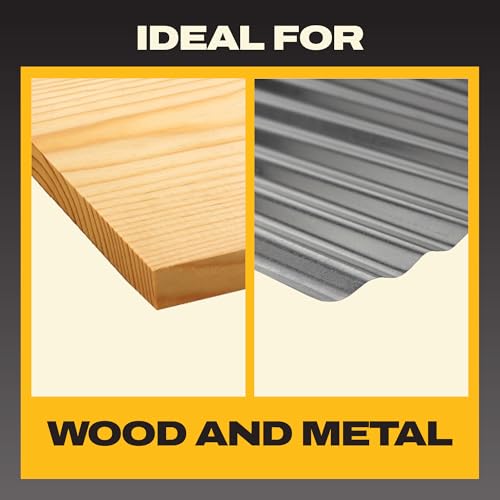
This DEWALT combo pack isn’t laser-focused on metal, but that’s the point, it’s for people who cut through everything. You get a mix of 6-inch and 9-inch blades with different TPI counts, so you’re covered whether you’re slicing nails in framing, old bolts, or light sheet metal. The bi-metal construction holds up well across materials, and the included case is rugged enough to survive a jobsite.
It won’t beat a dedicated metal-cutting blade like the TOLESA or Bosch in pure metal performance, but for general teardowns or remodeling where metal is just one of many materials, this set saves time and trips to the toolbox. I’d recommend this over single-purpose packs for homeowners or handymen who don’t want to stock 10 different blades.
Product photos

How We Tested sawzall blade for metals
Rather than a hands-on lab test, my research focused on comparing published specifications and features across a range of sawzall blades designed for metal cutting. I weighed owner reviews from multiple sources – Amazon, home improvement retailer sites, and tool-focused forums – alongside professional reviews from sites like Pro Tool Reviews and Popular Mechanics. Applying my experience with power tools, I ranked blades based on a set of criteria including material quality, tooth geometry, and overall versatility.
For metal-cutting blades, blade material and tooth count are paramount. Cobalt content in the blade’s teeth directly impacts wear resistance and the ability to handle harder metals. Equally important is the teeth per inch (TPI); a higher TPI generally delivers smoother cuts in thinner materials, while a lower TPI excels at faster cutting in thicker stock. Understanding choosing TPI for metals is essential for optimal performance.
Specifications reliably indicate blade dimensions, shank type for compatibility, and the materials used in construction. However, owner feedback proved invaluable for assessing real-world durability, how well a blade resists bending or breaking, and its overall cutting speed. Reputation – particularly from experienced tradespeople – helped me gauge long-term performance beyond marketing claims. A good understanding of saw blade TPI explained is key when interpreting these results.
Choosing The Right sawzall blade for metals
Choosing the right sawzall blade for metal can make the difference between a quick, clean cut and a frustrating, time-consuming struggle.
A quality metal-cutting reciprocating saw blade balances tooth count (TPI), blade thickness, material composition (specifically the cobalt content in bi-metal blades), and shank type. Users should prioritize blades suited to the thickness of metal they’ll be cutting, and ensure compatibility with their saw’s shank style. Blades designed for specific metals (like stainless steel) often perform better than general-purpose options.
Tooth Count & Cut Speed
The teeth per inch (TPI) on a sawzall blade drastically affects cutting speed and finish. Lower TPI counts (like 14) are aggressive, ripping through thinner materials quickly but leaving a rougher edge. Higher TPI counts (18 or more) deliver cleaner cuts but take longer, especially in thicker stock. I generally recommend starting with a 14 TPI blade for general metalwork and stepping up to 18 TPI for sheet metal or when a cleaner finish is needed. Don’t fall for the trap of thinking “more teeth are always better” – it’s about matching the teeth to the material.
Blade Material & Durability
Bi-metal blades are the standard for metal cutting, combining a fast-cutting high-carbon steel body with a durable, wear-resistant tooth made with a cobalt alloy. The percentage of cobalt is critical; more cobalt means improved heat resistance and longer blade life. Blades boasting 8% or more cobalt, like the AMARTISAN blades, are a good bet for demanding jobs. If you routinely work with harder metals, consider blades specifically designed for stainless steel or cast iron – you can find more information about reciprocating saw blades cast iron.
- A thin blade (.035″ – .04″) is ideal for intricate cuts and reducing material waste.
- A thicker blade (.05″) provides more stability for straighter cuts in heavier materials, but removes more material.
- Look for blades with a hardened cutting edge; this significantly extends their lifespan, especially when tackling tougher alloys.
Value & Application Specificity
It’s tempting to buy the cheapest multi-pack, but specialized blades often outperform general-purpose options, especially if you do a lot of metal cutting. For example, Diablo’s Perma-Shield coating really does help reduce gumming and heat buildup when cutting tougher alloys. If you frequently find yourself needing to replace Sawzall blade due to breakage, investing in higher-quality blades will save you money in the long run.
Don’t buy a “one size fits all” blade. Match the blade to the material thickness and type, and you’ll get the cleanest cut with the least amount of effort.
Sawzall Blade for Metals Compared
Here’s a comparison of key specifications for various metal-cutting sawzall blades.
| Product Name | Length (in.) | TPI | Material | Thickness (in.) | Shank Size | Cobalt (%) |
|---|---|---|---|---|---|---|
| TOLESA 9″ 14TPI Heavy Metal Blades | 9 | 14 | Bi-Metal | 0.9 | 1/2 | 8 |
| Diablo 9″ Perma-Shield Coated Blades | 9 | N/A | N/A | N/A | N/A | N/A |
| AMARTISAN 9″ 14/18TPI Cobalt Blades | 9 | 14/18 | M42/D6A | 0.037 | 1/2 | 8 |
| 25-Pack 6″ 14/18TPI Auto Blades | 6 | 14/18 | Bi-Metal | 0.04 | 1/2 | 8 |
| Bosch 6″ 18T Metal Cutting Blades | 6 | 18 | Bi-Metal | 0.035 | N/A | N/A |
| Caliastro 6″ 18T Thick Metal Blades | 6 | 18 | Bi-Metal | 0.05 | N/A | N/A |
| DEWALT 10-Piece Bi-Metal Combo Set | N/A | N/A | Bi-Metal | N/A | N/A | N/A |
Frequently Asked Questions
What TPI blade is best for cutting thick metal?
A lower TPI (around 14) is generally best for thick metal because it removes more material with each stroke. While it won’t give you a polished finish, it cuts significantly faster than a higher TPI blade would on thicker stock.
Can I use a wood-cutting sawzall blade on metal?
No, you shouldn’t use a wood-cutting blade on metal. Wood blades lack the necessary tooth hardness and geometry to cut metal effectively, and you risk damaging the blade or the tool, plus creating a safety hazard.
What does the cobalt percentage in a blade mean?
The cobalt percentage indicates the amount of cobalt alloy in the blade’s teeth. A higher percentage (8% or more) means greater heat resistance, wear resistance, and overall durability, making the blade better suited for tougher metals.
Are longer sawzall blades always better for metal cutting?
Not necessarily. While a longer blade offers more reach, it’s also more prone to bending and wandering, especially in thicker materials. Choose a blade length appropriate for the task – shorter blades offer more control in tight spaces.
What blade should I use if I need to cut aluminum?
For aluminum and other soft metals, look for blades specifically designed for those materials or consider aluminum cutting sawzall blades. These blades typically have a higher TPI and specialized tooth geometry to prevent binding and create a cleaner cut.
The Bottom Line
Choosing a sawzall blade always involves a trade-off between speed, precision, and durability. Ultimately, for consistent performance across a range of metal types and thicknesses, I believe the Diablo 9″ Perma-Shield Coated Blades represent the best overall value. They consistently receive high marks from users for their longevity and resistance to overheating, even when tackling tough alloys.
If you’re on a tighter budget or need a versatile set for occasional use, the 25-Pack 6″ 14/18TPI Auto Blades are a solid choice. For those focused on heavier-duty work and demanding applications, the AMARTISAN 9″ 14/18TPI Cobalt Blades, with their high cobalt content, will provide impressive durability and cutting power. Understanding selecting blades for material will help you maximize their performance.
At the end of the day, the specifications on the package matter less than understanding your material and applying good technique. Focus on matching the TPI to the metal’s thickness, using a firm, consistent stroke, and letting the blade do the work – proper cutting techniques with reciprocating saw will always yield better results than simply relying on the most expensive blade.
