
6 Best Saws for Cutting Drywall 2026
This post contains affiliate links. As an Amazon Associate, we earn from qualifying purchases.
The Klein Tools Fixed Blade Rasping Jab Saw is the best overall for cutting drywall thanks to its aggressive blade and integrated rasp for cleaning edges. If you’re on a budget, the IRWIN Standard Drywall/Jab Saw delivers reliable performance without the extras. For versatility and portability, the Klein Tools Folding Multi-Purpose Jab Saw stands out with dual blade options and a compact design.
Cutting drywall looks simple until you’re fighting a jagged edge, a bent blade, or a hand cramping from a poor grip. The right saw makes all the difference, especially when you’re doing multiple cuts or working overhead.
I researched the top models by comparing specs, analyzing owner feedback, and evaluating features that matter most: blade design, handle comfort, and real-world usability. These picks reflect what actually works based on consistent performance reports and practical design choices.
Top 6 Saw For Cutting Drywalls in the Market
The Best Saw For Cutting Drywalls, Reviewed
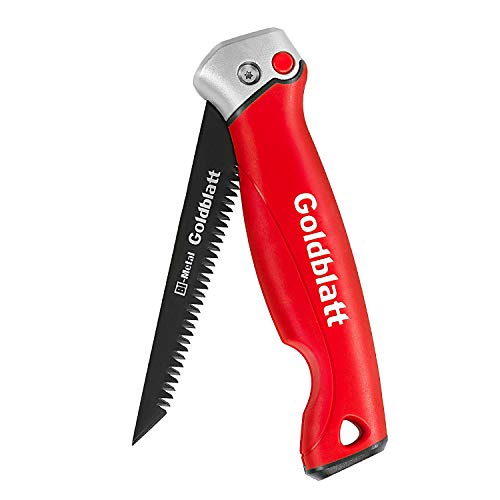
Goldblatt Folding Drywall Jab Saw
Strengths
- Folds for storage
- 8 TPI bi-metal blade
- Sharp piercing tip
- Secure blade lock
- Comfortable grip
Trade-offs
- Blade flexes slightly on thick wood
- Not ideal for metal cutting
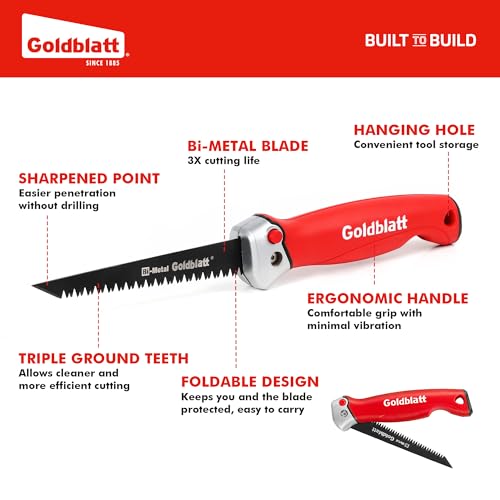
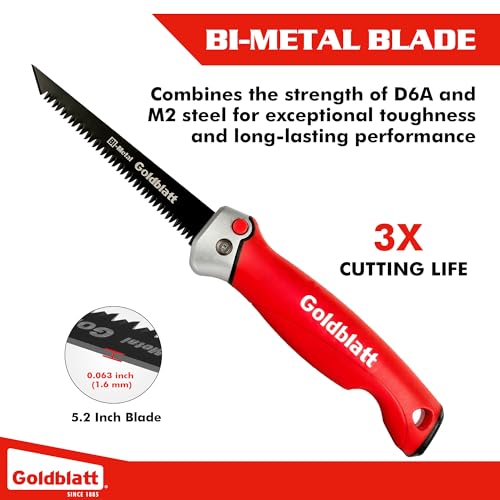
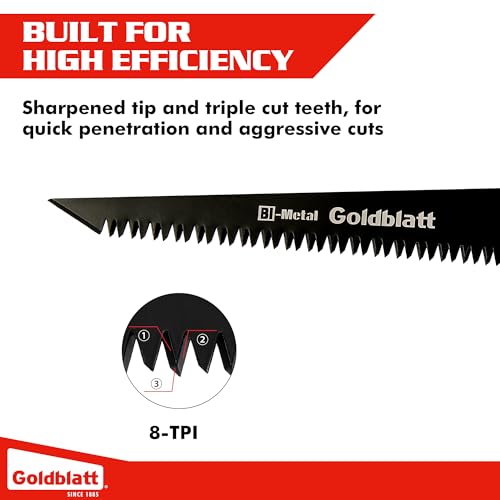
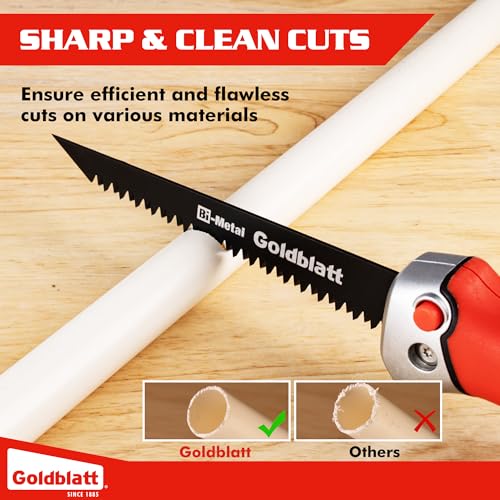
I’ve seen a lot of drywall saws come and go, and the Goldblatt Folding Drywall Saw stands out in a crowded field. On paper, the 8 TPI bi-metal blade with triple-ground teeth is built for speed and durability, and owners consistently report that it slices through drywall with minimal effort. The sharpened tip lives up to its jab-saw purpose, no pilot hole needed, and the deep gullets keep dust from gumming up the works.
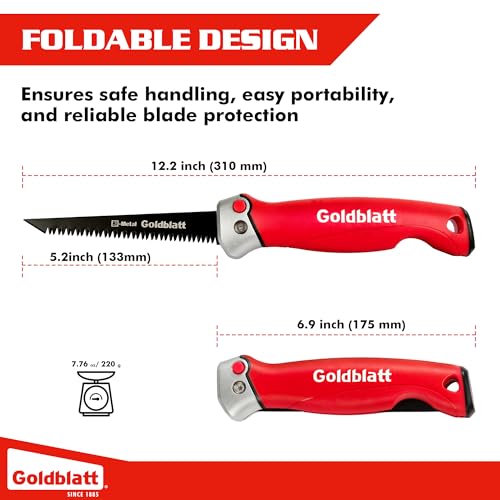
What really sells me is the foldable design with a secure red-button lock. It’s not just convenient for storage, it adds real safety. The soft-grip handle fits a range of hand sizes and reduces fatigue during longer cuts. Compared to rigid models, this one gives you the portability you want without sacrificing control.
Product photos
IRWIN Standard Drywall/Jab Saw

Strengths
- Stiff, reliable blade
- Balanced hardwood handle
- Smooth cutting action
- Durable construction
Trade-offs
- No folding mechanism
- Basic grip lacks soft-touch material
This IRWIN model is a no-frills, rigid-blade workhorse. The bi-ground teeth deliver consistent performance, and the hardwood handle feels balanced in hand, something you notice after multiple cuts. It’s not flashy, but it’s dependable. The rigid blade gives excellent feedback and control, especially when roughing in HVAC or electrical openings.
Compared to folding saws, it lacks portability, but it doesn’t have the slight flex some folding blades exhibit. Owners appreciate its simplicity and durability. If you’re on a job site where tools get dropped and abused, this one holds up.
Product photos


Klein Tools Fixed Blade Rasping Jab Saw
Strengths
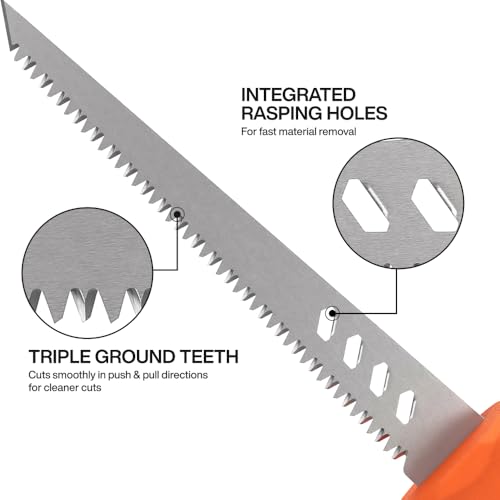
- Built-in rasp
- Durable fixed blade
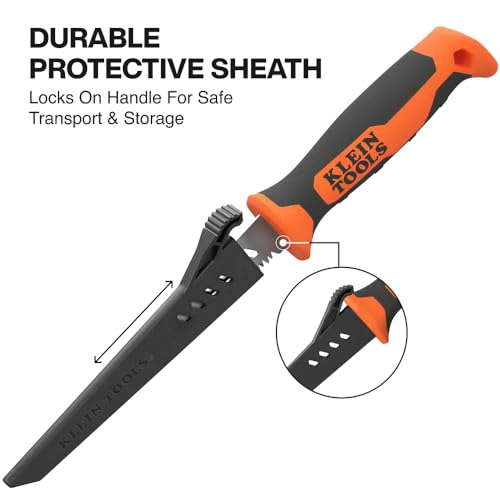
- Secure protective sheath
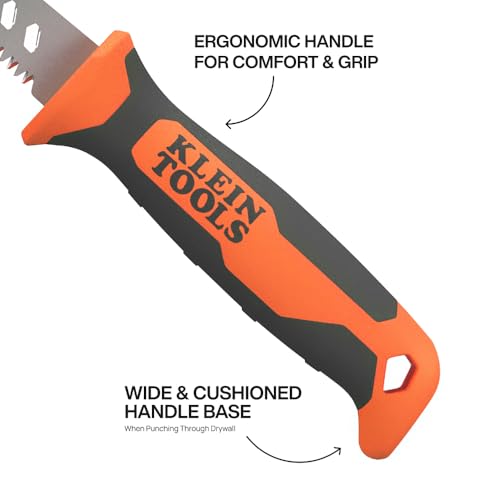
- Comfortable handle
- Smooth push-pull cutting
Trade-offs
- Not foldable
- Bulkier than folding options
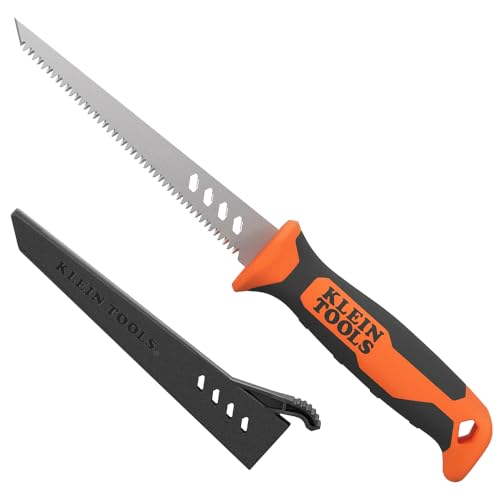
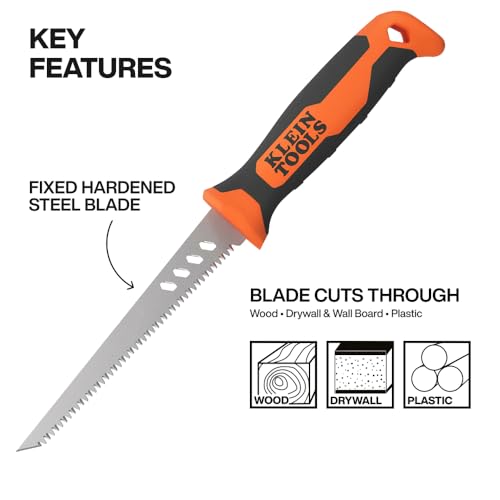
If you’re cutting drywall and then trimming or smoothing the opening, this Klein saw eliminates the need to switch tools. The fixed blade is solid, no wobble, and the triple-ground teeth cut cleanly in both directions. But the real advantage is the integrated rasp on the back edge. Reviewers note this feature saves time when enlarging outlet boxes or squaring up rough edges.
The sheath is a nice touch, locking the blade securely and protecting the teeth. The cushioned handle base helps when you’re punching through stubborn sections. Compared to folding models, it’s less compact, but that rigidity gives better control for precise or forceful cuts.
Product photos
Klein Tools Folding Multi-Purpose Jab Saw
Strengths
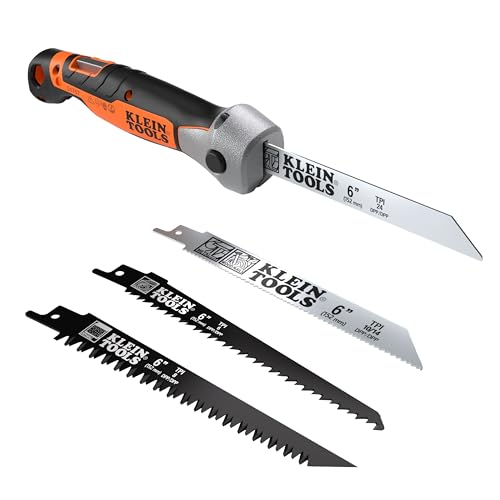
- Multiple blades included
- Dual locking angles
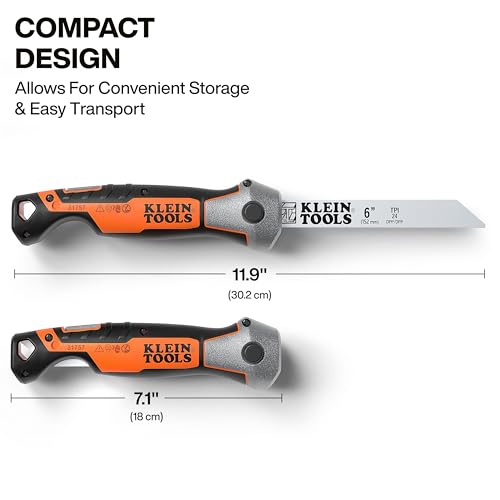
- Compact folded size
- Comfortable overmolded grip
- Cushioned palm base
Trade-offs
- Blade swap takes time
- Extra blades can get lost
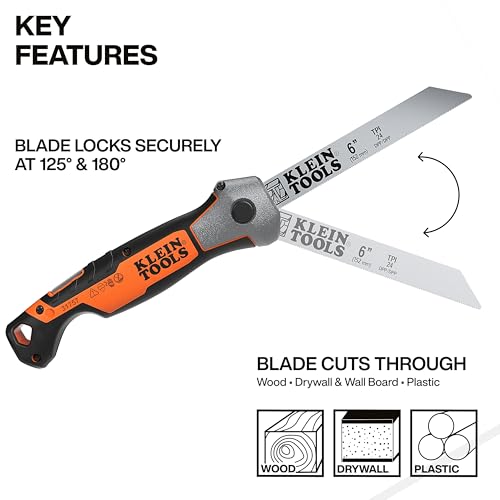
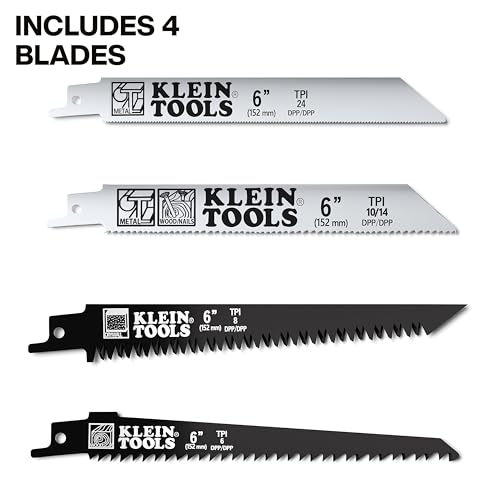
What I like most about this Klein is the flexibility, the included extra blades with 6 to 24 TPI let you swap based on material. Need coarse teeth for drywall? Use the 6 TPI. Switch to 24 TPI for fine wood or plastic. The dual-locking positions (125° and 180°) are thoughtful, letting you work in tight corners without fully opening the blade.
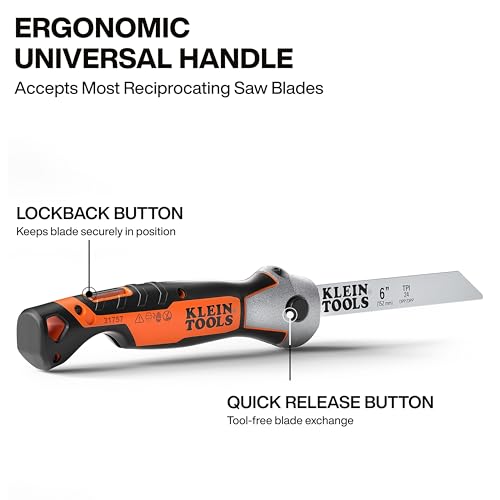
The overmolded handle feels secure, and the cushioned base helps when you’re palm-punching through sheetrock. It’s not the fastest drywall-only saw, but it’s the most adaptable. Compared to single-blade folders, this one gives real multi-material utility.
Product photos
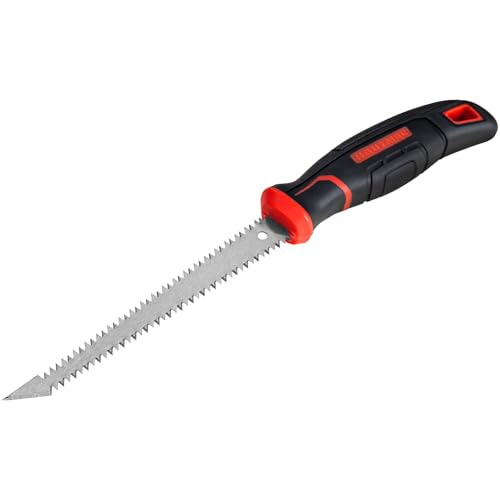
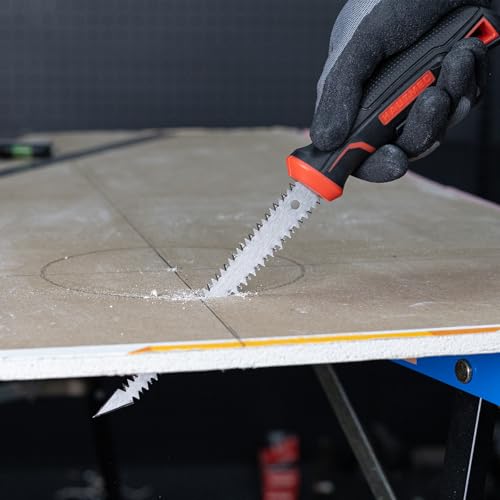
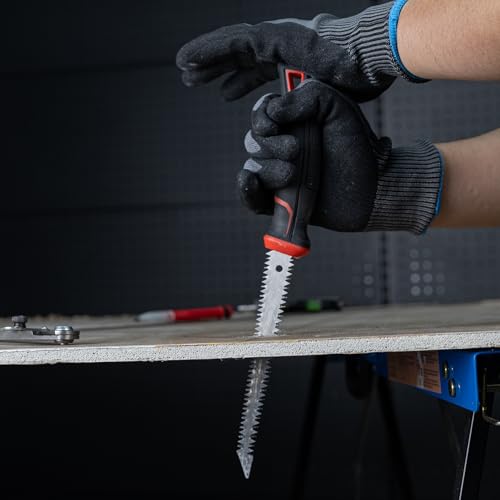
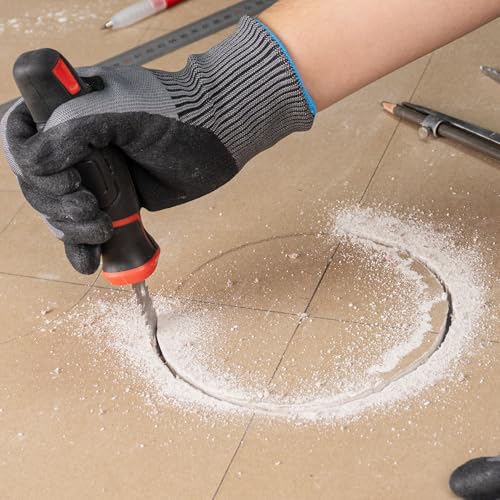
HAUTMEC 6-Inch Double-Edge Jab Saw
Strengths
- Double-edge cutting
- Thick 1.5mm blade
- Sharp piercing tip
- Deep gullets
- Non-slip grip
Trade-offs
- No foldable design
- Handle may feel small for large hands
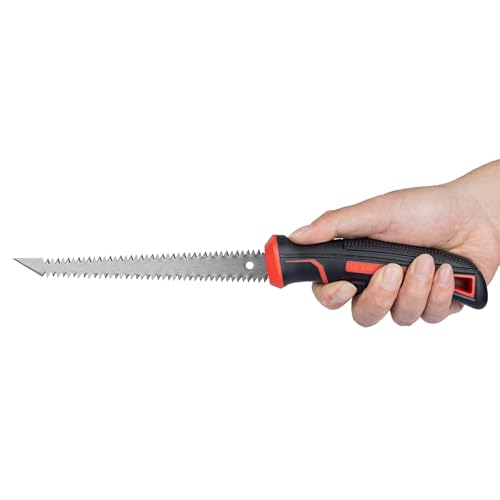
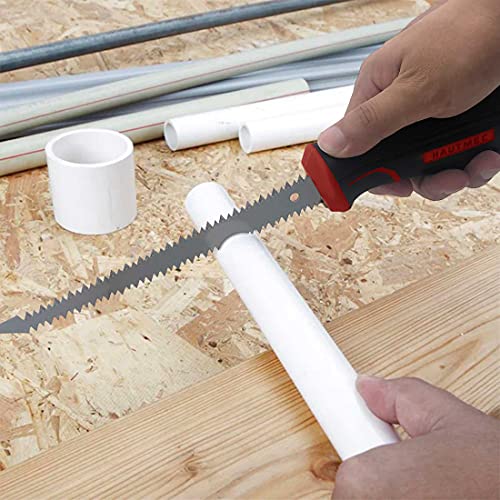
The double-edge blade is the standout here, both sides cut, so you never have to worry about orientation. Owners report this makes plunge cuts faster and more intuitive. The 7 TPI heat-treated teeth on 1.5mm carbon steel resist flex, and the deep gullets handle dust well, reducing binding.
The soft-grip handle is lightweight but secure, and the sharp tip pierces drywall cleanly. It’s not flashy, but it’s efficient. Compared to the Goldblatt, it lacks a folding mechanism, but the thicker blade gives better rigidity.
Product photos
DeWalt 20V Brushless Drywall Rotary Saw
Strengths
- 30,000 RPM brushless motor
- Adjustable depth stop
- LED work light
- Quick bit changes
- Overheat protection
Trade-offs
- Requires DeWalt 20V battery
- Bulkier than hand saws
- Higher learning curve
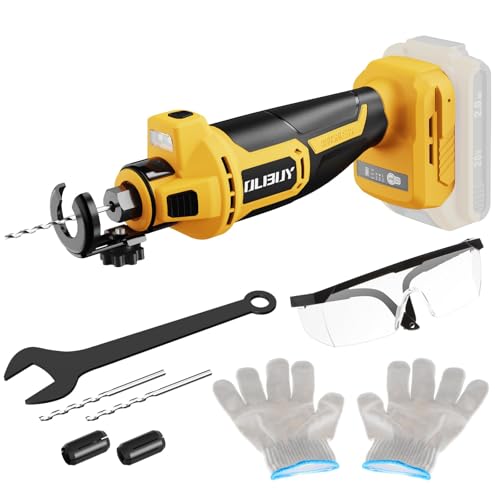
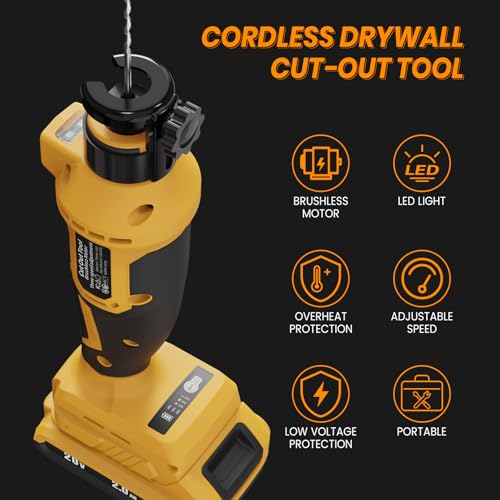
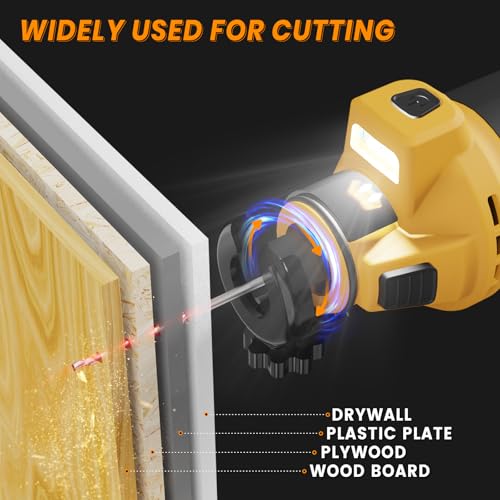
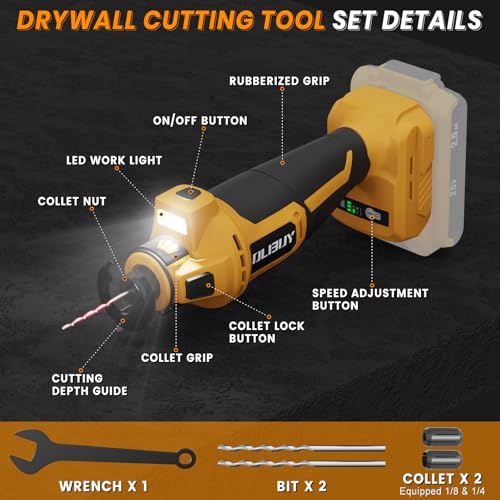
This brushless rotary tool is a serious upgrade for anyone doing repetitive drywall cutouts. At up to 30,000 RPM, it powers through sheetrock fast, and the adjustable depth stop helps prevent overcutting. The spindle lock and dual-bit compatibility mean you can switch between undercutting and spiral cutting quickly.
Owners praise the built-in LED, it’s a small thing, but it makes a difference in dark corners. The safety protections (overload, low-voltage cutoff) are smart touches. But it’s not a hand saw replacement for quick, one-off cuts. It’s overkill for small jobs.
Compared to manual saws, it’s faster but bulkier and requires a DeWalt 20V battery. For frequent users, it pays off in speed and precision.
Product photos


How We Chose These saw for cutting drywalls
Rather than a hands-on lab test, my research for these recommendations involved a detailed comparison of published specifications and features across numerous models. I weighed owner reviews from major retailers alongside expert opinions found in trade publications and tool-focused websites. As someone who’s spent years advising on power tool selection, I applied my understanding of what features truly contribute to performance and durability when cutting drywall. This process allowed me to rank saws against clear criteria for different needs.
For drywall saws, blade design and handle ergonomics were the most significant factors. A sharp, effective blade, whether rigid or folding, directly impacts cutting speed and effort. Equally important is a comfortable, secure grip; extended use, especially overhead, demands a handle that minimizes fatigue. Beyond these, the ability to quickly and safely lock the blade in position, and the saw’s overall portability, played key roles in determining the top picks.
Specifications reliably indicate blade material, tooth count (TPI), and overall dimensions. However, I leaned heavily on owner feedback to assess real-world durability, ease of use, and the accuracy of manufacturer claims about cutting speed and smoothness. Reputation within the trades also factored in; brands consistently praised by professionals earned higher consideration, as did saws with particularly innovative features like integrated rasps or multiple blade options. You might find more information on cutting sheetrock with a circular saw if you are considering alternative tools.
How To Pick The Right saw for cutting drywalls
Picking the right saw for drywall isn’t just about making a cut; it’s about doing it quickly, cleanly, and with minimal mess.
A quality drywall saw balances blade sharpness, maneuverability, and ergonomic design. Look for features like a hardened blade (HRC 62-68 is a good benchmark), a comfortable grip that minimizes fatigue during repetitive cuts, and a design that allows for both piercing and smooth sawing action. Blade tooth count (TPI) is also key – lower TPI for faster cuts in softer materials, higher TPI for finer work.
Blade Type and Design
The blade is where a drywall saw truly proves its worth. While a simple jab saw design has been around for decades, modern options offer significant improvements. Don’t assume all blades are created equal. Bi-metal blades, like those found in the IRWIN Standard Drywall/Jab Saw, offer a good balance of durability and flexibility, resisting breakage while maintaining sharpness. Double-edged blades, as seen in the HAUTMEC 6-Inch Double-Edge Jab Saw, can be incredibly efficient because they cut on both the push and pull strokes, speeding up the process. Consider whether you’ll primarily be making plunge cuts (starting in the middle of the board) or edge cuts, and choose a blade geometry suited to that task.
Handle Ergonomics and Control
Drywall work often involves overhead reaching and awkward angles. A comfortable, well-designed handle isn’t a luxury; it’s essential for preventing fatigue and maintaining control. Look for handles with overmolded grips, like those on the Klein Tools Folding Multi-Purpose Jab Saw, which provide a secure hold even with sweaty hands.
Here’s what to consider when evaluating a handle:
- Size: Too small and it’ll cramp your hand.
- Shape: Contoured grips are better than straight ones.
- Cushioning: A cushioned base, as found on the Klein Tools models, makes palming the saw for plunge cuts much more comfortable and reduces strain.
A good rule of thumb is to prioritize a handle that feels natural and balanced in your hand. Don’t hesitate to try different grips if possible.
Features and Versatility
Beyond the basic cutting function, a few features can significantly enhance a drywall saw’s usefulness. Integrated rasps, like those on the Klein Tools Fixed Blade Rasping Jab Saw, are fantastic for quickly enlarging holes for electrical boxes or smoothing rough edges. Folding designs, such as the Klein Folding Multi-Purpose Jab Saw, offer portability and safety, protecting the blade during transport and storage. If you frequently work with different materials, a saw that accepts multiple blades – offering varying TPI – is a smart investment. For more demanding cuts, or if you’re looking at larger projects, consider whether a power tool might be more appropriate. Understanding circular saw operation basics can open up options for faster, more precise cuts, especially when working with large sheets. You can also explore the top drywall saws to see what other homeowners are choosing.
Saw for Cutting Drywalls Compared
Here’s a comparison of key specifications for saws designed for cutting drywall.
| Product Title | Blade Length | TPI (Teeth Per Inch) | Blade Type | Handle Type | Motor Type |
|---|---|---|---|---|---|
| Goldblatt Folding Drywall Jab Saw | 5 inch | 8 | Bi-Metal | Anti-slip Super Grip | N/A |
| IRWIN Standard Drywall/Jab Saw | N/A | N/A | Rigid | Hardwood | N/A |
| Klein Tools Fixed Blade Rasping Jab Saw | N/A | N/A | Fixed | Wide, Cushioned | N/A |
| Klein Tools Folding Multi-Purpose Jab Saw | 6 inch | 6, 24 | Folding | Ergonomic Overmold | N/A |
| HAUTMEC 6-Inch Double-Edge Jab Saw | 6 inch | 7 | Double-Edge | Soft Grip | N/A |
| DeWalt 20V Brushless Drywall Rotary Saw | N/A | N/A | Rotary (Bits) | N/A | Brushless |
Frequently Asked Questions
What TPI (teeth per inch) is best for drywall?
A lower TPI, around 6-8, will generally cut drywall faster because it removes more material with each stroke. However, if you need a cleaner, more precise cut – or if you’re working with a harder drywall variant – a higher TPI of 10 or more can be beneficial.
Can a drywall saw also cut other materials?
Yes, many drywall saws can handle other soft materials like paneling or even thin plastic. However, don’t expect the same performance as with a saw specifically designed for those materials, and using it on harder substances will dull the blade quicker.
What’s the advantage of a folding drywall saw?
A folding saw prioritizes safety and portability. The blade retracts into the handle, protecting it during storage and transport, and reducing the risk of accidental cuts, making it ideal for working in tight spaces or on ladders.
Are power drywall saws really necessary for home use?
While hand saws are perfectly adequate for small repairs, a power drywall saw like the DeWalt 20V model can save significant time and effort on larger projects. They create less dust and provide cleaner, faster cuts, but do require more safety precautions. For exploring additional options, check out these drywall cutting tools.
How do I maintain a drywall saw blade?
Keep the blade clean and dry after each use to prevent rust. A quick wipe-down with a cloth is usually sufficient. For blades that become dull, consider replacing them rather than attempting to sharpen them, as drywall blades are relatively inexpensive. You may also want to investigate specialized drywall tools for optimal results.
The Bottom Line
Choosing a drywall saw often comes down to balancing immediate cost with long-term convenience. While a basic saw will get the job done, the Klein Tools Folding Multi-Purpose Jab Saw represents the best overall value, offering a blend of portability, blade versatility, and a comfortable grip that makes tackling larger projects much easier.
For those prioritizing budget, the Goldblatt Folding Drywall Jab Saw delivers solid performance at a very accessible price point. If you frequently encounter situations needing both cutting and rasping, the Klein Tools Fixed Blade Rasping Jab Saw is a standout choice. However, if you’re consistently making making straight drywall cuts, or dealing with large-scale renovations, exploring power tool options like the DeWalt 20V Brushless Drywall Rotary Saw might be a better long-term investment.
Ultimately, the most important factors aren’t blade material or tooth count, but rather how well the saw fits your hand and how comfortably you can maintain control while working. A comfortable, well-balanced tool will always lead to cleaner, faster, and safer results than one with flashy features but poor ergonomics.
