
8 Best Sanders for Refinishing Furniture 2026
This post contains affiliate links. As an Amazon Associate, we earn from qualifying purchases.
The BLACK+DECKER MOUSE Detail Sander is the best overall for furniture refinishing, thanks to its precision and corner-cutting tip. For a budget-friendly option, the THINKLEARN Cordless Detail Sander offers solid performance on the go, while the HYCHIKA 5-Inch Random Orbital stands out for larger, flat surfaces.
Refinishing furniture isn’t just about stripping old finish, it’s about control, finesse, and not ruining hours of work with a tool that’s too aggressive or too clumsy. Many sanders either lack the precision for carved details or can’t handle extended use without bogging down or filling the room with dust.
This guide cuts through the noise by focusing on real-world usability, based on specs and owner feedback. We looked at motor type, dust collection, speed control, and form factor to find models that balance power and precision for furniture work.
Top 8 Sander To Refinish Furnitures in the Market
The Best Sander To Refinish Furnitures, Reviewed
THINKLEARN Cordless Detail Sander 20V

Strengths
- Cordless with battery included
- Lightweight and compact
- 22 sandpapers included
Trade-offs
- Less power for heavy stock
- Battery care required
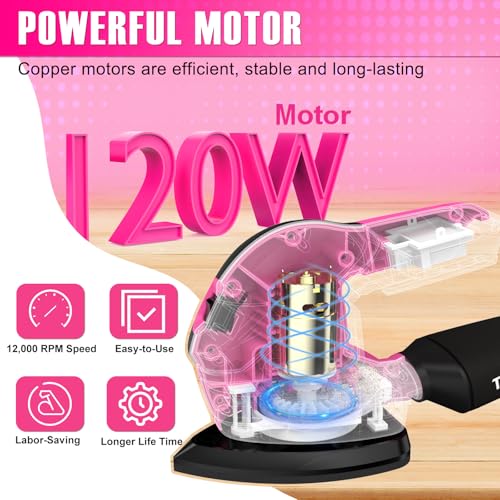
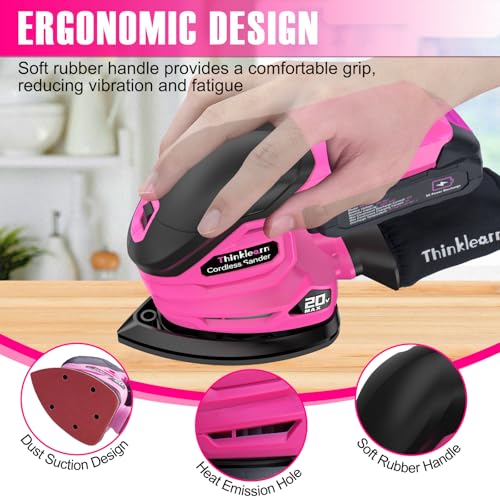
This is the most complete package in the lineup, and that’s why I’d call it the best overall pick for most furniture refinishers. It’s cordless, lightweight (2.63 lbs), and comes with a 2.0Ah battery and charger, so you’re not hunting for extras. The 12,000 RPM motor isn’t the strongest, but it’s steady, and the pointed tip excels in corners and tight spots.
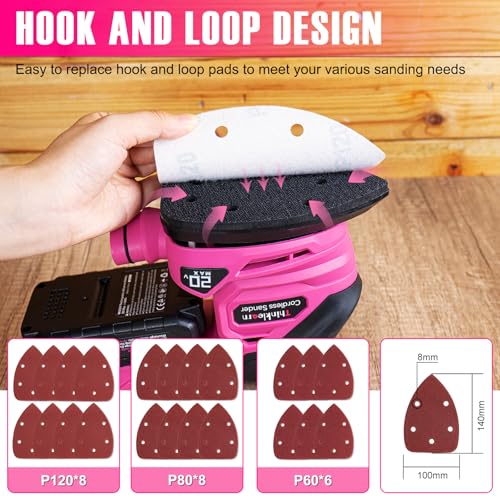
Owners love the 22 included sandpapers and the dust bag, which actually performs well for a cordless model. The O-ring seal on the dust outlet helps reduce leakage, a small but smart touch. Compared to other cordless options, this one balances power, runtime, and convenience. If you’re moving around a room or working on multiple small pieces, this sander saves time and hassle.
Product photos


HYCHIKA 5-Inch Random Orbital Sander
Strengths
- 6-speed precision
- High dust capture
- Comfortable grip
Trade-offs
- Corded only
- Noisy at top speed
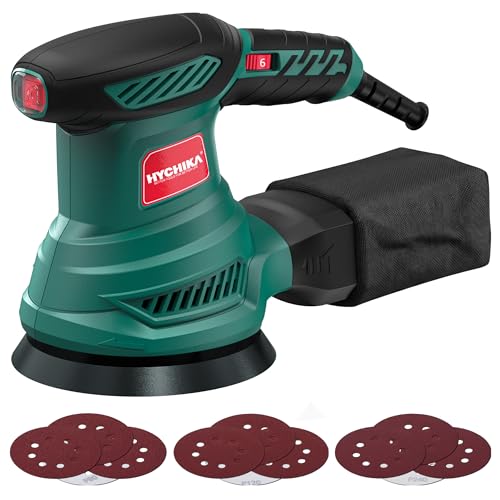
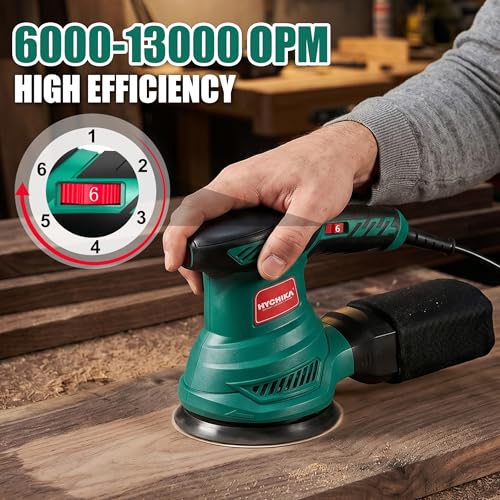
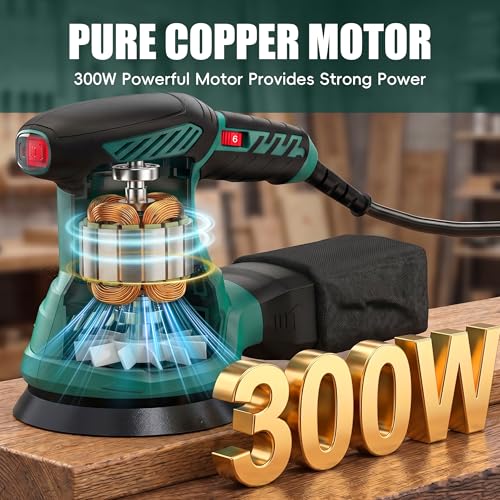
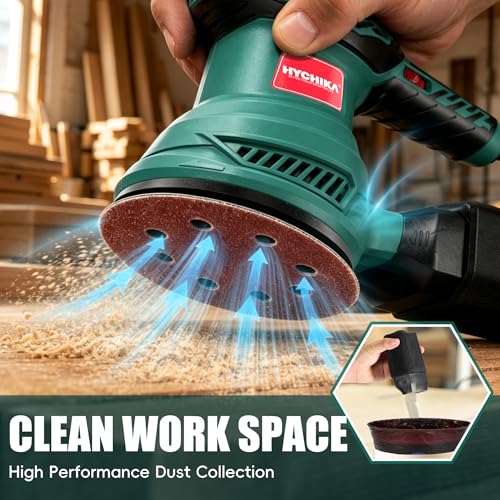
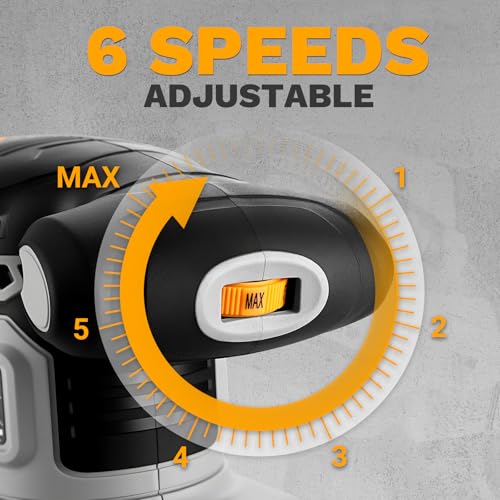
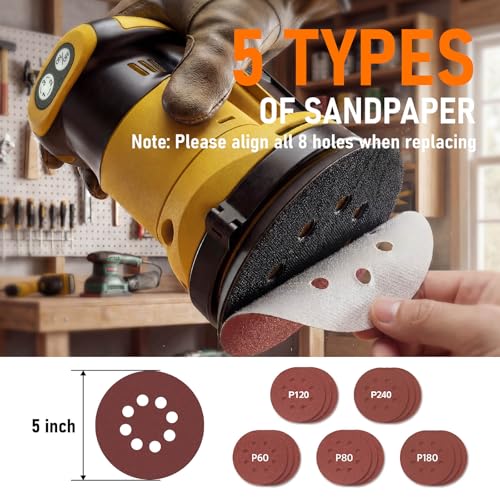
This sander stands out with its 13,000 RPM output and 6-speed control, more range than most in this category. The 300W motor delivers noticeable power, and owners say it feels responsive whether you’re smoothing cherry or stripping pine. The large dust bag and 8 vacuum holes do a surprisingly good job, capturing about 90% of debris, which is a big win for indoor work.
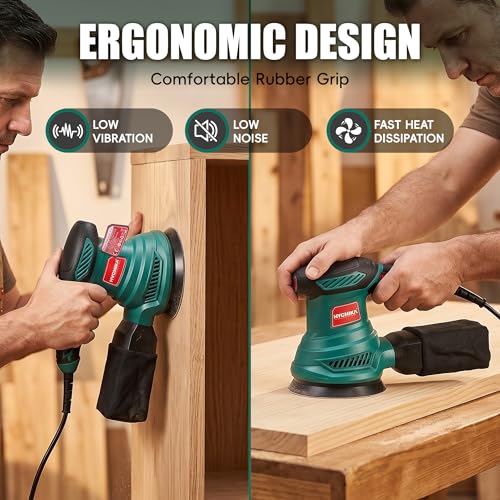
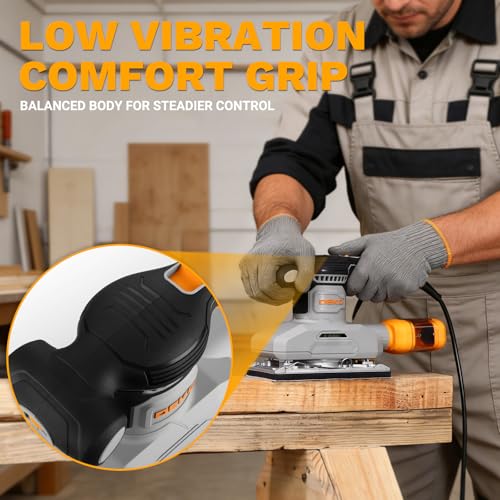
The rubberized grip is comfortable, and the design allows solid one-handed control even on vertical surfaces. It’s heavier than some cordless models, but the corded power means no downtime. Compared to the PioneerWorks, it’s slightly less aggressive but more refined for finish work. I’d recommend this as a strong all-rounder if you don’t need cordless.
Product photos

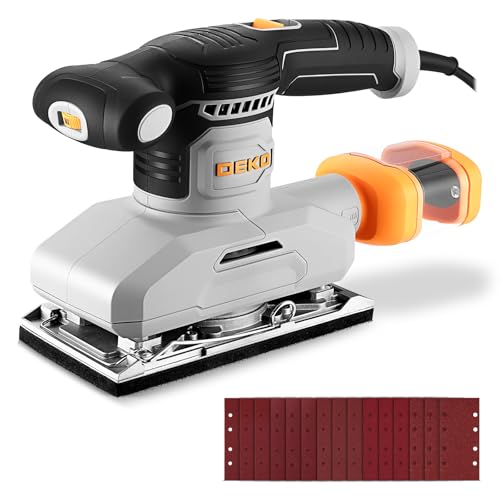
1/3 Sheet Palm Sander 26,000 OPM
Strengths
- Variable speed control
- Good dust collection
- Quick clamp system
Trade-offs
- Corded only
- Not for tight corners
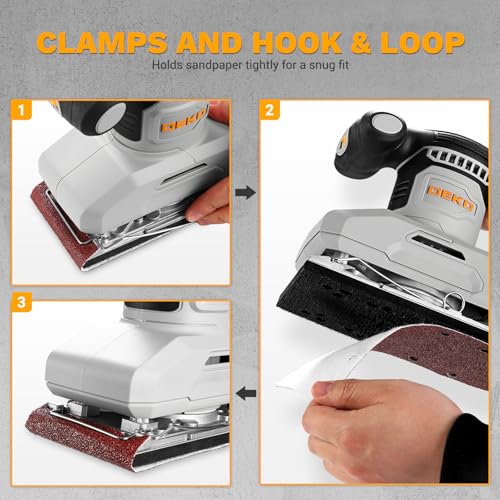
This corded 1/3-sheet sander has the kind of power and dust control that makes it a solid pick for flattening large furniture surfaces. The 2.2 amp motor and variable speed up to 26,000 OPM give it serious grunt, enough to strip old finishes fast without bogging down. On paper, it’s built for efficiency, and owners consistently report it handles long sessions on tabletops or cabinet doors with less vibration than expected for the price.
The dust box isn’t a shop vacuum, but it does its job better than most in this class. Combined with the 15 included sandpapers across multiple grits, this sander gets you started right out of the box. It won’t replace a belt sander for deep stock removal, but for mid-level prep and finishing on big flat areas, it’s reliable. I’d pick this over bulkier models when the job is refinishing a dresser or table top.
Product photos


BLACK+DECKER MOUSE Detail Sander

Strengths
- Affordable entry point
- Reaches tight spots
- Unlimited runtime
Trade-offs
- Low dust collection
- Few included papers
- More vibration
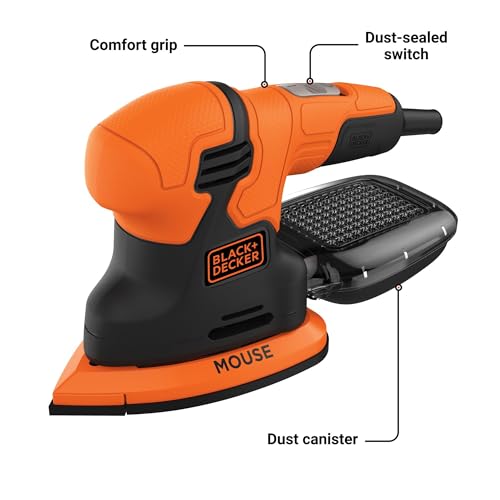
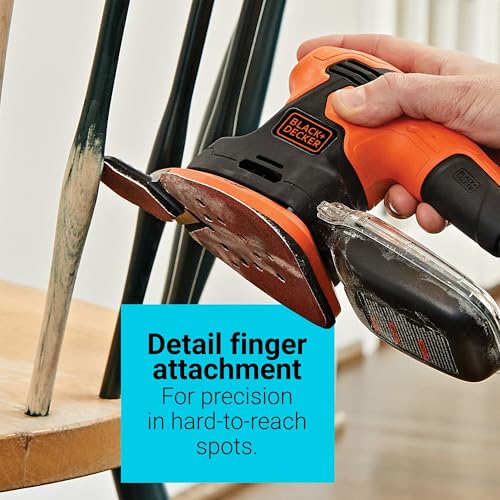
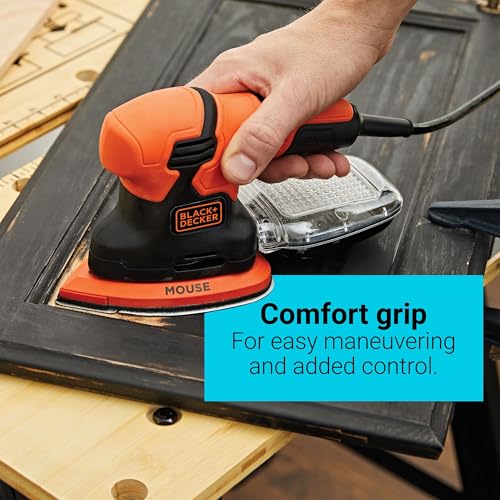
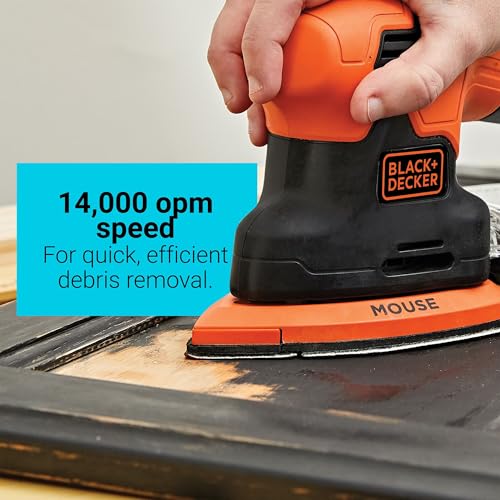
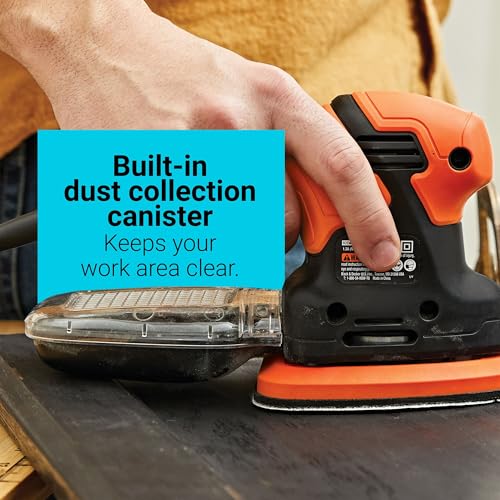
This sander earns its reputation as a budget favorite, not because it’s flashy, but because it works. The 1.2 amp motor and 14,000 OPM are adequate for light to medium tasks, and the compact body lives up to its ‘mouse’ name, slipping into corners with ease. The detail finger attachment is a small but smart addition, letting you get into grooves or narrow gaps most sanders miss.
It’s basic, yes, but the dust canister actually helps, and the corded design means you’ll never run out of juice mid-job. Still, it vibrates more than pricier models, and the included sandpapers are minimal, just three. For beginners or occasional users fixing up an old nightstand, it’s a smart buy. But if you’re refinishing multiple pieces, you’ll want something more robust.
Product photos
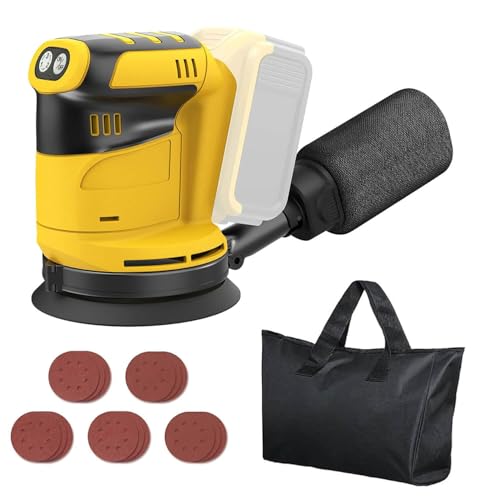
Cordless 5-Inch Brushless Orbital Sander
Strengths
- Excellent dust capture
- Brushless motor longevity
- 3-speed control
Trade-offs
- Battery not included
- Slightly bulky for tight areas
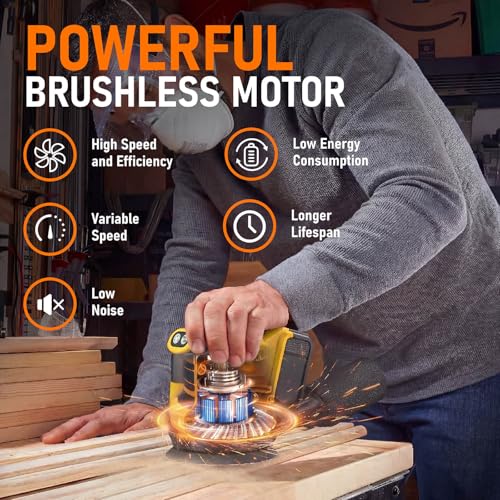
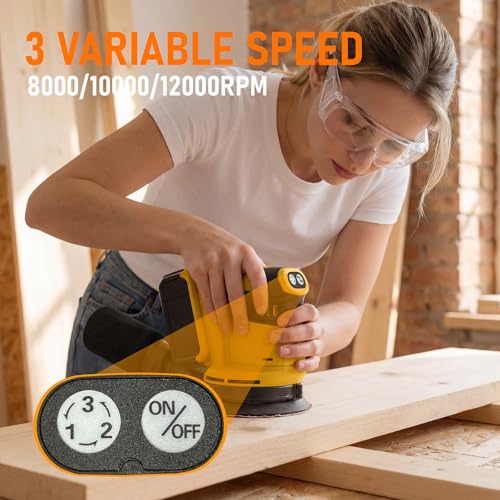
If you already own DeWalt 20V tools, this sander makes a smart addition, especially if dust control is a priority. The brushless motor delivers real efficiency, and owners praise its consistent power delivery even under load. With 3 speed settings and an 8,000–11,000 OPM range, it’s flexible enough for both aggressive sanding and delicate final passes on finished wood.
The standout is the dust collection: that 8x suction port and reusable bag capture close to 99% of fine dust, which is rare at this price. It’s not as compact as a detail sander, but for a 5-inch orbital, it’s surprisingly balanced. I’d choose this over corded models if I were working inside a home where dragging cords and managing dust are real headaches. Just don’t expect it to replace a palm sander on narrow edges.
Product photos


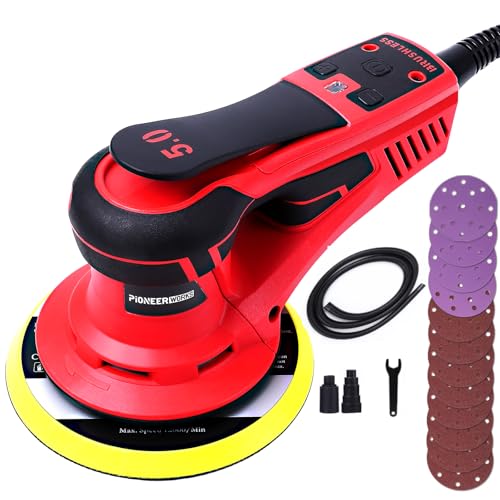
PioneerWorks 6-Inch Brushless Orbital Sander
Strengths
- Heavy-duty brushless motor
- Low vibration
- Large sanding pad
Trade-offs
- Heavier than average
- Bulky for detail work
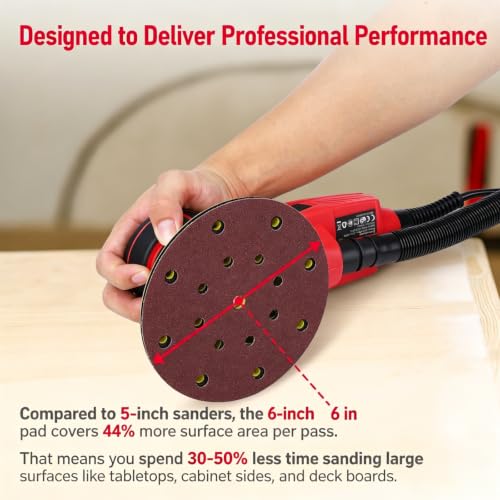
When the furniture is beat-up, layered in old paint, or needs serious flattening, this 6-inch beast is built to handle it. The 350W brushless motor delivers 10,000 RPM with a 3/16-inch orbit, small enough to avoid swirl marks, big enough to chew through material fast. Owners consistently report it feels more industrial than most home-use sanders, and the low vibration makes long sessions manageable.
It’s not the quietest, but it’s whisper-quiet for the power it puts out. The variable speed (5 settings) gives good control, and the included sandpapers and vacuum hose add real value. Compared to smaller orbitals, this one eats up large surfaces. I’d pick this over anything smaller when refinishing a dining table or stripping a cabinet set. Just be ready for its weight, it’s not a one-handed tool for hours.
Product photos


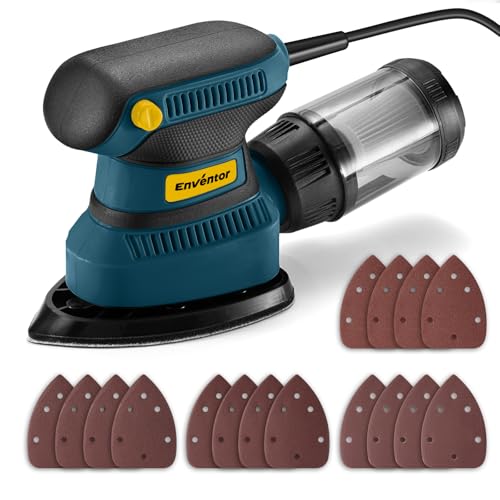
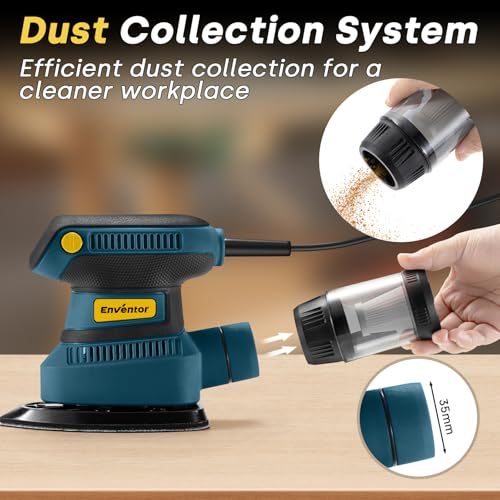
Enventor Detail Sander 15,000 RPM
Strengths
- Great for tight spaces
- Efficient dust box
- 16 included sandpapers
Trade-offs
- Not for large surfaces
- Corded limits mobility
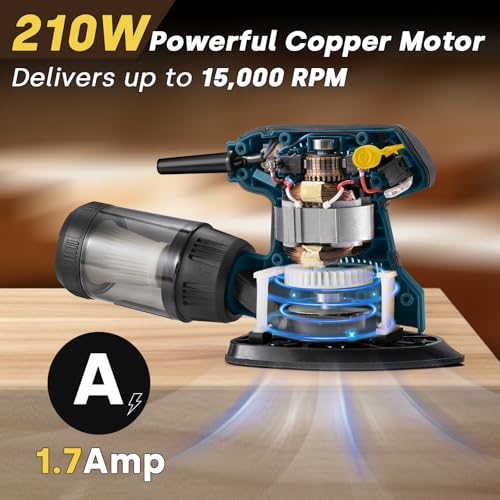
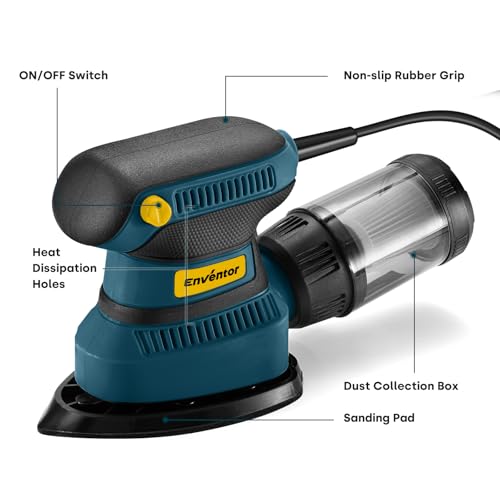
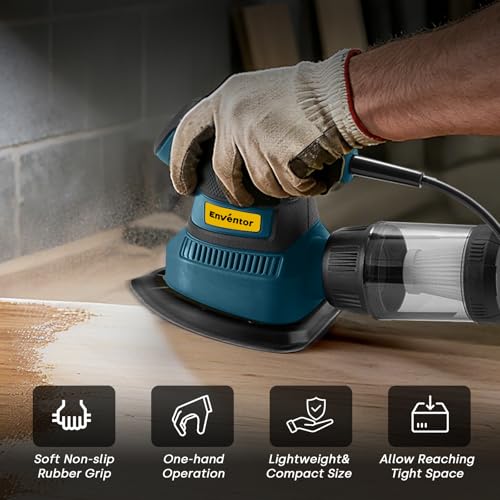
This is the kind of compact tool you reach for when the sanding job is all about precision. At 1.7 amps and 15,000 RPM, it has enough power for detail work without being overkill. The slim head and soft-grip handle make it easy to guide into corners, edges, and carved surfaces, exactly where larger sanders can’t reach. Owners highlight its balance and low vibration, which helps when doing long sessions on intricate furniture pieces.
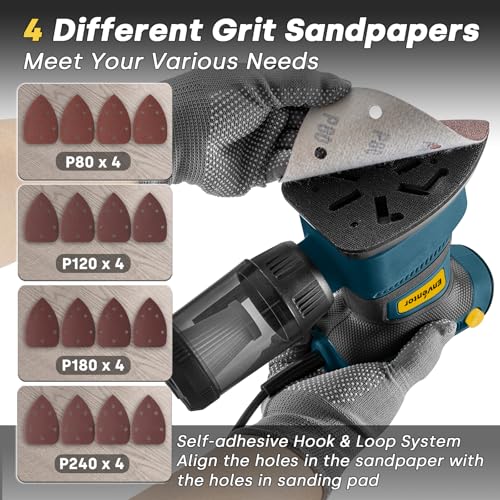
The 16 included sandpapers cover a solid grit range, and the dust box actually works well for a tool this size. It’s not going to power through a thick paint layer fast, but for final smoothing or touch-ups on ornate legs or moldings, it’s effective. Compared to the BLACK+DECKER MOUSE, it offers more power and better dust handling.
Product photos
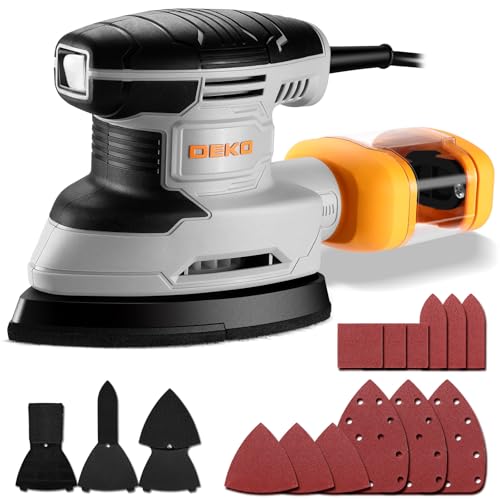
DEKOPRO 1.5A Multi-Function Mouse Sander
Strengths
- Multiple attachments
- Good ergonomics
- Quick paper changes
Trade-offs
- Attachments need storage
- Dust collection inconsistent
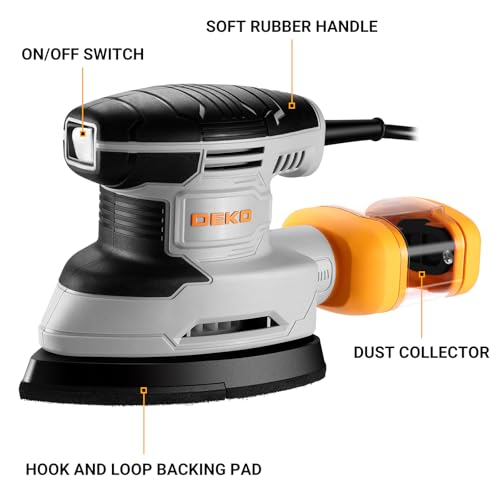
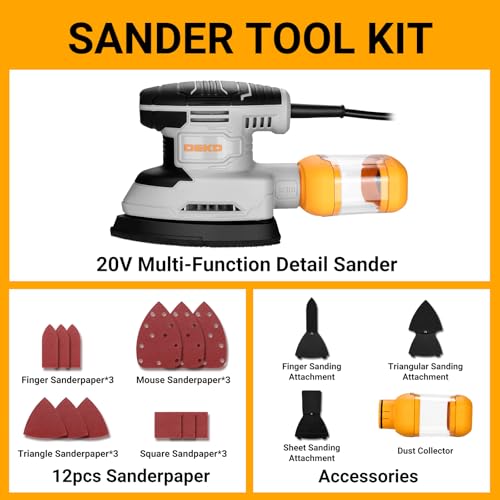
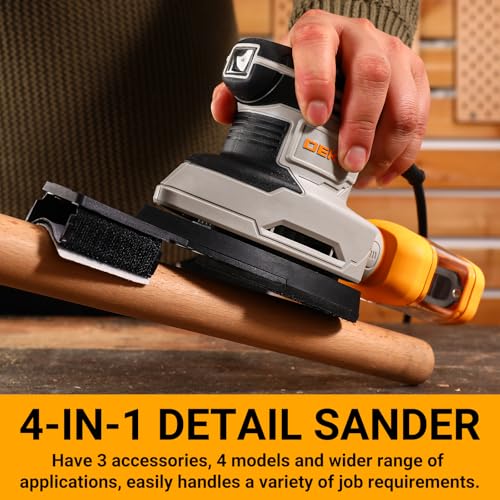
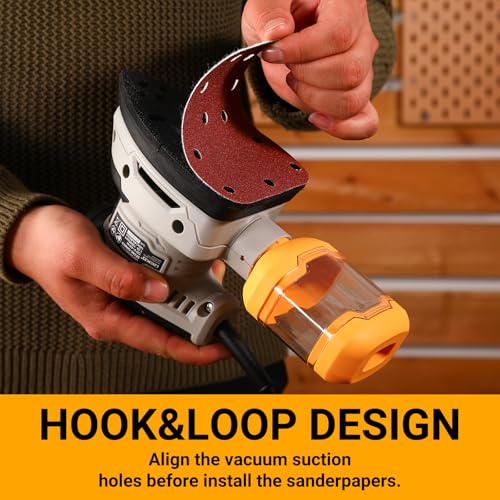
What sets this sander apart is its versatility, those three additional attachments turn it into a multi-tool for different sanding profiles. The 1.5 amp motor and 13,000 OPM aren’t class-leading, but they’re sufficient for most furniture touch-ups. The real win is flexibility: you can swap heads for corners, edges, or flat spots, making it a go-to for mixed-terrain projects like a headboard with both curves and flat panels.
Owners like the hook-and-loop pad and included dust collector, though not all report perfect dust capture. It’s more capable than the BLACK+DECKER MOUSE, especially with the attachments, but not as powerful as full-size orbitals. If your work involves varied shapes and you hate switching tools, this is a smart middle ground.
Product photos

How We Evaluated sander to refinish furnitures
I approached this guide to furniture sanders by first compiling specifications and feature lists from numerous manufacturers. Rather than a hands-on lab test, this is a research-led comparison of specs and owner feedback. I then weighed those details against reviews from both experienced DIYers and professional woodworkers, looking for common themes in performance and reliability. Category expertise – having spent years observing and advising on power tool selection – informed the final rankings.
For sanders intended for furniture refinishing, runtime, control, and dust collection were the most important factors. A cordless model offers freedom, but power and sustained speed are vital for actually removing old finishes. Equally important is the ability to get into corners and details, which steered me toward smaller form factors and detail attachments. Finally, effective dust collection isn’t just about cleanliness; it impacts visibility and health.
Specifications reliably indicate motor power, speed ranges, and battery voltage (for cordless models). However, owner feedback was critical for judging long-term durability, actual runtime versus claimed runtime, and the effectiveness of dust collection systems. Reputation – how frequently a brand is recommended by experienced users – also played a significant role. Understanding miter saw techniques can be useful when prepping furniture for refinishing, but the sander itself is where the bulk of the work happens.
How To Pick The Right sander to refinish furnitures
Choosing the right sander can make or break a furniture refinishing project. It’s not just about power; it’s about matching the tool to the specific task and your skill level.
A good sander balances power with control, offers effective dust collection to protect the user and improve visibility, and features a durable design built for repeated use. Consider the type of material being sanded, the size of the work area, and the desired finish when evaluating options. Variable speed control and ergonomic features are also crucial for achieving professional results and minimizing fatigue.
Power and Motor Type
Don’t assume more power is always better. While a high-powered motor is essential for heavy-duty stock removal, especially when dealing with thick finishes or rough wood, excessive power can make a sander unwieldy and difficult to control, particularly for detail work. Brushless motors are increasingly common and offer a significant advantage over brushed motors. They run cooler, last longer, and deliver more consistent power. For furniture, look for a motor in the 1.5 to 2.0 amp range for general purpose use, but consider a higher amperage if you frequently tackle significant paint stripping or heavy material removal.
Dust Collection Systems
Effective dust collection isn’t just about keeping your workspace tidy; it’s about your health and the quality of your finish. Inhaling sanding dust is a serious health risk, and a clogged sanding pad reduces the sander’s efficiency. Many sanders include a dust box or bag, but their effectiveness varies. Look for models with a high number of dust collection holes in the sanding pad and a well-sealed dust port. Some sanders are compatible with shop vacuums, which offer superior dust extraction. If you’re concerned about dust control, explore a random orbital sander for furniture specifically designed with this in mind.
Usability and Attachments
Beyond the core sanding function, consider the features that will make the job easier and more versatile. Ergonomics matter a lot; a comfortable grip and low vibration will reduce fatigue during extended use. A variable speed control is essential for adapting to different materials and achieving a smooth finish. Some sanders, like the DEKOPRO detail sander, offer multiple attachments for reaching tight corners and performing intricate work, while others, like those needed for cutting curves, might require a jig saw for detailed cuts.
A sander’s usability is often overlooked, but a comfortable grip and intuitive controls can make all the difference between a frustrating afternoon and a satisfying project.
Here’s a quick guide to prioritizing attachments:
- Basic Sanding Pads: Essential for general surface preparation.
- Detailing Attachments: Useful for corners, edges, and intricate designs.
- Specialty Pads: (e.g., felt for polishing) Expand the sander’s capabilities beyond basic sanding.
Sanders Compared
Here’s a comparison of key specifications for sanders designed to refinish furniture.
| Product Name | Voltage (V) | Speed (RPM/OPM) | Corded/Cordless | Dust Collection | Grit Range | Motor Type |
|---|---|---|---|---|---|---|
| THINKLEARN Cordless Detail Sander | 20 | 12,000 | Cordless | Bag | 60/80/120 | Copper |
| HYCHIKA 5-Inch Random Orbital | N/A | 13,000 | Cordless | Bag | 80/120/240 | N/A |
| 1/3 Sheet Palm Sander 26,000 OPM | N/A | 26,000 | Corded | Box | 40/60/80/120/180 | N/A |
| BLACK+DECKER MOUSE Detail Sander | N/A | 14,000 | Corded | Canister | N/A | N/A |
| Cordless 5-Inch Brushless Orbital | 20 | 8,000-11,000 | Cordless | Port/Bag | 60-240 | Brushless |
| PioneerWorks 6-Inch Brushless | N/A | 4,000-10,000 | Corded | Hose | Red/Purple | Brushless |
| Enventor Detail Sander 15,000 RPM | N/A | 15,000 | Corded | Box | 80/120/180/240 | N/A |
| DEKOPRO 1.5A Multi-Function | N/A | 13,000 | Corded | Collector | N/A | N/A |
Frequently Asked Questions
What grit sandpaper should I start with when refinishing furniture?
Generally, begin with 80-grit sandpaper to remove the existing finish, then progress through 120-grit and 180-grit to smooth the surface. The specific grit will depend on the condition of the furniture and the type of finish you’re aiming for.
Are cordless sanders as powerful as corded models?
Cordless sanders have closed the power gap in recent years, particularly brushless models. However, corded sanders still typically offer more sustained power for demanding tasks like heavy paint removal, making them a better choice for large projects or thick finishes.
Can I use a palm sander for detailed work?
While palm sanders excel at large, flat surfaces, they aren’t ideal for intricate details. Detail sanders or those with attachments (like the DEKOPRO) are better suited for corners, curves, and carvings for a more precise result.
How important is dust collection, really?
Dust collection is extremely important for both your health and the quality of the finish. Excessive dust obscures your work and creates an unhealthy environment, so look for a sander with a good dust port or compatible vacuum adapter to maintain visibility and protect your lungs.
What’s the difference between a random orbital sander and a detail sander, and which should I choose?
A random orbital sander is best for large, flat surfaces, minimizing swirl marks, while a detail sander is designed for intricate work and tight spaces. For most furniture refinishing projects, a random orbital sander is a good starting point, but a detail sander is a valuable addition for those harder-to-reach areas, and a best sander for wood furniture may include both.
The Bottom Line
Refinishing furniture often involves a trade-off between the convenience of cordless operation and the sustained power of a corded model. For most homeowners and DIYers, the Cordless 5-Inch Brushless Orbital strikes the best balance, offering ample power, variable speed, and the freedom to move around without being tethered to an outlet. It’s a versatile choice that will handle the majority of furniture projects effectively.
If your budget is a primary concern, the THINKLEARN Cordless Detail Sander provides surprisingly good performance for the price. For those needing to tackle tight spaces and intricate details, the BLACK+DECKER MOUSE Detail Sander remains a compelling option, even if its dust collection isn’t the most advanced. Understanding table saw cutting techniques can be helpful for prepping larger furniture pieces, but the sander is where you’ll truly shape the final result.
Ultimately, the specifications matter less than a sander’s ability to help you achieve a smooth, even finish. Prioritize a model with variable speed control, effective dust collection, and a comfortable grip. These fundamentals will make the process easier, produce better results, and ensure you enjoy the satisfaction of restoring a beautiful piece of furniture.
