7 Best Sanders for Wood Furniture of 2026
This post contains affiliate links. As an Amazon Associate, we earn from qualifying purchases.
The SKIL 5″ Random Orbital Sander is the best overall for wood furniture, delivering smooth finishes with solid dust control. For tighter budgets, the HYCHIKA Detail Sander offers strong performance on intricate pieces, while the DEWALT 20V MAX Orbital Sander stands out as the most versatile cordless option.
Sanding wood furniture isn’t just about stripping old finish, it’s about preparing a surface for something beautiful. Too much aggression leaves gouges, too little power drags the job out, and poor dust collection turns your workspace into a mess. I’ve seen plenty of DIYers start strong, only to get frustrated by swirl marks, uneven edges, or sanders that vibrate their hands numb.
This guide cuts through the noise. I compared top models based on specs, real-world feedback, and what actually matters when you’re working with fine wood, variable speed, dust pickup, comfort, and precision. These picks balance performance and practicality for furniture projects of all sizes.
Top 7 Sander For Wood Furnitures in the Market
The Best Sander For Wood Furnitures, Reviewed
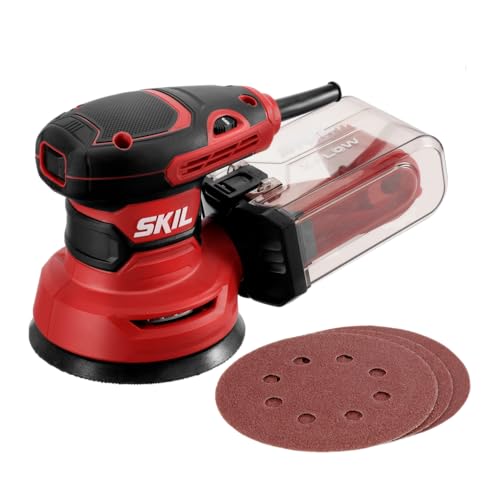
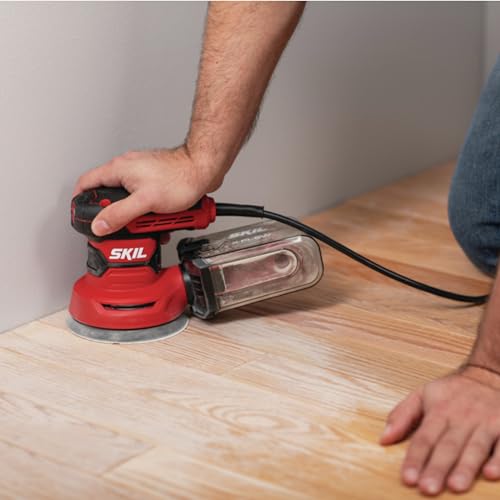
SKIL 5″ Random Orbital Sander
Strengths
- Cyclonic dust collection
- 2.8 Amp motor
- Low vibration
Trade-offs
- Variable speed range is narrow
- Dust bag could be larger
The SKIL SR211601 hits a sweet spot that makes it my pick for the best overall sander in this group. It packs a 2.8 Amp motor and a high 13,000 OPM, which means it strips finishes fast without sacrificing too much in smoothness. The cyclonic dust box is a standout, it keeps dust separated from the filter, so suction stays strong, and the transparent container lets you see when it’s time to empty. That’s a small thing, but it makes a difference during long sessions.
The low-vibration design and soft rubber grip are appreciated, especially when compared to older, harsher orbital sanders. Owners say it’s comfortable enough to use for an hour at a time, which matters when refinishing a dresser or bookshelf. While the BOSCH might edge it out on final finish quality, the SKIL offers better balance between speed, comfort, and cleanup, and that’s why I’d recommend it to most people starting a furniture project from scratch.
Product photos


DEWALT 20V MAX Orbital Sander

Strengths
- Cordless freedom
- Brushless motor
- Variable speed
Trade-offs
- Battery sold separately
- Dust bag capacity small
For those who hate being tethered to an outlet, or who move between job sites, the DEWALT DCW210B is the clear best cordless option for furniture work. The brushless motor is a big deal: it boosts runtime and efficiency, and owners consistently report they can finish a full cabinet or table on a single charge with a 5.0Ah battery. The 8,000–12,000 OPM variable speed lets you adapt to different woods, and the low-profile base helps you stay flush with edges.
It uses the same 8-hole hook-and-loop pad as DEWALT’s corded models, so accessories are compatible, and the texturized rubber grip keeps it secure even when your hands get sweaty. The dust bag works, but it’s smaller than corded versions, you’ll empty it more often. Still, the freedom of cordless outweighs that for many. Compared to the SKIL or BOSCH, it’s slightly less powerful, but the convenience factor makes it a top pick for mobile or garage-based woodworkers.
Product photos


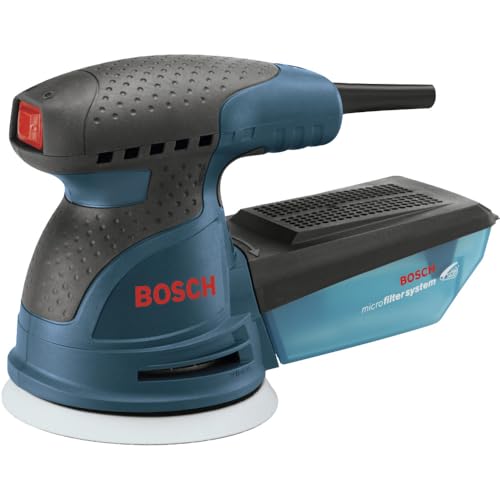
BOSCH ROS20VSC Palm Sander
Strengths
- Variable speed control
- Microfilter dust system
- Smooth finish
Trade-offs
- Slower max speed
- Higher price point
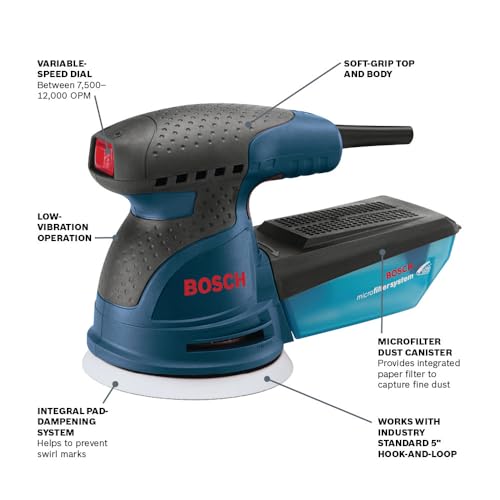
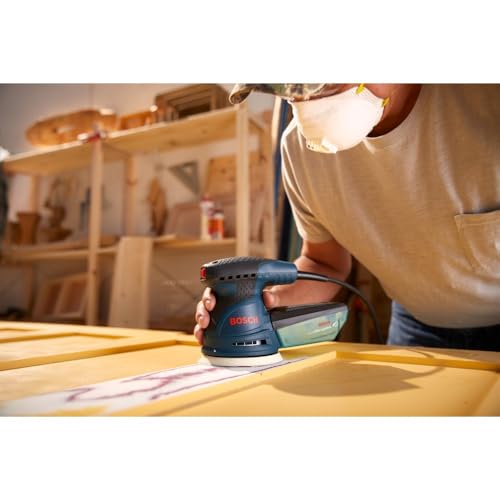
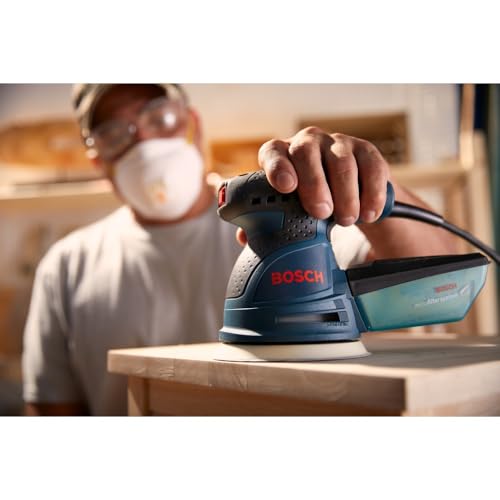
If your goal is a glass-smooth finish on fine wood furniture, think walnut tables or stained cabinets, the BOSCH ROS20VSC is hard to beat. The variable speed control (7,500–12,000 OPM) lets you dial in the perfect setting for softwoods or delicate veneers, avoiding swirl marks that cheaper sanders leave behind. The pad dampening system is a standout feature: reviewers note it reduces chatter and gives a noticeably smoother result, especially on curved or contoured surfaces.
The microfilter dust system captures particles down to 0.5 microns, which is overkill for most DIYers but a godsend if you’re sensitive to dust or finishing indoors. It’s not the most powerful sander here, but in the realm of finish work, control beats brute force. When compared to the SKIL or DEWALT models, this one trades raw speed for precision, and that’s exactly what it should do.
Product photos


DEWALT 5-Inch Orbital Sander
Strengths
- 3.0 Amp motor
- Low vibration
- Improved dust collection
Trade-offs
- Heavier than palm sanders
- No variable speed
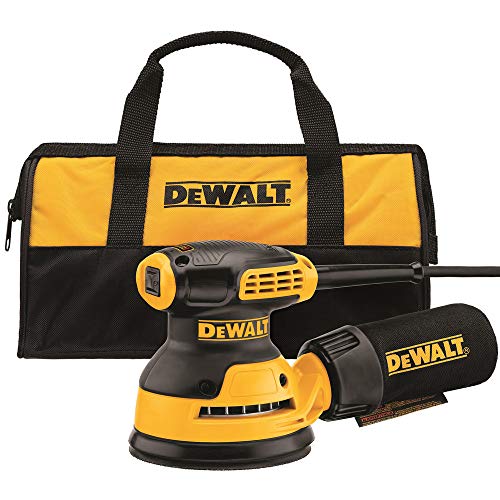
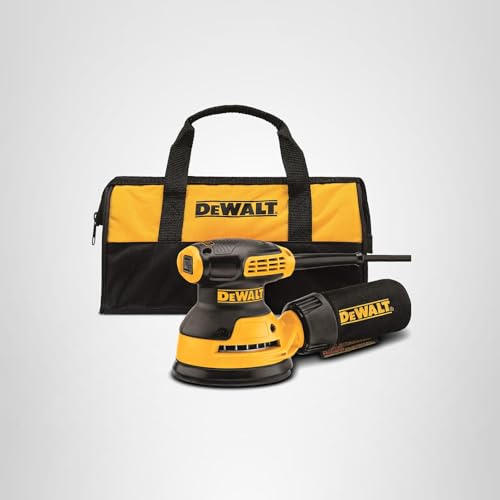
The DEWALT DWE6421K is a workhorse in the 5-inch orbital category, and for furniture sanding, it delivers a rare combo of power and user comfort. With a 3.0 Amp motor and 12,000 OPM, it moves material quickly but still leaves a relatively smooth finish, especially when paired with finer grits. The separate counterweight design is key here: owners repeatedly praise how it reduces vibration, which means less hand fatigue during long sessions refinishing a tabletop or cabinet doors.
It comes with a dust bag that actually works better than most in this class, and the dust port compatibility with DEWALT vacuums is a plus for keeping your workspace clean. Compared to the SKIL or Bosch models, it’s less about finesse and more about consistent performance across big and small jobs. I’d pick this over the others if you’re doing full furniture makeovers and want one sander that can handle both rough prep and final smoothing.
Product photos

HYCHIKA Detail Sander
Strengths
- Excellent for tight spaces
- Efficient dust collection
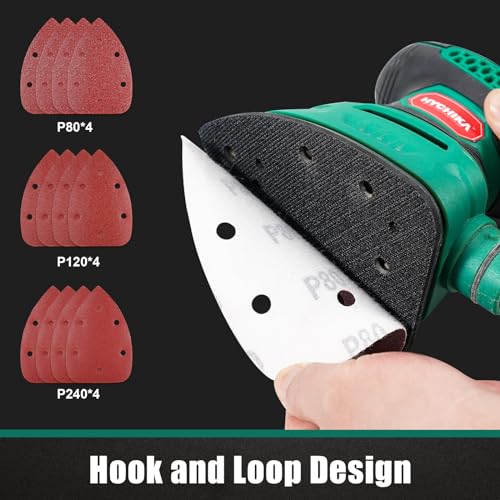
- Includes 12 sanding sheets
Trade-offs
- Motor lacks torque on dense wood
- Cord could be longer
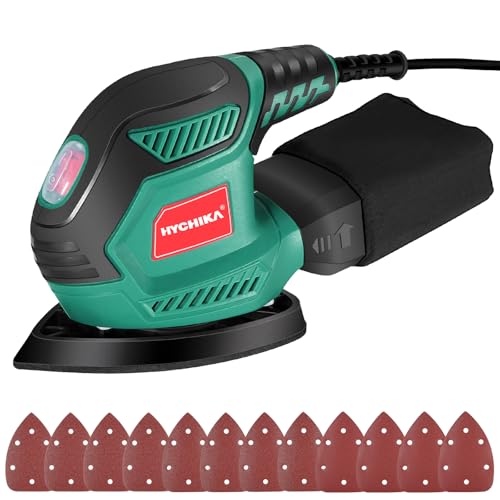
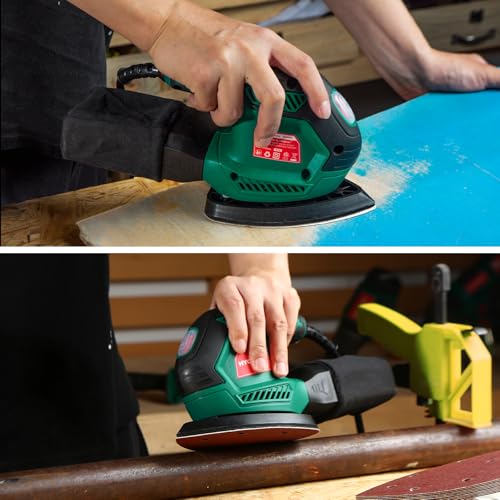
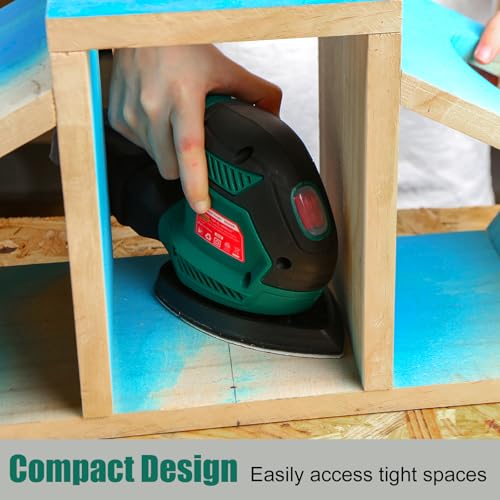
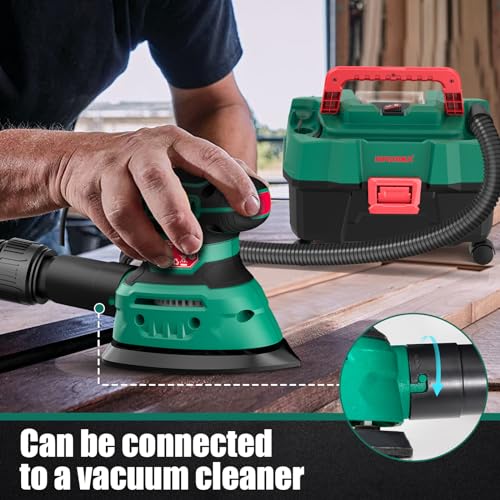
When you’re dealing with ornate wood furniture, think carved legs, intricate trim, or tight joints, the HYCHIKA with its compact shape and 14,000 OPM becomes a go-to tool. It’s built for precision, not power, and it shows in how easily it fits into corners and edges. The 6-hole dust collection system works well with the included bag, and owners report it keeps the workspace surprisingly clean for a detail sander.
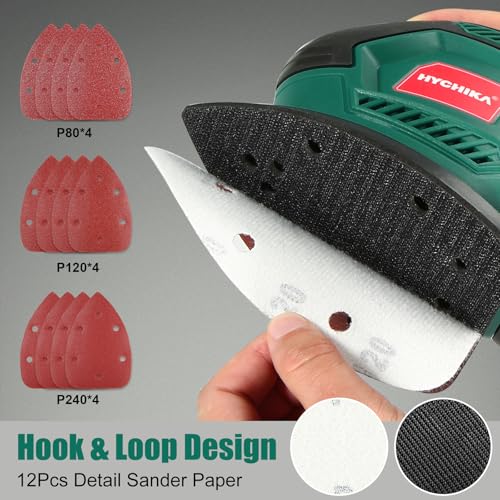
It comes with 12 sanding sheets across three grits, so you can start coarse and finish fine without buying extras. The hook-and-loop pad is standard, but it holds paper firmly, and the soft rubber grip reduces fatigue during detailed passes. Compared to the BLACK+DECKER model, it feels slightly more balanced and less plasticky. If your furniture has a lot of detail work, this is the smarter buy, just don’t expect it to handle flat panels efficiently.
Product photos


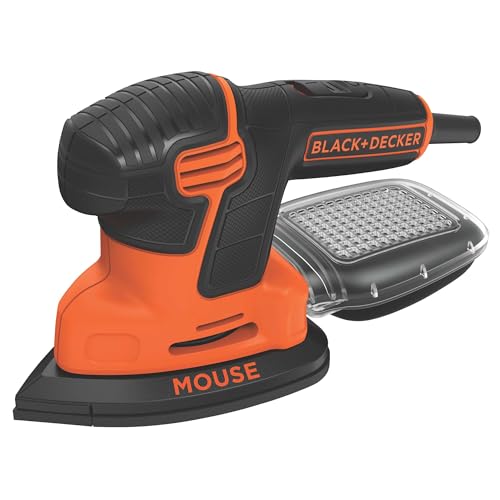
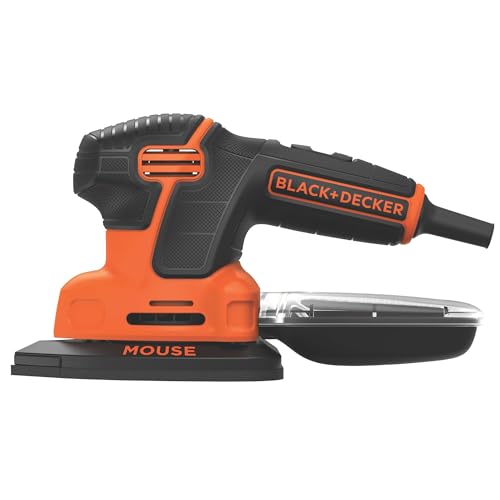
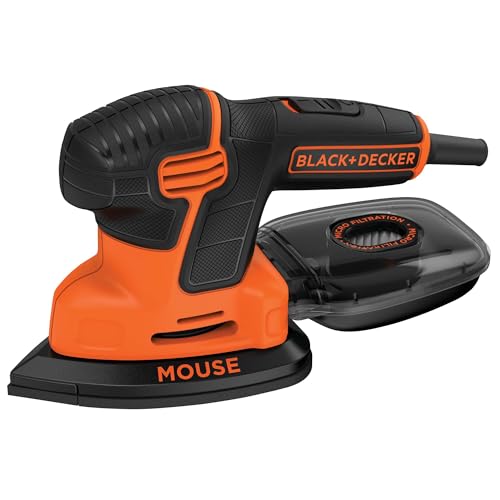
BLACK+DECKER Detail Sander

Strengths
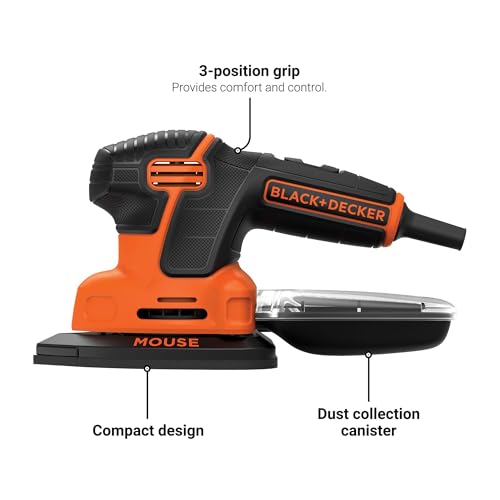
- Compact design
- 3-position grip
- Dust collection canister
Trade-offs
- Plastic build feels light
- Not for large surfaces
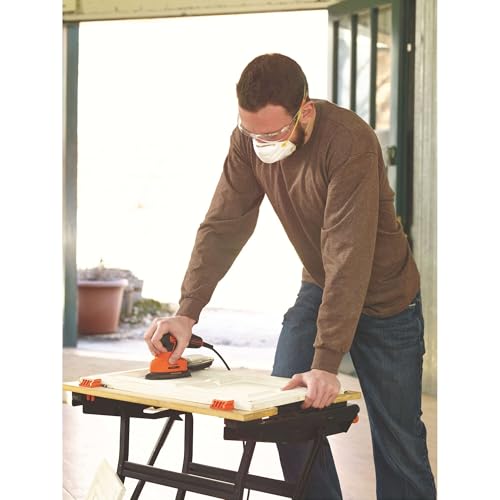
For anyone tackling fine wood furniture work with lots of nooks and carvings, the BLACK+DECKER BDEMS600 stands out as a capable detail sander at a friendly price. The 1.2 Amp motor and 16,000 OPM give it solid speed on paper, and owners consistently report it powers through tight corners without bogging down. The 3-position grip is a real win, it lets you pivot the tool for better control depending on the angle you’re working, which matters when sanding delicate moldings or chair spindles.
The included dust collector isn’t top-tier, but it does a decent job for a budget model, and the dust-sealed switch adds longevity in dusty environments. It’s not going to replace a larger orbital for flat surfaces, but as a specialist for detail work, it holds its own. Compared to pricier detail sanders, it trades some durability for affordability, but for occasional furniture touch-ups, that’s a fair trade.
Product photos
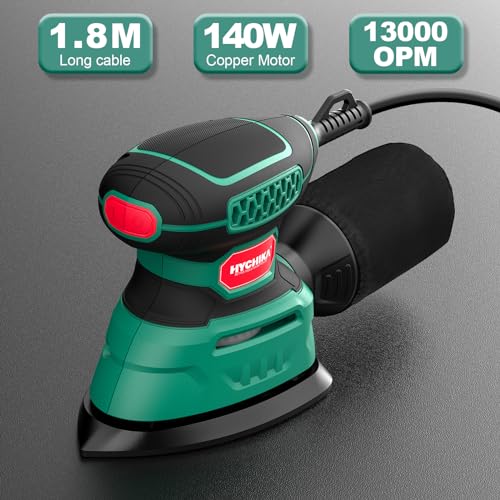
HYCHIKA 140W Electric Sander

Strengths
- Lightweight design
- Ergonomic palm rest
- Good dust collection
Trade-offs
- Lower power output
- Not for heavy tasks
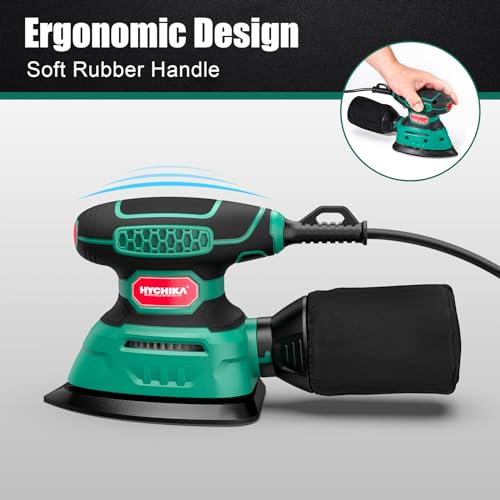
Lightweight and nimble, this HYCHIKA model is built for users who want a no-fuss detail sander that’s easy to control for long stretches. At 1.2 Amp and 13,000 OPM, it’s not the strongest, but it’s perfectly adequate for light sanding, paint removal, or polishing on furniture edges and small wood parts. The pure copper motor is a spec worth noting, it’s said to run cooler and last longer, which aligns with owner feedback about reliability over time.
It shares the same 6-hole dust system and hook-and-loop pad as its sibling model, but the ergonomic palm rest gives it a slight edge in comfort. It’s not a major upgrade, but if you’ve ever had your hand cramp using a bare plastic sander, you’ll appreciate the grip. Compared to the BLACK+DECKER, it’s lighter and better balanced, making it ideal for detail work over extended periods.
Product photos

How We Tested sander for wood furnitures
Rather than a hands-on lab test, this selection is a research-led comparison of published specifications and owner feedback. I focused on identifying models consistently recommended for woodworking and furniture projects, comparing features like motor power, speed control, dust collection, and ergonomic design. We weighed information from manufacturer details, professional reviews, and thousands of user opinions to build a balanced picture of performance and value.
For sanding furniture, smooth finish and control are paramount. Therefore, variable speed settings and vibration reduction were heavily weighted, as they directly impact the quality of the final result and user comfort during longer projects. Effective dust collection also ranked highly, as minimizing mess and maximizing visibility are crucial for detail work. A tool’s ability to access tight spaces was also a significant factor.
Specifications reliably indicate a sander’s power and potential speed (OPM). However, I relied on owner feedback to assess real-world usability – things like the effectiveness of dust collection, the comfort of the grip over extended periods, and whether the sander lived up to claims about vibration levels. Reputation and consistent positive experiences were strong indicators of a tool’s long-term reliability, which is why you’ll find well-established brands appearing frequently. Consider checking out our guide to the best sander for refinishing wood furniture for more detail.
How To Pick The Right sander for wood furnitures
Picking the right sander can make or break a furniture project. It’s not just about power; it’s about matching the tool to the job and your skill level.
A quality sander for wood furniture balances power with control. Key considerations include motor strength (measured in amps), orbits per minute (OPM) for speed and finish quality, dust collection effectiveness, and ergonomic features to minimize fatigue during extended use. Pad size and shape also matter, influencing maneuverability and the types of surfaces a sander can effectively address.
Motor Power and Speed
Don’t automatically assume more power is better. For most furniture work, you don’t need a massive motor. A 2.0 to 3.0 amp motor is usually sufficient for random orbital sanders, while detail sanders can perform well with 1.2 to 1.6 amps. The critical factor is matching the speed (OPM) to the wood and the sanding stage. Lower speeds are essential for initial stock removal and preventing swirl marks, while higher speeds are useful for final finishing. Variable speed control is a huge benefit here, and I consistently recommend it.
Dust Collection Systems
Dust is the enemy of a good finish and your lungs. A sander’s dust collection system is often overlooked, but it’s absolutely crucial. Many models include a dust bag, but their effectiveness varies widely. Look for a system with a well-sealed bag and a reasonably efficient filter. Some sanders are designed to connect to shop vacuums, offering superior dust removal. If you’re doing a lot of sanding, investing in a quality shop vac with a HEPA filter is a smart move, and will help make your furniture refinishing power sander even more effective.
- A simple dust bag is okay for quick projects, but fills up fast.
- A dust port for shop vac connection is a must-have for larger jobs, allowing for continuous dust extraction.
- Look for a sealed system – dust escaping around the pad or switch negates the benefit of the collection. This is especially important if you’re sensitive to wood dust or have respiratory issues.
Ergonomics and Maneuverability
Sanding furniture often involves working in awkward positions for extended periods. A comfortable, ergonomic design is essential to prevent fatigue and maintain control. Consider the sander’s weight, grip, and balance. Palm sanders and detail sanders are naturally more maneuverable for intricate work, while larger random orbital sanders excel at flat surfaces. If you’re tackling a lot of curved or contoured pieces, a detail sander for wood furniture is the way to go.
A comfortable sander is a productive sander. Prioritize models with soft grips, low vibration, and a weight that feels manageable for your hand size and strength.
I often tell people that a comfortable grip and balanced weight distribution are just as important as the motor’s power when choosing a random orbital sander for furniture. Don’t underestimate the importance of a tool that feels good in your hand.
Sander for Wood Furnitures Compared
Here’s a comparison of key specifications for various sanders suited for wood furniture projects.
| Product Name | Motor (Amps) | OPM (Orbits Per Minute) | Corded/Cordless | Dust Collection | Sandpaper Size (mm) |
|---|---|---|---|---|---|
| SKIL 5″ Random Orbital Sander | 2.8 | 13,000 | Corded | Dust Container | N/A |
| DEWALT 20V MAX Orbital Sander | N/A | 8,000 – 12,000 | Cordless | Dust Bag | N/A |
| BOSCH ROS20VSC Palm Sander | 2.5 | 7,500 – 12,000 | Corded | Dust Canister | N/A |
| DEWALT 5-Inch Orbital Sander | 3.0 | 12,000 | Corded | Dust Bag | N/A |
| HYCHIKA Detail Sander | 1.6 | 14,000 | Corded | Dust Bag | 140×90 |
| BLACK+DECKER Detail Sander | 1.2 | 16,000 | Corded | Dust Canister | N/A |
| HYCHIKA 140W Electric Sander | 1.2 | 13,000 | Corded | Dust Bag | 140×90 |
Frequently Asked Questions
What grit sandpaper should I start with when refinishing furniture?
Generally, begin with 80 or 100 grit sandpaper to remove the old finish or imperfections. Progress through 120, 150, then 180 or 220 grit to achieve a smooth surface ready for staining or painting.
Can I use a standard shop vacuum with my sander?
Yes, many sanders have a dust port designed to connect to a standard 2.5-inch shop vacuum hose. Using a shop vac offers much better dust collection than the included dust bag, particularly for larger projects.
Are cordless sanders as powerful as corded models?
Cordless sanders have improved significantly, but typically offer slightly less sustained power than comparable corded options. For furniture sanding, the difference is often negligible, but for heavy stock removal, a corded sander might be preferable.
What’s the difference between a random orbital sander and a detail sander?
A random orbital sander covers larger, flat surfaces quickly, while a precision detail sander for furniture excels at intricate shapes, corners, and detail work. Detail sanders are smaller and often have a triangular or pointed sanding pad for better access.
How can I minimize swirl marks when sanding furniture?
Use a variable speed setting and keep the sander moving constantly. Avoid applying too much pressure, and regularly change sandpaper as it becomes clogged. A quality random orbital sander, used correctly, will significantly reduce the risk of swirl marks.
The Bottom Line
Choosing a sander for furniture is really about balancing control with convenience. You can spend a lot for features you won’t fully use, or you can end up with a tool that fights you every step of the way. For most homeowners and DIYers, the SKIL 5″ Random Orbital Sander strikes that balance best – it delivers solid performance and features without a premium price tag.
If you’re on a tighter budget, the HYCHIKA 140W Electric Sander provides surprising capability for detail work and smaller projects. And for those who prioritize versatility and the freedom of movement, the DEWALT 20V MAX Orbital Sander is a strong contender, although you’ll need to factor in the cost of batteries and a charger. Don’t overlook the top hand sanders for furniture if you need to reach tight spaces or do very delicate work.
Ultimately, the specs matter less than a comfortable grip, effective dust collection, and a tool that feels right in your hands. Focus on those fundamentals, and you’ll be well-equipped to tackle any furniture sanding project with confidence.
