3 Best Reciprocating Saw Blades for Wood (2026 Guide)
This post contains affiliate links. As an Amazon Associate, we earn from qualifying purchases.
The best reciprocating saw blade for wood is the EZARC 15″ Japanese Teeth Pruning Blade, delivering aggressive, fast cuts through thick branches. For a more compact option, the Diablo 9″ Carbide Tipped Pruning Blade offers exceptional durability and clean performance, especially in tough or treated wood.
Most people buy a reciprocating saw blade for wood without realizing how much the tooth design and material affect performance. A poor choice leads to binding, rapid dulling, or rough cuts that make cleanup harder than the job itself.
I compared specs, analyzed owner feedback, and evaluated blade geometry and materials to find the top performers for common DIY and home maintenance tasks. These picks balance cutting speed, durability, and compatibility across popular saws.
Top 3 Reciprocating Saw Blade For Woods in the Market
The Best Reciprocating Saw Blade For Woods, Reviewed
EZARC 15″ Japanese Teeth Pruning Blade

Strengths
- 15-inch extended reach
- Arc edge reduces friction
- Fleam-ground 6TPI teeth
Trade-offs
- Not Ryobi compatible
- No carbide tips
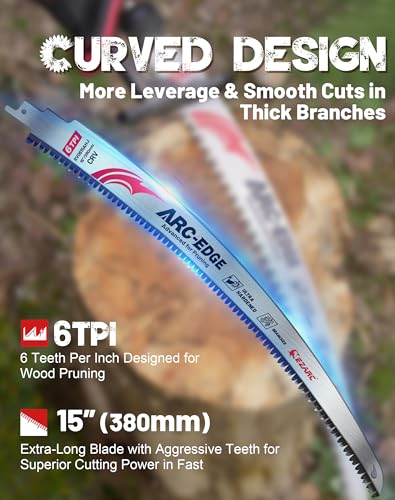
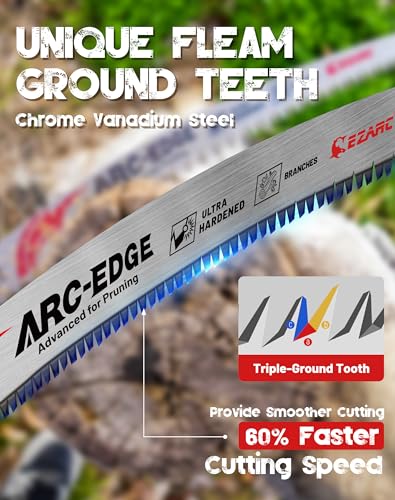
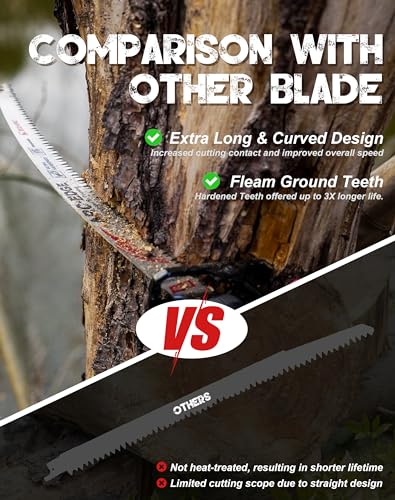
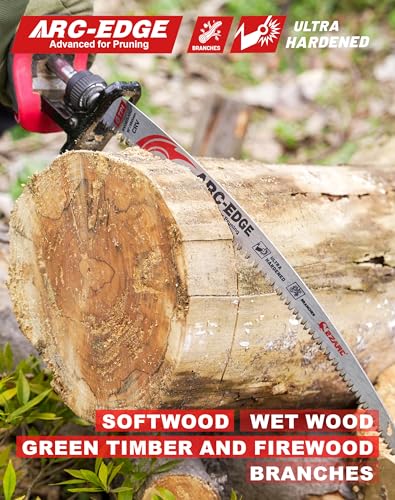
At 15 inches, this is one of the longest standard reciprocating saw blades you’ll find for wood pruning, and that extra reach makes a real difference when cutting larger limbs or working in awkward angles. The arc edge design with triple-ground fleam teeth delivers a clean, fast cut with less vibration, reviewers note it feels more controlled than straight-edge 6TPI blades, especially in wet or fibrous wood. The 6TPI tooth pattern is ideal for fast removal, and the deep gullets handle chip clearing well.
It’s a strong contender for the title of best overall wood-cutting blade, mainly because of its length and smooth cutting action. While it doesn’t have carbide tips, the heat-treated steel and aggressive tooth geometry give it solid durability for the price. Just be aware: it’s not compatible with Ryobi saws, which could be a dealbreaker for some.
Product photos
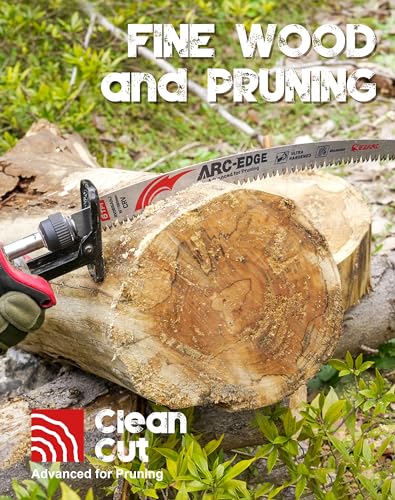
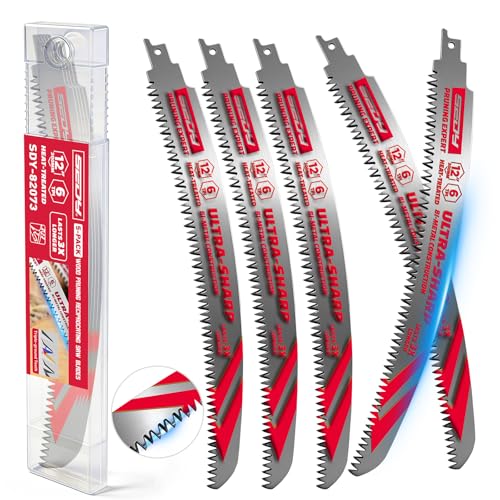
12″ Japanese Teeth Arc Edge Blade
Strengths
- 6TPI aggressive teeth
- Arc edge reduces binding
- Heat treated for durability
Trade-offs
- Shorter length than some
- Not for metal or nails
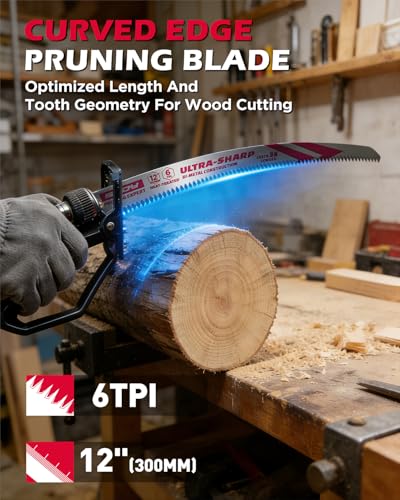
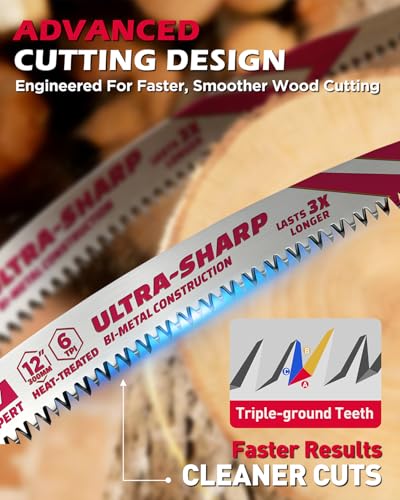
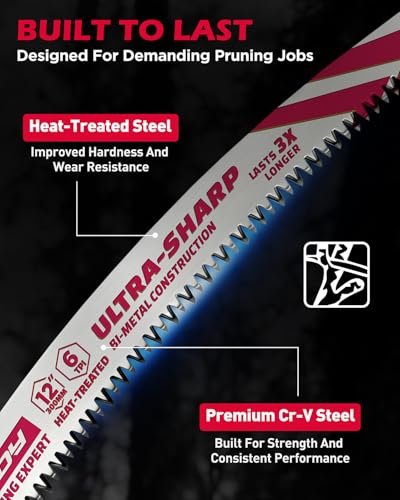
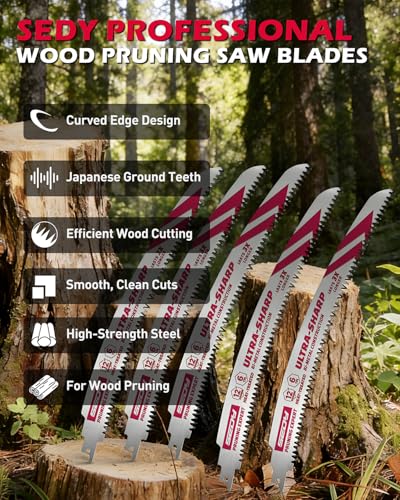
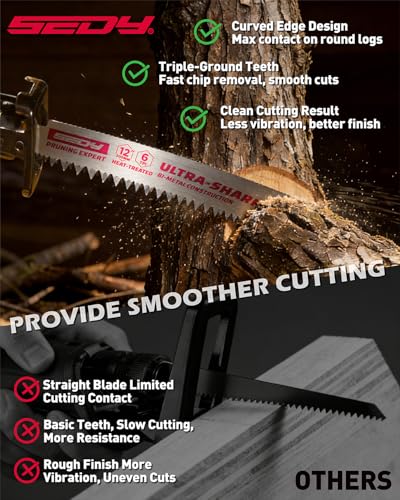
These 12-inch Japanese teeth blades are built for speed and efficiency when tackling thick branches, and the 6TPI tooth pattern backs that up. The arc edge design isn’t just a gimmick, owners consistently report less binding and smoother cuts through round wood, which matters when you’re pruning overhead or working in tight spots. On paper, the heat-treated construction should help maintain edge retention over time, and that’s reflected in feedback from gardeners and arborists who go through blades frequently.
The 5-pack with a storage box adds real value, especially for users doing regular yard work or storm cleanup. Compared to standard straight-edge wood blades, these offer noticeably better control and chip clearing, though they won’t match the longevity of carbide-tipped options. For general pruning, they strike a smart balance between performance and cost.
Product photos
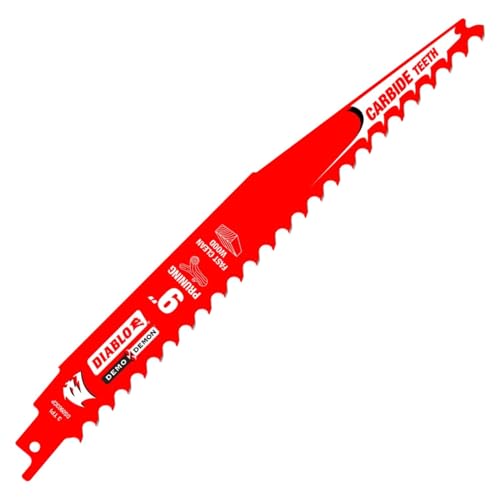
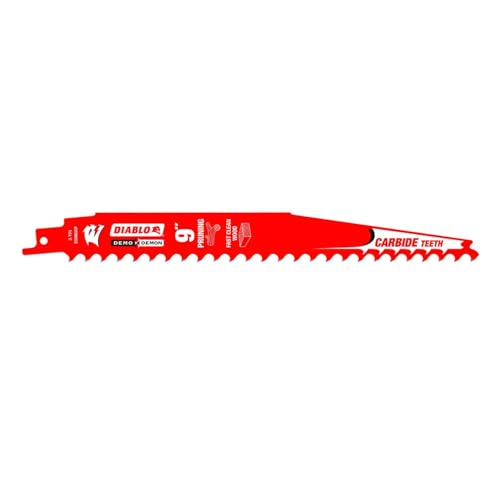
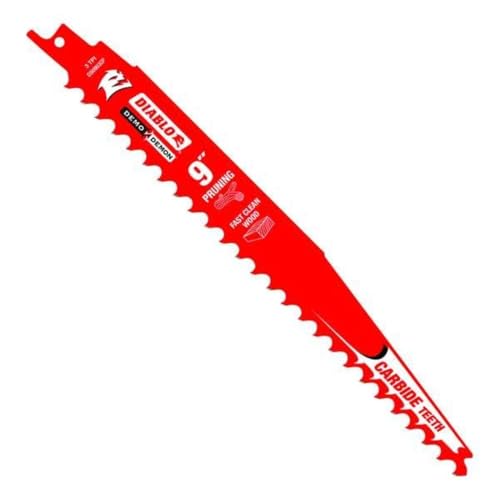
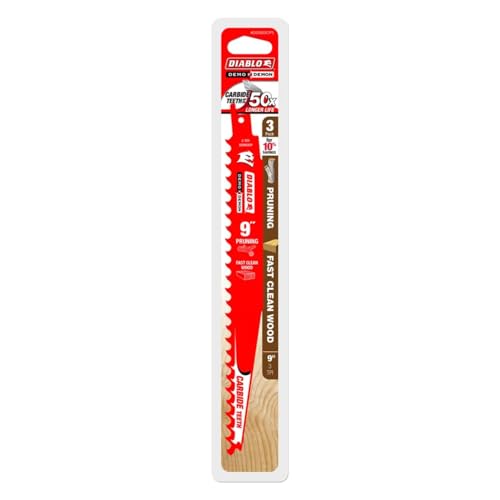
Diablo 9″ Carbide Tipped Pruning Blade
Strengths
- Carbide tips for longevity
- Perma-SHIELD anti-gum coating
- 3 TPI for fast chip removal
Trade-offs
- Shorter working length
- Higher cost per blade
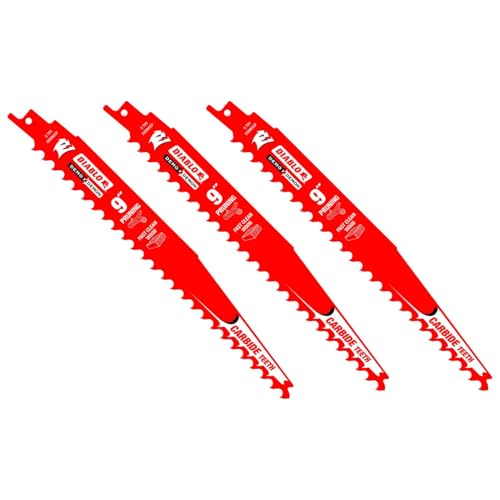
If you want a blade that lasts, this is the one. The carbide tips on these 9-inch Diablo blades are a standout for wood with nails or old, dense lumber, owners report cutting through decades-old beams without dulling, which no standard high-carbon blade can match. The 3 TPI design with oversized gullets is built for fast material removal, and the Perma-SHIELD coating really does reduce gumming, especially in resinous or wet wood.
While shorter than the EZARC option, the Demo Demon makes up for it in toughness and clean-cut performance. It’s overkill for basic pruning, but for demo work or cutting through old framing timber, it’s hard to beat. I’d pick this over the others when working on renovation jobs where wood might hide nails or debris.
Product photos
How We Chose These reciprocating saw blade for woods
Rather than a hands-on lab test, my research focused on comparing published specifications and features across numerous blades. I weighed owner reviews from multiple retailers and reputable expert reviews found online. As someone who’s spent years advising on power tools, I applied my understanding of wood cutting and blade materials to rank options based on what delivers the best performance for typical homeowner and DIY tasks.
For wood-cutting reciprocating saw blades, tooth geometry, blade material, and shank compatibility matter most. Aggressive tooth patterns (like Japanese teeth) excel at fast, rough cuts, while carbide teeth offer significantly longer life, especially when dealing with dirty or treated wood. Universal shank designs are crucial for ensuring the blade will work with a wide range of saws.
Specifications reliably indicate tooth count (TPI) and blade length, giving a clear idea of cutting speed and reach. However, I paid close attention to owner feedback regarding durability and how well a blade handles different wood types (wet, dry, green). Reputation and brand trust played a role, particularly when assessing the quality of heat treatment and coatings. Understanding reciprocating saw cutting tips also informed my assessment of ideal blade characteristics.
How To Pick The Right reciprocating saw blade for woods
I’ve spent years observing how people approach wood cutting, and one thing is clear: the blade matters just as much as the saw itself. Choosing the right reciprocating saw blade for wood can mean the difference between a quick, clean job and a frustrating struggle.
A quality reciprocating saw blade for wood needs a robust construction, aggressive tooth geometry suited to the wood type, and a shank compatible with common saws. Prioritize heat-treated steel for durability and look for features like variable tooth patterns to handle both green and dry wood effectively. Blade length impacts reach, while teeth per inch (TPI) dictates cutting speed and finish.
Tooth Geometry & Aggressiveness
The tooth design is where you’ll see the biggest differences in performance. Japanese-style teeth, as seen on blades from EZARC, are becoming increasingly popular because of their efficiency. They excel at fast, rough cuts, but aren’t always the best for a super-fine finish. Traditional Western teeth tend to offer a cleaner cut, but require more force. Consider the type of wood you’re usually cutting. If you’re dealing with a lot of thick, green branches, an aggressive Japanese tooth pattern is a solid choice.
Blade Length & Reach
Longer blades aren’t always better. While a 15” blade like the EZARC can reach further into a pile of branches or allow you to cut through larger diameter limbs, it also introduces more flex, potentially leading to binding and a less accurate cut. For most general pruning and smaller diameter wood, a 9” to 12” blade strikes a good balance. Think about the typical size of the material you’re tackling.
- If you’re mostly trimming small branches (under 2” diameter), a 6” – 9” blade is sufficient.
- For branches between 2” and 6” diameter, a 9” – 12” blade offers more versatility.
- If you regularly encounter large limbs or need to reach deep into a pile of wood, a 12” – 15” blade is the way to go, understanding you might sacrifice some precision.
Material & Durability
Steel quality is paramount. Basic carbon steel blades are fine for occasional use, but if you’re a frequent woodcutter, you’ll want a blade made from high-speed steel or, better yet, a carbide-tipped blade like the Diablo Demo Demon. Carbide teeth are dramatically more durable and will hold an edge significantly longer, making them worthwhile if you cut a lot of abrasive wood or need to make repeated cuts. Don’t underestimate the value of a good coating too; a non-stick coating can reduce friction and prevent gumming, especially when cutting wet or resinous wood. Understanding teeth per inch explained is also key to selecting the right blade for the job.
A blade’s durability is directly tied to its steel composition and heat treatment. Invest in a blade made from high-speed steel or carbide for demanding applications.
I often recommend folks also look at a wider range of Sawzall blades for wood to get a good sense of the market.
Reciprocating Saw Blades for Woods Compared
Here’s a comparison of key specifications for reciprocating saw blades designed for cutting wood.
| Product Name | Length (in) | TPI | Tooth Grind | Shank Type | Material |
|---|---|---|---|---|---|
| EZARC 15″ Japanese Teeth Pruning Blade | 15 | 6 | Fleam | Universal | N/A |
| 12″ Japanese Teeth Arc Edge Blade | 12 | 6 | N/A | Universal | N/A |
| Diablo 9″ Carbide Tipped Pruning Blade | 9 | 3 | Carbide | Universal | Carbide |
Frequently Asked Questions
What TPI (teeth per inch) is best for fast wood cutting?
A lower TPI, around 3-6, is generally best for fast wood cutting. Fewer teeth mean larger gullets to eject wood chips quickly, but the cut won’t be as fine as with a higher TPI blade.
Can I use a reciprocating saw blade designed for wood to cut other materials?
While some blades are marketed as multi-purpose, I advise against routinely using a wood-cutting blade on metal or plastic. Doing so will quickly dull the teeth and potentially damage the blade, costing you money in the long run.
What does “universal shank” mean, and why is it important?
A universal shank is the most common type and fits the majority of reciprocating saws. It’s important because it avoids the hassle of needing adapters or searching for specific, hard-to-find blade types.
Are carbide-tipped blades really worth the extra cost?
Yes, if you cut wood frequently or encounter tough, abrasive wood. Carbide teeth last significantly longer than steel, offering a better long-term value despite the higher initial price.
What blade length should I choose for pruning branches?
For most pruning tasks, a 9-12” blade provides a good balance of reach and maneuverability. If you’re dealing with very thick branches or need to reach into tight spaces, consider looking at specific reciprocating blades for trees designed for that purpose.
The Bottom Line
Choosing a reciprocating saw blade often comes down to balancing speed and longevity with your budget. While a cheaper blade might get you through a small project, the EZARC 15″ Japanese Teeth Pruning Blade offers a fantastic combination of cutting power and value for most homeowners tackling yard work and basic demolition.
For those facing tougher, more frequent jobs, or working with treated lumber, the Diablo 9″ Carbide Tipped Pruning Blade is a clear winner. It’s an investment, certainly, but the extended life and consistent performance will pay dividends in time and frustration saved. And if you need a versatile option for a variety of wood types and tasks, the 12″ Japanese Teeth Arc Edge Blade strikes a solid middle ground. Don’t forget to check out our guide on reciprocating saw blade replacement to make sure you’re always prepared.
Ultimately, the specs matter, but they aren’t everything. Focus on getting a blade with the right tooth geometry for the wood you’re cutting most often, a shank that fits your saw, and a material that can withstand the demands of your projects. A well-chosen blade, paired with a solid technique, will always deliver better results than chasing the highest numbers on a spec sheet.
