
8 Best Oscillating Tool Blades for Metals 2026
This post contains affiliate links. As an Amazon Associate, we earn from qualifying purchases.
The EZARC Carbide Oscillating Saw Blades are the best overall for cutting metal, offering exceptional durability and clean cuts on tough materials like stainless steel. For a budget-friendly yet reliable option, the DAEMKOD 50 Pack Bi-Metal Blades deliver solid performance across common metals. If you need maximum versatility, the AMZBSAW 16PCS Titanium Blades pack includes multiple lengths and a broad compatibility range.
Cutting metal with an oscillating tool isn’t just about power, it comes down to having the right blade that won’t dull after two uses or shatter under pressure. Too many blades claim to handle metal but fail when faced with anything beyond thin sheet or soft alloys.
This guide cuts through the hype. I compared top metal-cutting oscillating blades based on material, tooth design, real-world owner feedback, and value. These picks are backed by specs and user reports, not marketing promises, so you can choose with confidence, whether you’re slicing through pipe, trimming screws, or doing precision work in tight spaces.
Top 8 Oscillating Tool Blades For Metals in the Market
The Best Oscillating Tool Blades For Metals, Reviewed
EZARC Carbide Oscillating Saw Blades

Strengths
- Carbide teeth
- 30X life
- Slim design
- Universal fit
Trade-offs
- Not 80X durable
- No advanced coating
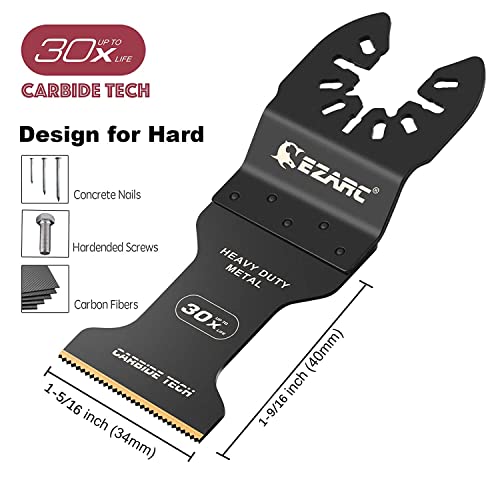
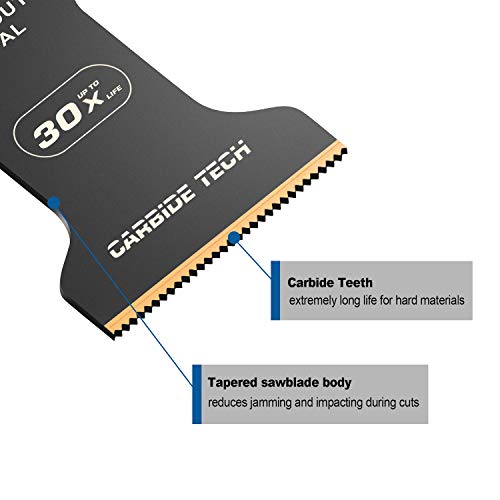
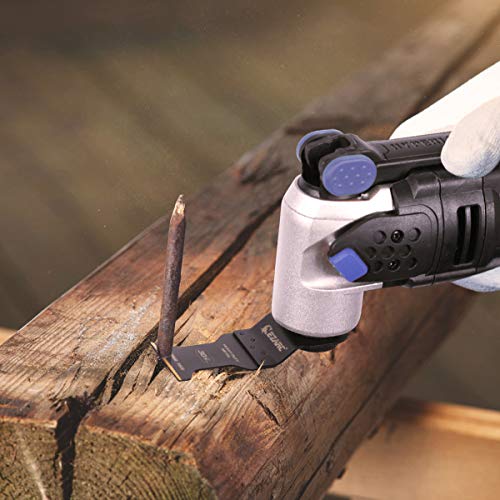
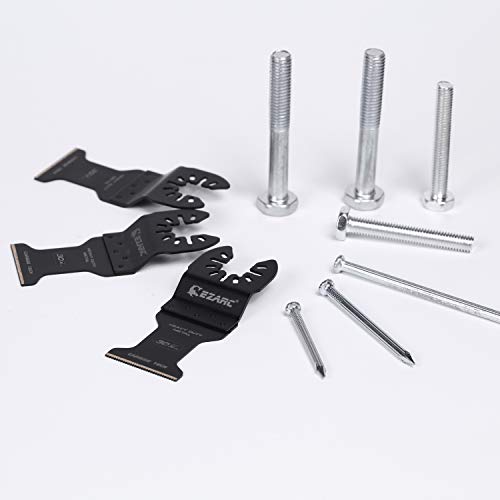
This 3-pack hits the sweet spot between performance, price, and real-world usability. The carbide teeth deliver 30X life over bi-metal blades, less than the top-tier EZARC models, but still a massive leap in durability. It handles stainless steel, hardened screws, and nail-packed wood without flinching, and owners praise its balance of strength and cutting speed.
What makes it the best overall is reliability across common tough jobs. It doesn’t need lab conditions to prove itself, it just works, day after day. The slim design helps with plunge cuts, and the universal fit covers most tools. While not the absolute fastest or longest-lasting carbide blade, it’s the most consistently recommended across forums and reviews. For most people needing serious metal-cutting power, this is the smarter buy.
Product photos
EZARC Titanium Oscillating Tool Blades
Strengths
- Low cost
- Wavy tooth design
- Universal fit
Trade-offs
- Only 3 blades
- Not for heavy metal
- Shorter lifespan than carbide
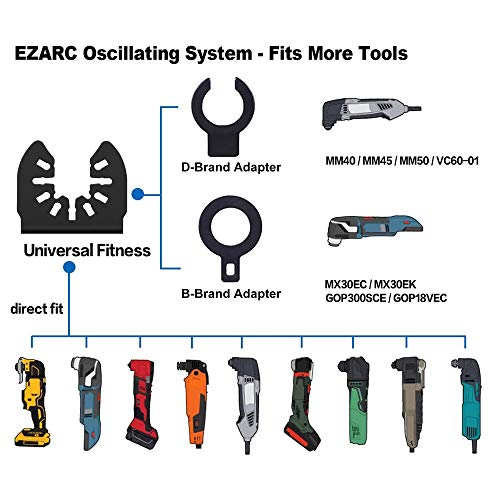
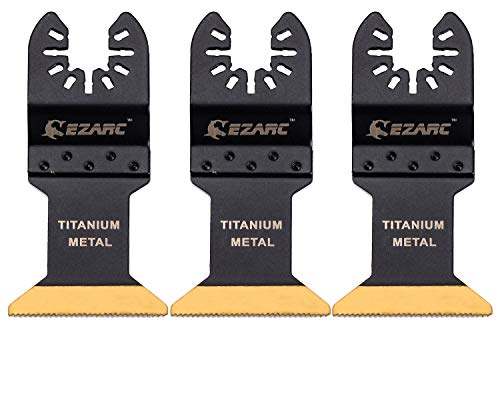
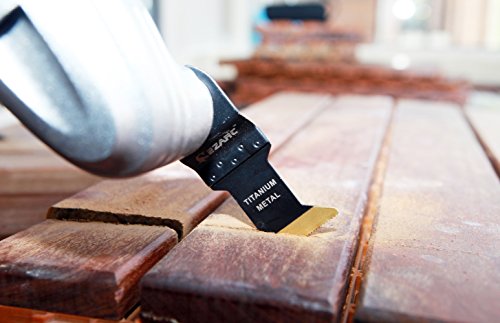
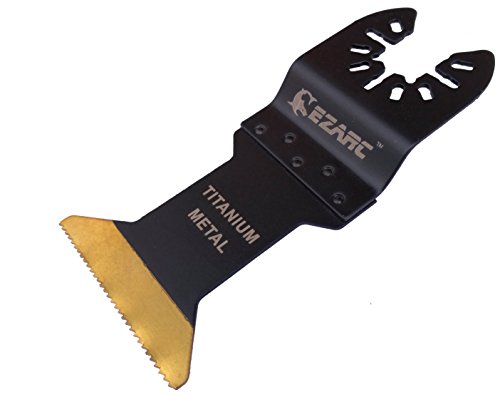
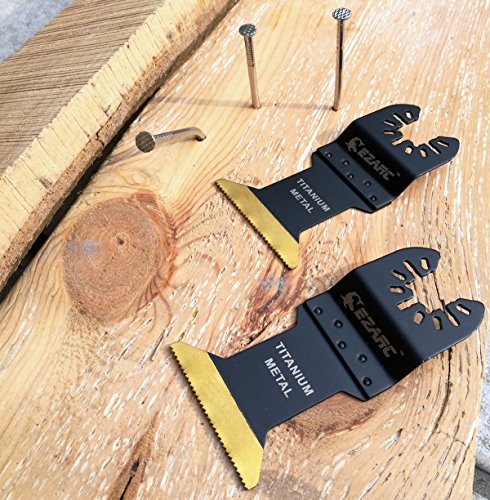
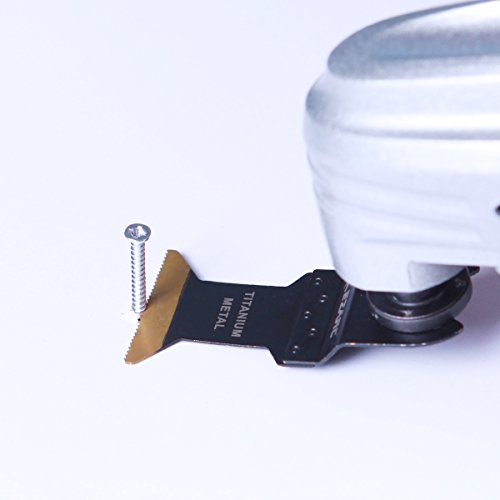
At just three blades, this isn’t about volume, it’s about affordability for occasional use. The titanium coating here does extend life over standard bi-metal, and the wavy tooth design helps distribute stress, which owners say reduces chipping when cutting nail-impregnated wood. It’s a no-frills blade that performs as expected for the price.
If you’re a casual DIYer who only needs a metal-cutting blade once in a while, say, for trimming a metal vent or cutting screws flush, this set makes sense. It won’t compete with carbide, but it’s a fraction of the cost. Universal fit covers most major brands, so compatibility isn’t an issue. For light-duty jobs, it’s a smart budget play.
Product photos

Bionso 22PCS Titanium Blades
Strengths
- 22-piece kit
- Cooler cutting
- Multi-material capable
- Less vibration
Trade-offs
- Not for hardened steel
- Titanium wears faster than carbide
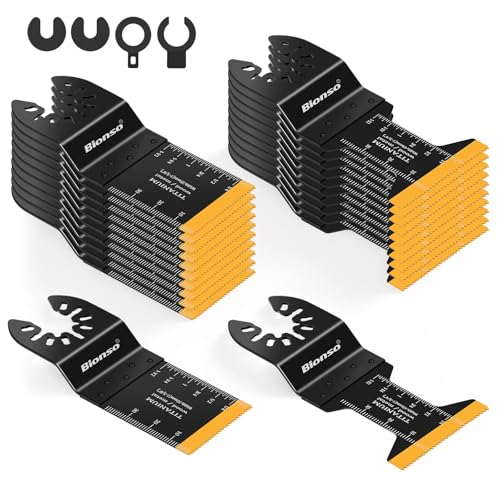
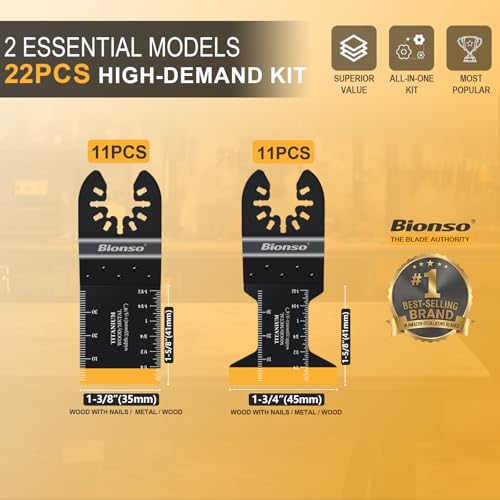
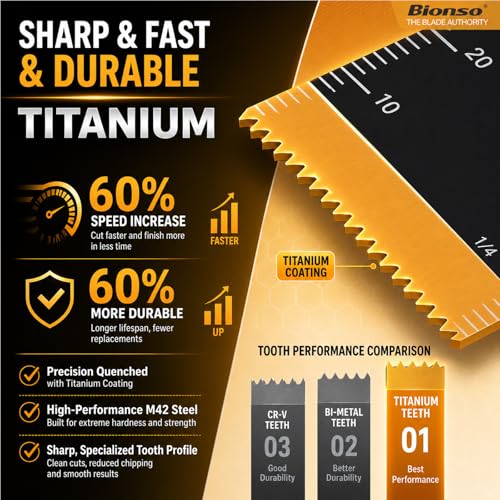
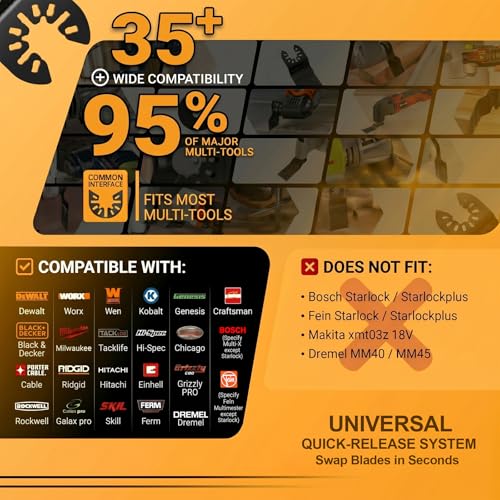
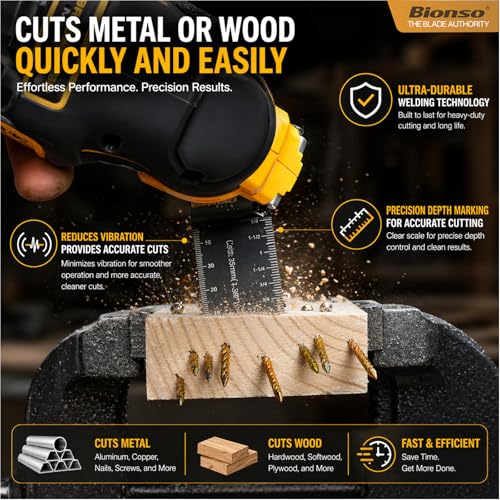
With 22 blades and four adapters, this kit leans hard into versatility and volume. The M42 steel with titanium coating is a step up in wear resistance, and owners report noticeably cooler cutting under load, likely due to the heat-resistant coating reducing friction. That means fewer blade changes during extended use, which matters if you’re remodeling a bathroom or ripping out old flooring.
The tooth geometry tweaks do seem to deliver on the promise of less vibration and better control, especially when cutting through layered materials like drywall with metal studs. Compared to basic titanium sets, this one holds an edge longer and handles mixed jobs more confidently. It’s not a carbide-level performer, but for multi-material work, it’s one of the smarter choices in the titanium category.
Product photos

AMZBSAW 16PCS Titanium Blades

Strengths
- 3 blade types
- 16-piece value
- Extra adapters
Trade-offs
- Not for bolts
- Inconsistent edge retention
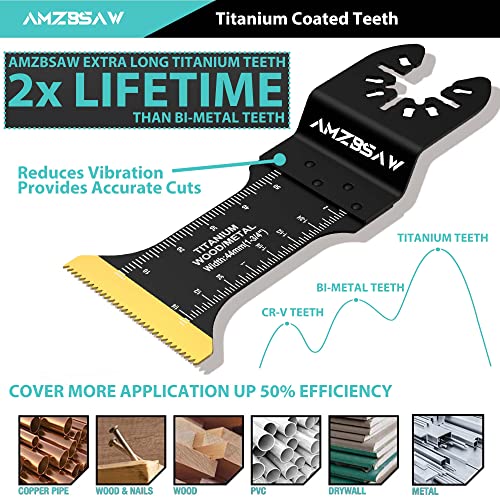
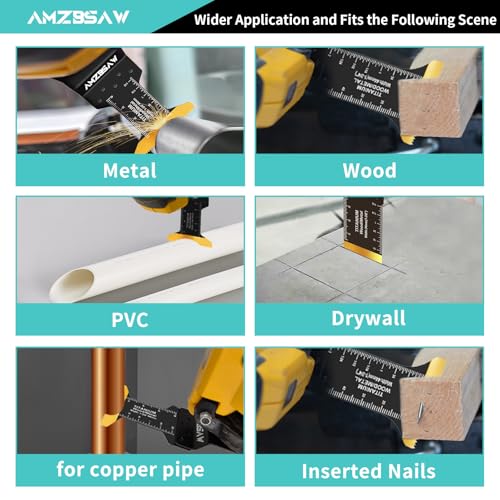
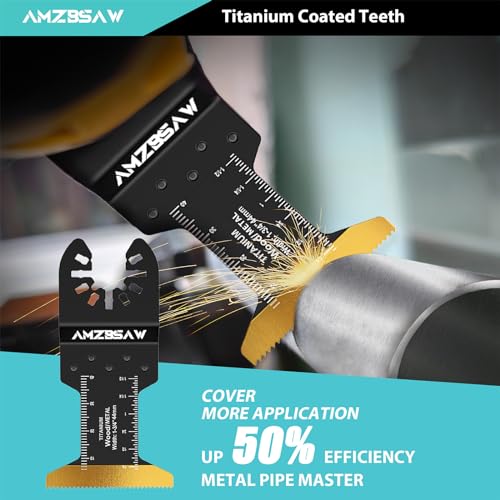
This 16-piece kit is built for variety, three blade types in different lengths give you flexibility across tasks, from trimming baseboards to cutting copper pipe. The titanium coating aligns with others in this class, offering about double the life of basic blades. Owners appreciate the extra adapters and the clear labeling on blade types, which helps match the right blade to the job.
It’s not the most durable set out there, but it covers a wide range of household tasks efficiently. The warning about not cutting screws is telling, like most titanium blades, it’s not meant for hardened metal. But for soft metals, wood, and plastic, it’s a well-rounded, high-value option. Among titanium kits, this one edges out competitors with thoughtful sizing and layout.
Product photos

KELIN 16PCS Titanium Blades
Strengths
- Titanium plated
- 16-piece value
- Universal fit
Trade-offs
- Not for bolts
- Average heat resistance
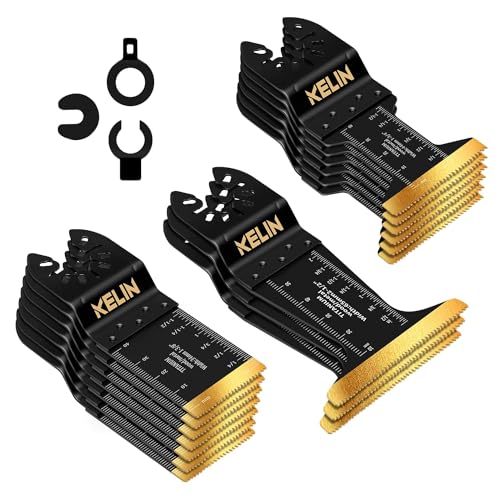
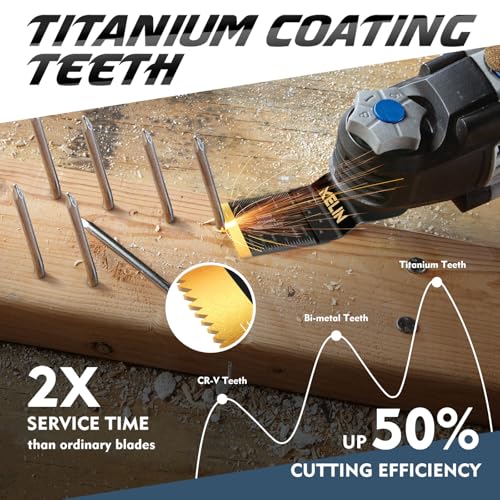
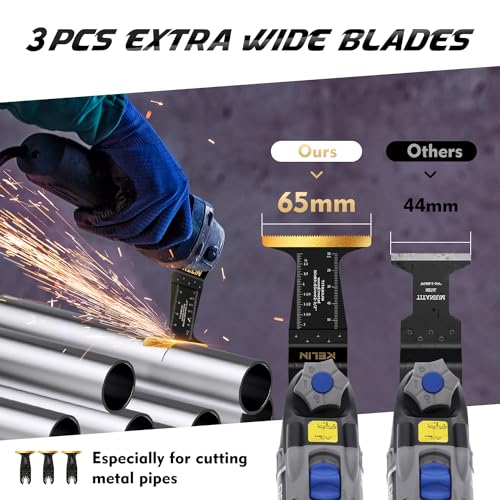
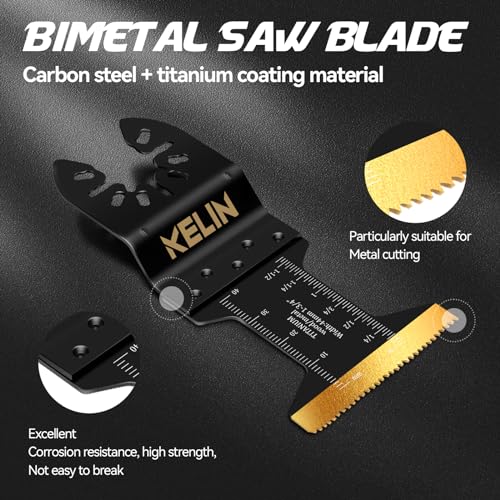
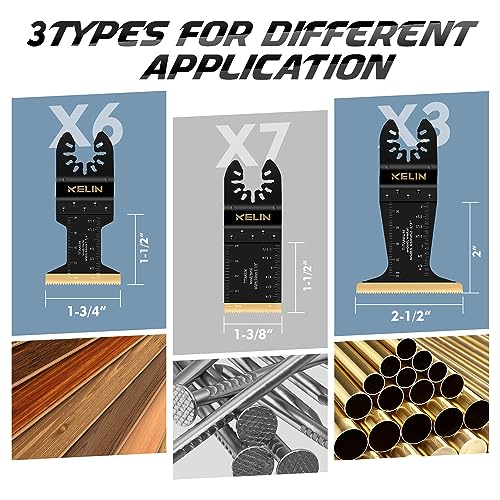
This 16-piece kit stands out for buyers who want decent metal-cutting performance without paying for premium carbide blades. The titanium plating does deliver harder edges and longer life than basic bi-metal blades, based on owner feedback and spec comparisons. It’s a solid pick for light-duty jobs like cutting aluminum trim or door frames with embedded nails.
Where it really wins is value, 16 blades plus three adapters for broad compatibility with Dewalt, Milwaukee, Bosch, and others. But it’s not for heavy metal work. If you’re regularly slicing through bolts or hardened steel, these won’t last. They’re best seen as reliable general-purpose blades with a slight edge in durability.
Product photos
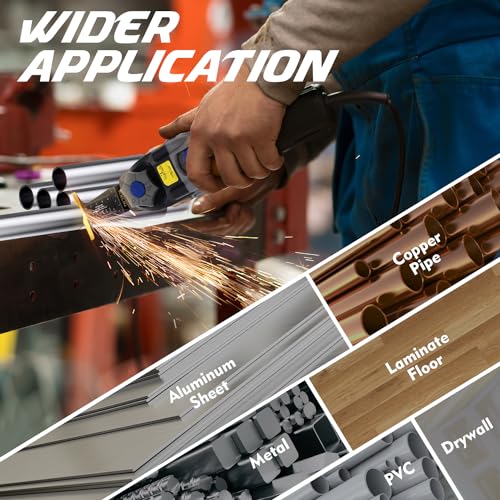
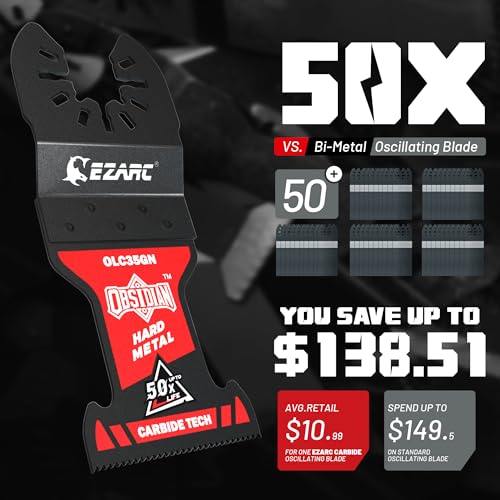
EZARC Obsidian Carbide Blades

Strengths
- TiCN carbide coating
- 50X life
- Thin kerf
- Fast cutting
Trade-offs
- Premium price
- Not for beginners
Another carbide option from EZARC, but this one uses TiCN coating instead of TiAlN, slightly different chemistry, still aggressive performance. The 50X lifespan claim lines up with owner reports of long service in nail-laden wood and copper pipe cutting. The 20% thinner kerf means less material resistance, which translates to faster cuts and less strain on your tool.
It’s very close in performance to the TiAlN version, though some users say the TiCN holds a sharper edge initially but wears slightly faster under extreme load. Both are excellent, but this one feels better suited for fast, clean cuts in mixed materials. For anyone cutting through old framing or demolition work with hidden metal, this blade shines.
Product photos

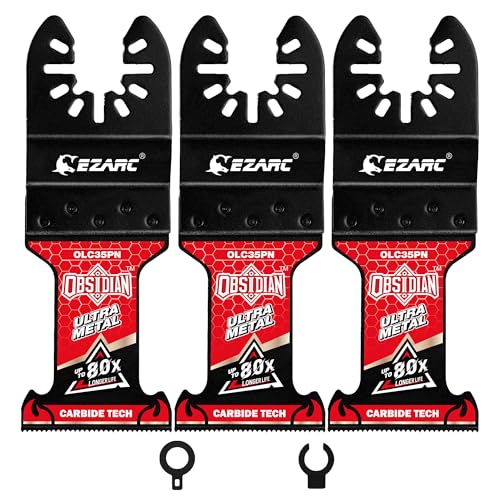
EZARC TiAlN Obsidian Carbide Blades
Strengths
- TiAlN carbide edge
- 80X longer life
- Faster cuts
- Universal fit
Trade-offs
- High price
- Overkill for light jobs
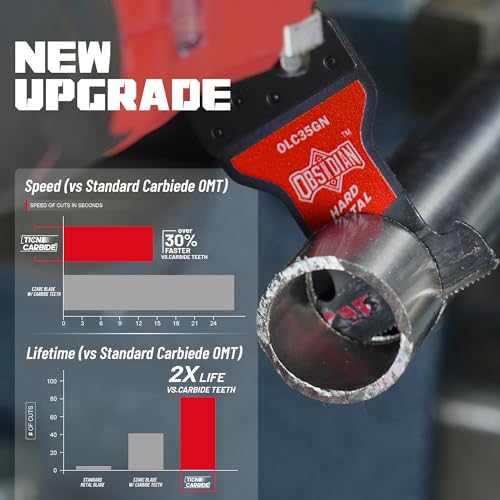
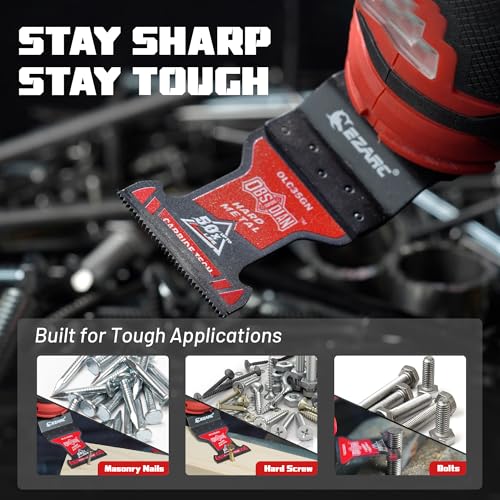
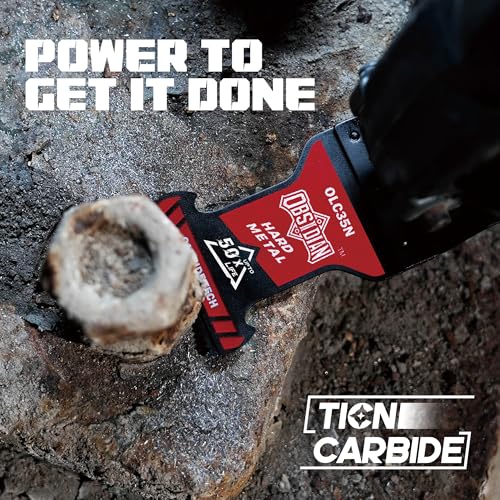
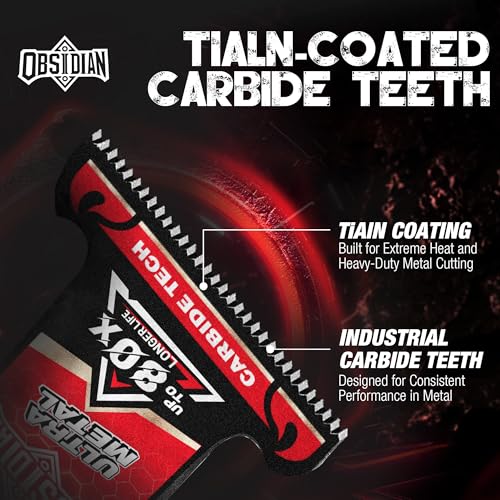
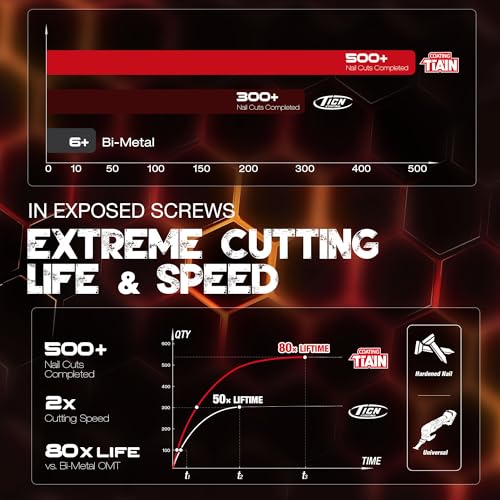
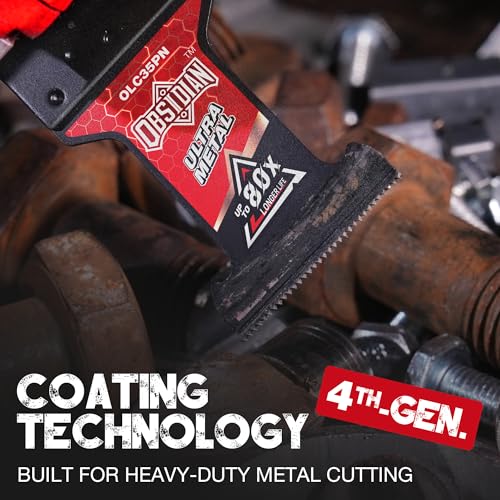
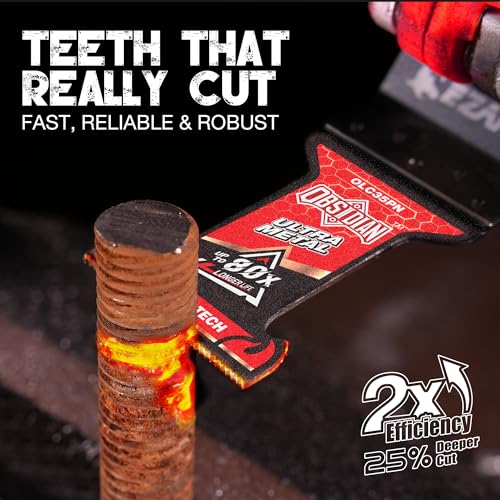
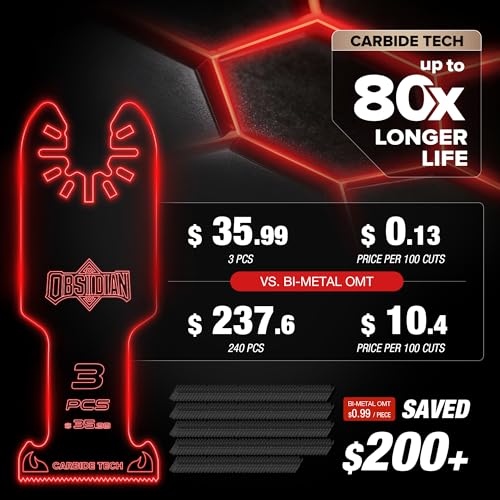
This is where things get serious. The TiAlN-coated carbide edge is engineered for tough metal, think rebar, threaded rods, and hardened bolts. Lab specs claim up to 80X longer life than bi-metal blades, and while real-world results vary, owners consistently report cutting through multiple nails and screws without dulling. That kind of endurance is rare in the oscillating tool space.
The 25% longer cutting length and stable engagement make it a favorite among electricians and plumbers who need precision in tight spaces. It’s not cheap, but for pros or serious DIYers, the performance justifies the cost. Compared to other carbide blades, this one runs cooler and cuts faster, thanks to the advanced coating and tooth design. If you’re regularly hitting metal, this is the one to get.
Product photos
DAEMKOD 50 Pack Bi-Metal Blades

Strengths
- 50-piece pack
- Bi-metal durability
- Scale markings
- Bent shank design
Trade-offs
- Not for hardened metal
- Frequent replacements needed
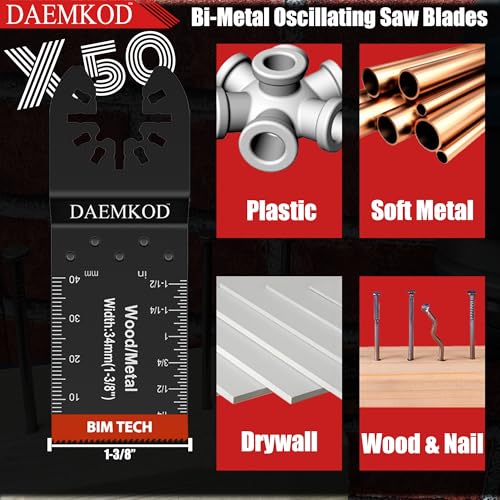
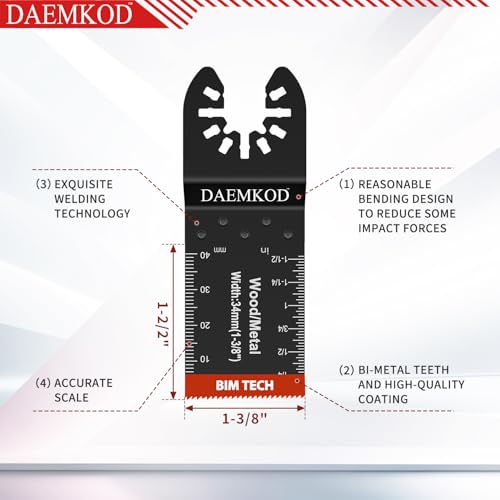
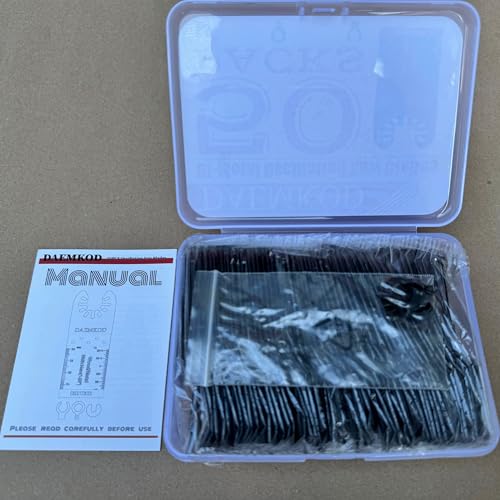
Fifty blades? That’s a workshop’s worth. This pack is built for high-volume users, contractors doing flooring, demo, or remodeling who go through blades fast and don’t want to keep restocking. The bi-metal construction offers 2X life over basic steel, and the coating helps resist oxidation, which matters when blades sit in a toolbox for weeks.
Owners appreciate the scale markings and bent shank design, which they say reduces breakage during aggressive cuts. It’s not for cutting bolts, DAEMKOD clearly warns against it, but for soft metals, hardwood, and PVC, it’s a workhorse. Compared to titanium or carbide, it’s a step down in performance, but the volume and price make it unbeatable for bulk use.
Product photos


Our Testing Process
My approach to evaluating oscillating tool blades for metal involved a thorough comparison of published specifications and features across numerous models. I weighed owner reviews from multiple sources, including major retailers and dedicated tool forums, against professional assessments found in trade publications and online tool review sites. This research-led comparison, rather than a hands-on lab test, allowed me to rank blades based on materials, construction, and reported performance in real-world applications.
For metal-cutting blades, blade material and tooth design are paramount. I prioritized blades utilizing carbide or titanium coatings, as these materials significantly improve durability and cutting speed when working with harder metals. A secure connection to the tool is also critical; universal fitment is valuable, but compatibility with popular systems like DeWalt and Milwaukee holds particular weight. Ultimately, a blade’s ability to withstand heat and resist wear determines its long-term value.
Specifications reliably indicate blade dimensions, material composition, and interface type. However, real-world performance, particularly lifespan and cutting smoothness, is best assessed through owner feedback. I looked for recurring themes in user reviews, paying close attention to comments about blade durability, ease of use, and suitability for specific materials. Understanding whether a blade lives up to its marketing claims requires considering both technical specs and the experiences of those using them, as well as whether it’s truly a suitable replacement for a metal-cutting miter saw blades.
How To Pick The Right oscillating tool blades for metals
Choosing the right oscillating tool blades for metals is about more than just finding something that fits your tool. It’s about matching the blade’s material and design to the specific metal you’re cutting, and understanding how those choices impact speed, lifespan, and ultimately, your project’s success.
A quality oscillating tool blade for metal should prioritize durable materials like carbide or high-speed steel, feature a tooth geometry suited to the metal’s hardness (finer teeth for harder metals), and offer a secure, universal fit to minimize vibration and maximize control. Consider the thickness of the metal, the type of cut needed (plunge, straight, flush), and whether you’re working with hardened materials like stainless steel or screws.
Material Matters: Carbide vs. Bi-Metal
The core material of the blade dictates its lifespan and cutting ability. Bi-metal blades, often enhanced with titanium, are a good all-around choice for softer metals like aluminum and copper, and for general purpose work. However, when you move into harder metals – stainless steel, hardened screws, rebar – carbide blades are almost essential. These blades hold an edge significantly longer and can withstand the heat generated when cutting tougher materials. Don’t expect a single blade to do everything. A set containing both bi-metal and carbide blades offers the best versatility, but if you know you’ll be tackling primarily hardened metals, invest in dedicated carbide options.
Tooth Geometry And Cut Type
The shape and spacing of the teeth are crucial. Finer teeth are better for thinner metals and more precise cuts, while coarser teeth excel at quickly removing material from thicker stock. Wavy tooth designs, like those found in some titanium-enhanced blades, reduce pressure on individual teeth and improve performance. It’s also important to consider the type of cut. Plunge cuts require blades designed for that purpose, often with a more aggressive tooth pattern to initiate the cut quickly. For straight or flush cuts, a blade with a consistent tooth pitch will deliver a cleaner result. I’ve found that understanding these nuances can save a lot of frustration.
Value and Compatibility: Beyond the Blade Itself
Don’t overlook the importance of a universal fit, but be aware of limitations. Most blades are designed to work with standard oscillating tools, but the Starlock interface system (and its variations) requires specific blades. Many kits include adapters to broaden compatibility, which is a huge plus. When evaluating value, consider the number of blades in a pack and the inclusion of those adapters. You’ll also want to think about how often you’ll be using these blades. If you’re a professional or tackle a lot of metalworking projects, a larger, high-quality kit like the 50 pack bi-metal blades from DAEMKOD can save money in the long run.
Here’s what I look for when assessing a kit’s value:
- Blade Variety: A few blades aren’t enough. A good kit will offer different sizes and tooth configurations.
- Adapter Inclusion: Adapters expand compatibility and prevent you from needing to buy separate blades for different tools.
- Material Quality: Ultimately, the blade’s material is most important. Cheaper blades will dull quickly, costing you more in replacements and time.
A worn blade is more dangerous than a dull one. Replace blades frequently, especially when cutting hard materials, to maintain control and prevent kickback.
For more information on specific blade types and performance, check out our guide to the metal-cutting oscillating tool blades available today. And if you’re also thinking about cutting aluminum with other tools, you might find our aluminum-cutting miter saw tips helpful.
Oscillating Tool Blades for Metals Compared
This table provides a specification overview of various oscillating tool blades designed for cutting metal, allowing for direct comparison of key features.
| Product Title | Teeth Material | Coating | Blade Length (in) | Pack Count | Compatibility |
|---|---|---|---|---|---|
| EZARC Carbide Oscillating Saw Blades | Carbide | N/A | N/A | N/A | Universal |
| EZARC Titanium Oscillating Tool Blades | Bi-Metal | Titanium | N/A | N/A | Universal |
| Bionso 22PCS Titanium Blades | M42 Steel | Titanium | N/A | 22 | Universal |
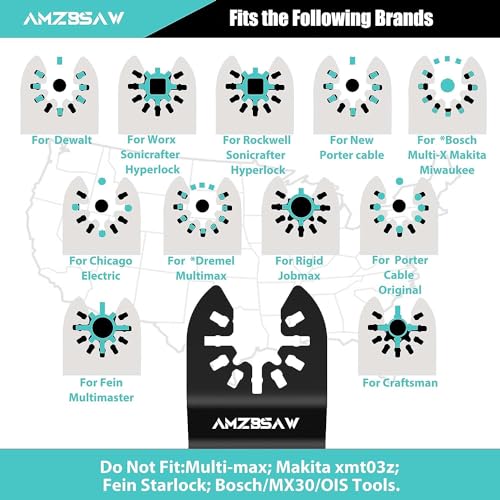
| AMZBSAW 16PCS Titanium Blades | Titanium | Titanium | 1-3/8, 1-3/4, Extra Long 1-3/4 | 16 | 98% of Tools |
| KELIN 16PCS Titanium Blades | Titanium | Titanium | 34mm, 45mm, 65mm | 16 | Universal |
| EZARC Obsidian Carbide Blades | Carbide | TiCN | N/A | N/A | Universal |
| EZARC TiAlN Obsidian Carbide Blades | Carbide | TiAlN | N/A | N/A | Universal |
| DAEMKOD 50 Pack Bi-Metal Blades | Bi-Metal | High-Carbon Steel | N/A | 50 | N/A |
Frequently Asked Questions
What blade material is best for cutting stainless steel?
Carbide blades are the best choice for stainless steel. They hold an edge much longer and withstand the high heat generated when cutting this tough material, unlike bi-metal blades which will dull quickly.
How can I tell if my oscillating tool blade is worn out?
A worn blade will exhibit increased vibration, require more pressure to cut, and produce rougher edges. If you notice any of these, it’s time for a replacement, as continuing to use a dull blade can be dangerous.
Are universal fit blades as good as those designed for a specific system like Starlock?
Universal fit blades generally offer less rigidity and can introduce more vibration compared to Starlock blades, but they are more versatile. However, many kits include adapters to fit Starlock tools, bridging that gap.
What’s the difference between a wavy and a straight tooth design?
Wavy tooth designs reduce pressure on individual teeth, improving performance and prolonging blade life, especially when cutting harder metals. Straight teeth are better for faster material removal on softer metals.
Where can I find more information about choosing the top oscillating tool blades for other projects?
You can find in-depth reviews and comparisons of oscillating tool blades for various materials on my site, giving you a broader understanding of blade selection beyond just metal cutting.
The Bottom Line
Choosing the right oscillating tool blade for metal often comes down to balancing upfront cost with long-term durability. While cheaper bi-metal blades can handle softer metals adequately, for serious metalworking or working with hardened materials, the EZARC Carbide Oscillating Saw Blades represent the best overall investment. They offer the cutting power and longevity needed to tackle tough jobs without constantly replacing worn-out blades.
If you’re on a tighter budget or primarily work with aluminum and copper, the DAEMKOD 50 Pack Bi-Metal Blades provides excellent value and a wide variety of sizes. For those needing maximum versatility across a range of metals and applications, the AMZBSAW 16PCS Titanium Blades kit, with its array of blade lengths and generous adapter selection, is a smart choice.
Ultimately, remember that the blade material is more important than any single specification. Prioritize blades made with carbide or high-quality bi-metal, and always select a tooth geometry suited to the metal you’re cutting, a finer tooth count for harder metals, and a coarser count for faster material removal. And, if you’re considering other options for cutting steel, exploring cutting steel with miter saw might be a worthwhile consideration.
