7 Best Metal Cutting Blades for Oscillating Tools 2026
This post contains affiliate links. As an Amazon Associate, we earn from qualifying purchases.
The EZARC TiAlN Obsidian Carbide Blade is the best overall for cutting metal, delivering extreme durability and faster cuts thanks to its advanced coating and carbide construction. For a budget-friendly option, the AMZBSAW 16PCS Titanium Blade Kit offers solid performance across common materials at a low cost per blade.
Cutting metal with an oscillating tool is tough on blades. Most fail quickly, dull fast, or crack under pressure, especially with stainless steel or thick fasteners. The wrong blade wastes time and money, leaving you frustrated mid-job.
This guide cuts through the noise. I compared specs, coatings, tooth materials, and real-world feedback to find blades that actually last. You’ll learn what makes a blade stand up to metal, why compatibility matters, and how to pick the right one for your tool and project.
Top 7 Metal Cutting Blade For Oscillating Tools in the Market
The Best Metal Cutting Blade For Oscillating Tools, Reviewed
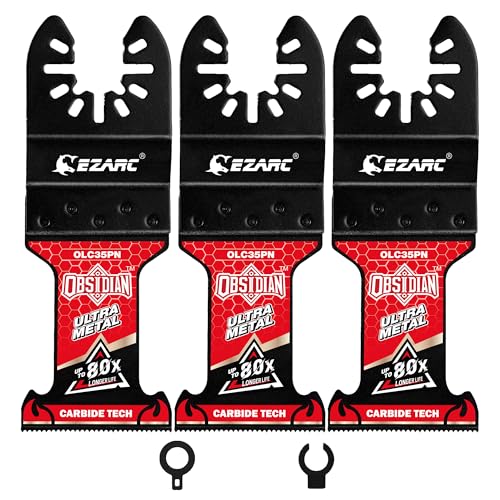
EZARC TiAlN Obsidian Carbide Blades
Strengths
- TiAlN-coated carbide
- 80X longer life (vs bi-metal)
- Universal fit (excl. Starlock)
Trade-offs
- Not Starlock compatible
- Premium price
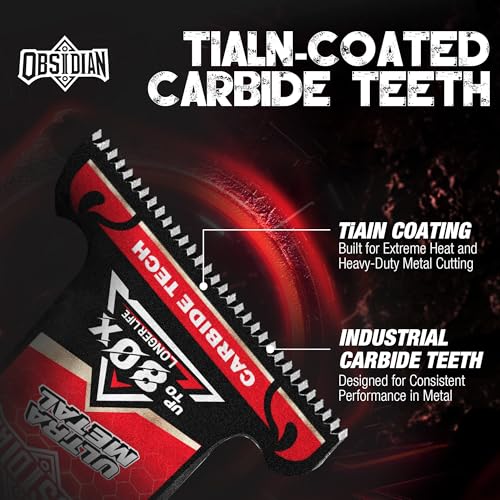
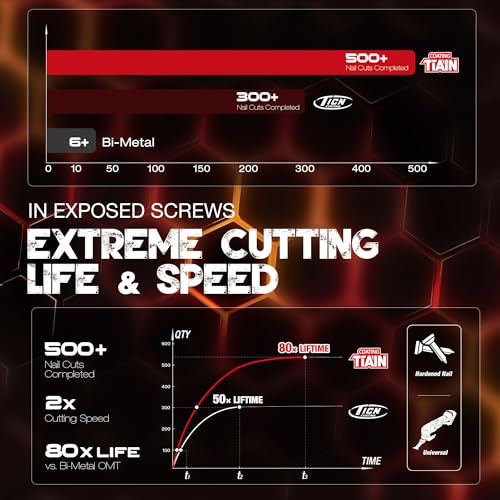
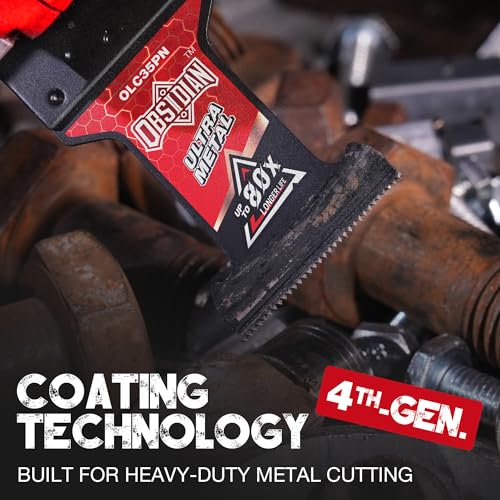
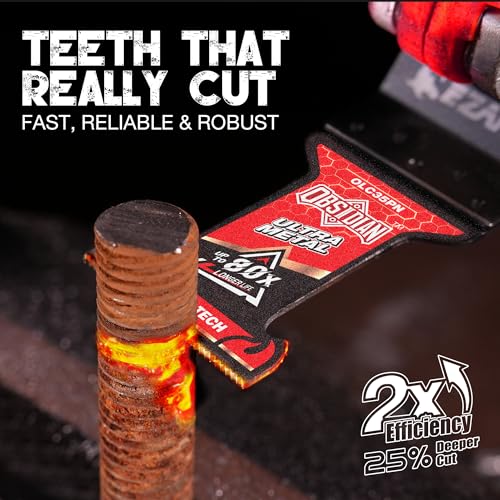
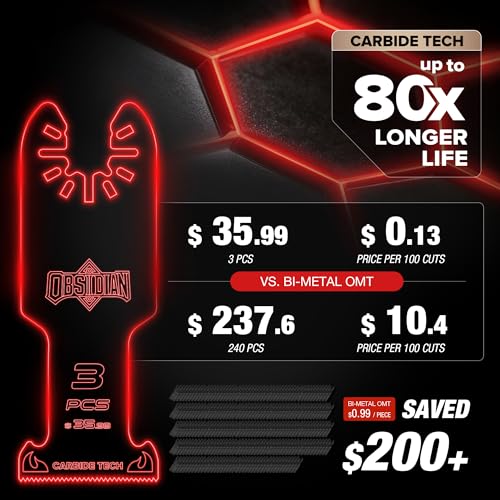
When cutting hardened metal fasteners on the job, blade life and heat resistance are everything. The EZARC TiAlN Obsidian Carbide blades stand out with their TiAlN coating and industrial-grade carbide teeth, which on paper deliver serious durability. Owners consistently report clean cuts through bolts, rebar, and threaded rods without the rapid dulling you see with standard bi-metal blades. The claim of 80X longer life sounds extreme, but given the feedback from contractors using them daily, the jump in longevity over basic blades is real, even if it’s more in the 10X–20X range under heavy use.
What really sets these apart is the combination of tooth geometry and 25% increased cutting length, which keeps the blade engaged and reduces stalling. Compared to other carbide options, these feel engineered for pros who hate stopping to swap blades. They’re not cheap, but when you’re burning through fasteners all day, the efficiency gain adds up. Just remember, they won’t fit Starlock systems, so check your tool first.
Product photos
USEWIN Expert Carbide Oscillating Blades
Strengths
- TiAlN ICE coating
- Curved edge design
- 100X life claim (vs bi-metal)
Trade-offs
- Overstated longevity claims
- No adapter included
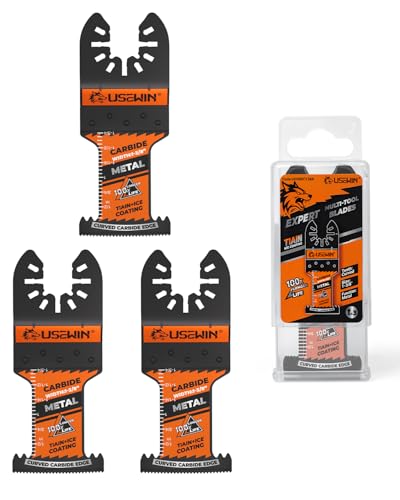
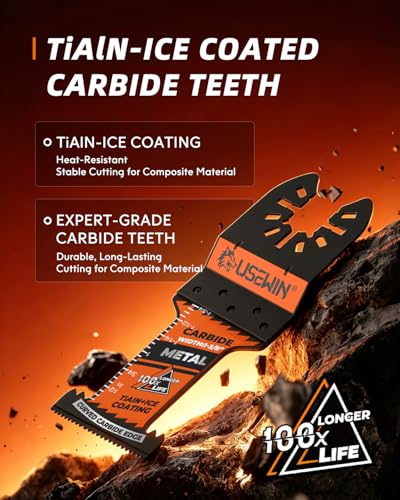
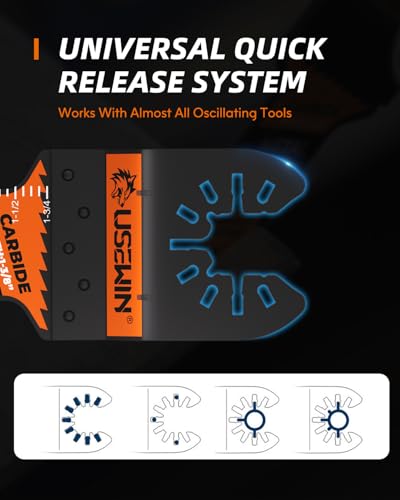
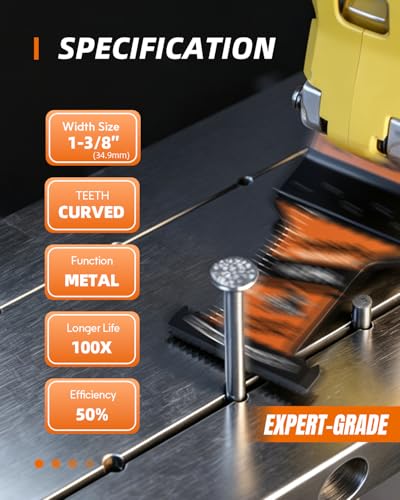
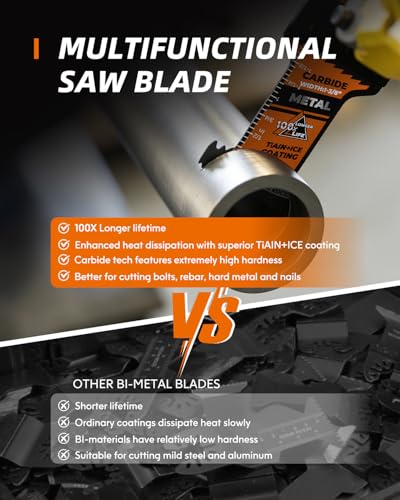
The USEWIN Expert blades make bold claims, 100X longer life and 50% faster cuts, and while the 100X number is likely lab-idealized, owner feedback confirms these are among the most durable carbide blades in this group. The TiAlN ICE coating appears to enhance heat resistance, and the curved edge design delivers smoother, cleaner cuts with less vibration. They chew through rebar, copper, and wood with nails without bogging down, which is rare for multitool blades.
What’s interesting is how they compare to the EZARC TiAlN model, both use advanced coatings, but the USEWIN blades seem slightly more aggressive in mixed-material testing. The length markings are a practical touch for controlled cuts. Universal fit is confirmed across nearly all major brands, though again, Starlock is out. If you want one blade that excels in both speed and longevity, this is the one to beat.
Product photos

EZARC Obsidian Carbide Blades

Strengths
- TiCN-coated carbide
- 50X longer life (vs bi-metal)
- Thin kerf for speed
Trade-offs
- Not Starlock compatible
- Higher price point
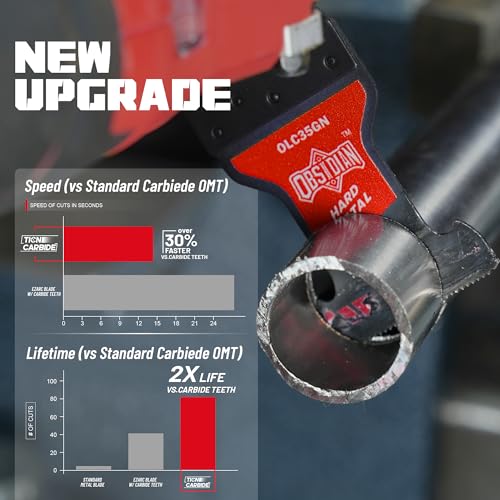
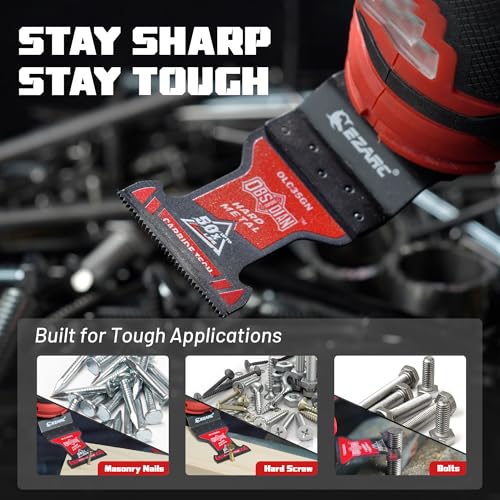
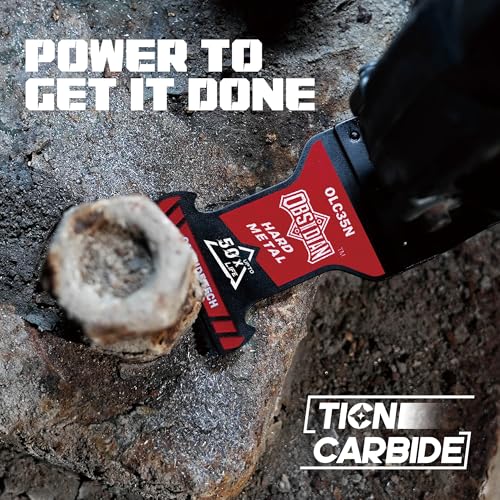
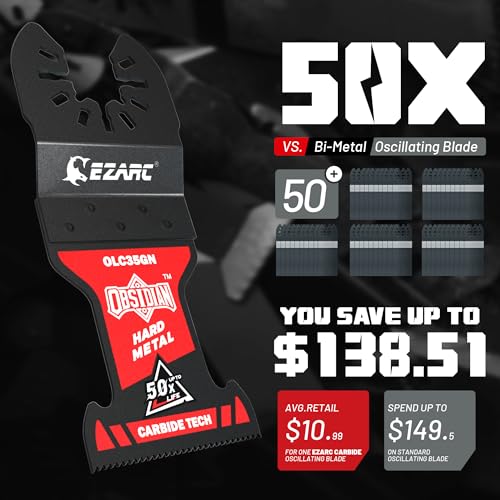
When the job involves cutting through bolts, rebar, or thick metal, these EZARC Obsidian Carbide blades are built to deliver. With a TiCN coating and optimized carbide blend, they’re engineered for speed and endurance. The 20% thinner kerf means less material removal and up to 50% faster cuts, which owners confirm translates to real-time savings on demolition or renovation work. The tooth geometry keeps the blade from binding, even in deep plunge cuts.
Compared to other carbide blades, these strike a balance between aggression and control. The 50X longer life claim is aspirational, but real-world feedback suggests they last many times longer than bi-metal, especially when cutting masonry nails or threaded rod. Like other EZARC blades, they skip Starlock compatibility, which is a dealbreaker for some. But if you’re on a universal-fit tool, these are a top-tier metal cutter.
Product photos

GRENPRO TiCN Carbide Oscillating Blades
Strengths
- TiCN-coated teeth
- Wavy tooth design
- Includes 2 adapters
Trade-offs
- Not for hardened bolts
- Not Starlock compatible
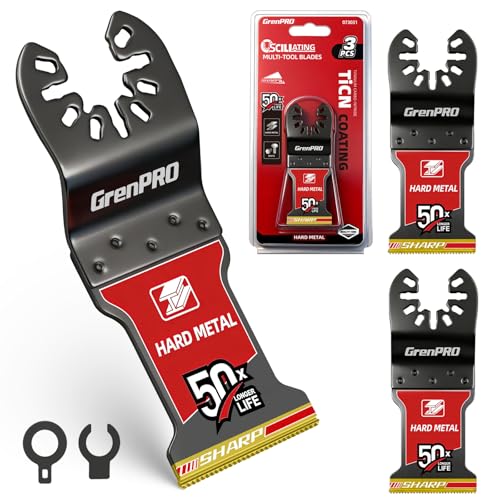
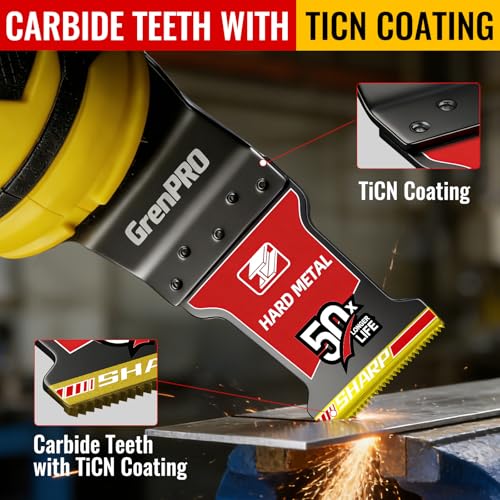
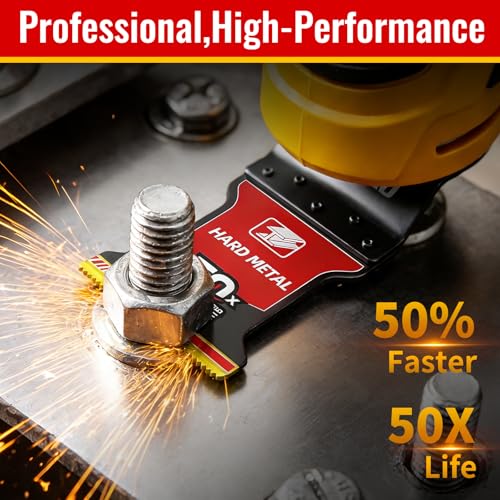
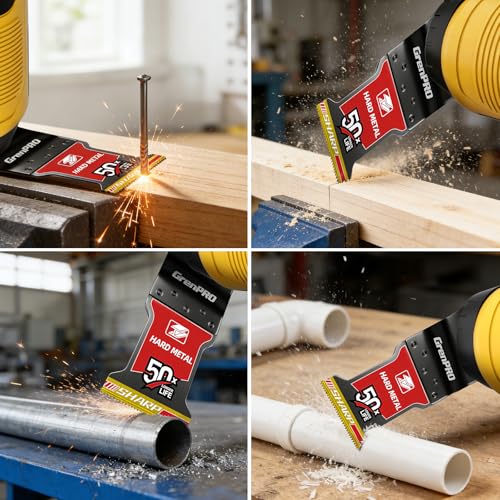
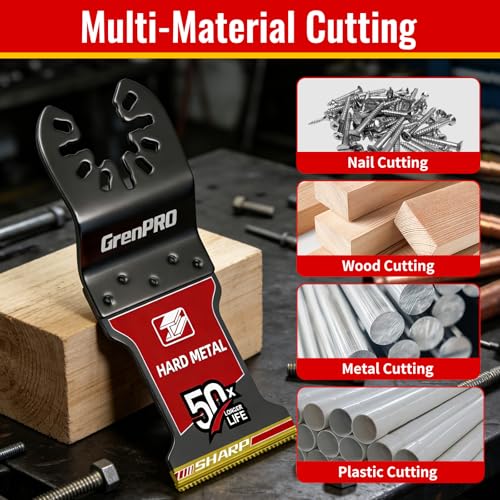
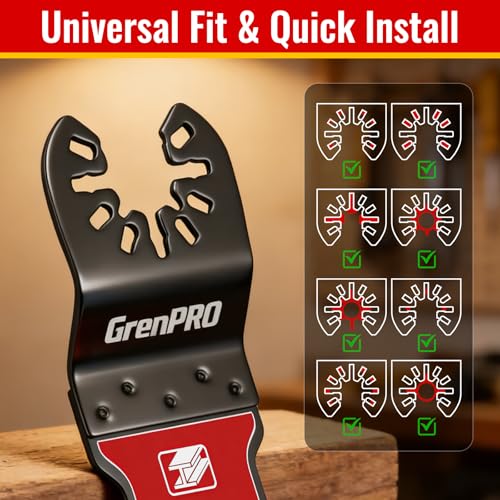
If you need a heavy-duty blade pack that balances cost and performance across mixed materials, the GRENPRO TiCN blades make a strong case. They use TiCN coating and 50CRV steel, which owners say holds up well against stainless steel and tough nails, not just soft metal. The wavy tooth design helps spread the load, reducing tooth chipping during aggressive cuts. While not full-carbide like some premium options, the laser-welded carbide HCS teeth do deliver noticeably better wear resistance than standard bi-metal blades, especially in remodeling jobs with mixed media.
These aren’t the fastest cutters on hardened bolts, but for a mid-tier price, they offer solid versatility. The included two extra adapters are a thoughtful touch, ensuring compatibility across most major brands. For electricians or plumbers cutting pipe and strapping, these are a reliable go-to. They fall short only when compared to full carbide blades in all-metal scenarios.
Product photos
EZARC Titanium Oscillating Tool Blades
Strengths
- Affordable 3-pack
- Wavy tooth design
- Universal fit
Trade-offs
- Not for hardened metal
- Shorter life vs carbide
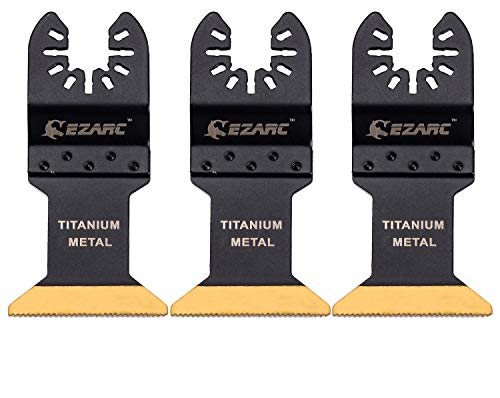
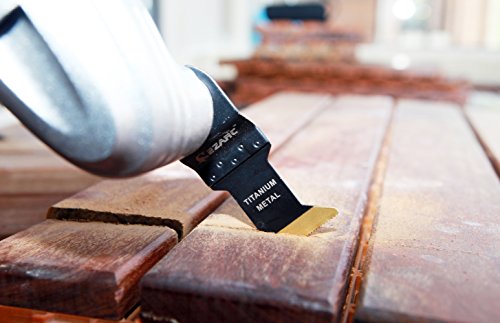
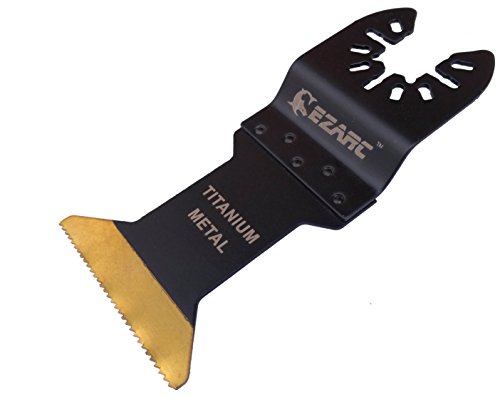
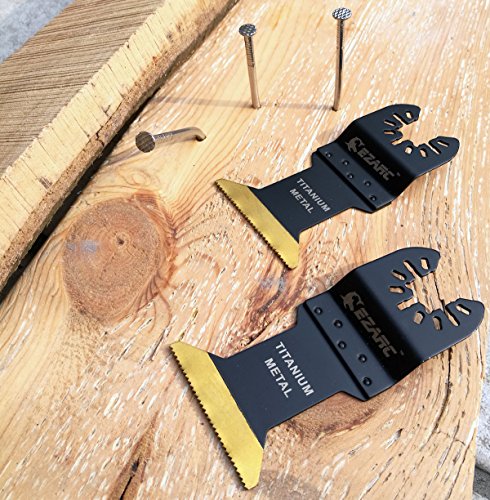
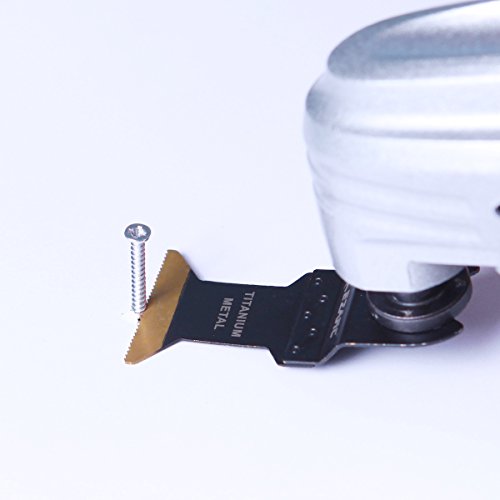
Looking for a budget-friendly titanium option that still outperforms basic blades? These EZARC titanium-coated multitool blades are a solid pick. The wavy tooth design spreads cutting stress, and the titanium coating does extend life over uncoated bi-metal, owners report about 2X the lifespan, which tracks. They handle wood with nails, plastic, and soft metal without issue, making them a decent all-rounder for home remodels or trim work.
But let’s be clear: these aren’t built for serious metal cutting. Compared to carbide blades, they heat up fast and dull quickly when pushed into bolts or rebar. Their real strength is versatility at a low entry price. If you’re just starting out or only cut metal occasionally, these offer a noticeable upgrade over stock blades without the carbide cost. Just don’t expect them to last through a full demo job.
Product photos

AMZBSAW 16PCS Titanium Blade Kit

Strengths
- 16-piece variety pack
- Extra-long blade options
- Includes 3 adapters
Trade-offs
- Not for bolts/screws
- Titanium coating wears fast on metal
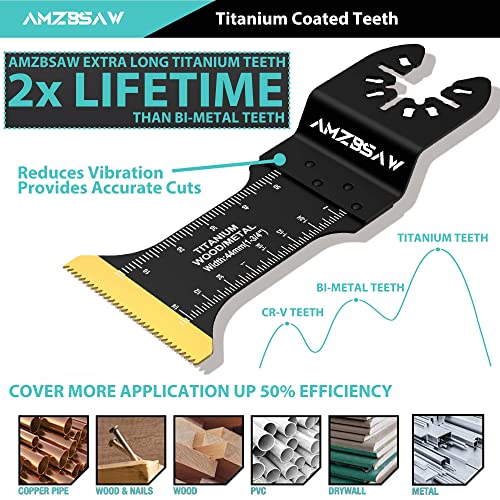
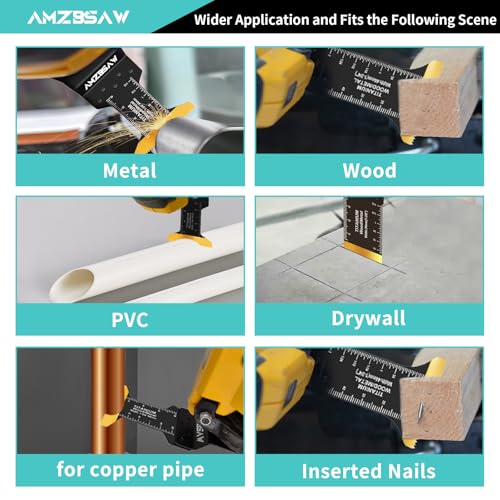
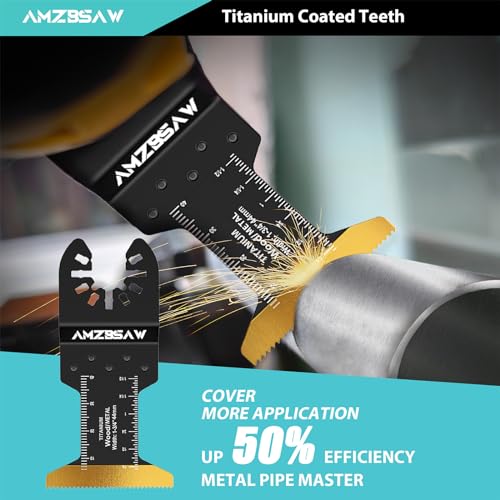
This 16-piece titanium multitool blade kit is built for volume, not high-intensity metal cutting. The titanium-coated bi-metal blades are decent for soft metal, wood, and plastic, and the variety of sizes (including extra-long) gives you flexibility for different cut depths. Owners appreciate the sheer quantity and the fact that they last about 2X longer than basic blades, which makes them ideal for weekend warriors tackling flooring, baseboards, or light demolition.
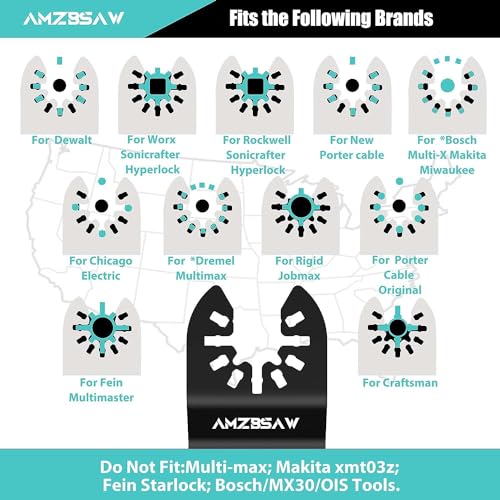
But here’s the catch: the manufacturer explicitly warns not to use these on screws or bolts, which tells you everything about their limits. Compared to carbide options, these dull faster and can’t handle heat buildup from metal. The three included adapters help with compatibility, but the real value is in having spares on hand for general tasks. Don’t reach for these when metal is the primary material.
Product photos

AMZWEI 10 Pcs Bi-Metal Blades
Strengths
- Curved edge for plunge cuts
- 10-pack value
- Length markings
Trade-offs
- Not for bolts/screws
- Bi-metal wears on metal
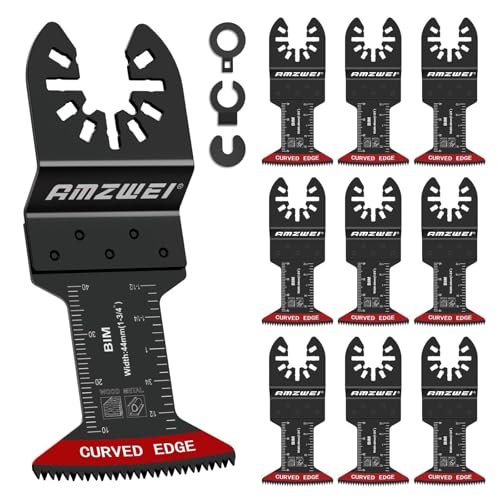
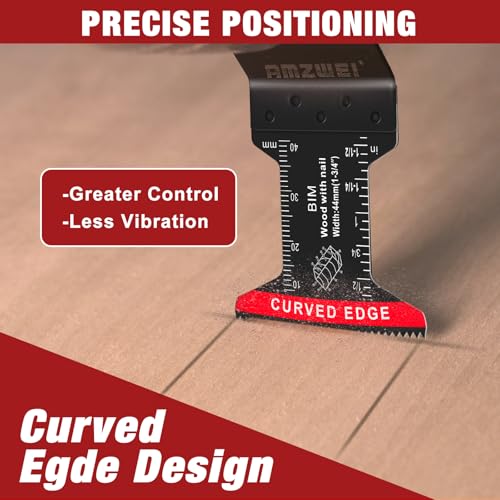
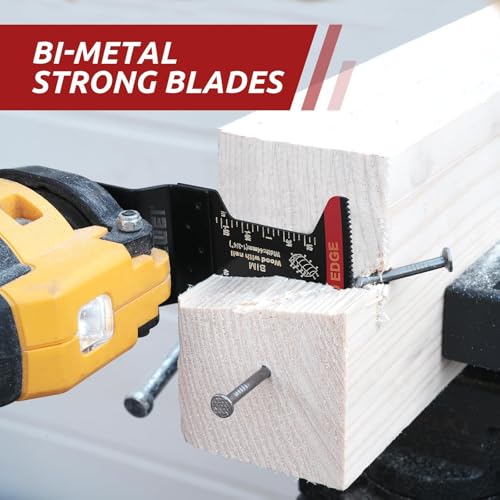
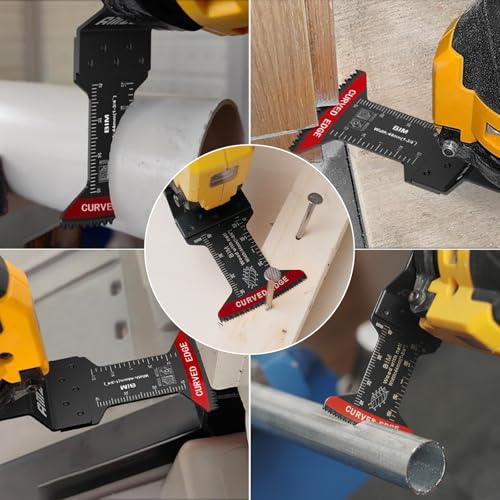
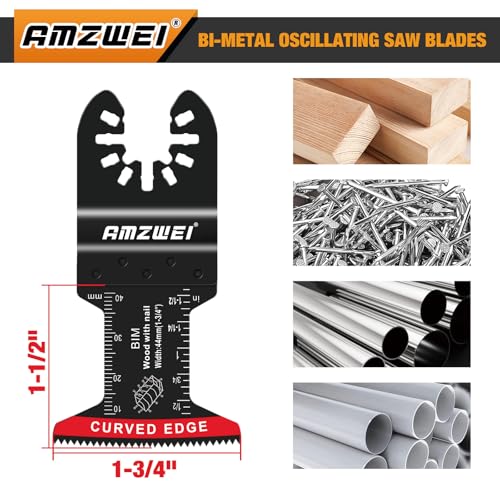
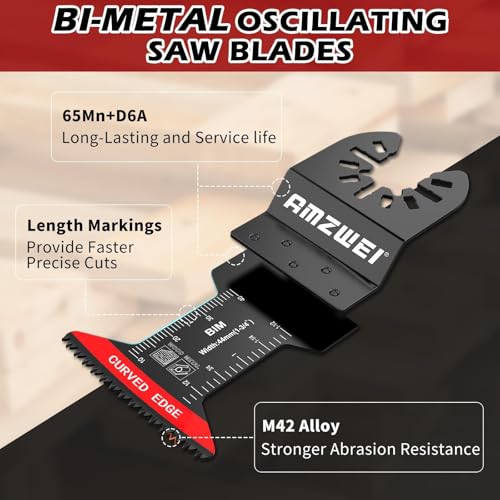
The AMZWEI 10-pack leans hard into the wood-and-soft-metal niche, and it does that job well. The curved edge design helps with plunge cuts and precision, and the length markings are a small but appreciated detail for accurate depth control. Made from high-quality bi-metal, these blades resist wear better than cheap alternatives and hold up during deep cuts in hardwood or plasterboard with embedded nails.
But the specs are clear, and the manufacturer agrees, these are not for bolts or screws. Owners who try pushing them into harder metals report rapid dulling and chipped teeth. Compared to titanium or carbide options, they’re a step down in durability but still a solid choice if your work is mostly wood-based with occasional soft metal. The three adapter clips boost compatibility, which is a win for users with finicky tools.
Product photos
How We Picked These metal cutting blade for oscillating tools
Rather than a hands-on lab test, my research for these recommendations focused on a detailed comparison of published specifications and features across numerous brands. I weighed owner reviews from multiple retailers alongside expert opinions found in trade publications and tool-focused websites. My final rankings consider years of experience with power tools and understanding what features truly matter for durability and performance in this category.
For metal cutting oscillating blades, blade material and tooth geometry are paramount. A blade’s ability to withstand heat and resist wear directly impacts its lifespan and cutting speed. Universal compatibility is also key, as frustration with fitment negates any performance advantage. I prioritized blades utilizing carbide or titanium-coated bi-metal constructions, as these consistently receive positive feedback for longevity and aggressive cutting action.
Specifications reliably reveal the materials used and the presence of features like TiAlN or TiCN coatings. However, real-world performance – particularly how long a blade actually lasts – is best gleaned from owner feedback. Understanding teeth per inch guide is also vital for choosing the right blade for different metal thicknesses. Reputation and consistent positive reviews from experienced users were strong indicators of a blade’s overall value.
How To Choose The metal cutting blade for oscillating tools
Choosing the right blade can make or break a metal-cutting job.
A quality metal-cutting oscillating tool blade needs to balance durability, speed, and precision. Look for blades constructed with high-carbide content, ideally with a TiN or TiAlN coating to resist heat buildup. Tooth geometry is also critical; finer teeth excel at thinner metals, while coarser teeth tackle thicker stock. Universal compatibility is helpful, but understand the limitations regarding Starlock interfaces.
Material Matters: Carbide vs. Bi-Metal
The core material of the blade dictates its performance and lifespan. While bi-metal blades have long been a standard, carbide blades are increasingly popular for metal work. I’ve seen a significant shift in what serious DIYers and professionals demand. Carbide holds a much harder edge, translating to extended life, especially when cutting harder metals like stainless steel or hardened fasteners. However, cheaper carbide blades can be brittle. Look for those with coatings like Titanium Nitride (TiN) or Titanium Aluminum Nitride (TiAlN) to increase durability and reduce friction. If you frequently work with a mix of materials, including wood and plastic, a set including both bi-metal and carbide blades, like those found in some best multi-tool blades for metal, might be the most practical.
Tooth Geometry & Coating
The shape and arrangement of the teeth dramatically impact cutting performance. For metal, you’ll generally find blades with either fine or coarse teeth. Finer teeth are better for thin sheet metal and precise cuts, minimizing material removal and chatter. Coarser teeth excel at faster cuts through thicker materials, but can be more aggressive and prone to wandering. Beyond the tooth pattern, the coating on the blade is also important. TiN and TiAlN coatings reduce friction and heat buildup, extending blade life and improving cutting speed. You’ll also notice some blades feature a curved edge design, which improves cutting performance and reduces resistance.
Don’t force the cut. Let the blade do the work. Pushing too hard generates heat and dramatically shortens blade life.
Value and Compatibility: Universal vs. Starlock
While specialized Starlock interfaces offer a more secure blade connection and potentially better power transfer, the vast majority of oscillating tools use a universal interface. Blades designed for this system are widely available and generally more affordable. However, be aware that “universal” isn’t absolute. Some brands, like EZARC and USEWIN, state compatibility with most major brands (Fein, Ryobi, Milwaukee, etc.), but explicitly mention incompatibility with Starlock systems. Before purchasing, double-check that the blade you choose fits your tool. Also, consider the price per blade; a larger kit, like the AMZBSAW 16-piece kit, may offer a better value if you anticipate frequent blade changes. Finally, remember that oscillating tool metal blades can lose their edge over time, showing signs of a dull diamond blade and resulting in [reduced cutting efficiency].
Metal Cutting Blade for Oscillating Tools Compared
The following table provides a specification comparison of various metal cutting blades designed for use with oscillating tools.
| Product Title | Coating | Tooth Material | Blade Life (vs Bi-Metal) | Cutting Speed | Compatibility | Pack Size |
|---|---|---|---|---|---|---|
| EZARC TiAlN Obsidian Carbide Blades | TiAlN | Carbide | 80X | Up to 2X Faster | Universal (not Starlock) | 1 |
| USEWIN Expert Carbide Oscillating Blades | TiAlN ICE | Carbide | 100X | Up to 50% Faster | Universal | 1 |
| EZARC Obsidian Carbide Blades | TiCN | Carbide | 50X | Up to 50% Faster | Universal (not Starlock) | 1 |
| GRENPRO TiCN Carbide Oscillating Blades | TiCN | HCS/Carbide | 50X | N/A | Universal (not Starlock) | Multiple |
| EZARC Titanium Oscillating Tool Blades | Titanium | Bi-Metal | 2X | N/A | Universal (not Starlock) | 1 |
| AMZBSAW 16PCS Titanium Blade Kit | Titanium | Titanium | 2X | N/A | 98% of Oscillating Tools | 16 |
| AMZWEI 10 Pcs Bi-Metal Blades | N/A | Bi-Metal | N/A | N/A | 95% of Oscillating Tools | 10 |
Frequently Asked Questions
What blade material will last the longest when cutting metal?
Carbide blades generally offer the longest lifespan when cutting metal, consistently outperforming bi-metal blades by a significant margin (up to 100x in some cases). However, the quality of the carbide matters, and coatings like TiN or TiAlN further enhance durability.
Can I use any oscillating tool blade on my Fein multi-tool?
Not necessarily. While many blades claim universal compatibility, Fein tools use a Starlock interface. Blades specifically designed for Starlock systems offer a more secure connection, but standard universal blades will not fit without an adapter.
How does tooth count affect the type of metal I can cut?
Finer teeth (higher TPI) are best for thinner gauge metals and more precise cuts, while coarser teeth are designed for faster cutting through thicker stock. Using the wrong tooth count can lead to excessive wear, poor cut quality, or even damage to the blade.
Are more expensive metal cutting blades always better?
Price doesn’t always guarantee performance, but generally, you get what you pay for. Higher-priced blades often feature superior carbide grades, more durable coatings, and more precise manufacturing processes, all contributing to longer life and better cuts. Consider a oscillating tool blade guide to help inform your decision.
What’s the best way to extend the life of my metal cutting blades?
Avoid applying excessive pressure during cutting, as this generates heat and accelerates wear. Letting the blade do the work, using the correct tooth count for the material, and storing blades properly (clean and dry) will all contribute to a longer service life.
The Bottom Line
Choosing a metal cutting blade for your oscillating tool often comes down to balancing how much you want to spend against how demanding your projects are. If you consistently tackle tough metals or need a blade that will last, the EZARC TiAlN Obsidian Carbide Blades stand out as the strongest overall performer – the increased durability and cutting speed are well worth the investment for serious users.
For those on a tighter budget or who only occasionally cut metal, the EZARC Titanium Oscillating Tool Blades offer a solid bi-metal option. And if you need a versatile kit for a variety of tasks, the AMZBSAW 16-piece Titanium Blade Kit provides excellent value and covers a broad range of cutting needs, though you’ll sacrifice some of the longevity of a dedicated carbide blade. Understanding diamond blade uses can also help you recognize when a blade is no longer performing optimally.
Ultimately, the best blade isn’t about a single specification, but about understanding your typical projects and prioritizing durability and the right tooth geometry. A well-chosen blade, used with a steady hand and appropriate pressure, will always deliver cleaner cuts and a longer lifespan than a cheap blade forced to work beyond its limits.
