Can You Cut Metal with a Miter Saw? Safety, Blades & Limits
This post contains affiliate links. As an Amazon Associate, we earn from qualifying purchases.
Can You Cut Metal with a Miter Saw? The Honest Answer
A miter saw can cut metal, but with significant caveats. You need the right blade, a proper setup, and a healthy respect for the hazards involved. Using a wood-cutting blade on metal is dangerous and will damage your tool.
The Short Answer: Yes, a standard 10-inch or 12-inch miter saw equipped with a carbide-tipped blade designed for cutting metal (like a 60-tooth ferrous metal blade) can cut through thin, soft metals like aluminum, brass, copper, and mild steel up to about 1/4 inch thick. It is not suitable for harder metals like stainless steel or for heavy, daily metal fabrication.
Key Takeaways
- Blade is Paramount: You must use a blade rated for metal. A wood blade will shatter.
- It’s a Compromise: A miter saw is slower, generates dangerous sparks and heat, and risks damaging the saw’s motor compared to dedicated metal saws.
- Safety is Non-Negotiable: Full face/eye protection, hearing protection, heavy gloves, long sleeves are mandatory. Clamp your work.
- Suitable Metals: Thin, soft metals only. Think aluminum trim, electrical conduit, copper pipe.
- Expect Different Results: Cuts will be slower, rougher, and hotter than wood cuts. Lubrication helps.
The Mechanics: Why It’s Possible (But Not Ideal)
The core question isn’t just can it, but how* does it work? A miter saw cuts by a toothed blade spinning at high RPM to shear material. The problem is material hardness.
Wood vs. Metal: Wood fibers shear relatively easily. Metal requires the blade teeth to actually fracture tiny chips away. A wood-cutting blade has a positive hook angle designed to aggressively pull into soft wood. On metal, that same action causes grabbing, violent kickback, excessive heat, and shattered teeth.
A proper metal-cutting blade has a negative or zero hook angle. The teeth scrape or grind more than they bite, preventing grabbing. They are also made of harder, more heat-resistant carbide designed to withstand the abrasion of metal.
The Motor Strain: Most miter saws operate at 3,000–5,000 RPM. This is optimized for wood. Cutting metal requires more torque (t twisting force) at lower speeds. While the saw can power through, the constant resistance generates intense heat in the blade and the motor, potentially shortening its lifespan.
What Metals Can You Actually Cut?
| Metal Type | Suitable? | Max Thickness (Notes) |
|---|---|---|
| Aluminum (extrusions, trim, pipes) | Up to 1/4 inch | Cuts cleanly with minimal sparks. Use a triple-chip grind (TCG) blade. |
| Brass & Copper | Yes | Up to 1/8 inch |
| Mild Steel (e.g., angle iron, EMT conduit) | Yes, with limits | Up to 1/8 inch |
| Stainless Steel | No** | Not suitable. Too hard; will work harden the blade. |
| Cast Iron | No | – |
The Essential Safety Protocol: More Than Just Glasses
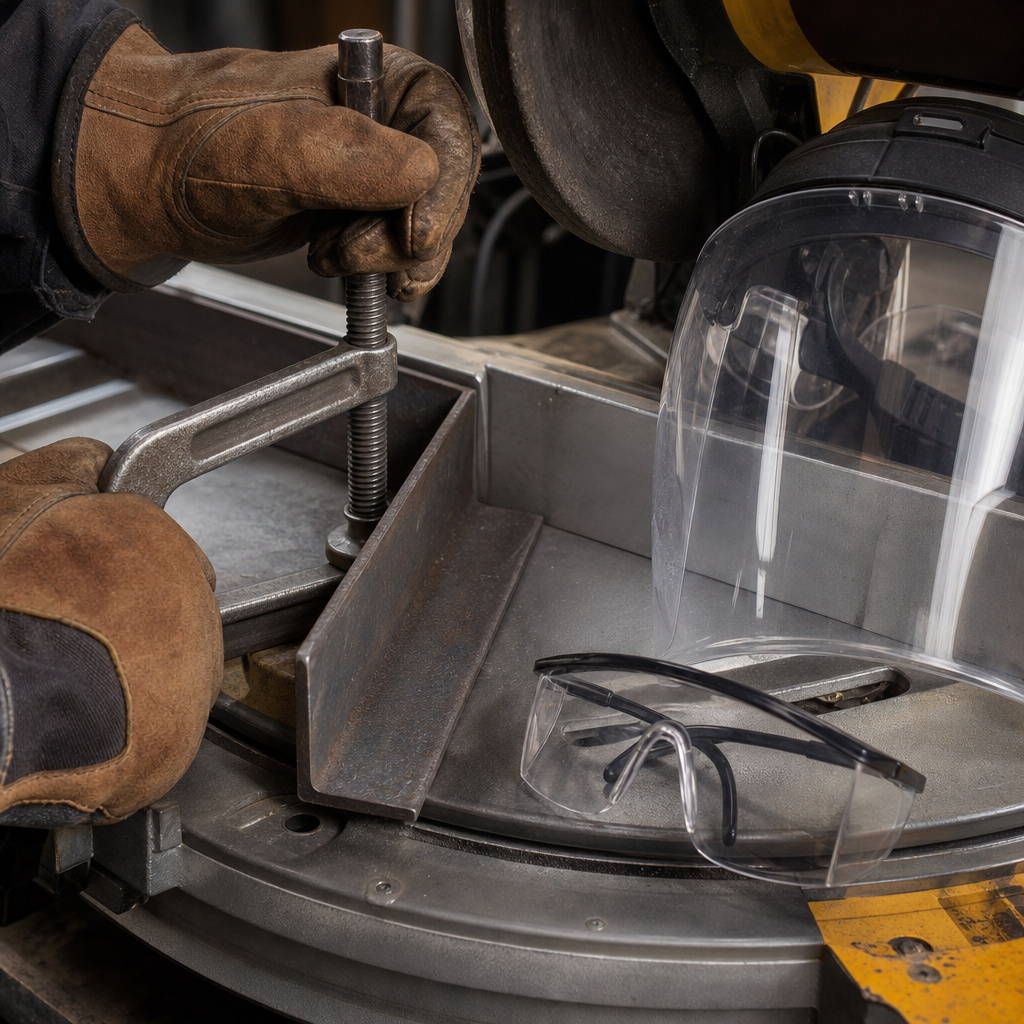
Cutting metal amplifies every danger of woodworking. Here’s the non-negotiable setup:
Before you start:
- Eye & Face Protection: Wraparound safety goggles AND a full face shield. Hot metal chips can ricochet.
- Body Protection: Heavy-duty gloves, long sleeves made of durable material (no loose cuffs), and pants.
- Hearing Protection: Metal cutting is often louder.
- Workspace Prep: Clear all flammable materials within a 10-foot radius. Have a fire extinguisher accessible.
- Secure the Workpiece: Use clamps designed for metalworking. A kicking metal piece is extremely dangerous.
- Motor Protection: Drape a heavy cloth over exposed motor vents and intakes to prevent metal swarf from falling inside.
During the cut:
- Let the blade reach full speed before contacting the metal.
- Apply steady, controlled pressure. Do not force it. Let the blade do the work.
- Cut slowly. This isn’t wood. Rushing causes heat and dulls the blade instantly.
- Use Lubrication: A cutting fluid or wax-based lubricant (like Boelube) reduces friction, extends blade life, improves cut quality, and cools the blade.
- Expect sparks. Direct them away from yourself and any flammables.
After the cut:
- The metal piece will be extremely hot. Allow it to cool for several minutes before handling.
- Inspect your blade for dulling or damaged teeth.
Step-by-Step: How to Cut Metal with a Miter Saw
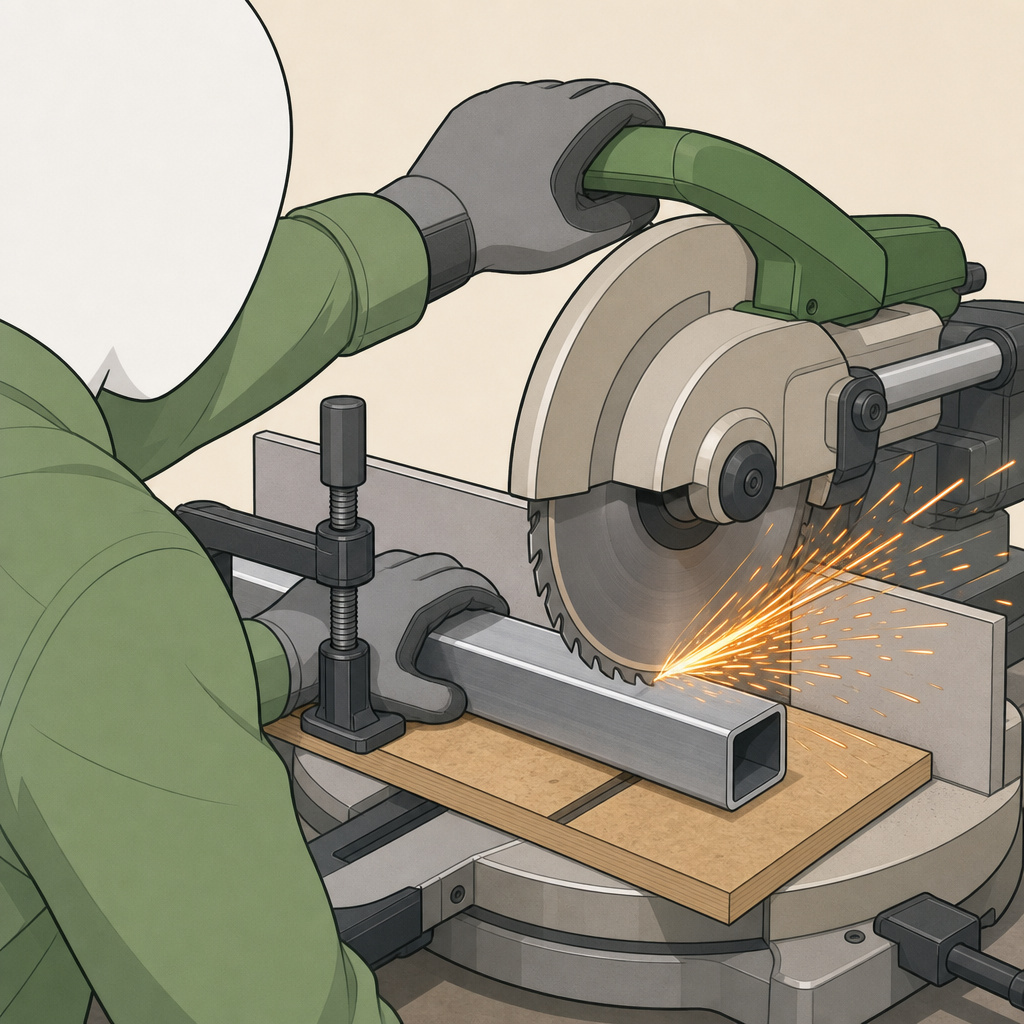
- Select the Correct Blade: Install a **carbide-tipped, cutting blade with 60-80 teeth and a zero or negative hook angle. Confirm it is rated for the metal you’re cutting.
- Prep the Saw: Ensure the saw is unplugged or the battery is removed. Lower the blade guard and inspect it moves freely.
- Secure the Material: Clamp the metal piece firmly to the saw’s fence and base. Use a sacrificial backing board if cutting thin sheet metal to reduce tear-out.
- Don Safety Gear: Put on your face shield, goggles, gloves, hearing protection, and appropriate clothing.
- Perform a Test Cut: On a scrap piece, make a slow, controlled cut to check feed rate and spark direction.
- Make Your Cut: Start the saw, let the blade reach full speed. Gently lower the blade into the metal, applying light, consistent pressure. Listen to the sound; if it labors or whines, you are pushing too hard.
- Inspect the Cut: Once complete, lift the blade clear. Wait for the blade to stop completely before removing the workpiece. Check the cut edge for burrs.**
The Right Blade: A Buyer’s Guide
You can’t use any blade. The must-have features:
- Blade Material: Carbide teeth on a steel body. Avoid abrasive ” (f masonry) blades; they are designed for grinding, will wear out rapidly on metal.
- Toeth Count: 60-80 teeth is the sweet spot for thin metals. Fewer teeth (24-40) cut faster but rougher; more teeth (100+) cut slower but smoother.
- Hook Angle: Zero or negative. This prevents the self-feeding “grab” that causes kickback.
- Brand Examples: Look for blades by Diablo (their Metal Demon line), Freud, or Makita.
I won’t recommend using the cheapest abrasive blade you find. They cut faster but throw more sparks, wear out in seconds, and can glaze over, leading to dangerous binding. A good carbide blade is safer and makes a better cut.
Why Not Just Use a Dedicated Metal Saw?
For anything more than occasional cuts, a dedicated tool is safer and better.
* Chop Saw (Abrasive or Cold Saw): Built for metal. Slower RPM (1,500), designed to handle sparks and heat. A cold saw uses a topeed blade with cutting fluid for cool, precise cuts.
* Band Saw: Cuts with less waste, less heat, and offers more versatility.
* Angle Grinder: With a cutting wheel, it’s the most accessible tool but requires a very steady hand.
Frequently Asked Questions
Is cutting metal with a miter saw bad for the tool?
It accelerates wear. The main risks are: (1) Metal swarf entering the motor, (2) Overheating the motor from prolonged cuts, (3) excessive bearing wear from the constant vibration. For occasional use, it’s a calculated risk. For daily use, it’s a bad idea.
Can I use the same blade for wood and metal after?
Absolutely not. The will contaminate the blade. Metal particles will embed in the carbide teeth, making them ineffective for wood and a fire hazard. The heat treatment is also different.
How do I prevent burrs on the cut edge?
Burrs are inevitable. Minimize them by: using a sharp, fine-toothed blade, cutting slowly, and supporting the metal to prevent vibration. A file or deburring tool cleans them up after.
My cut is producing a lot of sparks and smoke. Is that normal?
For steel, yes, significant sparks are normal. Excessive smoke or discoloration means you’re pushing too hard or your blade is dull. Stop and reassess.
Will this void my saw’s warranty?
Very likely. Most manufacturer warranties exclude damage from misuse, including cutting materials the tool isn’t designed for. Check your manual.
The Bottom Line
Yes, you can cut metal with a miter saw in a pinch, treating it as a carefully controlled compromise. It’s a useful trick for the DIYer needing to trim some aluminum or make a few cuts in mild steel. But respect the process: the right blade, rigorous safety, and managed expectations are the price of admission.
For regular metalwork, the right tool—a chop saw, band saw, or angle grinder—is a safer, faster, more economical investment in the long run.
