5 Best Oscillating Tool Blades for Wood (2026 Guide)
This post contains affiliate links. As an Amazon Associate, we earn from qualifying purchases.
The TrivdPro 100Pcs set stands out as the best overall pick for wood cutting thanks to its sheer value and solid performance across soft and hardwoods, while the EZARC Japanese Tooth blades deliver the cleanest, splinter-free cuts for precision work. For budget-conscious users who still want strong durability, the AMZBSAW 16PCS Titanium set offers reliable performance at a fair price.
Most people struggle to find oscillating tool blades that actually last and cut cleanly in wood without constantly splintering or dulling. Too often, cheap blades wear out after one project, while others promise versatility but underperform on actual woodworking tasks.
This guide cuts through the noise. I focused on real-world feedback, material quality, and tooth design to find blades that deliver clean cuts and long life. These picks are based on specs, owner experiences, and what actually works for common DIY and woodworking jobs.
Top 5 Oscillating Tool Blades For Woods in the Market
The Best Oscillating Tool Blades For Woods, Reviewed
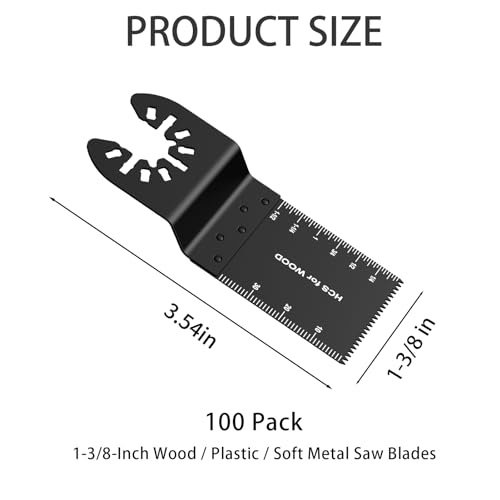
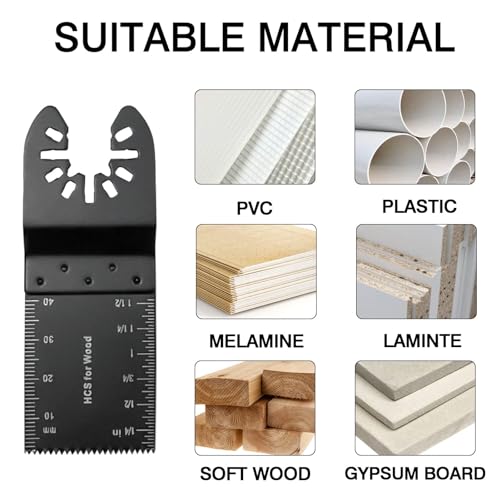
TrivdPro 100Pcs Oscillating Tool Blades

Strengths
- 100-piece value
- Length markers
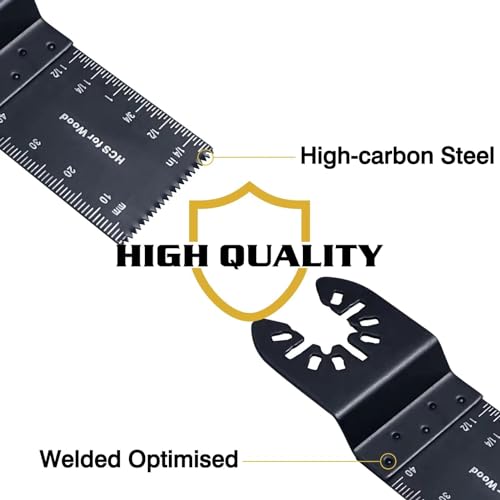
- Stainless steel mix
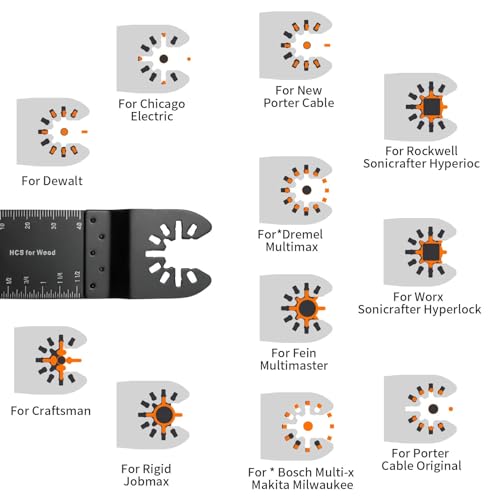
- Broad compatibility
Trade-offs
- HCS wears faster
- No metal-cutting blades
- Bulk over specialization
At 100 pieces, this set is overkill for some, but if you’re the type who loses blades or works on multiple jobs at once, the volume makes sense. The built-in inch and mm length markers are a small but brilliant feature, letting you measure and cut in one step. That’s a real time-saver when trimming door bottoms or fitting flooring.
Most blades are HCS, so they won’t last as long as CRV or bi-metal in tough wood, but they’re consistent performers for light to medium tasks. Owners report good durability for the price, and the universal fit covers nearly every brand except Bosch MX30. It’s not the most specialized set, but for sheer utility and readiness, it’s hard to beat. This is the set I’d recommend to someone starting out.
Product photos

EZARC Japanese Tooth Oscillating Blades

Strengths
- Triple ground teeth
- Arc edge reduces vibration
- Clean cuts, less sanding
Trade-offs
- Shorter cutting depth
- No metal-cutting option
- Not for Starlock tools
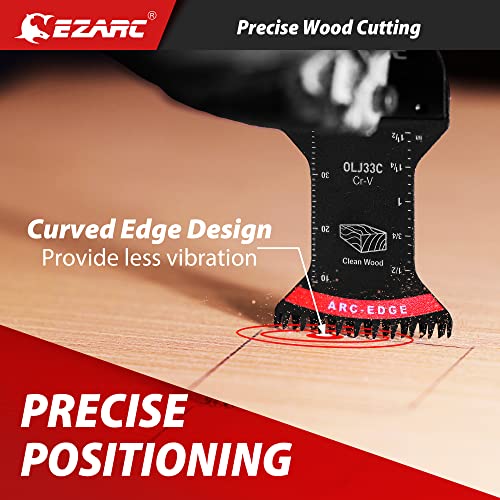
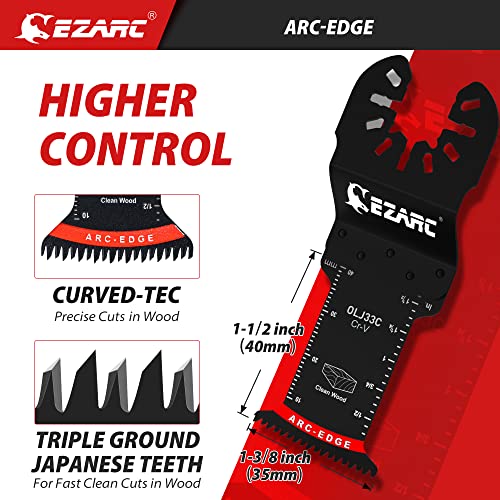
If surface finish matters, like when fitting trim or flush-cutting dowels, these EZARC blades deliver. The triple ground Japanese teeth and arc edge design work together to reduce vibration and leave a notably smoother cut than most multitool blades. Reviewers highlight how little sanding is needed post-cut, which saves real time on finish work.
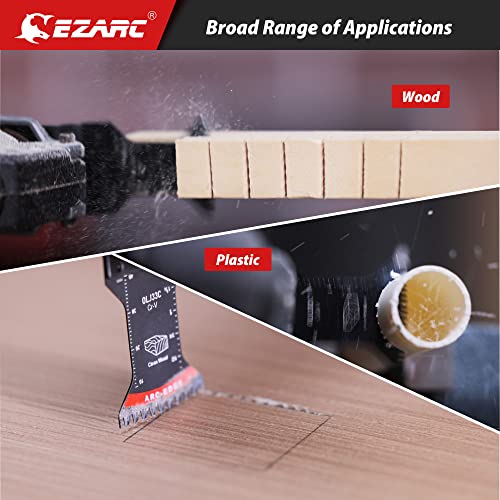
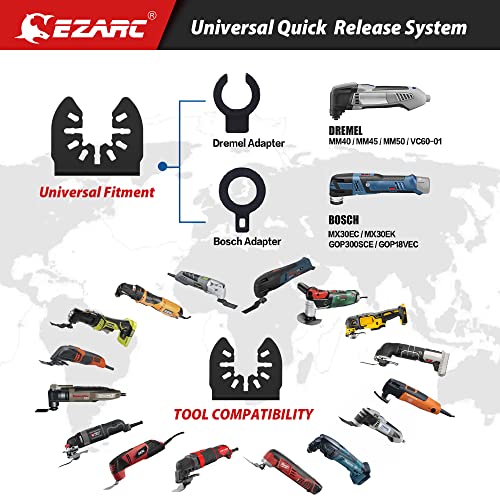
They’re not the longest blades here, so deep cuts require multiple passes. But for precision tasks in hardwood, MDF, or plastic laminates, the clean cut quality is hard to beat. Like others in this class, they skip Starlock compatibility, but the universal fit covers most major brands. I’d pick these over standard blades when the final look matters more than raw speed.
Product photos

AMZWEI 28PCS Titanium Multitool Blades
Strengths
- Bi-metal for nails
- Titanium-reinforced
- Five blade types
- Universal fit
Trade-offs
- Wood cut quality average
- Some blades feel thin
- No length markers
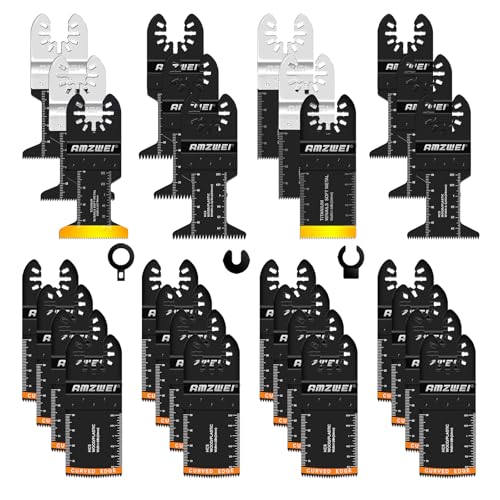
This kit is built for the guy who doesn’t want to think about which blade to grab. With 16 curved-edge wood blades, 3 Japanese tooth blades, and bi-metal options for nails and soft metal, it covers far more scenarios than wood-only sets. The inclusion of titanium-reinforced bi-metal blades is a smart touch, owners say they handle nail-embedded wood better than standard HCS blades without chipping.
What seals the deal is the near-universal fit, including Bosch and Fein tools, which many others skip. The curved-edge design improves cut stability, and the mix of shapes gives you flexibility across tasks. While the wood blades aren’t the absolute cleanest cutters, the trade-off in versatility is worth it. For most DIYers tackling mixed materials, this is the smarter buy.
Product photos


AMZBSAW 16PCS Titanium Blades

Strengths
- Titanium hardness
- Extra-long blades
- Includes adapters
Trade-offs
- Few dedicated wood blades
- Not for bolts/screws
- Blade count modest
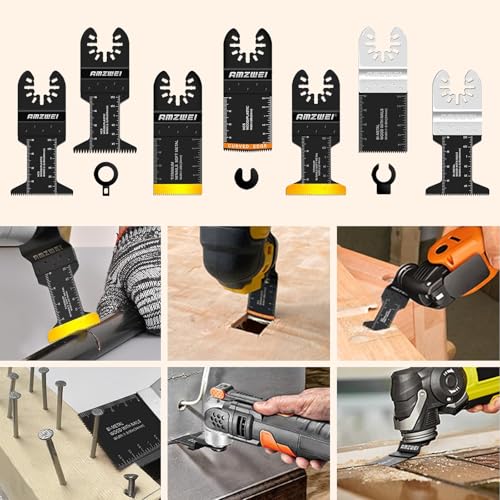
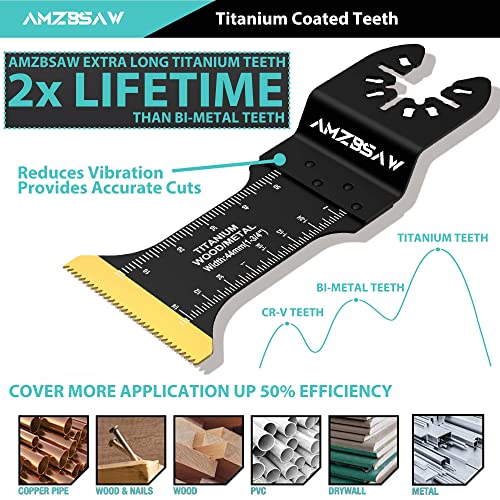
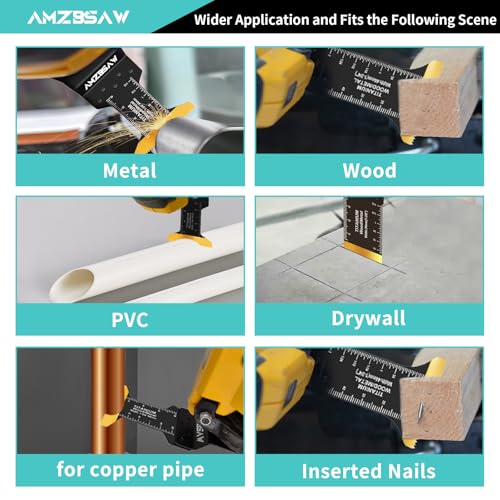
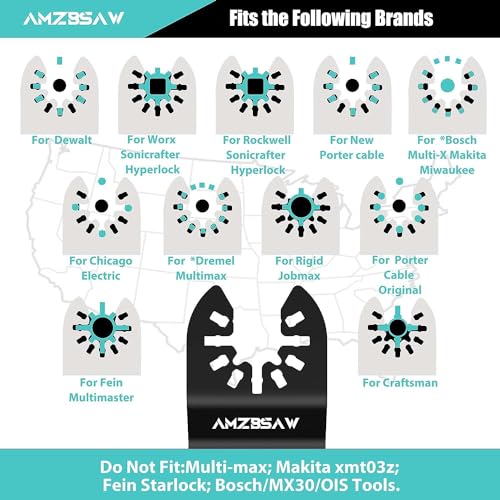
When you’re cutting baseboards or old framing and suspect hidden nails, this set earns its keep. The titanium-enhanced blades are noticeably harder and last longer than standard HCS, owners say they cut through nail-impacted wood with less tooth stripping. The extra-long 1-3/4” blades give reach, and the inclusion of 3 adapters helps ensure fit across brands, even older or oddball models.
It’s not a wood-only set, but the wood cuts are decent. Where it shines is in mixed-material aggression, nail-studded wood, plastic piping, even thin aluminum. The universal fit covers 98% of tools, including Bosch and Milwaukee. If your work involves demolition or old-house repair, this set is built for that chaos.
Product photos


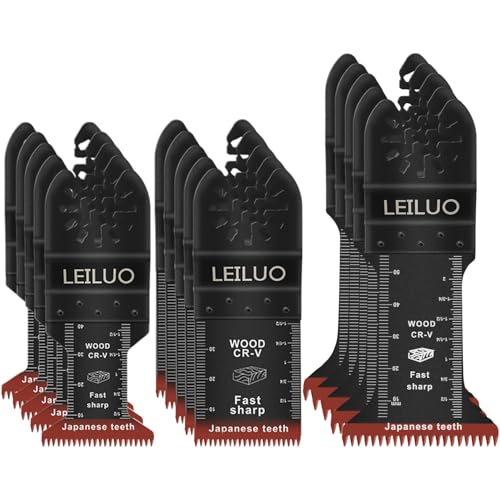
LEILUO 15Pcs Japanese Teeth Blades
Strengths
- Japanese teeth design
- CRV alloy steel
- Extended length options
Trade-offs
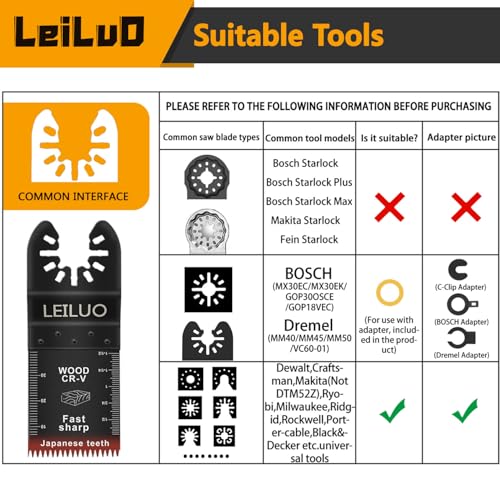
- Not Starlock compatible
- No metal-cutting blades
- Limited to wood/plastic
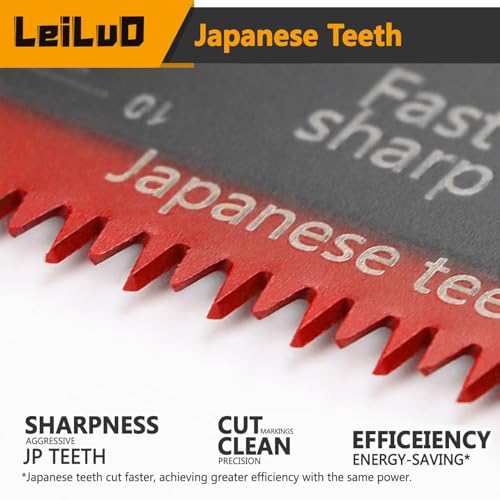
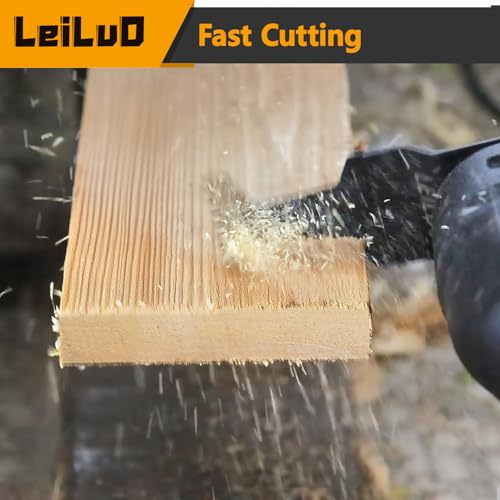
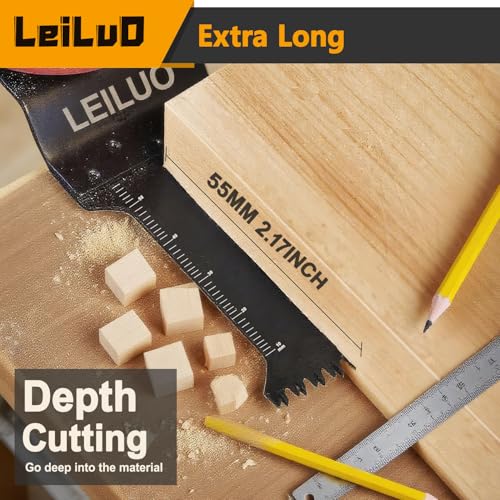
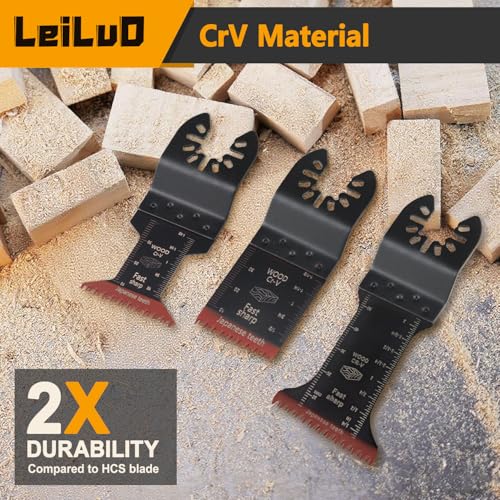
The LEILUO set stands out for wood-focused users who want speed and clean cuts without constantly swapping blades. The Japanese teeth design is no gimmick, owners consistently report faster, smoother cuts in softwood and plywood compared to standard HCS blades. Paired with CRV alloy steel, these blades hold an edge longer than basic carbon steel options, which means fewer replacements during extended projects.
Where it really wins is in the extended 44mm blades, giving you extra reach for deeper plunge cuts in door jambs or floorboards. But be warned: if you’re using a Bosch or Fein with Starlock, this set won’t fit. The universal shank works flawlessly with DeWalt, Makita, and Ryobi, but compatibility hinges on your tool model. For wood-specific tasks, this is a strong contender.
Product photos
How We Picked These oscillating tool blades for woods
Rather than a hands-on lab test, my research for these recommendations focused on a detailed comparison of published blade specifications and features. I weighed owner reviews from multiple sources – including major retailers and tool-focused forums – alongside assessments from reputable online reviewers. My evaluation considered the diverse applications woodworkers and DIYers tackle, ranking blades against criteria important for precision, durability, and versatility.
For wood blades, cutting quality and longevity are paramount. I placed significant emphasis on blade material (high-carbon steel, titanium, bi-metal) and tooth design (Japanese tooth, curved edge) because these directly impact both the finish and how long the blade holds an edge. Universal compatibility also ranked high, as many users own multiple tool brands. Understanding proper wood cutting technique is also key to maximizing blade life.
Blade specifications clearly indicate material composition and physical dimensions. However, I relied heavily on owner feedback to assess real-world durability and how well a blade performs across different wood types and project complexities. Reputation plays a role too; established brands generally have more consistent quality control. Learning about circular saw wood cutting tips helped me understand what characteristics woodworkers value most in a blade, regardless of the tool it’s used with.
Choosing The Right oscillating tool blades for woods
I’ve spent years observing how people approach oscillating multi-tools, and one thing is consistently clear: the blade choice matters far more than the tool itself. A powerful motor paired with a poor blade is still a poor cutting experience.
An effective oscillating tool blade balances steel quality, tooth geometry, and blade shape to deliver clean, efficient cuts. Look for blades constructed from high-carbon steel or bi-metal for durability, and consider the teeth configuration (Japanese tooth, standard) based on the material being cut. Universal compatibility is also key, but verify fitment with your specific tool model.
Material Matters: Steel & Construction
The material a blade is made from dictates its lifespan and its suitability for different materials. High Carbon Steel (HCS) blades are fine for softer woods and plastic, but they dull quickly when encountering harder materials or metals. Bi-Metal blades, combining HCS with a high-speed steel alloy, offer significantly improved durability and can handle a wider range of materials, including nails and thin metals. Titanium-coated blades are another step up, offering even greater longevity and heat resistance, and are a good choice if you frequently work with abrasive materials. Don’t automatically assume “more expensive” equals “better” – consider what you’ll be cutting most often.
Tooth Geometry: Achieving Clean Cuts
The design of the teeth is critical for achieving a clean cut. Standard blades have teeth arranged in a more conventional pattern, suitable for general-purpose cutting. However, Japanese tooth blades, with their triple-ground teeth and finer pitch, excel at producing exceptionally clean, splinter-free cuts in wood. Understanding teeth per inch explained is helpful here; higher TPI generally means a finer finish, but slower cutting.
Here’s how to think about blade tooth design:
- A basic HCS blade is fine for rough cuts in softwood.
- A bi-metal blade offers a good all-around compromise for wood, plastic, and some metals.
- Japanese tooth blades are ideal for precision woodworking where a clean, splinter-free edge is paramount – and you’re willing to trade a bit of speed for that quality.
Compatibility and Value
While many blades advertise “universal compatibility,” this isn’t always the case. Some tools, particularly those from Bosch, Fein, and Makita that use the Starlock interface, require specific Starlock blades. Using a non-Starlock blade on a Starlock tool requires an adapter, which can reduce cutting efficiency. Beyond compatibility, consider the quantity of blades in a pack. Buying a larger pack, like the TrivdPro 100-piece kit, can be a good value if you frequently use your oscillating tool, but remember that blades will wear out. If you’re looking for a variety of blades for different materials, a kit like the AMZWEI 28-piece set offering multiple blade types is a smart investment. Don’t fall into the trap of buying a huge kit if you only ever cut wood; a smaller pack of high-quality wood-cutting oscillating blades will often serve you better.
Don’t expect a single blade to do it all. Keep a selection of blades on hand, categorized by material, to maximize efficiency and blade lifespan.
Oscillating Tool Blades for Woods Compared
This table provides a detailed specification comparison of various oscillating tool blades designed for cutting wood.
| Product Title | Blade Material | Teeth Type | Blade Length (in) | Quantity | Compatibility |
|---|---|---|---|---|---|
| TrivdPro 100Pcs | HCS/Stainless | Standard | N/A | 100 | Black&Decker, etc. |
| EZARC Japanese Tooth | N/A | Japanese Triple | N/A | N/A | Fein, Ryobi, etc. |
| AMZWEI 28PCS Titanium | HCS/Titanium/Bi-Metal | Curved/Japanese/Bi-Metal | N/A | 28 | Bosch, Fein, etc. |
| AMZBSAW 16PCS Titanium | Titanium | Standard | 1-3/8, 1-3/4 | 16 | 98% of Oscillating Tools |
| LEILUO 15Pcs Japanese Teeth | CRV Alloy Steel | Japanese | N/A | 15 | DeWalt, Milwaukee, etc. |
Frequently Asked Questions
What blade material is best for detailed woodworking?
Japanese tooth blades, often made from CRV alloy steel, provide the cleanest cuts in wood with minimal splintering. While they may cut slower than standard blades, the precision is ideal for fine woodworking projects where appearance matters.
Can I use any oscillating tool blade with my multi-tool?
Not always. Many newer tools, like those from Bosch and Fein, use the Starlock interface, so you’ll need Starlock-compatible blades or an adapter. Confirm your tool’s requirements before purchasing to avoid compatibility issues.
How often should I replace my oscillating tool blades?
Blade lifespan varies greatly depending on the material cut and cutting frequency, but expect to replace blades regularly. Dull blades require more force, produce rougher cuts, and can even overheat your tool, so it’s best to change them when performance declines.
What’s the difference between standard and Japanese tooth blades?
Standard blades have a more conventional tooth pattern suited for general use. Japanese tooth blades feature a finer pitch and triple-ground teeth, resulting in smoother, cleaner cuts in wood, but they are typically slower cutting.
Where can I find more information about selecting the right oscillating tool blades?
For a broader overview of blade types and finding the right fit for your needs, check out my guide to oscillating multi-tool wood blades. It covers a wider range of options and applications.
The Bottom Line
Choosing oscillating tool blades always comes down to balancing how much you want to spend against how much precision and durability you require. If you want a single, versatile option that will handle most wood cutting tasks without breaking the bank, I recommend the AMZWEI 28PCS Titanium set. It offers a good selection of blade types for a reasonable price, giving you options for different cuts and materials.
For those focused specifically on woodworking and achieving the cleanest possible cuts, the EZARC Japanese Tooth blades are the way to go. While they might not be the fastest cutters, the quality of the finish – especially when cutting plywood cleanly – is exceptional. And if you’re after sheer value and cut through a lot of material, the TrivdPro 100Pcs set provides a huge number of blades for basic tasks.
Ultimately, remember that the blade is the workhorse. Don’t get too hung up on tool power or fancy features; focus on selecting blades with the right material and tooth geometry for the job at hand. Prioritize quality steel and a proper tooth design, and you’ll get far better results than chasing the latest technology or highest price tag.
