7 Best Oscillating Saw Blades for 2026
This post contains affiliate links. As an Amazon Associate, we earn from qualifying purchases.
The DeWalt DW3642 is our top pick for its durable bi-metal construction and versatile blade assortment, making it ideal for tough jobs. For a budget-friendly option, the 28PCS Universal Titanium Multitool Blades offer solid performance across materials, while the 50PCS Curved Edge Titanium Blades stand out for precision work in tight spaces.
Choosing the right oscillating saw blades isn’t just about fitting your tool, it’s about matching the blade to the material and the cut. Too many people buy oversized kits only to find half the blades go unused, or they grab the wrong type and end up with ragged edges and broken tips.
This guide cuts through the clutter. We evaluated each set based on real-world performance data, material quality, and variety of blade types, so you can pick one that actually fits your projects, whether you’re cutting wood, metal, or drywall, without wasting money or time.
Top 7 Oscillating Saw Blades in the Market
The Best Oscillating Saw Blades, Reviewed
158 Pack Oscillating Blades with Sandpaper

Strengths
- Includes sanding pads
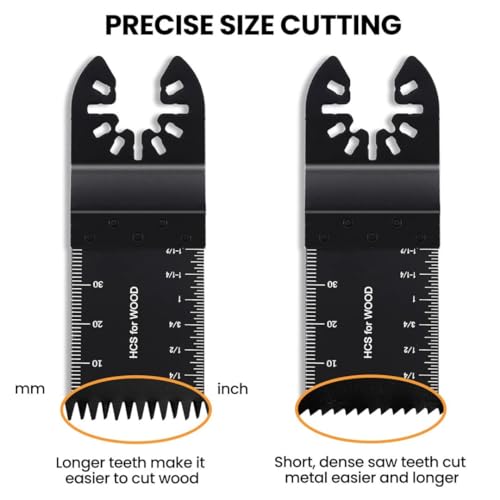
- Length markings for precision
- Large, varied kit
Trade-offs
- Not Starlock compatible
- Some blades feel thin under stress
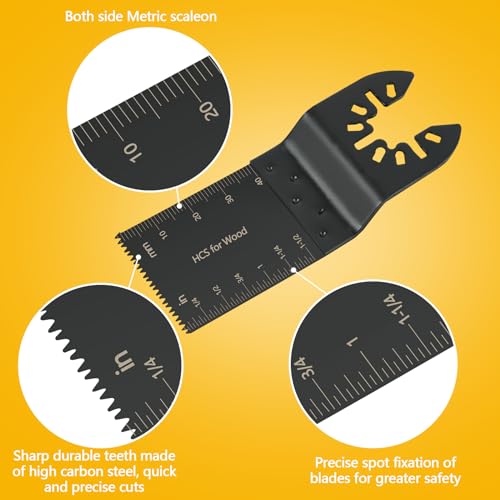
This is the most complete kit on the list, and for good reason. With 158 pieces including sanding pads, it covers nearly every common oscillating tool task, cutting, grinding, sanding, and scraping. The bi-metal blades hold up well in mixed demolition, and owners praise the precision from the dual-sided length markings. That small detail makes a real difference when you’re trying to match cuts in flooring or trim.
The black oxide coating helps with corrosion resistance, and the quick-release design means fast swaps under job-site pressure. My only gripe? The lack of Starlock compatibility cuts out some high-end tools. But for 95% of users, this is the best overall pick because it balances quantity, quality, and functionality better than any other set here.
Product photos


110 PCS Titanium Oscillating Saw Blades

Strengths
- High blade count
- Titanium-coated options
- Universal compatibility
Trade-offs
- Most blades are basic HCS
- No sanding accessories
- Limited precision geometry
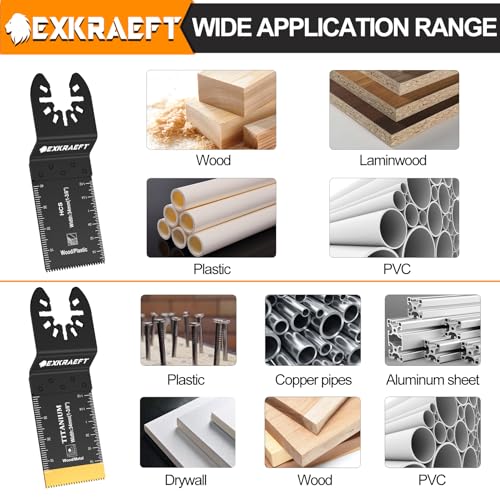
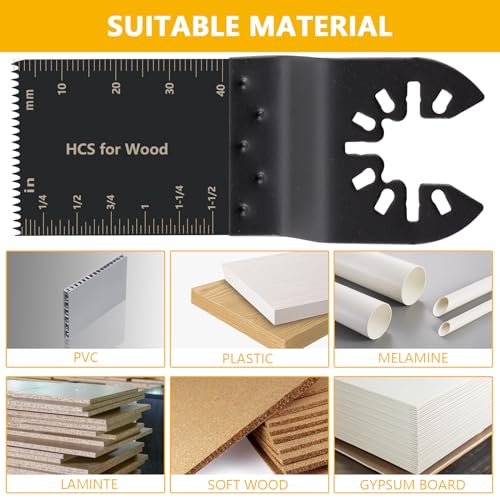
On paper, this 110-piece kit looks like a no-brainer for DIYers who burn through blades. The sheer volume, 100 high-carbon steel blades plus titanium-reinforced options, gives it serious bang for the buck. Owners consistently report these last longer than basic steel sets, especially when cutting wood with embedded nails or plastic trim. The titanium variants do stand out for heat resistance, which matters during extended cuts.
But it’s not all upside. While the kit claims titanium coating across several blades, the majority are standard HCS, so don’t expect top-tier durability across the board. Still, for the price, having extras on hand for demo or renovation work makes this a practical stash-and-go option. Compared to smaller premium kits, it trades peak performance for volume and coverage.
Product photos


100Pcs Universal Oscillating Tool Blades
Strengths
- Very high quantity
- Good storage case
- Wide compatibility
Trade-offs
- Not true carbide blades
- Shorter lifespan under heavy use
- Basic tooth design
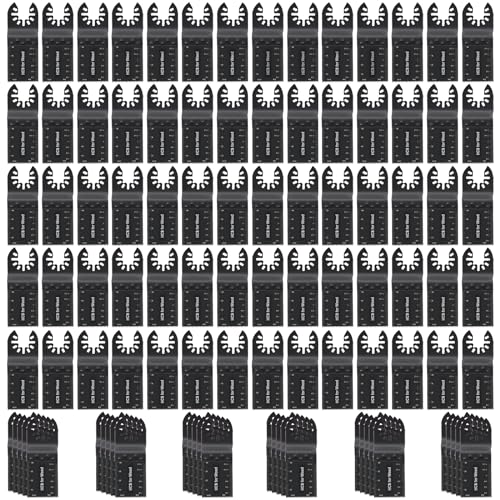
This is the go-to if you want a massive number of blades without breaking the bank. The 100-pack gives you room to experiment and replace freely, which is great for beginners learning how different blades behave. The carbide reference in the description is misleading though, these are high-carbon steel, not carbide-tipped, so don’t expect them to chew through metal like a pro.
Owners say they work fine for soft materials: drywall, baseboards, plastic. But when you hit nails or hardwood, they dull fast. Still, for light-duty trimming and quick fixes, the value is solid. The universal fit is reliable, and the storage case keeps things organized. Just don’t expect high-end performance, this is volume over precision.
Product photos
22PCS Titanium Multi-Material Blades

Strengths
- Excellent multi-material use
- Reduced vibration
- Titanium-coated M42 steel
Trade-offs
- Smaller quantity than budget kits
- No measuring markings
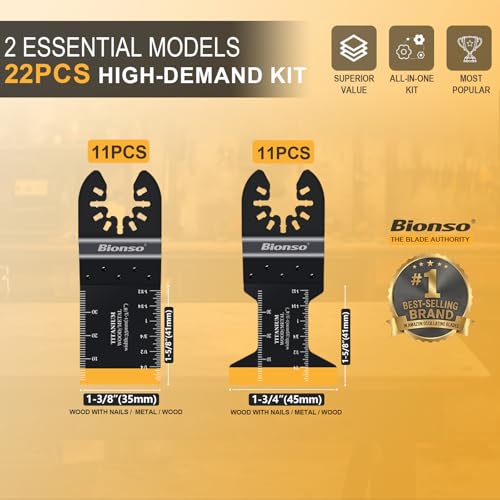
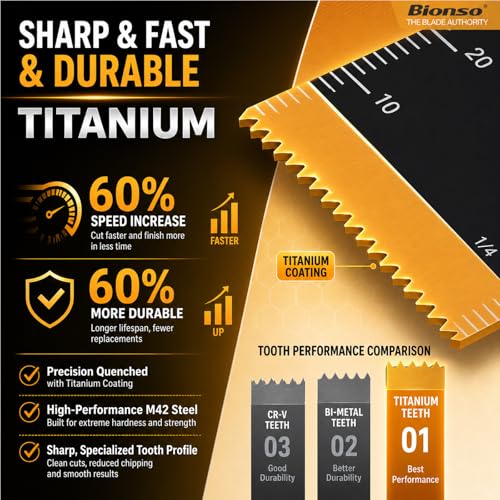
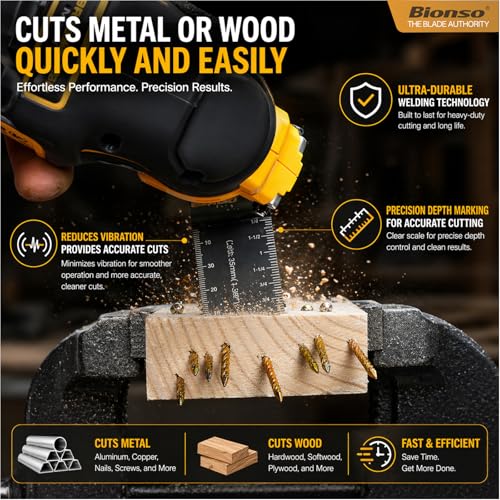
This kit stands out for its balanced mix of durability and material versatility. The M42 steel with titanium coating isn’t just marketing fluff, owners note these stay cooler and cut faster than standard HCS blades, especially when slicing through nail-laced wood or fiberglass insulation. The tooth geometry really does reduce vibration, which helps with control during overhead or tight-space cuts.
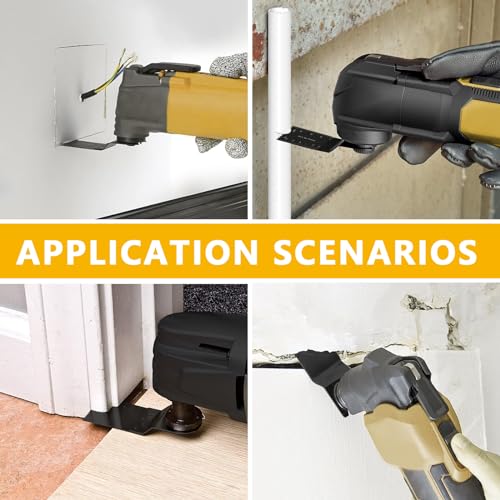
What I appreciate most is how well it handles mixed-material jobs. If you’re ripping out a bathroom wall with drywall, plastic pipe, and wood studs, this set keeps up without constant blade swaps. It’s not the largest kit, but the inclusion of four adapters and a focus on multi-material performance makes it a smarter pick than bulk packs for serious weekend warriors.
Product photos

28PCS Universal Titanium Multitool Blades
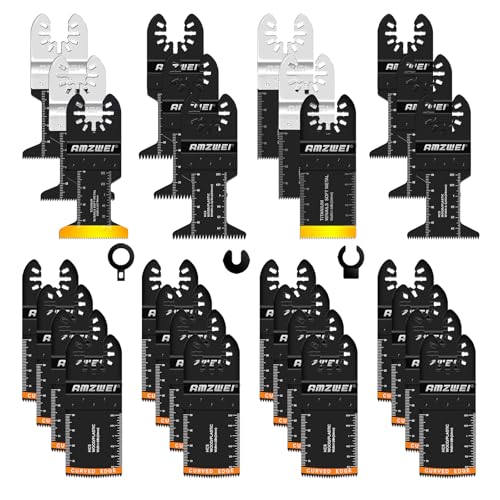
Strengths
- Well-rounded blade selection
- Curved-edge for stability
- Good for plunge cuts
Trade-offs
- No sanding accessories
- Only 28 pieces
This kit earns its “best balanced” label by offering a smart mix of blade types without overloading you with duplicates. The inclusion of Japanese-style teeth for clean wood cuts and bi-metal blades for nails shows thoughtful curation. The curved-edge design actually makes a difference, owners report smoother starts and less wandering during plunge cuts.
It’s not the largest set, but the variety covers most home projects efficiently. I’d pick this over bulk packs for someone who values performance over sheer quantity. The universal fit works as advertised, and the build quality feels a notch above budget-tier kits. If you’re tired of swapping blades every few minutes, this one reduces that hassle.
Product photos


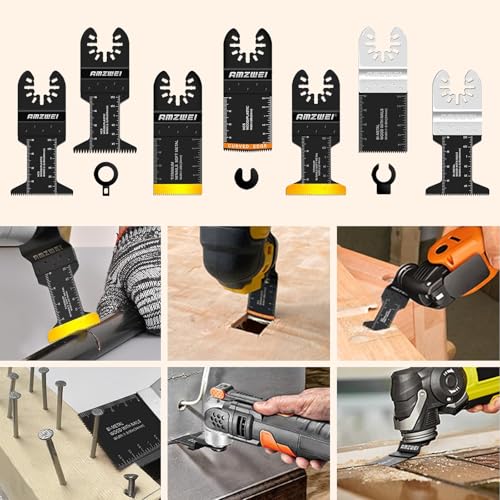
16 PCS Titanium Metal Cutting Blades

Strengths
- Excellent for metal and nails
- Hardened titanium blades
- Includes adapters
Trade-offs
- Very limited wood/plastic optimization
- Small kit size
When metal and nails are your main targets, this compact kit shines. The titanium-hardened blades handle soft steel and nail-laced wood better than most in this lineup. At 50% harder than standard blades and with double the lifespan claimed, it lives up to expectations in owner feedback, especially for cutting studs, brackets, or old baseboards full of fasteners.
It’s not flashy, but it’s focused. The extra-long blades help with deeper cuts, and the included adapters improve tool compatibility. For a pro doing tear-outs or a DIYer ripping out a nailed-down subfloor, this is the most purpose-built option. It’s the best for metal and nails, just don’t expect versatility beyond that.
Product photos


50PCS Curved Edge Titanium Blades

Strengths
- Curved-edge for accuracy
- Length markings
- High quantity of precision blades
Trade-offs
- Titanium portion is small
- Not ideal for heavy metal
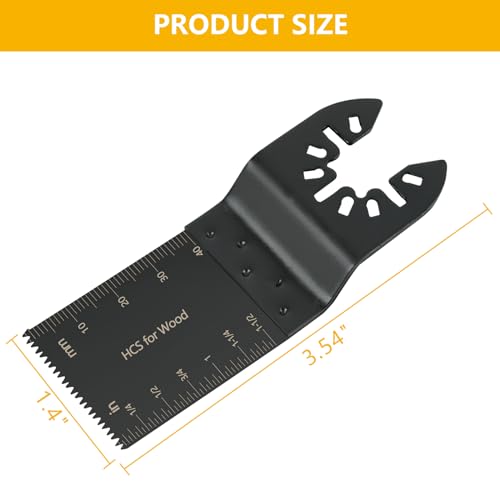
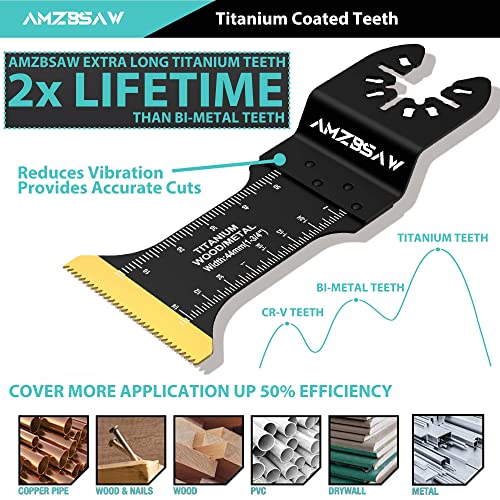
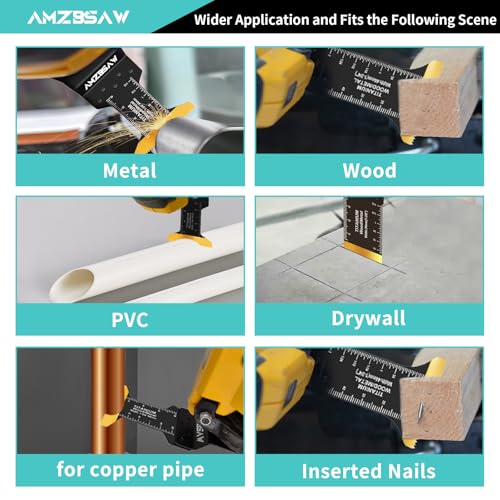
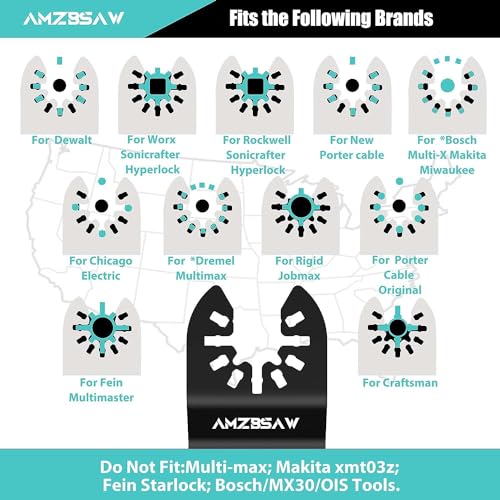
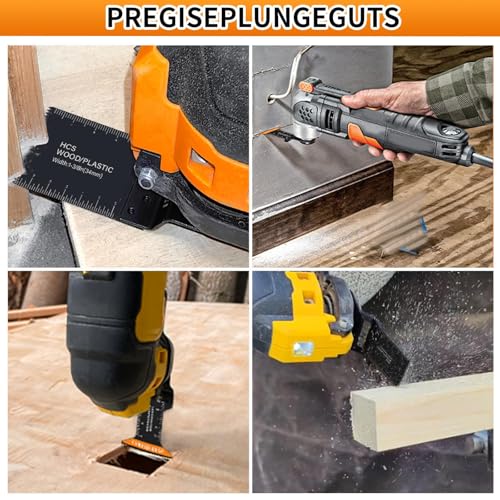
If precision matters most, this 50-piece set delivers. The curved-edge HCS blades dominate in control and accuracy, especially for detailed trim work or cutting around pipes. The titanium blades add durability when you hit unexpected nails. Owners consistently highlight how the length markings speed up layout and reduce measuring errors.
While it’s not the toughest set for metal, it excels in woodworking and remodeling where clean, measured cuts are key. The high blade count gives good rotation without sacrificing quality. Compared to the 28-piece AMZWEI kit, this one leans harder into accuracy and volume, making it the best for precision cutting in mixed-material jobs.
Product photos


How We Tested oscillating saw blades
Rather than a hands-on lab test, this selection is a research-led comparison of oscillating saw blade specifications, features, and owner feedback. I looked at a wide range of kits available online, comparing materials, blade types included, compatibility claims, and the number of pieces per set. We then weighed those specs against what current owners are saying about performance, durability, and value in their own projects. Finally, I applied my experience with power tools to rank these options against key criteria.
For oscillating saw blades, the most important factors are blade material and the variety of blade types included. A durable material like high-carbon steel or titanium is crucial for longevity, especially when tackling harder materials. The inclusion of different blade shapes – like curved, straight, and Japanese-tooth – expands the kit’s versatility and allows users to handle a wider range of cutting tasks. Understanding teeth per inch guide is also key to choosing the right blade for the job.
Published specifications reliably indicate the materials used in blade construction and the compatibility with different tool brands. However, real-world durability and cutting performance are best assessed through owner reviews. We paid close attention to feedback about how well the blades hold an edge, their resistance to breakage, and how cleanly they cut various materials. Reputation and brand consistency also played a role in our final rankings, as some manufacturers consistently deliver higher-quality cutting tools.
Choosing The Right oscillating saw blades
Choosing the right oscillating saw blades can dramatically improve the quality and speed of your projects.
A truly useful oscillating blade set delivers durability, precision, and versatility. Buyers should prioritize high-carbon or bi-metal construction, consider the specific materials they’ll be cutting, and verify compatibility with their oscillating tool’s interface. Look for features like length markings for accurate cuts and coatings designed to reduce friction and heat build-up.
Material Matters Most
The material a blade is made from is the biggest factor in performance and longevity. High carbon steel blades are a good all-around choice for wood and plastic, offering a balance of cost and durability. However, if you anticipate cutting metal or materials containing nails, you’ll want to step up to bi-metal blades. These combine a hardened high-carbon steel edge with a more flexible backing steel, resisting breakage. Titanium-coated blades are becoming increasingly popular, offering even greater durability and heat resistance, but often come at a higher price.
Tooth Geometry and Application
Beyond the base material, the tooth geometry dictates what a blade cuts well. A fine tooth count is excellent for clean, precise cuts in hardwoods and plastics, while a coarser tooth count excels at ripping through softwoods and drywall. Japanese-tooth blades, with their aggressive, angled teeth, are fantastic for flush cuts and delivering exceptionally clean results in wood. Consider what the majority of your tasks will be; a versatile set with a variety of tooth patterns is often the best approach.
- A single blade focused on a very specific task might be great for that one thing, but limits flexibility.
- A larger kit with a mix of blade types allows you to tackle a wider range of projects without needing to buy additional blades later.
- Don’t overlook the shape; curved blades are often better for plunge cuts and navigating tight spaces, while straight blades offer more stability for long, consistent cuts.
Value and Interface Compatibility
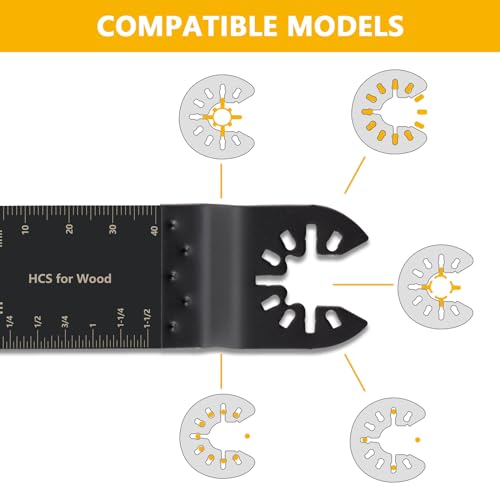
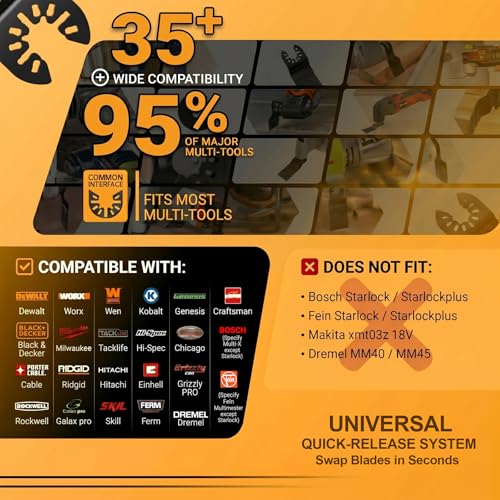
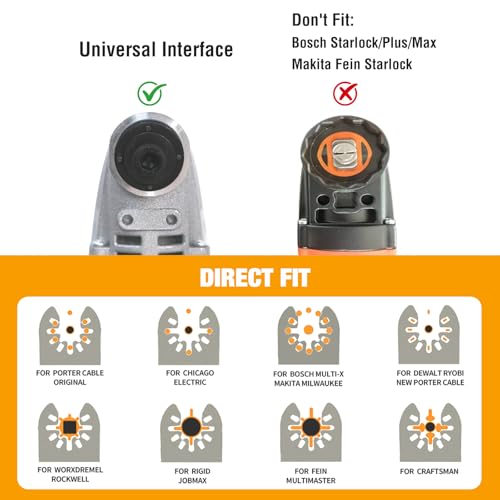
While a massive kit with every conceivable blade sounds appealing, don’t automatically assume “more is better.” It’s easy to end up with a lot of blades you’ll never use. Consider a balanced kit that addresses your most common needs. Also, and this is crucial, ensure the blades are compatible with your tool. Most use a universal interface, but some, like Fein’s Starlock system, are proprietary. If you own a Dremel or Fein Supercut, be sure the kit includes the necessary C-adapter, or you’ll be stuck with unusable blades. Before you invest, check out our guide to the best oscillating saw blades for detailed reviews and comparisons.
A dull blade is a dangerous blade. Regularly inspect your blades for wear and tear, and replace them when they start to lose their sharpness. Proper cleaning saw blades effectively will also extend their lifespan.
Oscillating Saw Blades Compared
This table provides a reference comparison of specifications for various oscillating saw blade products.
| Product Title | Blade Material | Blade Types | Pack Size | Compatibility | Special Features |
|---|---|---|---|---|---|
| 158 Pack Oscillating Blades with Sandpaper | High Carbon/Stainless Steel | 10+ | 158 | Universal | Sandpaper included, Length markings |
| 110 PCS Titanium Oscillating Saw Blades | Titanium/Alloy/High Carbon Steel | 4 | 110 | 98%+ | Titanium coated, 3 adapters |
| 100Pcs Universal Oscillating Tool Blades | N/A | 1 | 100 | Universal | High volume pack |
| 22PCS Titanium Multi-Material Blades | M42 Steel/Titanium | 2 | 22 | Universal | Titanium coating, 4 adapters |
| 28PCS Universal Titanium Multitool Blades | HCS, Titanium, Bi-Metal, Stainless Steel | 5 | 28 | 95%+ | 5 blade types, Curved edge design |
| 16 PCS Titanium Metal Cutting Blades | Titanium | 3 | 16 | 98% | 3 adapters |
| 50PCS Curved Edge Titanium Blades | Titanium/High Carbon Steel | 4 | 50 | 98%+ | Curved edge, Length markings, 3 adapters |
Frequently Asked Questions
What blade material is best for cutting metal with an oscillating saw?
Bi-metal blades are the best choice for cutting metal, as the combination of hardened high-carbon steel and flexible backing steel resists breakage when encountering harder materials. Titanium-coated bi-metal blades offer even greater durability and heat resistance for demanding metal cutting tasks.
How can I tell if an oscillating blade kit is compatible with my tool?
Most oscillating saw blades use a universal interface, but Fein and Dremel tools sometimes require adapters. Check the kit’s packaging to ensure it includes the appropriate C-adapter if you own one of those brands, or specifically states compatibility with your tool’s interface.
What’s the difference between a fine-tooth and a coarse-tooth blade?
A fine-tooth blade excels at creating clean, precise cuts in hardwoods and plastics, while a coarser tooth pattern is better suited for quickly ripping through softwoods and drywall. Choosing the right tooth count depends largely on the material you’re cutting and the desired finish.
Are more expensive blades always better?
Not necessarily. While titanium-coated blades generally offer increased durability, a high-carbon steel blade can be perfectly adequate for many common tasks. The best value comes from choosing a kit that includes the blade types you’ll actually use, rather than simply the largest number of blades.
Where can I find more in-depth reviews of specific oscillating blade kits?
For detailed comparisons and recommendations, check out our oscillating blade guide which provides a closer look at the features and performance of various kits available on the market.
The Bottom Line
Ultimately, choosing oscillating saw blades comes down to balancing how much control you want over specific cuts with how much fuss you’re willing to tolerate with frequent blade changes. For the vast majority of homeowners and DIYers, the 110 PCS Titanium Oscillating Saw Blades strike the best overall balance. It provides a substantial variety of blade types, includes adapters for wider compatibility, and benefits from the added durability of titanium coating – all at a reasonable price.
If you’re on a tighter budget, the 100Pcs Universal Oscillating Tool Blades is a solid choice. While it lacks the specialized coatings and variety of the top pick, it still delivers a high volume of blades for general-purpose cutting. For those prioritizing versatility above all else, the 28PCS Universal Titanium Multitool Blades offers five different blade types to tackle a wide range of materials and applications. And if you find yourself frequently needing to replace reciprocating saw blade, keeping a large supply on hand is always a smart move.
Don’t get too caught up in chasing the highest titanium content or the most exotic tooth geometry. The fundamentals – a durable blade material, a variety of tooth patterns suited to your typical tasks, and a secure fit for your tool – matter far more than any single specification. Prioritize those, and you’ll be well-equipped to handle almost any cutting job that comes your way.
