8 Best Oscillating Blades (2026 Guide)
This post contains affiliate links. As an Amazon Associate, we earn from qualifying purchases.
The Bionso 55PCS Oscillating Saw Blades stand out as the best overall, combining durable bi-metal and high-carbon steel with a versatile range of blade types. For those on a tighter budget, the CONNOO 158 Pack offers exceptional value without sacrificing too much performance, while the Diagtree 20PCS Titanium Blades are a strong pick for cutting through metal and nail-embedded wood.
If you’ve ever wasted time swapping out a flimsy blade mid-cut or struggled with one that dulls after a single job, you know how critical blade quality really is. A bad blade doesn’t just slow you down, it can ruin your work and even damage your tool.
This guide cuts through the noise by focusing on real-world performance, material compatibility, and smart design. I compared specs, analyzed owner feedback, and prioritized sets that deliver consistent results across common DIY and repair tasks. You’ll learn what actually matters in a blade, beyond flashy coatings, and how to choose the right one for your next project.
Top 8 Oscillating Blades in the Market
The Best Oscillating Blades, Reviewed
Bionso 55PCS Oscillating Saw Blades
Strengths
- Consistent quality
- Durable bimetal
- Good value
Trade-offs
- Limited blade variety
- No titanium coating
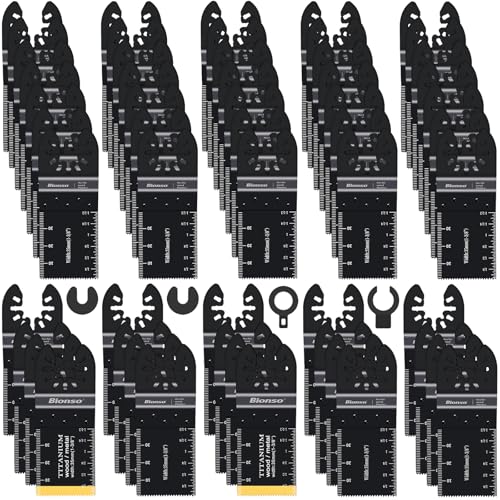
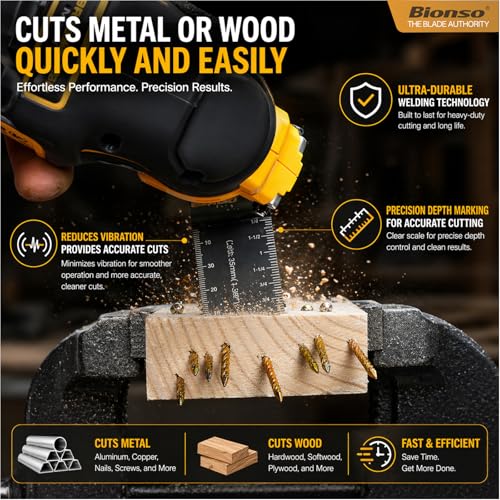
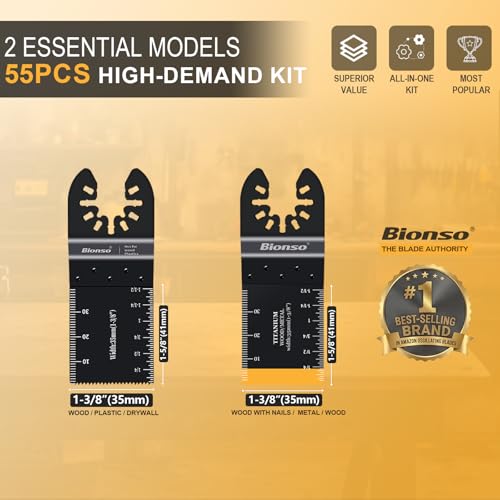
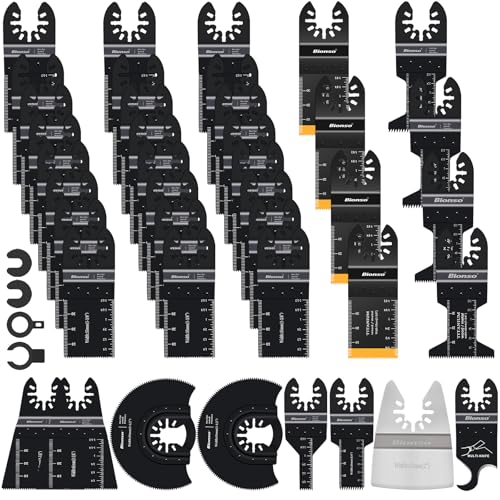
The Bionso 55-piece kit earns its ‘Best Overall’ label by striking a near-perfect balance: solid durability, broad compatibility, and a practical mix of blade types, all at a reasonable cost per unit. It uses thick-gauge high carbon steel and bimetallic alloy, which owners report holds up well in both wood and thin metal. The 2 blade types are well-chosen for general use, and while the set isn’t huge, it avoids the bloat of kits that include redundant blades.
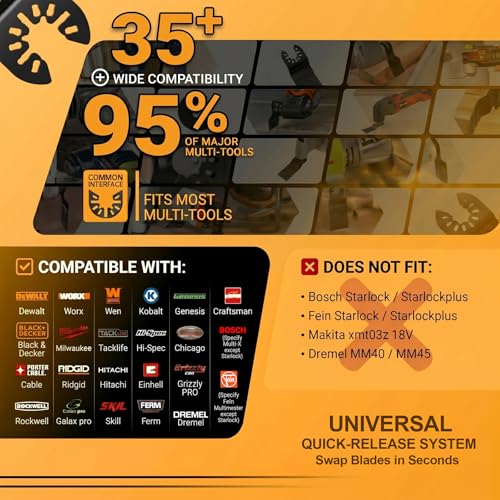
What seals the deal is consistency. Unlike some budget packs with hit-or-miss heat treatment, this one gets high marks for uniform performance across batches. It fits over 95% of oscillating tools and skips the gimmicks, no sanding pads or novelty shapes, just reliable cutters. For most users, this is the easy pick.
Product photos
Bionso 40 PCS Oscillating Saw Blades
Strengths
- Balanced variety
- Good value
- Bi-metal options
Trade-offs
- No titanium coating
- Not for Starlock
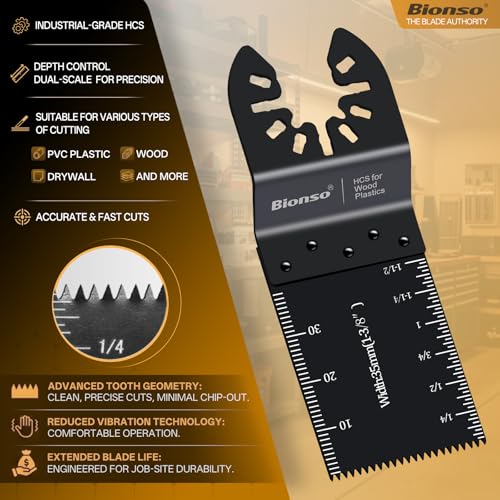
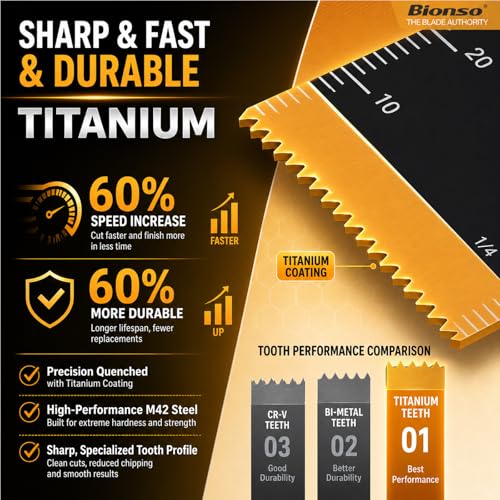
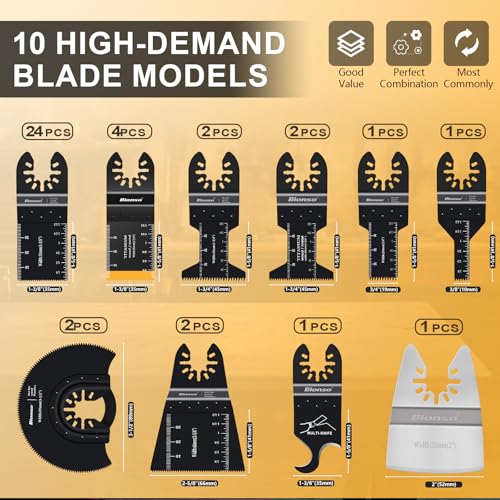
The Bionso 40-piece kit hits a sweet spot between affordability and functionality, offering 10 different blade types that cover wood, metal, and plastic with solid performance. It’s not the most durable set in the lineup, but the mix of high carbon steel and bi-metal construction gives it better edge retention than basic carbon-only blades. Reviewers highlight that the variety helps them switch tasks quickly, no need to run to the store mid-job.
Compared to larger packs, this one avoids filler blades while still providing enough diversity for most home projects. It’s a no-frills but reliable option, especially for casual users who don’t need 100+ blades but still want flexibility. The universal fit works with nearly all standard oscillating tools, though it’s not compatible with Starlock systems.
Product photos
CONNOO 158 Pack Oscillating Tool Blades

Strengths
- Huge quantity
- Includes sanding pads
- Affordable per unit
Trade-offs
- Inconsistent durability
- No titanium blades
If budget is the top priority, the CONNOO 158-pack is hard to beat. It’s the largest kit here, bundling 10 blade types plus sanding pads, which owners appreciate for one-stop shopping on oscillating tool accessories. The high carbon steel blades hold up reasonably well on wood and plastic, and the black-coated finish helps resist heat and rust. The length markers are a small but useful feature for consistent cuts.
But quantity comes with trade-offs. Some users report inconsistent heat treatment, meaning a few blades in each pack dull faster than others. It’s also missing titanium or bi-metal options for heavy-duty cutting. Still, for a homeowner doing patchwork repairs or light remodeling, this kit offers broad utility at a low cost per blade.
Product photos


110 PCS Titanium Oscillating Saw Blades

Strengths
- Titanium and carbon mix
- Extra-long blades
- High blade count
Trade-offs
- No sanding attachments
- Not for Starlock
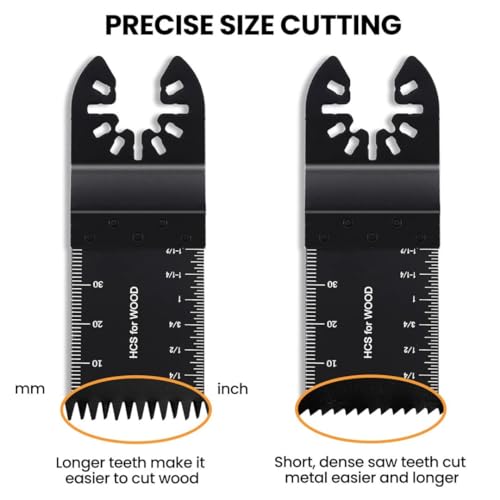
This 110-piece pack delivers serious value with a smart mix of 100 high carbon steel blades and 10 titanium-coated ones, including extra-long variants for deeper cuts. The titanium blades are the standout, offering 2X lifespan and better heat resistance, which owners confirm makes a difference when cutting nail-studded wood. The set leans into demolition and remodeling tasks, and the inclusion of longer blades is a thoughtful touch for flooring or framing work.
Compatibility is broad, covering 98% of tools with included adapters. While it doesn’t include sanding or scraping blades, the focus on cutting performance makes it a strong all-rounder. For the price, it outperforms many smaller kits by blending volume with specialty blades where it counts.
Product photos


TrivdPro 100Pcs Oscillating Tool Blades

Strengths
- High quantity
- Length markers
- Universal compatibility
Trade-offs
- Dulls quickly on nails
- Not for hard metals
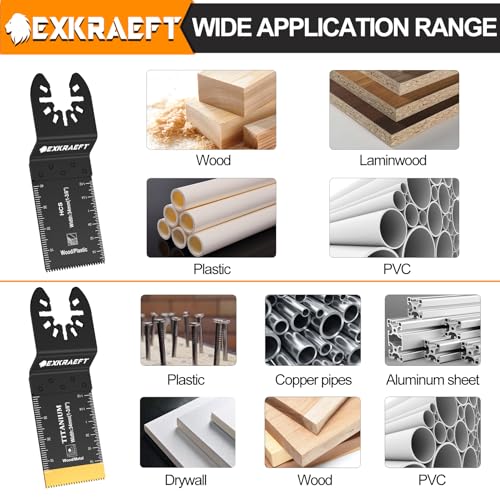
At 100 pieces, the TrivdPro kit is one of the most extensive budget packs on the list, and for users who burn through blades on long remodeling jobs, that volume makes sense. The inclusion of length markers in both inches and millimeters is a thoughtful touch, owners consistently report it helps with precision cuts in cabinetry or flooring trim work. On paper, the high carbon and stainless steel construction should offer solid durability, though some reviewers note these blades dull faster than titanium-coated options when hitting nails in wood.
Still, the real advantage here is quantity and compatibility. It covers a wide range of basic cutting tasks in wood, plastic, and soft metals, and fits most major brands except Bosch MX30. If you’re doing a big project and want to avoid constant restocking, this pack delivers reach. But don’t expect long life on abrasive materials, these are workhorse blades, not specialty cutters.
Product photos

AMZWEI 50PCS Titanium Oscillating Blades

Strengths
- Curved edge design
- Good stability
- Titanium options
Trade-offs
- Fewer blade types
- No sanding pads
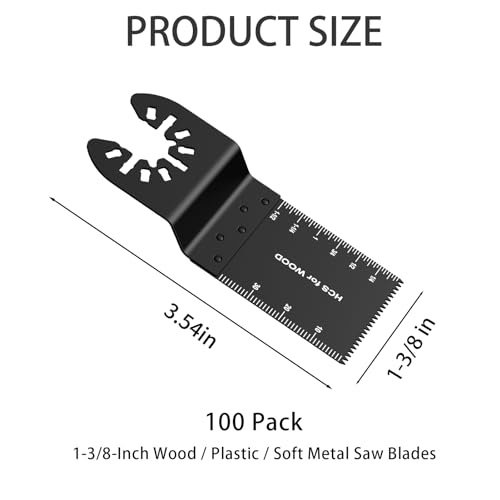
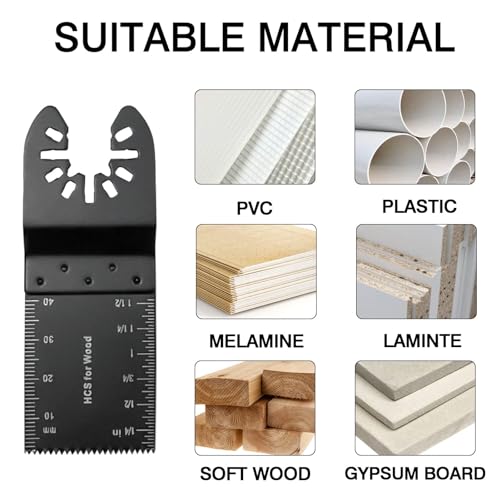
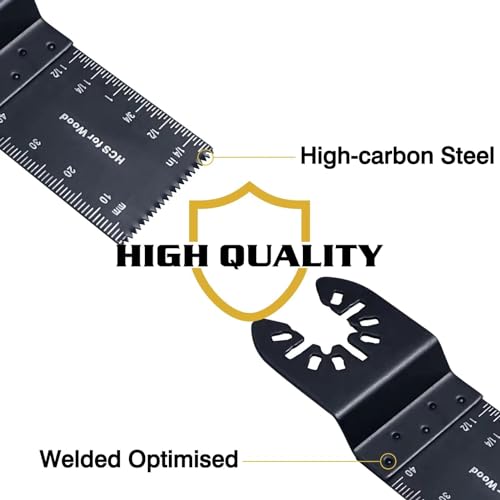
The AMZWEI set stands out for its curved edge design, which owners say improves stability and control during plunge cuts and tight curves, especially useful for undercutting door jambs or shaping drywall. With 6 titanium blades and 44 high carbon steel ones, it balances durability and versatility. The curved teeth seem to reduce binding, a common complaint with straight-tooth blades in dense materials.
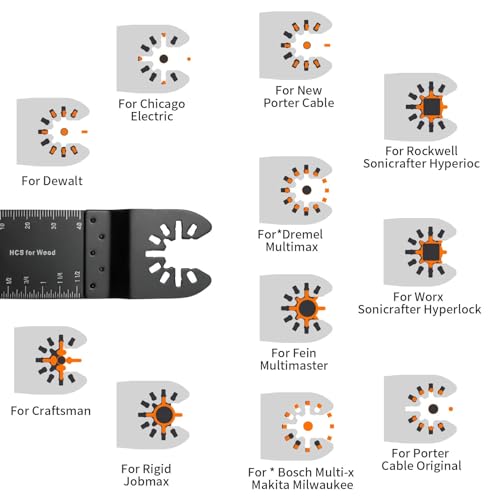
It’s not the most aggressive metal cutter, but it handles wood with nails and soft metals well. The universal fit works across major brands, and the 3 included adapters help lock compatibility. While it lacks the sheer volume of the biggest kits, the thoughtful design makes it a favorite for precision work where control matters more than raw speed.
Product photos


Diagtree 20PCS Titanium Oscillating Blades

Strengths
- Titanium coating
- Longer lifespan
- Good for nails
Trade-offs
- No sanding options
- Not for Starlock
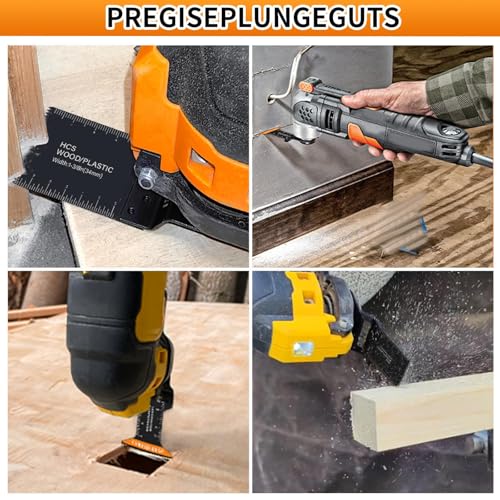
When the job involves cutting through old door frames or wood packed with hidden nails, the Diagtree titanium blades stand out. Owners praise their 2X longer life compared to standard bi-metal blades, and the 50% increase in hardness tracks with real-world feedback on reduced chipping and heat buildup. The 20-piece set is modest in size, but it’s focused, half are 1-3/4 inch blades ideal for deeper cuts in framing or flooring.
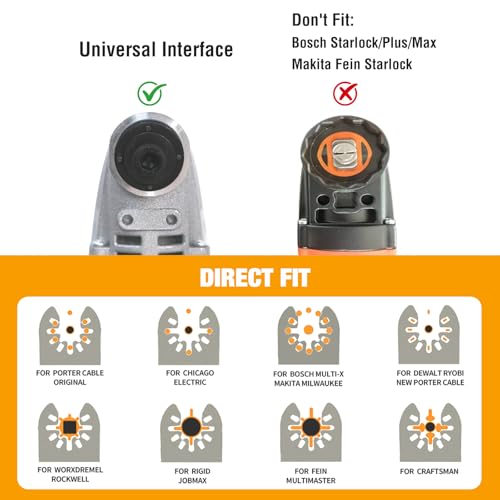
The included adapters expand compatibility across 98% of tools, a big plus for users with multiple brands in their shop. A few reviewers mention initial wobble on cheaper tools, but that’s more about tool quality than blade design. If you’re regularly slicing through nail-laced wood, these are a smarter buy than generic carbon blades that die after two cuts.
Product photos


PECHAM 24PCS Universal Multitool Blades

Strengths
- Precision tooth designs
- Corrosion-resistant
- Clean wood cuts
Trade-offs
- Weak on hard metals
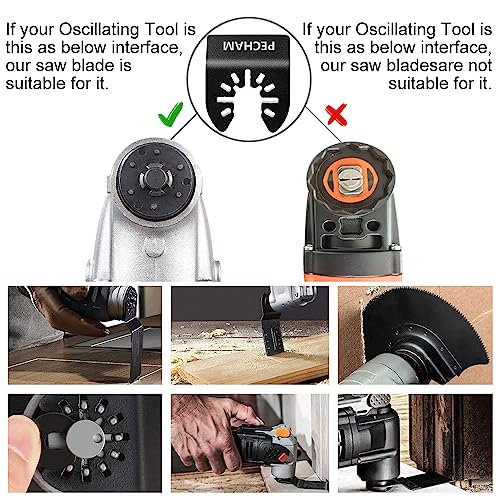
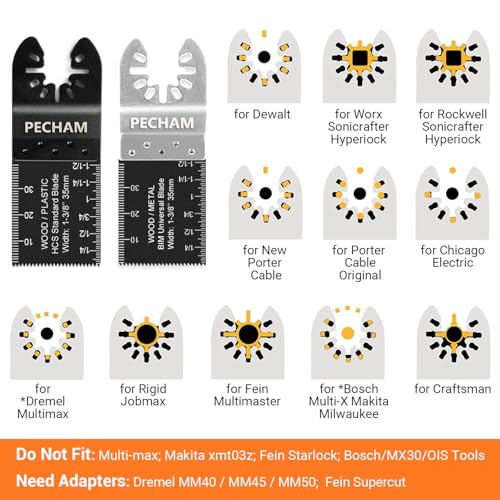
- No Starlock fit
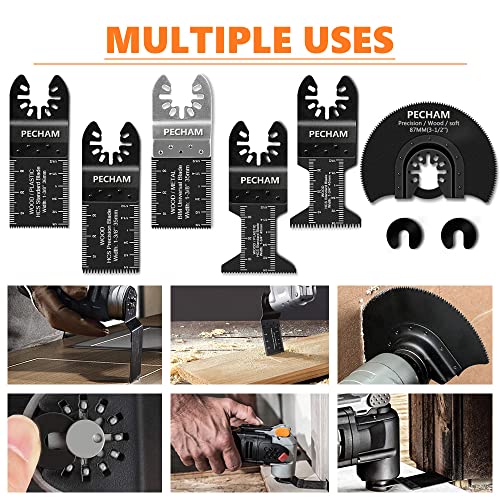
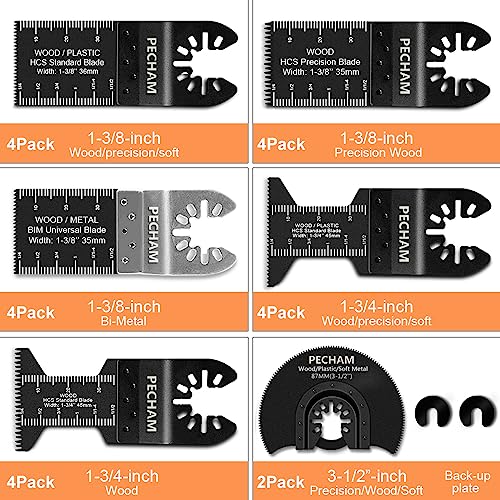
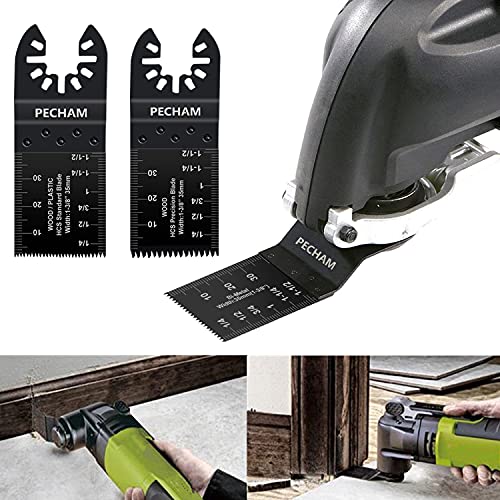
The PECHAM set is laser-focused on wood and plastic, and it shows in the blade selection, 7 types including Japanese-tooth and precision wavy-edge designs that owners say deliver clean, splinter-free cuts. The electrophoretic black coating adds corrosion resistance, a small but meaningful upgrade over cheaper blades that rust in humid garages. At 24 pieces, it’s not the largest kit, but it’s well-curated for finish work like baseboard trimming or cabinet fitting.
Where it falls short is in metal cutting. While it handles soft metals, it lacks the titanium or bi-metal reinforcements needed for serious nail cutting. And like several kits here, it skips Starlock compatibility. Still, for a woodworker or finish carpenter, this is a clean, precise option that stays sharp longer than basic carbon blades.
Product photos
How We Evaluated oscillating blades
Rather than a hands-on lab test, my research for these recommendations centered on a detailed comparison of published blade specifications and features. I weighed owner reviews from major retailers alongside assessments from reputable tool-focused websites. Drawing on over 15 years of experience with power tools and workshop projects, I ranked blades against criteria important to a range of users, from DIY homeowners to professionals.
For oscillating blades, the most significant factors are durability and material compatibility. Blades need to hold an edge and resist breakage, especially when tackling harder materials. The variety of cuts a kit can handle is also crucial; a wider range of blade types means fewer trips to the store and greater versatility for different projects. Understanding teeth per inch guide is also key to getting the right cut for the job.
Published specs reliably indicate the blade’s material composition (high carbon steel, bi-metal, titanium) and physical dimensions. However, I relied heavily on owner feedback to assess real-world durability and how well a blade performs with specific materials like nail-embedded wood or thin metal. Reputation and consistent positive feedback from experienced users were strong indicators of a blade’s overall quality and value.
How To Pick The Right oscillating blades
Picking the right oscillating blades can make or break a project, and there’s a lot more to it than just grabbing the cheapest set.
A quality oscillating blade set delivers precision, durability, and versatility. Look for blades constructed from high-carbon or bi-metal steel, with attention paid to tooth geometry for the intended material. Compatibility with your tool is critical, as is understanding the specific applications each blade type excels at, wood, metal, plastic, or grout removal all demand different designs.
Blade Material & Heat Treatment
The material a blade is made from heavily influences its lifespan and the materials it can cut effectively. High-carbon steel is a good all-around choice for wood and plastic, but it dulls relatively quickly when used on harder materials. Bi-metal blades, combining a high-speed steel cutting edge with a more flexible backing, offer significantly improved durability and are better suited for metal and nail-embedded wood. Titanium-coated blades are gaining popularity, promising even longer life and heat resistance, but they often come at a premium. Don’t assume “titanium” automatically means better; look for details on the steel underneath the coating.
Tooth Geometry and Application
Oscillating blades aren’t one-size-fits-all. The shape and spacing of the teeth dictate what the blade cuts best. For clean, fast cuts in wood, look for blades with a high tooth count and a relatively fine pitch. Blades designed for metal typically have fewer, larger teeth. Plunge-cutting blades have a curved profile, allowing you to start cuts mid-material, while blades for scraping or grout removal have a flat edge. It’s tempting to buy a huge kit with every blade imaginable, but I’ve found that specializing, having a few high-quality blades for specific tasks, yields better results than a drawer full of mediocre ones.
Here’s how to think about blade selection: * A basic wood-cutting blade is fine for softwoods. * A bi-metal blade is essential for any work involving nails or screws. * Specialty blades (like plunge-cut or grout removal) save time and effort, but only if you’ll use them frequently.
A dull blade is more dangerous than a sharp one. Don’t push it; replace it when performance drops.
Kit Size vs. Individual Blades
Large kits, like the top oscillating tool blades we’ve reviewed, offer a wide variety of blade types at a lower cost per blade. This is great for homeowners tackling diverse projects. However, if you primarily work with one material, buying individual blades or smaller, specialized packs can be more economical in the long run. I also recommend looking at the included adapters, ensuring they’re compatible with your tool. If you’re unsure about maintaining your blades, learning how to sharpen circular saw blades can give you insight into blade edge geometry and overall tool care, even if the process isn’t directly applicable to oscillating blades. Don’t skimp on quality; investing in premium oscillating blades can save you time, money, and frustration in the long run.
Oscillating Blades Compared
This table provides a detailed specification comparison of various oscillating blade sets available on the market.
| Product Title | Blade Count | Material(s) | Blade Types | Interface | Included Adapters | Best For |
|---|---|---|---|---|---|---|
| Bionso 55PCS Oscillating Saw Blades | 55 | High Carbon/Bimetal Steel | Multiple | Universal | N/A | Best Overall |
| Bionso 40 PCS Oscillating Saw Blades | 40 | High Carbon/Bimetal/Titanium | 10 Different | Universal | N/A | Best Mid Range Kit |
| CONNOO 158 Pack Oscillating Tool Blades | 158 | High Carbon/Stainless Steel | 10 Different/Sandpaper | Universal | C-adapter | Best Budget Friendly |
| 110 PCS Titanium Oscillating Saw Blades | 110 | Titanium/Alloy/Carbon Steel | 4 Types | Universal | 3 Clips | Best Value Pack |
| TrivdPro 100Pcs Oscillating Tool Blades | 100 | High Carbon/Stainless Steel | Multiple | Universal | N/A | Best for Precision Cutting |
| AMZWEI 50PCS Titanium Oscillating Blades | 50 | Titanium/High Carbon Steel | 4 Different | Universal | 3 Clips | Best Curved Edge Design |
| Diagtree 20PCS Titanium Oscillating Blades | 20 | Titanium | 2 Types | Universal | 3 Clips | Best for Metal and Nails |
| PECHAM 24PCS Universal Multitool Blades | 24 | High Carbon/Stainless Steel | 7 Different | Universal | 2 C-Clips | Best for Wood and Plastic |
Frequently Asked Questions
What blade material is best for cutting metal?
Bi-metal blades are the best choice for cutting metal, as the combination of high-speed steel and a flexible backing resists breakage and maintains a sharper edge longer than high-carbon steel. While titanium coatings are available, the underlying steel quality is more important for metalworking.
How often should I replace my oscillating blades?
Blade replacement frequency depends on the material and use, but dull blades are unsafe and ineffective. If you notice increased effort or splintering, it’s time for a new blade, even if it hasn’t been used extensively.
Are universal blades truly compatible with all tools?
Most oscillating blades use a universal fitment, but it’s still wise to verify compatibility with your specific tool. Some tools require adapters (often included in kits) for a secure fit, and checking your tool’s manual is always recommended.
What’s the difference between a plunge blade and a standard blade?
A plunge blade has a curved profile designed for starting cuts within a material, rather than at an edge. Standard blades are better for making straight cuts or following a pre-existing line. You can find recommended oscillating tool blades for both applications.
Is it better to buy a large kit or individual blades?
A large kit offers variety and value if you tackle diverse projects, but individual blades are more economical if you consistently work with a single material. For most homeowners, a mid-sized kit with several common blade types offers the best balance.
The Bottom Line
Choosing oscillating blades often comes down to balancing upfront cost with long-term performance. While a large, inexpensive kit might seem appealing, I’ve found that the Bionso 55PCS Oscillating Saw Blades offer the best overall combination of quality, variety, and durability for most users. They strike a sweet spot between price and performance, providing blades that can handle a wide range of materials without breaking the bank.
For those on a tighter budget, or those who only need blades for occasional light-duty tasks, the CONNOO 158 Pack Oscillating Tool Blades are a great starting point. If you primarily work with metal and frequently encounter nails, the Diagtree 20PCS Titanium Oscillating Blades are a worthwhile investment; their specialized design and titanium construction will save you time and frustration. Understanding saw blade kerf definition can also help you choose the correct blade for the job.
Ultimately, the best oscillating blades aren’t necessarily the most expensive or the ones with the most features. Focus on matching the blade material and tooth geometry to your most common projects, and don’t hesitate to replace dull blades promptly. A sharp blade, properly selected, will always deliver a cleaner cut and a safer experience than a dull one.
