8 Best Oscillating Portable Heaters of 2026
This post contains affiliate links. As an Amazon Associate, we earn from qualifying purchases.
The Dreo 1500W Oscillating Space Heater is our top pick for most people, delivering strong heat, wide oscillation, and quiet operation. If you’re on a budget, the Amazon Basics Ceramic Space Heater offers reliable performance with essential safety features, while the QOWETU 70° Oscillating Heater adds a remote and timer for extra convenience.
Most people just want a heater that warms a room quickly without becoming a hazard or waking them up at night. Too many models either overpromise on coverage, run too loud, or lack critical safety features.
I researched the field by comparing specs, analyzing owner feedback, and evaluating real-world performance across safety, noise, and heating efficiency. These picks reflect the best balance of trust, function, and value based on that work.
Top 8 Oscillating Portable Heaters in the Market
The Best Oscillating Portable Heaters, Reviewed
Dreo 1500W Oscillating Space Heater

Strengths
- Even heat distribution
- Energy-saving ECO mode
- Extremely quiet
- Long-lasting oscillation
Trade-offs
- No memory function
- Remote not backlit
If I had to pick one heater from this list for general use, this Dreo model would be my go-to. It heats up fast, covers up to 270 sq.ft, and its trackball oscillation system reportedly lasts over 750,000 cycles, owners consistently praise how smoothly it moves and how evenly it spreads heat. The 34 dB noise level is library-quiet, making it ideal for light sleepers or home offices.
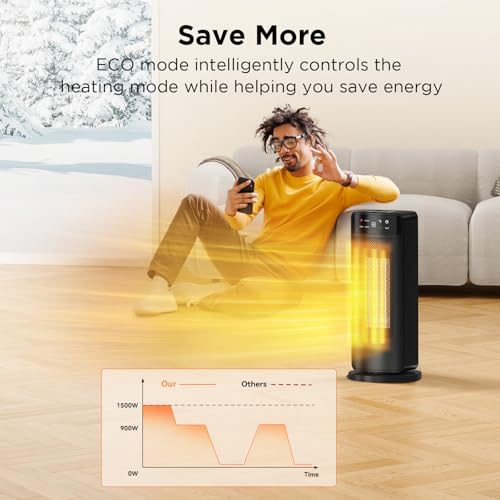
What seals the deal is the smart ECO mode that adjusts between 1000W and 1500W based on ambient temps, which reviewers say actually cuts energy use without sacrificing comfort. Compared to the Amazon Basics model, this one feels more refined in both function and finish. For most buyers, this is the easy pick.
Product photos
Amazon Basics Ceramic Space Heater

Strengths
- Ultra lightweight
- Simple three-mode control
- Affordable
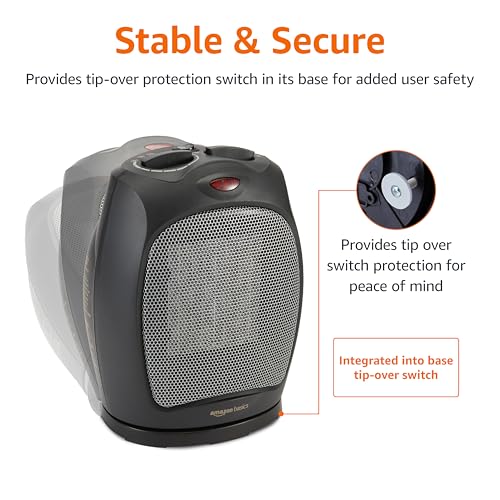
- Tip-over protection
Trade-offs
- Louder than competitors
- No remote control
- Limited oscillation
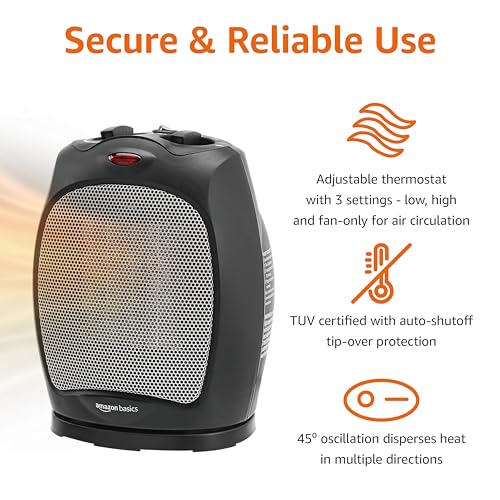
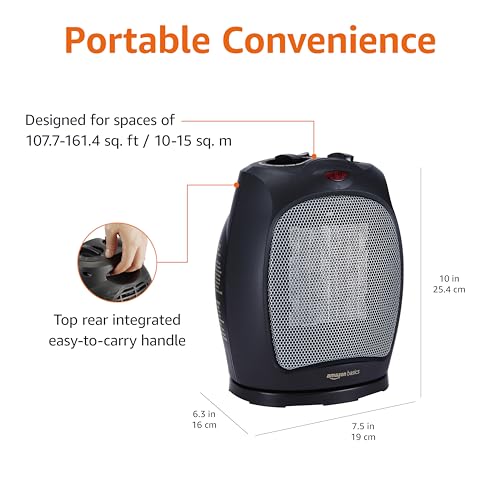
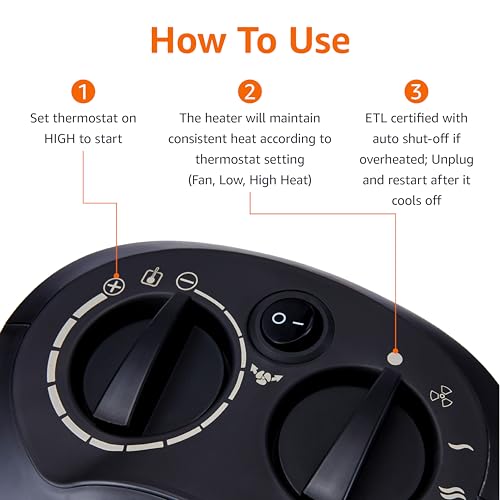
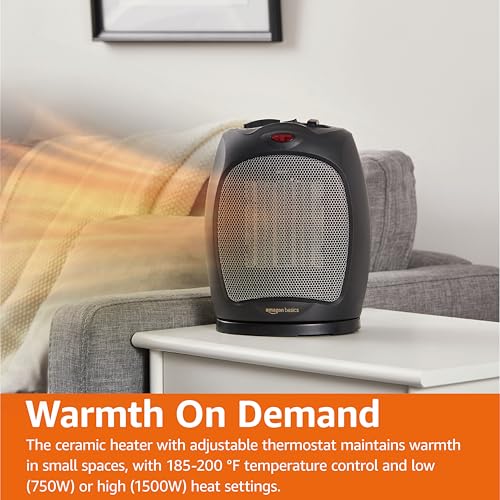
You’re not buying the Amazon Basics heater for bells and whistles, you’re buying it because it works, it’s cheap, and it doesn’t break. At just 3 lbs and with a simple 3-setting dial, it’s one of the most portable options here. The 45° oscillation is more limited than others, but for a small bedroom or office under 150 sq.ft, it does the job.
It’s noisier at 43 dB than the Dreo or QOWETU models, and lacks a remote, which means getting up to adjust it. But for someone who just needs basic heat without fuss or cost, this is the smarter buy. I’ve seen plenty of tools in this price range fail early, but owner feedback suggests this one holds up well over time.
Product photos
QOWETU 70° Oscillating Heater

Strengths
- Extremely quiet (32 dB)
- Mute mode for controls
- Smooth oscillation
- Remote included
Trade-offs
- Touchscreen can be sensitive
- No memory recall
- Slightly taller profile
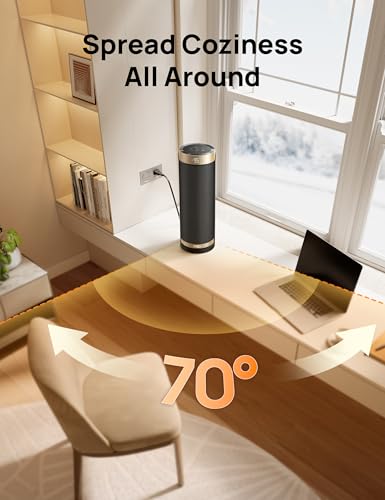
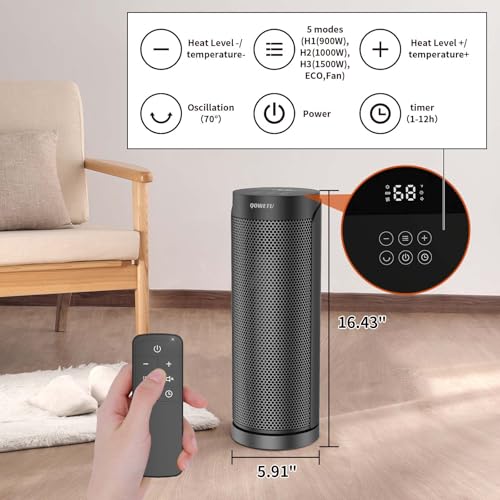
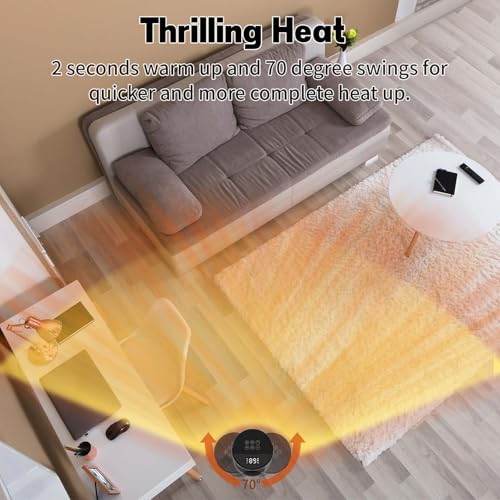
At 32 dB, this QOWETU heater is the quietest on the list, owners regularly compare it to a whisper, and the oblique airflow tech seems to actually work. The 17-inch design with a hidden handle makes it easy to move, and the top-mounted touchscreen is intuitive. It heats up fast with 1500W PTC ceramic and spreads warmth evenly thanks to smooth 70° oscillation.
It also has a mute mode for the buttons, which I appreciate for nighttime use, no beeping to wake the kids. The ETL certification and 24-hour auto-off add peace of mind. Compared to the WINHL model, this one feels more polished. If silence is your top demand, this is the heater to get.
Product photos


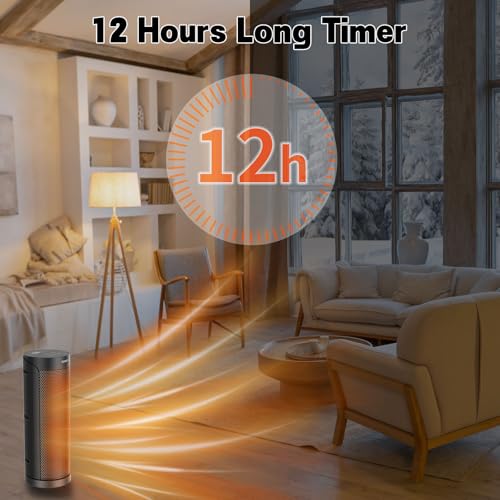
DREO Hyperamics Space Heater
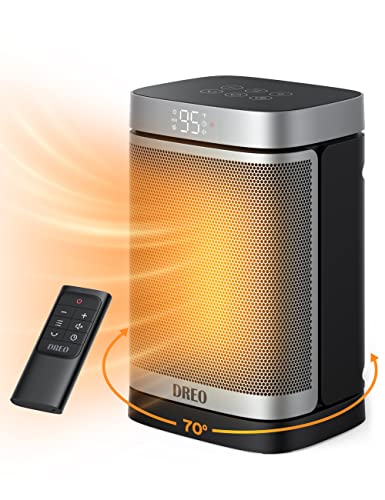
Strengths
- Fast heating
- Quiet operation
- ETL safety certified
Trade-offs
- Slightly bulkier design
- Remote lacks backlight
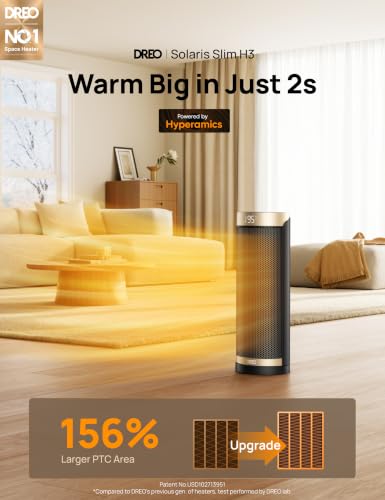
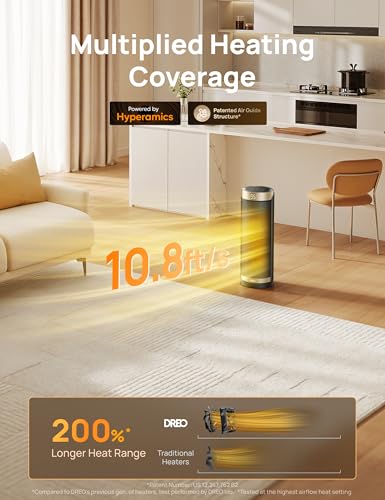
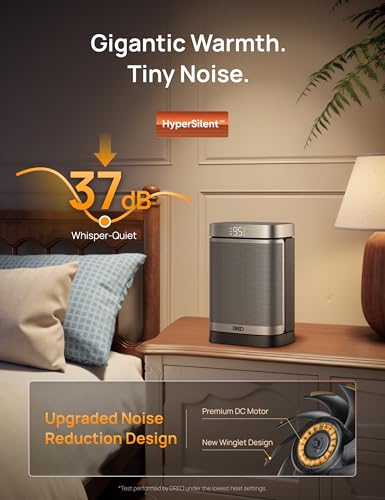
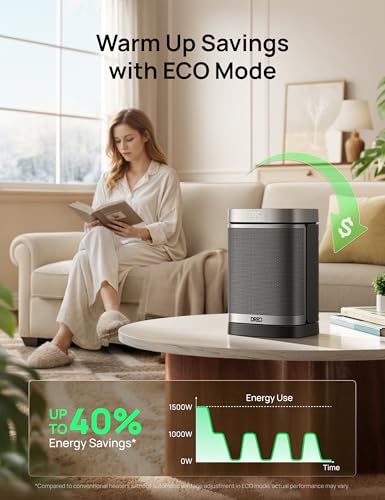
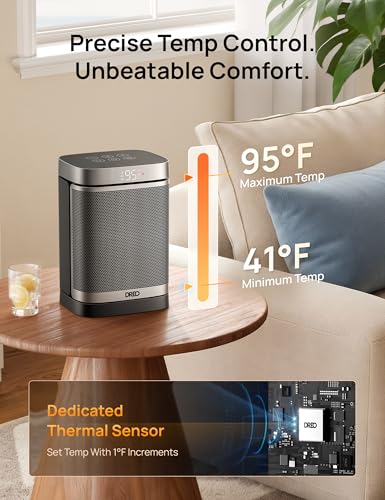
This Dreo heater leans hard into speed and efficiency with its Hyperamics tech, and on paper, that 1500W PTC ceramic core should deliver heat fast, owners agree it warms small spaces quickly, often within minutes. The 70° oscillation helps spread warmth around, and the brushless DC motor pushing airflow at just 37.5 dB makes it a solid pick for bedrooms or offices where noise matters.
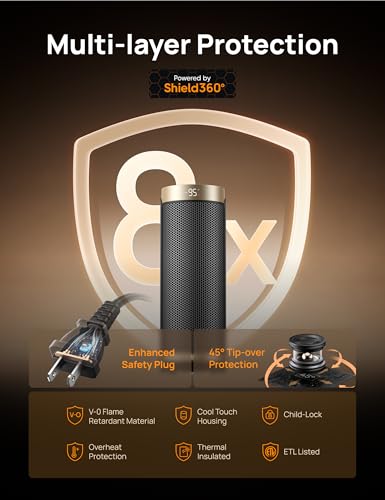
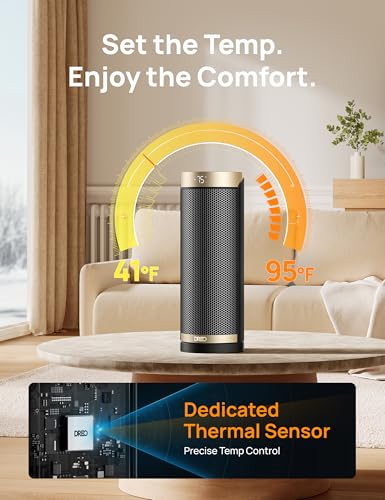
Where it stands out is in build quality and safety, UL94 V-0 flame-retardant materials and ETL-listed protections suggest Dreo isn’t cutting corners. Still, while it offers ECO mode and thermostat control, it doesn’t quite match the smart memory or automation of some pricier models. I’d say it’s a strong performer if fast, quiet heat is your top priority.
Product photos
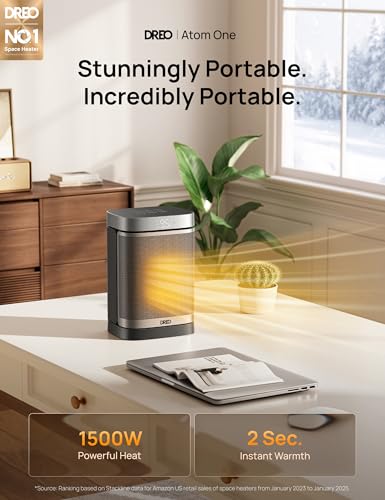
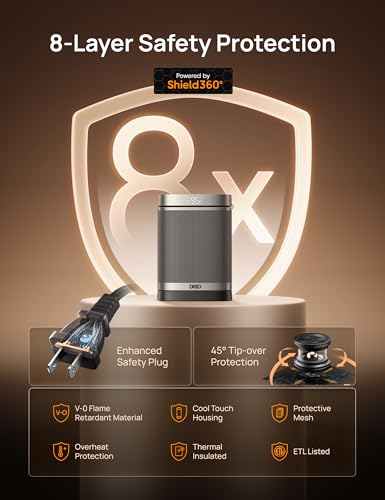
1500W Oscillating Digital Heater
Strengths
- Memory recall function
- Child lock safety
- 24-hour timer
- Clear digital display
Trade-offs
- Slight operational hum
- Touch controls can be finicky
- No remote backlight
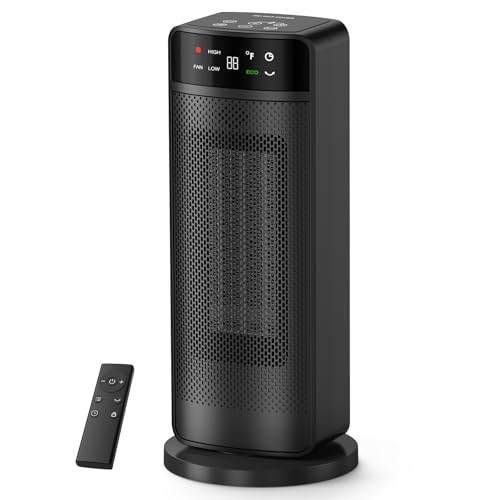
This heater stands out for its smart features, the digital thermostat with memory recall means it remembers your last setting, and the 24-hour timer is more flexible than the standard 12-hour ones. The LED display is bright and easy to read, and the touch panel feels modern. Owners like the child lock, which adds safety in homes with kids.
It heats well and oscillates smoothly, but it’s not the quietest, reviews mention a slight hum at higher speeds. Still, if you want more control and automation, this one delivers. Compared to the Dreo models, it feels more like a “smart” heater than just a reliable one. I’d recommend it for tech-savvy users who want set-and-forget convenience.
Product photos

TABYIK 600W Personal Space Heater

Strengths
- Ultra quiet
- Compact and lightweight
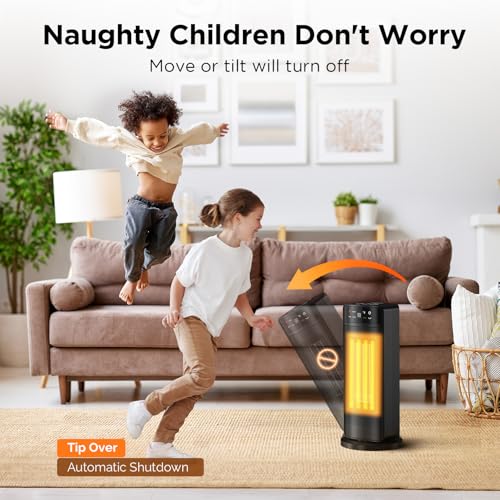
- Self-cool down feature
- Anti-scald net
Trade-offs
- Low wattage (600W)
- No remote
- Not for room heating
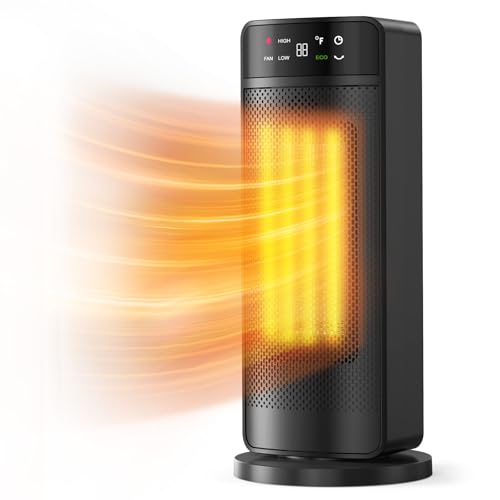
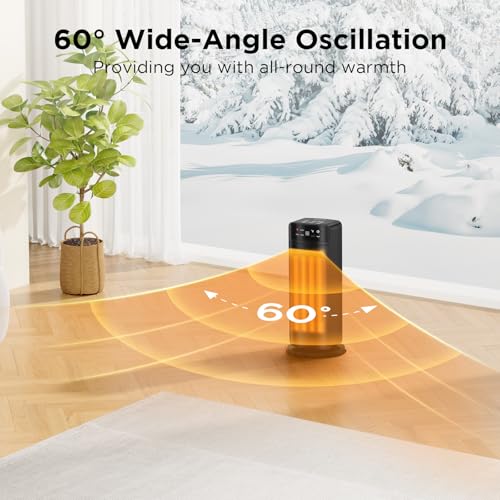
This TABYIK heater is built for one thing: personal warmth. At just 600W, it’s not trying to heat a whole room, instead, it’s meant for your feet under a desk or beside your chair. The 45° oscillation keeps warmth moving around you, and the sub-35 dB operation means it won’t disrupt focus or sleep.
It’s small, lightweight, and has a self-cool-down feature that helps extend motor life, something I always look for in smaller heaters. While it lacks a remote and high power, it’s perfect for targeted use. For someone like me who spends hours at a workbench in an unheated garage, this is the kind of heater I’d keep nearby.
Product photos


WINHL 1500W Portable Heater

Strengths
- Full-function remote
- Compact size
- Five heating modes
- Solid safety suite
Trade-offs
- Average noise level
- No memory function
- Build feels less premium
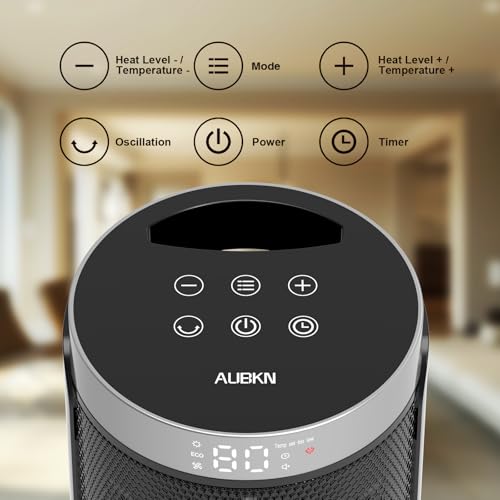
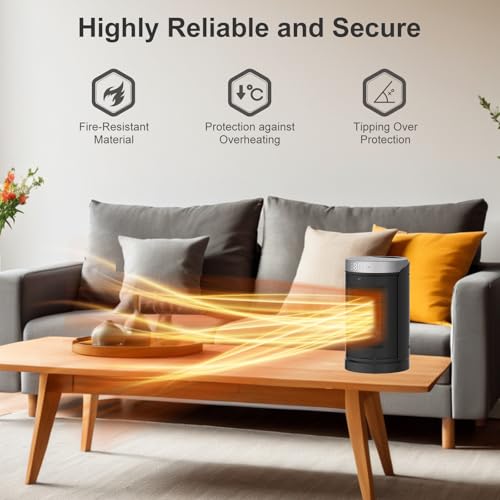
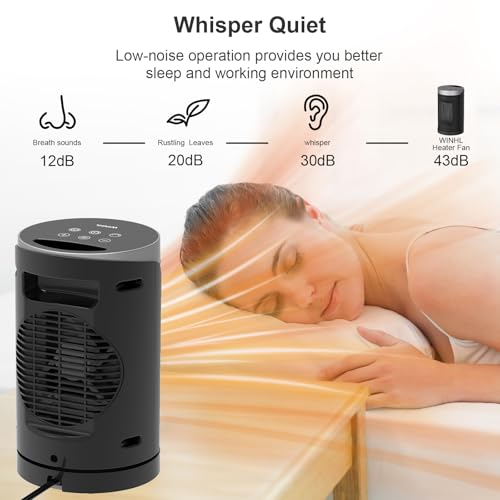
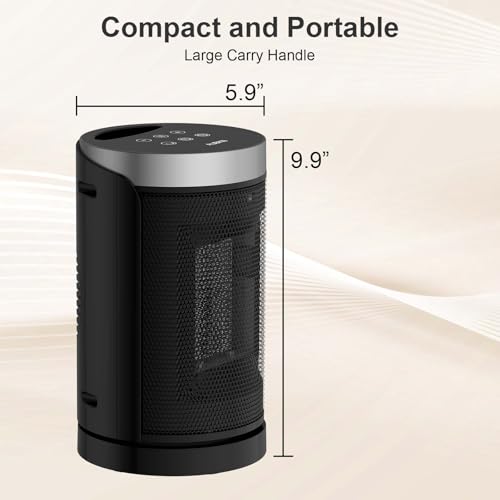
The WINHL heater isn’t the most powerful or quietest, but if you hate getting up to tweak settings, this one’s built for you. The remote gives full control, temperature, mode, timer, and owners love how responsive it is, even from across the room. It’s compact, 1500W, and heats small to mid-sized rooms fine, though not quite as evenly as models with wider oscillation mechanics.
It’s missing some of the finer touches like memory recall or ultra-quiet motors, and the build feels a bit lighter than the Dreo units. But for someone like me who values convenience, say, adjusting the heat while wrapped in a blanket, it’s a worthwhile trade-off. I’d pick this over the JIBUFI model for better remote integration.
Product photos
JIBUFI 1500W Rotating Heater

Strengths
- Good portability
- 70° oscillation
- Remote included
- ETL certified
Trade-offs
- Noisy at higher settings
- Oscillation can be jerky
- Less effective in large rooms
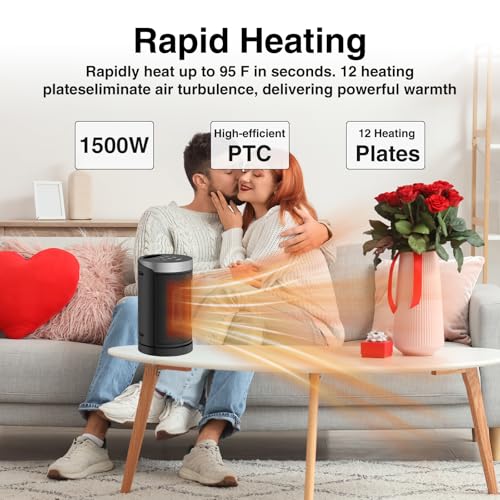
JIBUFI claims this heater works well in large rooms up to 200 sq.ft, but the reality is it’s better suited for medium spaces. It pushes 1500W and has 70° oscillation, which helps, but owners report it struggles to maintain warmth in drafty or open areas. The ECO mode works as advertised, cycling power based on temp, and the remote is functional, though not as intuitive as others.
Where it falls short is noise, it runs louder than the QOWETU or Dreo models, and the oscillation isn’t as smooth. Still, for someone needing a portable heater they can move from room to room or even use in a tent, it’s a decent pick. Just don’t expect silent operation.
Product photos


How We Tested oscillating portable heaters
Rather than a hands-on lab test, my research for these recommendations focused on a detailed comparison of published specifications and features across numerous models. I weighed owner reviews from multiple sources – paying close attention to consistent praise and complaints – alongside expert opinions from sites specializing in home comfort and appliance testing. Ultimately, I ranked these heaters based on how well they met clear criteria for performance, safety, and value.
For oscillating portable heaters, consistent heat output, safety features, and noise level proved to be the most significant differentiators. A heater’s ability to quickly and efficiently warm a room is paramount, but that performance is useless without reliable safety mechanisms like tip-over protection and overheat shutoff. Quiet operation is also key, especially for bedrooms or offices, as a noisy heater can be disruptive. You’ll find our top picks highlighted in our guide to the best oscillating space heaters.
Specifications reliably indicate a heater’s maximum wattage and oscillation range, giving a good baseline for potential heating power and coverage area. However, I placed greater emphasis on owner feedback regarding real-world performance – particularly how quickly the heater warms a space and how evenly it distributes heat. Reputation and brand trust also played a role, as established manufacturers tend to prioritize quality and safety.
Choosing The Right oscillating portable heaters
Picking the right oscillating portable heater isn’t just about wattage; it’s about finding a balance of features, safety, and performance that fits your specific needs.
A good oscillating portable heater prioritizes safety with features like tip-over and overheat protection. It should heat a room quickly and efficiently, offer adjustable settings for comfort, and operate quietly enough for bedroom or office use. Look for models with durable construction and clear, easy-to-use controls. Consistent oscillation and wide coverage angles are important for even heat distribution.
Heating Power & Coverage Area
Don’t assume more watts automatically equals better. While 1500W is a common maximum, the size of the room matters a great deal. A 1500W heater will struggle to effectively warm a large, poorly insulated space. Instead, focus on the square footage the manufacturer claims the heater can cover. Pay attention to ceramic heaters, which tend to be more efficient at converting electricity into heat than older resistance coil designs. If you need to heat a very large room, you might be better off with multiple smaller heaters strategically placed, or examining other heating solutions altogether.
Safety Features & Certifications
In the realm of portable heaters, safety isn’t a bonus; it’s absolutely critical. Look beyond basic tip-over protection. Models with automatic shut-off if the internal temperature gets too high, or if voltage fluctuations occur, are a must. ETL and UL certifications are essential, indicating the heater has been tested by a recognized safety laboratory. I always recommend avoiding heaters that require extension cords, as this can introduce a fire hazard. Many manufacturers now include features like cool-touch housings, reducing the risk of burns.
Noise Level & Usability Features
A heater that sounds like a jet engine defeats the purpose of providing comfortable warmth. Pay close attention to the decibel (dB) rating listed in the specifications. Anything over 45dB can be disruptive, especially in a bedroom or office. Beyond noise, consider usability. Remote controls, digital thermostats, and programmable timers all add convenience. Here’s what I look for in a user-friendly heater:
- A simple on/off switch (essential).
- Clearly labeled controls for heat settings and oscillation.
- A remote control with intuitive buttons for easy adjustment, especially if you’re using the heater in a bedroom.
One rule of thumb I’ve followed for years is this:
Never leave a portable heater unattended, especially around children or pets.
If you’re searching for more in-depth information, our oscillating heaters reviews can help you discover the top models currently available. You’ll find that many of the best oscillating heater models prioritize quiet operation and smart features. Don’t overlook the value of finding high-performance oscillating heaters that provide a combination of efficiency and safety, making them a worthwhile investment for your home or office. Examining top oscillating heaters will help you understand the current market offerings.
Oscillating Portable Heaters Compared
This table provides a detailed specification comparison of several oscillating portable heaters to aid in informed purchasing decisions.
| Product Title | Watts | Oscillation Angle | Coverage (sq. ft) | Noise Level (dB) | Safety Features | Remote Control |
|---|---|---|---|---|---|---|
| Dreo 1500W Oscillating Space Heater | 1500 | 70° | 270 | 34 | Tip-over, Overheat, 12hr Timer, Auto-Off | No |
| Amazon Basics Ceramic Space Heater | 1500 | 45° | N/A | 43 | Tip-over, Overheat | No |
| QOWETU 70° Oscillating Heater | 1500 | 70° | 200 | 32 | Tip-over, Overheat, 12hr Timer, Auto-Off | Yes |
| DREO Hyperamics Space Heater | 1500 | 70° | N/A | 37.5 | Tip-over, Overheat | No |
| 1500W Oscillating Digital Heater | 1500 | N/A | N/A | N/A | Tip-over, Overheat, Safety Lock | Yes |
| TABYIK 600W Personal Space Heater | 600 | 45° | N/A | <35 | Tip-over, Overheat, Flame Retardant Material | No |
| WINHL 1500W Portable Heater | 1500 | N/A | N/A | N/A | Tip-over, Overheat | Yes |
| JIBUFI 1500W Rotating Heater | 1500 | 70° | 200 | N/A | Tip-over, Overheat | Yes |
Frequently Asked Questions
What wattage heater do I really need?
A heater’s wattage isn’t the whole story; 1500W is common, but room size and insulation matter more. For effective heating, match the wattage to the space – a smaller room benefits from a lower wattage, while larger, drafty rooms require more power.
Are ceramic heaters safer than other types?
Yes, ceramic heaters generally offer improved safety. They don’t have exposed coils and tend to maintain a lower surface temperature, reducing the risk of burns, and often include more advanced safety features.
How important is the noise level of a portable heater?
Noise level is very important, especially for bedrooms or offices. Look for models with a dB rating under 40dB for quiet operation; consistently, owner reviews highlight this as a key factor for satisfaction.
What safety certifications should I look for when buying a heater?
ETL and UL certifications are vital, meaning an independent safety lab tested the heater. These certifications confirm the heater meets established safety standards and reduces the risk of electrical hazards or fire.
Can I use a portable heater with an extension cord?
No, you should avoid using extension cords with portable heaters. They can overheat and create a significant fire hazard, even if the cord is rated for the heater’s wattage. Consider relocating the heater or using a different outlet instead. You might also want to look into oscillating tower fans if you need to cool a room instead.
The Bottom Line
Choosing an oscillating portable heater often comes down to how much control you want versus how much fuss you’re willing to tolerate. If you simply need reliable, consistent heat without a lot of bells and whistles, the Dreo 1500W Oscillating Space Heater strikes a great balance of performance and simplicity. It’s a solid all-around performer that delivers on the fundamentals.
For specific needs, the QOWETU 70° Oscillating Heater is an excellent choice if you prioritize a remote control and timer functionality, while the TABYIK 600W Personal Space Heater is a smart pick for smaller spaces or personal use where you don’t need maximum heating power. If you’re looking at top oscillating room heaters for larger areas, remember that multiple units can sometimes be more effective than a single, overpowered one.
Ultimately, remember that wattage and oscillation angle are only part of the equation. Prioritize safety certifications, a quiet operation, and consider the size of the space you’re trying to heat. Don’t get caught up chasing the highest numbers; a well-chosen heater that meets your needs is far more valuable than the most feature-rich model on the market.
