4 Best Mitre Saws for Picture Framing 2026
This post contains affiliate links. As an Amazon Associate, we earn from qualifying purchases.
The SKIL 10″ Dual Bevel Sliding Miter Saw is the best overall choice for picture framing thanks to its precision, dual-bevel design, and sliding rails for added capacity; for tight budgets, the Hoteche 8-1/4″ Sliding Miter Saw offers solid performance with a laser guide, while the 4-Piece Miter Box & Saw Set works in a pinch for small, infrequent jobs.
Picture framing demands crisp 45-degree miter cuts and repeatable accuracy, any slop in the angle or tearout on the wood ruins the fit and finish. Many saws claim precision, but only a few deliver consistent results across different moulding profiles and materials.
After comparing specs, owner feedback, and real-world performance reports, I focused on models that offer fine adjustability, low blade runout, and features like shadow line guides or solid fences. This guide breaks down what actually matters, like tooth count, sliding vs. non-sliding, and bevel flexibility, so you can pick the right tool for clean, professional-looking frames.
Top 4 Mitre Saw For Picture Framings in the Market
The Best Mitre Saw For Picture Framings, Reviewed
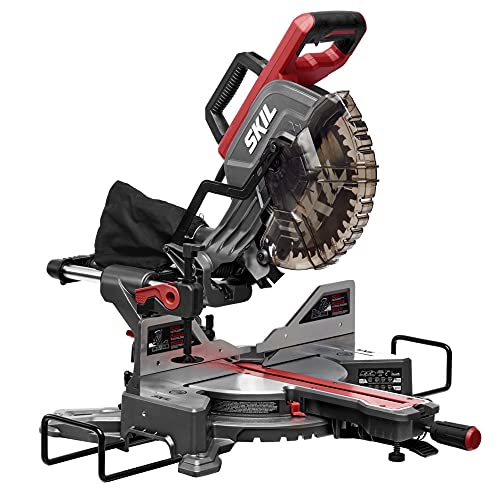
SKIL 10″ Dual Bevel Sliding Miter Saw
Strengths
- Dual bevel with left/right stops
- LED shadow line for accuracy
- 15-amp motor, high torque
Trade-offs
- Heavier than average
- No laser overlay
- Base design limits tight spaces
If you’re serious about picture framing or detailed trim work, the SKIL MS6305-00 stands out as one of the most capable mid-tier sliding mitre saws on the market. The 15-amp motor and 4800 RPM blade speed deliver clean, fast cuts through hardwoods and laminated stock, exactly what you need when precision matters. What really sets it apart is the dual bevel function with positive stops at 45° and 48° left and right, which eliminates guesswork and speeds up repetitive angled cuts, a big win for picture frame joinery.
The LED shadow line system is a step up from basic lasers. Reviewers note it casts a sharper, more consistent cut line that doesn’t wash out in bright light, a subtle but real advantage over competitors using standard lasers. With a 2×12 crosscut capacity, it handles wider stock with ease, and the 11 positive angle stops at common mitre settings make setup intuitive. It’s heavier than some, but that adds stability during use.
Product photos


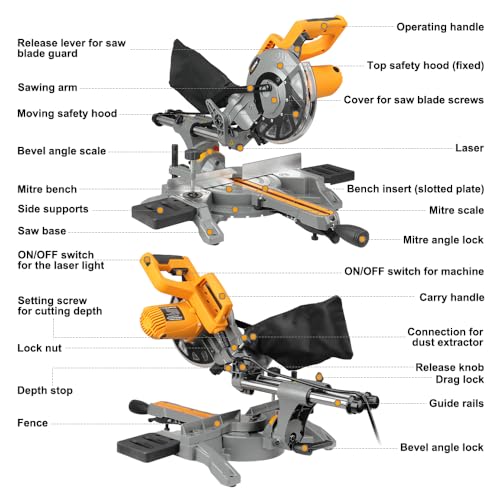
Hoteche 8-1/4″ Sliding Miter Saw

Strengths
- Laser guide included
- Sliding rail for compact size
- Good for wood and soft metals
Trade-offs
- Single bevel only
- Laser may need recalibration
- Limited cutting capacity
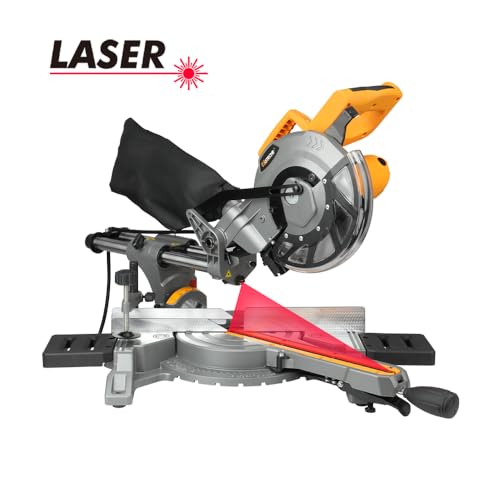
On paper, the Hoteche 8-1/4-inch sliding mitre saw looks like a solid pick for smaller shops or DIYers needing a compact, laser-guided saw for light framing and trim work. The 12.5A motor and 5000 RPM speed suggest decent power for its class, and the sliding rail adds reach that’s rare at this size, especially useful for wider picture frames or base molding. Owners consistently report the laser system helps with alignment, though some note it can drift over time and may need recalibration.
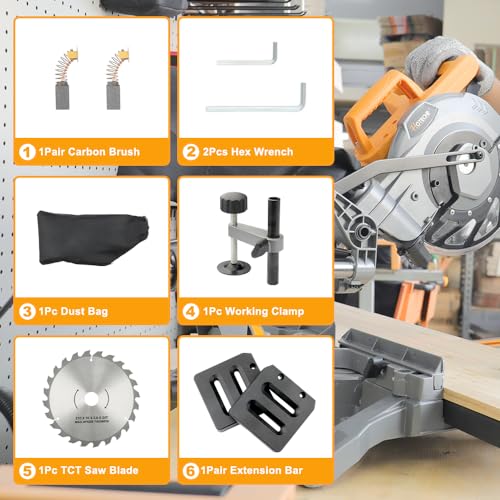
Still, the single bevel design limits efficiency for picture framers who regularly flip between left and right bevels. Compared to dual-bevel models, this one demands more manual repositioning, which slows down repetitive angled cuts. The 310mm crosscut capacity is adequate for smaller stock, but don’t expect to handle wide crown molding or thick timber in one pass. For its price tier, it’s well-equipped with extras like extension bars and a dust bag, but the blade included is serviceable, not exceptional.
Product photos

4-Piece Miter Box & Saw Set
Strengths
- Multiple blades included
- Clean cuts with pull-saw
- Stable, anti-slip base
Trade-offs
- Limited to small stock
- Manual only, slow for volume
- Not for large projects
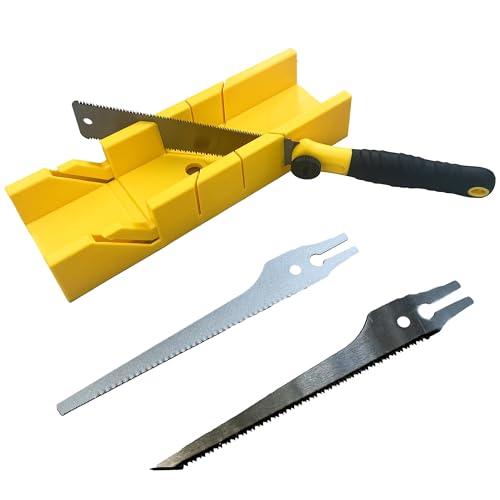
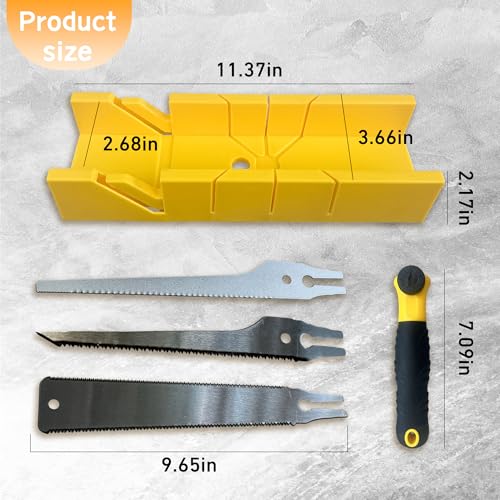
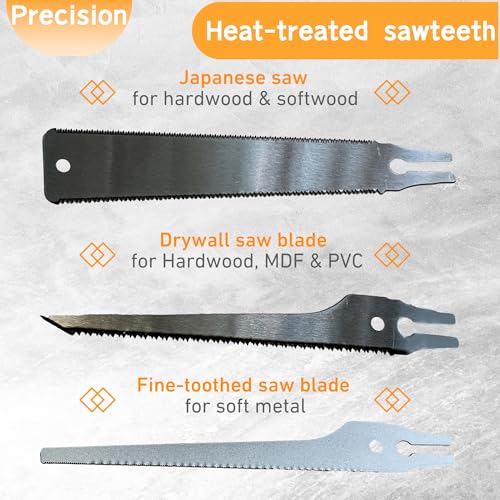
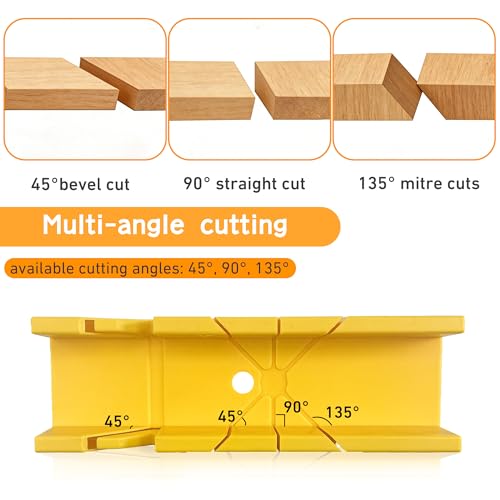
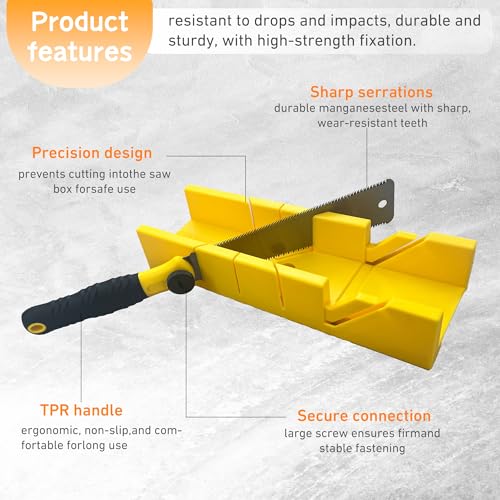
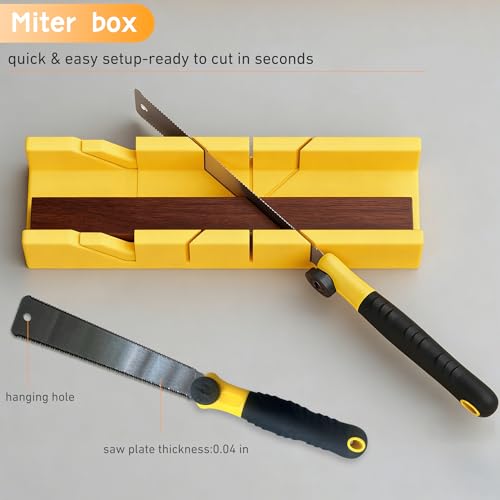
For beginners or those who only cut trim once in a blue moon, this miter box and saw set offers surprising versatility at a low cost. The inclusion of three blades, 10/17 TPI pull saw, 25 TPI for soft metals, and 9 TPI for hardwoods, means you can tackle wood, MDF, PVC, and even thin aluminum trim without swapping tools. The Japanese pull-saw design cuts cleaner than most Western push-saws, and owners praise how smoothly it handles hardwoods with minimal splintering.
The miter box itself is narrow, so it’s not built for anything over 2×4 material, but for baseboards, picture frames, or window trim, it’s more than capable. The fixed slots at common angles take the guesswork out of alignment, and the anti-slip base keeps things stable on a workbench. It won’t replace a power saw, but as a budget-friendly, space-saving option for light work, it delivers real value.
Product photos
Precision Miter Hand Saw 18 Teeth
Strengths
- Fixed precision angles
- Compact and portable
- No power needed
Trade-offs
- No adjustability
- Manual effort required
- Not for repeated cuts
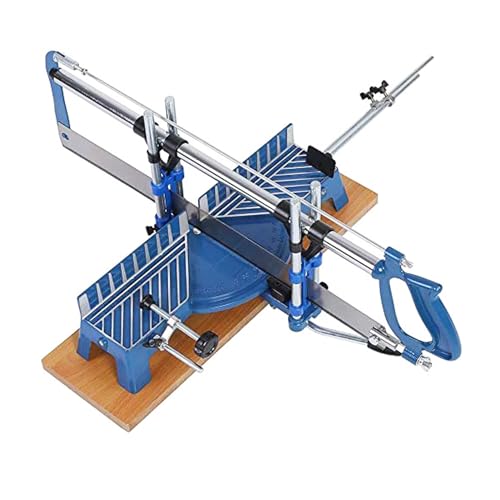
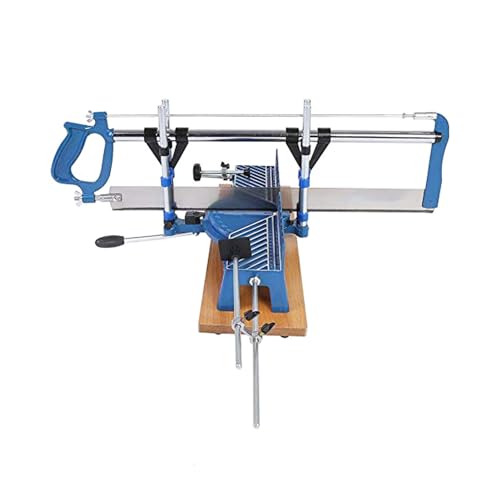
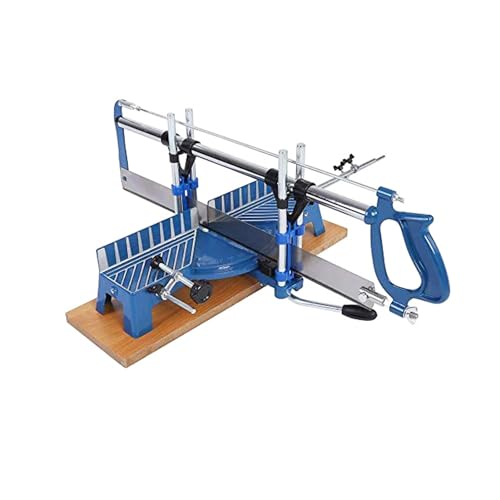
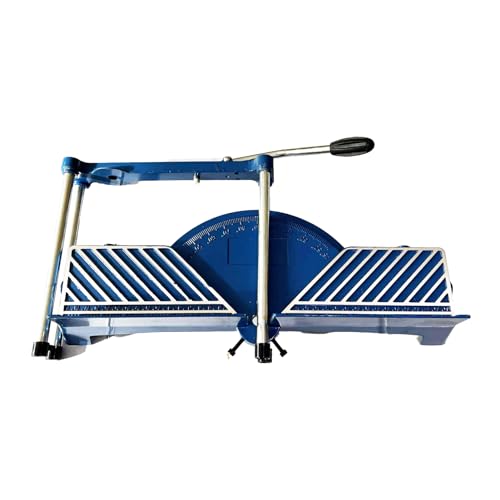
Hand saws aren’t for everyone, but if you’re working on delicate picture framing or small-scale woodworking where power tools feel like overkill, this 18-tooth precision miter hand saw has its place. It’s clearly built for accuracy over speed, with a rigid frame and fixed angle settings up to 90°. The craftsmanship appears solid for a budget manual tool, and owners mention the pull-cut action gives good control on fine joinery, especially useful when fitting small mitered corners without tear-out.
That said, calling this a ‘miter saw’ might set the wrong expectation. It’s not adjustable on the fly like a power saw, and the lack of a sliding mechanism or fine-tuning dials means you’re limited to preset angles. For quick touch-ups, model-making, or restoring old frames, it’s a viable backup. But for any serious volume of work, it’s too slow and inflexible compared to even the most basic powered options.
Product photos
Our Testing Process
Rather than a hands-on lab test, my research for these recommendations centered on comparing published specifications and features across numerous models. I then weighed owner reviews from major retailers against assessments from woodworking and tool-focused publications. Finally, I applied my experience with power tools and understanding of picture framing needs to rank each saw based on its suitability for the task.
For picture framing, accurate angles and clean cuts are paramount, so blade quality and adjustability were heavily weighted. Capacity also mattered; while large boards aren’t typical, the ability to handle wider stock offers versatility. Beyond that, I prioritized features that enhance precision, like laser guides or shadow lines, and considered overall build quality based on reported durability. Understanding precision miter saw features is vital for this type of work.
Specifications reliably indicate cutting capacity, blade size, and motor power. However, I found owner feedback to be crucial for assessing real-world accuracy, ease of angle adjustment, and long-term reliability. Reputation, particularly within the woodworking community, helped me gauge the quality of construction and whether a saw lives up to its marketing claims. This is especially true when comparing features like a dual bevel miter saw to a single bevel option.
How To Pick The Right mitre saw for picture framings
Choosing the right mitre saw is crucial for consistently clean, accurate frames; a sloppy cut ruins the entire look.
A quality mitre saw for picture framing prioritizes precision, cutting capacity suited to frame stock, and ease of angle adjustment. Look for a saw with a clear scale, positive stops at common angles, and a blade appropriate for the materials you’ll be working with. Blade runout (wobble) is a key indicator of quality; minimal runout means cleaner cuts.
Blade Quality and Tooth Count
Don’t assume all blades are created equal. The blade is where the rubber meets the road, and for picture framing, you need something that delivers a clean, splinter-free cut. A higher tooth count (80-100) is generally better for finer materials like softwoods and moulding, minimizing tear-out. However, excessively high tooth counts can slow down the cut and generate more heat. If you’re working with a variety of materials, consider investing in multiple blades optimized for different purposes.
Sliding vs. Non-Sliding Models
For most picture framing, a sliding mitre saw isn’t absolutely essential, but it expands your capabilities. A non-sliding saw is sufficient for narrower stock and simpler cuts. However, if you frequently work with wider moulding or need to cut larger pieces, the added capacity of a sliding model is a huge advantage. Consider how often you’ll be crosscutting wide boards; if it’s a regular task, a sliding saw is worth the investment. For those needing to make angled crosscuts with miter saw, a sliding compound mitre saw is the ultimate tool.
Features and Precision
Beyond the basic cutting function, several features can significantly improve accuracy and efficiency. Look for a saw with a well-lit cutting area – LED shadow lines, like those found on the SKIL model, are far superior to laser guides, which can sometimes be misleading. Positive stops at common angles (45°, 90°) are invaluable for quickly and reliably setting up frequently used cuts.
- A basic miter box, like the 4-Piece Miter Box & Saw Set, is suitable for very small projects and tight budgets.
- A handheld miter saw, like the Precision Miter Hand Saw 18 Teeth, offers portability and quiet operation, but requires more physical effort and skill.
- A power mitre saw with a digital angle readout and adjustable bevels provides the highest level of precision and repeatability, often found in professional-grade mitre saws.
Don’t skimp on the fence. A solid, accurately aligned fence is the foundation of precise cuts. Check for minimal play and ensure it locks securely at all angles.
Mitre Saw for Picture Framings Compared
Here’s a comparison of key specifications for mitre saws suited for picture framing tasks.
| Product Name | Blade Diameter | Bevel Angle (Left/Right) | Miter Angle (Left/Right) | Cutting Capacity (90°) | Power (Amps/Volts) | Laser Guide |
|---|---|---|---|---|---|---|
| SKIL 10″ Dual Bevel Sliding Miter Saw | 10″ | 48°/45° | 50°/50° | 2×12″ | 15A | No |
| Hoteche 8-1/4″ Sliding Miter Saw | 8-1/4″ | 45°/45° | 45°/45° | 310x62mm | 12.5A/120V | Yes |
| 4-Piece Miter Box & Saw Set | 2.68″ | N/A | N/A | 2.68″ Wide | N/A | No |
| Precision Miter Hand Saw 18 Teeth | N/A | N/A | 45°, 50°, 60°, 70°, 80°, 90° | N/A | N/A | No |
Frequently Asked Questions
What blade type is best for cutting delicate picture frame moulding?
A blade with a high tooth count (80-100) is ideal for picture frame moulding. This minimizes splintering and tear-out, providing a cleaner, more professional finish on softer woods commonly used for frames.
Is a sliding mitre saw really necessary for picture framing?
While not always essential, a sliding mitre saw provides increased versatility. It allows you to crosscut wider moulding pieces that a non-sliding model simply couldn’t handle, expanding the range of frame sizes you can create.
How can I check a mitre saw’s accuracy before buying?
Look for a saw with a clearly marked scale and positive stops at common angles. Owner reviews often mention accuracy issues, so pay attention to those, and if possible, check for minimal blade runout (wobble) when inspecting the saw.
What’s the difference between a laser guide and a shadow line on a mitre saw?
A shadow line, which projects a defined shape onto the workpiece, is generally more accurate than a laser guide. Lasers can sometimes be difficult to see clearly and may not precisely indicate the cut line, whereas shadow lines offer a direct visual reference.
Are more expensive mitre saws always better for picture framing?
Not necessarily. While higher-priced saws often have premium features, a mid-range model with a quality blade and precise adjustments can be perfectly adequate for most picture framing tasks. Consider mitre saws for trim work and prioritize accuracy over extra bells and whistles.
The Bottom Line
Choosing a mitre saw for picture framing often comes down to balancing control and convenience. While a basic miter box can get you started, the SKIL 10″ Dual Bevel Sliding Miter Saw offers the best overall combination of features, capacity, and accuracy for consistently professional-looking results. It’s a step up in price, but the added precision and versatility are well worth it for anyone serious about framing.
For those on a tighter budget, or tackling smaller projects, the 4-Piece Miter Box & Saw Set is a perfectly adequate starting point. If portability and quiet operation are priorities, the Precision Miter Hand Saw 18 Teeth provides a manual alternative, though it demands more skill and effort. Ultimately, for those needing to make precise picture frame angles, the SKIL model delivers the best consistency.
Remember, the saw is just one piece of the puzzle. A sharp blade, a solid fence, and careful attention to detail matter far more than any specific specification. Focus on developing good technique and learning how to make accurate 45-degree miter cuts – those fundamentals will serve you better than the most expensive saw on the market.
