
6 Best Miter Saws for Trim Work 2026
This post contains affiliate links. As an Amazon Associate, we earn from qualifying purchases.
The DEWALT 12-inch Double Bevel Sliding Miter Saw stands out as the best overall for trim work, delivering unmatched precision and capacity. For cordless freedom without sacrificing much performance, the DEWALT 20V MAX Cordless Miter Saw is the clear budget-friendly pick, while the SKIL 10″ Dual Bevel Sliding offers strong versatility for mid-range budgets.
Trim work exposes every flaw in a cut, misaligned joints, tear-out, or inconsistent angles can ruin an otherwise perfect installation. As someone who’s seen how the wrong tool can turn a simple baseboard job into a frustrating mess, I know accuracy and reliability matter more than raw power.
This guide cuts through the noise, focusing on what actually matters: real-world precision, blade performance, and features that make repetitive cuts easier. I compared specs and dug into owner feedback to find saws that hold calibration, deliver clean results, and fit different working styles, whether you’re in a workshop or on the job site.
Top 6 Miter Saw For Trim Works in the Market
The Best Miter Saw For Trim Works, Reviewed
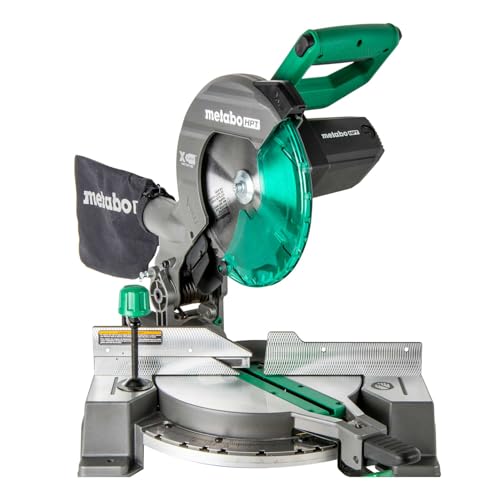
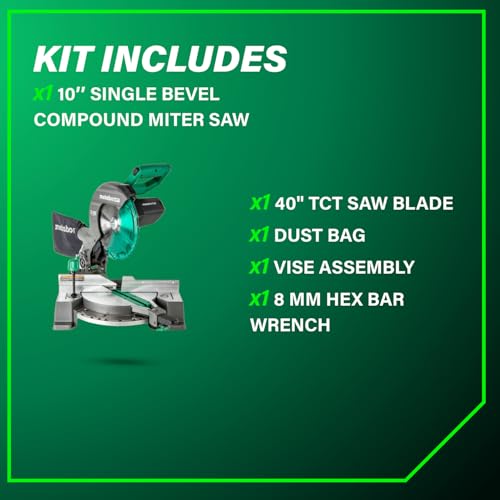
Metabo HPT 10″ Single Bevel Miter Saw
Strengths
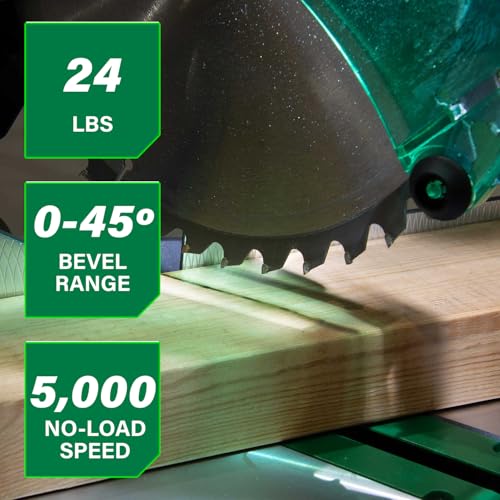
- Lightweight at 24 lbs
- 5,000 RPM for clean cuts
- 5-year warranty
Trade-offs
- Single bevel only
- No sliding rails
- Limited crown molding capacity
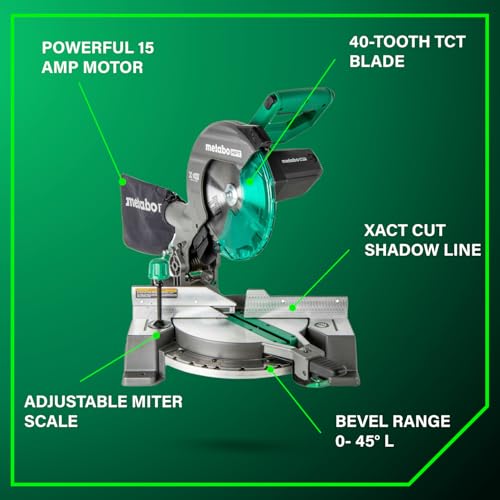
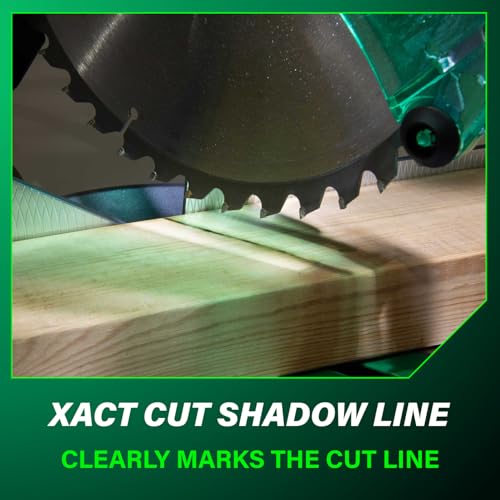
If I had to pick one miter saw for a typical homeowner tackling baseboards, door casings, and crown molding, the Metabo HPT C10FCG2 would be my go-to. It strikes a rare balance, light enough at 24 lbs to carry up and down stairs, yet powerful enough with its 15-amp motor and 5,000 RPM blade speed to chew through oak or poplar without bogging down. The Xact Cut shadow line system gets praised across owner reviews for accuracy, often outperforming cheaper lasers and even some entry-level LED systems.
The single bevel design means you’ll flip the workpiece for left bevels, but for most trim work that’s not a dealbreaker. What sells me is the build quality: the miter detents are crisp, the fence is rigid, and the 5-year warranty signals real confidence. Compared to the SKIL, it feels more refined; compared to the DEWALT DWS780, it’s lighter and easier to move around.
Product photos

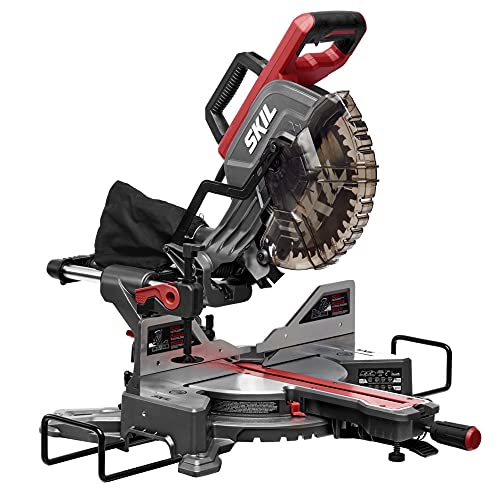
SKIL 10″ Dual Bevel Sliding Miter Saw
Strengths
- Dual bevel capability
- LED shadow line
- 2×12 cutting capacity
Trade-offs
- Loose detent feel
- Basic fence design
For DIYers who want dual bevel capability without stretching their budget, the SKIL MS6305-00 stands out on paper. A 15-amp motor spinning at 4,800 RPM gives it solid power for trim work, and the 2×12 cutting capacity at 90° means it can handle most baseboard and casing jobs in a single pass. The LED shadow line is a real upgrade over basic lasers, owners consistently report it delivers cleaner alignment, especially in low-light conditions.
Where it stumbles slightly is in build refinement. Compared to the Metabo HPT or DEWALT models, the fence and miter detents feel a bit looser, and the sliding rails aren’t as smooth under heavy use. But for weekend warriors or first-time buyers who need dual bevel action for crown molding, this is a capable performer that doesn’t drain the wallet.
Product photos


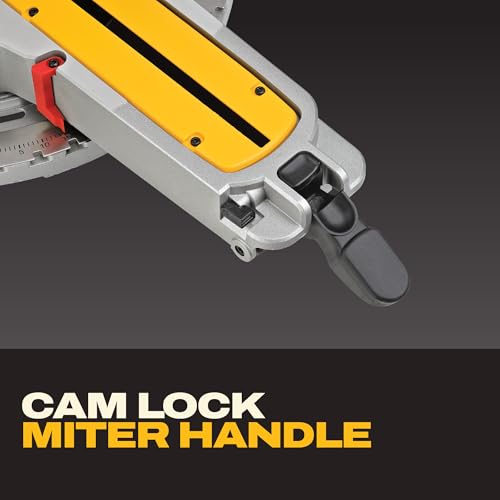
DEWALT 12-inch Double Bevel Sliding Miter Saw

Strengths
- 12-inch blade capacity
- XPS LED shadow system
- Excellent dust collection
Trade-offs
- Heavier than others
- Higher price point
- Larger footprint
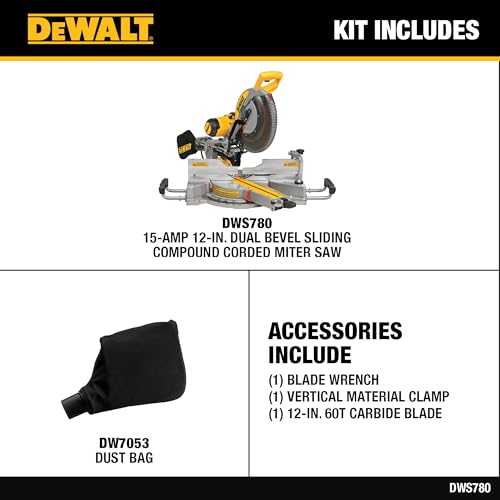
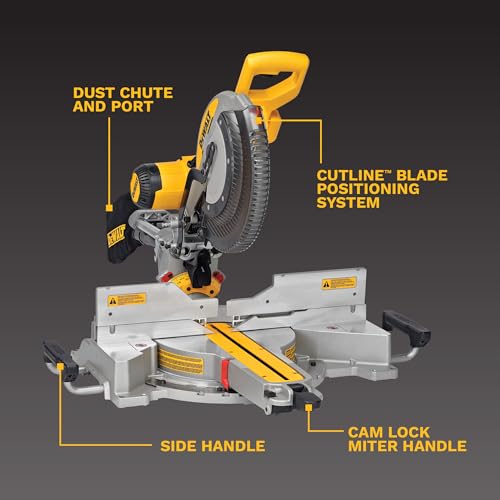
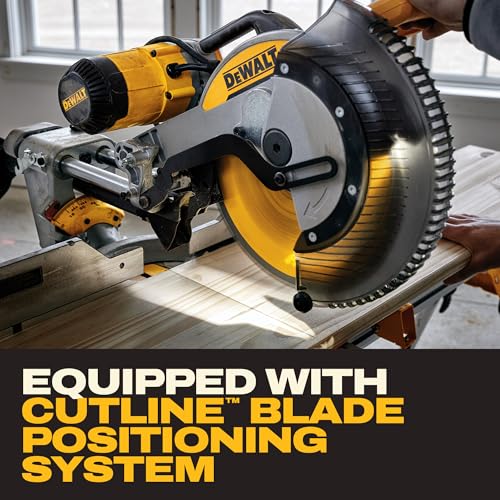
The DEWALT DWS780 is the kind of saw that makes pros nod in approval. It’s not the lightest, but at 58 lbs, it’s still manageable, and that weight comes with serious capability. The 12-inch blade gives it unmatched depth, cutting 2x14s at 90° and handling nested crown up to 7.5 inches. The XPS LED shadow line is dead-on accurate, and owners love that it doesn’t need calibration. When you’re on a ladder or in a tight space, that kind of reliability matters.
It’s also one of the few in this group with a true double bevel and a sliding rail system that actually feels durable. The miter detents are precise, and the dust collection is legitimately effective, over 75% captured is rare in this class. Compared to the SKIL or Metabo HPT, it’s overkill for small jobs, but for anyone doing full-house trim or high-end remodeling, this is the smarter buy.
Product photos

DOVAMAN 10″ Sliding Miter Saw with Laser

Strengths
- Dual-speed motor
- Multi-material capability
- Ambidextrous design
Trade-offs
- Inconsistent build quality
- Laser alignment issues
- Short warranty
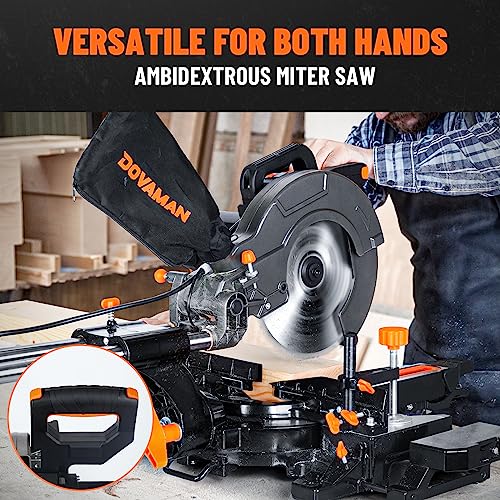
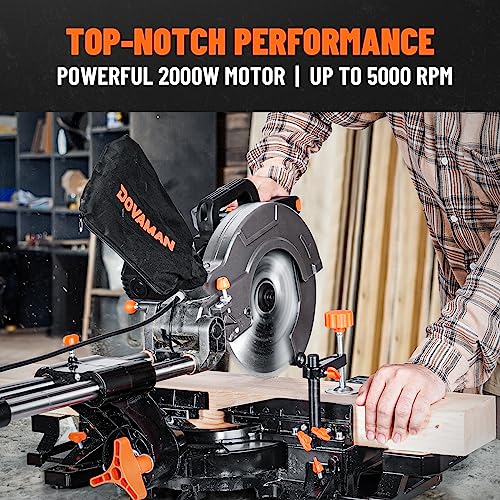
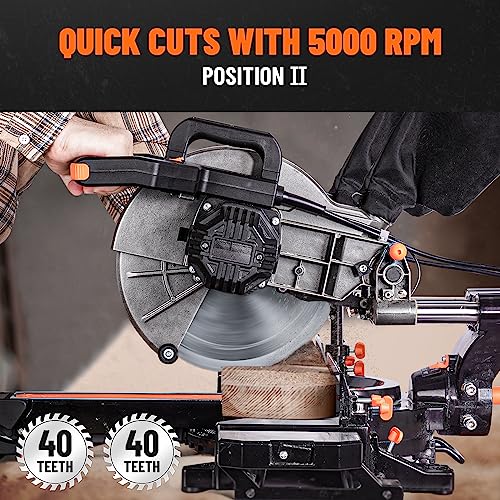
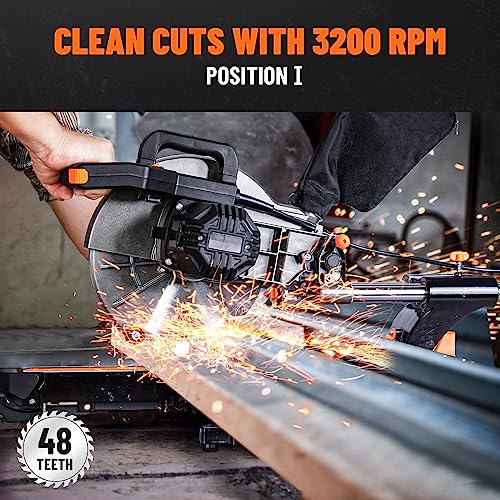
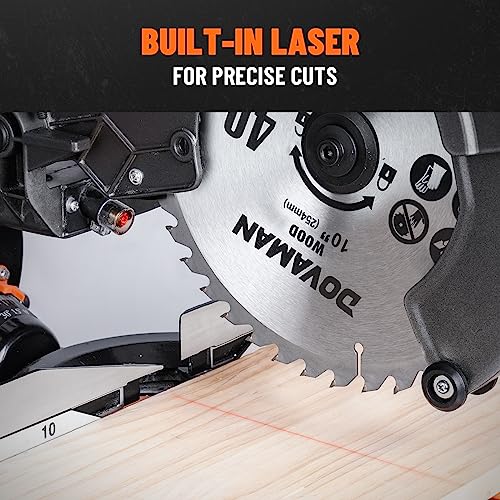
DOVAMAN is not a legacy brand, but this saw brings some interesting specs to the table. The dual-speed motor (5000 RPM for wood, 3200 for PVC or soft metal) sets it apart, few miter saws in this range offer that flexibility. With three included TCT blades, it’s clearly aimed at users cutting more than just lumber. The 13.4-inch max cut and sliding rails make it competitive with bigger models, and the ambidextrous handle is a thoughtful touch for left-handed users.
But owner feedback is mixed. Some report inconsistent laser alignment and wobbly sliding rails over time. The build doesn’t feel as solid as DEWALT or Metabo HPT, and the lack of a major warranty is a red flag. If you’re cutting PVC trim or aluminum edging regularly, the dual-speed feature might justify the pick. Otherwise, I’d stick with more proven names unless the price is dramatically lower.
Product photos
DEWALT 20V MAX Cordless Miter Saw

Strengths
- Cordless convenience
- Lightweight and portable
- DEWALT 20V compatibility
Trade-offs
- Shallow cutting depth
- Limited battery runtime
- Not for heavy jobs
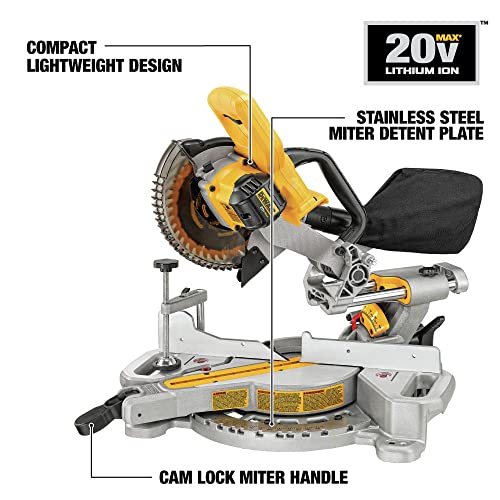
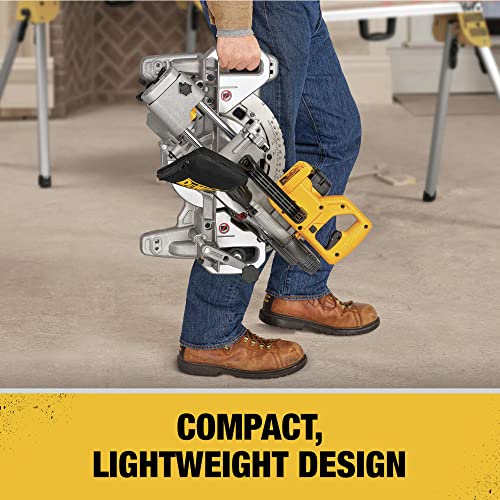
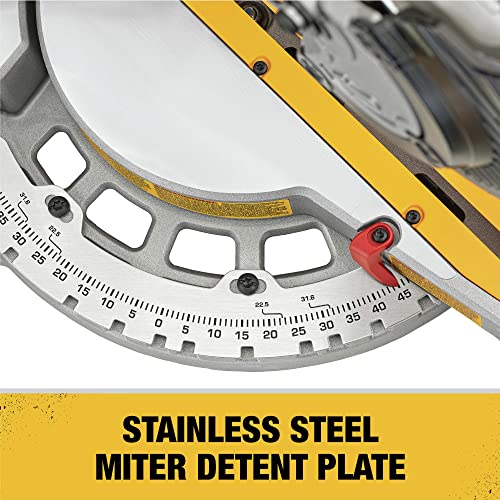
Cordless miter saws are niche, and the DEWALT DCS361B is built for very specific scenarios. At 30 lbs and running on 20V MAX, it’s incredibly portable, perfect for attic work, tight closets, or job sites where outlets are scarce. The compact design doesn’t compromise on core features: it has an oversized bevel scale, 11 miter detents, and a solid base fence. But that 7-1/4-inch blade limits you to 3.5-inch crown molding at best, and it won’t touch a 2×10.
Battery life is the real question mark. Owners note it handles a few dozen cuts on a 5.0Ah pack before needing a swap, fine for touch-ups, but not for full rooms. Compared to corded models, it’s underpowered and shallow-cutting. But if you already own DEWALT 20V tools and need a trim saw for spot fixes, the convenience factor is real.
Product photos


SEESII 8″ Compact Miter Saw
Strengths
- Compact and lightweight
- Good laser guide
- Complete accessory kit
Trade-offs
- Limited cutting depth
- 8-inch blade restriction
- Not for thick stock
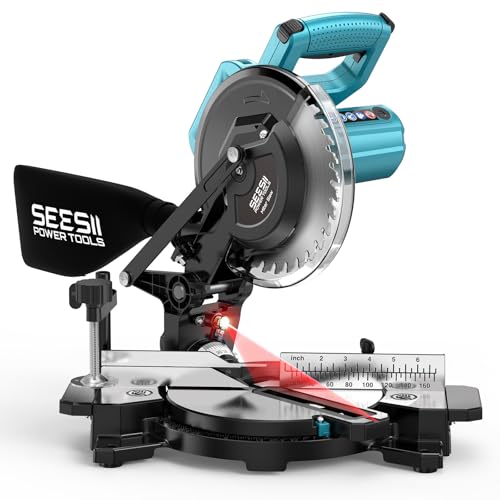
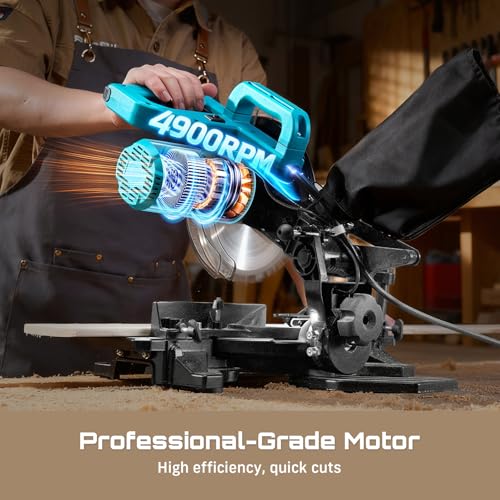
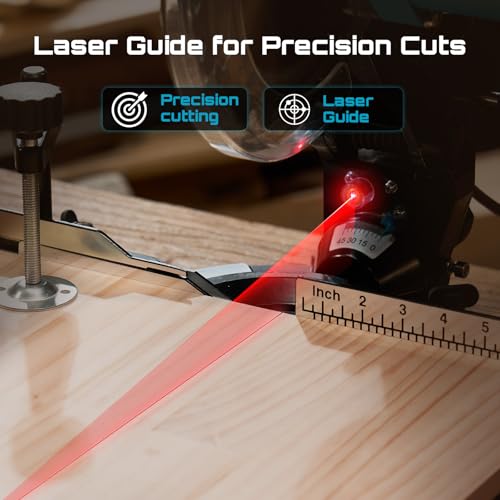
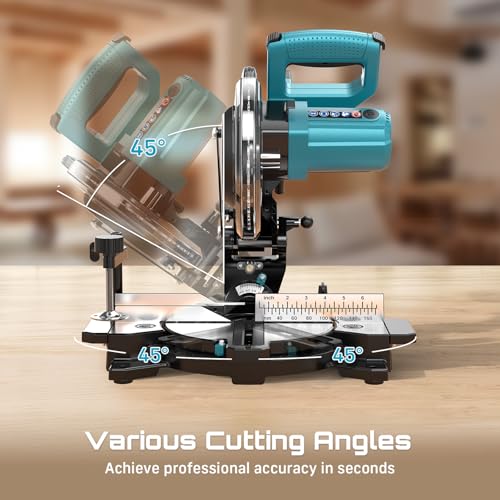
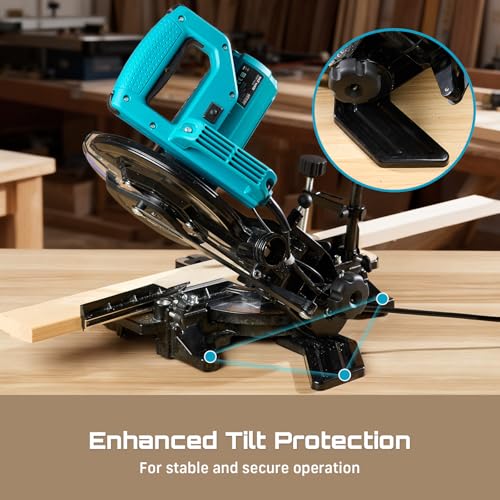
The SEESII 8-inch miter saw is clearly built for light-duty tasks, and that’s not necessarily a bad thing. At 4900 RPM, it spins fast for its size, and the laser guide helps keep cuts aligned, especially useful for beginners tackling picture frames or small trim upgrades. The included accessories like clamps, dust bag, and extension tables make it feel like a complete starter kit, which is a big plus for someone setting up a first workshop.
But let’s be honest: an 8-inch blade limits you. It can’t handle 2x10s or tall crown molding in a single pass, and the cutting capacity specs show it’s really meant for 1x material and thin stock. Reviewers note it struggles with hardwoods over 1.5 inches thick. If you’re doing real trim work with layered molding or 3.5-inch baseboards, this saw will leave you frustrated.
Product photos

How We Picked These miter saw for trim works
Rather than a hands-on lab test, my research for these recommendations focused on a detailed comparison of published specifications and features across numerous models. I weighed owner reviews from a variety of sources – including home improvement retailers and dedicated forums – alongside assessments from woodworking experts. My goal was to identify saws that consistently delivered on their promises and suited the specific demands of trim work. This process allowed me to rank options against clear criteria without relying on subjective, personal use.
For miter saws aimed at trim, accuracy and ease of use are paramount. I gave the most weight to consistent bevel and miter angle accuracy, as well as features that simplify repeatable cuts. Blade quality and the availability of different blade options were also key, since trim often requires fine, clean cuts in delicate materials. Portability and weight were considered, but secondary to the ability to deliver precise results on a variety of trim profiles.
Specifications provide a solid foundation – motor power, cutting capacity, and blade speed are all valuable indicators. However, I placed significant emphasis on owner feedback regarding long-term durability and real-world accuracy. Many owners detail issues with calibration or build quality that don’t appear in spec sheets. Understanding the practical benefits of features like a dual bevel miter saw – or the limitations of simpler models – came directly from analyzing user experiences and expert opinions.
Choosing The Right miter saw for trim works
Picking the right miter saw for trim work can feel overwhelming, but focusing on a few key features will make all the difference.
A quality miter saw for trim needs a precise cutting head, consistent bevel and miter angle accuracy, and enough power to handle the materials commonly used in finish carpentry. Look for models with clear scales, positive stops, and a stable base. Blade quality is also paramount; a fine-tooth blade designed for finished wood is essential for splinter-free cuts.
Blade Quality and Tooth Count
I often tell people that the blade is just as important as the saw itself. For trim, you absolutely need a high tooth count blade – think 60 to 80 teeth – to minimize tear-out and deliver exceptionally clean cuts. Blades specifically designed for fine finish work, often labeled as “trim blades” or “combination blades,” will yield the best results in materials like oak, maple, and pine. Don’t skimp here; a cheap blade will ruin expensive trim. While a general-purpose blade might work in a pinch, investing in a dedicated trim blade will quickly pay for itself in time saved and reduced sanding.
Bevel and Miter Accuracy
Accuracy is paramount when you’re dealing with trim. Small errors in your crown molding angles quickly become very noticeable. Look for a saw with positive stops at common angles (45 and 90 degrees are critical) and a clear, easy-to-read scale. Some saws, like the DEWALT 12-inch Double Bevel Sliding Miter Saw, feature integrated cutline systems that eliminate the need for adjustments.
Here’s what I look for in a solid miter saw’s accuracy: * A robust locking mechanism for both miter and bevel angles. * Minimal play or wobble in the cutting head. * Positive stops that reliably click into place. This ensures repeatable, accurate cuts.
Portability vs. Capacity
Consider where you’ll be doing most of your work. A smaller, more portable saw like the DEWALT 20V MAX Cordless Miter Saw is fantastic if you frequently move between job sites or have limited workshop space. However, these often sacrifice cutting capacity. Larger sliding models, while less portable, can handle wider boards and more complex cuts. If you primarily work with large crown molding or wide baseboards, you’ll want a saw with a significant sliding capacity. Ultimately, choosing between portability and capacity depends on your typical projects and workspace. If you primarily work around the house, one of the top miter saws for trims might be ideal.
Remember: A slightly more expensive saw with better accuracy is almost always a better investment than a cheaper saw that requires constant adjustments and produces subpar results.
Miter Saw for Trim Works Compared
Here’s a comparison of specifications for miter saws suitable for trim work.
| Product Title | Motor (Amps) | Bevel Range (Left/Right) | Sliding Capacity | Weight (lbs) | Laser Guide | Cordless |
|---|---|---|---|---|---|---|
| Metabo HPT 10″ Single Bevel | 15 | 0-45° / 0-52° | N/A | 24 | No | No |
| SKIL 10″ Dual Bevel Sliding | 15 | 48°/45° / 0°/45° | 2×12 | N/A | Yes | No |
| DEWALT 12-inch Double Bevel Sliding | 15 | 60°/50° | 2×14 | 58 | Yes | No |
| DOVAMAN 10″ Sliding | 15 | N/A | 4 x 13″ | N/A | Yes | No |
| DEWALT 20V MAX Cordless | N/A | N/A | N/A | 30 | No | Yes |
| SEESII 8″ Compact | N/A | N/A | N/A | N/A | Yes | No |
Frequently Asked Questions
What’s the difference between a single bevel and a dual bevel miter saw?
A single bevel miter saw can only bevel to the left, while a dual bevel saw can bevel in both directions. This saves you time and effort when making angled cuts, as you don’t need to reposition the material for different bevels.
How much does a good miter saw for trim work typically cost?
Expect to spend between $150 and $500 for a quality miter saw suited to trim. Higher-end models with features like sliding rails and digital angle displays will generally be at the upper end of that range.
Do I really need a laser guide on my miter saw?
While a laser guide can be helpful for visualizing the cut line, it isn’t essential. Many experienced trim carpenters prefer to rely on the saw’s fence and a precisely aligned blade. A good quality fence is more important than a laser.
What blade speed (RPM) is best for cutting trim?
Most miter saws operate within a similar RPM range (around 3,000-5,000 RPM), so speed isn’t the primary concern. More important is the tooth count; for clean trim cuts, a blade with 60-80 teeth is what I recommend.
What should I look for in a miter saw if I frequently cut crown molding?
For crown molding, finding the best saw for crown molding cuts means prioritizing a wide bevel range (at least 45 degrees in both directions) and a stable base, or consider a sliding model for wider profiles.
The Bottom Line
Choosing a miter saw for trim work often comes down to balancing precision with practicality. While a larger, more feature-rich saw offers greater capacity and accuracy, the DEWALT 12-inch Double Bevel Sliding Miter Saw strikes an excellent balance for most homeowners and professionals alike. It provides the power and adjustability needed for complex trim projects, alongside features that simplify repeatable cuts – making it our top overall recommendation.
For those on a tighter budget, or who only tackle occasional trim projects, the Metabo HPT 10″ Single Bevel is a solid choice. Similarly, if portability is a major concern, the DEWALT 20V MAX Cordless Miter Saw delivers convenience without sacrificing too much in terms of cutting quality. These saws offer a great entry point into accurate trim work without breaking the bank or requiring a dedicated workshop space.
Ultimately, remember that specifications don’t tell the whole story. Focus on finding a saw with a robust build, clear scales for accurate angled bevel cuts, and a high-quality blade. These fundamentals – combined with careful measurement and technique – will deliver far better results than chasing the highest horsepower or the most advanced features.
