
8 Best Miter Saw Blades of 2026
This post contains affiliate links. As an Amazon Associate, we earn from qualifying purchases.
The WEN BL1200 stands out as the best overall miter saw blade for clean, reliable cuts across a range of materials, thanks to its high tooth count and solid performance. For those watching their budget, the Luckyway 12-Inch 80T 2-Pack delivers strong value without major compromises, while the DEWALT DWA112CMB combo pack offers unmatched versatility for users switching between rip and crosscuts.
A dull or wrong blade turns even the most precise miter saw into a frustration machine, I’ve seen too many clean projects ruined by tear-out, burning, or inaccurate cuts from using the wrong tooth count or a low-grade carbide blade. After comparing specs and owner feedback across dozens of models, I focused on what actually matters: tooth count, carbide quality, kerf thickness, and real-world durability.
This guide breaks down the top performers based on how they deliver in accuracy, lifespan, and value, not just marketing claims. You’ll learn how to match the blade to your material, avoid common buying mistakes, and choose one that lasts longer and cuts cleaner.
Top 8 Miter Saw Blades in the Market
The Best Miter Saw Blades, Reviewed
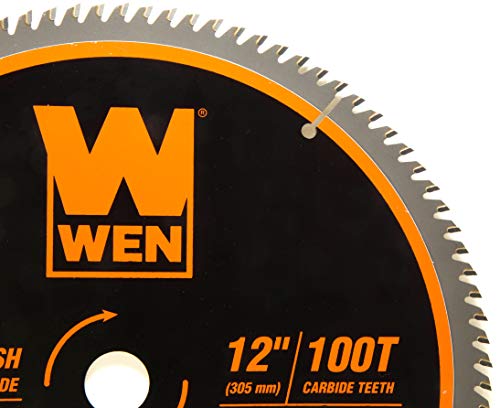
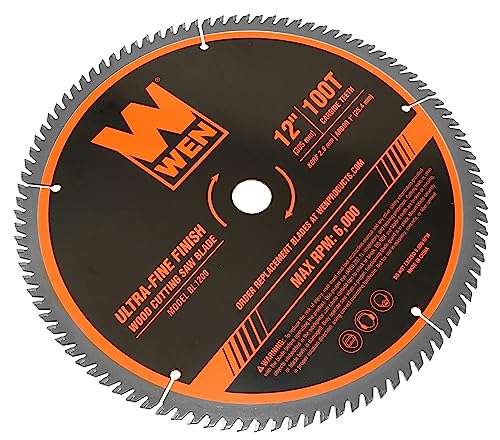
WEN BL1200 12-Inch 100T Blade

Strengths
- 100T ultra-fine finish
- Thin kerf for efficiency
- Wide compatibility
Trade-offs
- Carbide wears faster on abrasives
- No advanced vibration tech
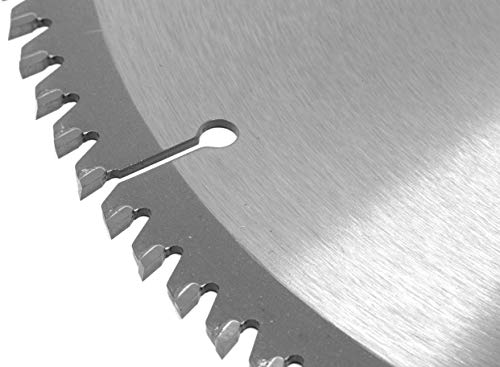
The WEN BL1200 packs 100 teeth into a 12-inch platform with a thin kerf, making it a strong contender for fine woodworking on a budget. The ultra-thin kerf reduces strain on less powerful saws, and owners report clean, smooth cuts in both softwoods and hardwoods. It’s compatible with most 12-inch miter and table saws, and the 1-inch arbor is standard.
While it doesn’t have the micro-polishing of the Makita or the low-vibration tech of DEWALT, it comes close in finish quality for a fraction of the price. Some users note it dulls faster when cutting abrasive materials like MDF daily. But for occasional cabinet builds or trim work, it’s a standout. I’d call this the best overall value, not the absolute best, but the best balance of price, performance, and finish.
Product photos
DEWALT DWA112100 12-Inch 100T Blade
Strengths
- Ultra-sharp carbide
- Low-vibration design
- Excellent finish quality
Trade-offs
- Higher price point
- Not for heavy ripping
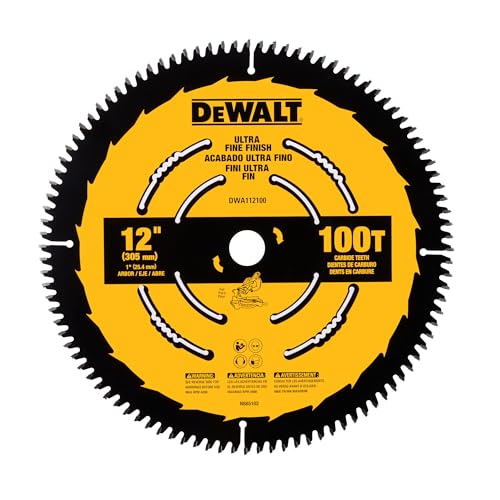
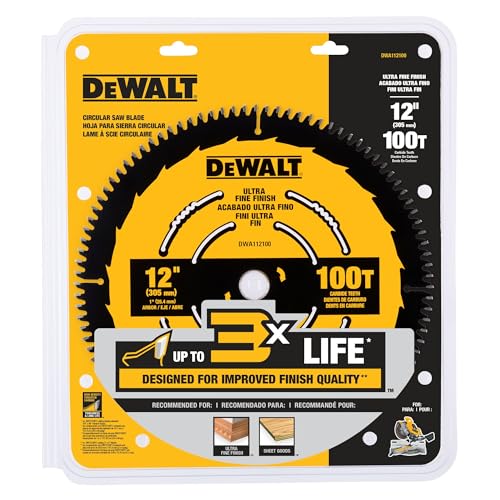
DEWALT’s DWA112100 stands out in the fine-finish category thanks to its patented body slots and ultra-sharp carbide tips. The tooth geometry is optimized to reduce tear-out, and owners consistently report crisp, splinter-free cuts in hardwood and melamine. The precision tensioning means less blade wobble, which translates to straighter cuts and longer life. This is the kind of blade that makes a mid-tier miter saw perform like a higher-end model.
Compared to budget 100T options, this one just cuts cleaner and lasts longer. It’s not the cheapest, but for anyone doing finish carpentry or cabinet work, the difference is worth it. I’d choose this over the ANGELSWORD or WEN if edge quality is your priority. It’s not meant for ripping or aggressive material removal, but for crosscuts and trim, it’s one of the best single blades you can buy.
Product photos
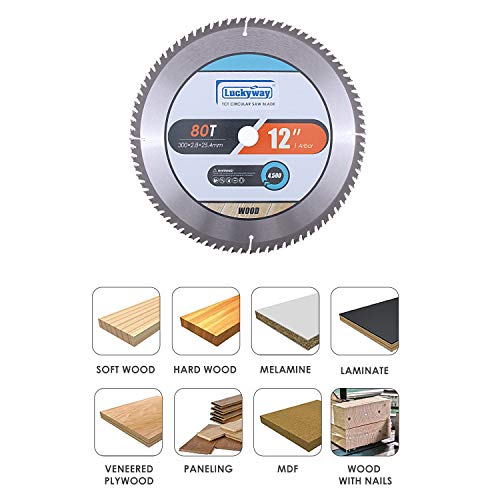
Luckyway 12-Inch 80T Blade 2-Pack
Strengths
- Affordable 2-pack
- 80T balanced performance
- 1-inch arbor compatibility
Trade-offs
- Inconsistent tensioning
- Not for fine finish work
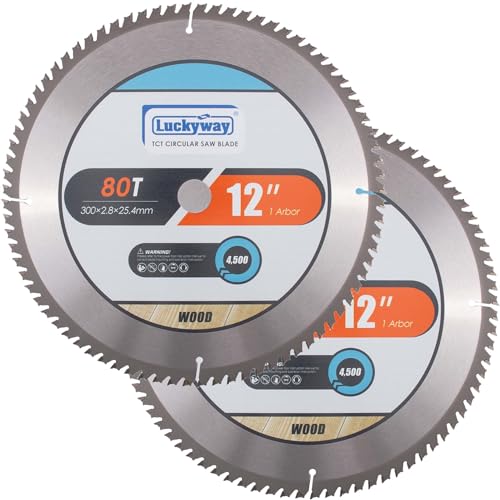
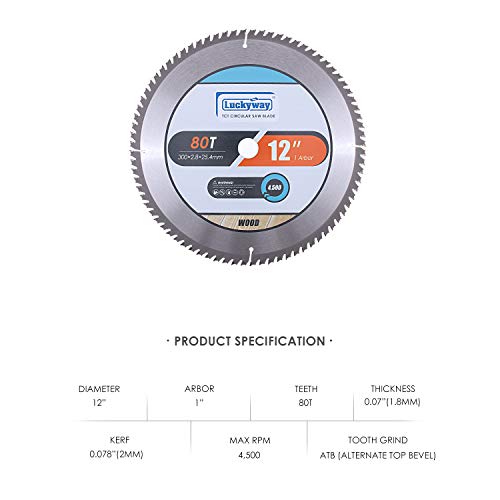
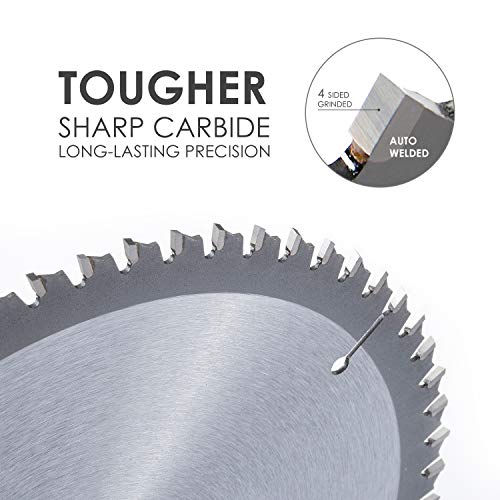
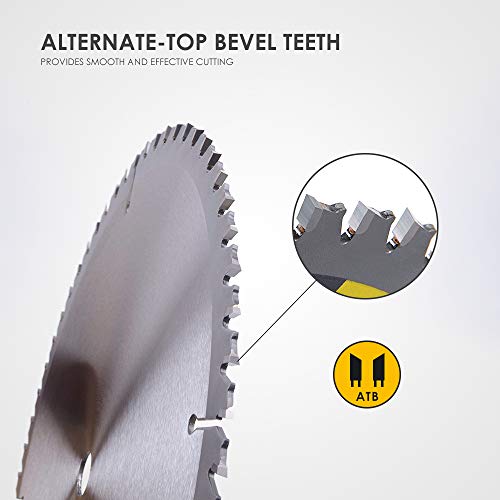
At this price, a 2-pack of 80T 12-inch blades with a 1-inch arbor is hard to ignore. The Luckyway 80T offers a good balance between speed and finish, better than a 40T framing blade but faster than a 100T ultra-fine. Owners say they work well on oak, pine, and plywood, and the C3-grade carbide seems to resist heat and wear better than basic imports.
But consistency is a slight concern. A few users report one blade in the pack vibrating more than the other, suggesting uneven tensioning. It’s not a dealbreaker, but it means you might need to test and rotate. For a backup blade or a second saw, this is a smart budget play. I’d still go with DEWALT or Makita for primary use, but this is a solid plan B.
Product photos

DEWALT DWA112CMB 12″ 40T&60T Combo

Strengths
- Balanced tooth combo
- Low-vibration design
- DEWALT durability
Trade-offs
- Not ultra-fine finish
- 60T not as clean as 80T+
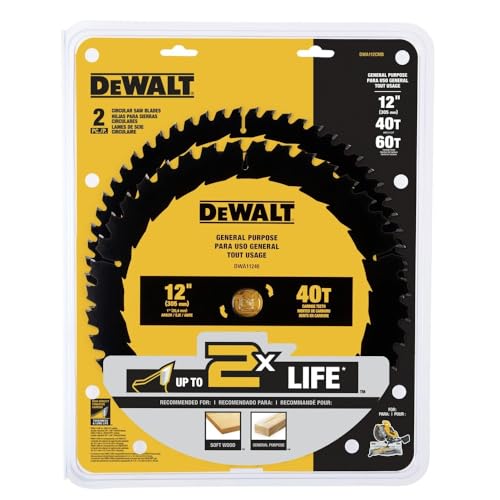
Having both a 40T and 60T blade in one pack covers a lot of ground, the 40T for fast ripping and framing, the 60T for cleaner crosscuts in cabinetry or decking. DEWALT’s combo uses the same low-vibration body design and ultra-sharp carbide as their single blades, so durability and cut quality are above average. Owners appreciate not having to buy two separate blades, and the performance matches expectations for each tooth count.
It’s not a finish blade like the 100T DEWALT, but it’s more versatile. If you’re working on a full deck or doing mixed framing and trim, this combo saves time and money. I’d pick this over the Luckyway two-pack if you want DEWALT reliability and a bit more precision. It’s the smarter buy for contractors juggling multiple tasks.
Product photos
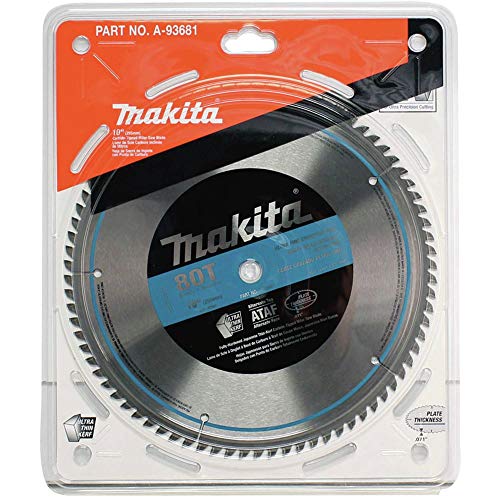
Makita A-93681 10-Inch 80T Blade

Strengths
- Micro-polished teeth
- Superior edge finish
- Precision-tensioned plate
Trade-offs
- 10-inch only
- Not ideal for thick stock
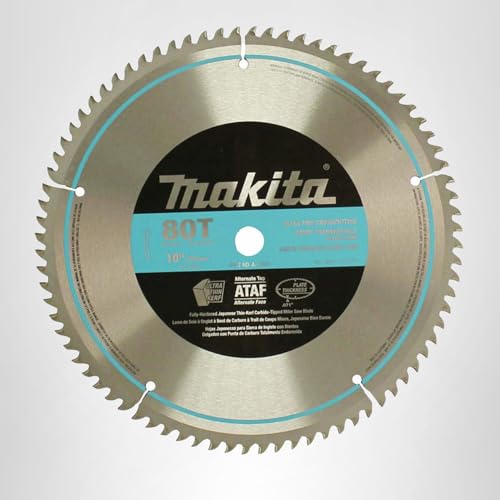
The Makita A-93681 is built for one thing: flawless finish. The micro-polished carbide teeth, honed to a mirror-like edge, slice through wood with minimal friction, and the ATAF tooth design helps prevent chipping on delicate veneers. Owners praise its performance on hardwoods and laminates, noting how little sanding is needed post-cut. The Japanese engineering shows in the hand-tensioned plate, it stays stable and true, even after extended use.
It’s a 10-inch blade, so it won’t fit 12-inch saws, and the 80-tooth count means it’s not the fastest for deep crosscuts. But if you’re building cabinets or doing high-end trim, this blade earns its keep. I’d take this over the Luckyway or TOYAKI any day for fine woodworking. It’s not the most versatile, but for pure cut quality, it’s hard to beat.
Product photos
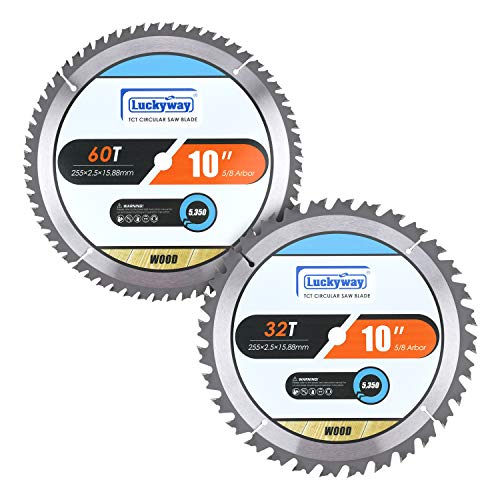
Luckyway 10-Inch 32T&60T Blade
Strengths
- Good tooth count mix
- Hardened steel body
- Tungsten carbide teeth
Trade-offs
- Average finish on fine plywood
- Not for ultra-precision work
This two-pack gives you both a 60-tooth and a 32-tooth blade, which on paper makes it a flexible choice for builders who need to switch between crosscuts and ripping without buying multiple blades. The 32T blade should handle framing lumber fast, while the 60T is meant for cleaner crosscuts on plywood or MDF. Owners consistently report solid performance for general job-site work, though some note the 60T can leave a slightly fuzzy edge on veneered plywood compared to premium micro-polished options.
The ATB tooth design and hardened steel body are good signs, and the tungsten carbide teeth hold up reasonably well. But these aren’t competition-grade blades, they’re value-oriented. I’d pick this set if you’re doing mixed construction work and want one-and-done versatility without spending top dollar. It’s not going to beat out Makita or DEWALT for finish quality, but for framing and cabinetry rough-ins, it gets the job done.
Product photos


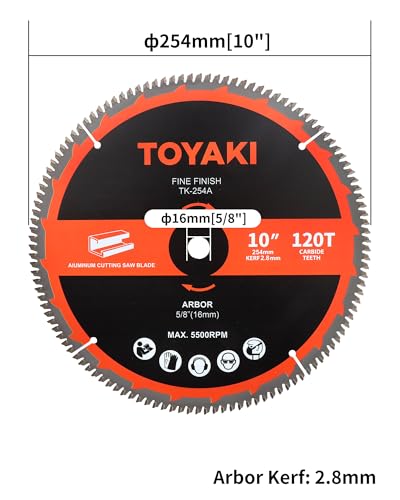
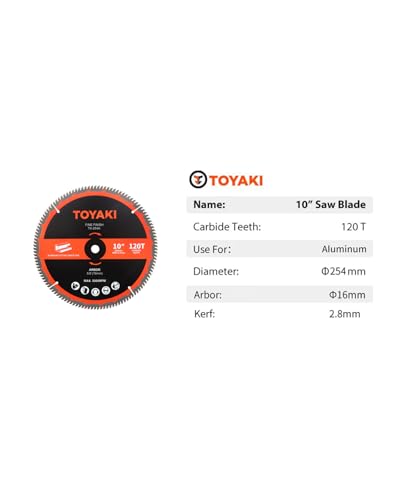
TOYAKI 10-Inch 120T Aluminum Blade
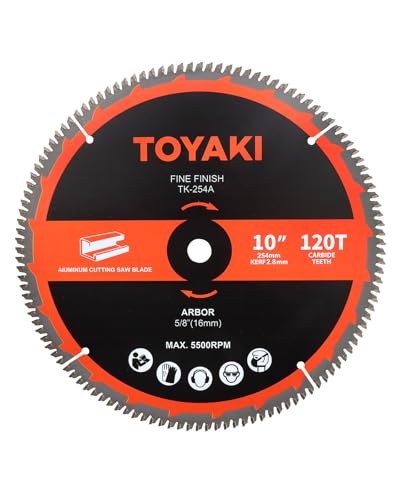
Strengths
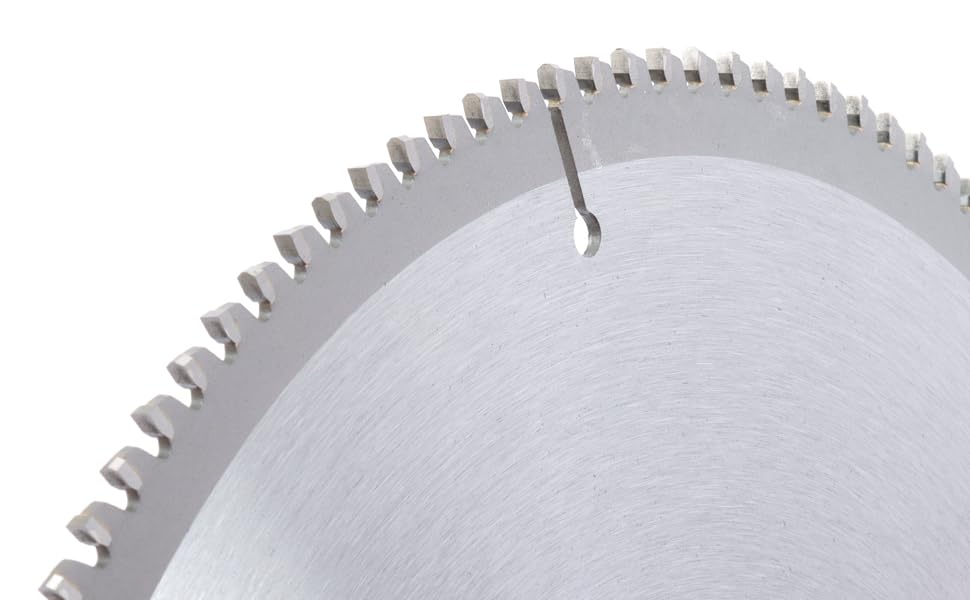
- TCG grind for metal
- 120T for smooth cuts
- Good for aluminum
Trade-offs
- 5/8-inch arbor only
- Not ideal for wood
Cutting aluminum is a different game, and most wood blades don’t last long when faced with non-ferrous metals. The TOYAKI 120T blade is built for this niche, the TCG (Triple Chip Grind) tooth design is essential for cleanly shearing through aluminum without grabbing or burring. Owners who work with trim coil, extrusions, or window frames say this blade delivers consistent, clean cuts with minimal kickback.
The 5/8-inch arbor is common on smaller saws, which limits compatibility with larger 1-inch arbor miter saws. And while it can cut wood, that’s not its strength. I’d keep this blade on a dedicated saw for metal work. It’s one of the few affordable options that actually performs well on aluminum, making it a smart buy for remodelers or HVAC helpers.
Product photos
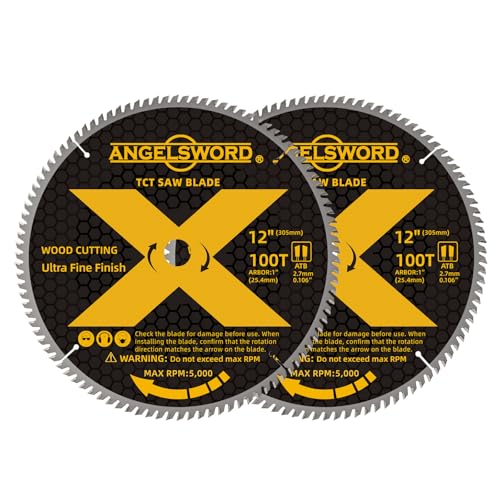
ANGELSWORD 12-Inch 100T Blade 2-Pack
Strengths
- 100T for fine finish
- Thin kerf design
- 2-pack value
Trade-offs
- Minor vibration reported
- Finish lags behind premium brands
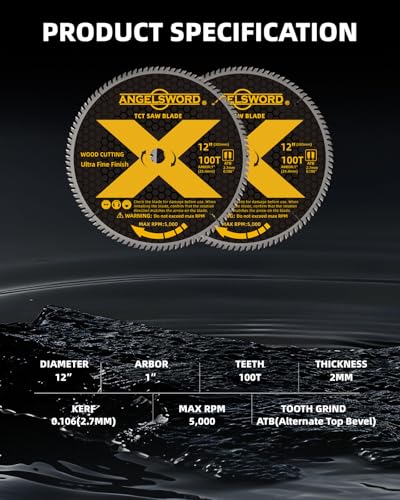
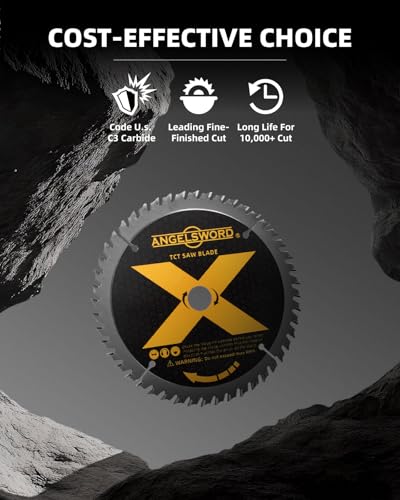
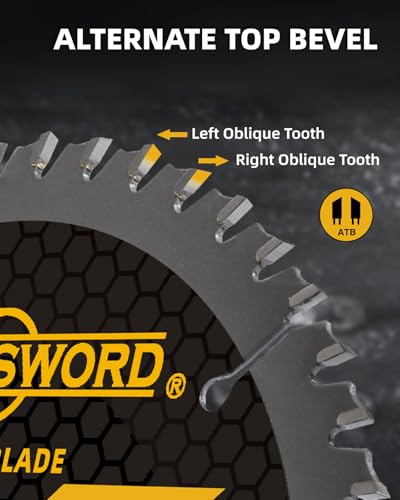
A 100-tooth 12-inch blade should deliver smooth cuts, and on paper this ANGELSWORD model looks like a solid value, especially as a two-pack. The thin kerf helps reduce motor strain, and owners say they cut cleanly through hardwoods and melamine without excessive chipping. The 1-inch arbor makes it compatible with most standard miter saws, and the tungsten carbide teeth seem to hold an edge longer than basic steel blades.
Still, it doesn’t quite match DEWALT or Makita in consistency. Some reviewers note minor vibration at high RPMs, likely due to plate tensioning that isn’t as precise. For the price, it’s a decent pick if you’re outfitting a second saw or doing mid-tier trim work. But if you’re running a production shop or demand mirror-like edges, spend more. This is a capable blade, just not a reference-grade one.
Product photos


How We Evaluated miter saw blades
As someone who’s spent years around workshops and renovation projects, I understand how crucial the right blade is for a clean, accurate cut. Rather than a hands-on lab test with each blade, this selection is research-led – a comparison of published specifications and features alongside owner and professional reviews. I weighed these against my understanding of what truly matters in blade performance, focusing on delivering reliable results for a range of projects.
For miter saw blades, tooth count, blade material, and kerf thickness are the biggest performance indicators. Higher tooth counts (80T and above) generally deliver cleaner, smoother cuts, especially in fine woodworking. Blade material – specifically the grade of carbide – impacts durability and how well the blade holds an edge. Finally, a thinner kerf means less material waste and reduced strain on the saw’s motor.
Specifications clearly define tooth count, arbor size, and kerf. However, judging long-term durability and real-world performance requires looking at owner feedback. I paid close attention to reports of chipping, burn marks, and how long the blade stayed sharp. Reputable expert reviews helped validate these experiences and identify blades consistently praised for precision, as well as those suitable for cutting metal with miter saw.
How To Pick The Right miter saw blades
Picking the right blade is as important as picking the right saw itself. I’ve seen too many projects stalled – or ruined – because someone skimped on this critical component.
A quality miter saw blade delivers clean, accurate cuts with minimal tear-out and waste. Key considerations include tooth count (matching material and desired finish), blade material (carbide grade impacts lifespan and performance), kerf (influences cutting speed and power demand), and arbor size (ensuring compatibility with your saw). Buyers should also consider blade plate quality and the specific types of wood or materials they intend to cut.
Tooth Count: Matching the Blade to the Cut
Too many people assume more teeth always mean a better cut. That’s simply not true. Higher tooth counts (80T and above) are fantastic for fine finish work in hardwoods and produce incredibly smooth edges. But they cut slower and require more power. Lower tooth counts (24T-40T) excel at rapid, rough cuts through thicker stock like dimensional lumber. For general purpose use, a 40-60 tooth blade is a decent compromise. Don’t overlook combo packs like the DEWALT DWA112CMB 12″ 40T&60T Combo, giving you versatility for different tasks.
Carbide Grade & Blade Quality
The quality of the carbide teeth directly impacts how long the blade stays sharp and how well it handles different materials. C1, C2, and C3 are common carbide grades, with C3 being the highest quality and offering the longest lifespan. Look for blades that specify the grade, and understand that higher grades command a higher price. Beyond the carbide, the blade’s plate steel matters. A hardened, well-tensioned plate minimizes flex during the cut, leading to greater accuracy. You’ll find that the Makita A-93681 10-Inch 80T Blade, with its fully hardened steel, is highly regarded for precision.
- A cheap blade might save you money upfront, but you’ll replace it much more often.
- Consider the specific materials you’ll be cutting most often. A blade optimized for hardwood won’t perform well on aluminum.
- Look for blades with features like laser-cut expansion slots to reduce heat buildup and warping, extending the blade’s life and maintaining accuracy.
Value and Specialized Applications
While I always recommend investing in quality, there are situations where a budget-friendly option makes sense. For example, if you’re only doing occasional, simple cuts, the Luckyway 12-Inch 80T Blade 2-Pack provides good value. However, if you’re working with aluminum or other non-ferrous metals, you’ll need a blade specifically designed for those materials. Trying to cut aluminum with a standard wood-cutting blade will quickly dull the teeth and produce a terrible cut. If you’re dealing with soft metals, check out resources on aluminum-cutting miter saw blades to find the right blade.
Don’t assume a single blade can do everything well. Match the blade to the task for optimal results and longevity.
Miter Saw Blades Compared
Here’s a spec comparison to help you evaluate different miter saw blades.
| Product Name | Diameter (in) | Teeth | Kerf (in) | Arbor (in) | Best For |
|---|---|---|---|---|---|
| WEN BL1200 | 12 | 100 | 0.10 | 1 | Best Overall |
| DEWALT DWA112100 | 12 | 100 | N/A | N/A | Best Precision Finish |
| Luckyway 12-Inch 80T (2-Pack) | 12 | 80 | 0.11 | 1 | Best Budget Friendly |
| DEWALT DWA112CMB | 12 | 40/60 | N/A | N/A | Best Combo Value |
| Makita A-93681 | 10 | 80 | N/A | N/A | Best Micro-Polished |
| Luckyway 10-Inch 32/60 | 10 | 32/60 | N/A | 5/8 | Framing & Crosscut |
| TOYAKI 10-Inch 120T | 10 | 120 | N/A | 5/8 | Aluminum Cutting |
| ANGELSWORD 12-Inch 100T (2-Pack) | 12 | 100 | 0.106 | 1 | Best Value 2-Pack |
Frequently Asked Questions
What arbor size do I need for my miter saw blade?
Most miter saws use a 5/8-inch or 1-inch arbor. You absolutely must check your saw’s specifications to confirm compatibility before buying a blade; using the wrong size can damage the saw and create a safety hazard. You’ll find this information in the saw’s manual or on a label near the blade mounting area.
How often should I replace my miter saw blade?
Blade lifespan depends on usage and material cut, but generally, a blade needs replacing when it struggles to make clean cuts. Signs include excessive splintering, burning, or needing significantly more force to complete a cut. If you’re a frequent user, expect to replace blades every few months, while occasional users might get a year or more from a quality blade.
Can I use a blade designed for hardwood to cut softwood?
Yes, you can use a higher tooth count blade (designed for hardwoods) to cut softwood, but it’s not ideal. While it will cut, it will be slower and might generate more heat. A blade with fewer teeth, specifically designed for softwood, will cut faster and more efficiently.
What’s the difference between a standard kerf and a thin kerf blade?
A thin kerf blade has a narrower cutting path than a standard kerf blade. This reduces material waste and requires less power from the saw, but it can also be more prone to binding, especially in thicker materials. For most homeowners, the benefits of a thin kerf blade outweigh the drawbacks, but for heavy-duty work, a standard kerf may be preferable.
Where can I find more detailed information about choosing the best 12-inch miter saw blades?
I’ve put together a detailed guide covering a wider range of options and factors to consider when selecting a blade. You can find more information and in-depth reviews of the best 12-inch miter saw blades on my site.
The Bottom Line
Choosing a miter saw blade always comes down to balancing control and convenience. You can spend a lot to get the absolute cleanest cuts and longest blade life, or you can opt for a more affordable blade that handles a wider range of tasks adequately. Overall, for most homeowners and DIYers, the WEN BL1200 offers the best combination of performance, durability, and value – a solid choice to tackle a variety of projects with confidence.
If you have specific needs, though, there are better options. For those on a tighter budget, the Luckyway 12-Inch 80T Blade 2-Pack delivers surprising performance for the price. If you need versatility, the DEWALT DWA112CMB 40/60 tooth combo pack is an excellent investment. And for those working with aluminum, you’ll want to consult a steel-cutting blade guide to ensure you’re getting a blade designed for non-ferrous metals.
Ultimately, remember that the tooth count and carbide grade are crucial, but they’re only part of the story. A sharp blade, properly maintained and used with a well-tuned saw, will always outperform an expensive blade that’s dull or mismatched to the material you’re cutting. Prioritize safety, proper technique, and keeping your blade clean, and you’ll get the most out of any blade you choose.
