7 Best Compact Table Saws of 2026
This post contains affiliate links. As an Amazon Associate, we earn from qualifying purchases.
The SKIL 15Amp 8-1/4″ is the best overall compact table saw for most DIYers, combining solid power and reliable accuracy. If you’re on a tight budget, the SKIL 15Amp 10″ offers strong performance at a lower price, while the Evolution R8MTS stands out for versatility with its convertible miter saw design.
I’ve seen too many people buy compact table saws expecting full-size performance, only to be frustrated by weak motors, shaky fences, or limited capacity. These tools are meant for portability and space-saving, but that doesn’t mean you should compromise on core functionality.
After comparing specs, reading owner feedback, and applying what I’ve learned from years of working with power tools, I focused on models that deliver real-world usability. This guide breaks down what actually matters, power, fence quality, and intended use, so you can pick a saw that fits your projects, not just your garage size.
Top 7 Compact Table Saws in the Market
The Best Compact Table Saws, Reviewed
SKIL 15Amp 8-1/4″ Compact Table Saw

Strengths
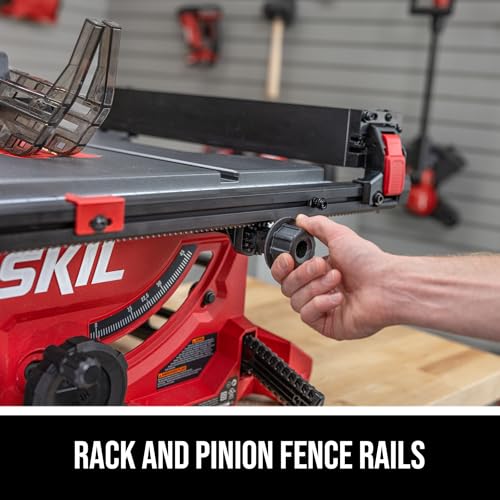
- Rack and pinion fence
- 24.5-inch rip capacity
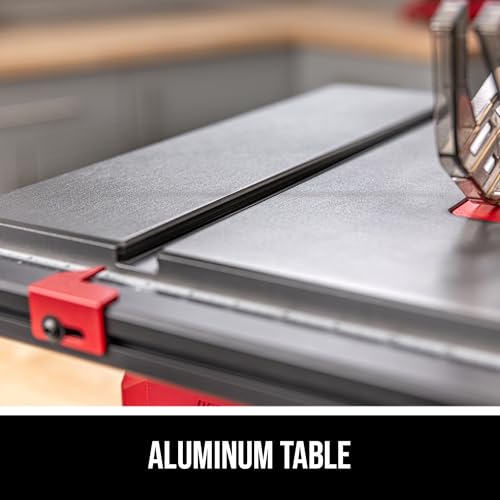
- Aluminum table top
Trade-offs
- Stand sold separately
- No 4×4 cutting depth
- Slightly higher price
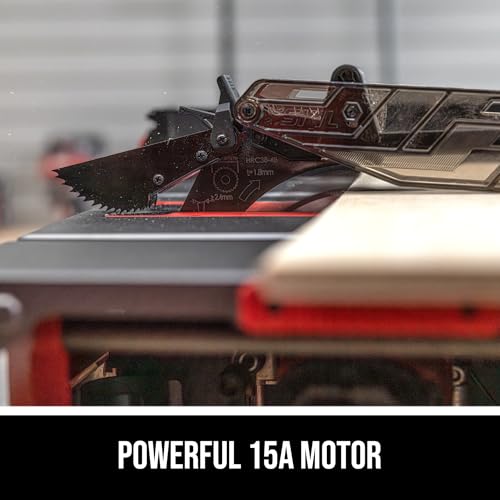
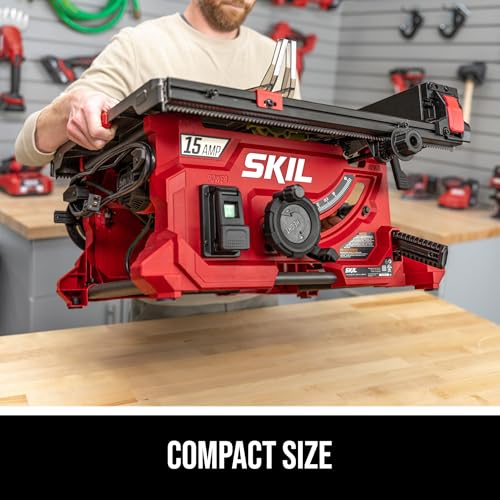
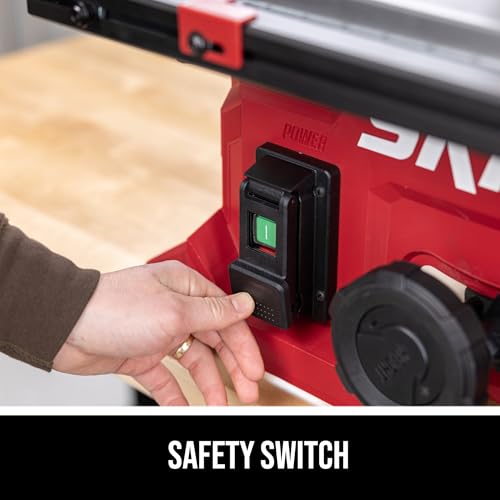
If I had to pick one compact table saw for general jobsite use, it’d be this SKIL TS6308. It hits the sweet spot between power, portability, and precision. The 15A motor drives the 8-1/4” blade to 4600 RPM, giving it enough guts to rip plywood and frame walls without hesitation. The rack and pinion fence is a standout, it’s smooth, stays aligned, and owners consistently praise its reliability.
The 24.5-inch rip capacity to the right of the blade is impressive for a compact saw, making it easier to break down sheet goods. And the 2-1/2-inch max cut depth means you can handle 3x material in one pass. It doesn’t come with a stand, which is a downside, but it’s compatible with SKIL’s folding stand. Compared to the larger TS6307, it’s lighter and more maneuverable, though it sacrifices the 4×4 cut depth. For most users, that trade-off is worth it.
Product photos
Evolution R8MTS 8-1/4″ Convertible Miter/Table Saw

Strengths
- Cuts wood, metal, plastic
- Converts to miter saw
- Compact and portable
Trade-offs
- Limited rip capacity
- Smaller blade size
- Not for thick hardwood rips
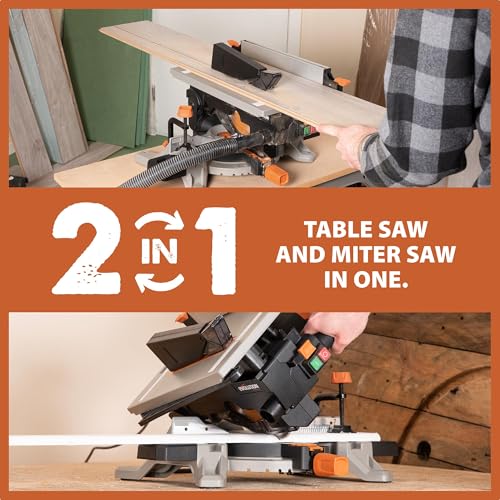
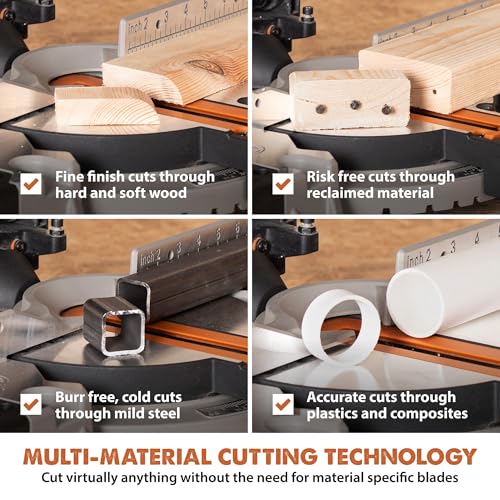
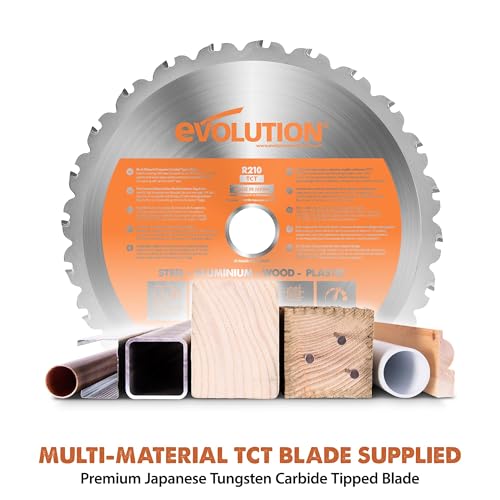
The Evolution R8MTS is a standout for anyone working with mixed materials in tight spaces. I’ve seen plenty of combo tools that sacrifice performance for convenience, but this one actually delivers clean cuts in mild steel and aluminum without blade changes. The single TCT blade handles wood, plastic, and metal, owners confirm it’s great for cutting threaded rod, aluminum extrusions, and even nail-embedded wood without shredding. That’s huge for remodelers and metal fabricators who don’t want to switch saws every five minutes.
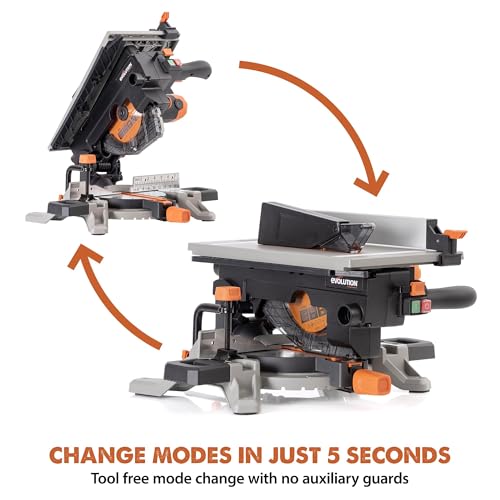
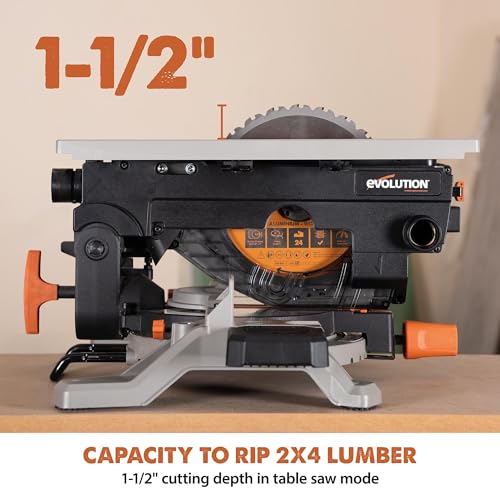
Its compact footprint and dual-mode design, table saw and compound miter saw, make it ideal for garages and mobile workshops. The cast aluminum table adds rigidity, and the dual-locking fence improves rip accuracy. But the rip capacity is limited to 1-1/2 inches, so it won’t replace your full sheet goods saw. Compared to the SKIL 10-inch models, it’s less powerful for deep wood rips but far more versatile. If you’re constantly switching between materials, this is the smarter buy.
Product photos
SKIL 15Amp 10″ Portable Table Saw
Strengths
- 15 Amp motor
- 4×4 cutting capacity
- Folding stand included
Trade-offs
- Heavy for a portable saw
- No adjustable bevel detents
- Limited miter flexibility
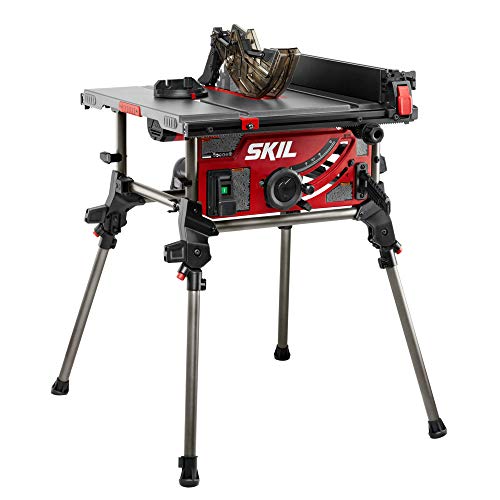
This SKIL jobsite saw brings serious capacity to the portable class, especially with that 4×4 cutting ability at 90 degrees. On paper, it’s built for contractors who need to rip thick stock without hauling a full-size cabinet saw to the site. The rack and pinion fence system is a real upgrade over basic slide fences, and owners consistently report it holds alignment well even after repeated setup and takedown. It’s not the lightest, but the integrated folding stand makes it a legit one-person setup, which matters when you’re on ladders or uneven ground.
Still, it’s bulky compared to compact benchtop models, and the bevel range is limited to two fixed stops, 0 and 45 degrees. There’s no fine-tuning or positive stops in between, which can be a pain if you’re doing any precision bevel work. Compared to the Evolution R8MTS, it’s less versatile in material handling and lacks miter saw functionality. But if your main job is ripping dimensional lumber and sheet goods, this SKIL holds its own.
Product photos


MarvTool 15Amp 10″ Portable Table Saw

Strengths
- Affordable price
- 15A powerful motor
- Lightweight and portable
Trade-offs
- Fence alignment issues
- Basic fence design
- Plastic components feel cheap
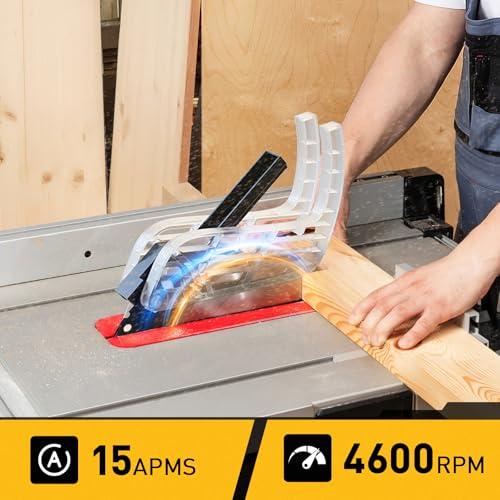
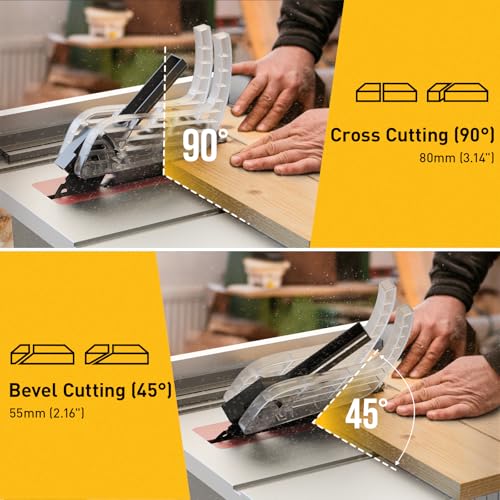
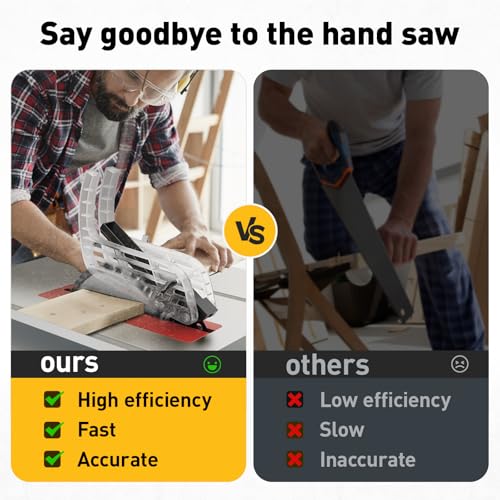
The MarvTool 10-inch saw stands out as a budget-friendly option that doesn’t completely cut corners. For the price, it delivers a full 15A motor and 4600 RPM, which is enough to rip plywood and 2x4s without bogging down. The 3.4-inch max depth at 90 degrees is competitive, and the adjustable bevel up to 45 degrees gives it real versatility for basic framing or furniture builds.
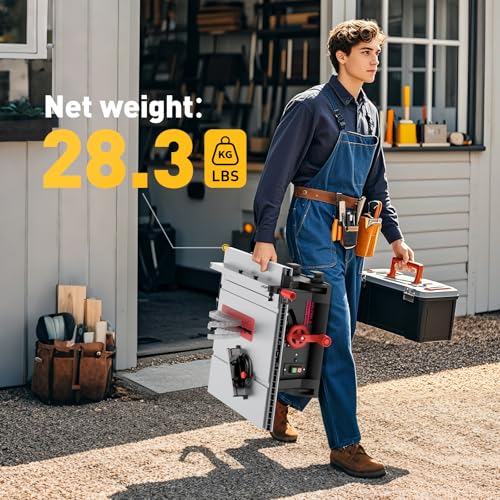
It’s lightweight at 28.3 pounds, so it’s easy to move around a job site or store in a garage. The transparent blade guard and dust port are thoughtful safety and cleanup touches. But owners report the fence isn’t as rigid as SKIL’s rack-and-pinion system, and alignment can drift over time. Compared to the SKIL TS6308, it’s less precise but costs less. If you’re on a tight budget and need a no-frills workhorse, this one makes sense.
Product photos

ZERICUF Mini Table Saw Dual Motor
Strengths
- Dual motor system
- 12,000 RPM speed
- 3-year warranty
Trade-offs
- Not for structural materials
- Power adapter required
- Overkill for simple crafts
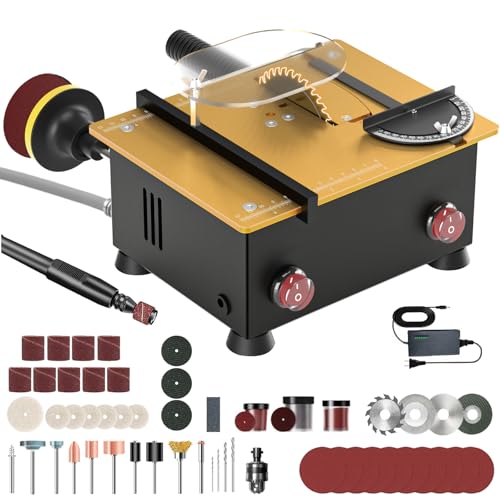
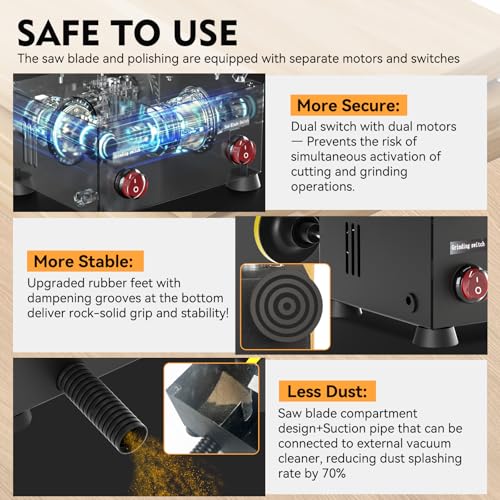
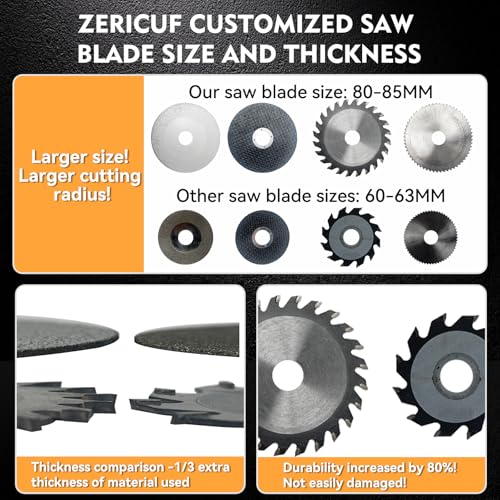
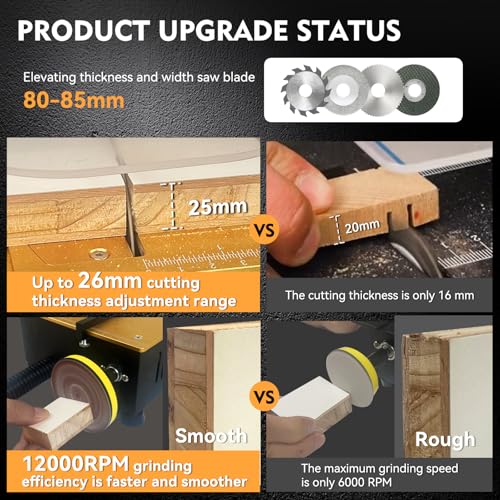
This ZERICUF mini saw is the most advanced hobby model here, and it shows. The dual 795 motors and independent switches let you run cutting and sanding functions separately, something no other mini saw offers. At 12,000 RPM per motor and 200W output, it’s twice as powerful as most in this class. The 26mm adjustable height is a major upgrade, allowing deeper cuts than the 15–16mm limits of competitors.
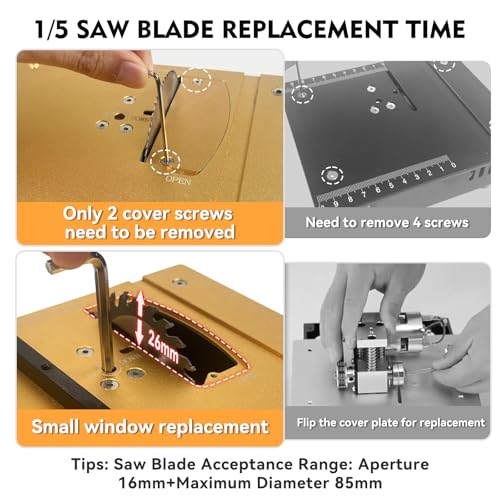
Owners love the quick blade-change window and widened worktable, which makes handling small parts easier. The shock-absorbing feet reduce vibration, improving cut accuracy. And the 3-year warranty signals real confidence in durability. While it’s still not for real woodworking, for serious hobbyists doing models, props, or custom enclosures, this is the most capable tool in the group. It even handles thin aluminum with ease.
Product photos
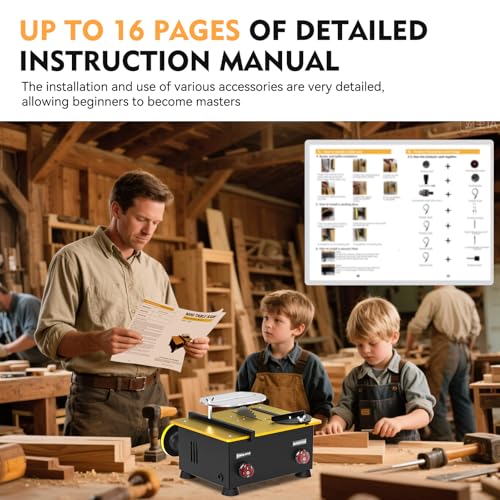
Sinpiode Mini Table Saw 7-Speed
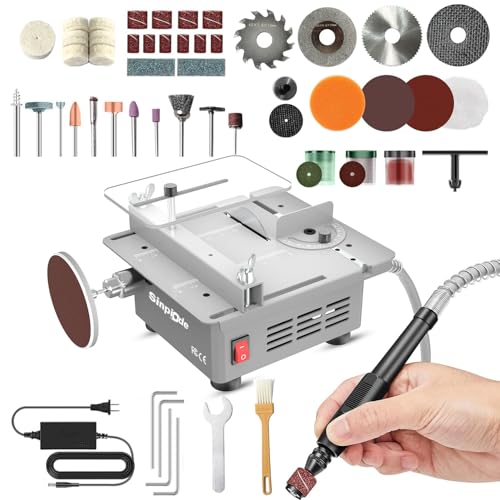
Strengths
- Ultra-compact size
- 4 specialized blades
- 7-speed control
Trade-offs
- Very low power
- Not for thick materials
- Frequent blade changes needed
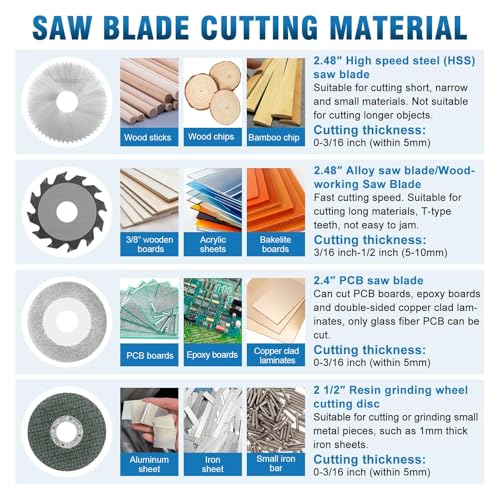
This Sinpiode mini saw is strictly for hobbyists working on tiny, delicate projects. At under 8 inches wide, it’s more of a desktop craft tool than a real table saw. The 100W motor and 6000 RPM max speed are fine for balsa, thin acrylic, and PCBs, but it’s not going to handle anything dense or thick. The included blades are a nice touch, especially the PCB cutter, and the 7-speed control helps prevent burning fragile materials.
Owners say it’s stable on a bench thanks to the shock-absorbing pads, and the laser-etched scale adds precision for small-scale work. But it’s not a substitute for even a basic benchtop saw. Compared to the MXBAOHENG or ZERICUF models, it’s underpowered and has a lower max cut depth (0.59″). Still, for model builders or electronics tinkerers, it’s a decent entry point. Just don’t expect it to do real woodworking.
Product photos
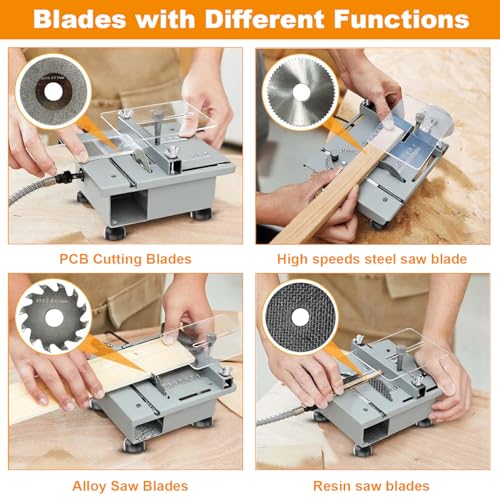
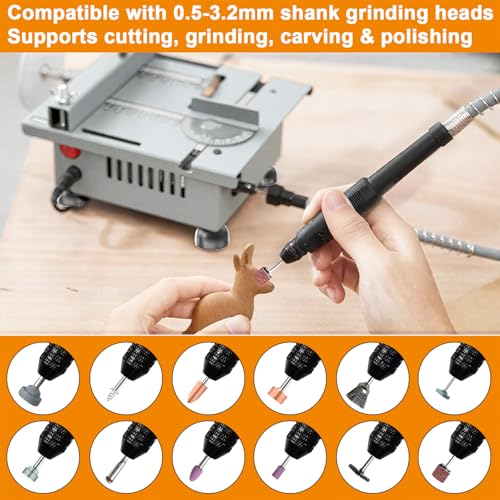
MXBAOHENG Mini Craft Table Saw
Strengths
- 7-voltage power adapter
- Adjustable cut depth
- Laser-etched scale
Trade-offs
- No dual motor option
- Low torque under load
- Not for continuous use
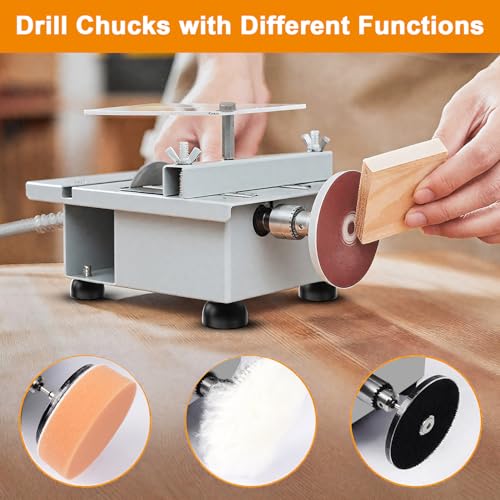
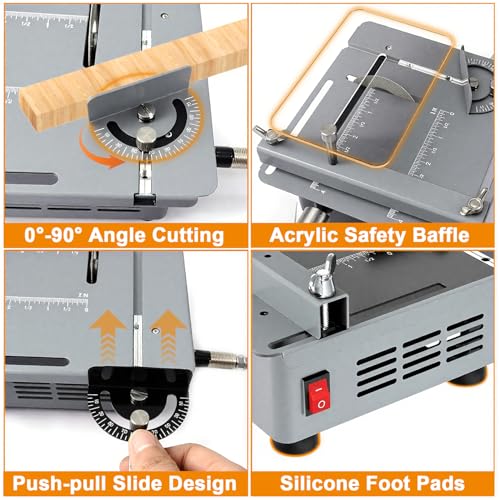
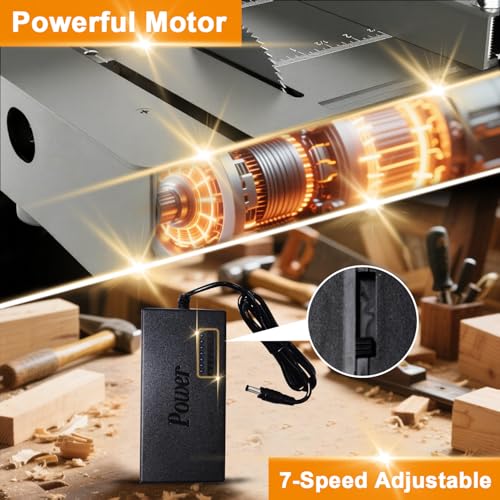
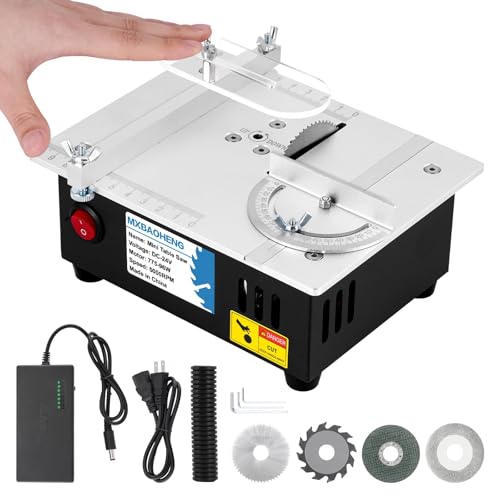
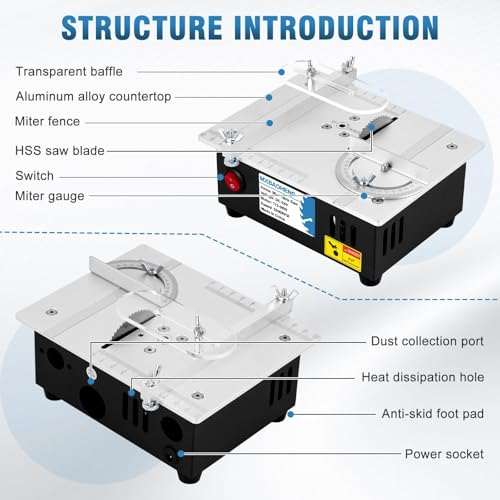
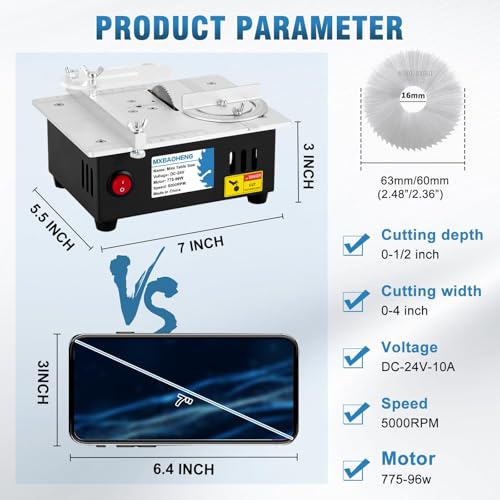
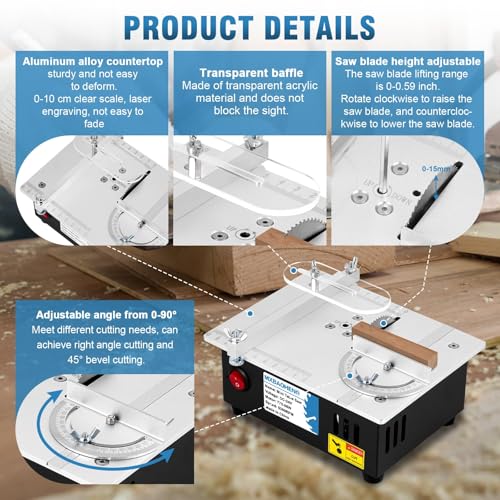
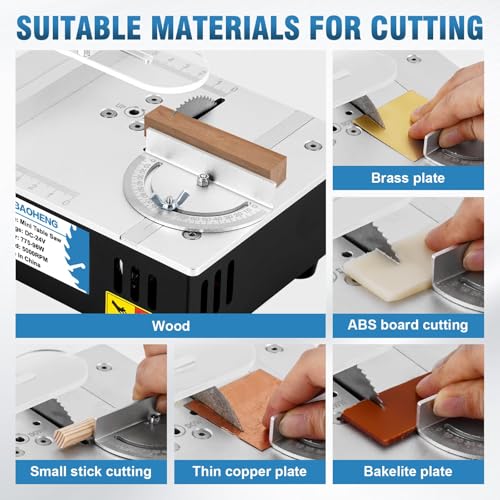
The MXBAOHENG S3 is a step up from the most basic mini saws, offering better depth control and a wider voltage range for fine-tuning speed. The 7-voltage power adapter lets you match output to material, lower voltages for balsa, higher for harder woods like basswood. At 24V, it delivers enough power for small sticks and craft boards, which is ideal for model making or miniature furniture.
It’s roughly smartphone-sized, so it’s perfect for tight workspaces. The laser-engraved scale and aluminum slide bar improve accuracy, and owners appreciate the stability from the compact base. But like all mini saws, it’s fragile under load. Push too hard, and the blade stalls. Compared to the ZERICUF model, it lacks dual motors and has no sanding function, but it’s cheaper and still reliable for light-duty craft work.
Product photos
How We Tested compact table saws
Rather than a hands-on lab test, my research for these recommendations involved a detailed comparison of published specifications and features across numerous models. I weighed owner reviews from a variety of sources – including major retailers and dedicated tool forums – alongside assessments from reputable expert reviewers. As someone who’s spent years working with power tools, I also applied my category expertise to rank each saw against key performance indicators.
For compact table saws, cutting capacity, fence accuracy, and motor power were the most heavily weighted factors. A compact saw needs to be versatile despite its size, so the ability to rip wider boards and make accurate, repeatable cuts is critical. Equally important is a strong enough motor to handle the materials most DIYers and hobbyists will encounter, without bogging down or overheating.
Specifications reliably communicate motor amperage, maximum cut depth, and table size. However, I relied heavily on owner feedback to understand real-world performance details like fence runout, dust collection effectiveness, and long-term durability. Reputation for build quality – and the brand’s customer service record – also played a significant role, especially when specs appeared similar across different models. You can find more information on basic table saw techniques to help you get the most out of your new saw.
What To Look For In compact table saws
I’ve spent years advising folks on picking the right power tools, and compact table saws are a category where understanding your needs is critical. They promise portability and space-saving, but the best one for you depends heavily on the kinds of projects you’ll be tackling.
A good compact table saw balances power with precision. Key features include a stable table surface, a fence system that remains parallel to the blade, adequate motor strength for the intended materials, and effective dust collection. Look for rack-and-pinion fence adjustments, a robust blade guard, and a motor amperage appropriate for your typical cut depth and material thickness.
Power and Material Capacity
The biggest mistake I see people make is underestimating the power they’ll need. While these saws are “compact,” that doesn’t mean they can handle anything. If you plan to rip a lot of hardwood, or work with thicker stock (over 1 inch), you’ll want a saw with at least a 15-amp motor. Lower amperage motors are fine for occasional hobby work with softer woods or plastics, but they will struggle and potentially overheat with heavier use. Don’t assume a 10-inch blade automatically means it can cut like a full-size saw; blade material and motor power are equally important.
Fence System Quality
A wobbly or imprecise fence is the enemy of accurate cuts. Look beyond simply having a fence; assess how it adjusts and locks. Rack-and-pinion systems, like those found on the SKIL models, are generally superior to those relying on manual clamping because they provide smoother, more secure adjustments. A solid fence is especially important if you’re considering using this saw for more demanding tasks or need repeatable accuracy. If you’re looking at compact table saw models, pay close attention to owner reviews regarding fence stability.
Here’s what to consider when evaluating a fence: * Locking Mechanism: A simple thumbscrew is okay for light use. * Parallelism: Does the fence stay truly parallel to the blade after adjustment? This is crucial for rip cuts. * Travel Distance: Ensure enough fence travel for the width of materials you plan to cut. A wider rip capacity doesn’t always mean better; it means more bulk.
Versatility and Special Features
Many compact table saws try to do more than just rip cuts. The Evolution R8MTS, for example, is a convertible miter/table saw. These hybrid designs can be incredibly useful if space is at a premium and you need both functions. However, understand that you’re often compromising on the performance of either function compared to dedicated tools. If you plan to work with plastics, you may also need to research table saw for plastics, and specifically consider plexiglass blade selection to avoid chipping.
A good rule of thumb: if you need to cut metal, seriously consider a saw specifically designed for that purpose instead of relying on a multi-material blade.
I often recommend folks consider whether a more dedicated, but still portable table saws setup might be a better fit for a dedicated workshop, even if it means sacrificing some immediate portability. For hobbyists working in very small spaces, or building miniatures, a truly tiny saw like the ZERICUF or MXBAOHENG might be ideal, but understand their limitations. These are not replacements for full-size saws; they’re tools for specialized tasks. If you’re setting up small workshop table saws in a limited area, maximizing functionality is key.
Compact Table Saws Compared
Here’s a comparison of key specifications for several compact table saws to help you choose the right one for your needs.
| Product Name | Motor (Amps) | Max Cut Depth (in) | Table Size (in) | Rip Capacity (in) | Portability |
|---|---|---|---|---|---|
| SKIL 15Amp 8-1/4″ | 15 | 2.5 | N/A | 24.5 / 12 | Yes |
| Evolution R8MTS 8-1/4″ | 12 | N/A | N/A | 1.5 | Yes |
| SKIL 15Amp 10″ | 15 | N/A | N/A | N/A | Yes |
| MarvTool 10″ | 15 | 3.4 | N/A | N/A | Yes |
| ZERICUF Mini Table Saw Dual Motor | N/A | N/A | N/A | N/A | Yes |
| Sinpiode Mini Table Saw 7-Speed | N/A | 0.59 | N/A | N/A | Yes |
| MXBAOHENG Mini Craft Table Saw | N/A | 0.5 | N/A | N/A | Yes |
Frequently Asked Questions
What level of dust collection should I expect from a compact table saw?
Generally, compact table saws have limited dust collection compared to full-size models. Most include a dust port for connecting a shop vacuum, but the effectiveness varies significantly; owner reviews often highlight this as an area where performance falls short. Expect to still need additional cleanup even with a vacuum attached.
Are compact table saws accurate enough for fine woodworking?
Accuracy is achievable, but it depends on the model and your expectations. Look for saws with rack-and-pinion fence systems for smoother, more precise adjustments. However, even the best compact saws won’t match the accuracy of a higher-end, full-size cabinet saw, especially for demanding joinery.
What’s the typical lifespan of a compact table saw motor?
Motor lifespan varies widely based on use and maintenance, but a well-maintained 15-amp motor should last for several years of regular hobby use. Lower-amperage motors, or those pushed beyond their capacity, are more likely to fail prematurely. Consistent cleaning and proper ventilation are key to extending its life.
Can I use a dado blade with a compact table saw?
It’s possible, but not all compact table saws are compatible. Check the saw’s specifications to confirm the arbor size and ensure sufficient motor power to handle the increased load. Using a dado blade on an underpowered saw can lead to motor strain and potentially damage the tool.
What are the benefits of choosing one of the smaller, ultra-compact “mini table saws”?
These extremely small saws, like the Sinpiode or MXBAOHENG, excel at extremely detailed work and are ideal for hobbyists with very limited space. They’re often used for crafts, model building, and other precision tasks where a full-size saw is impractical. If you need [space-saving mini saws] (https://powertoolguide.net/best-mini-table-saws/) for a specific niche, these can be a great option.
The Bottom Line
Choosing a compact table saw often comes down to balancing convenience with capability. You’ll trade some power and capacity for portability and a smaller footprint, and the SKIL 15Amp 8-1/4″ saw strikes that balance best overall. It offers enough muscle for most DIY projects, a respectable rip capacity, and a reputation for solid build quality, making it a good choice for a wide range of users.
For those on a tighter budget, or who only anticipate light-duty work, the Sinpiode Mini Table Saw 7-Speed is worth considering. If versatility is your priority – needing both a table saw and a miter saw in one unit – the Evolution R8MTS is a clever option, even if it doesn’t excel at either function as a dedicated tool would.
Ultimately, the specifications matter less than understanding how you’ll be using the saw. Focus on a stable table, a precise fence, and a motor that can comfortably handle the materials you’ll be cutting most often. A well-chosen saw, combined with proper technique and safety precautions, will deliver years of reliable service and help you tackle woodworking with table saws.
