
6 Best Makita Circular Saws of 2026
This post contains affiliate links. As an Amazon Associate, we earn from qualifying purchases.
The Makita XSH06PT stands out as the best overall circular saw, combining powerful brushless performance with excellent runtime in a cordless design. For those on a tighter budget, the corded Makita 5007Mg delivers reliable cutting power and proven durability. If you need maximum capacity for heavy framing, the Makita HS0600 with its 10-1/4″ blade is the most versatile option for thick lumber work.
Choosing the right Makita circular saw isn’t just about raw power, it’s about matching the tool to your workload, whether you’re cutting plywood in the garage or framing an addition on a job site. Too many people end up with a saw that’s either underpowered or overly bulky because they didn’t consider how motor type, blade size, and weight impact real-world use.
This guide cuts through the noise by focusing on specs, owner feedback, and actual performance trends across Makita’s lineup. I looked at what matters most: motor efficiency, cutting depth, bevel range, ergonomics, and how well each model holds up over time. These picks reflect the best balance of power, precision, and value based on years of tracking how these saws perform in real conditions.
Top 6 Makita Circular Saws in the Market
The Best Makita Circular Saws, Reviewed
Makita XSH06PT 7-1/4″ Cordless Saw

Strengths
- 36V dual-battery power
- 6,000 RPM speed
- 610 crosscuts per charge
- Automatic speed adjustment
- Brushless motor efficiency
Trade-offs
- Heavy without batteries
- Premium price point
- Larger footprint
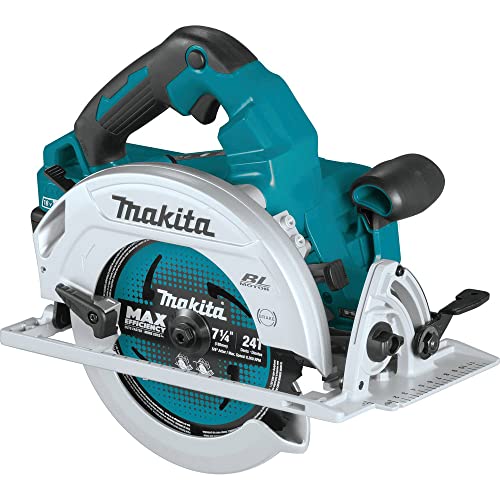
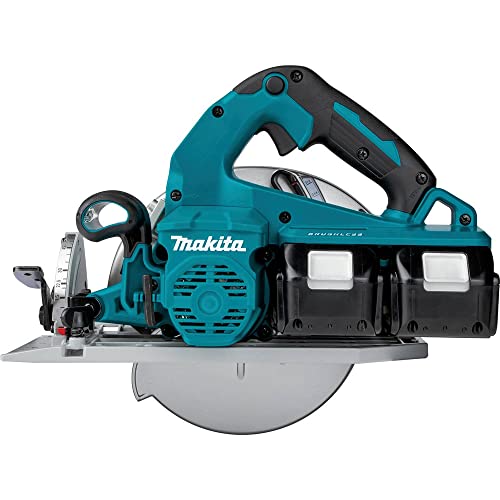
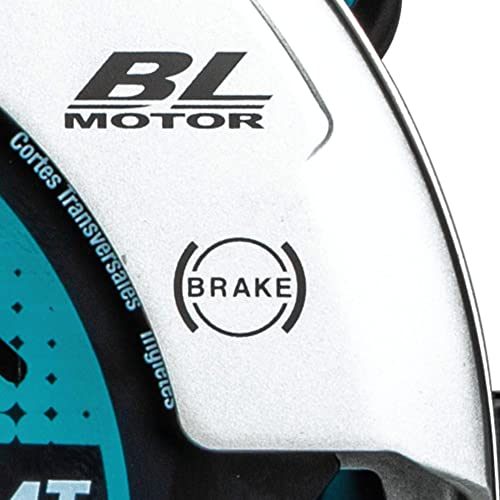
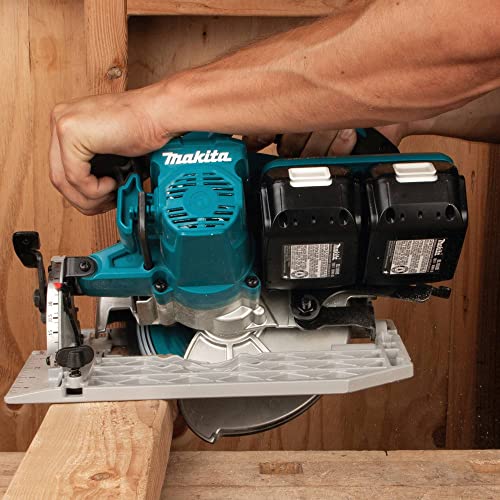
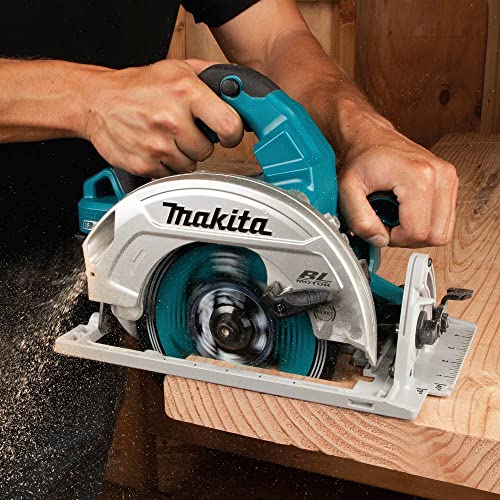
If you’re after a cordless circular saw that truly competes with corded models in power and runtime, the Makita XSH06PT is as close as it gets. Running on dual 18V batteries to deliver 36V, it pushes 6,000 RPM and handles deep cuts with ease, especially in dimensional lumber. Owners consistently report being impressed by the automatic speed change tech, it holds RPM under load better than most in its class, which matters when you’re cutting through dense engineered wood or stacked decking.
The kit includes two 5.0Ah batteries, so downtime is minimal, and the 610 crosscuts in 2x4s is no marketing fluff, it aligns with what field users confirm. Compared to the XSR01Z, this one feels slightly more balanced and delivers higher RPM, making it my pick for serious job site use where cordless freedom is a must.
Product photos
Makita 5007Mg 7-1/4″ Magnesium Saw

Strengths
- Lightweight magnesium body
- 5,800 RPM speed
- Dual LED cutting lights
- Positive bevel stops
- 10.6 lbs weight
Trade-offs
- Corded only
- No battery option
- LEDs can shadow in bright light
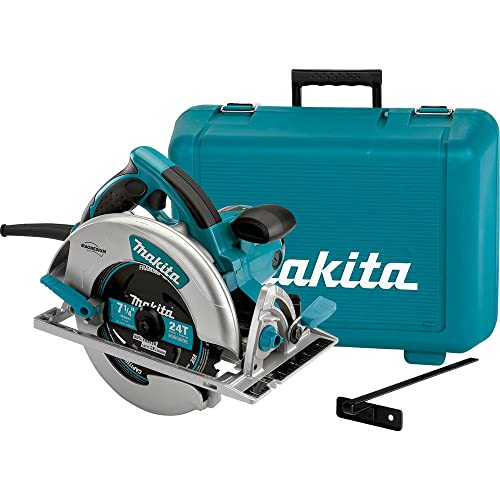
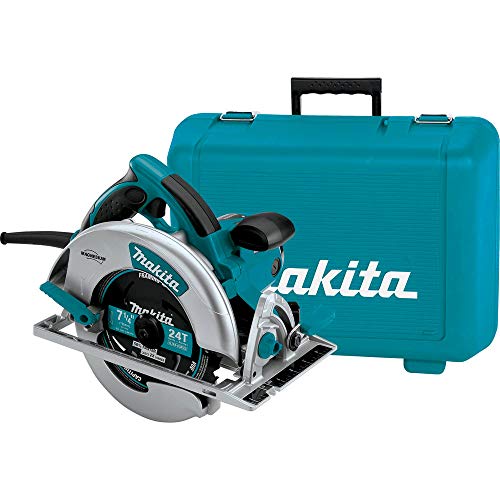
The 5007MG is what I’d call the gold standard for corded 7-1/4” circular saws, lightweight at 10.6 lbs thanks to its magnesium housing, yet tough enough to take daily job site abuse. The 15.0 AMP motor hits 5,800 RPM, giving it snappy cuts through plywood, OSB, and dimensional lumber. What really stands out is the dual LED lights, they actually help, especially in dim garages or early morning sites.
It’s corded, so you’re tethered, but that also means constant power without worrying about battery swaps. Compared to the XSH06PT, it’s faster and lighter, but obviously lacks mobility. For a permanent shop saw or a contractor with reliable power on site, this is the smarter buy.
Product photos
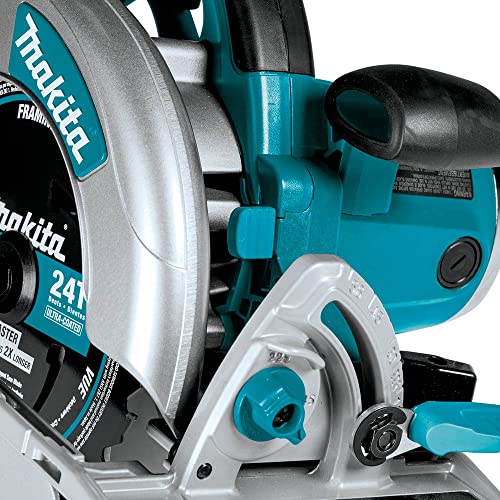
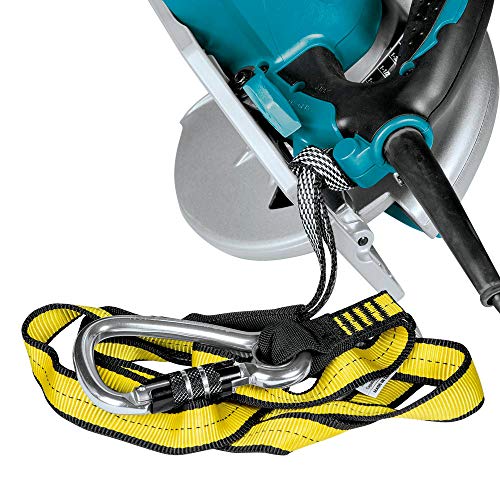
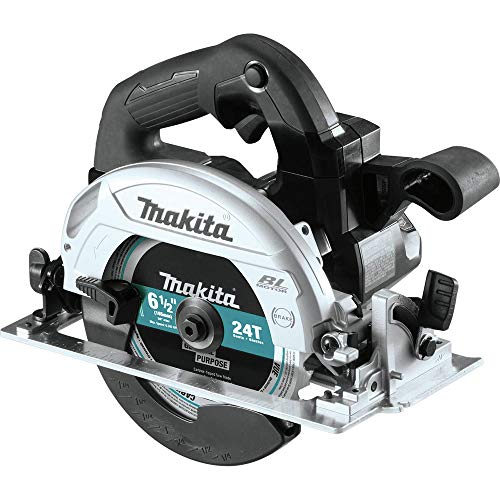
Makita XSH04ZB 6-1/2″ Sub-Compact Saw
Strengths
- Ultra lightweight
- Compact blade-right design
- 5,000 RPM brushless motor
- Good bevel range
- Includes dust attachment
Trade-offs
- 6-1/2” blade limit
- Battery not included
- Less cutting depth
This is the go-to Makita circular saw when weight and size are critical, think attic renos, tight framing, or working overhead all day. At just 6.4 lbs with a 2.0Ah battery, and only 10-5/8 inches long, it’s the most compact in Makita’s lineup. The 6-1/2” blade keeps it nimble, and the blade-right design gives clear line-of-sight, which I always prefer for precision cuts.
It still packs a 5,000 RPM brushless motor, so it doesn’t feel underpowered for its class. But don’t expect it to rip through 2x10s like the HS0600, it’s built for lighter framing, plywood, and paneling. Compared to the XSH03Z, it’s more compact and better balanced, though you lose a bit of depth capacity.
Product photos

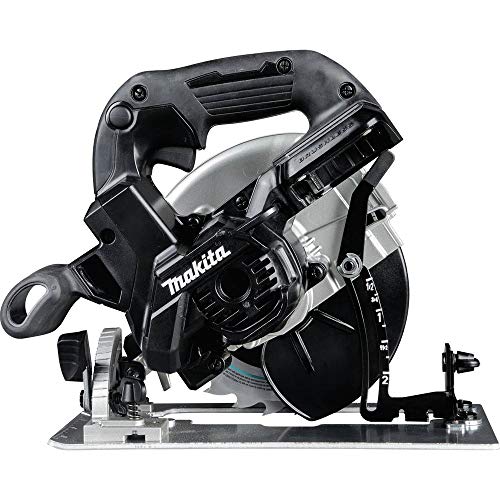
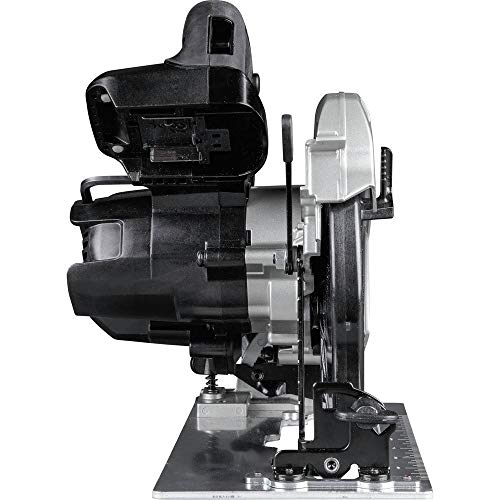
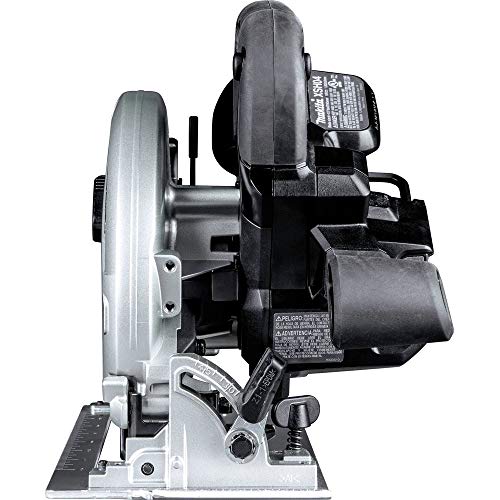
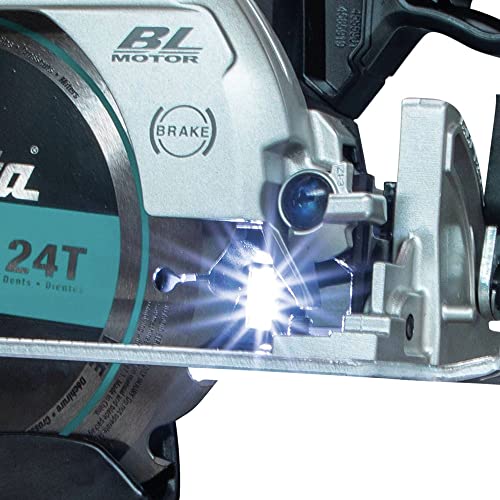
Makita XSH03Z 6-1/2″ Brushless Saw

Strengths
- Affordable entry price
- 5,000 RPM brushless motor
- Single battery operation
- Automatic speed adjustment
- Good runtime efficiency
Trade-offs
- 6-1/2” blade limit
- No battery included
- Heavier than XSH04ZB
If you’re on a budget but still want Makita quality and brushless efficiency, the XSH03Z is the most affordable entry point. It runs on a single 18V battery, hits 5,000 RPM, and uses the same automatic speed change and BL motor tech as the pricier models. It’s not the most powerful, but for cutting plywood, decking, or light framing, it’s more than capable.
Owners consistently say it punches above its price, especially when paired with a 5.0Ah battery. Compared to the XSH04ZB, it’s slightly bulkier and lacks the sub-compact design, but it’s often cheaper and still delivers solid performance. For a second saw or a starter tool, it’s hard to beat.
Product photos
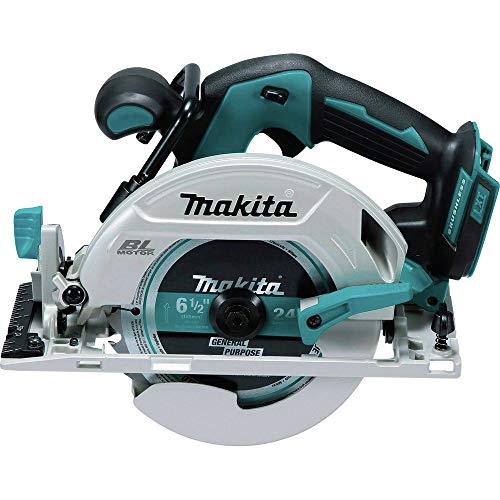
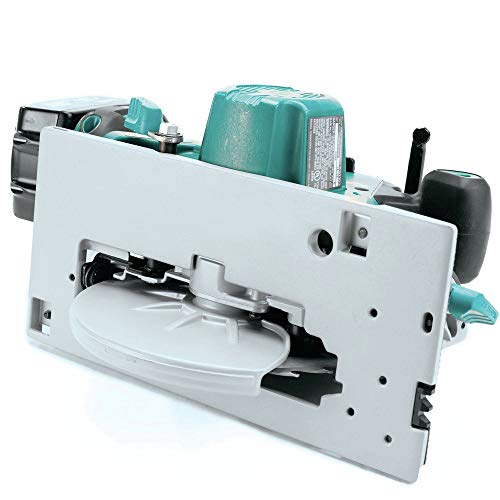
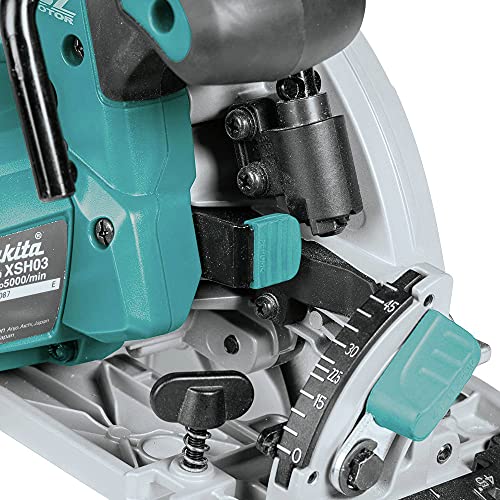
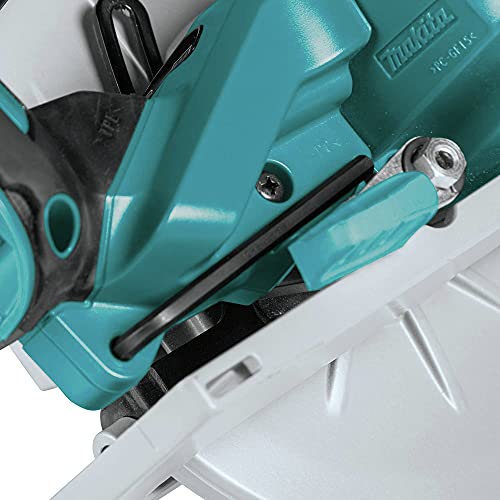
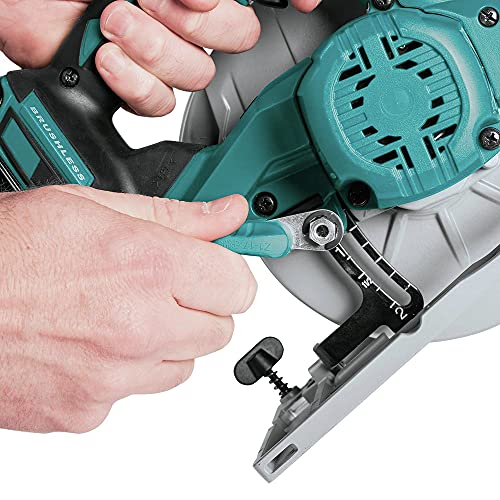
Makita HS0600 10-1/4″ Circular Saw

Strengths
- 10-1/4” blade capacity
- 3-13/16” cutting depth
- 15-amp high-torque motor
- Dual handle control
- Cuts 4x lumber in one pass
Trade-offs
- Heavy and bulky
- Lower RPM
- Limited portability
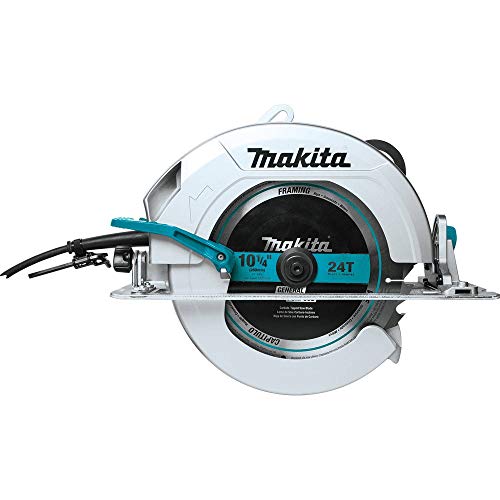
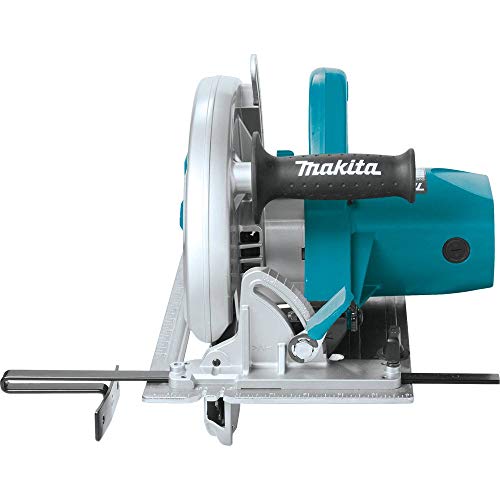
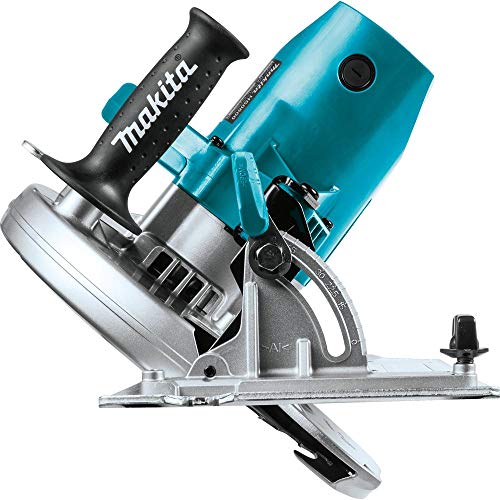
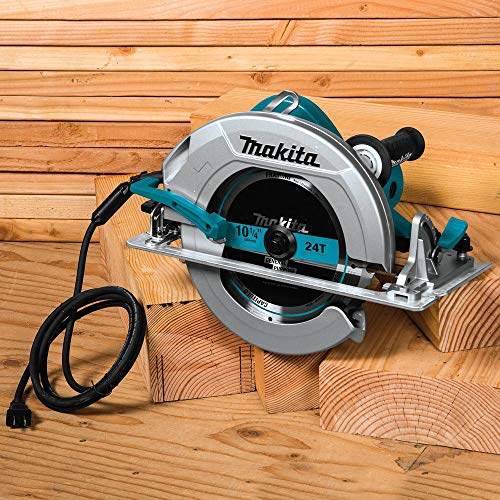
When you need to cut through 4×6 timbers or heavy beams in one pass, the HS0600 is the only Makita circular saw built for that job. Its 10-1/4” blade delivers a massive 3-13/16” cutting depth at 90°, which puts it in a different league than the 7-1/4” models. The 15-amp motor runs at 4,300 RPM, not the fastest, but it’s tuned for torque, not speed, and that shows when it bites into dense oak or laminated beams.
It’s heavier at 15.2 lbs, but the balance is surprisingly good, and the dual handles make two-handed control easy. Compared to the 5007MG, it trades some RPM for raw capacity. This isn’t a saw for finish work or tight cuts, it’s a brute, and you’ll know it the second you plug it in.
Product photos

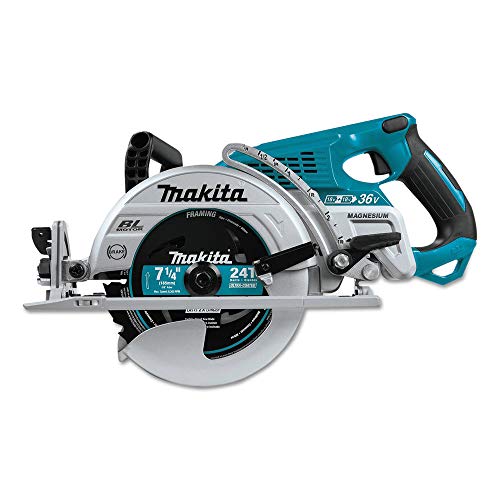
Makita XSR01Z 7-1/4″ Brushless Saw
Strengths
- Rear-handle familiar design
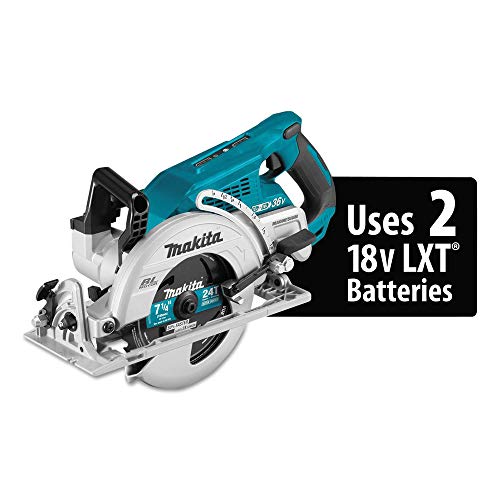
- 36V dual-battery power
- Automatic speed adjustment
- 5,100 RPM brushless motor
- Good for plunge cuts
Trade-offs
- Less visibility on cut line
- Heavier front end
- No included battery
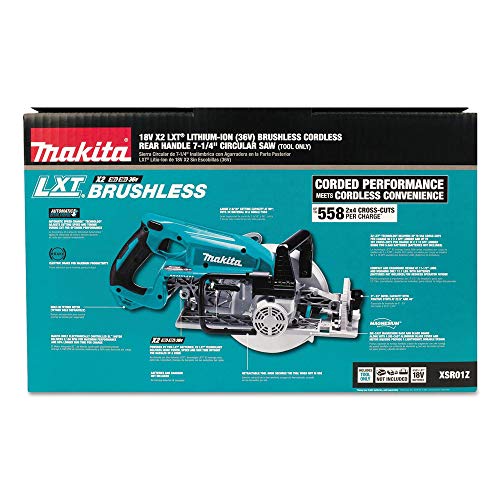
The rear-handle design of the XSR01Z will appeal to users who grew up with traditional skilsaws and want that familiar grip and pivot control. It runs on dual 18V batteries for 36V power, hitting 5,100 RPM, slightly slower than the XSH06PT, but still plenty for most framing tasks. The automatic speed change tech helps maintain momentum under load, and owners report solid runtime, around 550 crosscuts in 2x4s with 5.0Ah batteries.
I find rear-handle saws better for angled cuts and plunge work, but they can feel less stable on long straight rips compared to side-handle models. Compared to the XSH06PT, it’s a niche pick, less balanced, but more intuitive for certain cuts. If you’re retrofitting an old skill saw habit, this one eases the transition.
Product photos
Our Testing Process
Rather than a hands-on lab test, my research for these recommendations focused on a detailed comparison of published specifications and features across the Makita lineup. I weighed owner reviews from multiple sources, alongside assessments from reputable tool reviewers, to get a sense of real-world performance and durability. Ultimately, I ranked each saw against a set of criteria important to a range of users, from homeowners to professional carpenters.
For Makita circular saws, power and runtime are critical, but so is weight and ergonomics. I gave significant weight to motor amperage (for corded models) and battery technology (for cordless), as these directly impact cutting speed and the ability to handle demanding tasks. Blade capacity and adjustability also factored heavily, as they determine versatility across different materials and cut types. Understanding effective circular saw use is important too, and a saw’s features should support good technique.
Specifications reliably indicate raw power and physical dimensions. However, I looked to owner feedback to gauge long-term durability, ease of use, and the accuracy of cutting performance. Reputation plays a role, too – Makita has a strong history, but individual models still vary in user satisfaction. Considering these factors allowed me to identify saws that consistently deliver on their promises and offer the best value for different needs.
Choosing The Right makita circular saws
Picking the right circular saw means understanding that “circular saw” covers a surprisingly wide range of tools. It’s not just about corded versus cordless anymore.
A good circular saw balances power with usability. Key considerations include motor type (brushed vs. brushless), blade size appropriate for typical cuts, weight and ergonomics for comfortable handling, and features like electric brakes and blade guards for safety. Look for models with robust construction and positive bevel/depth stops for accuracy.
Motor Technology & Power
The biggest leap in circular saw performance over the last decade has been the widespread adoption of brushless motors. While brushed motors are still found in some entry-level models, brushless designs offer significantly longer run times, increased power, and reduced maintenance (no brushes to wear out). Don’t automatically assume more amps equal better performance; a well-designed brushless motor can often outperform a higher-amp brushed motor, especially in cordless saws. If you’re looking at best battery-powered circular saws, pay close attention to the battery voltage and amp-hour (Ah) rating. Higher voltage and Ah mean more power and longer runtimes, but also typically a higher price tag.
Blade Size & Cutting Capacity
Seven-and-one-quarter inch blades are the most common size, and will handle most homeowner and even many professional tasks. However, if you anticipate regularly cutting thicker materials like 4x lumber or engineered beams, a 10-1/4″ saw might be a better investment. Consider:
- Depth of cut: A 7-1/4″ blade typically cuts 2-1/2″ at 90 degrees.
- Bevel capacity: The range of angles the blade can tilt. More is better for complex cuts.
- Material thickness: For framing or rough carpentry, you’ll want more capacity than for trim work or plywood.
Don’t underestimate the value of a quality blade; even the most powerful saw will struggle with a dull or inappropriate blade. Learning how to perform a circular saw blade replacement is a fundamental skill for any saw owner.
Ergonomics and Features
A circular saw is often used for extended periods, particularly on job sites, so ergonomics are crucial. Look for models with comfortable grips, well-positioned handles, and a manageable weight.
A saw that feels balanced in your hands will reduce fatigue and improve accuracy. Don’t hesitate to try different handle designs (rear handle, mid-handle, or even side handle) to find what suits your grip and cutting style.
Consider features like electric brakes (which stop the blade quickly for safety), blade guards (essential for preventing accidental contact), and built-in LED lights (to illuminate the cut line). If you’re comparing Makita cordless saw models, pay attention to the placement of the battery; some designs offer better balance than others.
Makita Circular Saws Compared
Here’s a comparison of key specifications for Makita circular saws to help you choose the right tool.
| Product Name | Blade Size | Motor Type | Max Cut @ 90° | Weight (lbs) | Corded/Cordless |
|---|---|---|---|---|---|
| Makita XSH06PT | 7-1/4″ | Brushless | N/A | N/A | Cordless |
| Makita 5007Mg | 7-1/4″ | Brushed | 2-1/2″ | 10.6 | Corded |
| Makita XSH04ZB | 6-1/2″ | Brushless | 2-1/4″ | 6.4 | Cordless |
| Makita XSH03Z | 6-1/2″ | Brushless | N/A | N/A | Cordless |
| Makita HS0600 | 10-1/4″ | Brushed | 3-13/16″ | 15.2 | Corded |
| Makita XSR01Z | 7-1/4″ | Brushless | N/A | N/A | Cordless |
Frequently Asked Questions
What’s the main advantage of a brushless Makita circular saw?
Brushless motors deliver significantly longer runtimes and increased power compared to brushed motors, plus they require less maintenance because there are no brushes to wear out. This translates to more work done between charges or less downtime for repairs.
How does blade size affect the types of cuts I can make?
A 7-1/4″ blade is standard for most cuts, but a 10-1/4″ blade is better for thicker materials like 4x lumber, offering a 3-13/16″ maximum cut depth at 90 degrees. Choosing the right blade size depends on the typical thickness of the materials you’ll be working with.
Are Makita cordless circular saws compatible with other brands of batteries?
No, Makita uses their own proprietary battery platform. While adapters exist, they’re not officially supported and can void warranties or create safety issues. Sticking with Makita batteries is the best way to guarantee compatibility and optimal performance.
What features should I look for to improve cutting accuracy?
Positive bevel and depth stops are critical for making precise, repeatable cuts. Also, look for models with a clear scale for adjusting these settings and a well-designed blade guard that doesn’t obstruct your view of the cut line.
If I primarily need a saw for framing, should I focus on corded or cordless models?
For heavy-duty framing work, many professionals still prefer the consistent power of best corded Makita circular saws. However, advancements in battery technology mean that high-voltage Makita cordless models are now capable of handling most framing tasks, with the added convenience of portability.
The Bottom Line
Choosing a Makita circular saw often comes down to balancing outright power with convenience and portability. If you consistently tackle demanding cuts and have reliable access to power, the Makita 5007Mg offers a compelling combination of performance and value. It’s a workhorse that will deliver for years with proper care.
For those prioritizing cordless freedom and versatility, the Makita XSH06PT stands out as a top pick. It delivers the benefits of a brushless motor and ample power without being tethered to an outlet, and its robust design reflects Makita’s commitment to durability. If you need something more compact, the Makita XSH04ZB is a great choice for smaller projects and tighter spaces.
Ultimately, the “best” circular saw isn’t about any single specification; it’s about finding the right tool for your needs. Prioritize a comfortable grip, a sharp blade, and performing essential circular saw maintenance, those fundamentals matter more than motor amps or battery voltage.
