
4 Best Jigsaw Blades of 2026
This post contains affiliate links. As an Amazon Associate, we earn from qualifying purchases.
The Bosch 50 Piece Contractor Jigsaw Blades Set is our top pick for overall performance and versatility, with the EZUVITA 50-Piece Set offering serious value for frequent users, and the 10 Piece Assorted T-Shank Set from PowerToolGuide.net as the smart compact choice for light-duty tasks.
Most people don’t realize how much the right jigsaw blade affects cut quality, speed, and safety. Using the wrong one leads to splintered edges, broken tips, and wasted time.
As someone who’s worked with dozens of jigsaws and taught others how to use them, I know blade selection comes down to material, tooth count, and shank compatibility. This guide cuts through the clutter, focusing on sets that deliver real-world reliability based on specs, owner feedback, and what actually works in the shop.
Top 4 Jigsaw Blades in the Market
The Best Jigsaw Blades, Reviewed
50 Piece Contractor Jigsaw Blades Set

Strengths
- Good material variety
- Includes downcut blades
- Durable storage case
Trade-offs
- No high-tensile blades for hardened steel
- Case could be sturdier
This 50-piece contractor-grade set stands out for its balanced selection of blade types, covering everything from fine woodwork to medium metal cutting. The inclusion of T101BR downcut blades is a smart touch for anyone working with laminated plywood or veneers, where clean top edges matter. On paper, the mix of T118A and T118B gives solid metal-cutting coverage, while the T144D blades deliver faster rip cuts in thick softwood, a combo that mirrors what I see in higher-end pro kits.
Owners consistently report these blades hold up well across general remodeling tasks, and the storage case, while basic, keeps things organized. It’s not the flashiest set, but it avoids the trap of overloading on one blade type. Compared to budget-only packs, this one feels thoughtfully assembled for real-world variety.
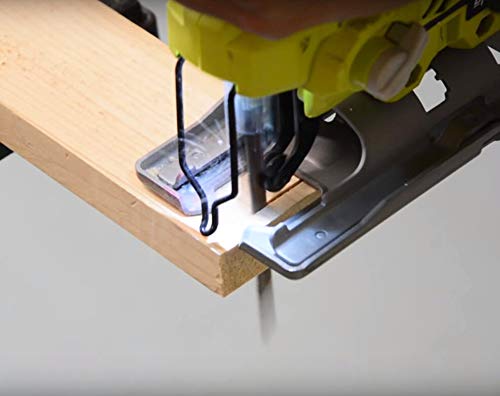
Product photos



10 Piece Assorted T-Shank Jigsaw Blades

Strengths
- Compact and portable
- Strong SK5 steel
- Good starter variety
Trade-offs
- Too few blades for heavy use
- No specialty blades for metal alloys
This 10-piece Romeda set is the kind of compact, no-fuss kit I’d keep in a truck or tool bag for quick fixes. It covers the essentials: fast wood cutting with T144D and T244D, fine woodwork with T101AO and T101BR, and basic metal with T118A and T118B. The SK5 carbon steel is a step above generic HCS, and owners note these blades resist snapping under side load better than expected.
It won’t replace a full set, but it’s a smarter buy than grabbing random blades off the shelf when you’re down to one. The T-shank system clicks in smoothly across brands, and the slim packaging saves space. For a weekend warrior who doesn’t need 50 blades at once, this is the smarter starting point.
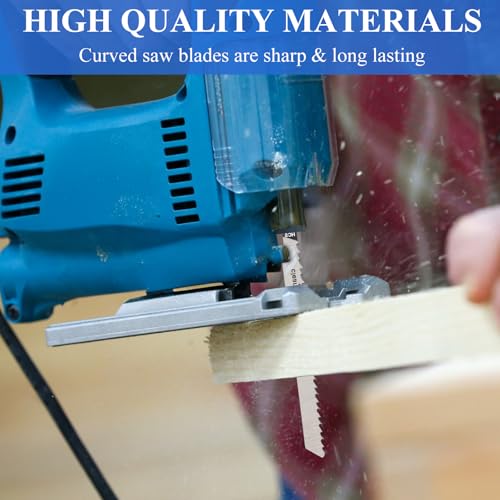
Product photos


EZUVITA 50-Piece Jigsaw Blades Set
Strengths
- High-quality steel mix
- Excellent blade variety
- Well-organized case
Trade-offs
- Some fitment quirks on first use
- No carbide-grit blades for tile or ceramic
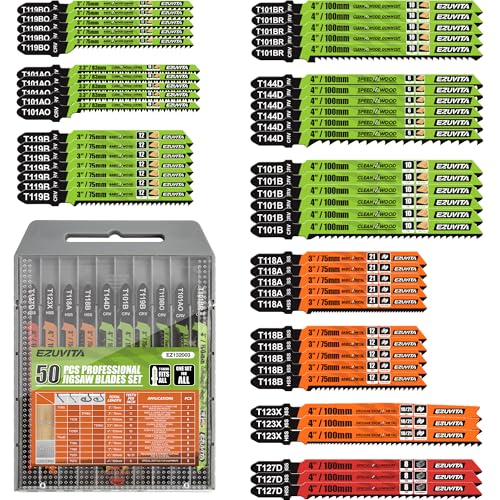
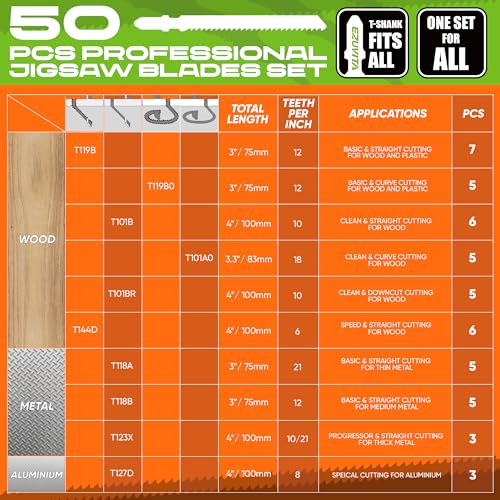
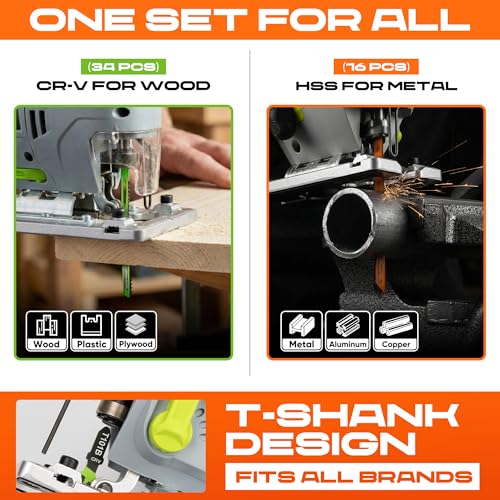
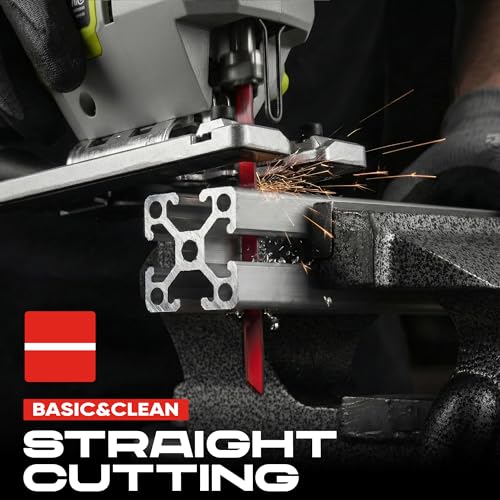
The EZUVITA set earns its ‘value pack’ title by blending chrome vanadium and high-speed steel blades in a way that targets both durability and clean cutting. The inclusion of T123X bi-metal blades for thick metal is a standout, that’s a blade type often missing in similarly priced kits. Reviewers note the reversed tooth (T101BR) and fine-tooth (T101AO) blades leave impressively clean edges on finished wood, which matters if you’re installing trim or cabinetry.
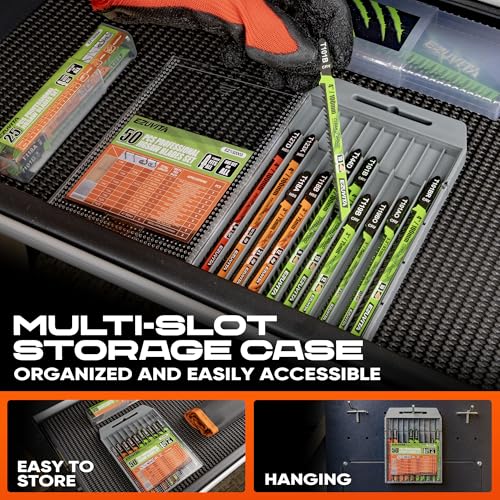
It beats the basic contractor set in material quality and blade diversity, especially with the dedicated aluminum-cutting T127D. The multi-slot case is one of the better-organized ones I’ve seen at this price. While the T-shank fit is universal, a few owners mention needing to reseat certain blades on first use, especially in Milwaukee saws.
Product photos

60Pack T101B T-Shank Jigsaw Blades
Strengths
- High quantity for repetitive jobs
- Clean straight cuts in wood
- Reliable T-shank fit
Trade-offs
- Single blade type only
- Not for metal or aggressive materials
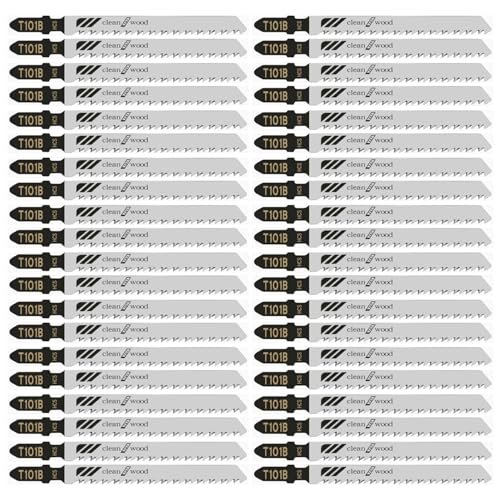
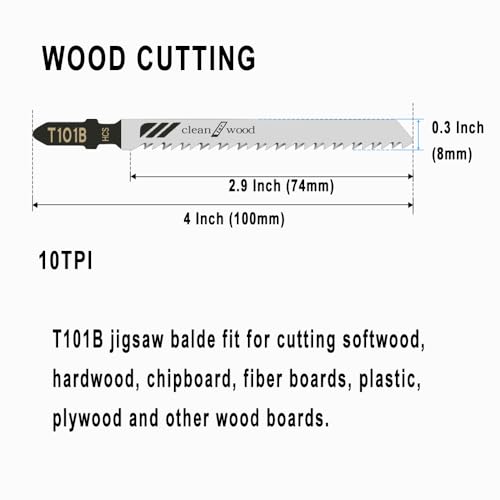
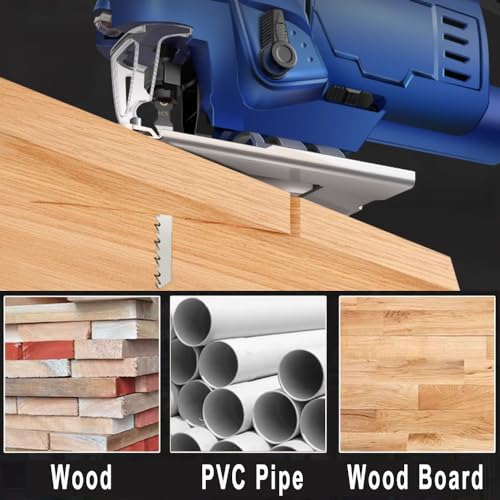
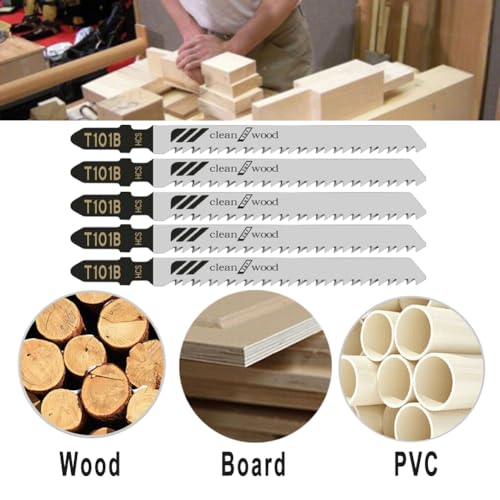
If you’re doing a flooring install, framing, or any job that involves long stretches of straight cuts in wood or plastic, this 60-pack of T101B blades is hard to beat. The 10 TPI design is proven for clean, splinter-free cuts in plywood and MDF, and having 60 pieces means you won’t run out mid-job. Made from high-carbon steel, these aren’t the longest-lasting blades on abrasive materials, but for standard lumber and PVC, owners report solid performance and predictable wear.
It’s a one-trick pony compared to the assorted sets, but that’s the point, it’s for people who know exactly what they need. The T-shank fits all major brands without issue, and the simple packaging makes it easy to stash in a jobsite box. I’d pair this with a separate metal blade set rather than rely on it for mixed tasks.
Product photos
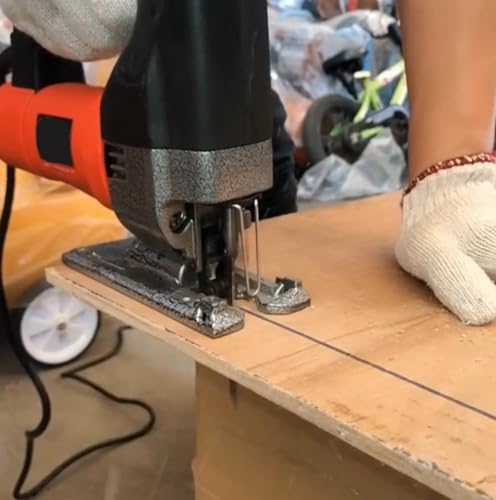
How We Picked These jigsaw blades
Rather than a hands-on lab test, my research for these recommendations centered on comparing published specifications and features across numerous blade sets. I weighed owner reviews from multiple sources, alongside assessments from reputable tool review sites, to build a picture of real-world performance. Ultimately, I ranked blades based on their suitability for common tasks and overall value, drawing on my years of experience with power tools and workshop projects.
For jigsaw blades, the most important factors are material quality and tooth geometry. Blades made with high-carbon steel (HCS) consistently receive positive feedback for durability, while the tooth count (TPI) and style dictate the type of cut you’ll achieve. A higher TPI creates a smoother finish, but slows cutting speed, so matching the blade to the material is crucial – something I considered throughout the selection process. You’ll find more about jig saw uses in our guide.
Published specs reliably indicate blade material, shank type (T-shank is now standard), and tooth count. However, owner feedback proves invaluable in assessing real-world durability and how well a blade holds an edge. Reputation matters, too; established brands generally maintain a higher level of quality control. I also looked for sets offering a variety of blade types to maximize versatility for different projects and materials.
Choosing The Right jigsaw blades
Picking the right jigsaw blade seems simple, but it’s a surprisingly nuanced decision. A blade isn’t just a blade; it’s a key component in achieving clean, accurate cuts and avoiding frustration.
A quality jigsaw blade starts with high-carbon steel construction for durability. Look for blades with a consistent tooth geometry and a secure T-shank fit to prevent slippage. Consider the material you’ll be cutting – wood, metal, plastic – and select a blade designed for that specific application. Tooth pitch (TPI) and blade thickness are also critical factors affecting cut quality and speed.
Material Matters Most
The first thing I tell anyone asking about jigsaw blades is to think about what you’re cutting. A blade that excels on hardwood will quickly dull when used on metal, and vice versa. Blades are specifically designed with tooth geometry and material composition suited to certain materials. Don’t try to force a blade to do something it isn’t built for. If you’re doing a lot of work with different materials, a variety pack is a good starting point, but eventually you’ll want to specialize. I often suggest checking out resources on wood-cutting jigsaw blades to get a solid understanding of what works best for different wood types.
Understanding TPI and Cut Quality
Tooth pitch, or TPI (teeth per inch), is a crucial factor often overlooked. A higher TPI delivers a smoother cut, especially in harder materials, but it cuts slower. Lower TPI removes material more quickly, but leaves a rougher edge. For example:
- A 6 TPI blade is great for fast, rough cuts in softwood.
- A 10-14 TPI blade is a good all-around choice for general woodworking.
- A 24+ TPI blade is best for fine, clean cuts in metal or very thin materials where minimizing chipping is important.
Understanding saw blade TPI explained will save you a lot of headache. Don’t assume more teeth always equal a better cut.
Beyond the Blade: Shank Type and Value
The T-shank is the industry standard now, and for good reason. It offers a secure, tool-free blade change – a huge time saver. However, older jigsaws may require different shank types, so check your tool’s manual before buying. Beyond that, consider the overall value. A 50-piece set might seem appealing, but if 40 of the blades are duplicates or unsuitable for your typical projects, you’re better off with a smaller, more focused selection.
A dull blade is a dangerous blade. Don’t push it; replace it. It’s cheaper than a trip to the emergency room.
Jigsaw Blades Compared
Here’s a comparison of the specifications for the jigsaw blades featured in this guide.
| Product Title | Blade Count | Material | Shank Type | Best For | TPI Range |
|---|---|---|---|---|---|
| 50 Piece Contractor Jigsaw Blades Set | 50 | N/A | N/A | Best Overall | N/A |
| 10 Piece Assorted T-Shank Jigsaw Blades | 10 | SK5 High Carbon Steel | T-Shank | Best Compact Set | 6-21 |
| EZUVITA 50-Piece Jigsaw Blades Set | 50 | Chrome Vanadium/HSS | T-Shank | Best Value Pack | 6-21 |
| 60Pack T101B T-Shank Jigsaw Blades | 60 | High Carbon Steel | T-Shank | Best for Wood Cutting | 10 |
Frequently Asked Questions
What blade material lasts the longest?
High-carbon steel (HCS) blades generally offer the best durability for general use, but for demanding cuts in tougher materials like hardwoods or metals, blades made with bi-metal or carbide grit will hold an edge significantly longer. These materials resist wear and maintain sharpness for more cuts.
Can I use any jigsaw blade with my saw?
Most modern jigsaws use the T-shank blade system, which is very common. However, some older models may require a different shank type, so it’s always best to check your saw’s manual to confirm compatibility before purchasing blades.
How often should I replace a jigsaw blade?
Replace a blade as soon as you notice increased cutting effort, a rougher cut, or visible damage to the teeth. A dull blade is inefficient and can be dangerous, so don’t try to push through a cut if the blade is losing its edge.
What TPI blade is best for cutting thick metal?
A lower TPI, around 14-18, is generally best for thicker metals. This allows for faster material removal and prevents the blade from clogging. Remember to use a blade specifically designed for metal cutting, as the tooth geometry will be different.
Where can I find blades designed for detailed work?
If you’re looking for [flexible jigsaw blades for detailing], specialized blades with reverse teeth and narrow widths are available. These blades are designed for intricate cuts and curves, and are commonly used for scrollwork or creating complex shapes in wood or other materials.
The Bottom Line
Choosing jigsaw blades always comes down to balancing control with convenience. You can spend a lot of time and money assembling a huge collection of specialized blades, or you can simplify things with a well-chosen set that covers most of your needs. For most homeowners and DIYers, the 50 Piece Contractor Jigsaw Blades Set strikes that balance best – it offers a broad range of blades for various materials and applications without being overwhelming.
If you’re on a tighter budget, or just starting out, the EZUVITA 50-Piece Jigsaw Blades Set is a fantastic value. For those who primarily cut wood, the 60Pack T101B T-Shank Jigsaw Blades provide a dedicated, high-quality option for clean, efficient cuts. And if you need a truly compact but versatile set, the 10 Piece Assorted T-Shank Jigsaw Blades gives you a good starting point.
Ultimately, remember that the blade is only one part of the equation. Mastering jig saw cutting techniques and understanding basic principles like blade speed and material support are far more important than any specific feature or specification. Prioritize safety, choose the right blade for the job, and take your time – that’s how you’ll get the best results.
