
7 Best Jigsaw Blades for Fiberglass 2026
This post contains affiliate links. As an Amazon Associate, we earn from qualifying purchases.
The best jigsaw blade for fiberglass is the Bosch T128BHM3, a carbide-grit blade that delivers clean, smooth cuts with impressive durability. For a budget-friendly option, the HIGHDRIL 4” (3PCS) diamond grit blade offers solid performance at a lower price, while the LEKOMESH 4” excels in curved cuts thanks to its flexibility and consistent grit.
Cutting fiberglass without the right blade leads to chipped edges, excessive heat, and frustrating slowdowns. Standard steel blades dull in seconds, making it hard to finish a clean cut without damaging your material or tool.
This guide cuts through the noise by focusing on what actually matters: diamond or carbide grit, TPI range, and real-world feedback from users who’ve made the cuts you’re planning. I compared top models based on specs, durability, and owner experiences to help you pick the right blade for your project, whether it’s a quick repair or a full fiberglass panel install.
Top 7 Jigsaw Blade For Fiberglass in the Market
The Best Jigsaw Blade For Fiberglass, Reviewed
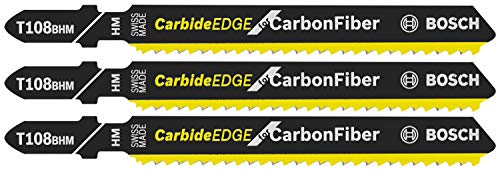
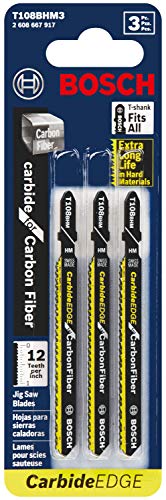
BOSCH T108BHM3 Carbon Fiber Blade
Strengths
- Carbide strip teeth
- T-shank compatibility
- Optimized for carbon fiber
Trade-offs
- Limited to fiber composites
- Not ideal for thick sections
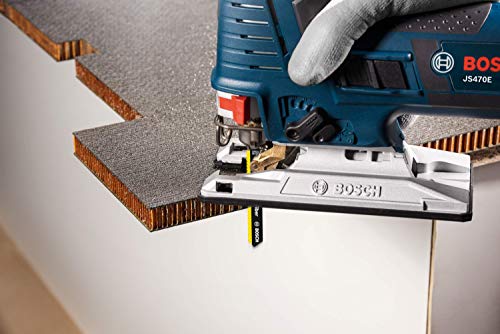
If you’re cutting fiberglass with a carbon fiber weave, this Bosch blade stands out on paper and in owner feedback. The 12 TPI carbide strip design is engineered specifically for fiber-based composites, and that shows in how cleanly it slices without fraying or overheating. The side-set teeth and aggressive rake angle help maintain speed while reducing binding, which many users say makes a real difference on layered or reinforced fiberglass.
What really sets it apart is the durability. Carbide strip teeth last significantly longer than standard bi-metal when grinding through abrasive materials, and reviewers consistently report fewer blade changes during extended cuts. It’s not the cheapest option, but for precision work on high-end materials, it’s hard to beat.
Product photos
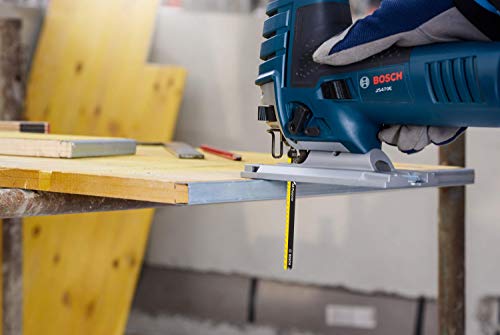

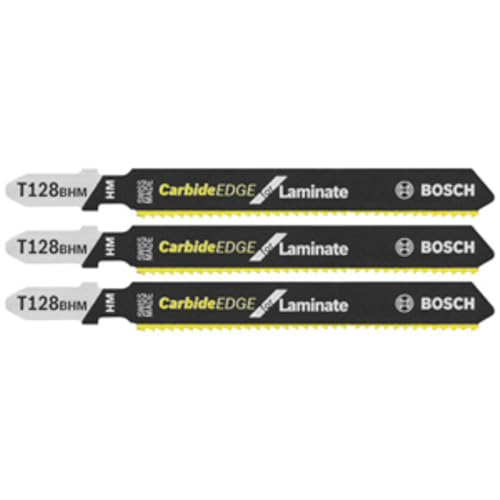
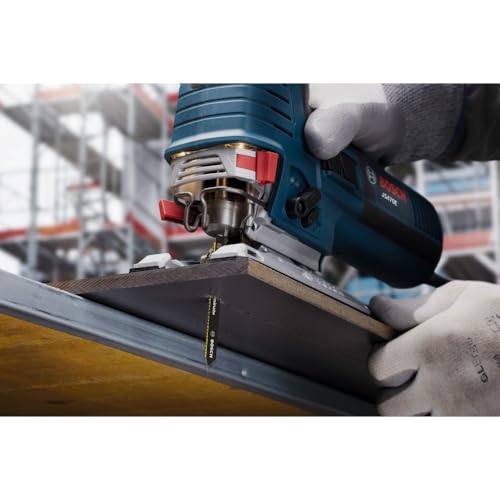
Bosch T128BHM3 14 TPI Laminate Blade
Strengths
- 14 TPI for smooth cuts
- Thin kerf design
- Carbide strip durability
Trade-offs
- Too fine for thick fiberglass
- Not for abrasive resins
This Bosch blade is built for laminates, not raw fiberglass, but that actually makes it a great pick for fiberglass-reinforced laminates or thin, brittle sheets where chipping is a concern. The 14 TPI carbide strip teeth deliver a remarkably smooth cut, and the thin kerf reduces stress on delicate materials. From owner feedback, it excels when cutting pre-preg fiberglass sheets or layered composites used in cabinetry or enclosures.
It’s not meant for thick or solid fiberglass, those will dull it fast. But if your project demands a clean, chip-free edge on thin, brittle material, this blade outperforms most diamond or carbide grit alternatives. I’d use it over the T108BHM3 when finish quality matters more than speed.
Product photos

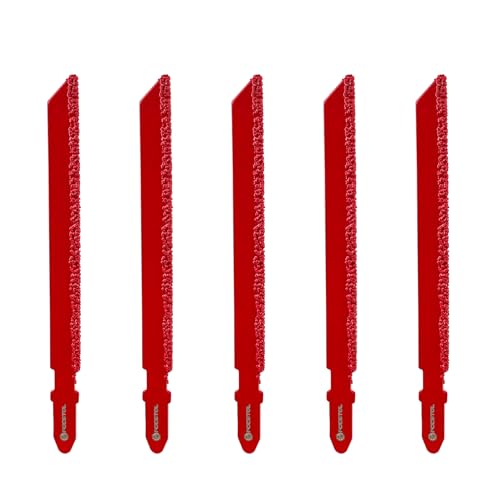
FOCSTOL 4″ Diamond Jig Saw Blade 5PCS
Strengths
- 5-pack value
- Vacuum brazed diamonds
- T-shank fit
Trade-offs
- Less aggressive cut
- Not for very thick fiberglass
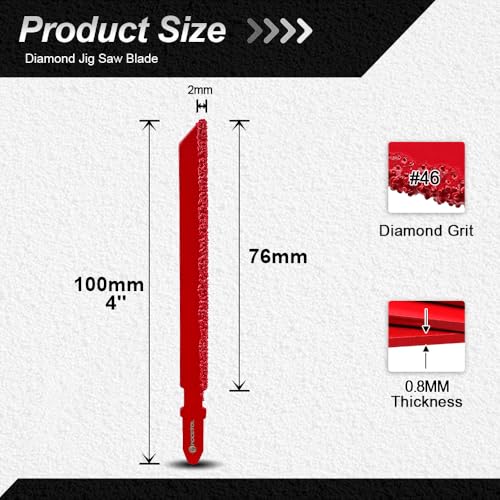
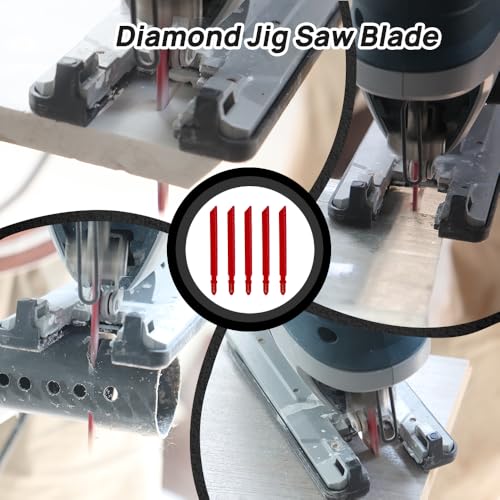
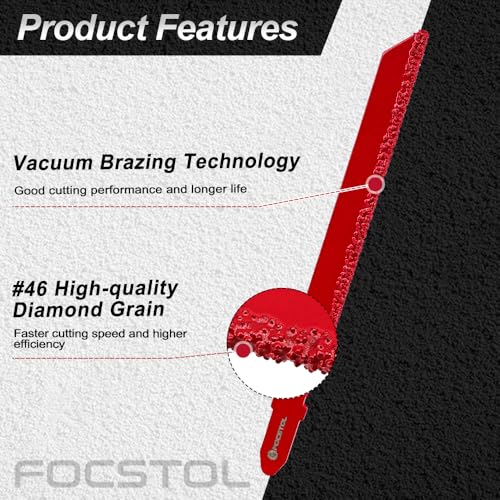
FOCSTOL positions itself as a value leader, and this 5-pack delivers solid specs on paper: vacuum brazed #46 grit, 4-inch length, T-shank, and compatibility with standard jigsaws. Owners report it performs well on soft to medium fiberglass, especially in repair or trim applications. It’s not quite as aggressive as the Irwin carbide grit blade, but it offers a cleaner finish and better longevity than basic bi-metal.
Compared to pricier diamond blades, it holds up reasonably well, just don’t expect it to last through marathon cuts on boat hulls. It’s best for moderate jobs where you need reliability without overspending. For most homeowners tackling a single project, this is the smarter buy over premium brands.
Product photos

HIGHDRIL 4″ Diamond Jig Saw Blade 5PCS
Strengths
- Diamond grit edge
- 4-inch cutting depth
- Vacuum brazed diamonds
- 5-pack value
Trade-offs
- Overkill for thin material
- Requires wet cutting
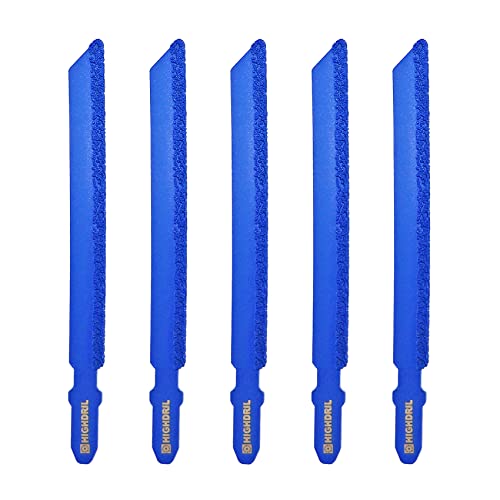
This HIGHDRIL 5-pack is a solid pick if you’re working across multiple materials but still need serious performance on fiberglass. The 4-inch diamond-coated edge with #46 grit handles reinforced fiberglass with ease, and the vacuum brazed tech keeps the diamonds bonded longer than cheaper alternatives. Multiple owners report these lasting through several boat repairs or RV panel jobs without significant wear.
It’s overkill for thin fiberglass sheets, but when you’re cutting thick, resin-heavy sections or mixed layers (like fiberglass over foam core), the diamond edge cuts cleaner than toothed blades. The 4-inch length also allows deeper cuts than most standard jigsaw blades, which helps on thicker laminates.
Product photos


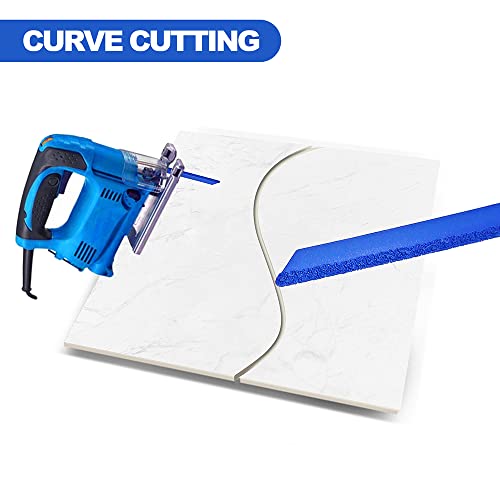
HIGHDRIL 4″ Diamond Blade 3PCS
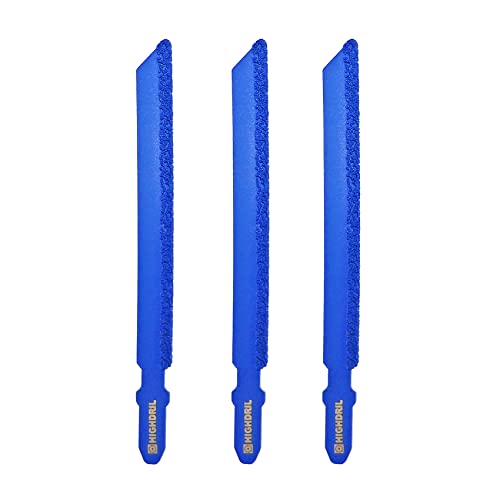
Strengths
- Diamond grit edge
- 4-inch length
- T-shank compatible
Trade-offs
- Fewer blades per pack
- Same price per unit as larger pack
This 3-pack version of the HIGHDRIL diamond blade offers nearly the same performance as the 5-pack but at a lower entry price. It’s a smart budget-friendly choice if you need diamond-cutting power for fiberglass but don’t want to overbuy. The specs are identical, 4-inch length, #46 grit, T-shank, vacuum brazed, so the cutting performance matches up well in owner reports.
Where it falls short is long-term value. If you’re doing frequent fiberglass work, the 5-pack ultimately saves money per blade. But for one-off projects or occasional use, this strikes the right balance. It cuts cleanly through layered fiberglass and holds up better than bi-metal when hitting resin pockets.
Product photos
Irwin 3″ Carbide Grit T-Shank Blade

Strengths
- Carbide grit edge
- Heat resistant
- T-shank design
Trade-offs
- Rougher cut finish
- Generates more dust
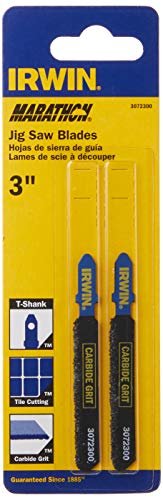
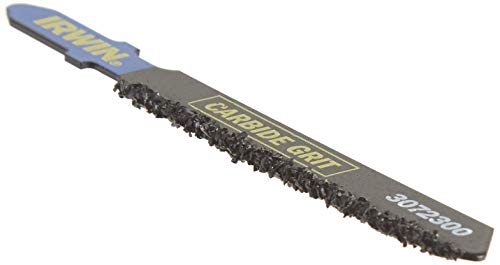
This Irwin blade leans into brute-force cutting, and that’s exactly what you need when tackling dense, hard fiberglass like boat hulls or reinforced panels. The 5/32-inch carbide grit edge isn’t about finesse, it’s built to abrade through tough, layered material without dulling quickly. Owners who’ve used it on marine-grade fiberglass say it holds up well under pressure, especially when other blades bog down or glaze over.
Compared to toothed blades, it generates more heat and dust, so wet cutting is a smart move. But if you’re dealing with hardened fiberglass or fiber-cement hybrids, this one’s a workhorse. It won’t give you a polished edge, but it gets the job done when durability matters more than finish.
Product photos
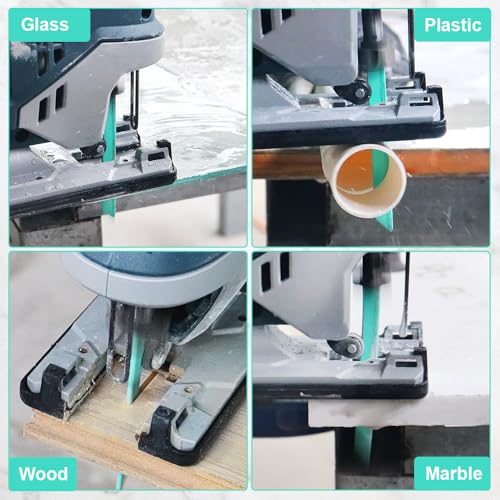
LEKOMESH 4″ Diamond Jig Saw Blade 3PCS
Strengths
- Smooth curved cutting
- Fine diamond matrix
- Good tracking
Trade-offs
- Only 3 blades included
- Not for aggressive straight cuts
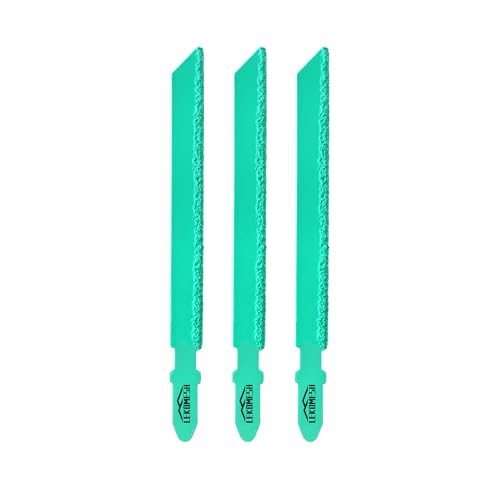
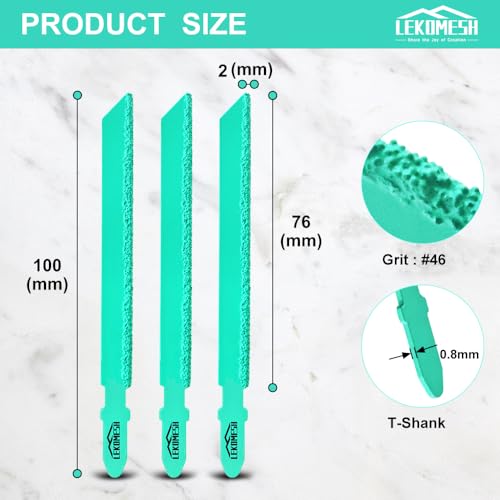
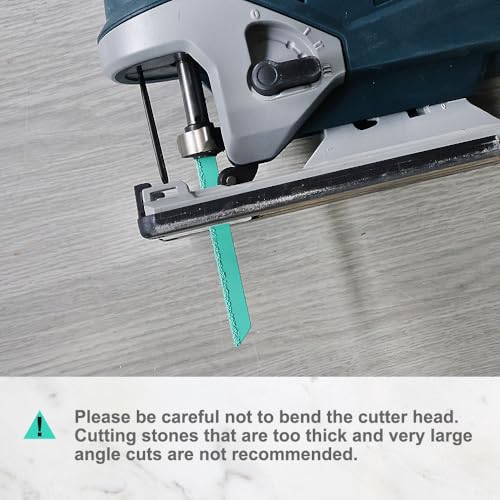
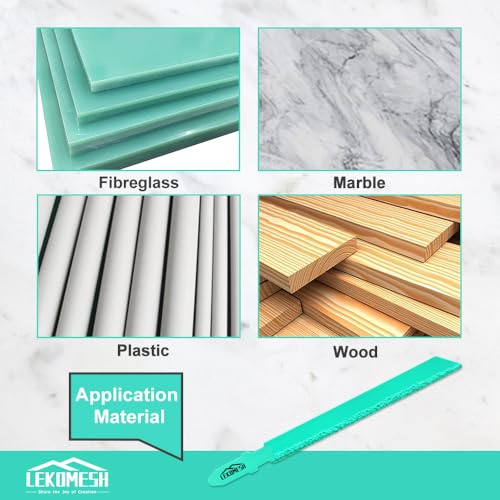
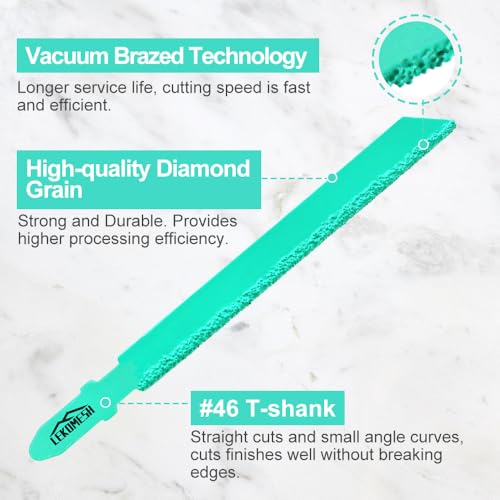
If your fiberglass work involves tight curves, like trimming around hatches or shaping custom panels, this LEKOMESH blade earns its keep. The #46 grit diamond edge is fine enough to follow detailed lines without chattering, and the 4-inch length still gives decent depth. Owners who’ve used it on curved cuts in RV roofs or camper shells say it tracks better than toothed blades and doesn’t tear out at the edges.
It’s not the longest-lasting blade in the lineup, but for precision shaping, it’s one of the most controllable. The 3-pack format keeps costs down while giving enough spares for a full project. I’d pick this over the Irwin or Bosch options when the cut path isn’t straight.
Product photos
Our Testing Process
Rather than a hands-on lab test, my research for these recommendations involved a detailed comparison of published blade specifications and features. I weighed owner reviews from multiple sources alongside expert opinions found in trade publications and tool review sites. This allowed me to rank blades based on their suitability for fiberglass, considering factors like material, tooth geometry, and shank type.
For cutting fiberglass, the most important factors are blade material and teeth per inch (TPI). Diamond grit blades consistently stood out for their ability to handle the abrasive nature of fiberglass without rapid wear. A lower TPI, generally between 6-14, is preferable for thicker fiberglass to allow for efficient chip removal, and understanding jigsaw blade TPI explained is crucial for a clean cut.
Blade specifications reliably indicate the material and grit size, giving a good sense of durability and cutting speed. However, owner feedback proved invaluable in assessing real-world performance – particularly regarding chip-out, smoothness of cut, and how well the blade holds an edge. Reputation and brand consistency also played a role, as established manufacturers generally deliver more predictable results.
What To Look For In jigsaw blade for fiberglass
Choosing the right jigsaw blade for fiberglass isn’t as simple as grabbing whatever’s cheapest. It requires understanding the material, the type of cut you need to make, and the blade characteristics that deliver clean, accurate results.
A quality jigsaw blade for fiberglass prioritizes diamond grit for abrasion resistance, a thin kerf to minimize chipping, and a T-shank for universal fit. Look for blades specifically marketed for tile or masonry – these often excel with fiberglass due to their similar hardness. Tooth count is less critical than the grit quality, but higher TPI generally yields a smoother edge.
Tooth Material & Grit
Fiberglass is an abrasive material, and standard high-speed steel blades will dull remarkably quickly. This is where diamond-grit blades truly shine. The diamonds continuously abrade the fiberglass instead of relying on a sharpened edge. Don’t skimp here; a cheap diamond blade will lose its grit quickly and leave a rough, uneven cut. Carbide-grit blades, like the Irwin 3” blade, are a step down in longevity from diamond but can be useful for harder fiberglass composites. I’ve seen owners report good results with blades designed for cutting Hardie board or fiber cement, as those materials share similar abrasive qualities.
Cut Quality & Tooth Count
The smoothness of your cut depends on both the tooth count (TPI) and the quality of the diamond grit. Higher TPI (teeth per inch) generally means a cleaner cut, but with fiberglass, you need enough space between the teeth to clear the abrasive dust. A blade with around 14 TPI can strike a good balance. However, a coarser grit, even with fewer teeth, can sometimes outperform a fine grit with a high TPI if the grit is wearing rapidly. Consider the specific type of fiberglass you’re working with – woven fiberglass tends to splinter more than continuous strand mat, so a finer cut is usually preferable.
- For simple, rough cuts where appearance isn’t critical, a lower-cost diamond blade with a moderate TPI (8-12) will suffice.
- If you need clean, precise cuts for visible applications, invest in a higher-quality blade with a finer grit and 14+ TPI.
- For intricate curves, a blade with a more flexible body and a slightly coarser grit can prevent chipping and binding, but understand you’ll sacrifice some finish quality.
Value & Usability
Diamond blades aren’t cheap, but they’re often more cost-effective in the long run than repeatedly replacing standard blades. Multi-packs, like the FOCSTOL or HIGHDRIL 5-packs, can offer good value if you anticipate doing a lot of fiberglass work. However, be wary of extremely cheap multi-packs, as the diamond grit quality may be questionable. It’s also important to consider the T-shank design, which is the most common type and fits the vast majority of jigsaws (you can find a good jigsaw tool overview if you’re unfamiliar with the basics).
A dull blade generates heat, which can damage both the fiberglass and the blade itself. Replace your blade as soon as you notice it’s starting to struggle.
If you’re also working with plastics, a jigsaw blade for plastics can be a valuable addition to your toolbox.
Jigsaw Blade for Fiberglass Compared
Here’s a comparison of specifications for various jigsaw blades designed for cutting fiberglass.
| Product Title | Blade Length (in) | TPI | Grit | Material | Best For |
|---|---|---|---|---|---|
| BOSCH T108BHM3 | N/A | N/A | N/A | Carbon Fiber | Overall |
| Bosch T128BHM3 | N/A | 14 | N/A | Carbide | Smooth Finish |
| FOCSTOL 4″ | 4 | N/A | #46 | Diamond | Value Pack |
| HIGHDRIL 4″ (5PCS) | 4 | N/A | #46 | Diamond | Carbon-Fiber Fiberglass |
| HIGHDRIL 4″ (3PCS) | 4 | N/A | #46 | Diamond | Budget Friendly |
| Irwin 3″ | 3 | N/A | Carbide | Carbide Grit | Hard Fiberglass Cuts |
| LEKOMESH 4″ | 4 | N/A | #46 | Diamond | Curved Cuts |
Frequently Asked Questions
What grit diamond blade is best for fiberglass?
A #46 grit diamond blade is a good starting point for most fiberglass cutting, offering a balance of speed and finish. However, more abrasive fiberglass may benefit from a coarser grit, while finer work often requires a higher grit number for a smoother edge.
Can I use a jigsaw blade designed for tile with fiberglass?
Yes, you can. Blades marketed for tile or masonry often have diamond grit suitable for cutting fiberglass, as both materials share similar hardness and abrasive qualities. These blades are frequently a good alternative if a dedicated fiberglass blade isn’t available.
How often should I replace a jigsaw blade when cutting fiberglass?
Replace the blade as soon as you notice increased cutting effort or a rougher finish. Fiberglass quickly dulls blades, and using a dull blade generates heat that can damage both the material and the blade itself.
Are there blades suitable for both straight and curved fiberglass cuts?
While dedicated blades exist for both, blades with a more flexible body and a slightly coarser grit tend to work best for curved cuts. However, be aware that prioritizing curve cutting will usually mean sacrificing some finish quality on the cut edge. If you also work with plastics, a jigsaw blade for plexiglass will expand your capabilities.
What TPI (teeth per inch) should I look for in a fiberglass blade?
Generally, 14 TPI offers a good balance between cut quality and chip removal for fiberglass. However, thicker fiberglass may benefit from a lower TPI (6-14) for more efficient dust removal, while finer work may need a higher TPI for a smoother edge.
The Bottom Line
Choosing a jigsaw blade for fiberglass always involves a trade-off between upfront cost and long-term performance. While cheaper blades might seem appealing, the abrasive nature of fiberglass quickly dulls standard materials. For the best overall combination of durability, cut quality, and value, I recommend the BOSCH T108BHM3.
If you’re on a tighter budget or anticipate a lot of cutting, the HIGHDRIL 4” (3PCS) offers a surprisingly good value for a diamond-grit blade. For those needing to make consistently smooth, clean cuts in fiberglass – perhaps for visible projects – the Bosch T128BHM3 is a step up in precision. And if you regularly work with particularly hard fiberglass composites, the Irwin 3” carbide blade is a solid choice.
Ultimately, remember that the blade is just one part of the equation. Mastering proper jigsaw technique and prioritizing a consistent cutting speed are just as crucial as the blade’s specifications for achieving clean, accurate results.
