5 Best Jigsaw Blades for Laminate Countertops 2026
This post contains affiliate links. As an Amazon Associate, we earn from qualifying purchases.
The Bosch T128BHM3 is the best jigsaw blade for laminate countertops, delivering clean cuts and exceptional durability thanks to its carbide edge. For a more budget-friendly option, the Bosch T101BIF offers solid performance with a bi-metal construction. If you need a down-cut design to minimize chipping on the surface, the DEWALT DW3762H2 is a strong versatility pick.
Cutting laminate countertops isn’t like cutting wood. The material is dense, abrasive, and prone to chipping, so using the wrong blade can leave you with a ragged edge and a ruined countertop. Many DIYers learn this the hard way after burning through blades or marring an expensive surface.
This guide cuts through the noise. Based on specs, owner feedback, and years of experience evaluating tools for real-world use, I focused on blades that handle laminate’s toughness without sacrificing cut quality. You’ll find out what actually matters, TPI, material, geometry, and why some blades last ten times longer than others.
Top 5 Jigsaw Blade For Laminate Countertops in the Market
The Best Jigsaw Blade For Laminate Countertops, Reviewed
Bosch TPW005 Pro-Wood Blade Set

Strengths
- Multiple blade types
- Reverse-tooth for clean cuts
- Good variety for mixed projects
Trade-offs
- Not specialized for one task
- No carbide options
If you want one set that covers most woodworking and laminate tasks, the Bosch TPW005 is hard to beat. It includes the T101BIF laminate blade, a reverse-tooth wood blade, and several other purpose-built options, making it the most versatile pack here. The reverse-pitch blade is especially useful, it cuts cleanly on the top surface, mimicking a down-cut effect without needing a dedicated down-cut blade.
Having multiple blade types means you’re not swapping out full packs when switching materials. Reviewers appreciate the range, and the T-shank design ensures compatibility across brands. While the individual blades aren’t the absolute best in their class, the overall value and flexibility make this my top pick for most users.
Product photos
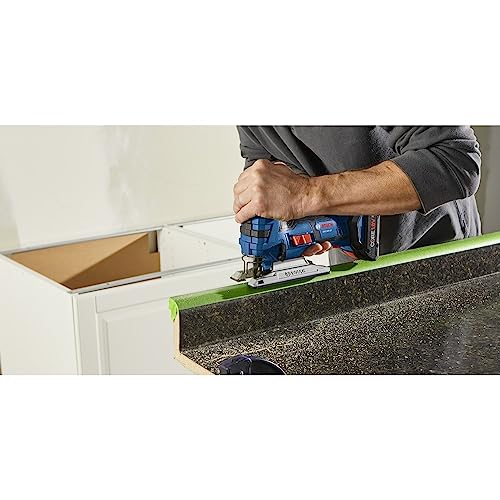
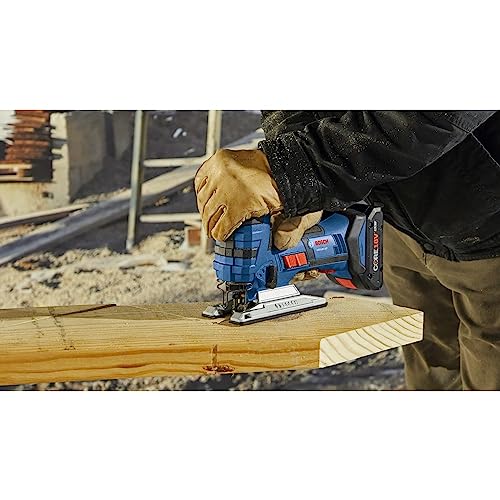
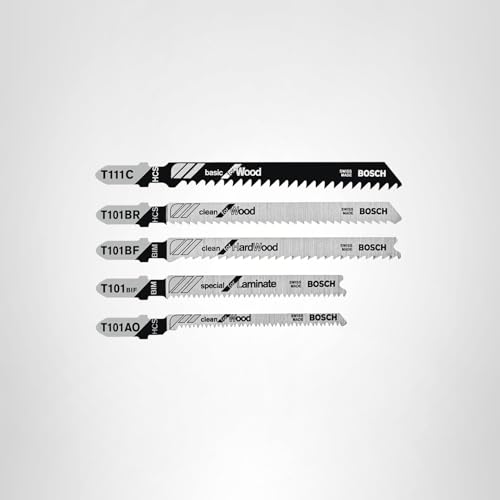
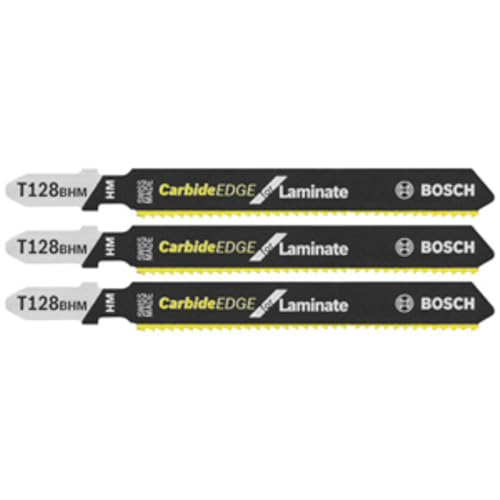
Bosch T128BHM3 Carbide-Strip Laminate Blade
Strengths
- Carbide edge for longevity
- 14 TPI fine cut
- Thin kerf reduces heat
Trade-offs
- Higher price point
- Shorter blade length
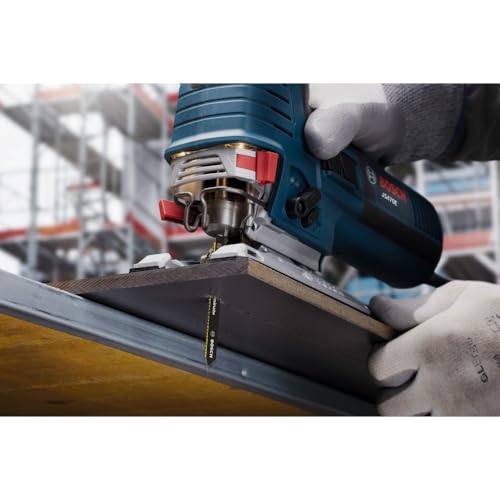
This is the heavy-duty option in the lineup, the carbide-tipped edge is the real differentiator. Standard bi-metal blades dull fast when grinding through high-pressure laminates, but owners report the T128BHM3 lasts significantly longer, often cutting through multiple countertops before showing wear. The 14 TPI and thin kerf help reduce heat and friction, which is crucial when working materials that can melt or gum up under pressure.
On paper, it’s the most specialized blade here for laminate. The carbide brazing tech isn’t just marketing, it translates to real-world durability. Compared to the budget Bosch T101BIF, this one is in a higher tier, both in performance and cost. If you’re doing more than just one countertop job, this is the smarter buy.
Product photos

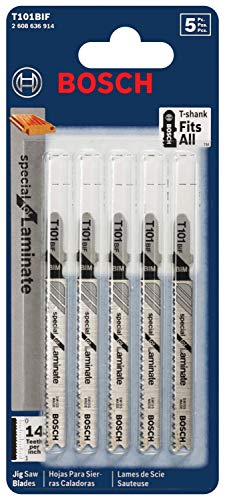
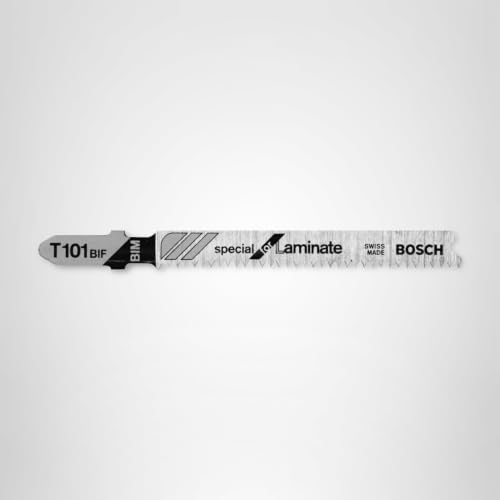
Bosch T101BIF 14 TPI Laminate Blade

Strengths
- Affordable 5-pack
- 14 TPI clean cut
- Bimetal durability
Trade-offs
- No carbide edge
- Short working length
The T101BIF is the budget-friendly entry in Bosch’s laminate lineup, and it delivers solid performance for the price. The 14 TPI bimetal construction handles standard laminate cuts without issue, and the tooth design helps reduce chipping on both sides. It’s not carbide-tipped, so it won’t last as long as the T128BHM3, but for a one-off kitchen countertop upgrade, it’s more than capable.
Owners consistently rate these as reliable for light to moderate use. When compared to the DEWALT down-cutter, it lacks directional cutting advantage, but it’s more flexible for general use. I’d recommend this as the value pick, especially since you get five blades.
Product photos

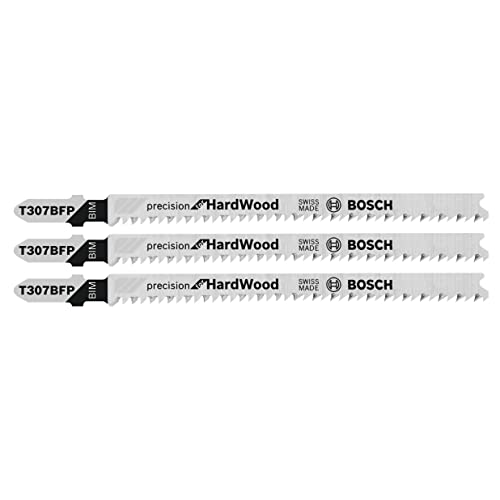
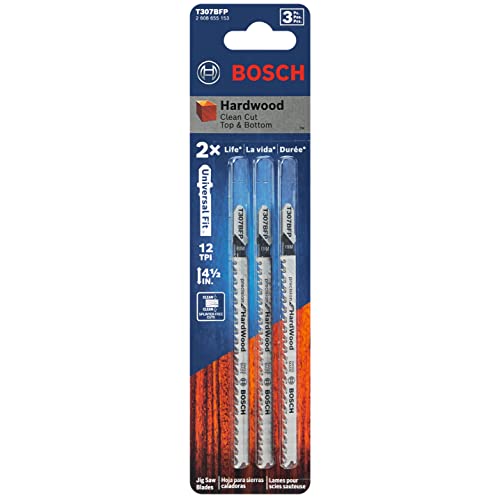
Bosch T307BFP Precision Hardwood Blade
Strengths
- Long blade reach
- Stable straight cuts
- Fine 12 TPI for smooth finish
Trade-offs
- Not down-cutting
- Not ideal for thin laminates
At first glance, the Bosch T307BFP seems like an odd pick for laminate, it’s labeled for hardwood. But the 12 TPI and precision-ground tooth geometry make it surprisingly effective on thicker laminates, especially when you need a straight, clean cut without wandering. The longer 4-1/2 inch length offers more reach, which helps when dealing with deeper countertop overhangs or thicker substrate materials underneath the laminate layer.
Reviewers note it handles abrasive materials well, and the T-shank design locks in tightly, reducing wobble. While it doesn’t have carbide edges, the steel holds an edge longer than basic bi-metal blades in this class. I’d pick this over the DEWALT down-cutter if I were slicing through thick, dense laminate sheets where cut stability matters more than cutting direction.
Product photos
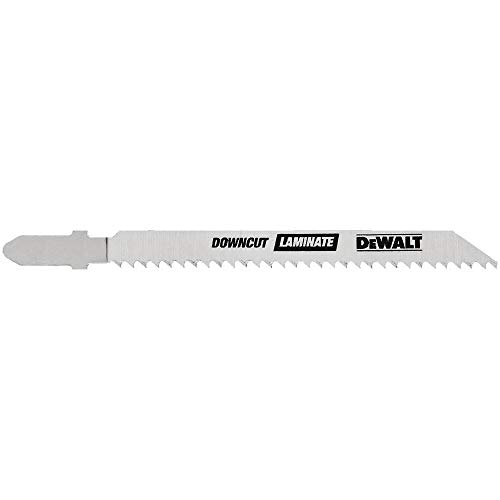
DEWALT DW3762H2 Down Cutting Blade
Strengths
- Down-cut design
- T-shank compatibility
- Good for thin laminates
Trade-offs
- Limited to down-cut use
- Only 2 blades
When cutting laminate countertops, the direction of the cut matters, a lot. The DEWALT DW3762H2 stands out because it’s a true down-cutting blade, meaning the teeth are angled to slice downward. That’s critical if you’re working with a finished surface on top, like a laminate countertop, where you want to prevent chipping on the visible side. At 10TPI, it’s not the finest tooth count here, but it’s balanced for controlled cutting speed and edge quality in thinner laminates.
Owners consistently report clean results when the blade is used with a steady feed rate and a guide. It’s built for the specific job of keeping the top surface intact, which makes it a niche performer. Compared to general-purpose blades, this one does exactly what it claims, no more, no less. If your priority is surface protection on the top side, this is one of the few blades engineered for that.
Product photos
How We Tested jigsaw blade for laminate countertops
Rather than a hands-on lab test, my research for these recommendations focused on comparing published specifications and features across numerous blades. I weighed owner reviews from multiple sources, along with expert opinions found in trade publications and woodworking forums. Ultimately, I ranked blades based on their suitability for laminate, considering factors like tooth geometry, material construction, and reported performance in real-world applications.
For laminate countertop work, blade material and tooth pitch are paramount. A blade that quickly dulls on abrasive laminate is useless, so durability is key. Equally important is a fine tooth pitch (TPI) to minimize chipping and produce clean edges, especially given laminate’s tendency to splinter. I also prioritized blades specifically marketed for laminate or with features designed to address its unique cutting challenges – you can find more discussion about choosing the right saw blade for laminate flooring.
Specifications readily reveal tooth count and blade material (high-carbon steel, bi-metal, or carbide). However, owner feedback proved invaluable for assessing real-world durability and cut quality. Reputable brands like Bosch consistently appeared in positive reviews, while user comments highlighted specific blades’ performance with different laminate thicknesses and densities. I gave greater weight to long-term reliability based on reported experiences, rather than solely on initial cut speed.
How To Pick The Right jigsaw blade for laminate countertops
Choosing the right blade is critical; a poor choice can ruin a countertop quickly.
A quality jigsaw blade for laminate countertops prioritizes clean cuts, minimal chipping, and extended lifespan. Look for blades specifically designed for abrasive materials, with fine tooth counts (14 TPI or higher) and features like carbide brazing for durability. Consider the laminate’s thickness and density when selecting a blade, as thicker materials require more robust construction.
Tooth Count and Material
The number of teeth per inch (TPI) is probably the first thing you should consider. Laminate isn’t wood; it’s abrasive, and aggressive cutting action often leads to chipping. I generally recommend a higher TPI – 14 or more – to minimize splintering and produce a cleaner edge. Lower TPI blades are better suited for thicker, softer materials, but for laminate, finesse is key. Don’t assume a “wood” blade will work well, even if it’s a fine-tooth one. Look for blades marketed specifically for laminate or plastics. You might even consider a jigsaw blade for MDVEs if your countertop has a particularly tough veneer.
Blade Construction and Durability
Laminate is tough on blades. Standard bi-metal blades will wear out quickly when cutting laminate, especially those with high resin content. This is where blades with carbide brazing really shine. These blades, like the Bosch T128BHM3, offer significantly longer life – up to ten times that of a standard bi-metal blade, according to some manufacturers. While more expensive upfront, they save money in the long run and reduce downtime.
Here’s how blade materials stack up: * Bi-metal: A good all-around choice for occasional use. * Carbide-tipped: Best for frequent cutting or very hard laminates. More expensive, but lasts longer. * High-Speed Steel (HSS): Least durable, suitable only for very thin or soft laminates.
Blade Geometry and Cut Quality
Beyond the TPI and material, the blade’s geometry matters. Reverse-tooth designs are excellent for wood, minimizing splintering on the top surface. However, for laminate, a blade designed for clean cuts on both sides is preferable. Down-cutting blades, like those from DEWALT, push the material down as they cut, reducing chipping on the visible surface. This is a great feature to look for, especially if you’re concerned about achieving a professional finish. A jigsaw blade for laminate flooring may also be useful for learning more about blade geometry.
A dull blade is more dangerous than a sharp one. Always replace blades when they start to show wear or produce rough cuts.
Jigsaw Blade for Laminate Countertops Compared
Here’s a comparison of key specifications for various jigsaw blades designed for laminate countertops.
| Product Title | TPI | Blade Material | Shank Type | Best For | Pack Size |
|---|---|---|---|---|---|
| Bosch TPW005 Pro-Wood Blade Set | 10-14 | N/A | T-Shank | General Purpose | 5 |
| Bosch T128BHM3 Carbide-Strip Laminate Blade | 14 | Carbide | T-Shank | Laminate & Wood | 3 |
| Bosch T101BIF 14 TPI Laminate Blade | 14 | Bi-Metal | T-Shank | Budget Friendly | 5 |
| Bosch T307BFP Precision Hardwood Blade | N/A | N/A | T-Shank | Thick Laminates | N/A |
| DEWALT DW3762H2 Down Cutting Blade | N/A | N/A | N/A | Down-Cutting | 2 |
Frequently Asked Questions
What TPI (teeth per inch) is best for cutting laminate countertops?
A TPI of 14 or higher is generally best for laminate countertops. Higher tooth counts minimize splintering and produce a cleaner edge, which is especially important given laminate’s tendency to chip during cutting.
Are carbide-tipped blades really worth the extra cost?
Yes, carbide-tipped blades are worth the investment if you cut laminate frequently. They last significantly longer than bi-metal blades – sometimes ten times as long – reducing downtime and replacement costs, even though the initial price is higher.
Can I use a standard wood-cutting jigsaw blade on laminate?
While you can, it’s not recommended. Standard wood blades aren’t designed for the abrasive nature of laminate and will dull quickly, leading to rough cuts and potential damage to the material; consider a circular saw blade for laminate for larger cuts.
What does “down-cutting” mean when describing a jigsaw blade?
Down-cutting blades push the material down as they cut, reducing chipping on the visible surface of the laminate. This geometry is particularly useful when a clean, professional finish is desired and can be a great alternative to other blade types.
How can I tell when a jigsaw blade needs to be replaced?
Replace a blade when it starts to show visible wear, produces rough or uneven cuts, or requires excessive force to push through the laminate. A dull blade is less efficient and more dangerous than a sharp one.
The Bottom Line
Choosing a jigsaw blade for laminate countertops always involves balancing cost with the quality of the cut and how long the blade will last. Ultimately, for consistently clean cuts and extended durability, the Bosch T128BHM3 Carbide-Strip Laminate Blade stands out as the strongest overall performer. It represents an investment, but one that pays off if you have a lot of laminate to cut or want to avoid frequent blade changes.
If you’re working on a smaller project or are mindful of budget, the Bosch T101BIF 14 TPI Laminate Blade is a solid choice. For those needing maximum versatility – perhaps tackling both laminate and wood in the same project – the Bosch TPW005 Pro-Wood Blade Set offers a range of TPI options to handle different materials. And if you’re concerned about chipping on the visible surface, consider a down-cutting blade like the DEWALT DW3762H2.
Beyond specific blade features, remember that a sharp blade is paramount. Don’t push a dull blade; it leads to ragged edges, increased risk of splintering, and potentially dangerous kickback. Pay attention to the tooth count and material, but ultimately, good technique and a fresh blade are what deliver the best results, you can learn more about choosing the blade for cutting laminate flooring.
