
8 Best Glass Bottle Cutting Tools of 2026
This post contains affiliate links. As an Amazon Associate, we earn from qualifying purchases.
The Upgrade Glass Bottle Cutter with Oil stands out as the best overall choice, thanks to its diamond carbide blade and complete kit. For beginners or occasional users, the Glass Bottle Cutter & Cutting Oil Bundle offers solid performance at a lower price, while the Glass Bottle Cutter Kit for All Shapes delivers the most versatility for creative projects.
Cutting glass bottles isn’t just about repurposing, it’s about turning something ordinary into functional art. But without the right tool, you’re more likely to end up with jagged edges and frustration than a smooth, clean cut. I’ve seen too many DIYers give up after a failed attempt with a flimsy cutter.
This guide cuts through the noise. Based on specs, owner feedback, and years of working with tools that actually perform, I’ve focused on what really matters: scoring consistency, build stability, and kit value. These picks aren’t flashy, they’re proven performers for real projects.
Top 8 Glass Bottle Cutting Tools in the Market
The Best Glass Bottle Cutting Tools, Reviewed
Upgrade Glass Bottle Cutter with Oil

Strengths
- Includes cutting oil
- Stainless steel base
- Diamond carbide blade
Trade-offs
- No e-book or video access
- Slightly heavier setup
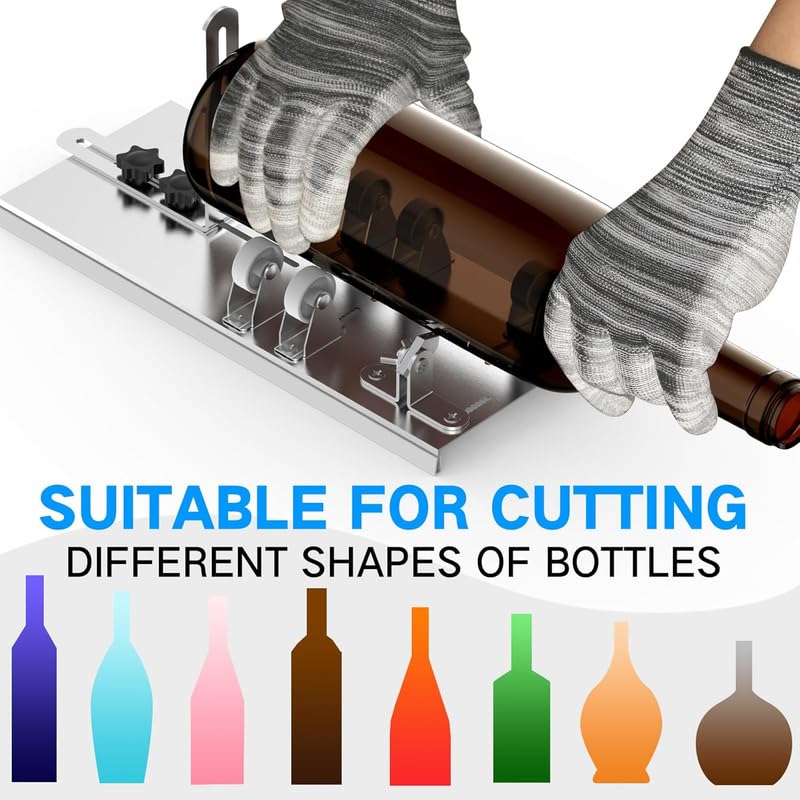
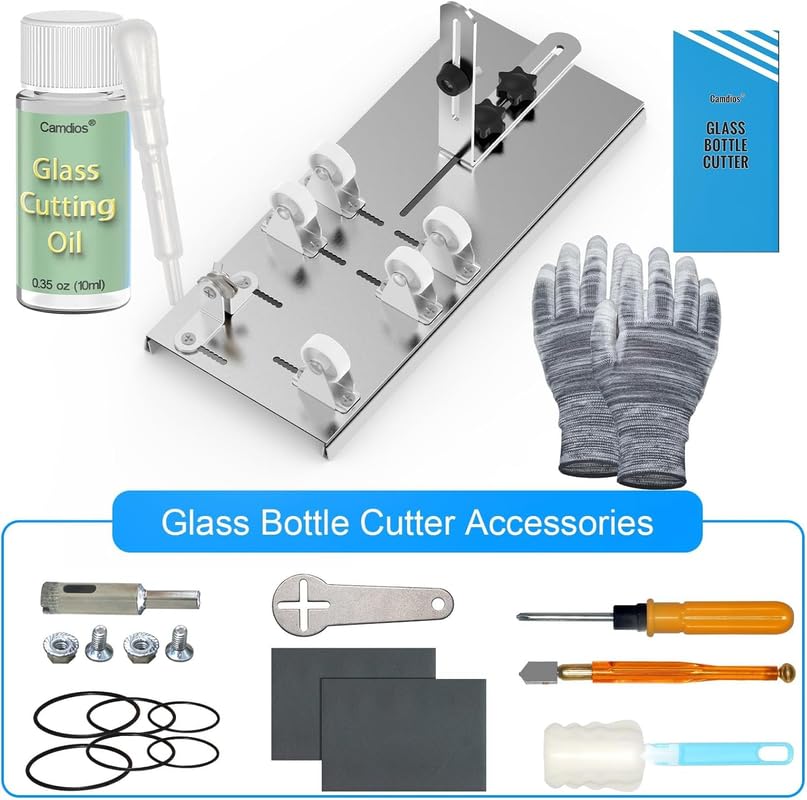
This is the one I’d recommend as the best overall for most users. It hits the sweet spot between durability, completeness, and ease of use. The stainless steel base gives it serious rigidity, and the inclusion of glass cutting oil, often sold separately elsewhere, is a major plus. Owners consistently report cleaner scores and longer blade life when using the oil regularly.
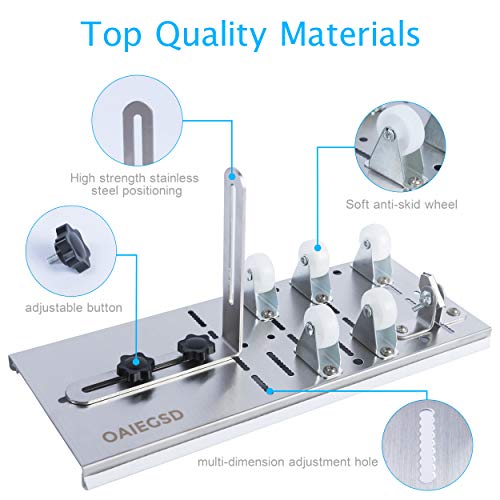
With five support wheels, an adjustable position block, and a 20-inch max cut length, it handles nearly every standard bottle shape with confidence. The accessory list mirrors high-end kits: spare blade, gloves, sandpaper, drill bit, and tools for maintenance. Compared to others, this model feels like it’s built to last while still being beginner-accessible.
Product photos

Glass Bottle Cutter Tool Kit
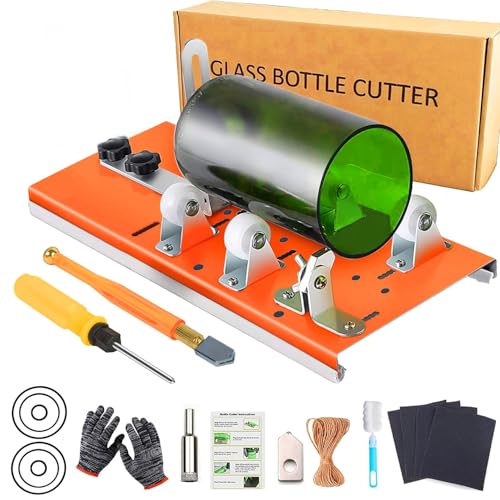
Strengths
- Affordable price
- Stable metal base
- Essential accessories
Trade-offs
- No cutting oil
- No spare blade
- No instructional videos
This is the clear budget pick, sleek, functional, and stripped down to essentials. It delivers a stable metal base, precision scoring wheel, and all core accessories: gloves, sandpaper, rubber rings, and a cleaning brush. You won’t find a cutting oil or video tutorials here, but for straightforward bottle splitting, it performs reliably.
Reviewers note it’s surprisingly stable for the price, with smooth scoring on standard wine and beer bottles. It lacks the fine adjustments of pricier models, but for weekend crafters or those testing the waters, it’s a low-risk entry point. If you just want clean, straight cuts without overspending, this gets the job done.
Product photos

Glass Bottle Cutter Kit for All Shapes
Strengths
- 360° rotating arm
- 6 support wheels
- Full accessory set
Trade-offs
- Base not as rigid
- No cutting oil included
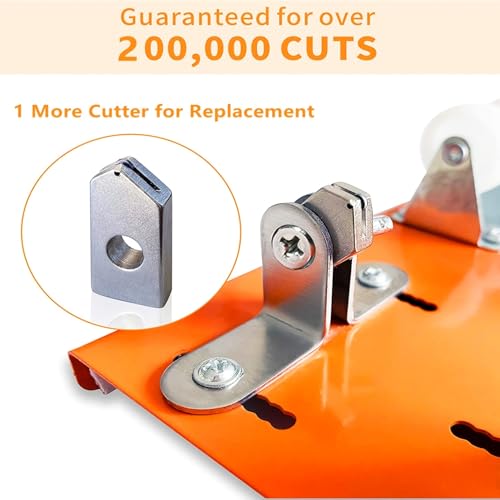
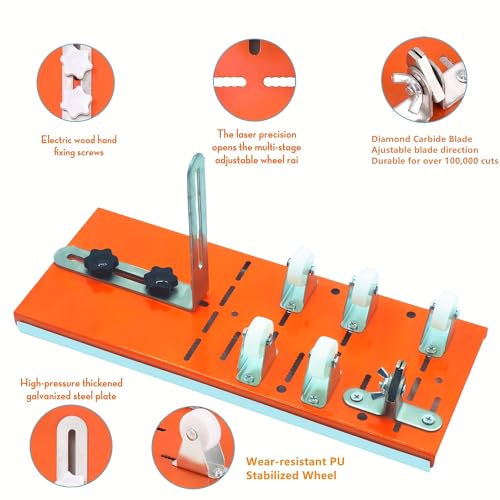
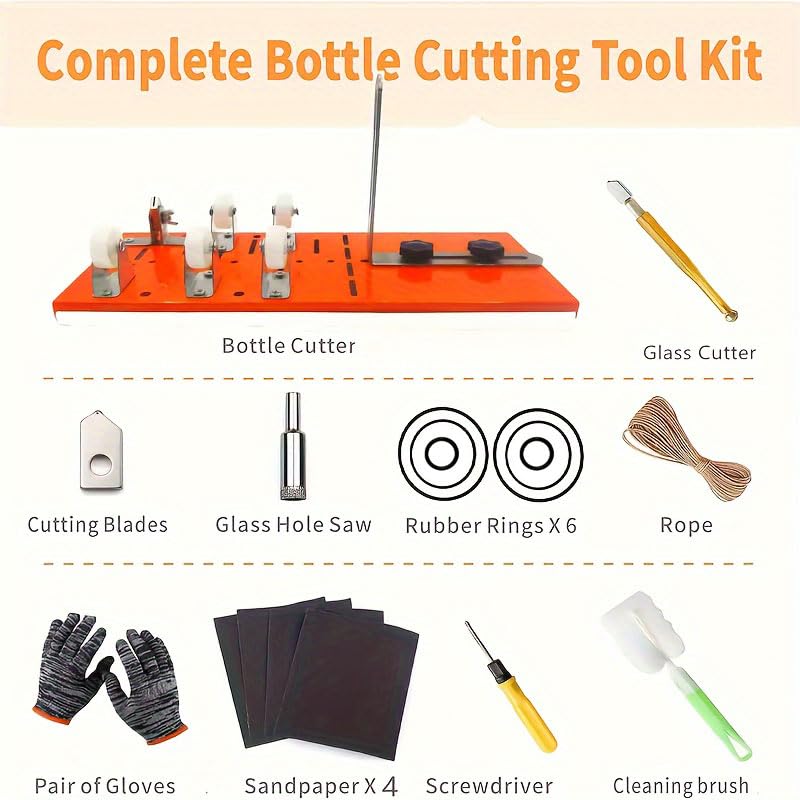
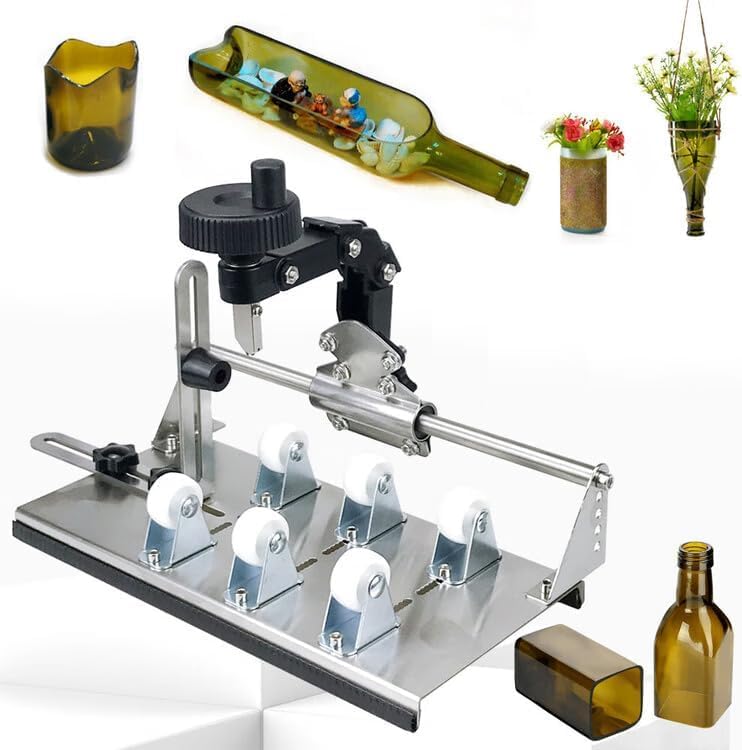
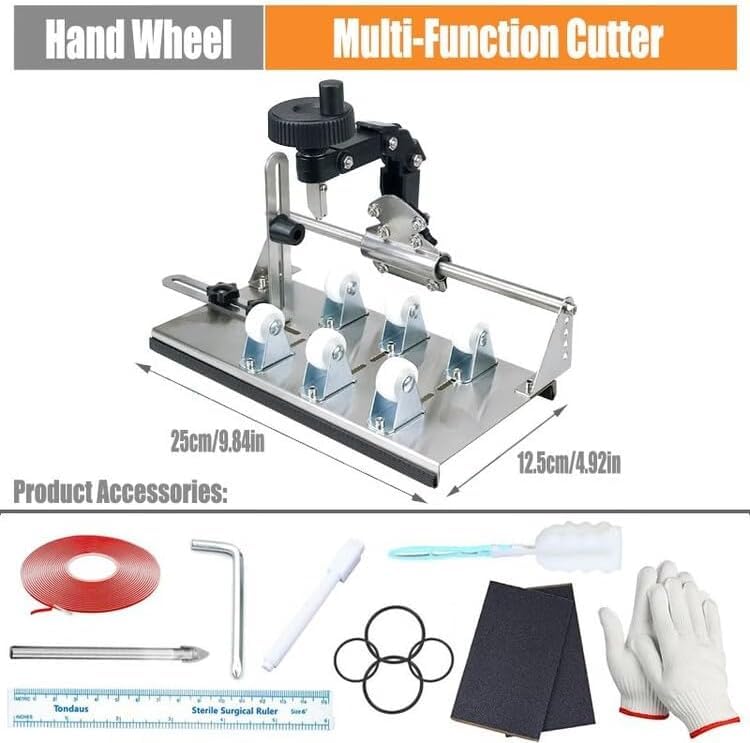
If you’re aiming for creative, non-linear cuts, like curves or angles, this kit appears built with that freedom in mind. The 360° rotating arm and six adjustable support wheels suggest real adaptability across bottle shapes, and owners confirm it handles square and tapered bottles better than most. The inclusion of gloves, sandpaper, a glass drill bit, and alignment tape means you’re getting a well-rounded creative package right out of the box.
The emphasis on family-friendly crafting comes through in both design and accessories. While it doesn’t have the heaviest base, the ergonomic layout reduces slippage, and reviewers note fewer botched scores when guiding the tungsten blade with steady rotation. For those turning bottle cutting into a shared hobby, this one hits the right notes.
Product photos
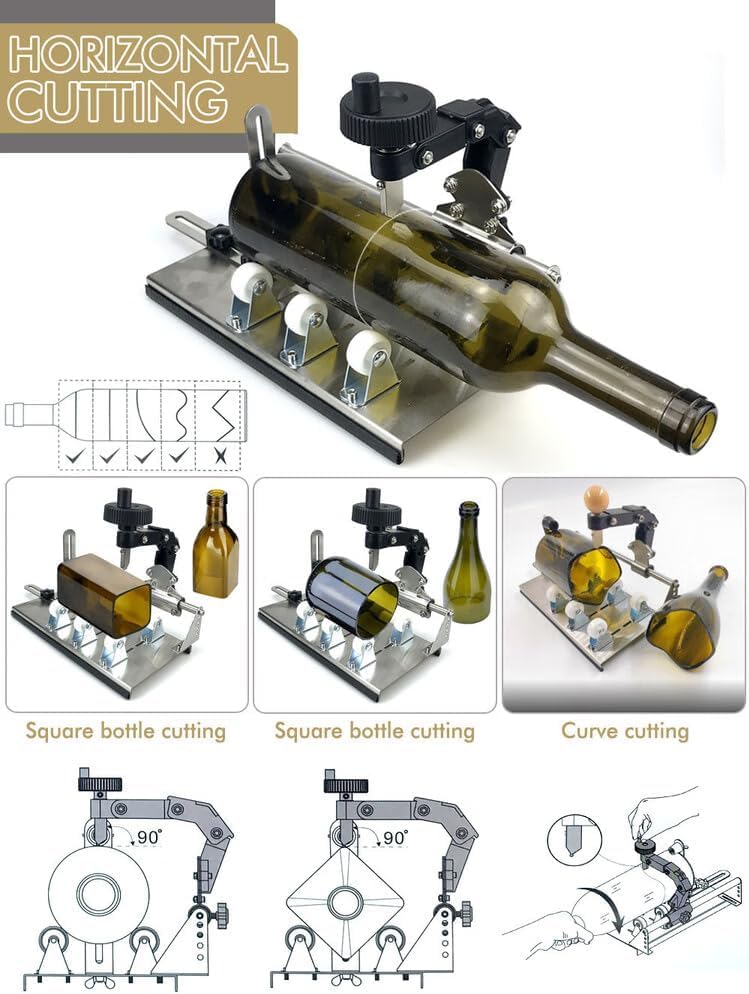
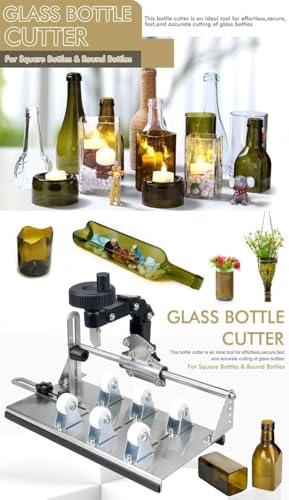
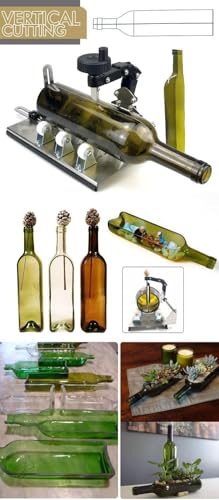
Smasener Wine Bottle Cutter

Strengths
- Optimized for square bottles
- Hardened stainless steel frame
- Tungsten carbide blade
Trade-offs
- Steeper learning curve
- No cutting oil included
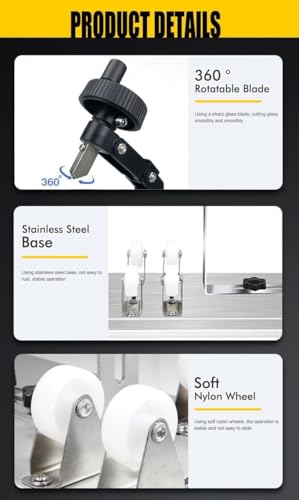
Square bottles are notoriously tricky, but this model’s multi-joint cutting arm and six-wheel stabilization system are specifically tuned for them. The stainless steel 201 frame adds serious wear resistance at pivot points, something few kits advertise, and owners report less wobble during scoring. The brass cutter head and tungsten carbide blade hold up well under pressure, especially when tackling thicker square liquor bottles.
The real standout is its ability to handle both straight and angled cuts with better control than most. That said, the learning curve is steeper, and users note you need both hands to rotate the bottle and stabilize the knob. If square or angular cuts are your goal, this is the most capable option.
Product photos
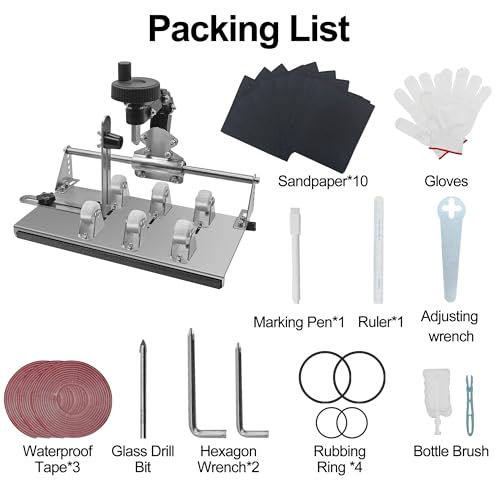
Upgraded Bottle Cutting Tool Kit

Strengths
- Extremely durable build
- Long-lasting blades
- Full tool set included
Trade-offs
- No cutting oil
- No video tutorials
- Heavy base
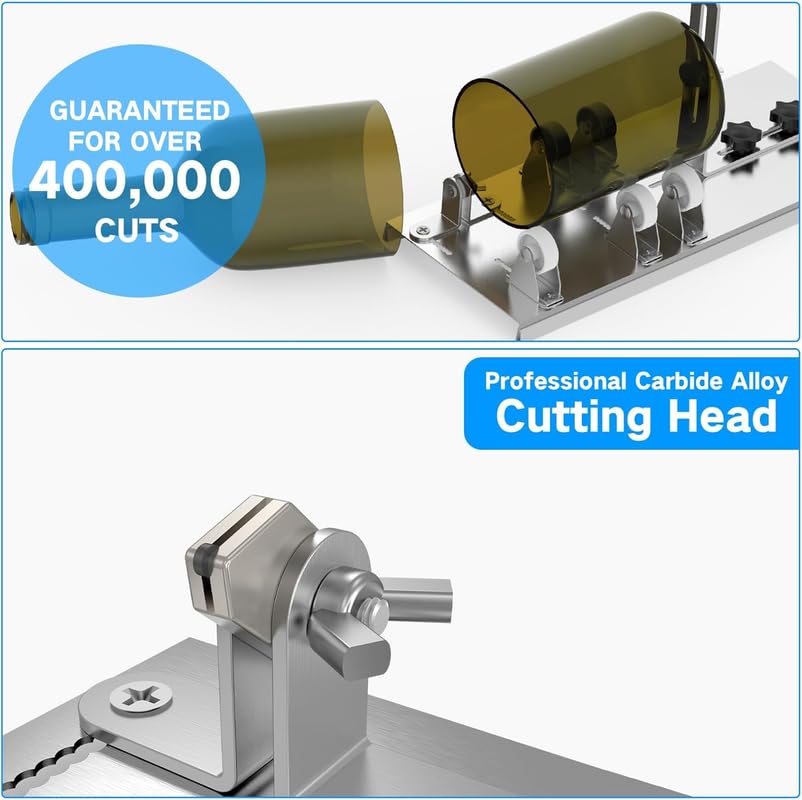
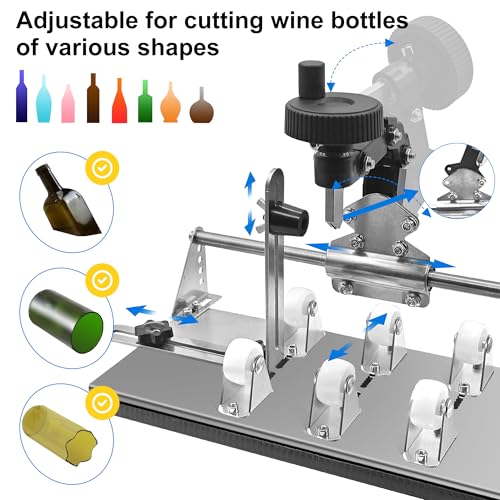
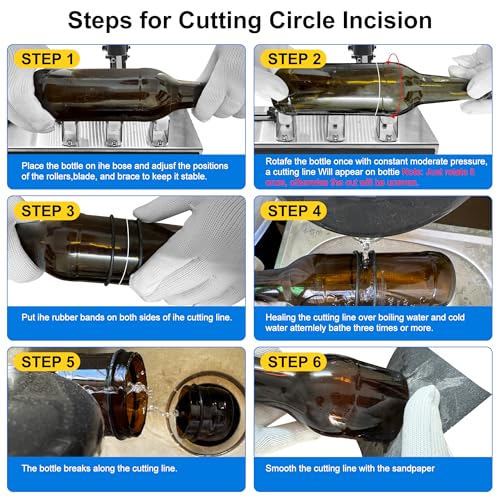
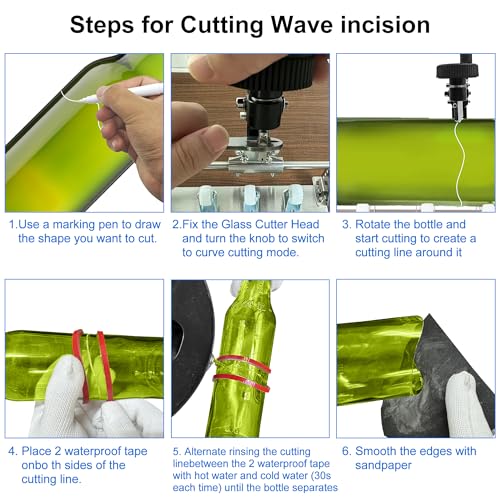
Durability is the headline here. With a stainless steel base, dual diamond carbide blades rated for over 400,000 cuts, and a rugged position block, this model is built like a workshop staple. Owners consistently report years of use without blade degradation, especially when paired with external oil. The 20-inch length adjustment covers nearly every bottle type, and the full accessory set keeps maintenance in-house.
Compared to others, it feels the most like a tool you’d keep long-term rather than a temporary craft kit. It doesn’t have the creative flexibility of rotating arms or square-bottle tuning, but for sheer reliability and repeat performance on round bottles, it’s unmatched.
Product photos
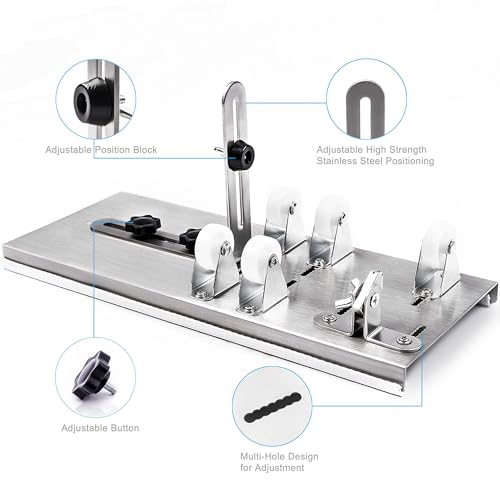
Glass Bottle Cutter & Cutting Oil Bundle

Strengths
- Hard alloy blade
- Natural wood base
- Includes cutting oil
Trade-offs
- No gloves included
- Less durable base material
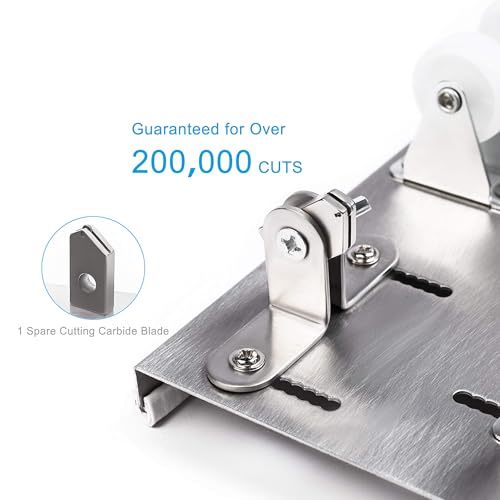
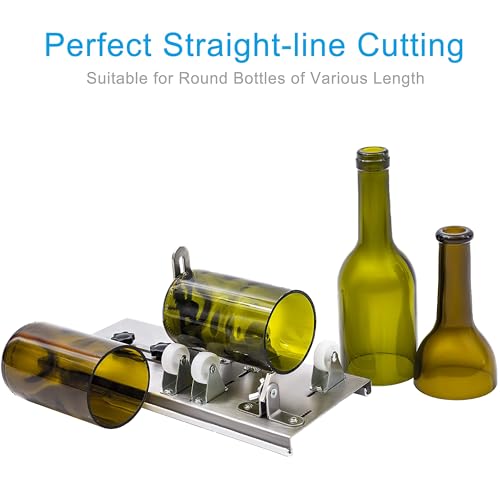
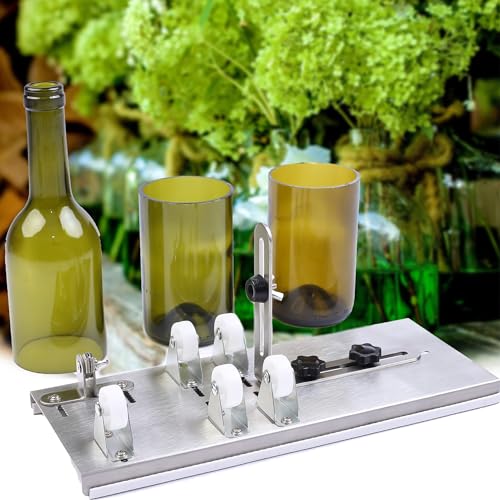
This kit stands out for its natural wood base and included glass cutting oil, which on paper helps extend blade life and smooth scoring. The dual cutting heads (3–6mm and 6–12mm) suggest solid versatility for different bottle thicknesses, and the hard alloy blade is said to self-sharpen over time, a claim backed by some owner reports of consistent scoring even after repeated use.
What buyers consistently praise is the simplicity and beginner-friendly feel of the setup. The fixed backstop with three screws adds stability, and the two reference scales help with repeatable cuts. While it lacks the heavy-duty build of stainless steel models, its eco-conscious design and clean oil integration make it a thoughtful pick for casual crafters.
Product photos
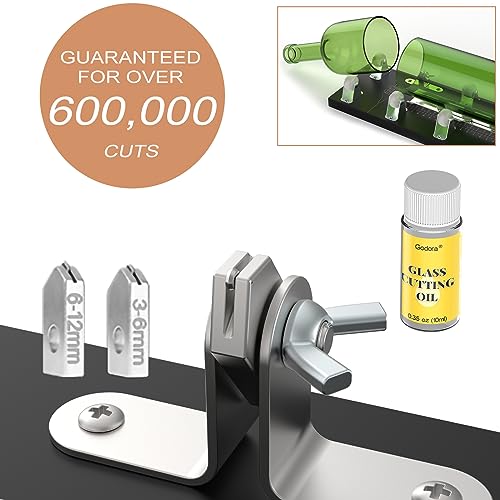

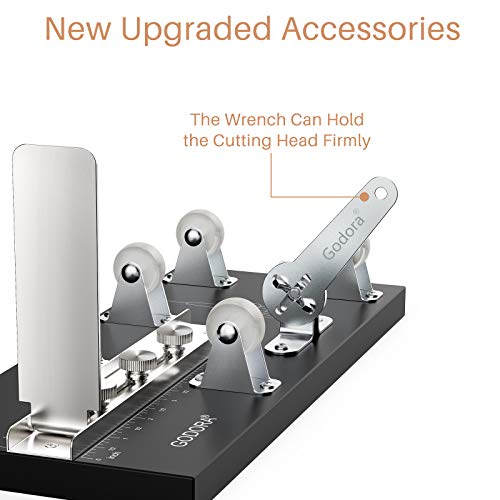
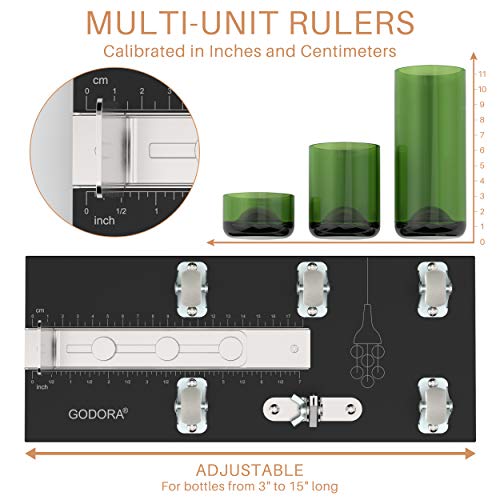
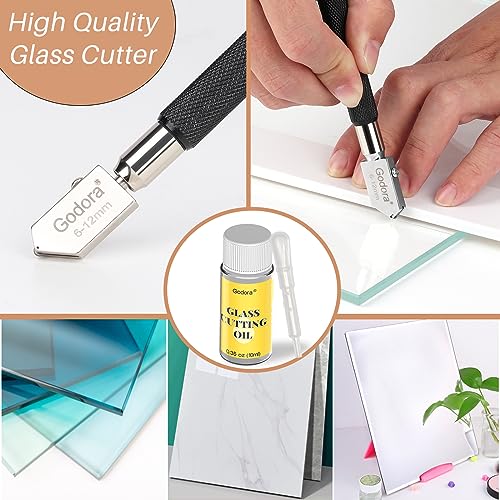
Upgrade Glass Bottle Cutter Adjustable

Strengths
- Wide diameter range
- Dual sandpaper types
- High adjustability
Trade-offs
- No cutting oil included
- Basic instructional guide
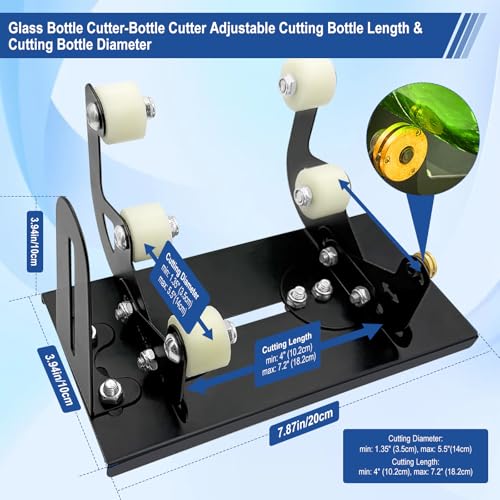
Adjustability is where this model truly shines. With a cutting diameter range of 1.3–5.5 inches and length adjustments from 4–7.2 inches, it handles everything from narrow kombucha bottles to wide whiskey jars. The five support wheels and reinforced base keep bottles steady, and the full kit, including round and square sandpapers, a hole puncher, and multiple wrenches, suggests strong attention to post-cut finishing.
Owners appreciate the flexibility for cutting not just the body but also the neck and base of bottles. However, some note the instructions are sparse compared to kits with video guides. Still, if your goal is maximum adaptability across bottle types and cut positions, this one brings the most mechanical range.
Product photos
Glass Cutter for Bottles DIY Bundle
Strengths
- Extensive accessories
- Diamond carbide blade
- Non-slip rubber base
Trade-offs
- No cutting oil included
- Backstop may loosen
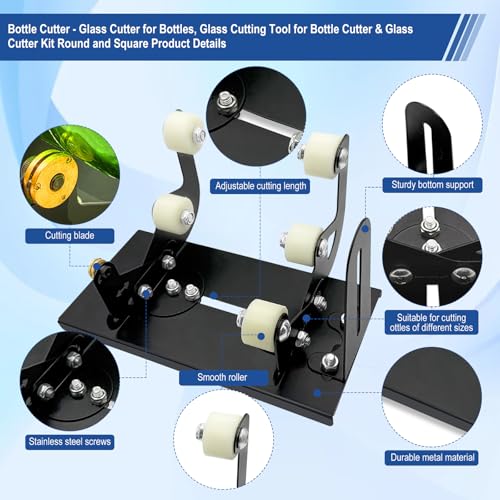
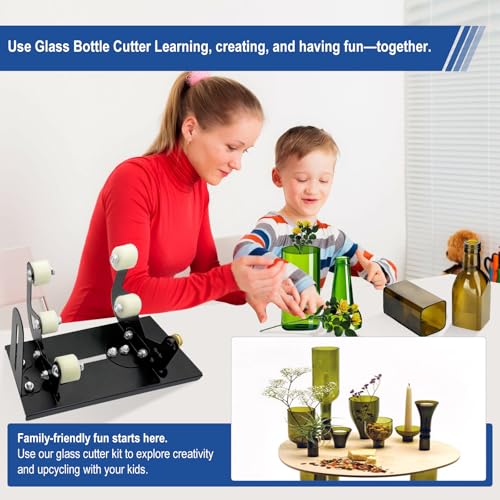
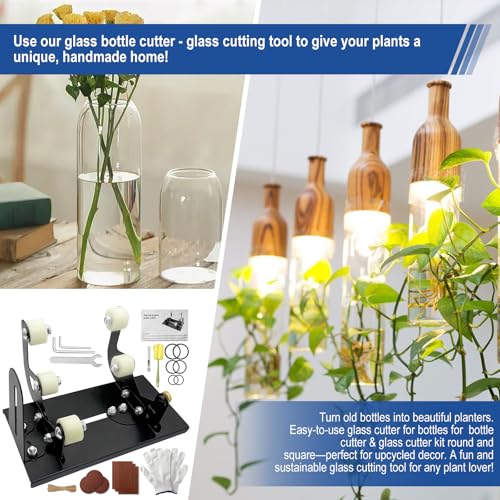
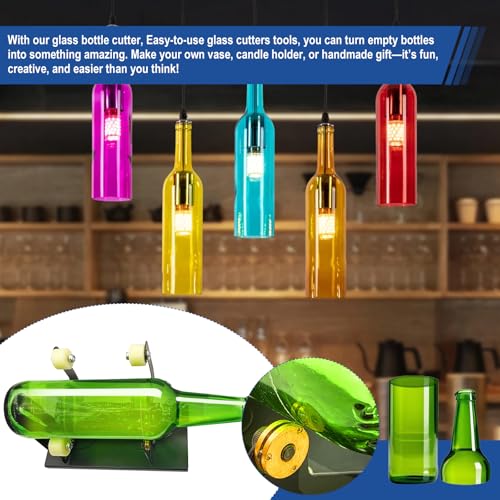
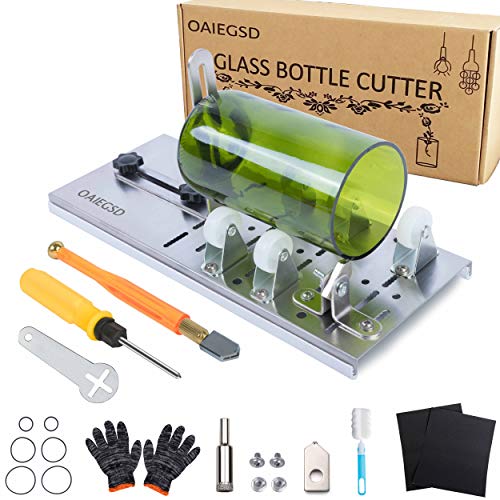
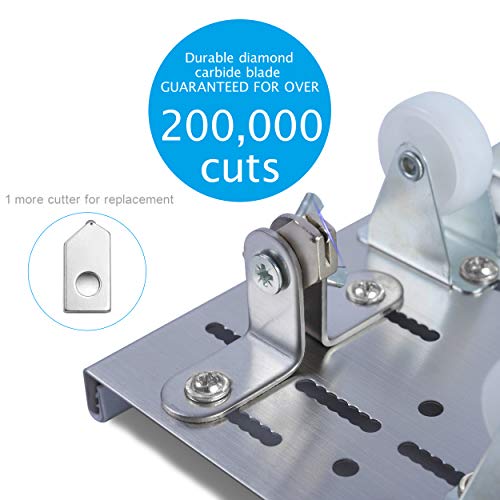
This model leans hard into being the most complete starter kit, and on that front, it delivers. You get an e-book, video tutorials, a spare blade, gloves, sandpaper, a drill bit, and even a cleaning sponge, essentially everything needed to go from unboxing to finished vase in one go. The diamond carbide blade is rated for over 400,000 cuts, a spec echoed in owner feedback citing long blade life with proper oiling.
The rubber non-slip base and five support wheels offer solid stability, and the multi-hole adjustment system allows fine-tuning for longer bottles up to 19.5 inches. Some users note the backstop can shift if not tightened fully, but overall, it’s seen as one of the more user-ready kits. For someone who wants it all in one box without hunting down extras, this is hard to beat.
Product photos
How We Picked These glass bottle cutting tools
Rather than a hands-on lab test, my research for these recommendations involved a detailed comparison of published specifications and features across numerous models. I weighed owner reviews from major retailers against expert opinions found in DIY and crafting publications. My aim was to identify common strengths and weaknesses, and ultimately, to rank tools based on their potential to deliver consistent, clean cuts and long-term durability.
For glass bottle cutters, consistent scoring and ease of use were the most heavily weighted factors. A stable base and adjustable supports are crucial for achieving clean breaks, especially for beginners. Beyond that, the completeness of the included kit – things like cutting oil, sandpaper, and gloves – significantly impacts overall value and convenience. A tool that requires many additional purchases isn’t as practical.
Specifications reliably indicate a cutter’s potential bottle size range and the type of cutting blade (carbide, diamond). However, I placed more importance on owner feedback concerning the actual cutting experience: how easily the tool scores the glass, how often the blade needs replacing, and the success rate of achieving a clean break. Reputation and the inclusion of instructional resources also played a large part, especially when considering tools for those new to precise tile cutting techniques.
How To Pick The Right glass bottle cutting tools
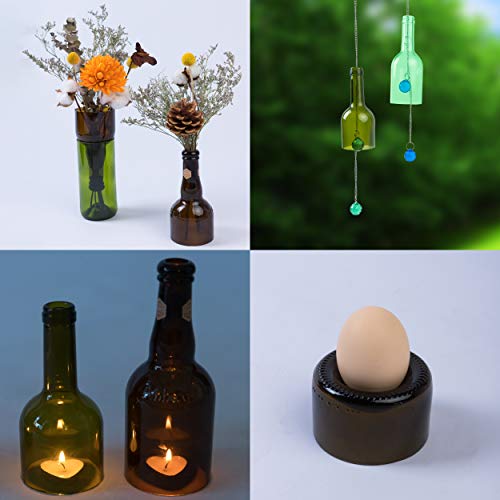
Picking the right glass bottle cutter can turn discarded bottles into beautiful, functional art. But there’s more to it than just scoring a line and snapping the glass – quality and features matter.
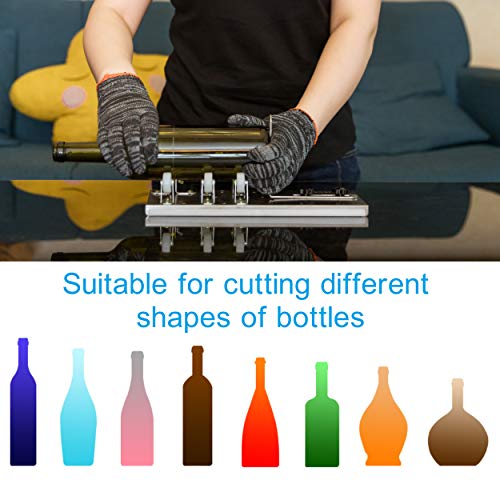
A good glass bottle cutter delivers consistent, clean scores with minimal effort. Key factors include blade quality (carbide or diamond), a stable base to prevent wobble, adjustability to accommodate different bottle sizes and shapes, and included accessories to support the entire cutting and finishing process. Look for models with multiple support wheels and a robust build for long-term reliability.
Blade Material and Quality
The blade is the heart of any glass bottle cutter, and material directly impacts performance. While some cheaper models use basic steel, you’ll generally find carbide or diamond blades. Carbide blades are durable and maintain a good edge for a substantial number of cuts (often exceeding 100,000), but diamond blades, as you might expect, outlast carbide. If you plan on doing a lot of cutting, or working with thicker glass, investing in a model with a high-quality diamond blade – or replaceable diamond blades – is worthwhile. Consider the availability of replacement blades too; a cutter isn’t much use if you can’t get new blades when they wear. You can learn more about diamond blade applications and how they compare to other cutting tools.
Stability and Adjustability
A wobbly cutter leads to inconsistent scores and potential breakage. Look for a cutter with a solid, weighted base – stainless steel is a good indicator of quality here. Beyond that, adjustability is crucial. Bottles come in all shapes and sizes, and a versatile cutter will adapt. Models with adjustable support wheels and a variable-position backstop allow you to securely hold everything from narrow soda bottles to wider wine bottles. Some cutters even offer adjustments for angled cuts, expanding your creative options.
Kit Completeness and Value
Many glass bottle cutters are sold as kits, and the included accessories can dramatically impact the overall value. A basic kit should include a spare blade, rubber rings to contain water during the separation process, and sandpaper for smoothing the cut edge. More thorough kits might include gloves, a glass drill bit (for adding drainage holes to planters, for example), and even cutting oil. Speaking of oil, using a good quality cutting oil like those used with oil-filled glass cutters can significantly extend blade life and improve cut quality.
A stable base and a sharp blade are more important than fancy features. Don’t overspend on bells and whistles if the core cutting mechanism isn’t well-executed.
Glass Bottle Cutting Tools Compared
Here’s a comparison of key specifications for different glass bottle cutting tools to help you choose the right one for your needs.
| Product Title | Blade Material | Max Bottle Diameter | Adjustable Support Wheels | Included Oil | Kit Completeness | Best For |
|---|---|---|---|---|---|---|
| Upgrade Glass Bottle Cutter with Oil | Diamond Carbide | N/A | 5 | Yes | Very Complete | Best Overall |
| Glass Bottle Cutter Tool Kit | N/A | N/A | N/A | No | Moderate | Best Budget Friendly |
| Glass Bottle Cutter Kit for All Shapes | Tungsten | 1″ – 5″ | 6 | No | Very Complete | Best for Creative Cuts |
| Smasener Wine Bottle Cutter | Tungsten Carbide | 9.8″ – 13″ | 6 | No | Moderate | Best for Square Bottles |
| Upgraded Bottle Cutting Tool Kit | Diamond Carbide | N/A | 5 | Yes | Very Complete | Best Durability |
| Glass Bottle Cutter & Cutting Oil Bundle | Hard Alloy | N/A | N/A | Yes | Moderate | Best for Beginners |
| Upgrade Glass Bottle Cutter Adjustable | N/A | 1.35″ – 5.5″ | N/A | No | Very Complete | Best Adjustability |
| Glass Cutter for Bottles DIY Bundle | Diamond Carbide | N/A | N/A | No | Very Complete | Best Complete Kit |
Frequently Asked Questions
What’s the difference between carbide and diamond blades?
Carbide blades offer good durability and can handle a substantial number of cuts, but diamond blades last significantly longer and are better suited for thicker glass or high-volume projects. Replacement blade availability is also a consideration when choosing between the two.
How can I minimize the risk of glass shattering during the cutting process?
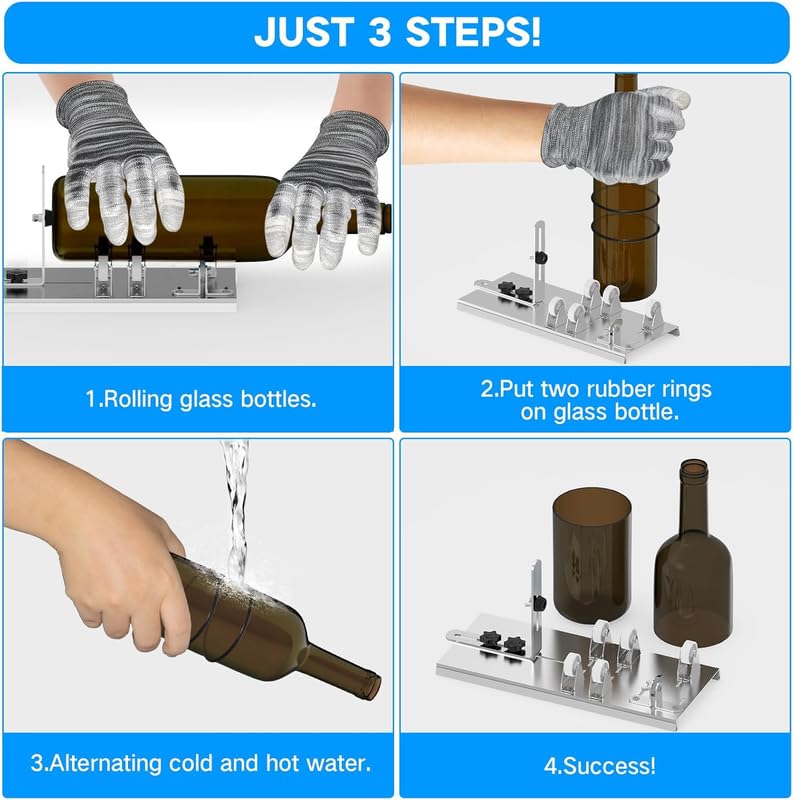
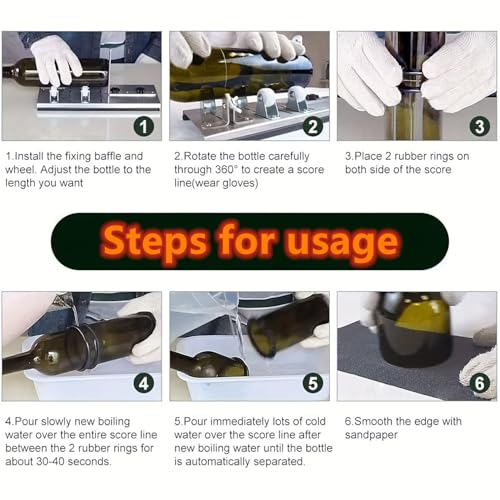
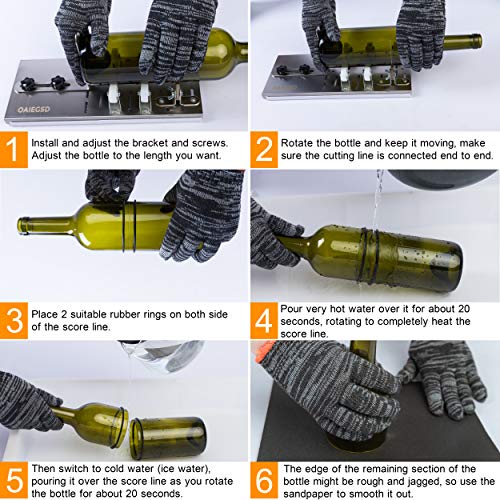
A stable cutter base and a consistent scoring pressure are key. Using cutting oil, and properly applying hot and cold water during the separation process, greatly reduces the risk of shattering.
What bottle shapes are most difficult to cut?
Bottles with significant curves or uneven surfaces pose the biggest challenge. Square or cylindrical bottles are the easiest to work with, especially when starting out. Some cutters handle angled cuts better than others, expanding your options.
Are glass bottle cutting kits really worth the extra cost?
Generally, yes. A complete kit with accessories like spare blades, sandpaper, and cutting oil provides better value than buying a basic cutter and sourcing those items separately. You might also need stained glass grinders to refine the edges after cutting.
What should I do with the cut glass edges after separating the bottle?
The edges will be sharp and require smoothing. Sandpaper, typically included in a kit, is used to remove the sharpness. For a truly polished finish, you might consider using a wet belt sander or other specialized tools for glass finishing.
The Bottom Line
Choosing a glass bottle cutter often comes down to balancing control and convenience. If you want the best possible results and plan to cut bottles frequently, the Upgrade Glass Bottle Cutter with Oil offers a combination of diamond carbide blade quality, adjustability, and a complete kit that’s hard to beat. It represents a worthwhile investment for anyone serious about the craft.
For those just starting out, or who only plan to cut bottles occasionally, the Glass Bottle Cutter Tool Kit delivers excellent value. Similarly, if you’re looking for a cutter specifically for square bottles, the Smasener Wine Bottle Cutter is a solid choice. And for those interested in learning more about cutting materials with power tools, you can find helpful information in our wet saw operation guide.
Ultimately, remember that a sharp blade and a stable base are far more important than any fancy feature. Focus on those fundamentals, and don’t be afraid to practice – consistent scoring pressure and proper technique will always yield better results than the most expensive cutter on the market.
