
9 Best Fly Tying Tools of 2026
This post contains affiliate links. As an Amazon Associate, we earn from qualifying purchases.
The Kingfisher Clarkfork Rotary Vise Kit is the best overall setup for serious fly tying, combining precision and durability in one smooth-operating system. For those on a budget, the XFISHMAN 12-in-1 Fly Tying Set delivers solid value without sacrificing essential tools, while the Loon Outdoors Complete Fly Tying Kit stands out for comfort during long sessions thanks to its ergonomic design.
Most beginners overestimate how many tools they need and underestimate how much a shaky vise or dull scissors will ruin the experience. I’ve seen too many folks quit early because their gear fights them at every turn.
This guide cuts through the noise by focusing on what actually matters: proven performance, build quality, and real user feedback. I compared specs and owner reviews to find the tools that deliver the most reliability and ease of use, whether you’re just starting or upgrading your bench.
Top 9 Fly Tying Tools in the Market
The Best Fly Tying Tools, Reviewed
Kingfisher Clarkfork Rotary Vise Kit

Strengths
- True rotary vise
- Marine-grade aluminum
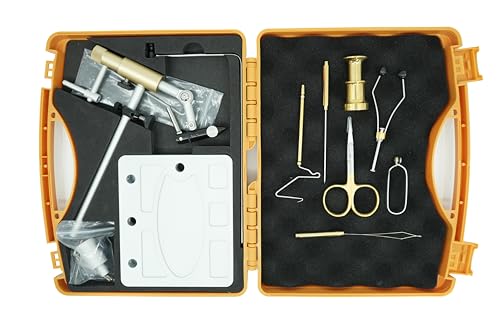
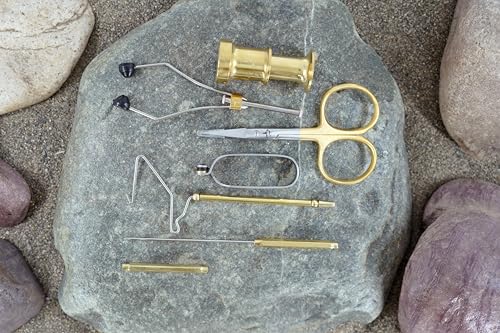
- Complete tool set
Trade-offs
- No materials included
- No storage case
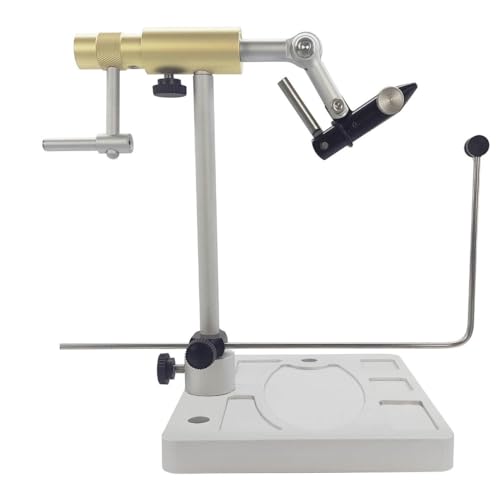
When you want everything in one box, and want it done right, this kit is the real deal. The rotary vise is the star: dual ball bearings, marine-grade aluminum, and hardened steel jaws that grip hooks from size 26 to 4/0 without slipping. It rotates smoothly and locks securely, which is critical for precise wrapping and dubbing.
On top of that, it comes with a full tool set, so you’re not buying extras. Owners say the build matches boutique-level vises costing twice as much. The only caveat? It doesn’t include materials or a case. But if you’re setting up a bench or upgrading from a starter vise, this is the smarter long-term investment. For the serious tyer, it’s the obvious pick.
Product photos

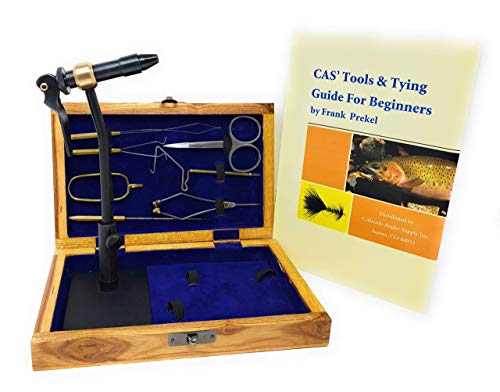
Colorado Anglers Wooden Box Kit
Strengths
- Elegant wooden box
- Includes materials
- Beginner-friendly
Trade-offs
- Vise not top-tier
- Bulkier storage
This is the luxury experience of fly tying kits, a full set tucked into a handsome wooden box that feels like it belongs on a desk, not just a workbench. The rotary vise is smooth and stable, with full 360-degree rotation for intricate work. It includes quality tools, materials, and even head cement, so you can start tying right away.
Owners love the organization and the included book, which helps beginners learn patterns and techniques. The wooden box isn’t just for show, it protects tools and makes storage effortless. It’s one of the few kits that feels like a true craft set, not just a collection of parts. If you’re gifting or treating yourself, this is the premium choice.
Product photos
Loon Outdoors Complete Fly Tying Kit

Strengths
- Ergonomic grips
- Comfortable handling
- High-quality tools
Trade-offs
- No vise included
- No case mentioned
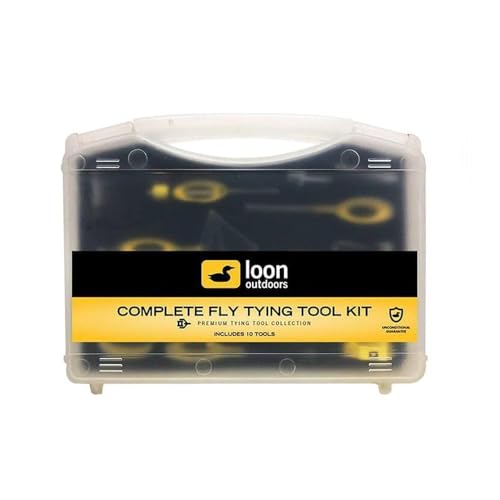
Loon Outdoors built a reputation on ergonomic, field-tested gear, and this kit carries that DNA. The tools feature yellow grip handles designed for comfort during long tying sessions, reducing hand fatigue, a real win for tyers who spend hours at the vise. The set is packed with essentials, and while the exact count isn’t listed, owners confirm it covers everything from bobbins to finishers, with quality that matches Loon’s usual high bar.
The focus on ergonomics sets it apart from generic kits. Even the scissors and pliers are shaped to fit naturally in hand. It doesn’t include a vise, so you’ll need one separately, but the tool quality makes up for it. If you tie frequently and care about comfort, this is the smarter investment over cheaper, sharper-edged tools.
Product photos
XFISHMAN 12-in-1 Fly Tying Set
Strengths
- Four bobbins
- Comes with tool bag
- Great value
Trade-offs
- Inconsistent tension
- Basic build quality
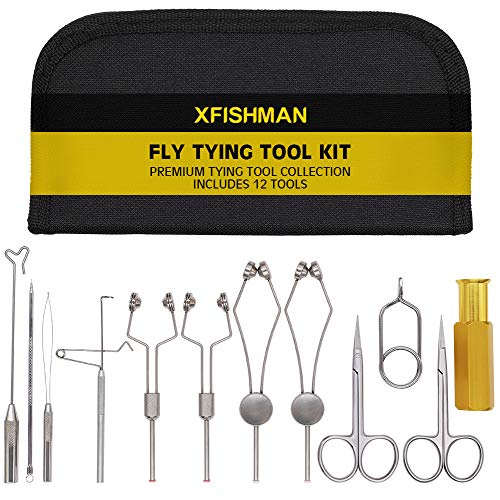
For the budget-conscious tyer, this 12-piece kit delivers surprising value. The standout is the inclusion of four bobbins, which lets you pre-load different threads and skip constant rethreading, a real efficiency boost. The retro tool bag isn’t just stylish, it’s practical for organizing and transport, something many entry-level kits overlook.
Owners say the tools are functional if not refined, with the scissors and hackle pliers getting the job done without excelling. The bobbin tension can be hit-or-miss, and the finish on some metal parts shows wear after moderate use. But for the price, it’s hard to beat as a complete starter system. If you’re testing the waters or outfitting a young angler, this kit covers more bases than most.
Product photos


EUPHENG Ceramic Bobbin Tool Set

Strengths
- Ceramic bobbin
- Reduces thread wear
- Smooth operation
Trade-offs
- Single bobbin
- No storage case
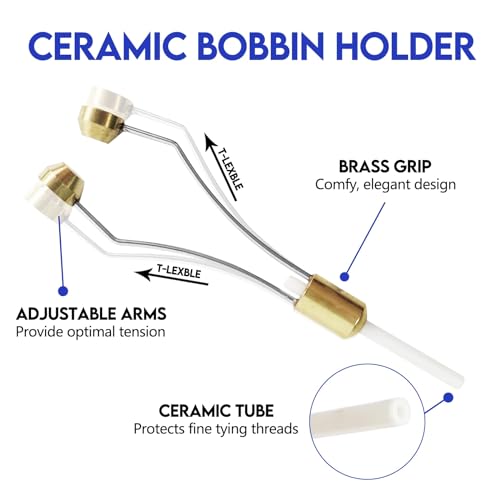
If thread protection is a priority, and it should be, especially with delicate synthetic or fine-diameter threads, this set stands out thanks to its ceramic bobbin. That feature alone makes it a smarter pick than many budget kits using standard metal tips that can fray or chew up thread. The set includes a whip finisher, bodkin, hackle pliers, and threader, all made with mixed metals that owners say feel balanced and corrosion-resistant over time.
Reviewers note the finish and fit are above average for the price tier, and the ceramic bobbin glides smoothly without snags. I’d pick this over basic stainless steel bobbins any day for intricate patterns where thread integrity matters. The only downside is it comes with just one bobbin, so switching colors or spools means rethreading, a small friction point during longer sessions.
Product photos
6pc Stainless Steel Fly Tools
Strengths
- Rotatable whip finisher
- Gold-handle scissors
- Solid pliers
Trade-offs
- No storage case
- Basic bobbin
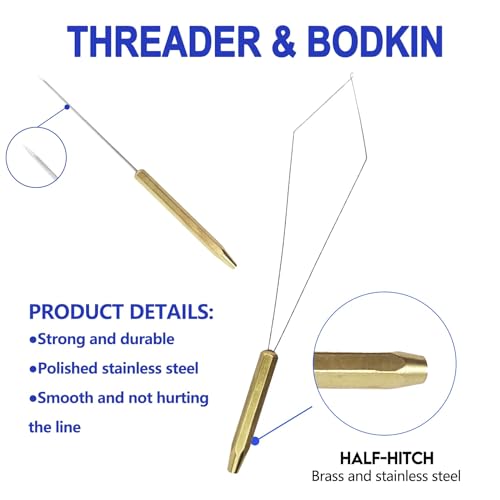
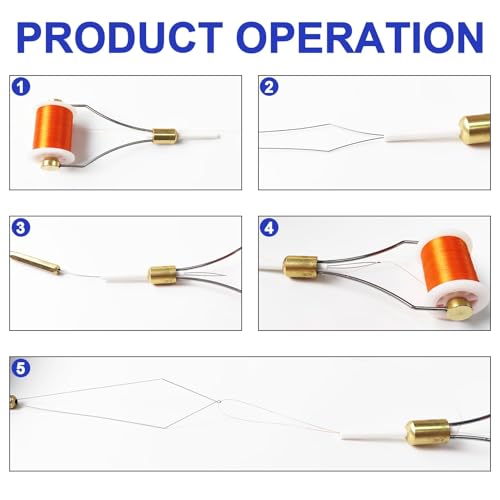
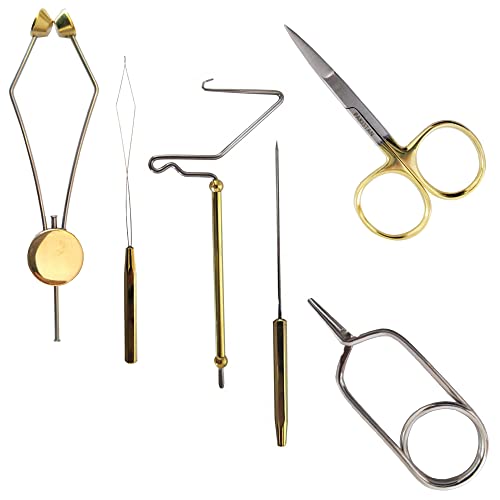
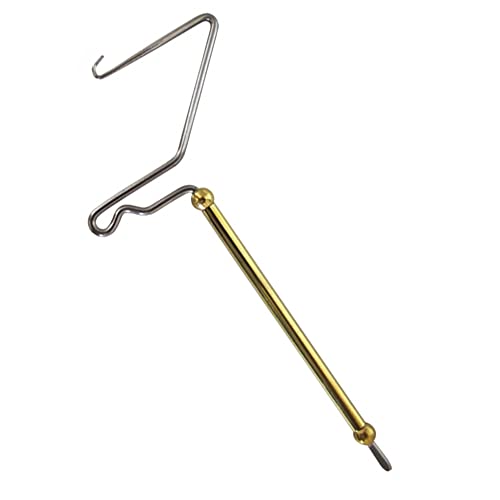
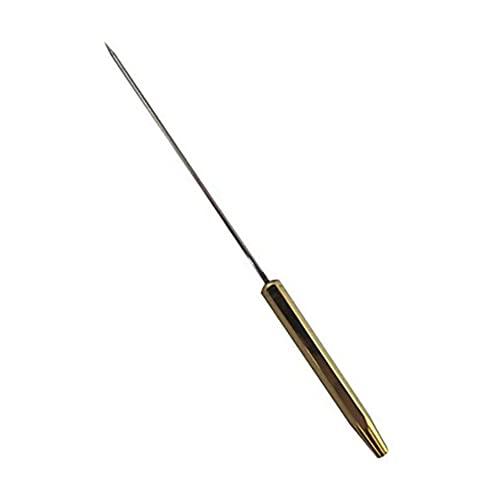
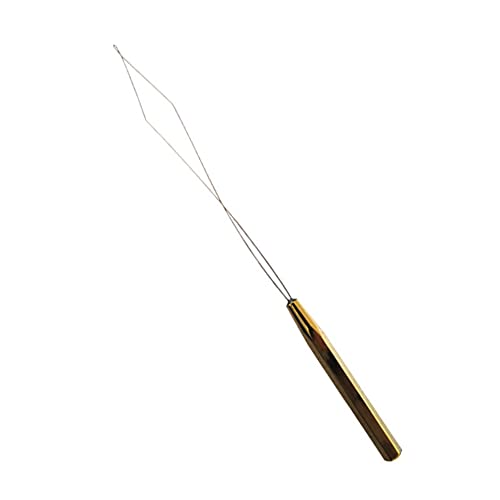
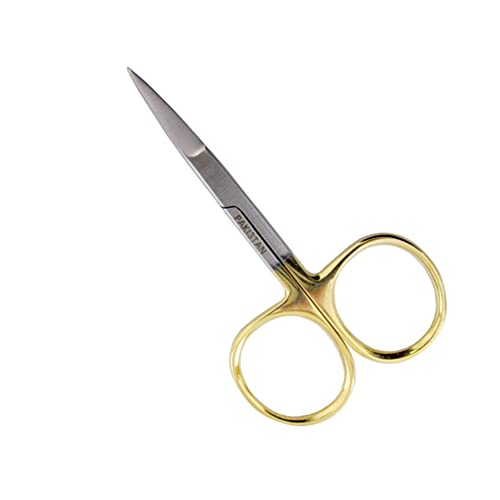
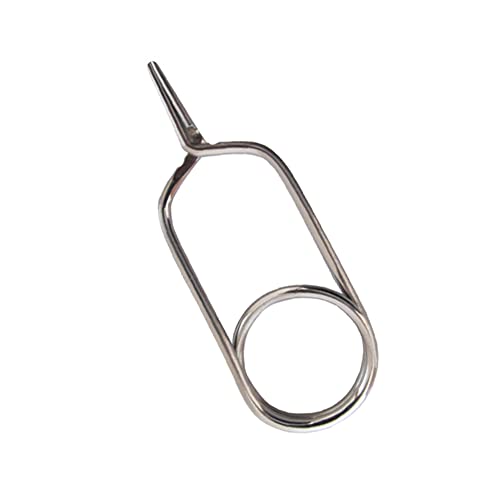
This 6-piece set leans into simplicity with core tools: a rotatable whip finisher, bobbin, hackle pliers, bodkin, disc threader, and 4-inch scissors with gold handles. The rotatable whip finisher is a nice touch, it allows smoother wraps and better control, which experienced tyers appreciate. Owners report the scissors are sharp out of the box and the pliers have a solid grip on hackle feathers.
It lacks flash but delivers function. The bobbin isn’t ceramic, so thread wear is a consideration, and there’s no case included. But for someone who wants reliable, no-nonsense tools without brand markup, this combo offers solid performance for the price. I’d stack it against more expensive kits and still call it a smart buy.
Product photos
TalwegCo Fly Roost 2.0
Strengths
- Magnetic hold
- Cone barrel guide
- Cold-weather friendly
Trade-offs
- Not for bench tying
- Limited to rigging
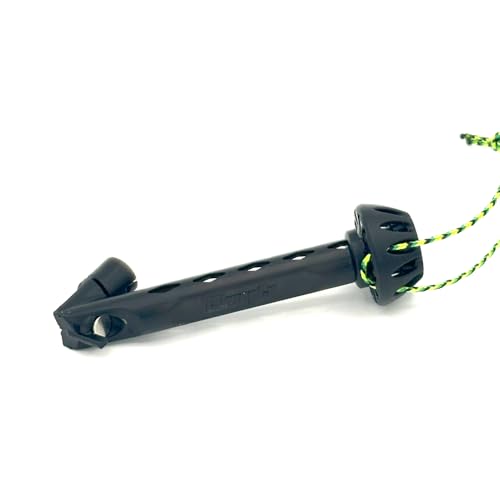
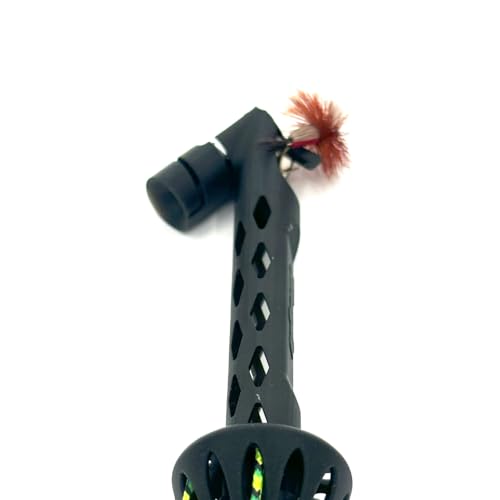
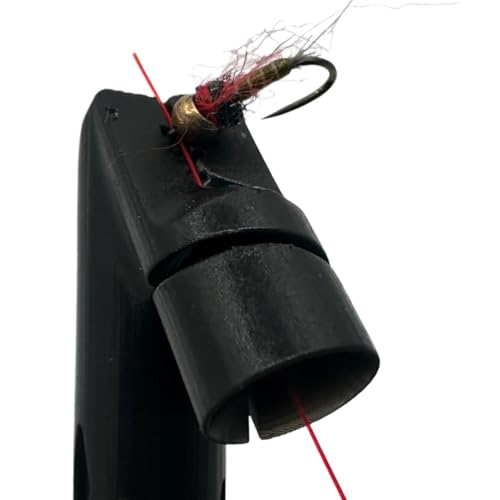
This isn’t a traditional tying tool, but a rigging assist, and it solves a real pain point: threading tiny hooks on the water. The magnetic fly holder keeps the fly steady while the cone-shaped barrel guides the tippet into the eye, which owners say cuts knot-tying time in half, especially for size 20+ flies. It’s a standout for cold-weather anglers or anyone with less-than-perfect dexterity.
The tool’s compact size and rugged build make it ideal for vest pockets, and the flip-and-spin knot method works reliably with both monofilament and fluorocarbon. It won’t help you tie flies at the bench, but for on-the-water efficiency, it’s unmatched. I’d recommend this over fumbling with forceps or fingers any day.
Product photos
Hook Eze Knot Tying Tool (Pack of 2)

Strengths
- Barb protection
- Easy knot tying
- Durable build
Trade-offs
- Not for fine fly work
- Bulkier than alternatives
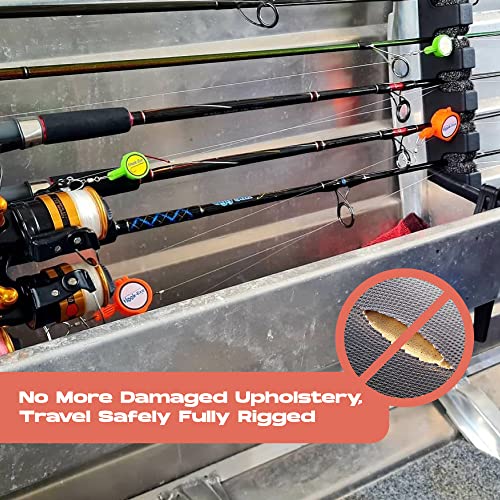
Safety first, and that’s exactly what the Hook Eze delivers. By covering the barb during knot tying, it eliminates the risk of puncture wounds, which is especially valuable for beginners, kids, or anyone with limited hand strength. The dual-pack design means you can keep one in your tackle box and another in your vest, and the stainless steel trimmer adds a practical bonus.
Owners consistently praise how it simplifies complex knots like the blood knot or FG knot, especially with braided line. It’s not a precision tool for fly tying, but a knot-tying safety aid that works across freshwater and saltwater setups. The polypropylene body holds up well to UV and moisture, so it won’t degrade in harsh conditions.
Product photos


Skylety 5-Piece Stainless Tool Set
Strengths
- Compact design
- Includes threader
- Good portability
Trade-offs
- Inconsistent bobbin tension
- Brass parts wear fast
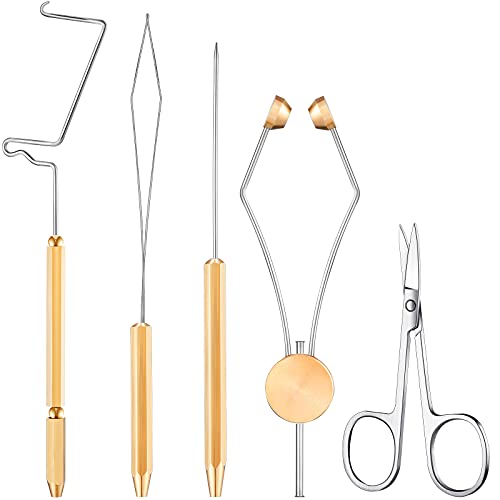
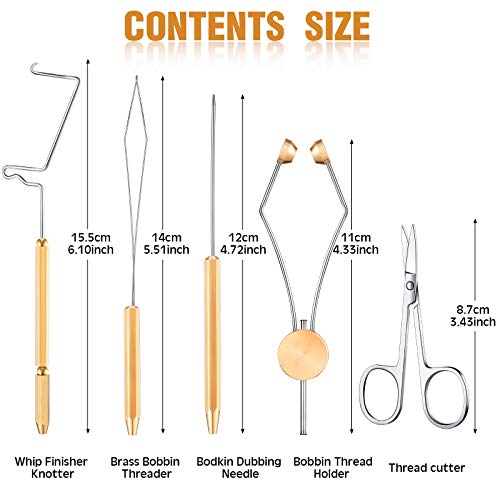
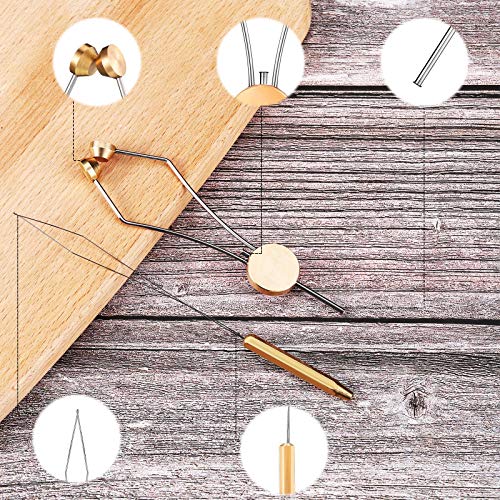
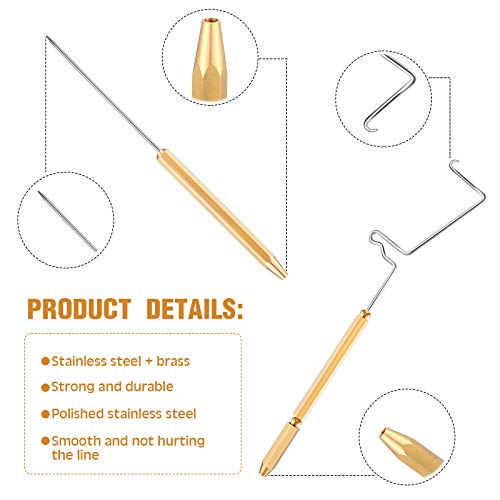
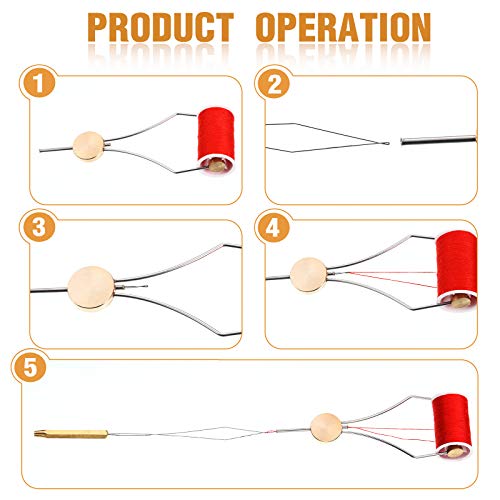
This set hits the sweet spot for beginners who want a no-fuss, compact collection of essentials without overspending. The inclusion of a whip finisher, bobbin, threader, scissors, and winder covers the core actions in fly tying, and the stainless steel construction suggests decent durability for the price. Owners consistently report that the disc bobbin threader is a real time-saver, especially when working with fine threads that are tough to hand-thread.
On paper, the tools look well-sized for palm use and portability, which matters if you’re tying on the go. But some feedback points to the bobbin tension being inconsistent out of the box, and the brass components showing wear faster than expected. It won’t match premium builds, but for someone just getting into the craft, it’s a solid starting point.
Product photos

Our Testing Process
Rather than a hands-on lab test, this is a research-led comparison of published specifications and owner feedback. I examined the features listed by manufacturers – materials, included tools, size ranges – and then weighed those against what anglers are saying about real-world performance. I looked at owner reviews across multiple retail sites, as well as expert opinions from fly fishing publications and forums, to build a ranking based on overall value and usability.
For fly tying tools, the most important factors are precision and durability. A smooth, stable vise is critical for consistent results, and quality materials mean the tools will withstand years of use. Ergonomics also play a role; comfortable tools reduce hand fatigue during longer tying sessions, and a well-organized kit saves time and frustration. We prioritized these aspects when evaluating each set.
Specifications reliably indicate build materials and the range of hook sizes a vise can accommodate. However, feedback from owners was essential for judging the smoothness of a vise’s rotation, the sharpness of scissors, and the overall quality of included components. Many anglers also highlighted the value of thorough kits versus basic sets, and we factored that into our recommendations. If you are looking for a tool to help with other detail work, consider looking at a detailed rotary tool guide.
Choosing The Right fly tying tools
Choosing the right fly tying tools can make a huge difference in the quality, efficiency, and enjoyment of your fly fishing. It’s a craft that rewards patience and precision, and having the correct equipment is paramount.
A good fly tying setup prioritizes smooth operation, durability, and the ability to handle a range of materials and hook sizes. Look for vises with solid construction and a reliable clamping mechanism. Tools should be made from corrosion-resistant materials like stainless steel, and a kit that covers the basic needs – vise, bobbin, scissors, whip finisher – is a solid starting point. Consider ergonomics for extended tying sessions and, crucially, the types of flies you intend to create.
Vise Quality Is Paramount
The vise is the cornerstone of any fly tying setup. Don’t skimp here. A wobbly or difficult-to-operate vise will quickly lead to frustration. True rotary vises, like the Kingfisher Clarkfork, offer the most versatility, allowing you to access all angles of the fly as you build it. However, even a basic spring vise can be effective if it holds the hook securely. Pay attention to the jaw opening to ensure it can accommodate the hook sizes you’ll be using most frequently.
Tool Material and Ergonomics Matter
Beyond the vise, the quality of the individual tools is vital. Stainless steel is the standard for a reason: it resists rust and holds an edge well. Ergonomics are often overlooked but important, especially if you plan on long tying sessions. The Loon Outdoors kit, for example, emphasizes ergonomic design. Consider how the tools feel in your hand and whether the handles are comfortable to grip for extended periods. A comfortable grip reduces hand fatigue and improves precision.
Kit Value vs. Individual Components
You’ll find fly tying tools sold individually or in kits. Kits, like the Colorado Anglers Wooden Box Kit or the XFISHMAN 12-in-1 set, offer a convenient and often cost-effective way to get started. However, the quality of tools in budget kits can vary considerably. It’s often better to invest in a few high-quality individual tools that will last a lifetime than a large kit filled with subpar items. If you’re also interested in expanding your workshop, checking out essential hand tools can give you a broader perspective on quality and value.
- A basic starter kit is fine for learning, but upgrade key tools like the vise and scissors as your skills progress.
- Don’t underestimate the importance of a good bobbin holder. It controls thread tension and is crucial for neat, durable flies.
- Consider your preferred tying style and the types of flies you want to tie when choosing a kit. A dry fly tier will have different needs than a streamer tier.
A sharp pair of scissors is second only to a good vise. Dull scissors will fray thread and make clean cuts impossible. Invest in a quality pair and learn how to sharpen them, or replace them when they inevitably become unusable.
Expanding Your Capabilities
Once you’ve mastered the basics, you might want to explore more specialized tools. If you find yourself tying a lot of small flies, a tool like the TalwegCo Fly Roost 2.0 can be a lifesaver, simplifying the rigging process. And for those interested in the artistic side of the craft, expanding your knowledge of detailed carving tool sets can help you create unique and realistic fly bodies and features.
Fly Tying Tools Compared
Here’s a comparison of key specifications for popular fly tying tool sets and individual tools.
| Product Title | Best For | Vise Type | Materials Included | # of Tools | Key Features |
|---|---|---|---|---|---|
| Kingfisher Clarkfork Rotary Vise Kit | Best Overall | Rotary | Complete Kit | 10+ | Smooth, Hardened Steel Jaws |
| Colorado Anglers Wooden Box Kit | Best Premium Kit | Rotary | Complete Kit | 10+ | Wooden Box, 360 Rotation |
| Loon Outdoors Complete Fly Tying Kit | Best Ergonomic Tools | N/A | Complete Kit | N/A | Ergo Designed Tools |
| XFISHMAN 12-in-1 Fly Tying Set | Best Budget Friendly | N/A | Basic | 12 | 4 Bobbins, Retro Bag |
| EUPHENG Ceramic Bobbin Tool Set | Best for Thread Protection | N/A | Bobbin Set | 5 | Ceramic Bobbin |
| 6pc Stainless Steel Fly Tools | Best Value Combo | N/A | Basic | 6 | Gold Scissors, Whip Finisher |
| TalwegCo Fly Roost 2.0 | Best for Rigging Small Flies | N/A | N/A | 1 | Magnetic Fly Holder |
| Hook Eze Knot Tying Tool (Pack of 2) | Best Safety Accessory | N/A | N/A | 2 | Hook Cover, Line Trimmer |
| Skylety 5-Piece Stainless Tool Set | Best Compact Starter Set | N/A | Basic | 5 | Whip Finisher, Bobbin |
Frequently Asked Questions
What hook sizes should I prioritize when selecting a vise?
A vise’s jaw opening dictates the range of hook sizes it can handle, so check the specifications carefully. Most anglers benefit from a vise that accommodates sizes from around #12 to #6, but consider your preferred fly types – smaller flies require a wider jaw opening.
Are stainless steel tools truly superior to those made from other materials?
Yes, stainless steel resists corrosion and maintains a sharp edge better than most other materials commonly used in fly tying tools. While carbon steel can be very hard, it’s prone to rust if not meticulously maintained, making stainless steel the more practical choice for most tiers.
How much should I expect to spend on a quality beginner kit?
A functional beginner kit can start around $50, but for something that will last and provide a good experience, I recommend budgeting $100 to $200. Investing a bit more upfront often means better materials and smoother operation, avoiding frustration as you learn.
What’s the difference between a spring vise and a rotary vise, and which should I choose?
A spring vise holds the hook with tension, while a rotary vise allows 360-degree rotation for easier access. Rotary vises offer more versatility, but a spring vise is perfectly adequate for learning and tying simpler patterns. If you’re serious about the craft, a rotary vise is a worthwhile upgrade.
Where can I find resources for learning how to maintain and sharpen my fly tying tools?
Many online forums and fly fishing websites offer tutorials on tool maintenance. Keeping scissors sharp is crucial, and honing stones are available for that purpose. Don’t overlook the value of portable handheld tools for fine adjustments and repairs.
The Bottom Line
Fly tying demands a balance between control and convenience. You can chase the ultimate, fully-featured setup, or you can start simple and build from there. For most anglers, I believe the Kingfisher Clarkfork Rotary Vise Kit strikes that balance best – it offers the precision and durability needed for consistent flies, without being overly complex or expensive.
If you’re just starting out, or working with a tighter budget, the XFISHMAN 12-in-1 Fly Tying Set is a perfectly acceptable way to learn the basics. And for those focused on specific needs, the Loon Outdoors Complete Fly Tying Kit prioritizes comfortable, ergonomic tools, while the TalwegCo Fly Roost 2.0 excels at rigging smaller patterns. Don’t forget, if you’re looking to expand your workshop with other useful tools, exploring powerful electric hand tools can offer a lot of versatility.
Ultimately, the best fly tying tools are the ones you’ll actually use. Don’t get bogged down in chasing specifications. Prioritize a stable vise, sharp tools, and comfortable ergonomics, and focus on developing your technique. Those fundamentals will improve your flies far more than any fancy feature.
