
8 Best Dual Action Sanders for 2026
This post contains affiliate links. As an Amazon Associate, we earn from qualifying purchases.
The Bosch 6″ Dual-Mode Orbital Sander stands out as the best overall dual action sander for its powerful motor, variable speed range, and innovative dual-mode operation. For budget-conscious buyers, the SKIL 5″ Random Orbital Sander delivers solid performance at a lower price, while the DEWALT 5″ Variable Speed Sander offers excellent versatility with its wide speed control and durable build.
Most people struggle to find a dual action sander that balances power, comfort, and dust control without breaking the bank. Too many models vibrate excessively, clog quickly, or lack the speed range needed for different materials.
In this guide, I break down the top models based on specs, owner feedback, and real-world usability. These picks focus on reliability, ease of use, and features that actually matter, like consistent orbit speed, effective dust collection, and ergonomic design, so you can choose the right tool for your next project.
Top 8 Dual Action Sanders in the Market
The Best Dual Action Sanders, Reviewed
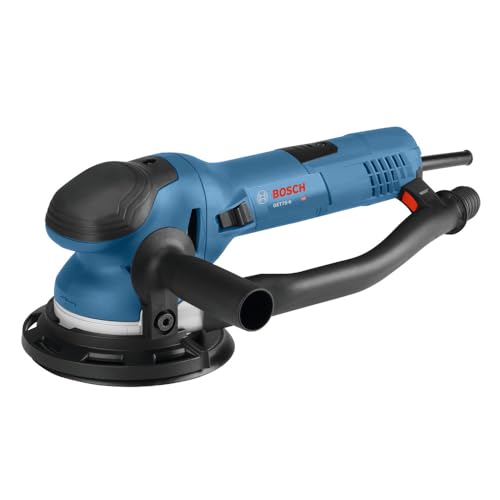
BOSCH 6″ Dual-Mode Orbital Sander
Strengths
- Turbo mode for fast removal
- 6-inch disc for large surfaces
- Multi-hole pad compatibility
Trade-offs
- Bulky for tight spaces
- Heavy at 7.5 lbs
- Dust hose not included
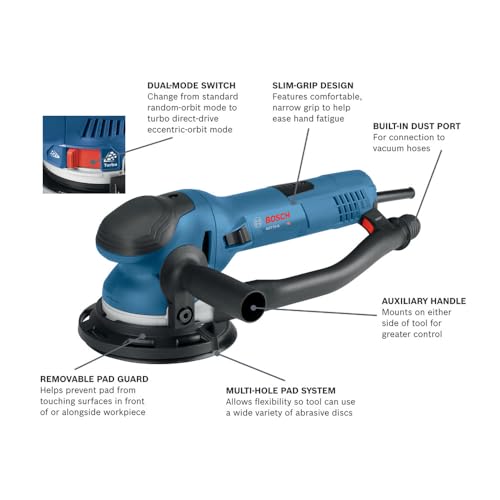
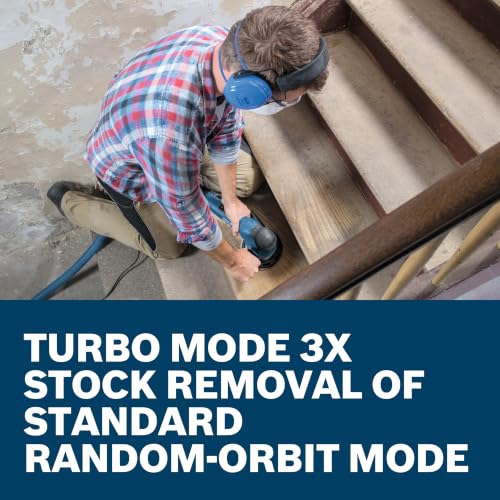
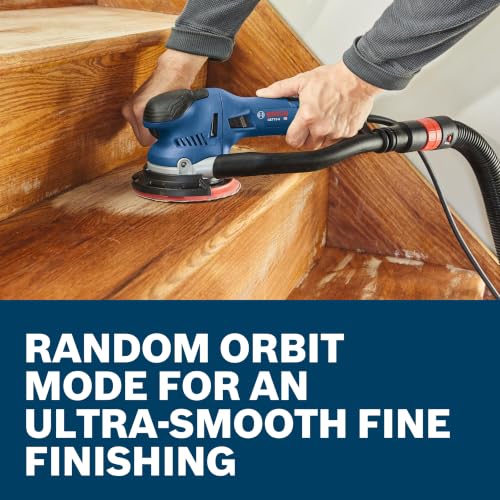
This is the most versatile sander on the list, and that’s why it earns the ‘Best Overall’ title. The 7.5 amp motor isn’t just powerful, it’s smart. The dual-mode system lets you switch from standard random orbit to turbo mode, which delivers belt-sander-level stock removal without the aggression. Owners using it on floors or thick paint layers say it cuts job time in half.
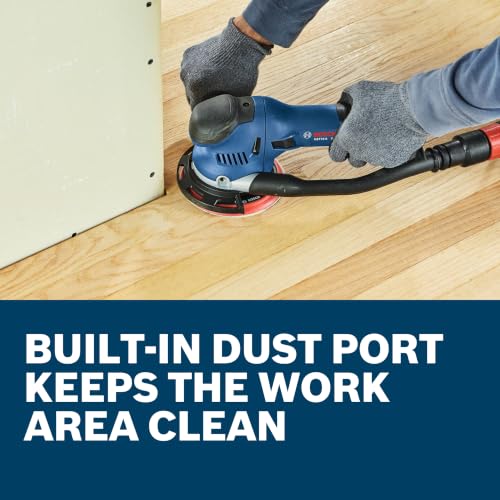
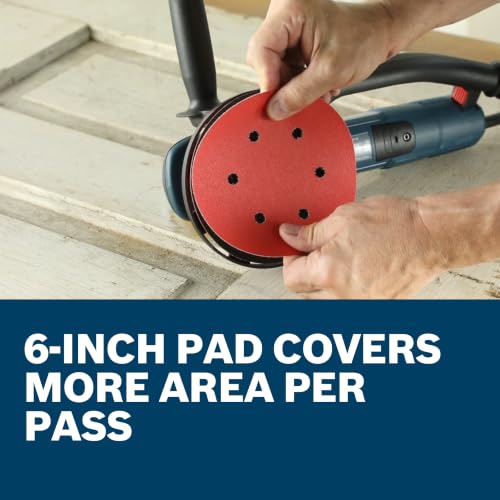
The multi-hole pad works with nearly any 6” disc, and the variable speed range (3300–7300 OPM) gives real control. Compared to the DEWALT DWE6423, it’s larger but far more capable on big surfaces. The passive dust system works well with a good vacuum, though hoses are sold separately. For someone who sands everything from cabinets to hardwood floors, this is the one tool that truly does it all.
Product photos
SKIL 5″ Random Orbital Sander
Strengths
- 2.8 amp motor
- Cyclonic dust collection
- Variable speed
Trade-offs
- Plastic housing feels flimsy
- Shorter lifespan under heavy use
- Not ideal for large surfaces
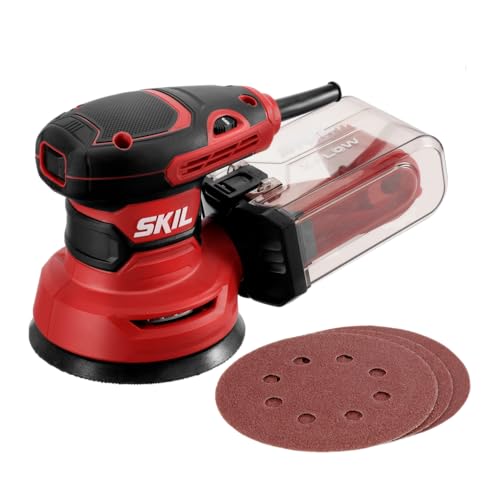
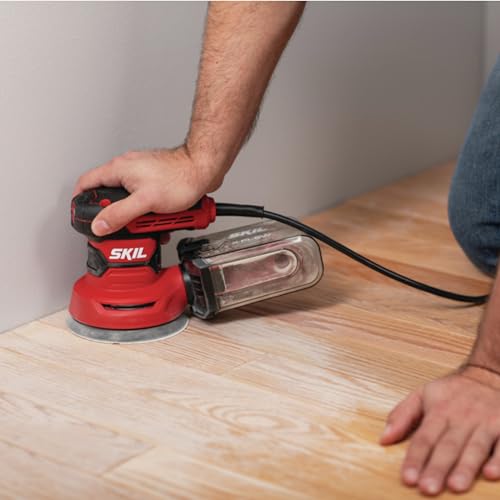
This sander hits right where budget-conscious DIYers need it to. The 2.8 amp motor and 13,000 OPM give it enough punch for weekend projects like refinishing a tabletop or prepping a door for paint. Owners consistently report that the cyclonic dust box actually works better than most in this price range, keeping fine dust out of the motor and making cleanup less of a chore.
It’s not going to match pro gear in durability, but for light to medium use, it’s a solid performer. I’d pick this over pricier models if you’re only sanding a few times a year. Compared to the DEWALT DWE6423, it lacks the refined balance and dust sealing, but it gets the core job done at a fraction of the cost.
Product photos


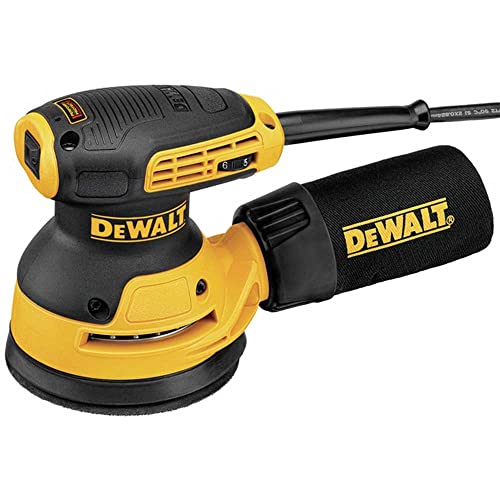
DEWALT 5″ Variable Speed Sander
Strengths
- Low-vibration counterweight
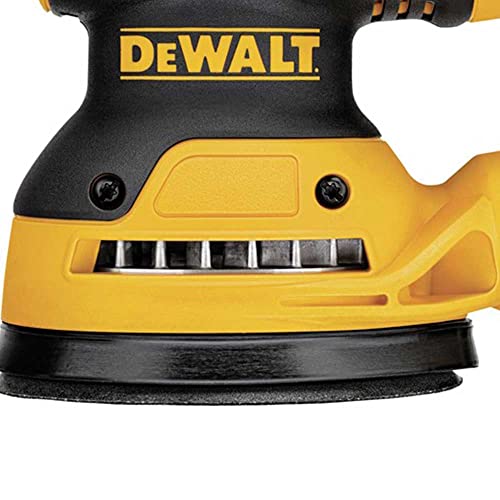
- Excellent dust sealing
- Comfortable rubber grip
Trade-offs
- Corded limits mobility
- Dust bag sold separately
- Heavier than some
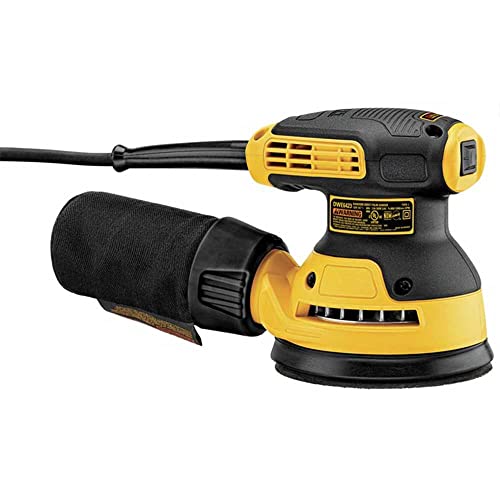
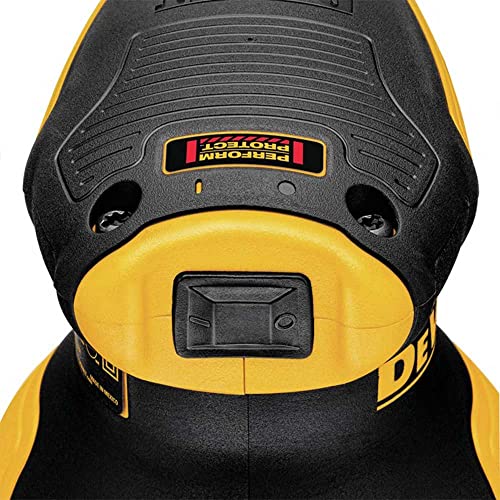
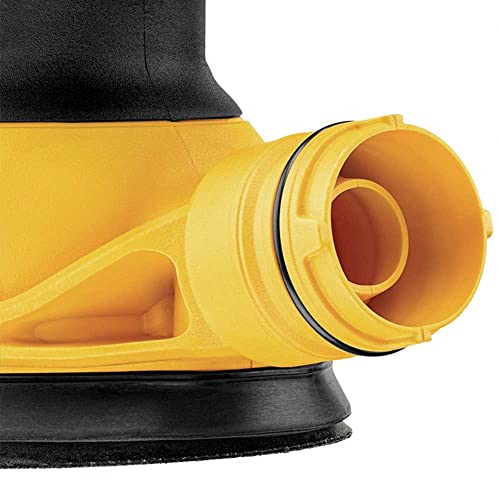
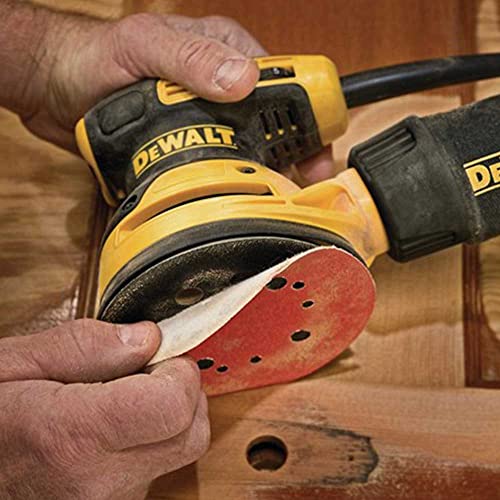
DEWALT’s DWE6423 is what I’d call the gold standard for corded electric sanders in the DIY-to-pro tier. The 3-amp motor delivers consistent 12,000 OPM, and the separate counterweight system genuinely cuts vibration, owners with hand sensitivity swear by it. The rubber overmold grip is aggressive in all the right places, giving solid control even when sanding overhead or at odd angles.
Dust management is excellent, especially when paired with a DEWALT vacuum. It’s shorter in height than many rivals, letting you get flush with edges. Compared to the SKIL model, this one feels more durable and lasts longer under frequent use. If you’re upgrading from a budget sander, this is where I’d tell most people to land.
Product photos
Ingersoll Rand 6″ Air Sander

Strengths
- Silenced operation
- Ball-bearing durability
- Compact angle design
Trade-offs
- No included hose or fittings
- Adhesive pad requires prep
- Higher air consumption
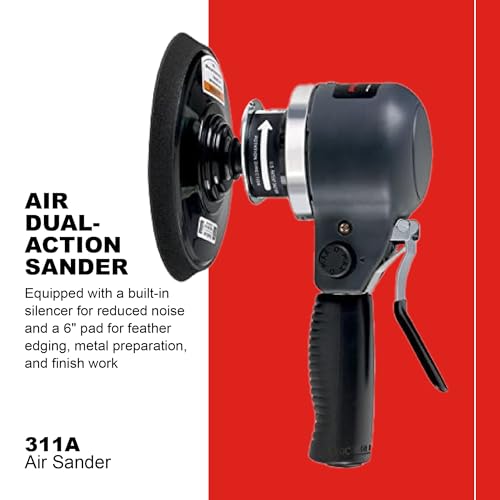
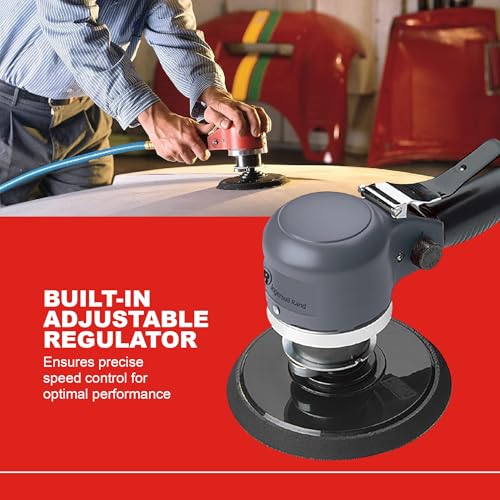
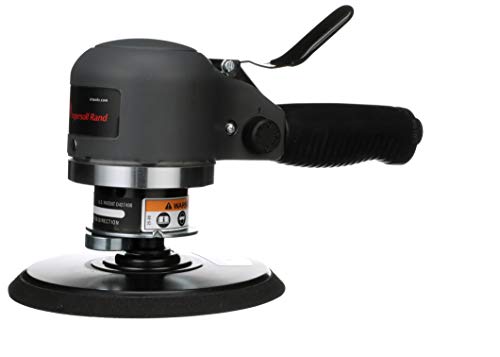
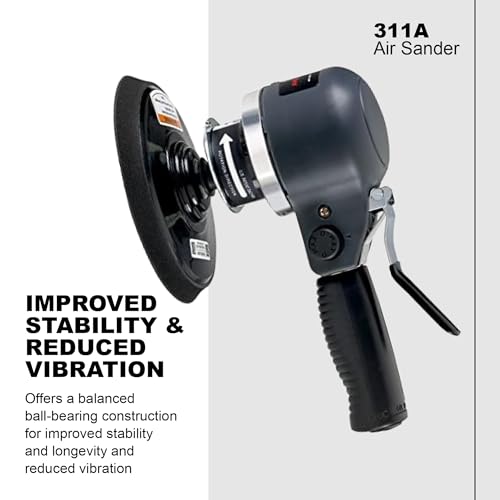
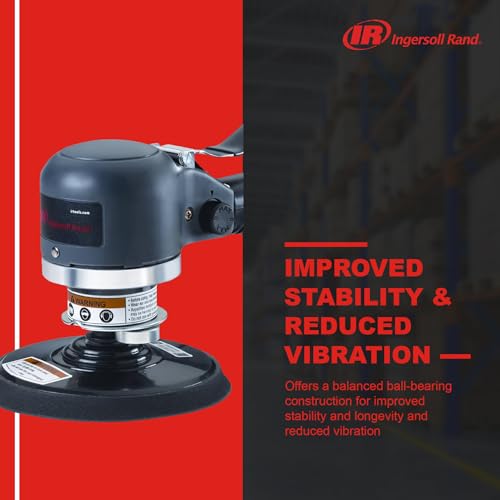
Ingersoll Rand built this sander for people who care about finish quality and tool longevity. The 12,000 RPM motor with built-in silencer runs quieter than most, and the 6” adhesive pad delivers a swirl-free finish that body shops appreciate. Ball-bearing construction means it handles daily abuse without breaking a sweat.
Owners consistently praise its balance and ability to get into tight corners, something the BOSCH GET75-6N struggles with due to its size. While it doesn’t come with a ton of extras, you’re paying for precision engineering, not accessories. If you’re comparing it to the SUNEX SX203N, the 311A offers better speed control and a more refined feel. This is a pro’s tool, no doubt.
Product photos
KUIMIT 5″ Air Sander Kit

Strengths
- Real-time RPM adjustment
- Complete detailing kit
- Lightweight and balanced
Trade-offs
- No dust bag included
- Hook-and-loop pad wears fast
- Regulator can stick over time
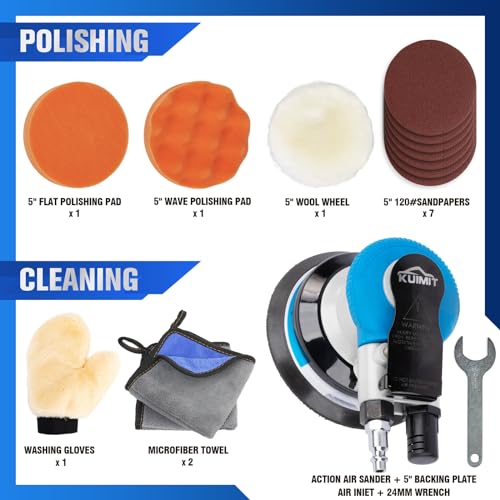
This kit is built for the home garage pro who wants everything in one box. The 12,000 RPM motor delivers smooth, low-vibration performance, and the real-time speed control is a standout, owners love being able to tweak RPM on the fly without shutting down. The palm-sized design lives up to its promise: you can sand one-handed, and it stays comfortable over time.
The included sponge pads and microfiber cloths make it a go-to for car detailing, and the chemical-resistant kit means it handles compound work without degrading. Compared to the ZFE model, it’s better refined and more focused on finish work. My recommendation? This is the smarter buy if you’re doing paint correction or fine woodworking and want a complete setup out of the gate.
Product photos
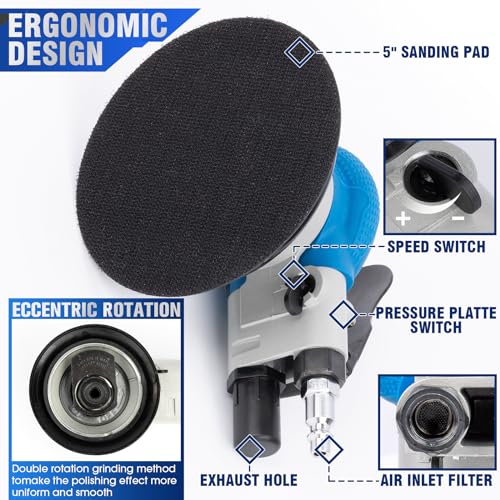
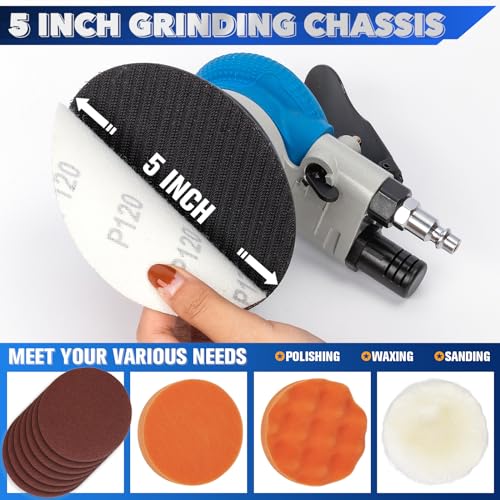
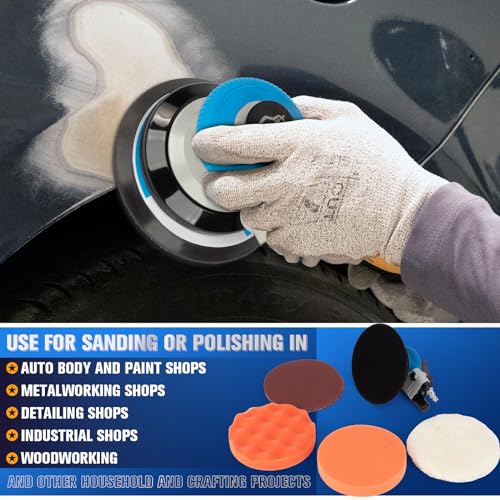
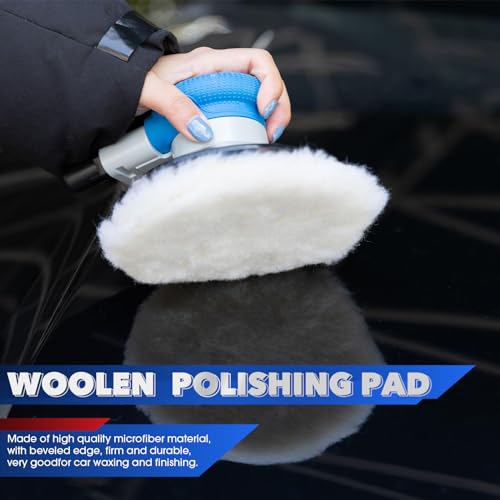
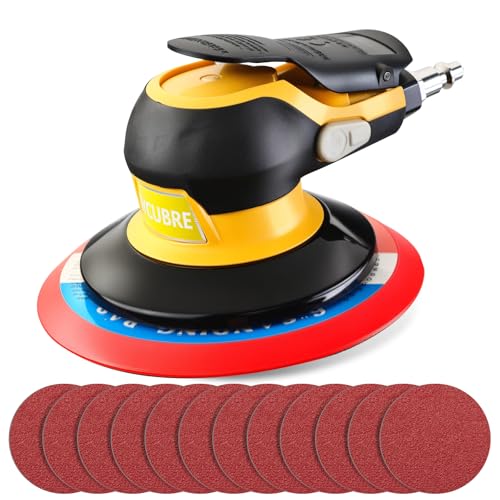
5/6 Inch Low Noise DA Sander
Strengths
- Noise-reduction tech
- Lightweight ergonomic design
- Adjustable speed switch
Trade-offs
- Requires large compressor
- No included accessories
- Orbit size not ideal for heavy stock removal
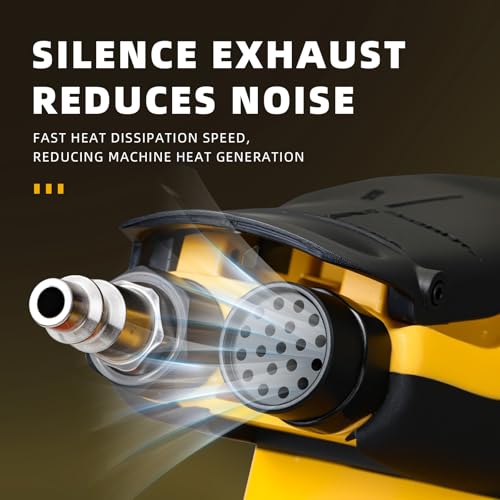
If you’re working in a shared garage or hate the ear-splitting whine of most air sanders, this one deserves a close look. The noise-reduction design is legit, owners note it’s noticeably quieter than standard models, even at 13,000 RPM. That makes long sessions on auto body panels or trim work far less taxing.
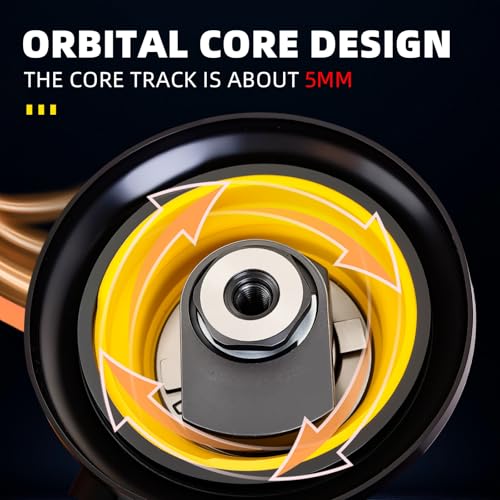
It’s lightweight and well-balanced, so fatigue stays low. The 5mm orbit is ideal for finishing, and paired with a 15-gallon compressor, it keeps up with demand. Compared to the SUNEX SX203N, it’s slightly louder but offers better speed control. I’d recommend this over bulkier models for detail work where precision and comfort matter most.
Product photos
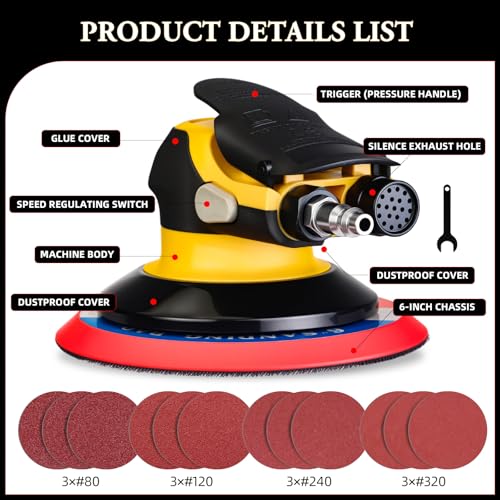

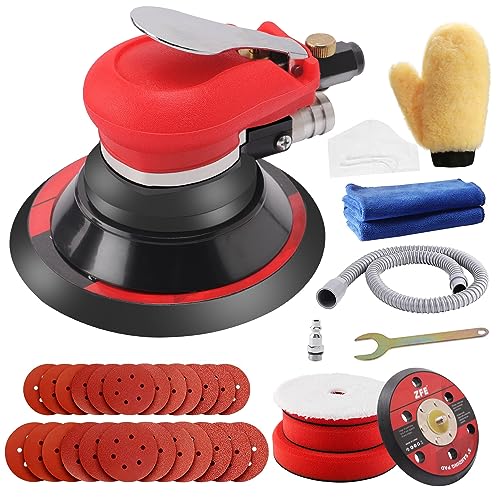
ZFE 5″ & 6″ Pneumatic Sander
Strengths
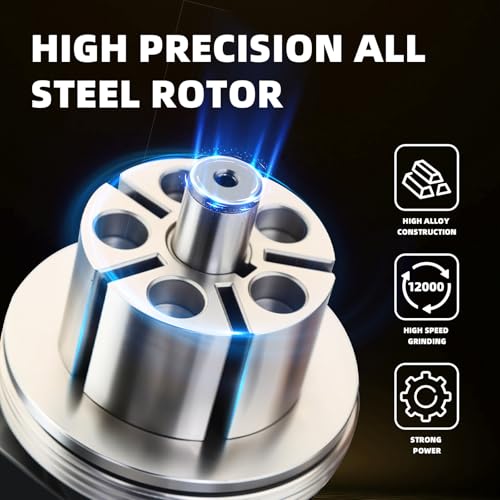
- All-steel rotor and cylinder
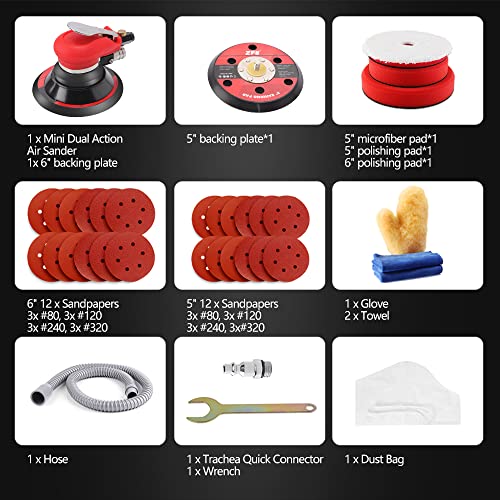
- Comes with 5″ and 6″ plates
- Full accessory kit included
Trade-offs
- Air hose not included
- Regulator feels cheap
- Some reports of pad wobble
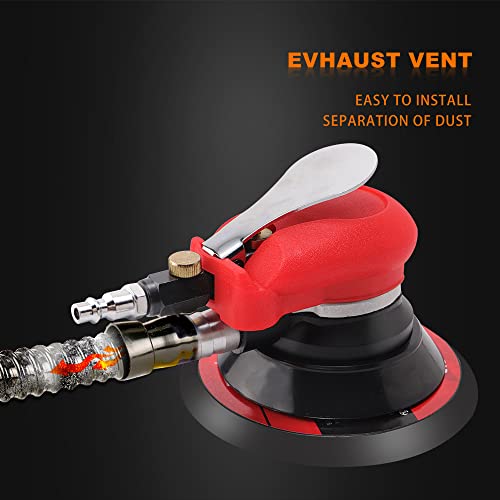
This pneumatic dual-action sander leans hard into value with its included accessories and rugged all-steel internals. The 10,000 rpm regulator-controlled motor holds up well under pressure, and owners using it for metal prep or auto body work say it resists stalling better than expected for the price. The dual backing plates (5” and 6”) add real flexibility, something you don’t often see at this level.
Where it really stands out is in the kit: 24 sandpapers, polishing pads, and cleaning tools mean you can start working immediately. But it’s not without downsides. Compared to the Ingersoll Rand 311A, it’s a bit bulkier and lacks that brand’s refined balance. Still, for the price, it’s a heavy-duty option that punches above its weight.
Product photos
SUNEX TOOLS 6″ Quiet Sander

Strengths
- Vibration-free ball bearings
- Quiet insulated housing
- Built-in speed regulator
Trade-offs
- Lower RPM than rivals
- No accessories included
- Not for aggressive grinding
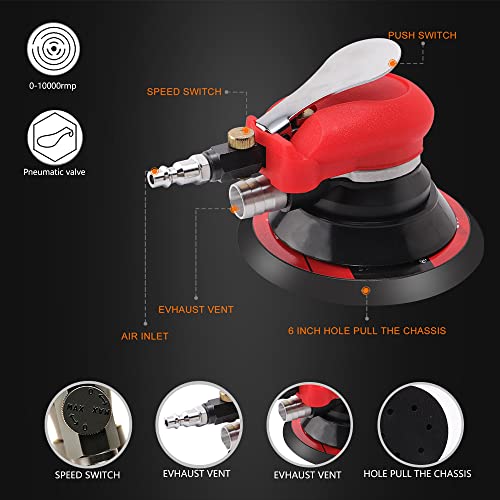
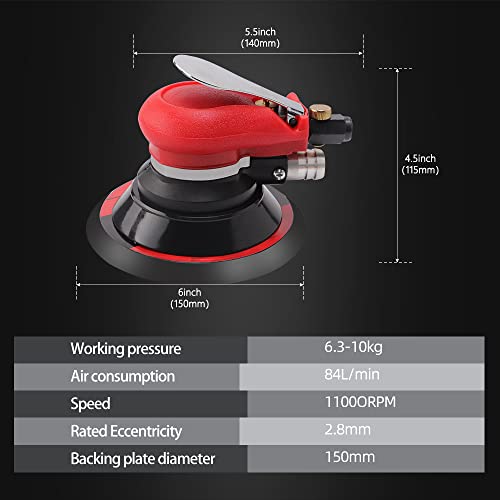
SUNEX built this sander with hand comfort in mind. The ball-bearing construction and insulated housing make it one of the smoothest-running 6” pneumatic sanders out there. Owners report noticeably less vibration than similar models, which matters when you’re sanding for hours on metal or auto panels. The 10,000 RPM free speed is enough for most finishing tasks, and the built-in regulator gives solid control.
It’s not the most powerful, but it’s exceptionally well-balanced. Compared to the Ingersoll Rand 311A, it’s slightly slower but quieter and gentler on the hands. If you’ve ever finished a job with tingling fingers, this one’s worth the upgrade. It’s a specialist tool, built for longevity and comfort, not brute force.
Product photos
How We Evaluated dual action sanders
Rather than a hands-on lab test, this selection is a research-led comparison of published specifications and owner feedback. I started by compiling a list of popular dual action sanders, then compared their features – motor power, speed ranges, pad size, dust collection systems, and build quality. Crucially, I weighed owner reviews from multiple sources, paying close attention to reported durability, ease of use, and real-world performance. Finally, I applied my experience with power tools to rank these sanders based on what matters most to DIYers and professionals.
For dual action sanders, consistent speed control and low vibration are paramount. A sander that can maintain a steady orbit and minimize hand fatigue will always outperform one that’s jerky or uncomfortable to use for extended periods. Dust collection is also a major factor, as effective systems improve visibility and reduce cleanup time. These factors heavily influenced our choices, alongside the overall value proposition each sander offered.
Specifications reliably indicate a sander’s potential power and speed, but owner feedback often reveals how that power translates into actual performance. I looked for consistent patterns in reviews regarding build quality (especially the motor and bearings) and long-term reliability. Reputable expert reviews provided additional insights into features like ergonomics and dust collection efficiency, helping me to separate genuinely well-designed sanders from those with marketing hype. If you’re looking for a wider range of options, you might also want to check out our guide to the best overall sander picks.
Choosing The Right dual action sanders
Picking the right dual-action sander can make a huge difference in how quickly and easily you finish projects.
A quality dual-action sander balances power with finesse. Look for variable speed control, a comfortable grip to minimize fatigue, and effective dust collection to keep your workspace clean and improve visibility. Pad attachment style (hook & loop vs. stick-on) and available pad sizes are also important considerations, depending on your typical applications.
Power and Speed Control
Too many people jump straight to horsepower numbers when choosing a sander, but that’s often misleading. What you really want is control. Variable speed is crucial, letting you dial in the right aggression for the material and the stage of the project. Starting slow with a coarser grit and gradually increasing speed as you move to finer grits prevents gouging and delivers a smoother finish. Corded models generally offer more consistent power than cordless, but consider the convenience of battery-powered options for portability.
Dust Collection – Beyond the Bag
Don’t underestimate the importance of dust collection. Sanding creates a lot of fine particles, and breathing that stuff in isn’t good for you. Many sanders come with a basic dust bag, but these often fill up quickly and don’t capture everything. Look for models compatible with shop vacuums, or even better, those designed to connect directly to a dust collector.
Here’s what to consider when evaluating dust collection systems: * Basic dust bag: Good for quick jobs, but requires frequent emptying. * Vacuum hose adapter: A significant improvement, but you’ll need a compatible vacuum. * Dedicated dust collector port: The most effective option, but adds to the overall cost and requires a dust collector unit.
A sander is only as good as its dust collection. If you’re doing a lot of sanding, invest in a system that keeps your workspace clean and protects your lungs.
Pad Size and Application
The size of the sanding pad dictates the surface area you can cover with each pass, and impacts the type of work you can efficiently tackle. Five-inch pads are the most common and versatile, suitable for general purpose sanding and detail work. Six-inch pads cover more ground quickly, making them ideal for larger surfaces like floors or furniture. If you’re looking at a kit, pay attention to what’s included. I often recommend looking at best DA sander models to see what comes standard. And if you’re primarily focused on furniture, explore options specifically designed for that purpose with sanders for wood furniture.
Dual Action Sanders Compared
Here’s a comparison of key specifications for various dual action sanders to help you make an informed decision.
| Product Title | Size (in) | Motor (amps/hp) | OPM (Orbits Per Minute) | Air Consumption (CFM) | Weight (lbs) | Special Features |
|---|---|---|---|---|---|---|
| BOSCH 6″ Dual-Mode Orbital Sander | 6 | 7.5 | 3300-7300 | N/A | N/A | Turbo Mode |
| SKIL 5″ Random Orbital Sander | 5 | 2.8 | 13,000 | N/A | N/A | Dust Container |
| DEWALT 5″ Variable Speed Sander | 5 | 3 | 8,000-12,000 | N/A | N/A | Dust-Sealed Switch |
| Ingersoll Rand 6″ Air Sander | 6 | 0.25 hp | 12,000 | 17 | 4.2 | Quiet Operation |
| KUIMIT 5″ Air Sander Kit | 5 | N/A | 12,000 | N/A | 3.1 | Complete Kit |
| 5/6 Inch Low Noise DA Sander | 5/6 | N/A | 12,000-13,000 | N/A | N/A | Low Noise |
| ZFE 5″ & 6″ Pneumatic Sander | 5/6 | N/A | 10,000 | N/A | N/A | Heavy Duty |
| SUNEX TOOLS 6″ Quiet Sander | 6 | N/A | 10,000 | N/A | N/A | Vibration Reduction |
Frequently Asked Questions
What grit sandpaper should I start with when restoring old furniture?
Begin with 80- or 100-grit sandpaper to remove old finishes and imperfections. Progress through progressively finer grits (120, 150, 180, 220) to achieve a smooth, paint-ready surface.
Are pneumatic (air) dual action sanders really quieter than electric ones?
Yes, pneumatic sanders generally operate at lower decibel levels. However, you must factor in the noise produced by the air compressor itself, which can offset some of the sander’s quiet operation.
Can a dual action sander remove paint effectively?
A dual action sander can remove paint, but it’s slower than more aggressive methods like orbital or belt sanding. For thick or multiple layers, consider a paint scraper or chemical stripper first, then use the sander for smoothing and final preparation.
What’s the difference between “hook and loop” and “stick-on” sandpaper?
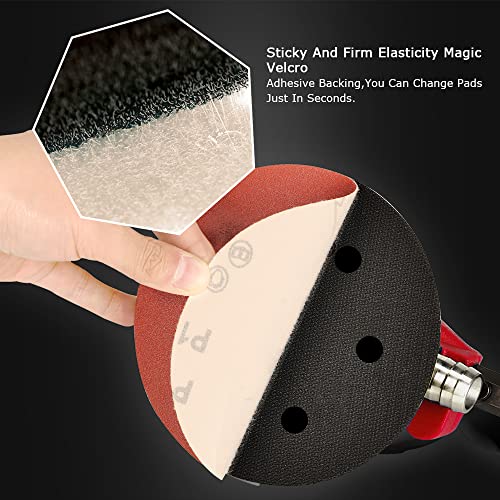
Hook and loop sandpaper attaches with a Velcro-like system, making it easy to change grits quickly. Stick-on sandpaper uses adhesive, which can leave residue and require a tool to remove the used sheet.
Where can I find more information about comparing different types of sanders?
You can find more detailed comparisons and evaluations of top random orbital sanders in our dedicated guide, which covers a wider range of models and features.
The Bottom Line
Choosing a dual action sander often comes down to balancing control with convenience. While a higher price point usually gets you features like more refined speed control and better dust collection, the SKIL 5″ Random Orbital Sander strikes a great balance for most homeowners. It delivers solid performance without breaking the bank, making it an excellent all-around choice.
For those with specific needs, there are other strong contenders. If you’re tackling larger projects and want to move quickly, the BOSCH 6″ Dual-Mode Orbital Sander is a powerful option. And if you need a kit with everything included, the KUIMIT 5″ Air Sander Kit provides exceptional value and versatility. Don’t forget, if you’re also interested in polishing, you can find helpful dual-action polisher reviews elsewhere on the site.
Ultimately, the most important factors aren’t horsepower or orbit speed. A comfortable grip, consistent speed, and effective dust collection will dramatically improve your results and make the sanding process far more enjoyable. Focus on those fundamentals, and you’ll be well-equipped to tackle any sanding project with confidence.
