7 Best Sanders of 2026
This post contains affiliate links. As an Amazon Associate, we earn from qualifying purchases.
The DEWALT 5-Inch Random Orbit Sander is the overall best choice for most users, offering reliable power, excellent dust control, and smooth performance. For those on a budget, the DEKOPRO 5″ Random Orbital Sander delivers strong value without sacrificing key features. If you need precision in tight spots, the BLACK+DECKER Detail Sander is a solid versatility pick.
If you’ve ever finished a sanding job with aching hands, a cloud of dust in the air, or an uneven surface, you know how frustrating the wrong tool can be. A sander should make your work easier, not harder.
This guide cuts through the noise by focusing on real-world performance, based on specs, owner feedback, and years of hands-on experience with power tools. I looked at motor reliability, dust collection efficiency, and ergonomics to find models that deliver consistent results across different projects and skill levels.
Top 7 Sanders in the Market
The Best Sanders, Reviewed
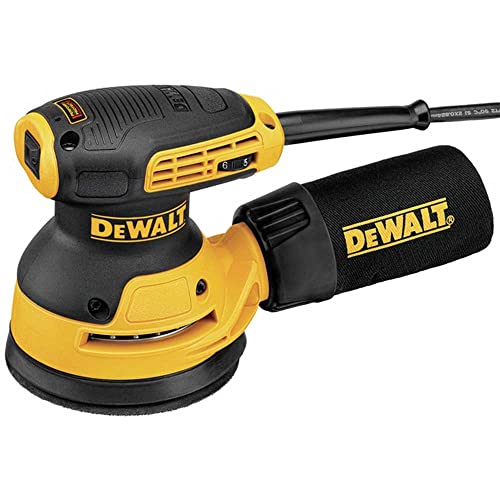
DEWALT 5-Inch Random Orbit Sander
Strengths
- Powerful 3-amp motor
- Excellent vibration control
- Durable build quality
Trade-offs
- Slightly heavier
- Dust bag not as fine-filtering as canister
- Higher price point
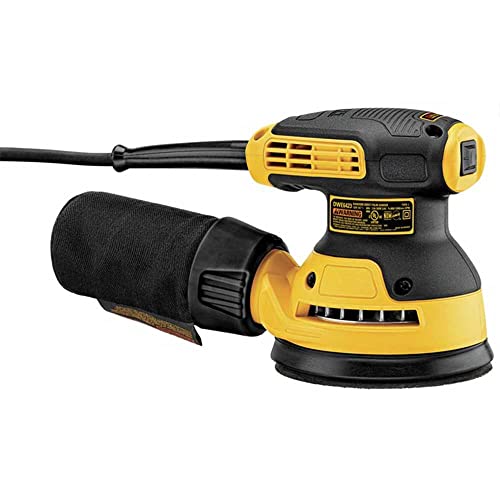
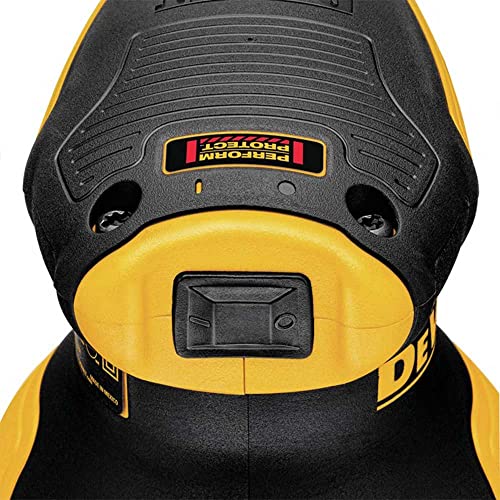
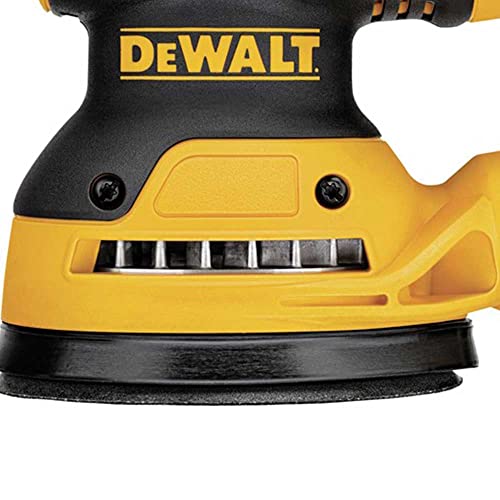
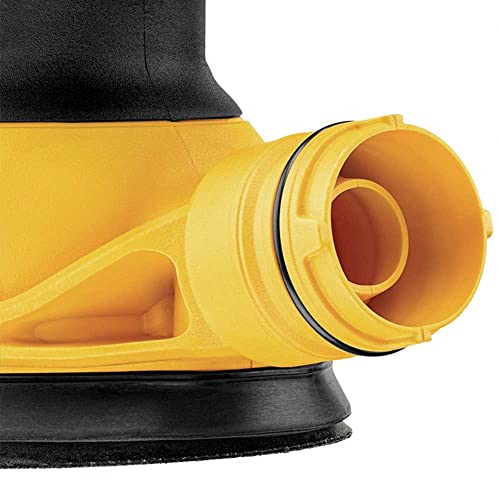
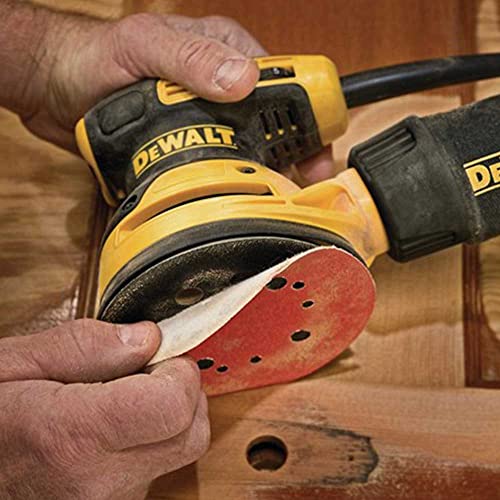
This DEWALT DWE6423 is the benchmark for corded 5-inch orbital sanders, and owners and pros agree, it earns the title. The 3-amp motor delivers smooth, consistent power between 8,000 and 12,000 OPM, and the counterweight design genuinely reduces vibration, making it comfortable over long stretches. The rubber overmold grip is aggressive where it needs to be, and the shorter body lets you work close to the surface, which matters on flat stock.
The dust port connects directly to DEWALT’s vacuums, and the one-handed locking bag is a small but meaningful convenience. Compared to the BOSCH ROS20VSC, it’s slightly more durable in switch and motor build, and while the BOSCH wins on dust filtration, this one balances performance, ergonomics, and reliability better. It’s the sander I’d recommend to someone who wants one solid, no-compromise tool.
Product photos
DEKOPRO 5″ Random Orbital Sander

Strengths
- Powerful motor
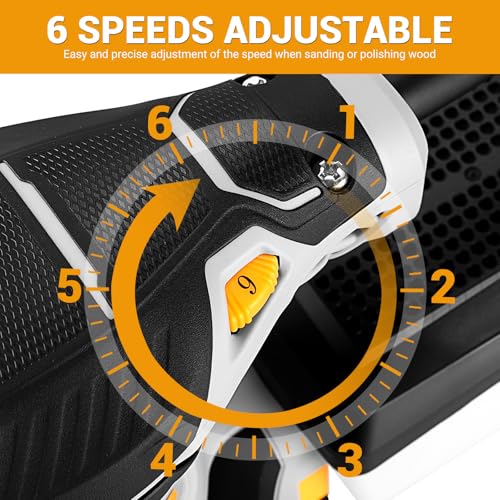
- 6 speed settings
- Includes 16 sanding discs
Trade-offs
- Basic dust collection
- Noticeable vibration
- Plastic housing feels light
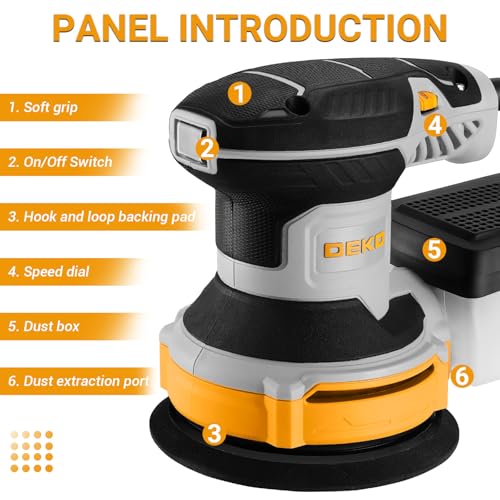
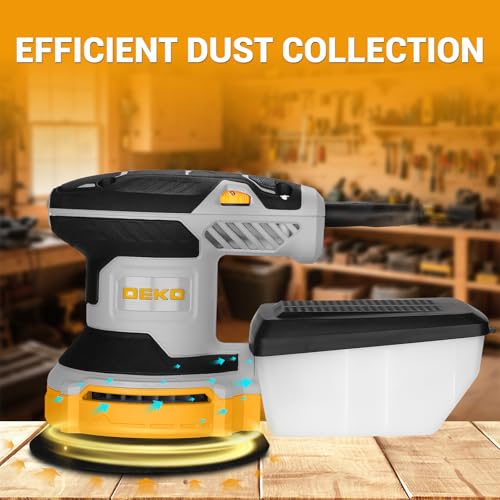
On paper, the DEKOPRO 5-inch sander looks like a solid budget play with its 2.5A motor and 14,000 RPM max speed. Owners consistently report it handles basic wood and metal sanding without bogging down, and the inclusion of 16 sanding discs across six grits makes it immediately usable out of the box. The six-speed control is a rare feature at this price, giving users some flexibility in matching the aggressiveness to the task.
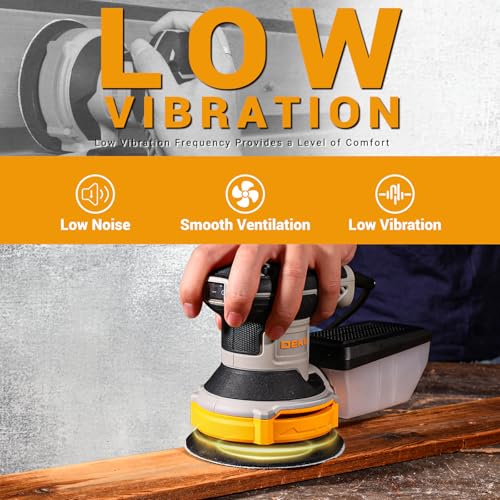
Still, it’s clear this sander is built for occasional use. Reviewers note the dust bag fills quickly and doesn’t match the efficiency of canister systems, and while the rubber grip helps, vibration control isn’t on par with premium models. Compared to the DEWALT DWE6423, it lacks refinement in balance and switch durability. But for light DIYers or weekend projects, it delivers more than expected for the cost.
Product photos

DEWALT 20V MAX Orbital Sander

Strengths
- True cordless freedom
- Brushless motor efficiency
- Comfortable grip
Trade-offs
- Battery sold separately
- Slightly less power than corded
- Dust bag smaller than corded models
Cordless convenience meets real performance in the DEWALT DCW210B. Running on a 20V MAX battery, it delivers 8,000 to 12,000 OPM with a brushless motor that reviewers say offers impressive runtime and efficiency. The low-profile design helps with control, and the texturized rubber grip keeps it stable during use. It’s clearly designed for users who hate tripping over cords or working where outlets are scarce.
It matches the corded DWE6423 in speed range but trades some runtime consistency for mobility. The dust bag is one-handed and works with DEWALT vacs, but without a battery included, the full cost adds up. Still, for anyone already in the DEWALT 20V ecosystem, this is the obvious cordless pick, especially for on-site or automotive work.
Product photos


BLACK+DECKER Detail Sander

Strengths
- Compact design
- Detail finger attachment
- Dust-sealed switch
Trade-offs
- Small dust canister
- Not for large surfaces
- Motor can overheat
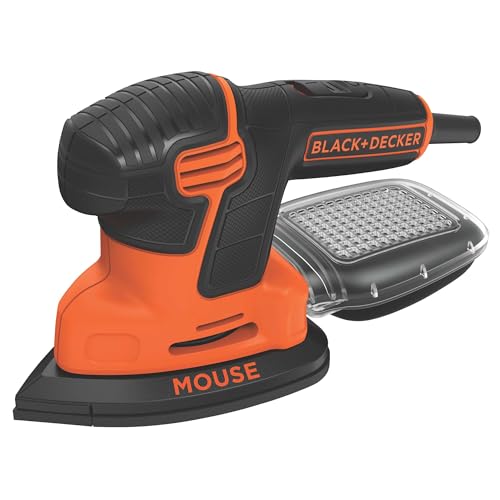
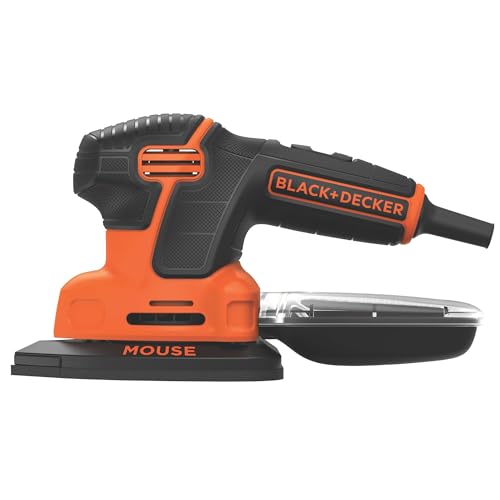
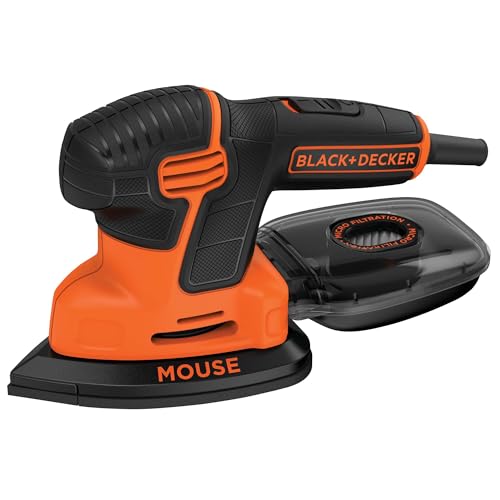
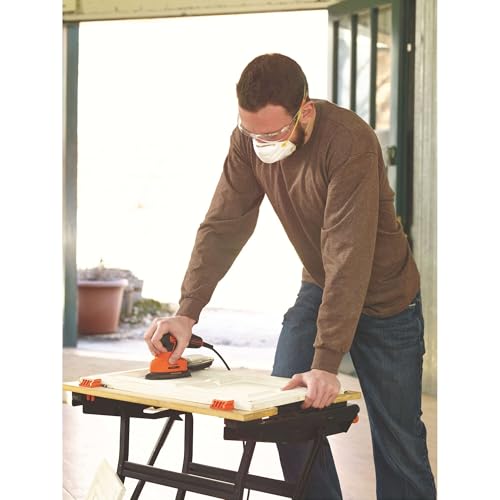
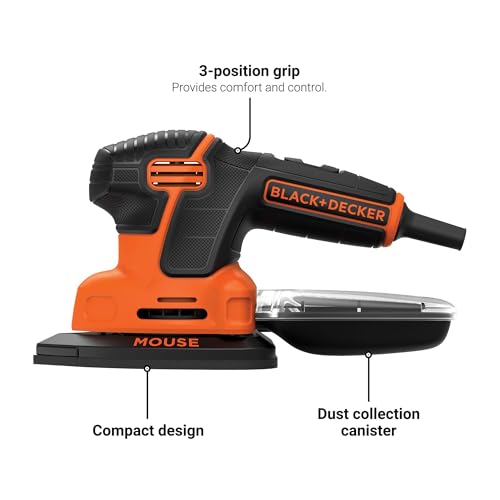
If you’ve ever struggled to sand inside cabinet corners or along baseboard edges, this BLACK+DECKER detail sander is built for exactly that frustration. Its 1.2A motor and 16,000 OPM give it surprising punch for such a compact tool, and the three-position grip makes it comfortable whether you’re working overhead or on your knees. The detail finger attachment is where it really shines, owners love how it gets into tight spots other sanders can’t touch.
The dust canister is small but effective for short jobs, and the dust-sealed switch is a smart touch for longevity. It won’t replace a full-size orbital for big surfaces, but compared to the SKIL SR232301, it’s more focused and slightly more aggressive. For detail work, it’s hard to beat the balance of size, power, and price.
Product photos
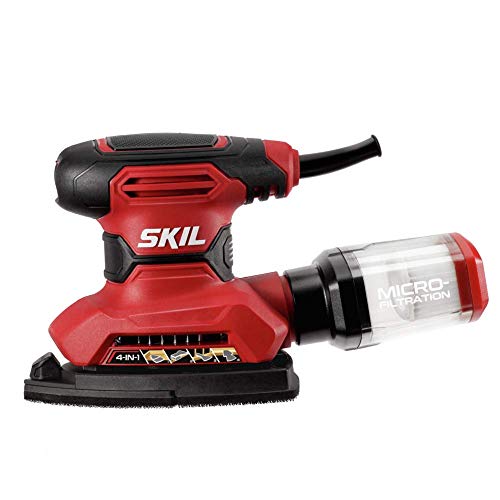
SKIL 4-in-1 Detail Sander
Strengths
- 4-in-1 functionality
- Tool-free attachments
- Good dust control
Trade-offs
- Slightly bulkier
- Attachments can loosen
- Motor lacks top-end power
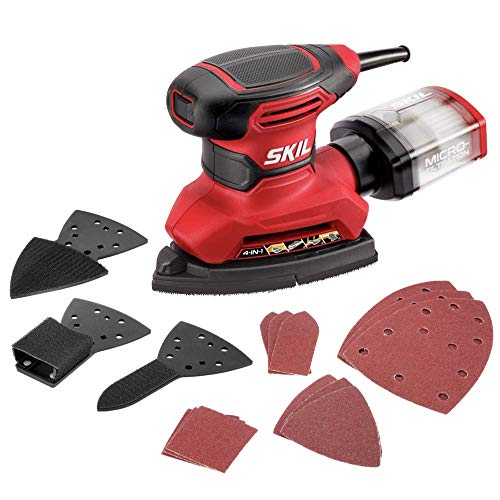
The SKIL SR232301 stands out by offering true versatility, four sanding modes in one tool thanks to its quick-change attachments. With a 1.2A motor and 13,500 OPM, it’s not the fastest, but it’s consistent across applications. Owners appreciate being able to swap from flat pad to corner to edge mode in seconds, no tools needed. That adaptability makes it a favorite for trim work, window restoration, and furniture touch-ups.
Its micro-filtration system works well with a shop vac, and the hook-and-loop system keeps sanding sheets secure. While it doesn’t have the raw speed of the BLACK+DECKER BDEMS600, it covers more ground in terms of form factors. The soft grip and low vibration also make it comfortable for longer sessions. For someone who hates owning single-purpose tools, this is a smart pick.
Product photos


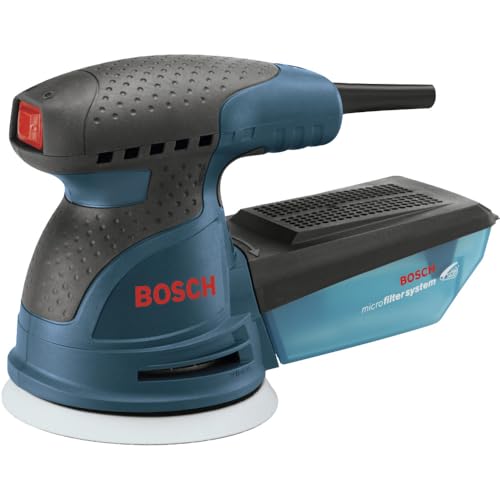
BOSCH 5-Inch Palm Sander
Strengths
- Best-in-class dust collection
- Microfilter system
- Minimizes swirl marks
Trade-offs
- Less aggressive motor
- Canister fills fast on big jobs
- Slightly higher maintenance
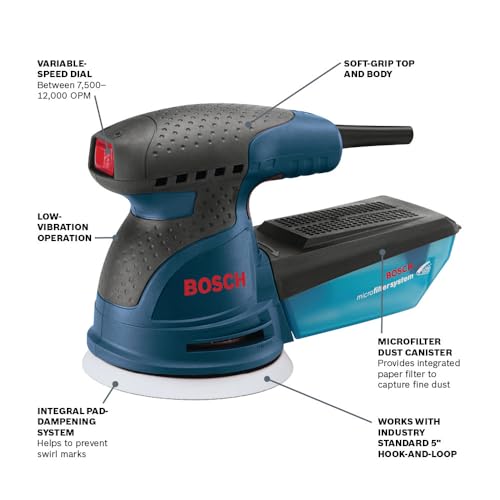
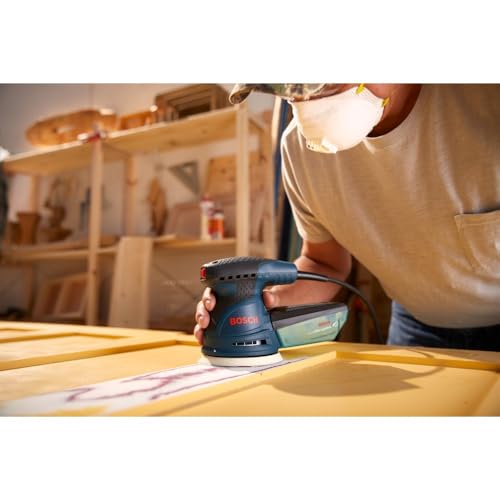
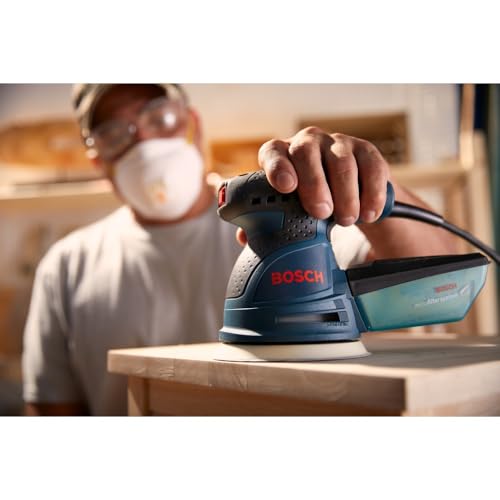
When dust is the enemy, like when prepping for a fine finish or working indoors, the BOSCH ROS20VSC is in a class of its own. Its microfilter system captures particles down to 0.5 microns, and the twist-off canister makes emptying clean and predictable. Owners consistently praise how little dust escapes during use, especially compared to bag-style models like the DEKOPRO or HYCHIKA. The variable speed dial (7,500–12,000 OPM) gives good control, and the pad dampening system really does reduce swirl marks.
It’s not the most powerful sander here, but it’s one of the smoothest. The hook-and-loop system is ultra-secure, and the included carrying bag adds value. If you’re finishing furniture or prepping for stain, this is the one I’d reach for. It just doesn’t match the DEWALT DWE6423 in raw durability for job-site abuse.
Product photos


HYCHIKA 5-Inch Random Orbital Sander
Strengths
- High RPM output
- Excellent included kit
- Efficient dust bag
Trade-offs
- Switch feels cheap
- Speed dial lacks precision
- Motor noise is noticeable
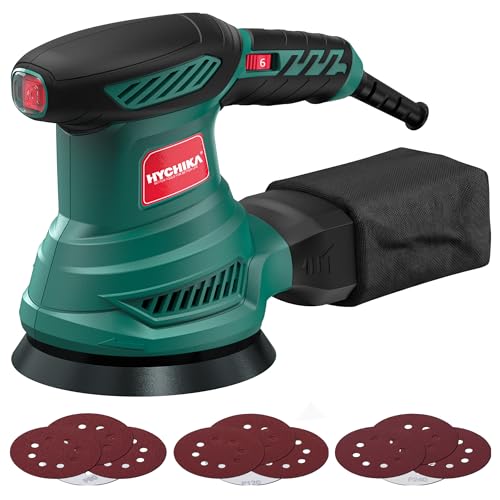
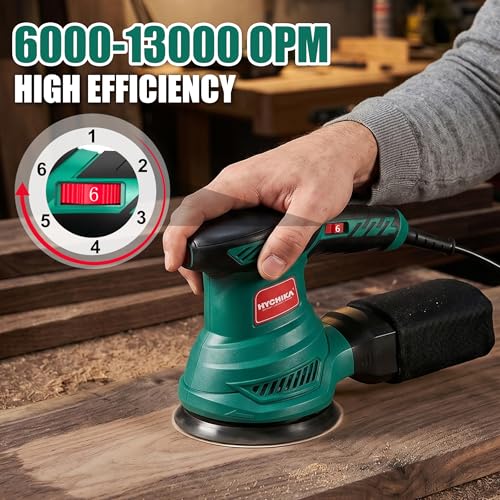
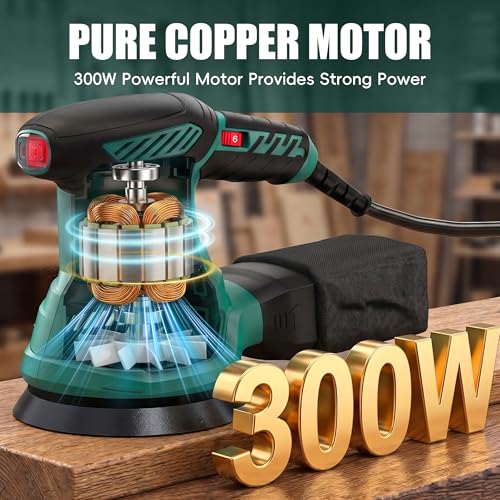
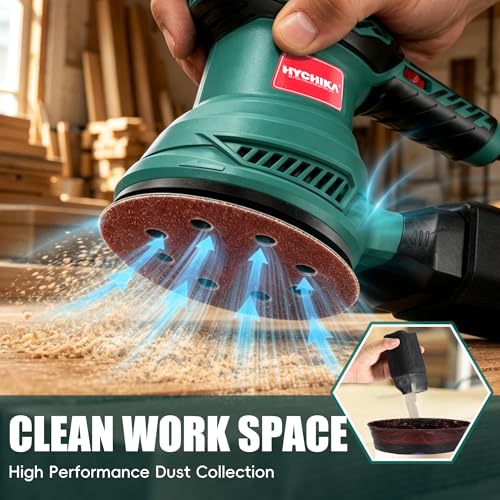
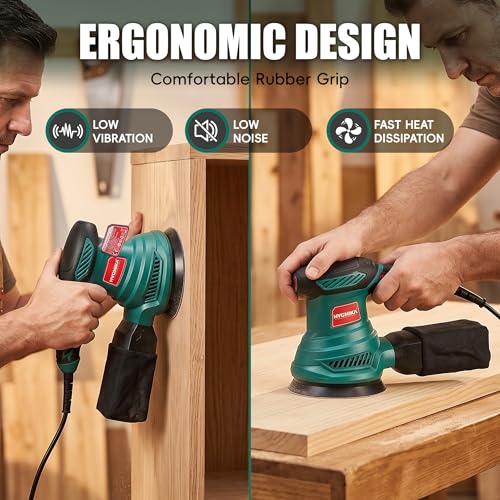
The HYCHIKA stands out by offering a complete, ready-to-work kit at a competitive price. With a 300W motor hitting 13,000 RPM and six speed settings, it’s both powerful and flexible. Owners love the 12 included sanding discs and the large dust bag with 8 vacuum holes, reports suggest it captures about 90% of debris, which is impressive for a bag system. The textured rubber grip provides solid control, even at high angles.
It’s not quite as refined as the DEWALT or BOSCH models, but for the price, it punches above its weight. Compared to the DEKOPRO, it has better dust management and a more robust feel. If you’re starting out or want a capable second sander without overspending, this kit gives you everything you need in one box.
Product photos

How We Evaluated sanders
As someone who’s spent years around workshops and renovation projects, I know a good sander can make or break a finishing job. Rather than a hands-on lab test of each model, this selection is based on a research-led comparison of published specifications, features, and – crucially – owner and expert reviews. I weighed data from multiple sources to identify sanders that consistently deliver performance and value. My goal was to present options across different needs and budgets.
For sanders, consistent speed control and effective dust collection are paramount. We prioritized models with variable speed settings to handle different materials and tasks, and those with well-designed dust ports or collection systems. Vibration reduction was also a key factor, as prolonged use with excessive vibration leads to fatigue and reduces control. These features directly impact the quality of the finish and the user’s comfort.
Specifications tell you about motor power and OPM (orbits per minute), but owner feedback reveals real-world durability and ease of use. I relied on reported experiences regarding build quality, switch reliability, and the effectiveness of dust collection. Where specs indicated strong features – like a brushless motor in a cordless model – I looked for corroboration in reviews about runtime and efficiency. If you need something even more specialized, you might also consider looking at our guide to compact palm sanders.
What To Look For In sanders
Picking the right sander can dramatically improve your finishing work, but there’s a lot more to it than just grabbing the cheapest model.
A quality sander balances power with control, featuring a robust motor capable of maintaining consistent speed under load, effective dust collection to improve visibility and reduce mess, and ergonomic features to minimize user fatigue during extended projects. Look for variable speed controls, a comfortable grip, and a dust collection system that suits your workshop setup.
Motor Power and Speed Control
Don’t assume more power is always better. While a higher amperage motor will tackle tougher jobs faster, it can also make the sander harder to control, especially for beginners. I often find folks overestimate the power they actually need for most home projects. Variable speed control is a huge benefit; slower speeds are better for delicate work or when starting and stopping to avoid gouging, while higher speeds excel at rapid material removal. Consider the materials you’ll be sanding most often. Softer woods and paint need less power than hardwoods or rust removal, and a wider speed range offers greater flexibility.
Dust Collection – Beyond the Bag
Dust collection is often an overlooked feature, but it’s critical for both your health and the quality of your finish. A basic dust bag is okay for quick tasks, but for any serious sanding, you’ll want a sander compatible with a shop vacuum. Many models, like the BOSCH 5-Inch Palm Sander, offer both a dust bag and a vacuum port. Think about the size of your workshop and how often you’re willing to empty a dust bag. If you’re working in a confined space, effective dust extraction is even more important. For those tackling intricate projects, exploring precision detail sanders can also help minimize dust spread.
Pad Size and Ergonomics – It’s About Comfort
The size of the sanding pad dictates the surface area covered with each pass. 5-inch pads are the most common and versatile, but smaller detail sanders (like the BLACK+DECKER Detail Sander) are essential for corners and tight spaces. Beyond size, pay attention to the ergonomics. Look for a sander with a comfortable, rubberized grip and a balanced weight distribution.
Here’s what I tell people to consider when it comes to ergonomics: * Weight: A lighter sander reduces fatigue. * Grip: A rubber overmold provides better control. * Balance: A well-balanced sander minimizes vibration and strain on your hands and wrists. Vibration reduction is especially important if you plan on using the sander for extended periods.
A sander that fits your hand and feels comfortable to use will always produce better results than a more powerful model that causes fatigue.
Ultimately, finding the right sander depends on your specific needs. If you’re looking for a broad overview of what’s available, checking out top random orbital sanders is a great starting point, and you’ll quickly get a sense of the range of options and features available in today’s market.
Sanders Compared
Here’s a comparison of key specifications for the listed sanders.
| Product Title | Motor (Amps) | OPM (Max) | Corded/Cordless | Variable Speed | Dust Collection | Sandpaper Attachment |
|---|---|---|---|---|---|---|
| DEWALT 5-Inch Random Orbit Sander | 3 | 12,000 | Corded | Yes | Dust Port/Bag | Hook & Loop |
| DEKOPRO 5″ Random Orbital Sander | 2.5 | 14,000 | Corded | Yes (6 speeds) | Dust Bag | Hook & Loop |
| DEWALT 20V MAX Orbital Sander | N/A | 12,000 | Cordless | Yes | Dust Port/Bag | Hook & Loop |
| BLACK+DECKER Detail Sander | 1.2 | 16,000 | Corded | No | Dust Canister | N/A |
| SKIL 4-in-1 Detail Sander | 1.2 | 13,500 | Corded | Yes | Dust Port/Bag | Hook & Loop |
| BOSCH 5-Inch Palm Sander | 2.5 | 12,000 | Corded | Yes | Dust Canister | Hook & Loop |
| HYCHIKA 5-Inch Random Orbital Sander | N/A | 13,000 | Corded | Yes (6 speeds) | Dust Bag | Hook & Loop |
Frequently Asked Questions
What grit sandpaper should I start with?
Begin with 80-grit sandpaper for initial material removal or heavy stock sanding. Progressively move to finer grits (120, 180, 220, and higher) for smoother finishes, always ensuring you remove scratches from the previous grit before moving on.
Are cordless sanders as powerful as corded models?
Cordless sanders have closed the power gap, but generally, a corded sander with a comparable amperage will deliver more sustained power. Brushless motors in cordless models, like the DEWALT 20V MAX, offer improved runtime and efficiency, making them a strong option for many tasks.
Can I use a sander to remove paint?
Yes, you can remove paint with a sander, but the best approach depends on the paint type and surface. Using coarser grits (60-80) and a dust collection system is important, and you might consider a dedicated paint scraper for thick or stubborn layers.
What’s the difference between random orbital and detail sanders?
Random orbital sanders cover larger surfaces quickly, moving in a circular pattern to prevent swirl marks. Detail sanders, like the BLACK+DECKER Detail Sander, are smaller and ideal for corners, edges, and intricate work where precision is key. If you’re looking for a variety of options, checking out the best palm sanders can help you find a model that suits your needs.
How do I minimize swirl marks when sanding?
Using a random orbital sander is the first step, as its movement minimizes swirling. Keeping the sander moving at all times and avoiding excessive pressure are also crucial. Regularly cleaning the sanding pad and using fresh sandpaper will further reduce the risk of swirl marks.
The Bottom Line
Choosing a sander often comes down to balancing control with convenience. You can spend more for features like brushless motors and sophisticated dust collection, or you can prioritize simplicity and affordability. For the best overall performance and versatility, I recommend the DEWALT 5-Inch Random Orbit Sander. It consistently receives high marks for its power, smooth operation, and effective dust port, making it a solid choice for a wide range of projects.
If you’re on a tighter budget, the DEKOPRO 5″ Random Orbital Sander offers excellent value. For those needing to tackle intricate work, the BLACK+DECKER Detail Sander is the clear winner, and for folks considering larger material removal, exploring top belt sander models might be a good fit. Each of these picks delivers strong performance in its specific category.
Ultimately, remember that specs aren’t everything. A comfortable grip, effective dust collection, and the right speed control will make a bigger difference in your results than a few extra amps or orbits per minute. Focus on finding a sander that feels good in your hand and suits the types of projects you’ll be tackling most often.
