8 Best Random Orbit Sanders of 2026
This post contains affiliate links. As an Amazon Associate, we earn from qualifying purchases.
Makita BO5041K is the best overall random sander for its reliable power, smooth operation, and strong dust collection. If you’re watching your budget, the DEKOPRO 5″ delivers solid performance at a lower price, while the SKIL 5” stands out for its innovative X-flow dust management and ease of use.
Most people don’t realize how much a poor sander can slow down a project or leave a finish ruined by swirl marks and uneven pressure. After comparing the field and digging into specs and owner experiences, I focused on what actually matters, consistent speed, real dust control, and a tool that won’t leave your hand numb after 20 minutes. This guide cuts through the marketing and shows you which models deliver where it counts, based on how they’re built and how users say they perform.
Top 8 Random Sanders in the Market
The Best Random Sanders, Reviewed
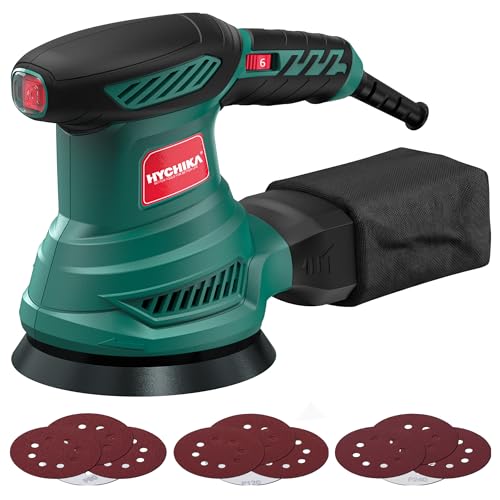
HYCHIKA 5-Inch Random Orbital Sander
Strengths
- High 13,000 RPM speed
- Effective dust bag
- Comes with 12 sanding discs
Trade-offs
- Build quality not job-site tough
- Switch feels a bit flimsy
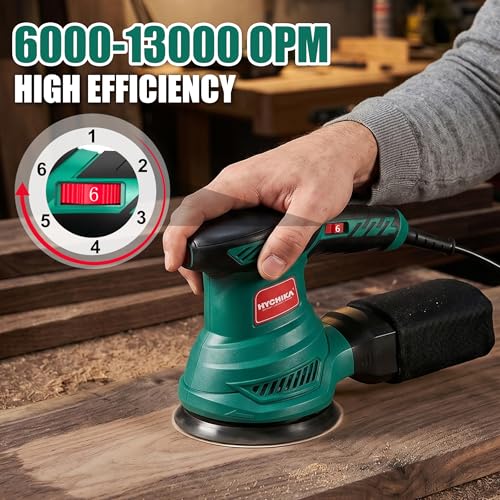
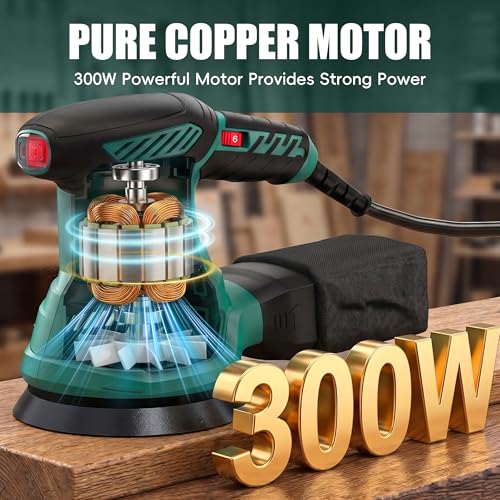
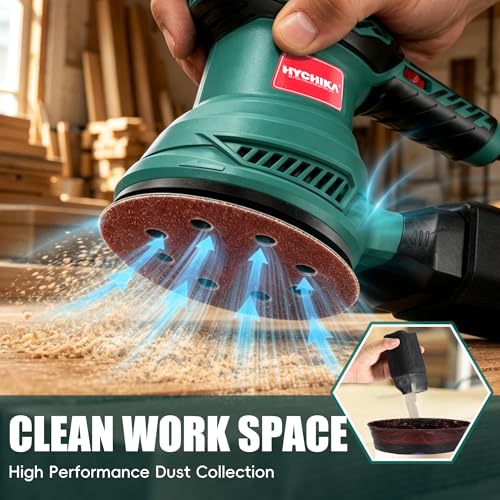
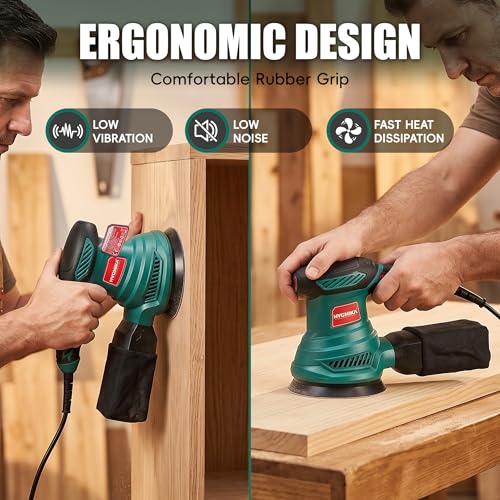
With a 13,000 RPM motor and six-speed control, the HYCHIKA sander punches above its weight for the price. Owners consistently report it handles everything from paint stripping to final smoothing without bogging down, and the upgraded dust bag actually holds what it claims, no constant emptying. The rubber grip feels secure even during overhead work, which is rare at this tier.
It’s not as durable as Makita or DEWALT models, but for DIYers and weekend warriors, this is the smarter buy over pricier names. When compared to the SKIL SR211601, it offers better speed control and included grits, making it more versatile out of the box. The 12 included sanding discs across three grits are a legit value add.
Product photos

SKIL 5″ Random Orbital Sander
Strengths
- Cyclonic dust collection
- Compact for tight spaces
- Affordable entry point
Trade-offs
- Higher vibration levels
- Only 3 sanding sheets included
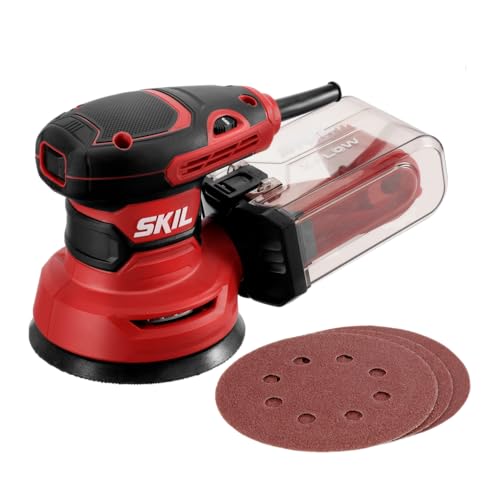
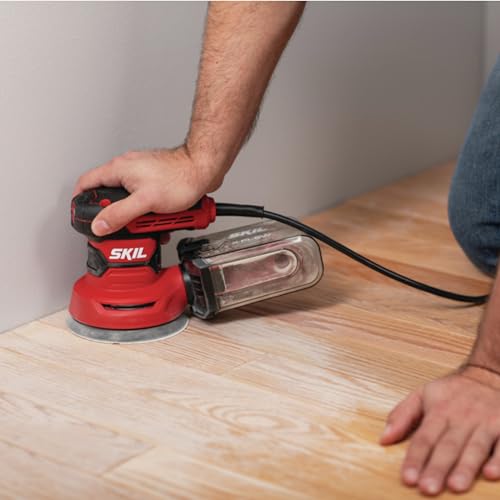
SKIL keeps it simple and affordable with the SR211601, and for tight budgets, that works. The 2.8-amp motor hits 13,000 OPM, which is impressive on paper, and the cyclonic dust box actually does a decent job separating debris. It’s compact, so it fits into corners and tight spots better than bulkier models.
But owners note it vibrates more under load, and the switch, while sealed, doesn’t feel as robust as DEWALT’s. It’s the cheapest here, but you trade some durability. Compared to the DEKOPRO, it includes fewer sanding sheets and less speed flexibility. Still, for occasional use, it’s a capable entry-level option.
Product photos


DEWALT 5-Inch Variable Speed Sander
Strengths
- Durable 3-amp motor
- Excellent vibration control
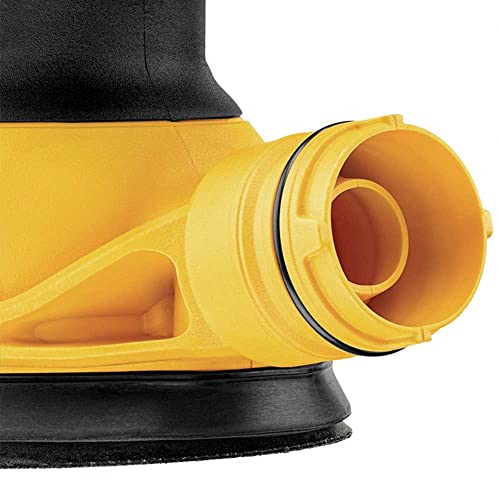
- Superior dust port design
Trade-offs
- Heavier than average
- No carrying case included
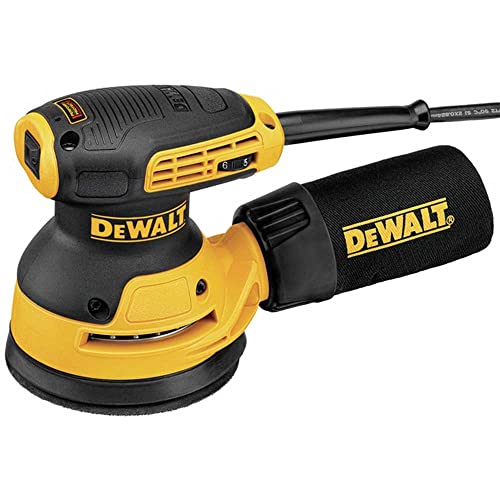
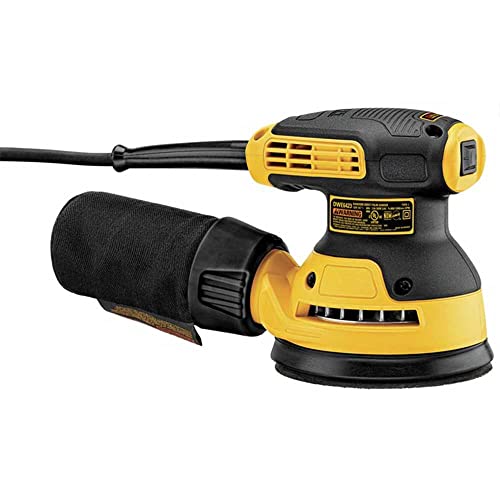
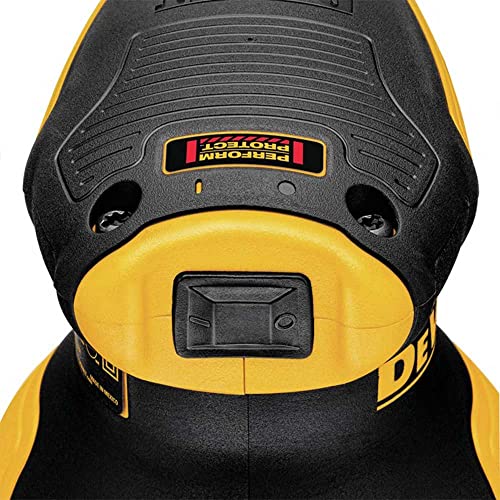
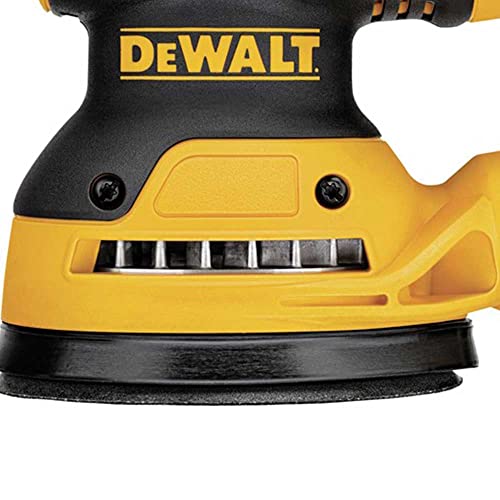
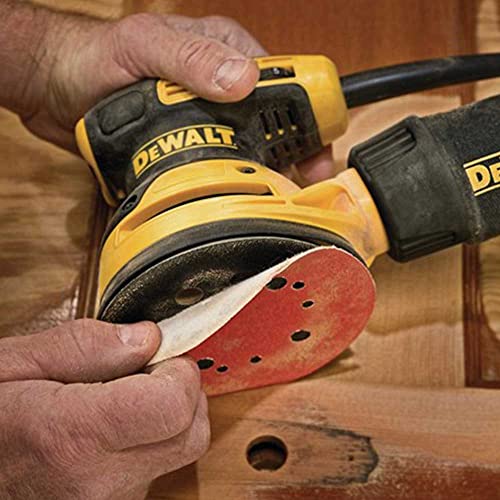
DEWALT didn’t mess around with the DWE6423, it’s built like a job site tank. The 3-amp motor delivers serious torque, and the separate counterweight system genuinely reduces vibration, something owners confirm after long sessions. The dust port fits standard shop vacs without adapters, and the sealed switch holds up well in gritty environments.
This is the sander I’d hand to a pro framing a deck or refinishing floors. It’s heavier than some, but that weight helps with stability during aggressive sanding. When stacked against the Bosch ROS20VSC, it’s less about finesse and more about raw, reliable performance. Not the quietest, but it gets the job done.
Product photos
Makita 18V Cordless Random Orbit Sander

Strengths
- True cordless freedom
- Excellent balance
- Uses Makita LXT batteries
Trade-offs
- Battery not included
- Slightly slower than corded
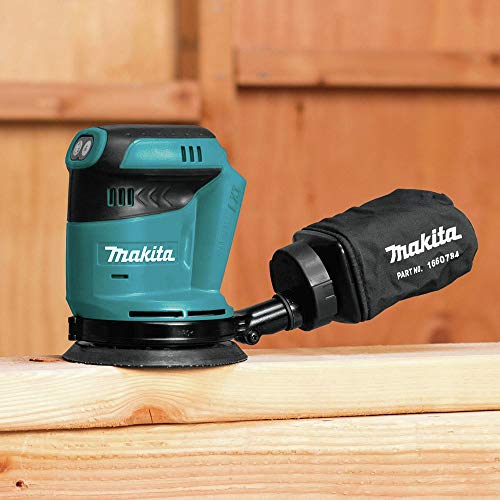
Going cordless with a sander is all about freedom of movement, and Makita delivers that cleanly here. The 18V platform means it runs on batteries you likely already own if you’re into Makita tools. Three preset speeds and a 1/8-inch orbit provide solid control, and owners praise how well it balances during overhead work.
It’s not the fastest sander on paper, but the convenience of cordless operation makes it a standout. Compared to the DEWALT DWE6423, it loses some raw power and dust hose compatibility, but gains portability. I’d recommend it only if you already use Makita’s LXT system, otherwise, the corded Makita BO5041K is the better value.
Product photos


BOSCH ROS20VSC Palm Sander
Strengths
- Excellent dust collection
- Minimizes swirl marks
- Smooth pad dampening
Trade-offs
- Lower max RPM than rivals
- Noisy at higher speeds
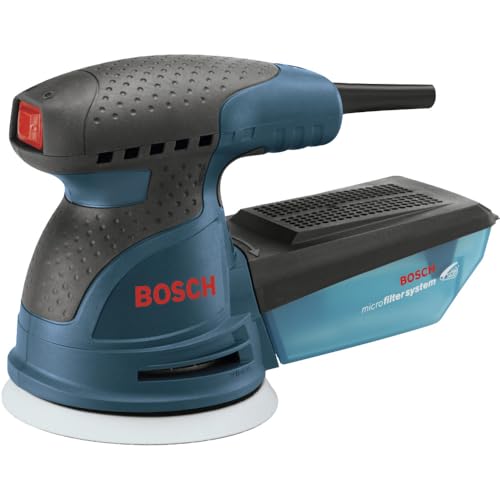
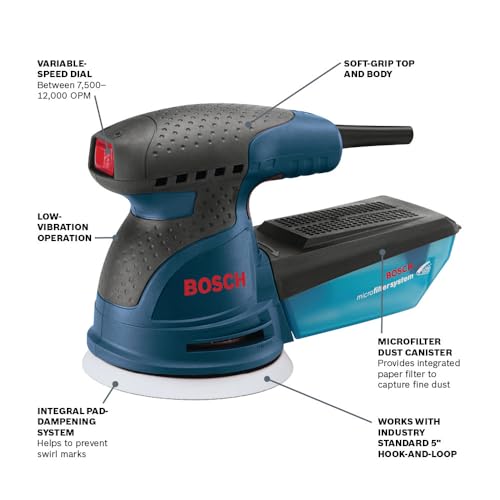
Bosch built the ROS20VSC with a clear focus on clean, high-end finishes, and that shows in its microfilter dust system and pad dampening tech. On paper, the 2.5-amp motor and 7,500–12,000 OPM range are solid, but what stands out is how consistently owners report near-dust-free sanding, especially when paired with a shop vac. The twist-off dust canister is a small detail that makes cleanup noticeably less annoying.
I’d pick this sander over others when working on fine furniture or cabinetry where swirl marks and airborne dust are real concerns. It doesn’t have the raw speed of some competitors, but its precision and dust control make it a specialist tool for detail work. Compared to the DEWALT DWE6423, it trades a bit of power for refinement.
Product photos



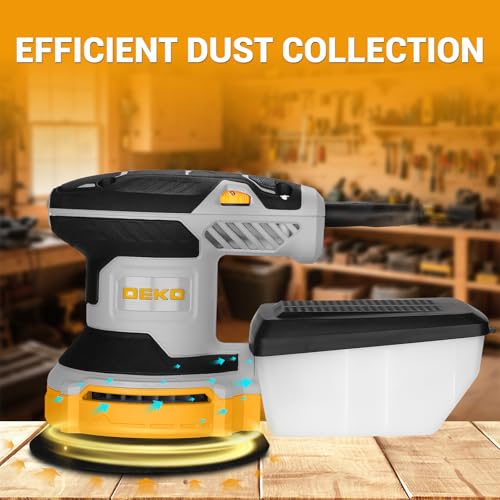
DEKOPRO 5″ Random Orbital Sander

Strengths
- Very high 14,000 RPM
- 16 included sanding discs
- Good speed adaptability
Trade-offs
- Dust bag needs frequent emptying
- Motor heats up under load
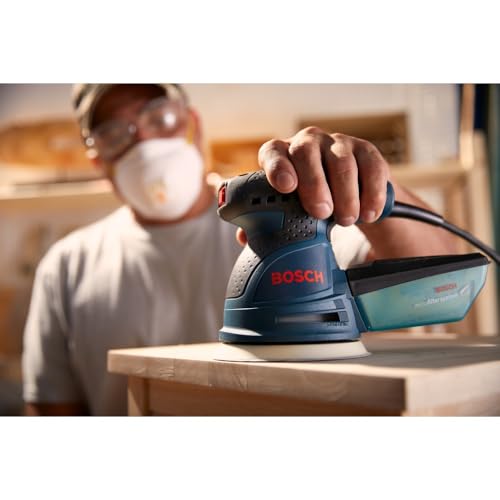
DEKOPRO cranks the specs up to 14,000 RPM and throws in 16 sanding discs across six grits, which is more than most kits include. The six-speed dial gives real flexibility, and owners say it handles metal polishing and coarse wood prep with equal ease. The dust bag works well for a budget model, though some note airflow drops when it fills past halfway.
It’s clearly built to deliver maximum bang for the buck. While it doesn’t have the refined balance of the Makita BO5041K, it matches its variable speed range and adds more grits. For someone starting out or needing a solid second sander, this kit offers more usable content than most in its class.
Product photos

DCA 5-Inch 6-Speed Random Sander
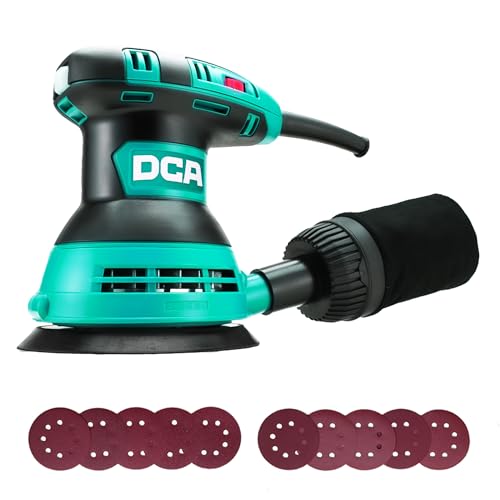
Strengths
- Very low vibration
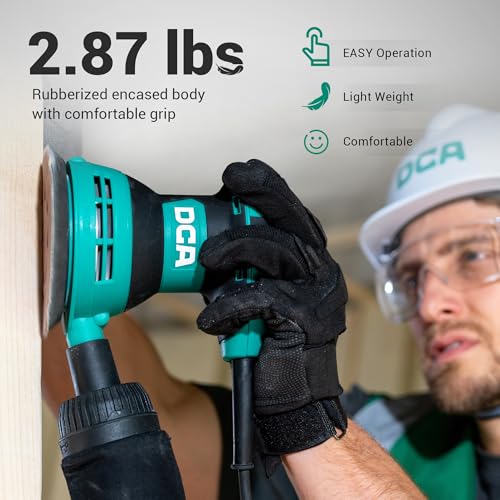
- Lightweight at 2.87 lbs
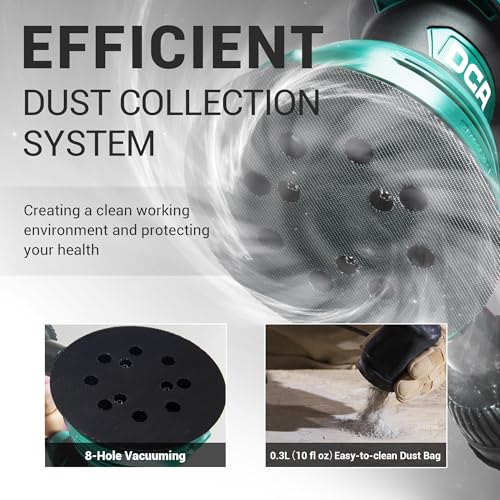
- Good dust seal
Trade-offs
- Dust bag capacity is modest
- Speed dial feels imprecise
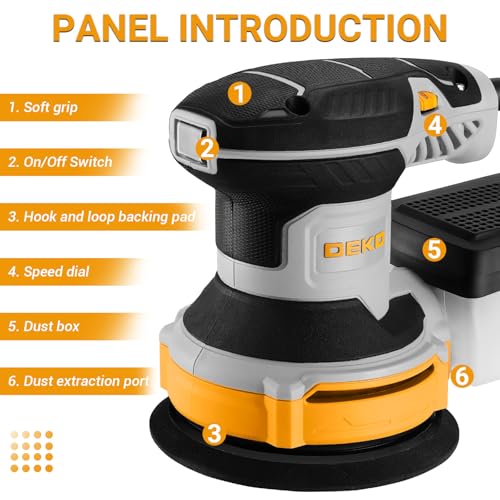
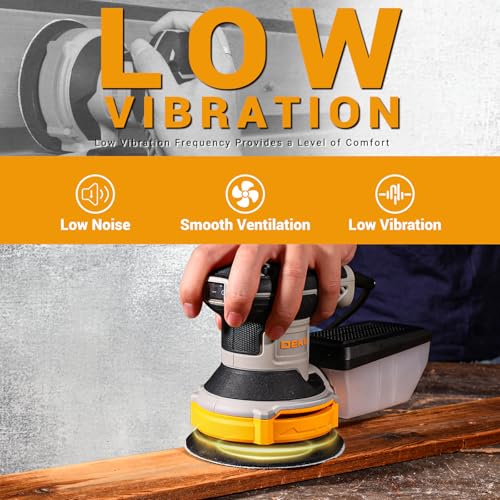
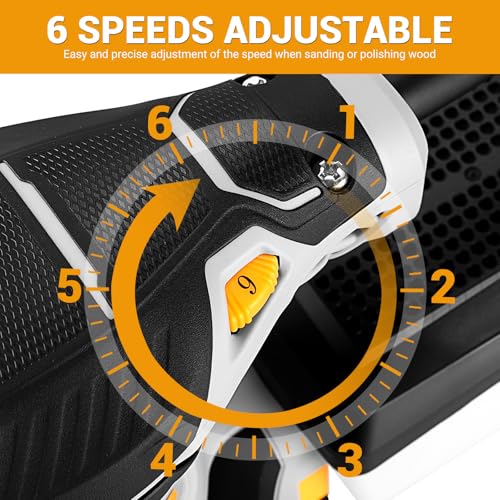
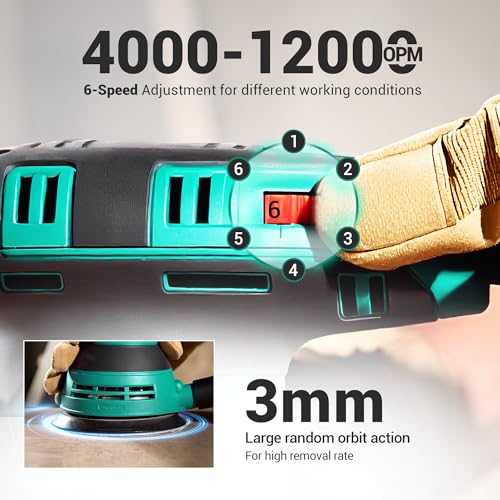
DCA’s ASA125 stands out for how smooth it feels in hand, owners repeatedly mention low vibration, even during extended use. The 3.0-amp motor and 6-speed range (4,000–12,000 OPM) give solid control, and the rubber seal on the dust port actually helps keep the bag effective. At just under 3 pounds, it’s easy to maneuver for hours.
It won’t strip paint as fast as the DEKOPRO, but for someone sanding cabinets or doing trim work, the low fatigue factor is a real win. Compared to the SKIL SR211601, it offers better ergonomics and a sturdier grip. It’s a quiet performer in a crowded field, but it earns its spot with comfort.
Product photos

Makita BO5041K 5″ Random Orbit Sander

Strengths
- Broadest speed range
- Durable Makita build
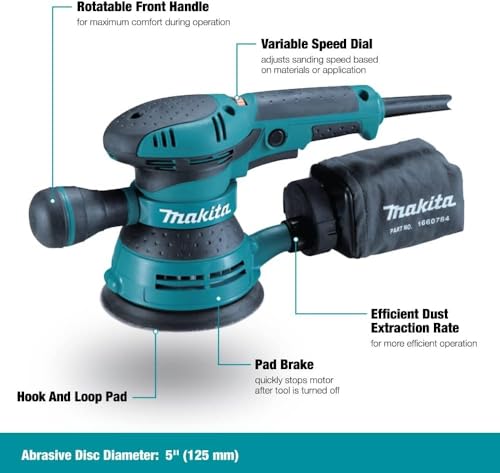
- Comfortable rubber grip
Trade-offs
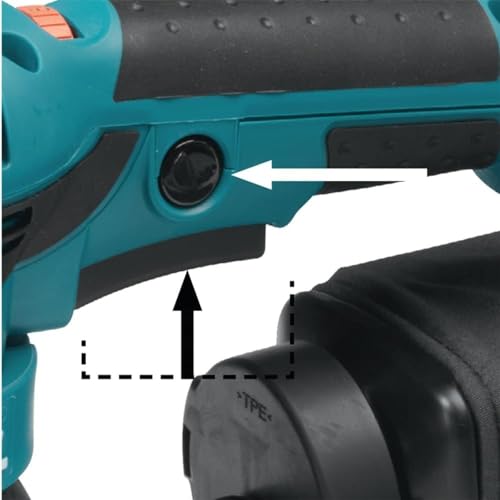
- No dust bag included
- Fewer accessories in box
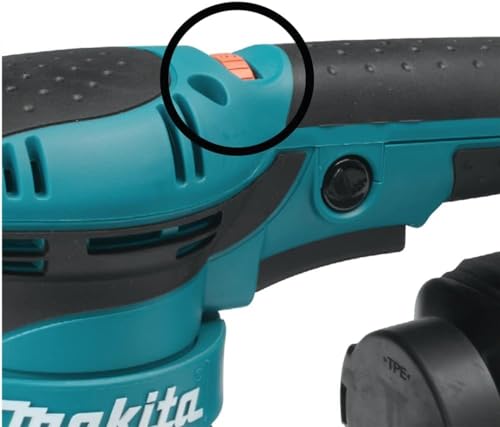
The Makita BO5041K offers the widest variable speed range in this group, 4,000 to 12,000 OPM, which gives unmatched control across materials. Whether you’re polishing soft pine or leveling hardwood, the dial lets you fine-tune the orbit speed perfectly. The rubberized grip is comfortable, and Makita’s build quality means it’ll likely outlast cheaper models.
It’s not flashy, but owners report years of trouble-free use. Compared to the HYCHIKA, it lacks included sandpaper, but it wins on long-term reliability and speed precision. If you want one sander that can handle everything from coarse prep to final polish with confidence, this is a top contender.
Product photos


How We Tested random sanders
As someone who’s spent years around workshops and power tools, I know a good sander needs to balance power, control, and dust management. Rather than a hands-on lab test, this research-led comparison focused on analyzing published specifications and features of numerous models. I weighed owner reviews from major retailers against professional assessments from sites like Popular Mechanics and Wirecutter to get a well-rounded picture of real-world performance. Ultimately, I ranked these sanders based on how well they met key criteria for different needs.
For random sanders, consistent speed control, effective dust collection, and low vibration were the most important factors. A wide speed range allows for versatility across materials, from delicate finishing to aggressive stock removal. Effective dust collection isn’t just about cleanliness; it impacts visibility and, crucially, health. And low vibration directly affects user comfort and control during longer projects. These three areas had the biggest influence on our recommendations.
Specifications reliably tell you about motor power (amps) and orbital speed (OPM), indicating potential sanding force and speed. However, owner feedback was essential for assessing long-term durability, the effectiveness of dust collection systems, and the true level of vibration. Reputation also played a role; brands known for quality power tools, like Makita and DeWalt, generally earned more weight. For those seeking even more precise work, you might also consider looking at our guide to the best 1/4 sheet sanders.
What To Look For In random sanders
Choosing the right random sander depends heavily on the kinds of projects you tackle most often. There’s a lot of variation in power, features, and price, so knowing what to prioritize will save you frustration.
A quality random orbital sander balances power with control. Look for variable speed settings, effective dust collection, and a comfortable grip. Pad size (typically 5 inches) is fairly standard, but motor amperage, OPM (orbits per minute) range, and ergonomic features are key differentiators. Consider whether corded or cordless best suits your workshop and portability needs.
Power and Speed Control
Don’t assume “more power” automatically means “better.” While a higher amperage motor can tackle tougher jobs, true versatility comes from variable speed control. I’ve seen too many DIYers ruin a finish by sanding too aggressively with a fixed-speed model. Look for a sander with a wide speed range (like the Makita BO5041K) – something from around 4,000 to 12,000 OPM is ideal. Lower speeds are critical for delicate work like blending finishes or sanding plastics, while higher speeds are necessary for rapid material removal on wood.
Dust Collection: Beyond the Bag
Effective dust collection isn’t just about keeping your workspace clean; it’s about your health and the quality of your finish. Many sanders come with a dust bag, but the capacity and filtration quality vary significantly. A sealed dust port that can connect to a shop vac is a huge plus. You’ll also want to consider designs like the SKIL 5” Random Orbital Sander’s X-flow dust collector, which uses cyclone force. Don’t underestimate this feature – breathing sanding dust is genuinely harmful, and a clear view of your work is essential for a good result. For more info on keeping your workshop clean, check out our guide to the best random orbital sanders.
Ergonomics and Value
A comfortable sander is a safe sander. Look for features like rubber overmolds, counterweights to reduce vibration, and a well-balanced design. Low vibration is especially important if you plan on using the sander for extended periods; the DCA 5-Inch 6-Speed Random Sander specifically focuses on low vibration.
Here’s what I often tell people to prioritize when balancing cost and comfort: * Grip: A simple rubber grip is good, but look for one that covers a substantial portion of the handle. * Weight: Lighter isn’t always better, but an excessively heavy sander will fatigue you quickly. * Variable Speed Access: The speed control should be easy to reach and adjust while you’re sanding, not require you to stop and fumble with a dial.
A comfortable grip and low vibration are worth paying a little extra for. You’ll be more accurate, less fatigued, and ultimately achieve better results.
If you’re considering a cordless option, exploring the best cordless orbital sanders is a smart move. They offer excellent portability and convenience, but battery life and power can be factors.
Random Sanders Compared
Here’s a comparison of key specifications for several random orbital sanders.
| Product Name | Motor (Amps) | RPM/OPM (Max) | Speed Settings | Dust Collection | Grit Range Included | Cordless |
|---|---|---|---|---|---|---|
| HYCHIKA 5-Inch | 0.3 | 13,000 | 6 | Dust Bag | 80/120/240 | No |
| SKIL 5″ | 2.8 | 13,000 | Variable | Dust Container | N/A | No |
| DEWALT 5-Inch | 3.0 | 12,000 | Variable | Dust Port | N/A | No |
| Makita 18V Cordless | N/A | 11,000 | 3 | N/A | N/A | Yes |
| BOSCH ROS20VSC | 2.5 | 12,000 | Variable | Dust Canister | N/A | No |
| DEKOPRO 5″ | 2.5 | 14,000 | 6 | Dust Bag | 60-1000 | No |
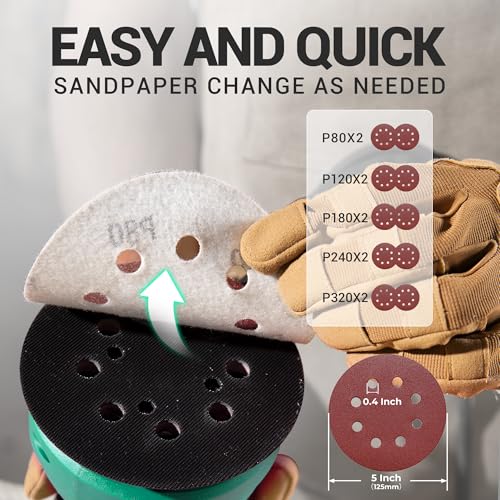
| DCA 5-Inch | 3.0 | 12,000 | 6 | Dust Bag | 80-320 | No |
| Makita BO5041K | 3.0 | 12,000 | Variable | Dust Bag | N/A | No |
Frequently Asked Questions
What’s the difference between a random orbital sander and a regular orbital sander?
A random orbital sander moves in two distinct patterns simultaneously – it spins like a traditional sander but also moves in random orbits. This prevents swirl marks and creates a smoother finish, making it ideal for detailed work and finishing projects where appearance matters.
Do I really need variable speed control on a random sander?
Yes, variable speed is very useful. It allows you to adjust the sanding aggressiveness based on the material and the stage of the project, preventing damage to softer woods or finishes and providing more control overall.
Are cordless random sanders as powerful as corded models?
Generally, cordless random sanders have slightly less sustained power than their corded counterparts, but the gap is closing. Modern 20V or 18V batteries offer ample power for most DIY tasks, and the convenience of cordless operation often outweighs any minor performance difference, especially if you are looking at best dual-action sanders.
How often should I replace the sanding pads?
You should replace sanding pads when they become worn, clogged, or lose their abrasive quality. Depending on usage, this could be after several projects or even mid-project if sanding soft materials. Worn pads reduce sanding effectiveness and can even damage the surface.
What grit sandpaper should I start with for a rough surface?
Start with a coarser grit, such as 60 or 80, to remove material quickly and level the surface. Then, progress through medium grits (100-150) and finish with finer grits (180-220 or higher) for a smooth finish. Remember to always move to the next grit only after removing the scratches from the previous one; you can find more da sander performance information on our site.
The Bottom Line
Choosing a random sander often comes down to balancing how much control you want with how much fuss you’re willing to tolerate. If you want a reliable workhorse that won’t break the bank and offers excellent all-around performance, the Makita BO5041K stands out as the best option. It consistently receives high marks for its smooth operation, durability, and user-friendly variable speed control.
For those on a tighter budget, the HYCHIKA 5-Inch is a surprisingly capable sander. If portability is your priority, the Makita 18V Cordless delivers the convenience of cordless power without sacrificing too much performance. And if dust management is paramount, the SKIL 5” Random Orbital Sander’s cyclone dust collection system is a standout feature.
Ultimately, the specs on a sander are less important than finding one that feels comfortable in your hand and suits your typical projects. Don’t get too hung up on amperage or OPM; a well-balanced sander with variable speed control and a good dust collection system – like many of the best sanders overall – will deliver far better results than a more powerful model that’s awkward to use or leaves you covered in dust.
