
8 Best Compound Saws of 2026
This post contains affiliate links. As an Amazon Associate, we earn from qualifying purchases.
The DEWALT 12″ Double Bevel Sliding is the overall best compound saw for most users, delivering serious cutting capacity and precision. For budget-conscious DIYers, the Metabo HPT 10″ Single Bevel offers solid performance at a lighter weight and lower price. If versatility matters, the Makita 10″ Slide Compound stands out with smooth action and reliable accuracy.
Choosing the wrong compound saw can mean wasted materials, frustrating inaccuracies, and a tool that feels more like a burden than a help. I’ve seen too many people buy based on price or brand alone, only to struggle with flimsy fences or sloppy angles.
This guide cuts through the noise. I compared specs and real-world feedback to find models that deliver where it counts: clean cuts, dependable adjustments, and build quality that lasts. You’ll see what sets the top performers apart and how to match a saw to your actual projects.
Top 8 Compound Saws in the Market
The Best Compound Saws, Reviewed
DEWALT 12″ Double Bevel Sliding Miter Saw

Strengths
- Double bevel design
- XPS shadow line
- 75% dust capture
- 2×14 cutting capacity
- Cam-lock miter handle
Trade-offs
- Heavier at 58 lbs
- Higher price point
- Belt drive needs occasional maintenance
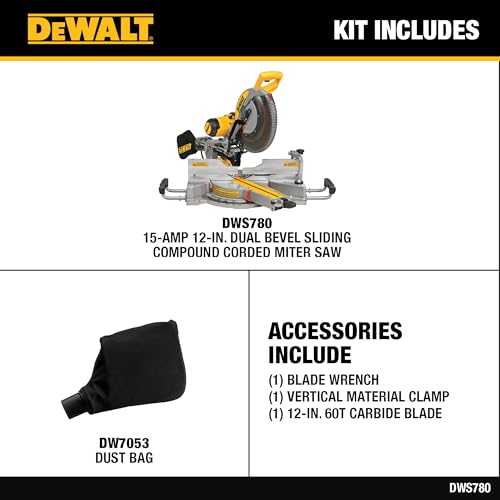
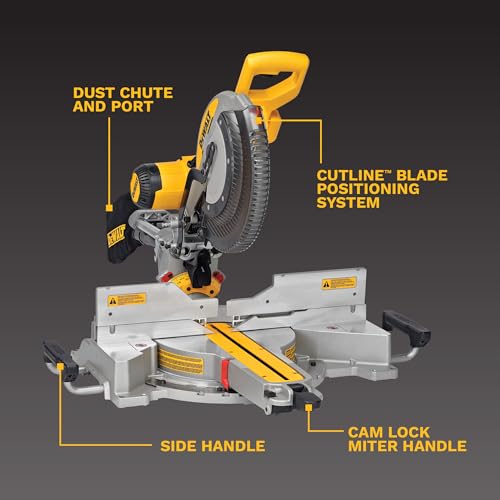
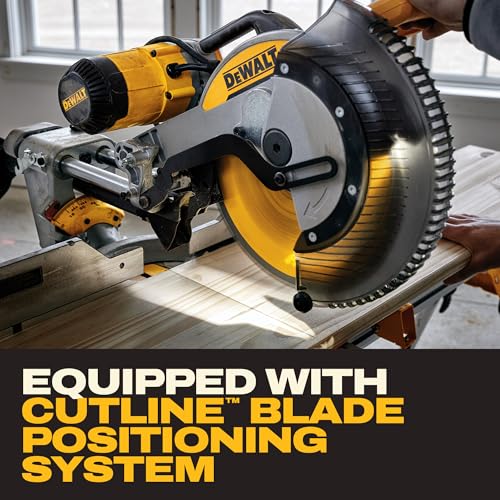
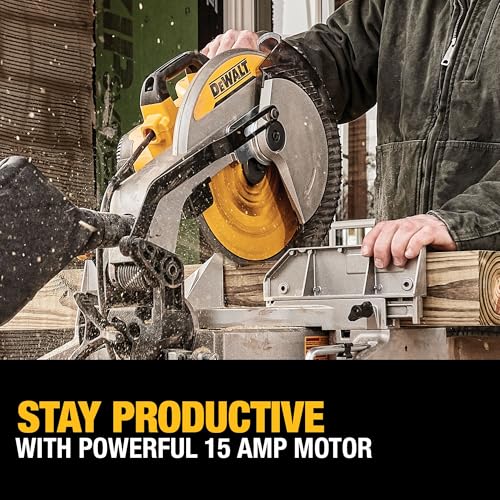
This DEWALT DWS780 is the full-package deal, and it shows. The double bevel design with left and right stops means fewer workpiece flips, and the XPS shadow line system is more reliable than lasers, it uses the blade’s actual shadow, so no calibration drift. The 15-amp motor runs at 3,800 RPM and handles 2x14s at 90°, which is huge for a sliding miter saw. The dust collection captures over 75% of debris, a real win for clean-up.
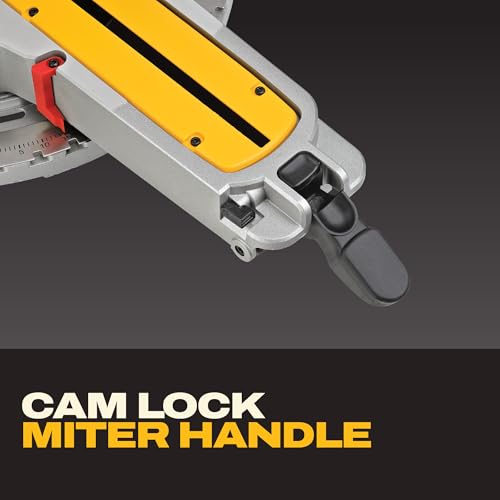
The sliding fence supports tall crown molding up to 7-1/2”, and the cam-lock miter handle makes angle changes fast. At 58 lbs, it’s not light, but it’s manageable. Compared to the SKIL MS6305-00, this one has better dust control, a more refined miter system, and greater capacity. For most serious users, this is the smarter buy unless budget is tight.
Product photos

DEWALT 10″ Single Bevel Compound Miter Saw

Strengths
- 15-amp reliability
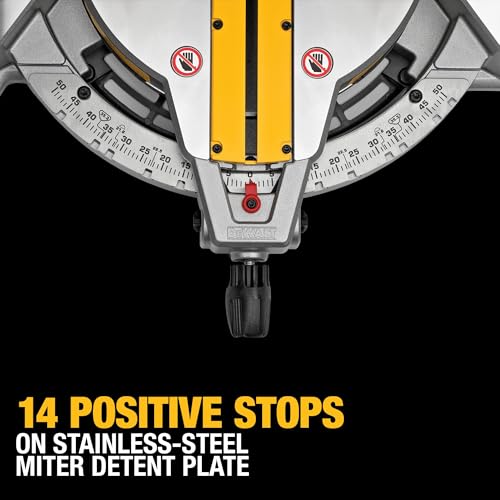
- Stainless detent plate
- Simple, durable design
- Good miter accuracy
- Affordable
Trade-offs
- No sliding rails
- No LED or shadow guide
- Single bevel only
The DWS713 is DEWALT’s no-frills workhorse, and it’s a favorite among budget-focused buyers. It’s got the same 15-amp motor and stainless-steel detent plate as its bigger siblings, but in a simpler 10-inch package. The miter system is precise, and the fence supports 4-1/4” base molding, enough for basic trim. It cuts 2x6s at 90°, which covers most framing needs.
It lacks a slide, LED lights, and dual bevel, but it’s proven reliable over years of owner use. Compared to the Makita LS1110F, it’s less precise and less portable, but it’s also significantly cheaper. If you’re starting out or only need a saw for basic cuts, this one gets the job done without extras you won’t use.
Product photos
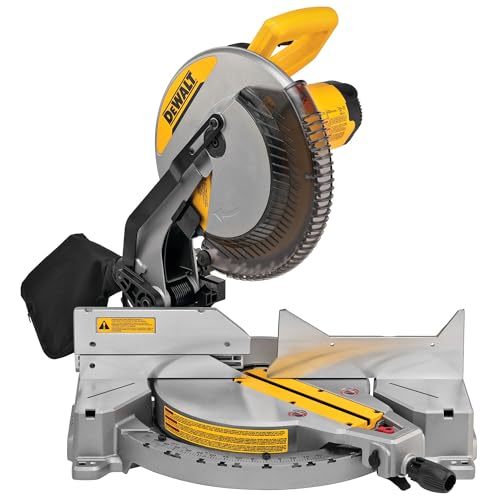
DEWALT 12″ Single Bevel Compound Miter Saw
Strengths
- 12-inch cutting capacity
- Tall fence support
- Stainless-steel detent plate
- 15-amp motor
- Durable base
Trade-offs
- Single bevel only
- No slide mechanism
- No LED or shadow guide
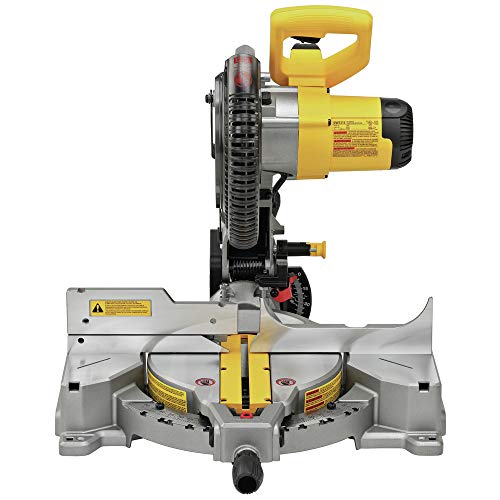
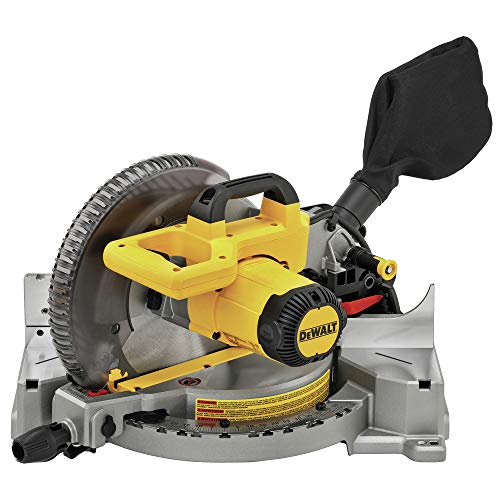
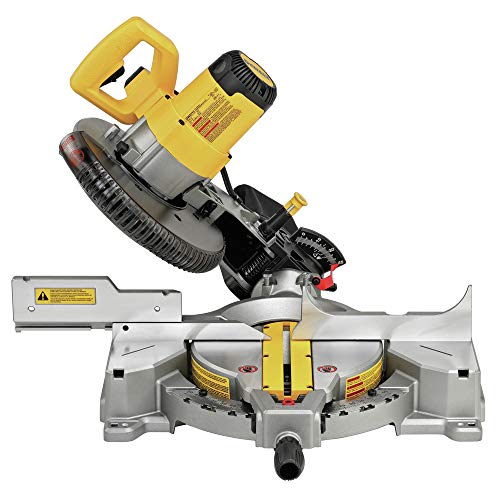
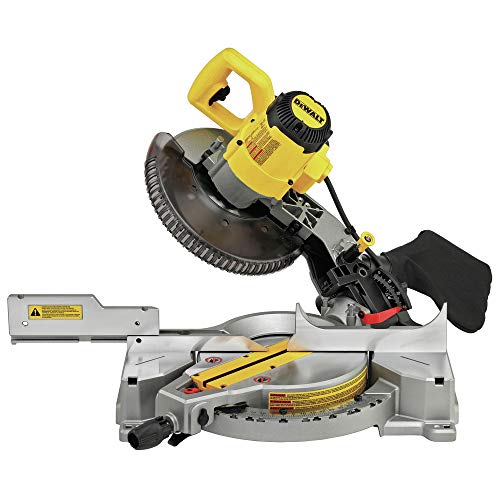
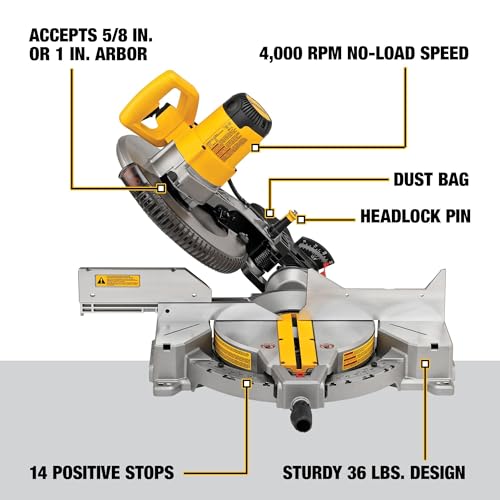
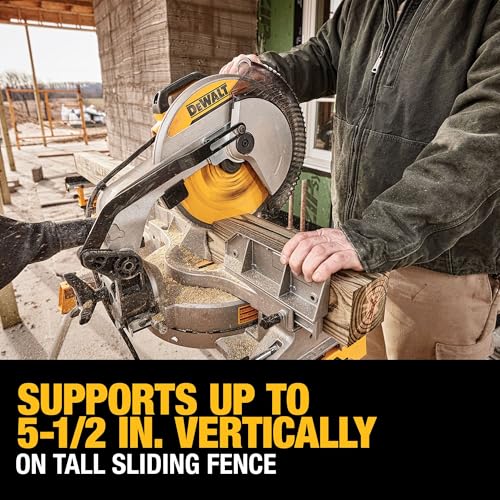
If you’re cutting big lumber regularly, the DWS715 earns its keep. The 12-inch blade with 15-amp power handles 2x8s at 90° and 2x6s at 45°, which beats most 10-inch models. The tall sliding fence supports up to 5-1/2” vertically, making it a solid choice for baseboard and casing work. On paper, it’s a straightforward single bevel saw, but the machined base and stainless-steel detent plate give it a level of repeatability that many owners highlight in reviews.
It doesn’t have fancy features like LED guides or dual bevel, but it’s built for durability and consistent performance. Compared to the SKIL MS6305-00, it lacks dual bevel capability and a sliding rail, but it cuts wider stock. I’d pick this over smaller saws when working on decks or framing where lumber size matters more than angle flexibility.
Product photos
Metabo HPT 10″ Single Bevel Miter Saw
Strengths
- 24 lbs lightweight
- 5,000 RPM motor
- Xact Cut shadow line
- Vice clamping system
- 5-year warranty
Trade-offs
- Single bevel only
- Fence not as tall
- No sliding rails
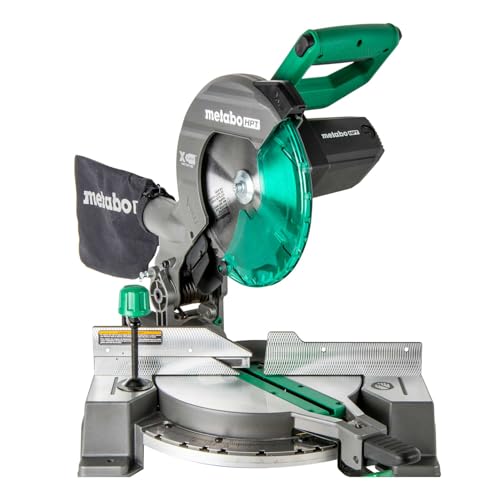
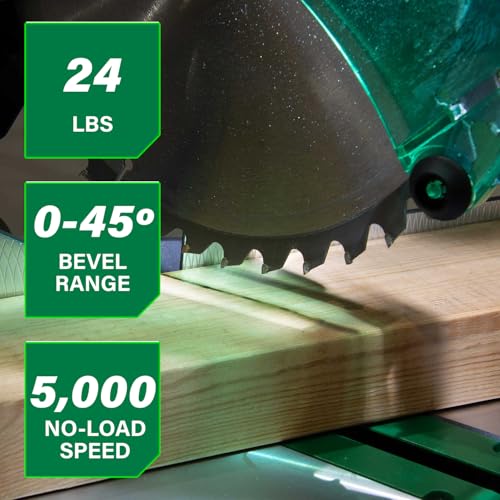
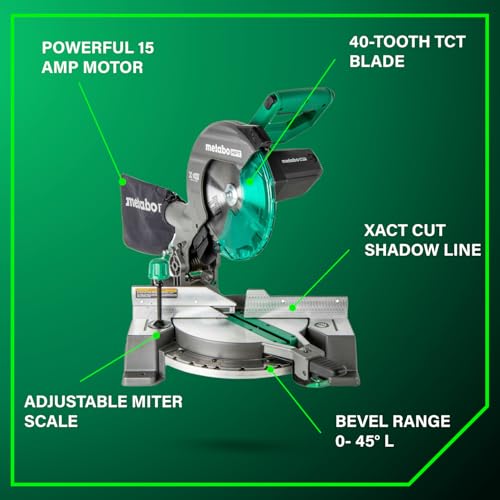
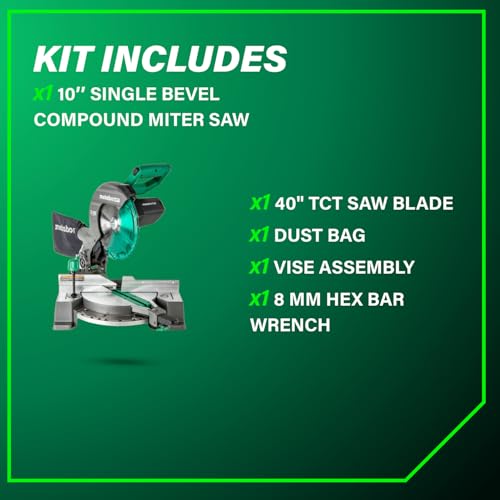
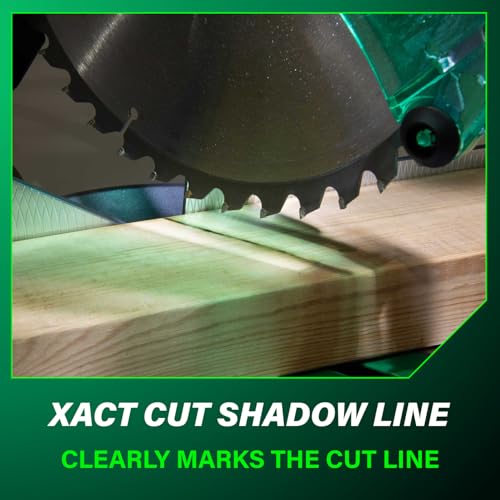
At just 24 lbs, this Metabo HPT is the easiest 10-inch saw here to carry from garage to job site. The 15-amp motor hits 5,000 RPM, which helps it keep up with heavier models despite the lightweight frame. The Xact Cut shadow line system works well in practice, reviewers note it’s more reliable than lasers in bright light. The miter scale is clear and easy to read, and the vice clamping system is a nice touch for securing small pieces.
It’s a single bevel saw, so you’ll flip material for right bevels, and the fence isn’t as tall as on the DEWALT DWS780. But for trim carpenters or weekend warriors who move their saw often, the portability and Japanese engineering make this a smart middle ground. It beats the VEVOR in build quality and warranty, and the 5-year coverage adds real peace of mind.
Product photos

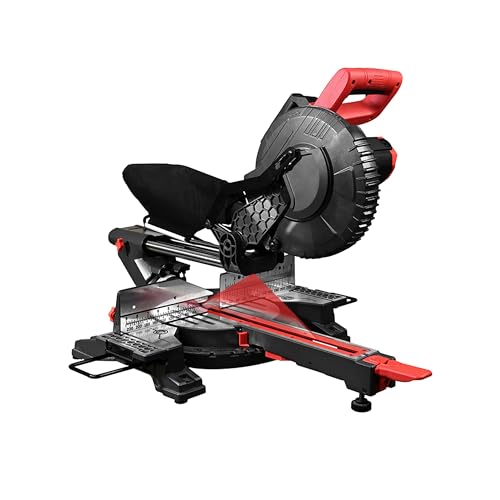
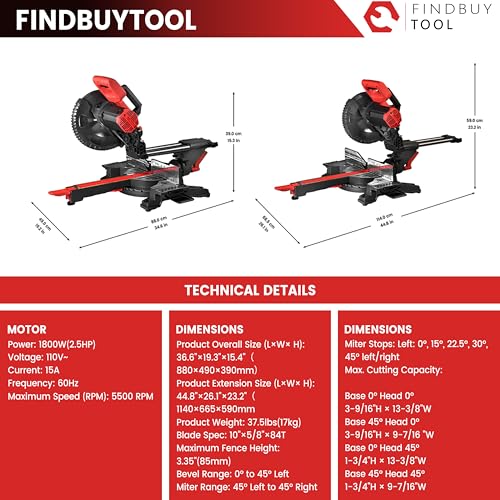
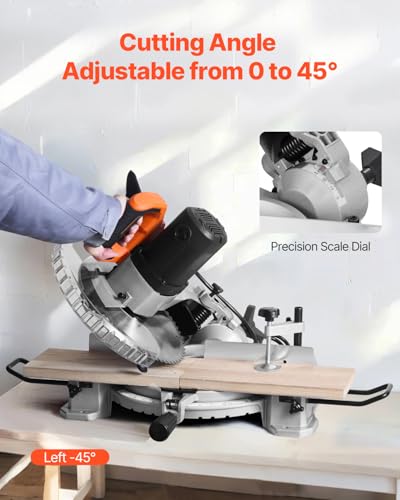
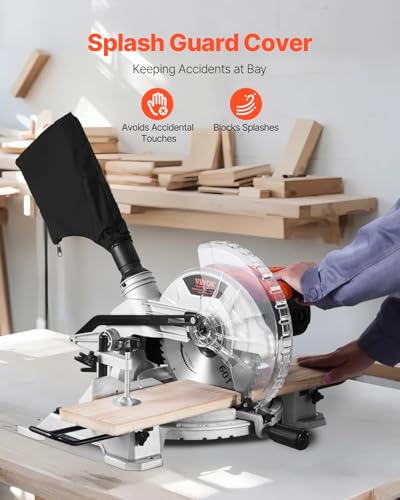
FindBuyTool 10″ Sliding Compound Miter Saw
Strengths
- 84-tooth blade included
- Tall fence for crown molding
- LED cut line
- Extension bars included
- 5,500 RPM speed
Trade-offs
- Brand reliability unknown
- Dust collection average
- No dual bevel
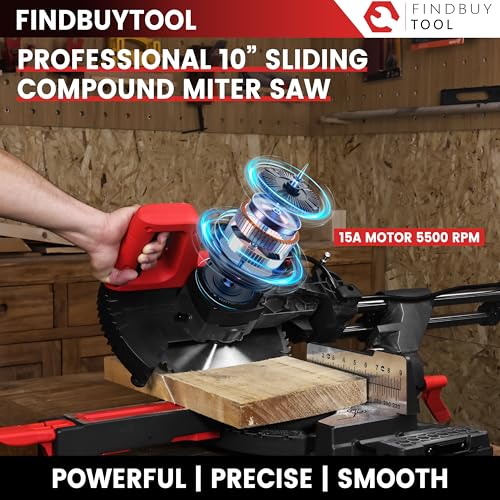
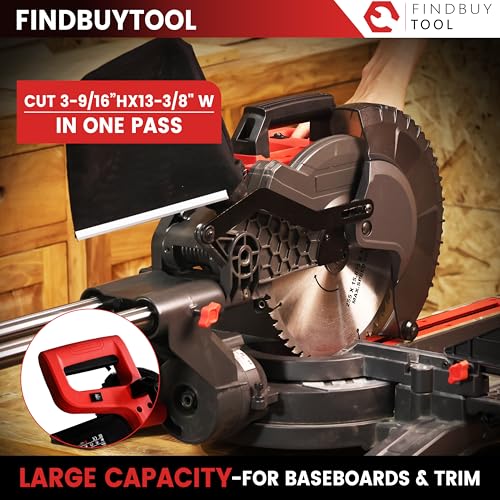
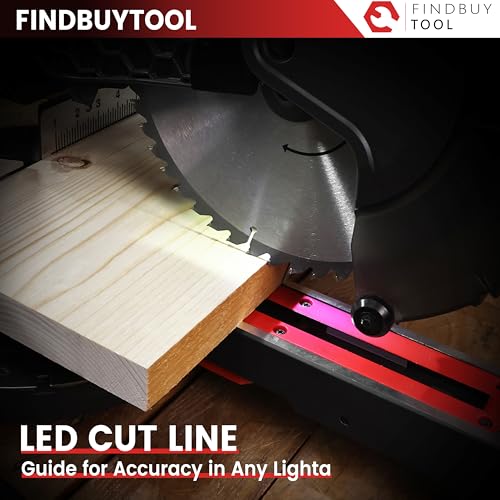
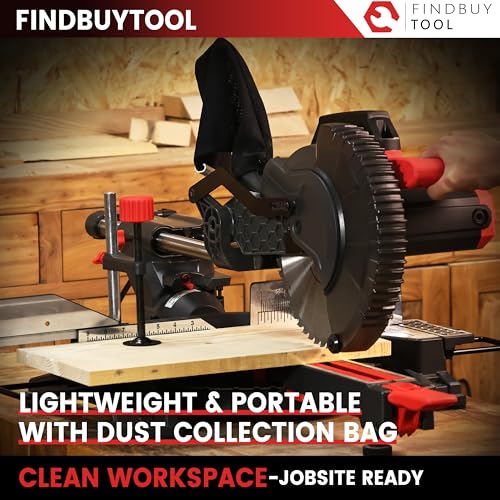
This FindBuyTool saw stands out for crown molding work, the tall sliding fence supports 5-1/2” material, letting you cut crown nested properly, and the included extension bars add stability for long boards. The 84-tooth blade is a major plus, delivering ultra-smooth finishes that rival professional setups. At 5,500 RPM, it’s one of the fastest-spinning saws here, and the LED cut line is bright and accurate.
Owners report good value, though the brand isn’t as established as DEWALT or Makita. The 1-1/2” dust port helps, but it’s not as efficient as the DWS780’s system. For trim carpenters on a budget, this offers high-end features at a mid-tier price. It beats the VEVOR in support and blade quality, and it’s more specialized than the DWS713.
Product photos
SKIL 10″ Dual Bevel Sliding Miter Saw
Strengths
- Dual bevel design
- LED shadow line
- 2×12 cut capacity
- 4,800 RPM motor
- 11 positive miter stops
Trade-offs
- Plastic components feel light
- Dust collection weak
- Not for heavy daily use
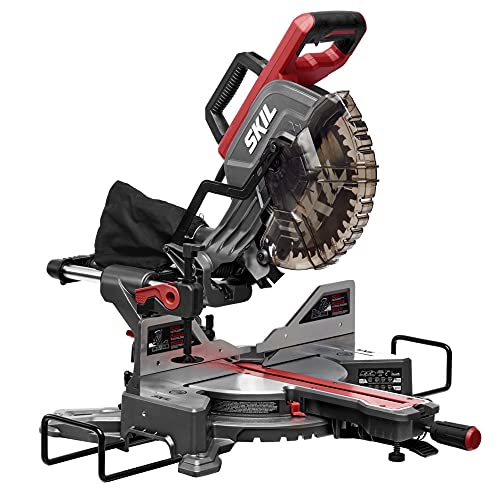
SKIL packs dual bevel into a 10-inch sliding saw at a competitive price, and that’s its biggest win. Being able to bevel left and right without flipping the workpiece saves time on symmetrical cuts, and the 4,800 RPM motor handles most hardwoods without issue. The LED shadow line is effective, it uses the blade’s actual shadow, so no batteries or alignment. The 2×12 cutting capacity at 90° is impressive for this size.
It’s not as rugged as the DEWALT DWS780, and the dust collection isn’t as strong, but for the price, it delivers solid features. The miter stops are well placed, and the dual bevel stops at 45° and 48° are useful for common angles. If you need dual bevel but don’t want to pay DEWALT prices, this is a smart alternative.
Product photos


Makita 10″ Slide Compound Miter Saw
Strengths
- 13.0 AMP motor
- Linear ball bearings
- Built-in LED light
- Compact footprint
- Soft start
Trade-offs
- Single bevel only
- Heavier than some 10” models
- No dust bag included
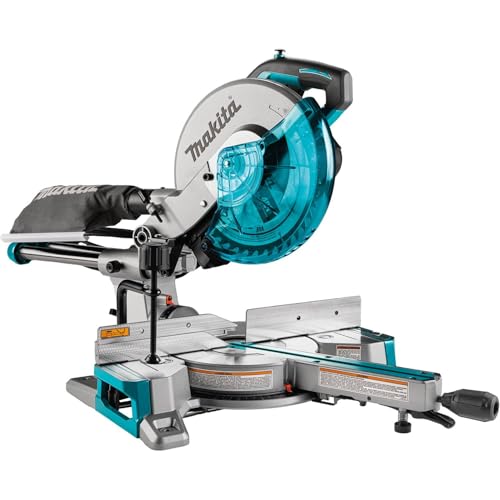
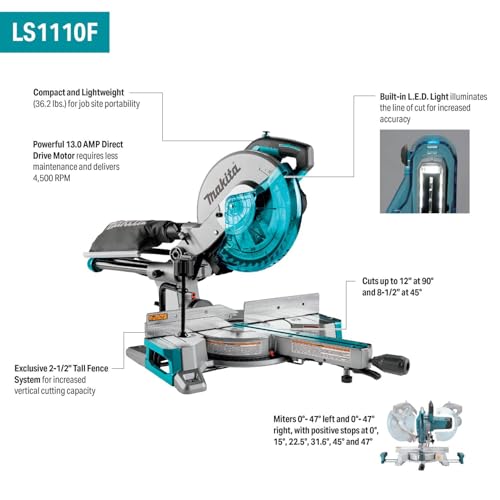
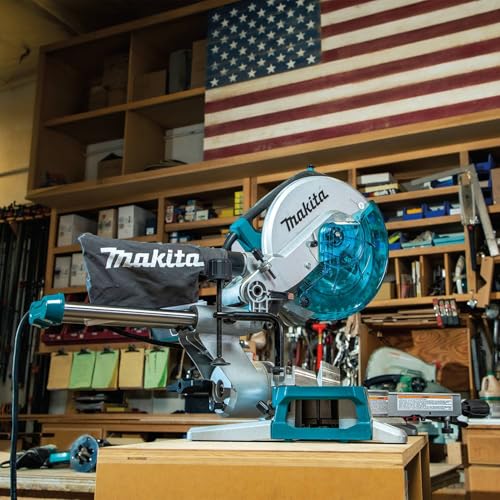
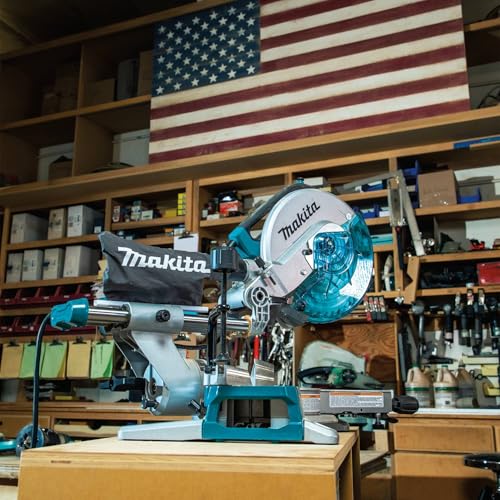
Makita built this saw for precision and longevity, and that shows in the engineering. The 13.0 AMP motor spins at 4,500 RPM and runs through hardwoods without bogging down, and the linear ball bearing slide system is a standout, owners consistently report that it holds alignment better than most in this class over time. The 2-1/2″ tall fence gives solid vertical support, and the dual bevel controls are well placed, though it’s a single bevel design, so you’ll flip the workpiece for right-side bevels.
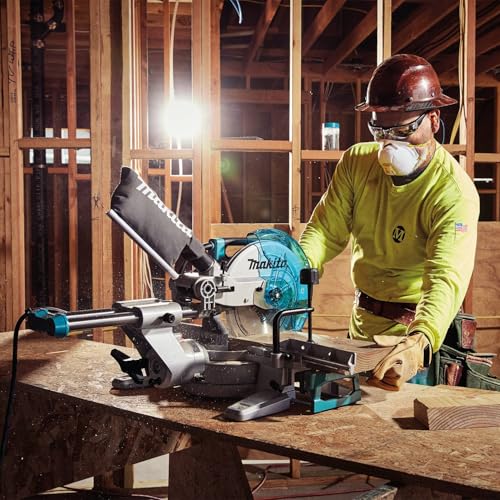
The built-in LED light is a real help in dim job sites, making the cut line easy to follow, and the soft start reduces jolt at startup, which I appreciate after years of dealing with abrupt power-ups on cheaper models. It’s not the lightest at 36.2 lbs, but it’s manageable, and the compact footprint helps on tight job sites. Compared to the DEWALT DWS713, this one feels more refined in build, though it lacks the dual bevel convenience of pricier models.
Product photos

VEVOR 10″ Single Bevel Compound Miter Saw
Strengths
- Strong LED guide
- 60-tooth blade
- Lightweight aluminum base
- Dual-button safety
- Good for composites
Trade-offs
- Build quality inconsistent
- Vibration at high load
- No sliding rails
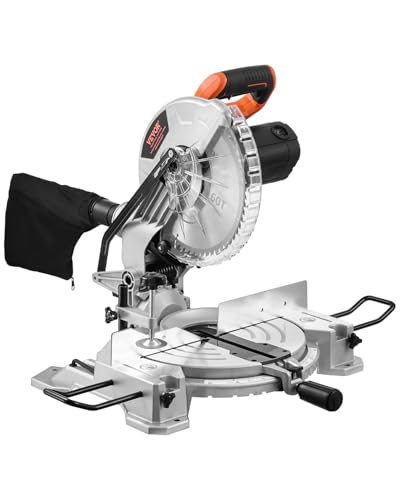
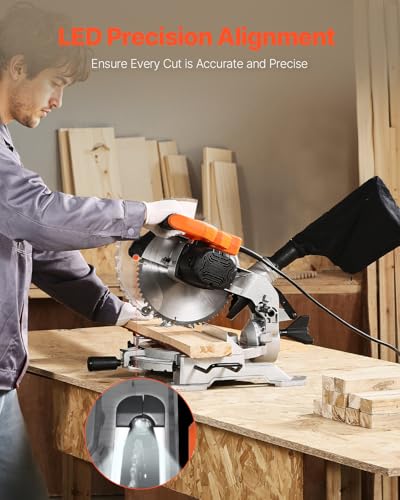
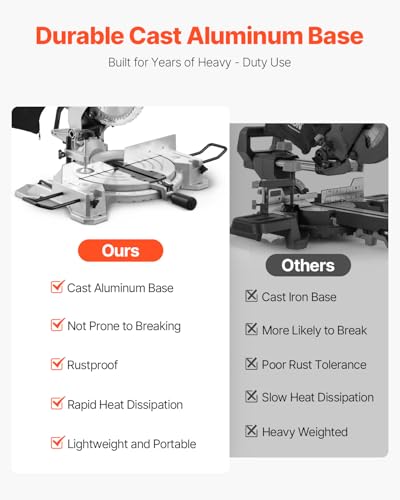
VEVOR is punching above its weight with the LED system on this saw, it projects a sharp, consistent cut line that owners say makes alignment nearly foolproof. The 60-tooth blade included is a strong bonus, delivering smoother cuts than the standard 40T blades on many budget models. The aluminum base keeps weight down and helps with heat dissipation, which matters during long cutting sessions.
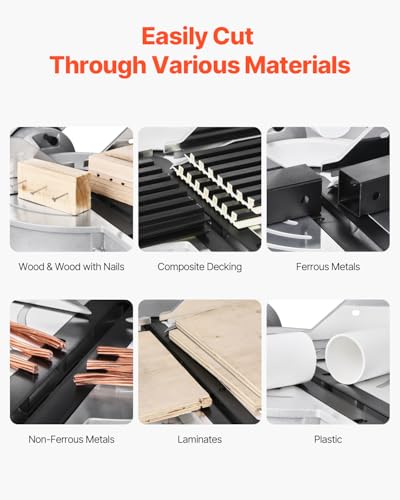
But it’s still a value brand. The dual-button start is safe, but the overall build doesn’t feel as rigid as Makita or DEWALT. It’s powerful on paper, 5,000 RPM and 3,000W bevel power, but some users report vibration at full load. I’d consider this for a home shop or occasional use, especially if you’re cutting composites or decking, but not for daily job site abuse.
Product photos
How We Picked These compound saws
As someone who’s spent years around power tools, I understand the importance of a good compound miter saw for any serious woodworker or DIY enthusiast. Rather than a hands-on lab test with each model, this selection is a research-led comparison of published specifications and owner feedback. I compared features, motor power, cutting capacity, and accuracy across several popular models, then weighed that against what real users are saying about performance and durability.
For compound saws, accuracy and cutting capacity are paramount. I focused heavily on those two factors, alongside build quality and the availability of useful features like laser guides or LED cutline indicators. A saw’s ability to make precise angled cuts quickly and efficiently, and to handle the materials you’re likely to work with, will determine its value. Understanding compound miter saw features is key to making the right choice.
Specifications reliably tell you about motor power, cutting depths, and bevel/miter ranges. However, owner reviews provide crucial insight into long-term durability, ease of use, and the actual accuracy of the saw in real-world conditions. Reputation and expert reviews helped me gauge the overall build quality and identify potential shortcomings that specs alone wouldn’t reveal. If you’re new to these tools, it can be helpful to read a general compound miter saw guide.
How To Pick The Right compound saws
Picking the right compound miter saw can dramatically improve the quality and efficiency of your woodworking. It’s a tool where spending a little more upfront often pays dividends in accuracy and longevity.
A good compound miter saw balances power, precision, and usability. Key considerations include motor amperage, blade quality, bevel and miter range, fence design, and dust collection. Look for models with positive stops at common angles, a clear scale for adjustments, and a robust build quality indicating durability.
Understanding Bevel and Miter Capacity
The core function of a compound miter saw is angled cuts, so understanding bevel and miter capacity is crucial. Don’t assume “compound” means all saws are created equal. A single bevel saw tilts in one direction, limiting some cuts. If you frequently work with crown molding or complex angles, exploring dual bevel miter saw advantages is worthwhile. The range of motion matters too; 45° bevel and 45° miter angles are standard, but some saws offer more. Consider what types of projects you’ll tackle most often.
Focusing on Build Quality & Accuracy
Beyond the numbers, how a saw feels is important. A heavier base and smoother sliding action usually indicate better construction. Look closely at the miter detents – those positive stops at common angles. Cheap saws often have imprecise detents that cause slight errors in your cuts. Many users find the Makita models consistently deliver excellent accuracy due to their linear ball bearing systems.
Here’s what to look for in a quality build: * Robust base: A solid, stable base minimizes vibration. * Precise detents: Positive stops should click firmly into place. * Quality blade: Carbide-tipped blades hold an edge longer and produce cleaner cuts. Cheaper blades will need replacing quickly.
Balancing Features with Your Budget
It’s easy to get caught up in features, but don’t overspend on things you won’t use. For example, integrated laser guides are common, but some woodworkers prefer the clarity of an LED system like those found on the DEWALT models. If portability is a priority, the Metabo HPT stands out as one of the lightest options. Ultimately, I recommend researching compound miter saw reviews to see what real users say about reliability and performance within your price range.
Don’t automatically equate price with quality. Sometimes, a slightly more expensive saw with essential features will outperform a heavily marketed, feature-bloated model.
Compound Saws Compared
Here’s a comparison of key specifications for various compound saws to help you make an informed decision.
| Product Name | Motor (Watts) | Blade Size (in) | Bevel (Left/Right) | Slide Function | Weight (lbs) | Max Cut (90°) |
|---|---|---|---|---|---|---|
| DEWALT 12″ Double Bevel Sliding | 1100 | 12 | 60°/50° | Yes | 58 | 2×14 |
| DEWALT 10″ Single Bevel | N/A | 10 | 48°/3° | No | N/A | 2×6 |
| DEWALT 12″ Single Bevel | N/A | 12 | 48°/3° | No | N/A | 2×8 |
| Metabo HPT 10″ Single Bevel | N/A | 10 | 52°/52° | No | 24 | N/A |
| FindBuyTool 10″ Sliding | 1800 | 10 | N/A | Yes | 37.5 | 3-9/16″ x 13-3/8″ |
| SKIL 10″ Dual Bevel Sliding | N/A | 10 | 48°/45° | Yes | N/A | 2×12 |
| Makita 10″ Slide Compound | N/A | 10 | 47°/47° | Yes | 36.2 | 12″ |
| VEVOR 10″ Single Bevel | 2800/3000 | 10 | 45°/0° | No | N/A | N/A |
Frequently Asked Questions
What size compound miter saw do most homeowners need?
A 10-inch compound miter saw is generally sufficient for most homeowner projects. It handles common lumber dimensions well and offers a good balance of power and maneuverability, though for larger materials, consider looking at a best sliding compound miter saws.
Are dual bevel miter saws really worth the extra cost?
Yes, dual bevel saws offer greater versatility. Having bevel capability in both directions simplifies cutting angles like crown molding and reduces the need to reposition the workpiece, leading to more efficient and accurate results.
How important is the motor amperage when choosing a saw?
Higher amperage generally means more power, which is especially important when cutting hardwoods or thicker materials. However, don’t solely focus on amperage; blade quality and saw design significantly affect performance.
What’s the difference between a sliding and non-sliding compound miter saw?
A sliding compound miter saw’s head moves along rails, increasing the width of the cut it can make. They’re essential for cutting wider boards, like plywood sheets, while non-sliding models are more compact and suitable for narrower stock.
What should I look for in a miter saw’s fence?
A well-designed fence should be square to the blade and offer smooth, accurate sliding action. Look for features like adjustable fence extensions and a clear scale for precise angle adjustments, as detailed in a sliding compound miter saw guide.
The Bottom Line
Choosing a compound miter saw often comes down to balancing how much control you want with how much fuss you’re willing to deal with. For most homeowners and dedicated DIYers, the DEWALT 12″ Double Bevel Sliding Compound Miter Saw offers the best combination of power, accuracy, and features – it’s a workhorse that will handle a wide variety of projects. It’s not the cheapest option, but the investment is likely to pay off in quality cuts and long-term durability.
If you’re on a tighter budget or only need a saw for occasional use, the Metabo HPT 10″ Single Bevel Compound Miter Saw is a fantastic value. For those who need maximum versatility and frequently work with complex angles, the Makita 10″ Slide Compound Miter Saw remains a top pick, known for its precision and smooth sliding action. Understanding the sliding compound miter saw benefits can help you make the right choice for larger workpieces.
Ultimately, remember that horsepower numbers and fancy features matter less than a solid, well-built saw and a sharp blade. Focus on a model with precise detents, a stable base, and a comfortable grip. A little extra attention to these fundamentals will deliver more accurate cuts and a more enjoyable woodworking experience than any single specification ever could.
