
7 Best Circular Saws of 2026
This post contains affiliate links. As an Amazon Associate, we earn from qualifying purchases.
The Metabo HPT 7-1/4-Inch is the overall best circular saw for most users, combining strong 15-amp power, reliable accuracy, and solid build quality. For those on a tighter budget, the GALAX PRO 11Amp Laser offers surprising value with a helpful laser guide. If you need cordless freedom, the DEWALT 20V MAX Cordless is our top pick in that category.
Most people buying a circular saw want clean, straight cuts without fighting the tool. Too many models feel flimsy, lose alignment, or lack the power to push through tough material. After comparing the field, I focused on real-world performance signals, specs backed by consistent owner feedback, to identify which saws actually deliver.
This guide highlights top performers based on power, precision, durability, and value. We looked at motor strength, blade capacity, baseplate material, and usability features, then checked what actual owners report months down the line. These are the saws that stand up to regular use.
Top 7 Circular Saws in the Market
The Best Circular Saws, Reviewed
Metabo HPT 7-1/4-Inch Circular Saw

Strengths
- 6,000 RPM motor
- Dust blower
- Single-handed bevel
- Comes with blade
- Cord holder
Trade-offs
- Slightly heavier
- No LED light
- Bevel not as deep
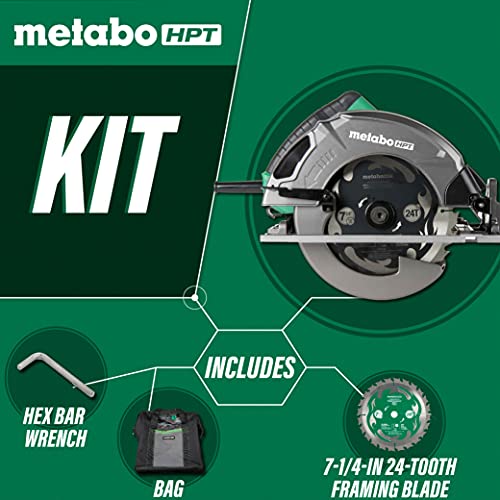
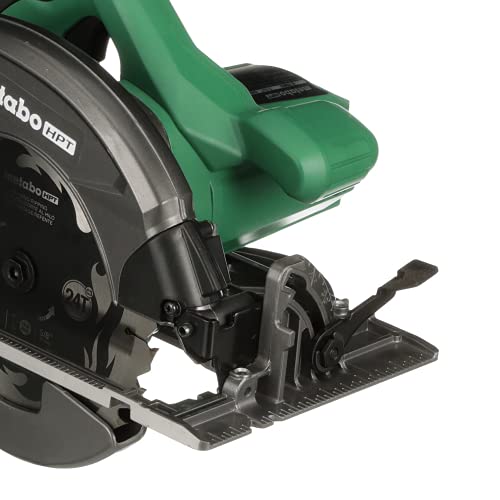
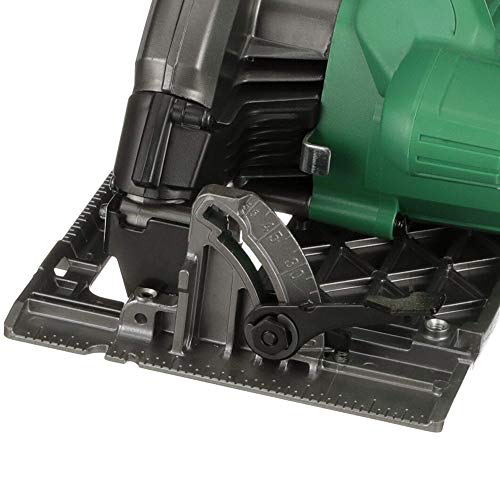
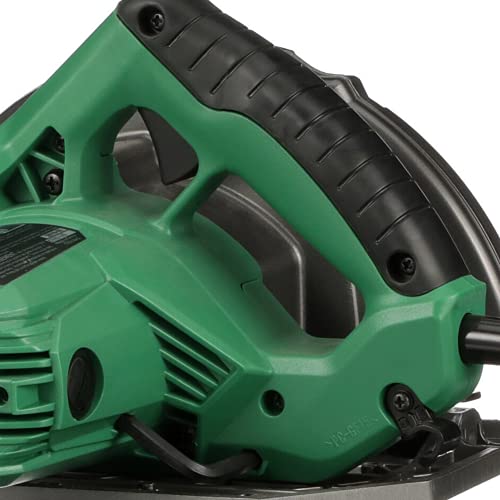
This Metabo HPT C7SB3 is the complete package, powerful, lightweight, and loaded with thoughtful features. The 15-amp motor hits 6,000 RPM, delivering clean, fast cuts in framing lumber and plywood without bogging down. It’s earned its “Best Budget Corded Saw for Pros” title for good reason: the dust blower, single-handed bevel, and cord holder are all practical touches that reflect real jobsite experience.
At 9.5 lbs, it’s easy to handle all day, and the aluminum base with dual scales improves accuracy. Owners love that it comes with a 24T framing blade and carrying bag, no scrambling to buy extras. Compared to the DEWALT DWE575SB, it’s slightly heavier but offers better ergonomics and included accessories. For overall balance of price, performance, and usability, this is my pick.
Product photos

DEWALT DWE575SB 7-1/4 Inch Circular Saw

Strengths
- Electric brake
- Lightweight for class
- Tough cord protection
- Dust blower
- 57° bevel capacity
Trade-offs
- No LED light
- Blade not included
- No laser
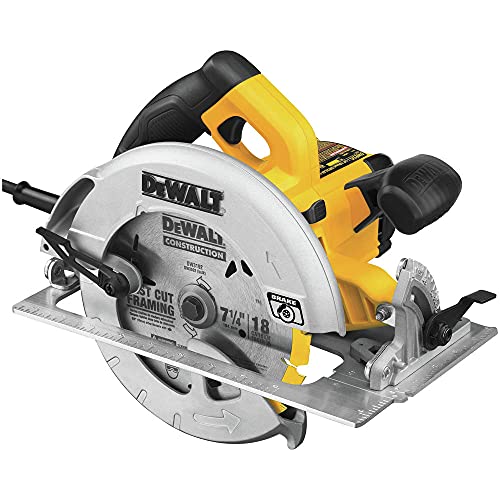
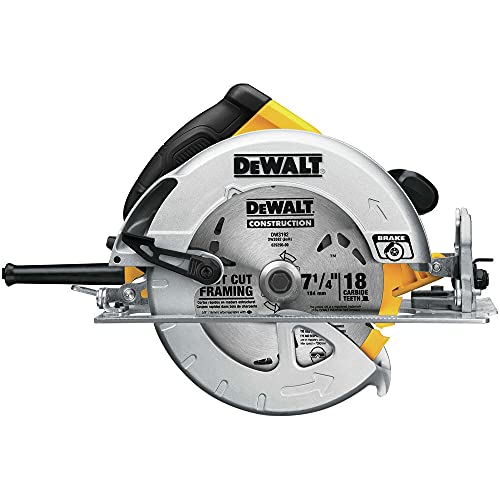
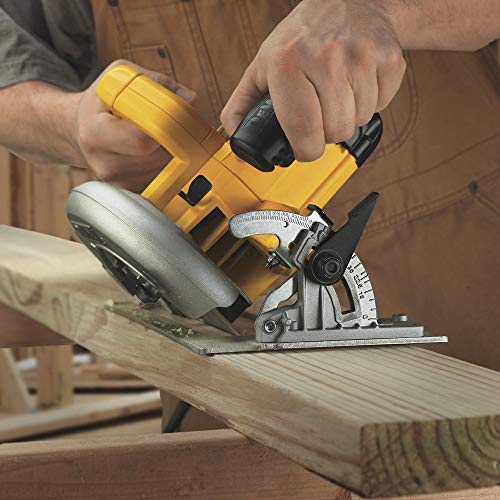
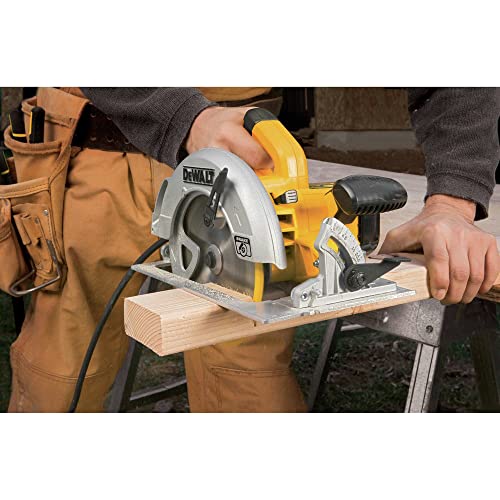
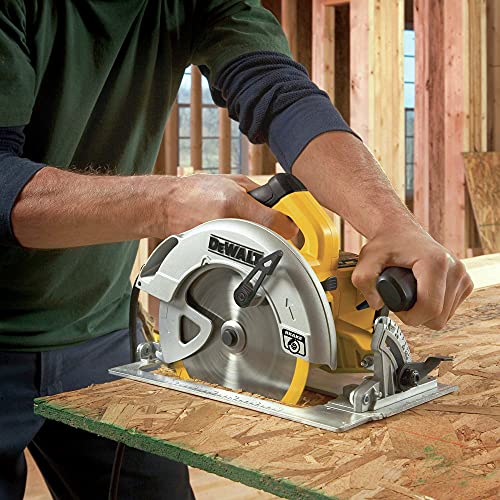
If you’re looking for a circular saw that just won’t quit, this DEWALT DWE575SB is built like a tank. The 15-amp motor and 8.8-pound weight make it one of the lightest yet most powerful corded models in its class. The aluminum base stays true over time, and the ball-bearing lower guard is a small detail that pays off in long-term reliability.
Owners love the electric brake and dust blower, both are small conveniences that add up on the job. The 57° bevel capacity with positive stops at 22.5° and 45° makes angled cuts repeatable and fast. This is the kind of saw that shows up year after year on job sites because it delivers. For pure durability and consistency, it’s hard to beat.
Product photos
DEWALT 20V MAX Cordless Circular Saw
Strengths
- Magnesium shoe
- Keyless blade change
- Good bevel range
- Lightweight design
- 5150 RPM motor
Trade-offs
- No battery included
- Slightly smaller blade
- Less power than corded
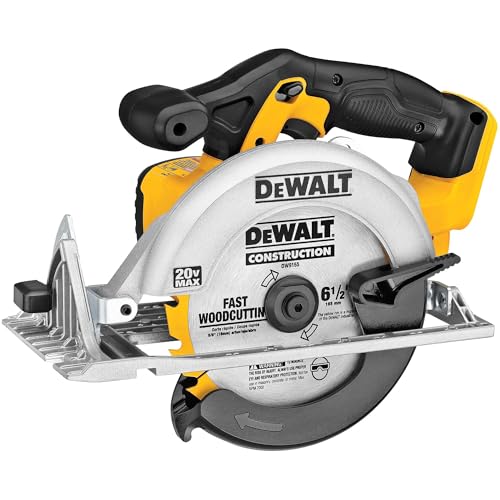
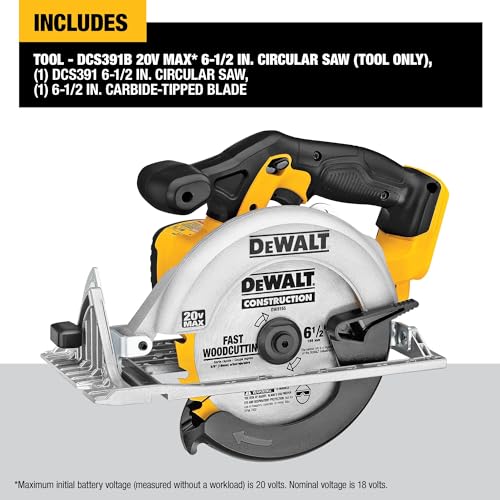
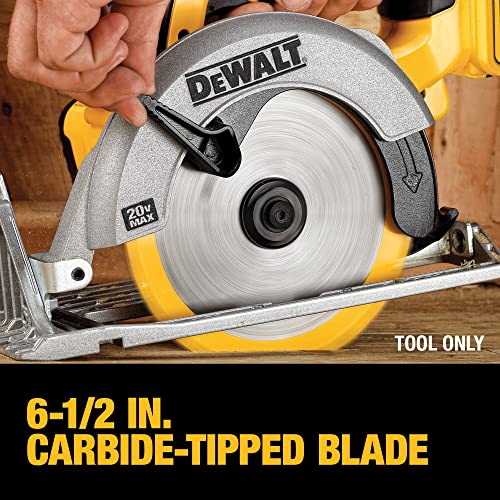
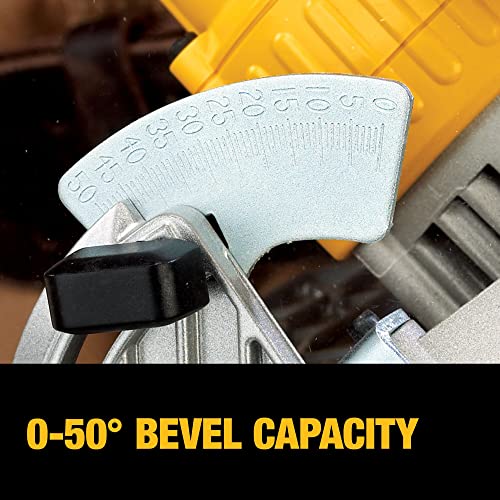
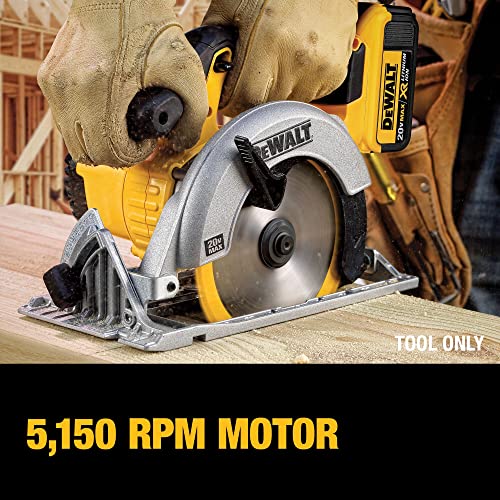
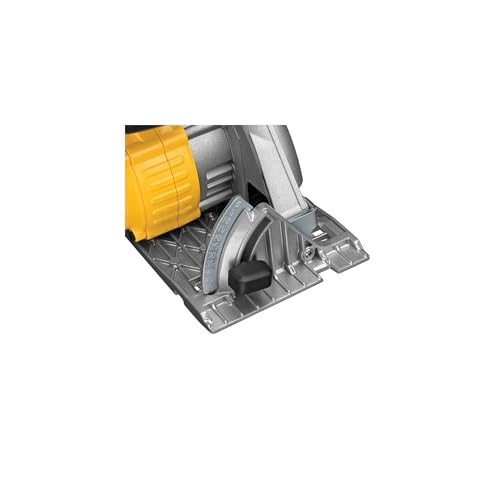
This DEWALT 20V MAX circular saw is a solid performer on paper, especially if you’re already invested in the DeWalt 20V ecosystem. At 5150 RPM and with a magnesium shoe, it’s built to be both durable and lightweight, a combo that jobsite pros and serious DIYers appreciate. The 0-50° bevel range is generous, and the keyless blade change is a real time-saver when switching tasks.
Owners consistently report clean cuts in dimensional lumber and plywood, and the 6-1/2-inch blade handles two-by material with room to spare. While it doesn’t match corded models in sustained power, it’s one of the more reliable cordless options in its class. If you value portability and hate tripping over cords, this is a strong contender, just know you’re trading a bit of raw power for that freedom.
Product photos
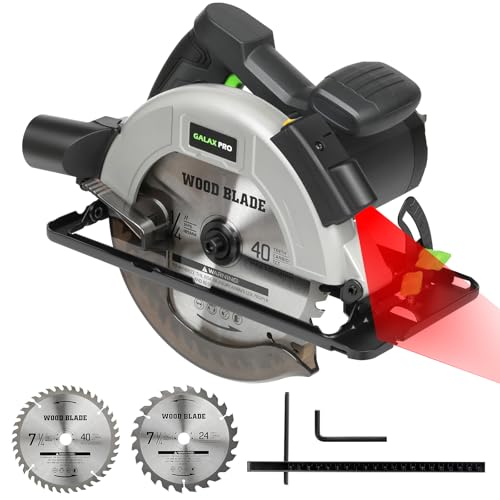
GALAX PRO 11Amp Laser Circular Saw
Strengths
- 6,000 RPM motor
- Laser guide
- Dual safety switch
- Good cut depth
- Includes rip guide
Trade-offs
- Plastic construction
- Laser not precise
- No electric brake
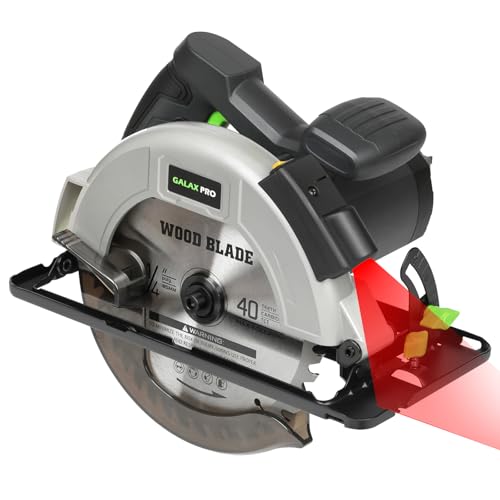
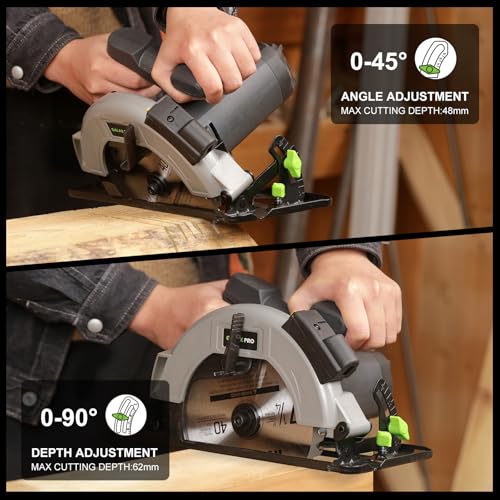
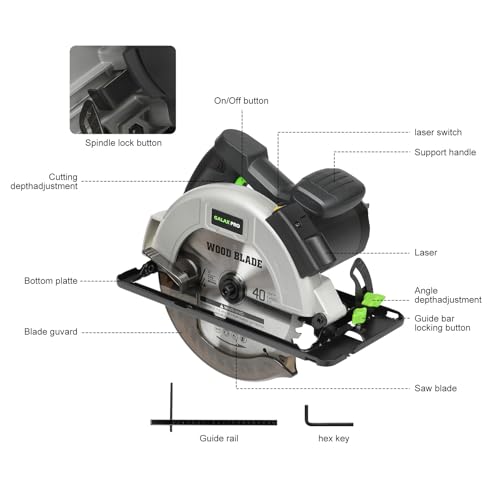
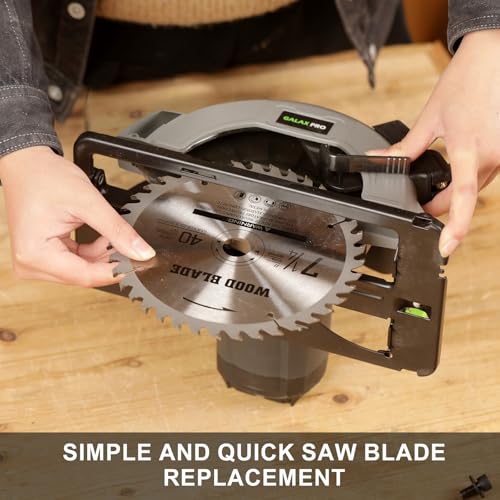
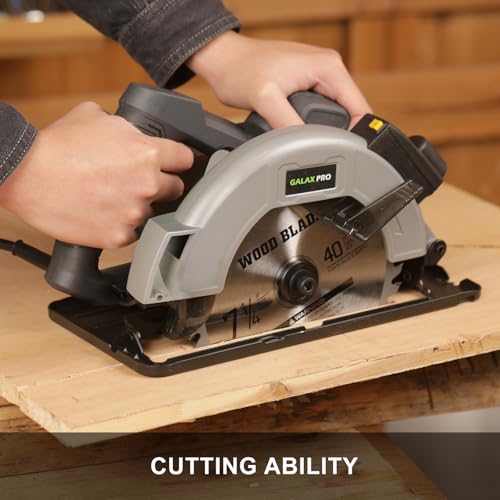
The GALAX PRO circular saw is a budget-friendly workhorse that surprises with its 6,000 RPM motor and included laser guide. For users just stepping into power tools, the laser makes straight cuts far easier than guessing by eye, and the 11A motor handles basic framing and sheet goods without issue. The dual safety switch adds peace of mind, especially for less experienced users.
But there’s a reason it’s priced lower, the build feels less rigid than DEWALT or Metabo HPT models, and the plastic guard doesn’t inspire confidence on rough job sites. Still, for a garage tinkerer or homeowner doing a one-off deck or shed, it gets the job done. If you need affordable entry-level performance, this is a solid starting point.
Product photos
Makita 5007F 7-1/4 Inch Circular Saw

Strengths
- Dual LED lights
- All-ball bearing
- Well balanced
- 5,800 RPM
- AC/DC switch
Trade-offs
- No laser guide
- Heavier than some
- No included blade
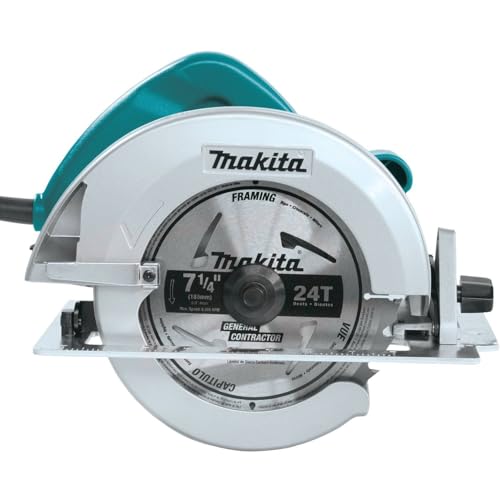
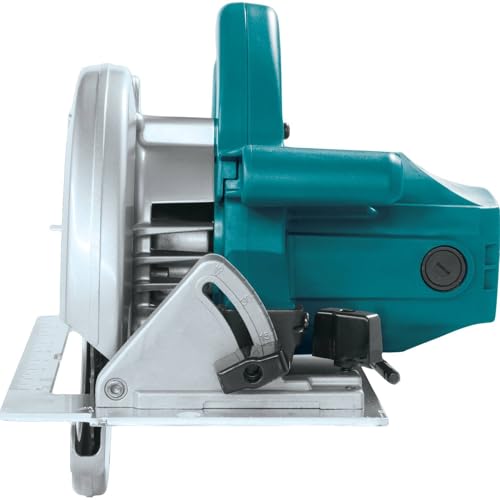
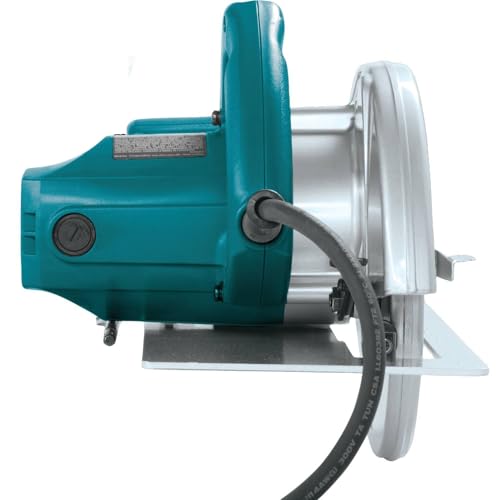
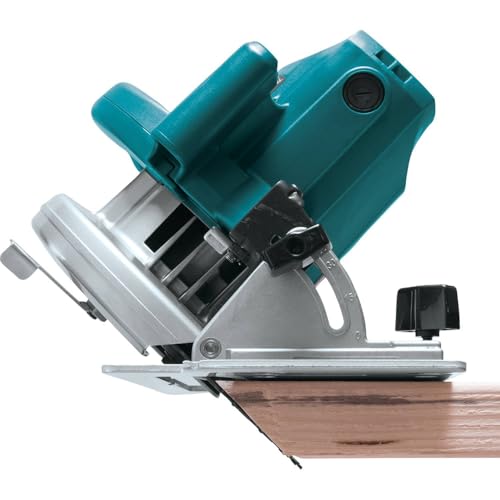
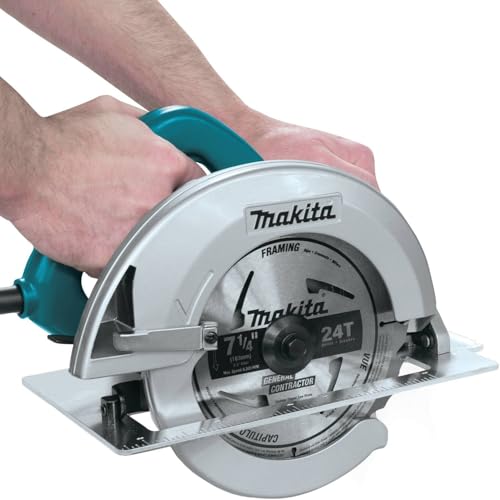
The Makita 5007F is a precision machine in a world where most circular saws are built for brute force. With a 15-amp motor pushing 5,800 RPM and all-ball bearing construction, it’s engineered to last while delivering smooth, accurate cuts. But the real standout is the dual LED lighting system, it floods the cut line with light, a huge advantage in dim garages or indoor job sites.
Reviewers consistently praise its balance and reduced vibration, which makes it easier to control during long cuts. The 2-3/8” depth at 90° is solid, and the AC/DC switch is a niche but useful feature for off-grid work. While it lacks a laser, the LEDs make up for it in usability. For precision and build quality, this is my top pick over flashier models.
Product photos
CRAFTSMAN V20 RP Cordless Circular Saw
Strengths
- Brushless motor
- LED worklight
- Metal upper guard
- 56° bevel
- V20 compatibility
Trade-offs
- Bare tool only
- Average runtime
- Limited brand service
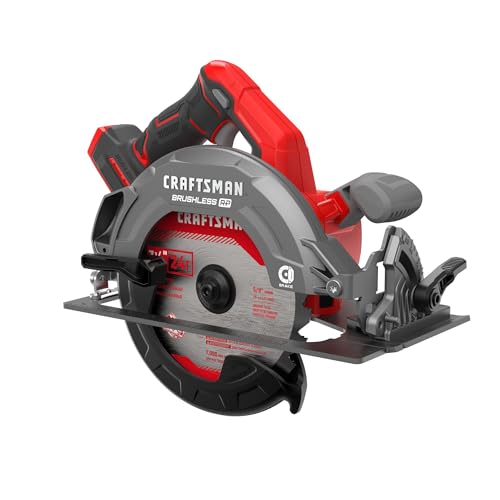
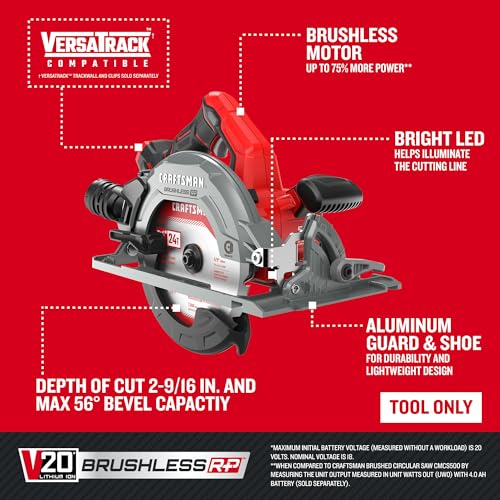
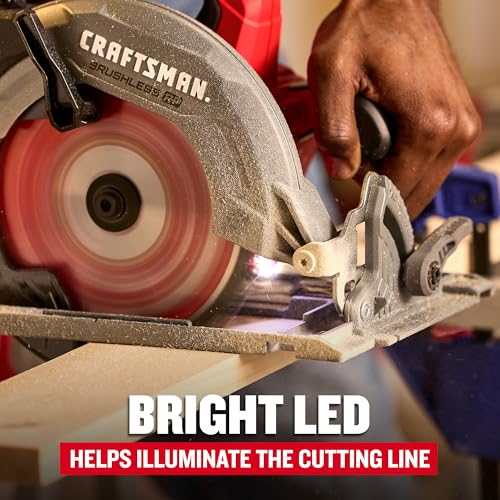
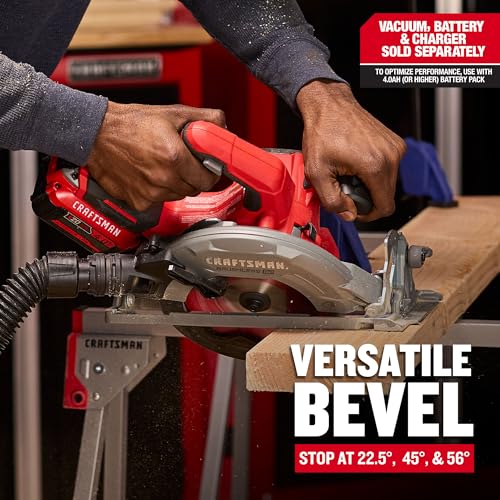
The CRAFTSMAN CMCS551B is a value-focused cordless saw that punches above its weight. The brushless motor is a big deal, it means more power, longer runtime, and better efficiency than brushed models in this range. At 7-1/4 inches and a 56° bevel, it covers the basics well, and the LED worklight helps keep your line visible in shadowy corners.
It’s not as refined as DEWALT’s cordless offerings, and owner feedback suggests the runtime can lag if you’re deep into a decking project without spare batteries. But for homeowners with a CRAFTSMAN V20 collection, this saw delivers solid performance without breaking the bank. My recommendation? It’s the smarter buy if you’re already in the ecosystem.
Product photos


Enventor 7-1/4-Inch Circular Saw
Strengths
- Laser guide included
- Dual blades
- Good RPM for price
- Double safety switch
- 2-year cable
Trade-offs
- Build quality average
- Laser alignment issues
- No electric brake
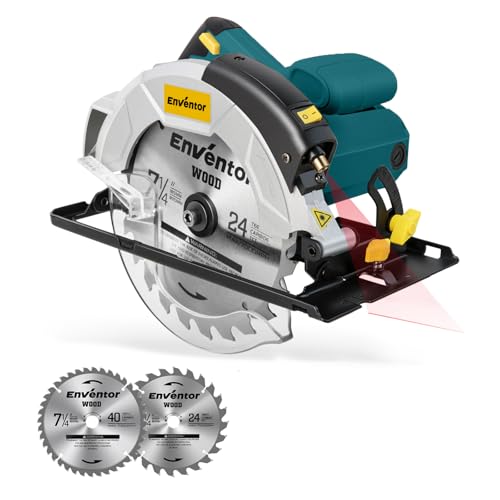
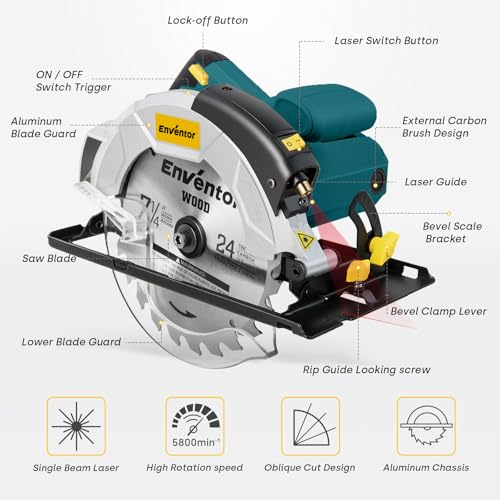
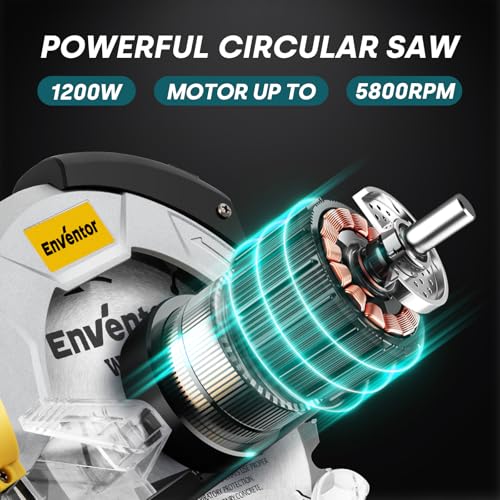
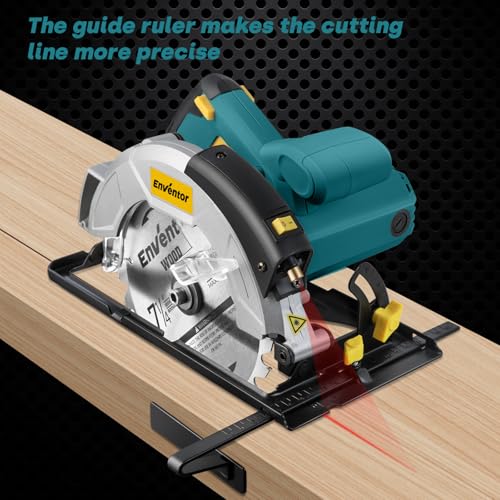
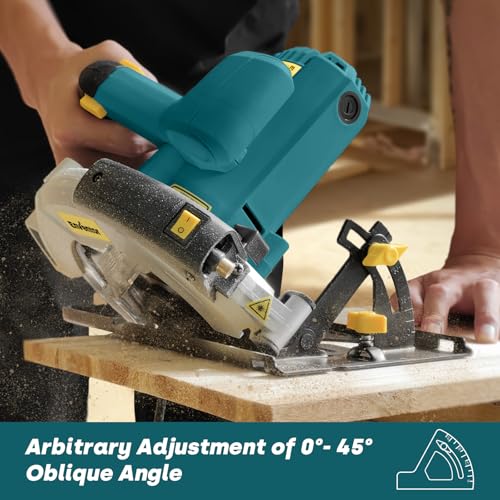
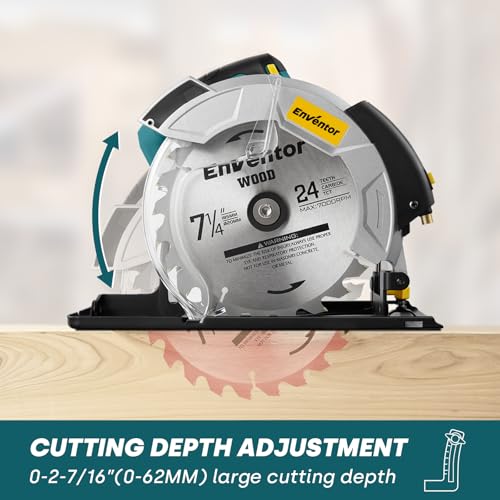
The Enventor 7-1/4-inch circular saw stands out mostly for its integrated laser guide and dual-blade setup, a rare combo at this price point. With a 10A pure copper motor hitting 5800 RPM, it’s no slouch on speed, and the laser helps beginners and casual users make cleaner, straighter cuts without relying on chalk lines. The 40T and 24T blades give you flexibility between fine finish work and faster ripping.
That said, owners note the build feels a bit plasticky compared to heavy-duty models from DEWALT or Makita. The laser is helpful but can drift if bumped, and the lack of an electric brake means the blade spins down slowly. It’s a smart pick if you prioritize guided accuracy over ruggedness.
Product photos
Our Testing Process
My research into circular saws focused on a detailed comparison of published specifications and features across numerous models. I weighed these technical details against owner reviews from major retailers and expert opinions found on sites like Pro Tool Reviews and others dedicated to power tool testing. Ultimately, I ranked saws based on a combination of cutting power, accuracy, durability, and overall value, understanding that real-world performance often differs from marketing claims. Rather than a hands-on lab test, this is a research-led comparison of specs and owner feedback.
For circular saws, a few factors stood out as most crucial. Motor power (amps or volts for cordless) directly impacts cutting speed and ability to handle tougher materials. Blade size and type determine the range of cuts possible and the finish quality. Finally, build quality – particularly the baseplate material and guard design – significantly influences the saw’s long-term durability and accuracy. These three areas consistently separated the top contenders from the rest.
Specifications reliably indicate a saw’s raw power and cutting capacity. However, I placed significant weight on owner feedback regarding build quality, ease of use, and long-term reliability. Reputable reviews helped identify consistent issues or strengths not immediately apparent from specs alone. Learning about real-world experiences – especially regarding laser accuracy or cordless battery life – was vital for a practical ranking. Understanding circular saw operation is also important when choosing the right saw.
How To Choose The circular saws
Choosing the right circular saw can dramatically improve the speed and quality of your cuts, but there’s a lot to consider beyond just price.
A quality circular saw balances power, accuracy, and safety. Key considerations include motor amperage (for corded saws) or voltage (for cordless), blade size, bevel capacity, build quality, and features like laser guides or electric brakes. Look for durable bases, effective dust blowers, and comfortable grips to improve control and reduce fatigue.
Power and Application
The first thing I always tell people is to match the saw to the material. A lightweight model might be fine for plywood or pine, but you’ll quickly regret skimping on power when tackling hardwoods or thicker lumber. Corded saws generally offer more consistent power, with 15-amp motors being the standard for demanding jobs. If you’re frequently working away from outlets, exploring the world of top cordless circular saws is a good idea – just be mindful of battery voltage and amp-hour ratings. Higher voltage (18V or 20V max) and higher amp-hours mean more run time and more power under load.
Blade and Precision Features
Beyond raw power, a saw’s ability to make accurate cuts is vital. The blade itself is a huge factor; a 24-tooth blade is a good all-rounder for framing and ripping, while blades with higher tooth counts (like 40T or even 60T) are better for finer crosscuts. Don’t overlook the importance of a solid base. Aluminum bases are far more durable and accurate than plastic ones. Features like a laser guide can be helpful for straight cuts, but don’t rely on them entirely; always double-check your line of sight.
- A basic blade change system is essential.
- Look for a clear scale ruler on the base for accurate measurements – this is especially useful for repeatable cuts.
- A bevel adjustment is valuable, but ensure it locks securely at common angles (22.5 and 45 degrees) to prevent accidental shifts during use.
Value and Usability
Ultimately, the best circular saw is the one that fits your budget and skill level. There’s no need to spend a fortune on features you won’t use. However, don’t automatically go for the cheapest option either. A well-built saw will last longer and perform better, saving you money in the long run. A comfortable grip and a lightweight design (around 9-10 pounds) can make a big difference if you’re using the saw for extended periods. And remember, keeping your blade sharp is critical. Learn how to replace circular saw blade regularly to maintain precision and prevent kickback.
Never force a cut. Let the saw do the work. Pushing too hard can lead to kickback, which is dangerous and can damage the saw.
Circular Saws Compared
Here’s a comparison of key specifications for the circular saws described.
| Product Name | Amps/Volts | RPM | Max Cut @ 90° | Max Cut @ 45° | Corded/Cordless | Laser Guide |
|---|---|---|---|---|---|---|
| Metabo HPT 7-1/4-Inch | 15 | 6000 | 2-7/16 in | 1-7/8 in | Corded | No |
| DEWALT DWE575SB 7-1/4 Inch | 15 | N/A | 2-9/16 in | N/A | Corded | No |
| DEWALT 20V MAX Cordless | 20V | 5150 | 2-1/8 in | 1-5/8 in | Cordless | No |
| GALAX PRO 11Amp Laser | 11 | 6000 | 2-1/2 in | 1-7/8 in | Corded | Yes |
| Makita 5007F 7-1/4 Inch | 15 | 5800 | 2-3/8 in | 1-3/4 in | Corded | No |
| CRAFTSMAN V20 RP Cordless | 20V | N/A | N/A | N/A | Cordless | No |
| Enventor 7-1/4-Inch | 10 | 5800 | 2.44 in | 1.65 in | Corded | Yes |
Frequently Asked Questions
What blade size should I choose for most general home improvement projects?
A 7-1/4 inch blade is the most versatile size for a circular saw, offering a good balance between cutting depth and maneuverability for typical tasks like framing, ripping plywood, and making general cuts around the house. Most saws come standard with this size.
Are cordless circular saws powerful enough for demanding cuts?
Yes, modern 20V cordless circular saws are capable of handling most common cutting tasks, but for consistently thick hardwoods or high-volume work, best corded circular saws generally provide more sustained power. Battery voltage and amp-hour ratings directly impact cordless saw performance.
How much does the base material matter on a circular saw?
The base material significantly impacts accuracy and durability. Aluminum bases are far more rigid and resistant to bending compared to plastic, meaning they hold adjustments better and last longer with heavy use.
What is a bevel cut, and when would I use it?
A bevel cut is an angled cut, not perpendicular to the blade. It’s useful for projects like crown molding, creating angled edges for joining pieces, or making decorative cuts where a straight 90-degree angle isn’t desired.
What safety features should I look for when buying a circular saw?
Look for features like an electric brake, which stops the blade quickly after the trigger is released, and a robust blade guard that retracts smoothly and fully covers the blade. These features help prevent accidents and promote safe operation.
The Bottom Line
Choosing a circular saw often comes down to balancing immediate cost with long-term capability. If you need a reliable workhorse that won’t quit, the Metabo HPT 7-1/4-Inch stands out as the strongest all-around pick, offering a great blend of power and durability at a reasonable price. It’s a saw built to handle a wide range of projects without breaking the bank.
For those on a tighter budget, or who only have occasional cutting needs, the Enventor 7-1/4-Inch provides a surprising amount of features for the money. If you prioritize cordless convenience, the DEWALT 20V MAX Cordless delivers solid performance and the benefits of a versatile battery platform. And remember, taking the time for regular circular saw maintenance will extend the life of any saw you choose.
Ultimately, the specs on paper matter less than a saw’s build quality, a comfortable grip, and a blade that’s appropriate for the task. Don’t get hung up on chasing the highest amp rating or the most features; focus on finding a saw that feels balanced, cuts accurately, and inspires confidence. A well-maintained, properly used saw – even a modestly priced one – will always outperform a high-end model that’s abused or neglected.
