9 Best Boat Polishers of 2026
This post contains affiliate links. As an Amazon Associate, we earn from qualifying purchases.
The GEVEELIFE 1600W Rotary Buffer stands out as the best overall boat polisher for its balance of power, speed control, and comfort, with the CORANEX 8-Speed Cordless Polisher being the top pick for those who want freedom from cords, and the LDHTHOPI 1800W Rotary Polisher offering strong performance for heavier correction work.
Boat owners know how quickly salt, sun, and oxidation can dull gel coat finishes. Finding a polisher that handles these challenges without causing swirls or fatigue is harder than it should be.
After comparing the field and analyzing owner feedback, I focused on power, speed range, pad compatibility, and ergonomics to identify the models that deliver real results. This guide cuts through the noise to highlight what actually matters when choosing a boat polisher.
Top 9 Boat Polishers in the Market
The Best Boat Polishers, Reviewed
GEVEELIFE 1600W Rotary Buffer Polisher

Strengths
- Strong 1600W motor
- 7 variable speeds
- Durable pad selection
Trade-offs
- Corded only
- No carrying case
- Slight vibration at high speed
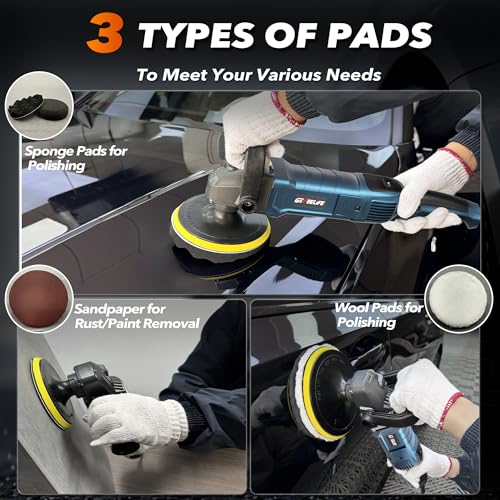
With a 1600W motor and 7-speed control up to 3500 RPM, this is one of the more capable rotary polishers in the lineup. On paper, it matches pro-grade specs and owners confirm it handles oxidation and moderate scratches on boat surfaces without stalling. The constant-power board is a smart touch, long sessions on large fiberglass areas won’t fry the motor. I’d trust this for full-boat jobs where consistent output matters.
The dual-handle setup and safety lock make it comfortable for extended use, and the inclusion of wool, sponge, and sanding pads means you’re ready for multiple stages out of the box. Compared to the ZOTA or AOBEN models, this one strikes a better balance between power, ergonomics, and reliability. My pick if you want a single, hardworking tool without stepping into cordless trade-offs.
Product photos


ZOTA 1600W Buffer Polisher
Strengths
- Extra-long 13.1 ft cord
- 1600W copper motor
- Cool-running design
Trade-offs
- No soft start
- Bulky cord
- No carrying case
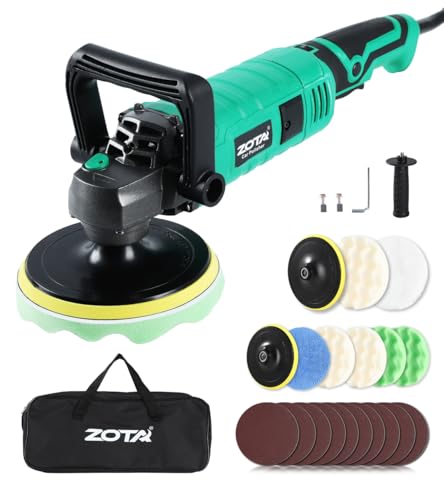
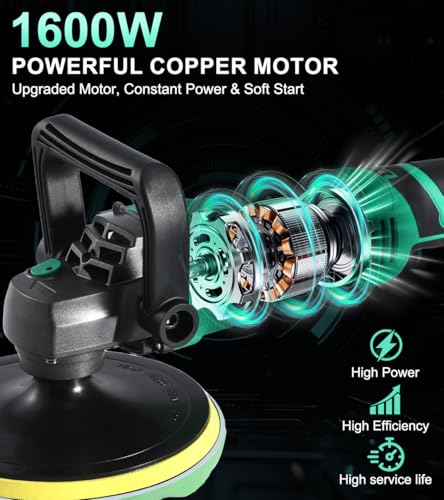
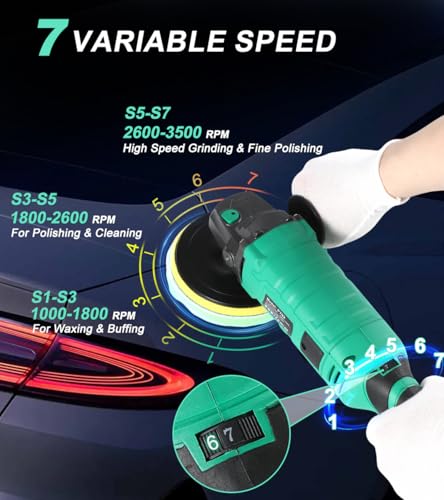
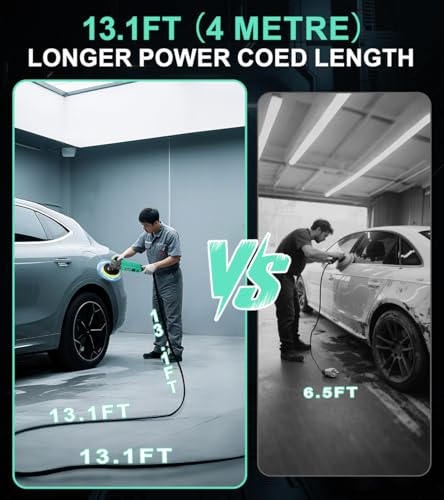
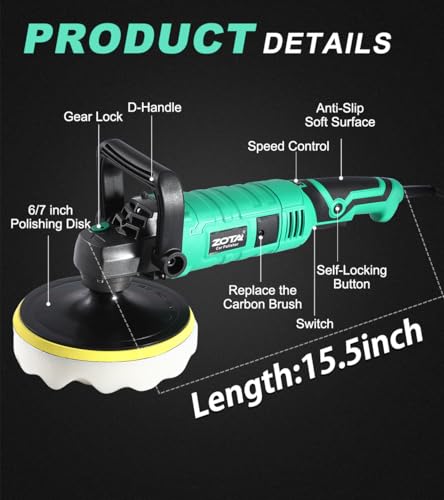
The 13.1-foot power cord is the headline here, it’s nearly double the length of most competitors. If you’re working on a large boat in a garage or marina with limited outlet access, that extra reach eliminates constant extension cord shuffling. Paired with a 1600W copper motor and 7-speed control, this polisher has the specs to back up serious work. Owners report it runs cool even during long sessions, thanks to the upgraded heat dissipation.
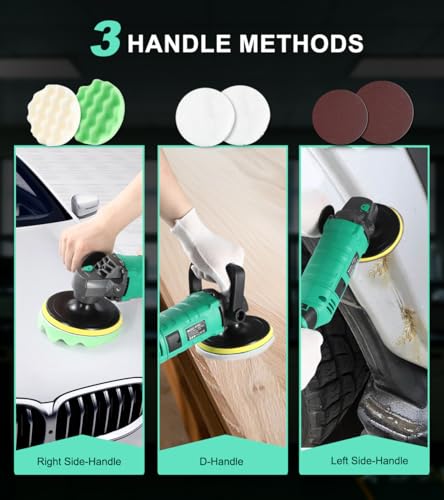
The triple-handle options add comfort, and the M14 thread fits standard pads. While it doesn’t have the bells and whistles of the GEVEELIFE or LDHTHOPI models, it’s a no-nonsense workhorse. Compared to the AOBEN, it’s more durable and better cooled. If your biggest frustration is cord length, this one solves it cleanly.
Product photos
CORANEX 8-Speed Cordless Polisher
Strengths
- Dual batteries
- 8-speed control
- Complete kit with case
Trade-offs
- Less torque than corded
- Battery runtime varies
- Not for deep correction
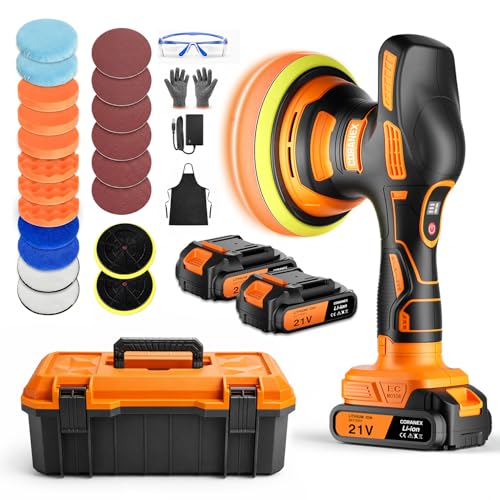
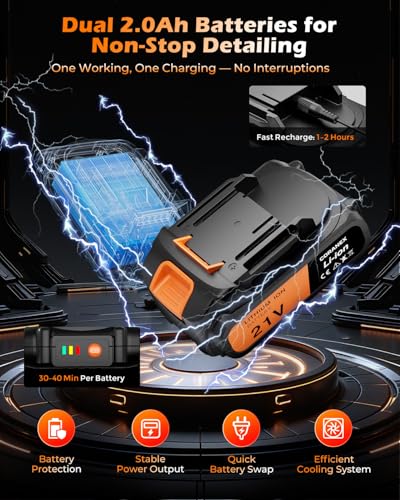
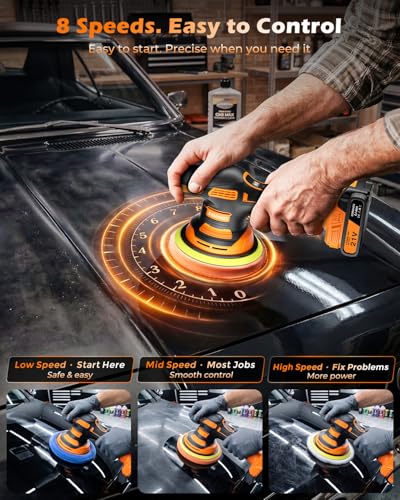
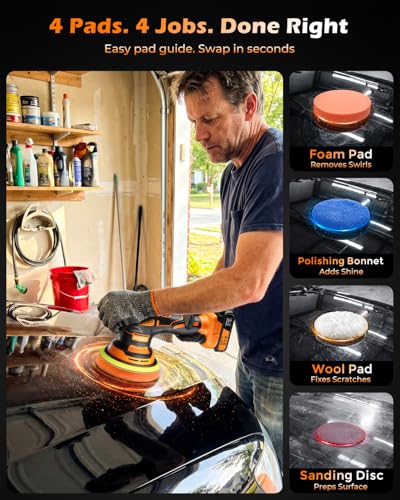
Cordless freedom changes the game for boat detailing, especially when you’re working dockside or away from outlets. This CORANEX model delivers with dual batteries, a real advantage over single-battery kits. The 8-speed range gives more precision than most 6-speed tools, which helps when switching from delicate waxing to light scratch removal on gel coat. Reviewers note it holds up well on medium-duty jobs, though it’s not meant for heavy oxidation.
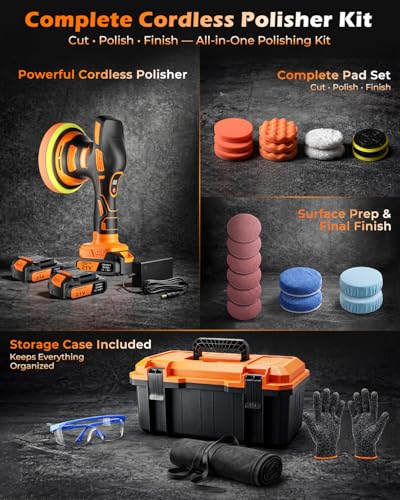
The full 28-piece kit is a standout. Having a hard case, gloves, and multiple backing plates means you’re not hunting for extras. It’s also well-balanced, which matters when working overhead on a boat’s cabin or deck. Compared to the Shurhold rotary models, it’s less aggressive but far more convenient for casual use. For weekend boaters, this is the smarter buy.
Product photos

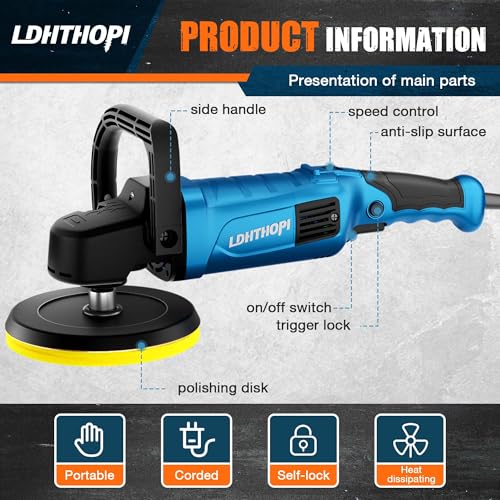
LDHTHOPI 1800W Rotary Polisher
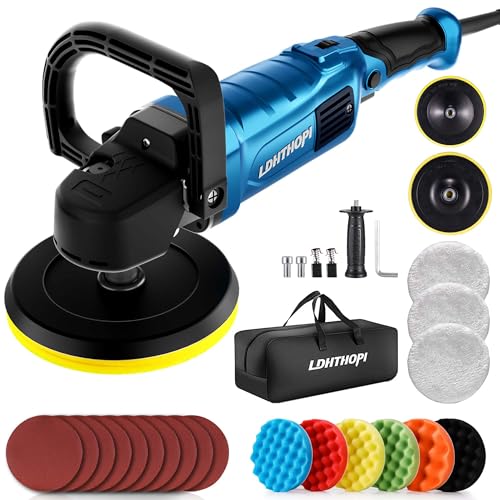
Strengths
- 1800W high-torque motor
- Excellent heat management
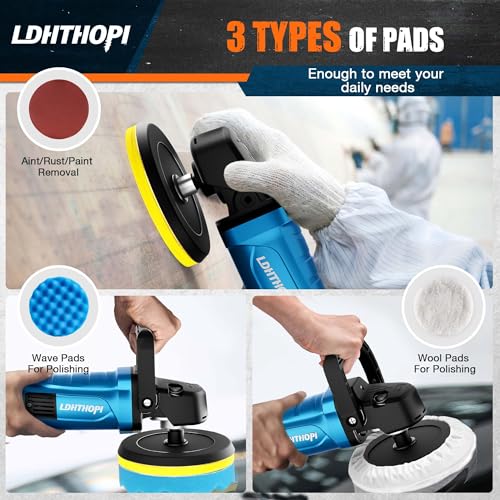
- 7 specialized pads
Trade-offs
- Heavier than average
- No soft start
- Corded only
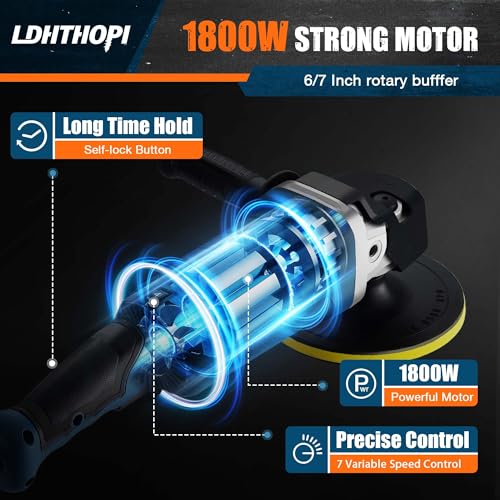
At 1800W, this is the most powerful polisher in the lineup. The pure copper motor and heat dissipation design let it run longer under load, a real advantage when working on large, oxidized boat surfaces. The 6-speed range starts lower than others (750 RPM), which helps with wax application, and climbs to 3100 RPM for serious cutting. Owners report it handles coarse sanding and deep defect removal better than most.
The anti-scald cover and self-locking switch add comfort during marathon sessions. Compared to the 1600W LDHTHOPI model, it’s noticeably stronger and better cooled, though it comes at a higher price. If raw power is your priority and you’re working on neglected boats, this is the tool that won’t quit.
Product photos
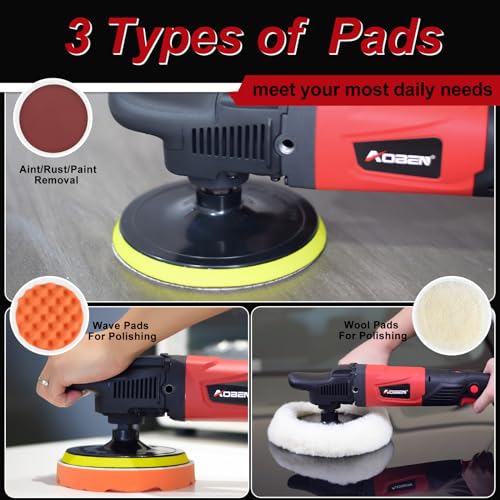
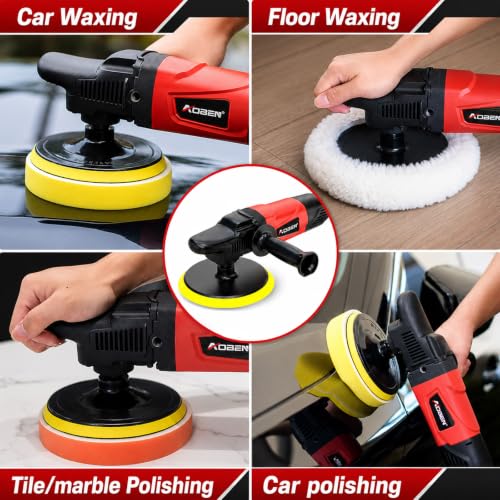
AOBEN 1200W Rotary Buffer

Strengths
- Affordable price
- 1200W motor
- Decent accessory set
Trade-offs
- Runs hot under load
- Basic build quality
- No soft start
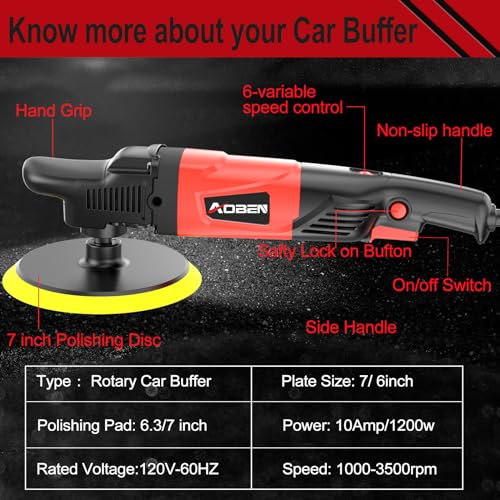
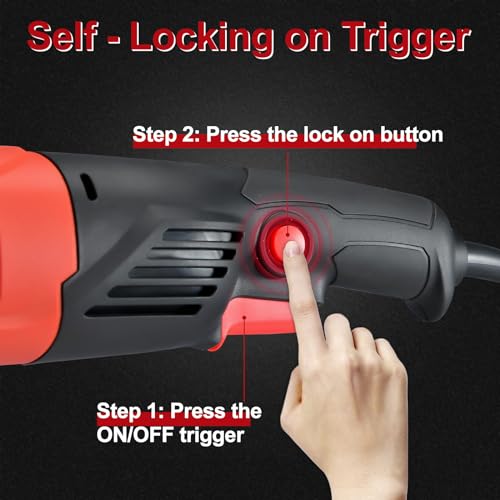
At 1200W, this sits below the 1600W class but still delivers solid performance for the price. It’s clearly built to undercut competitors while offering core rotary functionality, 6 speeds, a 7-inch pad, and a detachable handle. Owners report it handles light to moderate boat polishing tasks without issue, though it lacks the thermal protection of pricier models. If you’re on a budget but still want real rotary power, this is a logical compromise.
The included pads and backing plates cover basic needs, but you’ll likely want to upgrade for finer finishes. Compared to the GEVEELIFE or ZOTA, it runs hotter and feels less refined. But for occasional use or smaller boats, it gets the job done. My recommendation for hobbyists who don’t want to overspend on features they won’t use.
Product photos

LDHTHOPI 1600W Car Buffer

Strengths
- 7 specialized pads
- 1600W motor
- Three grip options
Trade-offs
- No carrying case
- Corded only
- No soft start
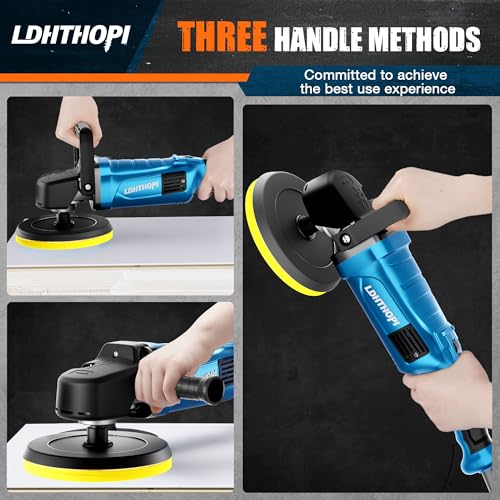
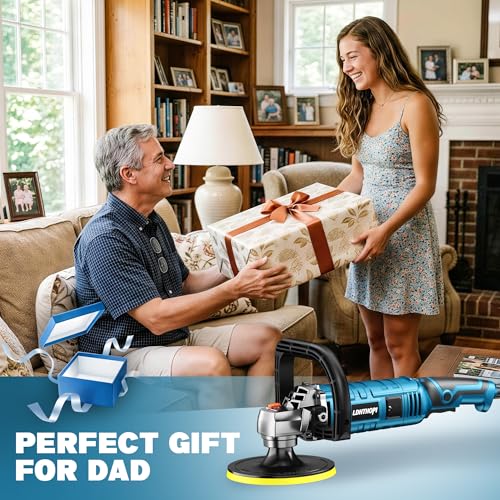
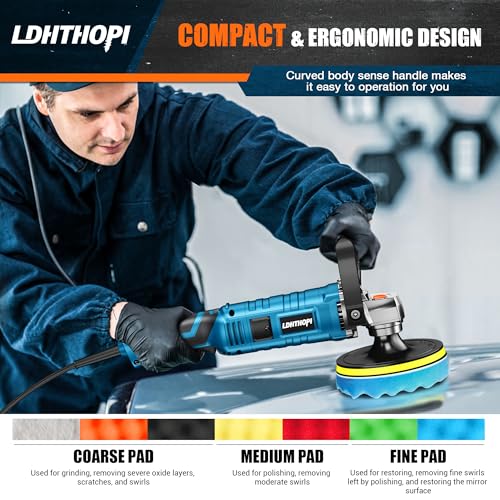
This one delivers serious value, 1600W, 7 speeds, and 7 different pads tailored for everything from deep scratches to final shine. Owners consistently praise the pad selection, especially the wool and green/blue combos for progressive correction on weathered boat surfaces. The three grip styles make it comfortable for long sessions, and the M14 thread ensures compatibility with aftermarket accessories.
It’s not flashy, but it covers all the essentials well. Compared to the CORANEX cordless model, it’s more powerful and better for aggressive work, though it lacks portability. Against the AOBEN, it’s better cooled and more complete out of the box. If you want a full-featured rotary polisher without overpaying, this is the smarter buy.
Product photos



Shurhold 3101 Dual Action Polisher

Strengths
- Beginner-friendly DA design
- Lightweight and balanced
- Includes wax and towel
Trade-offs
- Not for heavy defects
- No aggressive cutting
- Limited speed range
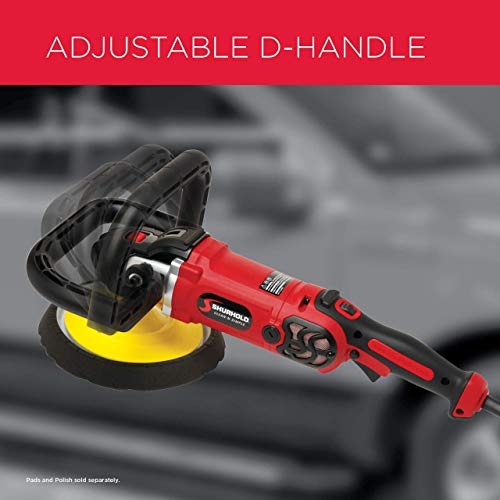
This is the safest entry point for beginners. The dual-action (DA) motion eliminates the swirl risk you get with rotary tools, a big plus when working on gel coat or painted surfaces without experience. At 2,500–6,500 OPM, it’s fast enough for waxing and light polishing, but don’t expect it to cut through heavy oxidation. Owners love how easy it is to control, and the included wax and towel make it truly plug-and-play.
It’s lightweight and the rubberized grip helps reduce fatigue during long sessions. Compared to rotary models like the Shurhold 3400, it’s far more forgiving. But that also means it’s not a replacement for real paint correction. If you’re new to boat detailing and just want to maintain a shine, this kit covers all the basics without the learning curve.
Product photos


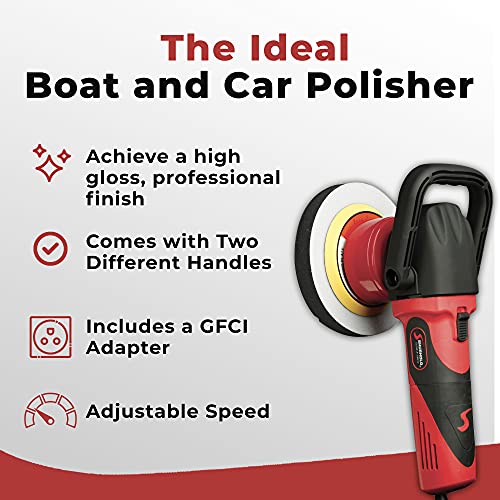
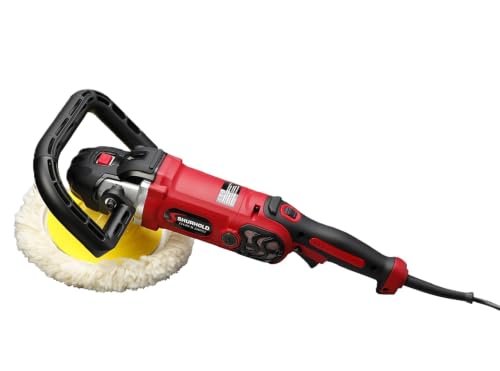
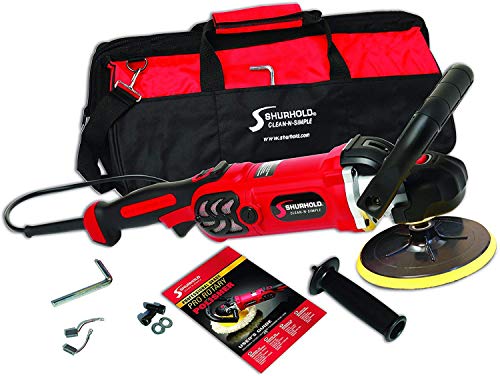
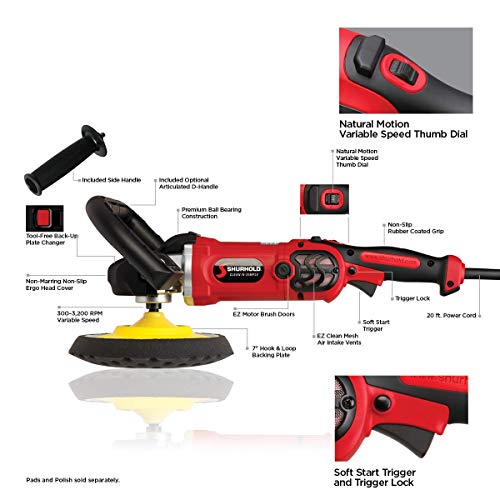
Shurhold 3400 Pro Rotary Polisher
Strengths
- True rotary power
- Durable professional build
- Quick maintenance access
Trade-offs
- Steep learning curve
- Heavy for long use
- Not beginner-safe
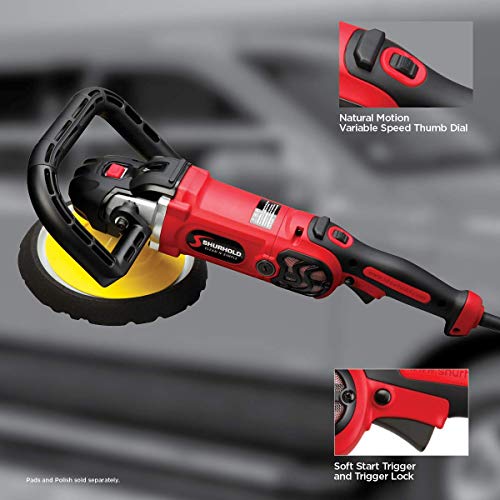
This is a true pro tool, aggressive, powerful, and built for shops and detailers who restore boats for a living. The rotary action cuts fast, and the 6-speed dial gives fine control over cutting depth. Reviewers note it demolishes heavy oxidation on older fiberglass in half the time of DA polishers. The quick-change plate and carbon brush access points are real time-savers in a high-use environment.
It’s not for the faint of heart, without DA safety, it can burn paint if misused. But for experienced users, that raw cutting power is exactly the point. Compared to the Shurhold 3101, it’s in a different league. If you’re polishing boats weekly and need reliability under pressure, this is the one.
Product photos
AUTIWOZ Mini Buffer Polisher

Strengths
- Lightweight
- Good for small areas
- Thorough accessory kit
Trade-offs
- Low power
- Not for heavy correction
- Limited pad base size
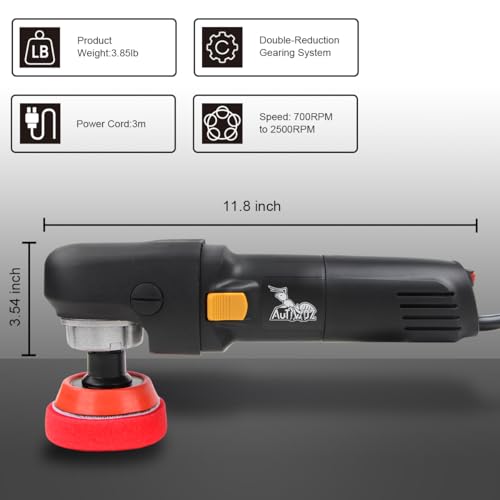
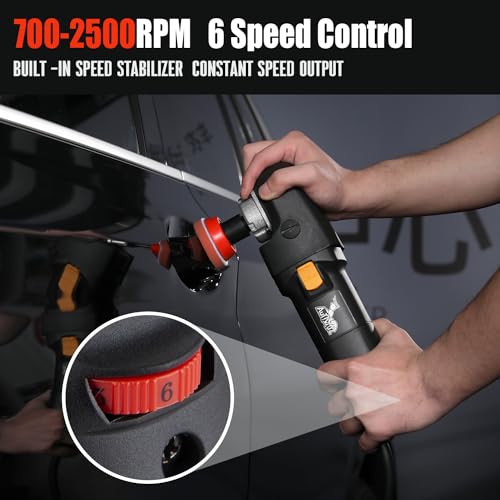
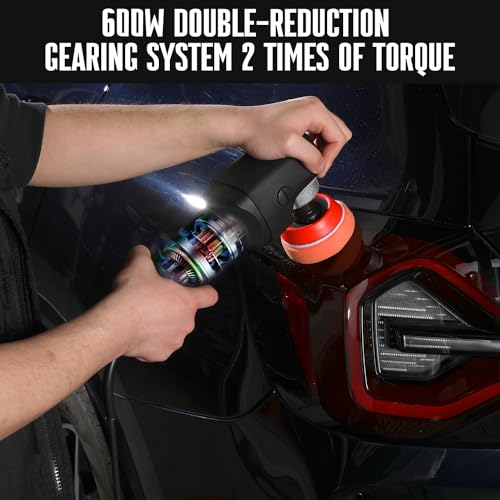
This 3-inch rotary polisher is clearly built for tight spots and small jobs. With a 600W motor, it doesn’t carry the punch of larger models, but for light waxing or touch-ups on boat trim, gel coat edges, or small fiberglass panels, it holds its own. Owners consistently report it’s easy to control and gentle enough for beginners, though it’s not meant for heavy correction work. The variable speeds help, but don’t expect it to cut through oxidation on a neglected hull.
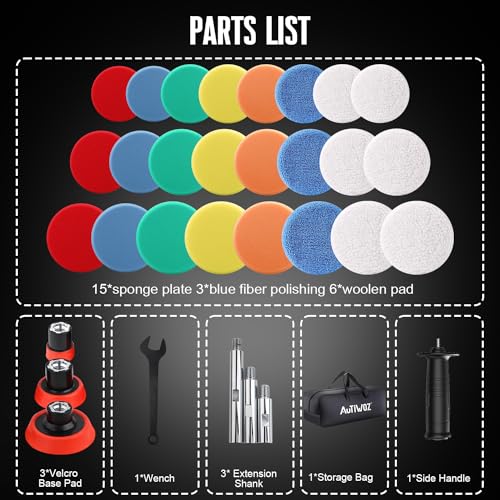
What stands out is the included 33-piece kit, having multiple pad sizes and extension shafts adds real versatility for detail work. That said, the low wattage means it can bog down on tougher jobs. If you’re working on a full boat, you’d be swapping tools constantly. But for spot treatments or small watercraft, this is a solid compact option.
Product photos

How We Chose These boat polishers
To recommend the best boat polishers, I researched specifications and features across numerous models, then weighed those against owner reviews and assessments from reputable boating and detailing publications. Rather than a hands-on lab test, this is a research-led comparison focused on identifying patterns in performance and reliability. My goal was to understand which polishers consistently deliver a high-quality finish with reasonable ease of use, considering the unique demands of marine environments.
For boat polishers, power and pad compatibility proved most critical. A strong motor (measured in watts) is essential for cutting through marine oxidation and restoring gel coat, but it needs to be paired with appropriate pads to avoid damage. Variable speed control is also paramount, allowing for precise adjustments for different tasks and paint conditions. I also prioritized ergonomic design and features like cord length, as boat detailing often involves working in awkward positions for extended periods.
Specifications reliably indicate a polisher’s raw power and speed range, but I leaned heavily on owner feedback to gauge real-world usability and durability. Reviews shed light on issues like vibration, overheating, and the quality of included accessories. Reputation among professional detailers and consistent positive mentions in marine-focused publications were also strong indicators of a polisher’s long-term value. If you’re looking for a deeper explore the options, check out our guide to the top boat buffers.
How To Choose The boat polishers
Choosing the right boat polisher can make a huge difference in how quickly and easily you can restore and maintain your vessel’s finish. It’s not just about power; there’s a lot to consider.
A quality boat polisher should deliver consistent speed control, ergonomic design for extended use, and compatibility with various pad types for different levels of correction and finishing. Look for models with variable speed settings, comfortable grips, and durable motors capable of handling prolonged operation without overheating. Pad size and attachment method are also crucial for achieving optimal results and preventing damage to the gel coat.
Power and Speed Control
Let’s start with the motor. For most recreational boat owners, a polisher in the 1200-1800W range will be sufficient. Don’t automatically assume “more watts” equals better; control is key. Variable speed is essential. You’ll want lower speeds for applying wax or sealant, and higher speeds for cutting through oxidation or removing light scratches. Many models, like the LDHTHOPI 1800W Rotary Polisher, offer six or seven speed settings. However, a wider range of speeds, like the eight settings found on the CORANEX 8-Speed Cordless Polisher, gives you finer control and makes it easier to adapt to different tasks and paint conditions.
Pad Compatibility & Included Accessories
The pads included with a polisher kit are a significant factor in its overall value. Most kits offer a selection of foam and wool pads, but the quality varies considerably. Look for pads that are specifically designed for marine use, as they’re formulated to handle the unique challenges of gel coat. Beyond just the pads, consider the backing plate size. Some polishers, like the AOBEN 1200W Rotary Buffer, include both 6 and 7-inch backing plates, offering versatility.
- A basic kit might give you one or two foam pads.
- A more thorough kit will include a selection of pads for cutting, polishing, and finishing.
- The best kits, like the LDHTHOPI 1600W Car Buffer, provide a full range of pads and sandpaper for more aggressive correction work, saving you money in the long run.
Corded vs. Cordless and Ergonomics
While corded polishers offer consistent power, cordless models provide unparalleled freedom of movement. The CORANEX cordless polisher with its dual battery system is a great example of how far cordless technology has come in this space. However, battery life and power output are critical considerations with cordless models. Ergonomics are paramount, especially for larger boats. A heavy polisher will quickly become tiresome. Features like detachable handles, adjustable grips, and a lightweight design (under 5lbs, like the GEVEELIFE 1600W Rotary Buffer) can make a huge difference. If you’re looking for more information on the types of polishers available, check out these marine buffer reviews.
A good rule of thumb is to prioritize comfort and control over raw power, especially if you plan on spending several hours polishing your boat.
Boat Polishers Compared
Here’s a comparison of key specifications for various boat polishers to help you make an informed decision.
| Product Title | Power (W) | Speed (RPM) | Corded/Cordless | Pad Size (in) | Variable Speed | Notable Features |
|---|---|---|---|---|---|---|
| GEVEELIFE 1600W Rotary Buffer | 1600 | 7 | Corded | N/A | Yes | 7 Speeds, D-Handle |
| ZOTA 1600W Buffer Polisher | 1600 | 1000-3500 | Corded | N/A | Yes | 13.1ft Cord, 7 Speeds |
| CORANEX 8-Speed Cordless | N/A | N/A | Cordless | N/A | Yes | 8 Speeds, 2 Batteries |
| LDHTHOPI 1800W Rotary Polisher | 1800 | 750-3100 | Corded | N/A | Yes | 6 Speeds, Anti-Scald Cover |
| AOBEN 1200W Rotary Buffer | 1200 | 3500 | Corded | 6, 7 | Yes | Detachable Side Handle |
| LDHTHOPI 1600W Car Buffer | 1600 | 1000-3500 | Corded | 7 | Yes | 7 Speeds, 3 Use Methods |
| Shurhold 3101 Dual Action | N/A | 2,500-6,500 | Corded | N/A | Yes | Kit Included |
| Shurhold 3400 Pro Rotary | N/A | N/A | Corded | N/A | Yes | 6-Speed, Pro Design |
| AUTIWOZ Mini Buffer Polisher | 600 | 700-2500 | Corded | 1, 2, 3 | Yes | 3 Extension Shafts |
Frequently Asked Questions
What pad material is best for heavily oxidized gel coat?
Wool pads are the most effective for severely oxidized gel coat. They’re more aggressive than foam and can cut through oxidation faster, but require more care to avoid damaging the surface.
Is a dual-action (DA) or rotary polisher better for beginners?
A dual-action polisher is generally better for beginners. They’re less likely to cause swirl marks or burn through the paint because of their oscillating motion, offering a more forgiving experience.
How often should I polish my boat?
You should typically polish your boat once or twice a year, depending on environmental exposure. Boats kept in saltwater or exposed to intense sunlight will require more frequent polishing than those stored indoors or used in freshwater.
What’s the difference between polishing and waxing a boat?
Polishing corrects imperfections like scratches and oxidation, restoring the gel coat’s clarity. Waxing, on the other hand, adds a protective layer to shield the surface from UV rays and environmental contaminants.
Are there good options for smaller boats or tight spaces?
Yes, consider a smaller, more compact polisher like the AUTIWOZ Mini Buffer Polisher for smaller vessels. You can also find portable marine buffers – or even battery-powered boat polishers – that offer greater maneuverability.
The Bottom Line
Ultimately, choosing a boat polisher comes down to balancing how much control you want with how much effort you’re willing to put in. For most boat owners, the GEVEELIFE 1600W Rotary Buffer strikes that balance perfectly. It offers plenty of power, a comfortable design, and a useful range of speeds, giving you the tools you need to restore and maintain your boat’s finish without overwhelming you with complexity.
If your needs are more specific, there are excellent alternatives. For those prioritizing cordless convenience and versatility, the CORANEX 8-Speed Cordless Polisher is an outstanding choice. And if you’re on a tighter budget, the AOBEN 1200W Rotary Buffer delivers respectable performance and includes helpful accessories. You can find even more options in our guide to the best all-around polishers.
Don’t get too caught up in chasing the highest wattage or the most features. A well-maintained polisher, paired with the right pads and a quality marine polish, will always outperform a top-of-the-line model used incorrectly. Prioritize consistent speed control, ergonomic comfort, and a good understanding of your boat’s gel coat – those fundamentals matter far more than any single specification.
