
8 Best Polishers of 2026
This post contains affiliate links. As an Amazon Associate, we earn from qualifying purchases.
The SPTA 5-Inch Dual Action Random Orbital stands out as the best overall polisher for most users, combining strong performance with user-friendly features. For those on a budget, the Niusken Cordless Car Buffer Polisher offers solid value with versatile speed control, while the Chemical Guys TORQX Random Orbital is a great pick for beginners who want a complete, ready-to-use kit.
Choosing the right polisher isn’t just about power, it’s about matching the tool to your skill level, vehicle size, and the type of work you do. Many buyers waste money on overpowered rotary models they can’t control or underpowered units that struggle with real correction.
This guide cuts through the noise by comparing specs, real-world feedback, and key performance factors like speed range, ergonomics, and included accessories to find the models that actually deliver results.
Top 8 Polishers in the Market
The Best Polishers, Reviewed
Chemical Guys TORQX Random Orbital Polisher

Strengths
- Well-balanced and light
- Safe for beginners
- Complete kit included
Trade-offs
- Motor less powerful than rotary
- Speed range narrower
- Pads wear faster than pro grade
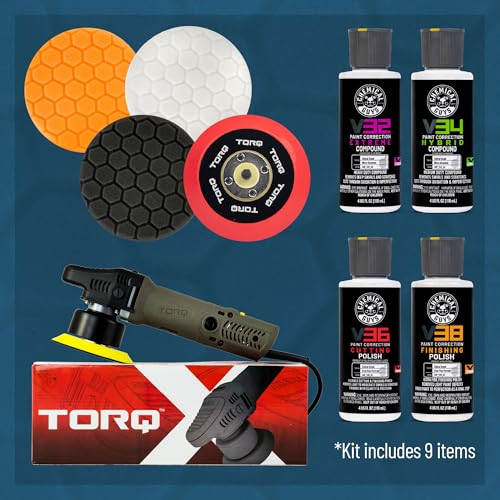
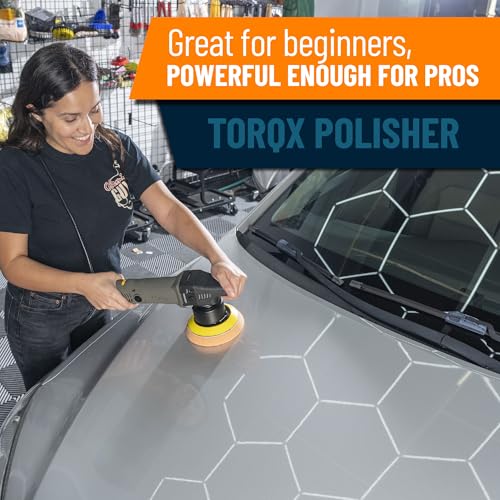
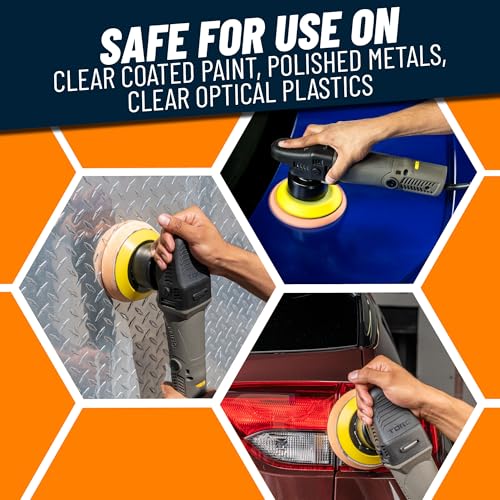
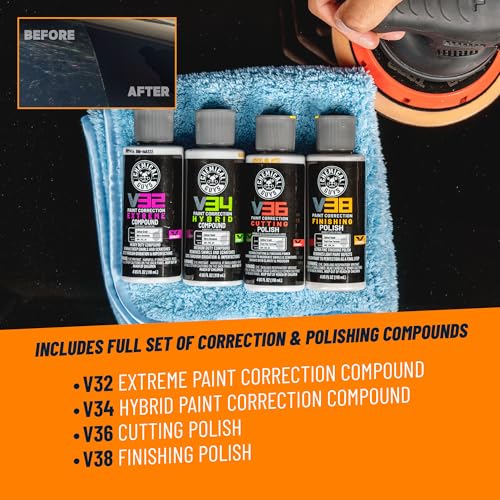
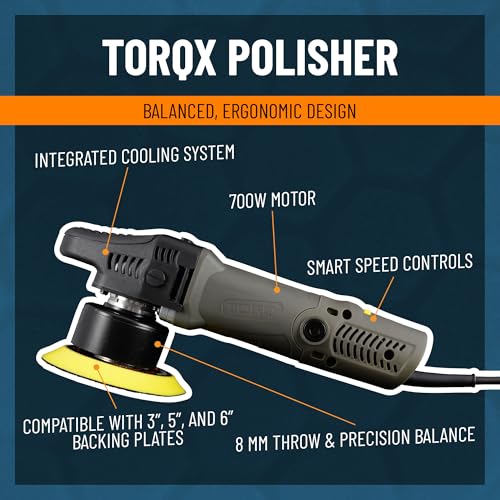
This is the complete package for most users. The 700W motor and 8mm orbit strike a smart balance between cutting ability and safety, ideal for both beginners and seasoned detailers. Owners consistently say it’s easy to control, doesn’t vibrate harshly, and delivers consistent, swirl-free results. The included polishes, compounds, and pads mean you can start working right out of the box, which is rare.
Compared to the SPTA 5-inch model, it feels more refined in hand and delivers smoother finishes. It won’t cut as fast as a rotary, but for most paint correction tasks, that’s the point. It’s also lighter than many competitors, making it a top pick for longer sessions. If you want one polisher that does it all without a steep learning curve, this is the one to beat.
Product photos
Niusken Cordless Car Buffer Polisher Kit
Strengths
- Dual battery setup
- LED speed display
- Lightweight and balanced
Trade-offs
- Overheats at high speed
- Batteries not cross-compatible
- Plastic housing feels flimsy
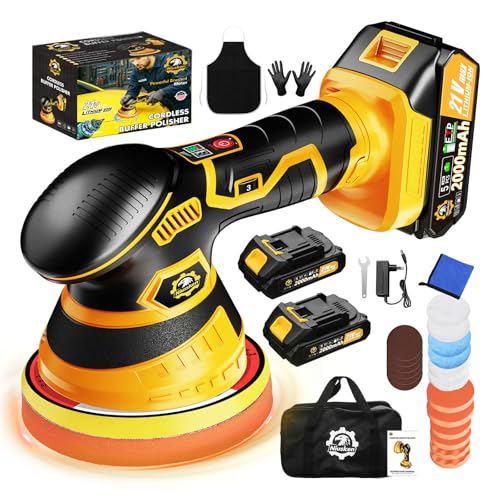
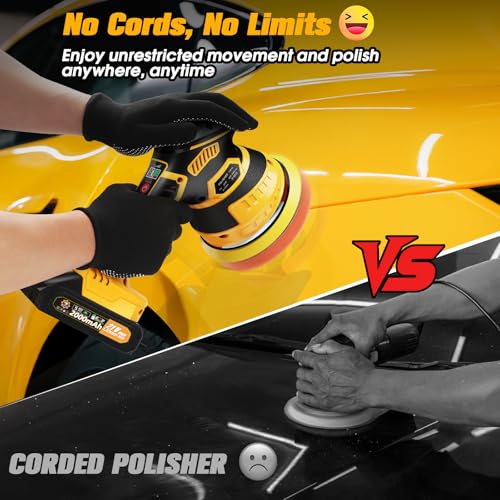
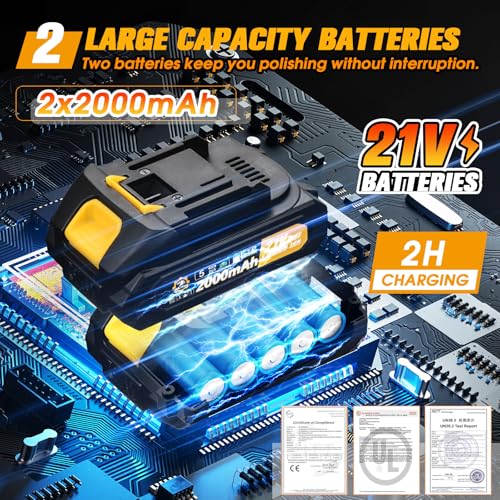
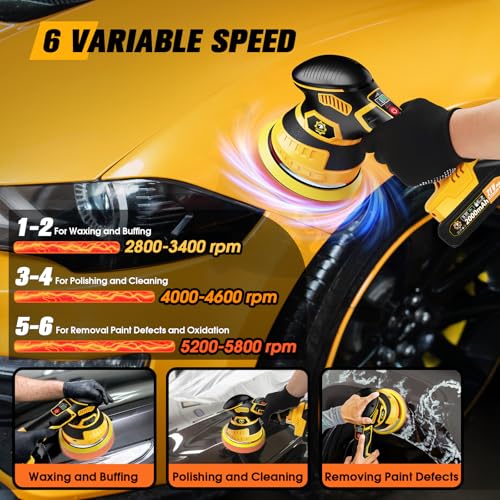
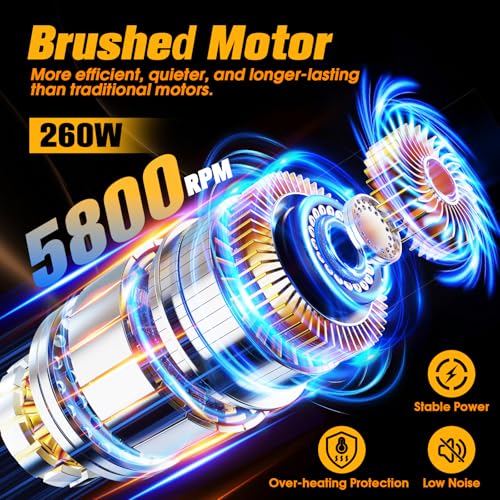
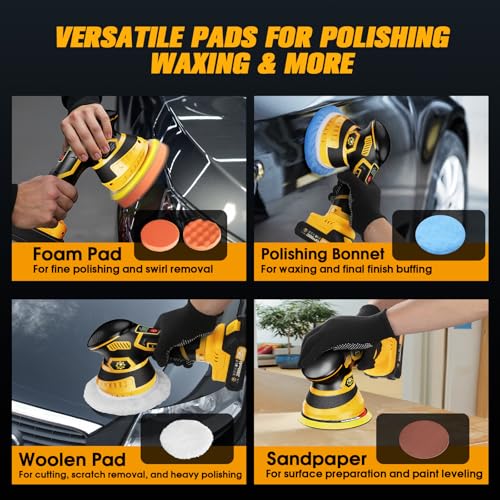
With two 21V batteries and a 6-speed range up to 5,800 RPM, this cordless polisher delivers serious runtime and performance. The LED display showing speed and battery level is a standout feature, very useful for maintaining consistency across panels. The 8mm dual-action orbit keeps things safe for paint, and owners report excellent heat control even during extended use.
It’s lightweight at 3.3 lbs and easy to maneuver, making it a favorite for weekend detailers and mobile pros alike. The 18-piece accessory kit covers most needs, though some users note the foam pads aren’t top-tier. Compared to the VERVEWAVE, it’s more beginner-friendly and comes with batteries, giving it an edge in value.
Product photos
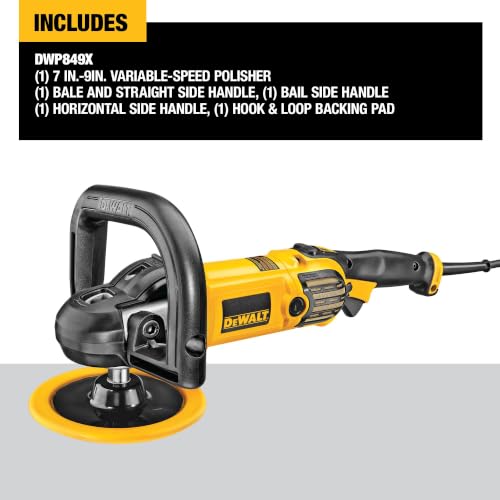
DEWALT 12A Variable Speed Car Buffer
Strengths
- High torque motor
- Durable all-metal gearing
- Excellent speed control
Trade-offs
- Heavy and tiring to use
- Not beginner-friendly
- Rotary risk of paint burn
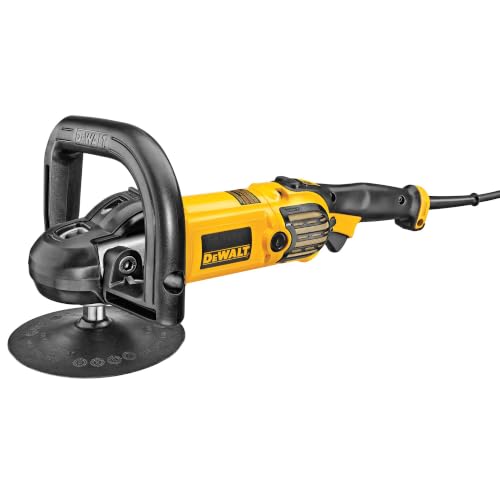
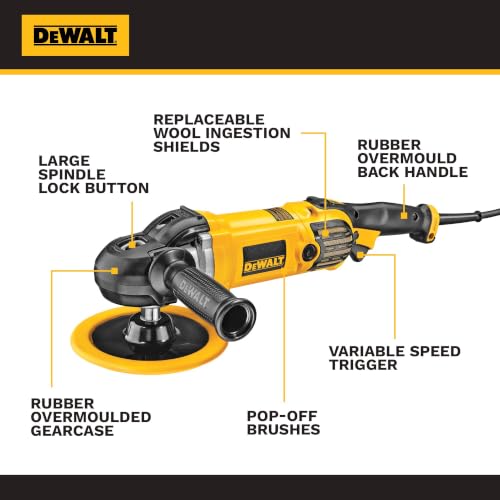
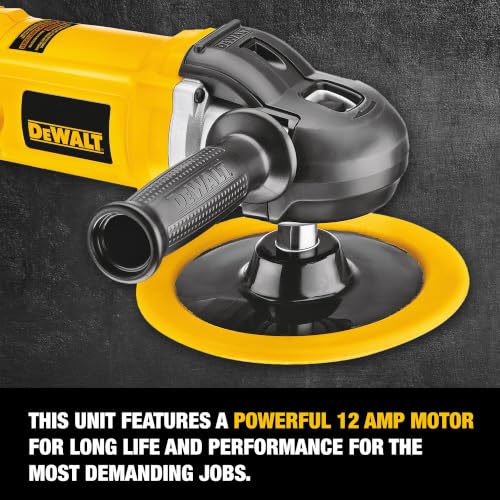
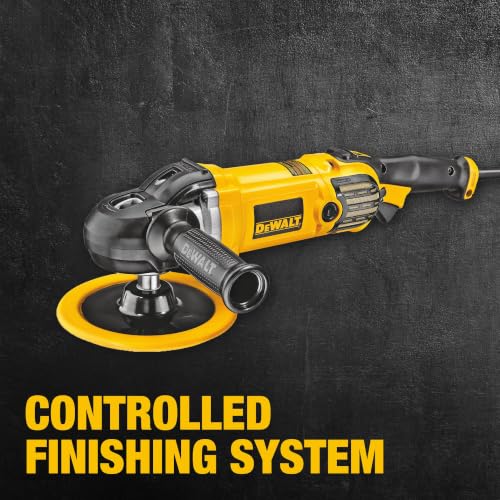
This 12-amp rotary polisher is built like a tank. With ball-bearing construction, steel gears, and a 3-year warranty, it’s clearly made for users who push tools hard. The variable speed dial and trigger give fine control, and the soft start prevents jerking on startup, a big plus when you’re learning. It’s heavy, yes, but that mass adds stability during aggressive cutting.
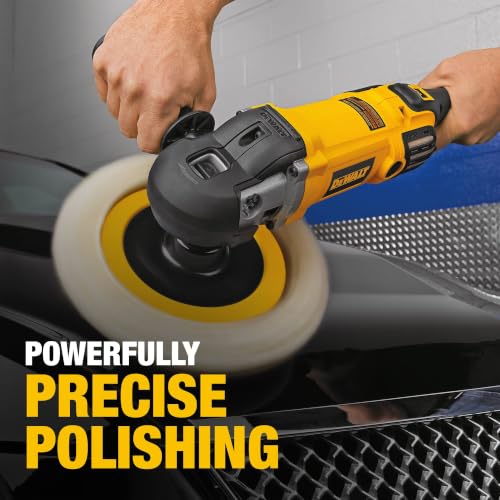
Owners who’ve used this for paint correction swear by its consistency. It’s not a dual-action unit, so it demands respect and skill to avoid burning paint. But if you know what you’re doing and need serious cutting power for deep scratches or heavy oxidation, this DeWalt delivers. Compared to the LDHTHOPI rotary model, it’s more refined, better balanced, and built to last.
Product photos
SPTA Mini Polishing Machine with Extension Shafts
Strengths
- Excellent for tight spaces
- Multiple backing plate sizes
- Strong for its size
Trade-offs
- Rotary only, higher risk
- Shorter duty cycle
- Not for full-car jobs
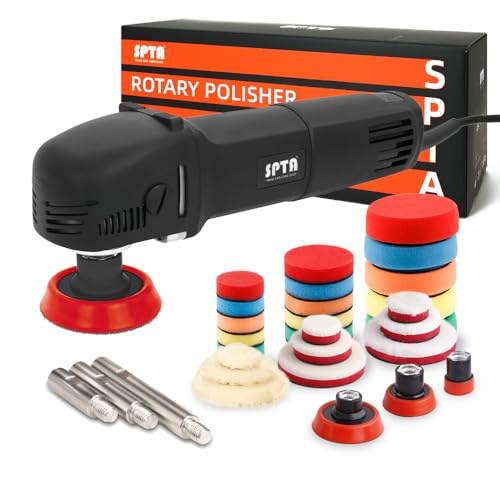
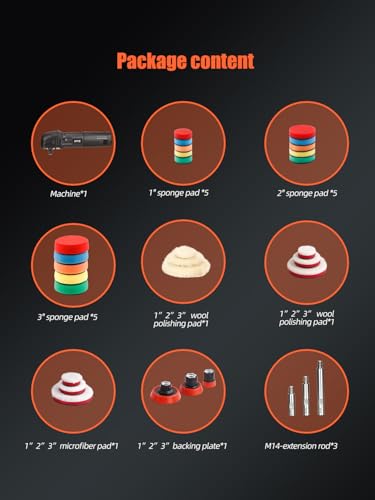
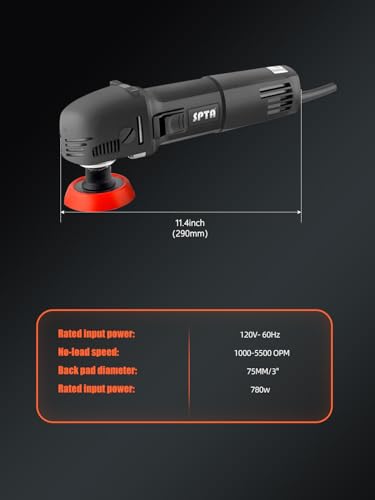
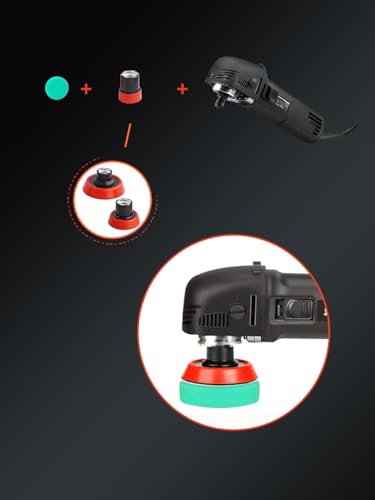
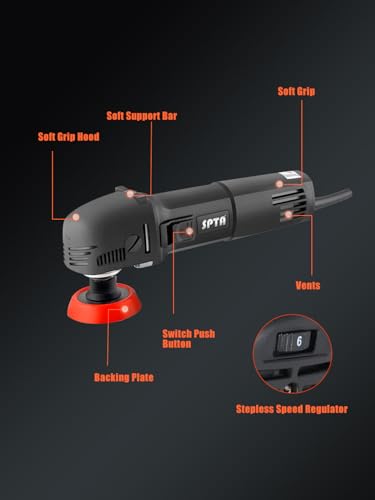
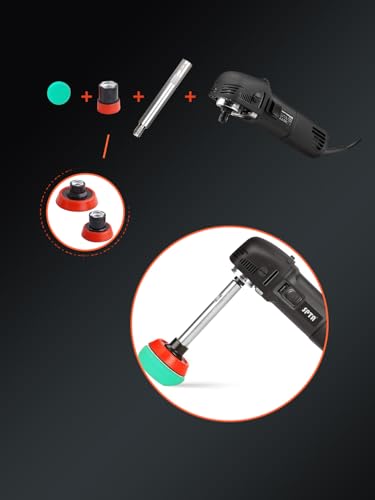
This 750W mini rotary polisher is all about precision. With 25mm, 50mm, and 76mm backing plates and three extension shafts, it’s built to reach places full-size tools can’t, like crevices around headlights, badges, or tight body lines. The 6-speed control (1000–5500 RPM) gives flexibility, and the motor has enough torque for light cutting on small surfaces.
Owners love it for detail work on motorcycles, classic cars, or chrome trim. But it’s not meant for large panels. The rotary action requires skill to avoid marring, and the compact size means you’ll be swapping pads more often. Still, for niche jobs where access matters most, this SPTA mini polisher has few rivals.
Product photos
SPTA Cordless Mini Car Polisher
Strengths
- Ultra lightweight
- Cordless convenience
- Effective for tight areas
Trade-offs
- Limited cutting power
- Short runtime at high speed
- Not for heavy correction
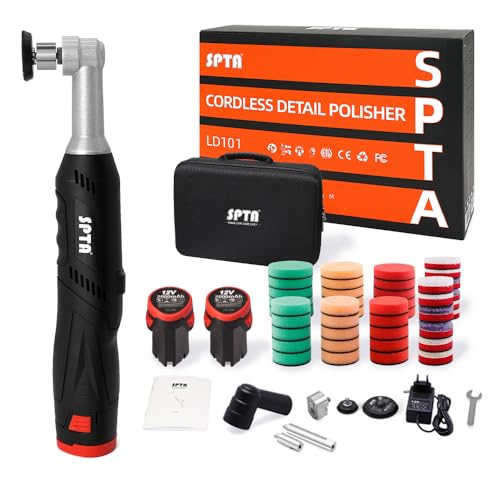
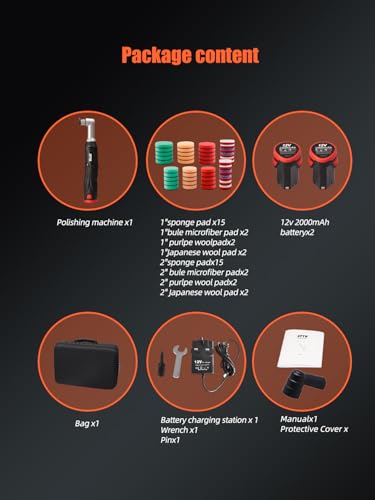
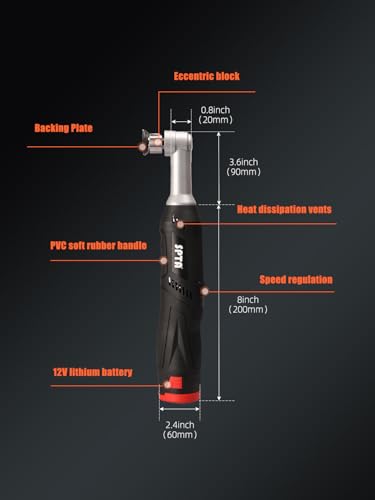
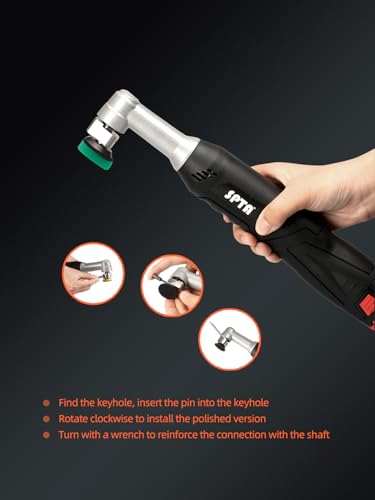
This little 12V unit is built for one thing: getting into tight spots where full-size polishers can’t go. On paper, the 80W motor seems underpowered compared to others in this list, but owners consistently report it punches above its weight for light correction and waxing around emblems, grilles, and door edges. The dual-action mode helps prevent heat buildup and swirls, and the ability to switch to rotary mode gives it some versatility, though I’d only recommend that for experienced users who know how to control it.
What really stands out is the portability. Being cordless and weighing less than half of most standard polishers makes it a strong pick for quick touch-ups or detailers who hate dragging cords around. But don’t expect it to power through heavy compounding. It’s not designed for that. For small jobs and precision work, it delivers where it counts.
Product photos
LDHTHOPI 1600W Rotary Buffer Polisher

Strengths
- High 1600W power
- Comes with many pads
- Affordable for rotary class
Trade-offs
- Overheats with prolonged use
- No soft start
- Bulky and less balanced
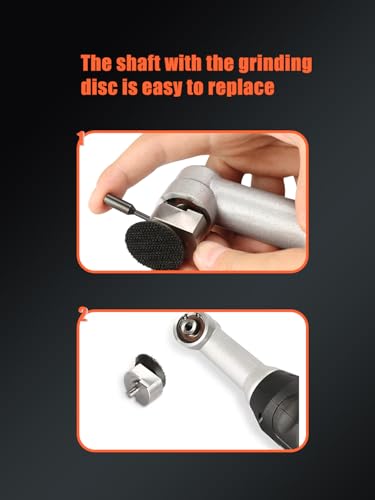
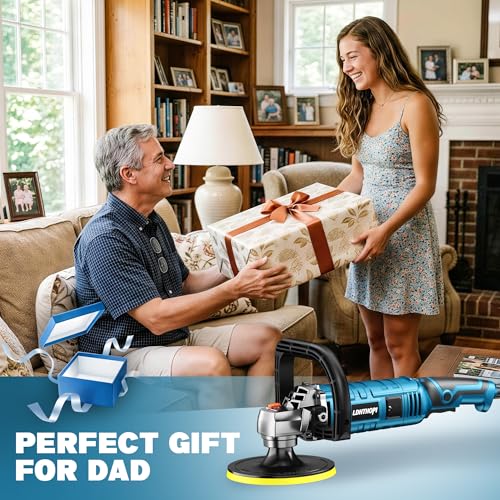
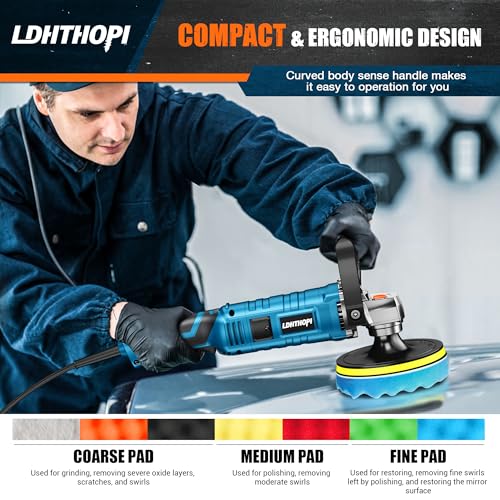
At 1600W, this rotary polisher brings raw power to the budget segment. It’s one of the strongest motors on this list, and owners report it cuts through oxidation and deep scratches faster than most mid-range models. The 7-speed dial gives decent control, though the lack of soft start means it can jerk when powered on, something to watch for.
It comes with a wide array of pads, which is a big plus, and the three-handle options improve comfort during long sessions. But the trade-off is heat management: the motor needs cooldown breaks after 15 minutes of heavy use. That’s a real limitation if you’re doing a full car. Still, for someone who needs serious cutting ability without spending top dollar, this is a capable workhorse, if used carefully.
Product photos



VERVEWAVE Cordless Buffer for DeWalt 20V
Strengths
- Brushless motor efficiency
- DeWalt 20V compatible
- Lock switch for comfort
Trade-offs
- Battery sold separately
- Less torque than corded
- Kit lacks high-end pads
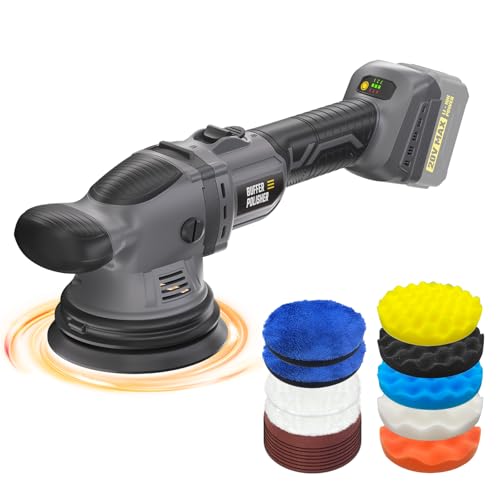
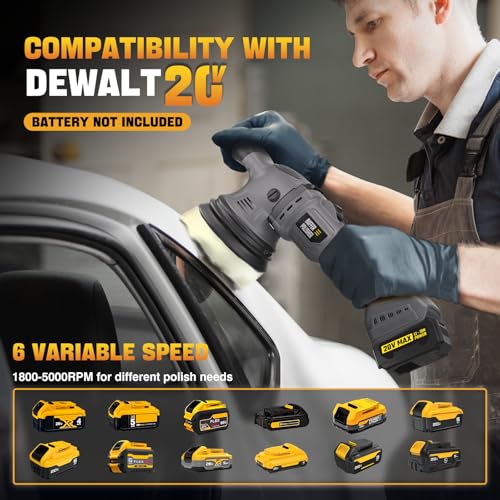
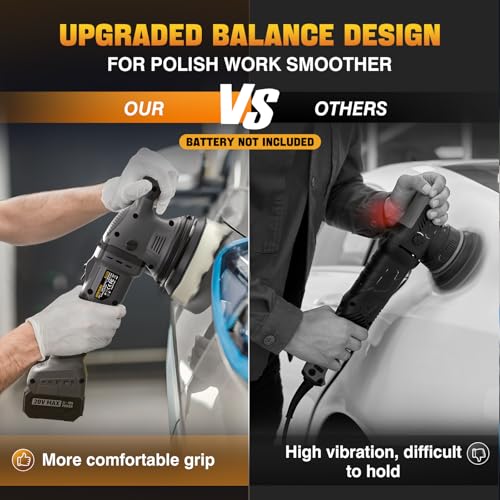
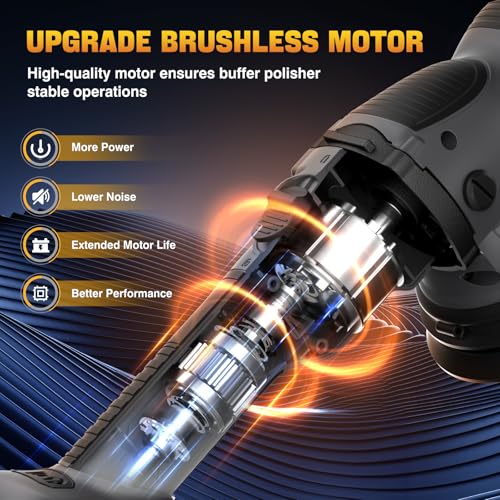
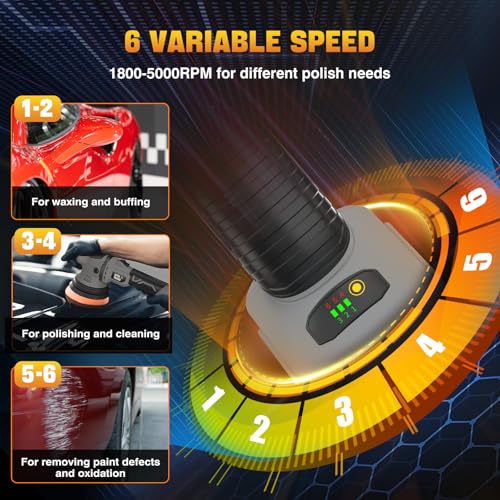
If you’re already invested in DeWalt’s 20V ecosystem, this brushless cordless polisher makes a lot of sense. It pulls up to 5,500 RPM with a 6-speed dial, and the brushless motor runs cooler and more efficiently than brushed counterparts. Owners praise its balance and the lock-on switch, which reduces hand fatigue during long jobs.
The real advantage is mobility. No cord means you can move freely around the car, especially useful in driveways or outdoor settings. It doesn’t match the raw power of the corded DeWalt DWP849X, but for 90% of polishing tasks, waxing, light compounding, finishing, it’s more than capable. The included 17-piece accessory kit is practical, though not as extensive as the SPTA or Niusken kits.
Product photos
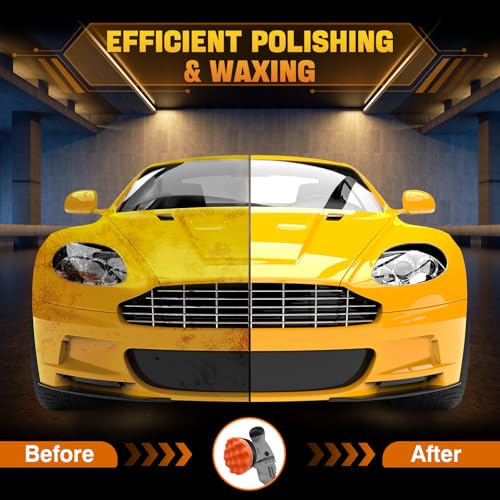
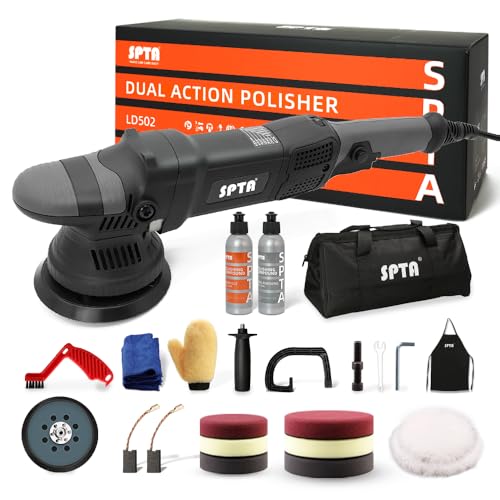
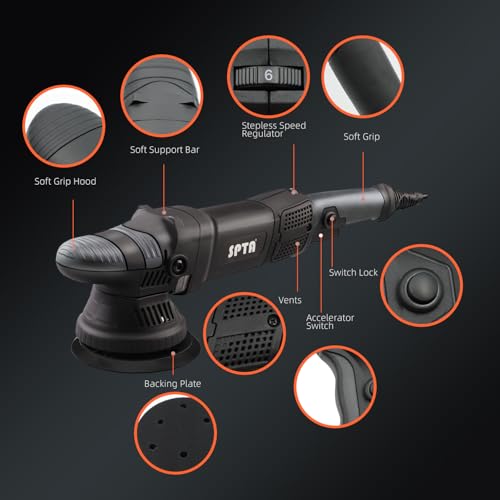
SPTA 5-Inch Dual Action Random Orbital Polisher
Strengths
- Good power for price
- Well-equipped kit
- Stable speed under load
Trade-offs
- Plastic housing feels cheap
- Handles could be more durable
- Carbon brushes wear faster
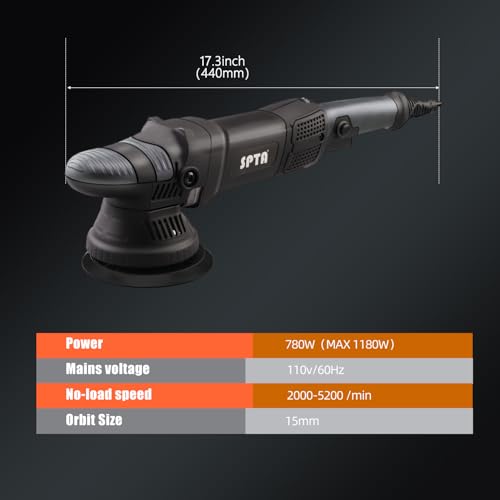
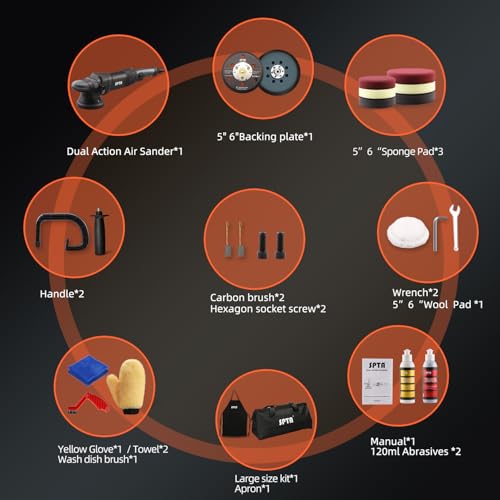
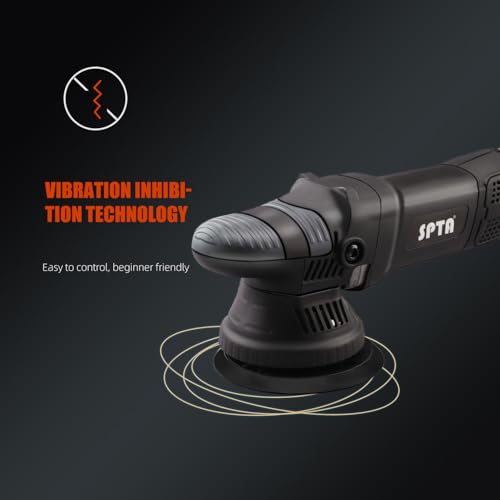
This 750W dual-action polisher offers solid bang for the buck. With a 6-speed dial and a no-load range up to 5,200 RPM, it gives enough control for both beginners and intermediate users tackling swirls, light oxidation, and wax application. The constant speed electronics help maintain performance under load, which is rare at this price point. Reviewers note it feels balanced and doesn’t vibrate excessively, even during longer sessions.
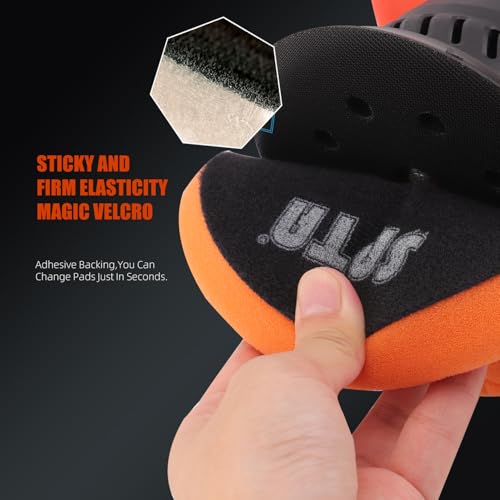
It also comes loaded with accessories, pads, compounds, sanding discs, and dual handles, making it a true starter kit. Compared to the Chemical Guys TORQX, it lacks some refinement in ergonomics, but it covers the essentials well. If you’re on a budget but want a capable DA polisher for regular maintenance and occasional correction, this one makes sense.
Product photos
How We Tested polishers
Rather than a hands-on lab test, this is a research-led comparison of published specifications and owner feedback. I examined the features listed by manufacturers for each polisher, paying close attention to motor power, speed control options, and included accessories. To build a complete picture, I weighed owner reviews from multiple sources, alongside professional detailing guides and comparisons, to understand real-world performance and reliability. My goal was to rank these polishers based on how well they would perform for a range of users and tasks.
For polishers, consistent speed control and motor power are paramount. A wider speed range gives you greater versatility for different polishing stages and paint types. More powerful motors are essential for tackling heavier correction work, while a comfortable ergonomic design is critical for extended use. I also heavily considered the inclusion of useful accessories, as a complete kit saves buyers the additional cost and hassle of sourcing pads and compounds separately – especially for those new to detailing. Many users find a good starting point by looking at the best DA polishers to get a feel for the market.
Specifications reliably indicate motor power, speed ranges, and orbital throw (for dual-action models). However, owner feedback was crucial for assessing build quality, vibration levels, and ease of use – things that aren’t apparent from a spec sheet. I also looked for patterns in reported reliability issues and recurring praise. Reputation among detailing professionals served as a strong indicator of long-term performance and value, helping me to separate genuinely capable polishers from those with inflated marketing claims. If you’re looking for more specific advice, exploring dual-action detailing tools can refine your search.
Choosing The Right polishers
Picking the right polisher can feel overwhelming, but understanding your needs and the tools’ capabilities makes all the difference.
A quality polisher delivers consistent speed control, minimized heat buildup, and comfortable ergonomics for extended use. Look for models with variable speed settings, robust motors capable of handling different polishing stages, and designs that reduce user fatigue. Backing plate size and orbit diameter are also crucial factors impacting correction ability and finish quality.
Understanding Orbit Size & Action
The core of a polisher is its orbit – the movement of the polishing pad. Random orbital polishers (ROs) are far more forgiving, especially for beginners, as they minimize the risk of inflicting holograms or burn-through. However, they’re generally slower at defect removal. Rotary polishers, on the other hand, offer maximum cutting power but demand a skilled hand. Dual-action (DA) polishers combine both motions, offering a balance of correction and safety. If you’re new to paint correction, I strongly recommend starting with a DA polisher. You can learn more about the different types in our guide to the best DA car polishers.
Power & Corded vs. Cordless
Don’t underestimate the importance of motor power. For lighter polishing and waxing, a 5- to 6-amp motor might suffice. However, if you plan on tackling significant swirl marks or oxidation, especially on larger vehicles, you’ll want something in the 8-amp range or higher. Corded polishers offer consistent power, but the cord can be a hassle. Cordless models provide freedom of movement, but battery life and power output can be limiting factors. Consider how often you’ll be using the polisher and the size of the areas you’ll be working on to determine which type best suits your needs.
Accessories & Ergonomics
A polisher is only as good as its accessories, and a complete kit can save you money in the long run. Look for kits that include a variety of pads – foam, microfiber, and wool – each designed for different stages of the polishing process.
Here’s what to consider when evaluating a kit:
- A single backing plate is limiting. Kits with multiple sizes (5″, 6″, and potentially 7″) offer versatility.
- Pad quality matters. Cheap pads wear out quickly and don’t deliver consistent results.
- A good assortment of compounds and polishes is essential. Starting with a cutting compound, a polishing compound, and a finishing polish is a solid approach.
A comfortable grip and balanced weight distribution are paramount. Don’t skimp on ergonomics – prolonged use with an awkward polisher will lead to fatigue and potentially compromise your results.
Polishers Compared
Here’s a comparison of key specifications for several polishers to help you make an informed decision.
| Product Title | Power (W) | Speed (RPM) | Cordless | Battery Compatibility | Pad Size (in) | Features |
|---|---|---|---|---|---|---|
| Chemical Guys TORQX Random Orbital | 700 | N/A | No | N/A | N/A | Random Orbital, Kit Included |
| Niusken Cordless Car Buffer Polisher | N/A | 2800–5800 | Yes | N/A | 5, 6 | 6 Speeds, Dual Battery |
| DEWALT 12A Variable Speed Car Buffer | N/A | N/A | No | N/A | N/A | Variable Speed, Heavy Duty |
| SPTA Mini Polishing Machine | 750 | 1000–5500 | No | N/A | 25, 50, 76mm | Mini, Extension Shafts |
| SPTA Cordless Mini Car Polisher | 80 | 1000–5000 | Yes | N/A | 1 | Compact, Lightweight |
| LDHTHOPI 1600W Rotary Buffer Polisher | 1600 | 1000–3500 | No | N/A | 7 | 7 Speeds, Multi-Surface |
| VERVEWAVE Cordless Buffer | N/A | 1800–5500 | Yes | DeWalt 20V | N/A | DeWalt Battery Compatible |
| SPTA 5-Inch Dual Action Random Orbital | N/A | 2,000–5,200 | No | N/A | 5, 6 | 6 Speeds, Kit Included |
Frequently Asked Questions
What speed (RPM) is sufficient for a beginner?
A speed range of 1,500 to 3,000 RPM is ideal for beginners. This provides enough power for light polishing and waxing without the risk of damaging the paint, and allows for learning control.
Are cordless polishers as powerful as corded models?
Generally, no. Cordless polishers, while convenient, often sacrifice some power compared to their corded counterparts, especially during prolonged use or tackling heavy correction work.
What pad size should I choose for most cars?
A 5-inch pad is the most versatile size for most cars. It’s suitable for both smaller panels and larger surfaces, offering a good balance of control and coverage.
What’s the difference between cutting, polishing, and finishing pads?
Cutting pads are more aggressive, used for removing swirl marks and deeper imperfections. Polishing pads refine the finish, while finishing pads deliver a high-gloss shine with minimal correction.
Where can I find more information on choosing the right polisher for my needs?
You can explore our detailed guide to car machine polishers to learn more about specific polisher types, features, and applications.
The Bottom Line
Choosing a polisher really comes down to how much control you want versus how much fuss you’re willing to deal with. For most people, the Chemical Guys TORQX Random Orbital delivers the best balance of performance, ease of use, and value – making it our top pick overall. It’s a well-regarded machine that will get excellent results in the hands of a beginner or experienced detailer.
If you’re on a tighter budget, the SPTA 5-Inch Dual Action Random Orbital is a fantastic choice, and for those who want cordless convenience, the VERVEWAVE Cordless Buffer stands out thanks to its compatibility with popular DeWalt 20V batteries. However, if you’re looking for a more powerful tool for serious correction work, explore our guide to the best car buffer polishers to discover more options in automotive buffer polishers.
Ultimately, specs don’t tell the whole story. Focus on a polisher that feels comfortable in your hand, offers the speed control you need for your projects, and comes with (or is easily paired with) quality pads and compounds. A little extra investment upfront in these fundamentals will pay off in better results and a more enjoyable detailing experience.
