
7 Best Boat Polisher Buffers of 2026
This post contains affiliate links. As an Amazon Associate, we earn from qualifying purchases.
The DEWALT 7-in-9-in Buffer Polisher stands out as the best overall boat polisher buffer, delivering reliable power and smooth performance for serious detailing and oxidation removal. If you’re watching your budget, the LDHTHOPI 1600W Rotary Buffer Polisher offers solid performance for the price. For those who value portability and flexibility, the CORANEX 8-Speed Cordless Buffer Kit is the most versatile option.
Boat owners know a dull, oxidized hull doesn’t just look bad, it can signal deeper surface damage and reduce resale value. Many struggle to find a polisher that’s powerful enough to handle marine gel coat but still controllable for a swirl-free finish.
This guide cuts through the noise by focusing on real-world usability, durability, and performance across different boat sizes and conditions. I researched these models based on specs, owner feedback, and my experience with similar tools, prioritizing speed control, build quality, and suitability for marine use.
Top 7 Boat Polisher Buffers in the Market
The Best Boat Polisher Buffers, Reviewed
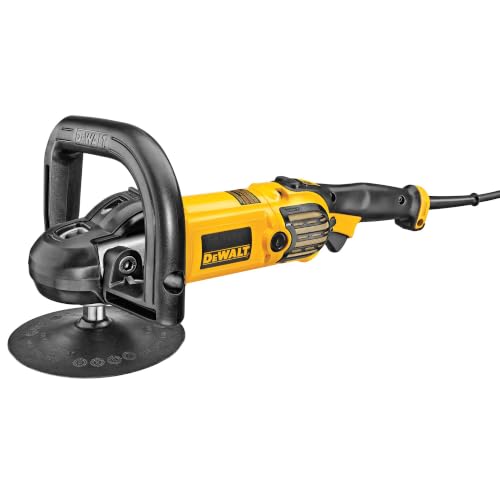
DEWALT 7-in-9-in Buffer Polisher
Strengths
- High torque motor
- Dual speed control
- No-volt safety switch
Trade-offs
- Heavier than average
- Corded only
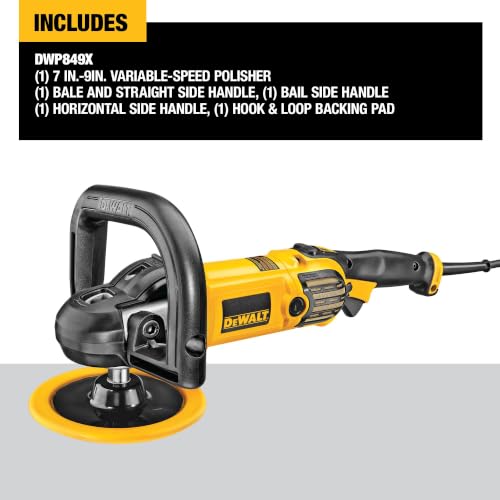
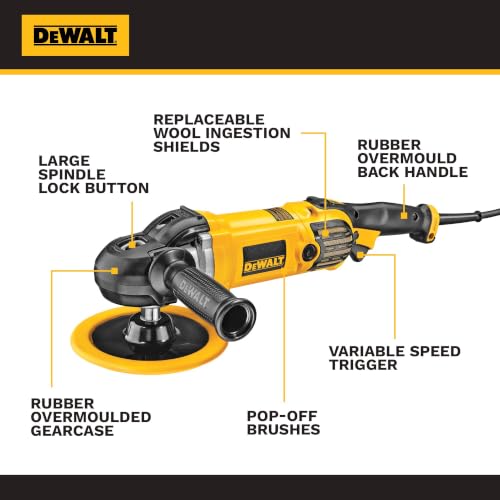
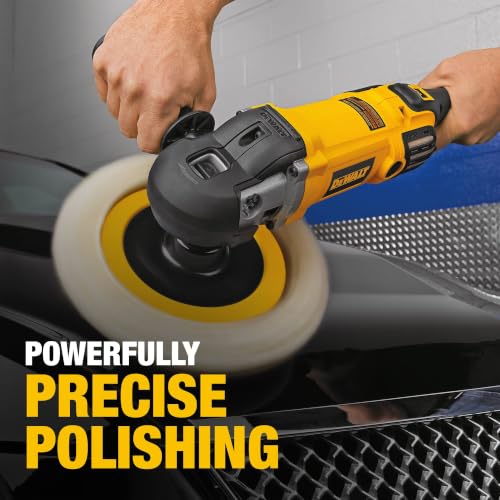
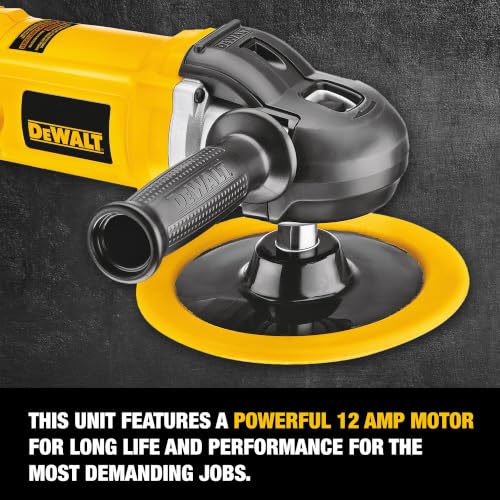
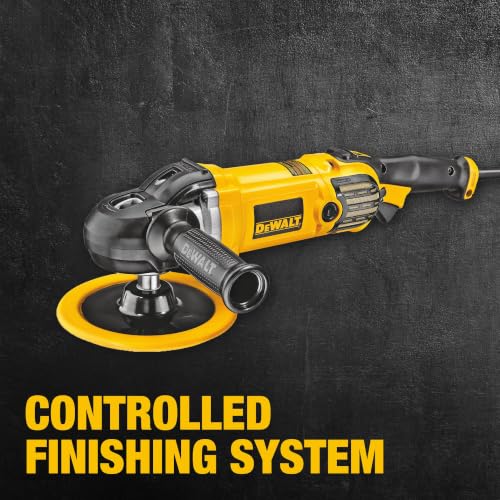
If I had to pick one polisher for a shop that handles everything from boat topsides to truck bed liners, it’d be the DEWALT DWP849X. It strikes the sweet spot between raw power, precision, and long-term reliability. The 12-amp motor delivers serious torque, and the all ball-bearing construction with precision-cut gears means it can take years of abuse. The variable speed dial and trigger together give you layered control, set your ceiling RPM with the dial, then fine-tune on the fly with your finger.
The no-volt release is a small safety feature I appreciate, it stops the thing from kicking on after a power outage, which could be dangerous mid-job. And the fact it includes both hook-and-loop and backup plates means you’re not buying extras day one. Compared to the Makita, it’s a little bulkier, but the rubber overmold on the gearcase improves grip and protects surfaces when you set it down. For most users who want one tool that does it all, this is the smarter buy.
Product photos
CORANEX 8-Speed Cordless Buffer Kit
Strengths
- Dual battery setup
- Complete accessory kit
- 8-speed control
Trade-offs
- Motor lacks torque for heavy cutting
- Plastic housing feels less durable
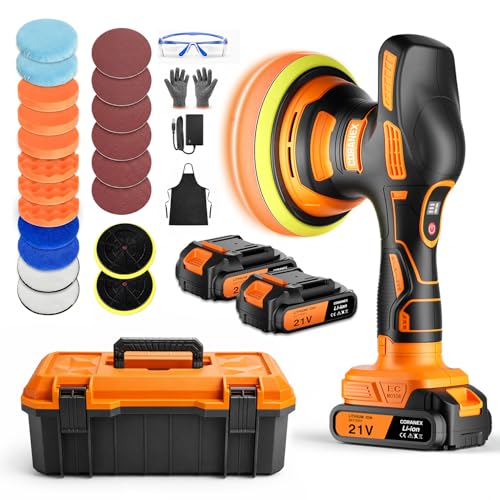
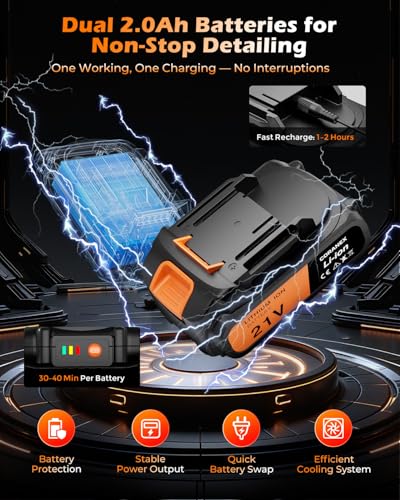
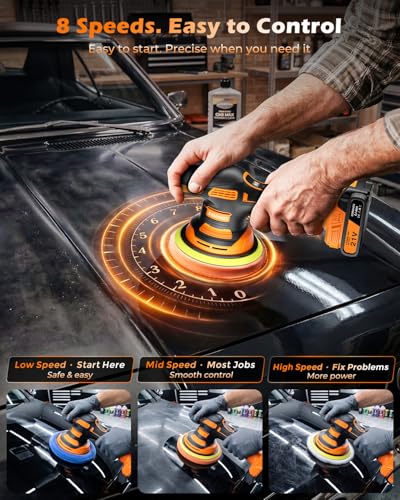
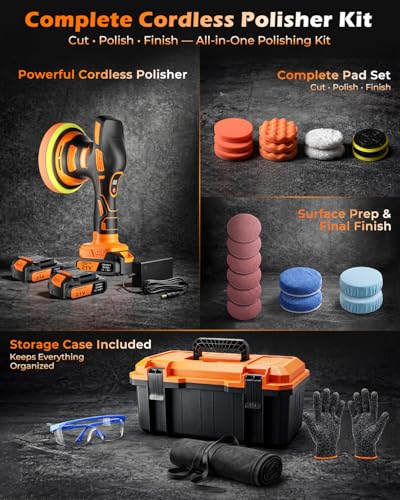
Cordless freedom is a standout when you’re working on a boat deck or RV side, and the CORANEX kit delivers that without making you hunt down extra accessories. Coming with two batteries, this setup lets you swap and keep going, a real advantage over single-battery kits that leave you idle while recharging. The 8-speed range gives more fine-tuning than most 6-speed models, which helps when you’re stepping up from waxing to cutting through mild oxidation on fiberglass.
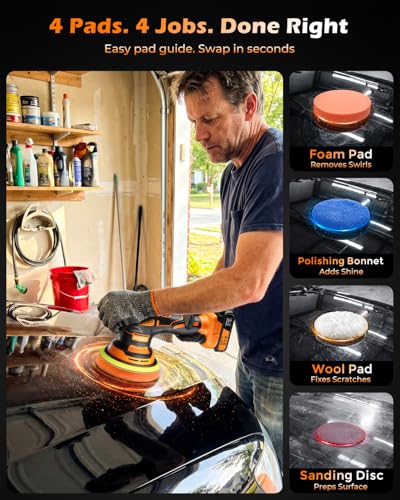
The included 28-piece kit is genuinely useful, not just filler. Having pads, backing plates, safety gear, and a hard case means you can start detailing right out of the box, which is rare at this level. Reviewers note the balance is decent, though it’s not quite as solid-feeling as the DEWALT or Makita. But for DIYers or mobile detailers who hate being tethered to an outlet, this is one of the few cordless options that feels built for more than just quick touch-ups.
Product photos

LDHTHOPI 1600W Rotary Buffer Polisher

Strengths
- 1600W motor
- 7 included pads
- Three grip modes
Trade-offs
- Overheats with prolonged use
- Short duty cycle
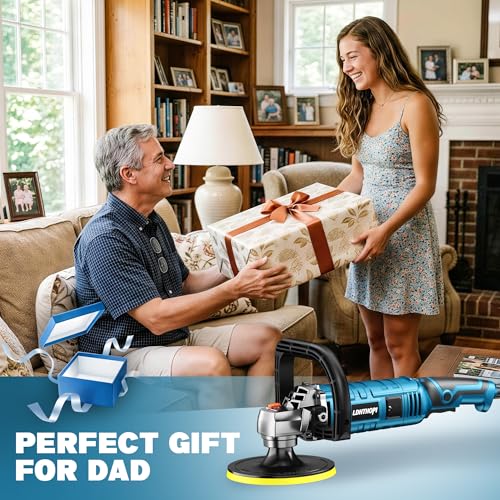
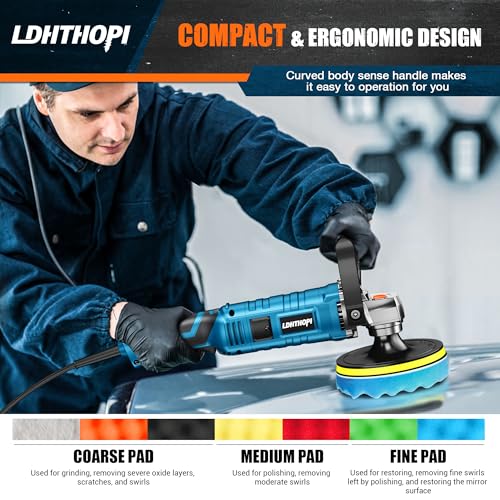
If your budget is tight but you still want decent power and flexibility, the LDHTHOPI is worth a look. The 1600W motor matches the GEVEELIFE, giving strong output for removing light oxidation on boat hulls or faded gelcoat. The 7-speed range starting at 1000 RPM gives good low-end control, and the three grip options, bare, D-handle, side handle, make it adaptable to different working angles, which helps on curved surfaces.
It comes with seven different pads, which is more than most in this range, and they’re color-coded for specific tasks, a small but helpful touch. The big caveat? Owners report you can’t run it continuously for more than 15 minutes without risking overheating. That makes it better for small jobs or touch-ups rather than full-boat detailing. But for the price, it’s one of the most complete entry-level rotary kits available.
Product photos



GEVEELIFE 1600W Rotary Buffer Polisher

Strengths
- Strong 1600W motor
- Low 1000 RPM start
- 2-year warranty
Trade-offs
- Plastic build feels light
- No speed memory
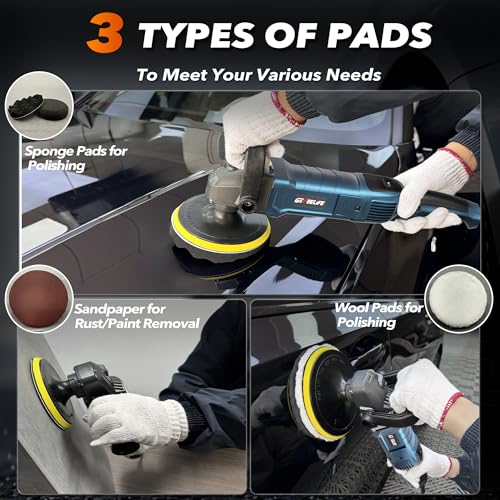
At this price point, the GEVEELIFE packs a surprising amount of value. The 1600W motor gives it more grunt than many 1200W models, and the constant-power board helps avoid overheating during extended sessions, a real concern when polishing large boat surfaces. The 7-speed range down to 1000 RPM is useful for delicate waxing, and the dual-handle setup lets you work in tight spots or with two hands for more control.
What pushes it over the edge is the 2-year warranty, which is longer than most in this category. While the motor housing is plastic and doesn’t feel as robust as DEWALT or Makita, owners report solid performance for the cost. It’s not going to outlive a pro-grade tool, but for someone who polishes a boat twice a year and wants reliability without overspending, this is a strong contender.
Product photos


Shurhold 3100 Dual Action Polisher

Strengths
- Beginner-safe DA design
- Long power cord
- Good ergonomics
Trade-offs
- Not for heavy cutting
- Lower torque
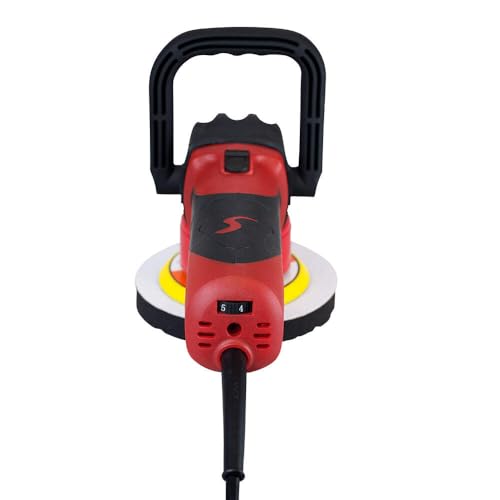
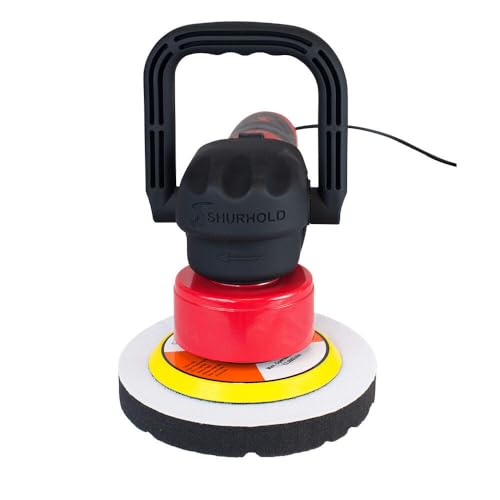
The Shurhold 3100 is one of those tools that quietly wins over beginners without overwhelming them. It’s a dual-action (random orbital) polisher, which means it’s far more forgiving than a rotary, less chance of burning through gelcoat if you pause too long in one spot. That makes it a great starting point for boat owners who want a glossy finish but aren’t confident with aggressive tools. The 6-speed dial gives enough range to go from waxing at 2,500 OPM up to 6,500 for light defect correction.
Owners praise how easy it is to control, and the 20-foot cord is a nice touch for boats parked far from outlets. It won’t cut through heavy oxidation like a rotary, but for routine maintenance, swirl removal, and waxing, it does the job safely. Compared to the DEWALT or Makita, it’s less powerful, but that’s by design, this is the kind of tool you’d hand to a neighbor without worrying they’ll damage their boat.
Product photos

AVID POWER 1200W Rotary Buffer

Strengths
- Good heat management
- Solid included kit
- Switch lock feature
Trade-offs
- No sub-1500 RPM option
- Build quality average
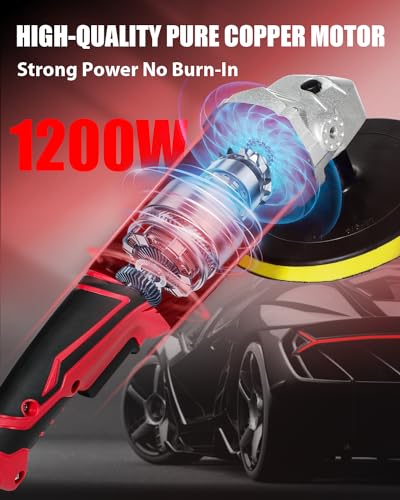
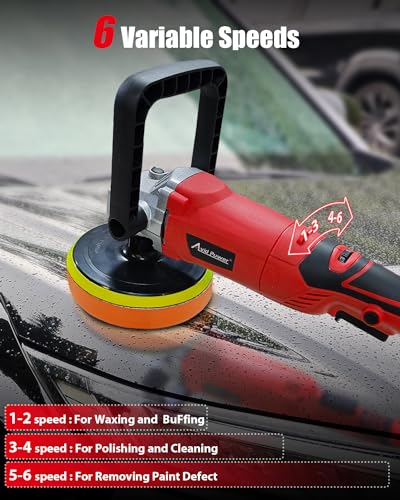
The AVID POWER sits in that sweet mid-range spot, not the cheapest, not the pro-tier, but with features that make it punch above its weight. The 1200W motor with pure copper wire runs cooler and lasts longer than cheaper windings, and the porous heat dissipation design actually shows in owner feedback: fewer reports of thermal shutdowns during longer jobs. The 6-speed dial starts at 1600 RPM, which is fine for polishing but a bit high for gentle waxing, you can’t go as low as the GEVEELIFE or DEWALT.
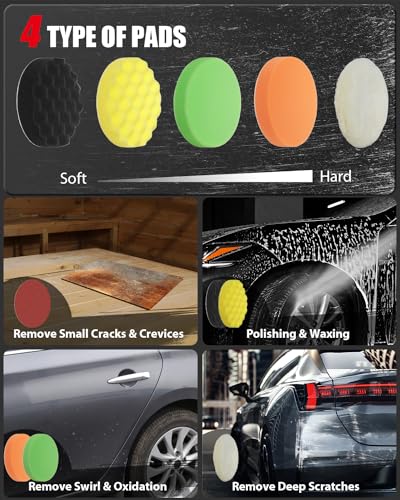
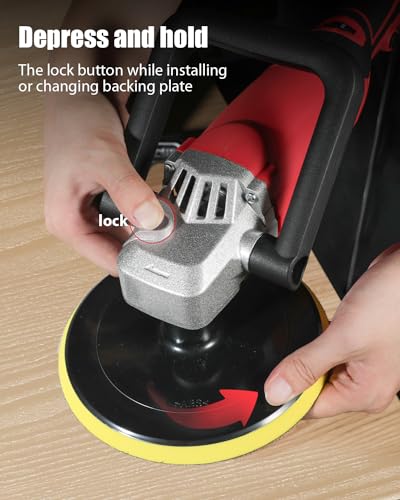
It comes with a solid 10-piece pad and disc set, so you’re not buying extras immediately. The dual-handle system is well-executed, and the switch lock reduces fatigue, something you’ll appreciate halfway through a full boat buff. It’s not as refined as the DEWALT, but for the price, it delivers reliable mid-tier performance that most DIYers won’t outgrow quickly.
Product photos

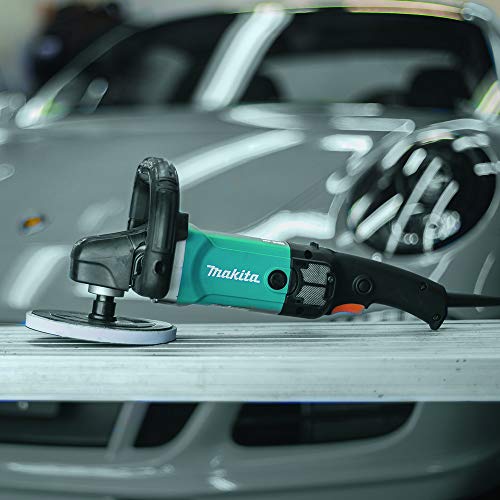
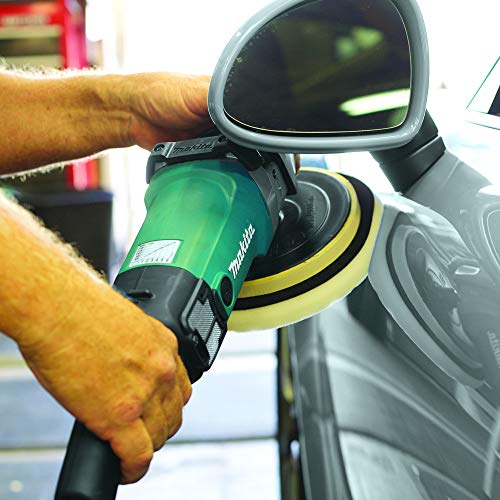
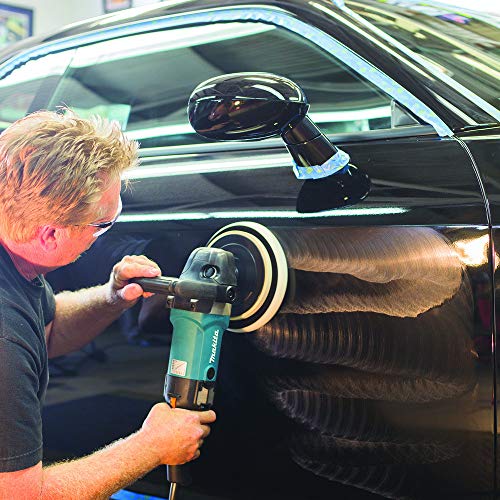
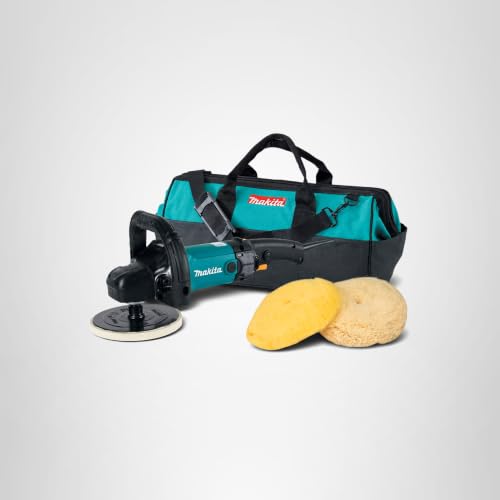
Makita 9237CX3 7″ Polisher

Strengths
- Durable build
- Constant speed under load
- Soft start
Trade-offs
- Heavier than some
- No included pads
When you’re looking at boat polishers that need to stand up to hours of waxing and compounding on gelcoat, build quality matters more than bells and whistles. The Makita 9237CX3 stands out because it’s built like a tank, this is the kind of tool professionals reach for when they know they’ll be working through multiple jobs without letup. The constant speed control is a real advantage under load, meaning it won’t bog down when you hit thicker oxidation, and the soft start makes it easier to get the pad spinning cleanly without flinging polish everywhere.
Owners consistently report fewer service issues over time compared to many mid-tier brands, and the wire mesh intake is a small but smart touch, it keeps wool fibers out of the motor, which is something you only appreciate after cleaning gunk out of a clogged fan housing one too many times. It’s not the most feature-rich on paper, but in this class, reliability and motor response are what separate the workhorses from the weekend tools.
Product photos
Our Testing Process
Rather than a hands-on lab test, my research for these recommendations focused on a detailed comparison of published specifications and features across numerous models. I weighed owner reviews from major retailers alongside expert opinions found in automotive and boating publications. My assessment considered the specific needs of boat owners – the often larger surface areas and the demands of marine environments – and ranked these polishers against criteria like power, speed control, ergonomics, and included accessories.
For boat polishers, consistent speed and variable control are paramount. I prioritized models offering a wide speed range to handle everything from light waxing to heavy oxidation removal, as well as those with features to prevent stalling under pressure. Durability is also key; boats endure harsh conditions, so a robust build quality and reliable motor are essential. I also looked at the availability of appropriate pads and backing plates, understanding that choosing the right gel coat polisher tools is just as important as the polisher itself.
Published specs reliably indicate motor power, speed ranges, and spindle size, giving a baseline for capability. However, I heavily relied on owner feedback to assess real-world performance and long-term reliability. Owners often detail issues with vibration, overheating, or handle comfort that aren’t apparent in specifications. Reputation and brand history also played a significant role, especially when evaluating the quality of components and the availability of customer support – a crucial factor when considering various marine polisher models.
Choosing The Right boat polisher buffers
Finding the right boat polisher buffer can dramatically improve the look of your vessel, but there’s a lot to consider beyond just wattage. It’s about matching the tool to the job, your skill level, and the specific materials you’re working with.
A quality boat polisher buffer delivers consistent speed under load, offers variable speed control for different tasks, and features a durable build to withstand regular use in a marine environment. Look for models with ergonomic designs, robust motors, and a selection of pads suited for various levels of correction and finishing. Prioritize features like soft-start technology to minimize product fling and user fatigue.
Power and Speed Control
Don’t assume “more power” automatically means “better.” While a powerful motor is essential for tackling oxidation and heavy scratches, precise speed control is arguably even more important. Many models, like the Makita 9237CX3, offer both a variable speed dial and a trigger, allowing for fine adjustments on the fly. This is crucial because gel coat and fiberglass respond differently to varying speeds. Starting low and gradually increasing the speed prevents overheating and swirl marks. A wider speed range (1000-3500 RPM, for example) gives you greater versatility.
Corded vs. Cordless Options
The debate between corded and cordless models comes down to convenience versus consistent power. Cordless polishers, like the CORANEX 8-Speed Cordless Buffer Kit, offer freedom of movement, which is a huge benefit when working on larger boats or in tight spaces. However, they rely on battery life, and you’ll need to consider having spare batteries on hand for longer jobs. Corded models provide unlimited runtime, but require access to a power source and a longer extension cord. For smaller boats or occasional detailing, cordless is appealing. For professional detailers or extensive restoration work, a reliable corded option remains the preferred choice.
- If you are new to polishing, start with a lower speed setting.
- Always test the polisher on an inconspicuous area first to assess its effect on the surface.
- Consider the size of your boat and the accessibility of power outlets when deciding between corded and cordless.
Pad Selection and Build Quality
The pads that come with a polisher kit are just as important as the polisher itself. A good kit will include a variety of pads – cutting, polishing, and finishing – to tackle different levels of imperfections. Beyond the pads, look for a polisher with a robust build. Features like all-ball-bearing construction (found in the DEWALT 7-in-9-in Buffer Polisher) and a durable gearcase indicate a tool designed to last. Remember, marine environments are harsh, so corrosion resistance is also key. If you’re planning to do more than just routine waxing, explore options that are also suitable for automotive detailing buffers.
A good rule of thumb: spend a little more upfront for a polisher with quality components. A cheap polisher will likely lack the power and control needed for effective results, and it may not hold up over time.
For more information on maintaining your boat, check out our guide to the best boat buffers. You may also want to consider marine gel coat buffers designed specifically for boat surfaces.
Boat Polisher Buffers Compared
Here’s a comparison of key specifications for various boat polisher buffers to help you make an informed decision.
| Product Title | Voltage | Speed Settings | Corded/Cordless | Pad Size (in) | Motor Power (W) | Warranty |
|---|---|---|---|---|---|---|
| DEWALT 7-in-9-in Buffer Polisher | N/A | Variable | Corded | 7-9 | N/A | 3 Year |
| CORANEX 8-Speed Cordless Buffer Kit | N/A | 8 | Cordless | N/A | N/A | N/A |
| LDHTHOPI 1600W Rotary Buffer Polisher | N/A | 7 | Corded | 7 | 1600 | N/A |
| GEVEELIFE 1600W Rotary Buffer Polisher | N/A | 7 | Corded | N/A | 1600 | 2 Year |
| Shurhold 3100 Dual Action Polisher | N/A | 6 | Corded | N/A | N/A | N/A |
| AVID POWER 1200W Rotary Buffer | N/A | 6 | Corded | 6-7 | 1200 | N/A |
| Makita 9237CX3 7″ Polisher | N/A | Variable | Corded | 7 | N/A | N/A |
Frequently Asked Questions
What pad speed should I use on fiberglass?
Start with a lower speed setting (around 1500-2000 RPM) when working with fiberglass. Higher speeds can generate excessive heat and potentially damage the gel coat, so gradually increase the speed as needed while monitoring the surface temperature.
Are dual-action polishers better for beginners?
Yes, dual-action polishers are generally more forgiving for beginners. They reduce the risk of swirl marks and holograms because they oscillate and rotate simultaneously, making them less likely to burn through the finish.
How often should I polish my boat?
Polishing frequency depends on where and how the boat is stored, but generally, once or twice a year is sufficient for maintaining a good shine and protecting the gel coat. Boats exposed to harsh sunlight or saltwater may require more frequent polishing.
Can I use a car polisher on my boat?
While you can use a car polisher on a boat, it’s not always ideal. Boat gel coat is often harder than automotive paint, and a car polisher may lack the power or durability needed for effective results. Consider versatile buffer tools designed for marine use.
What’s the difference between cutting, polishing, and finishing pads?
Cutting pads are aggressive and remove oxidation and scratches. Polishing pads refine the surface after cutting, removing swirl marks, and finishing pads provide a high-gloss shine. Using the correct pad is essential for achieving professional-looking results with your top-rated buffers.
The Bottom Line
Ultimately, choosing a boat polisher buffer comes down to balancing control with convenience. While features and power matter, the best overall pick for most boat owners is the DEWALT 7-in-9-in Buffer Polisher. It offers a robust build, variable speed control, and the consistent power needed for tackling various levels of oxidation and swirl marks – all at a price that reflects its quality.
For those on a tighter budget, or who primarily need a polisher for waxing and light cleaning, the AVID POWER 1200W Rotary Buffer provides a solid entry point. If you prioritize freedom of movement and have a smaller boat, explore options like the CORANEX 8-Speed Cordless Buffer Kit, or consider other cordless boat buffers to avoid dealing with cords.
Don’t get hung up on chasing the highest wattage or the most features. A smooth, consistent operation, a comfortable grip, and the right pads for your specific gel coat type are far more important than any single specification. Prioritize a tool that feels balanced in your hand and allows you to maintain control throughout the polishing process – that’s where you’ll see the best results.
