
9 Best Cordless Buffer Polishers for 2026
This post contains affiliate links. As an Amazon Associate, we earn from qualifying purchases.
The DEWALT 20V MAX XR Rotary Polisher stands out as the overall best cordless buffer polisher for its reliable power and build quality, especially if you’re already using DeWalt tools. For those on a tighter budget, the SundpeyPRO 6 Inch Random Orbital Polisher delivers strong performance and solid features at a lower price point.
Most people don’t realize how much the wrong buffer can turn a simple wax job into a frustrating mess, or worse, damage paint with uncontrolled speed and poor ergonomics. I’ve seen too many DIYers give up on detailing because their tool lacked consistency or ran out of juice halfway through.
This guide cuts through the noise by focusing on real-world usability, based on specs and what owners actually say. I looked at battery life, speed control, weight, and included accessories to find models that deliver results without the hassle.
Top 9 Cordless Buffer Polishers in the Market
The Best Cordless Buffer Polishers, Reviewed
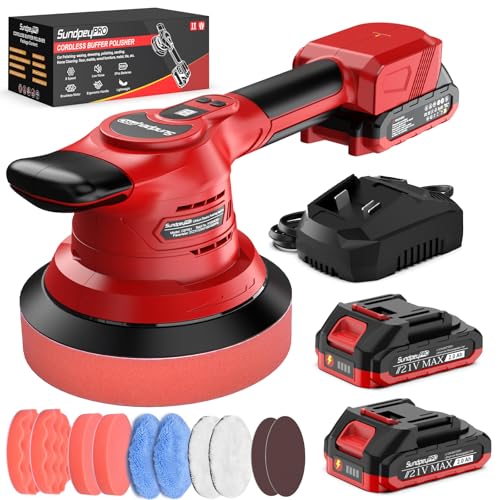
SundpeyPRO 6 Inch Random Orbital Polisher
Strengths
- Brushless motor
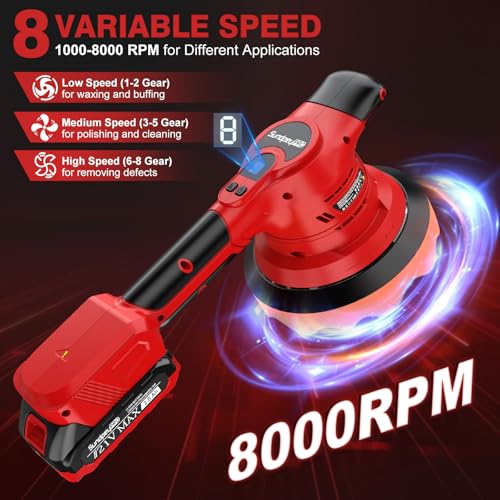
- 8000 RPM max
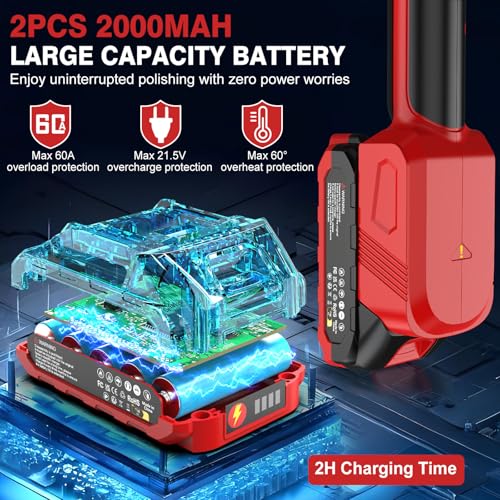
- Two 2.0Ah batteries
- Lightweight at 2.76 lbs
- 8 variable speeds
Trade-offs
- No side handle included
- Pad kit is basic
- No LED display
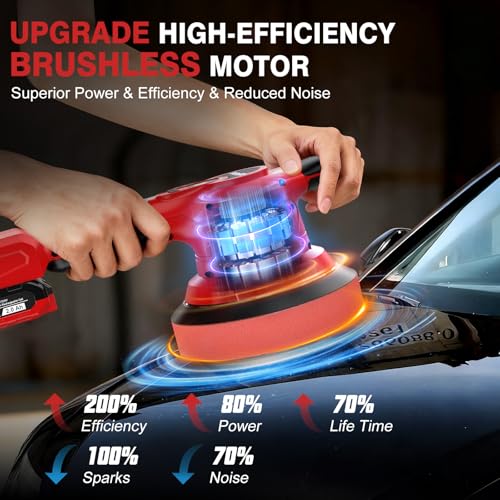
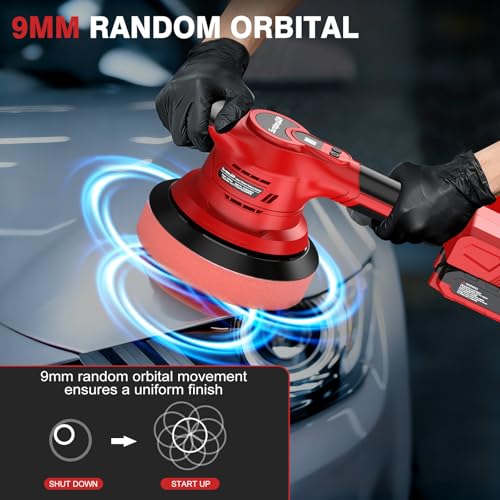
The SundpeyPRO stands out in the crowded cordless buffer market with a rare combination: a brushless motor, 8000 RPM max speed, and two included 21V 2.0Ah batteries, all at a price that doesn’t break the bank. On paper, this gives it a serious runtime and power edge over brushed-motor rivals, especially for users tackling full-car jobs. Owners consistently report strong performance on oxidation removal and swirl correction, with the 9mm orbital throw helping prevent paint damage even in less experienced hands. The 8-speed dial offers real flexibility, letting users dial in low speeds for waxing and ramp up for more aggressive polishing.
Where it really pulls ahead is in usability. At just 2.76 pounds, it’s one of the lightest 6-inch models available, and the ergonomic grip with vibration-dampening rubber makes long sessions far more manageable. The 10-piece pad kit covers most basic needs, though serious detailers will want to expand it. Compared to budget models like the Niusken, the brushless motor here means better efficiency and longevity, a big plus if you’re using it regularly.
Product photos

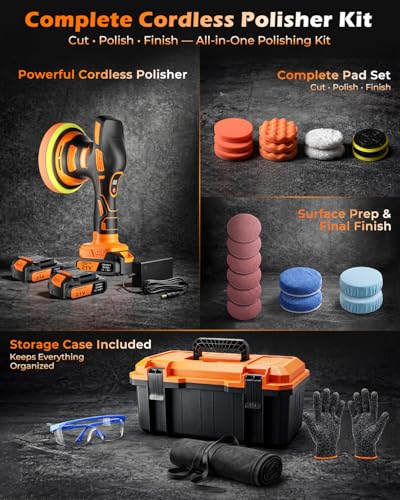
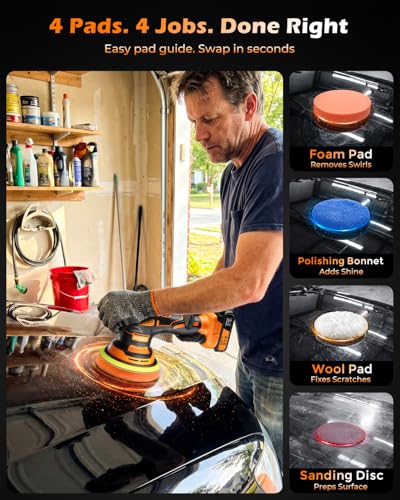
CORANEX 8-Speed Cordless Car Buffer Polisher Kit
Strengths
- 28-piece complete kit
- Hard carrying case included
- 8-speed control
- Balanced, easy to handle
- Beginner-friendly design
Trade-offs
- Brushed motor
- No LED display
- Accessories are functional but not premium
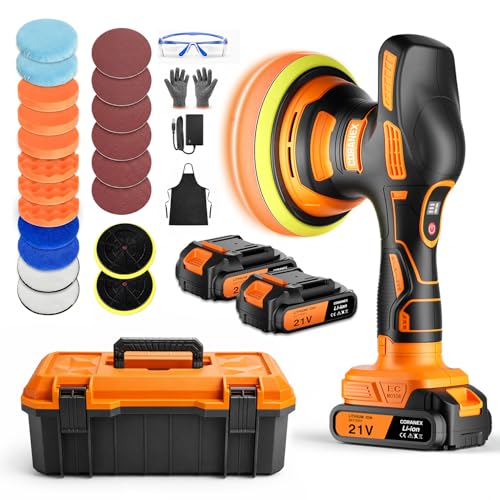
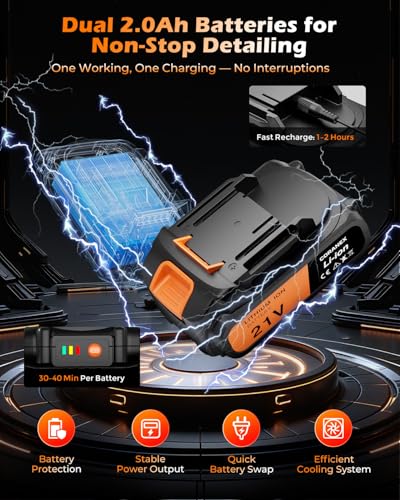
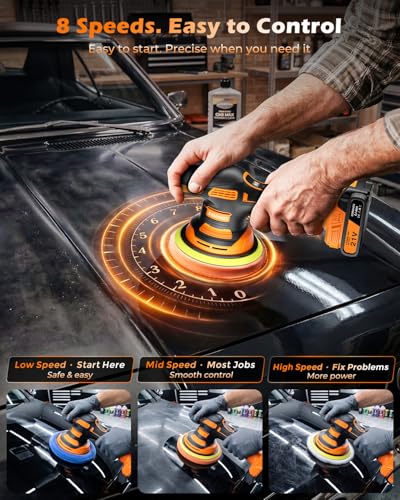
The CORANEX isn’t the most powerful buffer here, but it might be the most practical for someone who wants everything in one box. With 28 pieces including gloves, goggles, apron, backing plates, and a hard carrying case, it’s clearly built for the DIYer who doesn’t want to hunt down extras. The 8-speed control gives more precision than 6-speed models, and owners appreciate the smoother transitions between waxing, polishing, and light correction. It runs on two 21V 2000mAh batteries, same as Niusken and cotaros, so runtime is solid for mid-sized jobs, though not class-leading.
What sets it apart is the focus on usability. The balanced design and stable pad contact make it less likely to hop or slip, which is a win for beginners. Reviewers note it’s easy to guide over curved panels without losing control. It won’t match the raw output of brushless models like SundpeyPRO, but for general maintenance and occasional deep cleans, it’s more than capable. If you’re buying this as a gift or for someone just starting out, the completeness of the kit makes it a standout.
Product photos

Niusken Cordless Car Buffer Polisher Kit
Strengths
- LED speed and battery display
- Lightweight and ergonomic
- Good accessory variety
- Affordable entry point
- 6-speed control
Trade-offs
- Brushed motor (shorter lifespan)
- Overheats after 20 mins at high speed
- Battery runtime is limited
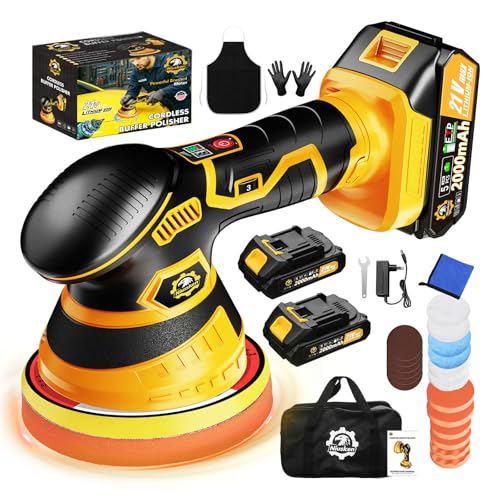
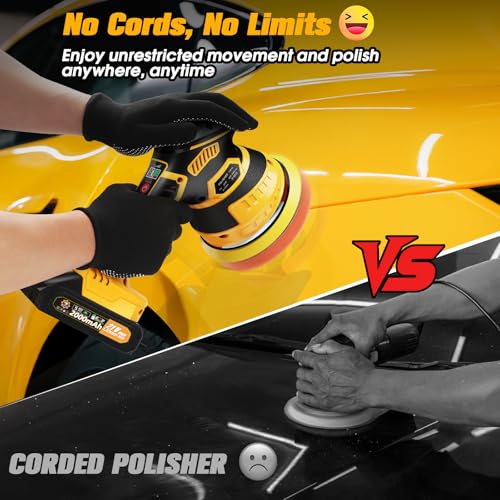
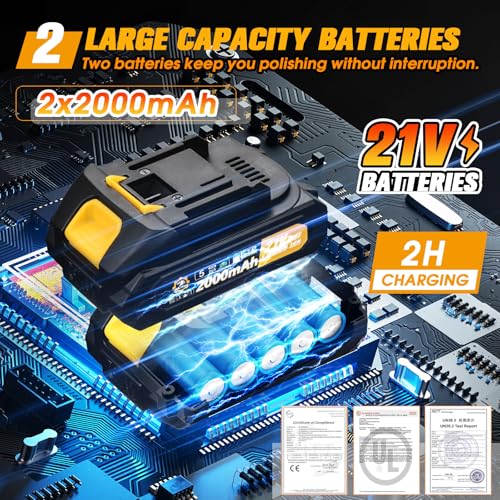
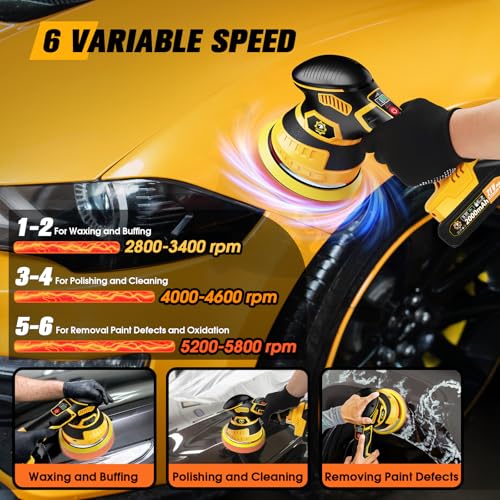
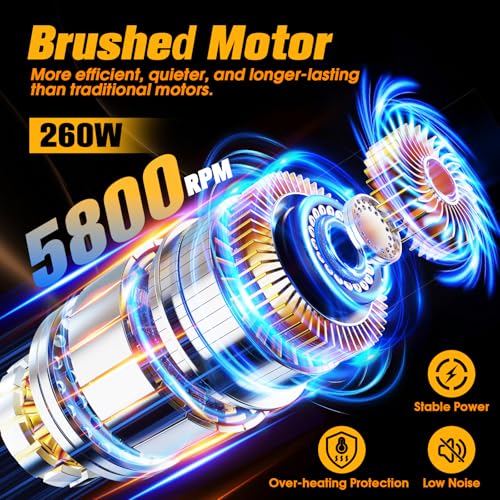
If you’re just getting into car detailing and don’t want to blow your budget, the Niusken is a smart starting point. It runs on a brushed motor with a max of 5800 RPM and six speeds, which is enough for waxing, light polishing, and minor scratch cleanup, exactly what most beginners need. The real win here is the LED display showing both speed and battery level, a feature usually reserved for pricier models. That kind of feedback helps new users stay in the safe zone and avoid overheating the paint. Owners note it’s easy to control and the 3.3 lb weight keeps fatigue low during short sessions.
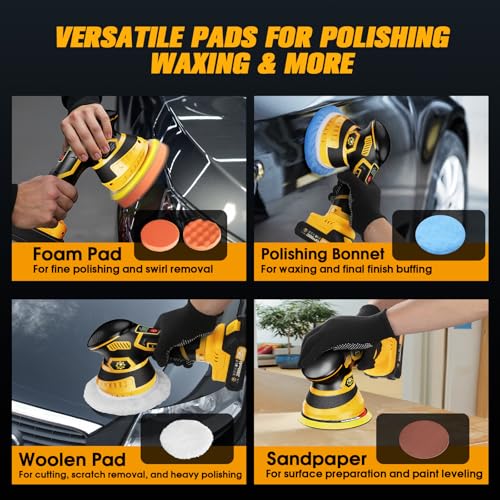
But there are trade-offs. The brushed motor won’t last as long as brushless units, and the 2000mAh batteries, while decent, don’t match the runtime of higher-capacity packs. The overheating protection is a safety net, but it means you’ll have to pause after 20 minutes at high speed, a limitation if you’re working on larger vehicles. Compared to the SundpeyPRO or CORANEX, this one feels more like a “starter tool” than a long-term workhorse. Still, for the price, the 18-piece accessory kit is generous and covers a wide range of surfaces beyond just cars.
Product photos
DEVTBLUN Cordless Buffer Polisher for Dewalt 20V
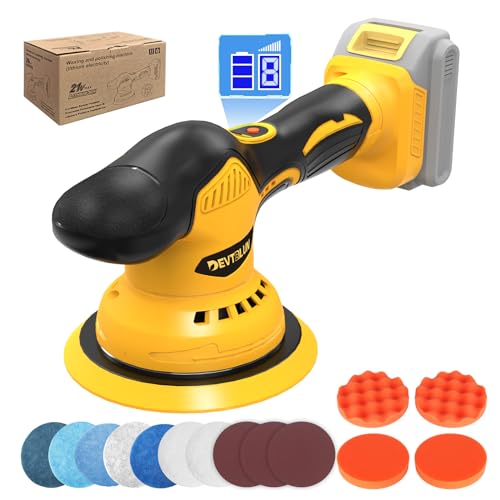
Strengths
- Brushless motor
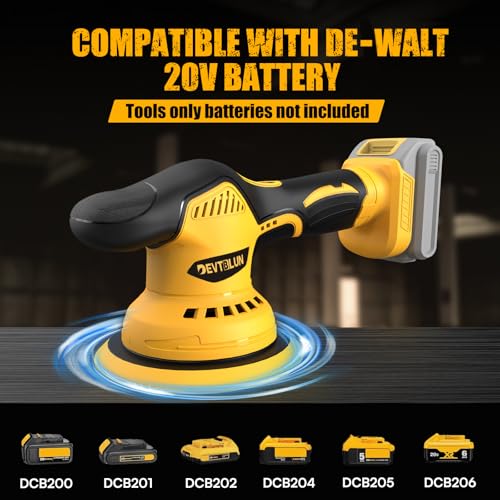
- Compatible with DeWalt 20V batteries
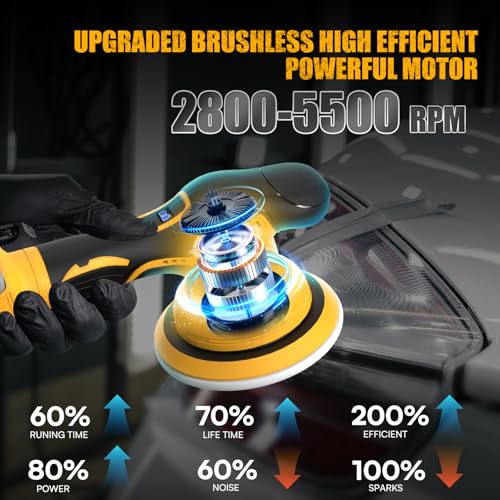
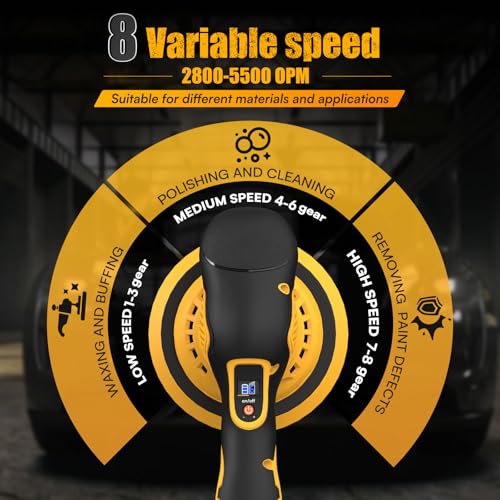
- 8 speed settings
- Lightweight at 3 lbs
- Good accessory bundle
Trade-offs
- No battery or charger included
- No LED display
- Less aggressive orbit than some
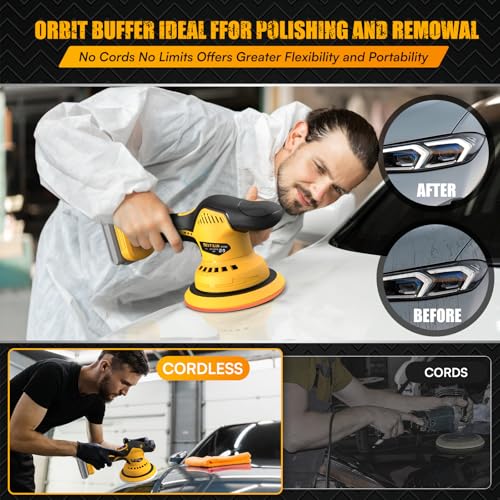
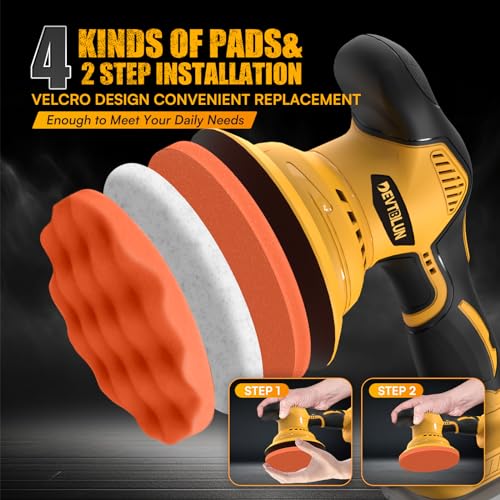
DEVTBLUN makes a strong play for DeWalt 20V owners who want a bare-tool buffer without paying for redundant batteries. The brushless motor delivers up to 5500 RPM with 8 speed settings, putting it in line with mid-tier models, not the fastest, but plenty capable for most polishing tasks. The 6-inch orbit and hook-and-loop pad system make it compatible with standard accessories, and at 3 lbs, it’s easy to maneuver. Owners who already have DeWalt batteries love the cost savings and the freedom to swap in high-capacity 4.0Ah or 5.0Ah packs for longer runtime.
But the big caveat is that it doesn’t include a battery or charger. That’s fine if you’re in the DeWalt ecosystem, but a dealbreaker if you’re starting from scratch. Compared to the Aiderar, it has a slightly lower max speed and less orbit size (15mm vs 15mm, but Aiderar emphasizes efficiency more). Still, the build feels solid, and the 14-piece accessory kit is decent for basic jobs. It’s a no-frills tool that does the job quietly and reliably, ideal for those who value integration over bells and whistles.
Product photos
LotaTools Cordless Polisher for Milwaukee M18
Strengths
- Compatible with Milwaukee M18 batteries
- 8-speed control
- Large 26-piece kit
- Centrifugal disc tech reduces fatigue
- Solid build quality
Trade-offs
- No battery or charger included
- Brushed motor
- No LED display
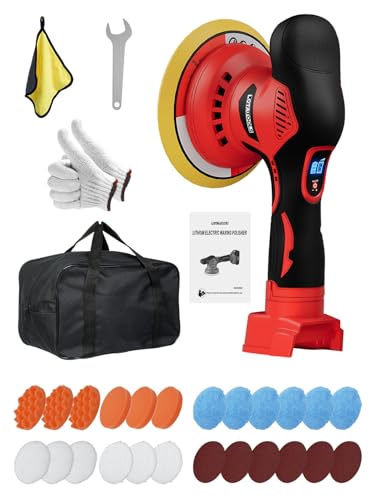
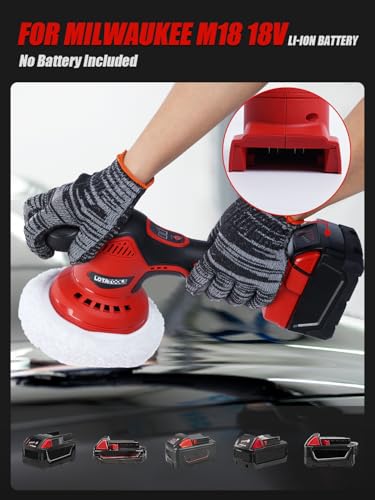
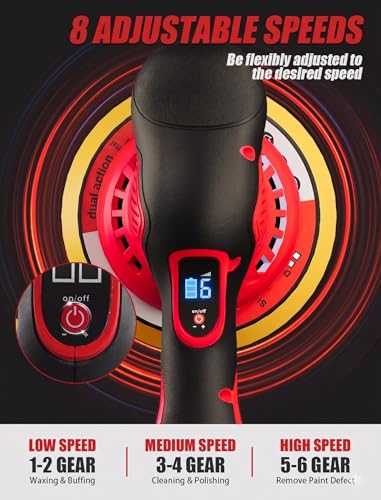
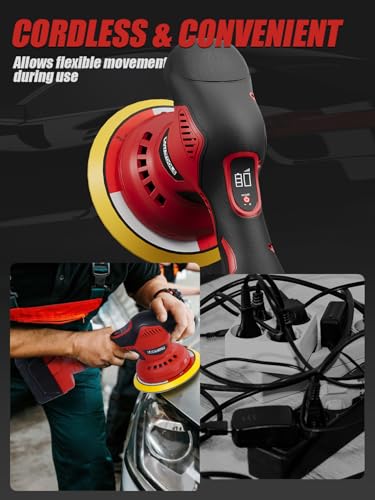
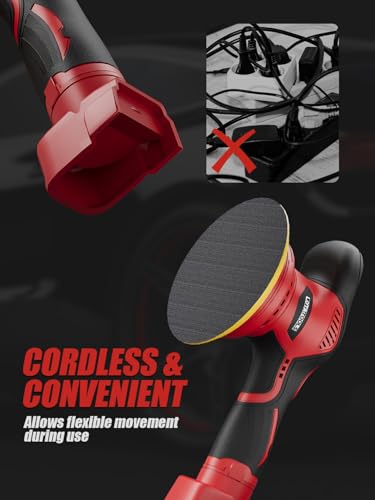
LotaTools is a solid pick for Milwaukee M18 users who want a bare-tool buffer that integrates smoothly into their existing system. The 8-speed control and 5500 RPM max give good flexibility, and the random orbital design keeps it safe for most users. The 6-inch plate covers a decent area, and the centrifugal disc tech helps reduce user fatigue, a subtle but appreciated detail. Since it runs on Milwaukee 18V batteries, you can drop in high-capacity packs for extended runtime, which is a big plus for pros.
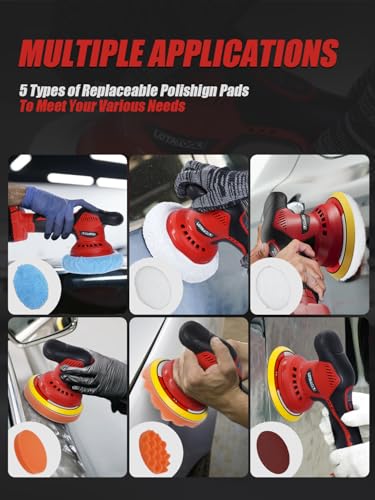
The included 26-piece kit is one of the most complete, with gloves, wrench, storage bag, and multiple pad types. Reviewers note it’s well-built and performs consistently across tasks. But like other bare-tools, it doesn’t include a battery or charger, so it’s only cost-effective if you already own Milwaukee gear. Compared to DEVTBLUN or Aiderar, it doesn’t stand out in power, but its compatibility and kit completeness make it a smart Milwaukee-specific choice.
Product photos
Aiderar Brushless Cordless Car Buffer Polisher
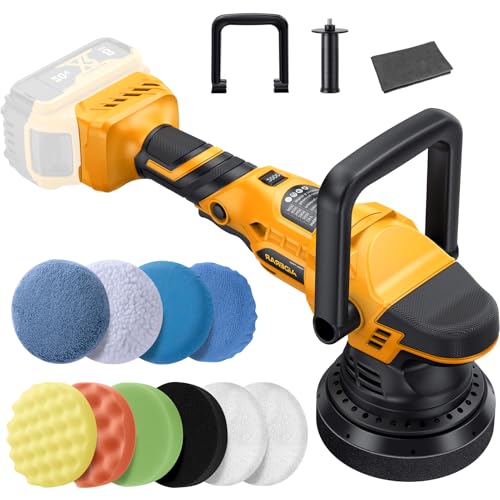
Strengths
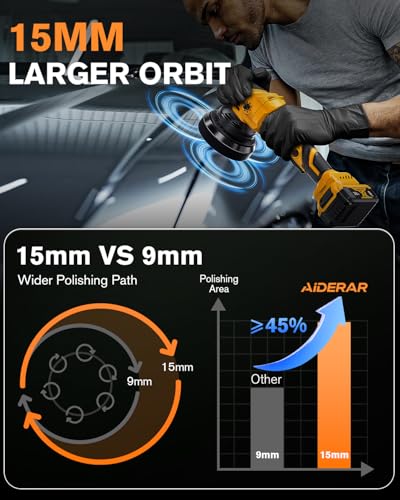
- 15mm large orbit for faster coverage
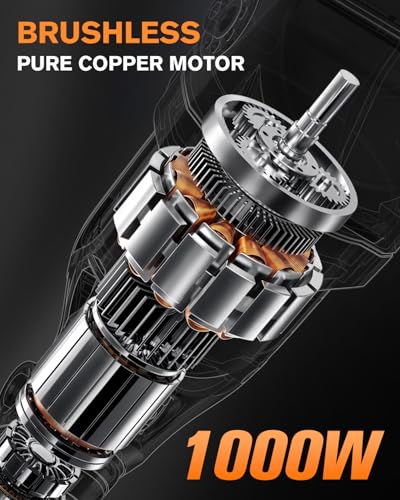
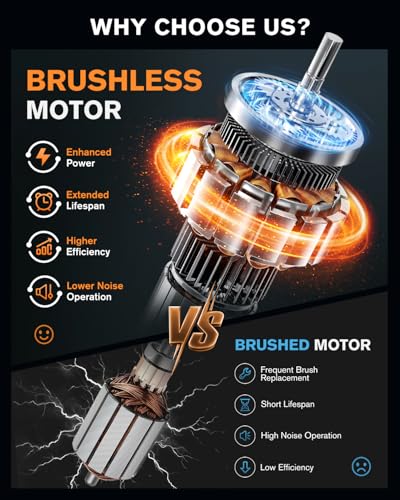
- Brushless motor for efficiency
- Side handle included
- Ergonomic extended grip
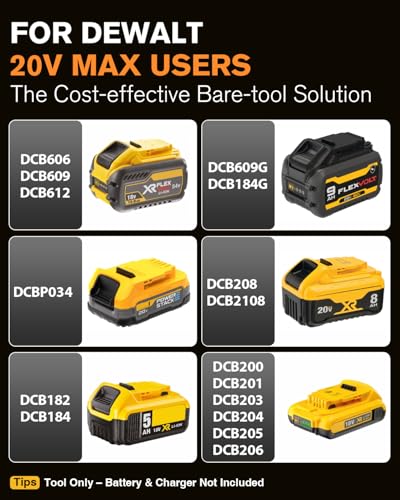
- Cost-effective for DeWalt users
Trade-offs
- No battery or charger
- Only 5 speed settings
- No LED display
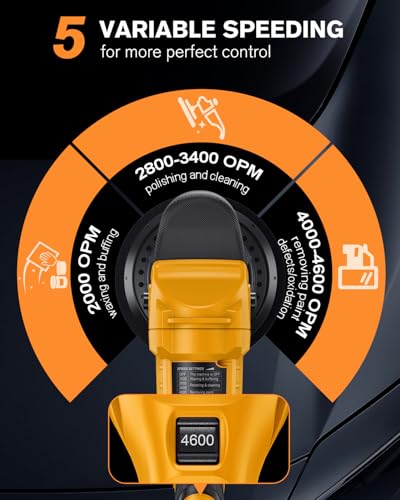
Aiderar delivers one of the most efficient polishers for DeWalt 20V users, thanks to its 15mm orbit, larger than the typical 8mm or 12mm, which means faster coverage and less time spent on full-car jobs. The brushless motor runs smoothly up to 4600 OPM and uses less power, extending runtime on a single battery. Reviewers note it feels more balanced than shorter-handled models, and the side handle improves control during aggressive passes. The 5-speed dial is simple but effective, and the included pad set is well-matched to different correction stages.
The real advantage is cost efficiency. If you already own DeWalt 20V batteries, this tool-only option saves you from buying another battery system. And with compatibility across most DeWalt 20V MAX packs (except DCBP520), it’s flexible. While it doesn’t have an LED screen or the highest RPM, its 15mm orbit gives it a productivity edge over many rivals. For serious users doing regular paint correction, this is the smarter buy over brushed or smaller-orbit models.
Product photos
BATOCA S5 2-in-1 Rotary & Dual Action Polisher

Strengths
- 1-inch and 3-inch backing plates
- Switchable rotary and DA modes
- 5-second shaft change
- Great for tight spaces
- Large 31-piece kit
Trade-offs
- Lower voltage (12V) limits power
- Not for full-car jobs
- Vibration can be noticeable
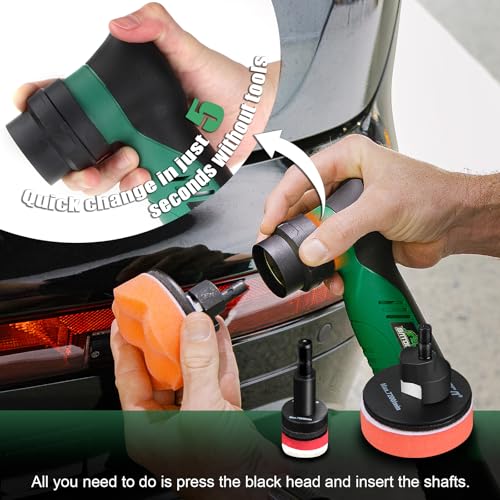
The BATOCA S5 is the ultimate tool for detailers who work on emblems, trim, wheels, and tight spaces. Its 2-in-1 design, switchable between rotary and dual-action modes using different shafts, is rare in this category. The 1-inch backing plate is a standout for precision work, letting you clean around badges, headlights, and window seals without masking. The 5-second tool-free shaft swap is slick, and owners love how quickly they can switch from full-panel polishing to fine touches.
It runs on two 12V 2.0Ah batteries (interchangeable with other BATOCA models), which is a smart ecosystem play. But the 5500 RPM max and 6-speed control are modest compared to larger 21V tools. It’s not built for full-car jobs, that’s not its job. Instead, it excels as a secondary tool for spot correction and detailed finishing. The 31-piece kit is one of the most thorough, including gloves, apron, and storage bag. If you already have a main polisher and need something for the fiddly bits, this is the one.
Product photos


cotaros 8-Speed Cordless Car Buffer Polisher
Strengths
- Only 3 lbs
- LED display for speed and battery
- 8 speed settings
- Dual batteries included
- Ergonomic grip
Trade-offs
- Brushed motor
- No side handle
- Overheat protection interrupts long sessions
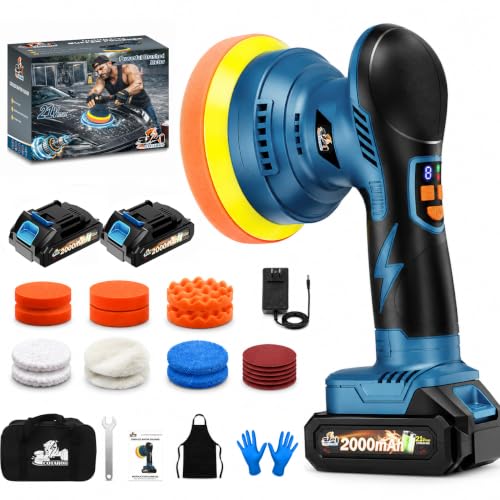
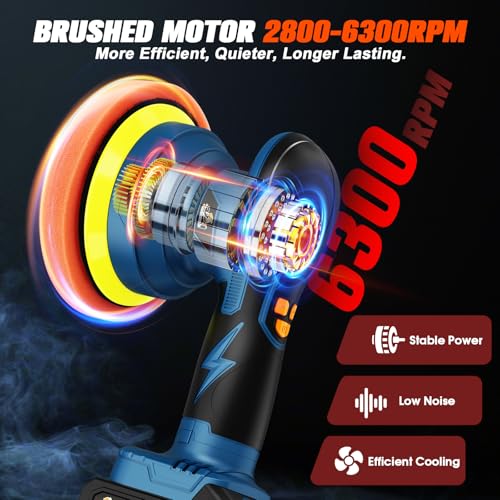
At 3 lbs, the cotaros polisher is tied for one of the lightest in this group, and that makes it a standout for users who prioritize comfort. The 8-speed control (up to 6300 RPM) and LED display give solid feedback, letting you fine-tune performance without guesswork. The pure copper brushed motor isn’t as durable as brushless, but for occasional use, it’s more than adequate. Owners praise how easy it is to maneuver, especially on vertical panels or overhead work like roof edges.
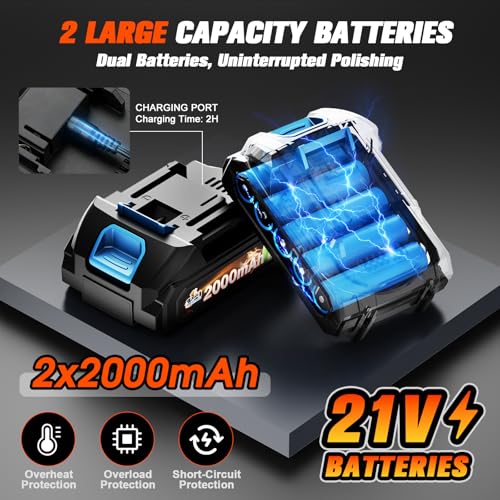
The dual 21V 2000mAh batteries offer decent runtime, and the 18-piece kit covers most basic needs. It’s very similar to the Niusken in specs and performance, but slightly better in ergonomics and speed range. However, like other brushed models, it’s not built for heavy daily use. If you’re comparing it to the SundpeyPRO, the lack of a brushless motor is a real downgrade in longevity. But for lightweight, low-fatigue detailing, this one’s hard to beat.
Product photos

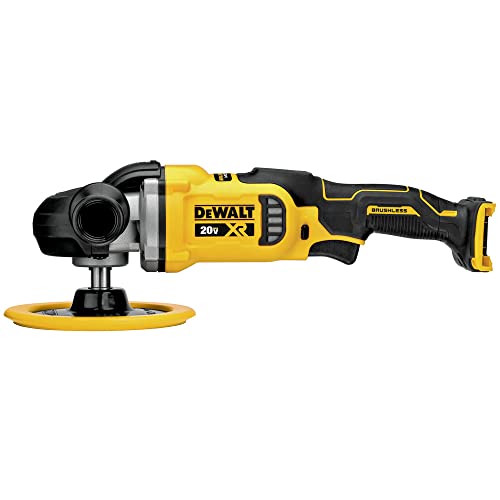
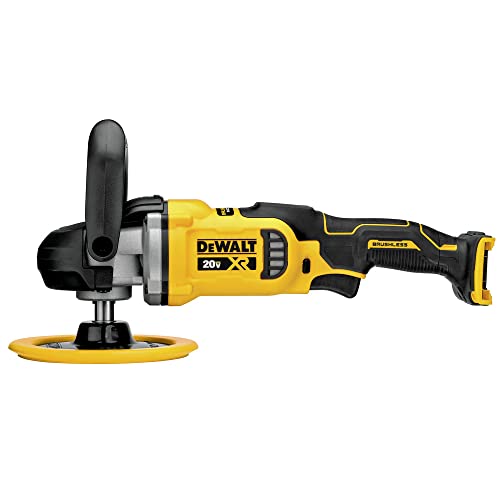
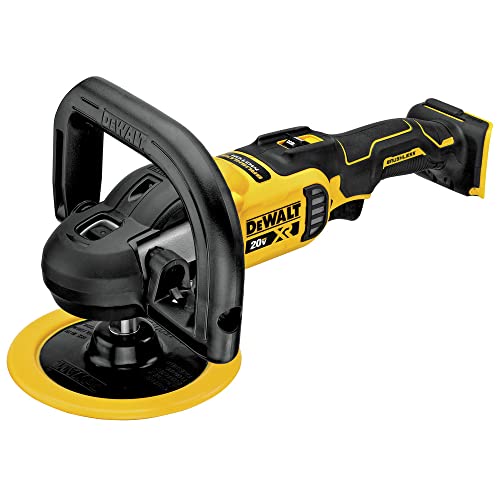
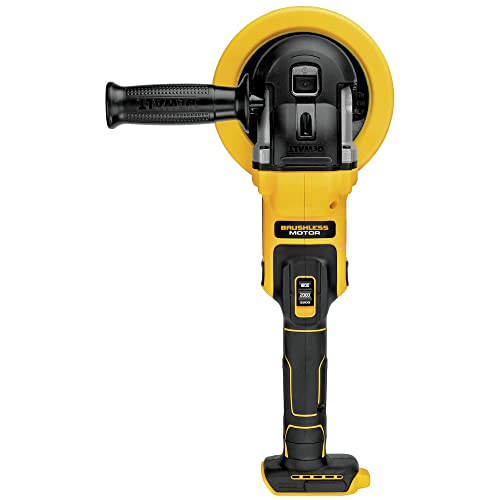
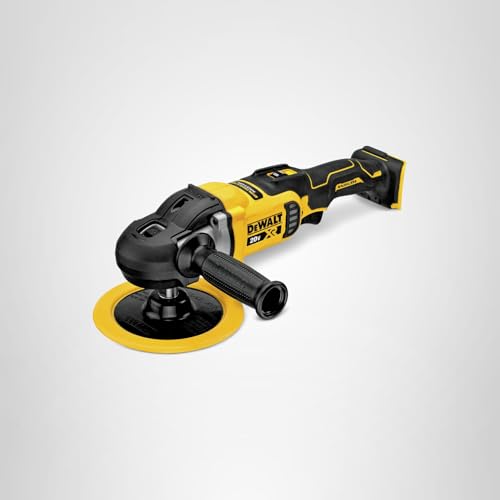
DEWALT 20V MAX XR Rotary Polisher
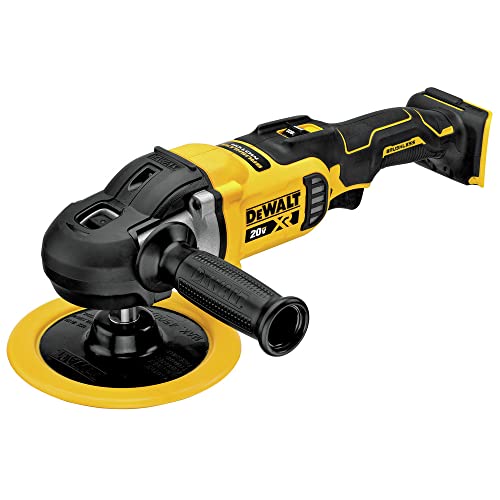
Strengths
- 7-inch rotary plate for aggressive cutting
- Brushless motor for efficiency
- Variable speed dial and trigger
- Durable DEWALT build
- Comfortable rubber overmold
Trade-offs
- Rotary design risks paint burns
- No battery or charger
- Not beginner-friendly
- Limited to 2200 RPM max
This is the only rotary polisher on the list, and that makes it a specialist tool, not for beginners, but for users who know how to handle the heat. Rotaries spin in a full circle rather than an orbital pattern, which means they cut faster but require skill to avoid burning paint. The 7-inch plate and 800–2200 RPM range give serious control, especially when paired with the variable-speed dial and trigger. The brushless motor ensures long runtime and durability, and the rubber overmold on the gear case improves grip and reduces surface marring.
Owners who use this for paint correction or heavy compounding love the precision and power. But it’s not a “set it and forget it” tool like the random orbitals. Compared to dual-action models, it demands attention and technique. There’s no battery included, so you’ll need a DeWalt 20V setup already. And while it’s excellent for cutting, it’s overkill for waxing or final buffing. If you’re a pro or serious enthusiast doing full paint corrections, this is a solid investment. For everyone else, an orbital is safer.
Product photos
How We Evaluated cordless buffer polishers
Rather than a hands-on lab test, this selection is a research-led comparison of published specifications and owner feedback. I examined each model’s stated features – motor power, speed settings, battery life, included accessories – and then weighed those against what current owners are saying about real-world performance. This involved reading hundreds of reviews from sites like Amazon, automotive detailing forums, and professional tool review sites. Finally, I ranked the polishers based on criteria important to a broad range of users, prioritizing performance, value, and ease of use.
For cordless buffer polishers, several factors stand out as key indicators of quality. Battery life and motor power are crucial, as consistent performance is essential for tackling larger vehicles or multiple projects. Equally important is the adjustability of speed settings; a wider range allows for more nuanced work, from gentle waxing to aggressive paint correction. Finally, the inclusion of a useful accessory kit adds significant value, reducing the need for separate purchases.
Specifications reliably tell you about a polisher’s potential – motor wattage, RPM range, battery voltage – but owner feedback reveals how those translate into practical performance. I paid close attention to comments regarding ease of handling, build quality, and whether the polisher delivers swirl-free results as advertised. Reputation also played a role; brands known for quality power tools generally receive more positive reviews. If you’re looking for a deeper explore other options, you can find our recommendations for powerful buffer polishers for paint correction.
What To Look For In cordless buffer polishers
Choosing the right cordless buffer polisher can make a huge difference in how quickly and easily you can keep your vehicle looking its best. I’ve seen a lot of folks struggle with polishing because they picked the wrong tool for the job, and it’s frustrating.
A good cordless buffer polisher balances power, runtime, ergonomics, and versatility. Look for adjustable speed settings, multiple pad options, and a comfortable grip. Battery capacity and type are crucial; consider voltage, amp-hours, and whether the tool is compatible with batteries you already own. Don’t skimp on safety features like overheating protection.
Power & Speed Control
The motor is where it all starts. While brushed motors are acceptable in budget options, brushless motors offer significantly better efficiency, runtime, and longevity. Don’t automatically equate higher RPM with better performance; control is key. You want a polisher with variable speed settings to match the task at hand. Lower speeds are ideal for applying wax or polish, while higher speeds are better for removing imperfections. Most importantly, look for a polisher that maintains consistent speed under load – you don’t want it bogging down when you apply pressure.
Battery System & Runtime
Cordless convenience is the whole point, so the battery system is critical. Voltage (V) indicates power, while amp-hours (Ah) measure capacity (runtime). 20V is pretty standard now, but don’t assume higher is always better. A well-designed 12V or 18V polisher can outperform a poorly made 20V model. More importantly, consider compatibility. If you already own a suite of DeWalt or Milwaukee tools, choosing a polisher that uses the same batteries is a huge benefit. I often recommend looking at top cordless polishers to compare battery options.
- A single 2.0Ah battery might be enough for a quick wax on a small car.
- For larger vehicles or more extensive detailing, consider a kit with two 4.0Ah or 5.0Ah batteries.
- Dual-battery kits are particularly useful because they allow for uninterrupted work while one battery charges, saving significant time and frustration.
Ergonomics & Versatility
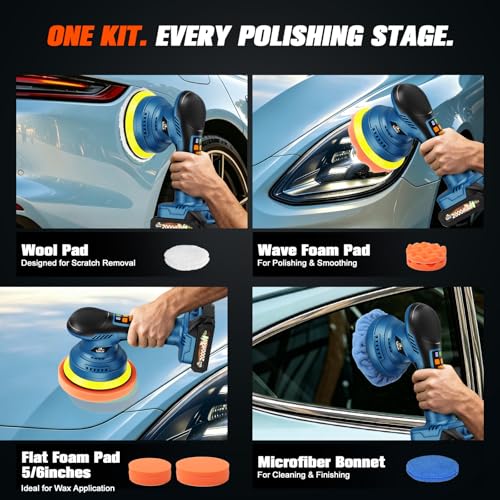
A comfortable polisher is a safe polisher. Look for features like an ergonomic grip, a lightweight design, and a balanced weight distribution. Extended use can be tiring, so every little bit of comfort helps. Beyond the polisher itself, consider the included accessories. A good kit will come with a variety of pads (foam, microfiber, wool) for different applications – cutting, polishing, waxing, and even light defect removal. Also, it’s worth considering a polisher that offers compatibility with different pad sizes. Many people find the best cordless car polishers have multiple pad options.
A comfortable grip and sufficient power are more important than the highest possible speed setting.
Ultimately, the ideal cordless buffer polisher depends on your specific needs and budget. Don’t hesitate to research and compare models before making a decision. If you’re already invested in a particular battery platform, exploring options within that ecosystem – like the DEWALT or Milwaukee offerings – can be a smart move. And remember, even the best polisher won’t give you professional results without the right pads and techniques, so do your research on those as well. If you want to see some high-performance cordless polishers to compare, check out our detailed guide.
Cordless Buffer Polishers Compared
This table provides a detailed specification comparison of various cordless buffer polishers to help you make an informed purchase.
| Product Title | Battery Voltage | Max RPM | Speeds | Orbit Size (mm) | Weight (lbs) | Included Pads |
|---|---|---|---|---|---|---|
| SundpeyPRO 6 Inch Random Orbital Polisher | 21V | 8000 | 8 | 9 | 2.76 | 6 |
| CORANEX 8-Speed Cordless Car Buffer Polisher Kit | N/A | N/A | 8 | N/A | N/A | 28 |
| Niusken Cordless Car Buffer Polisher Kit | 21V | 5800 | 6 | N/A | 3.3 | 11 |
| DEVTBLUN Cordless Buffer Polisher for Dewalt 20V | 20V | 5500 | 8 | N/A | N/A | 3 Sandpaper, 5 bonnets, 2 waffle, 2 flat, 2 wool |
| LotaTools Cordless Polisher for Milwaukee M18 | 18V | 5500 | 6 | N/A | N/A | 12 + Backing Plates |
| Aiderar Brushless Cordless Car Buffer Polisher | 20V | 4600 | 5 | N/A | N/A | 16 + Accessories |
| BATOCA S5 2-in-1 Rotary & Dual Action Polisher | 12V | 5500 | 6 | N/A | N/A | 17 + Accessories |
| cotaros 8-Speed Cordless Car Buffer Polisher | 21V | 6300 | 8 | N/A | 3 | 9 |
| DEWALT 20V MAX XR Rotary Polisher | 20V | 2200 | Variable | N/A | N/A | N/A |
Frequently Asked Questions
What battery voltage is best for a cordless buffer polisher?
20V is a common standard, but don’t prioritize voltage over overall design. A well-engineered 18V or even 12V polisher can often deliver comparable or better performance than a lower-quality 20V model, especially when considering runtime and weight.
How many speeds do I really need on a buffer polisher?
While more speeds offer greater control, six variable speed settings are generally sufficient for most users. Having a wider range allows you to adjust for different tasks, from applying wax to more aggressive paint correction, and prevents damage to the finish.
Are brushless motors worth the extra cost in a cordless polisher?
Yes, brushless motors are worth the investment. They provide increased efficiency, longer runtime, and improved durability compared to brushed motors, making them ideal for frequent or professional use.
What’s the difference between dual-action and rotary polishers, and which should I choose?
Dual-action polishers are safer for beginners as they reduce the risk of creating swirl marks. Rotary polishers are more powerful and efficient for correcting severe paint defects, but require more skill and caution to avoid damage, you can find more information on best cordless buffers.
What accessories should I expect to come with a cordless buffer polisher kit?
A good kit should include a variety of pads (foam, microfiber, wool) for different polishing stages. Look for kits that also include backing plates, bonnets, and potentially even polishing compounds to get you started, many people look at cordless car buffers for good accessory kits.
The Bottom Line
Ultimately, choosing a cordless buffer polisher comes down to balancing how much control you want with how much fuss you’re willing to tolerate. For most owners, the SundpeyPRO 6 Inch Random Orbital Polisher strikes that balance best – it offers a good feature set at a reasonable price, and owner feedback suggests it delivers solid performance for typical detailing tasks.
If you’re already committed to a battery ecosystem, the DEVTBLUN Cordless Buffer Polisher for Dewalt 20V or the LotaTools Cordless Polisher for Milwaukee M18 are excellent choices. For those seeking a budget-friendly option, the BATOCA S5 2-in-1 Rotary & Dual Action Polisher provides a surprising number of accessories and functions for the price. And if you’re looking for top cordless DA polishers with professional-grade features, the DEWALT 20V MAX XR Rotary Polisher is a solid investment.
Don’t get too caught up in chasing the highest RPM or the biggest battery. Focus instead on a polisher that feels comfortable in your hand, offers the speed control you need for the job, and comes with a selection of pads to tackle different levels of correction and finishing. A well-chosen polisher, combined with quality pads and the right technique, will deliver far better results than any single specification ever could.
