
8 Best Small Metal Lathes of 2026
This post contains affiliate links. As an Amazon Associate, we earn from qualifying purchases.
The CREWORKS 9″ x 30″ is the best small metal lathe for most hobbyists, combining solid cast iron construction with strong motor power and reliable precision. If you’re on a tighter budget, the VEVOR 8″ x 14″ offers a capable all-metal build at a lower price, while the WEN 7×12-Inch stands out for versatility with its variable speed control and reputation for user-friendly operation.
I’ve seen too many beginners buy lathes based on price alone, only to struggle with flimsy frames, inaccurate cuts, and motors that quit under load. The reality is, a cheap lathe often costs more in frustration and wasted material than a slightly pricier, well-built model.
This guide cuts through the noise by focusing on what actually matters: real-world performance, durability, and precision. I researched each model based on specs, owner feedback, and years of seeing what holds up in home shops. These picks balance capability, build quality, and value, so you can start turning metal confidently.
Top 8 Small Metal Lathes in the Market
The Best Small Metal Lathes, Reviewed
VEVOR 8.7″ x 39″ Metal Lathe

Strengths
- High power brushless motor
- Fully automatic feed
- Large working capacity
Trade-offs
- Heavy and bulky
- Higher learning curve
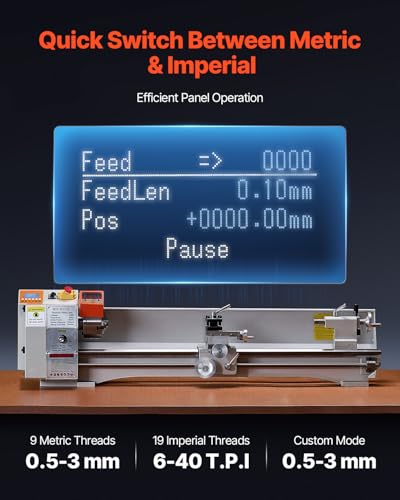
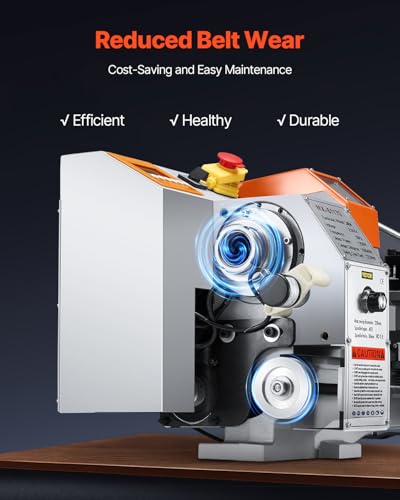
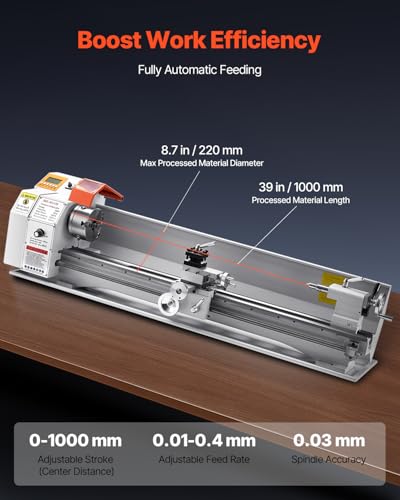
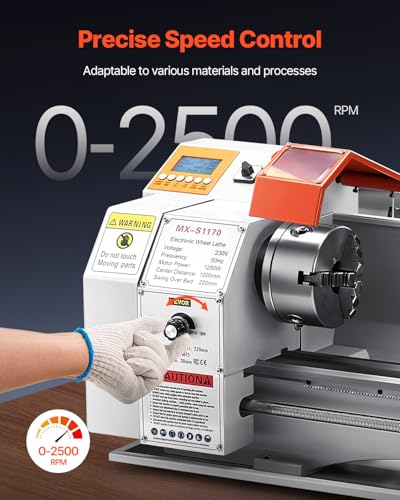
This VEVOR 8.7×39-inch lathe is the most capable machine in this lineup for serious hobbyists who want near-shop performance without the footprint. The 1250W brushless motor and belt-free spindle drive are standout features, brushless means longer life and consistent torque, while eliminating belts reduces maintenance and slippage risks. The electronic gear system for switching between metric and imperial threads is a standout for users tired of manual gear swaps.
Reviewers note smooth operation and strong rigidity, especially when turning aluminum or brass over longer lengths. With a max length of 1000 mm and automated feed control, it’s built for repeatable, precision work. Compared to smaller 7×12 models, this one offers real capacity and advanced features. If you’re stepping up from beginner tools and want a machine that can grow with your skills, this is the smarter buy.
Product photos
CREWORKS 9″ x 30″ Mini Metal Lathe

Strengths
- High 1100W power
- Large capacity
- Digital RPM display
Trade-offs
- No automatic feed
- Heavier and less portable
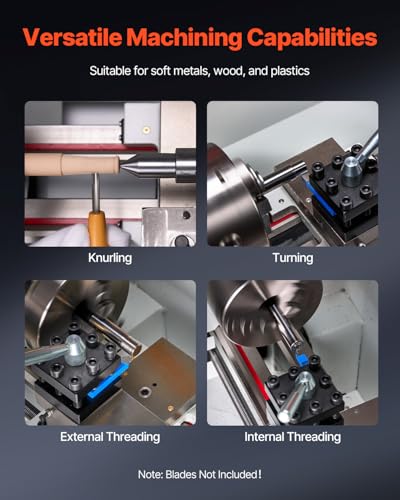
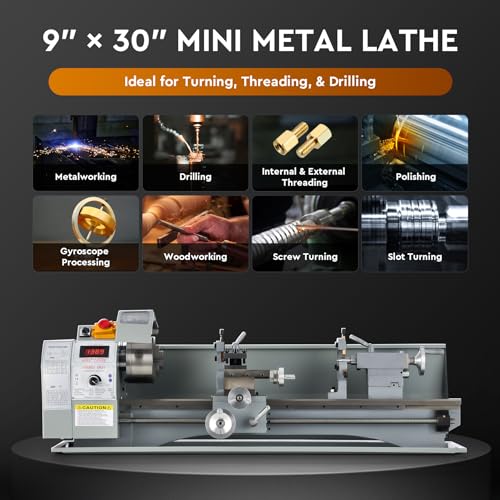
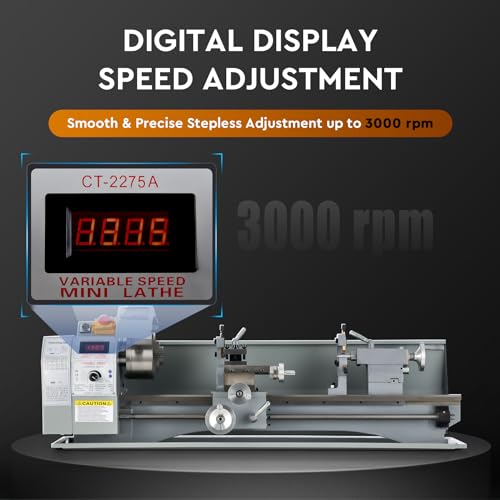
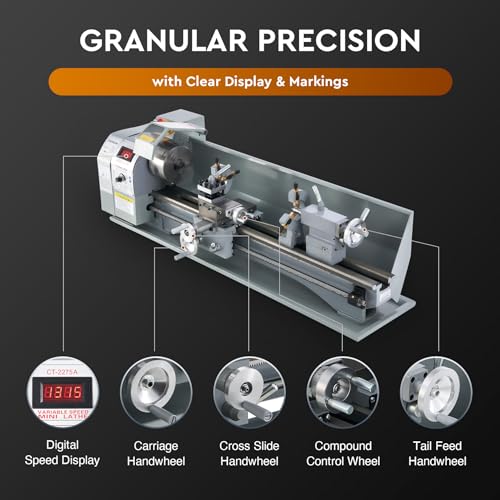
The CREWORKS 9×30 stands out for raw power and capacity in the mini lathe world. With an 1100W motor and 3000 RPM max speed, it’s one of the strongest in this group, built for users who want to push beyond light aluminum into brass or even mild steel. The digital RPM display is a major plus, giving real-time feedback for consistent cuts.
The 8.7-inch swing and 27-inch center distance offer serious reach, and the 1.5-inch spindle bore allows for long stock feeding. Owners appreciate the transparent chuck guard, it adds safety without blocking visibility. Compared to the VEVOR 8.7×39, it trades some automation for brute strength and simplicity. If you need a workhorse for heavier turning, this is the one to beat.
Product photos
VEVOR 8″ x 14″ Mini Metal Lathe

Strengths
- Larger bed size
- Cast iron durability
- Quick tool change turret
Trade-offs
- No digital RPM display
- Manual gear system
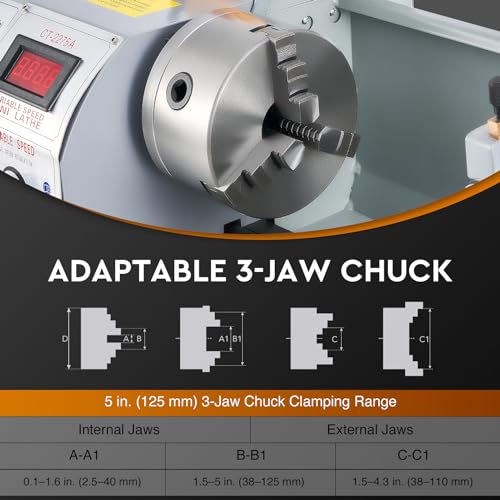
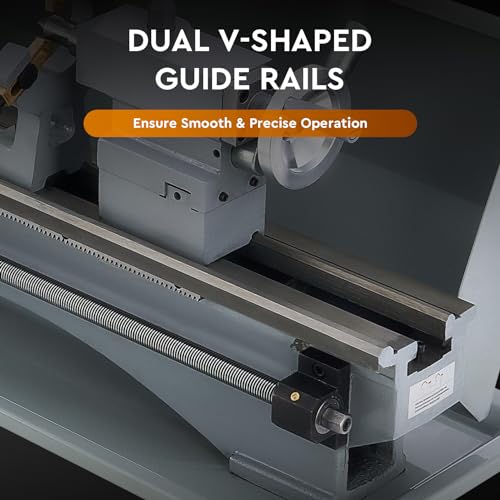
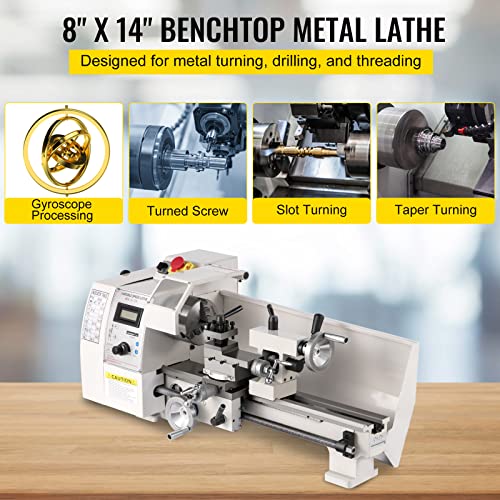
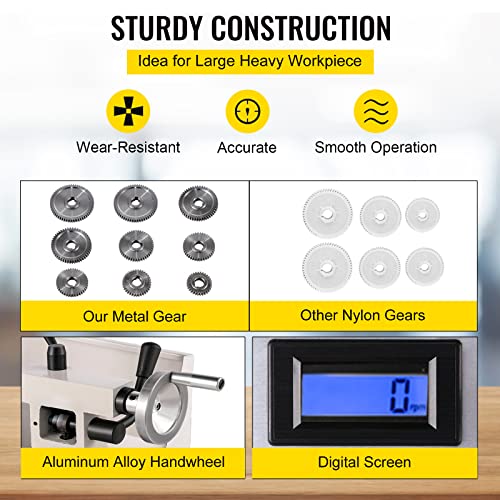
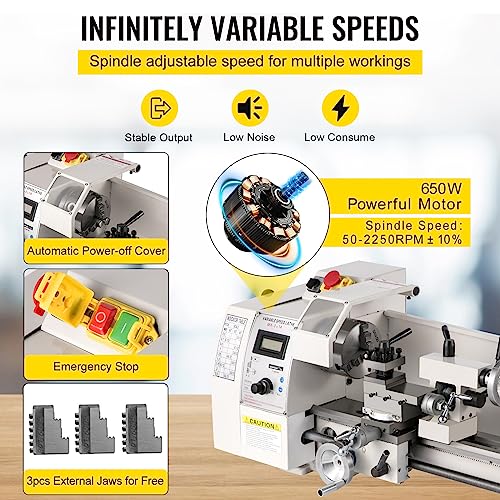
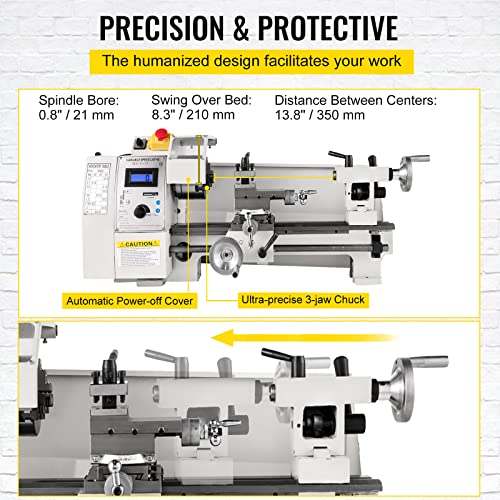
This 8×14 VEVOR strikes a smart balance between size, power, and price, making it a strong mid-range contender. With a 650W motor and cast iron body, it’s sturdier than most 7×12 models and can handle longer workpieces. The swing over bed is larger, and the turret post allows for quick tool changes, which speeds up repetitive tasks.
Owners praise its rigidity and smooth feed adjustment, especially when working on brass or aluminum. It doesn’t have digital readouts or electronic threading, but the mechanical precision is solid. Compared to the smaller VEVOR 7×12, this offers better capacity and build without jumping to the larger, pricier model. If you want more room to work without overspending, this is the sweet spot.
Product photos

ZHRUI 50mm All-Metal Mini Lathe
Strengths
- Includes 5 carbide cutters
- Ultra-quiet operation
- All-metal, no plastic
Trade-offs
- Limited to soft materials
- Small working area
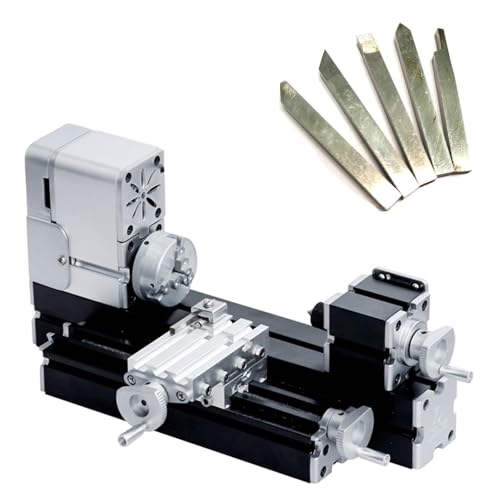
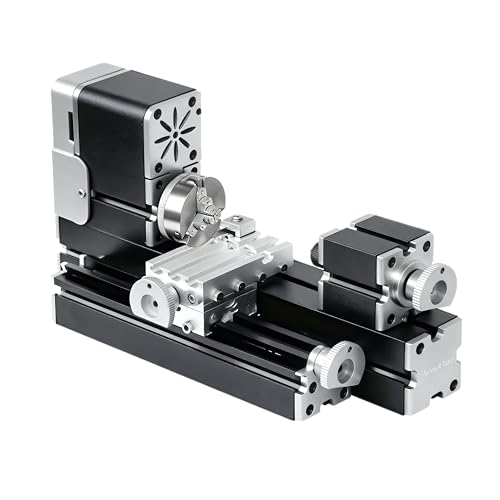
ZHRUI delivers one of the most complete out-of-the-box experiences in the mini lathe market. The inclusion of five carbide-tipped cutters means you’re not immediately hunting for tooling, a real plus for beginners. The 100% all-metal construction and dovetail bed eliminate flex and vibration, and the 0.02mm etched scales ensure you can dial in cuts with confidence.
What sets it apart is the quiet operation, owners consistently note it runs at library levels (~55dB), making it ideal for home workshops or shared spaces. The 20,000 RPM motor handles soft metals and plastics with ease, though it’s not built for aggressive steel work. Compared to the AcmeFlare, it’s nearly identical in specs, but the included cutter set gives it an edge. For precision and readiness, this is my top pick in the ultra-compact class.
Product photos
AcmeFlare 20,000RPM Mini Lathe
Strengths
- True all-metal build
- Ultra-fine 0.02mm scales
- High 20,000 RPM speed
Trade-offs
- Low torque for hard metals
- Small work capacity
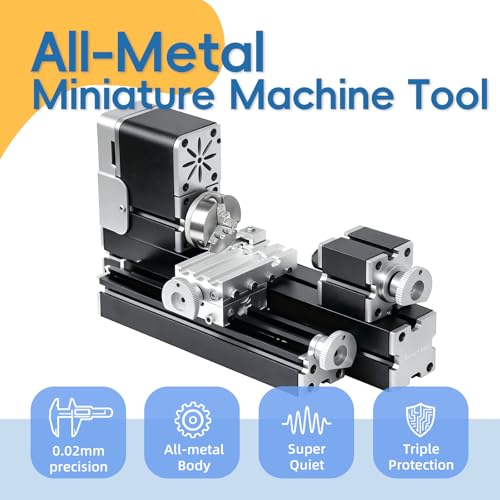
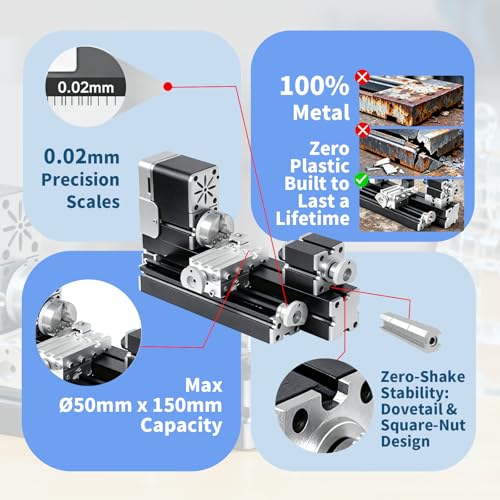
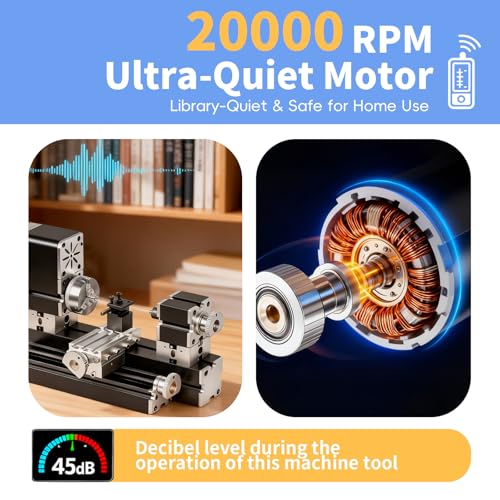
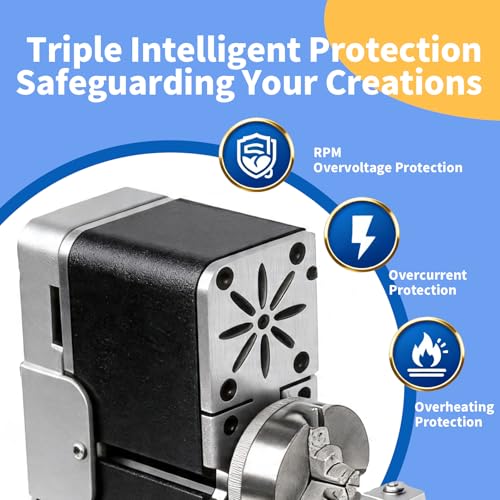
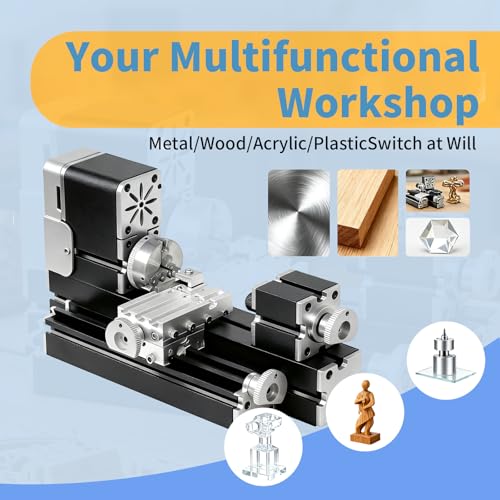
The AcmeFlare mini lathe surprises with its 100% all-metal construction and 20,000 RPM motor in such a compact form. It’s clearly designed for high-speed precision work on soft materials, think aluminum, copper, acrylic, or wood for models and crafts. The 0.02mm molded scales on the handwheels are a standout; they’re not stickers, so they won’t peel, and they allow for repeatable, fine adjustments.
This isn’t a lathe for heavy metal cutting, but for intricate work like pen blanks, jewelry components, or STEM projects, it excels. The 36W motor is small but efficient, and the built-in safety protections make it safe for school or home use. Compared to other mini lathes in this range, it’s more about precision than power. If you’re into model making or detailed DIY, this is the kind of tool that feels purpose-built.
Product photos


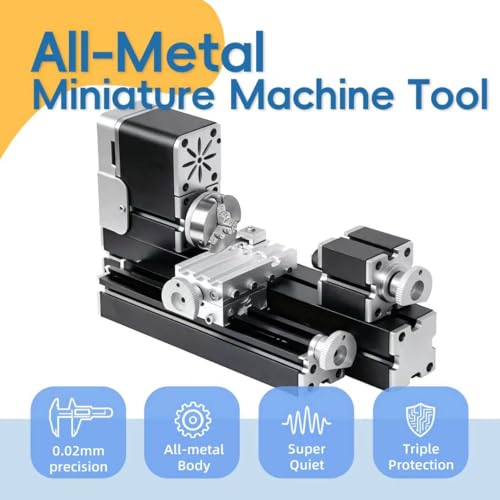
ZHRUI 36W All-Metal Mini Lathe
Strengths
- Ultra-compact size
- All-metal construction
- Safe 12V power system
Trade-offs
- Low power for hard metals
- Short spindle bore
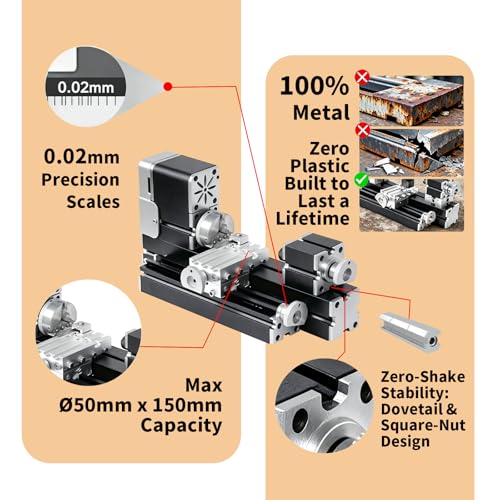
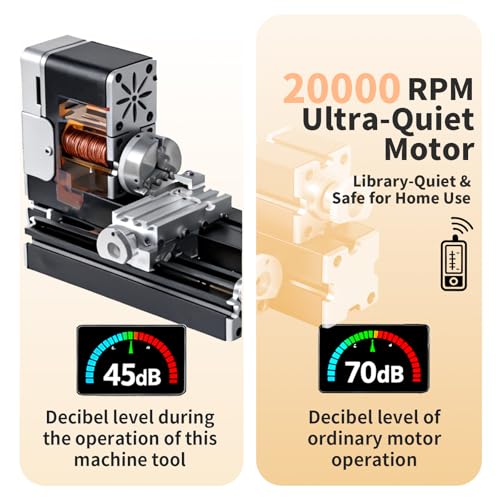
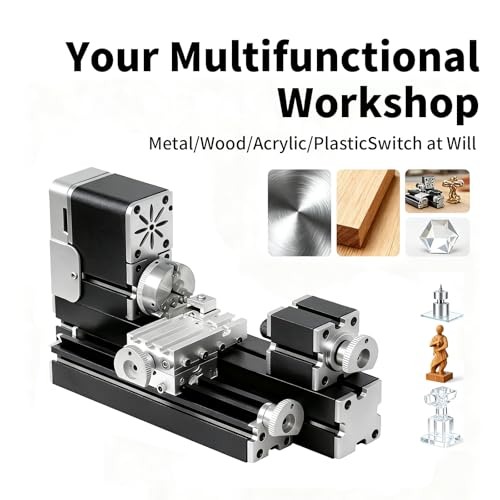
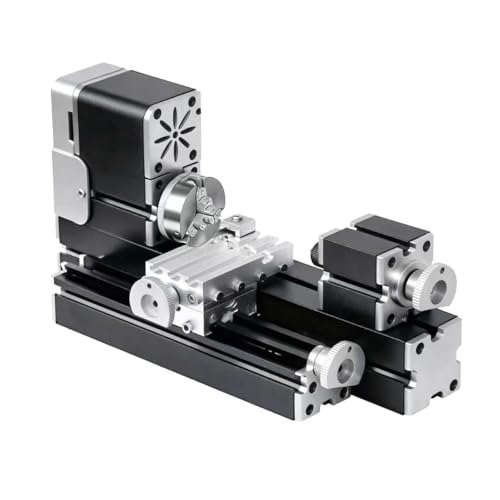
Compact doesn’t mean compromised with this ZHRUI model. At just 310mm long, it fits on any desk, but it’s built like a tank, 100% metal construction, square nuts, and dovetail slides mean zero flex. The 20,000 RPM motor is tuned for speed, not torque, so it’s perfect for light cuts on aluminum, copper, or acrylic.
The 0.02mm molded scales are a standout for precision, and the 12V safety-rated power supply with triple protection makes it ideal for schools or kids’ workshops. Reviewers note it’s dead easy to set up and use right out of the box. While it can’t handle serious metalwork, it’s one of the few mini lathes that feels both professional and safe for learning. For tight spaces and detailed work, it’s hard to beat.
Product photos
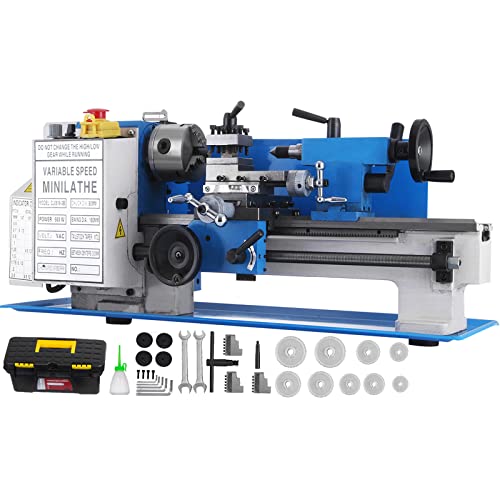
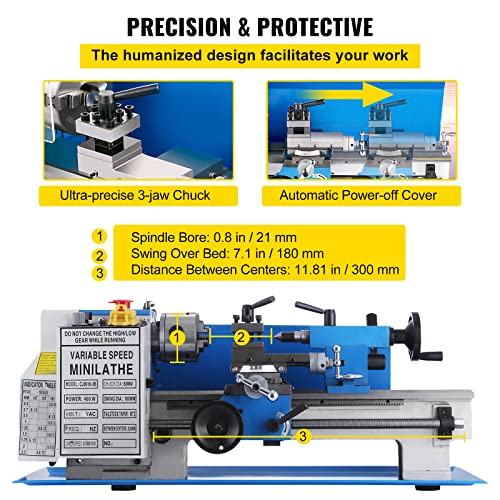
VEVOR 7″ x 12″ Mini Lathe
Strengths
- Affordable price
- Durable iron construction
- Variable speed with reverse
Trade-offs
- No digital RPM display
- Manual gear changes
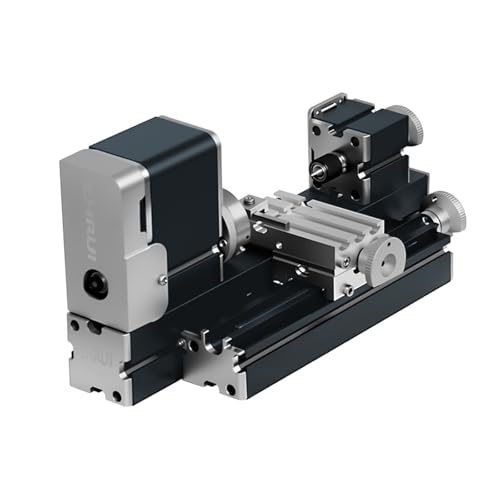
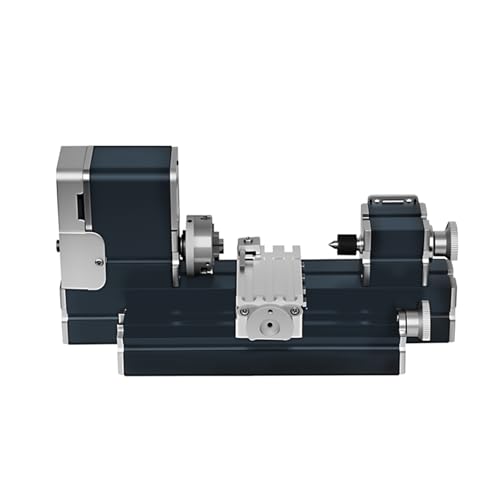
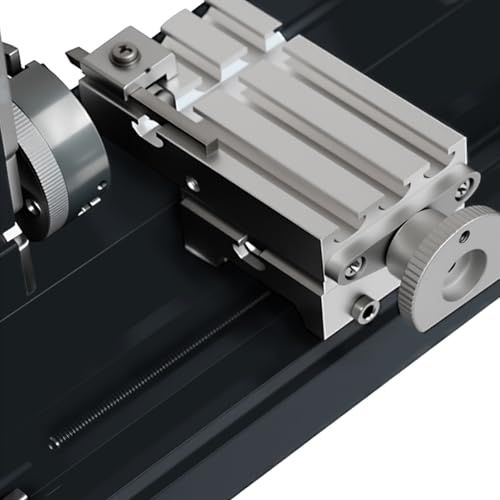
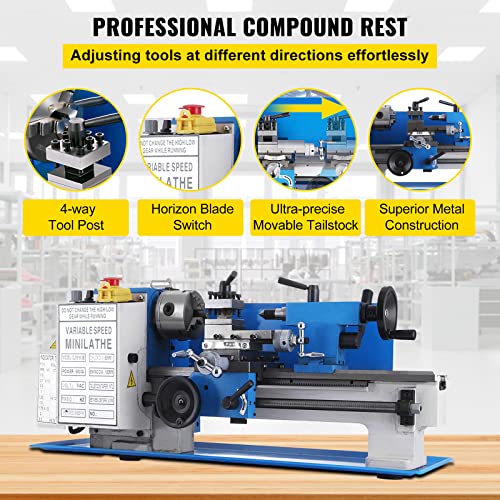
The Vevor 7×12 is a budget-minded lathe that still delivers core metalworking functions without cutting too many corners. It runs up to 2250 RPM with infinitely variable speed, and the all-metal gear train and iron bed give it more durability than some similarly priced models. Owners report it holds up well with aluminum and light steel, especially when used with proper cutting technique.
It lacks the finesse of higher-end mini lathes, but for the price, it’s hard to beat. The emergency stop button and splash guard are thoughtful touches for safety. Compared to the WEN ML712, it feels a bit more industrial, though the motor is slightly less powerful. I’d recommend this as a starter lathe for teens, students, or tinkerers who want real metal-cutting ability without a big investment.
Product photos


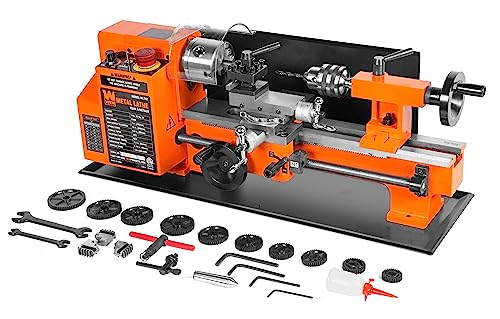
WEN 7×12-Inch Benchtop Lathe

Strengths
- Decent power for size
- Auto feed included
- Good thread range
Trade-offs
- Lower max RPM than high-speed models
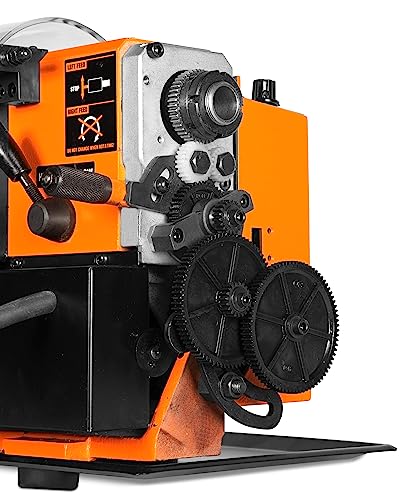
- Plastic gear housing
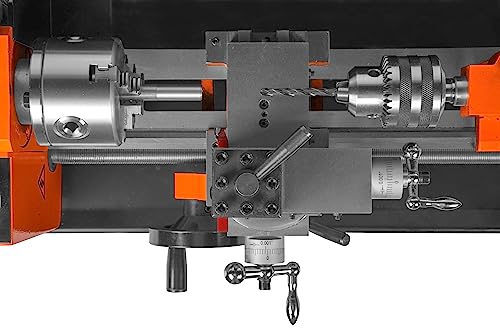
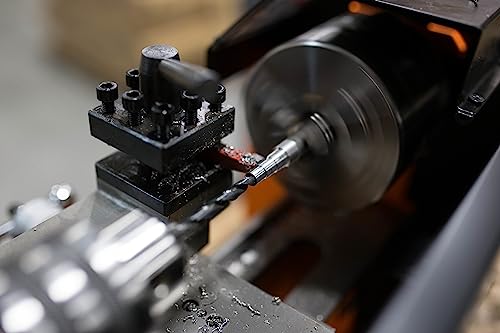
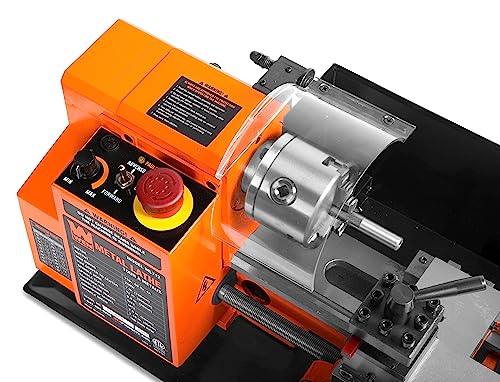
For someone just dipping into metalworking, the WEN ML712 stands out as a no-nonsense entry point that doesn’t skimp on core functionality. On paper, it’s well-rounded: a 4-amp motor, variable speed from 100 to 2500 RPM, and the ability to cut 18 different thread pitches. Owners consistently report it handles aluminum and mild steel without issue, and the inclusion of an auto feed, rare at this level, adds real value for those learning turning fundamentals.
What I appreciate is how it balances simplicity with capability. The MT3 spindle and MT2 tailstock taper are proper metal lathe standards, and the two-year warranty hints at decent build confidence. It won’t keep up with industrial machines, but for a student, hobbyist, or DIYer setting up a first shop, it’s a solid foundation. I’d pick this over ultra-minis if you plan to do real threading or work with steel regularly.
Product photos
How We Evaluated small metal lathes
Rather than a hands-on lab test, my research for these recommendations focused on a detailed comparison of published specifications and features across numerous models. I weighed owner reviews from multiple sources – including direct retailer sites and dedicated metalworking forums – alongside assessments from reputable tool review websites. Ultimately, I ranked these small metal lathes based on their suitability for hobbyists and DIYers looking for precision and capability in a benchtop package.
For this category, the most important factors were build quality (specifically all-metal construction versus plastic components), motor power and speed control, and precision features like scale accuracy and chuck quality. All-metal construction directly impacts stability and longevity, while adequate power and speed ranges are crucial for working with different materials. Precision features determine the quality of the finished product and the types of projects a lathe can successfully handle.
Specifications reliably indicate motor power, maximum swing and length capacity, and spindle speeds. However, judging build quality and actual precision requires careful review of owner feedback. Users consistently highlight issues with vibration, accuracy, and durability in models with significant plastic parts. Reputation and long-term reliability, gleaned from experienced users, were heavily factored into the final rankings – to help you avoid common pitfalls when shopping for mini metal lathes.
How To Pick The Right small metal lathes
Choosing the right metal lathe can feel overwhelming, especially given the wide range of options available. I’ve seen a lot of folks get stuck on features they don’t actually need, while overlooking the things that truly make a difference in performance and longevity.
A quality metal lathe delivers precision and repeatability through rigid construction, a powerful and controllable motor, and accurate feed mechanisms. Buyers should prioritize all-metal construction over plastic components, variable speed control for material versatility, and a robust chuck for secure workpiece holding. Understanding threading capabilities and available accessories is also crucial for specific project needs.
Build Quality & Materials
Don’t underestimate the importance of construction. I consistently see issues arise from lathes built with too many plastic parts; they simply can’t handle the vibrations and forces involved in metalworking. Look for all-metal construction, particularly in the bed, gears, and chuck. Cast iron is the gold standard for the bed, offering superior rigidity and dampening. While some hobby-grade lathes use plastic for certain components to keep costs down, they’ll limit your ability to tackle more demanding projects. A solid base is paramount, and dovetail slides with square nuts are superior to those relying on simple screws.
Motor Power & Control
The motor isn’t just about raw power; it’s about controllable power. A wider speed range is essential for working with different materials. Softer metals like aluminum and brass can be machined at higher speeds, while steel requires slower, more deliberate speeds. Variable speed control is a must-have, and models offering multiple speed ranges (like the WEN 7×12-Inch Benchtop Lathe) provide even greater flexibility. I also recommend paying attention to the motor’s wattage and RPM; a 36W motor might be sufficient for very small projects, but larger or more frequent work will benefit from 600W or more.
- Avoid models with limited speed ranges (a single “high” and “low” setting won’t cut it).
- Consider a motor with built-in cooling to prevent overheating during extended use.
- Look for a reversible motor, allowing you to back out tools or perform different operations. This feature adds a lot of versatility, especially when you start exploring more advanced techniques.
Work Capacity & Features
Beyond the basic specs like swing over bed and distance between centers, think about the features that will streamline your workflow. A quick-change tool post is a huge time-saver, allowing you to switch between tools without constantly adjusting the setup. A 3-jaw chuck is standard, but a 4-jaw chuck offers greater versatility for holding oddly shaped workpieces. If you’re serious about precision, investigate options for adding lathe digital readout systems to your setup. These systems significantly improve accuracy and make complex cuts easier to execute. When evaluating different compact metal lathes, remember to consider the types of projects you’ll be undertaking and choose a model with sufficient capacity for your needs.
A lathe’s capacity shouldn’t just meet your current needs, it should anticipate your future projects. Always err on the side of a slightly larger machine if your budget allows.
Small Metal Lathes Compared
Here’s a comparison of key specifications for several small metal lathes to help you find the right model for your needs.
| Product Name | Max. Turning Diameter | Max. Length | Motor Power | Max. RPM | Bed Material |
|---|---|---|---|---|---|
| VEVOR 8.7″ x 39″ | 220 mm (8.7″) | 1000 mm (39″) | N/A | 2500 | N/A |
| CREWORKS 9″ x 30″ | 216 mm (8.5″) | 762 mm (30″) | 1100W | 3000 | Cast Iron |
| VEVOR 8″ x 14″ | 210 mm (8.3″) | N/A | 600W | 2250 | Cast Iron |
| ZHRUI 50mm | 50 mm (2″) | 150 mm (6″) | N/A | 20000 | All-Metal |
| AcmeFlare 20,000RPM | 50 mm (2″) | 150 mm (6″) | 36W | 20000 | All-Metal |
| ZHRUI 36W | 50 mm (2″) | 150 mm (6″) | 36W | 20000 | All-Metal |
| VEVOR 7″ x 12″ | N/A | N/A | 550W | 2250 | Iron |
| WEN 7×12-Inch | 178 mm (7″) | 305 mm (12″) | 4 Amp | 2500 | N/A |
Frequently Asked Questions
What spindle speed is fast enough for most hobby metalworking?
Around 2000-2500 RPM is generally sufficient for a wide range of hobby metalworking tasks. While higher speeds are useful for very soft metals or small cuts, most projects don’t require exceeding this range, and lower speeds offer more control for harder materials.
Are there metal lathes suitable for very small projects, like jewelry making?
Yes, several compact models, like the AcmeFlare 20,000RPM, achieve speeds up to 20,000 RPM and a 50mm capacity, making them suitable for intricate work. However, these smaller lathes typically have less power and rigidity than larger benchtop options.
How much space do I realistically need to operate a small metal lathe?
Plan for at least 4-6 feet of clear workspace in front of the lathe for safe operation and material handling. You also need room to store tools, coolant, and finished projects, so consider the overall footprint.
What is the benefit of a quick-change tool post?
A quick-change tool post significantly reduces setup time. Instead of repeatedly adjusting a single tool, you can mount multiple tools to a post and quickly swap between them, improving efficiency and workflow.
Are there affordable alternatives to investing in a dedicated digital readout (DRO) system?
While DRO systems offer superior precision, you can achieve decent accuracy with a high-quality dial indicator and a careful approach to measurement. Also, if you’re seeking a more manually operated experience, there are several excellent precision manual lathes available.
The Bottom Line
Choosing a small metal lathe often comes down to balancing initial cost with long-term capability. You can find models that seem appealing at a low price, but the VEVOR 8.7″ x 39″ consistently rises to the top as the best overall choice for those wanting a good mix of capacity, features, and reasonable build quality without breaking the bank. It strikes a solid balance for hobbyists and DIYers who want to tackle a variety of projects.
For those on a tighter budget, or focusing on very small-scale work, the ZHRUI 50mm represents the best value. If you anticipate needing significant versatility, the CREWORKS 9″ x 30″ stands out with its powerful 1100W motor and cast iron bed, making it capable of handling a wider range of materials and projects. Remember to check out other metal lathe models if these don’t quite fit your needs.
Ultimately, specs matter, but they aren’t everything. Focusing on a lathe with a rigid, all-metal construction and a controllable motor will provide the best results, regardless of whether you’re turning simple knobs or attempting more complex geometries. Prioritize build quality and user feedback over flashy features – a well-built, basic lathe will always outperform a cheaply made one loaded with extras.
