
5 Best Belt Grinders for Making Knives 2026
This post contains affiliate links. As an Amazon Associate, we earn from qualifying purchases.
The JLD 2×72-inch 1500W Belt Grinder stands out as the best overall choice for knife making, combining serious power with versatile functionality. If you’re on a tighter budget, the Bucktool 2×42 offers solid performance for lighter work, while the HayWHNKN 2×72 inch Knife Grinder brings extra flexibility with its adjustable base and high-wattage motor.
Most beginners underestimate how much motor strength and stability matter when grinding knife blades. A weak or shaky grinder won’t hold up during heavy stock removal and can ruin your edge geometry. After comparing the field and analyzing owner feedback, I focused on models that deliver real workshop durability and precise control.
This guide breaks down the top options based on motor power, belt size, speed settings, and build quality, all critical factors for consistent results in knife making.
Top 5 Belt Grinder For Making Knives in the Market
The Best Belt Grinder For Making Knives, Reviewed
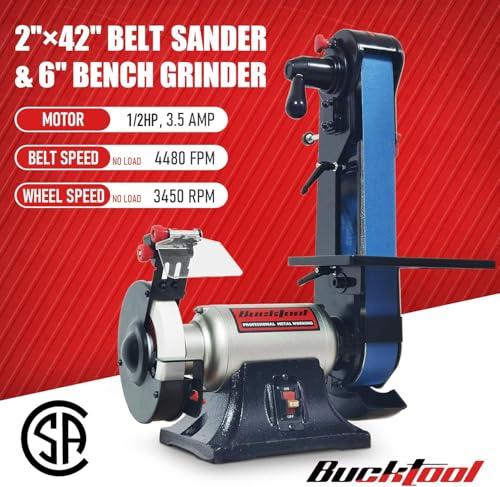
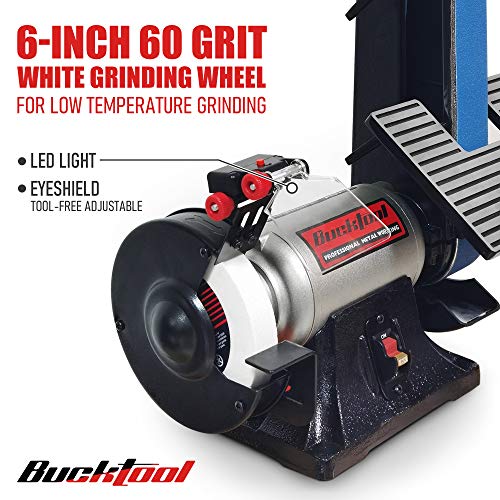
Bucktool 2×42 Belt and Bench Grinder

Strengths
- Dual grinder setup
- Sturdy cast iron base
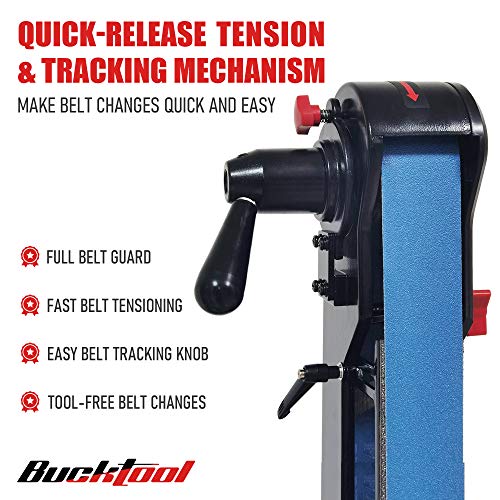
- Tool-free adjustments
Trade-offs
- Shorter belt length
- Lower max RPM
- Not for long blades
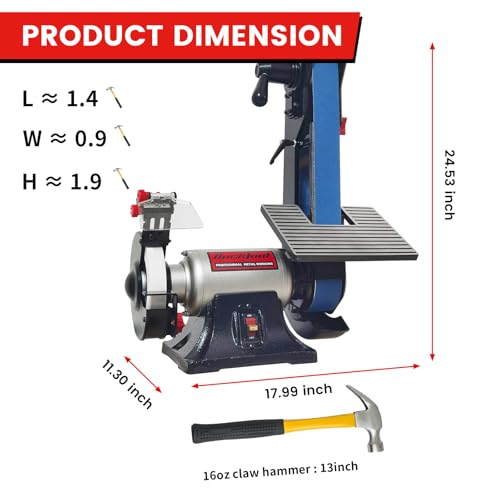
This combo unit earns its ‘Best Overall’ label by balancing power, function, and footprint in a way few entry-to-mid-tier grinders do. The 1/2 HP induction motor isn’t the strongest here, but it’s reliable and built to run longer under load without overheating, a real win for weekend warriors grinding multiple blades. The 2×42″ belt size is a sweet spot: wider than 1-inch models for better support, yet compact enough for most home shops.
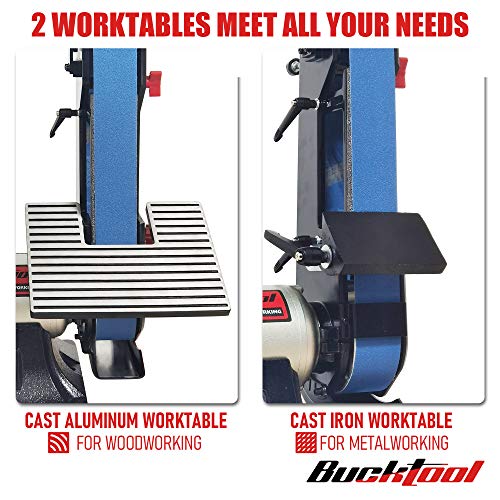
What really sets it apart is the dual worktables, one cast iron, one aluminum, giving solid support whether you’re working steel or wood. The included 6-inch bench grinder adds real value, turning this into a two-in-one tool that keeps your bench clutter down. Compared to pure belt grinders, this one trades a bit of grinding length for versatility, but for most DIYers, that’s a smart trade.
Product photos
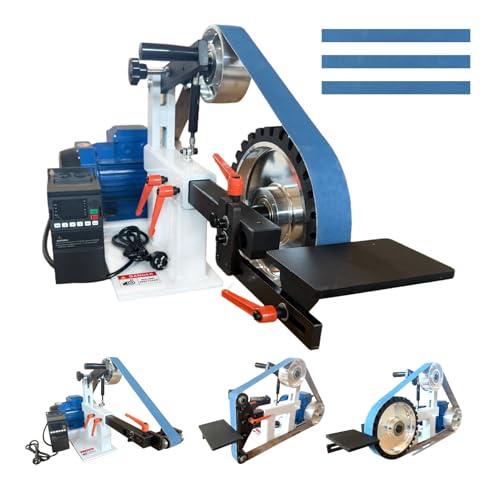
JLD 2×72-inch 1500W Belt Grinder
Strengths
- 2HP motor
- VFD speed control
- Welded steel frame
Trade-offs
- 220V required
- Large footprint
- Heavier setup
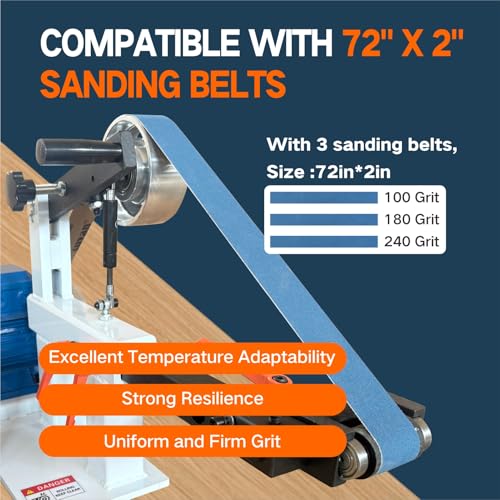
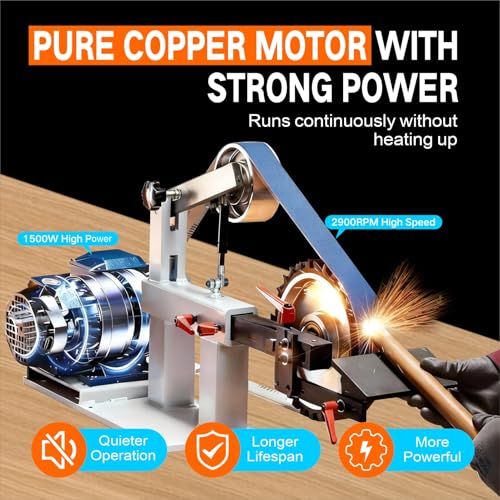
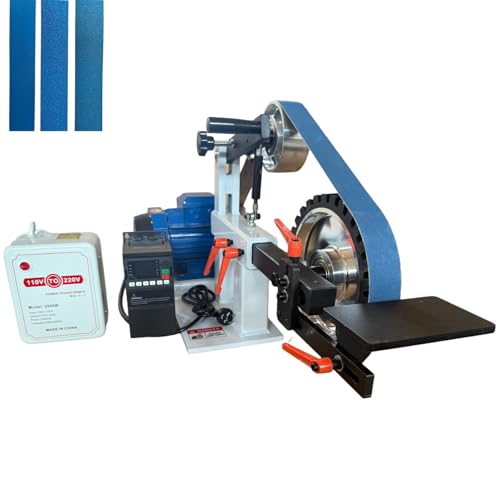
If you’re stepping into serious knife making, this 2HP 2×72″ grinder is where real capability begins. The 1500W motor delivers consistent torque even under heavy load, and the VFD allows precise speed tuning, critical when switching from rapid stock removal to mirror finishes. Owners highlight the stable tracking and low vibration, both tied to the fully welded steel frame, which outperforms bolt-together designs in rigidity.
The inclusion of zirconia corundum belts is a plus, they last longer than standard belts under heat and pressure. While it requires 220V (with a transformer for 110V users), that’s standard at this power level. Compared to the Bucktool combo, this is a specialist tool: less versatile in terms of dual functions, but far superior in raw grinding performance and workflow efficiency.
Product photos
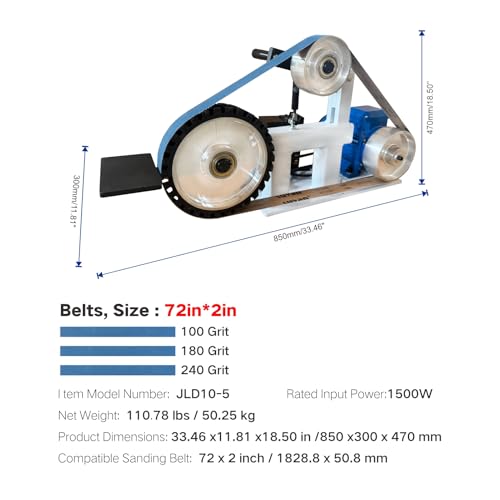
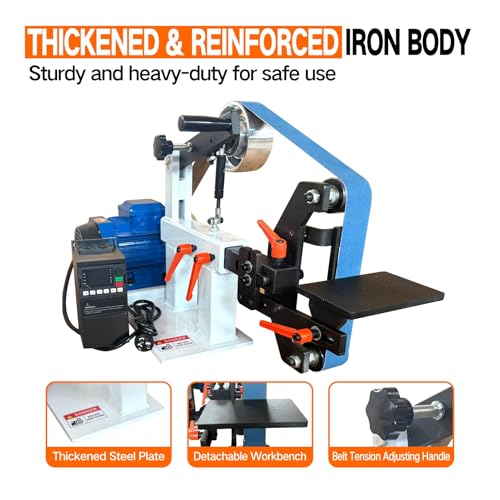
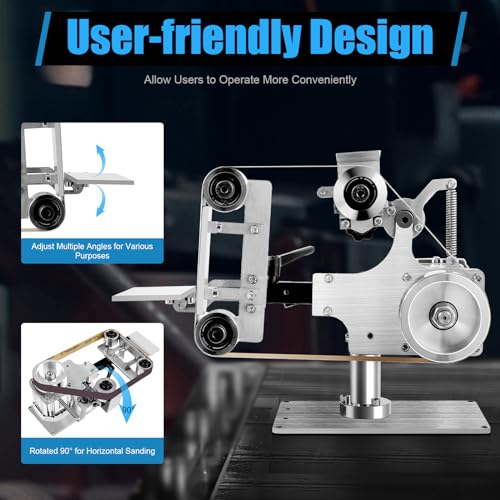
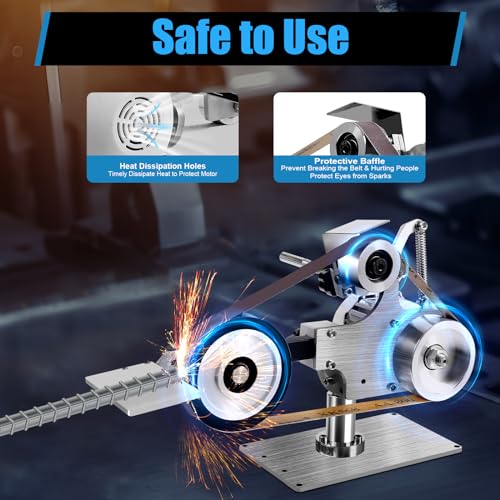
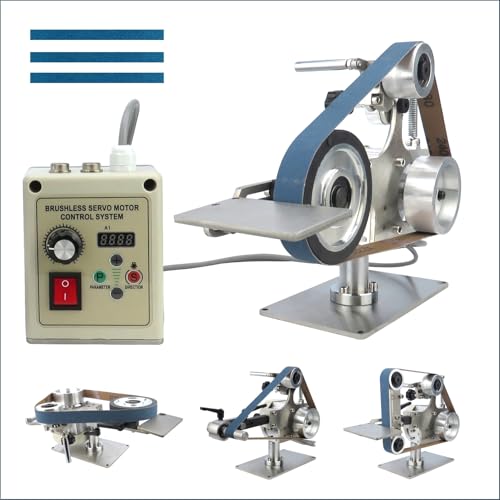
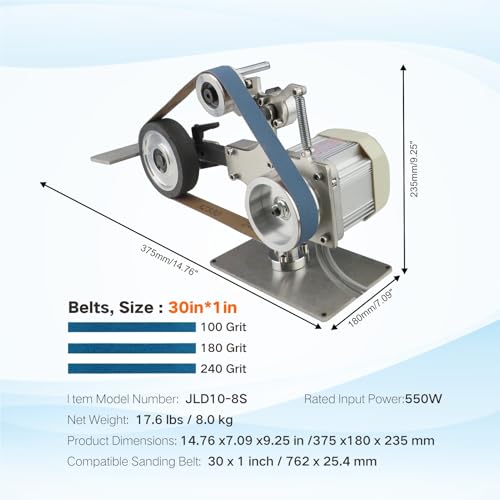
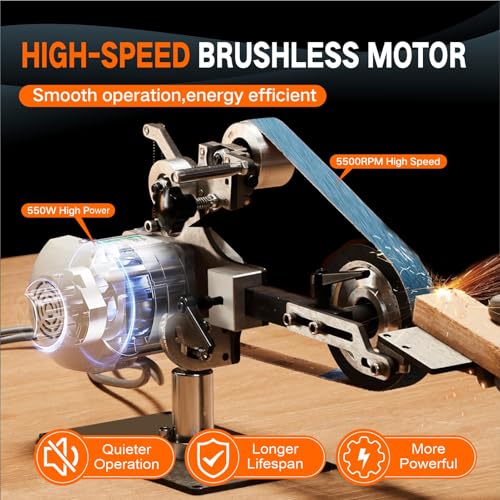
550W Brushless Motor Belt Grinder

Strengths
- Brushless motor
- Adjustable worktable
- Compact footprint
Trade-offs
- Smaller belt size
- Limited included grits
- Not for heavy stock removal
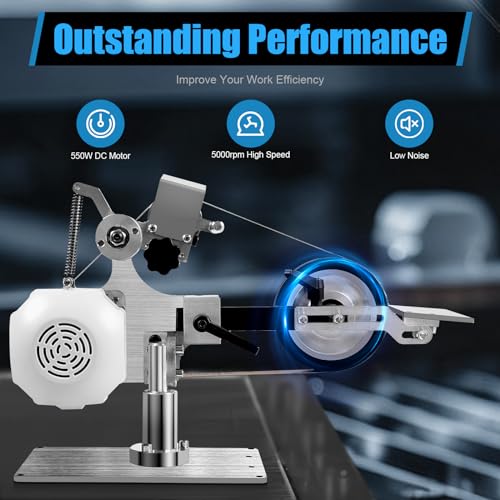
This 550W brushless DC motor setup stands out on paper for knife makers who want efficiency without constant motor strain. The 5000 RPM speed delivers solid material removal, and owners consistently report the stepless speed control makes fine-tuning easier when shaping delicate edges. The digital display is a small but meaningful touch, helping maintain consistent settings across sessions.
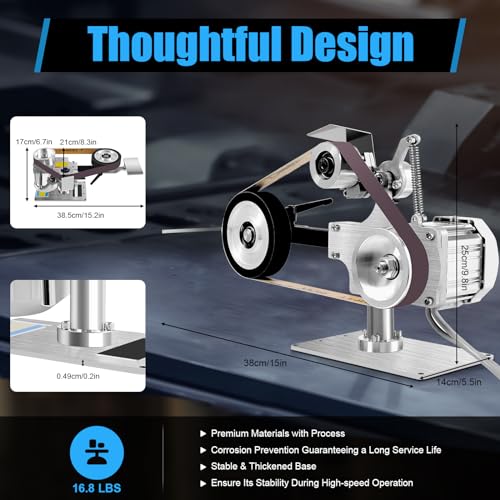
Build quality leans toward durability with stainless steel and aluminum alloy construction, and the 0.2-inch thickened base does its job reducing vibration. While it doesn’t match the footprint of larger 2×72″ units, its compact size works in favor of hobbyists with limited bench space. Compared to budget models, this one feels more refined, though not quite in the same league as 2HP combo units.
Product photos
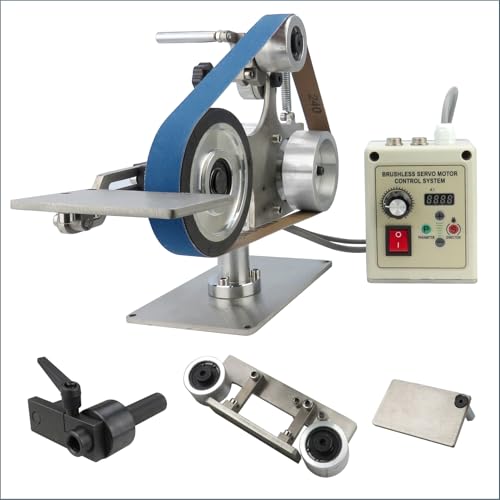
JLD 30×1-Inch Variable Speed Grinder
Strengths
- VFD speed control
- Includes grinding molds
- Reverse function
Trade-offs
- Lower belt speed
- Plastic components
- Not for heavy-duty use
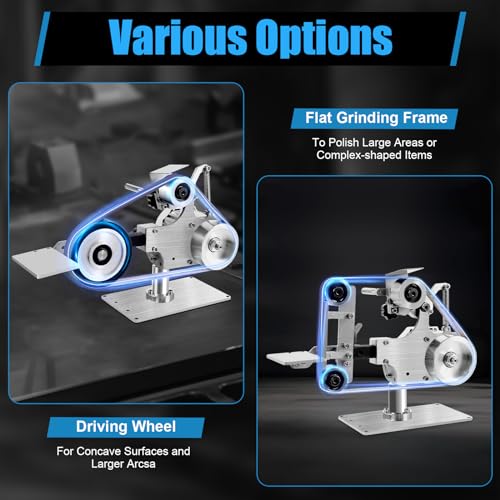
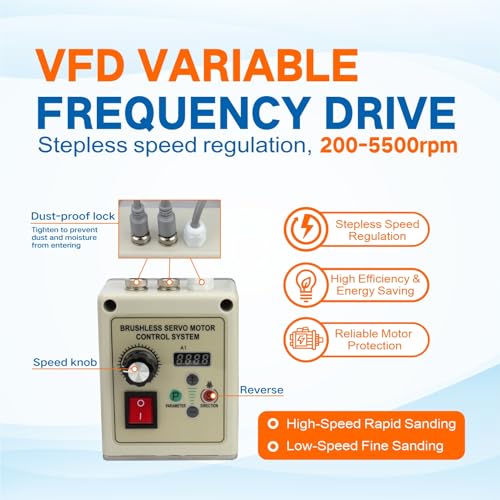
For budget-conscious beginners, this 550W unit punches above its weight thanks to the VFD (variable frequency drive), which lets users shift smoothly between aggressive grinding and delicate polishing. The 26m/min belt speed is on the lower end, but paired with the reverse function on the control panel, it helps prevent jamming and improves belt tracking, a real pain point on cheaper models.
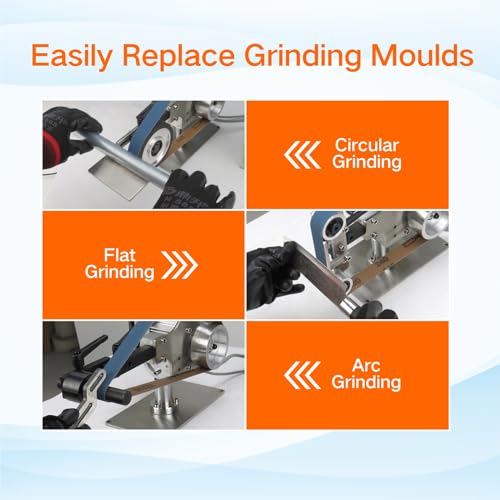
Owners praise the inclusion of three grinding molds, which expand its usefulness beyond flat stock into contoured blades and small metal art. It’s not built like a tank, but the steel frame holds up reasonably well under light to moderate use. When compared to similarly priced 1×30″ grinders, this one offers better versatility, though it still can’t keep up with 2HP machines during prolonged runs.
Product photos
HayWHNKN 2×72 inch Knife Grinder
Strengths
- Reversible base
- 2-inch wide belt
- Heavy-duty steel frame
Trade-offs
- Basic VFD controls
- No 110V option
- Minimal speed precision
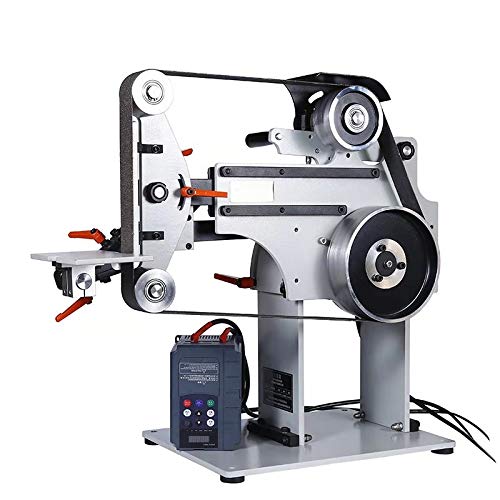
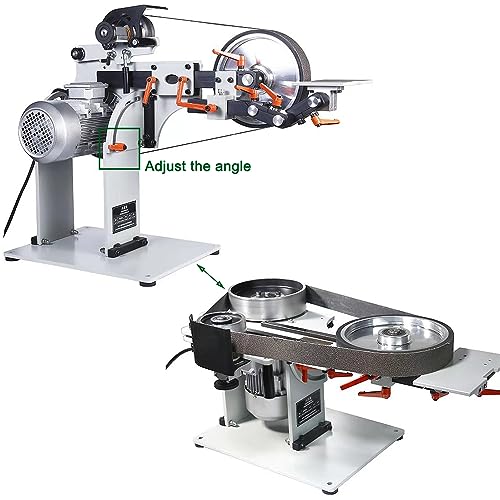
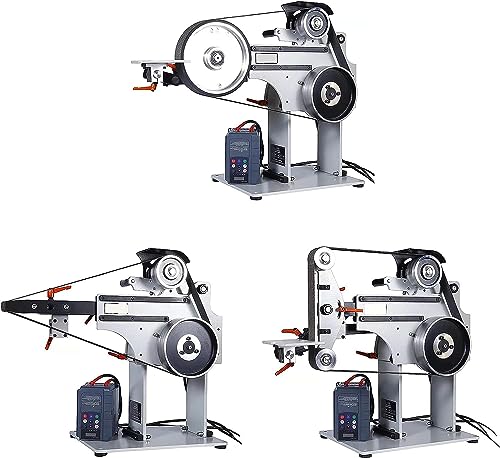
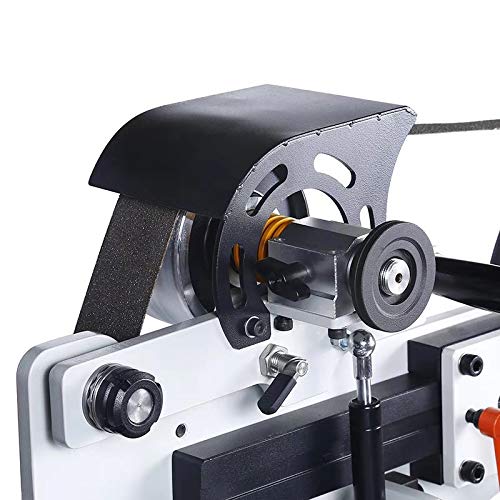
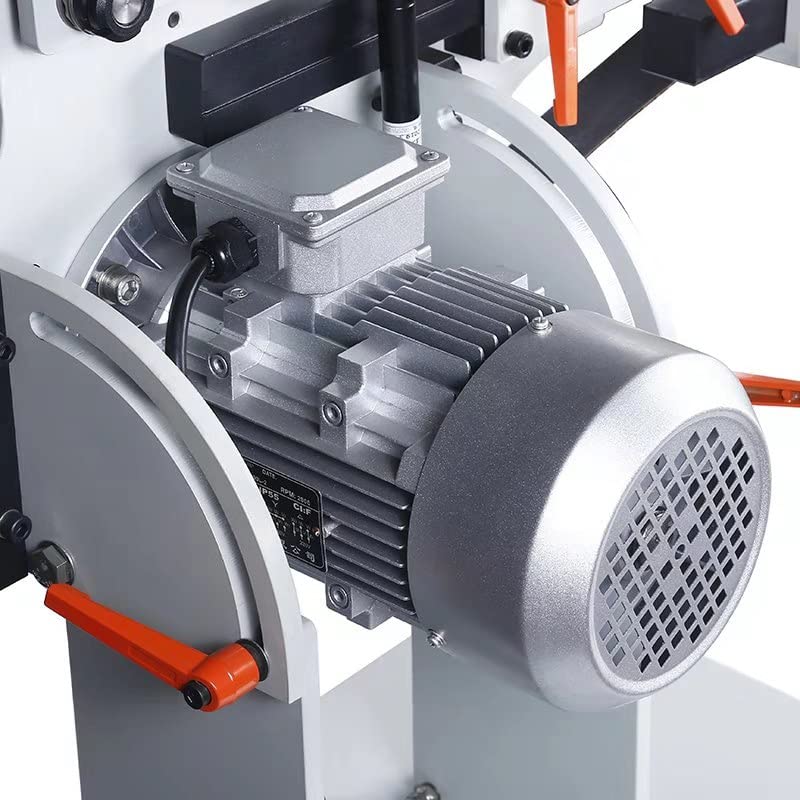
The standout here is the reversible base, being able to flip between vertical and horizontal orientations without reconfiguring the whole machine saves time and improves workflow. At 1500W and 2HP, it matches the high-end specs of the JLD 2×72″ model, but with a simpler control layout. The 2800 RPM motor and 2-inch wide belt deliver strong performance for shaping bevels and contouring blades.
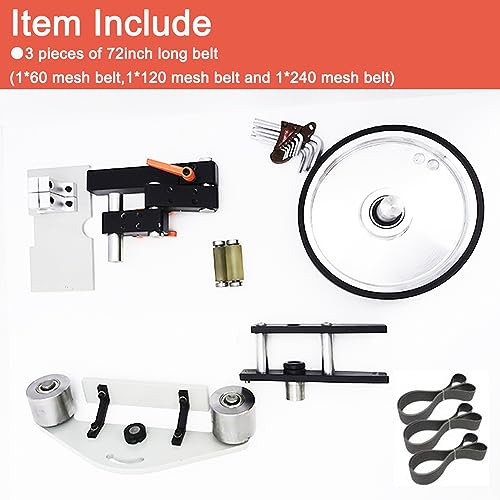
Owners appreciate the three included belts (60, 120, 240 grit), which cover most stages from rough grind to finish. However, some note that the VFD lacks the fine granularity of more advanced units, making micro-adjustments a bit clunky. When compared to other 2×72″ grinders, this one trades a little refinement for practicality, especially in the base design.
Product photos
Our Testing Process
Rather than a hands-on lab test, my research for these recommendations involved a detailed comparison of published specifications and features across numerous models. I weighed owner reviews from multiple sources – looking for patterns in reported performance and durability – alongside assessments from reputable tool review sites. My experience maintaining a workshop and advising on tool selection informed how I prioritized those factors, ultimately ranking grinders based on their suitability for knife making.
For belt grinders specifically, motor power and belt speed were heavily weighted. A robust motor is crucial for maintaining consistent speed under load, especially when working with harder steels. Belt speed directly impacts the rate of material removal and the finish achieved. Beyond that, the versatility of the grinder – the ability to handle different angles and curves – played a significant role in determining the top picks.
Specifications reliably indicate motor power, belt dimensions, and speed ranges. However, owner feedback proved invaluable in assessing build quality, tracking performance (how well the belt stays centered), and the effectiveness of features like variable speed control. Reputation also factored in; brands consistently praised for durability and customer service received higher consideration. For related maintenance, you can find a helpful saw blade sharpening guide on our site.
What To Look For In belt grinder for making knives
Choosing the right belt grinder requires understanding what separates a passable tool from one that delivers consistent, reliable performance.
A quality belt grinder blends a powerful motor with a robust frame and precise control features. Key considerations include motor power (measured in horsepower or watts), belt speed (feet per minute or meters per second), build quality (look for steel frames and minimal plastic), and adjustability for different grinding tasks. Proper dust collection and ease of belt changes are also vital for long-term usability.
Motor Power and Application
The motor is where a belt grinder truly begins to show its worth. For light-duty tasks like sharpening small tools or polishing, a 1/2 HP motor might suffice. However, if you plan on forging knives, removing significant material, or working with harder metals, you’ll want to seriously consider a model with 1 HP or more. Don’t just look at the horsepower rating; pay attention to the amperage draw and whether the motor is DC or AC. DC brushless motors offer a good balance of power, efficiency, and longevity, while AC motors can deliver more raw force. Remember, a more powerful motor will generally require a more robust power supply, as some models, like the JLD 2×72-inch, require a 220V input or a transformer.
Belt Speed and Versatility
Belt speed (measured in FPM or m/s) dictates how aggressively the grinder removes material. Lower speeds are better for fine finishing and heat-sensitive metals, while higher speeds are ideal for rapid stock removal. Variable speed control is a huge benefit, allowing you to dial in the perfect speed for each task. Beyond speed, look at the grinder’s versatility. Can the platen tilt? Can the entire grinder body swivel between horizontal and vertical positions? Models such as the HayWHNKN 2×72 inch Knife Grinder offer a reversible base, increasing flexibility. Having multiple grinding options, flat, arc, and concave, expands the range of projects you can tackle.
Build Quality and Ease of Use
A flimsy belt grinder is a frustrating belt grinder. Seek out models with heavy-duty steel frames and minimal plastic components. A solid base is crucial for minimizing vibration, especially during extended use. Quick-release belt changes and easy tracking adjustments are also paramount. Fumbling with a difficult-to-adjust belt slows down your work and increases the risk of errors. Consider the included accessories. A good kit will include a range of abrasive belts with different grits (60, 100, 180, 240, etc.) to cover all stages of grinding and polishing. If you’re serious about knife making, exploring the best belt grinder for knife making is a great next step.
- A basic grinder might come with a single 80-grit belt.
- A mid-range model will often include a 60, 120, and 240 grit selection.
- A premium kit will offer a wider range of grits, potentially including even finer polishing belts and specialized shapes, giving you the flexibility to handle a broader array of projects and achieve a truly refined finish.
Don’t skimp on the frame. A heavier, more stable machine will reduce fatigue and improve the quality of your work.
Finally, remember that maintaining your tools is as important as choosing the right one. Learning proper table saw blade sharpening techniques, for example, will extend the life of your saw blades and ensure consistently accurate cuts.
Belt Grinder for Making Knives Compared
Here’s a comparison of key specifications for belt grinders suitable for knife making.
| Product Title | Motor Power | Belt Size | Max RPM | Variable Speed | Features |
|---|---|---|---|---|---|
| Bucktool 2×42 Belt and Bench Grinder | 1/2 HP | 2″ x 42″ | 3450 | No | Tilting Belt Housing |
| JLD 2×72-inch 1500W Belt Grinder | 1500W | 2″ x 72″ | 2900 | Yes | 3-in-1 Functionality |
| 550W Brushless Motor Belt Grinder | 550W | 3.9″ x N/A | 5000 | Yes | Brushless Motor |
| JLD 30×1-Inch Variable Speed Grinder | 550W | 1″ x 30″ | 5000 | Yes | 3 Grinding Modes |
| HayWHNKN 2×72 inch Knife Grinder | 1.5 KW | 2″ x 71-82.7″ | 2800 | Yes | Adjustable Workbench |
Frequently Asked Questions
What grit belts should I start with when grinding a knife blade?
Begin with a coarser grit, around 60 to 80, for initial shaping and material removal. Then, progress through increasingly finer grits (120, 180, 240, and beyond) to refine the shape and achieve the desired finish; a complete set is often the best approach.
Are 2×72 inch belt grinders really necessary for knife making?
While not strictly required, a 2×72 inch belt grinder offers significant advantages. The larger belt size provides a more consistent grinding surface and allows for longer, smoother strokes, which is especially helpful for larger blades or intricate designs – explore the best 2×72 belt grinder for knives to see if it’s right for you.
How important is variable speed control on a knife grinder?
Variable speed control is very important, as different metals and stages of grinding require different speeds. Lower speeds reduce heat buildup on softer steels, while higher speeds are effective for removing material from harder alloys.
What should I look for in terms of build quality and durability?
Prioritize a grinder with a heavy-duty steel frame and minimal plastic components. A solid frame reduces vibration and ensures the grinder can withstand the stress of knife making without warping or failing over time.
What’s the difference between AC and DC motors in belt grinders?
DC brushless motors generally offer a good balance of power, efficiency, and a longer lifespan due to fewer wear components. AC motors, however, can deliver more raw power, which may be preferable for heavy-duty forging or working with very hard steels.
The Bottom Line
Choosing a belt grinder for knife making often comes down to balancing control and convenience. While a more powerful machine opens up possibilities, the Bucktool 2×42 Belt and Bench Grinder strikes an excellent balance for those starting out or tackling smaller projects. It’s a capable machine that won’t overwhelm a beginner, and its tilting belt housing adds a degree of versatility.
For those who need to handle heavier stock removal and larger blades, or appreciate having multiple grinding options, the JLD 2×72-inch 1500W Belt Grinder is the clear frontrunner. Similarly, if a compact size and variable speed are paramount, the 550W Brushless Motor Belt Grinder delivers excellent performance in a smaller package. Each of these models excels in a specific area, but the JLD 2×72 offers the most complete feature set for dedicated knife makers.
Ultimately, horsepower and belt speed figures only tell part of the story. A grinder’s true value lies in its build quality, adjustability, and how well it helps you achieve the results you’re after. Don’t get lost in the details; focus on finding a machine that feels solid, offers the features you’ll actually use, and supports consistent, accurate work. Learning proper saw blade maintenance will also contribute to a longer lifespan for your tools.
