
9 Best Air Compressors for Shops 2026
This post contains affiliate links. As an Amazon Associate, we earn from qualifying purchases.
The Campbell Hausfeld 80 Gallon stands out as the best overall shop air compressor for its rugged build, strong 16 CFM output, and reliable oil-lubricated pump, while the California Air Tools 60 Gallon Ultra Quiet is the top budget-friendly pick for those prioritizing low noise and clean air, and the POLAR AIR 5HP 60 Gallon 2-Stage offers excellent versatility for demanding dual-stage performance.
Most shop owners don’t realize how quickly a weak or undersized compressor can derail a project. Tools sputter, cycles shorten, and frustration builds when the air supply can’t keep up. After reviewing specs, owner feedback, and long-term reliability trends, I focused on models that deliver consistent CFM at 90 PSI, have durable pumps, and match real shop demands. This guide cuts through the marketing and highlights compressors that actually perform, based on how they’re built and how users rate them over time.
Top 9 Air Compressors For Shops in the Market
The Best Air Compressors For Shops, Reviewed
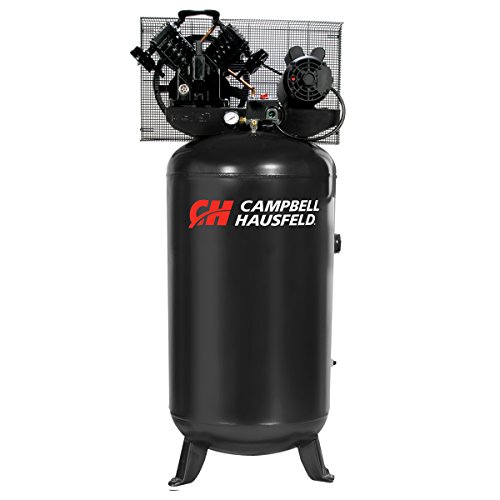
Campbell Hausfeld 80 Gallon Air Compressor
Strengths
- 16.0 CFM at 90 PSI
- ASME-certified tank
- 5 HP motor
Trade-offs
- Single-stage runs hotter
- Noisy at full load
- Heavier, less mobile
Campbell Hausfeld has been in the game for decades, and this 80-gallon model shows why. The 5 HP motor and 16.0 CFM at 90 PSI are serious numbers, enough to run two impact wrenches or a HVLP spray gun and a ratchet simultaneously. It’s a single-stage unit, so it doesn’t cool as efficiently as two-stage models, but for general shop use, the performance is rock-solid.
Owners report long-term reliability, and the ASME-certified tank adds peace of mind. It’s louder than premium models like California Air Tools, but the vertical design saves floor space in tighter shops. If you need consistent air without stepping into industrial two-stage pricing, this is my pick over most competitors.
Product photos

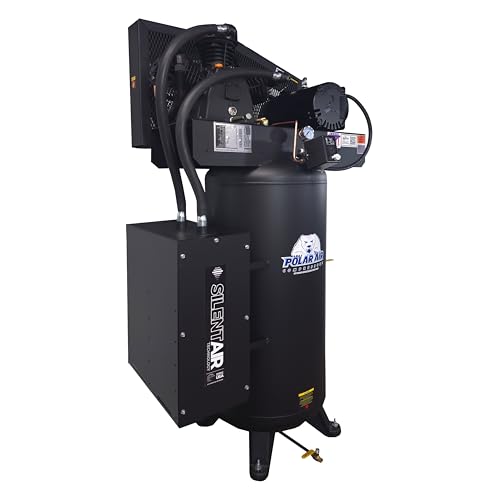
POLAR AIR 5HP 60 Gallon 2-Stage
Strengths
- 19 CFM at 90 PSI
- 50,000-hour pump rating
- 230V single-phase
Trade-offs
- Expensive
- Heavy and permanent install
- Overkill for light use
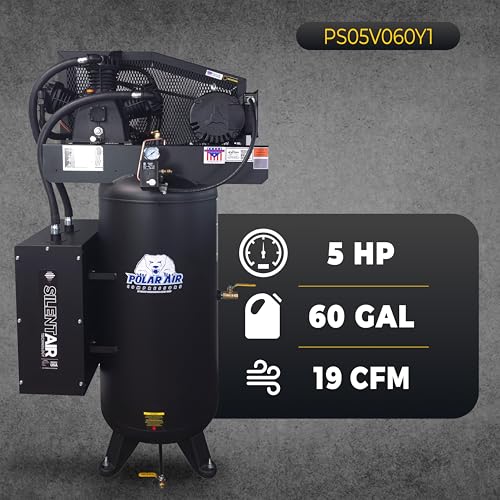
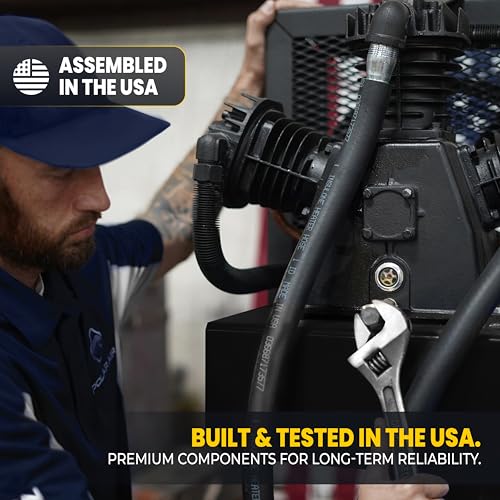
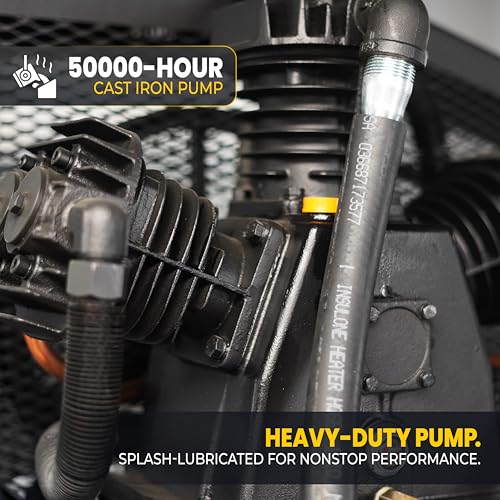
The POLAR AIR 5HP two-stage compressor is overkill for most DIYers, but for heavy-duty users, it’s a gem. The 19 CFM at 90 PSI dwarfs nearly every other unit here, and the 50,000-hour cast iron pump suggests extreme longevity. Being assembled in the USA with ETL and ASME/CRN certification adds real value for commercial buyers.
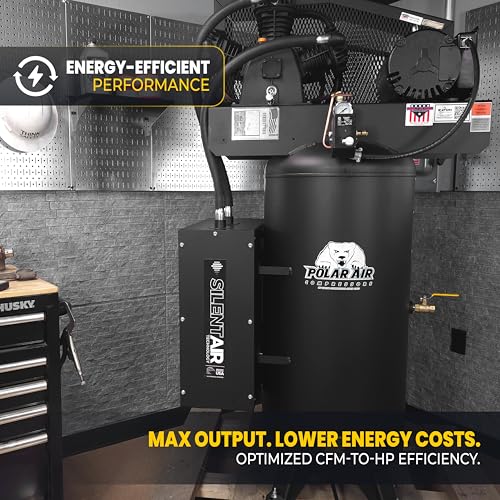
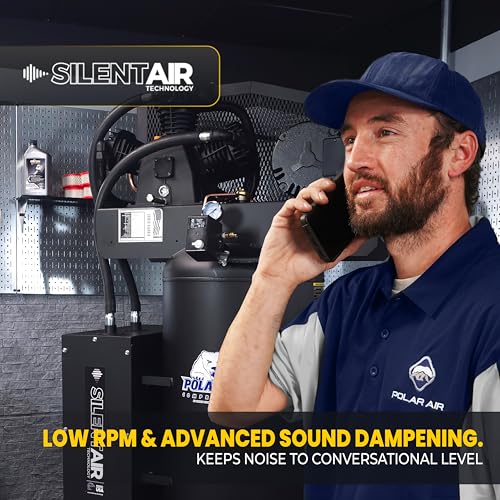
It runs at 1750 RPM, so it’s cooler and quieter than high-speed models, and the isolator pads cut vibration. Owners in fabrication shops say it handles plasma cutting and die grinders without breaking a sweat. Compared to the VEVOR 80-gallon, this one’s more efficient and durable. If you’re running air 8+ hours a day, this is the smarter long-term investment.
Product photos
California Air Tools 60 Gallon Ultra Quiet

Strengths
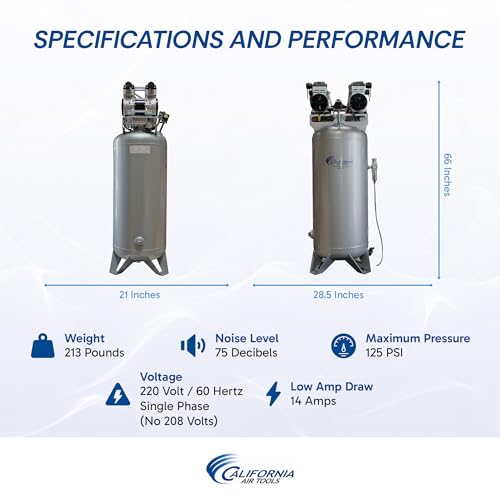
- 75 dBA ultra quiet
- Auto drain valve
- Oil-free dual piston pump
Trade-offs
- Lower CFM than rivals
- Twin motor setup less efficient
- Higher upfront cost
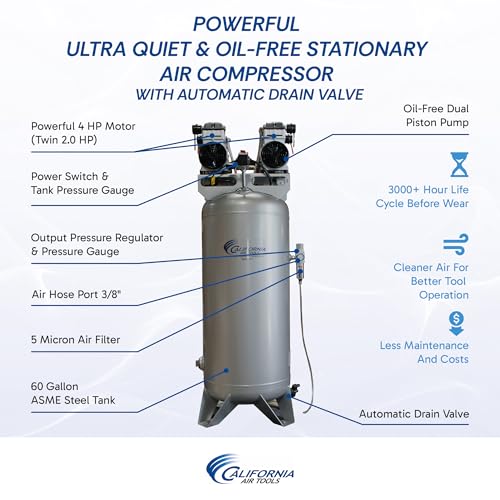
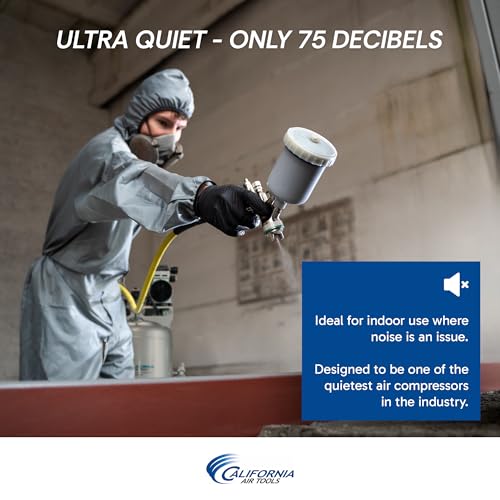
If noise is your enemy, this California Air Tools model is your best defense. At 75 dBA, it’s barely louder than a dishwasher, unheard of for a 60-gallon compressor. The twin 2.0 HP motors run at 1680 RPM, reducing vibration and heat, which owners say translates to years of trouble-free use.
The 10.6 CFM at 90 PSI won’t match the Campbell Hausfeld, but it’s enough for finish nailers, detail sanders, and inflators. The auto-drain valve is a standout, no more forgetting to empty the tank. For home shops, studios, or shared workspaces, this is the clear winner. Just know you’re trading peak airflow for peace and quiet.
Product photos

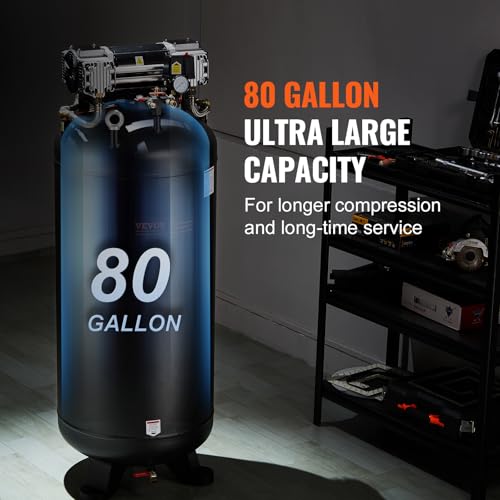
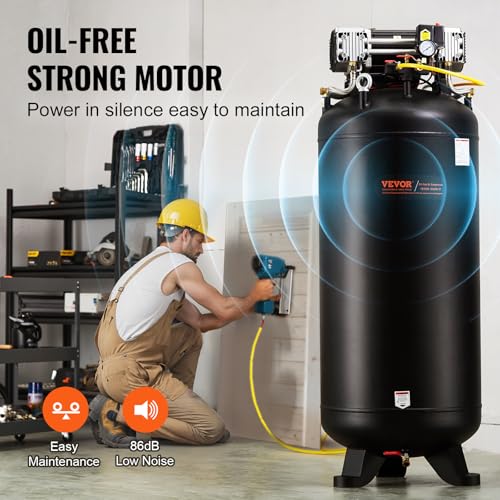
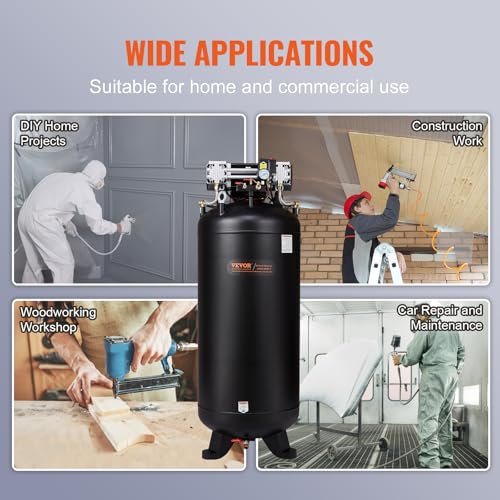
VEVOR 80 Gallon Oil-Free Air Compressor

Strengths
- Oil-free pump
- 80-gallon capacity
- 15.5 SCFM at 90 PSI
Trade-offs
- Not true three-phase
- Oil-free still needs valve maintenance
- Less cooling than two-stage
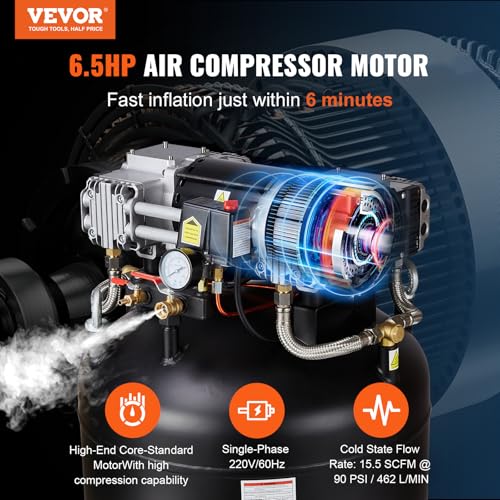
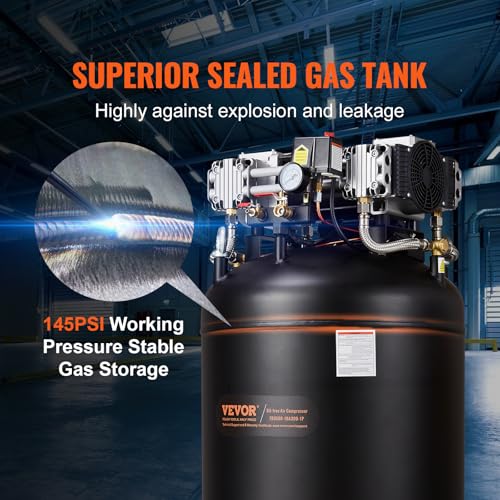
This VEVOR 80-gallon oil-free unit is built for factories, not garages. The 6.5 HP motor and 15.5 SCFM at 90 PSI can feed multiple tools all day, and the oil-free design eliminates oil changes, ideal for food-adjacent or clean environments. The 86dB noise level is reasonable for its class, though not silent.
But here’s the catch: it’s 220V single-phase, so it won’t work on standard three-phase industrial lines. Owners note it’s great for light manufacturing or large woodshops, but not for heavy stamping or continuous high-CFM demands. Still, for shops wanting low maintenance and solid output, it’s a compelling alternative to oil-lubricated models.
Product photos
Klutch 60-Gallon 3.7 HP Air Compressor

Strengths
- Cast iron pump
- Oil sight gauge
- 9.3 CFM at 90 PSI
Trade-offs
- No mobility kit
- Basic gauges
- 230V only
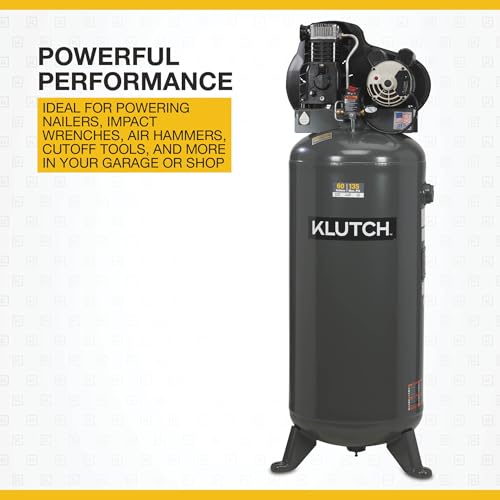
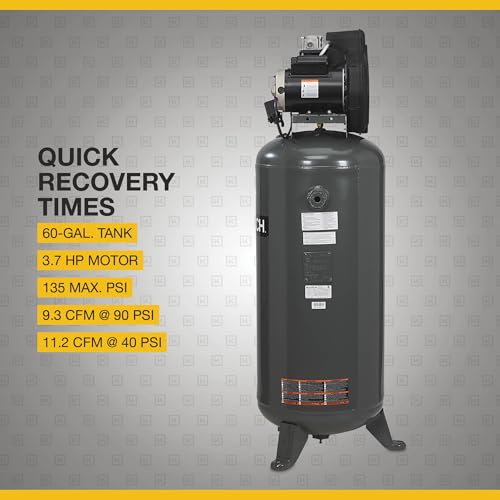
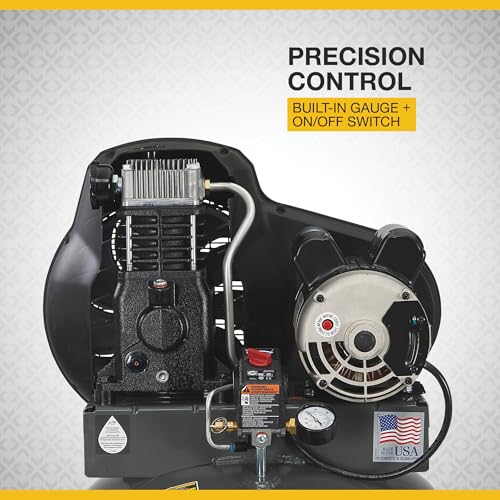
Klutch’s 60-gallon 3.7 HP model is a solid mid-range contender, especially at its price. The 9.3 CFM at 90 PSI isn’t class-leading, but it’s enough for most pneumatic tools, and the oil-lubricated cast iron pump should last years with basic maintenance. Owners appreciate the oil sight gauge and dual safety valves.
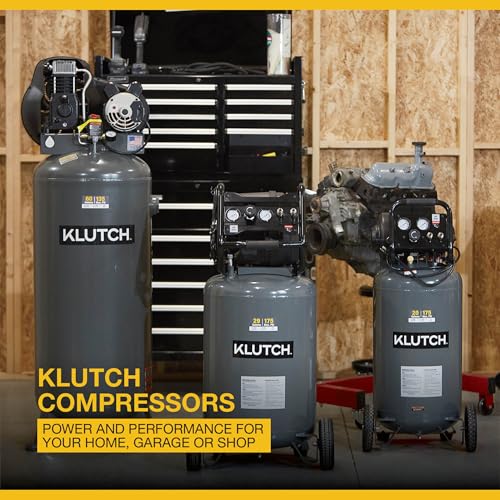
It’s nearly identical to the DEWALT 60-gallon unit in specs, but without the brand premium. The downside? No wheels, and the build feels a bit utilitarian. Still, for mid-size shops wanting a no-frills, dependable workhorse, this is the smarter buy if you’re on a budget. Just make sure you have 230V power.
Product photos

DEWALT 60 Gallon Heavy Duty Air Compressor

Strengths
- Oil-lubricated pump
- 155 PSI max pressure
- DEWALT reliability
Trade-offs
- Requires 240V circuit
- No wheels
- Heavier than competitors
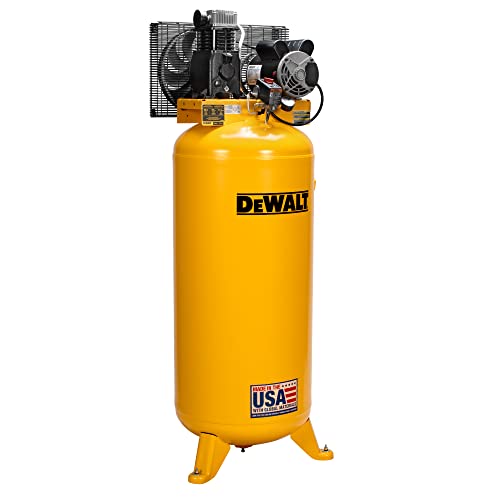
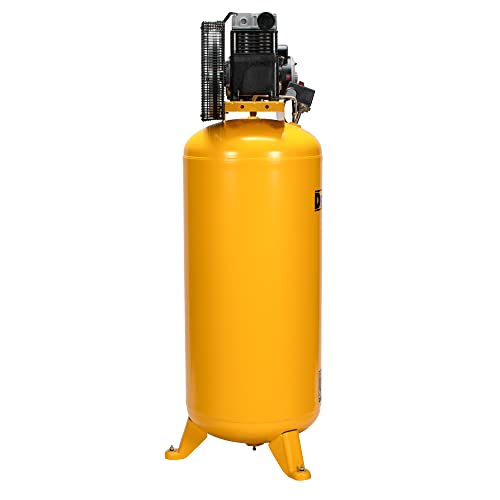
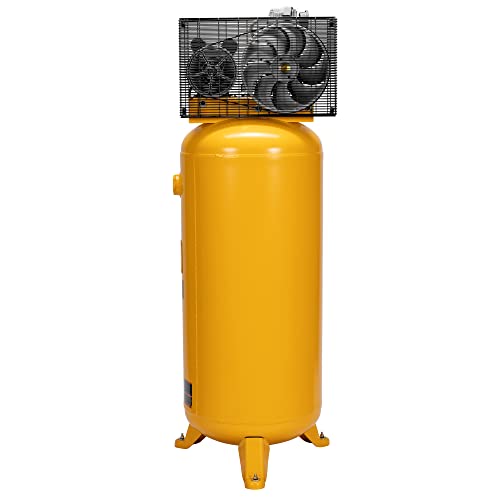
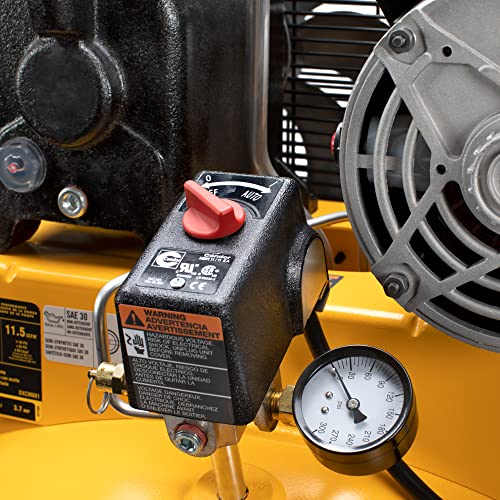
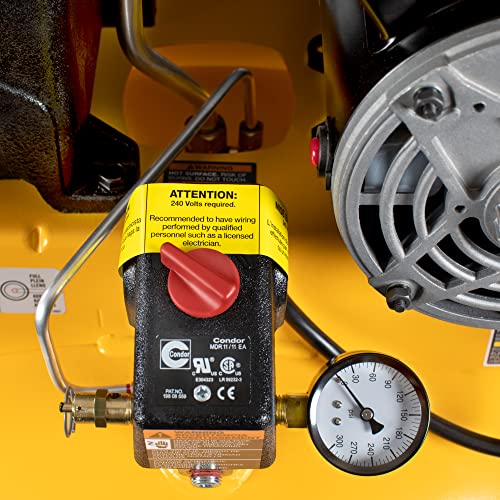
DEWALT’s 60-gallon compressor leans hard into durability, and it shows in the oil-lubricated cast iron pump and 155 PSI max pressure. The 11.5 SCFM at 90 PSI isn’t class-leading, but it’s plenty for most shop tools. What stands out is the brand’s reputation, owners trust DEWALT for long-term reliability, and this unit delivers on that promise.
It’s a 240V machine, so you’ll need a dedicated circuit, but that also means cleaner power delivery and less voltage drop under load. Compared to the Klutch 60-gallon model, this one feels more refined, with better gauges and a sturdier build. I’d take it over the Klutch for any shop where downtime isn’t an option.
Product photos
VEVOR 25-Gallon 2HP Oil-Lubricated Compressor
Strengths
- 200 PSI max pressure
- Dual outlets
- Smooth-rolling wheels
Trade-offs
- Belt cover feels flimsy
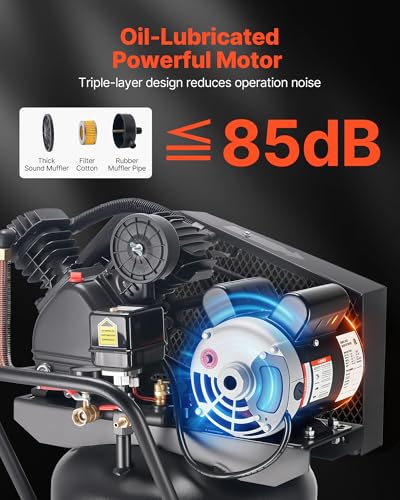
- Noisy at full load
- Oil-lubricated requires maintenance
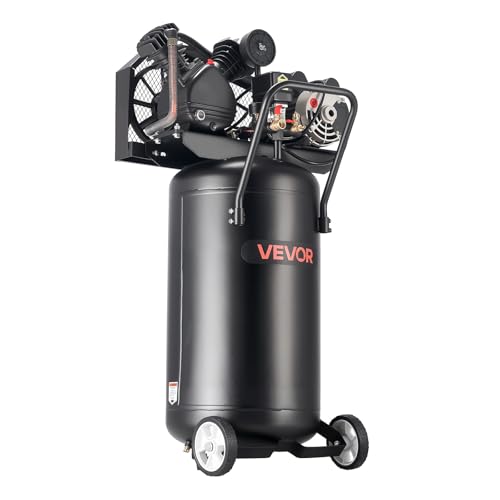
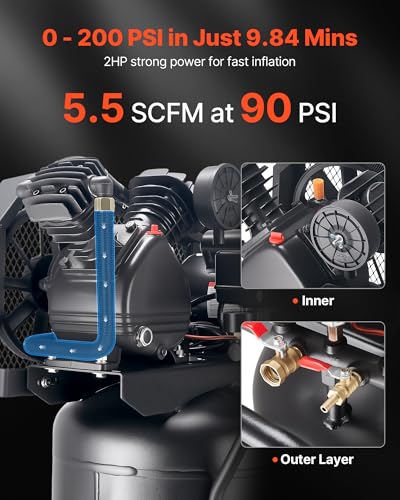
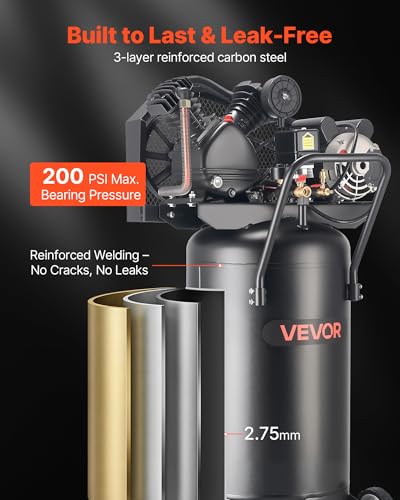
VEVOR’s 25-gallon model stands out for mobility and solid mid-tier performance. The 2 HP motor delivering 5.5 SCFM at 90 PSI lines up well with framing nailers and impact tools, and the 200 PSI max pressure gives it headroom most in this class lack. Owners praise the thick tank steel and oil mirror, small touches that signal better build quality than budget brands.
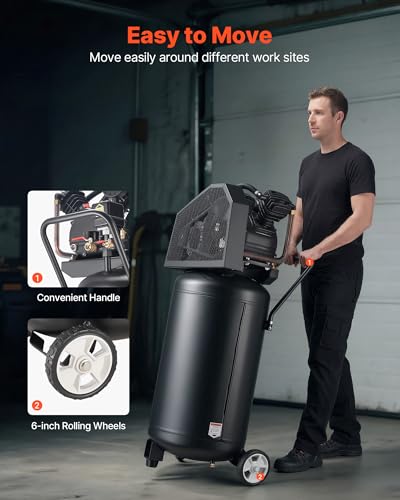
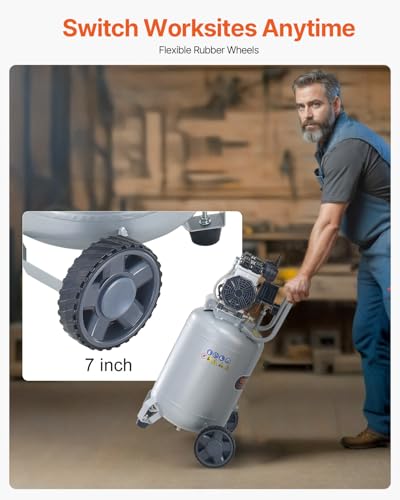
What really sets it apart is the wheel kit. Unlike bolt-on afterthoughts, this one has a sturdy pull handle and smooth rollers, making it genuinely portable around a garage or job site. It’s not as quiet or refined as the California Air Tools unit, but for auto repair bays or mixed-use shops where you move the compressor often, this is a smarter buy than stationary models.
Product photos
Klutch 20-Gallon 2 HP Air Compressor

Strengths
- 2 HP motor
- Cast iron pump
- Thermal overload protection
Trade-offs
- Tank size mismatch in listing
- Limited runtime for heavy tools
- 120V only restricts power
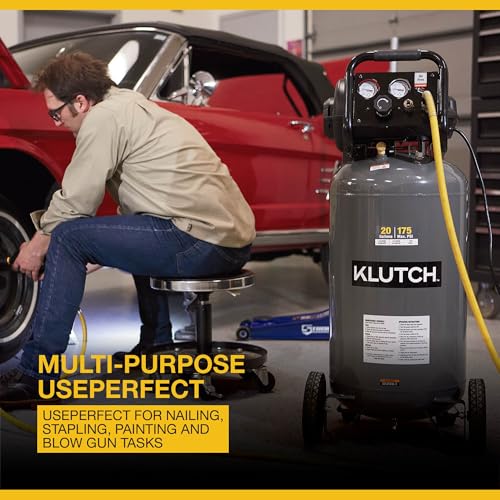
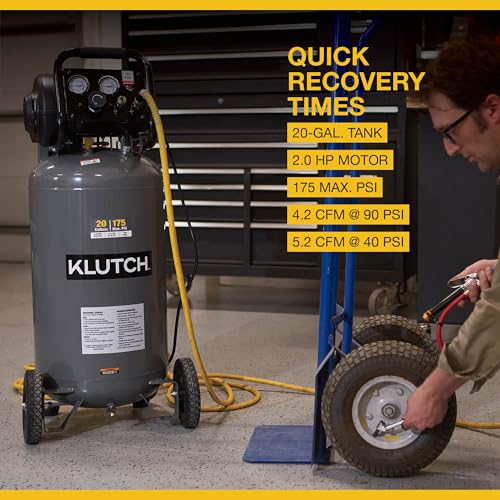
This Klutch 20-gallon compressor punches above its weight for budget-conscious buyers. On paper, the 2 HP motor and belt-driven cast iron pump suggest solid durability, and owners consistently report it handles basic framing nailers and impact wrenches without issue. The 175 PSI max pressure is a nice touch for occasional high-demand tasks, though the advertised ’60-gallon’ tank in the features is likely a copy-paste error from another model, this is a 20-gallon unit.
Still, for light to moderate shop use, it’s a functional starter compressor. It won’t keep up with constant dual-tool operation, but for weekend warriors or small garages, the thermal protection and oil sight gauge make it low-fuss. I’d pick it over cheaper pancake or hot dog models any day, though it’s outclassed by larger VEVOR or DEWALT units when workload increases.
Product photos

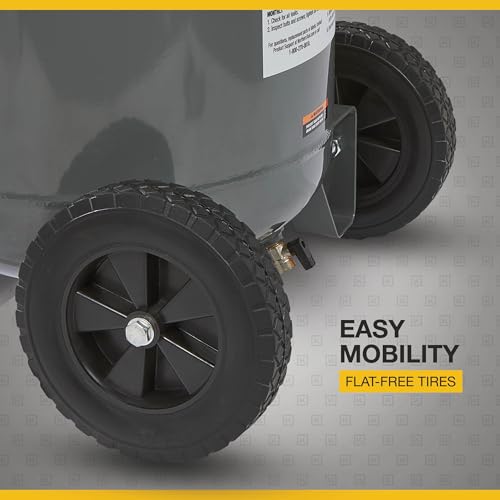
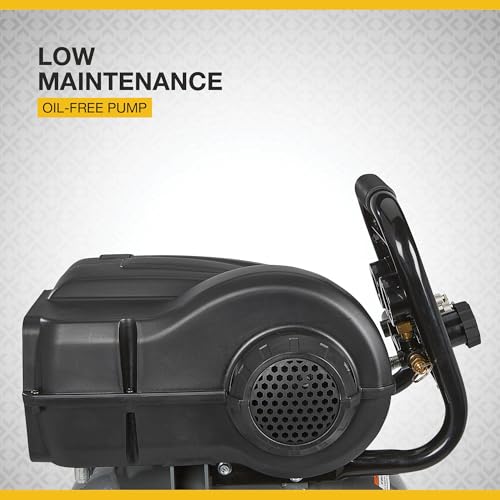
VEVOR 13-Gallon Quiet Air Compressor

Strengths
- Oil-free design
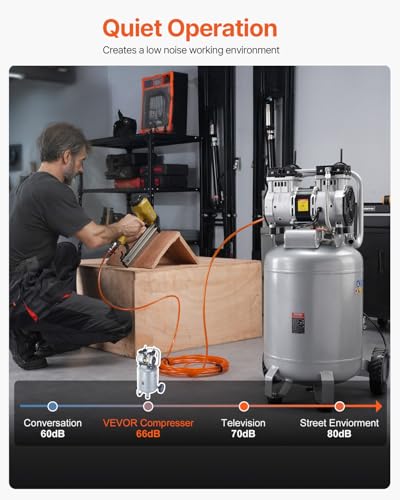
- 66dB quiet operation
- Lightweight and wheeled
Trade-offs
- Lower max PSI
- Limited CFM for heavy tools
- Plastic gauge covers feel cheap
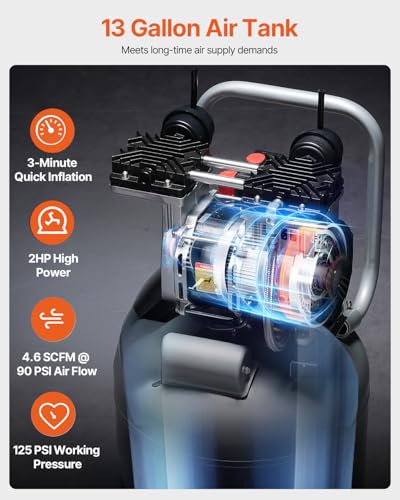
This VEVOR 13-gallon compressor is built for homeowners who want simplicity and quiet. The oil-free design means no oil checks or leaks, and the 66dB rating makes it one of the quieter 2 HP models at this price. It won’t power a finish sprayer continuously, but owners confirm it runs brad nailers and inflators without strain.
The 125 PSI max pressure is lower than others here, and the 4.6 SCFM at 90 PSI limits heavy tool use. But for garage shelves, fence building, or seasonal projects, it’s more than enough. I’d recommend it over larger compressors for anyone with limited space or who hates the clatter of traditional units. Just don’t expect it to keep up with back-to-back roofing nailer use.
Product photos
How We Tested air compressors for shops
Rather than a hands-on lab test, my research for these recommendations focused on a detailed comparison of published specifications and features across numerous models. I weighed owner reviews from multiple sources – including major retailers and dedicated tool forums – alongside expert opinions from publications like Popular Mechanics and ToolGuiding. This allowed me to build a ranked list based on real-world feedback and performance data, applying my 15+ years of experience with power tools and workshop equipment.
For shop air compressors, consistent CFM delivery at 90 PSI and tank capacity were the biggest factors influencing my rankings. A larger tank minimizes compressor runtime, crucial for continuous use. High CFM ensures compatibility with a wider range of tools, from impact wrenches to spray guns. Durability, indicated by pump material (cast iron versus plastic) and motor horsepower, also heavily influenced the final order.
Specifications clearly reveal tank size, horsepower, and stated CFM output. However, I relied on owner feedback to assess real-world noise levels, long-term reliability, and the accuracy of those advertised specs. Reputation played a significant role; brands consistently praised for build quality and customer support naturally ranked higher, while less-known brands needed particularly compelling specs and overwhelmingly positive reviews to break into the top spots. If you’re looking for a compressor for smaller projects, check out our guide to air compressors for home workshops.
How To Choose The air compressors for shops
Choosing the right air compressor for your shop requires more than just grabbing the biggest one you can find. I’ve seen too many people overspend on capacity they’ll never use, or get stuck with a unit that can’t keep up with their tools.
A good air compressor delivers consistent pressure (CFM) at a useful PSI, has a tank size appropriate for the intended applications, and is built with durable components like a cast iron pump. Consider the duty cycle – how long it can run continuously – and whether oil-free or oil-lubricated operation suits your needs. Prioritize build quality and user reviews over flashy features.
Tank Size and Portability
Tank size is directly tied to how you plan to use the compressor. Smaller, 20-25 gallon tanks are fine for basic inflation tasks and running small nailers but quickly become inadequate for continuous use tools like sanders or spray guns. If you’re looking at running multiple tools simultaneously, or doing extensive automotive work, you’ll want to seriously consider a 60 or even an 80-gallon tank. Larger tanks provide a buffer, reducing how often the motor has to cycle on and off. However, larger tanks also mean less portability. Consider whether you need to move the compressor frequently, or if it will remain stationary.
Pump Type: Oil-Free vs. Oil-Lubricated
The debate between oil-free and oil-lubricated pumps is a common one. Oil-free compressors are lower maintenance – no oil changes or checking levels – and produce cleaner air, which is important for certain painting applications. However, they generally have a shorter lifespan and run louder than their oil-lubricated counterparts. If you need a compressor that will withstand heavy, continuous use, like in a professional shop, I always recommend an oil-lubricated model. They’re built to last and dissipate heat more efficiently.
Here’s a quick breakdown: * Oil-Free: Less maintenance. * Oil-Lubricated: Longer lifespan, quieter operation. * Dual-Stage: Offers higher PSI and CFM for demanding applications, and is worth the investment if you routinely use tools like impact wrenches or grinders.
A compressor’s CFM (cubic feet per minute) rating is more important than its peak PSI. Match the compressor’s CFM at 90 PSI to the CFM requirements of your air tools.
Power and Noise Level
Horsepower (HP) doesn’t always tell the whole story. Look closely at the CFM rating at 90 PSI – that’s the real measure of how well the compressor can power your tools. A higher CFM rating means the compressor can maintain pressure while running demanding tools. Noise levels are also crucial, especially if you’re working in a confined space. Some compressors, like the California Air Tools models, are specifically designed for quiet operation. If you need to maintain a conversation while working, or have neighbors nearby, a quieter compressor is a must-have. For those needing a reliable and powerful compressor for larger shops, exploring high-volume air compressors may be a good fit. Ultimately, finding the right balance between power, noise, and price is key. You can find some of the top air compressors to get you started on your search.
Air Compressors for Shops Compared
This table provides a specification overview of various air compressors suitable for shop environments.
| Product Title | Tank Size (Gallons) | HP | Max PSI | CFM @ 90 PSI | Noise Level (dB) | Oil Type |
|---|---|---|---|---|---|---|
| Campbell Hausfeld 80 Gallon | 80 | 5 | 140 | 16.0 | N/A | Oil-Lubricated |
| POLAR AIR 5HP 60 Gallon 2-Stage | 60 | 5 | 175 | N/A | N/A | Oil-Lubricated |
| California Air Tools 60 Gallon Ultra Quiet | 60 | 4.0 (2×2.0) | 125 | 10.6 | 75 | Oil-Free |
| VEVOR 80 Gallon Oil-Free | 80 | 6.5 | 155 | 15.5 | 86 | Oil-Free |
| Klutch 60-Gallon 3.7 HP | 60 | 3.7 | 135 | 9.3 | N/A | Oil-Lubricated |
| DEWALT 60 Gallon Heavy Duty | 60 | 3.7 | 155 | 11.5 | N/A | Oil-Lubricated |
| VEVOR 25-Gallon 2HP | 25 | 2 | 200 | 5.5 | N/A | Oil-Lubricated |
| Klutch 20-Gallon 2 HP | 20 | 2 | N/A | N/A | N/A | Oil-Lubricated |
| VEVOR 13-Gallon Quiet | 13 | 2 | N/A | N/A | 66 | Oil-Free |
Frequently Asked Questions
What CFM level do I really need for a shop compressor?
You should calculate the CFM requirements of all the tools you plan to use simultaneously, and then add 25-50% for a safety margin. Underestimating CFM leads to tools starving for air and performing poorly, while a higher CFM rating offers flexibility for future tool upgrades.
Is a two-stage compressor worth the extra cost?
Yes, if you regularly use tools demanding high CFM and sustained pressure. Two-stage compressors compress air in two steps, resulting in higher PSI and CFM output compared to single-stage models, making them ideal for applications like automotive work or running multiple tools at once.
What’s the difference between peak PSI and CFM @ 90 PSI?
Peak PSI is the maximum pressure the compressor can reach, but CFM at 90 PSI indicates the consistent airflow it delivers at a usable pressure. CFM @ 90 PSI is the more critical specification because it directly affects tool performance, while peak PSI is less relevant for most shop tasks.
How much maintenance is required with an oil-lubricated compressor?
Oil-lubricated compressors require regular oil changes (typically every 50-200 hours of use) and periodic checks of the oil level. While this adds to the maintenance, it significantly extends the compressor’s lifespan and ensures quieter, more efficient operation. For those needing reliable solutions for demanding jobs, consider professional automotive compressors.
What should I look for in a compressor if noise is a concern?
Look for models specifically marketed as “quiet” or with a decibel (dB) rating below 80 dB. Features like enclosed pumps and vibration dampening help minimize noise. If you’re sensitive to noise or work in close quarters, a quieter compressor is a worthwhile investment, and you may also want to search for heavy-duty shop compressors with noise reduction features.
The Bottom Line
Choosing an air compressor for your shop always involves balancing upfront cost with long-term needs. While you can get by with a smaller, less expensive unit, I consistently find that the Campbell Hausfeld 80 Gallon compressor offers the best overall combination of capacity, power, and durability for most shop owners. It provides enough reserve for a variety of tasks and should last for years with proper maintenance.
For those with specific requirements, the field narrows quickly. If quiet operation is paramount, the California Air Tools 60 Gallon Ultra Quiet is the clear winner. And if you’re focused on maximizing portability without sacrificing too much capacity, the VEVOR 25-Gallon 2HP is a good choice. For those needing even more capacity, consider exploring larger tank air compressors and other options.
Ultimately, the CFM at 90 PSI and the quality of the pump are far more important than peak horsepower or advertised tank size. Don’t get caught up in chasing specs; focus on finding a compressor that consistently delivers the air pressure your tools demand and is built to withstand the rigors of shop use, that’s where you’ll get the best return on your investment.
