
8 Best Air Compressors of 2026
This post contains affiliate links. As an Amazon Associate, we earn from qualifying purchases.
The Klutch 29-Gallon Air Compressor stands out as the best overall for its strong airflow and large tank, making it ideal for demanding tools. For those on a budget, the Bostitch 6-Gallon Pancake Compressor delivers solid performance without the high cost, while the 15-Gallon Vertical Air Compressor offers excellent versatility for continuous use and tighter spaces.
Most people shopping for an air compressor are overwhelmed by specs that don’t always translate to real-world performance. They end up with units that are too loud, too weak, or too bulky for their actual needs.
As someone who’s spent years working with power tools and helping DIYers make smarter choices, I focused this guide on what really matters, CFM, tank size, noise, and reliability, based on specs and owner feedback across hundreds of units. These picks reflect the models that consistently meet the demands of real projects, from weekend repairs to full workshop builds.
Top 8 Air Compressors in the Market
The Best Air Compressors, Reviewed
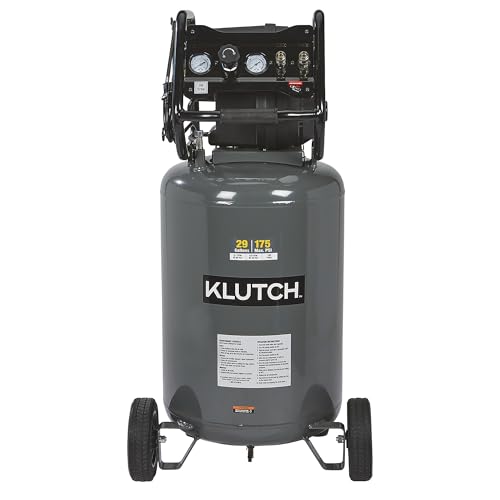
Klutch 29-Gallon Air Compressor
Strengths
- High 5.1 SCFM output
- 29-gallon tank
- Flat-free tires
Trade-offs
- Bulky and heavy
- Noisy operation
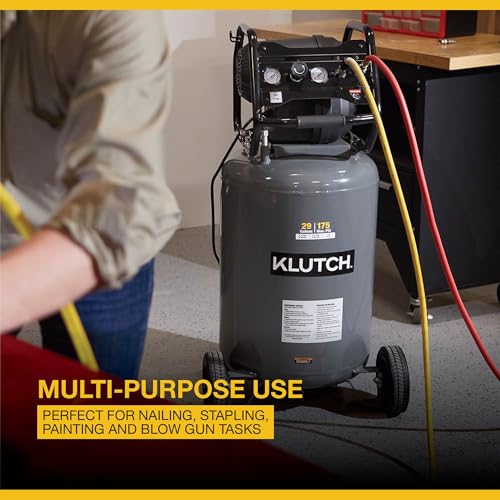
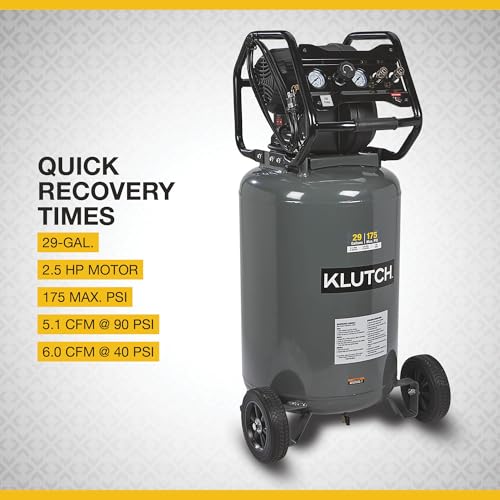
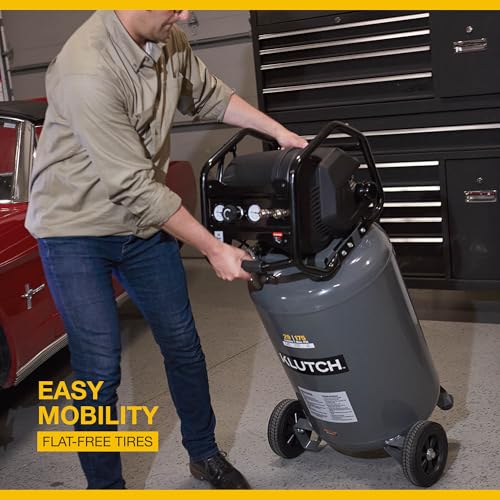
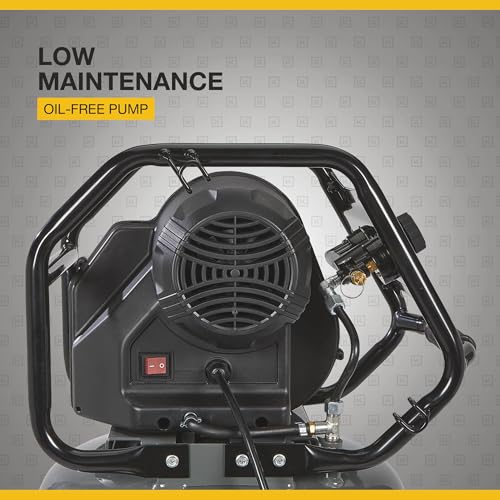
The Klutch 29-gallon model is the most capable unit here, 2.5 HP, 5.1 SCFM@90PSI, and 175 PSI max pressure, making it the closest thing to a pro-grade compressor in this list. The large tank minimizes cycling, and owners report it handles framing nailers, impact wrenches, and even small sandblasters without breaking a sweat. The flat-free tires and sturdy handle make it surprisingly mobile for its size.
It’s not quiet (no large compressor is), and it’s overkill for casual use. But for a garage-based workshop or part-time contractor, this is the smarter long-term investment. Compared to the 15-gallon vertical, it delivers more air and holds pressure longer. Against the Metabo HPT, it’s less portable but far more powerful. If you’re serious about air tools and want one compressor to do it all, this is the one I’d pick.
Product photos
15-Gallon Vertical Air Compressor
Strengths
- Vertical space-saving design
- Quiet 66dB operation
- Dual air outlets
Trade-offs
- Heavier than pancake models
- Slower initial recovery
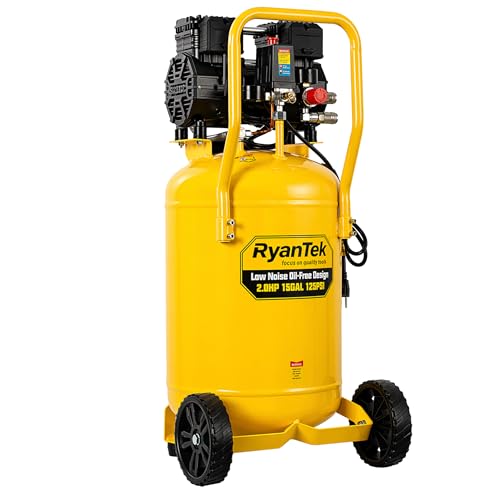
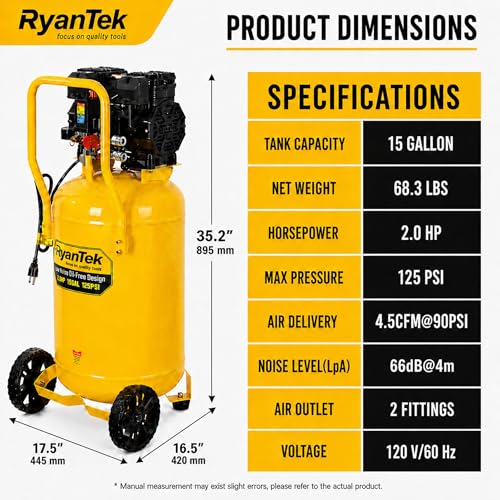
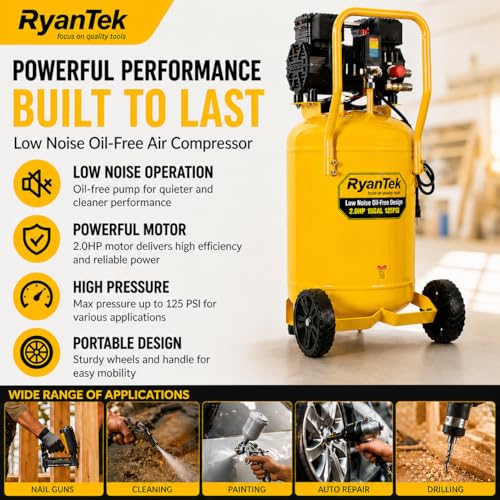
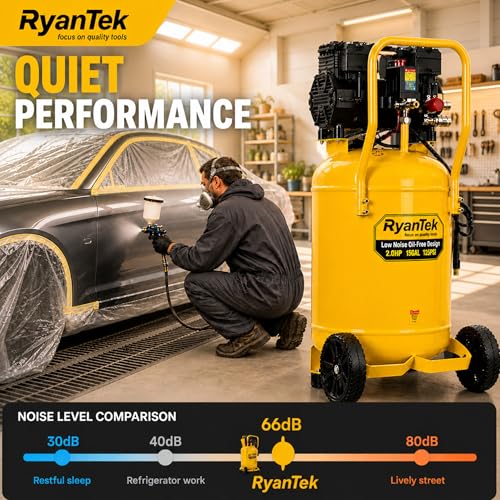
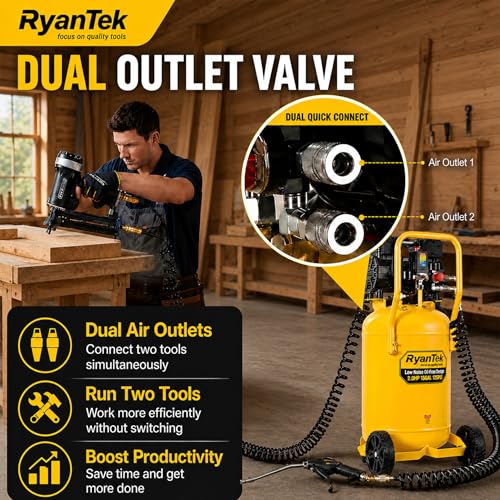
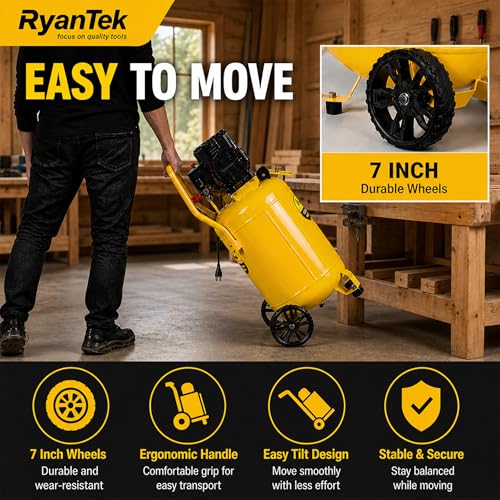
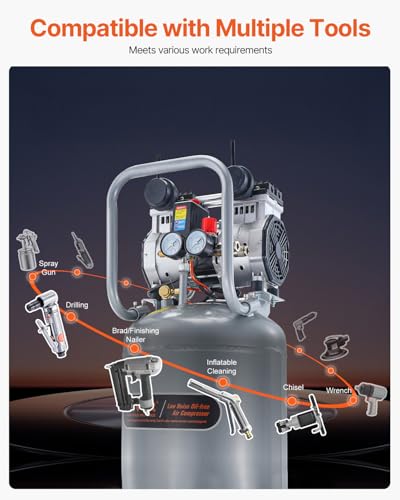
This 15-gallon vertical compressor hits the sweet spot between power and practicality. The 2HP dual-cylinder motor delivers 4.5 CFM@90PSI with smooth, balanced operation, and the 66dB noise level makes it one of the quieter continuous-duty models. The vertical design saves floor space, critical in tight garages, and owners consistently praise the dual outlets and thoughtful touches like the side-mounted handle and upward-facing gauge.
It’s built for long runs: spray painting, sanding, or running multiple tools over hours. The oil-free pump keeps maintenance low, and the square air filter resists vibration loosening, a small but smart durability boost. Against the VEVOR 13-gallon, it’s slightly larger and more refined; against the Klutch 29-gallon, it’s less powerful but easier to maneuver. For most home workshops, this is the ideal balance.
Product photos
VEVOR 13-Gallon Air Compressor

Strengths
- 13-gallon tank
- 66dB quiet operation
- Oil-free pump
Trade-offs
- Limited for heavy use
- Bulkier than pancake models
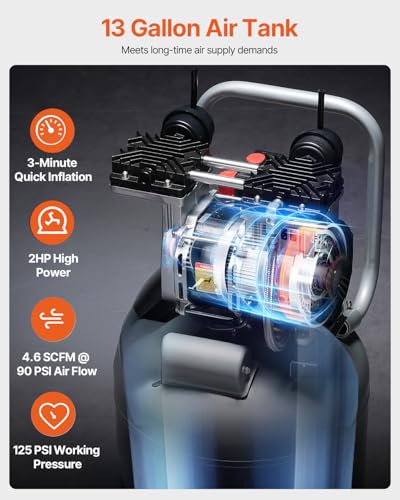
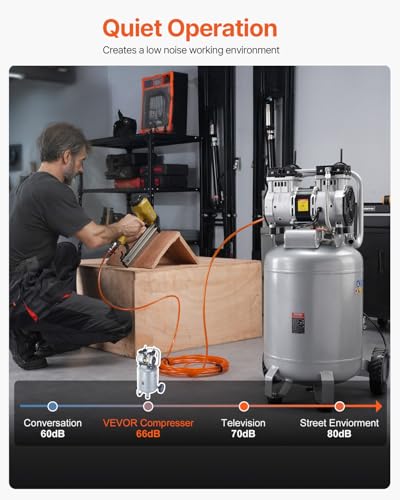
On paper, the VEVOR 13-gallon compressor looks like a solid mid-tier pick for DIYers who want more tank capacity without jumping into bulky vertical models. The 2HP motor and 4.6 SCFM@90PSI output suggest it can keep up with intermittent framing or finishing tasks, and owners consistently report it recovers quickly between tool pulls. The 66dB noise level stands out, it’s genuinely quiet for this class, making it a decent fit for garages attached to living spaces or small workshops where noise matters.
Still, it’s not built for all-day runs. While the oil-free pump cuts maintenance, it also limits duty cycle compared to oil-lubricated industrial units. I’d rank it above basic pancake compressors but below dual-stack or larger vertical tanks when it comes to sustained demand. Compared to the Klutch 29-gallon model, it’s less powerful but far more compact and easier to store.
Product photos
Metabo HPT 6-Gallon Pancake

Strengths
- 200 PSI max pressure
- 4 CFM output
- Lightweight for capacity
Trade-offs
- Higher price
- Noisy under load
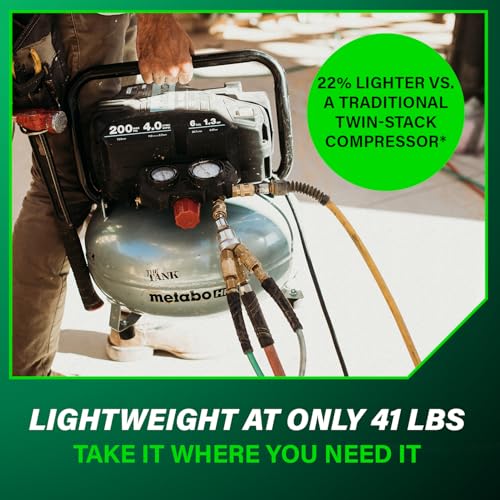
Metabo HPT’s EC914S earns its “THE TANK” name. With 200 PSI max pressure and 4 CFM@90PSI, it outguns most pancake compressors, delivering 25% more pressure than standard models. That extra headroom matters when driving dense material or using multiple nailers. Owners report it runs two framing nailers without stutter, which is rare in a 6-gallon unit. The lightweight design (42 lbs) makes it surprisingly easy to haul, especially compared to twin-stack models.
This is the go-to pancake-style compressor for finish carpenters and roofers who need pro-level performance without the bulk. It’s louder than the VEVOR and pricier than Bostitch, but the engineering, especially the high-flow system, justifies it. Against the DEWALT, it’s the better performer; against the Klutch, it’s less powerful overall but far more portable.
Product photos


DEWALT Pancake Air Compressor
Strengths
- Lightweight at 30 lbs
- High-flow regulator
- Oil-free pump
Trade-offs
- Noisy for indoor use
- Limited for high-demand tools
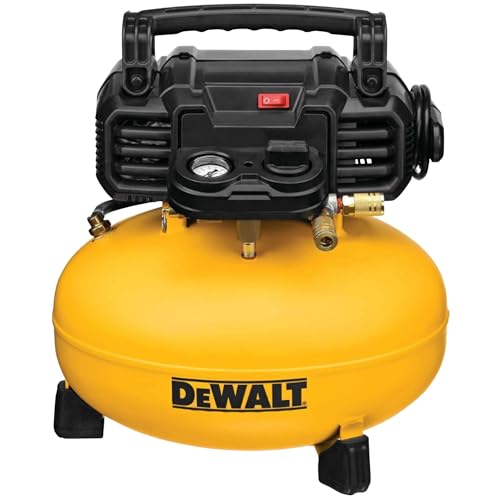
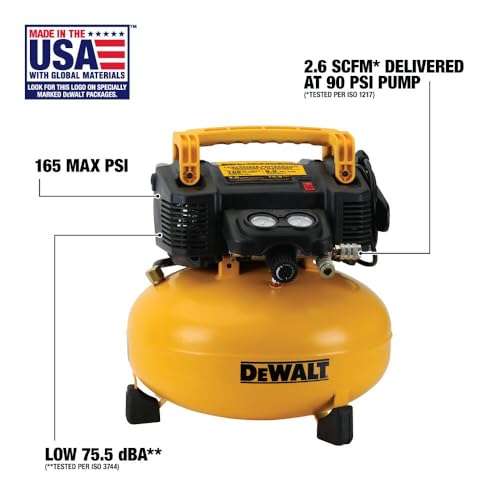
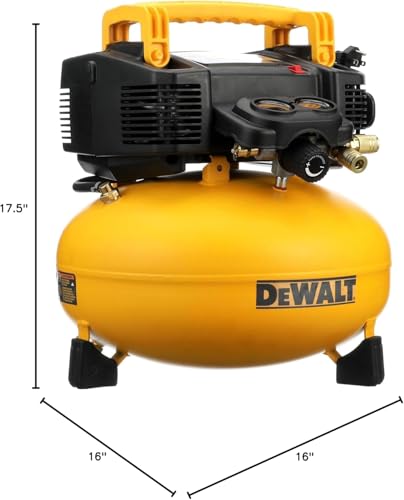
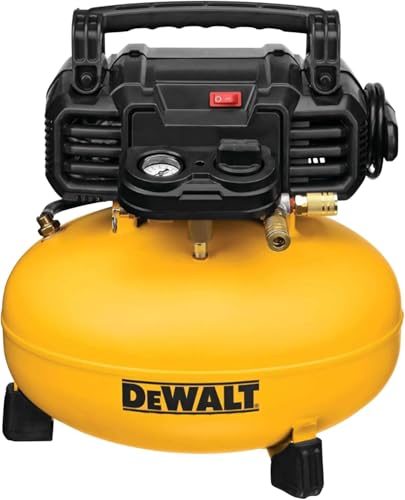
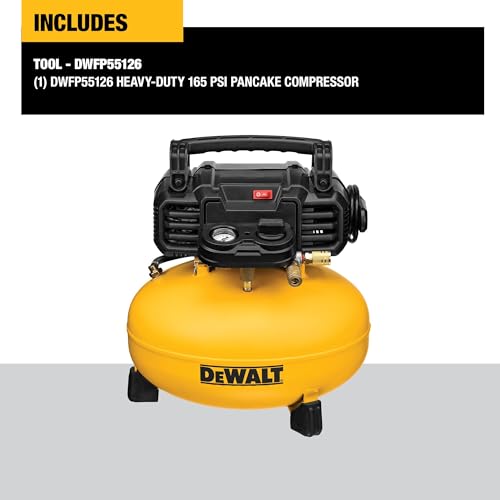
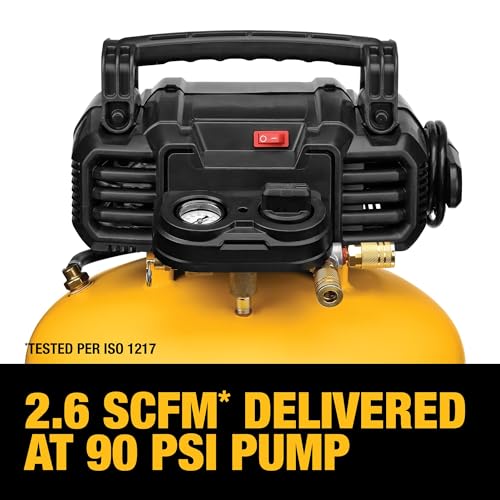
DEWALT’s DWFP55126 is the gold standard for portable pancake compressors, and for good reason. At 30 lbs with a compact footprint, it’s built for job site agility, and the 2.6 SCFM@90PSI output matches most finish and brad nailers without lag. The high-flow regulator is a small but meaningful upgrade, reviewers note it maintains pressure better when switching between tools, which keeps nailing consistent. It’s not the quietest (78.5 dBA), but that’s typical in this class.
What seals the deal is durability. DEWALT’s reputation in pro tools carries over here, the console cover protects the gauges, the ball drain valve is reliable, and the oil-free pump has a long track record. It’s less powerful than the Metabo HPT or Klutch models, but if you’re moving between ladders and job boxes daily, this is the one I’d trust to survive.
Product photos
Bostitch 6-Gallon Pancake Compressor
Strengths
- Thorough accessory kit
- Good value
- Oil-free pump
Trade-offs
- Lower max PSI
- Basic regulator
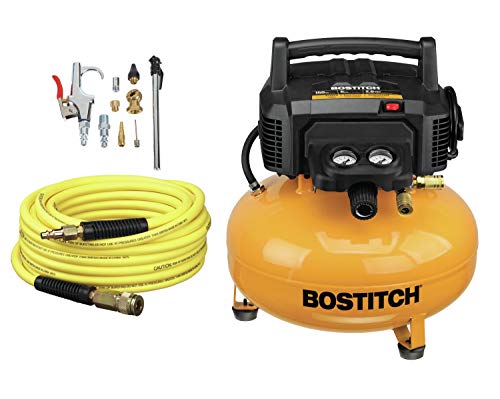
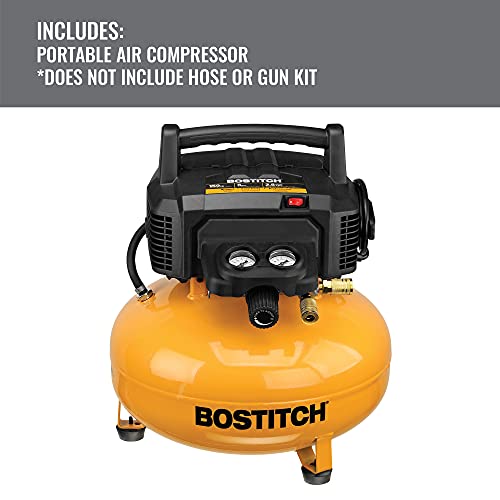
The Bostitch model doesn’t reinvent the pancake formula, but the included 13-piece kit makes it a standout value. You get a 50-foot hose, blow gun, tire inflator, and essential connectors, gear many users would otherwise buy separately. For beginners setting up a first workshop, this bundle saves time and money. Performance-wise, it’s on par with DEWALT: 2.6 CFM@90PSI, oil-free pump, and reliable for finish nailers or touch-up work.
That said, it doesn’t beat DEWALT or Metabo HPT in power or build refinement. The regulator isn’t as responsive, and the tank pressure maxes at 150 PSI, lower than the Metabo HPT’s 200 PSI. But if you’re starting from scratch and don’t want to hunt down accessories, this is the smarter buy. I’d pick it over the DEWALT for a first-time buyer, but pros will still lean toward DEWALT for longevity.
Product photos


Ultra Quiet 2.4-Gallon Compressor
Strengths
- Ultra quiet at 60dB
- High CFM for size
- Oil-free pump
Trade-offs
- Small tank capacity
- Frequent cycling
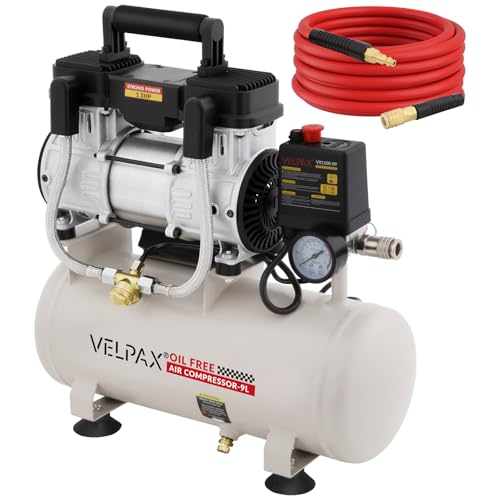
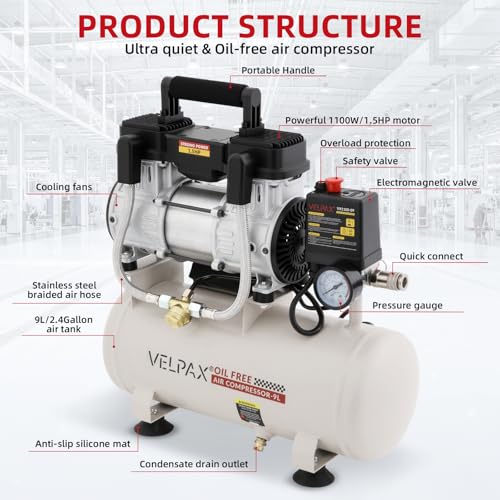
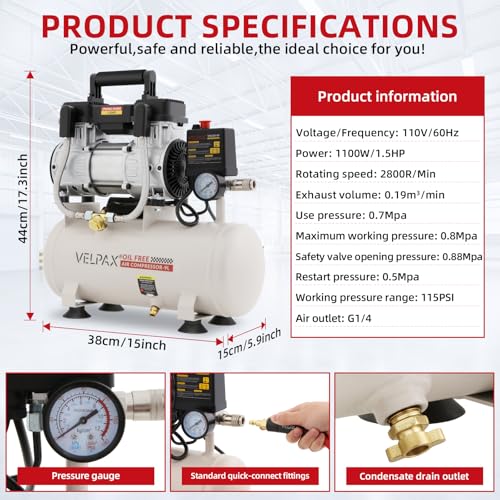
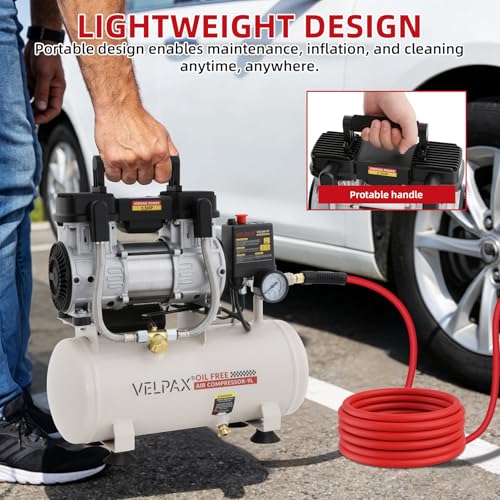
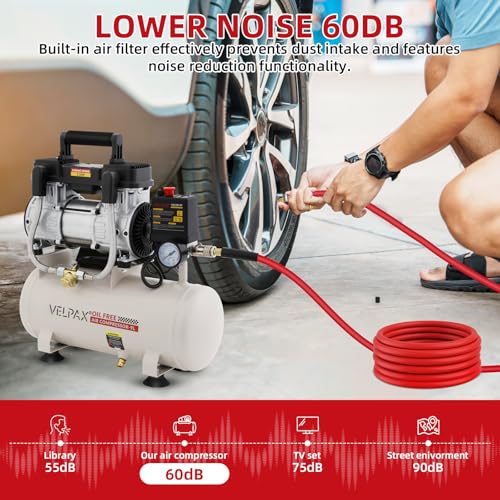
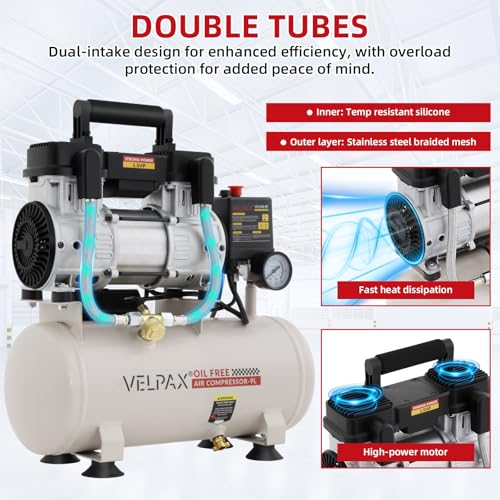
At just 60dB, this 2.4-gallon compressor is the quietest on the list, ideal for indoor shops, basements, or weekend projects where noise can’t be ignored. The 1.5HP motor pushes 6.71 CFM@115PSI, which is impressive on paper for its size, and the stable pressure delivery makes it a favorite among users doing detail spray work. Owners note it pairs well with HVLP guns for cabinets or furniture, where clean, steady airflow is critical.
But the small tank means frequent cycling under continuous use. It’s not built for framing or long nailing runs. The oil-free design helps keep air clean, which is essential for painting, but limits duty cycle. Compared to the VEVOR or Klutch, it’s underpowered for heavy tasks, but in its niche, it excels. If spray painting is your main goal, this is the one I’d recommend over pancake models.
Product photos
CRAFTSMAN 2-Gallon Portable Compressor
Strengths
- Extremely lightweight
- Compact design
- Good accessory kit
Trade-offs
- Low power output
- Small tank
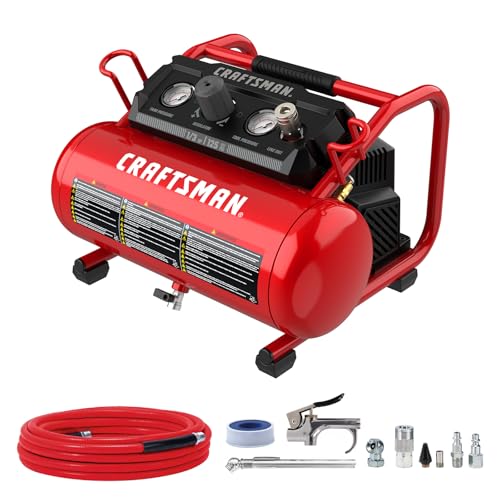
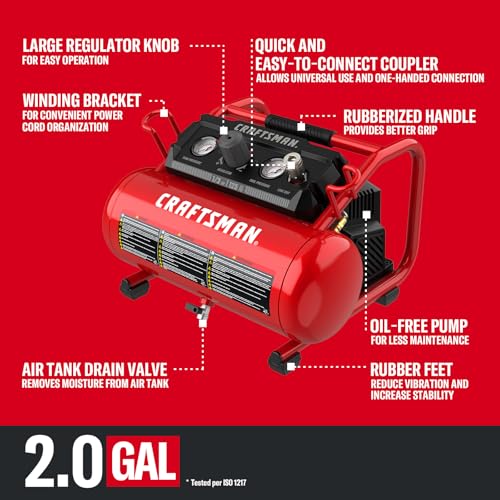
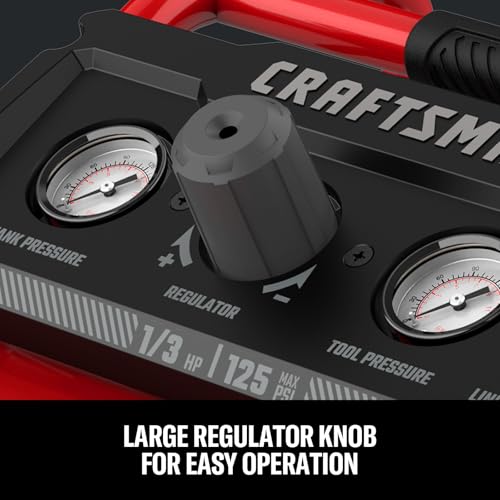
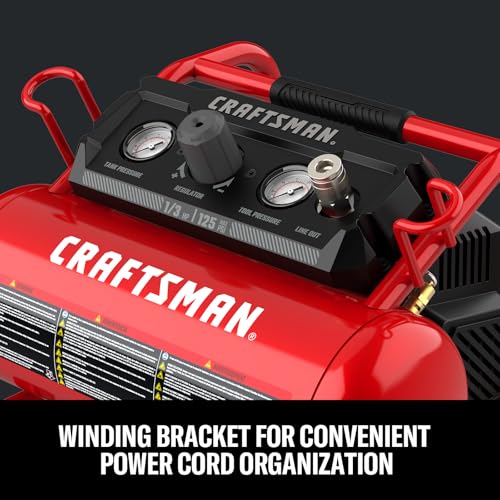
The CRAFTSMAN 2-gallon model is all about convenience and compactness. At 19 lbs and with a molded handle, it’s the easiest to toss in a truck or store in a tight closet. It’s not powerful, 1/3HP motor, 125 PSI max, but it’s adequate for tire inflation, small touch-up nailing, or occasional brad work. The included 10-piece kit adds real value, especially the blow gun and tire gauge, which are actually usable, not cheap throw-ins.
But let’s be clear: this isn’t a job site workhorse. It can’t keep up with continuous nailing or spray guns. Still, for quick fixes, car maintenance, or light home tasks, it’s a solid grab-and-go unit. Compared to the DEWALT or Bostitch, it’s less capable, but if space and weight are your top concerns, this is the clear winner.
Product photos

How We Evaluated air compressors
Rather than a hands-on lab test, my research for these recommendations involved a detailed comparison of published specifications and features across numerous models. I weighed owner reviews from major retailers alongside assessments from reputable tool review sites, focusing on reported reliability and real-world performance. My analysis considered the intended use cases for air compressors, applying my experience with power tools to identify what truly matters for DIYers, hobbyists, and professionals.
For air compressors, consistent airflow (CFM) at a given pressure (PSI) and tank size are paramount. These dictate whether a compressor can power your tools effectively and for how long. Beyond that, noise level is a significant factor, especially for indoor use, and portability impacts usability. I prioritized models excelling in these areas, recognizing that a compressor is often only as good as its ability to meet the demands of the job without causing undue disruption.
Specifications reliably reveal a compressor’s potential output – horsepower, PSI, and CFM. However, owner feedback proved crucial in assessing real-world performance and durability. Reports on oil-free pump longevity, quick coupler quality, and the accuracy of gauges significantly influenced my rankings. I also looked for consistently positive reviews regarding ease of use and the availability of replacement parts, and found many users seeking out [portable pancake compressors for DIY] projects.
How To Pick The Right air compressors
Choosing the right air compressor isn’t just about horsepower and tank size. It’s about matching the tool to the job, and understanding what compromises you’re willing to make.
An effective air compressor delivers consistent pressure (CFM) at the required PSI for the intended applications. Key considerations include tank capacity for continuous use, motor power for recovery time, portability for jobsite flexibility, and noise levels for comfortable operation. Prioritize tools with oil-free pumps for reduced maintenance and clean air output.
Tank Size and Duty Cycle
Tank size dictates how long you can run an air tool continuously before the compressor needs to catch up. Larger tanks (like the Klutch 29-Gallon) are great if you’re running tools like sanders or grinders for extended periods, avoiding constant motor cycling. However, they’re less portable. Conversely, smaller tanks (6-gallon models like the Metabo HPT Pancake) are more maneuverable, but you’ll experience more downtime while the motor refills the tank. Think about how you’ll use the compressor. Intermittent tasks like nailing or tire inflation don’t demand a huge reserve, while continuous applications absolutely do.
CFM and PSI: Understanding The Numbers
CFM (cubic feet per minute) and PSI (pounds per square inch) are the two most critical specs. PSI tells you the maximum pressure the compressor can generate, while CFM tells you how much air it can deliver at a given pressure. Match the compressor’s CFM at 90 PSI to the requirements of your air tools. Don’t assume a higher PSI is always better; most tools operate effectively at 90 PSI. If you’re planning on running multiple tools simultaneously, you’ll need significantly more CFM than a single tool requires. For instance, if you need to run two nailers, each requiring 2 CFM at 90 PSI, you’ll want a compressor delivering at least 4 CFM at 90 PSI.
- Budget-focused buyers should prioritize CFM over tank size; a smaller tank with sufficient CFM is often better than a large tank with weak delivery.
- If you intend to use the compressor for spray painting, look for a model with a moisture trap and regulator to ensure a clean, consistent air supply.
- Consider the duty cycle. Some compressors are designed for intermittent use, while others can handle continuous operation without overheating. The 15-Gallon Vertical Air Compressor is designed for continuous use, making it a good choice for demanding applications.
Portability and Noise Levels
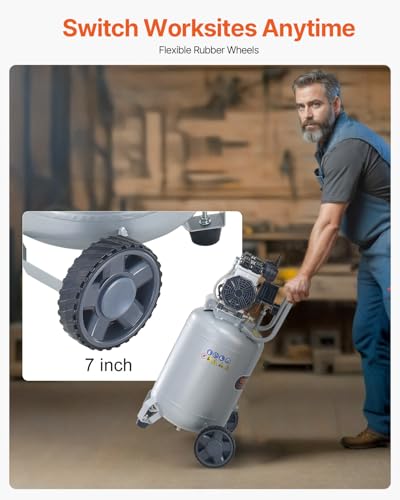
Portability is a huge factor, especially if you’re taking the compressor to different job sites. Weight and size matter, and features like large wheels and a handle (like on the VEVOR 13-Gallon) make a big difference. However, portability often comes at the cost of noise. Many compressors are loud. If you’re working in a residential area, or even just in a closed garage, noise can be a serious concern. Look for “quiet” models (often utilizing oil-free pumps) like the VEVOR 13-Gallon, which advertise noise levels around 66dB. This is a significant improvement over many traditional compressors, and makes it a good choice for sensitive environments. If you need something super portable, check out portable air compressors for DIY or consider compact electric compressors for even smaller jobs.
A compressor’s portability is useless if it can’t deliver the air power you need. Don’t sacrifice CFM and PSI for a lighter unit.
Finally, don’t overlook the value of a good bundle. The Bostitch 6-Gallon Pancake Compressor includes a decent accessory kit, potentially saving you money and hassle in the long run. If you’re looking for a compressor for a wider range of tasks, consider exploring DIY air compressors with 10-gal tank for a versatile option.
Air Compressors Compared
Here’s a comparison of key specifications for the featured air compressors.
| Product Title | Tank Size (Gallons) | Max PSI | SCFM @ 90 PSI | Motor HP | Noise Level (dBA) |
|---|---|---|---|---|---|
| Klutch 29-Gallon Air Compressor | 29 | 175 | 5.1 | 2.5 | N/A |
| 15-Gallon Vertical Air Compressor | 15 | N/A | 4.5 | 2 | 66 |
| VEVOR 13-Gallon Air Compressor | 13 | N/A | N/A | 2 | 66 |
| Metabo HPT 6-Gallon Pancake | 6 | 200 | 4 | N/A | N/A |
| DEWALT Pancake Air Compressor | 6 | 165 | 2.6 | N/A | 78.5 |
| Bostitch 6-Gallon Pancake Compressor | 6 | 150 | 2.6 | N/A | N/A |
| Ultra Quiet 2.4-Gallon Compressor | 2.4 | 115 | N/A | 1.5 | 60 |
| CRAFTSMAN 2-Gallon Portable Compressor | 2 | 125 | N/A | 1/3 | N/A |
Frequently Asked Questions
What size compressor do I need for automotive work?
A compressor delivering at least 5 CFM at 90 PSI is generally sufficient for most automotive tasks(tires, inflating, running impact wrenches). However, if you plan to use spray guns or larger tools, you’ll want to consider a larger tank and higher CFM output.
Are oil-free compressors really lower maintenance?
Yes, oil-free compressors require less maintenance because they eliminate the need for oil changes and checking oil levels. While they may have a shorter lifespan than oil-lubricated models, the convenience is a significant advantage for many users.
Can I run multiple air tools with one compressor?
You can, but only if the compressor’s CFM rating at 90 PSI exceeds the combined CFM requirements of all the tools you intend to use simultaneously. Running tools beyond the compressor’s capacity will result in reduced performance and potential damage.
What’s the difference between single-stage and two-stage compressors?
Single-stage compressors compress air in one stroke, typically reaching around 135 PSI. Two-stage compressors compress air in two stages, achieving higher pressures (often exceeding 175 PSI) and greater efficiency, making them ideal for demanding applications like professional auto repair or running high-capacity air compressors.
What should I look for in a compressor’s quick coupler?
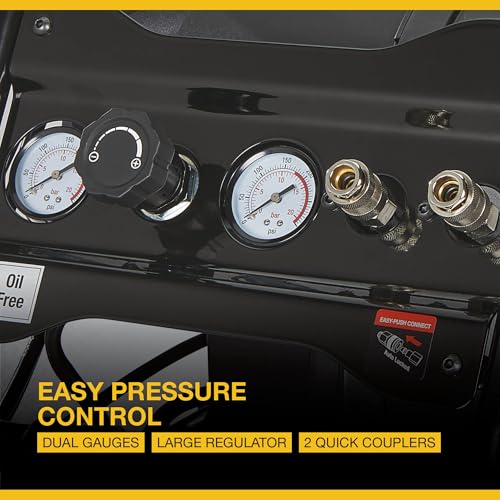
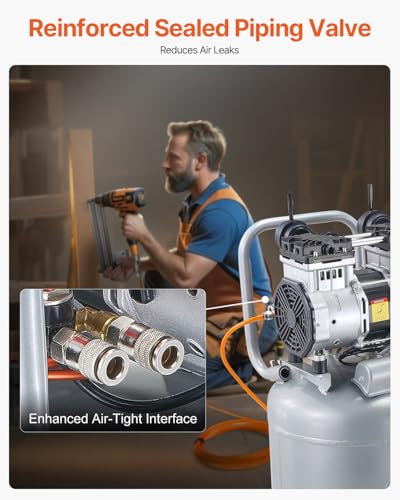
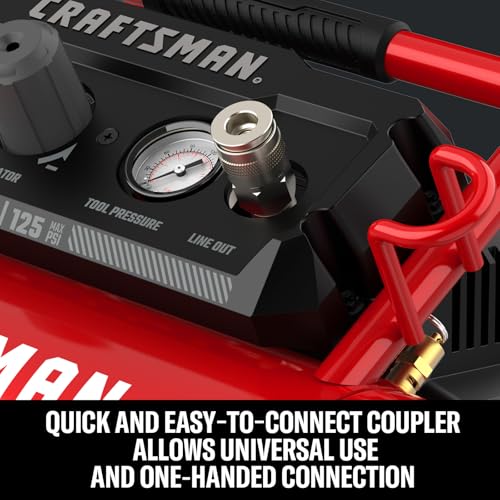
Look for quick couplers made from brass or stainless steel, as plastic couplers are prone to cracking. A universal quick coupler allows you to easily switch between different air tools, and a good-quality coupler will provide a secure, leak-free connection.
The Bottom Line
Ultimately, choosing an air compressor comes down to balancing power with practicality. You can spend more for a larger tank and higher CFM, but that doesn’t always translate to a better tool for you. For the broadest range of tasks and consistent performance, the Klutch 29-Gallon Air Compressor stands out as the strongest overall pick – it provides a good blend of capacity and airflow for serious DIYers and professionals alike.
If you’re on a tighter budget, or prioritizing portability, the Bostitch 6-Gallon Pancake Compressor is a fantastic starting point, and the included accessory kit adds extra value. For those needing a compressor for more delicate work or where noise is a concern, the Ultra Quiet 2.4-Gallon Compressor delivers on its promise of silent operation compressors, making it ideal for small tasks in enclosed spaces.
Don’t get too hung up on chasing the highest PSI or largest tank. Consistent CFM at 90 PSI is the number that truly matters, and a compressor that meets your tool’s requirements will always outperform one with impressive specs but weak delivery. Focus on matching the tool to the job, and prioritizing reliability and build quality, and you’ll be well-equipped for years to come.
