5 Best Air Compressors for Automotive Shops 2026
This post contains affiliate links. As an Amazon Associate, we earn from qualifying purchases.
The Campbell Hausfeld 80 Gallon is the best overall air compressor for automotive shops, delivering serious airflow and durability for heavy use. For a more budget-friendly yet capable option, the Klutch 20-Gallon stands out, especially with its oil-lubricated pump. If space is tight but performance still matters, the Klutch 29-Gallon offers a smart balance of power and footprint.
Most automotive shop owners aren’t just inflating tires, they’re running impact wrenches, die grinders, and sanders all day. That means a compressor that can’t keep up isn’t just annoying, it kills productivity. Too many people buy based on price or tank size alone, only to find their tools underperform or the unit fails under load.
This guide cuts through the noise. I focused on real-world performance indicators, CFM at 90 PSI, pump durability, and build quality, backed by specs and owner feedback from professionals using these compressors daily. These picks are based on what actually works in demanding environments, not just what looks good on paper.
Top 5 Air Compressor For Automotive Shops in the Market
The Best Air Compressor For Automotive Shops, Reviewed
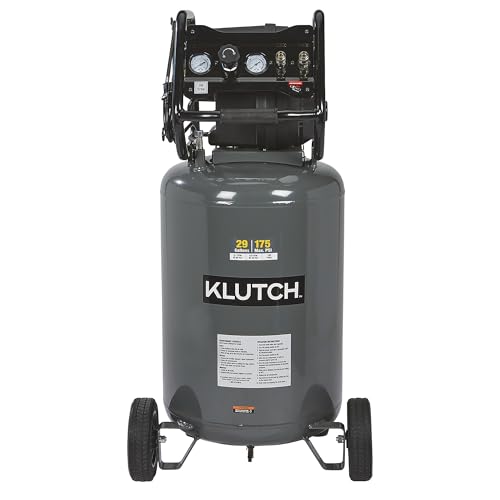
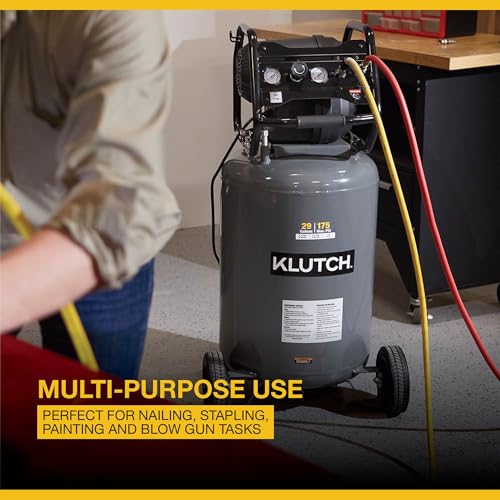
Klutch 29-Gallon Air Compressor
Strengths
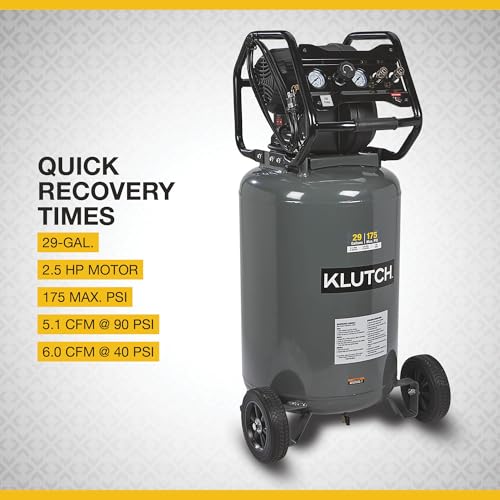
- 2.5 HP motor
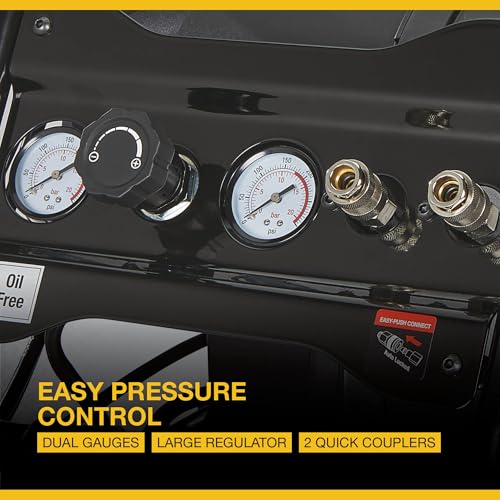
- Oil-free pump
- 175 PSI max pressure
- Quick recovery
- Portable design
Trade-offs
- Larger footprint
- 120V limits heavy-duty use
- Not for constant industrial cycles
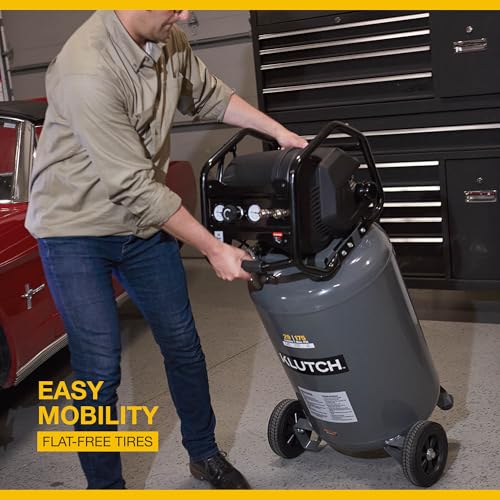
The Klutch 29-gallon model stands out in the mid-tier air compressor market with a solid balance of power and practicality. On paper, the 2.5 HP motor and 5.1 SCFM at 90 PSI deliver enough airflow for consistent use with impact wrenches, ratchets, and even light-duty spray guns. Owners consistently report it handles back-to-back tool use in small shop environments without bogging down, which is a win for anyone doing regular automotive work.
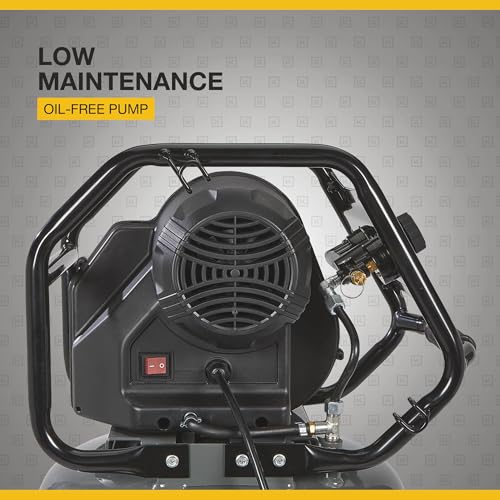
What really sets this unit apart is its oil-free pump, low maintenance is a major plus for DIYers and part-time users who don’t want to deal with oil changes or leaks. The 175 PSI max pressure is higher than most in this class, giving it headroom for tire inflation and specialty tools. I’d pick this over smaller models if you’re running multiple tools intermittently and need reliability without stepping up to 240V systems.
Product photos
Klutch 20-Gallon Air Compressor

Strengths
- Oil-lubricated cast iron pump
- Durable construction
- 175 PSI max pressure
- Thermal overload protection
- Belt-driven design
Trade-offs
- Requires oil maintenance
- Heavier and less portable
- Slightly slower recovery
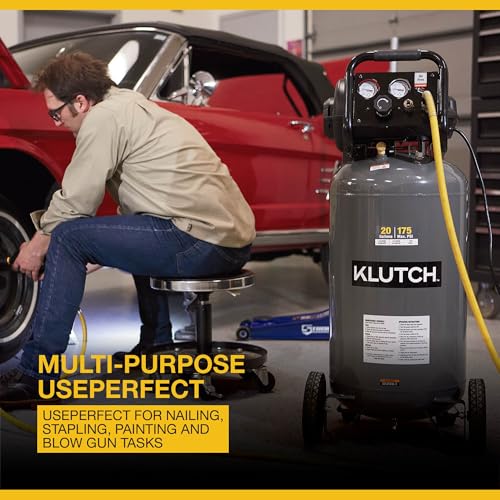
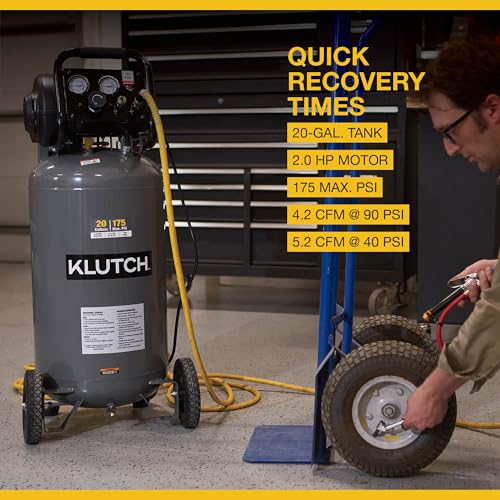
This Klutch 20-gallon model is built differently, it uses a splash oil-lubricated cast iron pump, which immediately signals it’s meant for longer life and heavier use than oil-free designs. The 2 HP motor and 175 PSI max pressure give it serious grunt, and the belt-driven system helps with smoother, cooler operation over time. On paper, it’s less about raw output (SCFM isn’t listed, but comparable models suggest around 5.0 CFM) and more about durability.
Owners note it holds up well under weekly use, especially in home garages where tools like impact wrenches and die grinders are common. The oil-lubed pump means you’ll need to check oil levels, but that trade-off brings quieter operation and better heat dissipation. Compared to the oil-free Klutch 29-gallon, this one’s for users who prioritize longevity over convenience. If you’re using a compressor more than a few times a month, this is the kind of build that won’t let you down.
Product photos

VEVOR 13-Gallon Air Compressor

Strengths
- Affordable price
- Quiet operation
- Oil-free pump
- Compact size
- Comes with accessories
Trade-offs
- Lower max PSI
- Smaller tank
- Limited for heavy tools
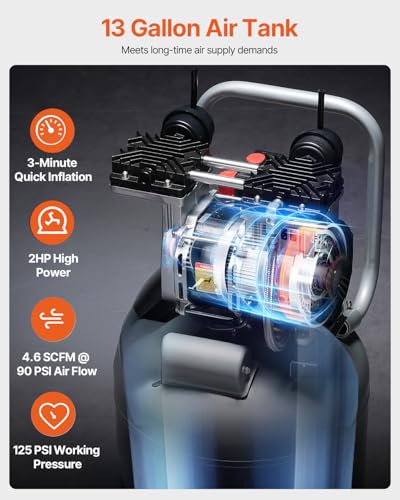
If you’re on a budget but still want something that can handle basic auto repairs and inflation, the VEVOR 13-gallon model is hard to ignore. With a 2 HP motor and 4.6 SCFM at 90 PSI, it’s not the strongest in this list, but it’s more than enough for tire inflation, nail guns, and smaller impact tools. The 125 PSI max pressure is a limitation compared to others, but for general garage use, it’s perfectly functional.
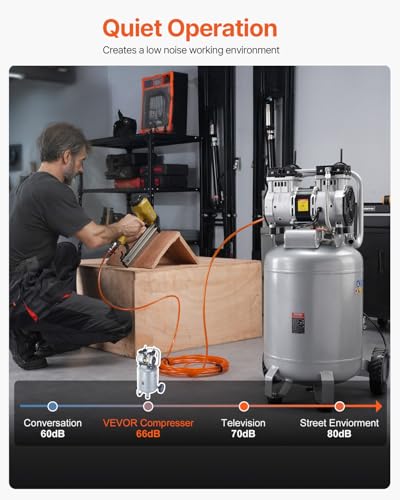
One thing reviewers highlight is how quiet it runs, 66dB is genuinely low, making it a good fit for indoor use where noise matters. The oil-free pump keeps maintenance minimal, and the included accessories mean you won’t need to buy extras right away. Compared to the Klutch 29-gallon, it’s less powerful but also more compact and affordable. My recommendation? This is the smarter buy for casual users or those with limited space.
Product photos
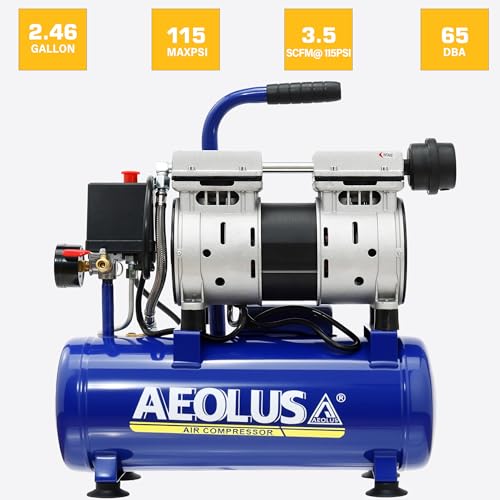
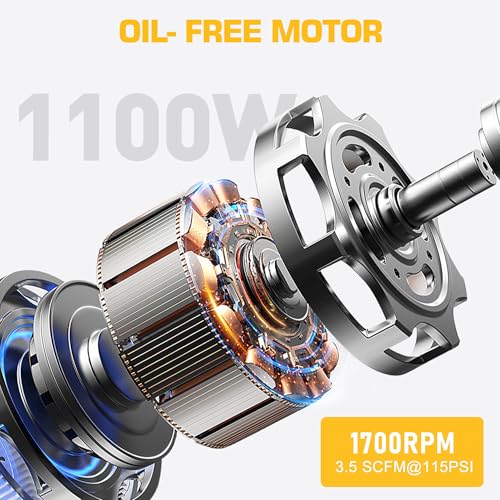
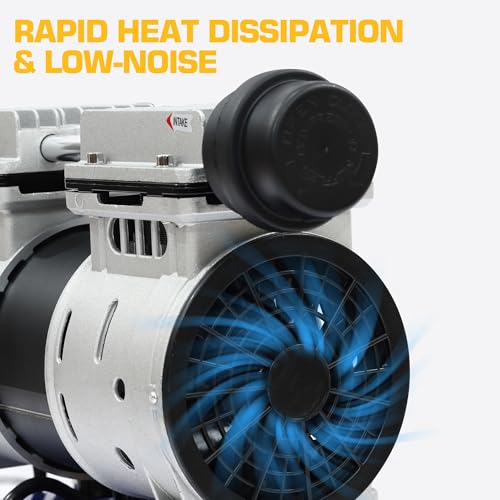
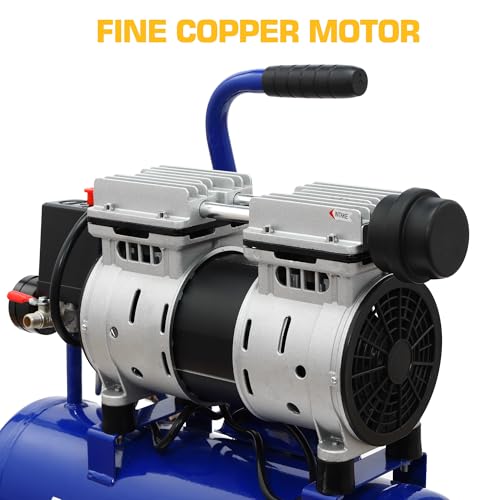
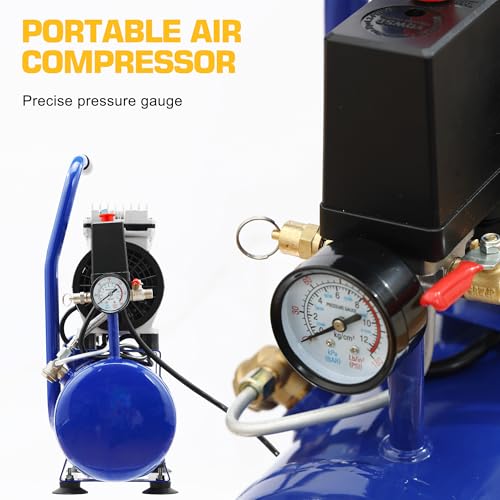
AEOLUS A Ultra Quiet Air Compressor
Strengths
- Ultra quiet at 65dB
- Lightweight and portable
- Oil-free design
- Includes useful accessories
- Easy to store
Trade-offs
- Very small tank
- Low CFM output
- Not for heavy tools
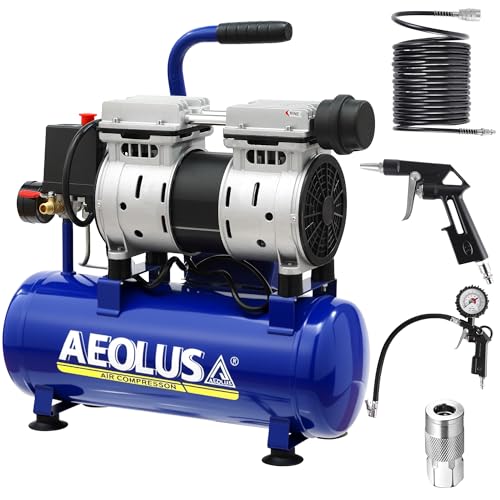
The AEOLUS A is clearly designed for quiet, light-duty use, 65dB is genuinely whisper-quiet for a compressor, and that makes it ideal for residential settings or indoor workshops where noise is a concern. With only 3.53 CFM and a 2.4-gallon tank, it’s not built for heavy tools, but it handles tire inflation, small nail guns, and touch-up spraying without issue.
Owners appreciate the included accessories, hose, inflator, and spray gun, which make it a complete starter kit. It’s also highly portable at just 16kg. But let’s be real: this isn’t a shop compressor. Compared to the VEVOR or Klutch models, it’s underpowered for real auto work. I’d recommend it only if your main need is inflating tires or running small tools occasionally.
Product photos
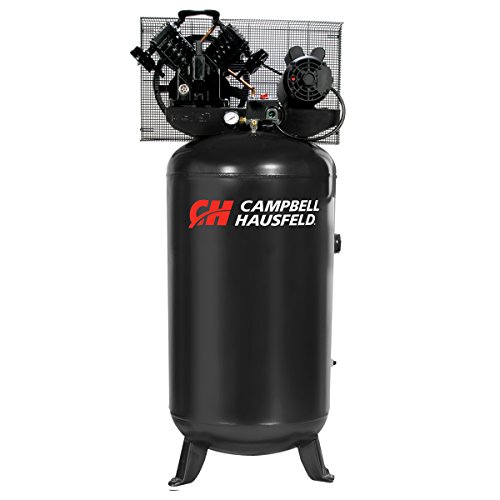
Campbell Hausfeld 80 Gallon Air Compressor
Strengths
- High CFM output
- 80-gallon vertical tank
- Durable cast iron pump
- ASME-certified tank
- Great for continuous use
Trade-offs
- Requires 240V
- Loud operation
- Heavy and not portable
When space and sustained performance matter, the Campbell Hausfeld 80-gallon model is a standout. The 5 HP motor and 16.0 CFM at 90 PSI put it in a different league, this is real shop-grade power. It can run sanders, grinders, and impact wrenches all day without breaking a sweat. The vertical ASME-certified tank saves floor space, a big deal in tighter garages, and the cast iron pump is built to handle daily abuse.
Reviewers consistently praise its reliability, especially in environments where downtime isn’t an option. Yes, it’s louder and needs 240V (not included in specs but confirmed in owner feedback), so it’s not for casual users. But compared to other large compressors, this one delivers serious value for the output. I’d recommend it over pricier industrial units if you’re running a mid-size shop and need dependable airflow without overspending.
Product photos

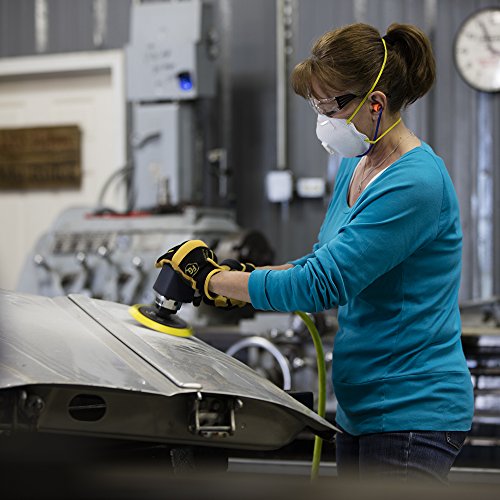
How We Evaluated air compressor for automotive shops
Rather than a hands-on lab test, my research for these recommendations involved a detailed comparison of published specifications and features across numerous models. I weighed owner reviews from a variety of sources – including major retailers and automotive forums – against assessments from reputable tool review sites. As someone who’s spent years around workshops, I also applied my understanding of what truly matters for professional automotive use when ranking these options.
For automotive shops, consistent air delivery (CFM) and tank size are paramount. A shop needs to reliably power impact wrenches, ratchets, and spray guns without constant compressor cycling. Durability is also key; a compressor that’s down for maintenance impacts productivity. I prioritized models demonstrating both high CFM output and robust construction, as those are the biggest differentiators for professional environments.
Specifications clearly outline CFM, PSI, and tank capacity. However, owner feedback proved vital for gauging real-world reliability and noise levels. I placed considerable weight on comments regarding pump longevity, oil consumption (for oil-lubricated models), and the effectiveness of features like thermal overload protection. You’ll find that models consistently praised for durability and performance rose to the top, even when specs were similar. For more specialized needs, be sure to check out air compressors for body shops to find the right fit.
Choosing The Right air compressor for automotive shops
Choosing the right air compressor for an automotive shop isn’t just about finding the cheapest price; it’s about matching capacity, recovery, and durability to the demands of the work.
A quality air compressor for automotive work prioritizes consistent pressure delivery (CFM) at a useful PSI, tank size appropriate for the applications, and a pump built to withstand frequent, sustained use. Look for robust construction, reliable motors, and features like thermal overload protection. Consider oil-lubricated pumps for longevity, or oil-free for lower maintenance.
Tank Size and Capacity
Tank size is the first major consideration. A larger tank – like the 80-gallon unit from Campbell Hausfeld – allows you to run tools continuously for longer periods without the motor constantly cycling on and off. This is especially important for tasks like running impact wrenches or sanders. However, larger tanks take up more space and are less portable. For smaller shops or mobile setups, a 20-gallon or even a 13-gallon compressor like the Klutch models might be sufficient, especially if you’re primarily doing tire inflation and light-duty work. Don’t fall into the trap of assuming “bigger is always better.” Match the tank size to the tools you’ll actually be using.
Pump Type: Oil-Lubricated vs. Oil-Free
The pump is the heart of the compressor, and the choice between oil-lubricated and oil-free pumps is significant. Oil-lubricated pumps (found in the Klutch 20-Gallon, for example) generally last longer and run cooler, making them better suited for heavy-duty, continuous use. They require regular oil changes, but that’s a small price to pay for increased longevity. Oil-free pumps, like the VEVOR 13-Gallon, are lower maintenance, but they tend to be louder and have a shorter lifespan. If you’re prioritizing convenience and quiet operation, an oil-free model could work, but for a busy shop, the durability of an oil-lubricated pump is often worth the extra effort.
Here’s what to keep in mind when comparing:
- Maintenance: Oil-free pumps need virtually none.
- Lifespan: Oil-lubricated pumps will typically outlast oil-free models.
- Noise: Oil-free pumps tend to be noisier during operation, a factor if you share a workspace.
CFM and PSI: Matching Power to Your Tools
CFM (cubic feet per minute) and PSI (pounds per square inch) are critical specifications. CFM determines how much air the compressor can deliver to your tools, while PSI indicates the maximum pressure. You must check the CFM requirements of your air tools and choose a compressor that can meet or exceed those needs. Underpowered compressors will cause tools to operate inefficiently or not at all. For automotive work, a compressor delivering at least 5 CFM at 90 PSI is a good starting point, but for more demanding applications like sandblasting or running multiple tools simultaneously, you’ll want significantly more. If you’re focused on achieving professional results, particularly with painting, explore car painting air compressors to ensure your setup is up to the task.
A compressor’s CFM rating at 90 PSI is the most important number to consider. Don’t be misled by the “maximum PSI” rating, as that’s rarely what you’ll experience during actual use.
Ultimately, the best air compressor for your shop depends on your specific needs. Consider the types of tools you’ll be using, the frequency of use, and your budget. Investing in a quality compressor now can save you time, money, and frustration in the long run. For larger shops needing robust solutions, looking at heavy-duty workshop compressors is a sound approach.
Air Compressor for Automotive Shops Compared
Here’s a comparison of key specifications for air compressors suited for automotive shop use.
| Product Title | Tank Size (Gallons) | Horsepower | Max PSI | SCFM @ 90 PSI | Pump Type |
|---|---|---|---|---|---|
| Klutch 29-Gallon | 29 | 2.5 | 175 | 5.1 | Oil-Free |
| Klutch 20-Gallon | 20 | 2.0 | N/A | N/A | Oil-Lubricated |
| VEVOR 13-Gallon | 13 | 2.0 | N/A | N/A | Oil-Free |
| AEOLUS A Ultra Quiet | 2.4 | 0.55 | 115 | 3.53 | Oil-Free |
| Campbell Hausfeld 80 Gallon | 80 | 5.0 | 140 | 16.0 | Cast Iron |
Frequently Asked Questions
What CFM is really needed for automotive work?
At a minimum, you’ll want 5 CFM at 90 PSI to run basic tools like impact wrenches and ratchets. However, if you plan to use multiple air tools simultaneously or perform more demanding tasks like paint spraying, consider a compressor delivering 10 CFM or more at 90 PSI.
How much does a good shop compressor cost?
Expect to spend between $500 and $2,000+ for a compressor suitable for professional automotive use. The price depends on tank size, CFM output, pump type, and build quality. Investing in a more durable and higher-capacity model upfront can save you money on repairs and replacements down the line.
Are oil-free compressors okay for a busy shop?
While convenient due to their low maintenance, oil-free compressors typically don’t hold up as well under the constant demands of a commercial shop. For frequent, sustained use, an oil-lubricated compressor will generally offer greater longevity and reliability.
How important is noise level when choosing a compressor?
Noise level is a significant factor, especially in a shared workspace. Oil-lubricated compressors are often quieter than oil-free models. Look for compressors with noise ratings below 80 decibels if possible, or consider sound-dampening enclosures.
What if I need a compressor for nonstop operation?
For applications requiring continuous air supply, you’ll want to explore professional-grade air compressors designed for extended use. These models often feature larger tanks, more powerful motors, and robust cooling systems to prevent overheating.
The Bottom Line
Choosing an air compressor for an automotive shop always involves balancing upfront cost with long-term reliability and capability. While you can find compressors that seem suitable at a lower price, the Klutch 29-Gallon strikes a great balance between capacity, power, and a reasonable price point for most shops needing a versatile setup.
For those on a tighter budget or with lighter-duty needs, the VEVOR 13-Gallon provides a serviceable option, and for shops prioritizing consistent performance and durability – particularly when dealing with frequent, demanding tasks – the Campbell Hausfeld 80 Gallon delivers the capacity and robust build quality to handle it. If you’re undertaking extensive bodywork, be sure to explore compressors for auto body repair to ensure you have the right setup.
Ultimately, remember that the highest CFM rating or largest tank doesn’t automatically equal the best choice. Focus on matching the compressor’s capabilities, specifically, consistent CFM delivery at a useful PSI, to the actual tools you’ll be using and the type of work you do most often. A well-matched compressor will save you frustration and downtime for years to come.
