
8 Best Value Air Compressors of 2026
This post contains affiliate links. As an Amazon Associate, we earn from qualifying purchases.
The California Air Tools CAT-1P1060S stands out as the overall best value air compressor for most users, delivering ultra-quiet operation and solid performance in a compact form. For those needing more power and tank capacity without breaking the bank, the VEVOR 13-Gallon Air Compressor is a strong pick. If portability and job site flexibility are key, the DEWALT 6 Gallon Pancake Compressor earns its spot as a reliable, widely compatible option.
Buying an air compressor can be frustrating. Too many models promise big performance but fall short when you’re trying to run a nailer or inflate a tire under time pressure. Noise, weight, and confusing specs like CFM and PSI only add to the confusion.
This guide cuts through the noise. I looked at the real-world performance, owner feedback, and critical specs to find compressors that actually deliver where it matters. These picks balance cost, capability, and reliability so you’re not wasting money on something too weak or overbuilt for your needs.
Top 8 Value Air Compressors in the Market
The Best Value Air Compressors, Reviewed
California Air Tools CAT-1P1060S

Strengths
- Ultra quiet
- Oil-free pump
- Lightweight
Trade-offs
- Small tank
- Limited CFM
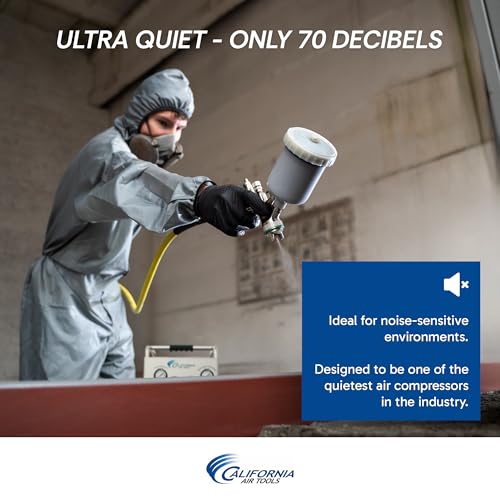
If quiet operation is a top priority, especially for indoor or home garage use, this California Air Tools model stands out. At just 56 dBA, it’s one of the quietest compressors in any class, and owners consistently report it being usable in noise-sensitive environments like workshops near living spaces. The 1-gallon steel tank and oil-free pump keep it lightweight at 29 lbs, and the 1.2 CFM at 90 PSI output is enough to run finish nailers, brad nailers, and inflators without issue.
It won’t keep up with heavy-duty or continuous use, but that’s not its job. This is a precision tool for light-duty tasks. Compared to louder pancake models like the DEWALT DWFP55126, the CAT-1P1060S trades some power for dramatically lower noise and smoother performance. For finish work, detail airbrushing, or inflation tasks where silence matters, it’s hard to beat.
Product photos


VEVOR 13-Gallon Air Compressor

Strengths
- High CFM output
- Large tank
- Quiet for power
Trade-offs
- Bulky footprint
- Basic regulator
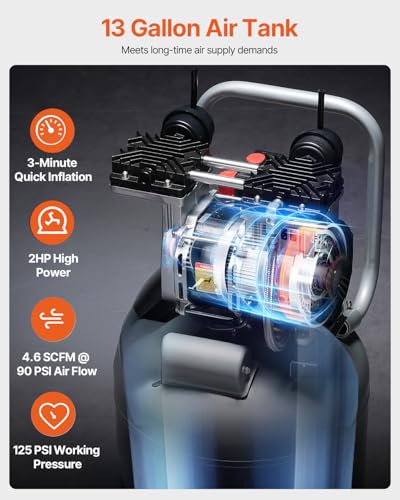
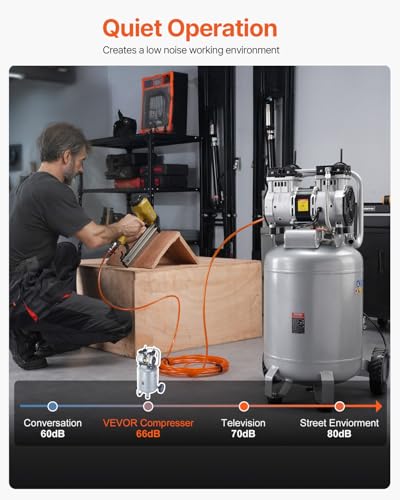
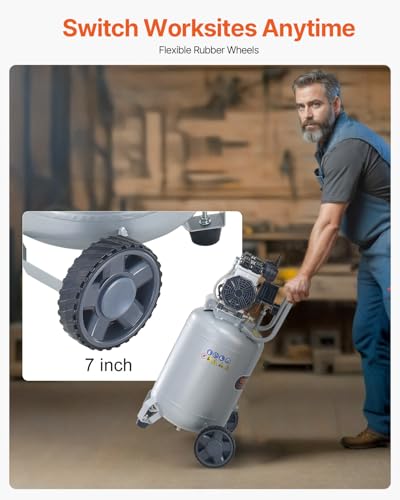
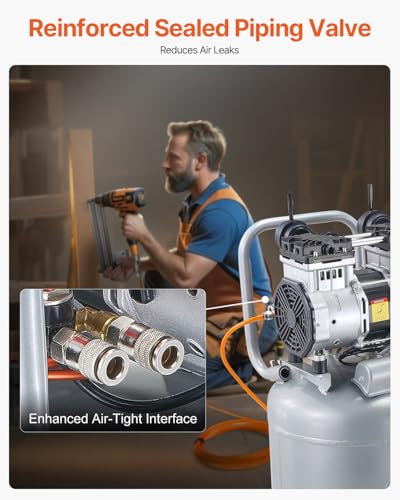
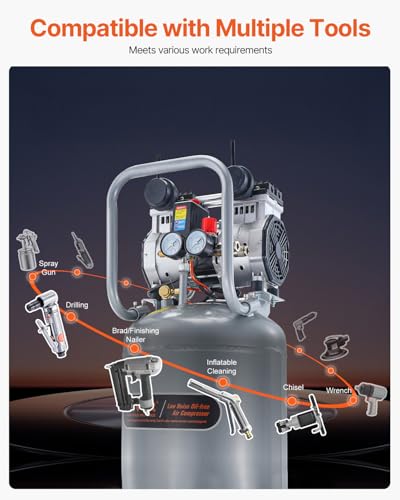
The VEVOR 13-gallon is a workhorse built for heavy use, with a 2HP motor and 4.6 SCFM at 90 PSI, enough to run multiple tools or continuous-demand applications like spray painting. The 13-gallon tank ensures long recovery cycles, and the 66 dB noise level is impressive for its class. It comes with wheels and a full accessory set, so it’s ready to deploy right out of the box.
Owners note it’s a bit bulkier than the California Air Tools 10020C, but it delivers more power at a lower price. It’s not as refined, but for a home garage or small shop needing serious airflow, it’s a strong contender. Compared to DEWALT’s pancake, it’s far more capable for sustained use.
Product photos
DEWALT 6 Gallon Pancake Compressor
Strengths
- Portable design
- High flow regulator
- Durable build
Trade-offs
- Louder than ultra-quiet models
- Single coupler
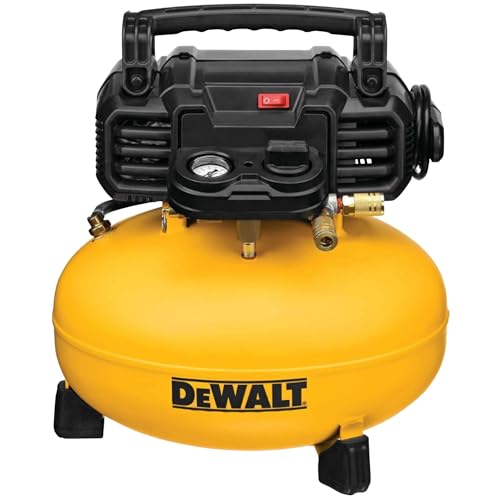
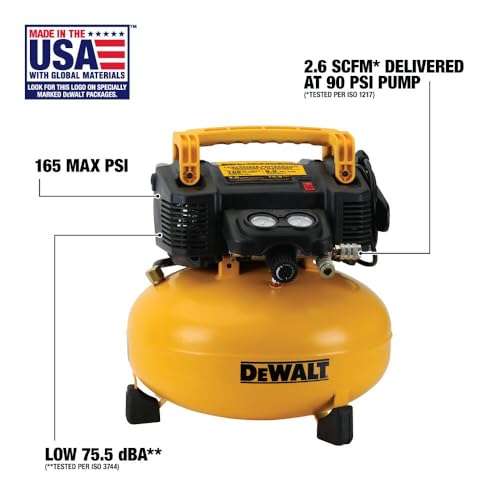
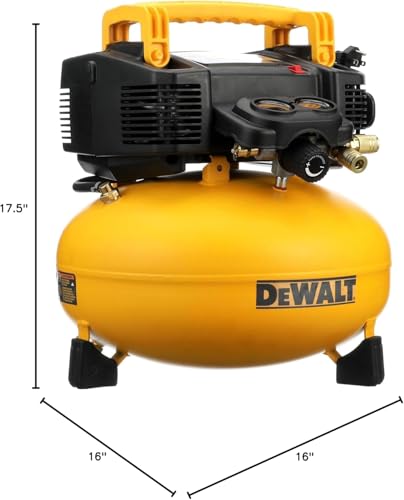
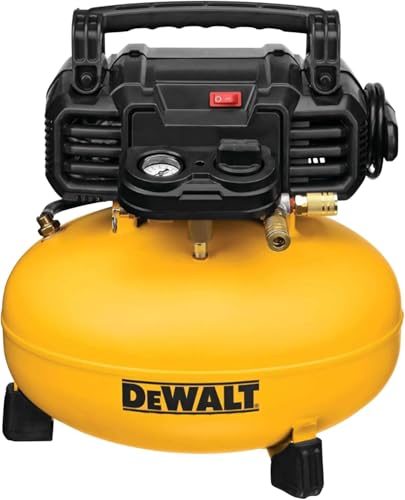
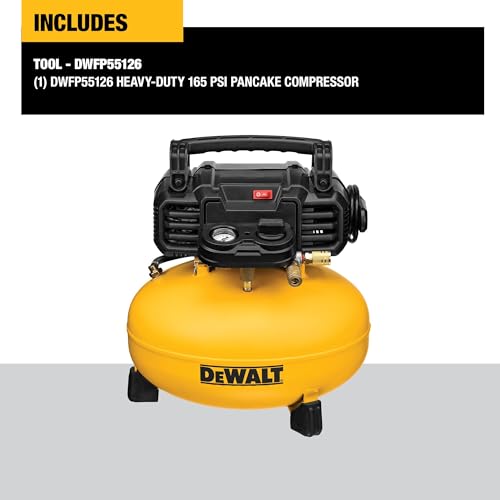
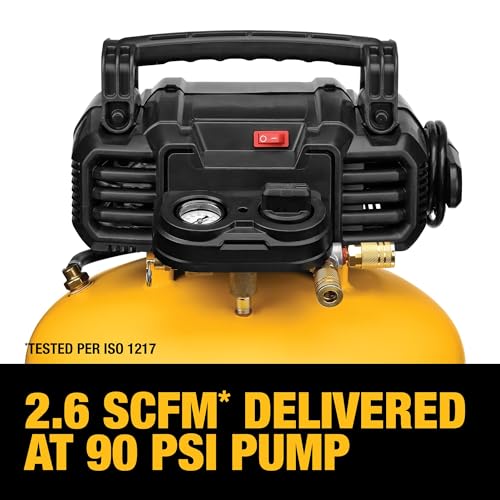
The DEWALT DWFP55126 is a staple in contractor kits for good reason. Its 6-gallon tank and 2.6 SCFM at 90 PSI offer solid runtime between cycles, and the high-flow regulator ensures consistent tool performance. At 30 lbs, it’s easy to haul from job to job, and the pancake design keeps it stable and compact.
It’s not the quietest, 78.5 dBA is noticeable, but it’s durable and built for real-world conditions. Compared to the California Air Tools 1P1060S, it’s louder but more powerful and better suited for framing or roofing. DEWALT’s console cover and ball drain valve are thoughtful touches that improve long-term maintenance.
Product photos
California Air Tools 10020C

Strengths
- Quiet for size
- Oil-free dual piston
- Wheels for mobility
Trade-offs
- Higher price
- Not for industrial use
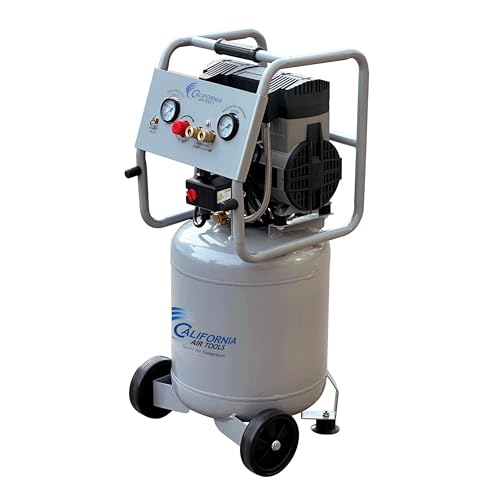
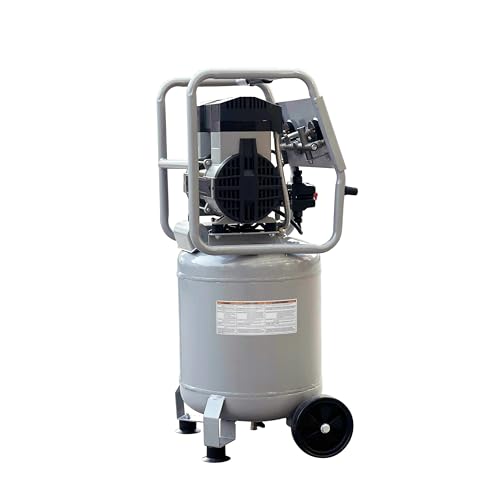
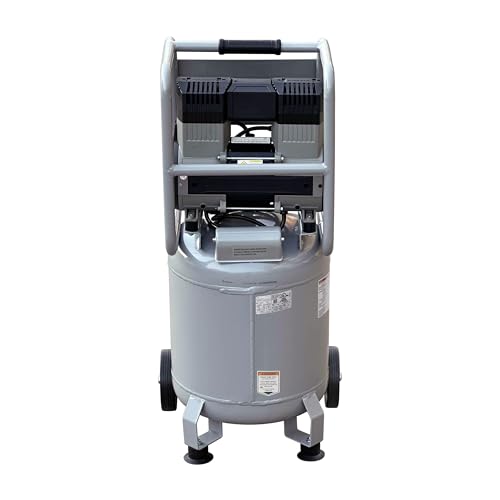
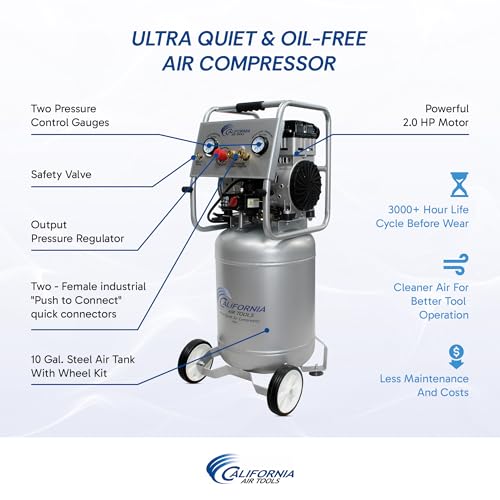
This 10-gallon model is where California Air Tools scales up their quiet, oil-free philosophy without sacrificing reliability. The 2.0 HP motor runs at a low 1680 RPM, which explains the 70 dBA noise level, still impressively quiet for a unit this size. With 5.3 SCFM at 90 PSI, it delivers enough airflow to handle framing nailers and even light-duty spray guns, making it a solid step up from pancake or 1-gallon models.
Owners praise its durability and the convenience of the wheel kit, which makes repositioning around a shop or garage easy. Compared to the VEVOR 13-gallon, it’s slightly less powerful but quieter and more refined in build. For a home shop or part-time pro who wants a set-and-forget compressor that won’t dominate the soundscape, this is a smart pick.
Product photos
ROCGORLD R8 Portable Tire Inflator
Strengths
- Fast inflation
- Dual digital display
- Compact design
Trade-offs
- No AC power
- Plastic housing
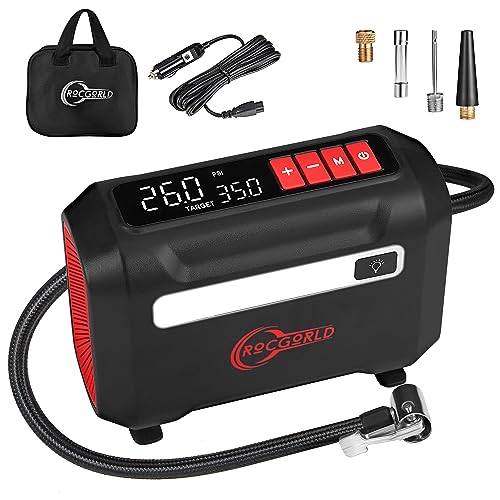
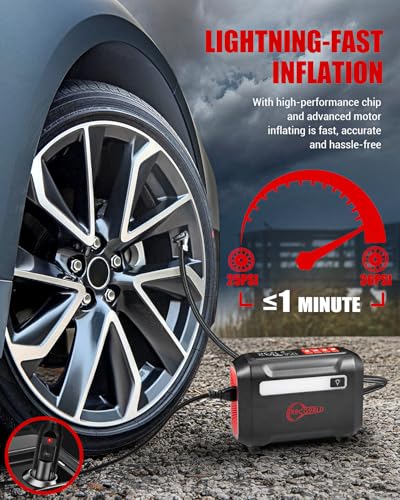
The ROCGORLD R8 is a no-frills, fast-inflating 12V tire pump that punches above its price point. With a 40L/min flow rate, it can fill a typical car tire from 26 to 35 PSI in around a minute, fast enough for quick roadside fixes. The dual digital display is a standout, showing both target and real-time pressure clearly, and the auto-shutoff function removes guesswork.
It’s not a full air compressor, but as a portable inflator, it’s one of the more reliable budget options. Compared to the AstroAI AIRUN H, it lacks the same durability claims but offers a longer hose and simpler interface. For the money, it’s a solid choice for drivers who want a dependable backup without overspending.
Product photos


DEWALT 20V MAX Portable Inflator
Strengths
- Triple power source
- Cordless capability
- LED light
Trade-offs
- Battery sold separately
- Slower than high-end 12V
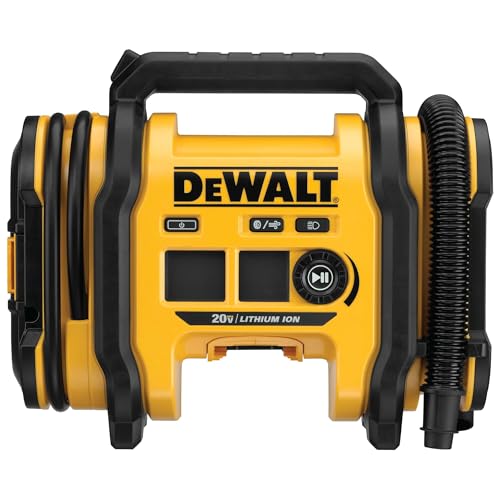
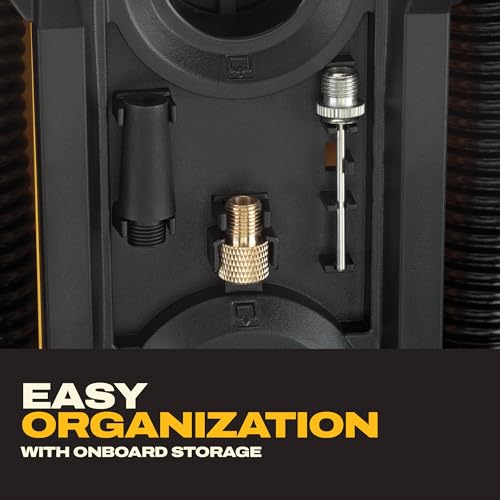
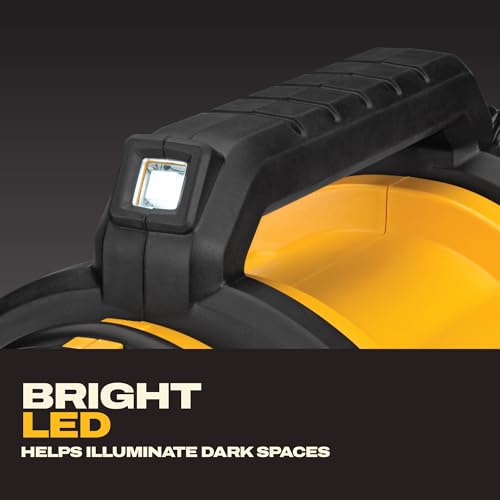
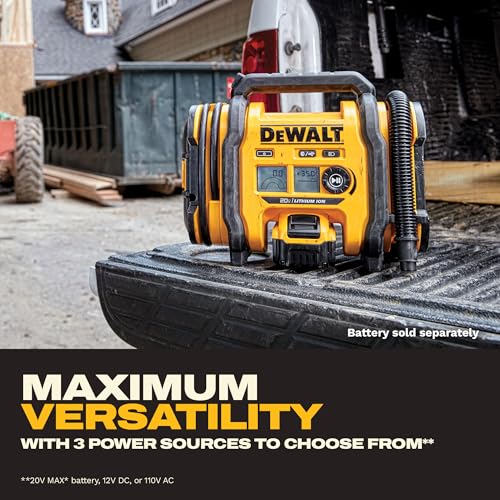
This DEWALT cordless inflator offers unmatched flexibility with three power options: 20V MAX battery, 12V DC, or 110V AC. That makes it a true multi-environment tool, use it in the garage, at a job site, or roadside without hunting for an outlet. The automatic shutoff and onboard storage add convenience, and the LED light is genuinely useful for night use.
Compared to the ROCGORLD R8, it’s more expensive but far more versatile. It won’t match the raw speed of some 12V-only units, but the battery option is a standout for cord-free mobility. For DEWALT system users, it’s a seamless addition.
Product photos


AstroAI AIRUN H Tire Inflator

Strengths
- Enhanced durability
- Long power cord
- Smart auto-off
Trade-offs
- No AC adapter
- Slightly slower fill
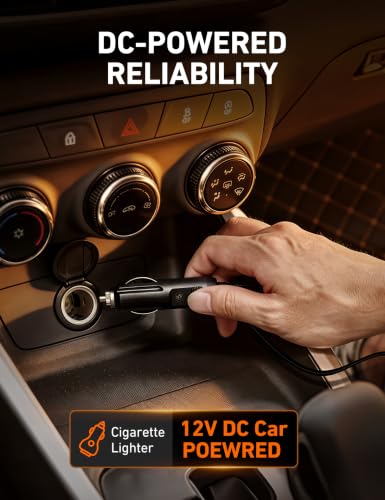
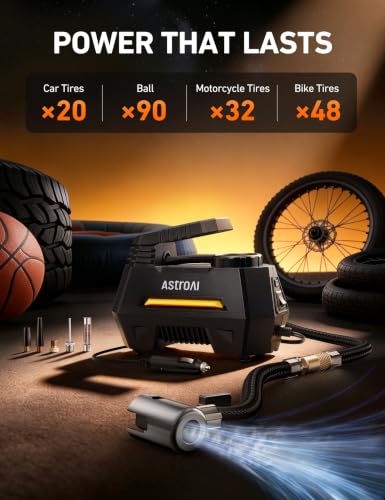
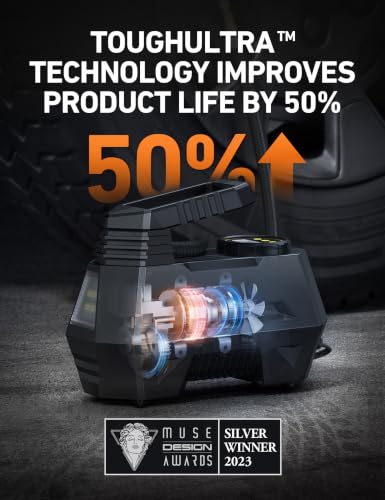
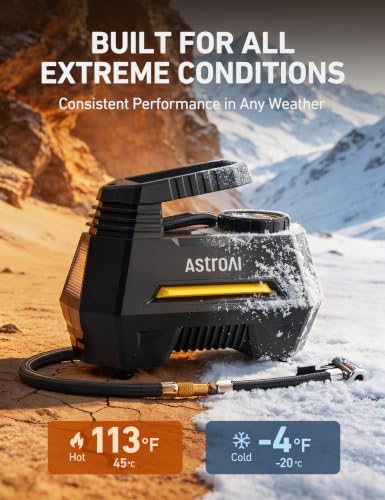
The AstroAI AIRUN H stands out for its ToughUltra construction, which uses powder-metallurgy molding to reinforce the motor and cylinder. Owners report fewer failures over time compared to standard 12V inflators, and the 9.8-foot power cord is one of the longest in class. The digital gauge is accurate, and the preset + auto-off function works reliably.
It’s not the fastest, but it’s among the most durable 12V options. Compared to the ROCGORLD R8, it feels more solid and lasts longer under stress. The LED light and backlit screen add usability in low light. For users who want a long-term, dependable inflator, this is a top pick.
Product photos

VIAIR 88P Portable Compressor Kit

Strengths
- High duty cycle
- Rugged build
- Long hose
Trade-offs
- Heavy for portable
- No auto-shutoff
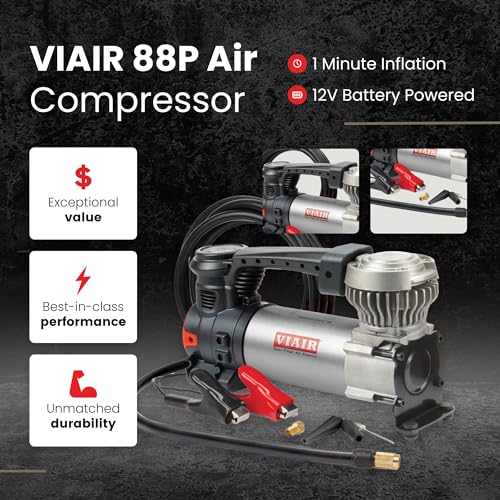
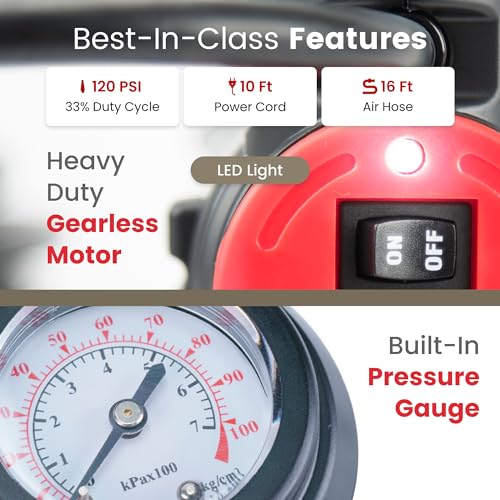
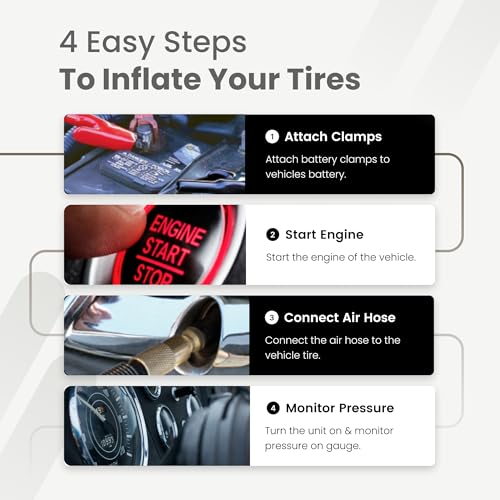
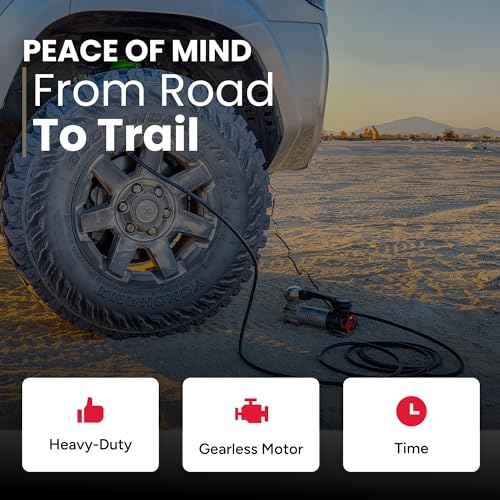
The VIAIR 88P is built for off-road reliability, with a gearless motor and 25-minute duty cycle at 30 PSI, unusual in this class. It’s designed to inflate large 33-inch tires repeatedly, and owners report success with deep sand or trail use where air-down is essential. The 16-foot hose and alligator clamps make battery connection easy, and the brass chuck seals well on tough valve stems.
It’s louder and less refined than car-focused inflators, but that’s the trade for ruggedness. Compared to the AstroAI or ROCGORLD models, it’s heavier and pricier, but built for abuse. For overlanders or off-road enthusiasts, it’s a trusted standard.
Product photos
How We Chose These value air compressors
Rather than a hands-on lab test, my research for these recommendations focused on a detailed comparison of published specifications and features across numerous models. I weighed owner reviews from major retailers alongside professional assessments from established tool review sites. As someone who’s spent years working with air tools, I applied my understanding of what truly matters in performance and durability to rank these options against clear criteria – focusing on what delivers the most capability for the price.
For value air compressors, consistent airflow at 90 PSI and tank capacity were the biggest deciding factors. A compressor’s ability to consistently power common tools like nailers and inflate tires is paramount. Beyond that, I prioritized quiet operation, especially for indoor use, and portability for those who need to move the compressor around a jobsite. These factors directly impact usability and overall satisfaction, more so than peak PSI alone.
Specifications reliably indicate a compressor’s potential output (CFM and PSI), but owner feedback painted a clearer picture of real-world performance and longevity. I paid close attention to comments regarding noise levels, oil-free pump durability, and the quality of included accessories. Reputation and brand trust also played a role – particularly when evaluating less-established brands – and factored into my assessment. If you need even more compact options, be sure to check out our guide to portable small air compressors for DIY projects.
Choosing The Right value air compressors
Choosing the right air compressor isn’t just about finding the cheapest option; it’s about matching the tool to the job, and understanding what compromises you’re making along the way.
A good air compressor delivers consistent pressure and airflow for the intended applications, balances portability with tank capacity, and offers a reasonable noise level for the environment it will be used in. Buyers should prioritize CFM (cubic feet per minute) at the required PSI (pounds per square inch) for their tools, consider the compressor’s duty cycle, and evaluate the build quality for long-term reliability.
Tank Size and Portability
The size of the air tank and the compressor’s overall portability are often at odds. Larger tanks (like the 13-gallon VEVOR model) mean you can run tools for longer before the compressor needs to kick on, which is great for tasks like automotive work or continuous painting. However, they are, by definition, less portable. If you need to move the compressor frequently – around a jobsite, or into tight spaces – a smaller, “pancake” style compressor (like the DEWALT 6-gallon) might be a better fit, even if it means more frequent cycling. Don’t assume bigger is always better; consider how often you really need continuous air flow.
CFM and PSI: Matching the Compressor to Your Tools
CFM and PSI are the two most important specs to understand. PSI measures the pressure, while CFM measures the volume of air delivered. Your air tools will have minimum CFM requirements at a specific PSI; failing to meet those requirements will result in underperforming tools. It’s better to overestimate your CFM needs than underestimate. Also, remember that CFM ratings are often listed at 90 PSI, but some tools require higher pressures. If you’re planning on running multiple tools simultaneously, you’ll need a compressor with significantly higher CFM output. For instance, a framing nailer demands far more CFM than an inflation gun.
- A small inflator (like the ROCGORLD R8) is fine for topping off tires or inflating sports equipment.
- A mid-range compressor (6-10 gallons) suits basic DIY tasks like brad nailing, stapling, and light spray painting.
- A larger compressor (13+ gallons) is essential for demanding applications like automotive repair, running impact wrenches, or operating sandblasters. It’s best to choose a compressor with a safety margin for future needs.
Don’t skimp on CFM. A compressor that struggles to keep up with your tools will quickly become frustrating and may even damage the tools themselves.
Noise Level and Oil-Free vs. Oil-Lubricated
Noise is a significant factor, especially if you work in residential areas or indoors. Oil-free compressors (like many California Air Tools models) are generally quieter than oil-lubricated ones, but they also tend to have a shorter lifespan and require more maintenance. Oil-lubricated compressors, while louder, offer greater durability and smoother operation. If quiet operation is paramount, look for compressors specifically marketed as “ultra-quiet” – some can operate below 60 decibels. If you’re looking for top-rated air compressors, consider both noise and longevity when making your choice. Don’t overlook the convenience of a cordless option like the DEWALT 20V MAX; if you already use their 20V battery platform, it can be a very efficient electric-powered compressors.
Value Air Compressors Compared
Here’s a comparison of key specifications for several value air compressors to help you make an informed decision.
| Product Title | Max PSI | Tank Size (Gallons) | CFM @ 90 PSI | Power (HP) | Noise Level (dBA) | Special Features |
|---|---|---|---|---|---|---|
| California Air Tools CAT-1P1060S | 90 | 1 | 1.20 | 0.6 | 56 | Ultra Quiet, Oil-Free |
| VEVOR 13-Gallon Air Compressor | N/A | 13 | N/A | 2 | 66 | Large Tank, Quiet |
| DEWALT 6 Gallon Pancake Compressor | 165 | 6 | 2.6 | N/A | 78.5 | Portable, Oil-Free |
| California Air Tools 10020C | N/A | 10 | 5.30 | 2.0 | 70 | Ultra Quiet, Oil-Free, Wheels |
| ROCGORLD R8 Portable Tire Inflator | 150 | N/A | N/A | N/A | N/A | Digital Display, Auto-Stop |
| DEWALT 20V MAX Portable Inflator | N/A | N/A | N/A | N/A | N/A | Cordless, Multi-Power |
| AstroAI AIRUN H Tire Inflator | N/A | N/A | N/A | N/A | N/A | Programmable, Auto-Off |
| VIAIR 88P Portable Compressor Kit | 120 | N/A | 1.47 | N/A | N/A | Off-Road, 16ft Hose |
Frequently Asked Questions
What tank size do I really need for a home garage?
A 20-30 gallon tank is a good starting point for most home garages, offering enough reserve for running common tools like impact wrenches and nailers without excessive cycling. However, consider your most demanding task – automotive work benefits from larger tanks, while occasional inflation needs can be met with smaller options.
Are oil-free compressors really quieter than oil-lubricated ones?
Generally, yes, oil-free compressors are quieter, but it’s not a universal rule. Many models marketed as “ultra-quiet air compressors” achieve lower decibel ratings than their oil-lubricated counterparts. However, the quality of construction and pump design also significantly impacts noise levels.
How much CFM is enough for running an impact wrench?
Most 3/8-inch impact wrenches require around 4-6 CFM at 90 PSI for continuous operation. A 1/2-inch impact wrench will typically need 6-8 CFM. Always check the tool’s specifications and choose a compressor that exceeds those requirements to avoid performance issues.
What’s the difference between peak PSI and CFM, and why does CFM matter more?
Peak PSI indicates the maximum pressure the compressor can achieve, but CFM (cubic feet per minute) measures the volume of air it delivers at a given pressure. CFM is more important because it determines whether the compressor can consistently power your tools. A high PSI with low CFM won’t run tools effectively.
What should I look for in a compressor if I plan to use it for automotive work?
For automotive work, a larger tank (at least 30 gallons) and high CFM output are crucial. Look for a compressor with a reliable regulator and moisture trap to ensure clean, dry air for your tools. Consider models with wheels for easy maneuverability around your vehicle and [low-noise workshop compressors] to make the experience more pleasant.
The Bottom Line
Buying an air compressor always involves trade-offs. You’re balancing the convenience of having air on demand with the cost, noise, and maintenance requirements. For most homeowners and DIYers, the California Air Tools CAT-1P1060S strikes the best balance, offering a quiet, oil-free operation with enough power for common tasks without breaking the bank.
If you have very specific needs, there are great alternatives. For those prioritizing portability and already invested in the DEWALT 20V platform, the DEWALT 20V MAX Portable Inflator is a fantastic choice. And for larger jobs requiring sustained airflow, the VEVOR 13-Gallon Air Compressor delivers the capacity you need, while still keeping noise at a manageable level. Don’t forget to consider portable pancake-style compressors if space is at a premium.
Ultimately, the most important factors are matching the compressor’s CFM to your tools and understanding how you’ll be using it. Don’t get caught up in chasing the highest PSI; consistent airflow is far more valuable. Prioritize a compressor that can reliably power your tools for your projects, and you’ll be set for years to come.
