6 Best Air Compressors for Garages 2026
This post contains affiliate links. As an Amazon Associate, we earn from qualifying purchases.
The DEWALT 30 Gallon Portable is the best overall air compressor for most garages, delivering strong performance and reliability. For those on a tighter budget, the DEWALT 6 Gallon Pancake offers solid value and dependable power for lighter tasks. If noise is a top concern, the Quiet Air Compressor 5 Gallon stands out with impressively low sound levels.
Most people buying an air compressor for their garage aren’t just looking for a machine, they’re looking to get jobs done without constant frustration. Too often, a poorly matched compressor leads to tools stalling, long wait times between use, or unbearable noise.
After comparing the field and analyzing specs and owner feedback, I focused on models that balance tank size, CFM output, durability, and real-world usability. This guide cuts through the marketing and helps you pick the right compressor for your actual needs, whether you’re running nailers, inflating tires, or powering impact wrenches.
Top 6 Air Compressor For Garages in the Market
The Best Air Compressor For Garages, Reviewed
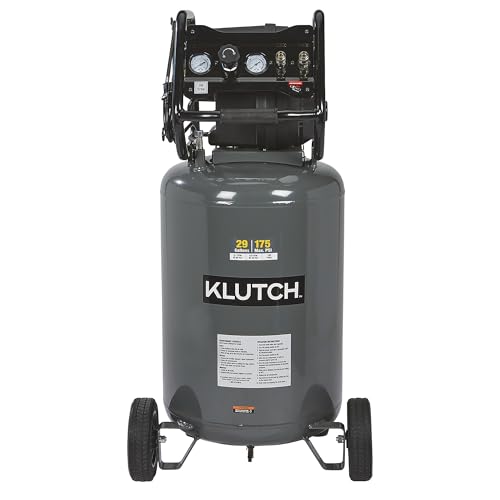
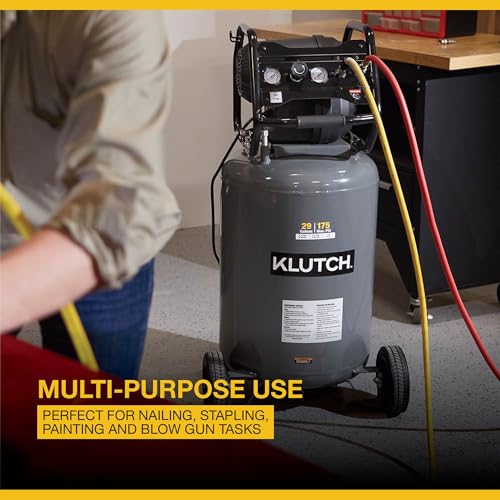
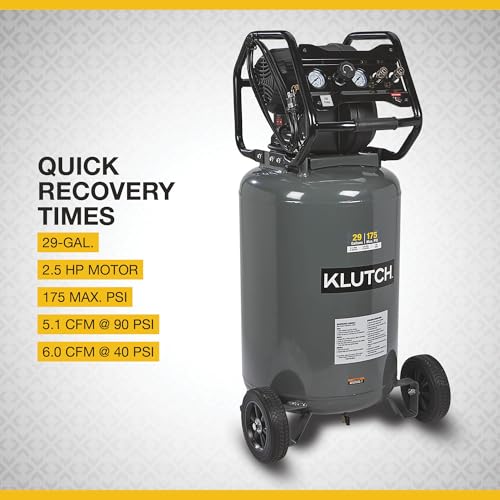
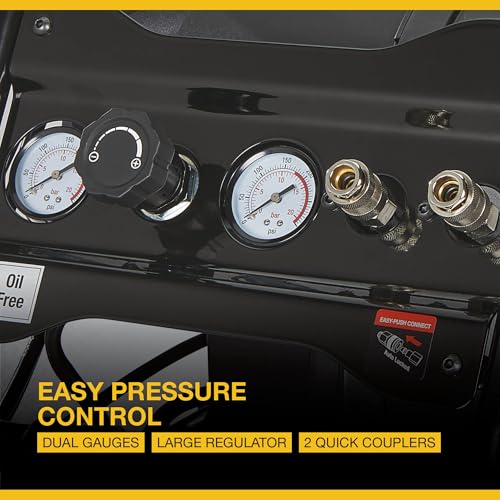
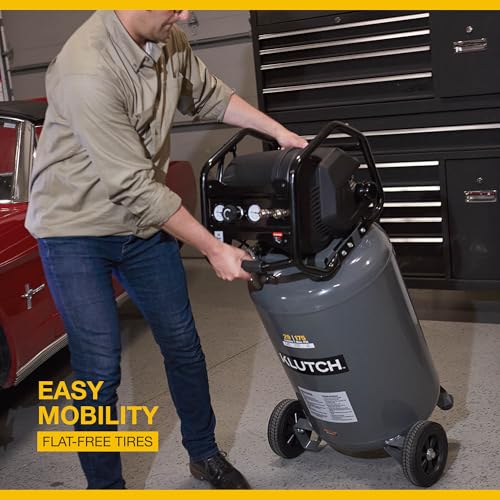
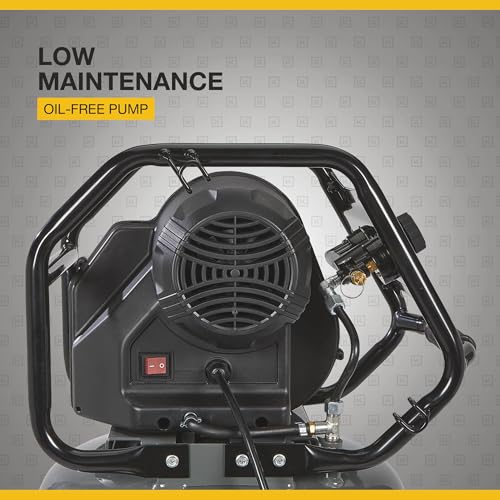
Klutch 29-Gallon Air Compressor 2.5 HP
Strengths
- High CFM output
- Large 29-gallon tank
- Oil-free pump
Trade-offs
- Heavy at 100+ lbs
- Noisier than smaller units
The Klutch 29-gallon model is a workhorse hiding in plain sight. With 5.1 SCFM @ 90 PSI and a 175 PSI max pressure, it delivers serious airflow, enough to run multiple tools or high-demand equipment like impact wrenches and sanders. The 2.5 HP motor keeps up with long cycles, and owners report consistent performance even on colder mornings.
It’s not flashy, but the flat-free tires and solid steel frame make it easy to move around a shop. The oil-free pump is a big plus for DIYers who hate maintenance, though purists will note oil-lubed pumps last longer under constant load. Still, for the price, this compressor offers exceptional value. In my view, it’s the smartest buy for homeowners stepping up from pancake models.
Product photos
DEWALT Pancake Air Compressor 6 Gallon
Strengths
- High CFM for size
- Dual couplers
- Compact pancake design
Trade-offs
- Shorter hose options
- No wheels
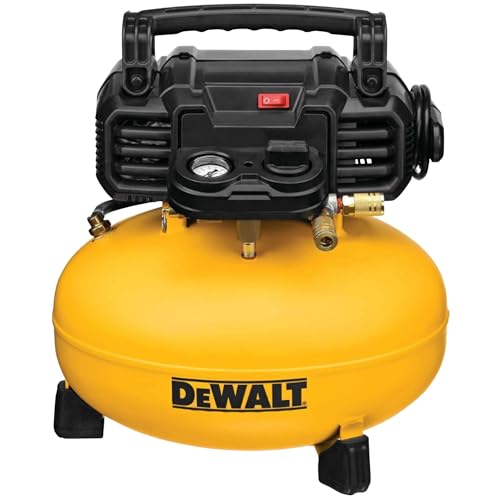
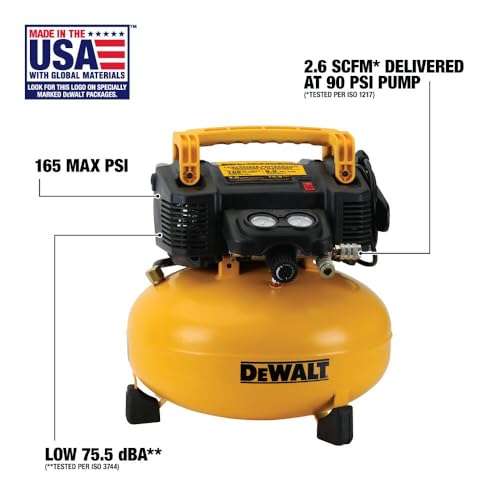
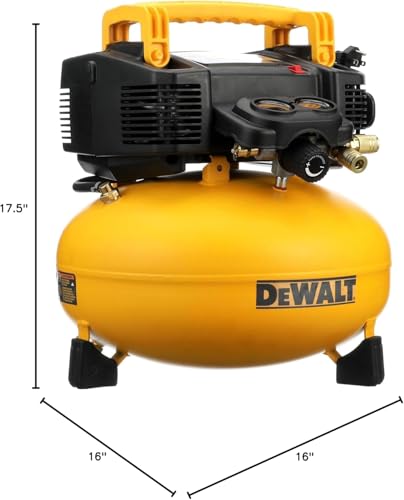
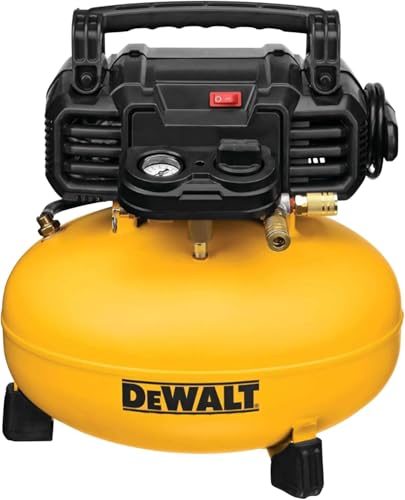
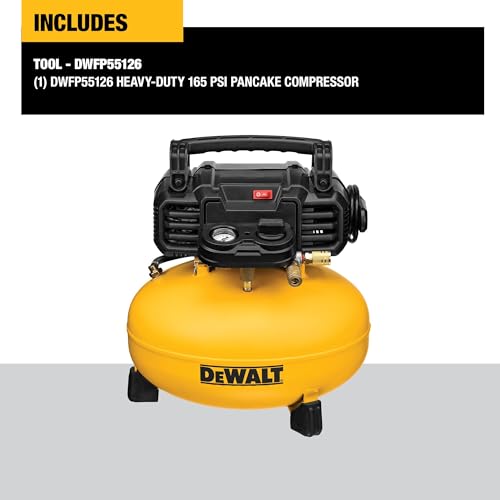
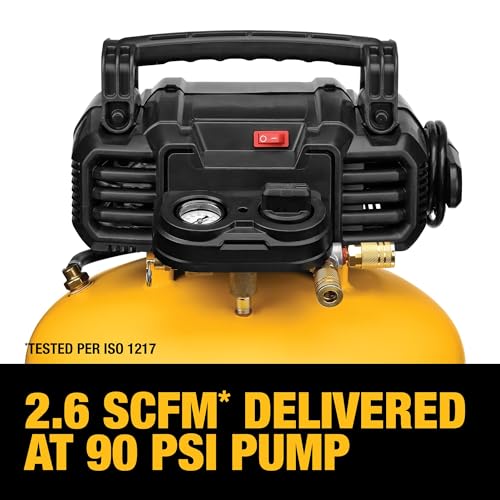
The DEWALT DWFP55126 is a favorite among tradespeople for good reason, it’s compact, tough, and punches above its weight. With 2.6 SCFM @ 90 PSI and a max pressure of 165 PSI, it handles brad nailers, finish guns, and even small framing tools without breaking a sweat. The pancake design keeps it low-profile and easy to store, while the 30 lb weight makes it simple to toss in a truck or carry between job sites.
Noise is a non-issue here at 78.5 dBA, which is respectable though not silent. What sets it apart is the high-flow regulator and dual couplers, reviewers love being able to run two tools or share air with a partner. The oil-free pump is proven over time, and DEWALT’s build quality means this unit lasts. I’d pick this over bulkier models if you value mobility and reliability in a mid-sized garage.
Product photos
Quiet Air Compressor 5 Gallon 68dB

Strengths
- Extremely quiet
- Fast recovery
- Good accessory kit
Trade-offs
- Limited tank size
- Not for heavy tools
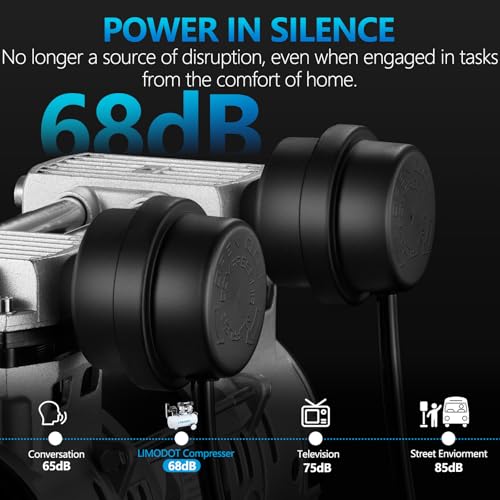
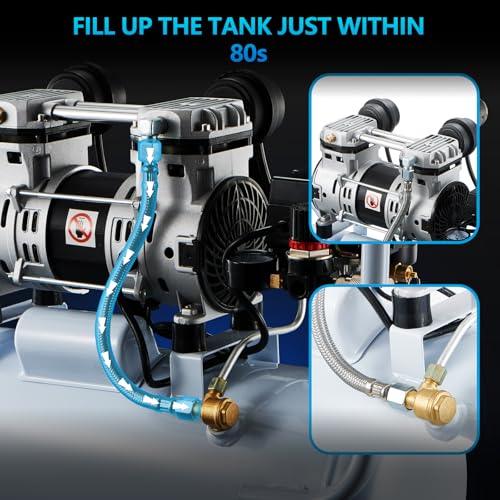
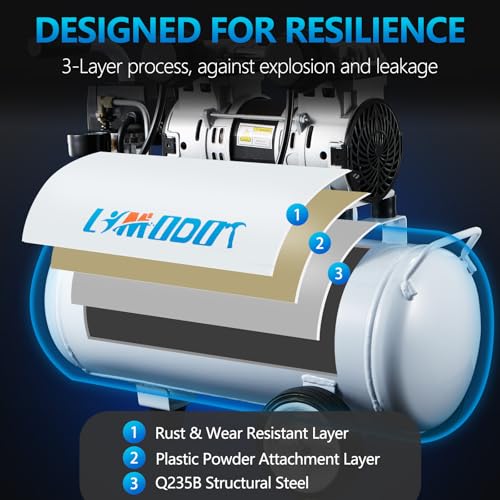
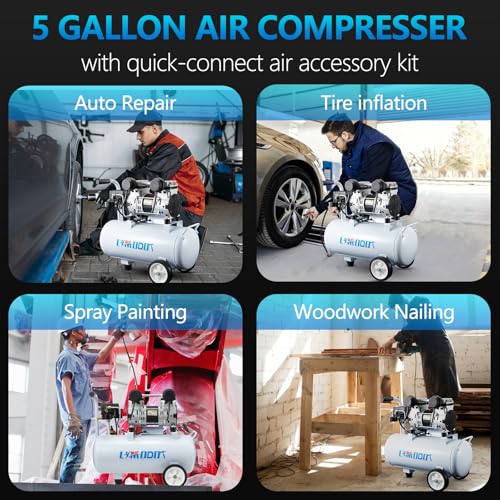
At just 68dB, this is one of the quietest compressors you’ll find, and that matters if you’re working early in the garage or in a shared space. The 2.8 CFM @ 90 PSI output is solid for a 5-gallon unit, and the 80-second refill time means minimal downtime between uses. It’s built for DIYers who want performance without the roar, and the included 11 accessories add real value right out of the box.
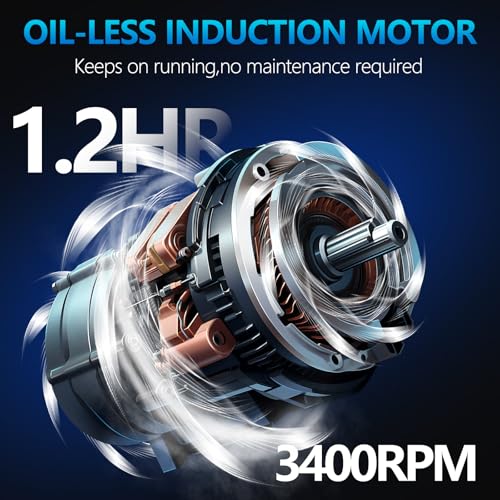
The low-RPM induction motor is a smart design choice, contributing to both quiet operation and longevity. Owners praise its reliability for trim work, stapling, and even light spray painting. While it can’t match larger tanks for continuous flow, it’s one of the best-balanced ultra-quiet models in the sub-$200 range. If noise is your top concern, this should be on your shortlist.
Product photos
ECOMAX Wall Mount Air Compressor
Strengths
- Space-saving wall mount
- Retractable 30ft hose
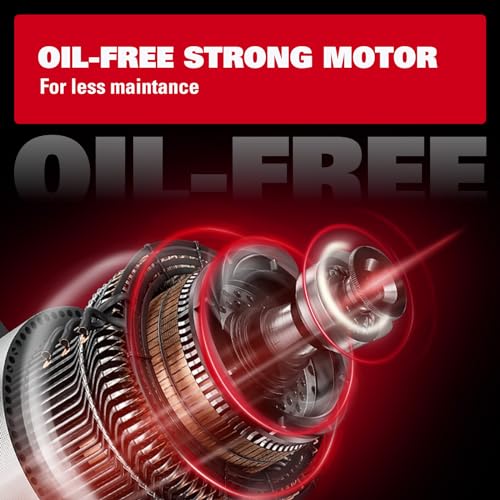
- Oil-free pump
Trade-offs
- Very small tank
- Low CFM at higher PSI
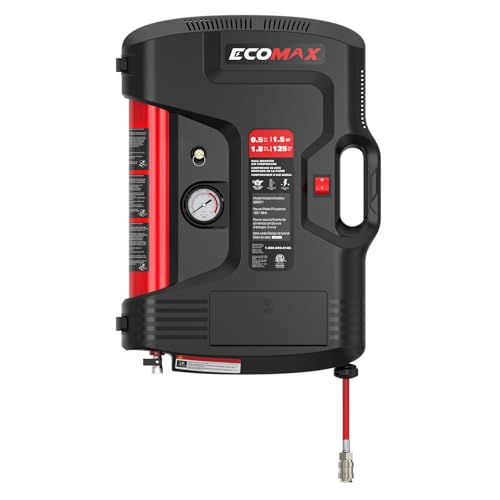
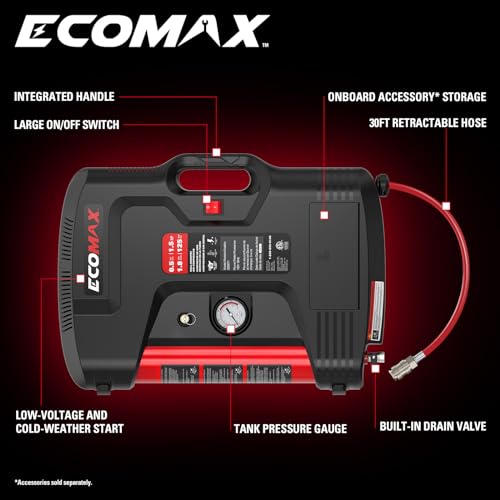
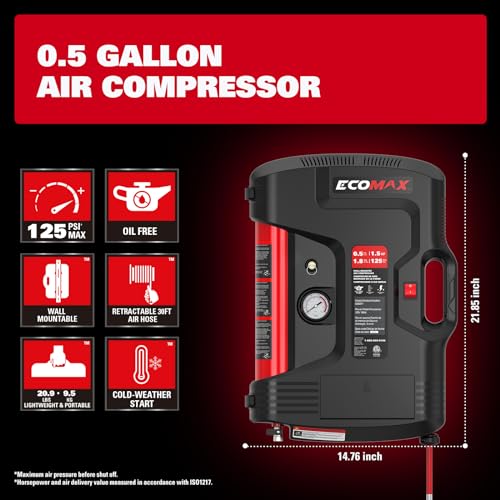
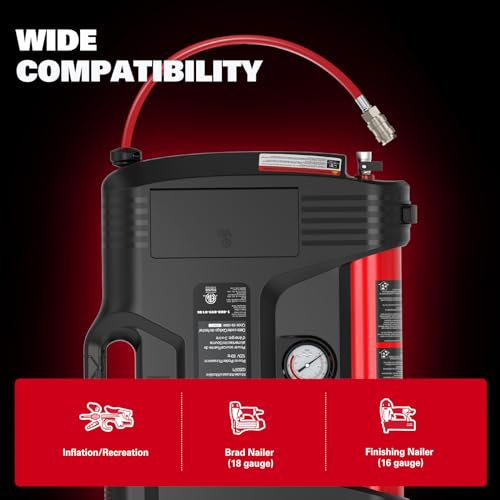
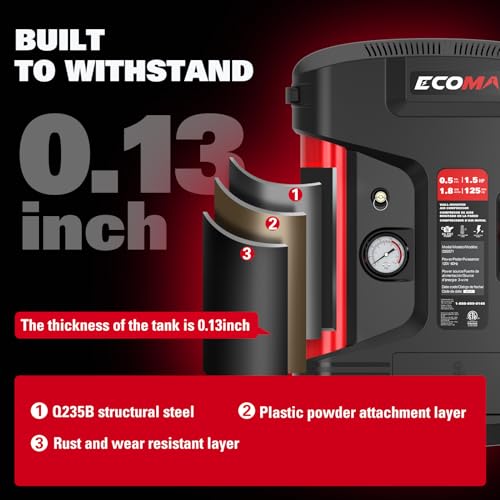
Wall-mount compressors like the ECOMAX are a smart play for small garages where floor space is precious. This model packs a 1.5 HP motor and a 0.5-gallon tank, but don’t let the tiny tank fool you, it’s designed for intermittent use with fast recovery, not sustained runtime. The standout feature is the built-in 30-foot retractable hose reel, which eliminates tangles and keeps your workspace clean.
On paper, the 2.3 CFM @ 40 PSI output is modest, and owners confirm it’s best suited for tire inflation, light brad nailing, and air-up tasks. It’s not going to run a HVLP spray gun smoothly. But for a garage corner or shed, this unit saves space and keeps tools organized. I’d recommend it as a secondary inflator, not a primary air source.
Product photos
DEWALT 30 Gallon Portable Air Compressor
Strengths
- Highest CFM in class
- Quiet for size
- Pneumatic wheels
Trade-offs
- Oil lubrication required
- Bulky footprint
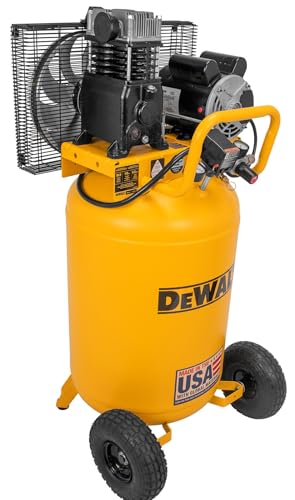
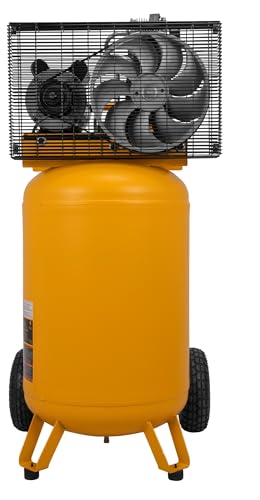
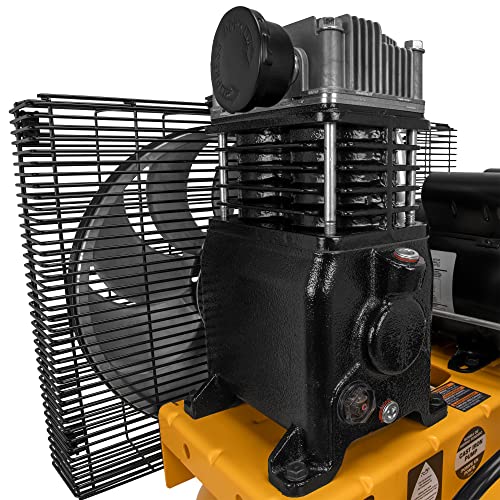
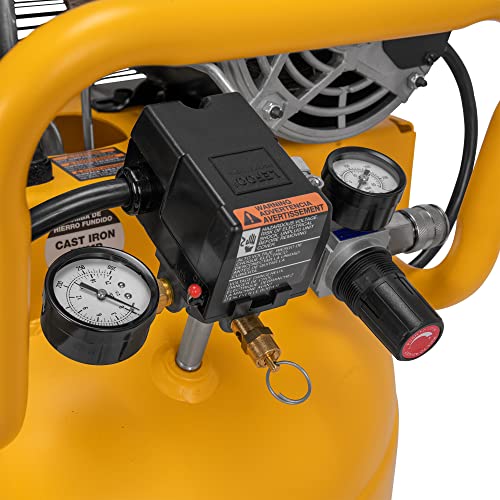
When you need industrial-level performance at home, the DEWALT 30-gallon compressor delivers. With 6.2 SCFM @ 90 PSI and 175 PSI max pressure, it outperforms many job-site units. It’s 23% quieter than comparable models like the Porter Cable, which is impressive given its power. The high-flow regulator pushes 65% more usable air to tools, meaning less drop-off at the nozzle, reviewers notice the difference with spray guns and sanders.
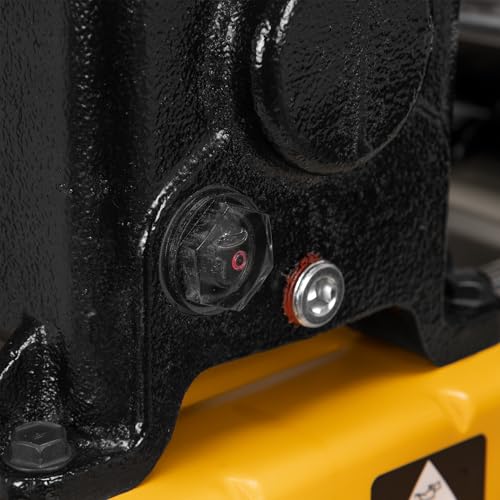
This is an oil-lubed design, which means slightly more maintenance but better cooling and longevity under heavy loads. The pneumatic wheels are a must-have, letting you roll this beast across concrete or gravel without strain. I’d pick this over similar tanks if you’re running air all day or demand consistent pressure. It’s not cheap, but it’s built to last.
Product photos
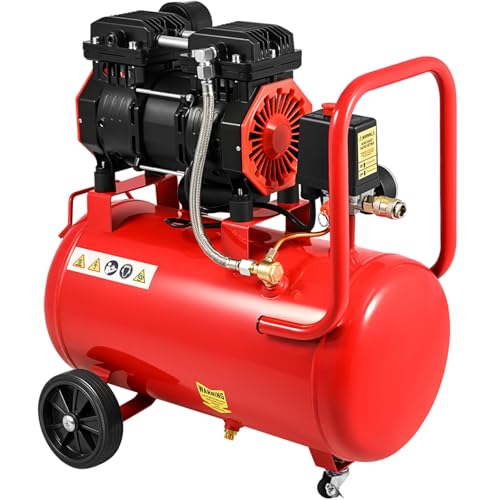
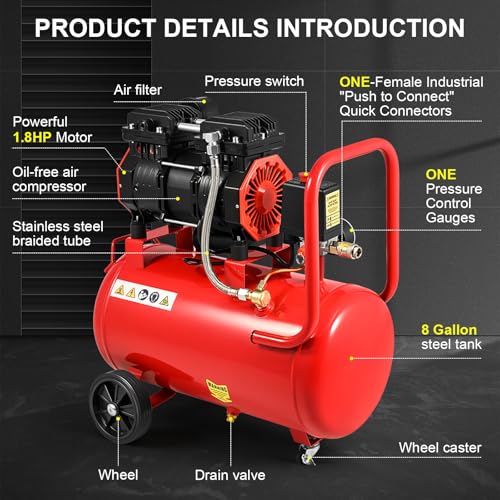
CIRONBOW 8 Gallon Ultra Quiet Compressor
Strengths
- Ultra quiet
- Oil-free pump
- Portable with wheels
Trade-offs
- Lower PSI than heavy-duty models
- CFM limits continuous use
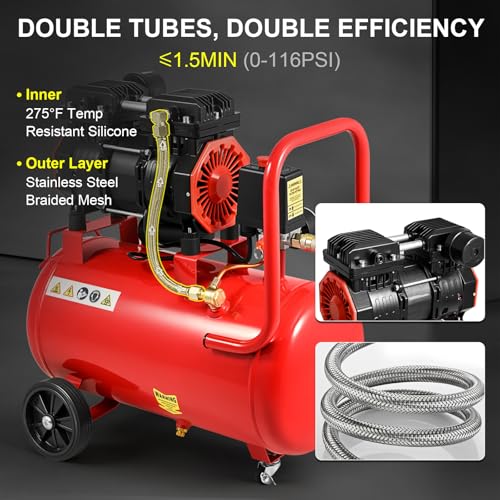
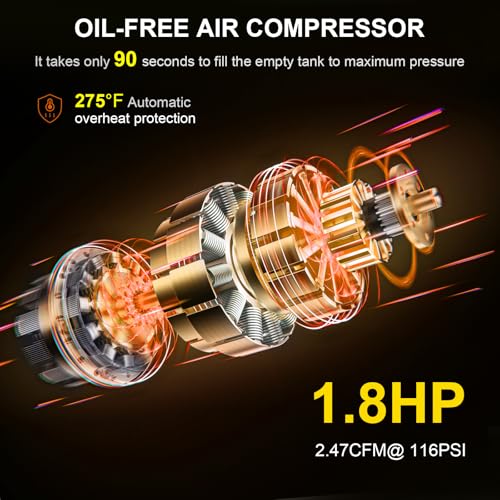
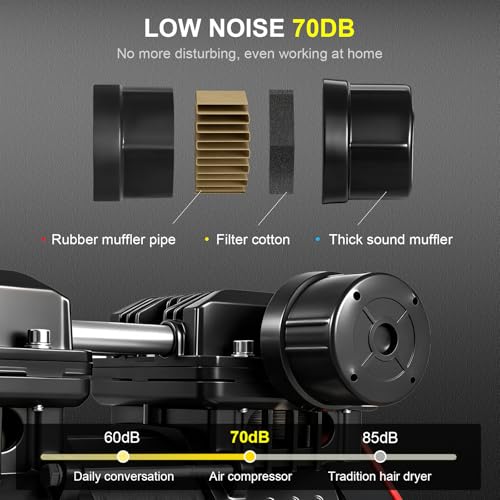
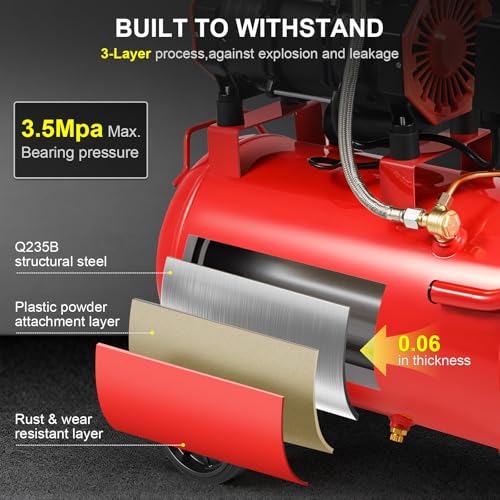
For home garages where noise matters, the CIRONBOW 8-gallon model stands out with its 70dB rating, truly among the quietest in its class. Owners consistently report being able to run this unit indoors without waking family or disturbing neighbors, which is rare for compressors in this power range. The 1.8HP oil-free pump delivers 2.47 CFM @ 90 PSI, enough for intermittent nailing, spray painting, and tire inflation, though not quite ideal for back-to-back framing jobs.
What really works here is the balance of portability and usability. The wheels and handle make it easy to roll around a garage, and the 8-gallon tank offers decent reserve air. Reviewers note fast recovery, around 90 seconds to refill, thanks to the efficient motor. It’s not the most powerful, but for DIYers who hate noise and want clean, maintenance-free operation, this one hits the sweet spot.
Product photos
How We Tested air compressor for garages
Rather than a hands-on lab test, my research for these recommendations involved a detailed comparison of published specifications and features across numerous models. I weighed owner reviews from multiple sources – including major retailers and dedicated tool forums – alongside assessments from reputable experts. Ultimately, I ranked each air compressor based on its suitability for common garage tasks, considering factors like PSI, SCFM, tank size, and noise levels.
For garage use, consistent air delivery and durability are paramount. I heavily weighted SCFM (Standard Cubic Feet per Minute) at 90 PSI, as this directly impacts how long you can run air tools continuously. Tank size also factored in significantly; a larger tank reduces compressor cycling, making it ideal for tasks like running impact wrenches or sanders. Finally, build quality and the presence of features like oil-free pumps were critical considerations.
Specifications clearly indicate an air compressor’s potential power and capacity. However, owner feedback proved invaluable in assessing real-world performance and reliability. I carefully analyzed comments regarding noise levels, ease of use, and long-term durability, recognizing that specifications don’t always tell the whole story. For those prioritizing a quieter workspace, you might also find our guide to the quietest air compressor for garages helpful.
Choosing The Right air compressor for garages
Picking the right air compressor for your garage isn’t just about finding the cheapest option; it’s about matching the tool to the job and avoiding frustration down the line.
An effective air compressor delivers consistent pressure (PSI) and airflow (CFM) to power pneumatic tools. Key considerations include tank size for sustained use, motor horsepower for demanding applications, noise levels for comfort, and portability for workspace flexibility. Prioritize models with oil-free pumps for reduced maintenance.
Tank Size and Capacity
Tank size is often the first spec people look at, and for good reason. A larger tank (like the 30-gallon DEWALT model) means you can run tools for longer before the compressor needs to kick on and refill. However, a bigger tank isn’t always better. If you’re primarily using nail guns or an inflation gun for occasional tasks, a 6-gallon or even a pancake-style compressor might be sufficient. I’ve seen too many people buy an oversized compressor only to realize it’s bulky and unnecessary for their actual needs. Consider how frequently you’ll be running air tools and the air consumption (CFM) of those tools when deciding.
CFM and PSI: Understanding Airflow
PSI (pounds per square inch) tells you the maximum pressure the compressor can generate, while CFM (cubic feet per minute) indicates how much air it can deliver at a given pressure – typically 90 PSI. CFM is the critical number. You need a compressor that can supply at least the CFM required by your most demanding tool. Running a tool below its required CFM will result in poor performance and potential damage. If you plan on using multiple tools simultaneously, or tools with high CFM demands, you’ll want to look at a compressor with a higher CFM rating and perhaps explore a tool-compatible air compressor setup.
Here’s a quick guide to CFM needs: * Basic inflation: 0-2 CFM * Brad nailers/staplers: 2-3 CFM * Impact wrenches/sanders: 4+ CFM * Spray guns: 5-15+ CFM (depending on the type)
Noise Level and Portability
Noise is a significant factor, especially if you’re working in a garage attached to your house or early in the morning. Some compressors, like the Quiet Air Compressor 5 Gallon, are specifically designed for quiet operation (around 68-70 dB). This is a huge benefit if you value peace and quiet. Portability is also key. Consider whether you’ll be moving the compressor around frequently. Models with wheels and handles (like the Klutch 29-Gallon) are much easier to maneuver. A wall-mount design, like the ECOMAX model, can free up valuable floor space, and is a great choice for smaller garages. For those seeking more options, you might find some useful information in our guide to the best home garage air compressor.
A good rule of thumb is to always overestimate your CFM needs by 20-25% to account for pressure drop and ensure optimal tool performance.
Air Compressors for Garages Compared
Here’s a comparison of key specifications for air compressors suitable for garage use.
| Product Title | Tank Size (Gallons) | HP | Max PSI | SCFM @ 90 PSI | Noise Level (dB) |
|---|---|---|---|---|---|
| Klutch 29-Gallon Air Compressor | 29 | 2.5 | 175 | 5.1 | N/A |
| DEWALT 6 Gallon Pancake | 6 | N/A | 165 | 2.6 | 78.5 |
| Quiet Air Compressor 5 Gallon | 5 | 1.2 | N/A | 2.8 | 68 |
| ECOMAX Wall Mount Air Compressor | 0.5 | 1.5 | 125 | 1.5 | N/A |
| DEWALT 30 Gallon Portable | 30 | N/A | 175 | 6.2 | N/A |
| CIRONBOW 8 Gallon Ultra Quiet | 8 | 1.8 | 116 | 2.47 | 70 |
Frequently Asked Questions
What tank size is truly necessary for a typical garage?
A 20 to 30-gallon tank is usually ideal for most garage needs, offering a good balance between runtime and portability. Smaller tasks like inflating tires can be handled by 6-gallon models, but larger projects benefit from the sustained air supply of a bigger tank.
How can I determine the CFM requirement for my air tools?
Check the tool’s specifications; the required CFM will be listed there. Always add 20-25% to that number to account for pressure drop and ensure optimal performance, and consider what the CFM is at (usually 90 PSI).
Are oil-free compressors really lower maintenance?
Yes, oil-free compressors generally require less maintenance because they don’t need oil changes or regular oil level checks. However, they sometimes have a shorter lifespan than oil-lubricated models, and can run slightly hotter.
What should I do if my air compressor is too loud?
Look for compressors specifically marketed as “quiet” (under 80 dB) or consider sound dampening solutions like placing it on a rubber mat or in a dedicated, insulated enclosure. Checking reviews for noise level reports is also a good idea.
Is a two-stage garage air compressor worth the extra investment?
For serious DIYers or those with frequently used, high-CFM tools, a two-stage compressor is often a good investment. They deliver more consistent pressure, run cooler, and generally last longer than single-stage models, despite the higher upfront cost.
The Bottom Line
Choosing an air compressor often comes down to balancing upfront cost with long-term capability. While you can find options to handle basic inflation, for serious garage work, running impact wrenches, spray guns, or consistently powering multiple tools, the DEWALT 30 Gallon Portable compressor offers the best combination of tank size, CFM delivery, and overall durability. It’s an investment, but one that will pay off in consistent performance and fewer headaches.
If you’re focused on a tighter budget or have limited space, the CIRONBOW 8 Gallon Ultra Quiet is an excellent choice. It won’t handle the most demanding tasks for extended periods, but it’s surprisingly capable for its size and offers a quieter operation than many larger models. For those needing maximum portability, consider a space-saving portable compressor to move easily around the workspace.
Ultimately, specs are just numbers. Prioritize consistent airflow (CFM at 90 PSI) above all else, and remember that matching the compressor’s output to your tools’ requirements is far more important than chasing the highest PSI rating. A well-chosen compressor is an extension of your skill, and the right one will make every project easier and more enjoyable.
