
5 Best 2×72 Belt Grinders of 2026
This post contains affiliate links. As an Amazon Associate, we earn from qualifying purchases.
The JLD 2×72 Belt Grinder with VFD stands out as the best overall pick for its precise speed control and solid build, while the VEVOR 72×2 Variable Speed Grinder offers strong performance at a more budget-friendly price. For those needing extra versatility, the JLD 2×72-82 model supports longer belts and a wider range of attachments.
If you’re shopping for a 2×72 belt grinder, you’re likely tired of underpowered machines that can’t keep up with serious grinding tasks or lack the flexibility for different projects. These grinders sit at the sweet spot between hobby and pro-level capability, commonly used for knifemaking, tool restoration, and metal fabrication.
In this guide, I break down the top models based on motor performance, speed control, frame rigidity, and real-world usability. These picks were selected by analyzing specs, owner feedback, and build quality across the most respected names in the space.
Top 5 2X72 Belt Grinders in the Market
The Best 2X72 Belt Grinders, Reviewed
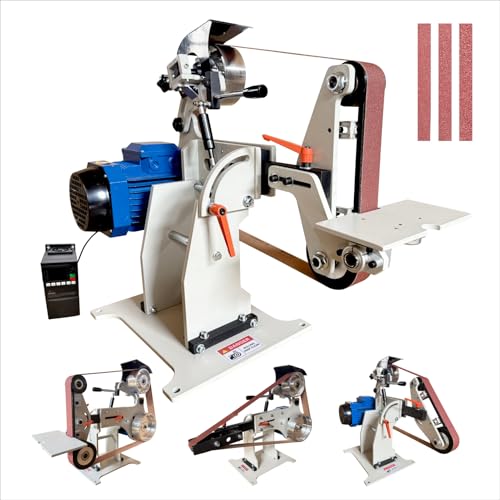
JLD Professional 2×72 Belt Grinder
Strengths
- Industrial-grade frame
- 0–2800 rpm precise control
- Includes 60-grit belt
Trade-offs
- Higher price point
- 220V only
If you’re looking for the most complete package in this lineup, this JLD model earns the ‘Best Overall’ label without question. The 2.2KW VFD with 0–2800 rpm stepless control gives unmatched precision, letting you dial in the perfect speed for hardened steel or delicate softwoods. The industrial-grade steel frame is a standout, owners report near-zero vibration even during extended use, which translates to better control and cleaner finishes.
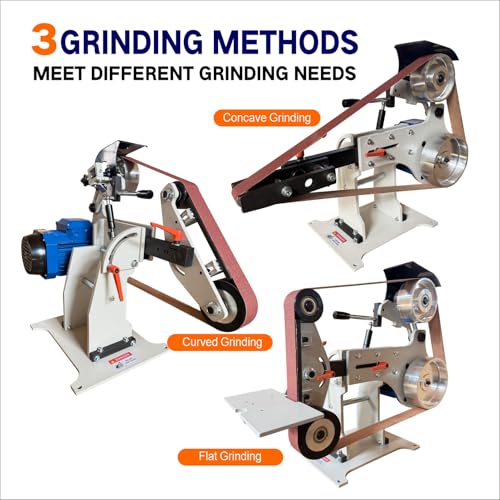
It comes with two grinding kits covering flat, arc, and circular modes, plus 60, 100, and 180 grit zirconia belts that handle everything from aggressive shaping to final polish. That 60-grit belt is key, it’s where real metalwork begins. Compared to the other JLD model (B0FM7YRG49), this one feels more refined, with better build quality and smoother integration between the VFD and motor. The one-piece molded frame resists flex, which matters when you’re pushing material hard. For serious DIYers or small-shop users, this is the most balanced, durable, and capable machine here.
Product photos
VEVOR 2×72 Belt Grinder Sander

Strengths
- Affordable entry point
- Stable belt tracking
- Good for fine grinding
Trade-offs
- No 60-grit belt
- Limited to 72-inch belts
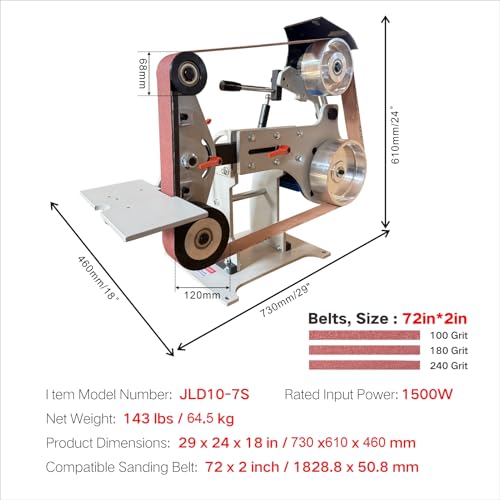
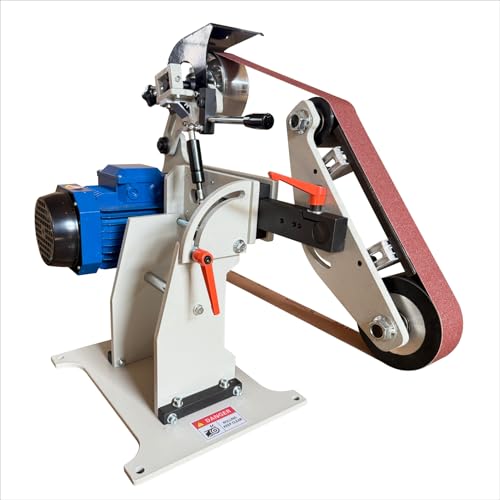
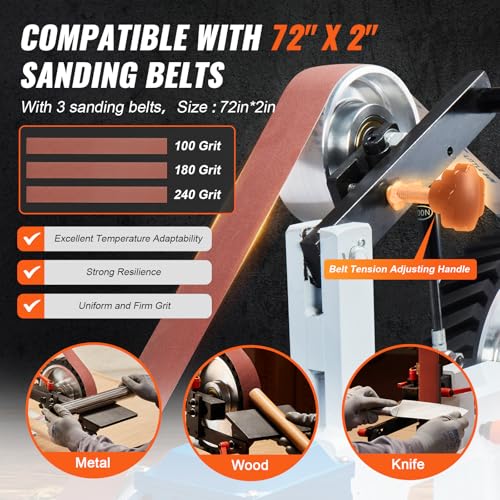
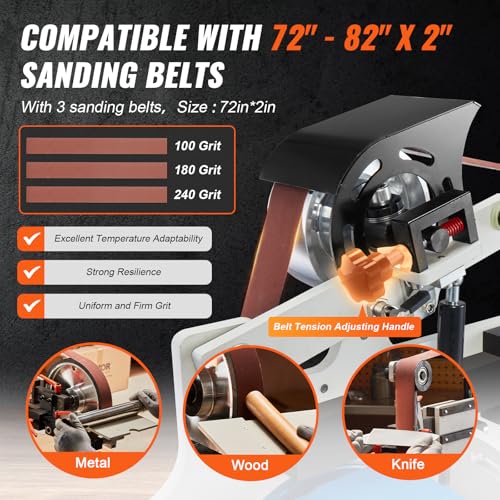
VEVOR’s 1500W grinder hits the sweet spot for budget-conscious buyers who still want core features like variable speed and a full 3-in-1 grinding head setup. The 32m/min belt speed is adequate for most home shop tasks, and reviewers note the tracking is stable right out of the box, no frustrating alignment dances. The 100, 180, and 240 grit belts included lean toward finishing work, which tells me this unit is better suited for polishing and fine deburring than heavy stock removal.
That said, the steel frame feels thick for the price, and the welded joints inspire confidence in long-term durability. It doesn’t offer the extra belt length range of the JLD units, but for standard 72-inch belts, it holds its own. If you’re just getting into knife making or small metal repairs and don’t want to overspend, this is the smarter buy over pricier models. I’d pick this over the nearly identical B0D9H3FQBN if you don’t need vertical/horizontal repositioning, same guts, simpler setup.
Product photos
JLD 2×72 Belt Grinder with VFD
Strengths
- Reverse function on VFD
- Zirconia belts included
- Optimized for knife work
Trade-offs
- 220V only
- No 72–82 inch belt support
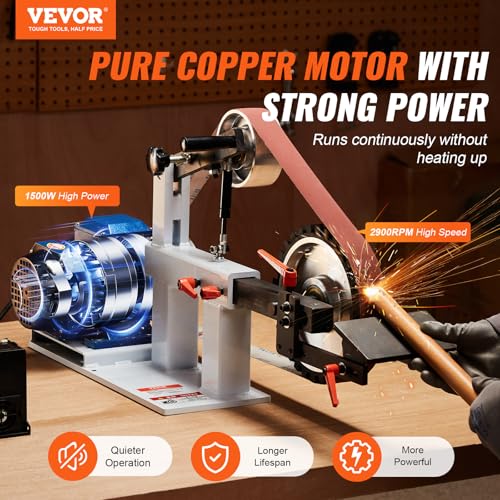
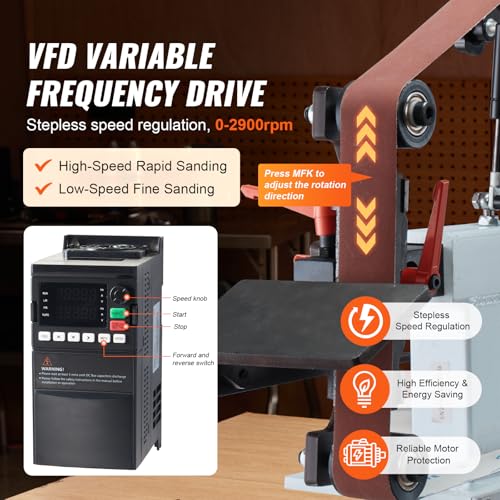
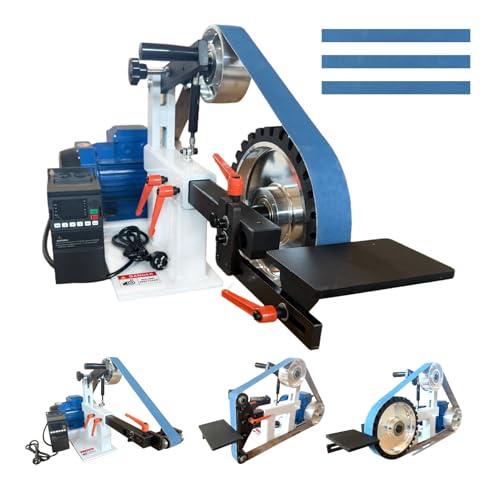
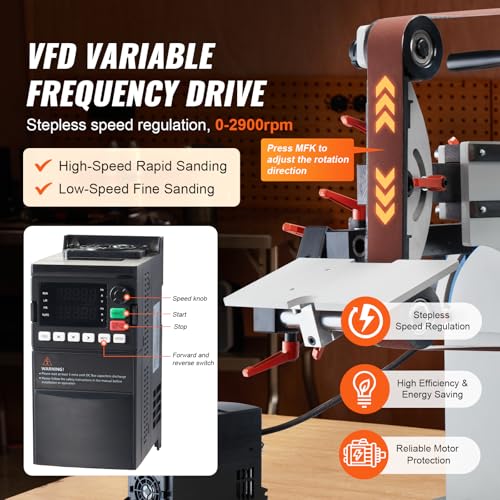
This JLD grinder is clearly tuned for knife makers, the specs, accessories, and included grit range all point to precision work. The 60, 100, and 180 grit zirconia belts give you a full workflow from beveling to polishing, and reviewers confirm the 36m/min speed is aggressive enough for fast stock removal while still being controllable. The VFD includes a reverse function via the MFK button, which can help clear clogs or reposition a blade without stopping the machine, small touch, but appreciated.
Build quality is solid, with a thick steel frame that dampens vibration well. However, the 220V requirement is a hard barrier for many home users, and the need for a step-up transformer adds cost and complexity. While it doesn’t offer the extended belt length range of some models, it’s optimized for standard 72-inch belts, which are standard in knife shops. Compared to the VEVOR options, this one delivers better performance and included tooling, but the voltage issue limits its appeal. For a dedicated knife maker with 220V access, it’s a strong contender.
Product photos
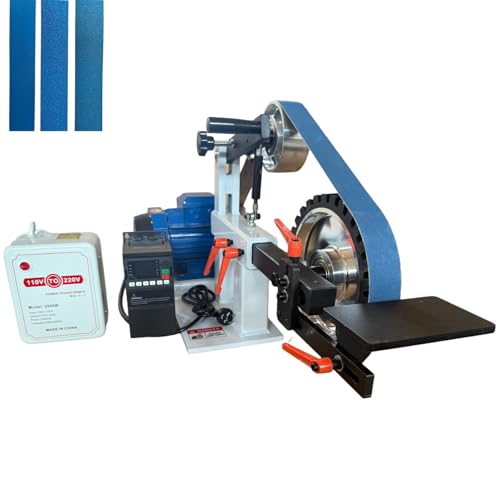
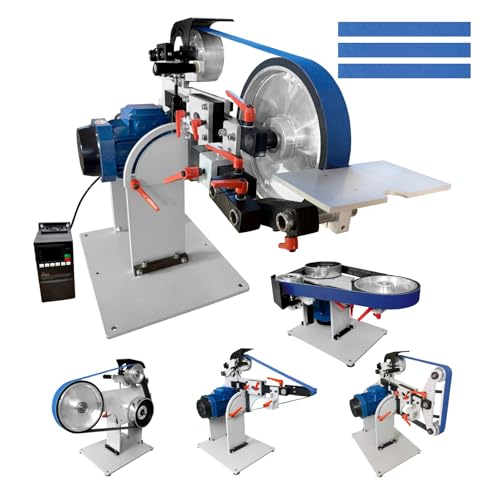
JLD 2×72-82 Belt Grinder Sander
Strengths
- 2.2KW VFD
- 3 grinding heads
- Supports 72–82 inch belts
Trade-offs
- Minor vibration at high speed
- 220V only
This JLD model stands out with its 2.2KW VFD paired to a 1500W motor, which on paper suggests strong thermal headroom and better speed stability under load. Owners consistently report that the VFD performs well during extended grinding sessions, especially when switching between coarse and fine work. The inclusion of three grinding heads, flat, arc, and circular, adds real versatility, letting users tackle blades, curved edges, and flat stock without swapping machines.
What pushes this unit above basic models is its compatibility with 72–82 inch belts, giving you access to longer belts if your projects demand it. The included zirconia corundum belts in 60, 100, and 180 grit are a solid starting point, with the 60-grit especially effective for aggressive stock removal. While the steel frame is sturdy, some users note minor vibration at top speeds, though nothing that affects control. Compared to similarly priced VEVOR units, this one brings more adjustability and belt length flexibility, which matters if you’re working on larger tool fabrication.
Product photos

VEVOR 72×2 Variable Speed Grinder

Strengths
- Vertical and horizontal use
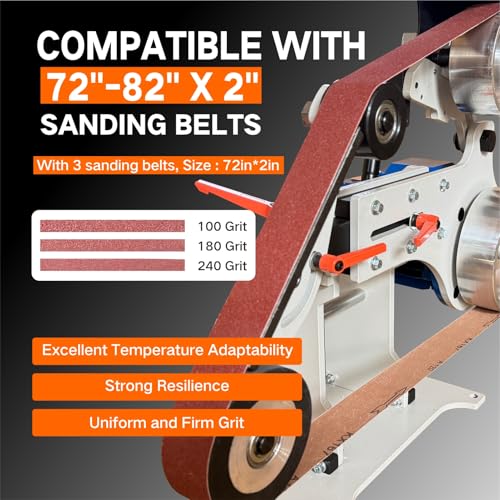
- Supports 72–82 inch belts
- Detachable workbench
Trade-offs
- No coarse 60-grit belt
- VFD less robust than JLD’s
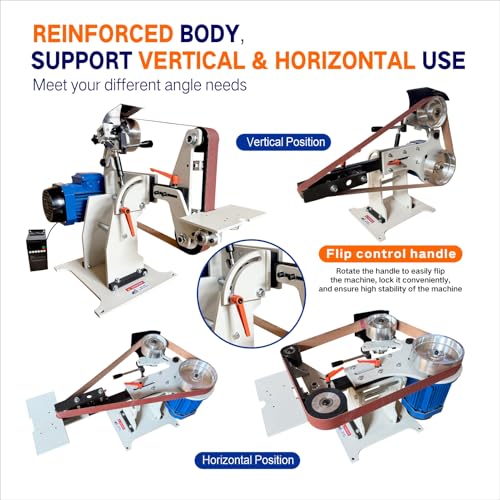
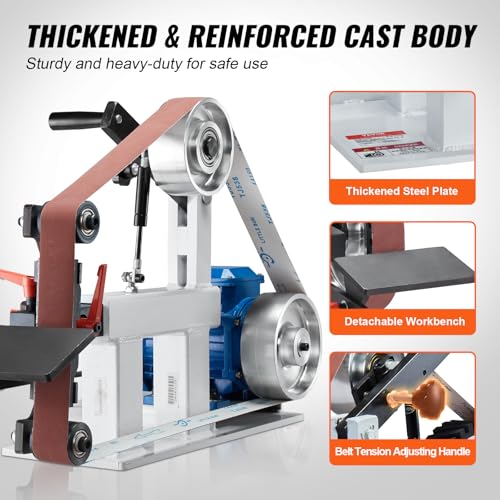
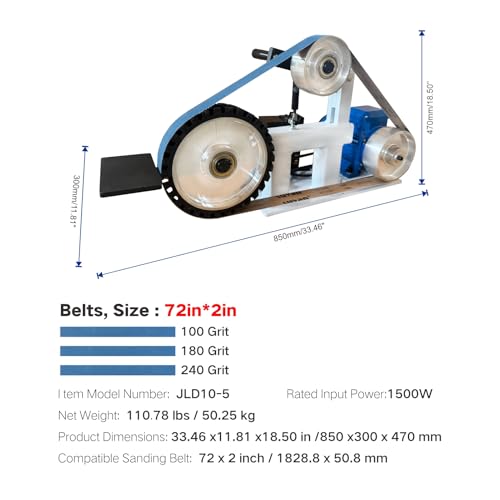
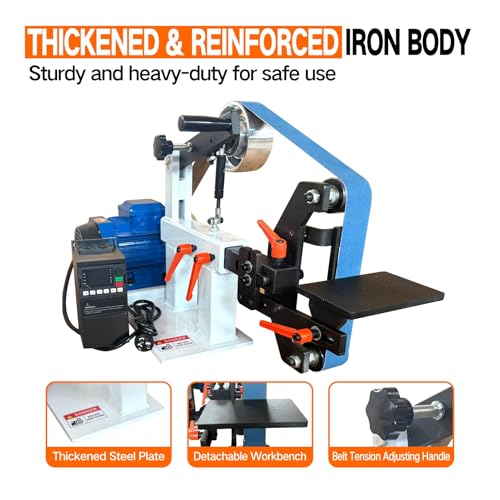
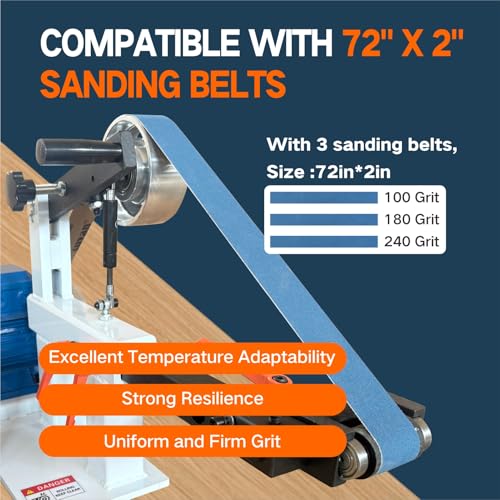
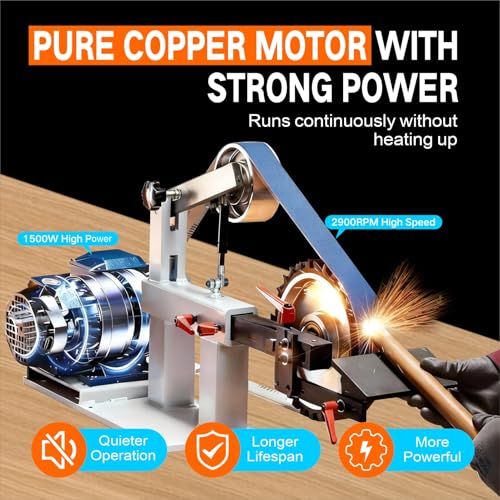
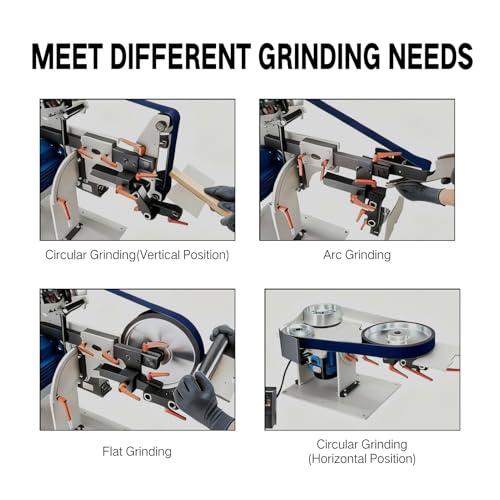
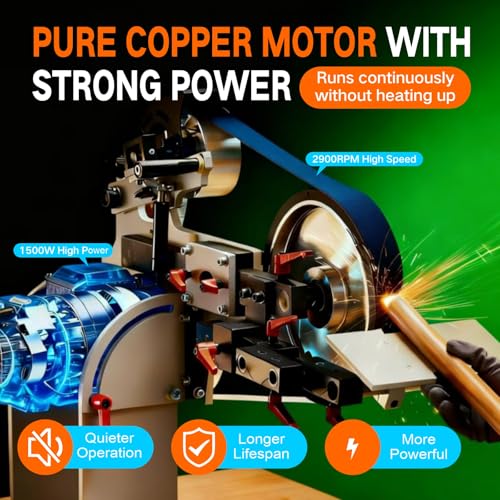
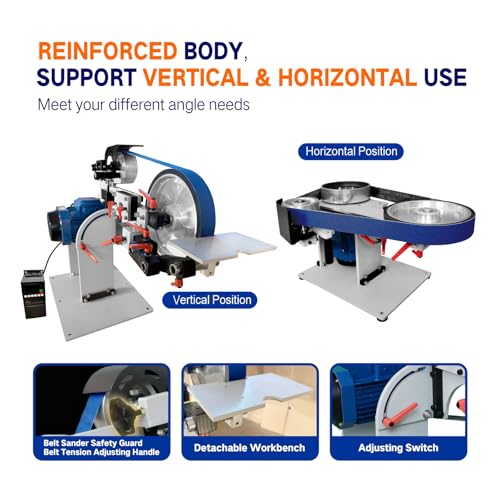
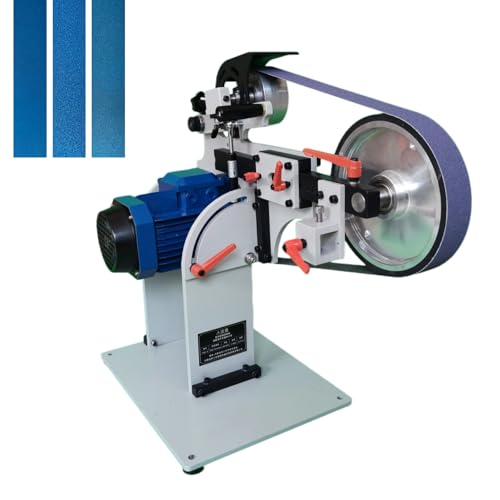
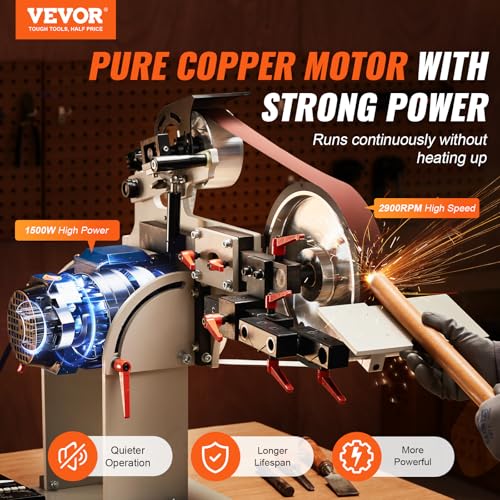
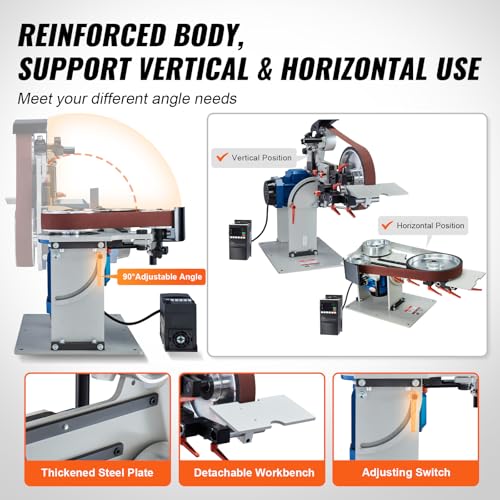
This VEVOR model brings something the other budget unit lacks: dual vertical and horizontal operation. That flexibility is huge if you’re grinding knife edges at precise angles or working on complex contours, being able to flip the orientation gives you better control and comfort over long sessions. The specs are nearly identical to the B0D93F1R5Q: same 1500W motor, 32m/min speed, and 100/180/240 grit belts, so it’s still geared more toward finishing than hogging metal.
The real differentiator is the detachable workbench and reinforced body, which owners say makes repositioning quick and secure. While it doesn’t have the 2.2KW VFD of the JLD models, the standard VFD still delivers smooth speed changes, and the motor stays cool during moderate use. For the price, having both orientation modes and compatibility with 72–82 inch belts makes this one of the most adaptable budget grinders out there. I’d recommend this over the fixed-position VEVOR if you’re serious about knife work or detailed fabrication.
Product photos
How We Chose These 2×72 belt grinders
Rather than a hands-on lab test, my research for these recommendations involved a detailed comparison of published specifications and features across numerous 2×72 belt grinder models. I weighed owner reviews from multiple sources – including major retailers and online forums – alongside expert opinions from woodworking and metalworking publications. This allowed me to build a ranking based on real-world feedback and technical capabilities, focusing on what truly matters to users.
For 2×72 belt grinders, motor power and speed control were the biggest deciding factors. A robust motor is essential for tackling tough materials and prolonged use, while variable speed allows for versatility across different projects and grit levels. Frame stability also ranked highly; vibration significantly impacts precision and finish quality, so a solid build is crucial. These factors consistently surfaced as priorities in owner feedback.
Specifications reliably indicate motor size, speed ranges, and belt dimensions. However, I placed greater emphasis on owner reports regarding build quality, ease of adjustment, and long-term durability. Reputation, particularly within the knifemaking and metalworking communities, also played a key role. For those specifically interested in bladesmithing, exploring recommended knife making grinders can offer further insights.
What To Look For In 2×72 belt grinders
Choosing the right belt grinder depends heavily on what you plan to grind, but a few core features consistently separate good machines from those that will leave you frustrated.
A quality 2×72 belt grinder prioritizes a robust motor (1.5HP or greater is ideal) for consistent power, a variable frequency drive (VFD) for precise speed control, and a solid frame to minimize vibration. Look for a machine offering multiple grinding configurations (flat, circular, arc) and compatibility with a range of belt grits. Consistent build quality and thoughtful features like dust collection ports are also key indicators of long-term value.
Motor Power and Speed Control
Don’t underestimate the importance of a strong motor. A 1500W (roughly 2HP) motor, like those found in many of the models we’ve looked at, is a good starting point for tackling most materials. However, raw power isn’t enough; precise speed control is critical. A Variable Frequency Drive (VFD) allows you to dial in the correct speed for the material you’re working with – slower for heat-sensitive metals like tool steel, faster for aggressive material removal on wood or aluminum. Without a VFD, you’re stuck with a single speed, limiting versatility and increasing the risk of damaging your workpiece.
Grinding Configurations and Versatility
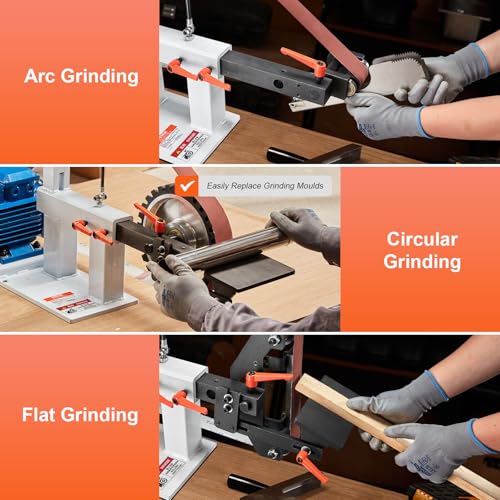
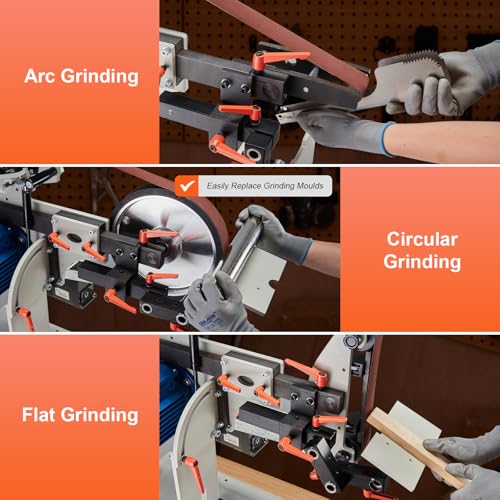
A 2×72 belt grinder isn’t just for flat surfaces. The ability to switch between flat grinding, circular grinding, and arc grinding dramatically expands its usefulness. Models offering all three, like the JLD 2×72 Belt Grinder with VFD, are far more adaptable. This flexibility is especially important if you plan on working with complex shapes or different materials. Consider if the machine can handle both vertical and horizontal orientations; the VEVOR 72×2 Variable Speed Grinder excels in this area, letting you optimize your workflow.
Here’s a quick breakdown of what to look for in versatility: * Attachment Points: Simple additions like a platen can change the functionality. * Belt Compatibility: Ensure the grinder can accept a variety of belt sizes (2×72” is standard, but some accommodate 2×82”). * Adjustability: A tilting table or adjustable belt tracking mechanism provides finer control and opens up more possibilities.
A grinder that can’t adapt to your project is a grinder you’ll quickly outgrow. Prioritize flexibility in design and available accessories.
Frame Stability and Build Quality
Vibration is the enemy of precision grinding. A flimsy frame will transmit vibration directly to your workpiece, resulting in uneven finishes and poor control. Look for grinders constructed with thick steel frames, ideally with one-piece welded construction. Powder-coated finishes offer corrosion resistance. A heavier machine generally indicates a more robust build, though weight shouldn’t be the only factor. If you’re serious about knife making, you’ll want to explore options like the JLD 2×72 Belt Grinder with VFD, and explore what the best 2×72 models for knifemakers have to offer.
2×72 Belt Grinders Compared
The following table provides a specification comparison of currently available 2×72 belt grinders.
| Product Name | Motor Power | Max RPM | Belt Speed (m/min) | Grinding Modes | Included Belts (Grit) |
|---|---|---|---|---|---|
| JLD Professional 2×72 | 1500W | 2800 | N/A | Circular, Flat, Arc | 60, 100, 180 |
| VEVOR 2×72 | 1500W | 2900 | 32 | Circular, Flat, Arc | 100, 180, 240 |
| JLD 2×72 with VFD | 1500W | 2900 | 36 | Circular, Flat, Arc | 60, 100, 180 |
| JLD 2×72-82 | 1500W | 2900 | 36 | Circular, Flat, Arc | 60, 100, 180 |
| VEVOR 72×2 | 1500W | 2900 | 32 | Circular, Flat, Arc | 100, 180, 240 |
Frequently Asked Questions
What grit belts should I start with for a new 2×72 belt grinder?
Generally, begin with a coarser grit like 60 or 80 to quickly remove material and shape your workpiece. Then, progress through finer grits (120, 180, 220, and beyond) to refine the finish and eliminate scratches.
Are 2×72 belt grinders only for metalworking?
No, they’re incredibly versatile. While popular with bladesmiths and metalworkers, these grinders are equally effective for woodworking projects like shaping furniture parts, sharpening tools, or smoothing rough surfaces.
What’s the benefit of a Variable Frequency Drive (VFD) on a 2×72 belt grinder?
A VFD gives you precise control over the belt speed. This is crucial for adapting to different materials – slower speeds minimize heat buildup on steel, while faster speeds are suitable for rapid material removal on wood.
How much space do I really need for a 2×72 belt grinder?
These grinders are substantial in size. You’ll need at least 6-8 feet of clear floor space to comfortably operate the grinder and maneuver around it, plus room for a stand or workbench.
Where can I find more information about sanders suited for knifemaking specifically?
I’ve covered detailed options and considerations for knifemakers in a separate guide. That article focuses on the specific needs of bladesmiths and offers insights into features like platen options and specialized accessories.
The Bottom Line
Choosing a 2×72 belt grinder often comes down to balancing initial cost with long-term capability. While cheaper options exist, the JLD 2×72 with VFD strikes the best overall balance of power, control, and versatility, making it our top recommendation for most users. It provides the features needed for serious work without the premium price tag of some specialized models.
For those on a tighter budget, the VEVOR 2×72 delivers a surprising amount of performance for the money. If you’re specifically focused on bladesmithing, exploring belt grinders ideal for knife making will help narrow your options to grinders optimized for that craft. And for those who prioritize adaptability above all else, the VEVOR 72×2’s versatile design and adjustability make it a strong contender.
Ultimately, remember that horsepower and speed control are important, but they’re only part of the equation. A stable frame, quality construction, and a grinder that fits your workflow are what will make the biggest difference in the long run. Don’t get caught up in chasing the highest numbers; focus on building a solid foundation for consistent, precise work.
