
8 Best 12V Air Compressors for 4x4s 2026
This post contains affiliate links. As an Amazon Associate, we earn from qualifying purchases.
The Kohree Four Cylinder Air Compressor is the best overall pick for 4x4s, delivering the fastest inflation times thanks to its high CFM and four-cylinder design. For those on a tighter budget, the Kohree Dual Cylinder offers strong performance at a lower price, while the ALL-TOP Digital Dual Cylinder stands out for versatility with its precise auto-stop and digital pressure control.
If you’ve ever sat by the side of a dirt track waiting for a slow compressor to limp your tire back to pressure, you know how critical speed and reliability are. A weak or flimsy unit can turn a quick air-up into a frustrating delay, especially after a day of off-roading.
This guide cuts through the marketing hype to focus on real-world performance. I researched each model based on airflow, durability, and practical features, using specs and owner feedback to identify the ones that actually hold up when you need them most.
Top 8 12V Air Compressor For 4X4S in the Market
The Best 12V Air Compressor For 4X4S, Reviewed
Kohree Dual Cylinder Air Compressor

Strengths
- Durable metal shell
- Stable base
- Complete kit
Trade-offs
- No auto-stop
- Heavier than average
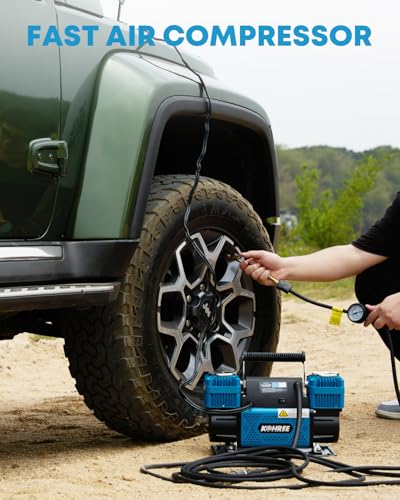
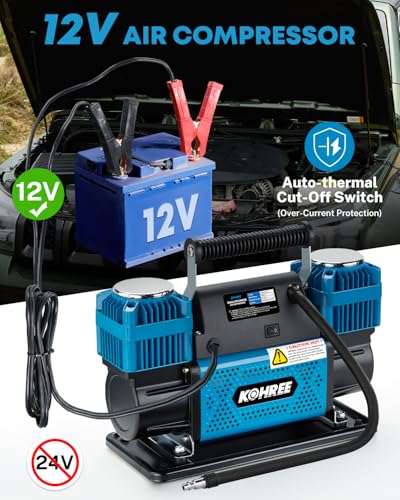
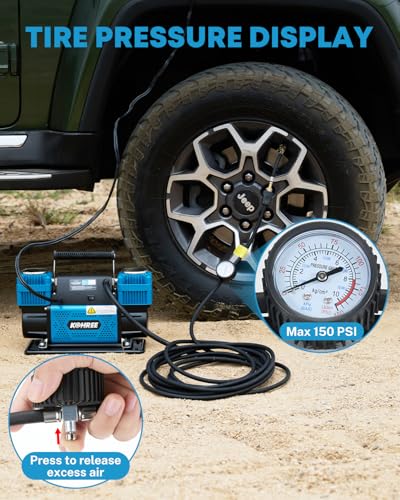
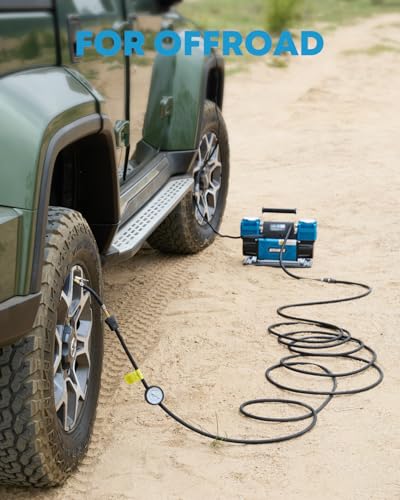
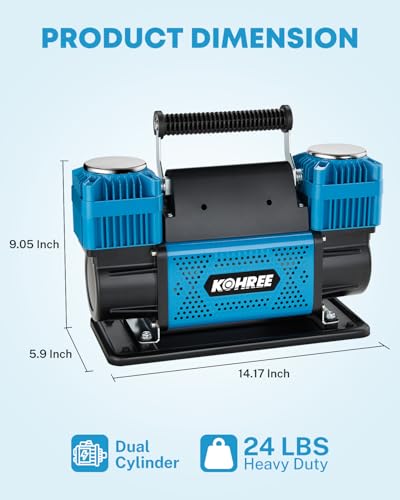
This is the balanced pick, fast, durable, and well-equipped. With 12.35 CFM and 150 PSI, it handles 4×4 tires efficiently, and the dual aluminum cylinders with heat-dissipating fins help it run cooler over multiple uses. The pressure gauge is accurate, and the thumb lock adapter makes connections secure. Owners consistently rate it highly for reliability and ease of use, especially on road trips or extended camping trips.
It doesn’t have auto-stop, so you’ll need to monitor inflation manually. But the 26-foot hose, rugged casing, and included storage bag make it a complete package. Compared to others in this range, it hits the sweet spot of performance, durability, and value.
Product photos
Uharbour Dual Cylinder Air Compressor

Strengths
- Dual cylinder
- Digital gauge
- Carrying bag
Trade-offs
- No auto-stop
- Shorter hose
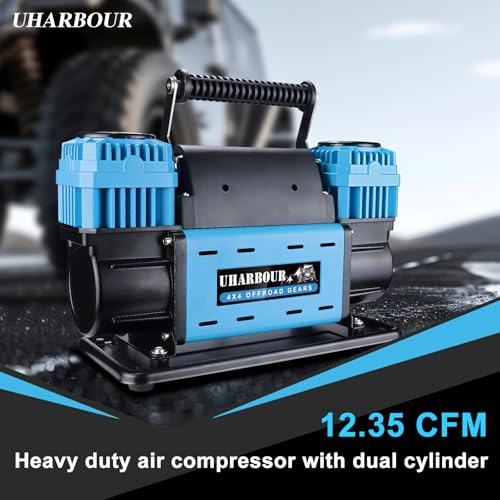
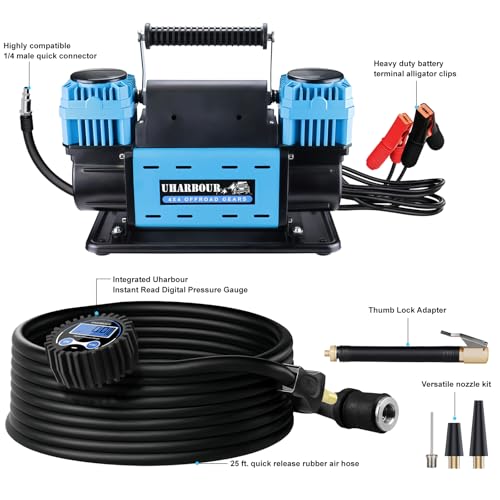
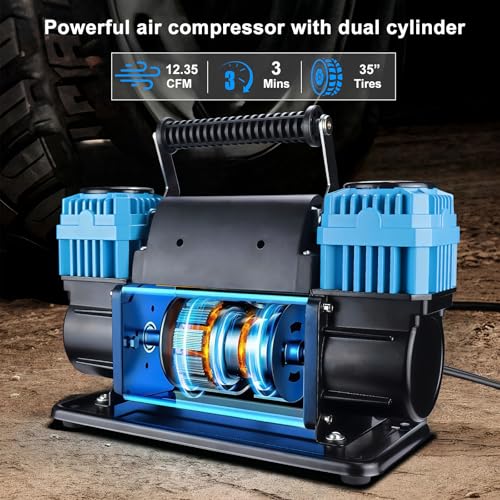
This compressor delivers solid performance for the price, and owners consistently report it handles 4×4 tire inflation without breaking a sweat. With a 10.6 CFM output and dual-cylinder design, it’s faster than many budget units, and the digital gauge adds real usability. It won’t match the speed of top-tier models, but for casual off-roaders who need reliable inflation without overspending, it’s a strong contender.
Where it stands out is portability and value. The included carrying bag makes storage and transport simple, and the build quality appears rugged enough for trail use. It’s not packed with high-end features, but it covers the basics well, especially if you’re upgrading from a weak onboard pump.
Product photos
Kohree Four Cylinder Air Compressor
Strengths
- Fastest inflation
- Four-cylinder design
- Auto-stop
Trade-offs
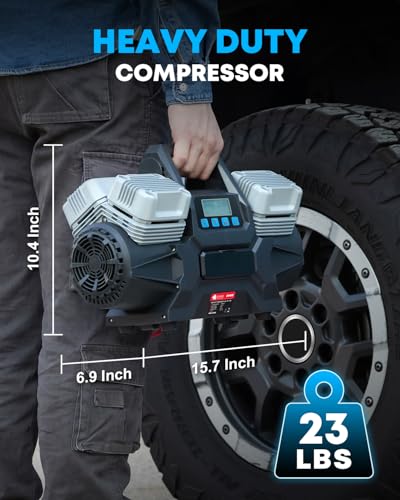
- Heavier
- Bulky design
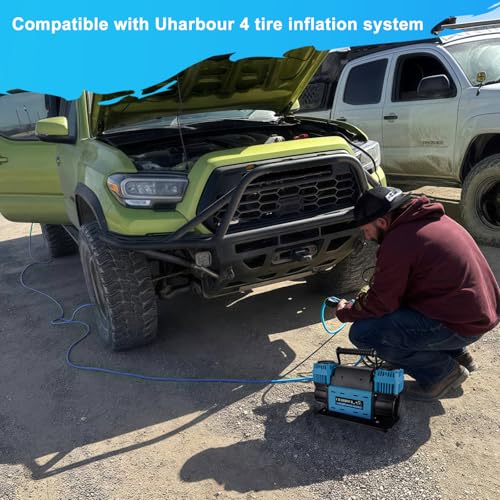
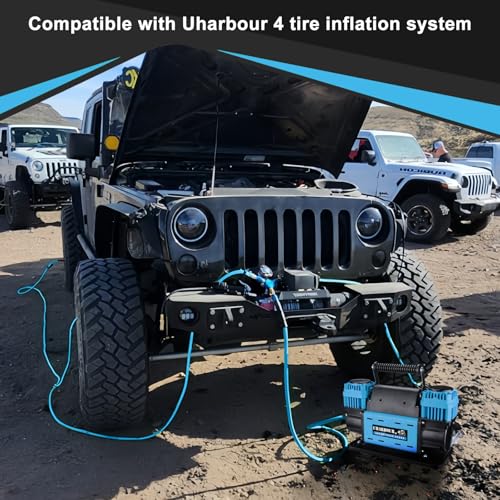
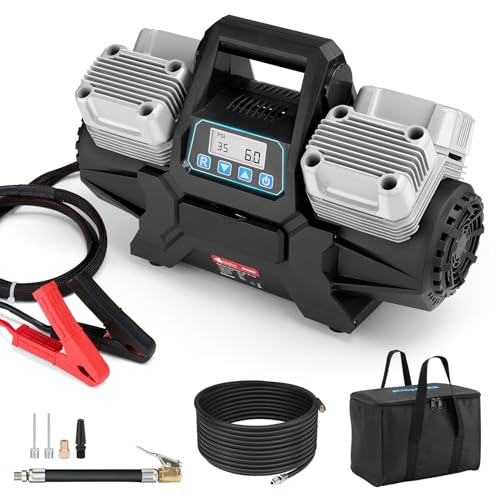
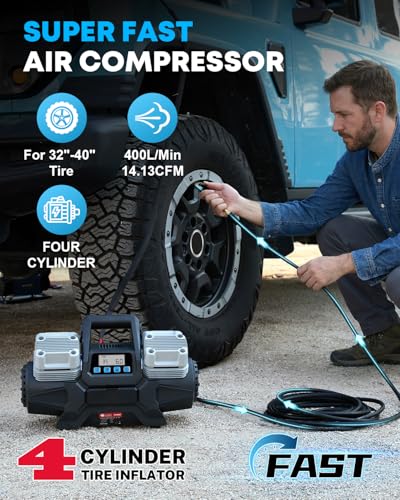
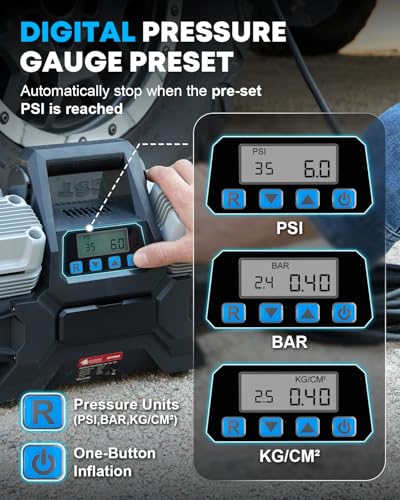
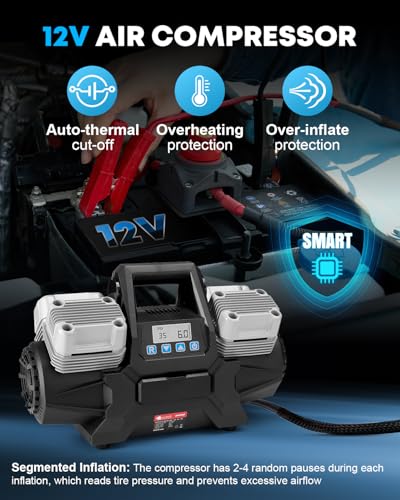
This is the speed king of the group. With a 14.13 CFM output from four cylinders, it inflates tires faster than almost any other 12V portable unit here. The digital display lets you set pressure in PSI, BAR, or kg/cm², and the auto-stop works well, pausing briefly to stabilize pressure, owners confirm it avoids over-inflation. It’s not just fast; it’s smart, with thermal protection and a stable base that resists vibration.
It’s heavier and bulkier than some, but that’s the trade-off for the motor size. The 26-foot hose and solid accessory kit make it a complete package. When you need to air up quickly after a day off-road, this compressor gets you moving faster than most.
Product photos
GSPSCN Heavy Duty Metal Compressor

Strengths
- Ultra-durable build
- Quiet operation
- All-metal core
Trade-offs
- Slower inflation
- Shorter hose
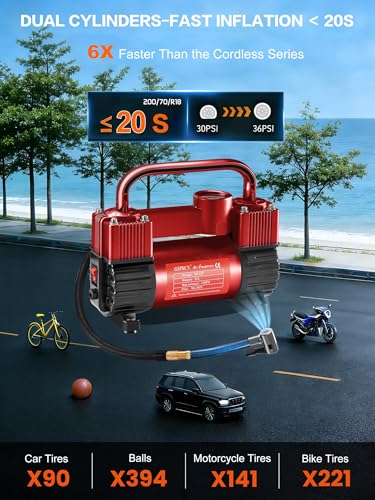
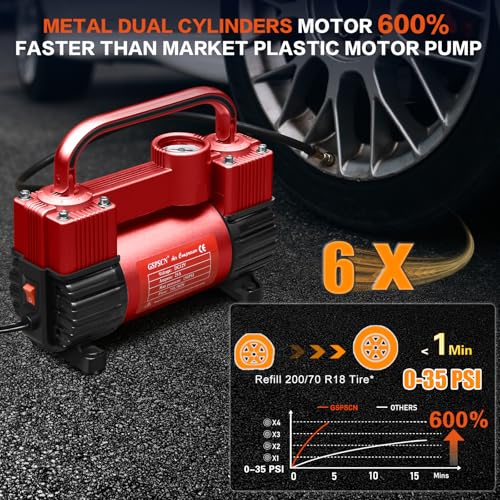
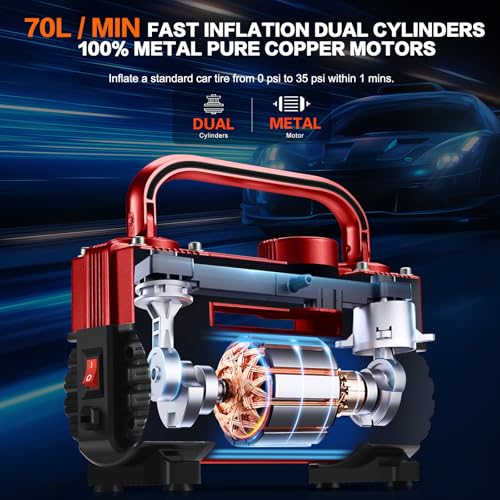
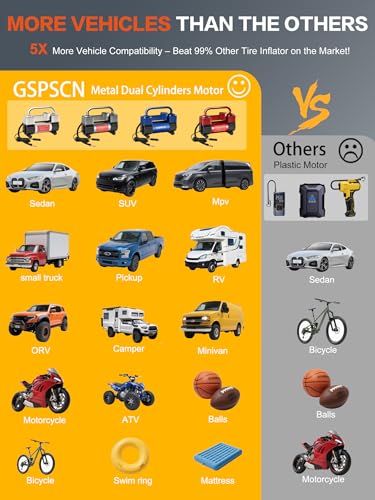
The standout here is the build, GSPSCN touts ‘integrated molding technology’ with all-metal internal components, and owners report it feels more industrial than most portables. It’s designed to last, and the 55% longer service life claim may hold weight given the feedback on motor longevity. At 70L/min (about 2.5 CFM), it’s not fast by modern standards, but it’s consistent and whisper-quiet at 70dB, which is rare in this category.
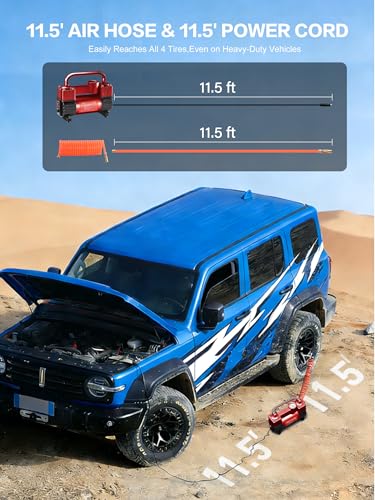
It’s best suited for users who prioritize durability and quiet operation over speed. The 11.5-foot hose limits reach compared to others, so you’ll move it between tires. But if you want a ‘set it and forget it’ compressor that survives years of garage and trail use, this one earns trust.
Product photos
VIAIR 88P Portable Compressor

Strengths
- Ultra-compact
- Reliable motor
- LED work light
- Long hose
Trade-offs
- Slower inflation
- Lower max CFM
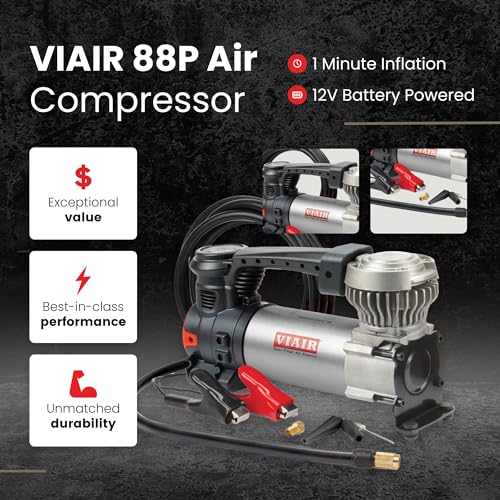
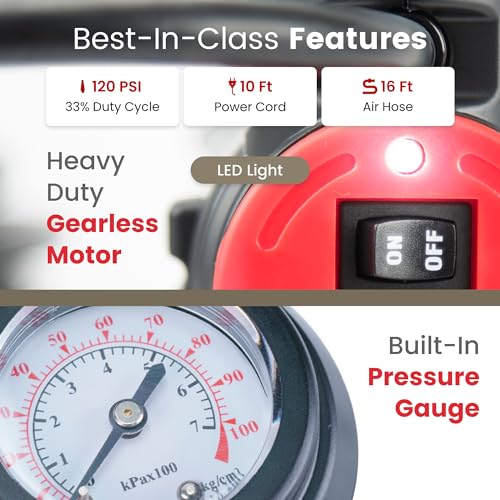
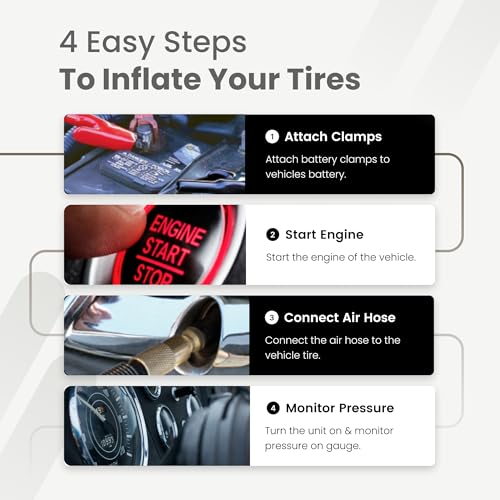
The VIAIR 88P is a legend in compact compressors, and for good reason. It’s small, lightweight, and punches above its weight when inflating tires up to 33 inches. With a free flow of 1.47 CFM, it’s not the fastest, but it’s consistent and reliable, especially for a single-cylinder unit. Owners love its durability, and VIAIR’s reputation for long-term reliability backs it up.
It’s not built for high-volume or dual-tire work, but for quick top-offs or emergency inflation, it’s hard to beat. The 16-foot hose is a nice touch, and the LED light adds practicality at night. If you need something that tucks into a glove box and works when you need it, this is the one.
Product photos

ALL-TOP Digital Dual Cylinder Compressor

Strengths
- Trigger control
- Digital gauge
- Sand-proof switch
Trade-offs
- No dual inflation
- Average noise level
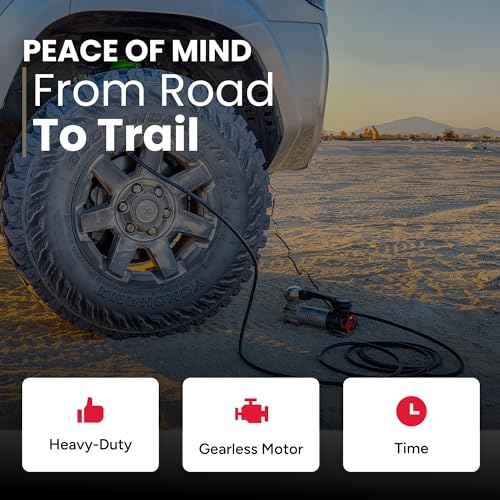
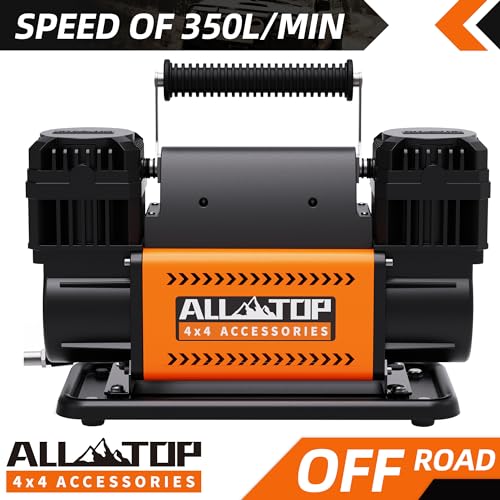
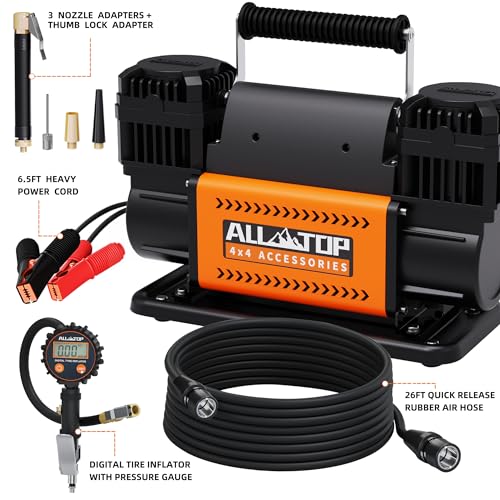
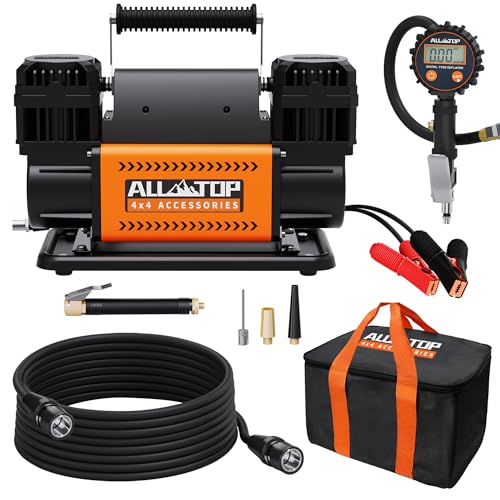
The digital control on this ALL-TOP model is intuitive, squeeze the trigger to inflate, release to stop, no switches to flip. It’s a small detail, but owners say it makes airing up four tires much smoother. With 12.35 CFM and 150 PSI, it’s in line with top performers, and the hollow metal shell helps with heat dissipation during longer runs. The sand-proof switch and rubber feet add to its trail-readiness.
It lacks dual-hose capability, but the 26-foot hose and solid build make it a dependable daily driver. The 2-year warranty and lifetime support are confidence builders. For users who want digital ease without sacrificing durability, this is a smart middle ground.
Product photos


METOWARE Offroad Dual Cylinder Compressor

Strengths
- 24 ft hose
- 3-in-1 function
- Metal construction
Trade-offs
- No auto-stop
- Basic pressure control
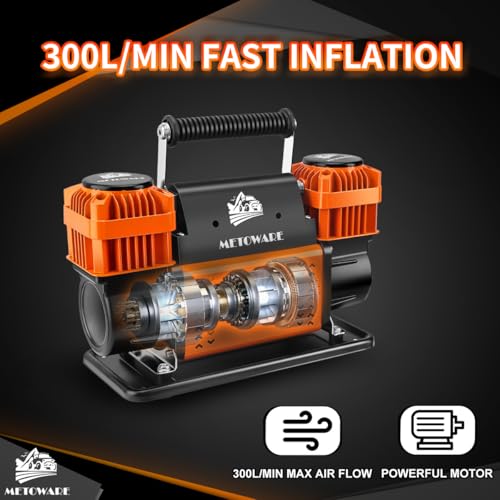
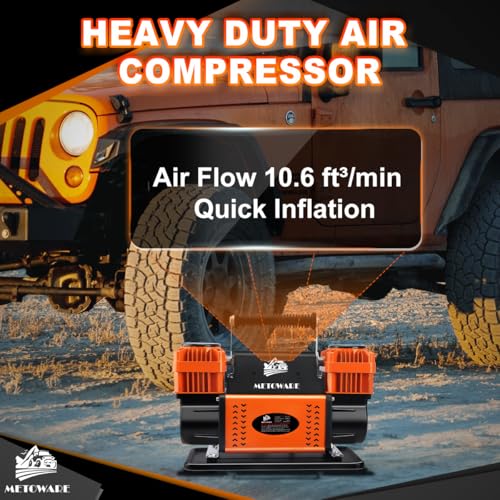
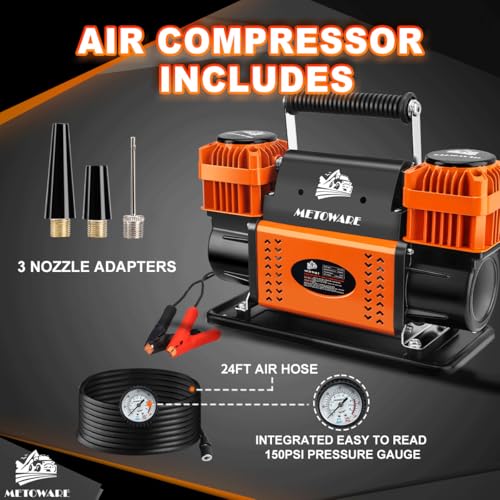
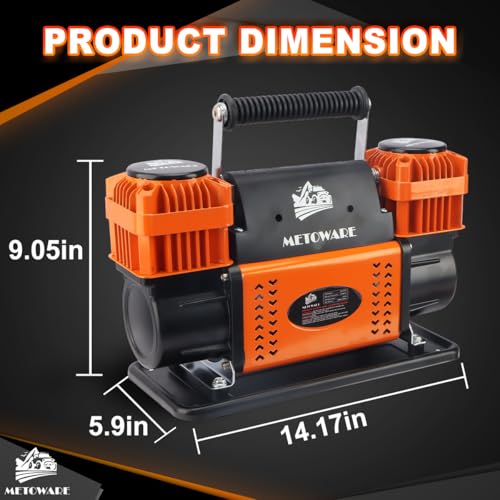
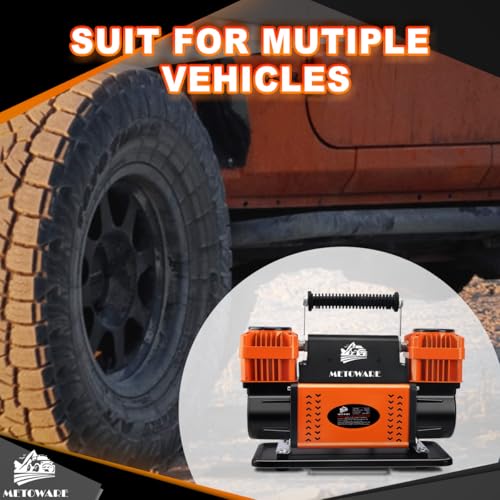
If you hate crawling around your vehicle to reach each tire, the 24-foot hose on this METOWARE unit will feel like a win. That reach alone makes it stand out, no need to reposition the compressor mid-job. With 10.6 CFM and dual cylinders, it’s reasonably fast, and the all-metal construction hints at decent durability. Owners appreciate the 3-in-1 function, especially the ability to check and deflate tires without swapping tools.
It doesn’t have auto-stop, so you’ll need to monitor inflation manually, which is a step back from smarter models. But the T-connector and abrasion-resistant hose add real utility. For truck and RV owners with big wheelbases, this one saves time and effort on the ground.
Product photos
BUNKER INDUST Dual Cylinder Compressor
Strengths
- Auto-stop inflation
- Dual quick-connects
- Anderson plug
Trade-offs
- Heavier build
- No included dual-hose kit
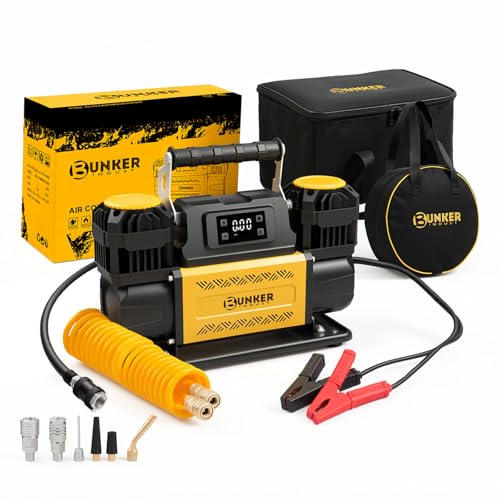
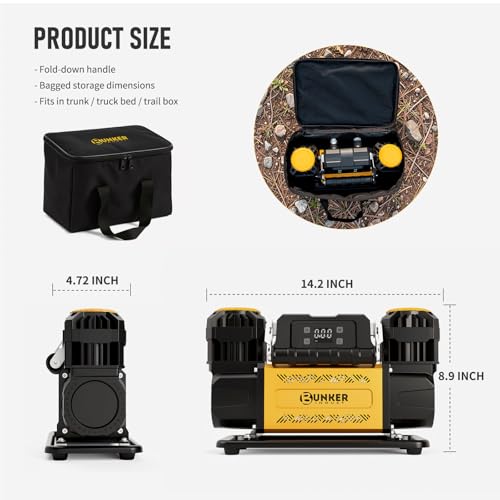
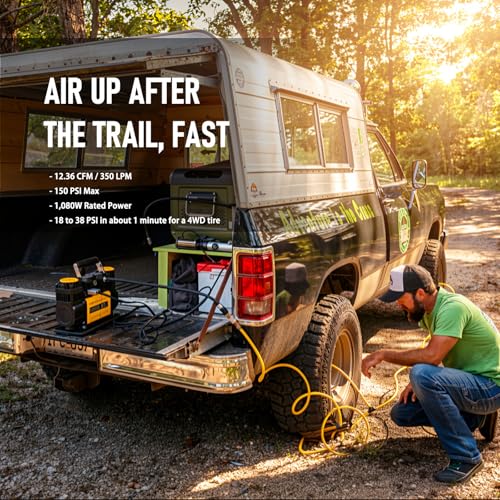
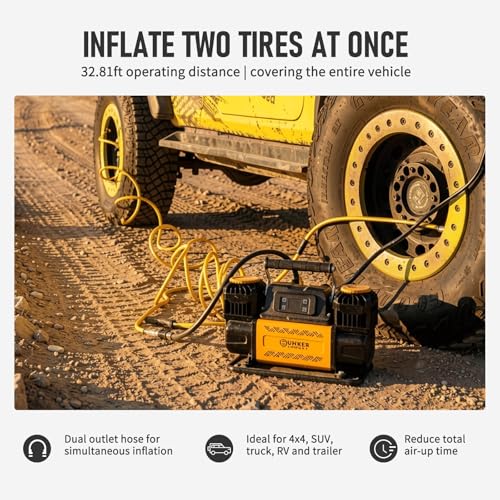
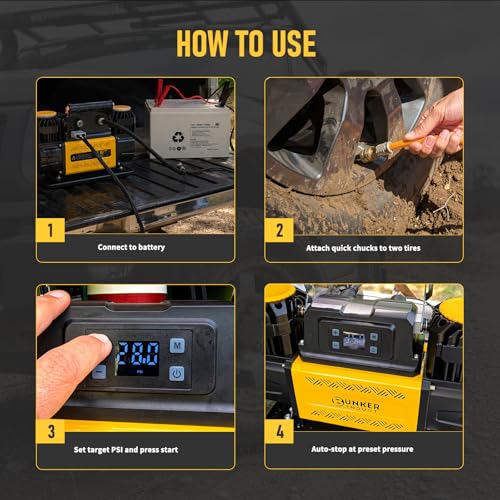
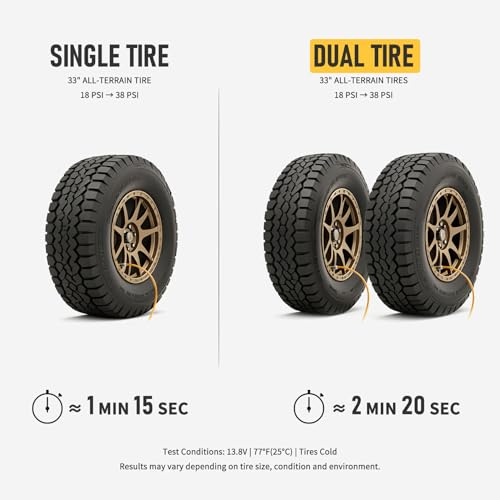
This unit is built for precision, and the auto-stop feature is its standout trait. Set your target pressure and walk away, it shuts off cleanly at the right PSI, which owners say works reliably within ±1 PSI. That kind of accuracy matters when airing up after a trail run, and it eliminates guesswork. With 12.3 CFM and 150 PSI, it’s plenty fast for 4x4s and has the dual quick-connects that let you inflate two tires at once.
The Anderson-style plug is a pro-grade touch, reducing voltage drop and improving connection stability. The build includes solid heat protection and cleanable filters, which suggests it can handle repeated use. It’s not the flashiest, but it’s one of the smartest designs in this category.
Product photos
How We Evaluated 12v air compressor for 4x4s
Rather than a hands-on lab test, this is a research-led comparison of specifications and owner feedback. I started by compiling a list of models readily available and frequently discussed within the 4×4 community. Then, I systematically compared published specs – airflow (CFM), maximum PSI, cylinder configuration, and included accessories – across those models. Finally, I weighed owner reviews from multiple sources alongside expert opinions found on sites dedicated to off-road vehicles and tool reviews to build a realistic picture of performance and reliability.
For 12v air compressors aimed at 4×4 use, several factors stand out as crucial. Airflow (CFM) is paramount; a higher CFM means faster inflation, which is critical when you’re back on the trail and need to quickly restore tire pressure. Durability is also key, as these compressors often face harsh environments. Finally, features like auto-stop functionality and hose length directly impact convenience and ease of use in remote locations.
Specifications reliably indicate a compressor’s potential performance – CFM and PSI provide a clear baseline for comparison. However, real-world usability often hinges on build quality and thermal management, which is where owner feedback and reputation become invaluable. I paid close attention to reports of overheating, motor longevity, and the accuracy of pressure gauges. Understanding these nuances is why a good compressor for 4×4 use needs to balance raw power with practical reliability, and why researching owner experiences is essential for informed choices regarding off-road tire inflation.
How To Pick The Right 12v air compressor for 4x4s
Choosing the right 12v air compressor for your 4×4 isn’t just about finding one that works; it’s about finding one that works reliably when you’re miles from help, and can handle the demands of off-road adventures.
A quality 4×4 air compressor prioritizes rapid inflation, durable construction to withstand harsh environments, and safety features to protect both the unit and the user. Key specs include CFM (cubic feet per minute) for airflow, PSI (pounds per square inch) for maximum pressure, cylinder count impacting speed, and built-in protections like auto shut-off. Look for models with robust hoses and multiple nozzle adapters for versatility.
Inflation Speed & Airflow
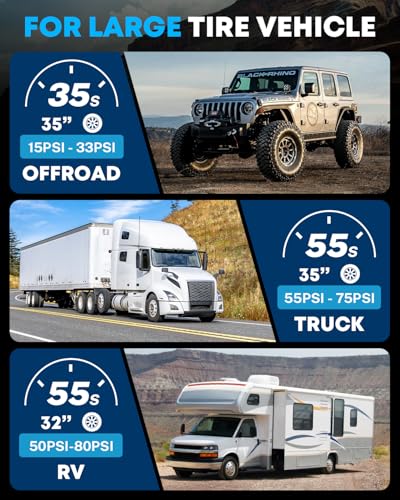
The biggest frustration with a weak air compressor is waiting. Don’t get hung up on peak PSI numbers alone. What truly matters is CFM – cubic feet per minute – which dictates how quickly a compressor can move air. Dual-cylinder compressors are generally faster than single-cylinder models, and four-cylinder units, like the Kohree Four Cylinder Air Compressor, provide the quickest inflation times, especially for larger tires. However, higher CFM often comes with increased power draw, so consider your vehicle’s electrical system. If you frequently air down for off-roading, investing in a compressor with a high CFM rating will save you significant time in the field.
Build Quality & Durability
Off-road conditions are brutal, and your air compressor needs to withstand dust, vibration, and potential impacts. Look for models constructed with heavy-duty materials like metal housings and cylinders (aluminum is a good sign). Rubber feet are a small detail that makes a big difference in reducing vibration and protecting the unit. I’ve seen too many compressors fail prematurely because of flimsy plastic components. A good rule of thumb is to check owner reviews specifically for reports of longevity and reliability in similar conditions to what you expect to encounter.
Don’t skimp on build quality. A compressor that fails on the trail is worse than no compressor at all.
Features & Usability
Beyond raw power, consider features that enhance usability. Digital displays with preset pressure shut-off, as seen in the ALL-TOP Digital Dual Cylinder Compressor, are incredibly convenient and prevent over-inflation. A long air hose is essential for reaching all tires without repositioning the compressor. Here’s what I look for in a practical package:
- A basic on/off switch is fine.
- A 20+ foot air hose eliminates constant repositioning.
- An auto-stop function with adjustable pressure settings (and a clear digital display) is invaluable for precise inflation and preventing damage to your tires. It’s a feature that takes the guesswork out of inflating, especially in remote locations.
If you’re also looking for a compact unit to tackle everyday tire maintenance, check out our guide to the best 12v tire inflator options. Finally, consider the accessories included; multiple nozzle adapters are vital for inflating everything from tires to sports equipment. You might also want to explore other portable 12v compressors available.
12v Air Compressors for 4x4s Compared
This table provides a reference comparison of key specifications for various 12v air compressors designed for 4×4 vehicles.
| Product Name | Max PSI | Airflow (CFM) | Cylinders | Hose Length (ft) | Auto-Stop | Power Cord Length (ft) |
|---|---|---|---|---|---|---|
| Kohree Dual Cylinder | 150 | 12.35 | 2 | 26 | No | 6.5 |
| Uharbour Dual Cylinder | N/A | N/A | 2 | N/A | N/A | N/A |
| Kohree Four Cylinder | 150 | 14.13 | 4 | 26 | Yes | 5.9 |
| GSPSCN Heavy Duty Metal | 150 | 70L/min | 2 | 11.5 | No | 11.5 |
| VIAIR 88P | 120 | 1.47 | 1 | 16 | No | 10 |
| ALL-TOP Digital Dual Cylinder | 150 | 12.35 | 2 | N/A | Yes | N/A |
| METOWARE Offroad Dual Cylinder | 150 | 10.6 | 2 | 24 | No | N/A |
| BUNKER INDUST Dual Cylinder | 150 | 12.36 | 2 | N/A | Yes | N/A |
Frequently Asked Questions
What CFM is sufficient for 33-inch tires?
A compressor delivering at least 10 CFM is generally sufficient for 33-inch tires. Larger tires require more air volume, so consider a compressor with 12 CFM or higher for faster inflation, especially if you frequently air down significantly when off-roading.
Are single-cylinder compressors suitable for 4×4 use?
Single-cylinder compressors can work for 4x4s, but they’re best suited for smaller vehicles or emergency use. They inflate tires much slower than dual or four-cylinder models, which can be a significant drawback when you’re trying to get back on the trail quickly.
What’s the benefit of an auto-stop function?
An auto-stop function prevents over-inflation, which could damage your tires or even cause a blowout. You set your desired pressure, and the compressor automatically shuts off when that pressure is reached, offering a safer and more convenient experience.
What material should I look for in a durable compressor housing?
Metal housings, particularly those made of aluminum, are the most durable option. Plastic housings are more prone to cracking or breaking under stress or in cold weather, potentially exposing internal components to damage.
Where can I find more information about choosing a 12-volt off-road compressor?
For a more in-depth comparison and additional models, you can explore a detailed guide to the 12-volt off-road compressor market, covering a wider range of features and price points.
The Bottom Line
Choosing a 12v air compressor for your 4×4 often comes down to balancing immediate need with long-term reliability. While peak PSI numbers grab attention, consistent airflow is what gets your tires inflated quickly when you’re on the trail. For the best all-around performance and a good balance of speed and features, I recommend the Kohree Four Cylinder Air Compressor.
If you’re on a tighter budget, the METOWARE Offroad Dual Cylinder compressor provides a solid option without sacrificing too much capability. For those prioritizing versatility and precise inflation control, the ALL-TOP Digital Dual Cylinder Compressor is an excellent choice, offering a convenient auto-stop function. And if you’re searching for an even more specialized tool, you might want to consider a portable off-roading compressor for dedicated trail use.
Ultimately, remember that specifications tell only part of the story. Focus on a compressor with durable construction, a sufficient CFM rating for your tire size, and positive owner feedback regarding real-world performance, those are the fundamentals that will truly matter when you’re relying on it miles from the nearest service station.
