
7 Best 120V Welders of 2026
This post contains affiliate links. As an Amazon Associate, we earn from qualifying purchases.
The ARCCAPTAIN iControl MIG145 Pro stands out as the best overall 120v welder for most users, combining solid performance with multi-process flexibility. If you’re on a budget, the Lincoln Electric 90i FC delivers reliable flux core welding without the extras. For those needing maximum versatility, the ARCCAPTAIN 165A MIG Welder handles MIG, TIG, and Stick with ease.
Most people shopping for a 120v welder want something that’s easy to use, moves easily around a garage or job site, and can handle typical DIY tasks like repairing brackets, exhausts, or light fabrication. The real challenge is cutting through marketing claims to find a machine that actually performs consistently, especially when you’re just starting out.
This guide breaks down the top options based on real user feedback, technical specs, and how well each model balances power, process options, and usability. We focused on machines that deliver dependable arcs, offer meaningful features for beginners, and are built to last without breaking the bank.
Top 7 120V Welders in the Market
The Best 120V Welders, Reviewed
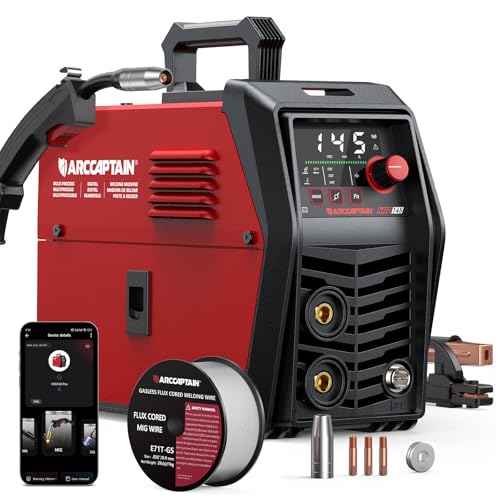
ARCCAPTAIN iControl MIG145 Pro 145A
Strengths
- Smartphone app control
- Synergic control
- Lightweight design
- Shoulder strap included
- Low spatter
Trade-offs
- No dual voltage
- TIG torch not included
- Limited to 2lb spools
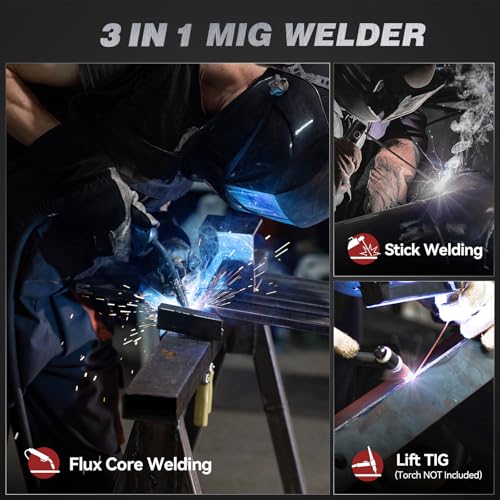
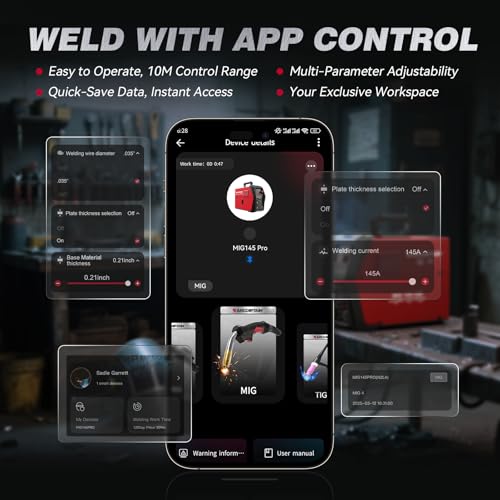
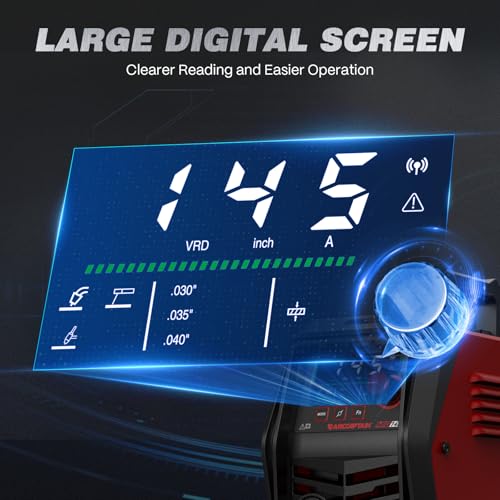
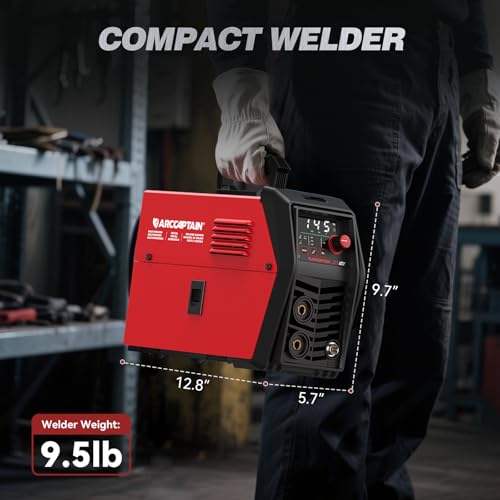
This is the most tech-forward 120V welder in the lineup, and for good reason. The app control isn’t just a gimmick, it lets you save and recall settings, which owners say is a time-saver when switching between projects. The synergy mode works well, automatically matching wire feed and voltage, making it one of the easiest machines here for newcomers. At 9.5 lbs and with a shoulder strap, it’s genuinely portable, and the LED display is bright enough to read with a darkened helmet.
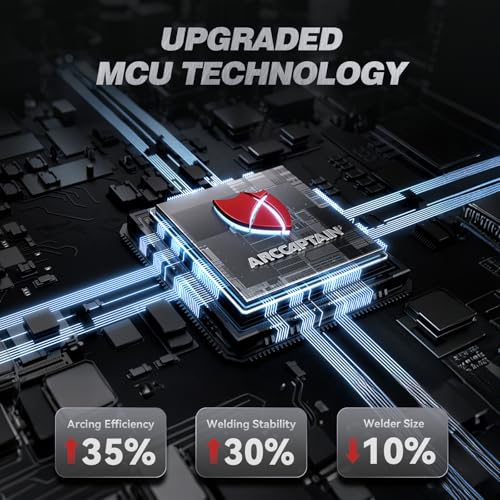
Performance-wise, it holds its own against competitors: 145A is enough for light to medium jobs, and the digital MCU improves arc stability. Compared to the Lincoln 90i, it’s more advanced; compared to the YESWELDER, it’s lighter and smarter but less powerful. For most users, this strikes the best balance of brains and brawn.
Product photos
Lincoln Electric 90i FC Flux Core

Strengths
- Durable metal case
- Simple two-knob control
- Lightweight
- Shoulder strap included
- Lincoln reliability
Trade-offs
- Flux-core only
- No digital display
- No multiprocess capability
This is the no-nonsense, entry-level pick that gets the job done without extras. At 15 lbs with a shoulder strap, it’s easy to move, and the metal case adds durability, something owners appreciate when working outdoors or on rough job sites. The two-knob control (voltage and wire speed) is simple, maybe too simple for some, but it works. It’s limited to flux-core wire, so no gas MIG or Stick, but it welds up to 1/4” steel, which is more than enough for small repairs.
Compared to the ARCCAPTAIN or WELDPRO models, it lacks digital smarts and multiple processes, but it’s also more affordable and rock-solid reliable. Lincoln’s reputation for durability shows here, owners report years of trouble-free use. If you just need a basic welder for weekend fixes, this is the one.
Product photos


ARCCAPTAIN 165A MIG Welder
Strengths
- Dual voltage support
- High amperage
- 2T/4T trigger
- Improved heat dissipation
- Clear LED display
Trade-offs
- No spot welding
- TIG torch sold separately
- Only fits 2lb spools
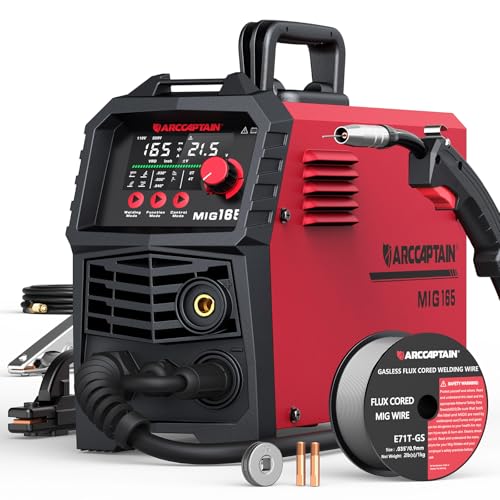
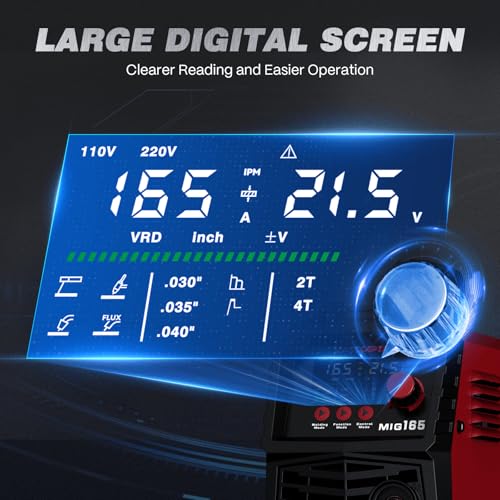
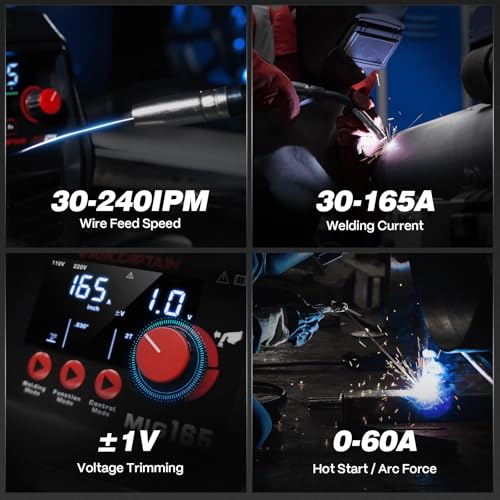
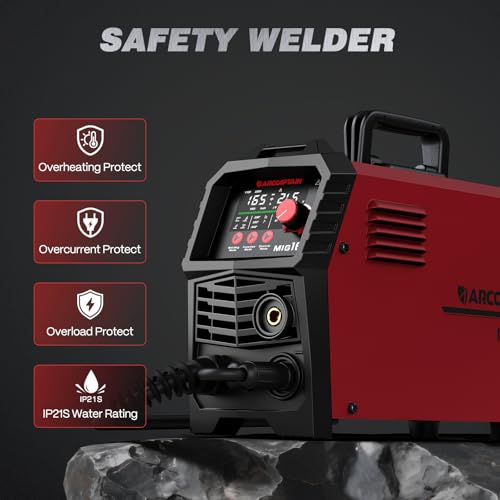
If you need a 120V welder that can switch to 220V when the job demands it, this is the one. The 165A output and 60% duty cycle are strong numbers for dual-voltage flexibility, and the upgraded cooling fan helps it run longer without overheating. Owners report clean arcs and good penetration on mild steel up to 3/16” thick, solid for a portable unit. The 2T/4T trigger function adds real workflow flexibility, especially for longer welds.
The large LED screen is easy to read, and the synergy mode takes the guesswork out of settings. It’s heavier than some at 12.8 lbs, but still manageable. Compared to the iControl MIG145, it trades app control for higher power and dual voltage, making it the smarter pick for users who work in both home and pro environments.
Product photos
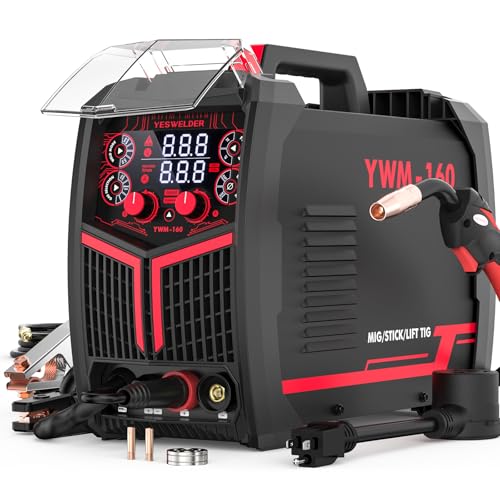
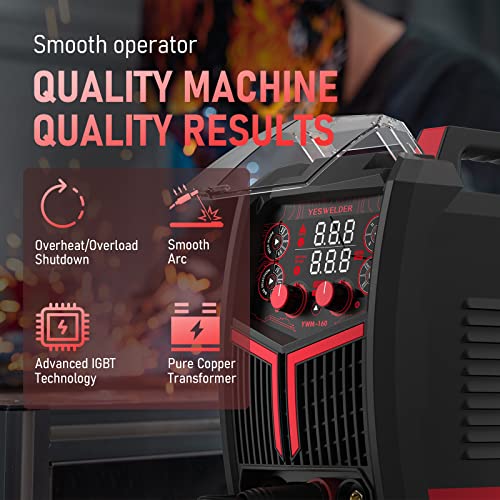
YESWELDER 160A MIG Welder
Strengths
- 4-in-1 functionality
- Dual voltage support
- Synergic control
- LED display clarity
- Solid amperage for class
Trade-offs
- TIG torch sold separately
- Heavier than mini welders
- No spot welding
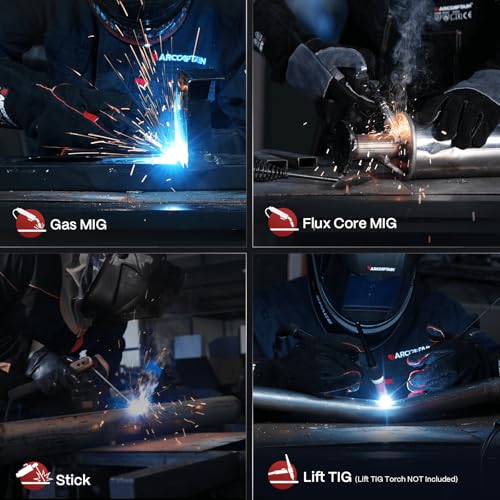
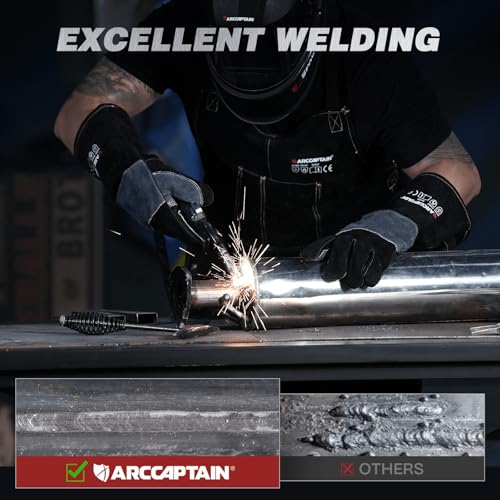
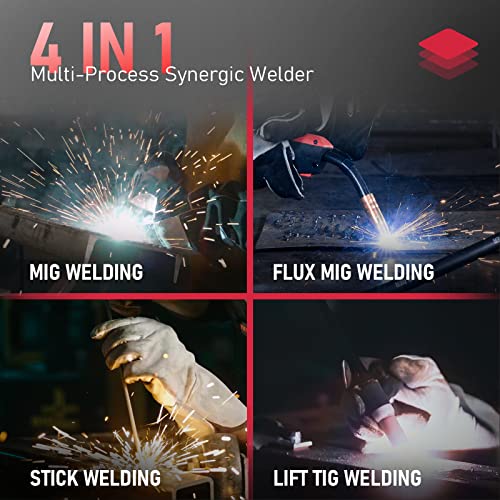
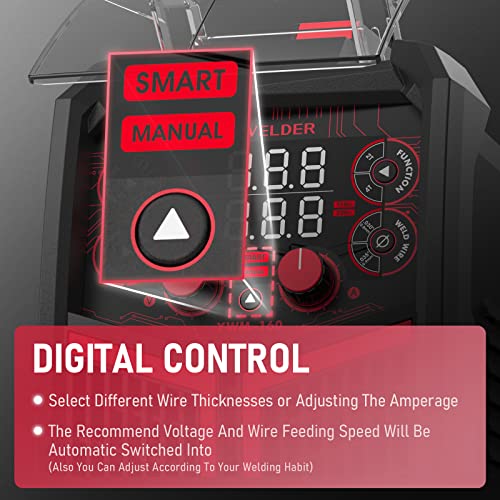
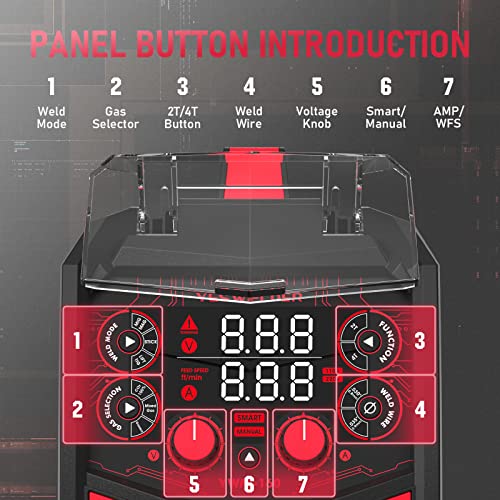
This 4-in-1 multiprocess welder stands out in the 120V class for its rare blend of capability and user-friendly tech. The 160A output is solid for a dual-voltage machine, and the fact that it supports Gas MIG, Flux Core, Stick, and Lift TIG (with an add-on torch) makes it a serious contender for DIYers who want one tool to handle multiple jobs. The synergic control is a real win, owners consistently report it takes the guesswork out of settings, especially when switching between materials or thicknesses. That’s a big help for beginners, though pros appreciate the manual override for fine-tuning.
The LED display is sharp and actually useful, not just a gimmick. At 19.4 lbs, it’s not the lightest, but it’s still portable enough for job-site hops. Where this unit really shines is versatility, it’s the kind of welder you can grow into. Compared to basic flux-core-only models, it gives you room to explore TIG or Stick work without buying a second machine.
Product photos
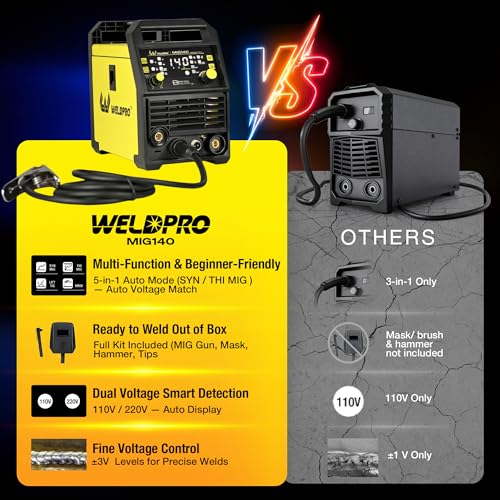
WELDPRO 140A 5-in-1 MIG Welder
Strengths
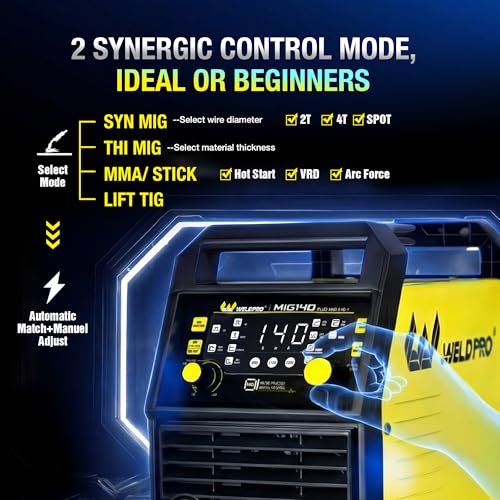
- 5-in-1 functionality
- Spot welding included
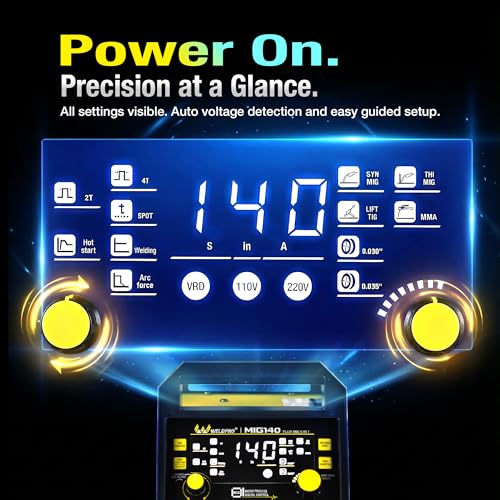
- Auto voltage detection
- Tool-less roll change
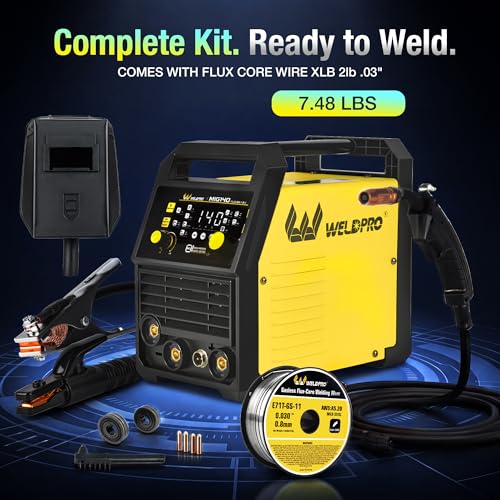
- Full starter kit
Trade-offs
- No dual voltage
- Lower max amperage
- No app connectivity
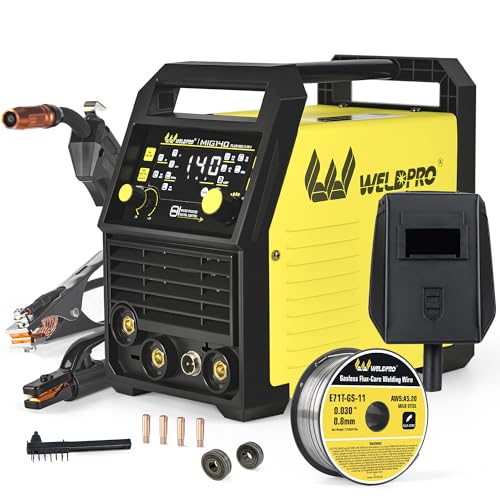
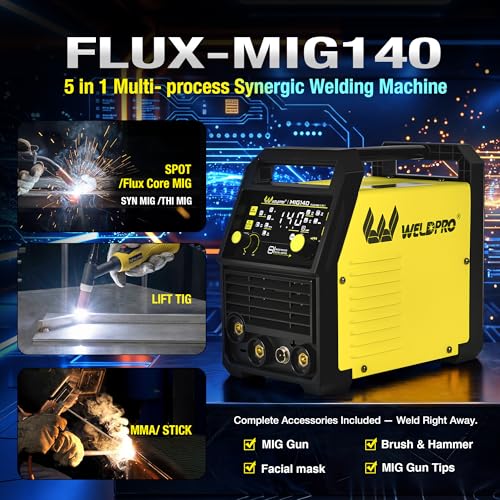
This 5-in-1 welder earns its spot with smart features that most budget units skip, especially the spot welding mode and automatic voltage detection. The 140A output is modest but effective for 1–4mm steel, and the IGBT inverter keeps spatter low. What sets it apart is the intelligent MCU control: it auto-adjusts voltage and wire speed based on thickness, which reviewers say makes setup almost foolproof. The 2T/4T trigger option is another pro touch, letting you lock the arc for long seams.
It’s not the most powerful, but the included helmet, wire, and full accessory kit make it one of the most complete starter packages. At just 3.4kg, it’s easy to move around. Compared to the YESWELDER, it lacks dual voltage, but it wins on thoughtful design, like the tool-less drive roll change.
Product photos
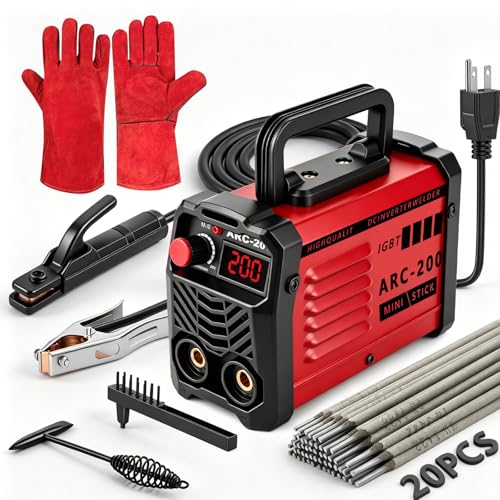
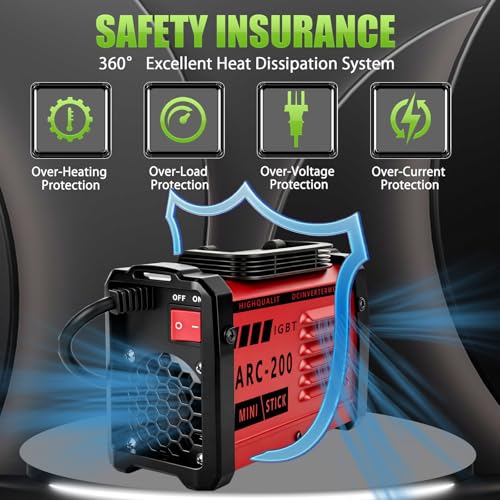
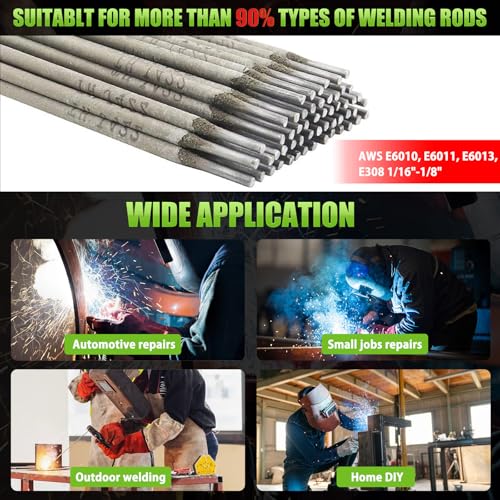
Hpoouo 200Amp Mini Stick Welder
Strengths
- Ultra-lightweight
- Compact design
- IGBT inverter
- Good starter kit
- Arc stability on thin metal
Trade-offs
- Limited on thick steel
- Overheats under long use
- No voltage adjustment
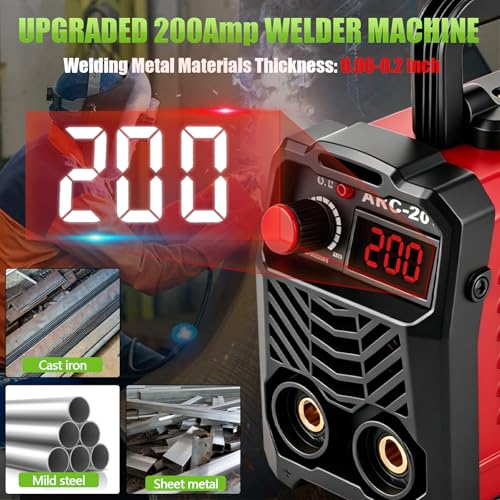
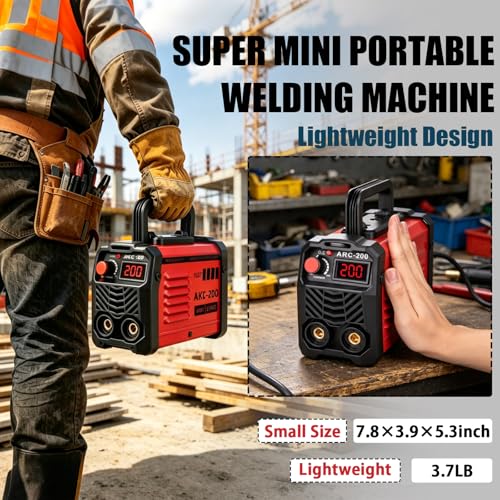
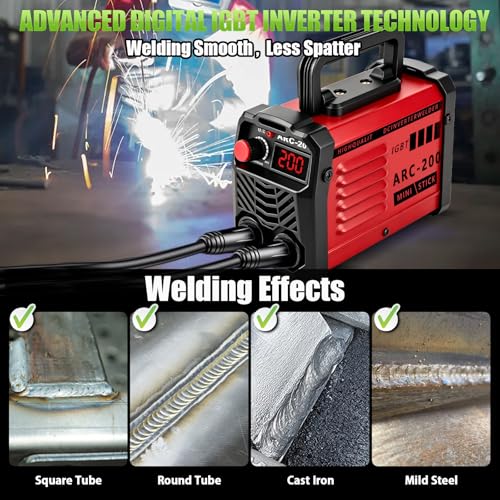
At just 3.7 lbs and barely larger than a hardcover book, this is about as portable as a stick welder gets. The 200A rating sounds impressive on paper, but real-world feedback suggests it performs best in the 100–140A range for consistent arcs, especially on thicker material. Still, for light-duty repairs, fence patches, trailer fixes, farm gate hinges, it delivers. The IGBT inverter tech helps stabilize the arc, and owners praise the hot start and anti-stick functions for making strikes easier, even for novices.
It’s a no-frills machine, but the included gloves, chip hammer, and 20 rods make it a genuine out-of-box solution. Compared to bulkier 120V stick units, this one trades raw power for extreme portability. If you’re crawling under a truck or working on a rooftop, that trade-off makes sense. But don’t expect it to handle long, heavy beads.
Product photos
ARCCAPTAIN 200A Stick Welder
Strengths
- Lift TIG capable
- Synergic control
- Lightweight
- LED display
- TUV certified
Trade-offs
- TIG torch not included
- No wire feed
- Limited to stick electrodes
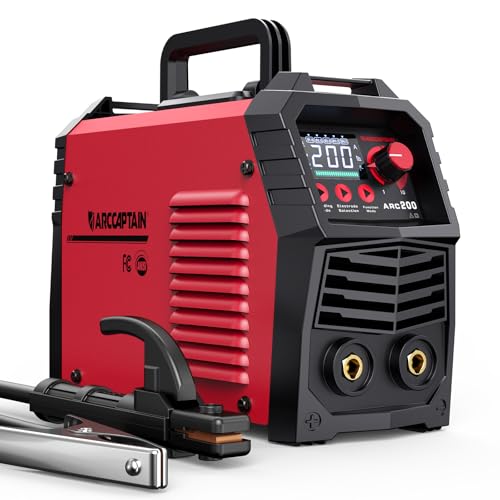
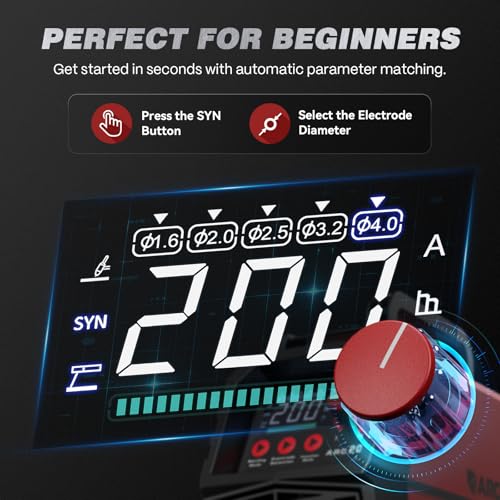
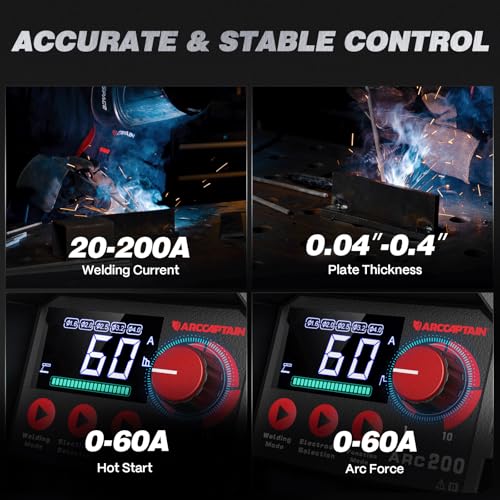
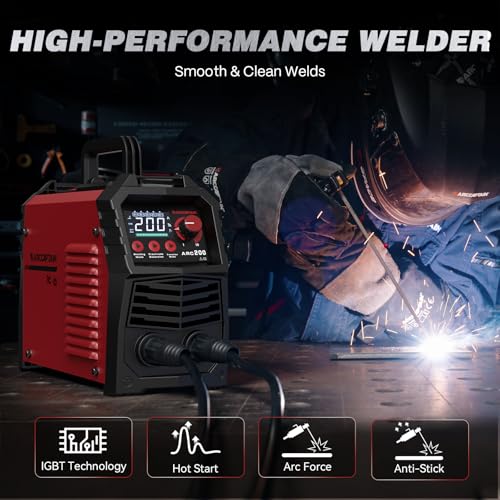
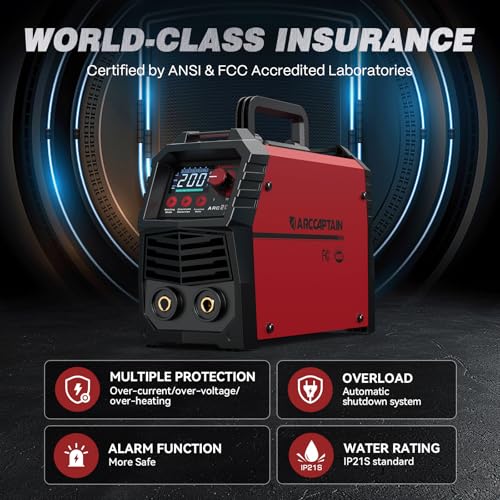
This 200A stick machine is built for welders who want simplicity with a side of modern convenience. The synergic control adjusts current based on electrode size, which is rare in stick welders and a real help for beginners. The LED display is bright and legible, and the 7.2 lb weight makes it easy to haul to job sites. It handles 6010, 6013, and 7018 rods well, with solid arc force and anti-stick performance, owners note fewer stutters and easier restarts.
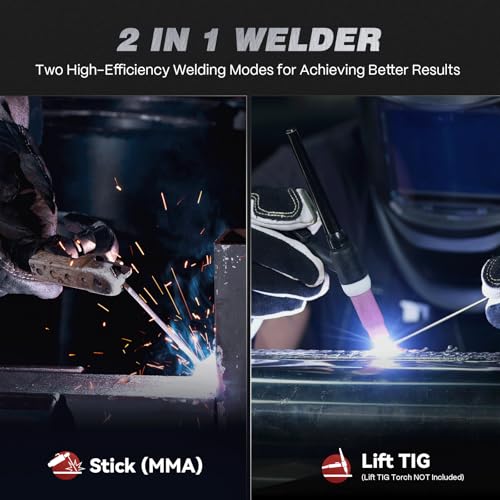
What makes it stand out is the dual-mode capability: you can run Stick or Lift TIG (torch not included). That’s a big plus for fabricators who occasionally need TIG but don’t want a full TIG rig. Compared to the Hpoouo mini stick welder, it’s more capable on thicker material and offers better control.
Product photos
How We Evaluated 120v welders
My team and I approached evaluating 120v welders as a research-led comparison of specifications, features, and, crucially, owner and expert feedback. Rather than a hands-on lab test of each machine, we compiled detailed charts comparing amperage output, duty cycles, included accessories, and available welding modes. We then cross-referenced this data with user reviews from multiple sources, as well as assessments from reputable welding publications and online forums to build a thorough picture of real-world performance.
For this category, the most heavily weighted factors were versatility and ease of use, particularly for beginners. A welder’s ability to handle multiple processes (stick, MIG, TIG) expands its usefulness and represents a better value. Equally important is how readily a newcomer can achieve acceptable results; features like synergic control and clear displays contribute significantly to a positive learning curve. Portability also factored in, as many users need to move their welder around a shop or job site.
Technical specifications reliably indicate a welder’s potential output and capabilities, but owner feedback reveals how well a machine actually delivers on those promises. For example, specs tell you the amperage, but reviews highlight arc stability, splatter levels, and how easily the machine handles different rod types. We also leaned on expert reviews to assess the quality of components and the overall build, things not immediately apparent from a datasheet. You can find more on specific types, such as flux core welders in our dedicated guide.
What To Look For In 120v welders
Finding the right welder for your needs doesn’t have to be intimidating. There are a lot of options out there, but understanding what separates a good machine from a disappointing one will make the process much smoother.
A quality welder balances portability with sufficient amperage for the materials you’ll work with. Look for models with robust safety features, clear controls, and a duty cycle appropriate for your intended projects. Consider the welding processes offered (Stick, MIG, TIG, Flux Core) and whether the unit requires gas or can operate gaslessly. Don’t underestimate the value of a user-friendly interface, especially if you’re a beginner.
Amperage and Material Thickness
The amperage output of a welder dictates the thickness of material it can effectively join. For most DIY homeowners and hobbyists, a 120v welder in the 90-140 amp range will be sufficient for thinner metals – sheet metal, auto body work, small repairs. If you anticipate tackling thicker steel (1/4” or more) or working with tougher materials, you’ll want to step up to a 220v machine. Don’t overestimate your needs, though. More amperage doesn’t automatically mean a “better” welder; it just means it can handle heavier work. Consider that even a 120v machine can be surprisingly versatile, especially those offering multiple processes.
Welding Process Versatility
Many welders now offer multiple processes – Stick (SMAW), MIG (GMAW), Flux Core, and sometimes even Lift TIG – in a single unit. While a dedicated TIG welder will always offer superior control and quality for critical applications, a multi-process machine is a great starting point. Flux Core is particularly useful for beginners as it doesn’t require shielding gas, making it ideal for outdoor projects or those without access to a gas supply. If you’re unsure which process you’ll use most, a multi-process welder offers the most flexibility. For a deeper explore specific models, check out our guide to the best 120v wire feed welders.
Portability and Usability Features
Welding often happens outside of a perfectly equipped workshop. Weight and size matter, especially if you anticipate moving the welder around. A machine under 20 pounds is typically considered quite portable. Beyond physical size, look for features that enhance usability.
- A clear LED display is crucial for accurate settings.
- Synergic control (found on some MIG welders) simplifies the process by automatically adjusting parameters based on material thickness and wire diameter.
- A built-in handle or shoulder strap is a small detail that makes a big difference when transporting the machine.
A welder you don’t use is a waste of money. Prioritize ease of use and portability to ensure you’ll actually tackle those projects you’ve been putting off.
120v Welders Compared
Here’s a comparison of key specifications for popular 120v welders to help you make an informed decision.
| Product Title | Input Voltage | Process(es) | Output Current (A) | Weight (lbs) | Portability |
|---|---|---|---|---|---|
| ARCCAPTAIN iControl MIG145 Pro | 120V | MIG, MMA, Lift TIG | 145 | 9.5 | Portable |
| Lincoln Electric 90i FC | 120V | Flux Core | 90 | 15 | Portable |
| ARCCAPTAIN 165A MIG Welder | 110/220V | MIG, TIG, MMA | 165 | 12.8 | Portable |
| YESWELDER 160A MIG Welder | 110/220V | MIG, Stick, TIG | 160 | 19.4 | Portable |
| WELDPRO 140A 5-in-1 MIG Welder | 110/220V | MIG, TIG, Stick, Spot | 140 | 3.4 | Portable |
| Hpoouo 200Amp Mini Stick Welder | 110V | Stick | 200 | 3.7 | Ultra-Portable |
| ARCCAPTAIN 200A Stick Welder | 120V | Stick, Lift TIG | 200 | 7.2 | Portable |
Frequently Asked Questions
What duty cycle should I prioritize?
A 60% duty cycle is generally sufficient for most DIY projects(meaning you can weld for 6 minutes out of every 10 at a given amperage). However, if you plan on doing a lot of continuous welding, look for a machine with a higher duty cycle, at least 80%, to prevent overheating and ensure consistent performance.
Can a 120v welder handle automotive repair?
Yes, many 120v welders can handle basic automotive repair work like patching body panels or fixing exhaust systems. Look for a machine with MIG or Flux Core capabilities and sufficient amperage (90-140 amps) for the typical metal thicknesses used in cars and trucks.
Are multi-process welders more difficult to learn?
Not necessarily. Many modern multi-process welders include synergic control, which simplifies the setup by automatically adjusting settings. These features make them surprisingly accessible, even for those considering beginner welding machines.
What’s the difference between Stick and MIG welding?
Stick welding (SMAW) is more versatile for rusty or dirty metals, but it has a steeper learning curve. MIG welding (GMAW) is generally easier for beginners and produces cleaner, faster welds on clean metal, but requires shielding gas.
What safety gear is essential when welding?
Beyond the welder itself, a proper welding helmet with an auto-darkening filter is critical to protect your eyes. You’ll also need welding gloves, a fire-resistant jacket or apron, and closed-toe shoes to prevent burns. Adequate ventilation is also important to avoid inhaling fumes.
The Bottom Line
Choosing a 120v welder often comes down to balancing how much you want to spend against how much versatility you truly require. For most DIYers and beginners, the ARCCAPTAIN iControl MIG145 Pro strikes an excellent balance; it’s affordable, genuinely multi-process (MIG, Stick, Lift TIG), and receives consistently positive feedback for its ease of use. It won’t handle the heaviest projects, but it’s a capable machine for the majority of home and auto repairs.
If your needs are very specific, other models shine. Those prioritizing portability and sheer affordability will find the Hpoouo 200Amp Mini Stick Welder hard to beat. For those wanting a more powerful machine with broader capabilities, the ARCCAPTAIN 165A MIG Welder is a good choice, and for those needing lightweight welding machines for on-the-go projects, the WELDPRO 140A 5-in-1 MIG Welder is a fantastic option.
Ultimately, specs and features matter less than your commitment to learning basic welding techniques and practicing proper safety procedures. A more expensive welder won’t automatically make you a better welder – consistent practice and a solid understanding of the fundamentals will. Prioritize safety gear, understand your materials, and take the time to learn the right settings for each project.
