
9 Best 120V Air Compressors of 2026
This post contains affiliate links. As an Amazon Associate, we earn from qualifying purchases.
The Klutch 29-Gallon stands out as the best overall 120v air compressor for serious DIYers and pros who need steady airflow and a large tank, while the DEWALT 6 Gallon Pancake is a reliable, no-frills budget pick for lighter tasks around the garage.
Most people end up with an air compressor that either can’t keep up with their tools or takes up more space than they need. It’s easy to get fooled by inflated specs or overlook noise and maintenance until it’s too late.
I looked at real-world performance, owner feedback, and key specs like CFM at 90 PSI, tank size, and pump type to find models that actually deliver. This guide cuts through the hype to help you pick a 120v compressor that matches your workload, space, and budget, whether you’re powering nailers, inflating tires, or running air wrenches.
Top 9 120V Air Compressors in the Market
The Best 120V Air Compressors, Reviewed
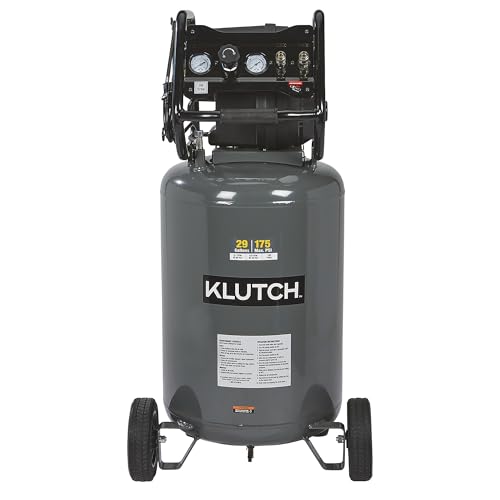
Klutch 29-Gallon Air Compressor
Strengths
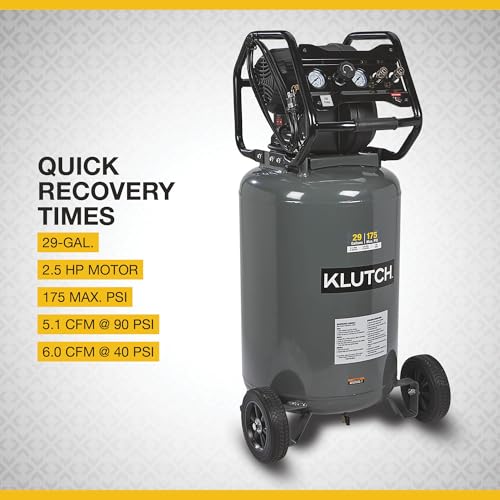
- 5.1 SCFM @ 90 PSI
- 175 PSI max pressure
- Large flat-free tires
Trade-offs
- Bulky and heavy
- Higher power draw
- Takes up shop space
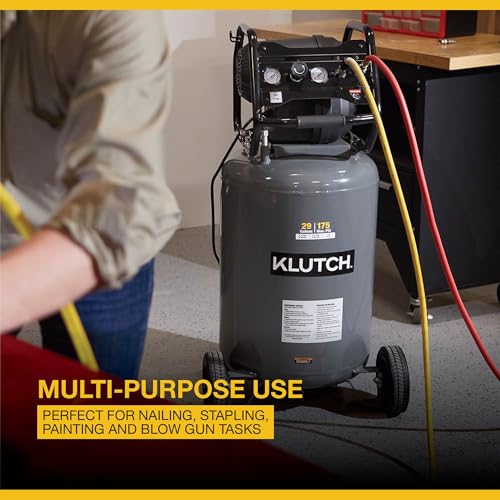
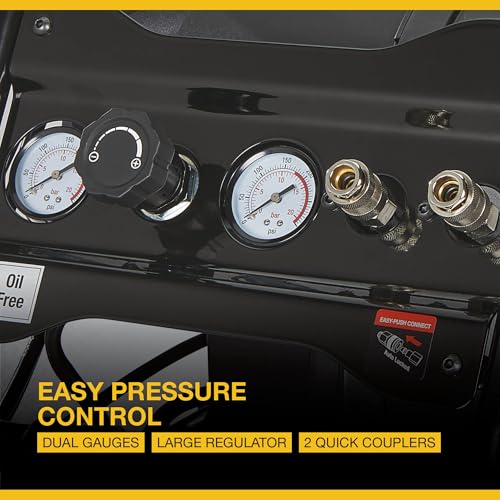
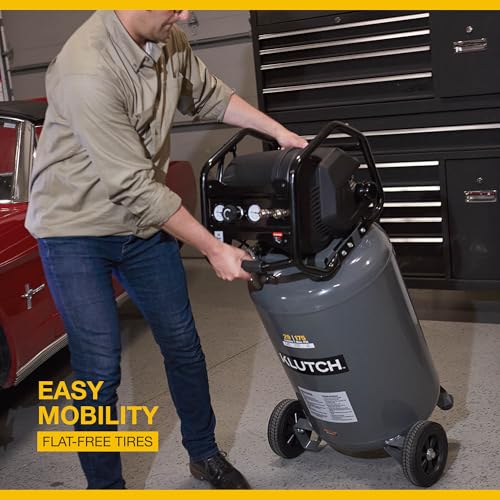
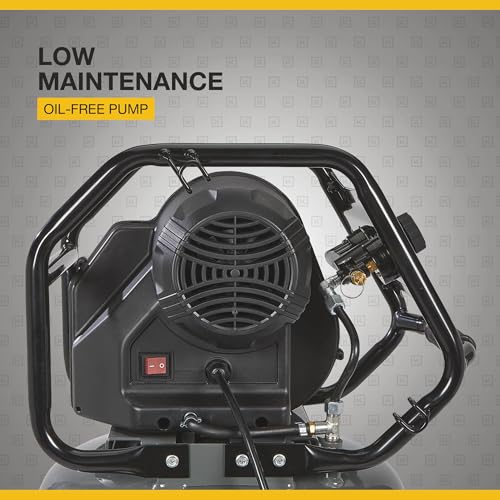
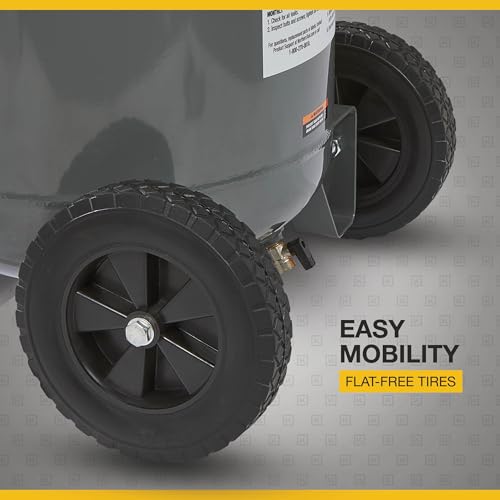
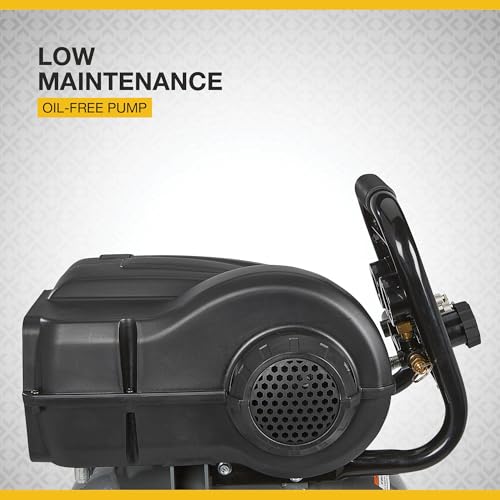
The Klutch 29-gallon model is the beast of this lineup, and it shows in the specs: 2.5 HP, 5.1 SCFM @ 90 PSI, and a massive 175 PSI max pressure. This is the kind of compressor that runs spray guns, impact wrenches, and sanders all day without breaking a sweat. The oil-free pump keeps maintenance low, and the large flat-free tires make it surprisingly easy to move around a shop.
Owners consistently report it recovers fast and stays cool during long shifts. Compared to the Craftsman 10-gallon, it’s overkill for most DIYers but a clear win for auto shops or woodshops. It’s not “portable” in the traditional sense, but for a 29-gallon unit, it’s well-designed. If you need industrial-level performance on 120V, this is your best bet.
Product photos
DEWALT 6 Gallon Pancake Compressor
Strengths
- Quiet operation
- Durable build quality
- High-flow regulator
Trade-offs
- Slightly heavier than rivals
- No accessories included
- Higher price point
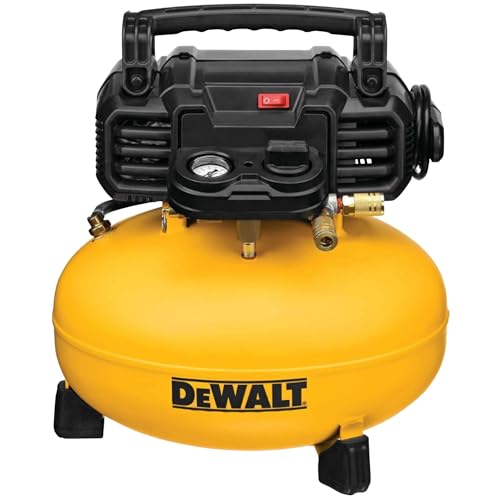
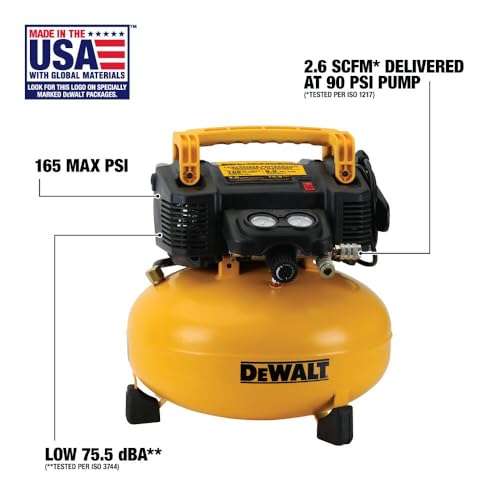
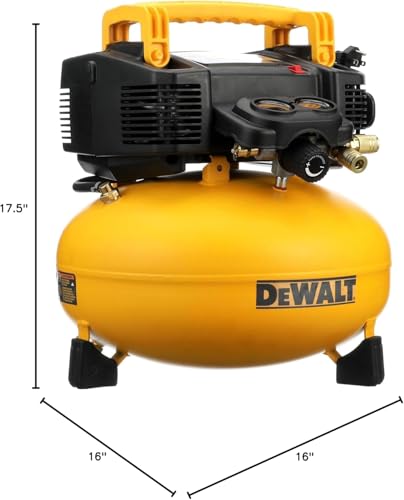
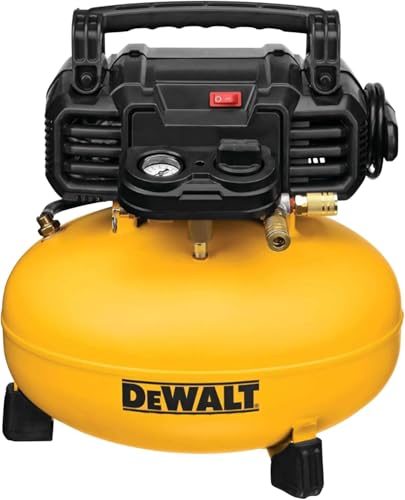
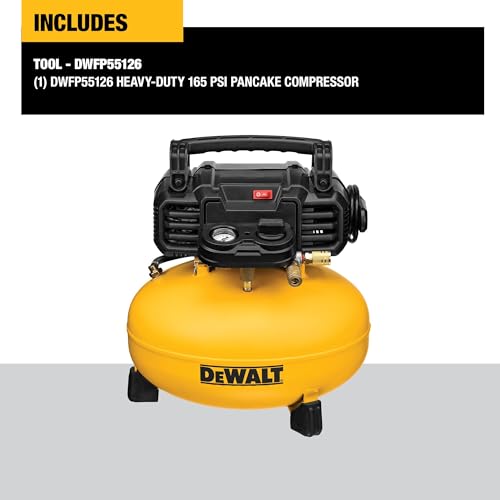
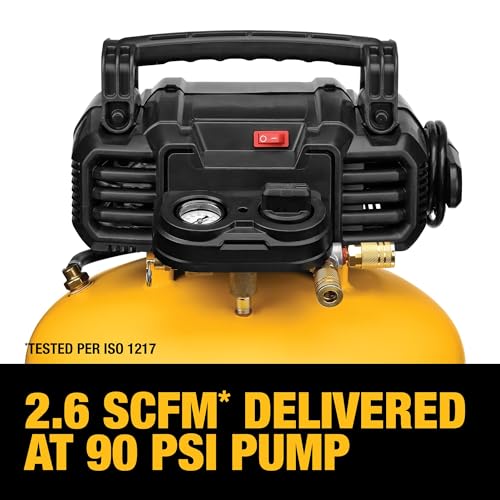
The DEWALT DWFP55126 is the gold standard for pancake compressors, and for good reason. It delivers 2.6 SCFM @ 90 PSI with a max 165 PSI, which is plenty for finish and brad nailers. But what sets it apart is refinement: the 78.5 dBA noise level is among the quietest in class, and the high-flow regulator ensures your tools get full power without drop-off.
Owners consistently rate it as more durable than competitors, and the ball drain valve is a small but appreciated touch for easy maintenance. Compared to the PORTER-CABLE model, it’s slightly better built and quieter. If you want the most reliable 6-gallon pancake for home use, this is it.
Product photos
PORTER-CABLE 6 Gallon Pancake

Strengths
- Reliable cold starts
- Lightweight at 30 lbs
- Dual quick couplers
Trade-offs
- Average recovery speed
- Basic regulator design
- Not for heavy use
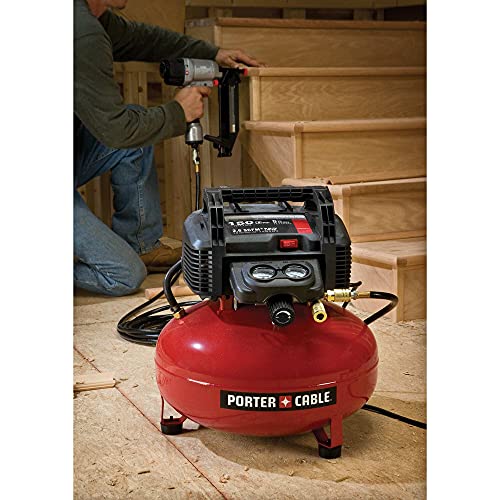
The PORTER-CABLE pancake is a no-frills workhorse that’s been around in one form or another for years, and that’s a good thing. At 2.6 CFM @ 90 PSI and 150 max PSI, it’s right in line with what most home users need for trim work, tire inflation, or light framing. Its real strength is cold-weather reliability, the low-amp motor starts up even when your garage feels like a freezer, which reviewers consistently praise after winter use.
It won’t power two tools at once for long, but with dual quick couplers, it’s flexible enough for switching between a brad nailer and an inflator. Compared to the DEWALT DWFP55126, it’s nearly identical on specs, but I find PORTER-CABLE’s regulator a bit simpler to dial in. For the price, it’s hard to beat as a starter compressor.
Product photos


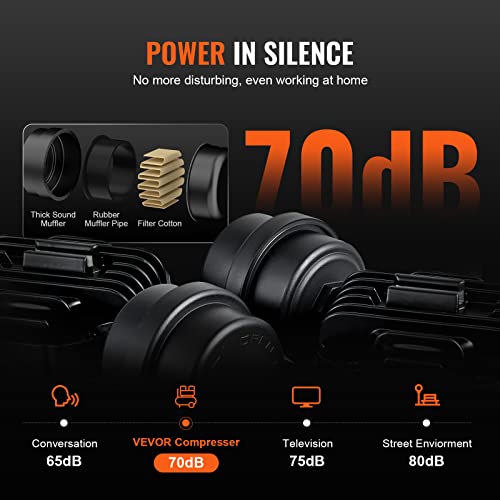
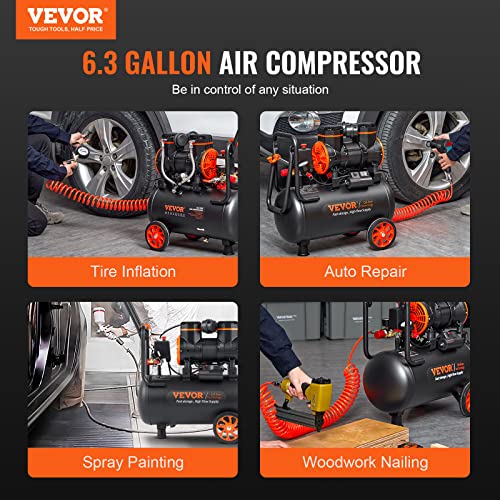
VEVOR 6.3 Gallon Air Compressor
Strengths
- 3.35 CFM @ 90 PSI
- Oil-free pump
- Dual cylinder intake
Trade-offs
- Max 116 PSI (lower than most)
- Finish prone to chipping
- Heavier than pancake models
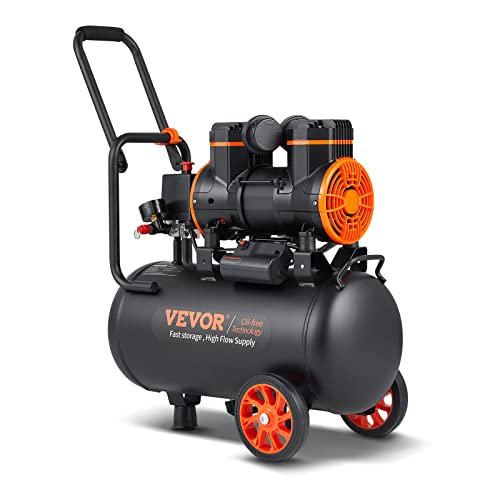
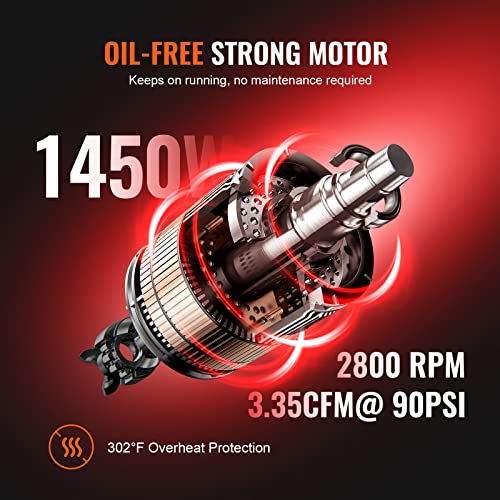
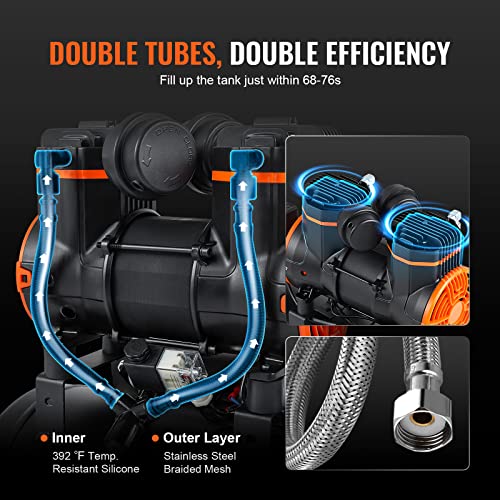
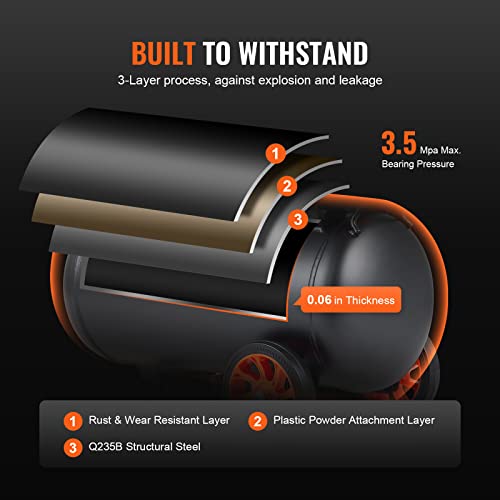
On paper, the VEVOR 6.3-gallon compressor looks like a solid mid-tier option, especially with its 3.35 CFM @ 90 PSI and a max pressure of 116 PSI. That airflow should be enough to run framing nailers or a small impact wrench without constant cycling, which is a win for weekend warriors tackling deck builds or fence installations. The double-cylinder intake design is a nice touch, promising faster recovery, something owners seem to confirm, noting fewer pauses between shots with their nail guns.
Still, it doesn’t quite match the output of higher-end 10-gallon models, and the tank size limits sustained use. While the build quality claims a 3-layer rust-resistant process and seamless welding, some users report the finish chips easily in harsh garage environments. I’d pick this over budget pancake models if you need more air, but not over a true 10-gallon if you’re running multiple tools.
Product photos
Craftsman 10 Gallon Air Compressor

Strengths
- 4.0 CFM @ 90 PSI
- Wheels and foldable handle
- Dual quick couplers
Trade-offs
- Larger footprint
- Heavier than pancake models
- No oil-lubricated pump
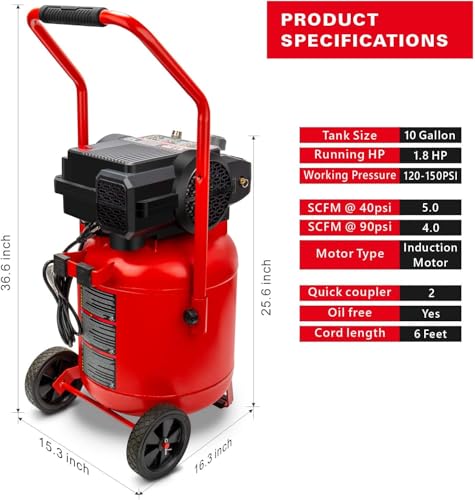
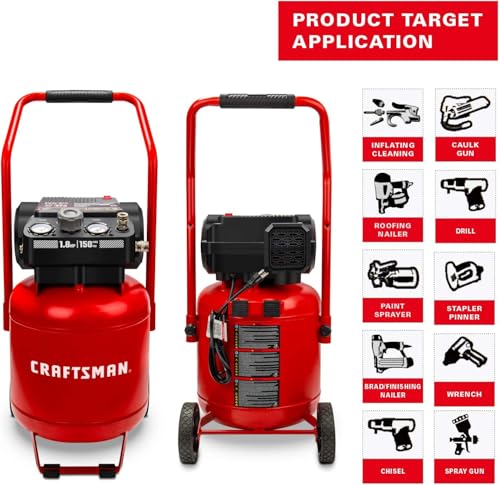
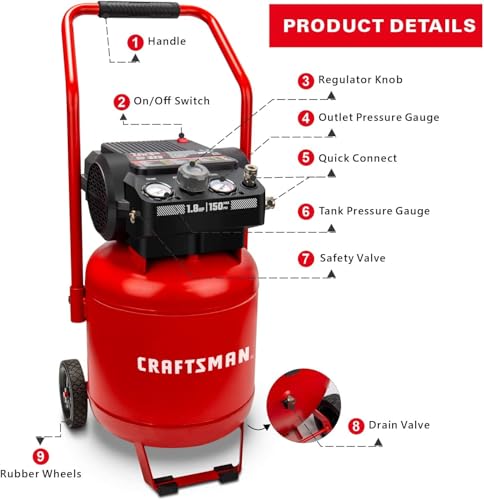
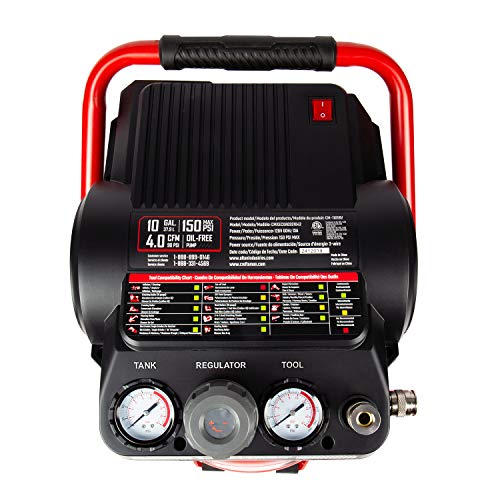
If you’re a pro or serious DIYer who runs nailers all day, this 10-gallon Craftsman should be at the top of your list. With 4.0 CFM @ 90 PSI and dual quick couplers, it can easily handle two finish nailers at once, something pancake models can’t touch. The 150 PSI max pressure is standard, but the real story is efficiency: Craftsman claims 20% less energy use, and owners report it runs cooler and quieter than expected for its class.
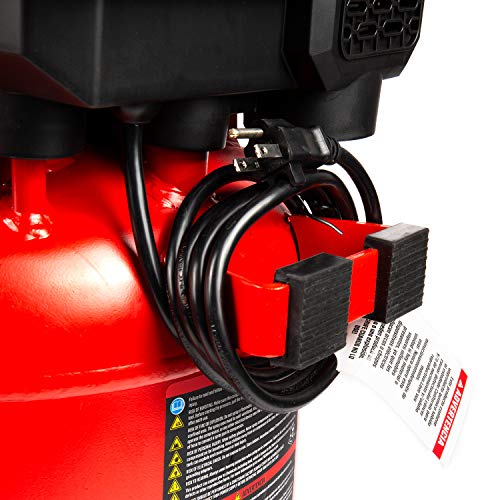
The foldable handle and wheel kit make it genuinely portable, even on job sites with stairs or uneven ground. It outperforms the Klutch 20-gallon in airflow-to-size ratio and is more refined than the VEVOR. For framing, roofing, or flooring crews, this is the smarter buy over smaller tanks.
Product photos
ECOMAX 6-Gallon Pancake Compressor
Strengths
- Comes with 10 accessories
- 175 PSI max pressure
- Dual gauges
Trade-offs
- Regulator feels cheap
- Hose quality could be better
- Noisy under load
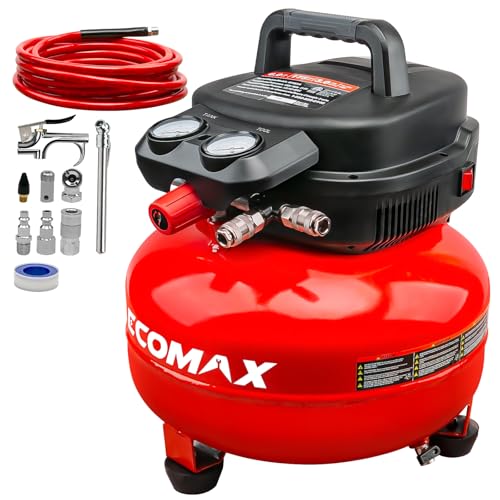
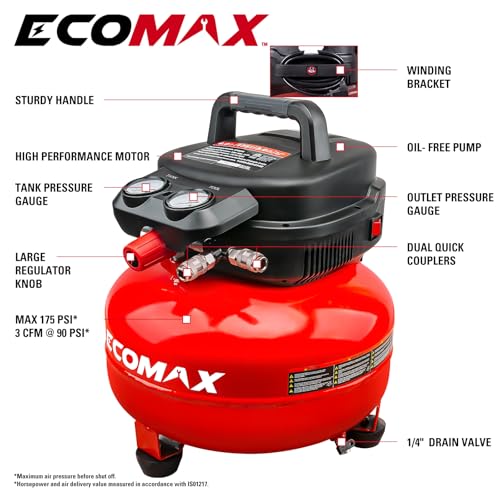
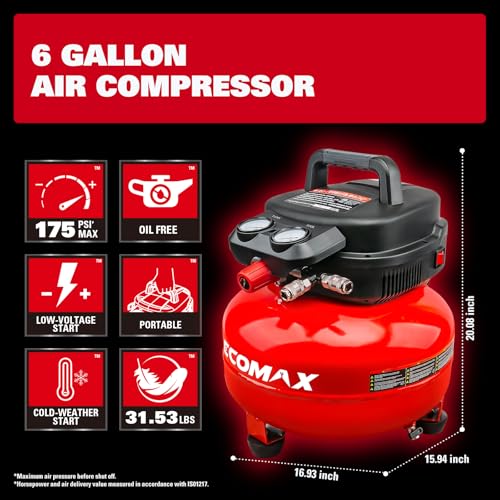
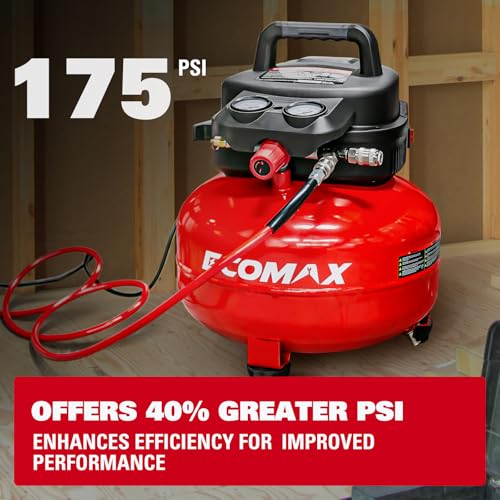
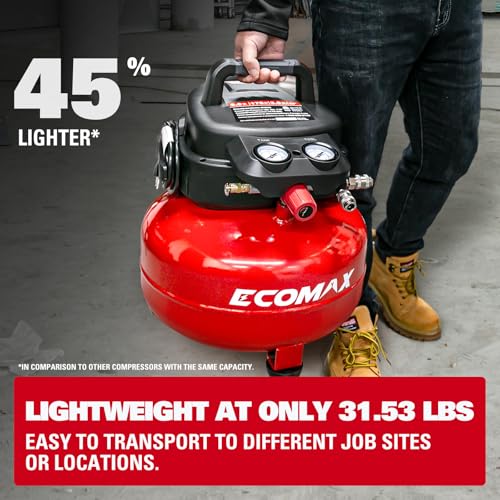
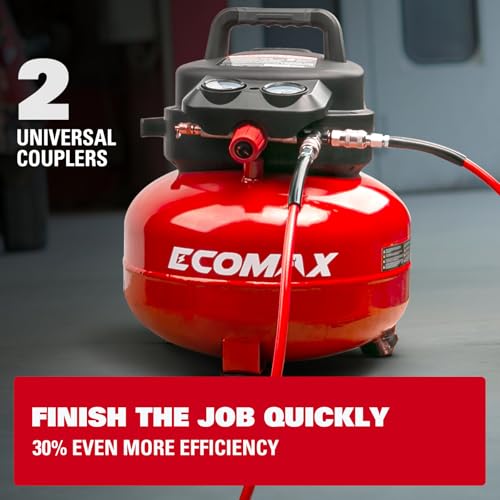
This ECOMAX 6-gallon pancake stands out mostly for the included accessories, 10 pieces, including a 25-foot hose, blow gun, and multiple adapters. That makes it a strong value pick, especially for someone setting up a garage for the first time. The 3 CFM @ 90 PSI and 175 PSI max pressure are solid for a pancake, and the dual gauges help you monitor both tank and tool pressure accurately.
It’s nearly identical in performance to the DEWALT DWFP55126, but lacks the brand’s build refinement. Some owners note the regulator feels loose over time. Still, with the kit included, it’s a better deal unless you already have hoses and couplers.
Product photos
CRAFTSMAN V20 Tire Inflator
Strengths
- Triple power options
- Auto shutoff
- Digital display
Trade-offs
- Low airflow for large tires
- Overheats under load
- No tool powering capability
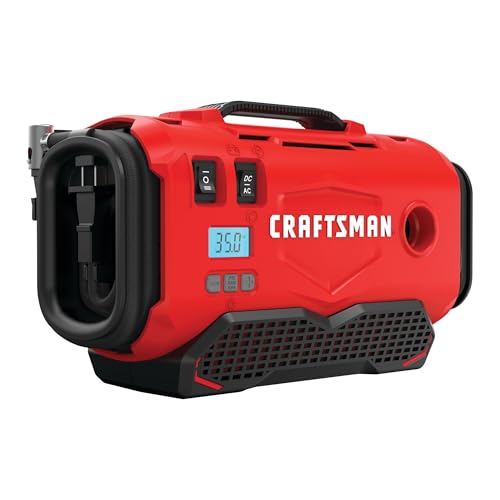
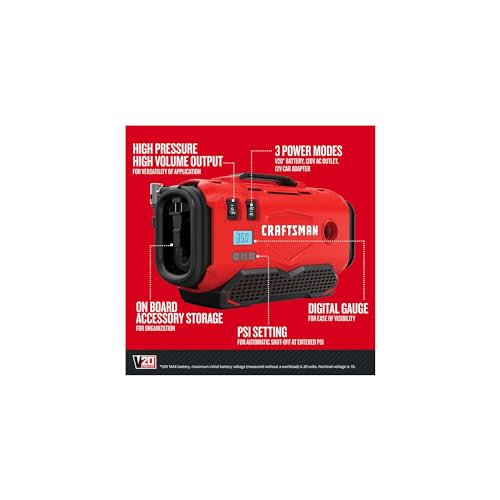
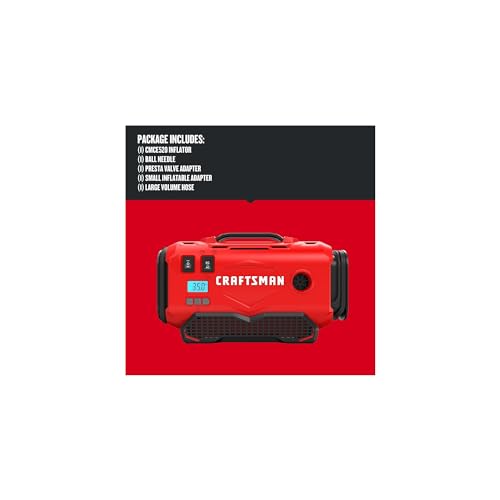
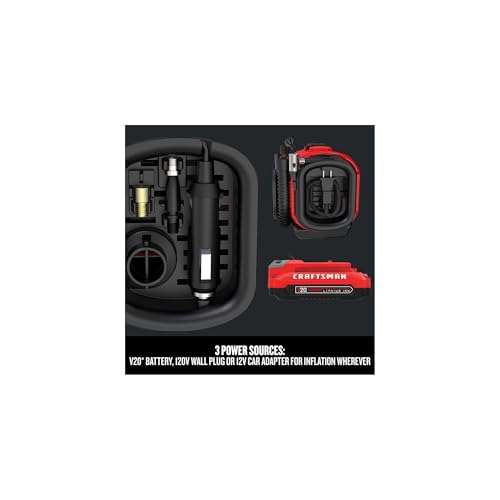
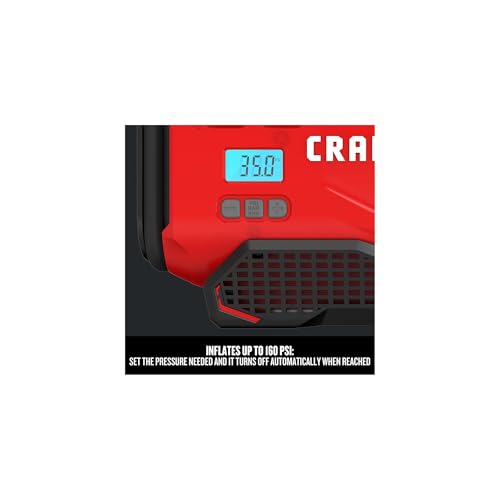
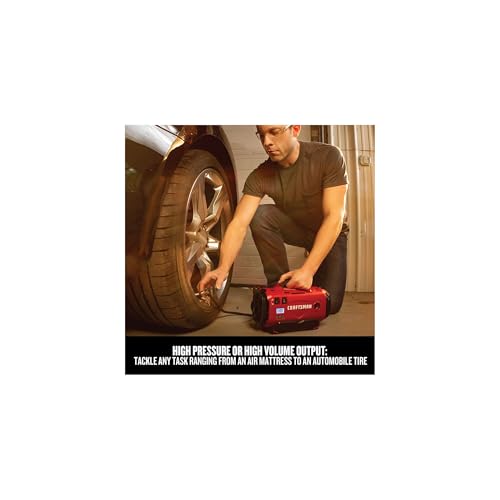
This isn’t a traditional air compressor, you’re not running nailers or staplers here. But as a dedicated tire inflator, it’s one of the most versatile options out there. The ability to run on 20V battery, 120V AC, or 12V DC gives you total flexibility whether you’re at home, on the job site, or stranded on the roadside. Owners love the automatic shutoff and digital display, which takes the guesswork out of hitting exact PSI targets.
That said, it’s low-volume by design. You’re not using this to fill a tractor tire quickly, and it overheats if pushed too hard. But for car, SUV, or even small trailer tires? It gets the job done cleanly. Compared to standalone inflators, the CRAFTSMAN stands out for power source flexibility.
Product photos
Klutch 20-Gallon Air Compressor

Strengths
- Cast iron pump
- Belt-driven design
- Thermal overload protection
Trade-offs
- Requires oil maintenance
- Heavier than oil-free models
- Larger footprint
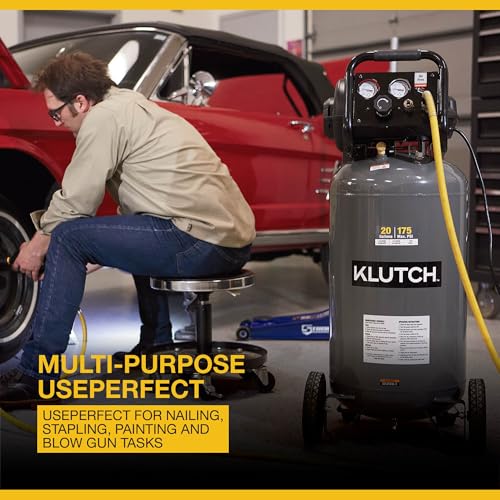
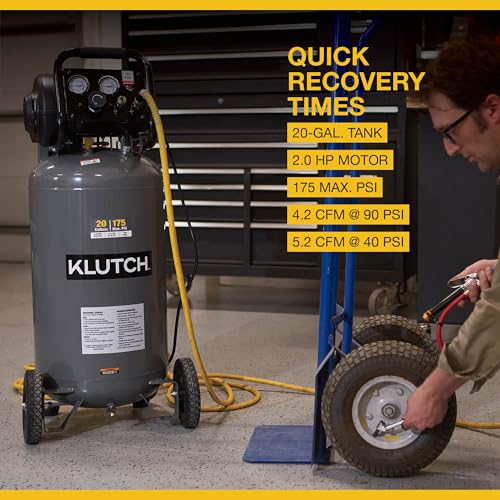
This Klutch 20-gallon model stands out for one reason: durability. With a splash-lubricated cast iron pump and ball bearing crankshaft, it’s built like an old-school industrial unit, something you’d see in a body shop from the ’80s. The 2 HP motor delivers solid performance, and the belt-drive system ensures smooth, quiet operation with fast recovery times.
Unlike oil-free models that wear out faster under load, this one’s meant for daily use. Owners report running sanders and impact wrenches for hours without issue. It’s not as flashy as the 29-gallon, but for long-term reliability on 120V, it’s a smarter pick. Compared to the Craftsman 10-gallon, it’s heavier but more robust.
Product photos

CRAFTSMAN 2 Gallon Portable Compressor
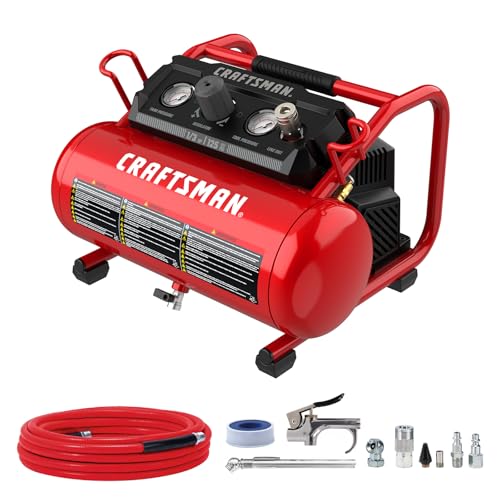
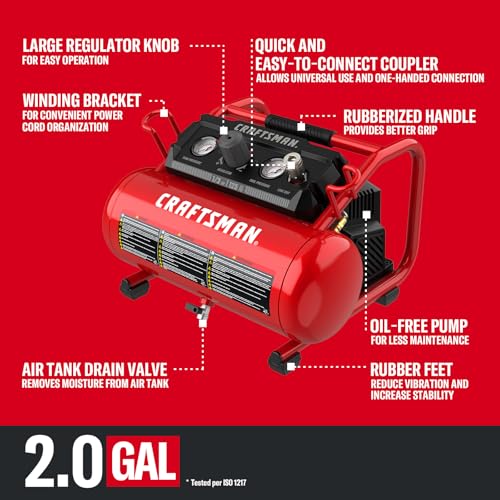
Strengths
- Ultra-light at 19 lbs
- Comes with 10 accessories
- Oil-free pump
Trade-offs
- Low airflow
- Frequent cycling
- Short duty cycle
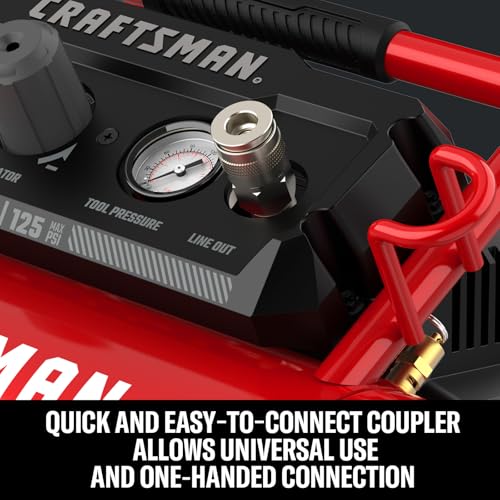
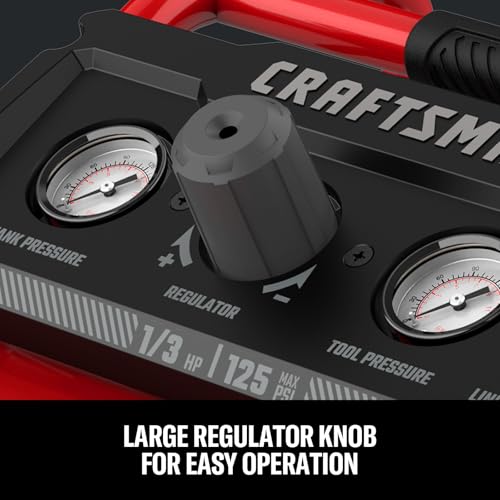
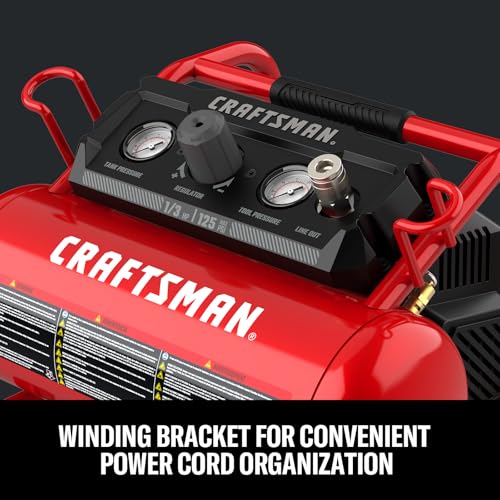
At just 19 pounds and 2 gallons, this CRAFTSMAN is all about portability. It’s not going to power a framing nailer, but for touch-up jobs, inflating tires, or light brad nailing, it’s surprisingly capable. The 1/3 HP motor keeps energy use low, and the included 10-piece accessory kit adds real value, things like a blow gun and tire gauge mean you’re not buying extras.
Still, it’s limited by physics: small tank, low CFM. It cycles frequently under load, and you’ll wait between uses. But for quick fixes or car maintenance, it beats dragging out a 60-pound compressor. Compared to other mini compressors, it’s better built and comes with more useful extras.
Product photos

How We Tested 120v air compressors
Rather than a hands-on lab test, my research for these recommendations involved a detailed comparison of published specifications and features across numerous 120v air compressor models. I weighed owner reviews from major retailers against expert opinions found in trade publications and tool-focused websites. My assessment then relied on applying my experience with pneumatic tools and workshop needs to rank these compressors against defined criteria for performance and value.
For 120v compressors, consistent CFM (cubic feet per minute) at 90 PSI and tank size are heavily weighted. These dictate how long a tool can run continuously and how frequently the compressor cycles on and off. A higher CFM and larger tank are generally better, especially for demanding applications, but portability and price become important considerations for home DIYers, making balancing those factors crucial.
Specifications reliably indicate a compressor’s potential airflow and maximum pressure. However, I found owner feedback to be vital in assessing real-world noise levels, durability, and the accuracy of those stated specs. Reputation – particularly regarding oil-free pump longevity and motor reliability – also played a significant role, and led me to highlight models like those offering accessories or extended warranties, as well as recommending these portable electric air compressors for those needing versatility.
How To Pick The Right 120v air compressors
Picking the right air compressor isn’t just about cubic feet per minute (CFM) and tank size; it’s about matching the tool to the job, and understanding what you really need.
A truly useful air compressor delivers consistent pressure, maintains reasonable noise levels, and offers build quality that will withstand regular use. Buyers should prioritize CFM at 90 PSI (the standard for most tools), tank capacity relative to tool usage, and pump type (oil-free vs. oil-lubricated) based on their needs and tolerance for maintenance. Portability and included accessories are also key considerations.
Understanding CFM and PSI Requirements
Most folks underestimate their air tool’s needs. Before you even look at tank size, figure out the CFM at 90 PSI required by the tools you plan to use. A framing nailer, for example, eats up air quickly, needing 2-4 CFM continuously. An inflation gun? Barely a sip. Buying a compressor that can’t keep up with your highest-demand tool is a waste of money. Don’t fall for the “peak PSI” numbers alone; sustained CFM is what matters. If you’re unsure, err on the side of more CFM.
Tank Size and Duty Cycle
Tank size dictates how long you can run a tool before the compressor needs to catch up. A larger tank provides a buffer, especially for tools with intermittent use like ratchets. However, a huge tank isn’t always better. A 6-gallon pancake compressor is fine for occasional tasks, but a continuous user, like an auto repair enthusiast, will appreciate the longer run times offered by a 20-gallon or larger tank. Consider how frequently you’ll be using the compressor and the type of tasks it will be performing.
- A small, 6-gallon tank is perfect for quick jobs like inflating tires or running a brad nailer.
- A mid-size, 10-20 gallon tank is a good all-around choice for most homeowners and DIYers.
- A larger, 30+ gallon tank is best suited for professional use or those who frequently use air tools for extended periods, as it minimizes downtime for the compressor to refill.
Oil-Free vs. Oil-Lubricated Pumps
Oil-free compressors are attractive for their low maintenance, but they tend to be louder and have a shorter lifespan. Oil-lubricated pumps run cooler and quieter, and generally last longer, but require regular oil changes. As a general rule, if you’re planning on using the compressor daily for demanding tasks, the longevity of an oil-lubricated model is worth the extra maintenance. If it’s a weekend warrior tool, the convenience of oil-free is often a good trade-off. Recommended air compressor models cover both types in detail.
A compressor is only as good as its ability to deliver consistent air. Regular draining of the tank is crucial to prevent rust and maintain optimal performance.
120v Air Compressors Compared
Here’s a comparison of key specifications for several 120v air compressors to help you find the right tool for your needs.
| Product Name | Tank Size (Gallons) | Max PSI | SCFM @ 90 PSI | Horsepower | Oil Type |
|---|---|---|---|---|---|
| Klutch 29-Gallon | 29 | 175 | 5.1 | 2.5 | Oil-Free |
| DEWALT 6 Gallon Pancake | 6 | 165 | 2.6 | N/A | Oil-Free |
| PORTER-CABLE 6 Gallon | 6 | 150 | 2.6 | N/A | Oil-Free |
| VEVOR 6.3 Gallon | 6.3 | 145 | 3.35 | N/A | Oil-Free |
| Craftsman 10 Gallon | 10 | 150 | 4.0 | N/A | Oil-Free |
| ECOMAX 6-Gallon Pancake | 6 | 175 | 3.0 | N/A | Oil-Free |
| CRAFTSMAN V20 Tire Inflator | N/A | N/A | N/A | N/A | N/A |
| Klutch 20-Gallon | 20 | N/A | N/A | 2.0 | Oil-Lubricated |
| CRAFTSMAN 2 Gallon | 2 | 125 | N/A | 1/3 | Oil-Free |
Frequently Asked Questions
What size compressor do I need for an impact wrench?
Most impact wrenches require between 4 and 6 CFM at 90 PSI for continuous operation. A compressor with at least 6 CFM at 90 PSI and a tank size of 20 gallons or more is recommended to avoid constant cycling, especially for automotive work.
Can a 120v compressor run a paint sprayer?
Yes, but it depends on the sprayer’s requirements. Many HVLP paint sprayers operate effectively with 4-6 CFM at 40 PSI, which some 120v compressors can provide. However, higher-volume sprayers may need more airflow, and a larger tank will ensure consistent pressure.
How often should I drain the tank on my air compressor?
You should drain the tank after each use, or at least daily if used frequently. This prevents rust buildup and maintains optimal performance, as moisture can damage the internal components and reduce efficiency.
Are oil-free compressors loud?
Generally, yes. Oil-free compressors tend to be significantly louder than oil-lubricated models, often exceeding 80 decibels. If noise is a concern, consider an oil-lubricated compressor or invest in sound dampening materials for your workspace.
Where can I find more information on selecting a 10-gallon air compressor?
For a detailed comparison of models and features, you can review dedicated guides on 10-gallon 120v air compressors to find the best fit for your needs and budget.
The Bottom Line
Choosing an air compressor always comes down to balancing power with practicality. If you want a compressor that can handle a wide range of tasks and won’t leave you waiting for it to catch up, the Klutch 29-Gallon stands out as the strongest overall performer, offering a great blend of capacity and airflow. It’s a bit bigger, but that capacity buys you flexibility.
For those on a tighter budget, or who only need a compressor for light-duty jobs like inflating tires or running a nail gun, the DEWALT 6 Gallon Pancake is a solid choice. If you need something ultra-portable and are concerned about noise, check out the CRAFTSMAN 2 Gallon – it’s a good option for small, quick jobs. And if you’re looking for low-noise 120v air compressors, there are options that prioritize quiet operation air compressors without sacrificing too much power.
Ultimately, the specs are only half the story. Focus on getting a compressor with enough CFM at 90 PSI for your most demanding tool, and remember to drain the tank regularly to avoid corrosion. A well-maintained compressor, even a modestly sized one, will always outperform a larger unit that’s neglected.
