
4 Best 12 Volt Air Compressors for Off-Road (2026 Guide)
This post contains affiliate links. As an Amazon Associate, we earn from qualifying purchases.
The GSPSCN 12V Heavy Duty Metal Compressor stands out as the best overall pick for off-road use, delivering strong airflow and rugged metal construction. If you’re watching your budget, the ALL-TOP Dual Cylinder Offroad Compressor offers solid performance for the price, while the VIAIR Digital EVC88P is a great choice if you want precise digital control and a trusted brand name.
Most people shopping for a 12-volt air compressor for off-roading aren’t just looking to inflate a bike tire, they need reliable, fast performance after airing down on the trail, often in remote, rough conditions. A weak or poorly built compressor can leave you stranded or waiting far too long when you’re trying to get back on the move.
This guide cuts through the marketing hype, focusing on what actually matters: real-world durability, consistent airflow, and features that make tire inflation faster and safer. I based these picks on a deep explore specs, owner feedback across forums and retail sites, and my experience with automotive tools, prioritizing models built to survive off-road demands.
Top 4 12 Volt Air Compressor For Off-Roads in the Market
The Best 12 Volt Air Compressor For Off-Roads, Reviewed
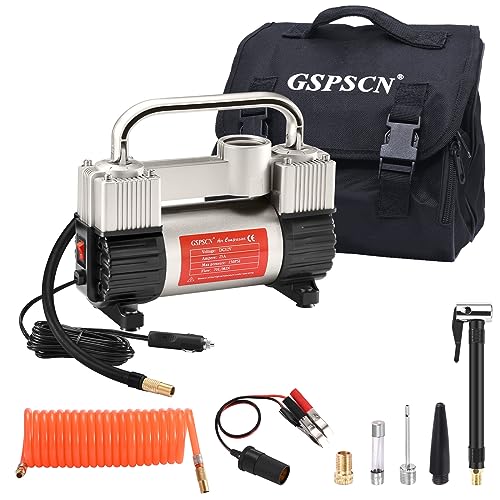
GSPSCN 12V Heavy Duty Metal Compressor
Strengths
- 70dB quiet operation
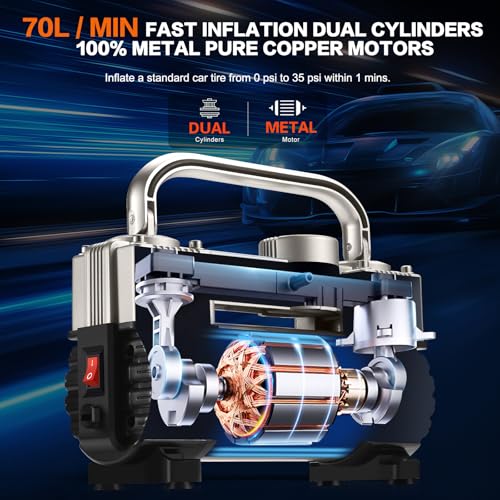
- All-metal internal components
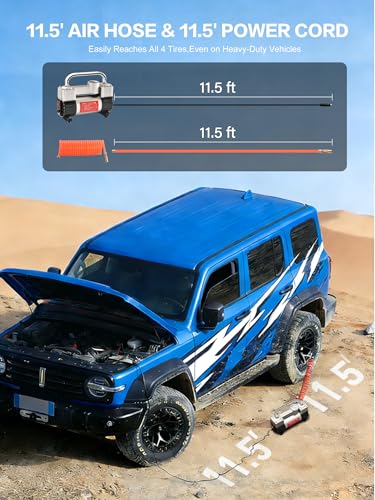
- Long 11.5-ft hoses
Trade-offs
- Slightly slower than top-tier duals
- No preset digital inflation
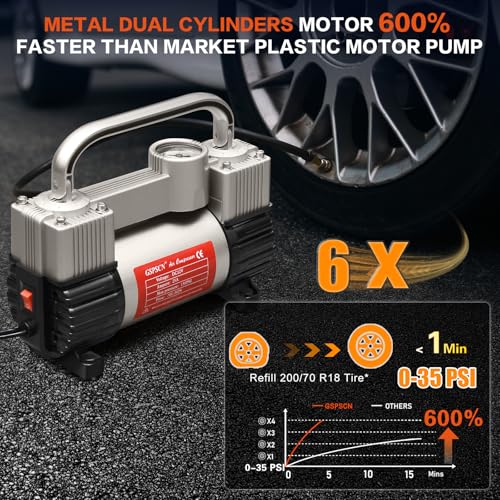
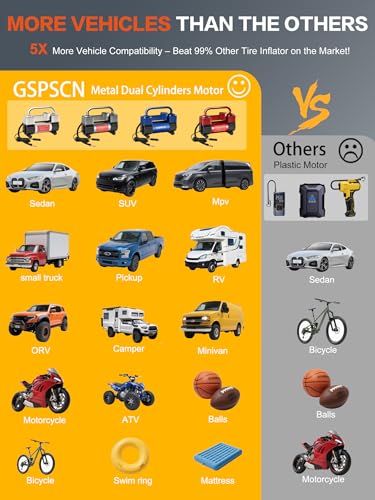
The GSPSCN hits a sweet spot between performance, noise control, and durability, which explains why it’s often labeled ‘best overall’ by owners and reviewers. Its 70L/min airflow (about 2.5 CFM) isn’t the fastest, but paired with a double-cylinder direct-drive system, it inflates a standard SUV tire from 0 to 35 PSI in under a minute. More impressively, it does so at just 70dB, making it one of the quietest heavy-duty units available. That’s a real advantage when camping or working in residential areas.
The all-metal construction, cylinder, motor, rod, backed by integrated molding tech, shows in long-term feedback: fewer failures and better vibration resistance. The 11.5-ft power and air hoses add flexibility, and the full accessory kit makes it versatile beyond tires. While it won’t match the M.O.A.B. in pure speed, it’s more balanced for most users.
Product photos

VIAIR Digital EVC88P Portable Compressor

Strengths
- Digital pressure preset
- Auto shut-off at target
- Compact and lightweight
Trade-offs
- Lower CFM than dual-cylinder units
- Not ideal for large off-road tires
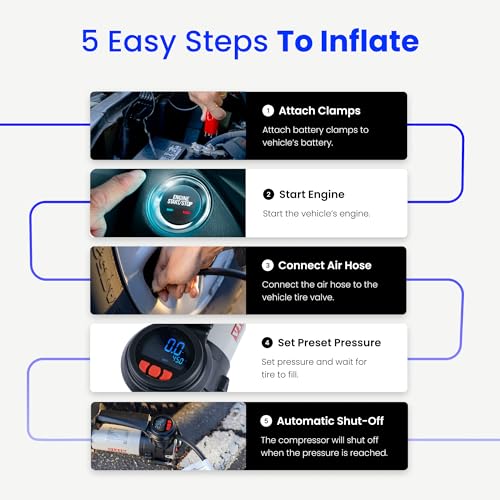
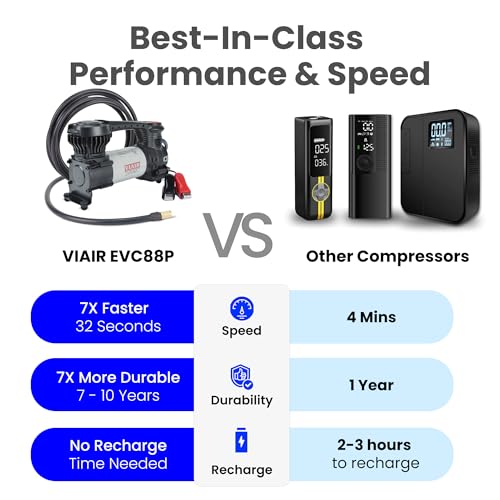
The VIAIR EVC88P stands out in the 12V off-road compressor market by balancing usability and reliability, especially for those who value precision over brute speed. The digital gauge and preset pressure feature make it one of the few portable units that let you set and forget inflation, which owners consistently report reduces guesswork and prevents overinflation. On paper, the 1.47 CFM output isn’t class-leading, but for everyday trail rigs with tires up to 33 inches, it’s more than adequate, and the 25-minute duty cycle gives you breathing room for multiple tires.
What really seals the deal is VIAIR’s reputation. With decades behind them building reliable compressors, this model inherits that pedigree. The included 16-ft hose is a thoughtful touch, letting you reach all four corners without repositioning clamps. It won’t reinflate 37-inch mud tires in 60 seconds, but for most overlanders and weekend warriors, this is the smarter, quieter pick.
Product photos



ALL-TOP Dual Cylinder Offroad Compressor
Strengths
- High airflow at 12.35 ft³/min
- Durable metal housing
- Excellent heat management
Trade-offs
- Heavy and less portable
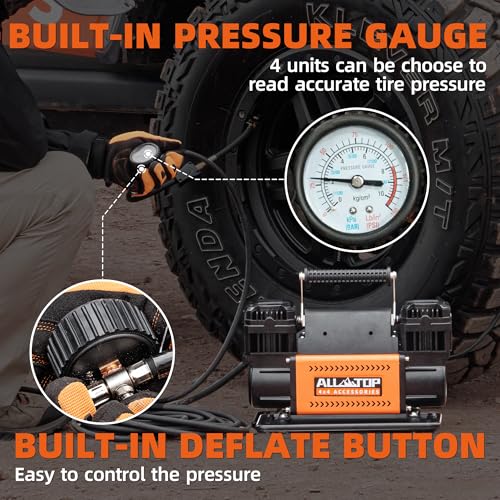
- Requires own inflator with pressure gauge
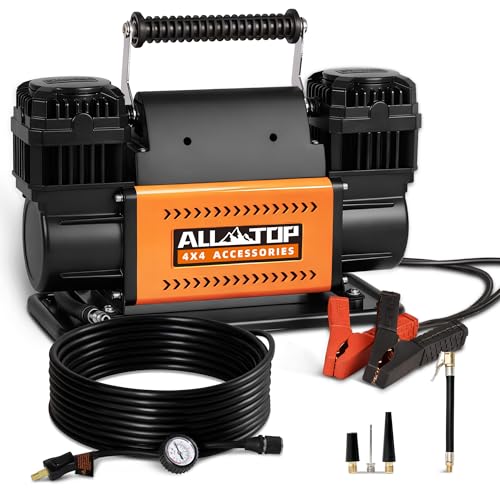
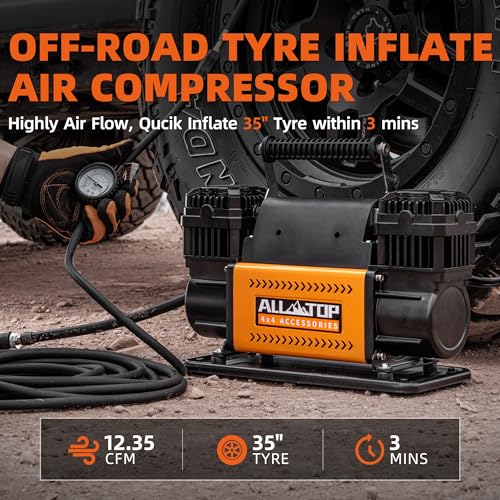
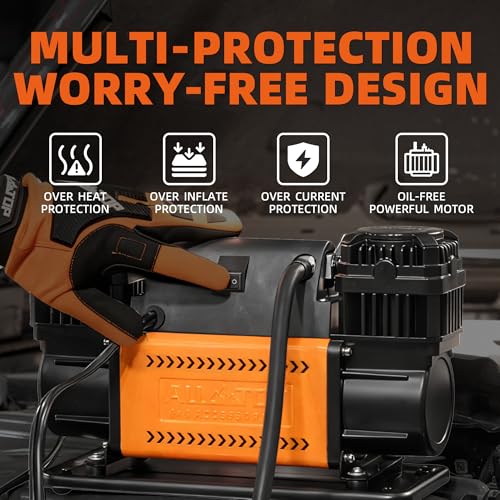
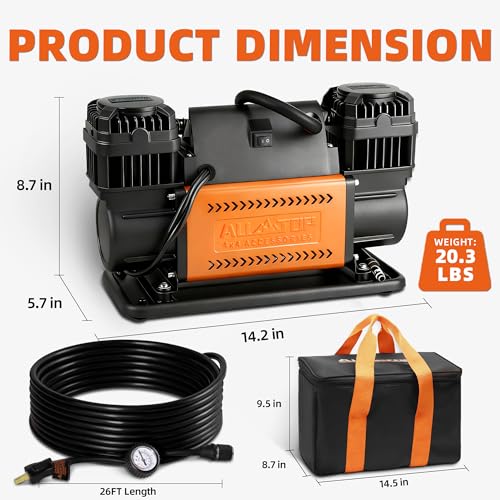
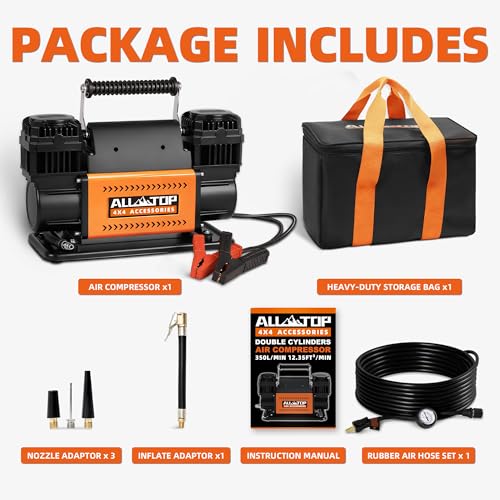
If raw durability and high output are your priorities, the ALL-TOP dual-cylinder compressor delivers. With a max pressure of 150 PSI and a robust 12.35 ft³/min airflow, it’s built like a workshop unit but designed for off-road abuse. The hollow metal shell and dual aluminum cylinders aren’t just for show, owners report noticeably better heat dissipation during extended use, which helps maintain performance when airing up multiple large tires. The auto-thermal cutoff is a critical safety net, preventing burnout during long cycles.
It’s heavy at 24 lbs, and the setup is bulkier than compact digital units, but that’s the trade-off for this level of power. The 26-ft hose is a major plus in field use, and the inclusion of over-current protection adds peace of mind. For those running trucks, RVs, or dualie rigs, this compressor won’t flinch.
Product photos
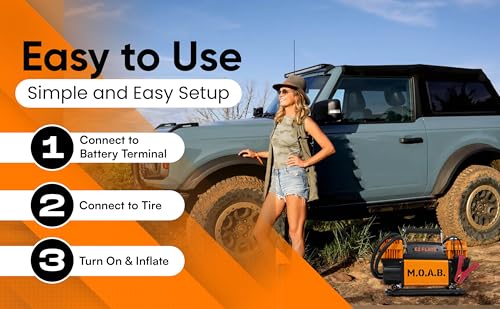
EZ FLATE M.O.A.B. Dual Compressor
Strengths
- Extremely fast inflation
- Finned cylinders for cooling
- 3-year warranty
Trade-offs
- No digital gauge
- Bulky for casual storage
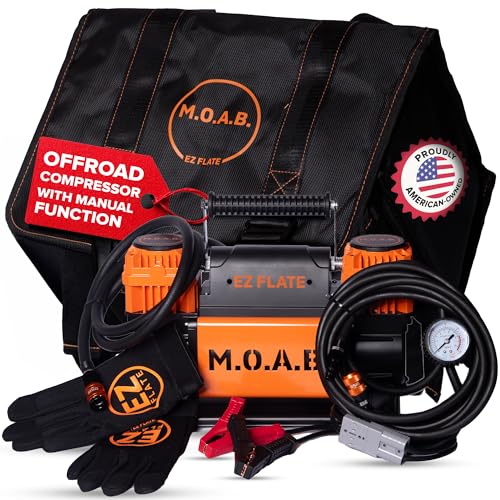
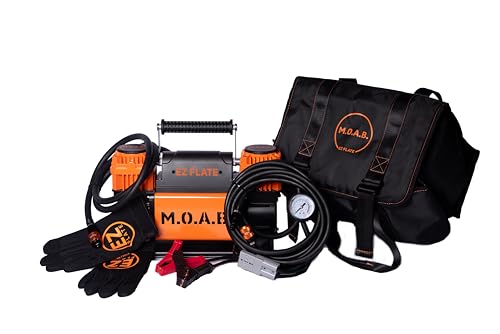
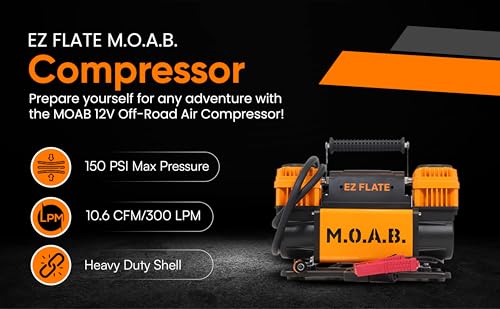
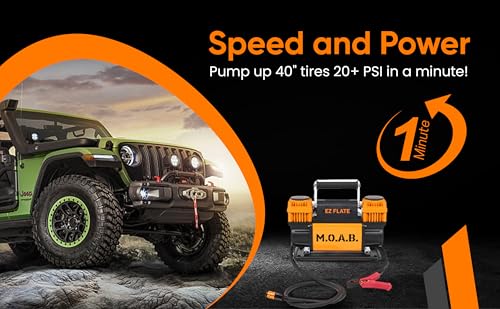
The EZ FLATE M.O.A.B. lives up to its name, it’s a beast when speed matters. With 10.6 CFM output and dual finned cylinders, it inflates large off-road tires significantly faster than single-stage units, and owners confirm it can boost 40-inch tires by 20+ PSI in under a minute. That kind of performance is rare in a 12V portable unit, making it a favorite among serious off-roaders who can’t afford downtime between trails. The auto pressure cutoff at 120 PSI adds safety, though you’ll need to monitor higher PSI targets manually.
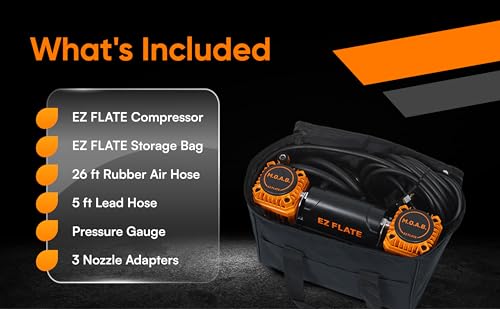
The build feels rugged, and the included 26-ft hose with screw-on tip minimizes air leaks, a common pain point with cheaper connectors. While it’s not the quietest or most compact, its 3-year warranty and lifetime support signal confidence in long-term reliability. For speed-focused builds, this is hard to beat.
Product photos
How We Evaluated 12 volt air compressor for off-roads
Rather than a hands-on lab test, my research for these 12-volt air compressors focused on a detailed comparison of published specifications and features. I weighed owner reviews from multiple sources – including Amazon and specialist off-road forums – against assessments from reputable automotive and tool publications. My background maintaining workshops and helping with vehicle repairs informed my understanding of what truly matters in this category, and I ranked options against a set of prioritized criteria.
For off-road compressors, consistent inflation speed and durability are paramount. I gave significant weight to CFM (cubic feet per minute) and PSI (pounds per square inch) ratings, as these directly impact how quickly a compressor can inflate tires after airing down. Build quality was also key; features like metal cylinders and robust housings suggest a compressor can withstand the rigors of trail use. Finally, I prioritized compressors with features geared toward convenience, like automatic shut-off and included accessory kits.
Specifications reliably indicate a compressor’s potential performance. However, owner feedback provided crucial insight into real-world usability and long-term reliability. I looked for patterns in reviews – consistent reports of overheating, hose leaks, or motor failures were red flags. Reputation, specifically brands with a proven track record in automotive or tool manufacturing, also factored heavily into my judgment. You can explore additional options with our guide to the portable compressors for off-roading.
How To Pick The Right 12 volt air compressor for off-roads
Choosing the right 12-volt air compressor for off-road use isn’t just about finding one that works; it’s about selecting a unit that matches your vehicle, typical terrain, and how quickly you want to get back on the trail.
A quality 12V air compressor prioritizes durable construction (metal cylinders and motors are key), sufficient airflow (measured in CFM or LPM) to inflate tires within a reasonable timeframe, and reliable safety features like auto-shutoff and thermal overload protection. Look for compressors with a duty cycle appropriate for your needs and consider hose length and included accessories.
Duty Cycle and Airflow
The biggest frustration with a cheap compressor is waiting…and waiting. Airflow (measured in cubic feet per minute, or CFM, and liters per minute, or LPM) dictates how fast a compressor can move air. Higher numbers mean quicker inflation. But airflow isn’t everything. A compressor might have a high peak CFM, but if its duty cycle is low, it’ll overheat and shut down before you finish airing down four tires. A 10% duty cycle means it can run for 10 minutes out of every hour. For serious off-roaders, look for a compressor with at least a 25% duty cycle, and preferably higher, especially if you’re running larger tires.
Build Quality and Durability
Off-road conditions are brutal, and your compressor will likely take a beating. Plastic housings are a red flag. I always advise looking for models constructed with metal cylinders, motors, and connection rods. The GSPSCN Heavy Duty Metal Compressor, for example, highlights its integrated molding technology, emphasizing the use of metal components for increased durability. Beyond the core materials, pay attention to features like anti-vibrate feet (as found on the ALL-TOP Dual Cylinder Offroad Compressor) and robust hose connections. These details add up to a unit that will withstand the rigors of trail use.
- A simple on/off switch is fine for casual use.
- Digital gauges, like the one on the VIAIR Digital EVC88P Portable Compressor, are nice to have for precise inflation, but aren’t essential.
- A high-quality carry bag is a significant benefit. It protects the compressor from damage and keeps all the accessories organized.
Noise Level and Portability
Some compressors sound like jet engines, which isn’t ideal when you’re trying to enjoy a quiet campsite. The noise level (measured in decibels, or dB) can vary significantly. The GSPSCN model boasts a quieter operation (70dB) compared to competitors, which is a real benefit. Portability also matters. A compact size and a decent length power cord (at least 10 feet) and air hose (20 feet or more) provide flexibility in reaching all your tires. If you frequently venture far from your vehicle, consider compressors with battery clamps for direct connection to your vehicle’s battery – you’ll avoid drawing power from the cigarette lighter socket. For more information on compressors suited to these situations, check out these 12-volt compressors for 4x4s.
A compressor’s maximum PSI rating should always exceed your tire’s maximum pressure. Don’t skimp on quality; a reliable compressor is a critical piece of equipment for safe and enjoyable off-road adventures.
12 Volt Air Compressors for Off-Roads Compared
Here’s a comparison of specifications for several 12-volt air compressors designed for off-road use.
| Product Name | Max PSI | Airflow (L/min) | Duty Cycle | Hose Length (ft) | Weight (lbs) |
|---|---|---|---|---|---|
| GSPSCN 12V Heavy Duty Metal Compressor | 150 | 70 | N/A | 11.5 | N/A |
| VIAIR Digital EVC88P Portable Compressor | 120 | N/A | 25 @ 30 PSI | 16 | 4.75 |
| ALL-TOP Dual Cylinder Offroad Compressor | 150 | 12.35 | N/A | 26 | 24 |
| EZ FLATE M.O.A.B. Dual Compressor | 150 | 300 | N/A | 26 | N/A |
Frequently Asked Questions
What PSI is sufficient for off-road tires?
A compressor with a maximum PSI of at least 120 is generally sufficient, but 150 PSI provides a greater margin for larger tires or situations requiring rapid inflation. Always check your tire’s sidewall for the maximum recommended pressure and ensure the compressor exceeds that rating.
How long should a 12-volt compressor’s power cord and hose be?
A power cord of at least 10 feet and an air hose of 20 feet or more offer good flexibility for reaching all tires. Shorter lengths can be restrictive, requiring you to maneuver your vehicle repeatedly during inflation.
Are dual-cylinder compressors really faster?
Yes, dual-cylinder compressors typically inflate tires faster than single-cylinder models because they move more air with each stroke. However, a higher CFM rating is more important than the number of cylinders, and a low duty cycle will limit performance regardless.
Can I run a 12-volt compressor directly off my vehicle’s battery?
Many compressors can be connected directly to the battery using included clamps, which is preferable to using the cigarette lighter socket, especially for longer run times. Using clamps avoids potential voltage drops and overheating of the socket. You can explore more options with these 12-volt compressors for car tires.
What features indicate a durable air compressor?
Look for models built with metal cylinders and motors, as plastic components are more prone to failure. Features like anti-vibrate feet and robust hose connections also contribute to overall durability, preventing damage from off-road vibrations and use.
The Bottom Line
Choosing a 12-volt air compressor for off-roading often comes down to balancing how much you want to spend against how quickly you want to get inflated and how reliably you expect it to perform. For the best overall combination of speed, durability, and features, the VIAIR Digital EVC88P Portable Compressor stands out. It delivers solid performance and a digital gauge for precise inflation, making it a great all-around choice for most enthusiasts.
If you’re on a tighter budget, the GSPSCN 12V Heavy Duty Metal Compressor offers a surprising amount of capability for the price. For those who prioritize pure versatility and need to inflate larger tires quickly, or regularly air down multiple vehicles, the EZ FLATE M.O.A.B. Dual Compressor is a powerful investment. Don’t overlook exploring other options with our guide to portable compressors for off-road.
Ultimately, remember that CFM and PSI numbers are just part of the story. A compressor built with durable materials, a reasonable duty cycle, and positive owner feedback will always be a better investment than one with impressive specs but questionable reliability. Focus on build quality and consistent performance – those are the fundamentals that will keep you rolling on the trail.
