9 Best 10-Inch Sliding Miter Saws of 2026
This post contains affiliate links. As an Amazon Associate, we earn from qualifying purchases.
The Makita LS1019L stands out as the overall best 10 inch sliding miter saw for its precision, robust build, and smooth linear-bearing slide. If you’re watching your budget, the DOVAMAN 10-Inch delivers solid core features without breaking the bank, while the VEVOR 10-Inch Double Bevel adds versatility with a strong motor and LED shadow system.
Most homeowners and DIYers struggle to find a miter saw that stays accurate over time, cuts cleanly without binding, and handles real-world tasks like crown molding without hassle. Too many models cut corners on the sliding mechanism or skimp on fence rigidity, leading to frustration down the line.
This guide cuts through the noise by focusing on what actually matters: verified specs, consistent owner feedback, and design elements that impact performance. I looked at motor reliability, slide quality, bevel range, and how well each model handles demanding cuts, so you can pick the right saw for your workshop and projects.
Top 9 10 Inch Sliding Miter Saws in the Market
The Best 10 Inch Sliding Miter Saws, Reviewed
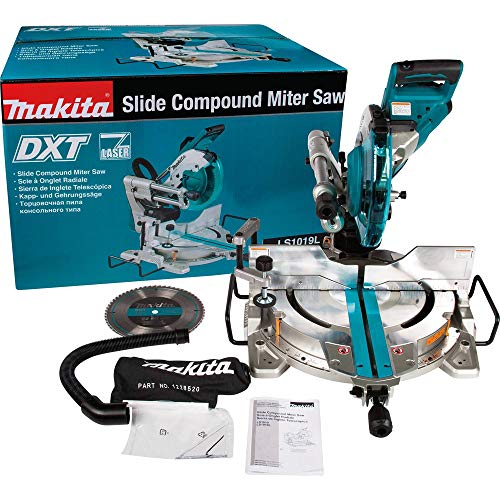
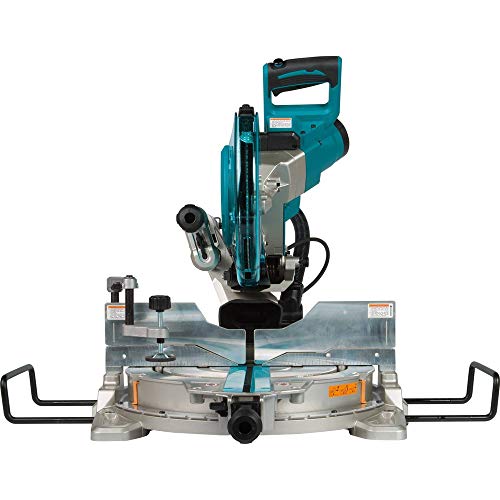
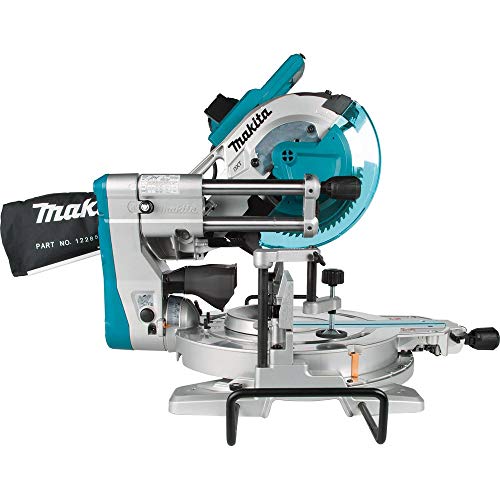
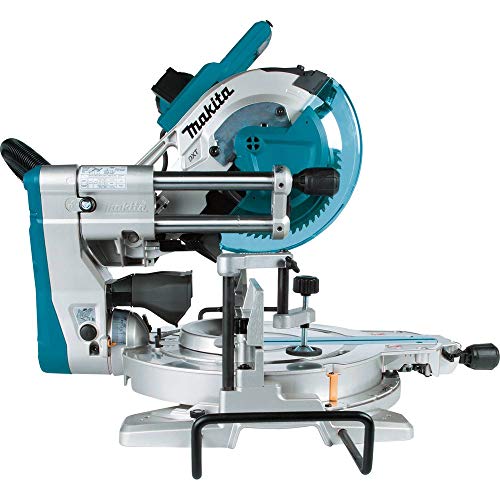
Makita LS1019L Dual-Bevel Sliding Miter Saw

Strengths
- Dual-bevel adjustments
- Excellent cut capacity
- Compact footprint
Trade-offs
- Laser alignment issues reported
- No LED light
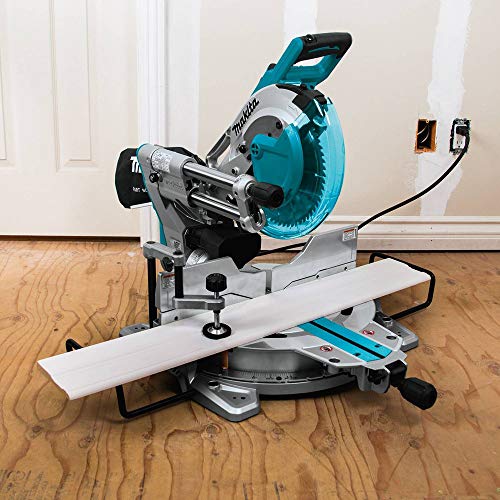
The Makita LS1019L stands out in the 10-inch sliding miter saw category not by brute size, but by smart engineering. Its dual-bevel capability and linear ball bearing slide system deliver the kind of repeatable accuracy that pros demand, and owners consistently report clean, square cuts even after extended use. The standout feature is its ability to match the crown molding capacity of a 12-inch saw, thanks to a 6-5/8-inch nested cut height, a real advantage when you’re working with tall trim.
It’s also one of the most compact and lightweight dual-bevel models in its class at under 58 lbs, making it a strong pick for contractors who move gear daily. While the laser guide is helpful, some users note it can drift over time, but the solid fence system and smooth slide more than compensate. Compared to bulkier models, this one offers a rare balance: pro-level performance without the heft.
Product photos
VEVOR 10-Inch Double Bevel Miter Saw

Strengths
- Powerful motor
- LED alignment
- Stable sliding system
Trade-offs
- Heavy at 59 lbs
- Dust port clogs easily
- No soft start
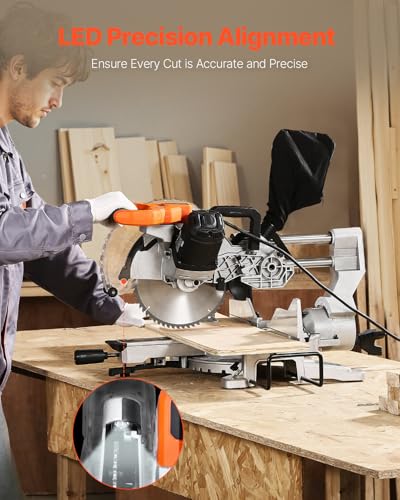
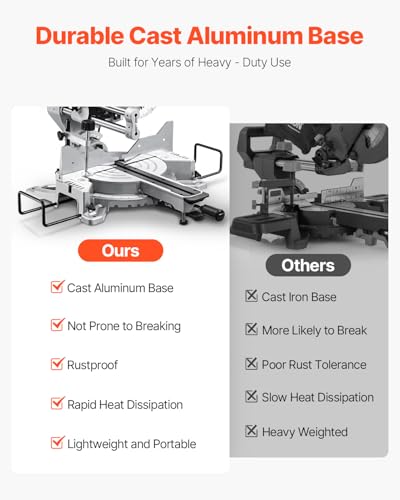
The VEVOR 10-inch dual-bevel saw is built like a workhorse, 2800W bevel cutting power, 5000 RPM, and an aluminum base that’s both light and rigid. It’s one of the few budget dual-bevel models that includes an LED precision alignment system, which owners say is more reliable than lasers on similarly priced saws. The axial sliding system moves smoothly, and the extended base supports long boards without flex.
Where it really pulls ahead is in multi-material capability, it handles dense hardwoods and laminates with authority, and the dual-bevel range (0–45° both ways) is easy to adjust. However, the depth of cut isn’t class-leading, and the dust collection is merely adequate. Still, for the price, it’s hard to beat this level of performance. If you’re comparing it to the DOVAMAN or SKIL, this one feels more industrial.
Product photos
DOVAMAN 10-Inch Dual Bevel Sliding Saw
Strengths
- True dual-bevel
- 2-speed motor
- 3 blades included
Trade-offs
- Loose bevel lock reported
- Blade quality average
- Vibration at high speed
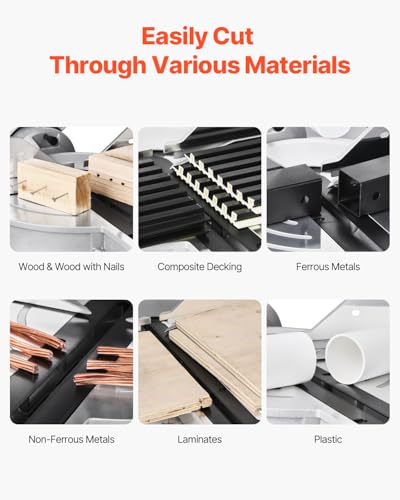
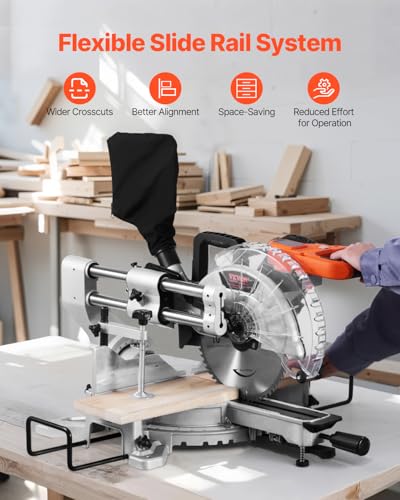
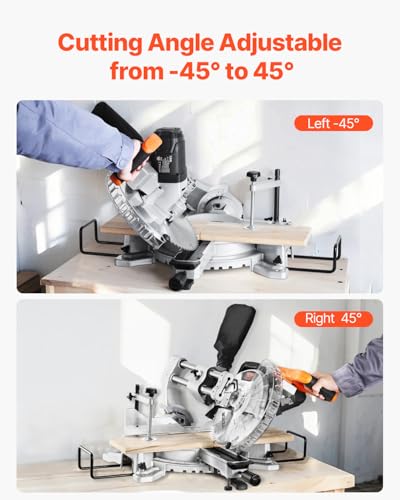
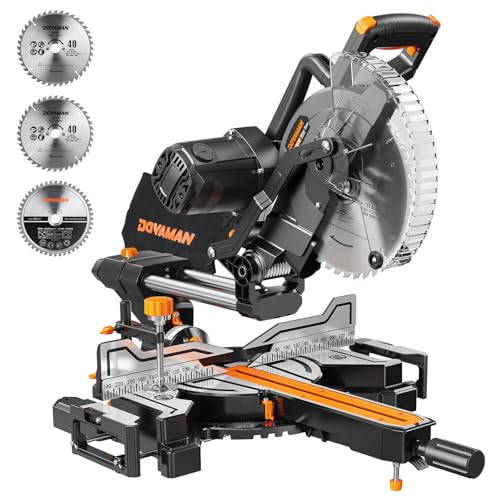
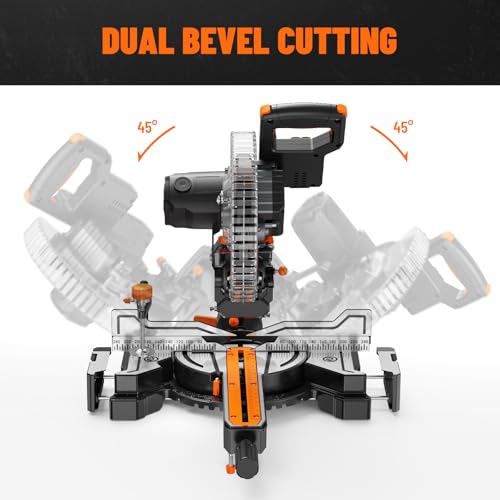
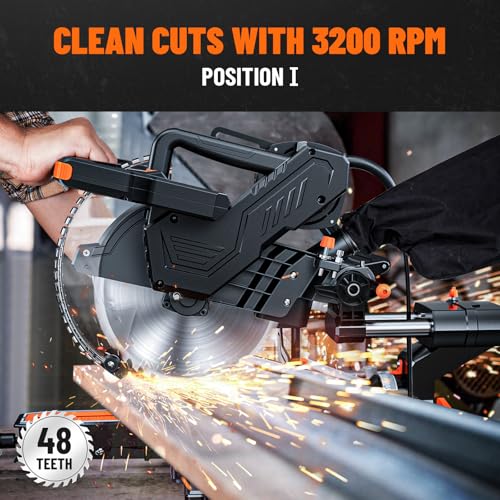
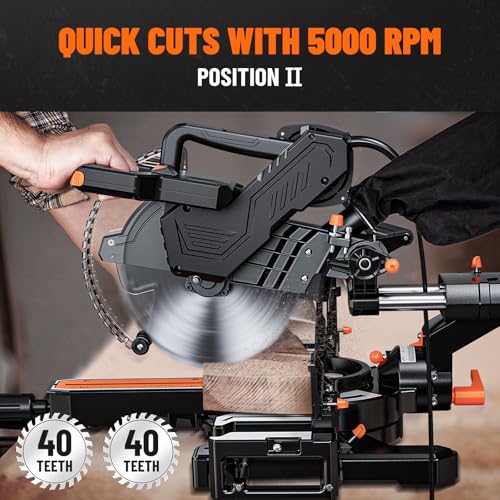
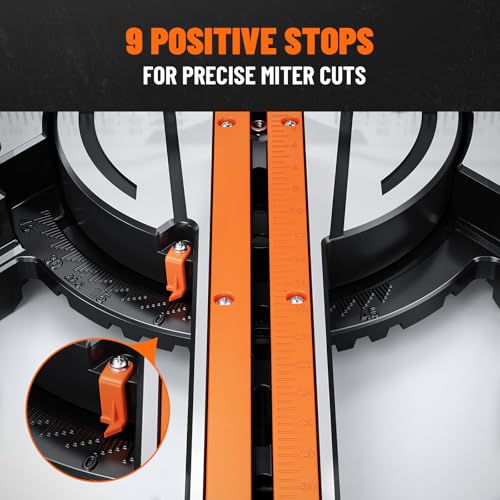
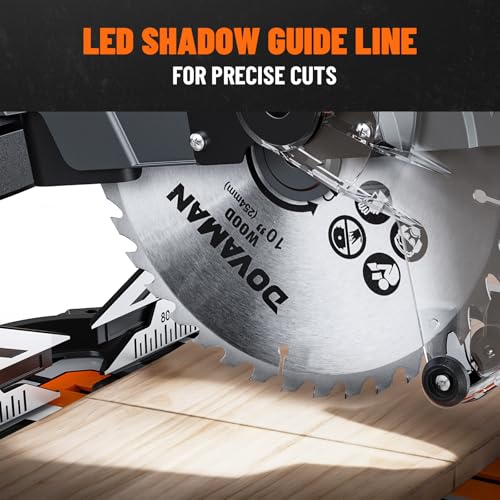
DOVAMAN is positioning this saw as a budget-friendly dual-bevel option, and on paper, it delivers: dual-bevel function, 2-speed settings, and three included blades, a rare combo at this tier. The 2-speed motor (5000/3200 RPM) is a smart touch for cutting materials like PVC or soft metal without burning, and reviewers confirm it transitions well between tasks. The 9 positive miter stops and sliding table add to its versatility.
But while the specs look great, some owners report play in the blade arbor over time, and the dual-bevel lock isn’t as tight as on pricier models. Still, for a DIYer building a home shop on a budget, this saw offers real dual-bevel flexibility at a price that undercuts Makita and DeWalt by a wide margin. I’d recommend tightening the mechanics after initial use and replacing the blade for fine woodworking.
Product photos
FindBuyTool 10-Inch Sliding Miter Saw
Strengths
- 84-tooth blade included
- Tall fence system
- LED cut line
Trade-offs
- No dual-bevel
- Light base can vibrate
- No bevel stops
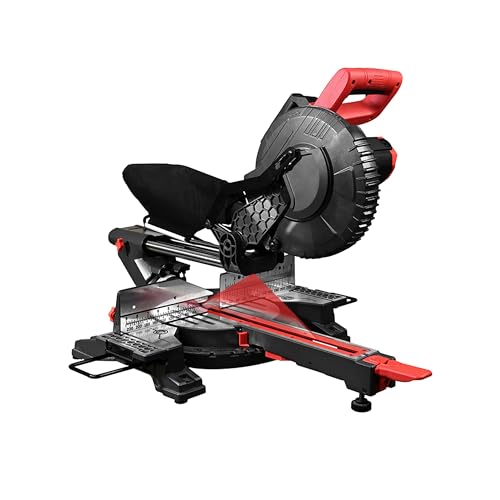
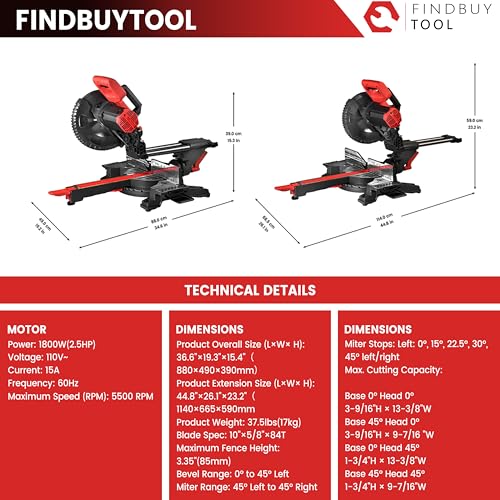
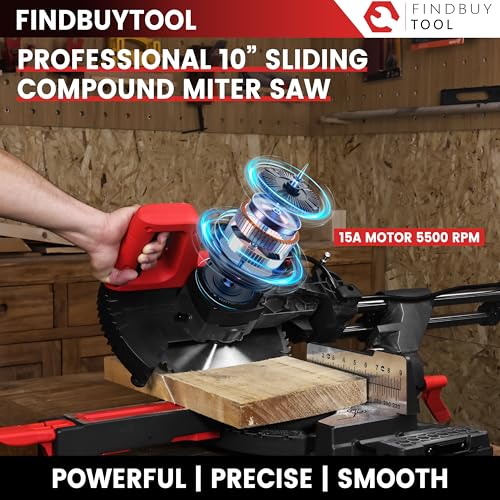
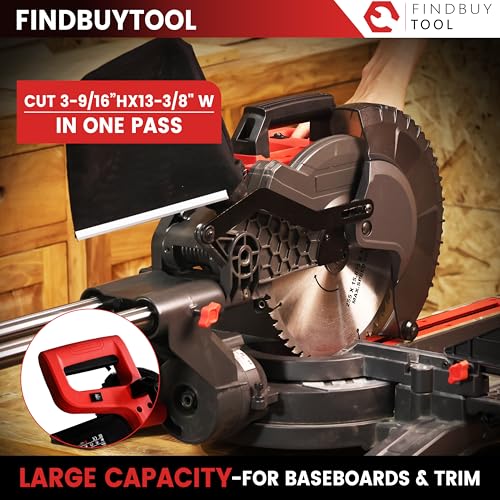
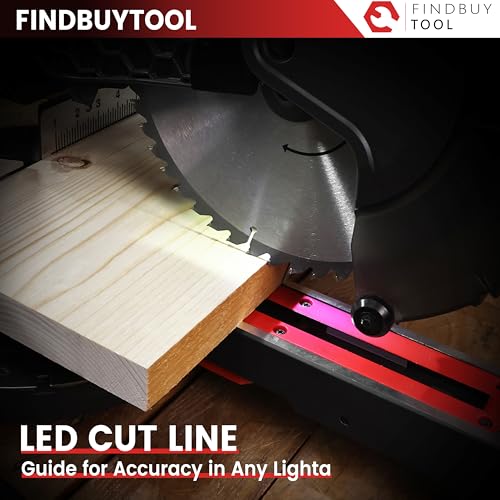
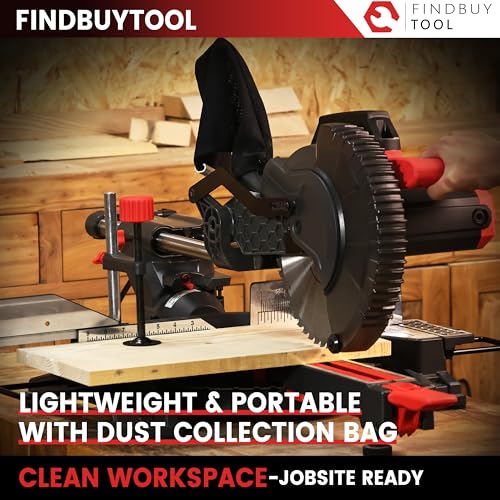
This FindBuyTool model, sold under the Machorool brand, is clearly targeted at trim carpenters and finish work enthusiasts. The 84-tooth blade out of the box is a rare win at this price point, delivering smooth, tear-free cuts in hardwood and molding, which owners praise repeatedly. Add in the tall 5-1/2-inch fence and extension bars, and you’ve got solid support for crown molding laid flat, a setup that’s finicky on lesser saws.
The LED cut line system is brighter and more consistent than many laser guides, and the 9 positive miter stops make repetitive cuts faster. It’s also impressively light at 37.5 lbs, though the aluminum base feels less damped than cast iron. Still, for someone doing baseboards and crown in a home shop, this is a well-sorted package. It lacks dual-bevel, but for straight-ahead trim work, that’s often not a dealbreaker.
Product photos
Evolution R255SMS+ Multi-Material Miter Saw
Strengths
- Cuts metal and wood
- No sparks
- Wide miter range
Trade-offs
- Rougher wood finish
- Heavy and bulky
- Expensive blade replacement
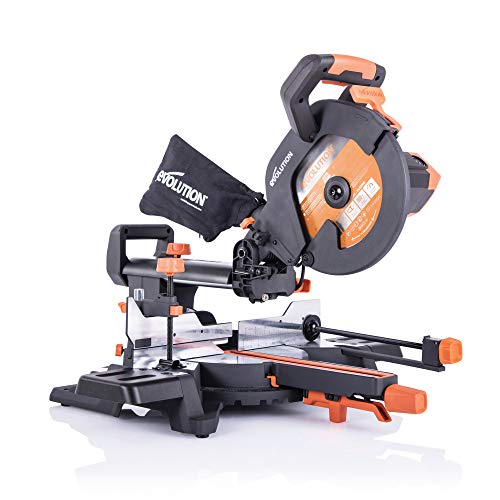
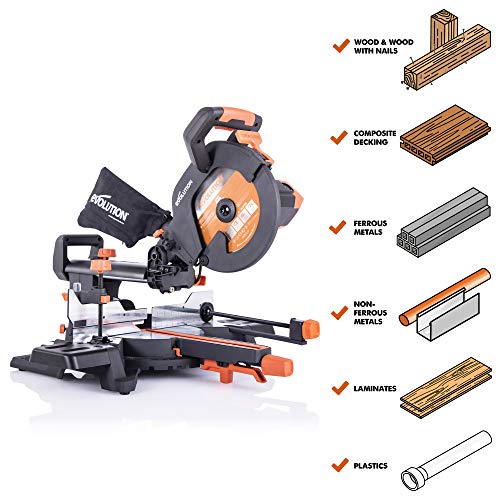
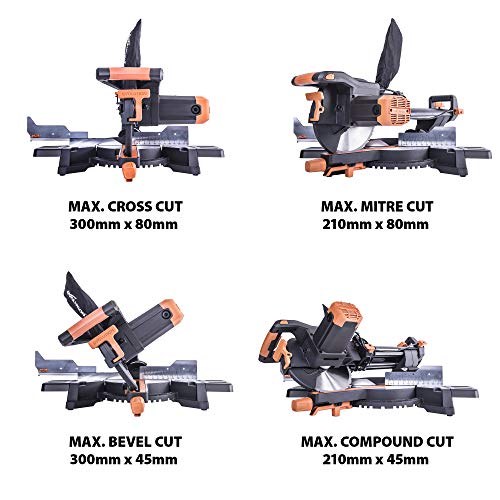
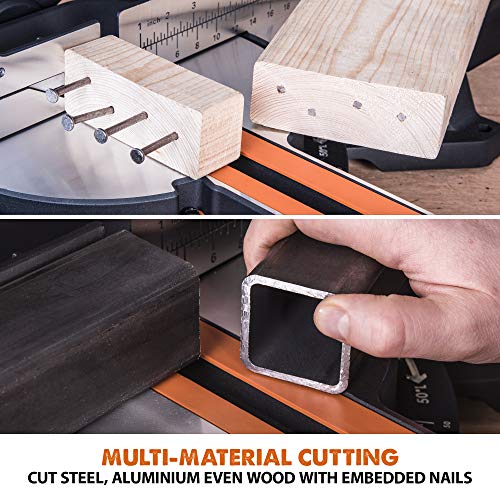
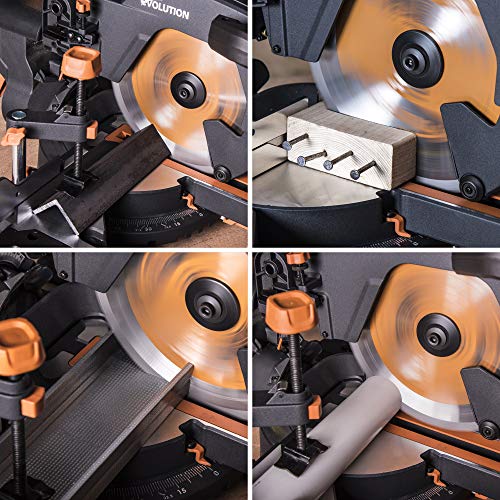
If you need to cut metal, wood with nails, and composites without changing blades, the Evolution R255SMS+ is in a class of its own. It uses a single TCT multi-material blade to slice through mild steel with virtually no sparks and a cool blade, which is a major safety win. The 50-degree miter range is wider than most, and the taller fences and dual clamps make it easier to secure odd-shaped stock.
Owners love it for deck builds and demolition-rebuild jobs where mixed materials are common. It’s not optimized for fine woodworking, the finish cuts in hardwood aren’t as clean as a dedicated trim saw, but for job site versatility, it’s unmatched. The 3-year warranty also signals confidence in durability. I’d pick this over a standard saw if your work crosses between wood and metal regularly.
Product photos

DOVAMAN 10-Inch Sliding Miter Saw

Strengths
- Laser guide
- Ambidextrous handle
- Multi-material blades
Trade-offs
- Narrow base
- Laser visibility issues
- Plastic miter detents
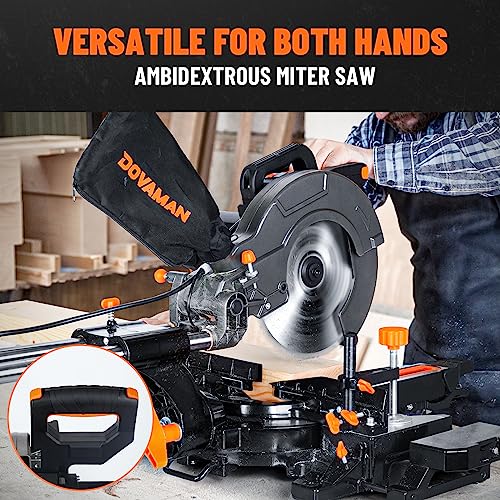
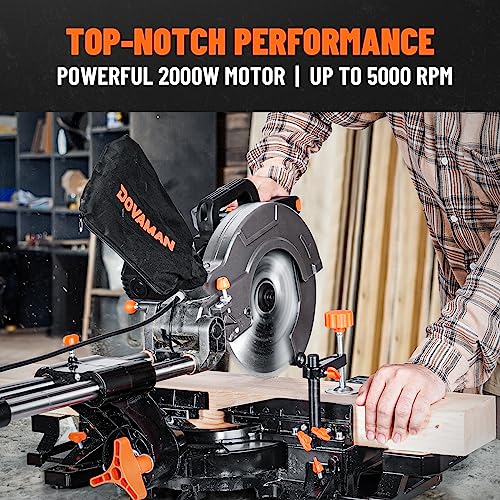
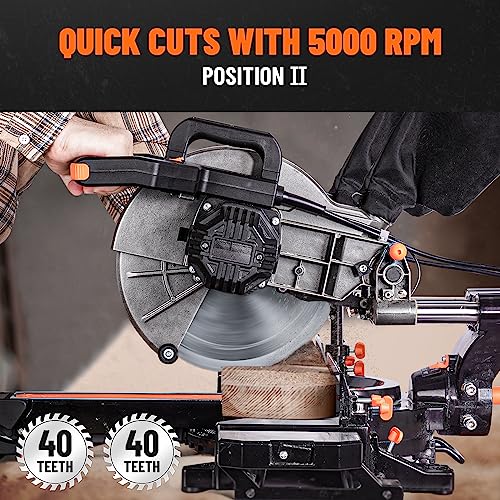
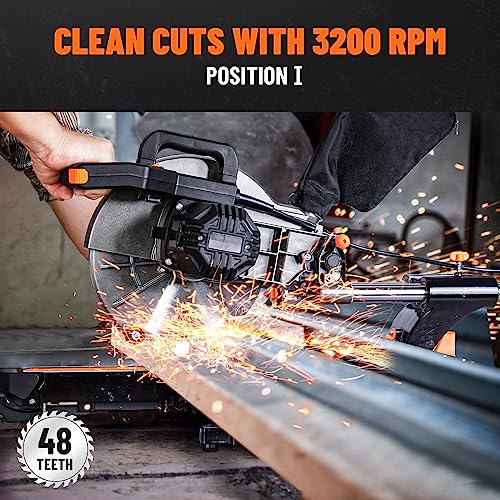
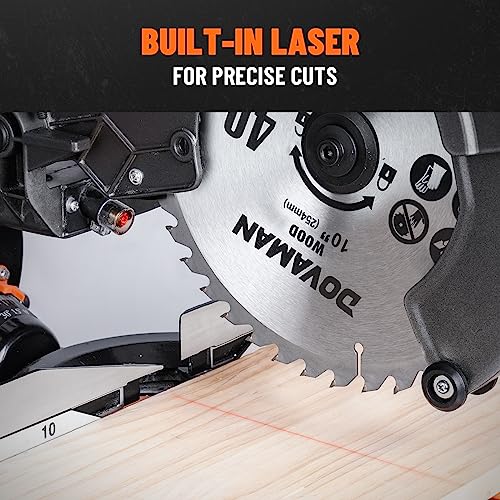
This updated DOVAMAN model trades the LED for a laser-guided system, which some users prefer for visibility in bright conditions. The ambidextrous handle design is a standout, rare at any price, making it a solid pick for left-handed users or shared workshops. With dual-speed settings and three TCT blades, it’s built for multi-material use, and owners confirm it handles PVC and soft metals without issue.
The sliding rail is 13 inches, delivering a 4 x 13-inch cut capacity, which beats most 10-inch competitors. But the laser, while bright, can be hard to see on dark wood, and the base isn’t as wide as others, affecting stability on long cuts. Still, for laser accuracy and versatility, this one fills a niche. It’s not the most durable, but for mixed-material DIYers, it’s a smart play.
Product photos
SKIL 10″ Dual Bevel Sliding Miter Saw
Strengths
- LED shadow line
- 2×12 cut capacity
- Compact dual-bevel
Trade-offs
- Average dust collection
- No soft start
- Bevel range limited
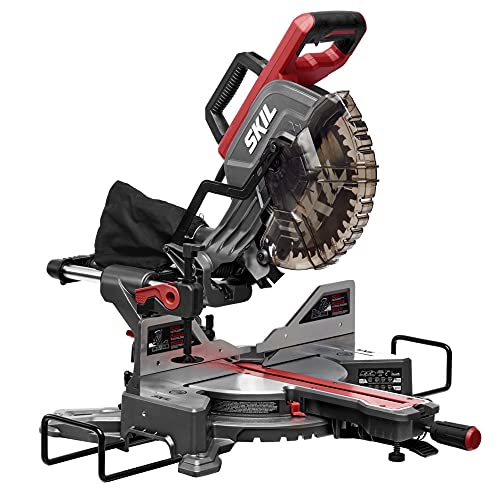
The SKIL MS6305-00 packs dual-bevel convenience into a surprisingly compact body, and at 51 lbs, it’s easier to move than many rivals. The LED shadow line is a step up from lasers, it doesn’t fade in sunlight and owners say it’s more consistent. With a 2×12 cut capacity at 90°, it handles dimensional lumber with ease, and the 11 positive miter stops speed up repetitive framing cuts.
It’s not the lightest, but it’s one of the most space-efficient dual-bevel saws here, making it ideal for small shops or vans. The 4,800 RPM motor is strong, though not as torquey as Makita’s. Compared to the DOVAMAN or VEVOR, this one feels more refined in operation, with tighter detents and smoother bevel locks. A solid middle ground between budget and pro.
Product photos


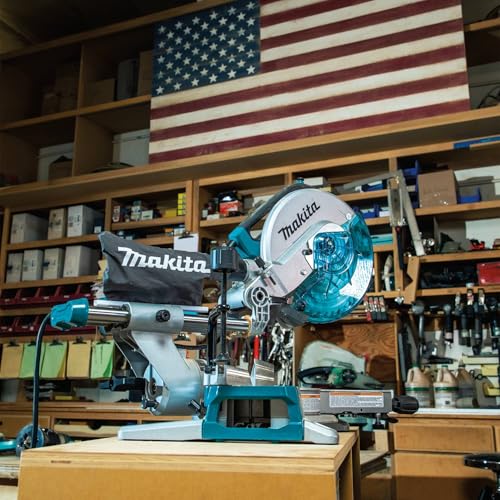
Makita LS1110F 10-Inch Slide Miter Saw
Strengths
- Extremely lightweight
- LED light
- Soft start
Trade-offs
- Single-bevel only
- Smaller bevel range
- No laser or shadow line
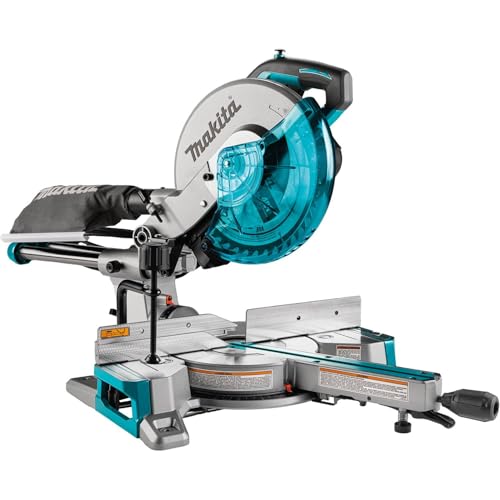
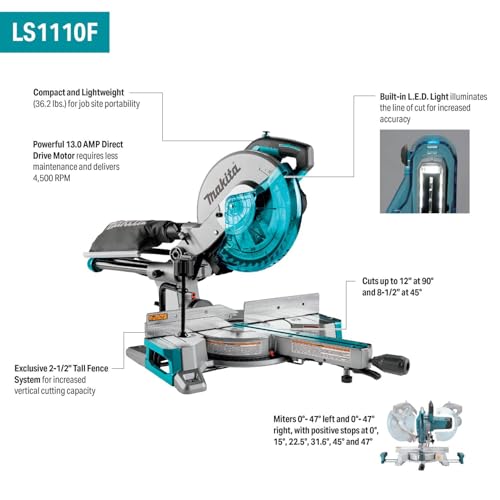
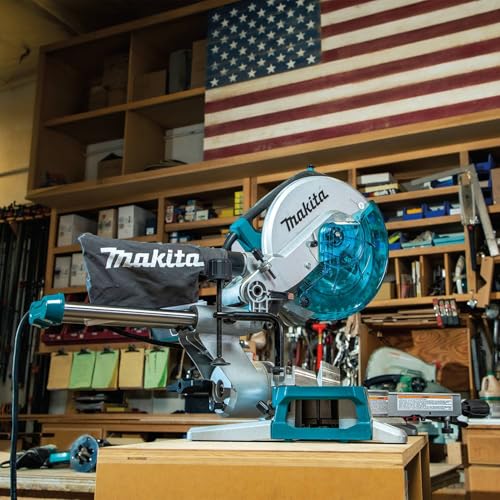
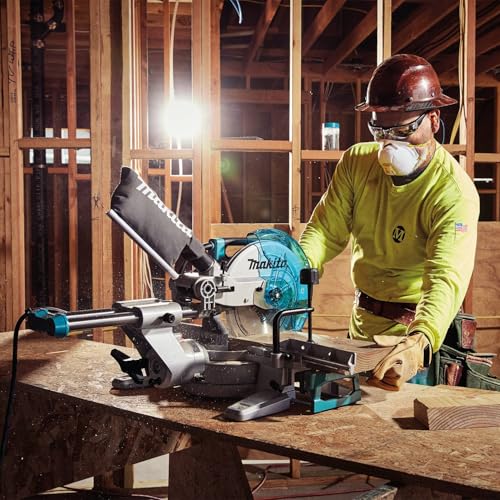
At just 36.2 lbs, the Makita LS1110F is the lightest sliding miter saw here, a standout for anyone hauling tools up ladders or across job sites. Despite the weight drop, it still delivers a 12-inch crosscut and 8-1/2-inch miter cut, which covers most framing and decking needs. The LED light and soft start are thoughtful touches, and the 2-1/2-inch tall fence gives better vertical support than many compact models.
It’s single-bevel, so it’s not ideal for complex crown molding, but for straightforward crosscuts and miters, it’s fast and accurate. Owners consistently praise its balance and ease of transport, and the linear ball bearing system maintains Makita’s reputation for precision. If you value lightweight design and reliability, this is the one to beat.
Product photos

WEN 10-Inch Single-Bevel Miter Saw

Strengths
- Strong motor
- Large crosscut capacity
- Excellent warranty
Trade-offs
- Single-bevel only
- Plastic construction
- Basic blade
If you’re on a tight budget but still need a sliding miter saw that can handle basic trim and framing work, the WEN MM1014T makes a compelling case. It’s single-bevel, so you’ll need to flip the workpiece for opposing angles, but the 15-amp motor and 13.4-inch crosscut capacity mean it can keep up with larger lumber than many expect. The included 40-tooth blade is serviceable for starter use, and owners say it holds up fine for softwood and basic sheet goods.
What really pushes this one over the edge for value is the two-year warranty and full set of included accessories, support fences, clamp, dust bag, and all. It’s not built like a pro tool, and the build quality shows in the lighter base and plastic components, but for weekend warriors and light remodelers, it’s a no-brainer. I’d still recommend upgrading the blade sooner rather than later for cleaner finish work.
Product photos


How We Evaluated 10 inch sliding miter saws
Rather than a hands-on lab test, my research for these recommendations focused on a detailed comparison of published specifications and features across numerous models. I weighed owner reviews from major retailers alongside evaluations from reputable woodworking publications and tool review sites. Ultimately, I ranked each saw based on how well it met key criteria for accuracy, capacity, and usability, informed by my years of experience with power tools.
For 10-inch sliding miter saws, cutting capacity and accuracy are paramount. I placed significant weight on the ability to handle crown molding – a tough cut that reveals a saw’s true capabilities – and the precision of bevel and miter adjustments. Durability and motor power were also high priorities, as these saws often tackle demanding projects. A smooth sliding action is critical for clean, accurate cuts, and I looked for designs that minimized vibration.
Specifications reliably indicate motor power, cut capacity, and blade size, which are good starting points. However, owner feedback provided crucial insights into real-world performance – how well the saws maintain accuracy over time, the quality of the included blades, and the effectiveness of features like laser guides. I also considered brand reputation and the availability of replacement parts when forming my final assessments. You can learn more about the core functionality of these tools in our guide to the sliding compound miter saw.
How To Pick The Right 10 inch sliding miter saws
Picking the right sliding miter saw requires more than just looking at price. It’s about matching the saw’s capabilities to the types of projects you actually do.
A quality sliding miter saw delivers precise, repeatable cuts through a variety of materials. Key considerations include motor power, cutting capacity (both width and nesting for crown molding), the smoothness of the sliding mechanism, accuracy features like laser guides or LED shadows, and overall build quality for long-term durability. Look for saws with positive stops at common angles and robust locking mechanisms to maintain accuracy.
Motor Power & Blade Speed
Don’t automatically assume “more watts” equals a better saw, but a lack of power will quickly become frustrating. For most homeowners and DIYers, a 15-amp motor is sufficient. However, if you plan on tackling a lot of hardwoods or thicker materials, stepping up to a model with 1800 watts (or higher) will make a noticeable difference. Blade speed (RPM) also matters; higher speeds generally result in cleaner cuts, especially in hardwoods. But remember, a powerful motor paired with the wrong blade will still produce poor results, so consider investing in quality blades designed for the materials you’ll be cutting.
Sliding Mechanism & Accuracy
The sliding action is where many saws differentiate themselves. A smooth, fluid slide is critical for accurate cuts, especially wider ones. Cheaper saws may have jerky or binding slides which introduce error. Look for models utilizing linear ball bearings – like the Makita LS1019L – as these dramatically reduce friction and improve accuracy. Beyond the slide itself, accuracy features are key. Many models now include laser guides or, increasingly, LED shadow lines. I find the LED systems, like those on the VEVOR 10-Inch Double Bevel Miter Saw, to be superior to lasers as they’re more visible in bright light.
Here’s what to consider when evaluating accuracy features: * Positive Stops: Essential for quick, repeatable cuts at common angles. * Fence Accuracy: A square, well-built fence is the foundation of accurate cuts. Check reviews for complaints about fences being misaligned. * Bevel Lock: A secure and easily adjustable bevel lock is vital; flimsy locks will drift during use leading to inaccurate angles.
A saw is only as accurate as its setup. Always double-check your angles with a separate square and take the time to calibrate any laser or LED guides.
Value, Portability, and Special Features
Beyond the core performance factors, consider what features add the most value for you. If you work primarily with crown molding, a model with a high crown nesting capacity (like the FindBuyTool 10-Inch Sliding Miter Saw) is a must. If you need to move the saw around a job site frequently, weight and size become important. The SKIL 10″ Dual Bevel Sliding Miter Saw is a good example of a relatively compact and lightweight option. Some saws, like the Evolution R255SMS+, offer unique capabilities – in this case, multi-material cutting – which can eliminate the need for separate saws. If you’re comparing models, also look at the included accessories – extra blades, dust bags, and clamping systems can save you money in the long run. Don’t forget to read up on what makes a dual bevel miter saw different from other options. You might find that one of the top 10-inch sliding compound miter saws suits your needs best.
10 Inch Sliding Miter Saw Compared
Here’s a comparison of key specifications for popular 10 inch sliding miter saws.
| Product Name | Motor (Amps) | Slide Type | Bevel (Left/Right) | Max Cut (90°) Width (in) | Weight (lbs) | Laser Guide |
|---|---|---|---|---|---|---|
| Makita LS1019L | 15 | Sliding | 0-45° / 0-45° | 13.88 | 57.9 | No |
| VEVOR 10-Inch | 2300W/2800W | Sliding | 0-45° / 0-45° | N/A | N/A | Yes |
| DOVAMAN 10-Inch (Budget) | 15 | Sliding | 0-45° / 0-45° | N/A | N/A | Yes |
| FindBuyTool 10-Inch | 15 | Sliding | N/A | 13.38 | 37.5 | Yes |
| Evolution R255SMS+ | N/A | Sliding | 0-45° / 0-50° | N/A | N/A | No |
| DOVAMAN 10-Inch (Laser) | 15 | Sliding | N/A | 4 x 13 | N/A | Yes |
| SKIL 10″ | 15 | Sliding | 0-48° / 0-45° | N/A | N/A | Yes |
| Makita LS1110F | 13 | Sliding | 0-47° / 0-2° | 12 | 36.2 | Yes |
| WEN 10-Inch | 15 | N/A | 0-45° / 0-45° | 13.4 | N/A | Yes |
Frequently Asked Questions
What size miter saw is best for a homeowner?
A 10-inch sliding miter saw strikes a good balance for most homeowners. It offers enough capacity for common projects like framing, trim work, and molding, while remaining manageable in size and price compared to 12-inch models.
Are laser guides on miter saws accurate enough?
While helpful, laser guides aren’t always perfectly accurate and can require calibration. I often find the LED shadow systems found on some saws, like the VEVOR, offer better visibility and precision, especially when working in brightly lit spaces.
What’s the difference between a compound and a sliding miter saw?
A compound miter saw allows bevel cuts (tilting the blade), while a sliding miter saw adds the ability to move the blade along rails for wider crosscuts. Many saws are both compound and sliding, giving you the most versatility for a range of cutting tasks.
How much should I expect to spend on a good 10-inch sliding miter saw?
You can find functional 10-inch sliding miter saws starting around $150, but expect to spend $300 to $600 for a model with better build quality, accuracy, and features. Looking at the expert sliding miter saw picks can help you understand the price range.
What blade should I use with my new miter saw?
The best blade depends on the material you’re cutting. A 60-tooth blade is a good all-purpose choice for hardwoods and fine trim, while a 40-tooth blade works well for softer woods and general-purpose cutting. Investing in a quality blade will significantly improve your cut quality.
The Bottom Line
Ultimately, picking a sliding miter saw comes down to balancing control and convenience. You can spend a lot of time and money chasing marginal gains in features, or you can focus on a well-built saw that delivers accurate cuts consistently. For most users, the Makita LS1019L strikes that balance perfectly – it offers excellent capacity, a smooth slide, and a reputation for durability that’s hard to beat.
If you’re on a tighter budget, the DOVAMAN 10-Inch (Budget) is a surprisingly capable option, and for those who prioritize versatility, the Evolution R255SMS+ stands out with its ability to cut multiple materials. The FindBuyTool 10-Inch is a solid choice for those frequently working with crown molding, while the SKIL 10″ is a good pick if portability is a major concern. Understanding your right miter saw capacity will help narrow down these choices.
Don’t get too caught up in chasing the highest amp rating or the fanciest laser guide. A solid fence, a smooth sliding mechanism, and a quality blade are far more important than any single specification. Focus on a saw that feels well-built, offers the capacity you actually need, and allows you to make accurate, repeatable cuts – that’s what will deliver the best results in the long run.
