
8 Best 10 Inch Table Saws of 2026
This post contains affiliate links. As an Amazon Associate, we earn from qualifying purchases.
The BOSCH GTS15-10 stands out as the best overall 10 inch table saw for accuracy and build quality, making it a top pick for serious DIYers and pros. If you’re watching your budget, the SKIL TS6307-00 delivers solid performance at a lower price, while the DEWALT DWE7491X offers excellent versatility with its large rip capacity and portability.
Choosing the right 10 inch table saw isn’t just about power, it’s about consistency, safety, and whether the saw can grow with your projects. Too many people buy based on price or brand alone, only to struggle with inaccurate cuts or flimsy fences down the line.
This guide cuts through the noise. I compared specs and dug into owner feedback to highlight models that deliver where it matters: fence stability, rip capacity, dust collection, and real-world reliability. These are the saws that consistently earn trust in garages and on job sites.
Top 8 10 Inch Table Saws in the Market
The Best 10 Inch Table Saws, Reviewed
BOSCH GTS15-10 Table Saw

Strengths
- Gravity-rise wheeled stand
- Electronic blade brake
- On-tool storage
Trade-offs
- Higher price point
- Slight vibration under load
- Rip fence scale hard to read
The BOSCH GTS15-10 is the one I’d bring home if I could only own a single 10-inch saw. It strikes the best balance of power, safety, and convenience. The soft-start circuit and electronic brake are not gimmicks, they reduce startup jolts and stop the blade fast, which matters when you’re juggling tasks. The Gravity-Rise stand is a standout for solo movers; it rolls smoothly and sets up in seconds.
Owners consistently highlight the onboard storage and Smart Guard system as daily wins. It’s not the cheapest, but the build quality shows. Compared to the Delta 36-6023, it’s lighter and more mobile, and against the DEWALT, it’s safer and easier to stow. The 4 HP claim seems inflated, most agree it performs like a solid 15-amp motor, but that doesn’t hurt its standing as the most well-rounded pick.
Product photos


DEWALT DWE7491X Table Saw

Strengths
- 32.5 in rip capacity
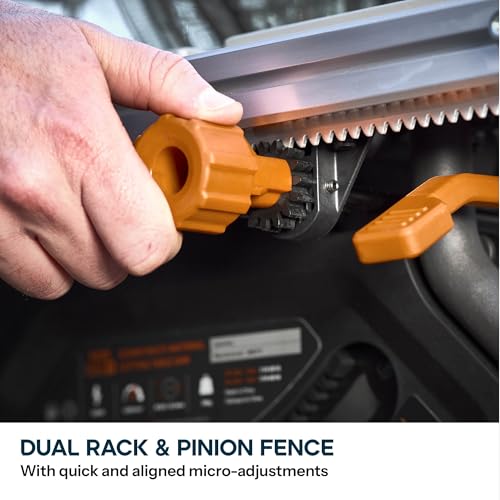
- Rack and pinion fence
- Tool-free guard system
Trade-offs
- No soft start
- Stand not as stable
- Average dust port
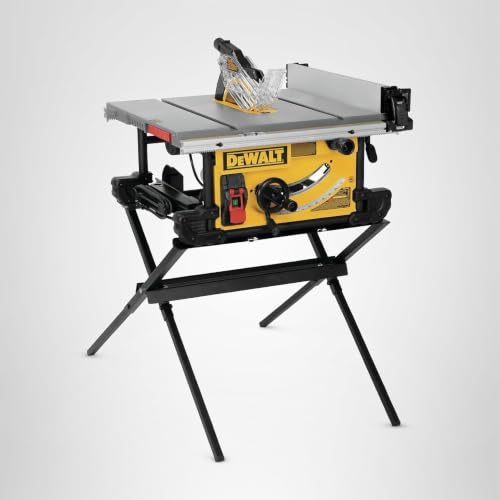
The DEWALT DWE7491X is a favorite among trim carpenters and finish crews for one big reason: its 32.5-inch rip capacity. That extra reach means you can break down full sheets of plywood without wrestling them awkwardly. The rack-and-pinion fence glides smoothly and locks down securely, and owners say it holds alignment well over time, something I’ve seen fail on lesser saws.
It doesn’t have the soft-start or electronic braking of the BOSCH, but the Site-Pro guard system is a win. Being able to reconfigure the guard without tools is something more brands should copy. Compared to the Evolution models, it’s less versatile for metal cutting, but for pure wood performance, this is a workhorse. My recommendation for finish work or cabinetry builds where rip capacity matters.
Product photos
Evolution R10TS Jobsite Table Saw

Strengths
- Multi-material cutting
- Dado plate included
- Zero-clearance throat plate
Trade-offs
- 26 in rip capacity
- Heavier than compact models
- Fence not as smooth
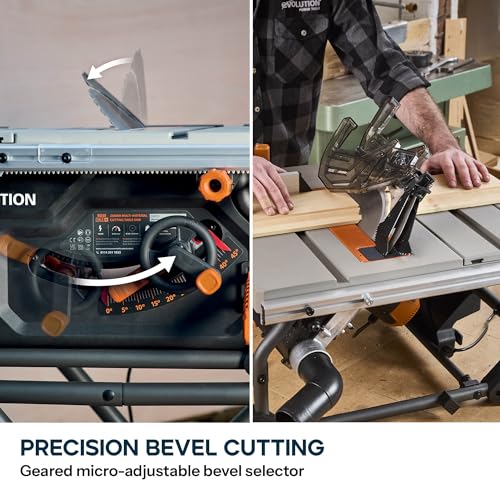
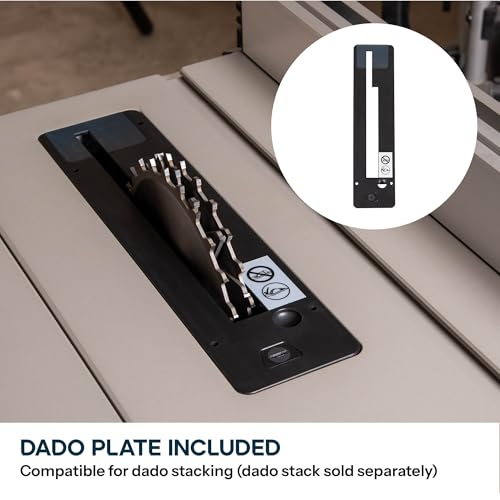
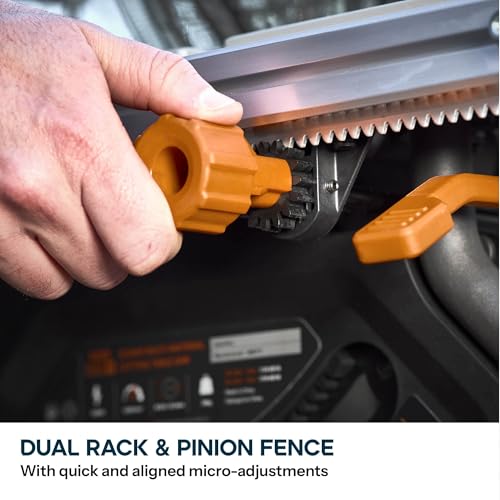
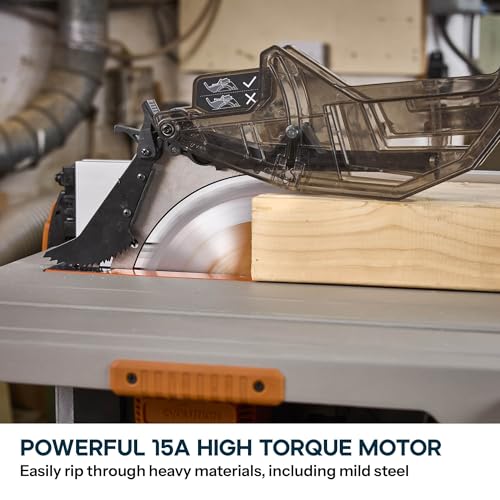
What sets the Evolution R10TS apart is its ability to cut more than just wood. The 15-amp motor and TCT blade can handle mild steel and aluminum, which is rare in this class. That makes it a favorite for HVAC helpers or metal framers who don’t want to carry multiple saws. Owners praise the zero-clearance throat plate for clean wood cuts with minimal tear-out, and the included dado plate adds serious value for woodworkers.
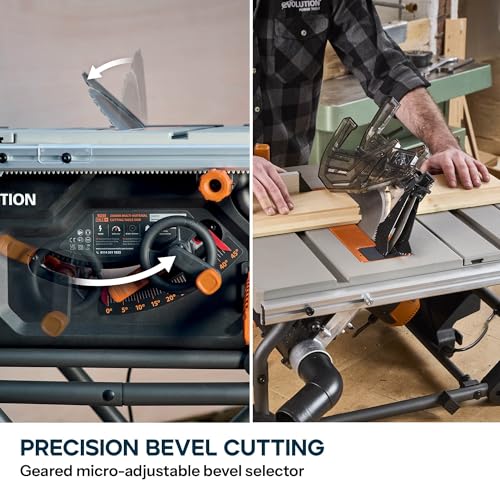
It’s not the most powerful saw for hardwood ripping, but the geared bevel adjustment and precision fence keep it accurate. Compared to the MarvTool or Prostormer, this is clearly built for pros who need versatility. I’d pick it over the DEWALT if your work crosses between materials, but skip it if you’re only cutting thick oak or maple all day.
Product photos
Evolution R10TBLX with Wheeled Stand
Strengths
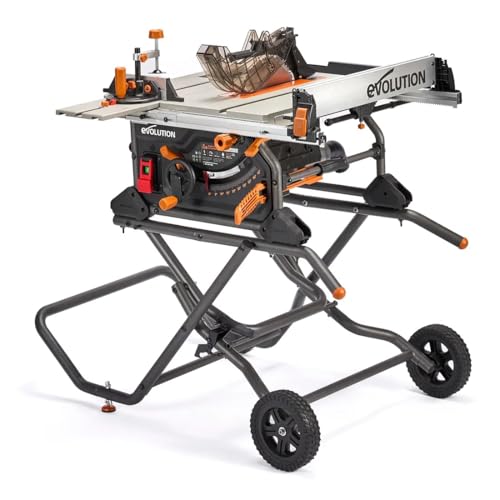
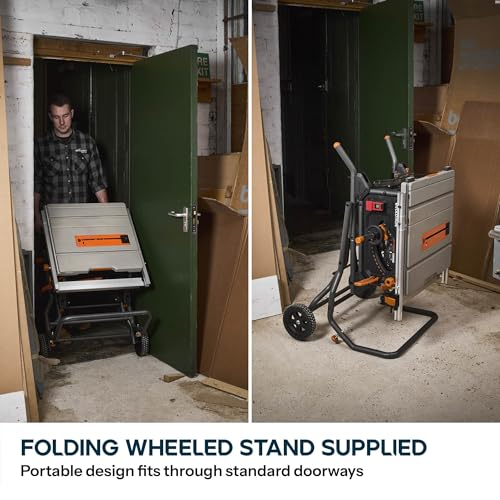
- Wheeled collapsible stand
- Multi-material capability
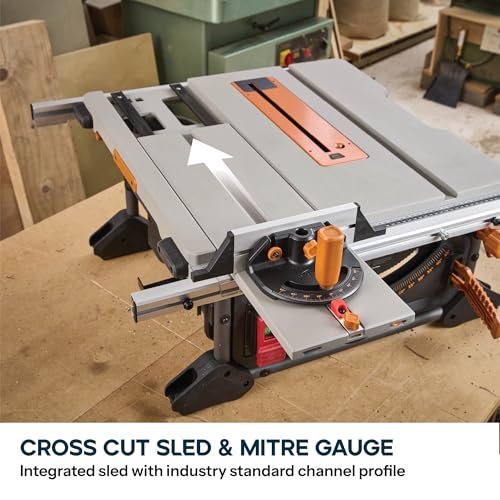
- Includes cross-cut sled
Trade-offs
- 26 in rip capacity
- Heavier with stand
- Fence not as precise
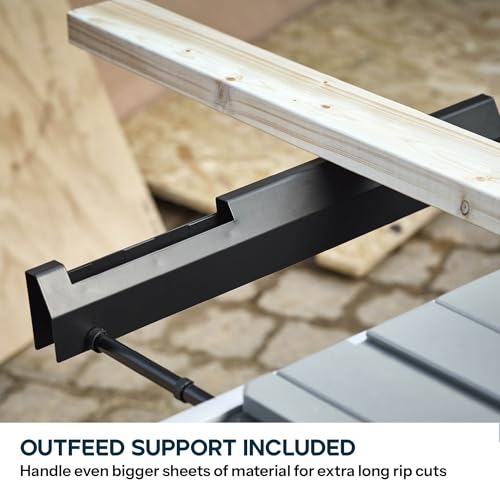
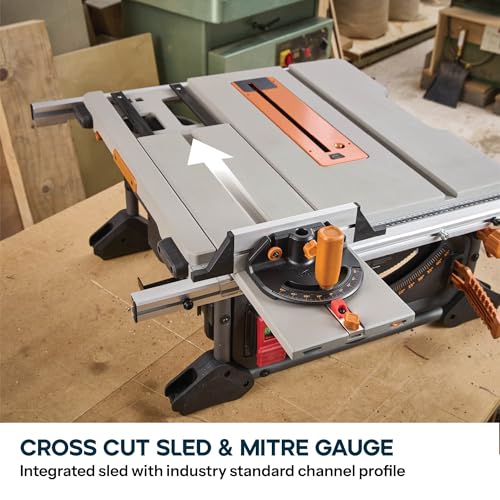
The Evolution R10TBLX takes the R10TS and adds what many pros actually need: a collapsible wheeled stand. The all-terrain wheels and quick-fold design make it easy to move across rough job sites, and the onboard outfeed support helps with longer boards. It shares the same multi-material cutting ability, zero-clearance throat plate, and dado compatibility, making it one of the most versatile portable saws available.
Owners love the electronic brake and riving knife combo for safety, and the soft-start motor reduces strain on generators. It’s heavier than the DEWALT or BOSCH setups, but the stand makes up for it. If you’re tired of wrestling saws into vans, this one’s worth the extra pounds. I’d pick it over the standard R10TS for any job requiring frequent relocation.
Product photos
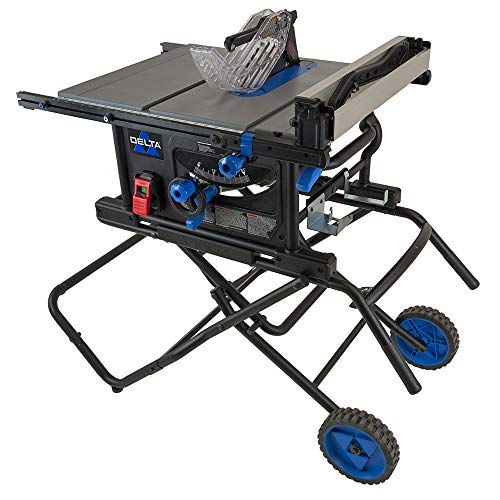
Delta 36-6023 Table Saw
Strengths
- 5-year warranty
- Durable motor
- 32.5 in rip capacity
Trade-offs
- Heavy and bulky
- No wheeled stand
- Basic safety features
The Delta 36-6023 feels like it was built to outlive its owner. The contractor-grade motor handles dense hardwoods and pressure-treated lumber without blinking, and the 32.5-inch rip capacity matches the DEWALT. What really stands out is the 5-year warranty, Delta doesn’t offer that unless they expect this saw to last. Owners report using these for years with minimal maintenance.
It’s heavier and less portable than the BOSCH or Evolution models, and it lacks modern touches like soft-start or collapsible stands. But if you’re setting up a permanent garage shop and want a no-nonsense, durable workhorse, this is it. I’d pick it over the SKIL or Prostormer any day for long-term reliability. It’s not flashy, but it’s honest.
Product photos


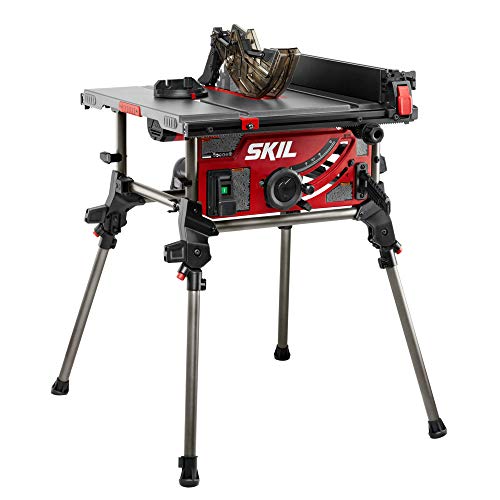
SKIL TS6307-00 Portable Table Saw
Strengths
- 15-amp motor
- Folding stand
- 4×4 capacity
Trade-offs
- Limited rip capacity
- Basic dust collection
- Not for heavy use
If you’re on a tight budget but still need a reliable saw for basic framing or sheet goods, the SKIL TS6307-00 makes a lot of sense on paper. It has a 15-amp motor and 4×4 cutting capacity, which covers most dimensional lumber tasks, and the folding stand adds real convenience for transport. Owners consistently report it holds up well for light-duty use, though it’s not built for all-day runs.
The rack-and-pinion fence system is a standout at this price, offering better alignment and durability than the plastic rails found on cheaper models. That said, it’s no match for the smooth action of the DEWALT or BOSCH fences. I’d pick this over a big-box special any day, but only if you’re not pushing it hard or expecting precision joinery work.
Product photos


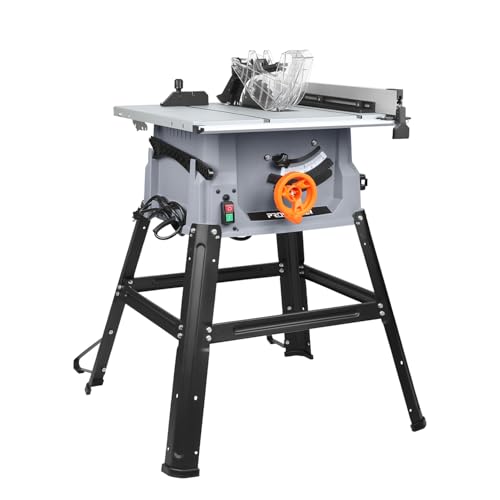
Prostormer 10 Inch Table Saw
Strengths
- High RPM motor
- Affordable price
- Clear blade guard
Trade-offs
- No riving knife
- Fence feels cheap
- Poor dust collection
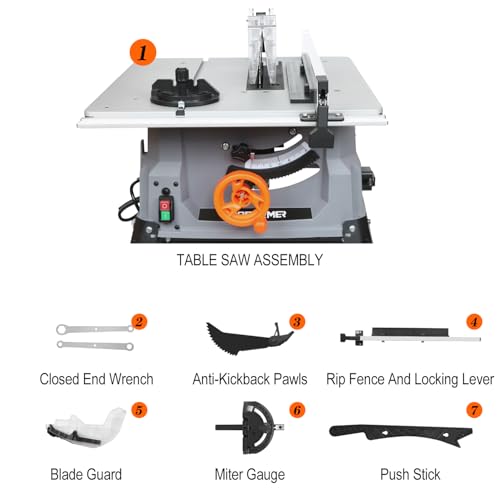
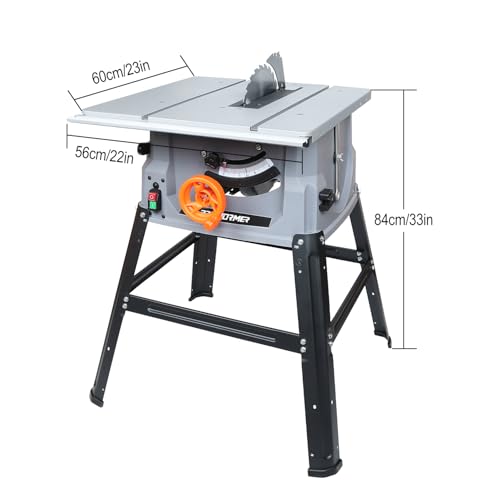
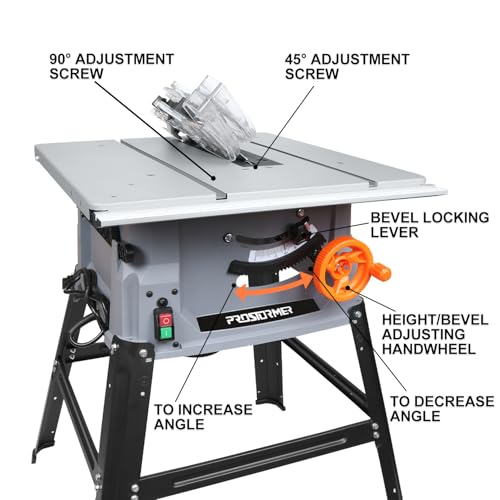
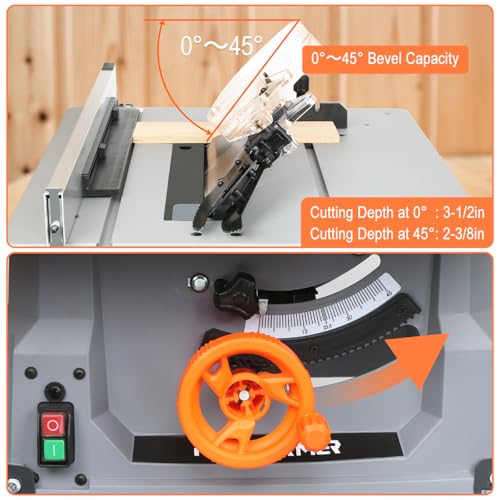
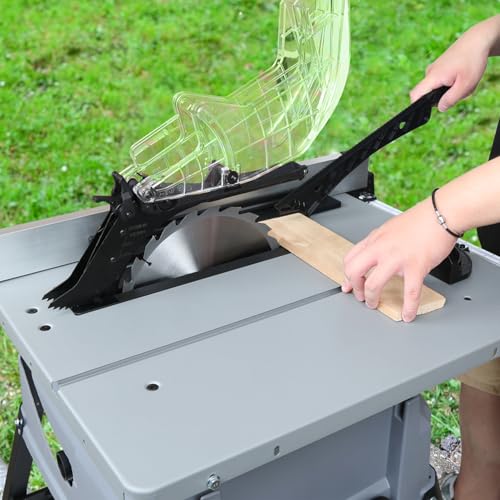
The Prostormer stands out with a claimed 5000 RPM no-load speed, higher than most in this class. On paper, that means faster cuts, and owners confirm it slices through softwoods and plywood with ease. The stand is basic but stable, and the clear blade guard gives good visibility, which helps with accuracy.
But high RPM doesn’t equal high torque, and this saw struggles with dense hardwoods or thick stock. The fence feels plasticky, and there’s no riving knife, just anti-kickback pawls. It’s also missing key features like rack-and-pinion rails or a zero-clearance insert. Still, for beginners or hobbyists doing light work, it delivers solid value. I’d see it as a step up from entry-level benchtop saws, but not a match for the Evolution or BOSCH.
Product photos
MarvTool 15Amp Portable Table Saw

Strengths
- Ultra-lightweight
- High RPM motor
- Compact footprint
Trade-offs
- Short rip capacity
- No riving knife
- Fence lacks rigidity
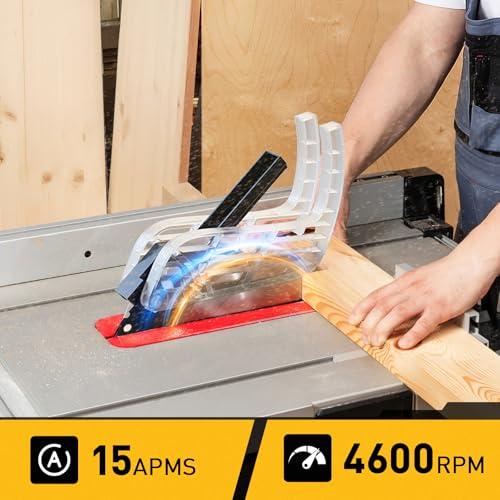
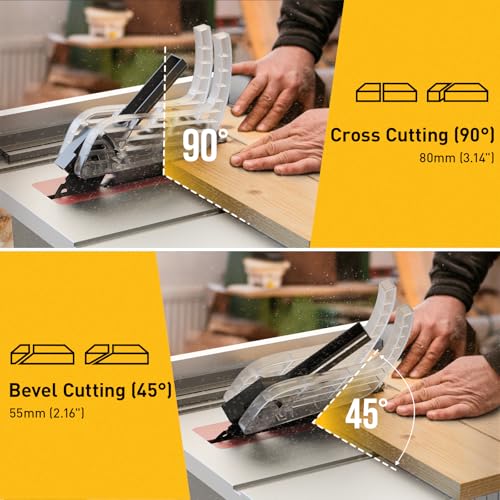
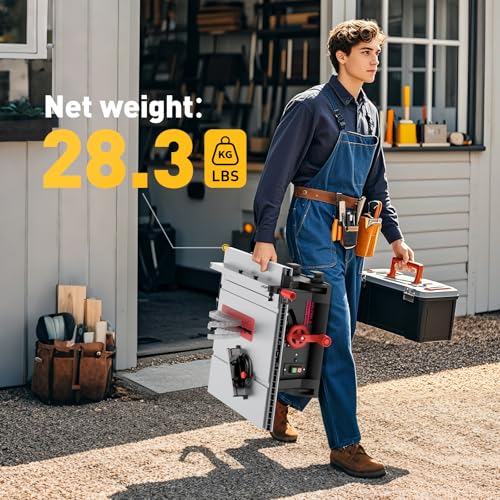
At just 28.3 pounds, the MarvTool 10-inch saw is one of the lightest full-sized options out there. That makes it a go-to for apartment DIYers or anyone climbing ladders on remodeling jobs. The 4600 RPM motor delivers decent speed for a 15-amp unit, and owners say it handles plywood and 2x stock without bogging down.
But it’s not without trade-offs. The rip capacity isn’t listed, but feedback suggests it’s under 20 inches, tight for sheet goods. The fence feels flimsy compared to rack-and-pinion systems, and there’s no riving knife, which raises safety concerns. Still, for small furniture builds or weekend projects, it’s punchy for its size. I’d recommend it over bulkier models only if portability is your top priority.
Product photos


How We Evaluated 10 inch table saws
Rather than a hands-on lab test, my research for this guide focused on a detailed comparison of published specifications and features across numerous models. I weighed owner reviews from major retailers alongside trusted expert reviews from woodworking publications and enthusiast sites. My evaluation considered each saw against key criteria for performance, accuracy, and practical usability – drawing on over 15 years of experience with power tools and workshop setups.
For 10-inch table saws, rip capacity, motor power, and build quality consistently emerged as the most important factors. A larger rip capacity allows for handling wider stock, essential for sheet goods and larger projects. Motor power directly impacts the ability to cut through tougher materials without bogging down. Finally, a robust build – indicated by materials and design – is critical for long-term durability and precision. Understanding basic table saw techniques is also important when considering these factors.
Specifications reliably reveal details like rip capacity, blade tilt, and motor amperage. However, I placed more emphasis on owner feedback regarding fence accuracy, dust collection effectiveness, and overall build quality. Reputation and long-term reliability are hard to quantify from specs alone. I also looked for consistent praise or criticism regarding specific features, such as the quality of the included blade or the ease of adjustments. Remember to always follow table saw safety tips when operating any table saw.
How To Choose The 10 inch table saws
Finding the right table saw can dramatically improve the quality and efficiency of your woodworking, but with so many options, it’s easy to get overwhelmed.
A good table saw delivers consistent, accurate cuts with a focus on power, safety features, and build quality. Key considerations include motor strength, fence accuracy, dust collection, and the maximum rip capacity needed for typical projects. Blade stability and ease of adjustments are also crucial for achieving professional results.
Motor Power and Cutting Capacity
Don’t assume a higher amperage automatically means a better saw, but it’s a good starting point. Most 10-inch table saws fall in the 1.5 to 2 horsepower range (roughly 15 amps). However, the type of material you’ll be cutting matters significantly. If you anticipate frequent work with hardwoods or thicker stock, lean toward a more powerful motor. Beyond power, consider table saw rip capacity – the maximum width of material the saw can cut. For basic DIY projects, 25 inches might suffice, but if you plan on breaking down sheet goods, 30+ inches is preferable. The DeWALT DWE7491X, for example, boasts a generous 32-1/2 inch rip capacity.
Fence Quality and Adjustability
A precise fence is arguably the most important feature of any table saw. It’s what guides your material for straight, accurate cuts. Look for a rack-and-pinion fence system; these are generally more accurate and easier to adjust than those relying on simple locking mechanisms. Avoid fences that feel wobbly or difficult to lock down securely.
- A smooth-gliding fence is essential for accuracy.
- Micro-adjustment features allow for fine-tuning, critical for precise cuts.
- Look for a fence with a clear, easy-to-read scale. Some, like the Bosch GTS15-10, use color-coded indexing for even easier setup.
Portability and Value
For jobsite work or limited shop space, portability is key. Consider models like the Evolution R10TBLX with wheeled stand. However, remember that increased portability often comes with trade-offs in terms of weight and stability. If the saw will primarily stay in one location, a heavier, more robust model like the Delta 36-6023 might be a better choice. If you’re on a tighter budget, don’t dismiss options like the SKIL TS6307-00 or Prostormer 10 inch Table Saw, but carefully review owner feedback to understand where corners were cut. You can often find excellent value in compact 10-inch table saws that balance price and performance.
A wobbly saw is a dangerous saw. Prioritize stability and a solid fence over flashy features you won’t use.
10 Inch Table Saws Compared
Here’s a comparison of key specifications for popular 10-inch table saws.
| Product Name | Motor (Amps) | Rip Capacity (in.) | Max Cut Depth (in.) | Blade Tilt (Degrees) | Portability |
|---|---|---|---|---|---|
| BOSCH GTS15-10 | 15 | N/A | N/A | N/A | Yes |
| DEWALT DWE7491X | 15 | 32.5 | N/A | N/A | Yes |
| Evolution R10TS | 15 | 26 | 3.38 | 0-45 | Yes |
| Evolution R10TBLX | 15 | 26 | 3.38 | 0-45 | Yes |
| Delta 36-6023 | 15 | 32.5 | N/A | N/A | Yes |
| SKIL TS6307-00 | 15 | N/A | N/A | 2-47 | Yes |
| Prostormer 10 Inch | N/A | N/A | N/A | 0-45 | N/A |
| MarvTool 15Amp | 15 | N/A | 3.4 | 0-45 | Yes |
Frequently Asked Questions
What rip capacity do I really need?
For most DIYers, a 25-inch rip capacity is sufficient, but if you frequently work with sheet goods like plywood or MDF, I recommend a saw with at least 30 inches to avoid needing to flip the material.
Are folding table saws stable enough for accurate work?
While convenient, folding table saws generally aren’t as stable as stationary models. Look for features like a wide base and rubber feet to maximize stability, and consider adding weight to the base if necessary.
What’s the difference between a rack and pinion fence and other fence types?
A rack and pinion fence uses a gear system for smooth, precise adjustments, offering greater accuracy and repeatability compared to simpler locking mechanisms often found on less expensive saws.
Can I upgrade the blade on a budget table saw?
Yes, absolutely. Replacing the included blade with a higher-quality blade is one of the most impactful upgrades you can make to any table saw, improving cut quality and reducing tear-out.
Where can I find more information about portable table saws for job sites?
If you’re looking for a saw to take with you, you can explore options for the best portable job-site saws to find models specifically designed for durability and ease of transport.
The Bottom Line
Choosing a table saw ultimately comes down to balancing control and convenience. If you prioritize precision and capacity for serious woodworking, the DeWALT DWE7491X stands out as a strong all-around performer with its generous rip capacity and solid reputation. However, remember that more features and power often mean a higher price point and potentially less portability.
For those on a budget or needing a more versatile option for smaller projects, the SKIL TS6307-00 offers excellent value. If portability is paramount, the Evolution R10TBLX with its wheeled stand is a great choice, though it’s worth considering the trade-offs in stability. And for those interested in a blend of contractor and cabinet saw features, exploring hybrid table saw features can open up options that balance performance and price.
Ultimately, the most important factors aren’t horsepower or fancy features, but a stable platform, a precise fence, and a commitment to safety. Focus on those fundamentals, and you’ll be well-equipped to tackle any woodworking project with confidence.
