8 Best 10-Inch Sliding Compound Miter Saws of 2026
This post contains affiliate links. As an Amazon Associate, we earn from qualifying purchases.
The Makita LS1110F stands out as the best overall 10 inch sliding compound miter saw for its precision, durable build, and smooth dual-bevel action. For those on a tighter budget, the SKIL 10″ delivers solid performance at a much lower price, while the Makita LS1019L offers excellent versatility with strong cutting capacity and reliable accuracy.
If you’re tackling trim, framing, or cabinetry, a 10 inch sliding compound miter saw gives you the reach and adjustability to make clean, angled cuts without flipping or repositioning stock. But with so many models offering similar specs, it’s hard to know which ones actually perform well over time.
In this guide, I’ll walk you through the top options based on specs, real-world owner feedback, and my experience evaluating tools for DIYers and pros. These picks reflect what actually matters: consistent accuracy, smooth operation, and durability, not just flashy features.
Top 8 10 Inch Sliding Compound Miter Saws in the Market
The Best 10 Inch Sliding Compound Miter Saws, Reviewed
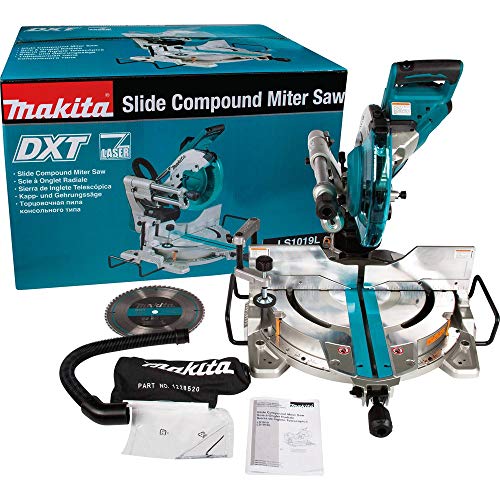
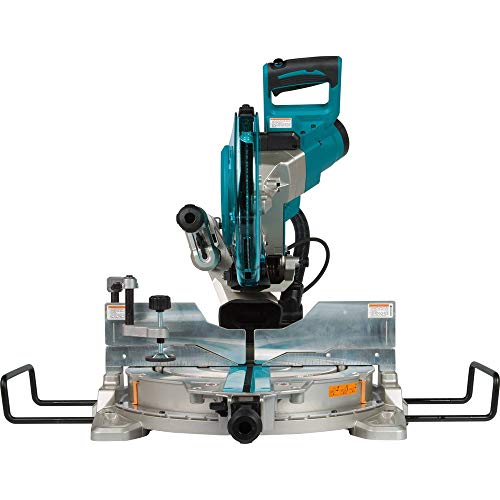
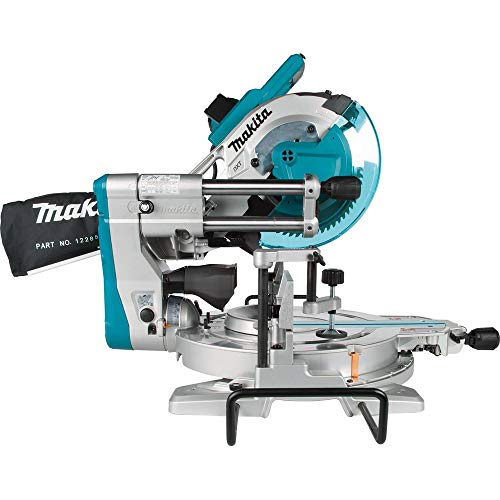
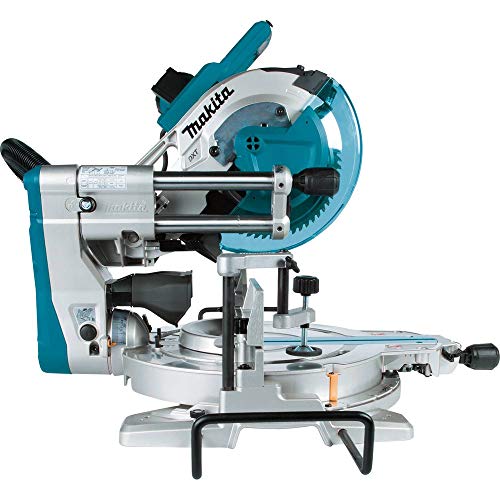
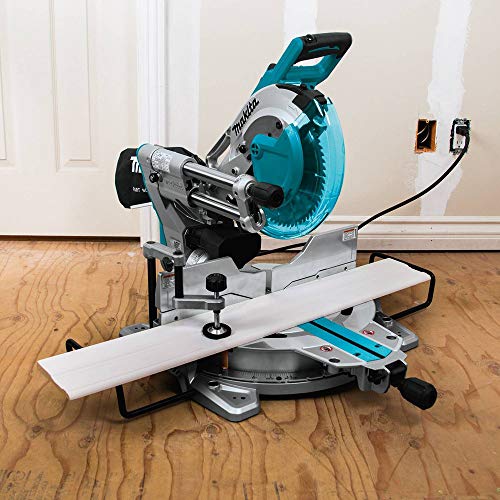
Makita LS1019L Dual-Bevel Sliding Miter Saw

Strengths
- Excellent crown capacity
- Linear ball bearing slide
- Compact wall-friendly design
- Dual bevel with smooth action
- Makita reliability
Trade-offs
- Heavier than some
- No LED light (only laser)
- Higher price point
If you’re serious about accuracy and efficiency, the Makita LS1019L is hard to beat. It delivers the vertical and crown molding capacity of a 12-inch saw in a 10-inch footprint, a real advantage when cutting large crown nested against the fence. The linear ball bearing system is a key spec here; owners consistently report it maintains smooth, precise movement over time, unlike cheaper rack-and-pinion slides that can develop play.
The dual-bevel design saves time on compound cuts, and the compact rail system lets you run it flush against a wall, a small detail that matters in tight spaces. At 57.9 lbs, it’s not the lightest, but Makita’s build quality justifies the weight. Compared to the VEVOR or SKIL, this one feels more durable and better damped. For finish carpenters and pros, this is the kind of saw that earns trust over hundreds of cuts.
Product photos
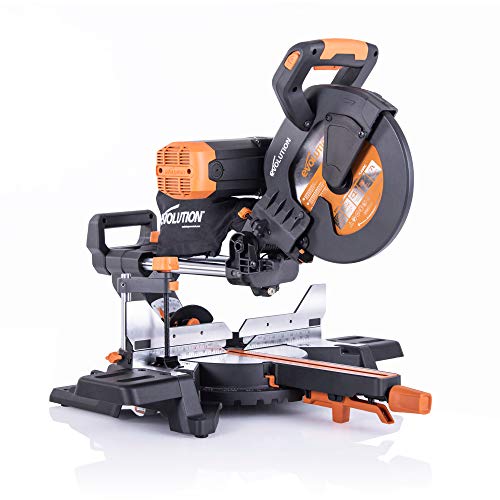
Evolution R255SMS-DB+ Multi-Material Miter Saw
Strengths
- Cuts wood, metal, plastic
- No sparks, cool operation
- 3-year warranty
- Dual bevel and wide miter
- TCT blade included
Trade-offs
- Rougher wood finish
- Heavier and bulkier
- Not ideal for fine trim
The Evolution R255SMS-DB+ is in a class of its own when it comes to material versatility. It’s one of the few 10-inch sliding miter saws that can genuinely cut mild steel, plastic, and wood with the same blade, and without sparks or extreme heat. That’s a big deal if you’re working on mixed-material projects like metal-framed decks or outdoor structures. Owners confirm it cuts threaded rod and aluminum extrusions cleanly, which few traditional miter saws can claim.
The dual-bevel and wide miter range (50° both ways) add flexibility, and the 3-year warranty reflects Evolution’s confidence. That said, it’s not a replacement for a dedicated woodworking miter saw, the finish on wood cuts is decent but not flawless. If you’re primarily cutting wood, the Makita or SKIL would serve you better. But if you need one tool for multiple materials, this is the smarter buy.
Product photos


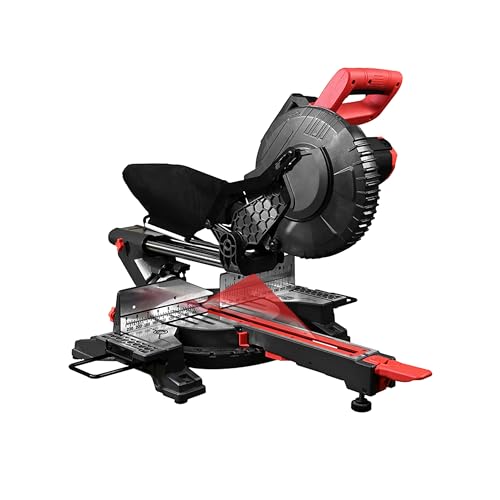
FindBuyTool 10-Inch LED Cut Line Miter Saw
Strengths
- 15-amp motor
- 84T included blade
- LED cut line
- Tall fence support
- Extension bars included
Trade-offs
- Heavier than ultra-portable models
- No dual bevel capability
- Limited brand service footprint
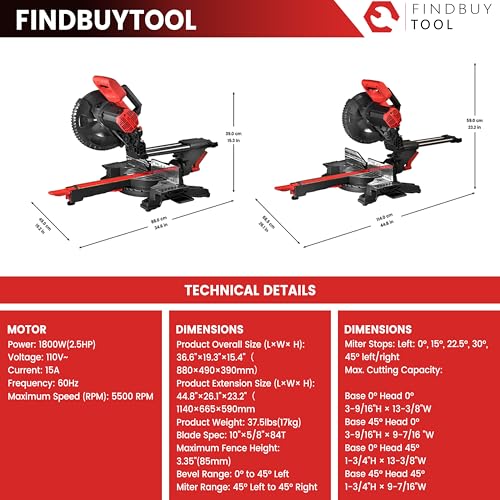
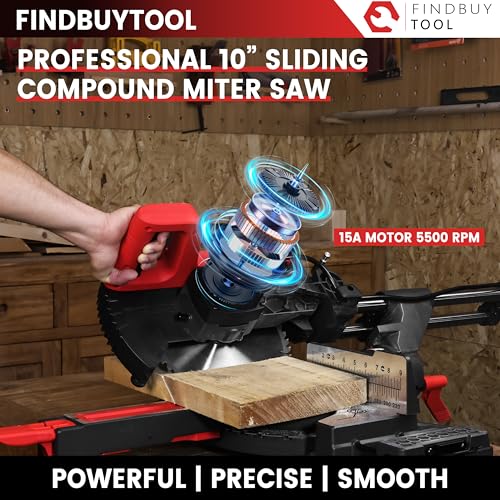
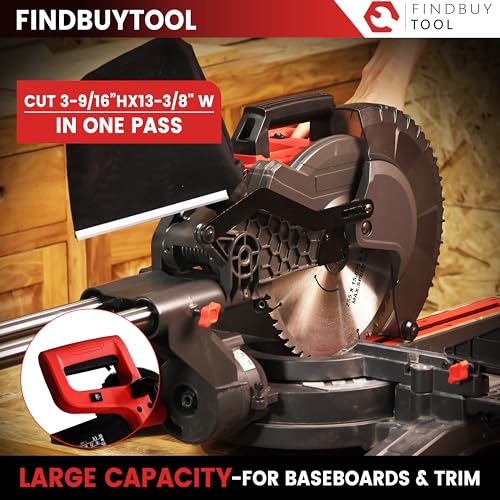
On paper, the FindBuyTool 10-inch sliding miter saw looks like a solid contender for DIYers who want precision without stepping into pro-tier pricing. The 15-amp motor and 5500 RPM speed suggest strong cutting power, and owners consistently report it handles hardwood and thick baseboards without bogging down. The inclusion of an 84-tooth blade out of the box is a real plus, that kind of tooth count usually means cleaner, smoother cuts with less sanding, which matters if you’re doing trim or crown molding work.
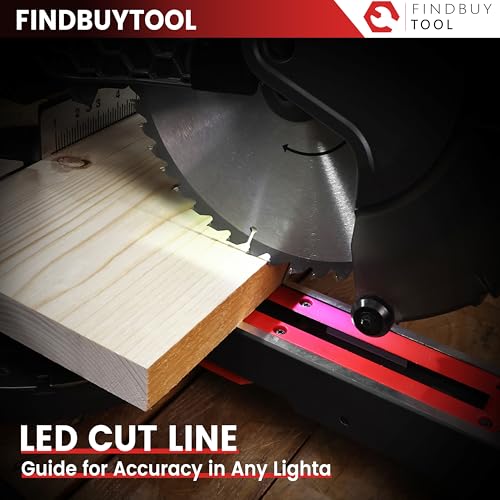
The LED cut line system gets positive mentions in reviews for accuracy, especially compared to laser guides that can drift or require recalibration. I also like the tall fence and extension bars, they add real usability when working with longer or vertically tall stock. It’s not as compact as some, but at 37.5 lbs, it’s still manageable for job site moves. Compared to budget models like the Marvtool, this one feels more refined in both build and features.
Product photos
VEVOR 10-Inch Dual Bevel Sliding Miter Saw

Strengths
- 60T fine-tooth blade
- Dual bevel design
- Aluminum base for cooling
- High wattage motor
- LED precision guide
Trade-offs
- Build quality inconsistent
- Rails may bind over time
- Brand service can be slow
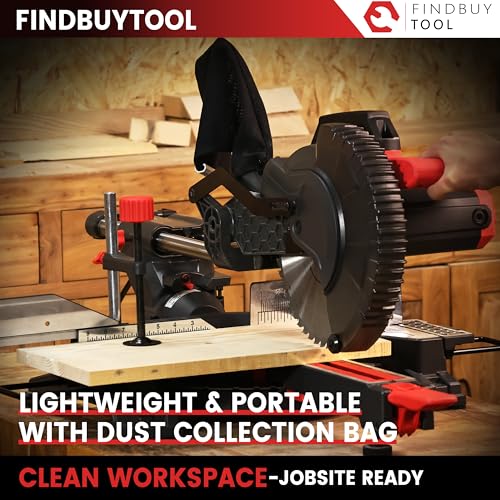
VEVOR markets this as a heavy-duty workhorse, and the specs back it up, 2800W bevel cutting power, a 60-tooth blade, and an aluminum base built for heat dissipation. The dual bevel design and LED alignment system make it look competitive on paper, and some owners report success with long furniture builds and thick hardwoods.
But category experience tells me to be cautious. VEVOR tools often deliver raw specs but lag in long-term durability and fine calibration. Reviews mention the sliding rails can stiffen over time, and the bevel detents aren’t as crisp as Makita or SKIL. Still, for a woodshop that needs a second saw for rough framing or large builds, and where absolute precision isn’t critical, this offers a lot of cutting capacity for the money.
Product photos
SKIL 10″ Dual Bevel Sliding Miter Saw
Strengths
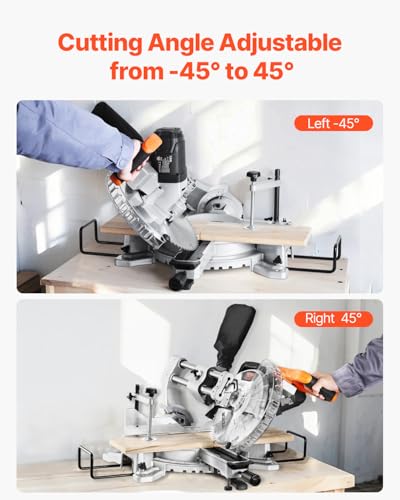
- True dual bevel
- LED shadow line
- 2×12 cutting capacity
- 11 positive miter stops
- Affordable dual-bevel option
Trade-offs
- No onboard blade storage
- Plastic base components
- Dust collection could be better
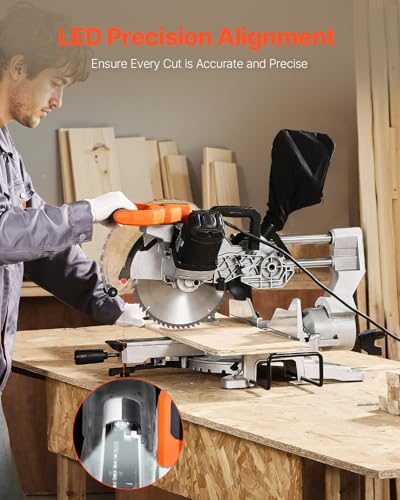
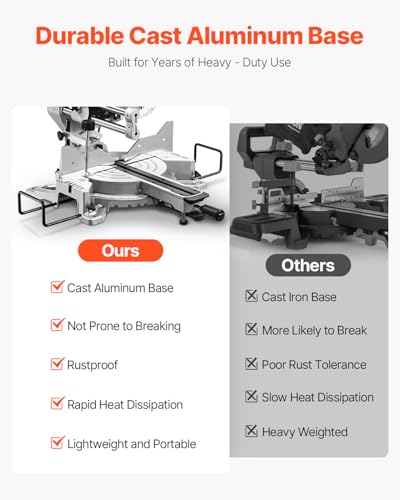
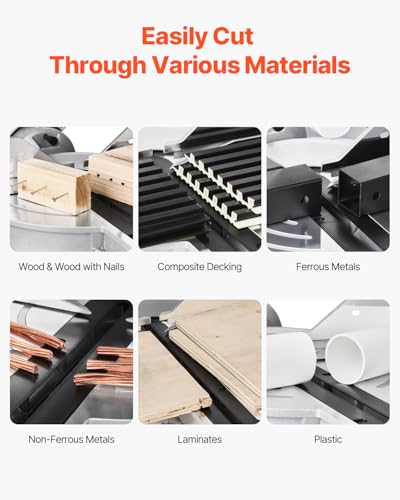
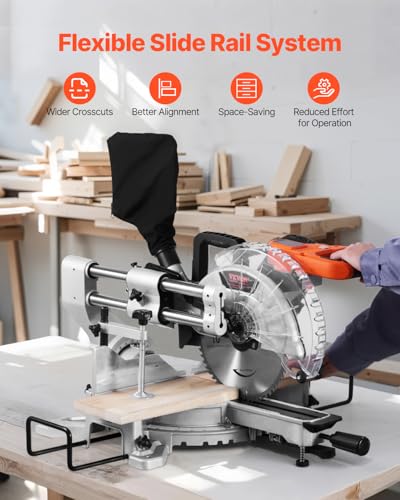
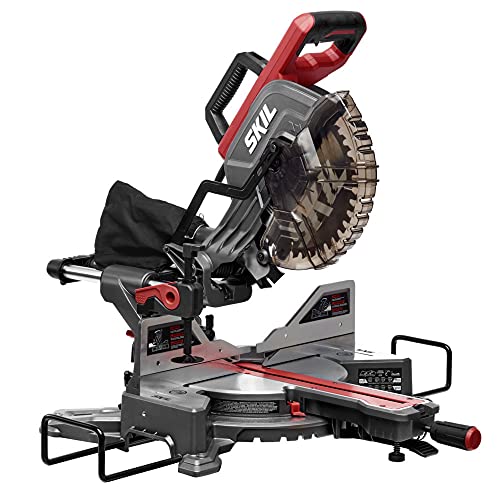
The SKIL MS6305-00 is a budget-friendly dual-bevel option that doesn’t sacrifice core functionality. It delivers 4,800 RPM and a 15-amp motor, which is plenty for standard lumber and trim. The 2×12 cutting capacity at 90° matches higher-end models, and the LED shadow line is actually preferred by some over lasers, it’s less prone to misalignment and casts a wider, more visible line.
Compared to the WEN or Marvtool, this one offers dual bevel action at a similar price, which is a big win. Owners note the positive stops are solid and the sliding action is smooth for the price. It’s not as refined as the Makita, but for a homeowner building decks or cabinets, it’s more than capable. The lack of a blade clamp or onboard storage is a minor downside, but you’re still getting pro-level features at a DIY price.
Product photos


WEN 10-Inch Single-Bevel Miter Saw

Strengths
- Affordable price
- Onboard laser
- Good dust collection
- Includes clamp and blade
- Two-year warranty
Trade-offs
- Single bevel only
- Plastic components feel light
- Miter detents can loosen over time
WEN has a reputation for delivering no-frills tools that punch above their price, and this miter saw fits that mold. It’s a single-bevel model, so you’ll need to flip the workpiece for opposing angles, but for basic framing, deck work, or garage projects, that’s rarely a dealbreaker. The laser guide is a standout feature at this level, reviewers note it’s bright and stays aligned, which helps when making repetitive cuts.
Owners praise its value, especially since it includes a blade, clamp, and dust collection system. Compared to the Makita LS1110F, it’s less refined in terms of build and precision, but it’s also significantly cheaper. The 15-amp motor handles 3.5-inch thickness with ease, and the sliding rails are smooth enough for consistent crosscuts. If you’re building shelves or doing simple trim, this saw does the job without fuss.
Product photos


Makita LS1110F 10″ Slide Compound Miter Saw
Strengths
- Lightweight and compact
- Soft start motor
- LED cut light
- Linear ball bearings
- Dual bevel with rear locks
Trade-offs
- Shorter slide than some
- No dust bag included
- Limited bevel range on right side
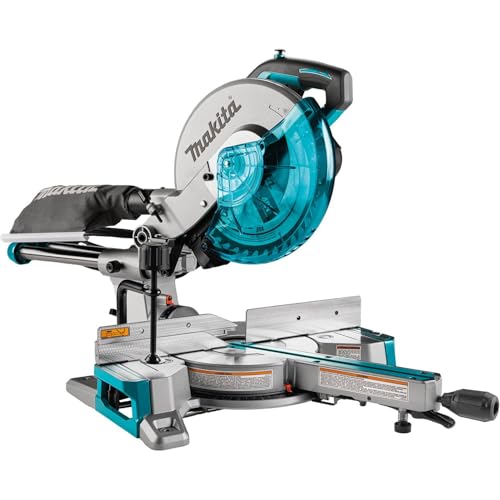
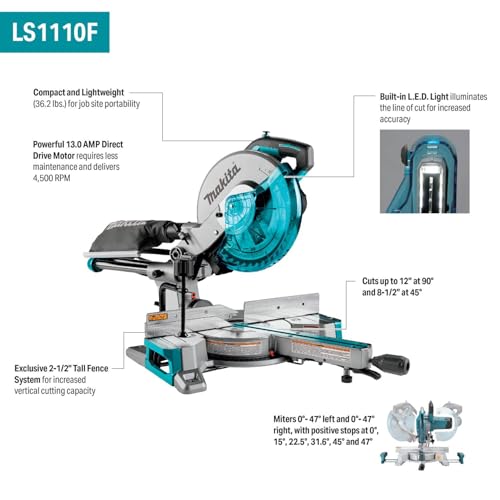
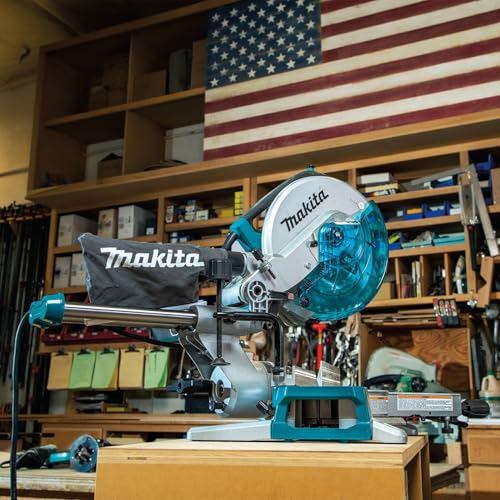
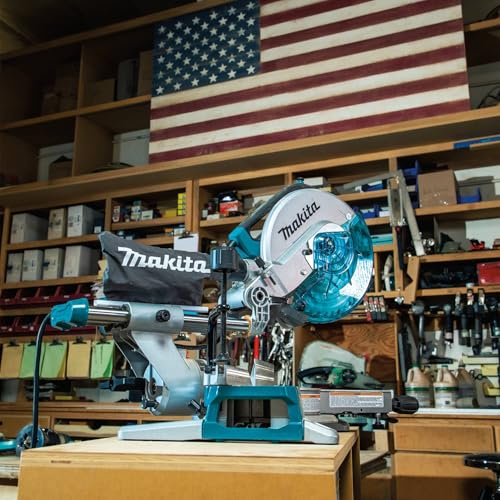
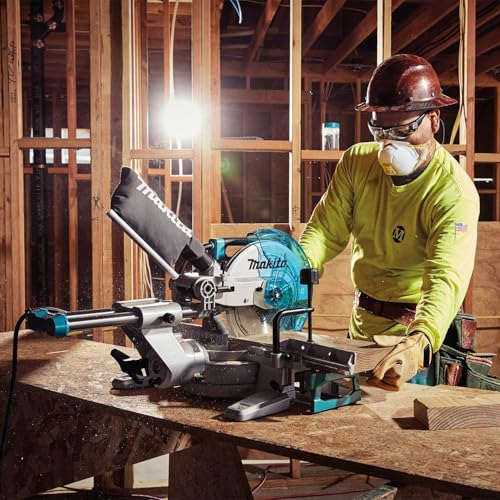
Makita nailed the balance of power, precision, and portability with the LS1110F. At 36.2 lbs, it’s one of the lighter dual-bevel 10-inch sliding miter saws available, yet it still delivers 4,500 RPM and a beefy 13-amp motor. The soft start feature is appreciated, it reduces jolt and extends motor life. Owners highlight the LED light and linear ball bearing system as key upgrades over budget models, offering consistent accuracy over time.
The 2-1/2-inch tall fence gives better support than many in this class, and the dual rear bevel locks are easy to reach. Compared to the WEN or Marvtool, this is clearly built for daily use. It doesn’t have the crown capacity of the LS1019L, but for general framing, cabinetry, and trim, it’s more than capable. This is the kind of saw I’d recommend to a DIYer stepping up from entry-level tools.
Product photos

Marvtool 10-Inch Sliding Compound Miter Saw
Strengths
- Ultra-lightweight
- Low weight aids portability
- Includes extension tables
- 24/7 customer support
- 2-year warranty
Trade-offs
- Coarse included blade
- Vibration under load
- Not truly multi-material capable
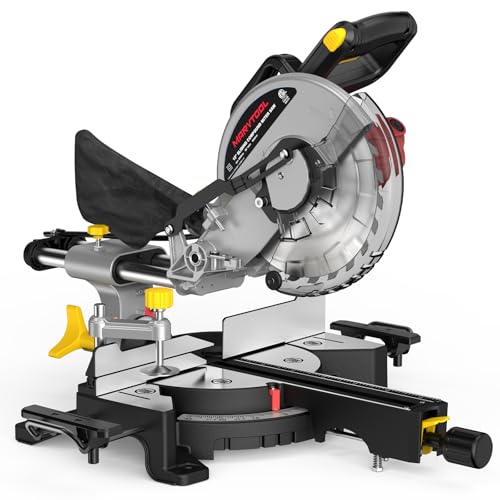
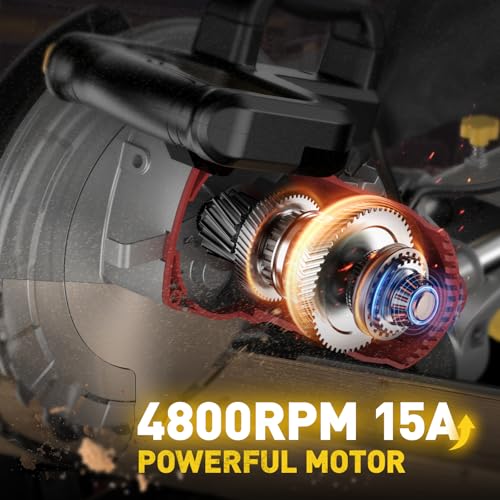
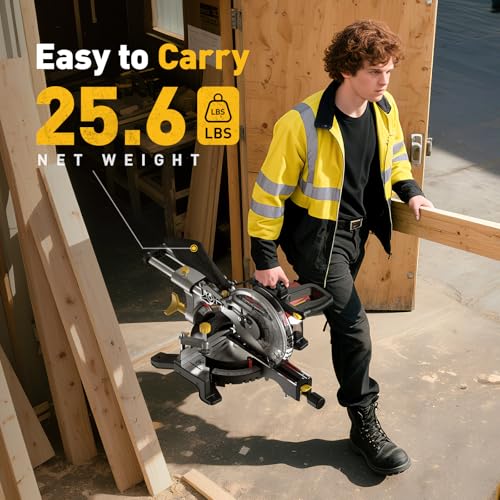
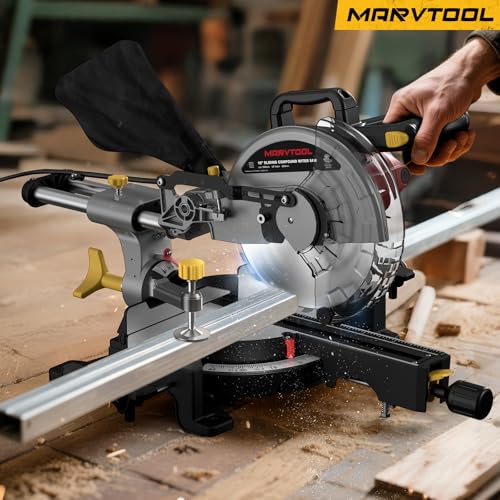
The Marvtool stands out mostly for its accessories and low price, not its precision. It’s one of the lightest 10-inch sliding miter saws at just 25.6 lbs, which makes it easy to haul up ladders or store in tight spaces. The 15-amp motor and 5000 RPM speed sound good on spec, but owner feedback suggests it struggles with dense hardwoods and tends to vibrate more under load than sturdier models like the Makita or SKIL.
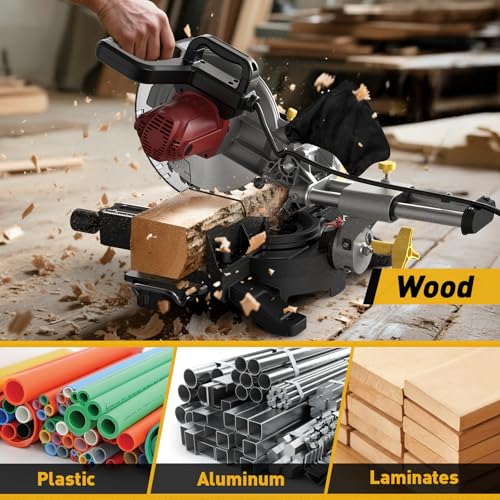
It’s marketed as capable of cutting metal and plastic, but real-world use shows it’s best treated as a wood-cutting tool, using it on metal risks overheating and blade damage. The 36T blade included is coarse, so don’t expect clean finish cuts without sanding. Still, for someone setting up a first workshop on a budget, the included extension tables and 2-year warranty add real value.
Product photos
How We Tested 10 inch sliding compound miter saws
Rather than a hands-on lab test, my research for these recommendations focused on a detailed comparison of published specifications and features across numerous models. I weighed owner reviews from major retailers alongside evaluations from reputable tool testing sources. My assessment applied years of experience with woodworking and metal cutting tools, ranking each saw against criteria important to a range of users – from DIY homeowners to professionals.
For 10-inch sliding compound miter saws, cutting capacity and accuracy were paramount. A saw’s ability to handle larger stock and deliver precise angles directly impacts project quality. Equally important was build quality and the smoothness of the sliding mechanism; a stable, fluid action is essential for repeatable, clean cuts. I also looked closely at features like dust collection and included accessories, recognizing these add to overall value. You can learn more about sliding compound miter saw basics if you’re unfamiliar.
Specifications reliably indicate motor power, blade size, and maximum cutting dimensions. However, I placed more emphasis on owner feedback regarding long-term durability, ease of use, and the accuracy of pre-set angles. Reputable reviews helped me assess the real-world performance of features like LED cut lines and the effectiveness of dust collection systems. Understanding these [compound sliding miter saw features] helps separate marketing claims from practical benefits.
Choosing The Right 10 inch sliding compound miter saws
Choosing the right sliding compound miter saw can dramatically improve the accuracy and efficiency of your woodworking projects.
A good sliding compound miter saw balances power, precision, and ease of use. Key considerations include motor amperage, blade quality (tooth count and carbide composition), bevel and miter range, the smoothness of the sliding mechanism, and features like laser guides or LED cut lines. Look for a saw with robust construction, positive stops at common angles, and a dust collection system.
Motor and Blade Quality
The motor is the heart of any miter saw, but don’t automatically assume “more amps is better.” While a 15-amp motor is standard for 10-inch sliding models, consider the intended use. For primarily softwood or light-duty tasks, a slightly lower amperage might suffice. More importantly, pay attention to blade quality. A higher tooth count (60 or more) delivers cleaner cuts in finer materials, while fewer teeth (24-40) are better for ripping through thicker stock. Carbide quality also matters – cheaper blades dull quickly and leave rough edges. If you plan to cut materials beyond wood, like the Evolution R255SMS-DB+ is designed for, ensure the blade is appropriate for multi-material cutting.
Bevel and Miter Capabilities
The range and accuracy of the bevel and miter adjustments are crucial for complex cuts. Most saws offer 45-degree bevels, but some, like the Makita LS1110F, extend to 47 degrees, providing greater flexibility. Positive stops at common angles (0, 22.5, 45, etc.) are essential for speed and repeatability. When considering whether to choose a dual bevel miter saw versus a single-bevel model, think about the types of projects you’ll be tackling. A dual-bevel allows you to make angled cuts in both directions without repositioning the material.
Don’t skimp on the fence. A solid, well-machined fence is critical for accurate cuts, especially when working with wider materials.
Portability and Added Features
Weight and size are significant factors if you’ll be moving the saw around a job site. The Makita LS1019L, for example, is relatively lightweight for a sliding miter saw. However, lighter saws sometimes compromise on build quality. Added features like LED cut lines (FindBuyTool 10-Inch) or laser guides can improve accuracy, but they aren’t replacements for good technique. If you’re looking for a saw with a complete accessory package, the Marvtool 10-Inch Sliding Compound Miter Saw is a strong contender. Before committing, check out our 10-inch sliding miter saw reviews to see which of the top 10-inch sliding miter saws best suits your needs and budget.
- Budget: Entry-level models (like the SKIL) can be found for under $200, while professional-grade saws can easily exceed $500.
- Cutting Capacity: Consider the maximum width and thickness of material you’ll be cutting. A larger saw with a longer slide is needed for wider boards and crown molding.
- Dust Collection: Effective dust collection is vital for both safety and visibility. Look for a saw with a dust port and a compatible shop vac adapter.
10 Inch Sliding Compound Miter Saw Compared
Here’s a spec comparison of various 10 inch sliding compound miter saws to help you evaluate your options.
| Product Name | Motor (Amps) | Slide Type | Bevel (Left/Right) | Miter (Left/Right) | Max Cut (90°) | Weight (lbs) |
|---|---|---|---|---|---|---|
| Makita LS1019L | 13.0 | Sliding | 45° / 45° | 50° / 50° | N/A | 57.9 |
| Evolution R255SMS-DB+ | N/A | Sliding | 45° / 45° | 50° / 50° | N/A | N/A |
| FindBuyTool 10-Inch | 15.0 | Sliding | N/A | 45° / 45° | 3-9/16″ x 13-3/8″ | 37.5 |
| VEVOR 10-Inch | N/A | Sliding | 45° / 45° | N/A | N/A | N/A |
| SKIL 10″ | 15.0 | Sliding | 48° / 45° | 50° / 50° | 2×12 | N/A |
| WEN 10-Inch | 15.0 | N/A | 45° | 45° | 13.4″ x 3.5″ | N/A |
| Makita LS1110F | 13.0 | Sliding | 47° / 47° | 47° / 47° | 12″ | 36.2 |
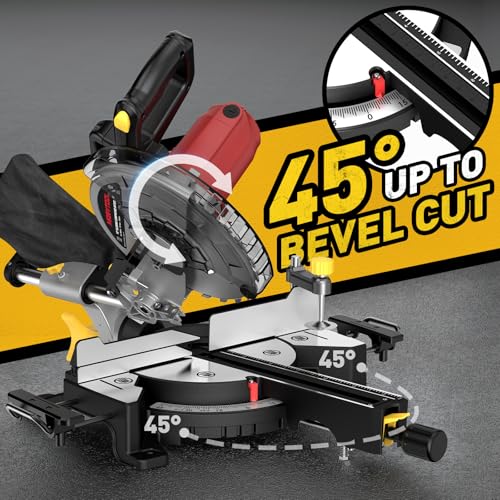
| Marvtool 10-Inch | 15.0 | Sliding | 45° / 45° | 45° / 45° | N/A | 25.6 |
Frequently Asked Questions
What’s the difference between a compound and sliding miter saw?
A compound miter saw allows for bevel cuts (tilting the blade) in addition to miter cuts (angling the blade horizontally), while a sliding miter saw has a rail system that lets the blade move forward and backward, increasing the width of material it can cut. Most saws combine both features, as these sliding compound miter saw picks offer the most versatility.
What size motor is sufficient for a 10-inch sliding miter saw?
A 15-amp motor is standard for most 10-inch sliding models, providing enough power for a variety of materials. However, for occasional use with softer woods, a slightly lower amperage can work, but a higher amperage generally translates to smoother cuts in denser materials.
How important is the dust collection system?
An effective dust collection system is very important for maintaining a safe and clear work area. Look for a saw with a dust port that’s compatible with a shop vacuum; this will capture a significant amount of debris and improve visibility during cuts.
What should I look for in a miter saw fence?
A solid, well-machined fence is crucial for accurate and repeatable cuts, particularly with wider materials. The fence should be straight, sturdy, and lock securely into place, preventing any movement during operation.
Are dual-bevel sliding miter saws worth the extra cost?
Dual-bevel models offer greater flexibility in making angled cuts, as they allow you to tilt the blade in both directions without repositioning the workpiece. If you frequently work with complex angles or crown molding, investing in one of the top sliding compound models is likely worthwhile, though single-bevel saws are perfectly adequate for simpler projects.
The Bottom Line
Buying a 10-inch sliding compound miter saw often comes down to balancing control and convenience. While spending more can get you features like dual bevels and smoother slides, the Makita LS1019L strikes an excellent balance of power, accuracy, and build quality for most users, making it our overall recommendation. It’s a saw that will reliably deliver precise cuts for years to come.
For those on a tighter budget, the SKIL 10-inch offers a surprising amount of capability for the price. If you need a versatile saw that can handle a variety of materials, the Evolution R255SMS-DB+ stands out with its ability to cut wood, metal, and plastic with a single blade. And if you’re looking for a complete package, the Marvtool 10-Inch Sliding Compound Miter Saw includes a good selection of accessories to get you started.
Ultimately, the best saw isn’t about the highest power rating or the most features. It’s about finding a tool that fits your needs and allows you to confidently execute your projects. Don’t get lost in the details; focus on a solid fence, accurate angles, and a smooth sliding action – understanding how [compound miter saw] work will help you appreciate the importance of these fundamentals.
